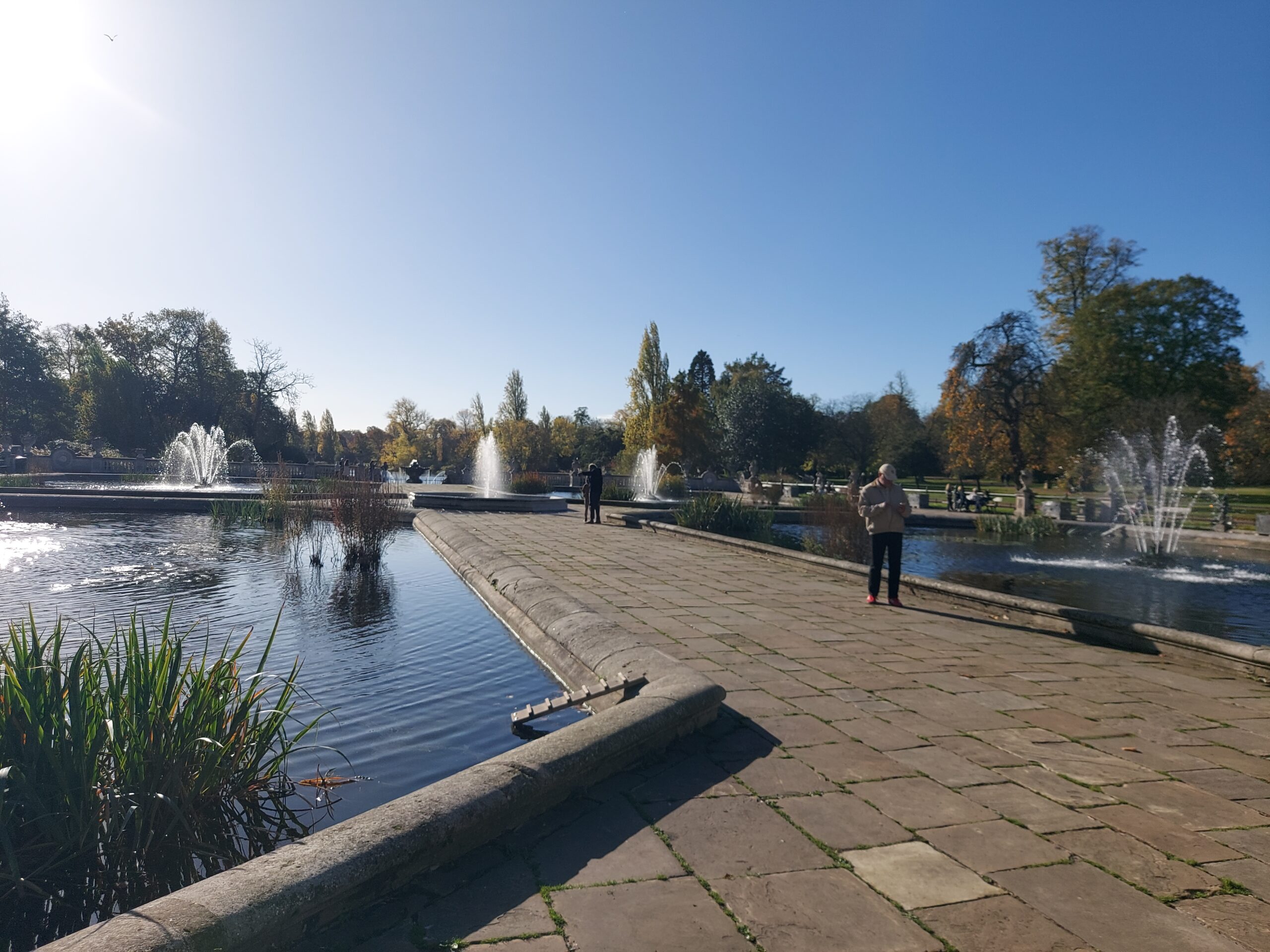
I signed up for a Hidden Stories of Kensington Gardens walk and took the day off to attend. We met at the Italian Gardens pump house and learned about the history of the park, its gradual separation from Hyde Park by a succession of royals, the story of its statues, and the construction of the Albert Memorial.
Kensington Gardens was once one of King Henry VIII’s hunting parks, and formed part of Hyde Park until 1689, when King William III and Queen Mary decided to build Kensington Palace. They took part of Hyde Park to create a private garden for this new palace, commissioning a garden featuring formal flower beds and box hedges.
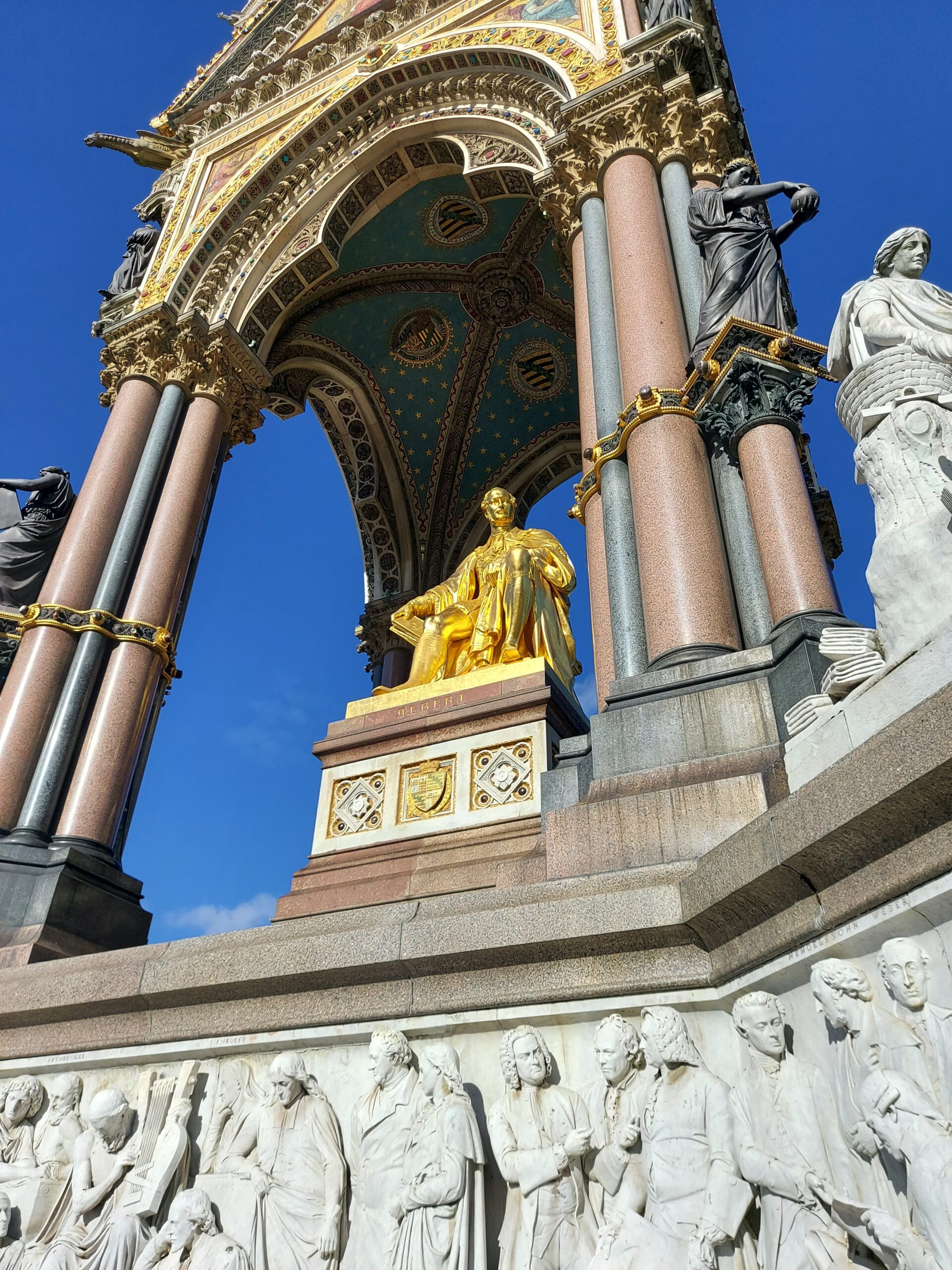
Later, Queen Caroline, wife of George II, employed innovative garden designer Charles Bridgeman to landscape Kensington Gardens. They created the Serpentine, one of the first artificial lakes in the country, and separated the Gardens from Hyde Park by means of a ditch. In the nineteenth century, Queen Victoria commissioned the Italian Gardens and, later, the Albert Memorial, in honour of her beloved husband Prince Albert.
Kensington Gardens first opened to the public in 1841: accessible on Saturdays only, it could only be visited by those who were “respectably dressed”. These days it is widely visited by London residents and tourists alike.
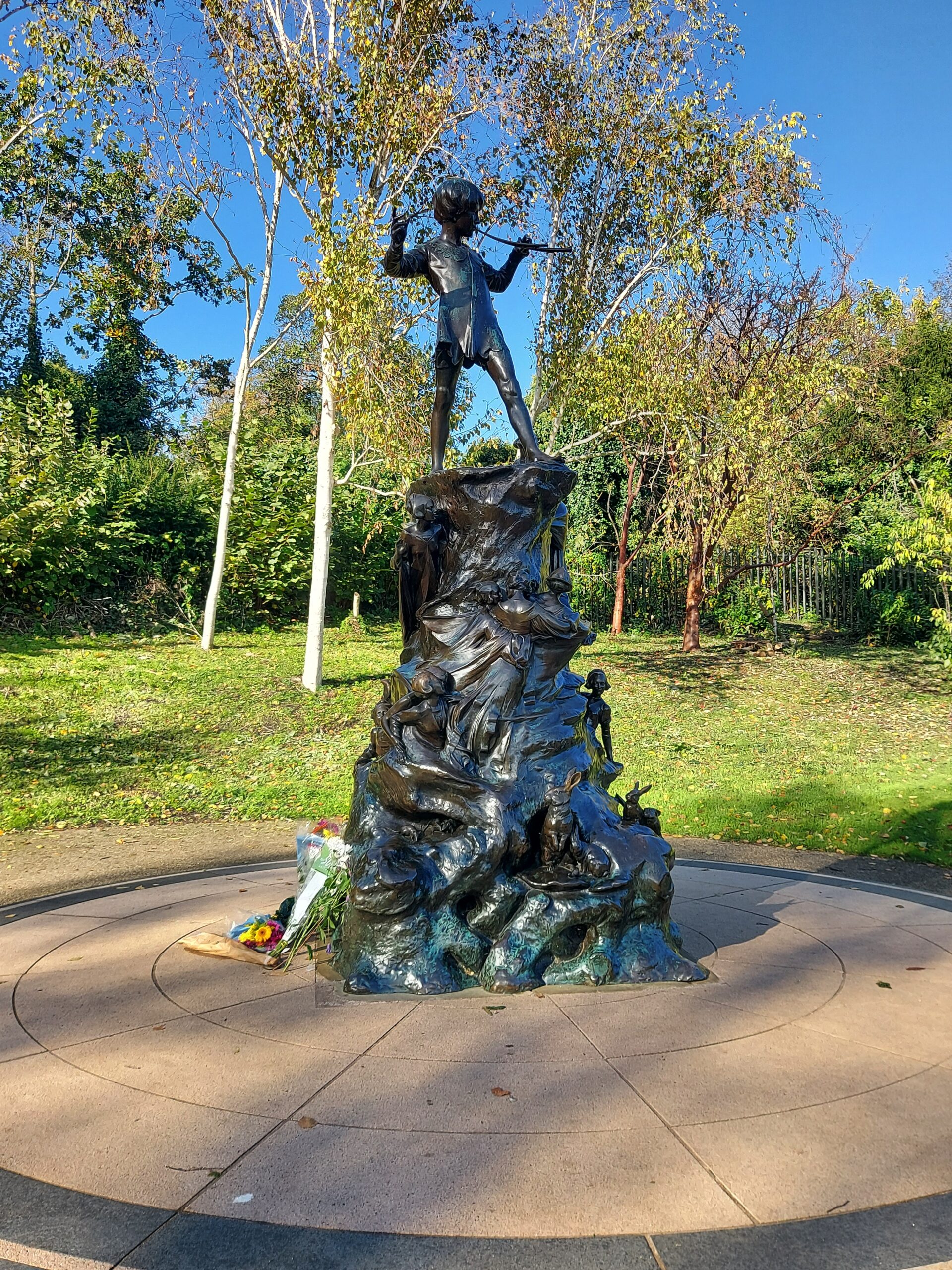
I enjoyed exploring Kensington Gardens in more depth and learning about, for instance, the hidden creatures within the Peter Pan statue, established in 1912 by J. M. Barrie, the novel’s author.
After exploring the park, we ended up at the Albert Memorial. Designed by Sir George Gilbert Scott, it shows Prince Albert holding the catalogue of the Great Exhibition of 1851, which he had helped to organise. We got to go up close to the frieze which runs all round the memorial.