The Viktor Wynd Museum of Curiosities, Fine Art & UnNatural History

Front of the museum

The Viktor Wynd Museum is somewhere I’ve wanted to visit for a long time, and I was pleased to have the opportunity in the form of a tour from the proprietor himself. These tours are available to book online, as are other events in the museum and the attached cocktail bar, but it’s also possible to pay a visit independently whenever the museum is open.

Lion sitting at a table

The museum collection consists of weird and wonderful artefacts collected over many years by Viktor Wynd. These include taxidermied animals, shrunken heads, fossils, scientific and medical instruments, unusually-titled books and celebrity memorabilia. It’s a bit like a cabinet of curiosities. There is a huge amount to see, and it definitely helps to have a guide to point out the most interesting stuff and regale you with the stories behind it.
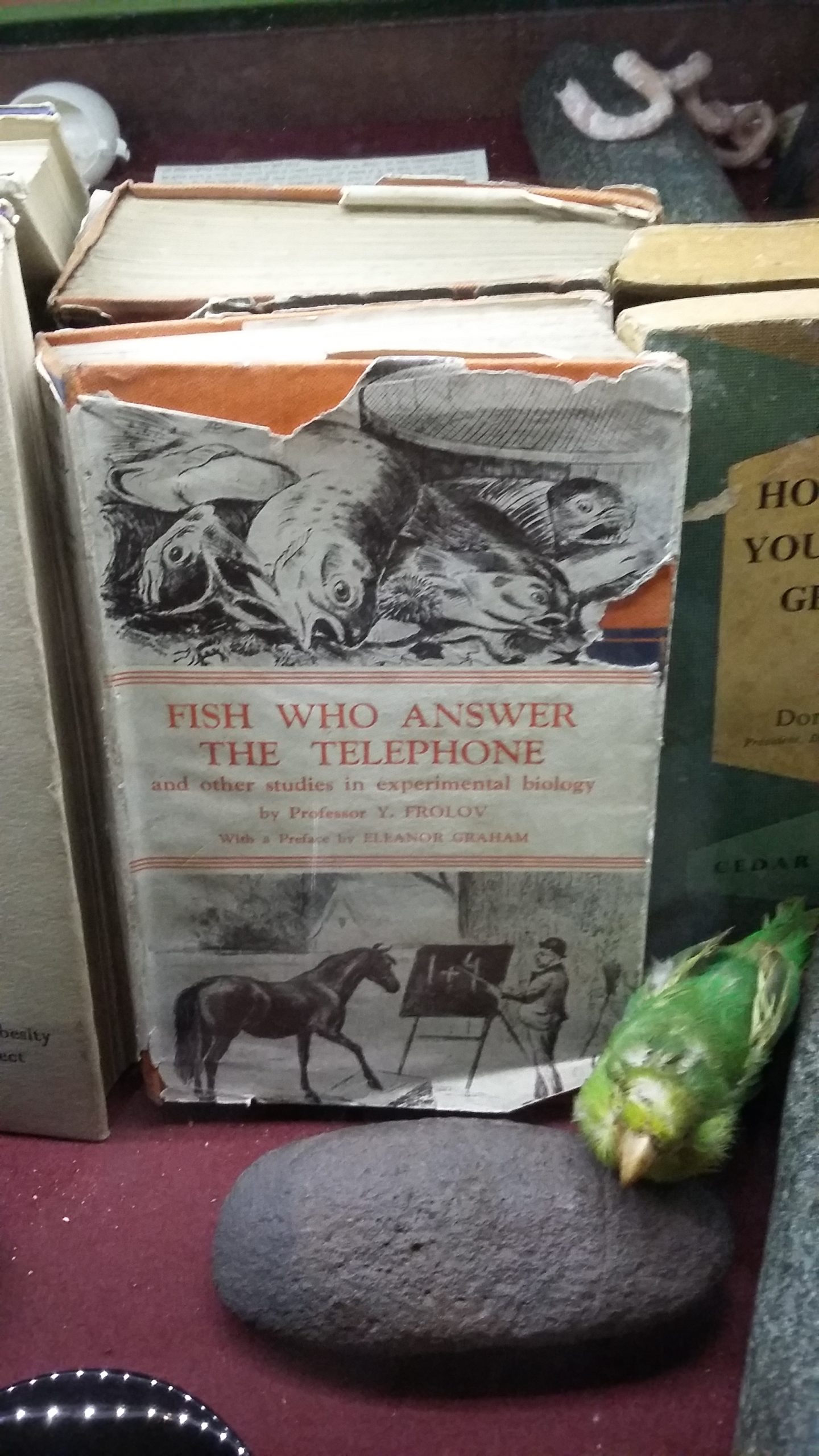
Unusually-titled book

The museum is certainly worth visiting, and I highly recommend the guided tour.

FACTS

Address: 11 Mare Street, London, E8 4RP

Website: thelasttuesdaysociety.org/museum/

Opening Hours: Wed-Thurs 5-10pm, Fri-Sun 12-5pm

Price: Adult £10, concessions/locals/those with reservations to the on-site bar £6. On Thursdays admission is £5/£2.50.

Heath Robinson Museum

Heath Robinson Museum

The Heath Robinson Museum is located in Pinner, north-west London, inside the Memorial Park. This isn’t too far from me, so I paid a visit one weekend. I have to admit, I’d only vaguely heard of Heath Robinson before visiting, but I was impressed by what I found.

William Heath Robinson was born in North London in 1872, the son of an illustrator and engraver. He trained at Islington School of Art, then at The Royal Academy Schools. He hoped to become a landscape painter, but the need to earn a living drew him towards more commercial form of art, so (like his older brothers) he entered the world of illustration. He illustrated editions of Shakespeare and Kipling among others in the course of an illustrious career. Later in life he moved to the Pinner suburbs to better support his growing family.

Heath Robinson Museum display

As well as illustrations, Heath Robinson drew humorous satirical cartoons, which made him immensely popular, especially during World War I as his cartoons, poking fun at enemy propaganda, increased morale among the troops. Perhaps most famously, he became known for complex yet humorous illustrations of all kinds of weird and wonderful contraptions, which satirised unnecessary complexity and bureaucracy, punctured pomposity and emphasised human weakness.

These illustrations were my favourites, although Heath Robinson was clearly a very talented man and all aspects of his work are worth exploring. The museum gallery takes a chronological approach to his life and work and I left feeling as though I knew a good deal about this unique artist.

The Museum also has another gallery which hosts special exhibitions relating to illustration. The current exhibition is Fairies in Illustration which had many images of fairies spanning several years, including pictures by the likes of Brian Froud and Cicely Mary Barker as well as Heath Robinson himself.

Fairy drawing
A fairy by Brian Froud

I definitely recommend a visit to the Heath Robinson Museum, even if – perhaps especially if – you don’t know anything about the artist. It’s a little gem.

FACTS

Address: 50 West End Lane, Pinner, HA5 1AE

Website: heathrobinson.org

Opening Hours: 11am-4pm Thursday – Saturday

Price: Adults £6, 65+ £5, disabled people and students 25+ £4, students 24 & under and children free

Docks After Dark – Museum of London Docklands

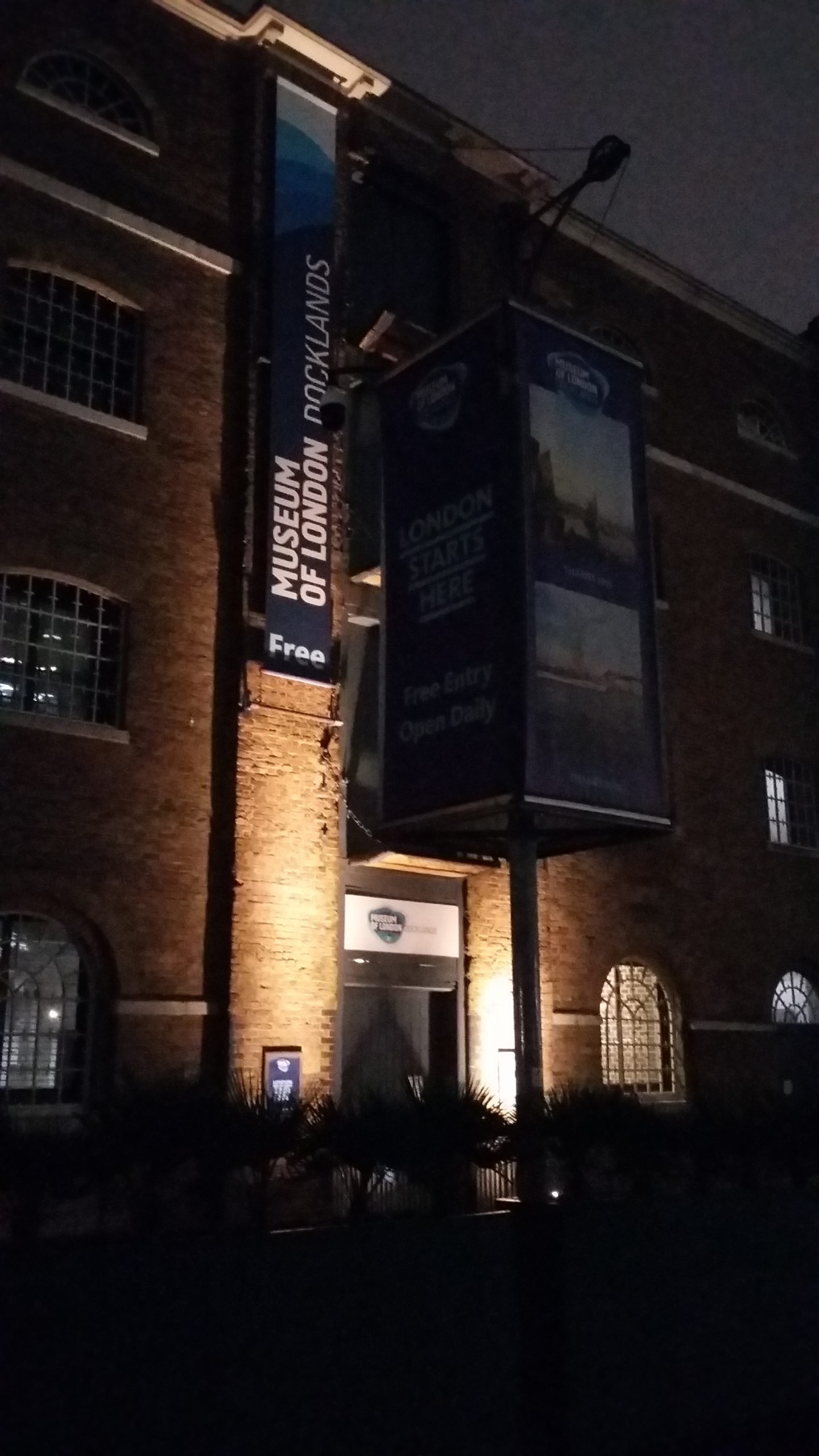
Museum of London Docklands entrance

The Museum of London Docklands hosts, during the winter months, after-hours ghost tours, known as Docks After Dark. I signed up for one of these taking place in February, and despite the pouring rain, was excited to arrive.

The museum is contained within a former shipping warehouse and therefore has a rich history. After dark, with so few people around, it is especially atmospheric. After a short wait in the foyer with a glass of wine and nibbles, we were taken round the museum to be regaled with stories of the ghosts that are supposed to inhabit this place, starting with the staircase, on which security guards and other museum workers are supposed to have heard ghostly footsteps, and ending on the top floor where unexplained faces have been seen. The most memorable part of the visit was when we were taken into the cramped recreation of the infamous Ratcliffe Highway, and told stories of things that happened on this notorious street, such as the murders of 1811.

I don’t want to give away too many of the stories told this evening, but I would definitely recommend signing up for one of the tours when they return.

Polish Institute and Sikorski Museum

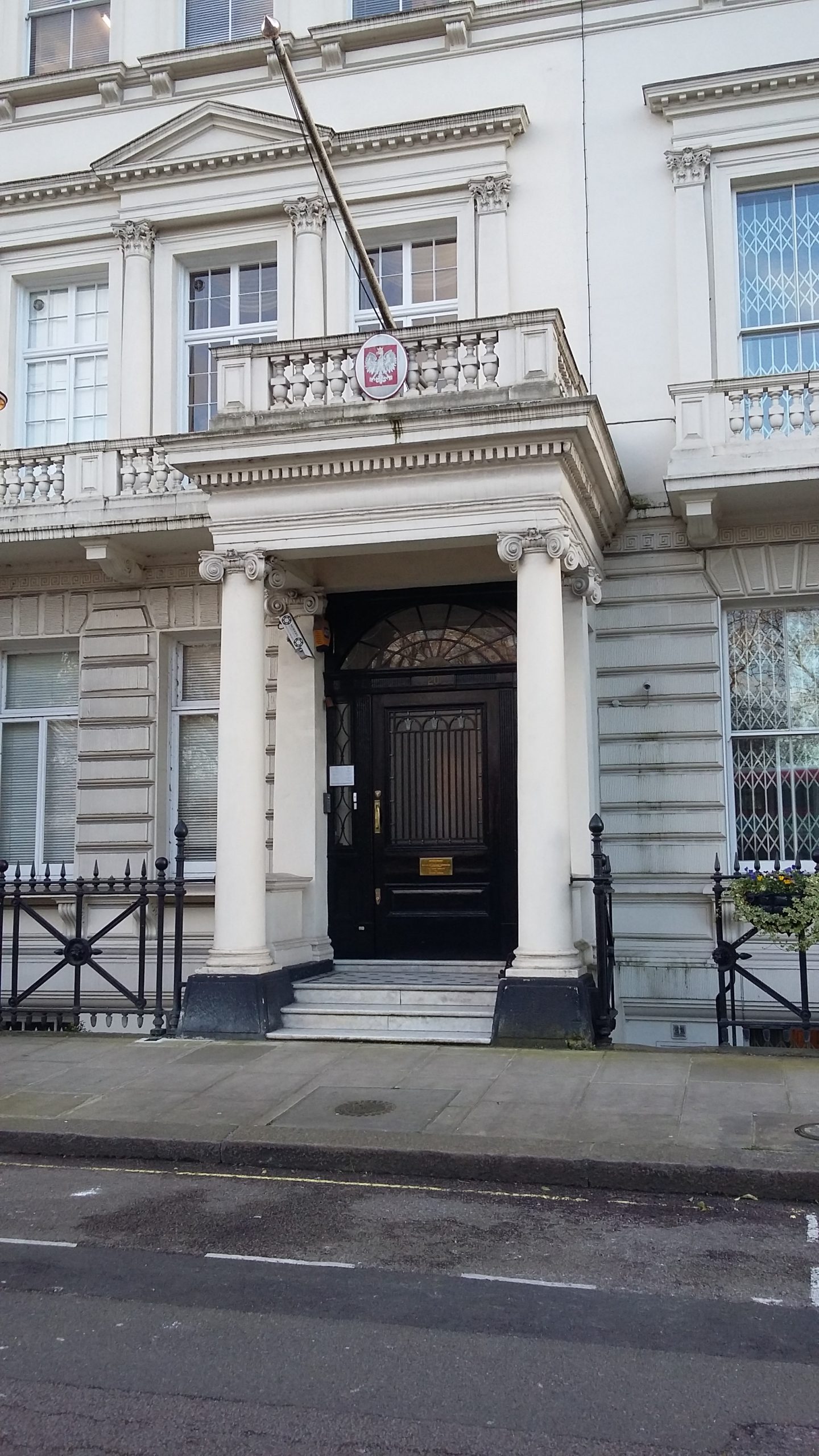
Polish Institute and Sikorski Museum

The Polish Institute and Sikorski Museum is usually open only on weekdays, but it is also open to the public on the first Saturday of every month. I turned up – having caught the bus to the Royal Albert Hall just down the road – and immediately hit a snag as no one was answering the bell. Luckily, another couple arrived shortly after me and had the bright idea of ringing the museum. So finally we were let in.

The museum is much bigger than I had expected. It encompasses numerous rooms over three floors; there is also an archive in the basement, and the Institute operates as a publisher, printing works of interest in Polish history. Many of the artefacts and displays relate to the Second World War, but others hark back to older Polish history, such as the bust of Jan Sobeski, a king who helped liberate Vienna in 1683. Most of the labels are, naturally enough, in Polish, but a few are in English.

What made the visit especially interesting was the guide, who started explaining a few of the exhibits to a group of English-speaking visitors and ended up taking us around the whole museum – I was there about two hours.

The Institute was set up in May 1945, following the end of the Second World War. With the imposition of a Soviet Communist government in Poland, many of the Polish nationals who had been living and fighting in Britain and elsewhere realised they would not be able to return. They turned their attention to the preservation of artefacts and records from this era and earlier, and these found a home in the Institute, which was named after General Wladyslaw Sikorski, Polish Prime Minister during the period of the war. During the later period of Communist rule in Poland, the Institute functioned as a hub for cultural and educational pursuits, and even after the collapse of Soviet rule, the Institute has continued to function as an independent institution.

One section of the Institute, the Sikorski Collection, is focused on the life, papers, documents and belongings of General Sikorski. A large proportion of the Institute’s acquisitions comprises the Military Collection, mainly focusing on World War II but also featuring artefacts from earlier periods in history. One significant item is a flag, quickly sewn together and raised above the ruins of Monte Cassino when Polish soldiers took the monastery in May 1944. Another is the Anglo-Polish Military Agreement, dated 5 August 1940 and signed by Prime Ministers General Sikorski and Winston Churchill as well as their respective foreign ministers. Aside from these two key collections, there are also a number of artworks, sculptures and miniatures.

FACTS

Address: 20 Prince’s Gate, London, SW7 1PT

Website: pism.co.uk

Opening Hours: Tuesday-Friday 2-4pm, first Saturday of the month 10:30am-4pm

Price: Free