Legion: life in the Roman army – British Museum

An exhibition I really wanted to see was Legion: life in the Roman army at the British Museum. I managed to visit over the Bank Holiday weekend.
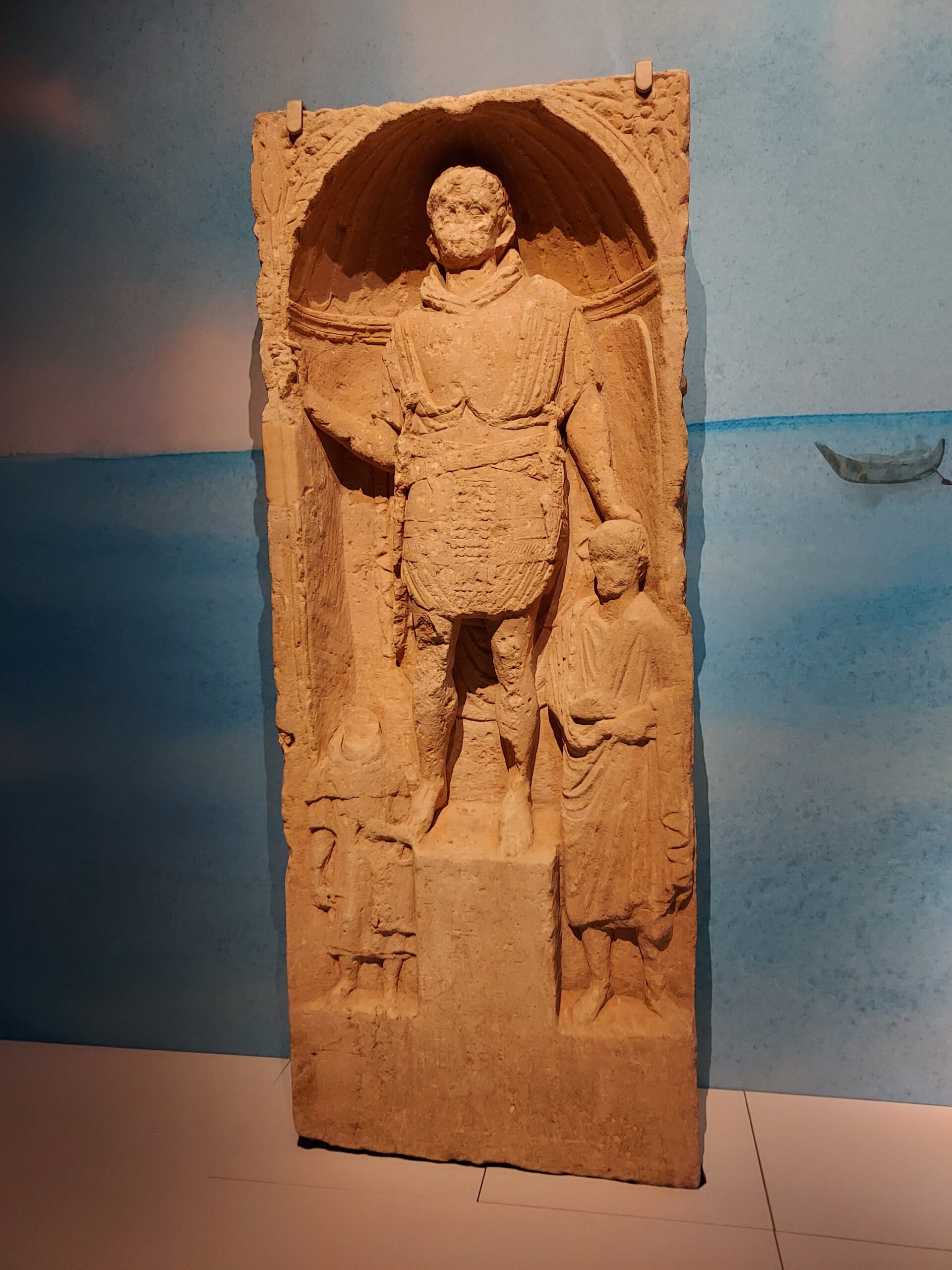
Statue of a Roman soldier

As the title suggests, the exhibition explores what life was like in the Roman army for the soldiers that served in it. Drawn from across the Empire, citizen soldiers were tempted by the prospect of monetary rewards on retirement, while non-citizens could look forward to citizenship for themselves and their families. However, lasting until retirement depended on surviving battles, illnesses and other hardships.

The exhibition focuses on one particular soldier, Claudius Terentianus, as an anchor throughout. We see his journey from enlistment through wars to eventual retirement. Rome was an empire bent on conquest, and required thousands of soldiers in order to conquer and maintain order throughout its territories. Civilians often viewed them with suspicion – the discovery of the skeletons of two soldiers in Canterbury suggests that they were murdered and buried in secret.

Roman longshield
Legionary longshield

The Roman Empire spanned countries and continents, and this is apparent in the objects on display, which include letters written on papyri by soldiers based in Egypt and tablets found at Vindolanda fort near Hadrian’s wall. Some of the most common objects are gravestones, a stark reminder that many soldiers and their family members died of various illnesses. One section in the exhibition focuses on the games and toys families amused themselves with while living at forts and encampments.

As is to be expected in an exhibition about soldiering, weapons and armour are prominent; one particularly impressive item is the only surviving legionary long shield. It’s incredible seeing this shield, which, owing to its prevalence in popular culture when it comes to the Romans, seems almost larger than life. One cuirass (a piece of torso-fitting armour) comes with a sad story: it was found on the battlefield in Lower Saxony after the Romans were resoundingly defeated by German warriors.
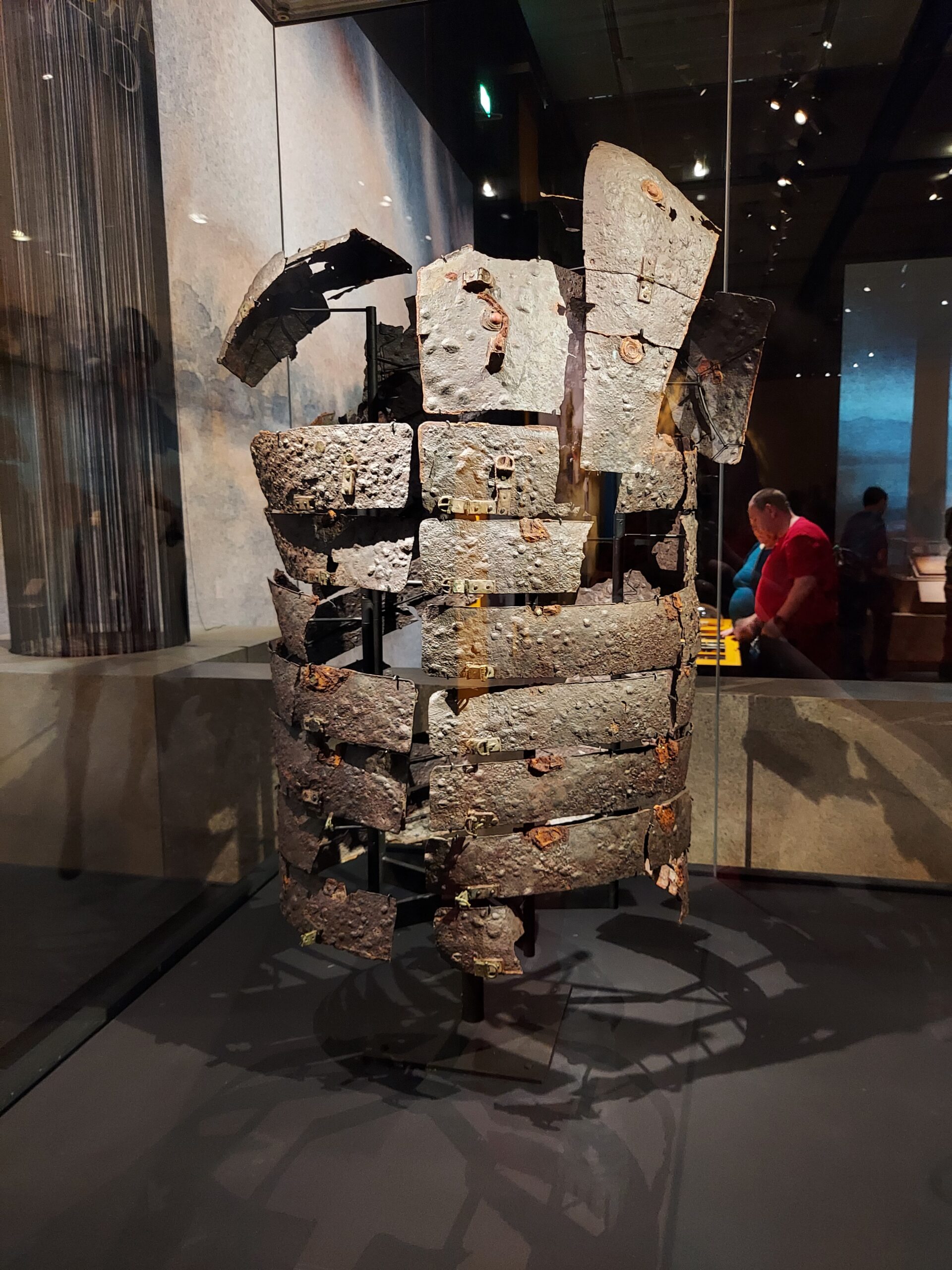
Roman armour
Roman armour

The exhibition is full of fascinating information, such as the structure of the Roman army, how one would go about becoming a soldier, and details of the various Emperors and the campaigns they waged. However, it is the human stories that speak to us the most. Terentianus detailing his troubles in a letter to his father; a Roman lady stationed in a fort sending an invitation to her friend; and most poignantly, a soldier killed by the Vesuvian eruption trying to help civilians escape from Herculaneum. His sword and dagger were with him, still sheathed, and are perfectly preserved.
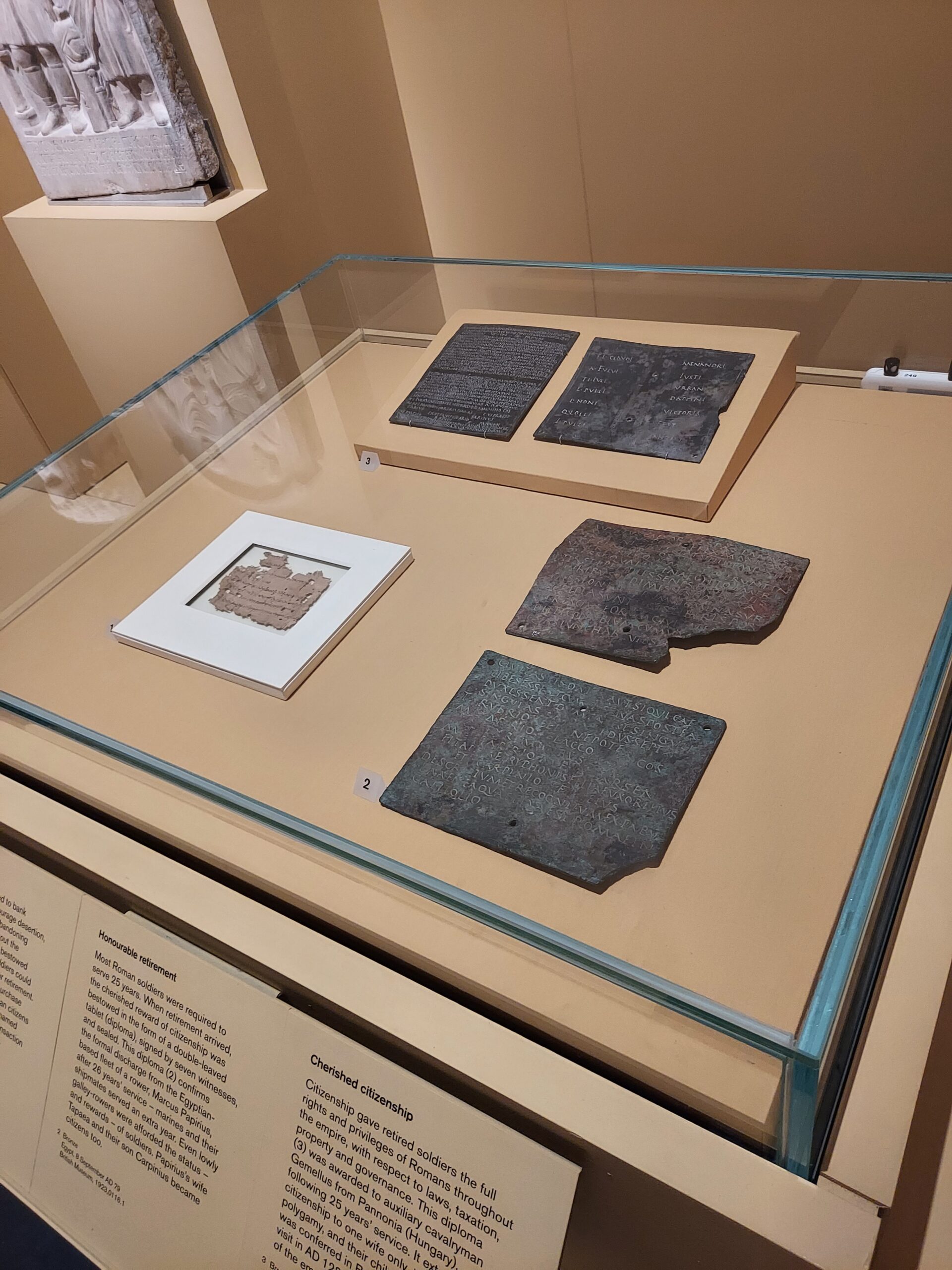
Tablets conferring Roman citizenship on retired soldiers

Disney100: The Exhibition – ExCel London

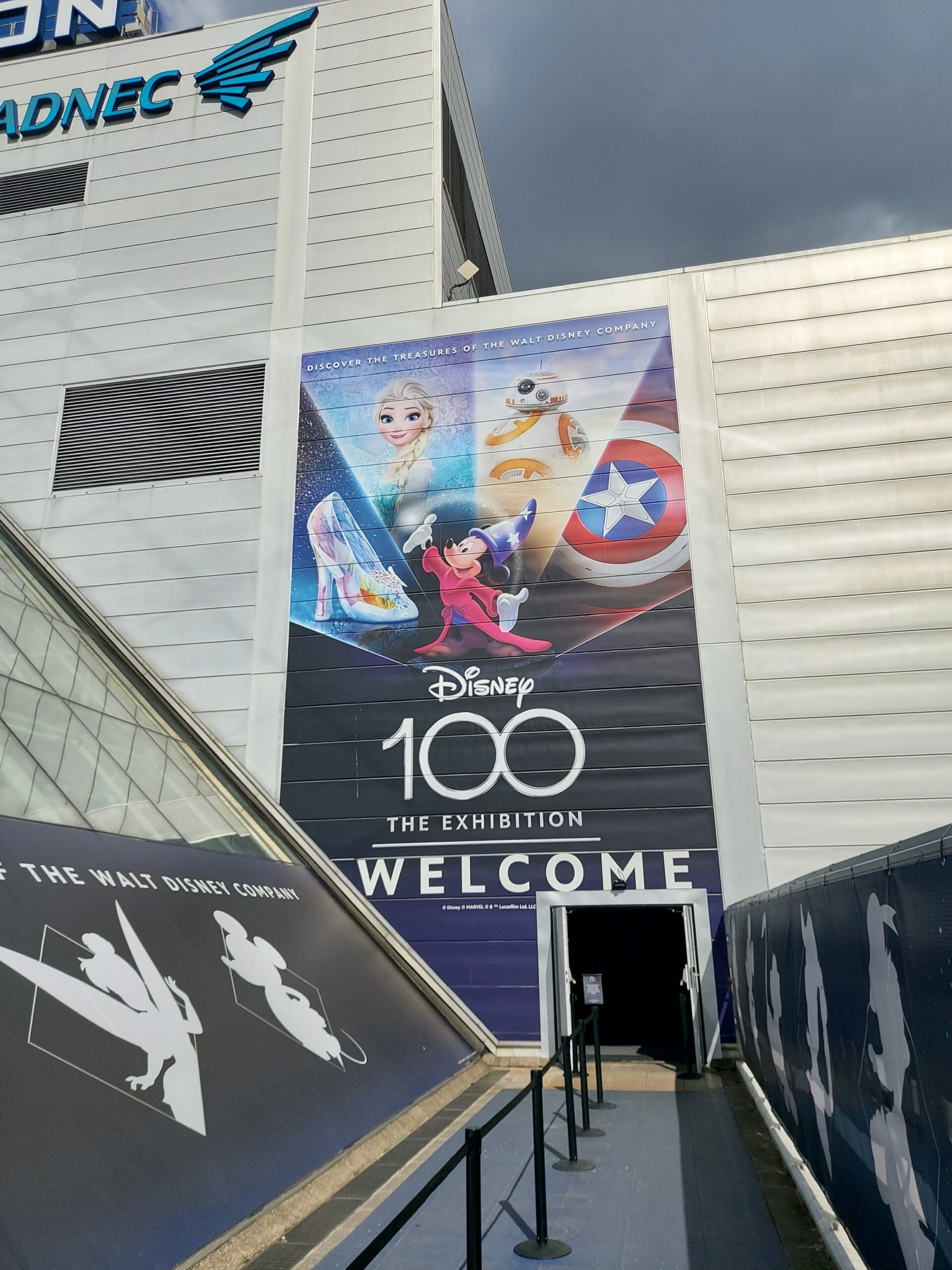
Entrance to the Disney100 exhibition

As someone who has enjoyed Disney movies for most of my life (although I don’t have the passion or obsession that many others have), I wanted to visit the Disney100 exhibition at the ExCel centre in London. The date I chose to visit was the same day as Comic Con, so I was a bit confused by all of the people in cosplay wandering around!

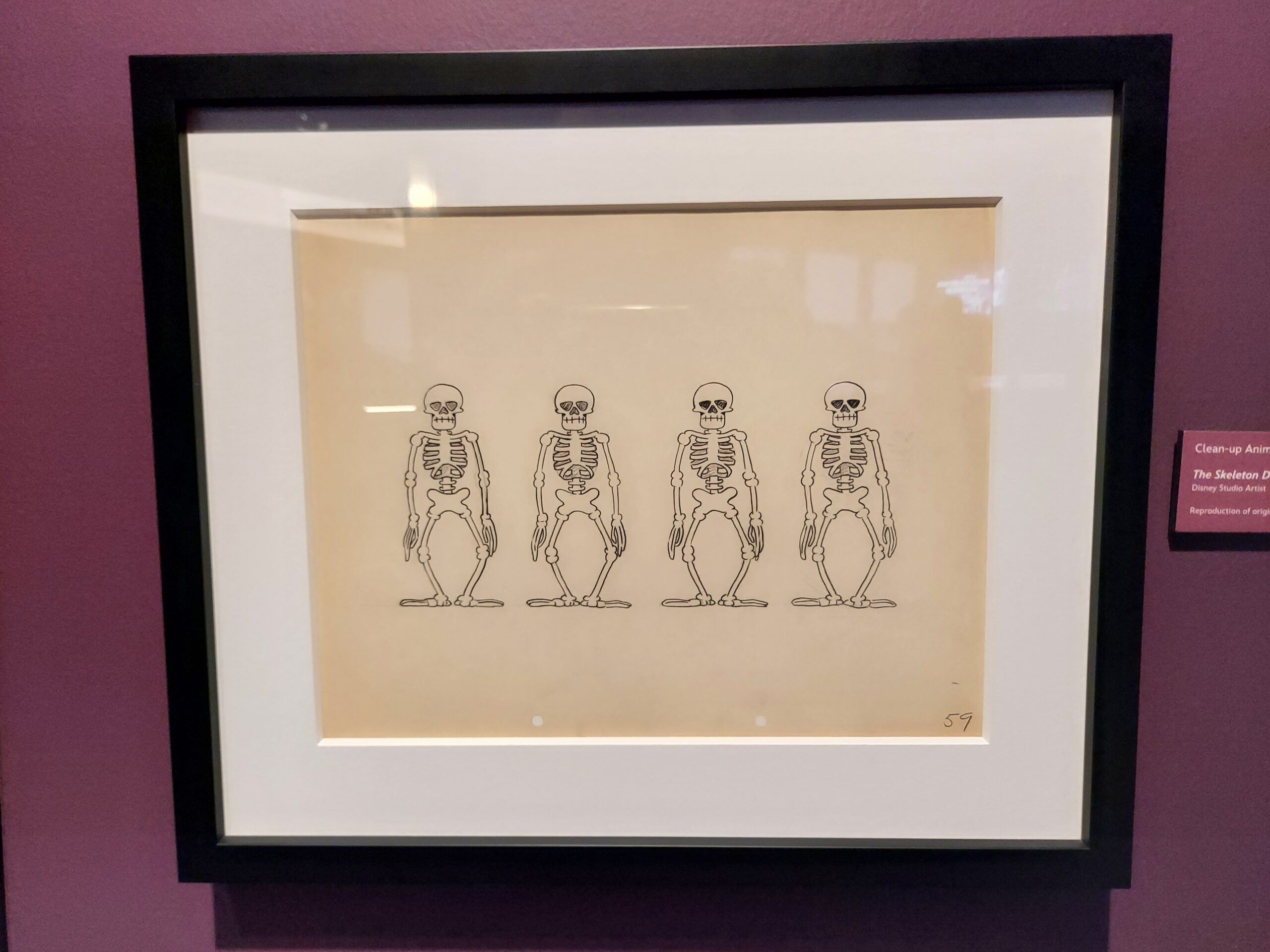
Still from the Skeleton Dance cartoon
Still from ‘The Skeleton Dance’, 1929

The exhibition marks the 100th anniversary of the Disney company and traces the story of its beginnings and development over the last century. Beginning with Walt Disney’s earliest animations, it follows the establishment of the company and features artefacts, works of art, costumes and props from the entirety of its history.

Exhibits are arranged within ten themed galleries, including the stories, sound and music, and innovation. I particularly enjoyed the early galleries telling the story of how Walt Disney developed his skills in animation and founded the company: a genuinely unique innovator with a creative vision who changed the future of animation.

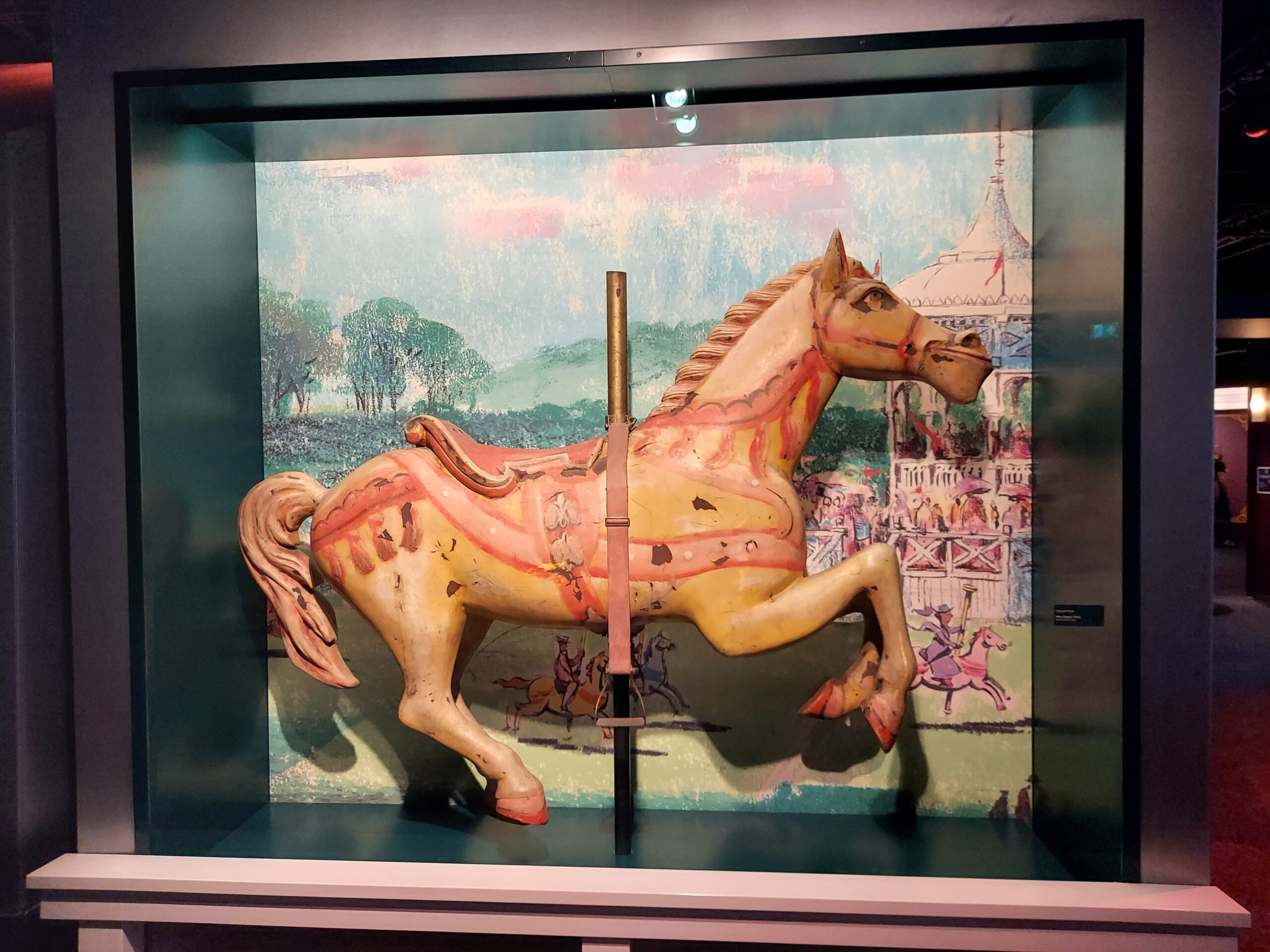
It was interesting to see props and stills from the early animated movies, especially the prop storybooks. Also, costumes and other items from live-action movies, such as a glass slipper from the live-action Cinderella and a carousel horse from Mary Poppins, were interesting to see.

Carousel horse
Carousel horse from ‘Mary Poppins’

I was personally less interested in the items relating to Star Wars and Marvel, partly because I’m not a particular fan of either, but mostly because I don’t feel they truly count as Disney, having been created outside of the company and brought under the corporation’s umbrella at a later date.

It was interesting to look at how music is incorporated into Disney films, and how innovations in technology influenced the movies – some of them developed within Disney itself.

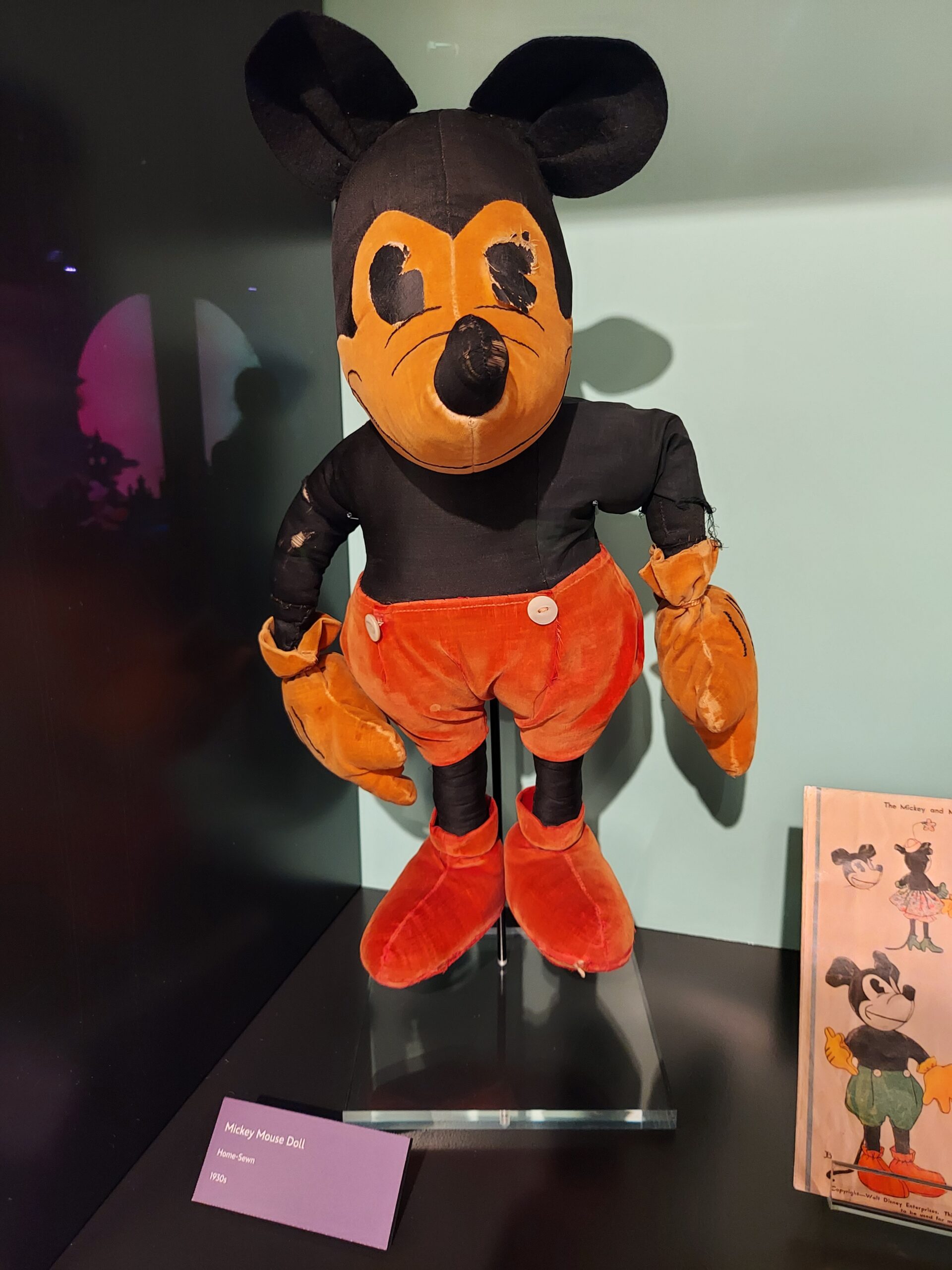
Mickey Mouse doll
Early Mickey Mouse toy

As might be expected from an exhibition created by the company itself, it is overwhelmingly positive about Disney, with nothing of any negativity to be seen. If you want a more rounded look at Disney and its impact on the world of animation and beyond, look elsewhere.

Nevertheless, this is a worthwhile and interesting exhibition about what is, at its best, a world-leading and history-making company, creator and adaptor of powerful stories that have captured the imaginations of generations of children.

Rebel Badge Club: Confectioner

I have a massive sweet tooth, so it’s no surprise that I decided to complete every clause of the Confectioner badge. It took over a year, but I thoroughly enjoyed indulging in these delicious makes.

Something vegan

I made these simple vegan orange creams (they would have been peppermint, but I couldn’t find any peppermint extract), which I thought were a great success.

Orange creams

Sugarcraft

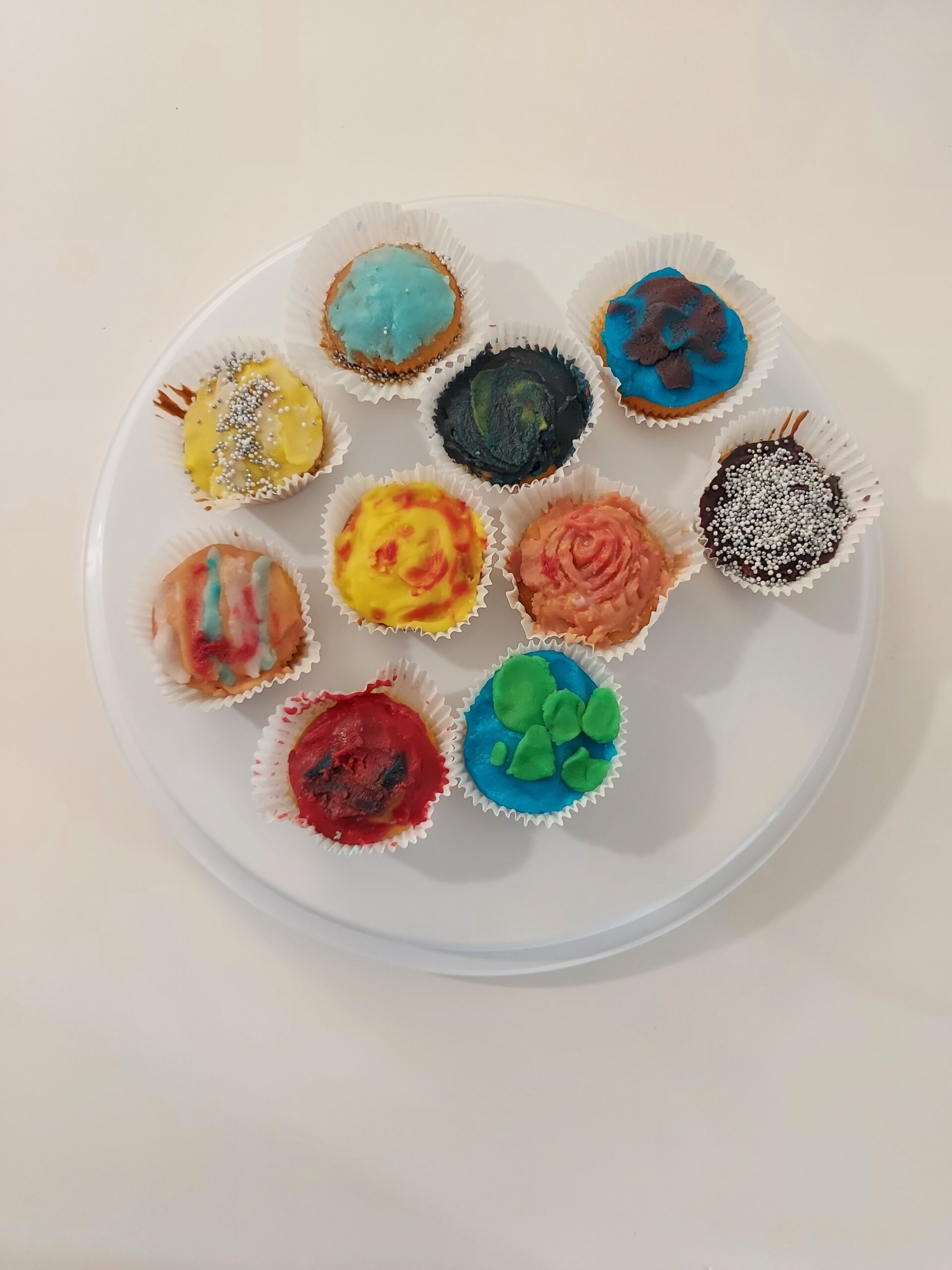
I bought a kit to make some solar system cupcakes, and proceeded to decorate them as instructed. I don’t think cake decorating is my forte, but I had fun.

Solar system cupcakes

A cheesecake

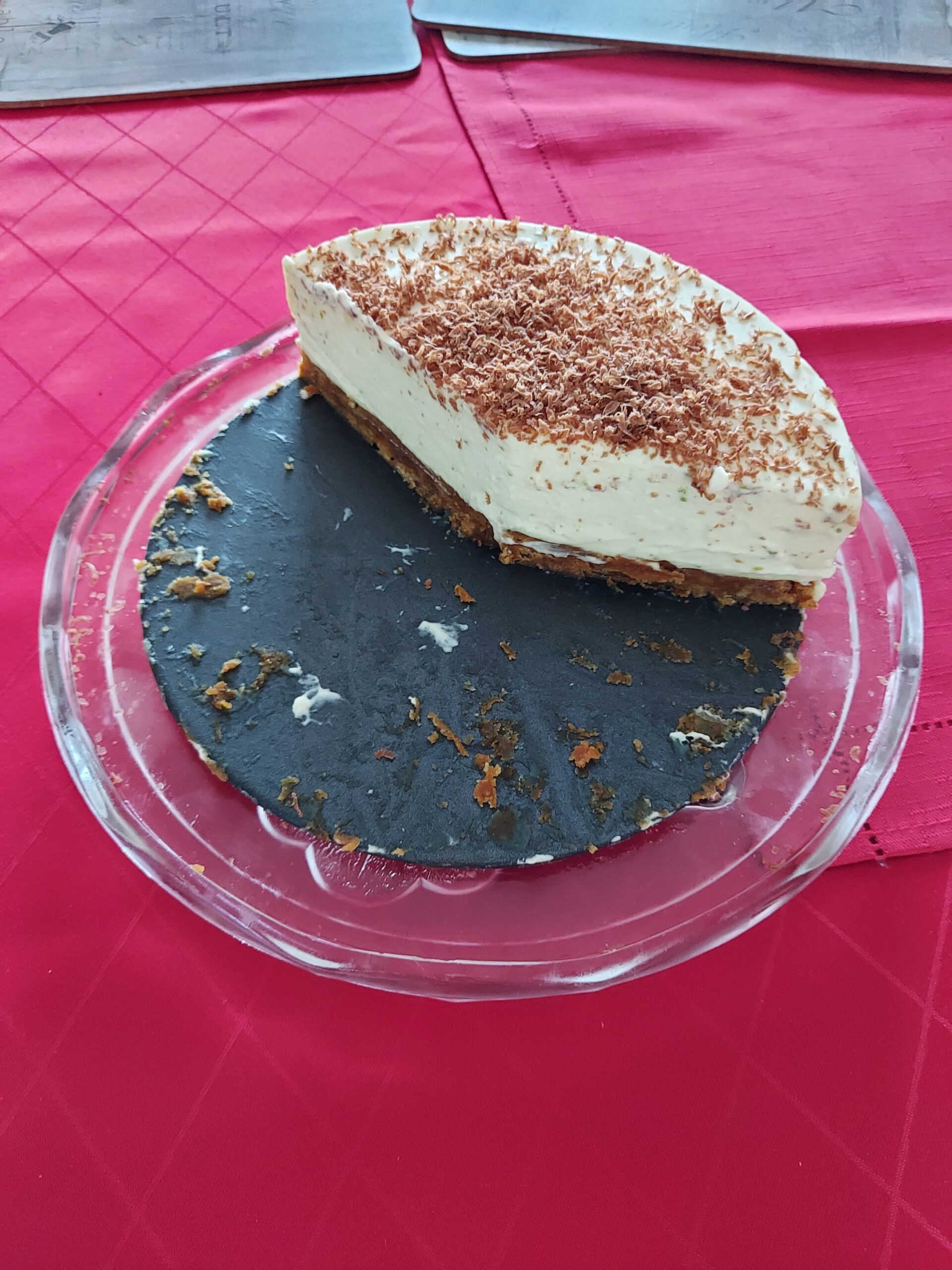
I made my mam’s key lime pie for dessert on New Year’s Day 2023 (which shows how long I’ve spent doing this badge!).

Key Lime Pie

Something containing caramel

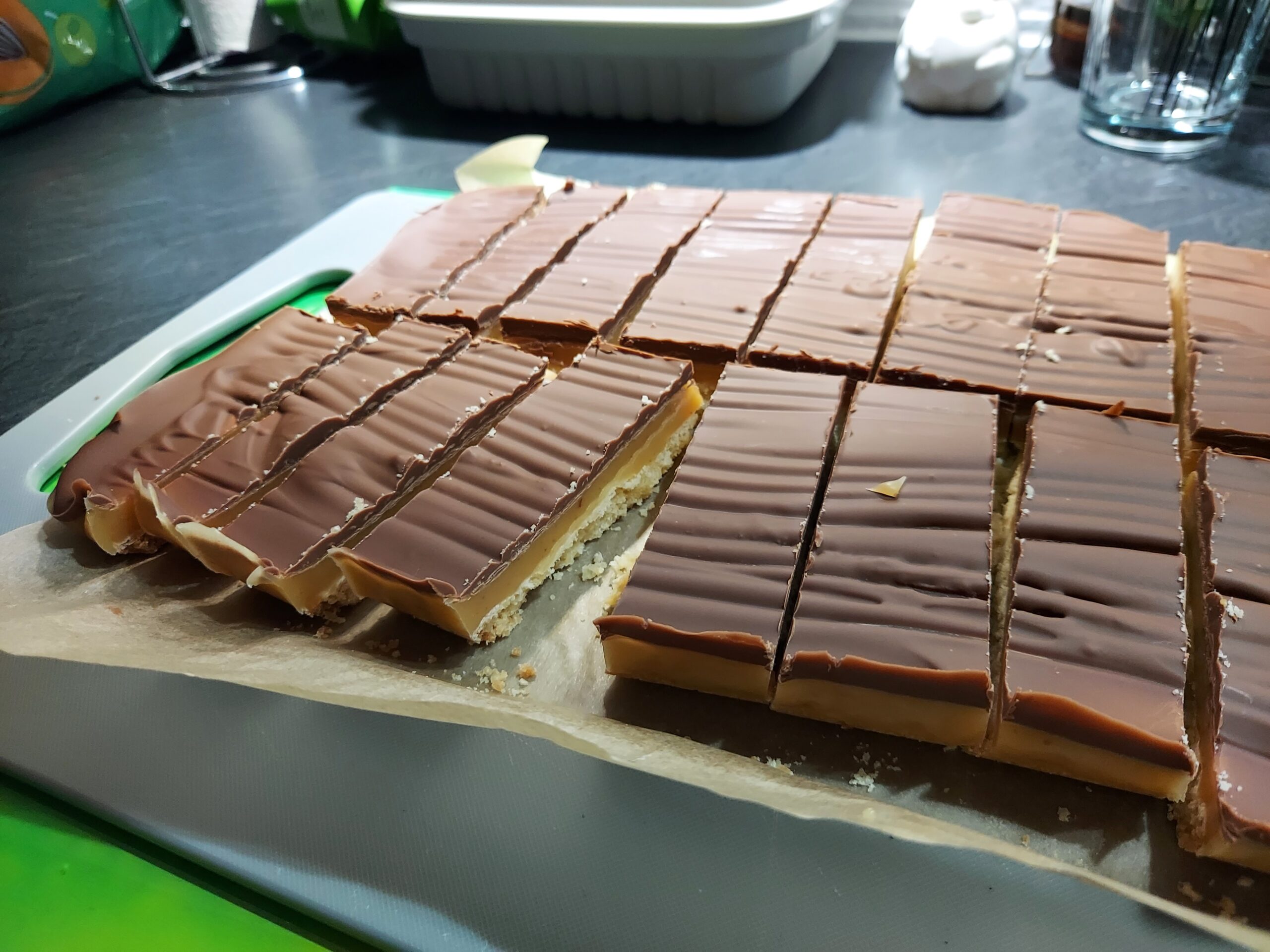
I made another of my mam’s recipes, this one for millionaire’s shortbread.

Millionaire's shortbread

A mousse

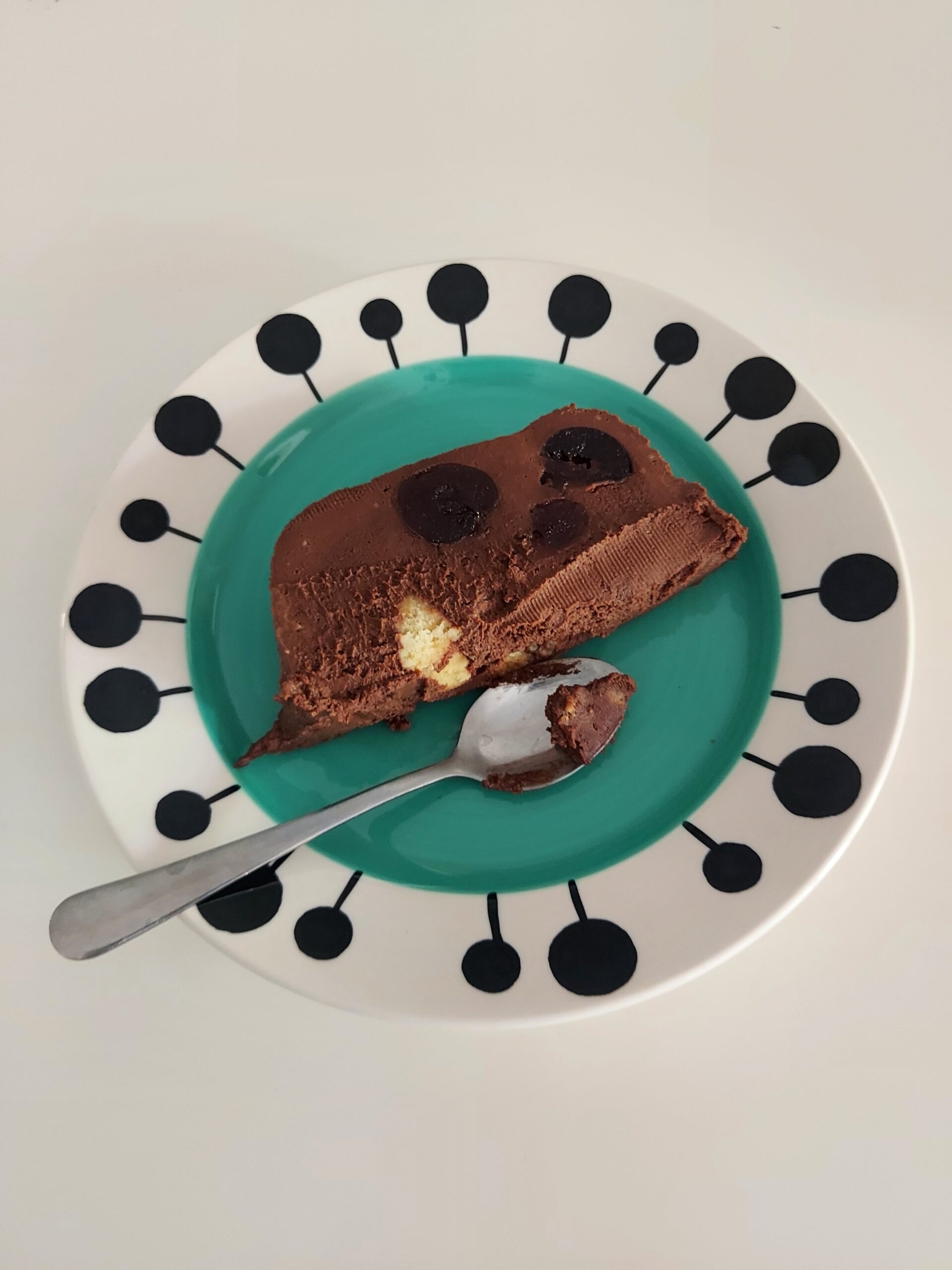
I found the recipe for this chocolate, coconut & cardamom fridge mousse cake online, and it ended up being one of my favourites.

Chocolate, coconut & cardamom fridge mousse cake

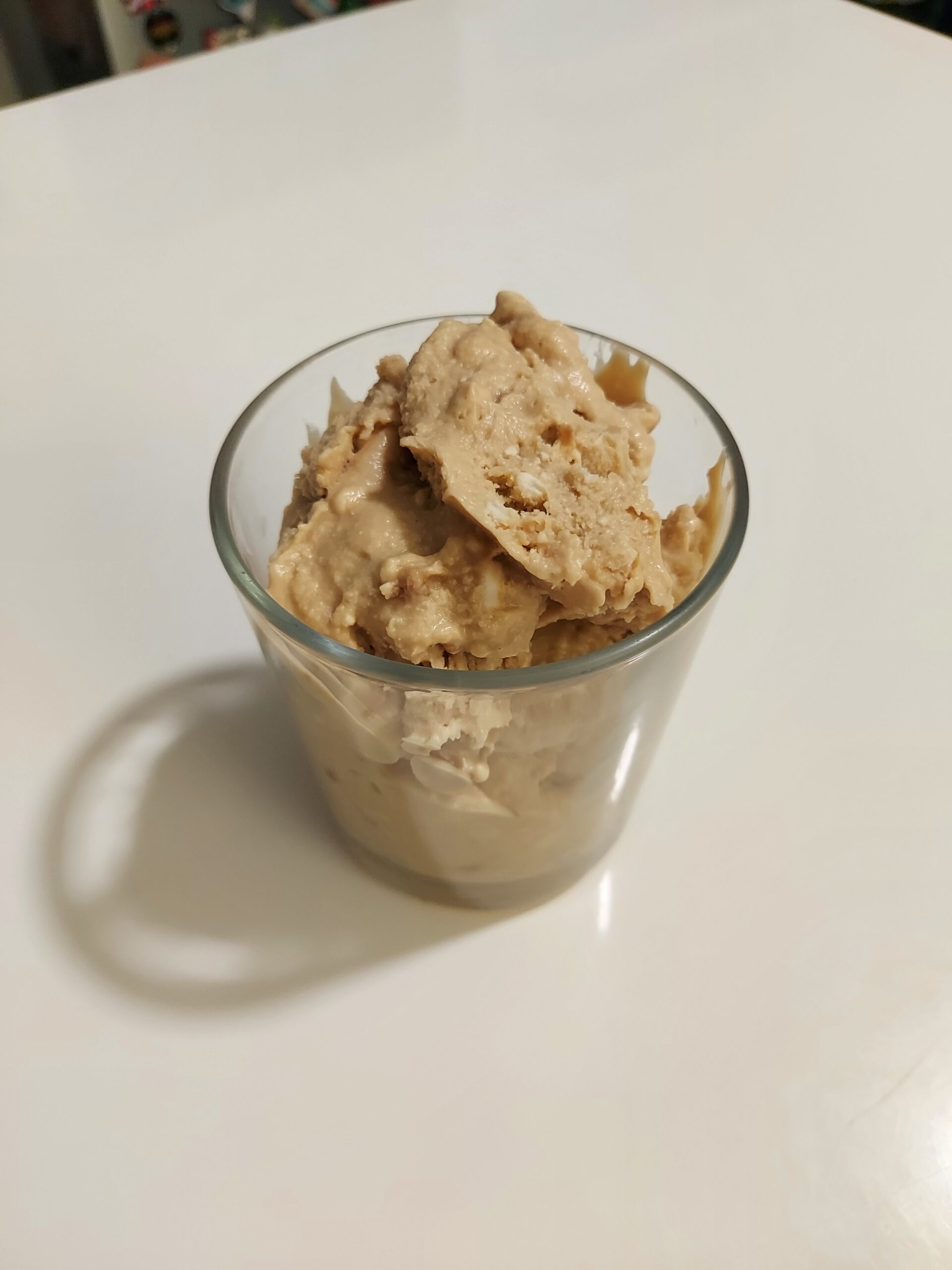
Homemade ice cream

I got this Biscoff ice cream recipe from one of my Jack Monroe cookbooks. It was super easy to make and incredibly delicious.

Biscoff Ice Cream

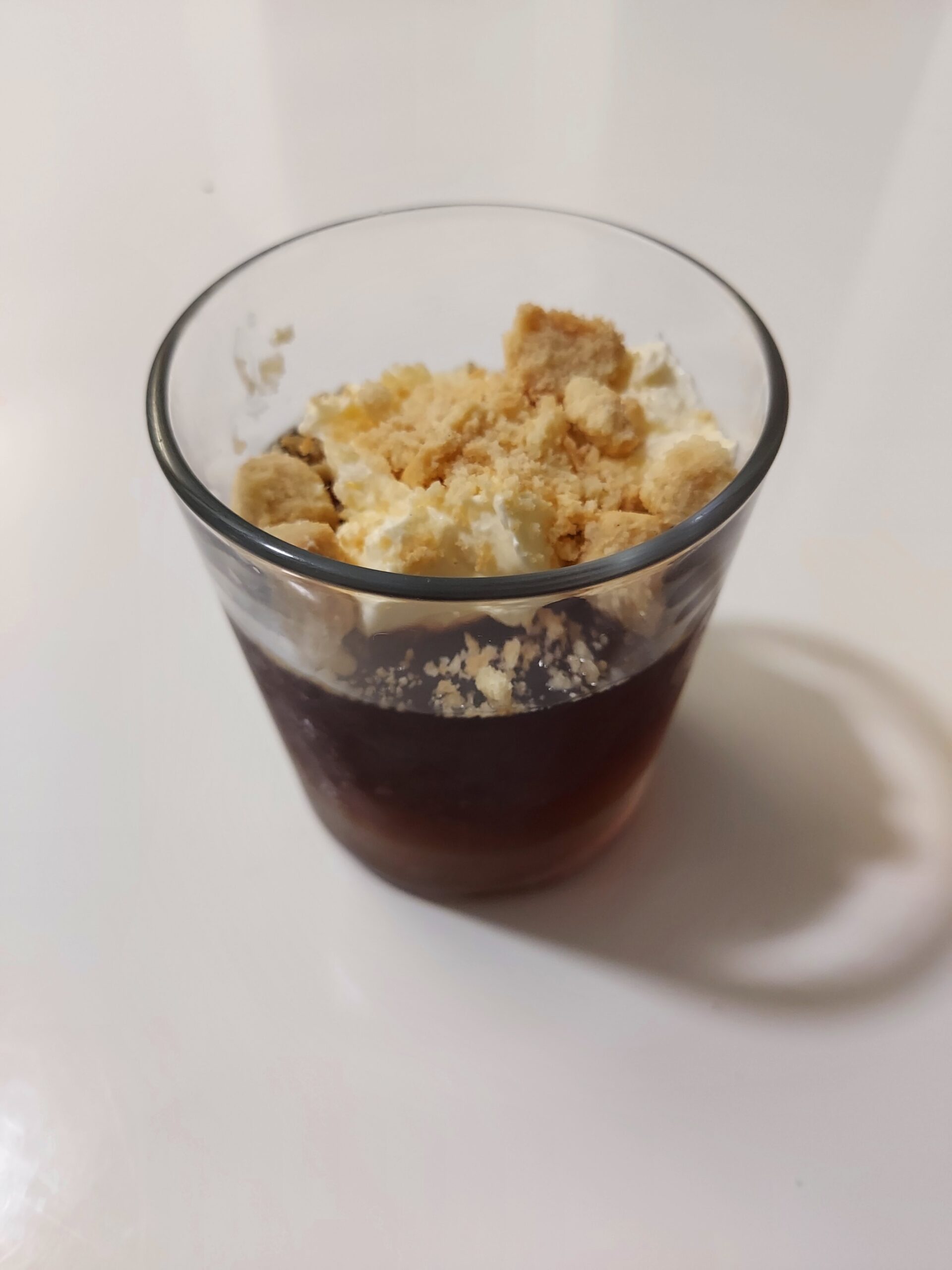
Something containing jelly

This recipe for elderflower jellies with boozy cream was another I found online. I was really pleased with the results, especially as I’d swapped the gelatine for a vegetarian alternative and had to adapt the recipe slightly to make it work.

Elderflower jelly

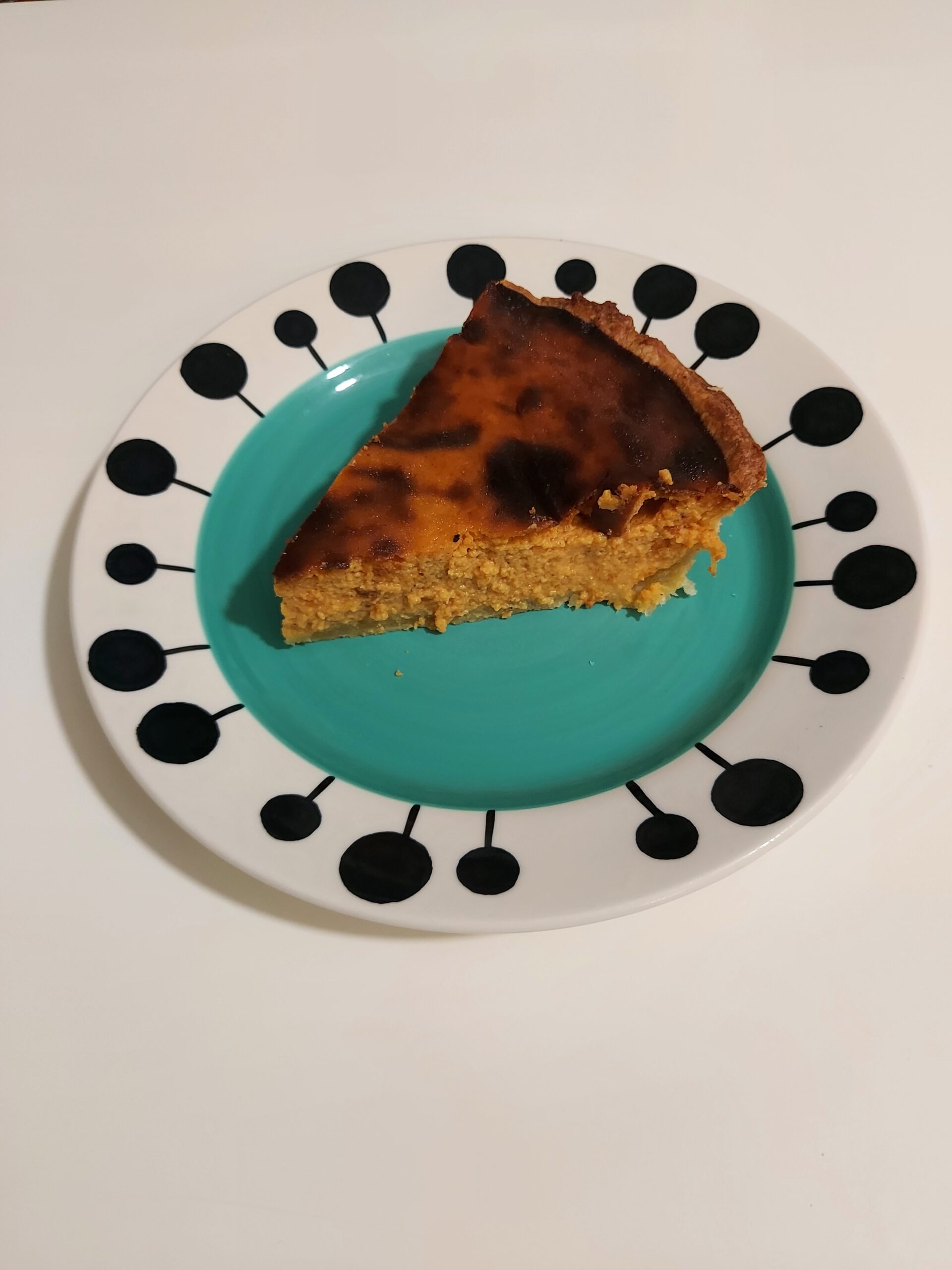
A foreign dessert

I’d always wanted to try pumpkin pie, so thought I’d have a go at making it. It was nice, but I would have preferred this style of dessert in cheesecake form – perhaps with a ginger biscuit base.

Pumpkin Pie

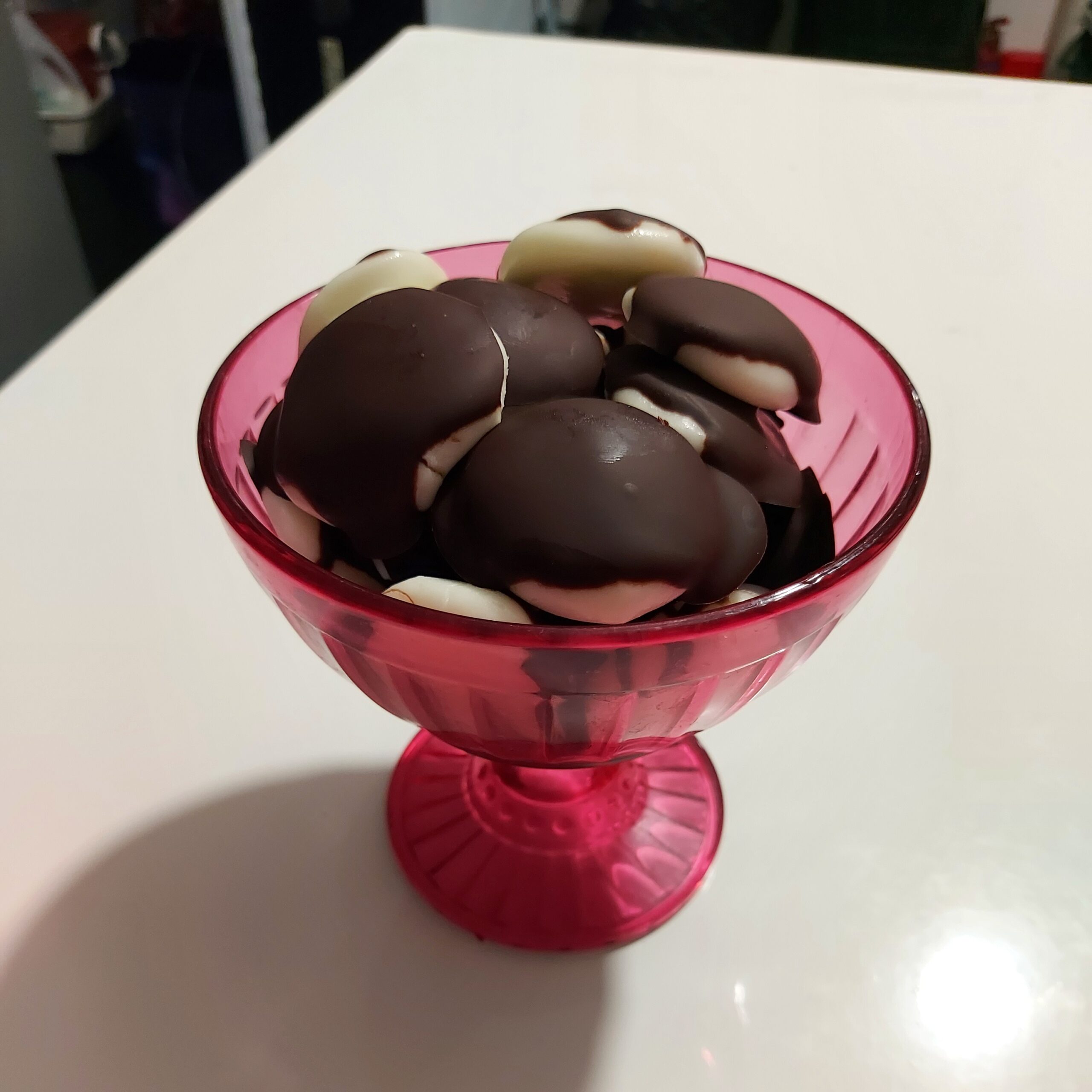
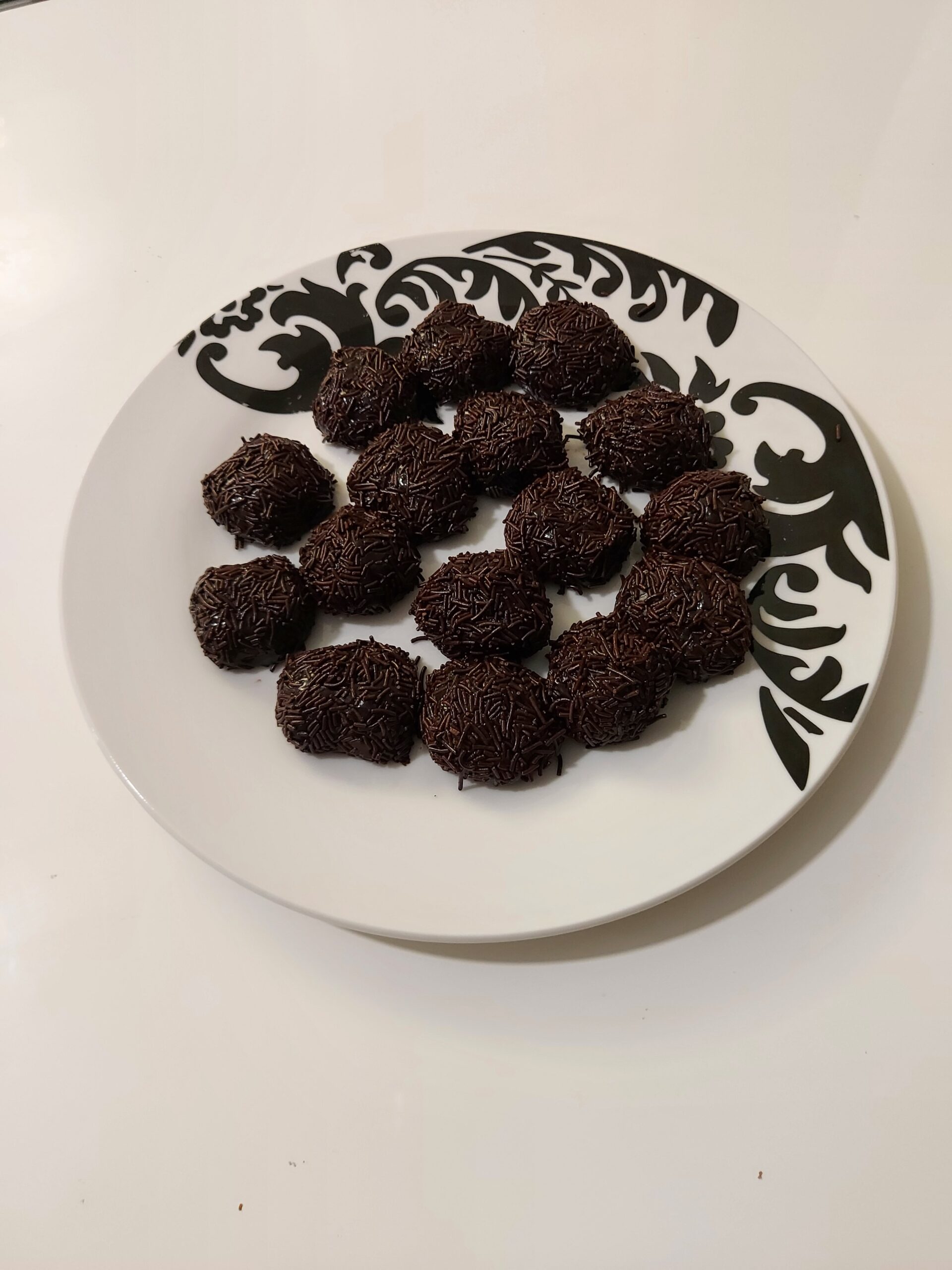
Something chocolate based

These brigadeiros – Brazilian chocolate and condensed milk truffles – were incredible. I will definitely be making these again.

Brigadeiros

Date completed: 25 May 2024

Covent Garden May Fayre & Puppet Festival

St Paul's Church and the gardens

On a sunny Sunday in May, I headed down to Covent Garden to attend the May Fayre and Puppet Festival in the gardens of St Paul’s, the Actors’ Church, Covent Garden.

I wandered round exploring the different stalls, offering puppetry workshops for young children, items for sale, and various puppet shows.

I sat on the grass to catch a Punch & Judy show and it was great fun!

Punch and Judy booth

Rebel Monopoly – London

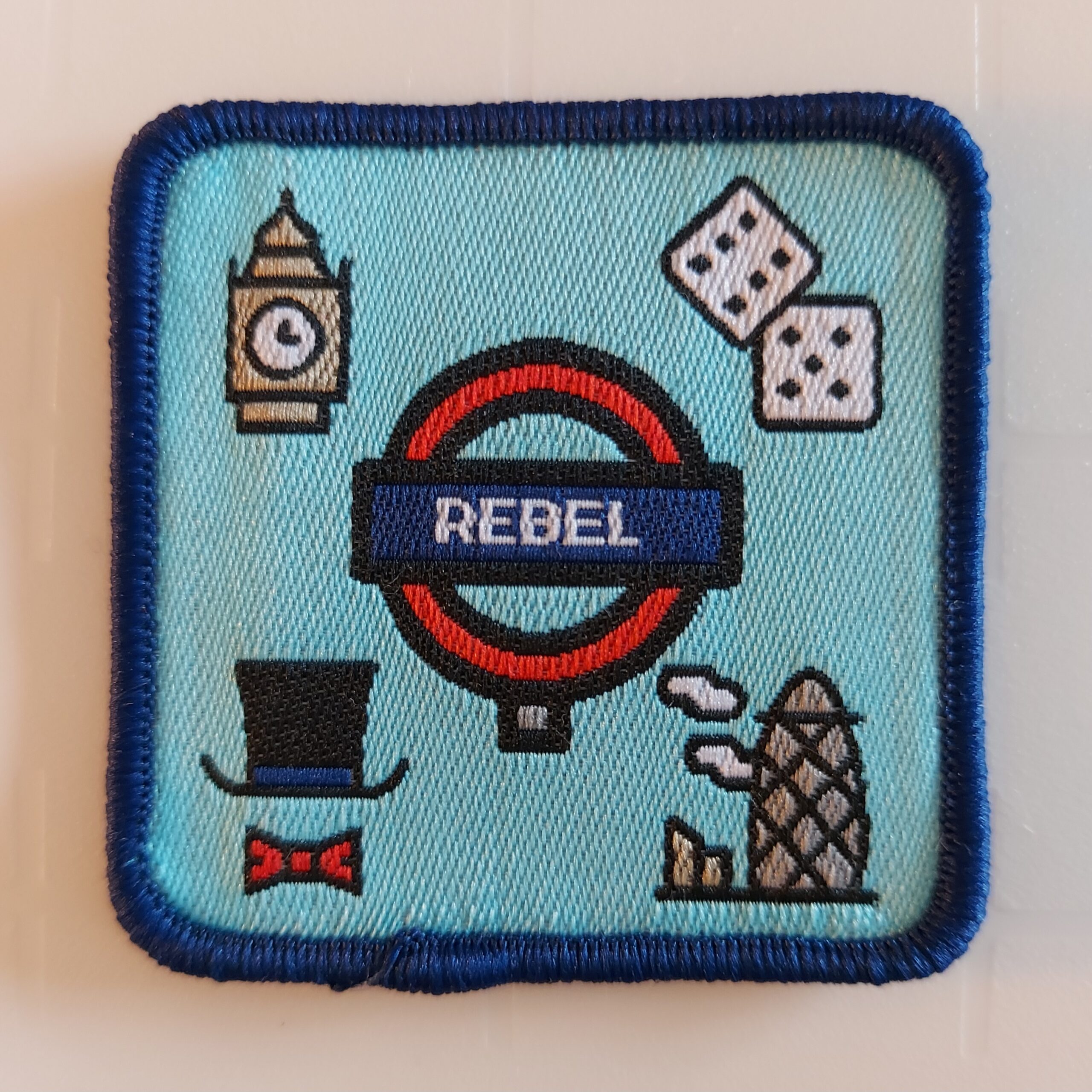
On Saturday I took part in Rebel Monopoly, a game all around London where teams of Rebels tried to visit every stop on the Monopoly board and got distracted by random challenges while doing it.

I was on a team with Laura B, Dawn and Roisin. We were Team 9, which I thought was cool because of Inside No. 9, and envisaged all sorts of weird and wonderful scenarios, none of which (luckily!) panned out. We met in the Caffè Nero at Trafalgar Square to discuss game plans before being sent off in our teams. I must admit I’d been so focused on Eurovision that I hadn’t devoted much time to thinking about tactics, so I was glad other members of the group had done so – although I was able to contribute my slightly obsessive knowledge of the Tube.

While rushing around London, we paid a visit to King’s Cross to meet one of the game tokens, playing a tricky game of Twister in the process. We also headed to Marylebone and hopped on a bus in order to earn points with a photo. After lunch we headed to the Tube again and I was gutted to lose my Rebel bucket hat, which blew off my head and onto the tracks!

An afternoon of Monopoly stop-hunting ensued, and we ended the game at Paddington before heading to Clapham and the pub which would host our Eurovision party.

A brilliant day was had, and I’ve since booked myself onto the Edinburgh version of the game, which takes place in September.

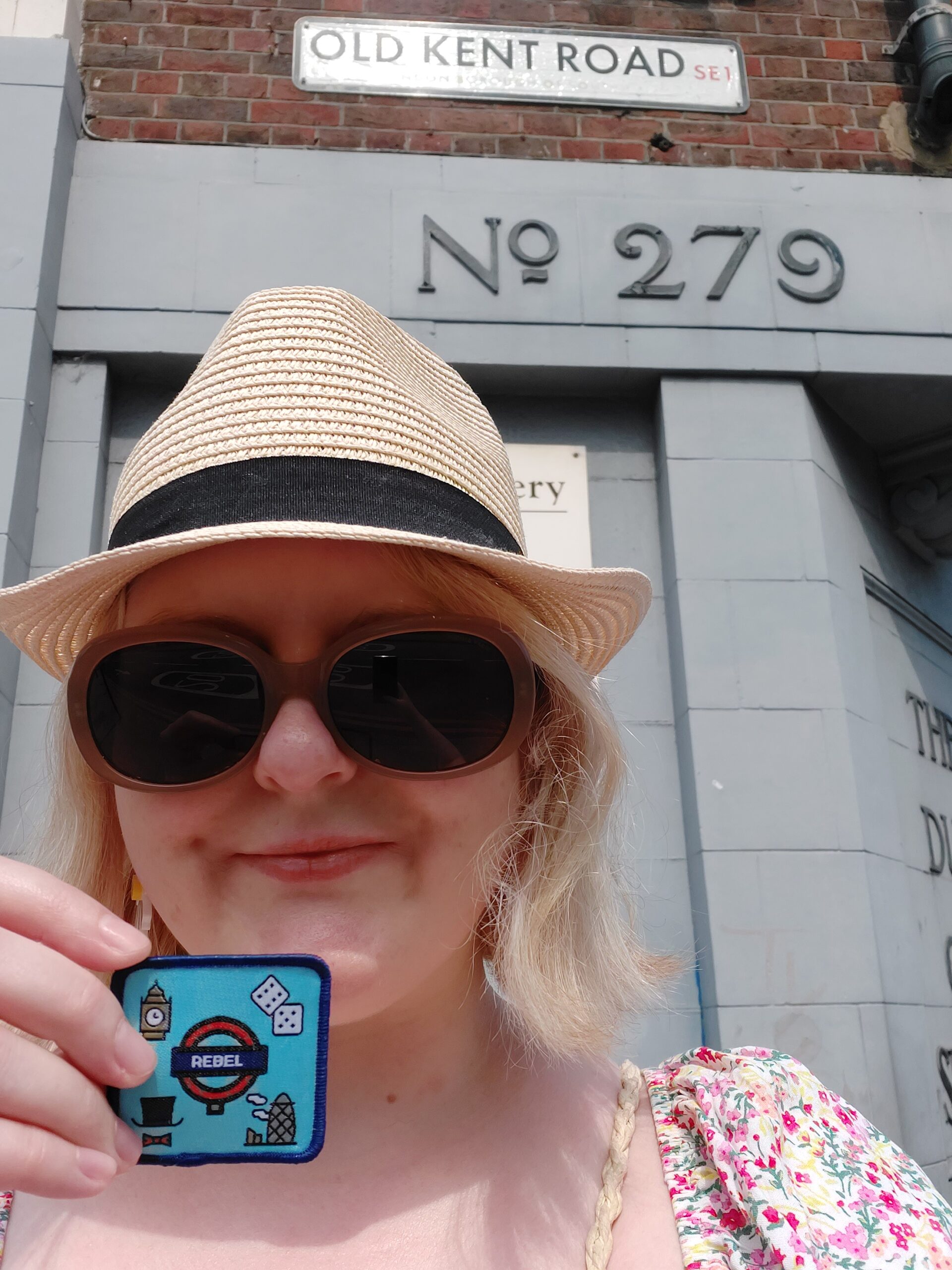
We managed to visit every stop but one during the day – on the Sunday I headed down to Old Kent Road to take a selfie and complete the set!

Rebel Badge Club: My Passion

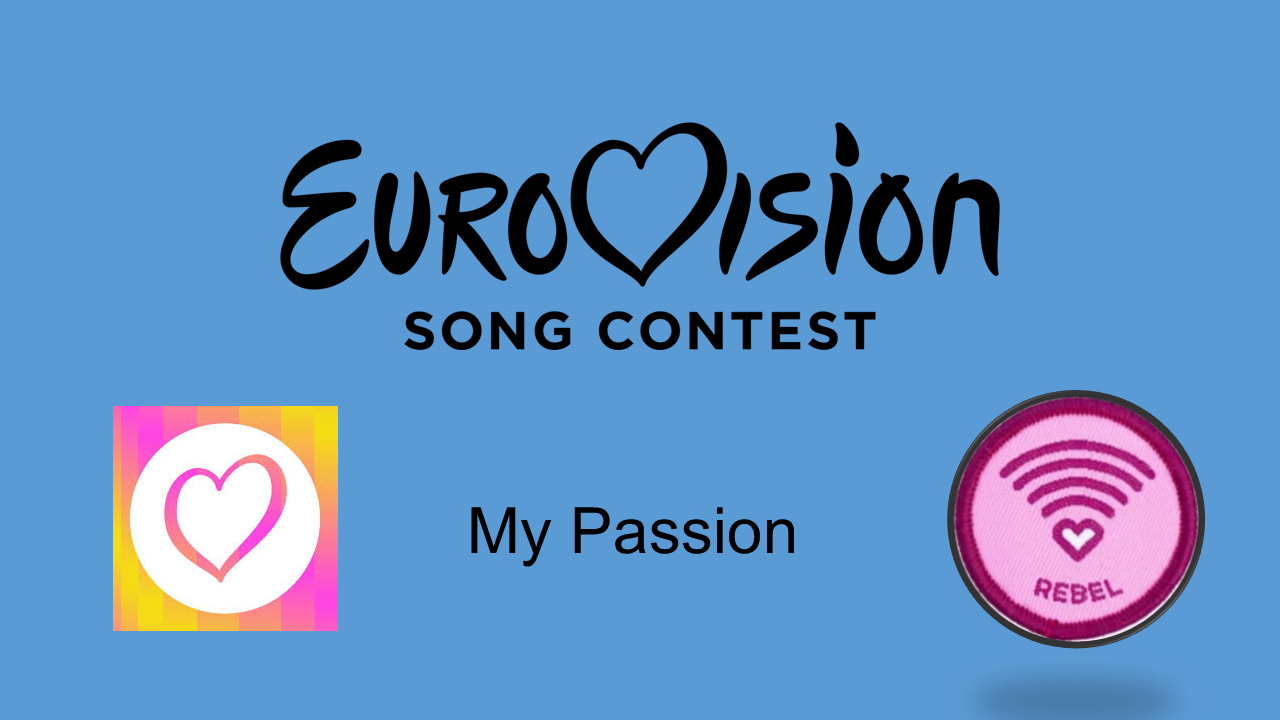
I have a lot of passions in life, but many of them are covered by other badges, like reading and cross stitch. I therefore chose another obsession for the My Passion badge: Eurovision! (This was before the RebelVision badge came out!).

I worked on the badge during the six month Eurovision ‘season’, leading up to the final on Saturday night. I also put together a presentation for the perusal of anyone curious about Eurovision.

Front cover of my presentation

Date completed: 12 May 2024

Rebel Badge Club: RebelVision

I was thrilled when the RebelVision badge was announced, as I am a huge Eurovision fan. The badge allowed me to research more deeply around Eurovision, as well as celebrate this year’s contest.

Learn what Eurovision is, and make a timeline of significant events.

In the mid-20th century, television services began to be introduced all across Europe. The European Broadcasting Union (EBU) created the Eurovision Network in order to facilitate the exchange and production of common television programmes, helping to increase programming material for national broadcasting organisations in a cost-effective way. The Eurovision Song Contest began as a groundbreaking – for the 1950s – technical experiment: a simultaneous, live broadcast across Europe. The Italian national broadcasting organisation, RAI, put forward the idea of a song contest after the success of the Sanremo Italian Song Festival. Seven countries took part in the first contest, hosted in Switzerland owing to its central European location; today, it is common for almost forty countries to compete each year.

1956 The first Eurovision Song Contest takes place, featuring Belgium, France, Germany, Italy, Luxembourg, Netherlands and Switzerland. The host country, Switzerland, wins with Refrain by Lys Assia. In this first contest only, countries are allowed to enter two songs each.

1957 Austria, Denmark and the United Kingdom enter for the first time. Scoreboards and public announcement of the voting are introduced.

1958 The tradition of the winning country hosting the following year’s contest begins: the Netherlands, who won in 1957, host this year.

1960 The contest is held in the United Kingdom for the first time: as runners-up, they were asked to host when winners the Netherlands declined.

1969 Four countries – France, Spain, the Netherlands and the United Kingdom – tie for first place. A tiebreak rule is applied in future contests to prevent this happening again.

1970 A brief video introduction to the host country, and ‘postcards’ introducing each artist, are introduced to the contest for the first time.

1971 Groups are allowed to compete for the first time: a maximum of six performers are permitted on stage, a rule which is still in place today.

1974 ABBA win the contest for Sweden with Waterloo.

1975 The points system, in which 12 points are awarded to a country’s top-placed song, 10 to their second-placed, and 8-1 to their third- to tenth-placed songs, is introduced.

1980 Johnny Logan achieves the first of his three victories for Ireland (two as a singer, one as a songwriter) with What’s Another Year.

1981 Bucks Fizz win Eurovision for the UK with Making Your Mind Up.

1988 Switzerland wins the contest with a little-known singer from Canada, Céline Dion.

1990 In response to the pre-teen contestants of France and Israel in 1989, a rule is introduced requiring any Eurovision contestant to be at least 16.

1993 In response to the breakup of the Soviet Union and Yugoslavia, several new countries take part in the contest including Slovenia, Bosnia and Herzegovina, and Croatia.

1994 Irish dancing phenomenon Riverdance makes its debut at the contest in Dublin, Ireland.

1997 The United Kingdom win the contest with Love Shine A Light by Katrina and the Waves.

1998 Dana International wins Eurovision for Israel with Diva, Eurovision’s first openly trans and LGBTQIA performer.

2004 Owing to the growing number of competing countries, semi finals are introduced to the contest.

2015 Australia competes for the first time to mark the sixtieth edition of the contest.

2020 Eurovision is cancelled for the first time in its history, owing to the Covid pandemic.

Listen to this year’s entries and choose your top 5.

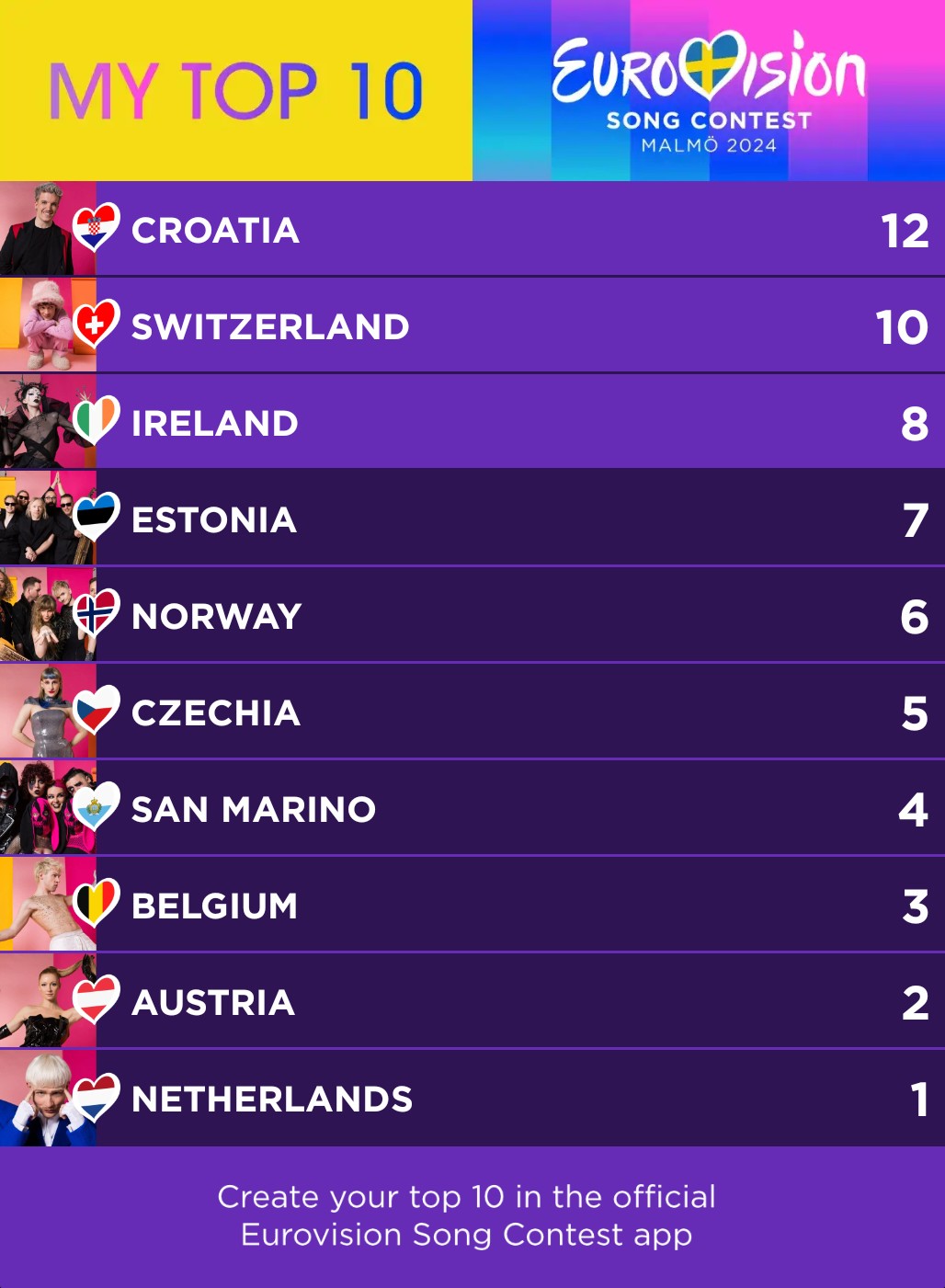
I actually chose a top 10, not just a top 5, and it was still really hard! Here are my choices:

My top 10 Eurovision songs 2024

Watch a documentary or film about Eurovision.

I watched Eurovision at 60 on BBC iPlayer.

Research historic boycotts of Eurovision.

I found this clause very interesting and learned about several historical boycotts and controversies in the contest. Most famously, Russia was banned from the contest after its invasion of Ukraine in 2022. Armenia and Azerbaijan have experienced conflict, mainly over a disputed region, while Yugoslavia was banned from the contest shortly after the 1992 competition because of the siege of Sarajevo. Back in 1975, Greece boycotted the contest after Turkey invaded Cyprus; the following year, Greece’s obviously anti-war song referencing Turkey’s presence in Cyprus led Turkey to boycott in turn.

Take part in a Eurovision watch party, and score each act.

I attended the post-Rebel Monopoly party in the Four Thieves pub in Clapham – it was great fun.

A selfie with other Rebels in the background

Listen to some of the most famous winning songs and choose your top 3.

I found this tough: my favourite songs tend not to be the winners, but even so it was hard to choose a top three. In the end, I would go for Euphoria by Loreen (Sweden, 2012), Arcade by Duncan Laurence (Netherlands, 2019) and The Code by Nemo (Switzerland, 2024). I originally had Lordi in there, but Hard Rock Hallelujah has been superseded by this year’s winner!

Eurosmash Festival

I absolutely love Eurovision, so when I saw the Eurosmash Festival advertised on my Instagram, I had to get myself a ticket. Hosted at Woolwich Works, conveniently close to the Elizabeth Line, it saw several Eurovision stars from contests past perform on stage.

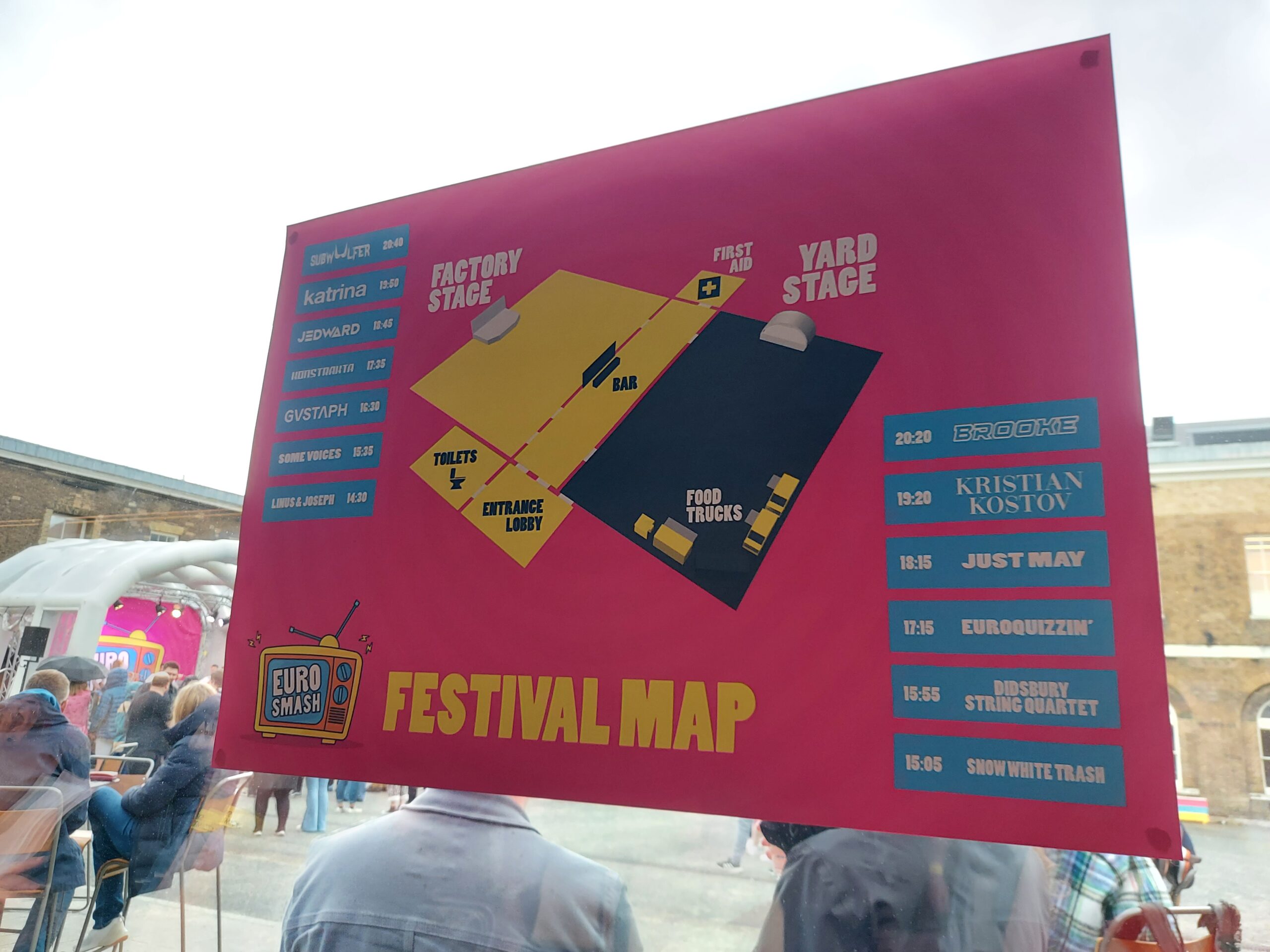
Eurosmash festival map

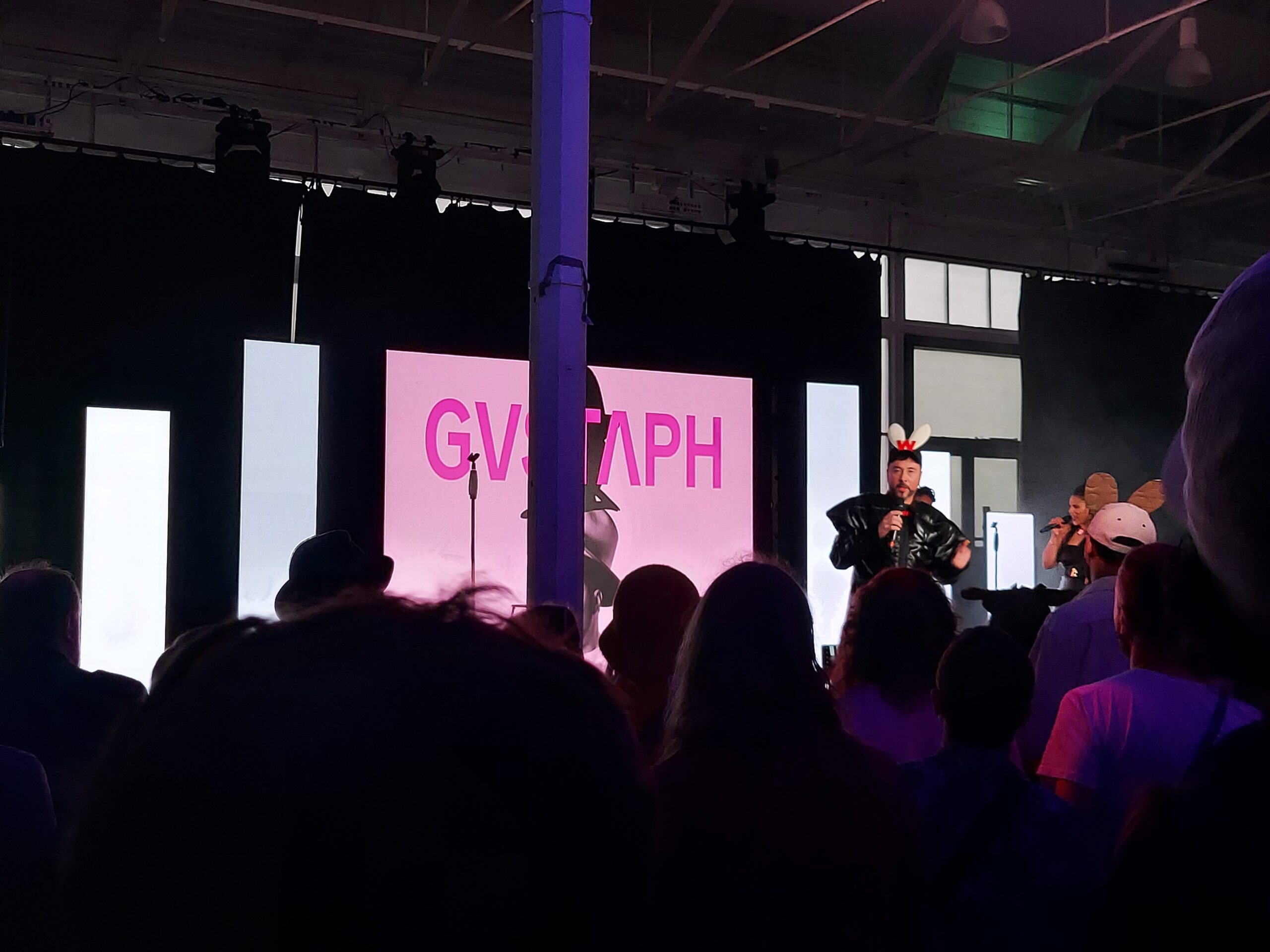
I got there in time to see Gustaph, who represented Belgium in 2023 with the super-catchy upbeat anthem ‘Because Of You’. His set was lots of fun and a great way for me to kick off the festival.

Gustaph

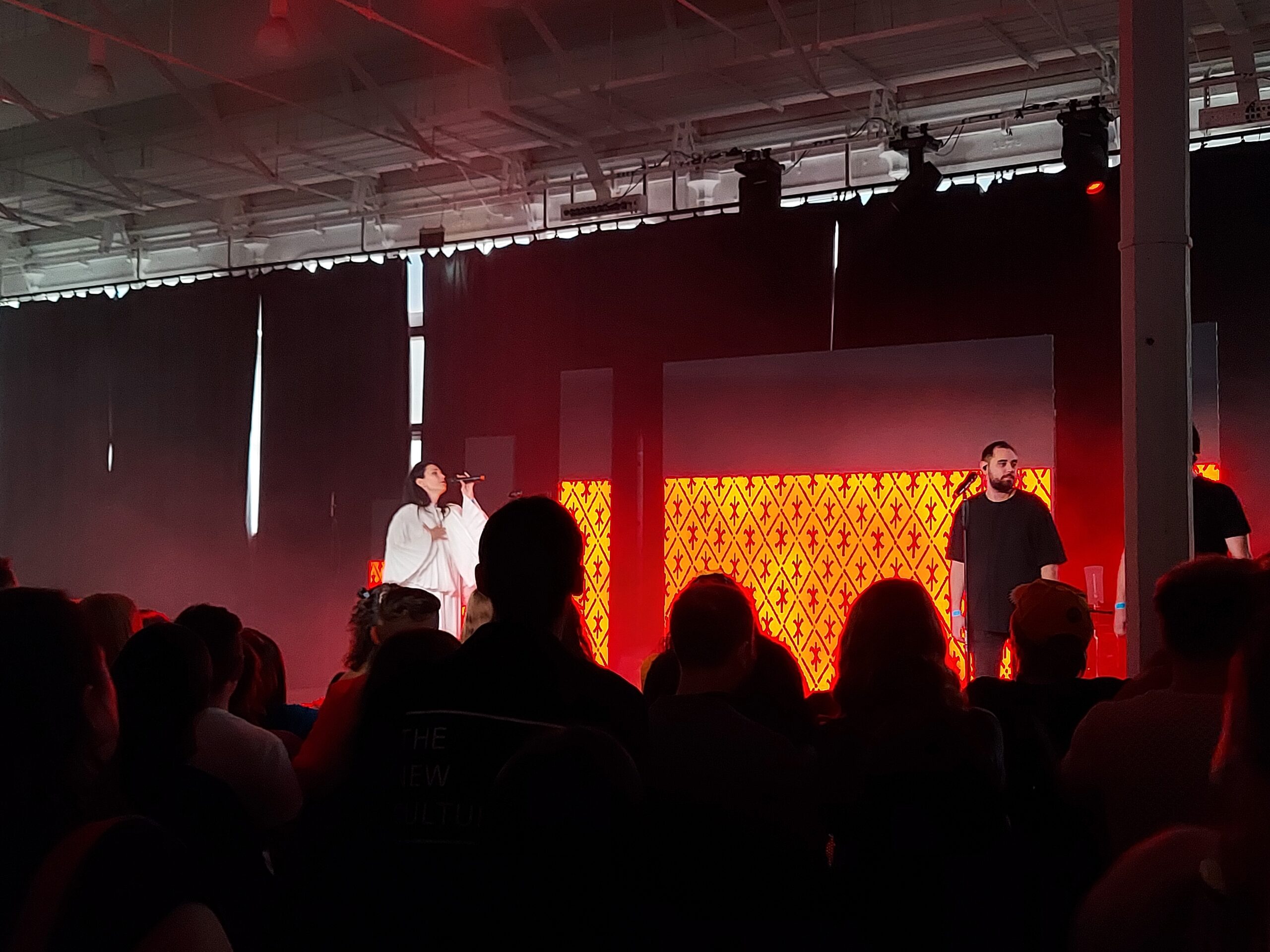
I was also excited to see Konstrakta, who represented Serbia in 2022 with ‘In Corpore Sano’. For some reason I had expected her to be deadly serious but she was actually a lot of fun and had the best outfits of the day!

Konstrakta

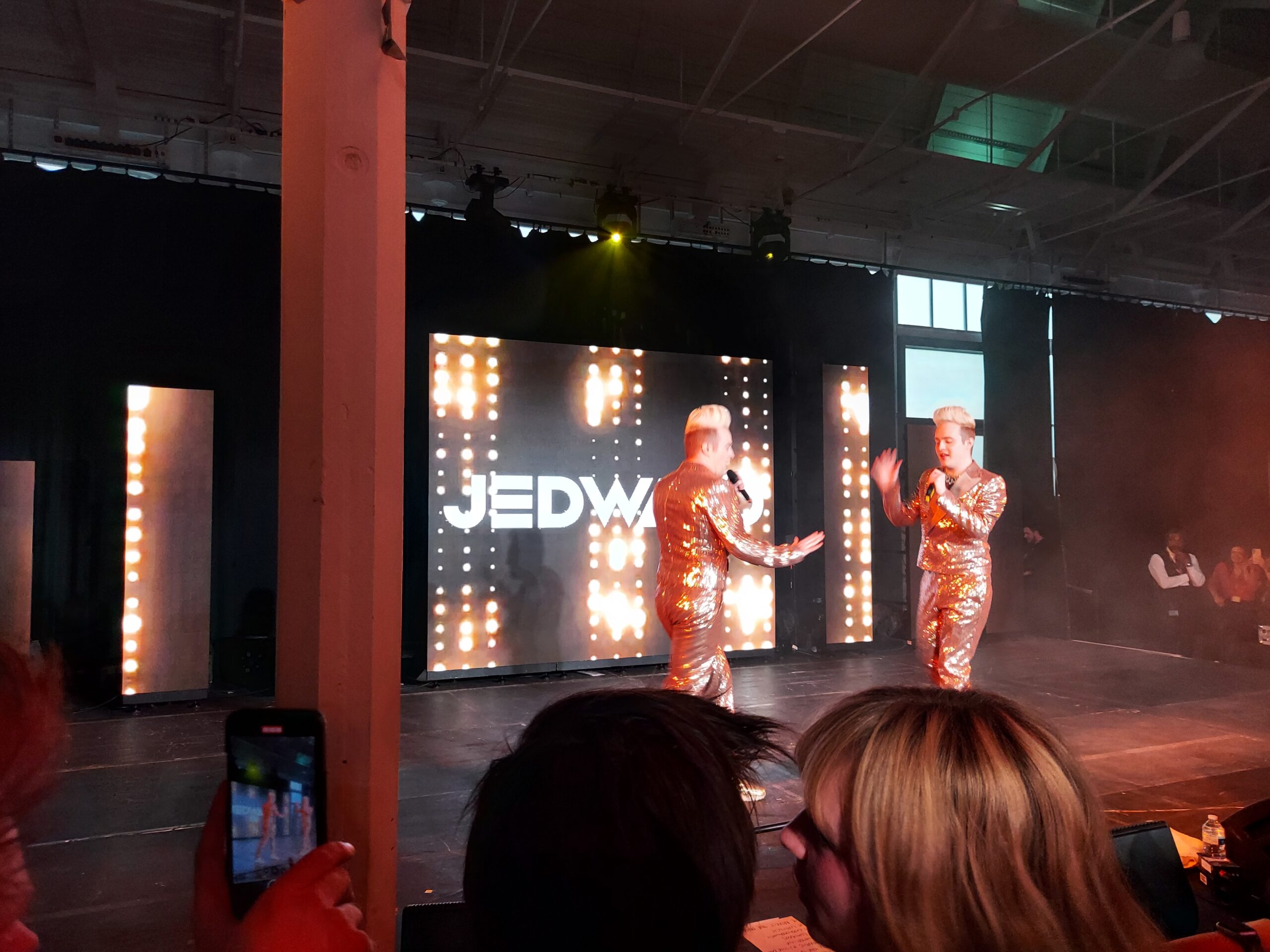
Jedward were up next, and they were forces of nature – possibly my favourite act of the day. Having represented Ireland twice at Eurovision, in 2011 with ‘Lipstick’ and again in 2012 with ‘Waterline’, they are perfect Eurovision representatives and their set was hugely entertaining. I didn’t have Jedward performing a cover of Blink 182’s ‘All The Small Things’ on my bingo card for 2024, but there you go.

Jedward

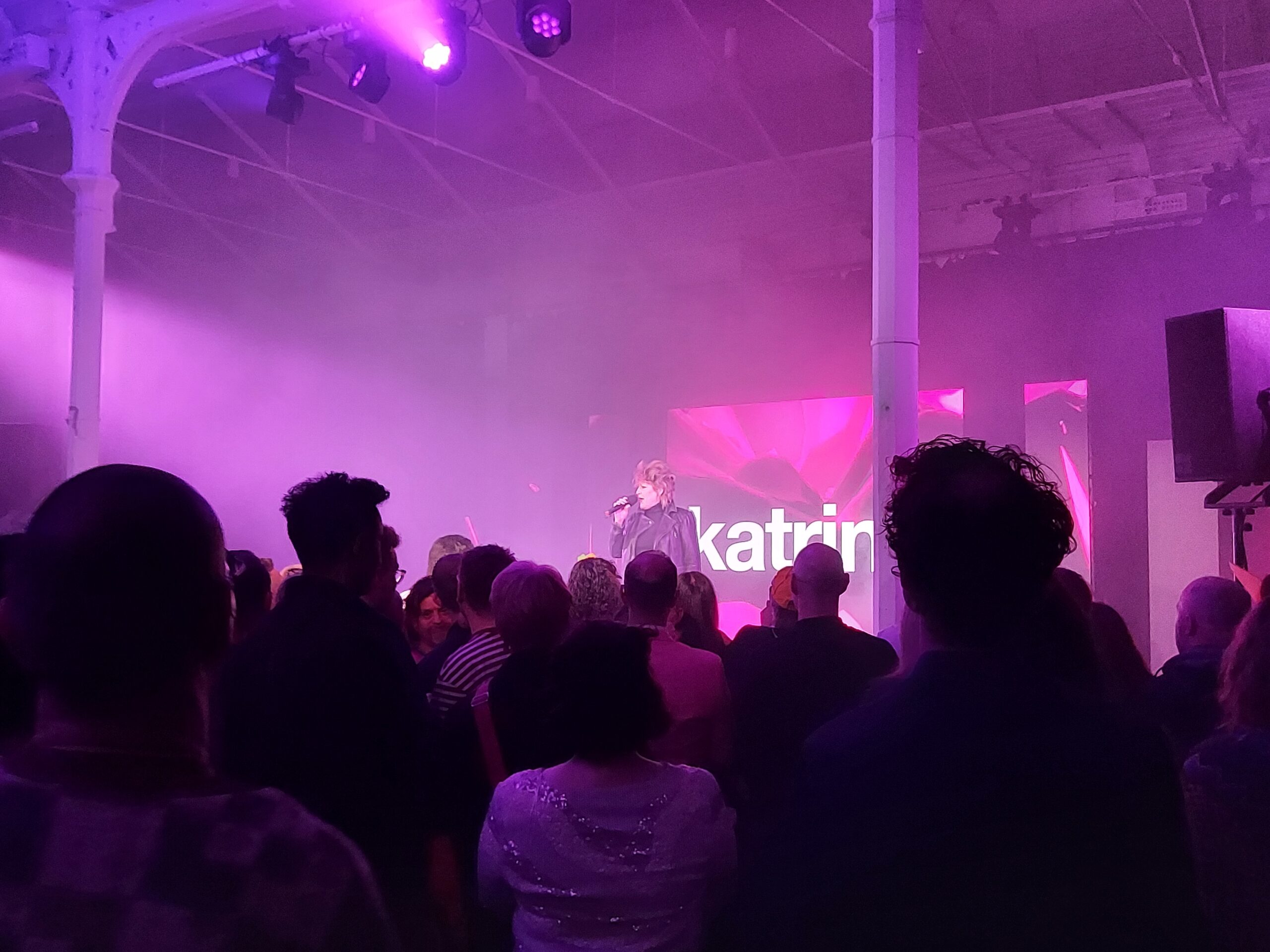
After their performance, it was time for Katrina, of Katrina and the Waves fame (who won Eurovision for the UK back in 1997). This was a feelgood nostalgic performance, with the most memorable moment not being a Eurovision song at all, but the band’s other big hit ‘Walking On Sunshine’.

Katrina

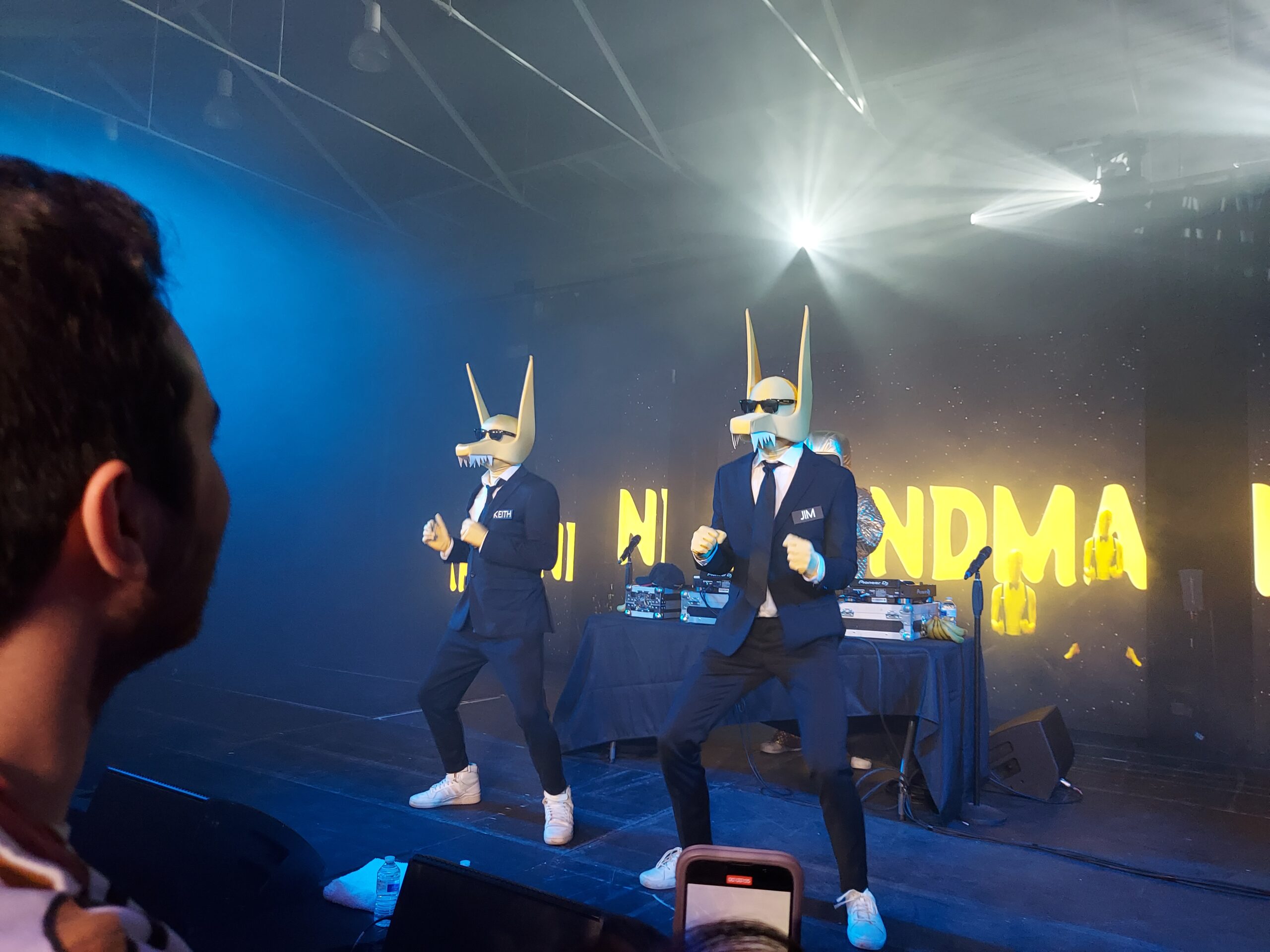
Finally, I got to see the headliners Subwoolfer, who represented Norway in 2022 with ‘Give That Wolf A Banana’. The yellow-masked duo are actually former member of A1 Ben Adams and Norwegian singer Gaute Ormåsen. Their signature song is great fun and so were the other tracks they performed!

Subwoolfer

Mushroom Fest – A Beltane Celebration

I attended an event on 1 May marking the ancient Celtic festival of Beltane. This festival signifies the halfway point between the spring equinox and the summer solstice, and is associated with fertility, fire and renewal. Traditionally, Celts would also forage for early spring mushrooms at this time, hence this event, hosted by A Curious Invitation and Antique Beat.

The event featured a panel of experts, each specialising in a different aspect of fungi. Mike Green, founder of The London Fungus Network, spoke about fungal biology and ecology. Jana Nicole, artist and co-founder of the All Things Fungi Festival, displayed her latest artwork. Max Mudie, festival co-founder and photographer, shared his experiences of macro photography as it pertains to fungi. There was also music from Brian d’Souza, also known as Auntie Flo. He uses biosonification to turn electrical signals from mushrooms into MIDI notes, which are then processed through a synthesizer.

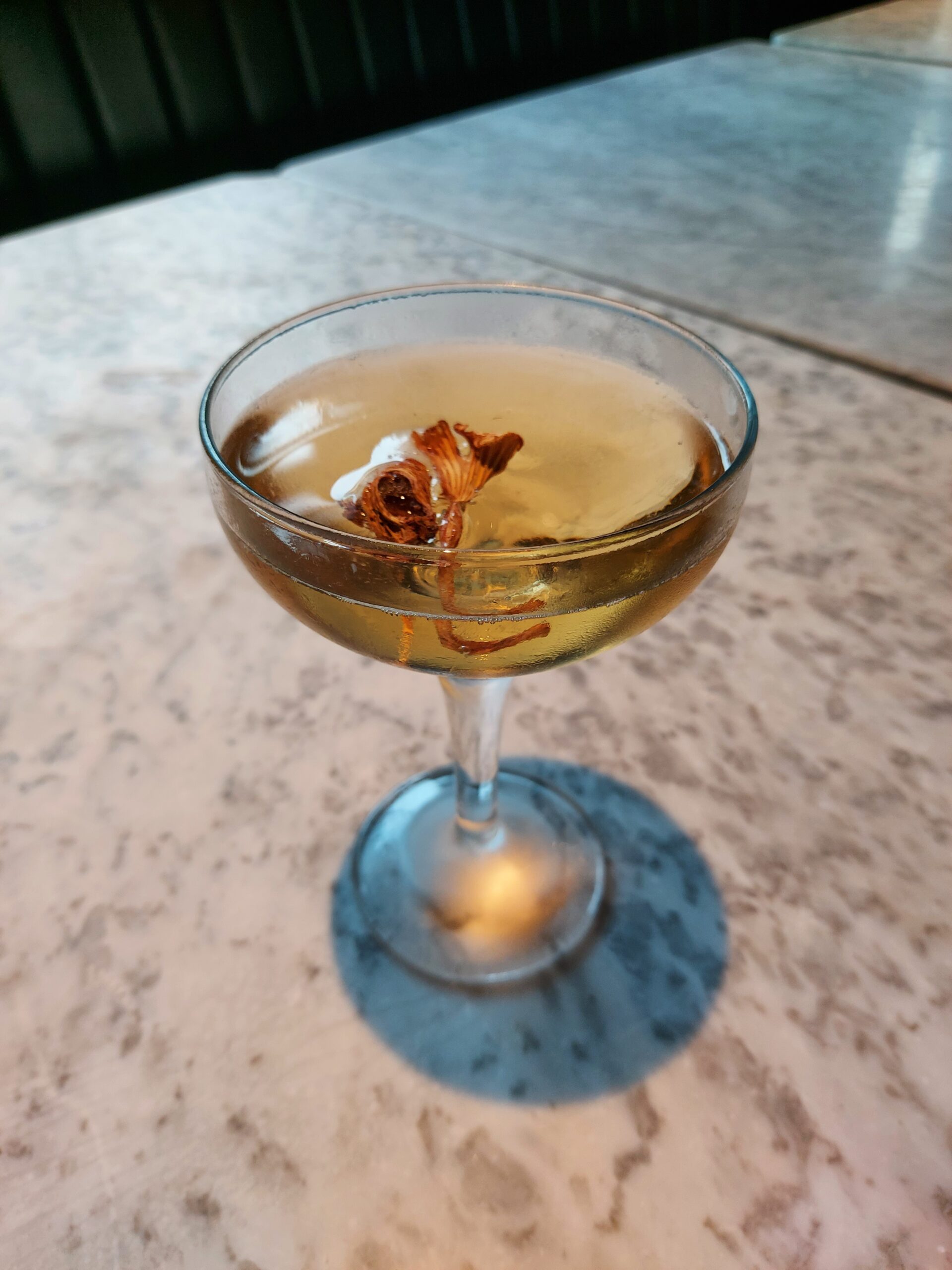
I enjoyed the talks, and only wish they could have gone into even more detail – I would have liked even more information, maybe even presentations! I also enjoyed my mushroom martini.

Mushroom martini

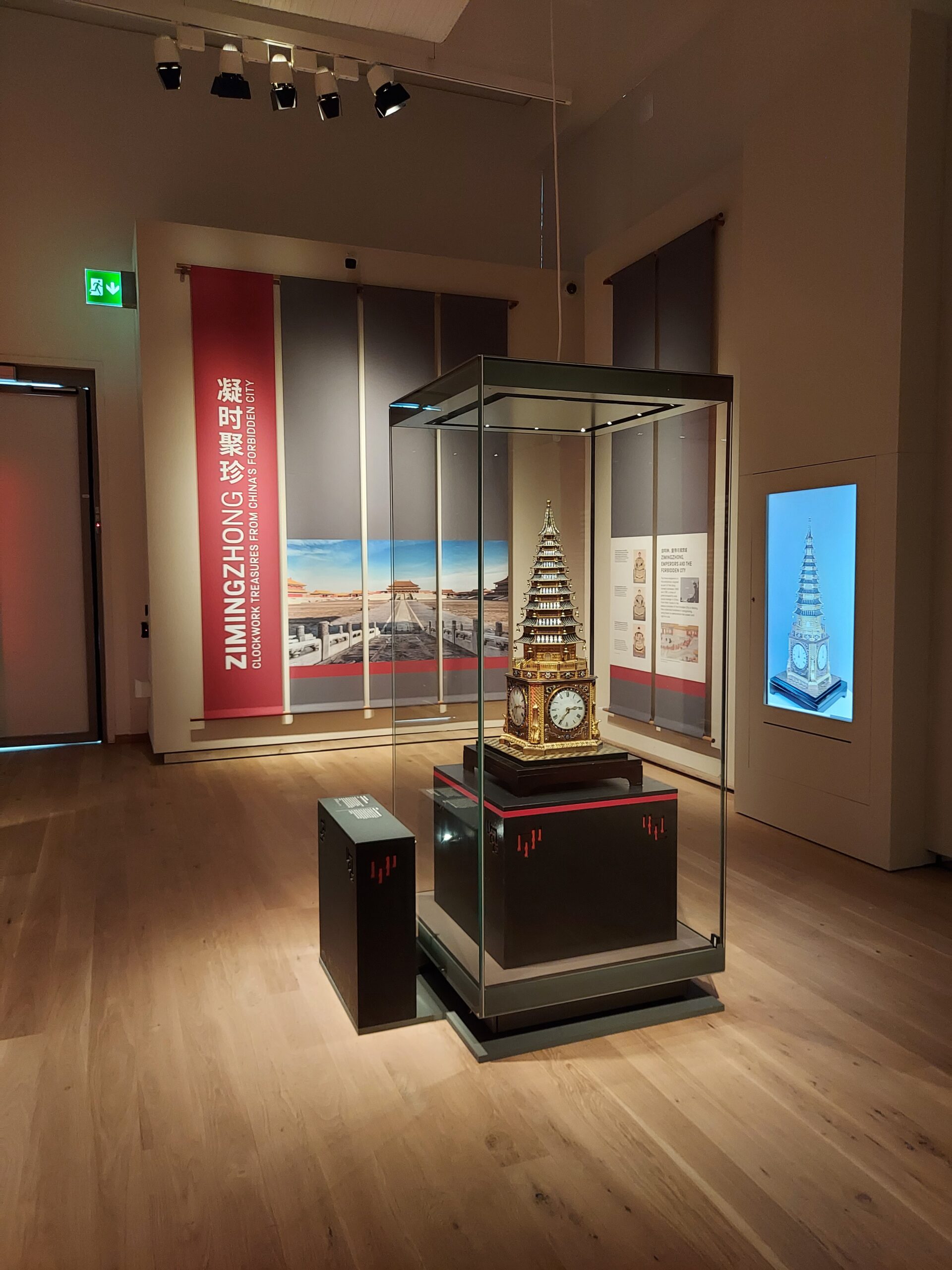
Zimingzhong 凝时聚珍: clockwork treasures from China’s Forbidden City – Science Museum

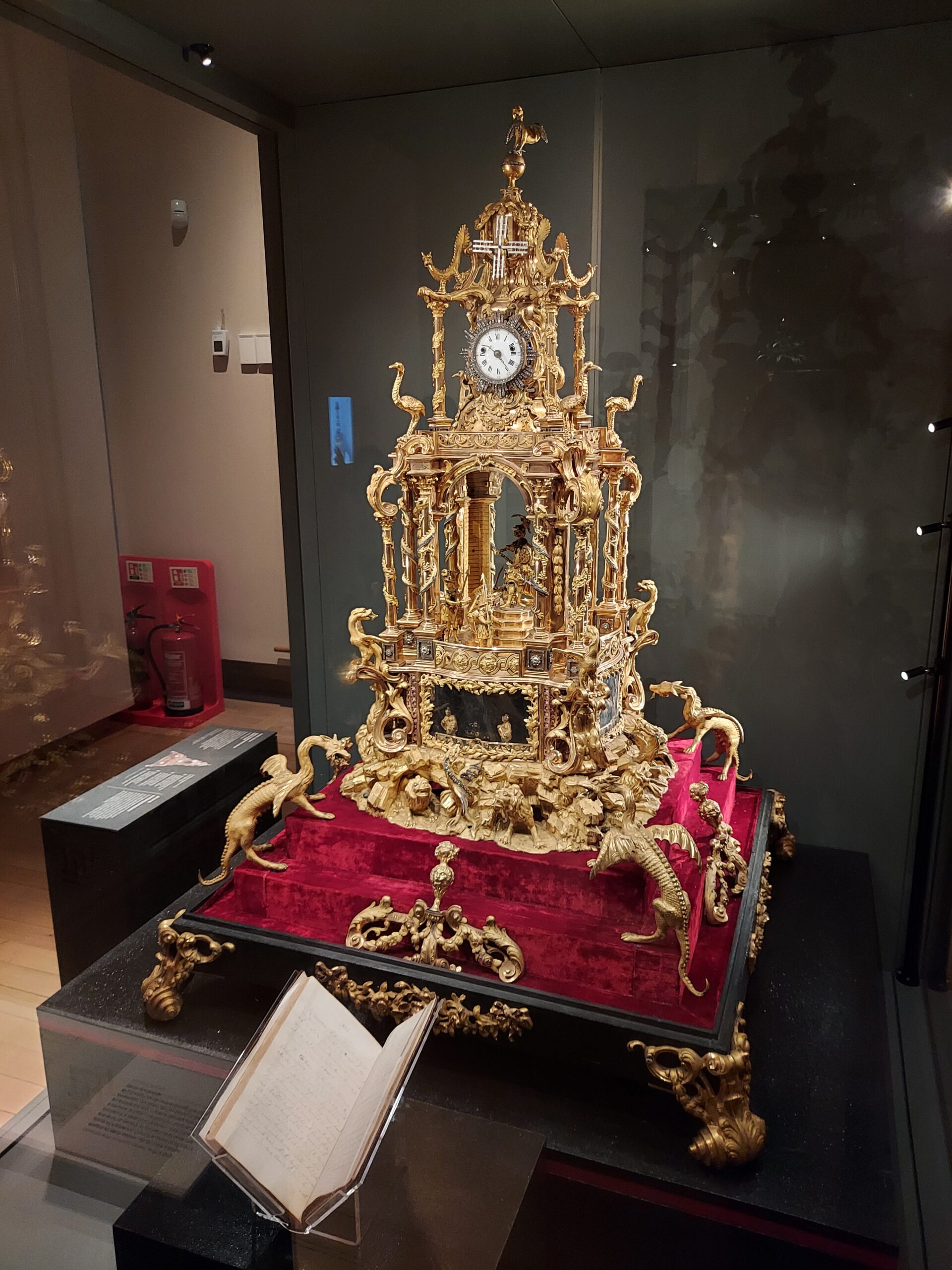
While I was at the Science Museum I also decided to explore the Zimingzhong exhibition. This consists of several beautiful ornate clockwork automata and other artefacts on loan from the Palace Museum in Beijing. I was interested to learn that these, known as zimingzhong, were a symbol of cultural exchange between (largely) the British and the Chinese, as Western clockmaking talents were appreciated by the Chinese emperors even though many other British imports were unwanted and unappreciated. These artefacts, however, were actively sought out as tribute, and were often made to appeal to a Chinese market. Several were also made in China, particularly in the port city of Guangzhou, the location of much British trading.

The exhibition has several of these beautiful, ornate and exquisite items on display. Many are accompanied by commentary from members of the Chinese diaspora in the UK, which I found particularly interesting. Many items contain gold leaf, jewels, and decoration such as enamel.

I am glad I took the opportunity to visit the exhibition, as it opened my eyes to an aspect of Chinese culture I hadn’t been aware of, and helped me understand more about the blending of Chinese and British cultures.

a beautiful example of zimingzhong