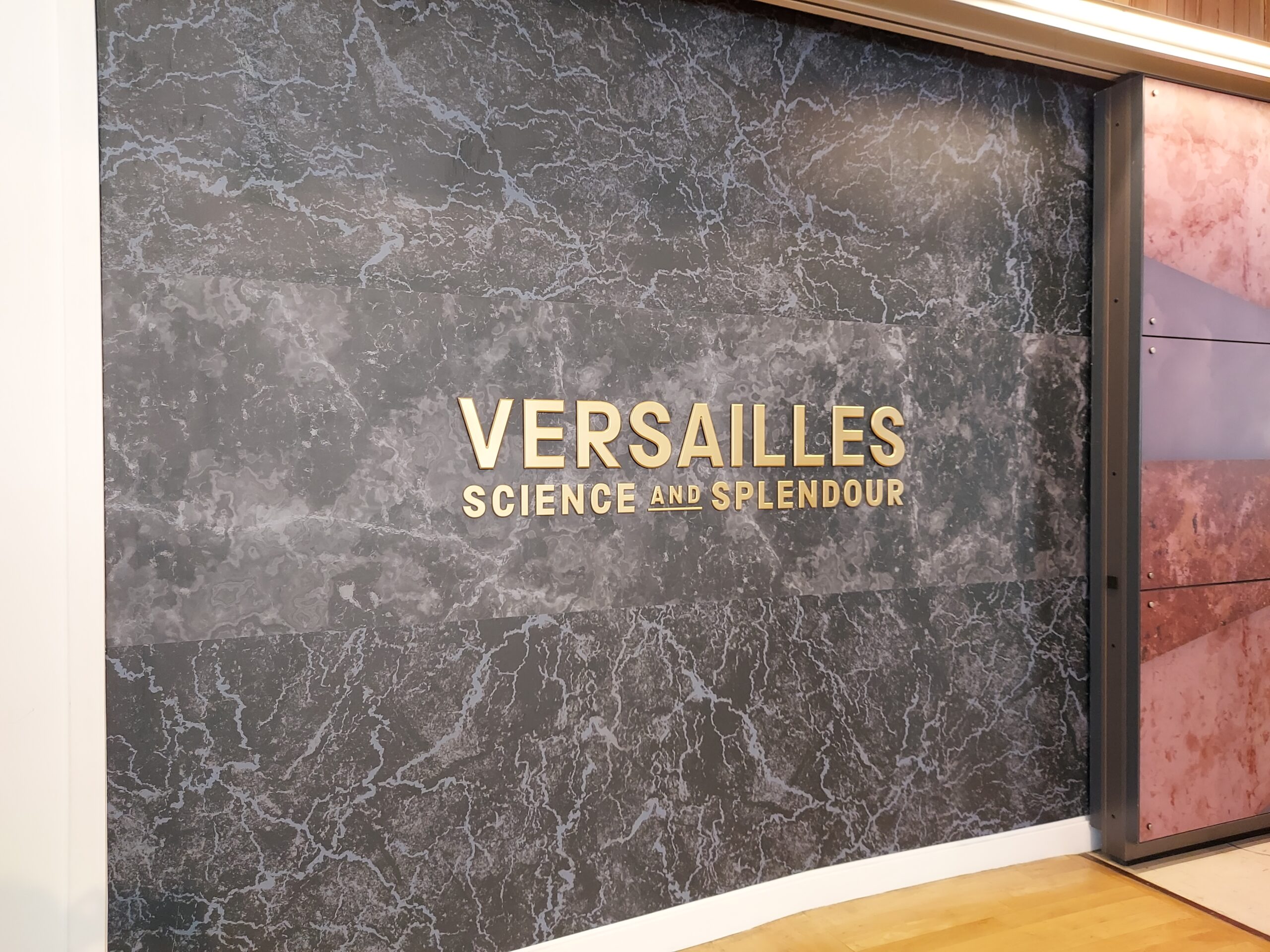
On the same day I visited the V&A, I also popped into the Science Museum to see the exhibition Versailles: Science and Splendour. This exhibition focused on the role the palace of Versailles played as a major site of scientific thinking in the 17th and 18th centuries, an aspect of its history that is not as well known as its architecture and royal and political history.
This rich and intriguing exhibition was enjoyable and illuminating. It explores the scientific developments that took place at the palace, led by the monarchs of the period who were genuinely interested in scientific development. Louis XV commissioned the midwife Angélique Marguerite Le Boursier du Coudray to educate medical personnel involved in helping with childbirth: her working model, made of stuffed fabric, is impressively accurate. When Louis XV died of smallpox, his son Louis XVI agreed to have the family inoculated, influencing the popularity of vaccination in France.
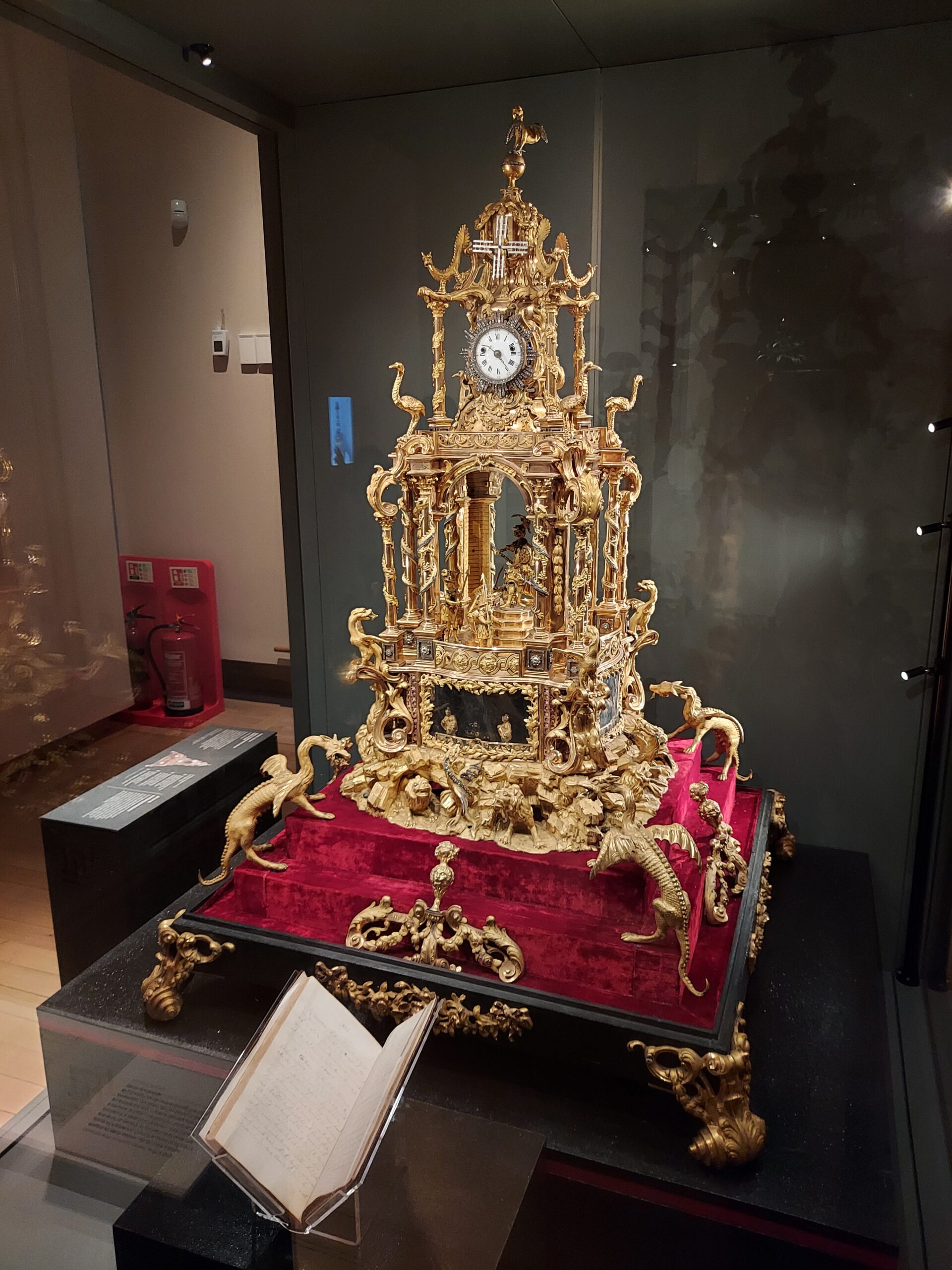
Versailles itself incorporates impressive engineering into its beautiful architecture: the water features worked thanks to a pump taking water from the Seine. The Clock of the Creation of the World is an exquisite and opulent piece designed to tell the time, date and year as well as the movement of the planets. French scientists such as Buffon and Lavoisier worked at the palace, but the work of foreign scientists such as Newton were also popular.
King Louis XIV agreed to a risky fistula operation, successfully performed by the royal surgeon Charles-François Félix, who invented a special scalpel for the occasion – the darker side of this success was the number of peasants killed during his ‘practice runs’, and this example perhaps illustrates why the French Revolution took hold not long after, despite the French kings’ enlightenment in the matter of science.