Rebel Badge Club: Cake Artist

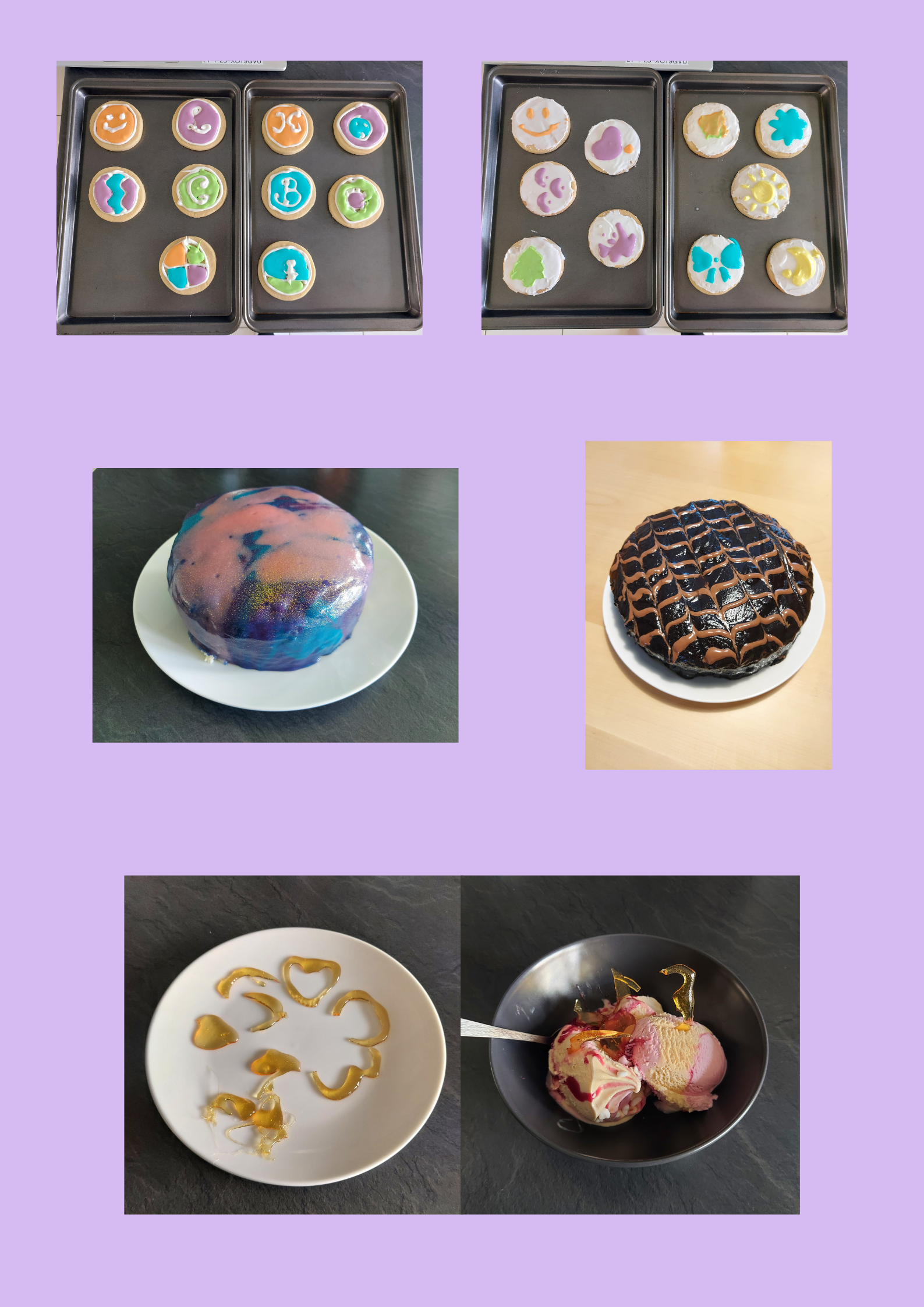
I decided to work on Cake Artist earlier this year, as I’m currently staying with my parents and wanted to take advantage of their kitchen plus all my mam’s baking equipment! I also chose it for one of the badges to work on for the Be Creative quarterly. In these past few months I’ve completed all the clauses below, with varying success. I’m definitely more confident with buttercream frosting and this is my go-to now for cake decorating: ditto with piping and stencils. I love fondant as it’s just like clay modelling. I will certainly use royal icing again to decorate biscuits, and I really enjoyed the flood icing class at Rebel Fest.

Mirror glaze looks good but is a lot of faff and I’m not likely to try it again except for special occasions. I probably won’t bother with spun sugar again, though I will try sugarwork flowers and so on (I’m not entirely sure where you draw the line between fondant and sugarwork). Inedible decoration feels a bit like cheating, but it’s still fun, especially when you make a birthday cake for someone and let them keep the figurines!

Fondant: I made a fondant unicorn for a challenge several months ago. I also made a fondant base for my brother’s Totoro-themed birthday cake, creating a field with a stream running through it.

Buttercream Frosting: I used this on my dad’s Bowie-themed birthday cake, both for the base and the decoration. I also attended a cake decorating class where I learned about creating a crumb coat.

Royal Icing: I know this is normally used on Christmas cakes and fruit cakes, which I hate, so I didn’t know how I was going to manage this one – but I used it to decorate some biscuits instead.

Mirror Glaze: I made a sachertorte with a chocolate mirror glaze coating, and another mirror glaze cake in a space theme.

Piping: I used piping at my cake decorating class, and I also used it to decorate biscuits with royal icing at Rebel Fest.

Stencils: I used a stencil to decorate my dad’s birthday cake with Bowie’s face. I also had a go at using stencils to decorate biscuits.

Sugarwork & Edible Decoration: I made some sugarwork flowers and leaves to decorate the violet-flavoured cake I made for the Colour Me Happy! badge. I also had a go with spun/pulled sugar, but this wasn’t hugely successful!

Inedible Decoration: I put some Totoro figures on my brother’s birthday cake, and some glitter balls on the cake I decorated at the class.

Date completed: 28 June 2026
Rebel Badge Club: Rebels Go Wild!

Rebels Go Wild! was the monthly badge for June, and I really enjoyed it!

Go wild swimming

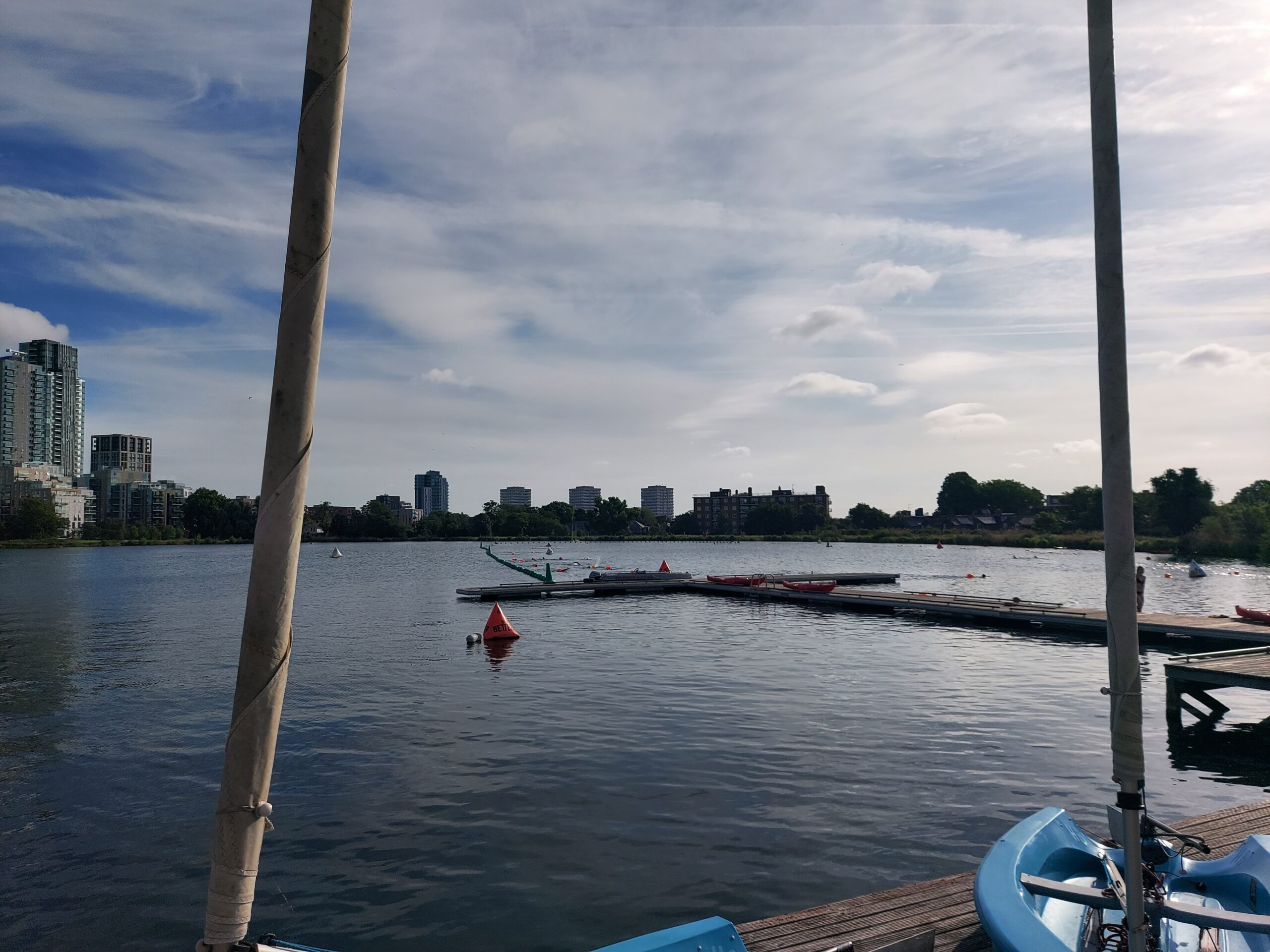
I went swimming in Hackney West Reservoir during a trip to London.

Visit your nearest national park

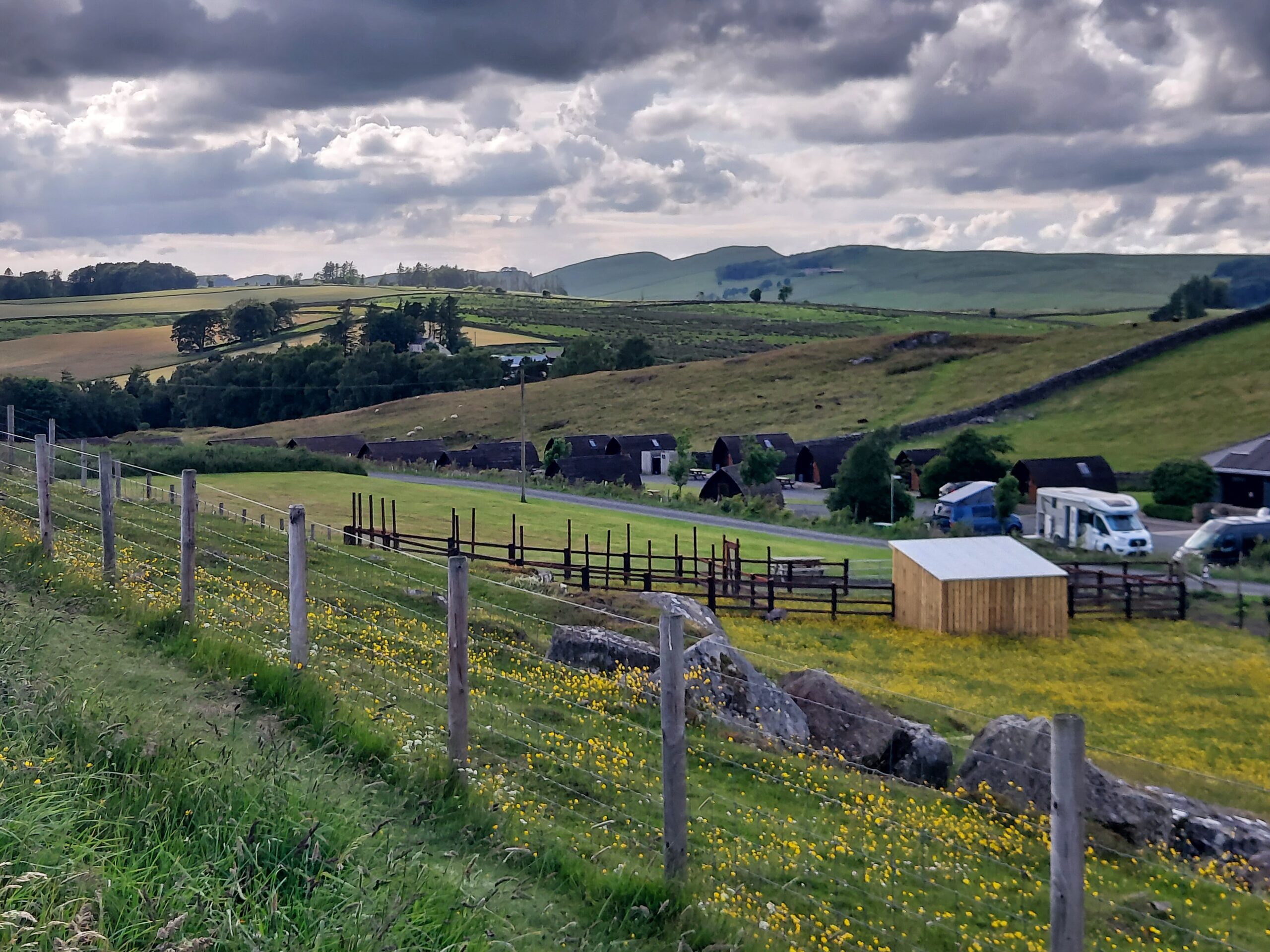
I went on a break to Northumberland National Park, staying near Haltwhistle and visiting many nearby sites.

A campsite and rolling hills

Watch a nature documentary

I watched Wild London, presented by David Attenborough.

Read a book or watch a film which inspires you to spend more time outdoors

I read Secret Britain: Unearthing our Mysterious Past by Mary-Ann Ochota.

Read a book under a tree

I enjoyed taking some time out to do this on holiday.

Watch a wild webcam

Watching the National Trust’s puffin webcam on the Farne Islands has made me smile.

Birdoswald Roman Fort

Birdoswald

The final fort I visited on my holiday was Birdoswald. I passed through the area on my Hadrian’s Wall walk, and bought a much-needed ice cream at the café, but didn’t get a chance to have a look around at the time.

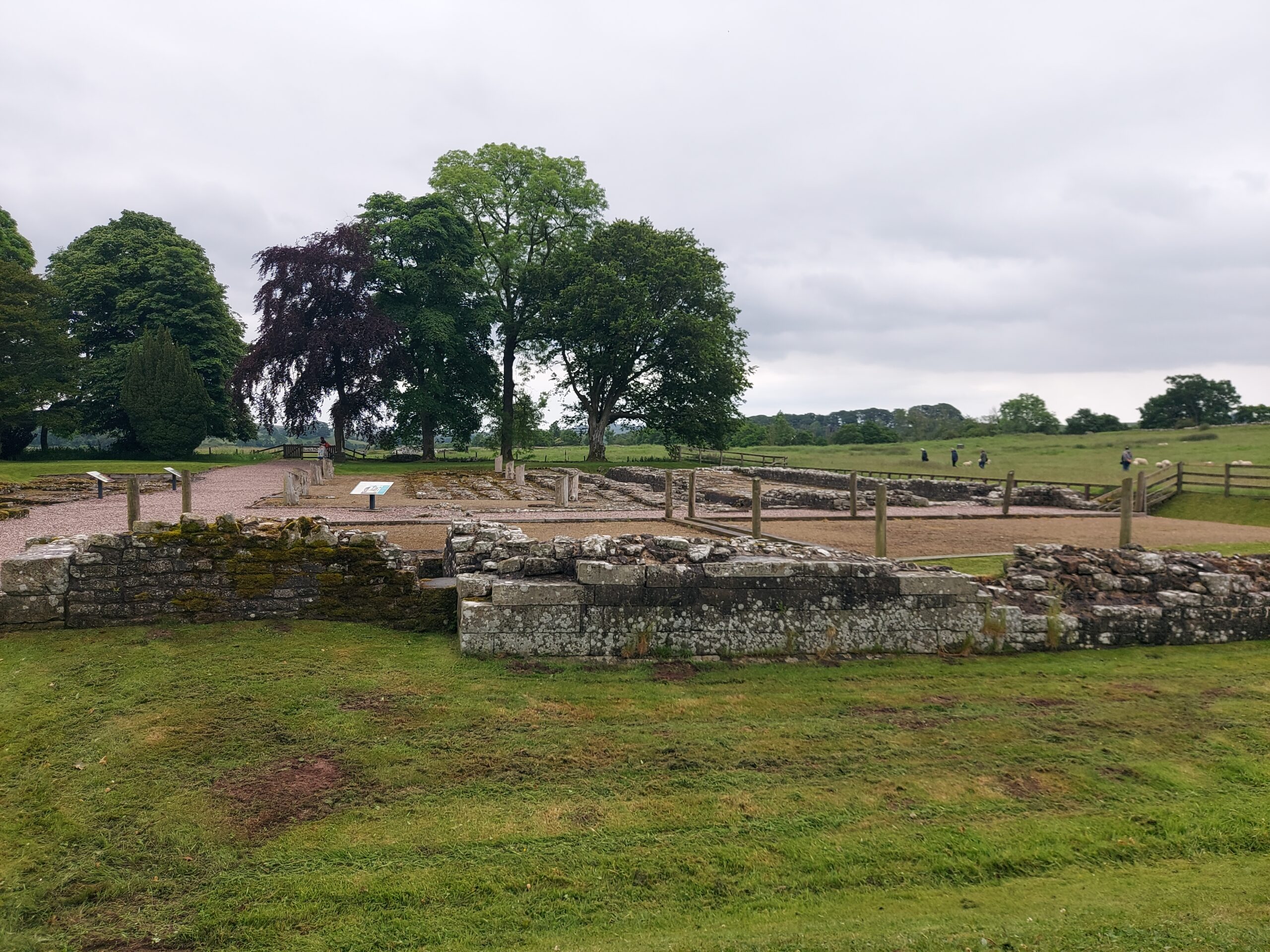
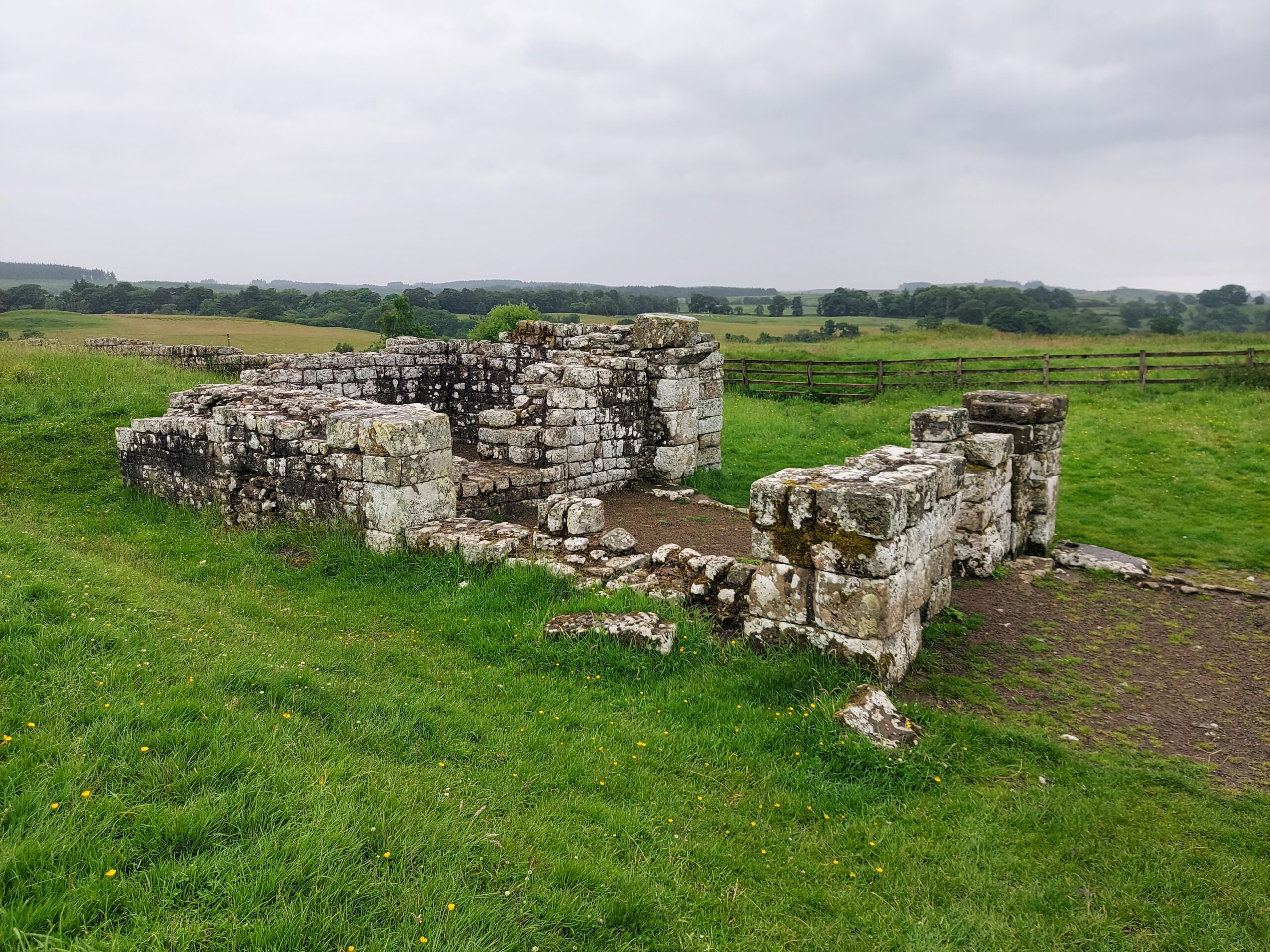
Birdoswald, known to the Romans as Banna, is further west than the other forts I visited – it is in Cumbria, rather than Northumberland. Like Housesteads, it lies along Hadrian’s Wall, and the location is one of the best places to see the first Wall, which was made of turf. The Romans had to clear and drain the land of forest and bog before they could start building.

Birdoswald

The site has very well preserved defences. The military unit most associated with Birdoswald is the Dacians, who came from modern-day Romania. Symbols from their homeland can be seen in the fort walls, and like many units, worshipped local gods as well as Roman ones. Among the items excavated from the fort are several burial urns, revealing that women and children were buried here as well as military men.

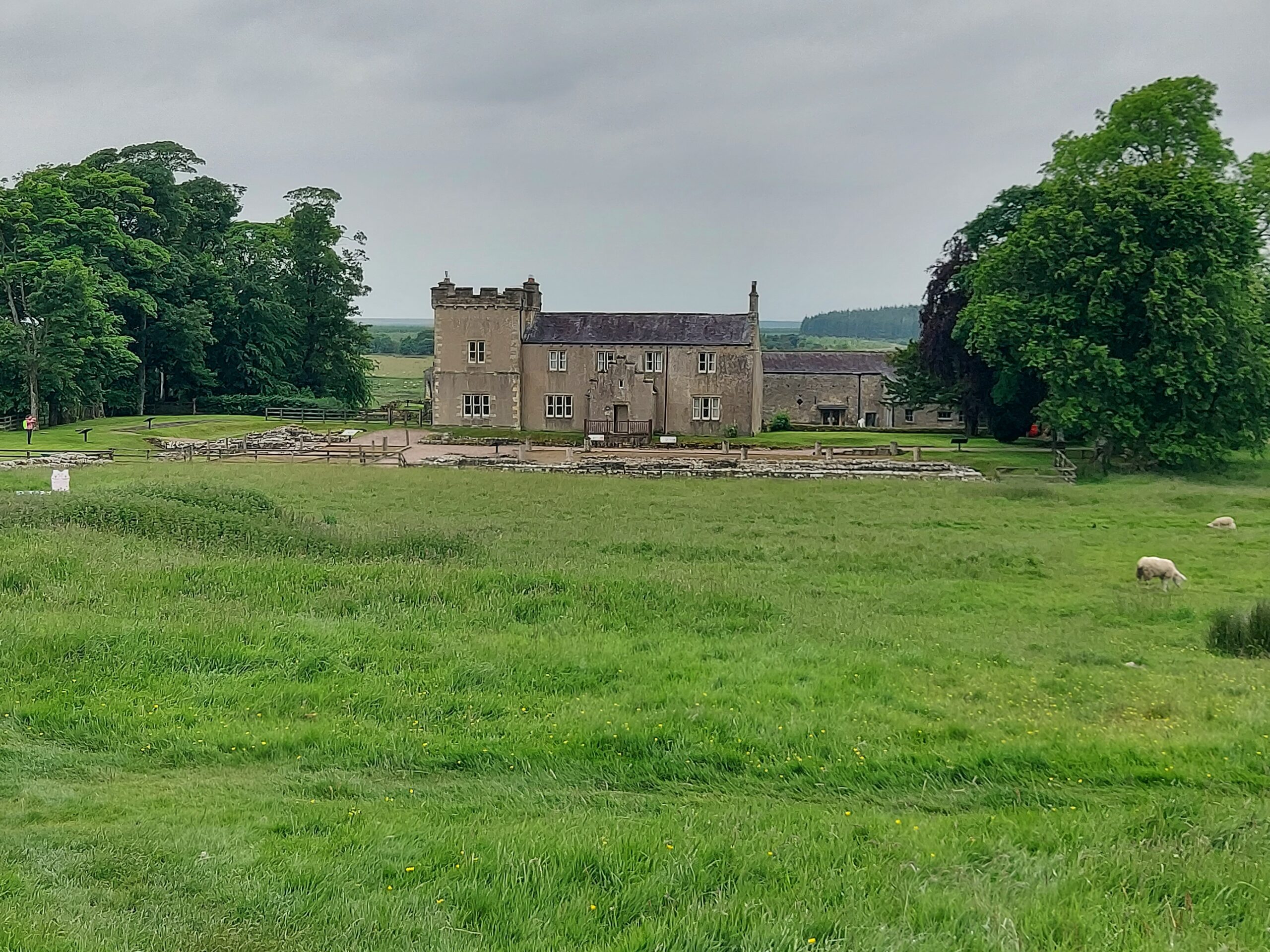
Excavations reveal that the fort carried on after the Romans left. The history of the site continued over the next few centuries, with a bastle house – a fortified farmhouse – built in the 16th century to protect against border raiders. Archaeological research began in the 19th century, and has continued to unearth more and more about Birdoswald and its role in defending the Roman frontier.

Birdoswald

FACTS

Address: Gilsland, Brampton, CA8 7DD

Website: english-heritage.org.uk/visit/places/birdoswald-roman-fort-hadrians-wall

Opening Hours: 10am – 5pm

Price: Adult £14, child £7, concession £13. Discounts are available for booking in advance or visiting at quieter times.

Housesteads Roman Fort

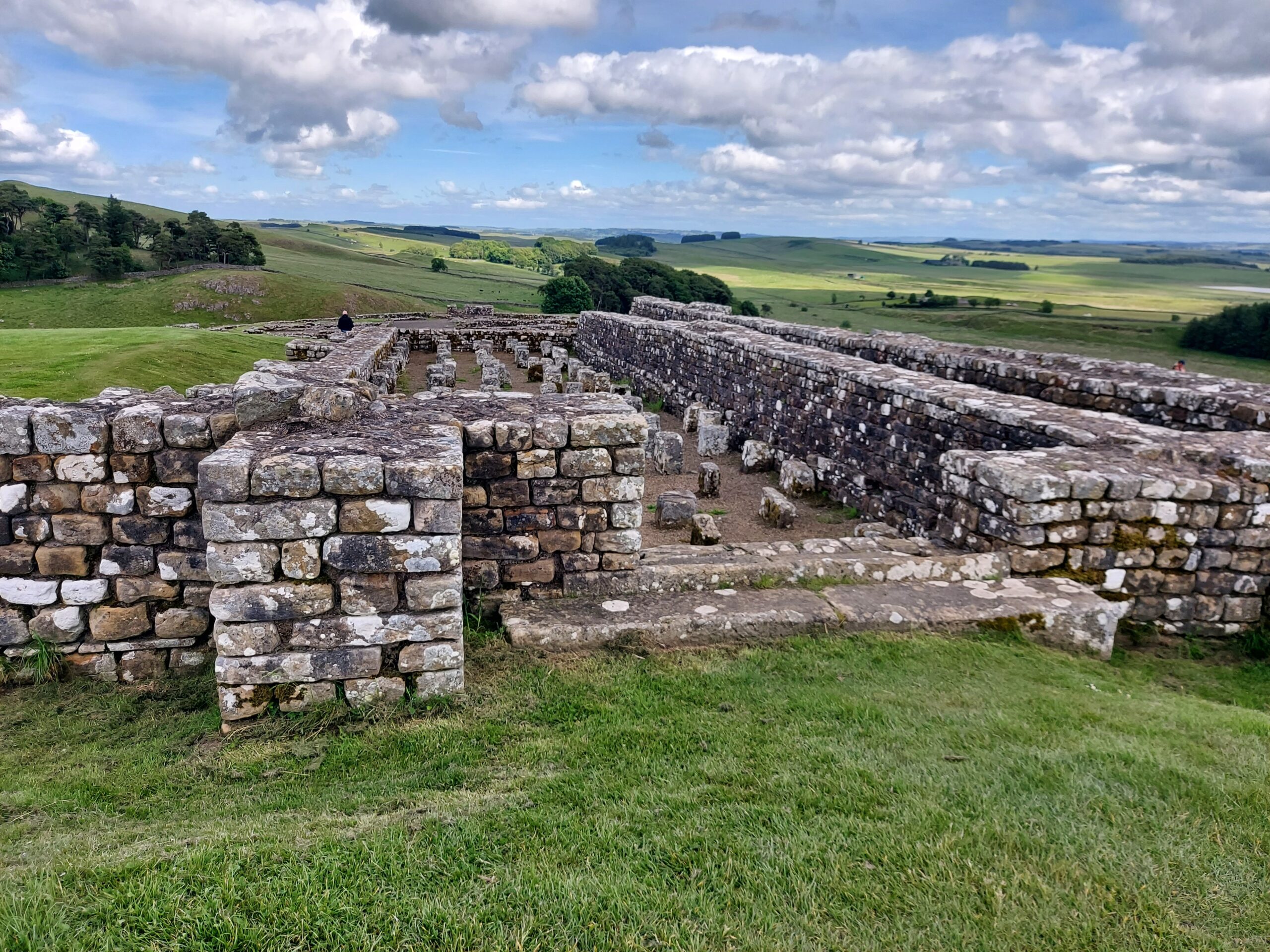
After visiting Vindolanda, I caught the bus to Housesteads. This is Britain’s most complete Roman fort, and I saw it briefly during my Hadrian’s Wall walk, as the fort lies along the Wall. It was nice to go back and explore it in a more relaxed fashion when I actually had the energy to do so.

Housesteads

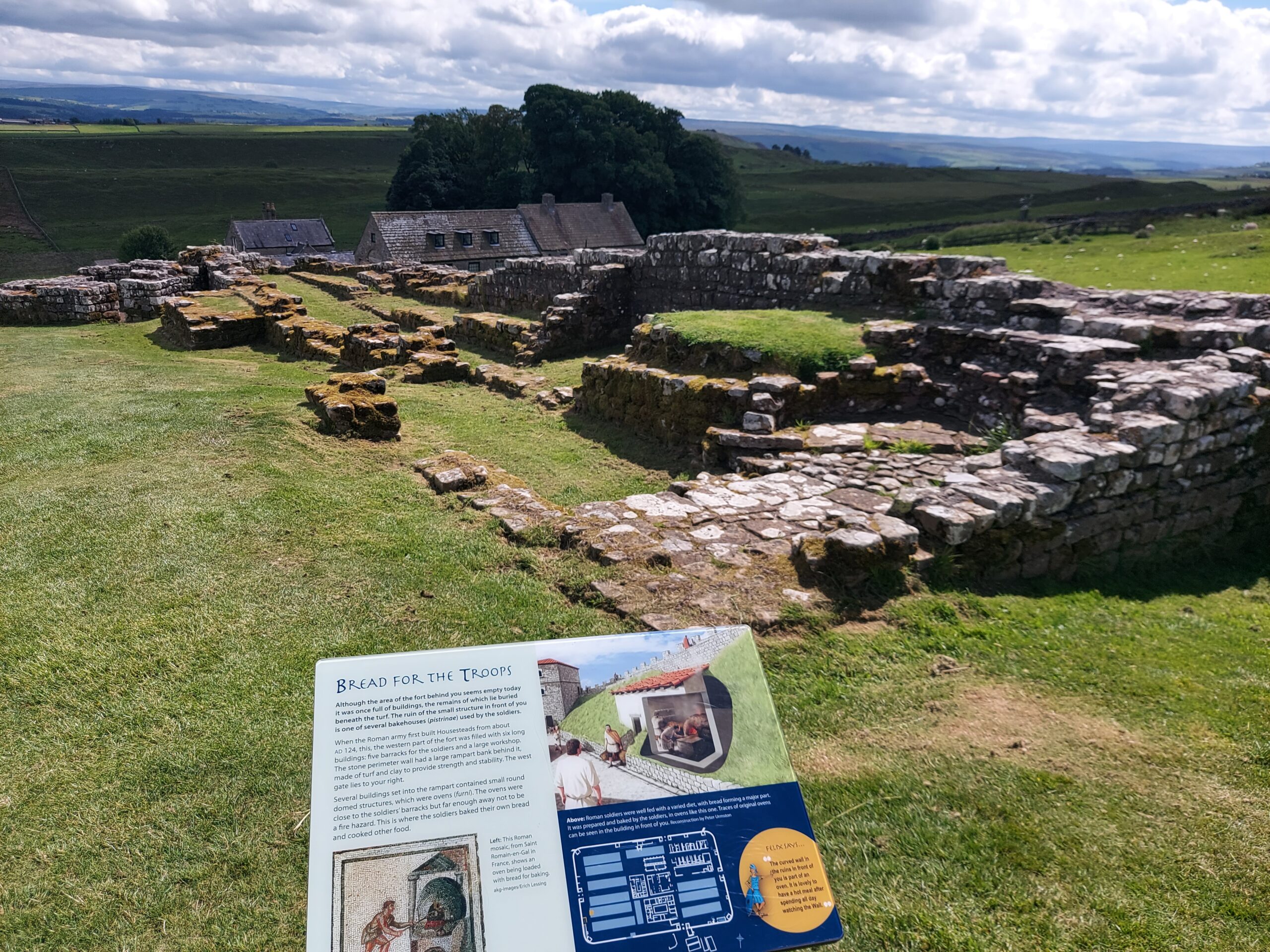
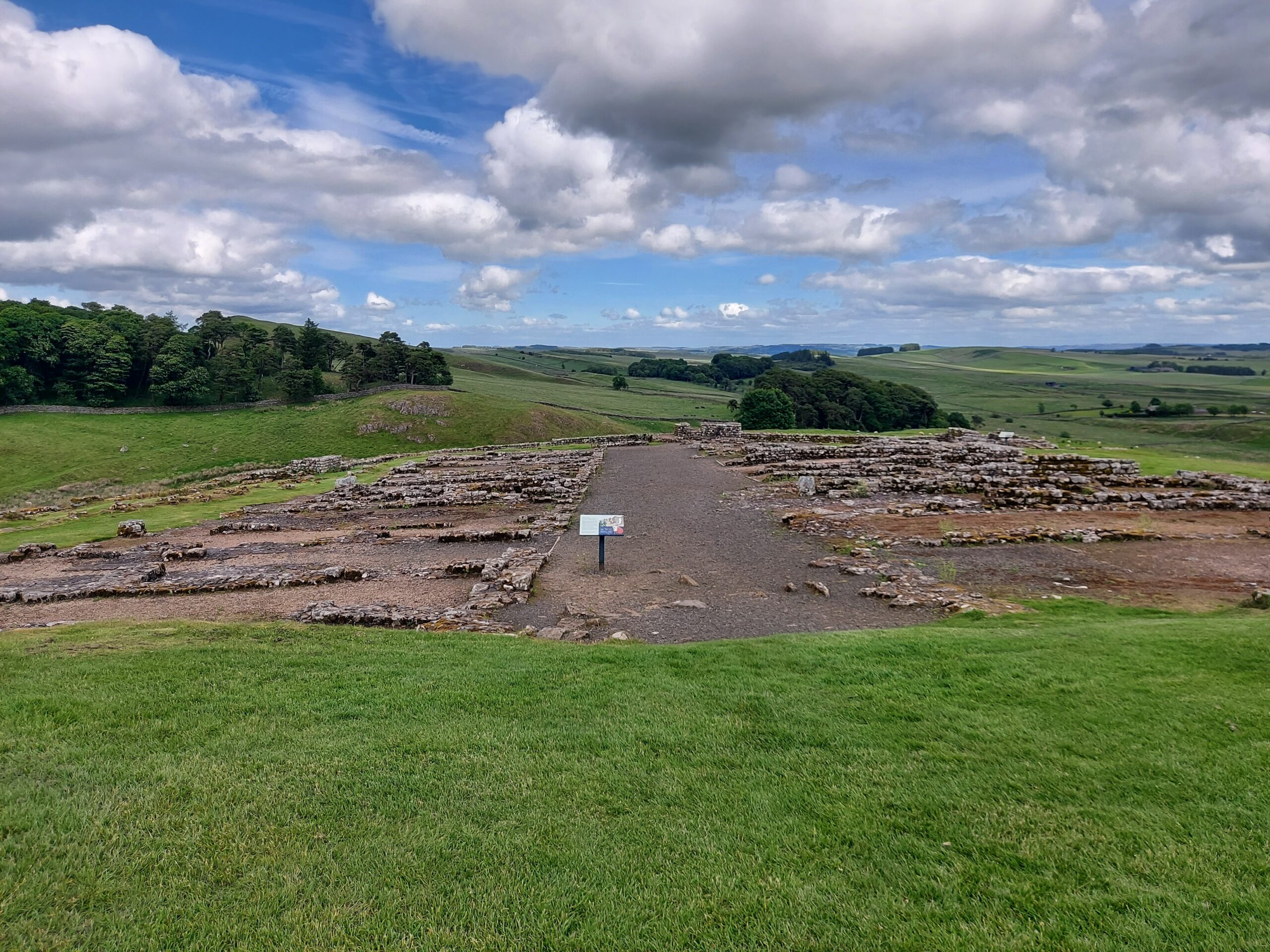
The Visitor Centre at the bottom of the hill is currently closed, but when you climb the hill to the fort, toilets are available and there is also a small museum and shop. The fort has fantastic views of the surrounding countryside, and would have been an ideal defensive point for the Romans two millennia ago.

Housesteads


Originally named Vercovicium, the 5-acre Housesteads (named after a later farm on site) was home to around 800 soldiers and remained occupied for almost 300 years. The remains of gateways and a turreted wall can clearly be seen, as well as the commandant’s house, a hospital and – famously – a communal toilet block.

Housesteads

A civilian settlement existed on the south side of the fort, outside the boundaries. Here, two skeletons were found, beneath an apparently newly-laid floor, leading the location to be nicknamed the “Murder House”. The settlement – known as the vicus – was abandoned in around AD270, over a century before the Romans left the fort itself, around AD409.

FACTS

Address: Hexham, NE47 6NN

Website: english-heritage.org.uk/visit/places/housesteads-roman-fort-hadrians-wall

Opening Hours: 10am – 5pm

Price: Adult £16.50, child £7.50. Joint tickets available with the Roman Army Museum.

Vindolanda Roman Fort

Vindolanda

During a holiday at a nearby glamping site, I spent time visiting all the Roman forts and historical attractions in the vicinity of Hadrian’s Wall. The first one I visited was Vindolanda, and it was fantastic – if you can only visit one Roman fort, make it this one.

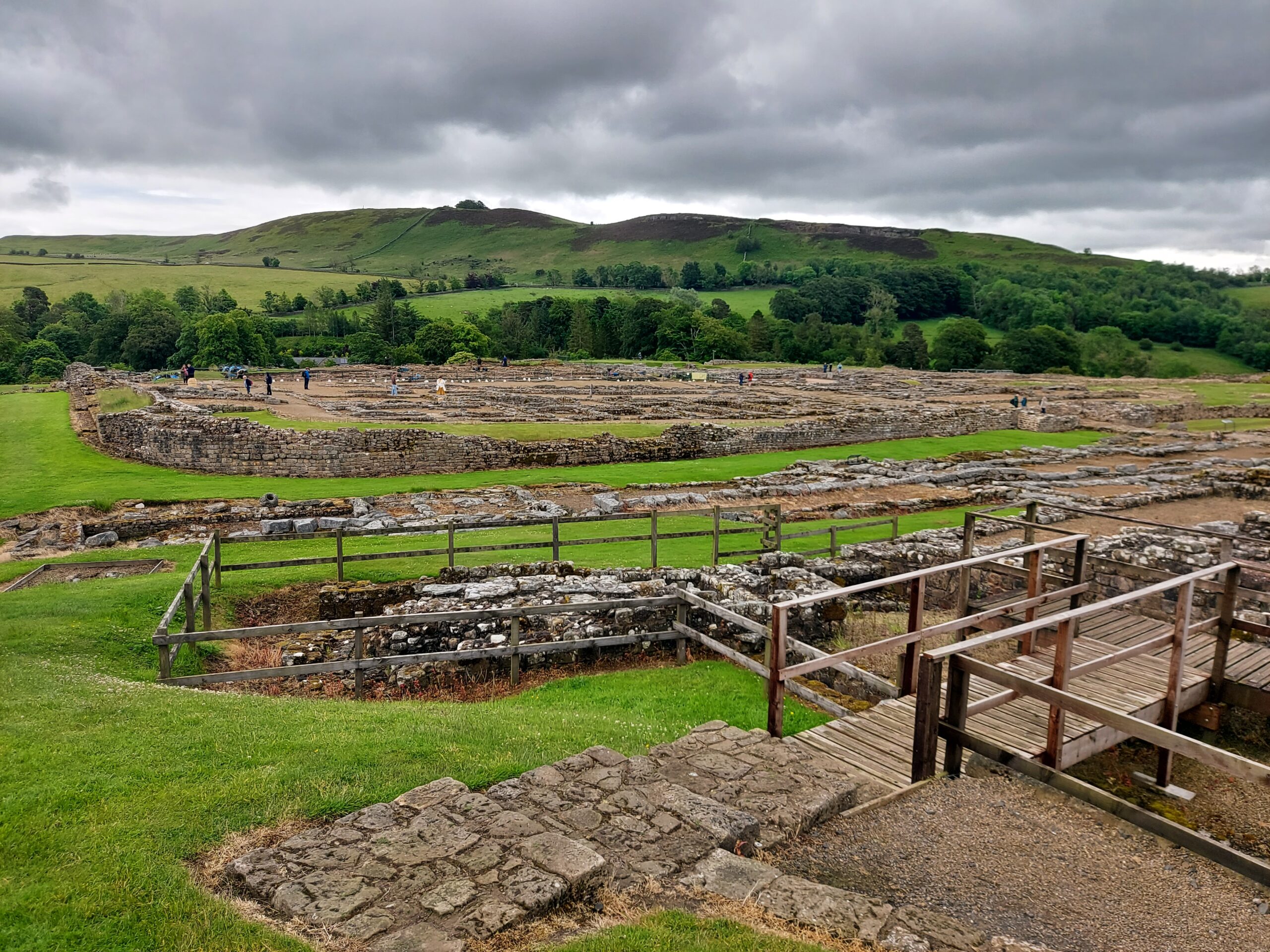
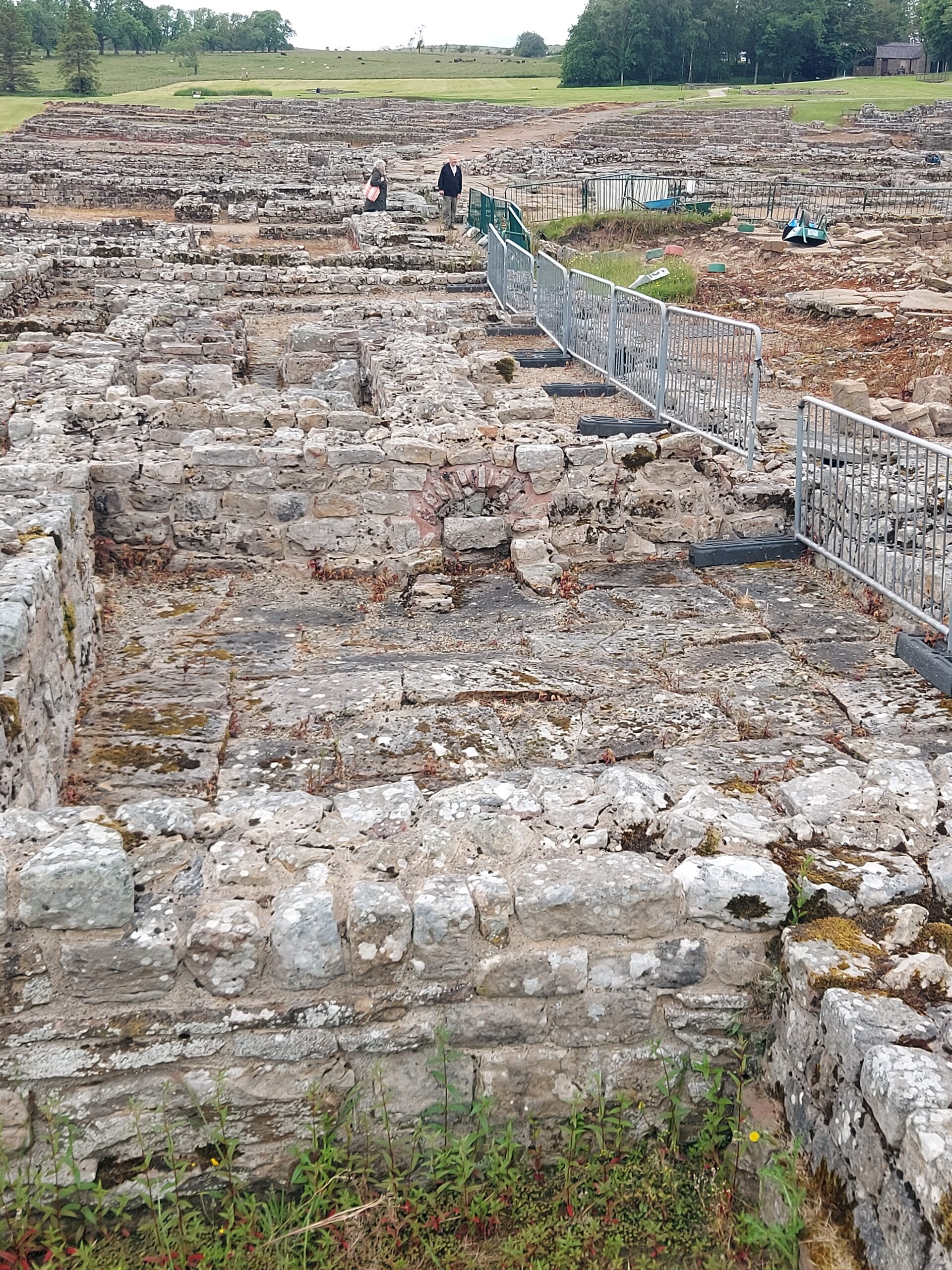
Vindolanda does not sit alongside Hadrian’s Wall, but next to the Stanegate Road, the first Roman frontier in the north. Occupied for over 300 years, it was founded long before the Wall was constructed. The site is run by the Vindolanda Charitable Trust, founded in 1970. This group was founded in order to excavate and investigate the site, and excavations are ongoing to this day. Some of the discoveries include a bath house, commanding officers’ residences, barracks, civilian houses and workshops, latrines, a strong room and a Roman Celtic temple. There is also a post-Roman mausoleum and Christian church. Small sections of Hadrian’s Wall have been replicated on-site in turf, timber and stone.

A writing tablet

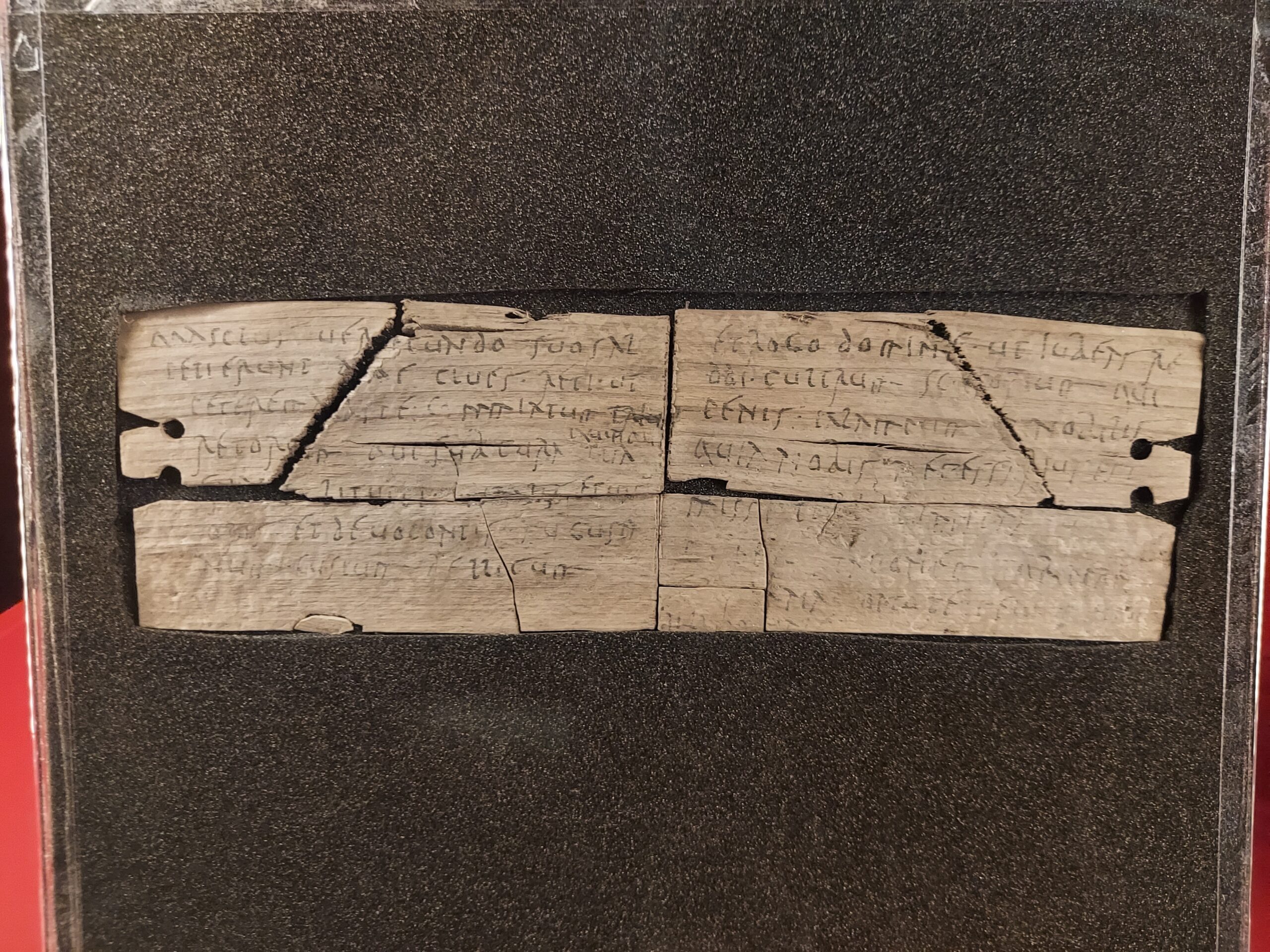
Probably the most famous discovery from Vindolanda is that of the well-known writing tablets. These are delicate slivers of wood covered in writing, preserved thanks to the oxygen-free environments of buried early wooden forts. The tablets offer insights into everyday life at Vindolanda, and are absolutely fascinating. One commander asks for more beer to be sent, as the soldiers have none; a military wife welcomes a visit from the wife of a nearby camp commander in order to ease her boredom.

Shoes found at Vindolanda

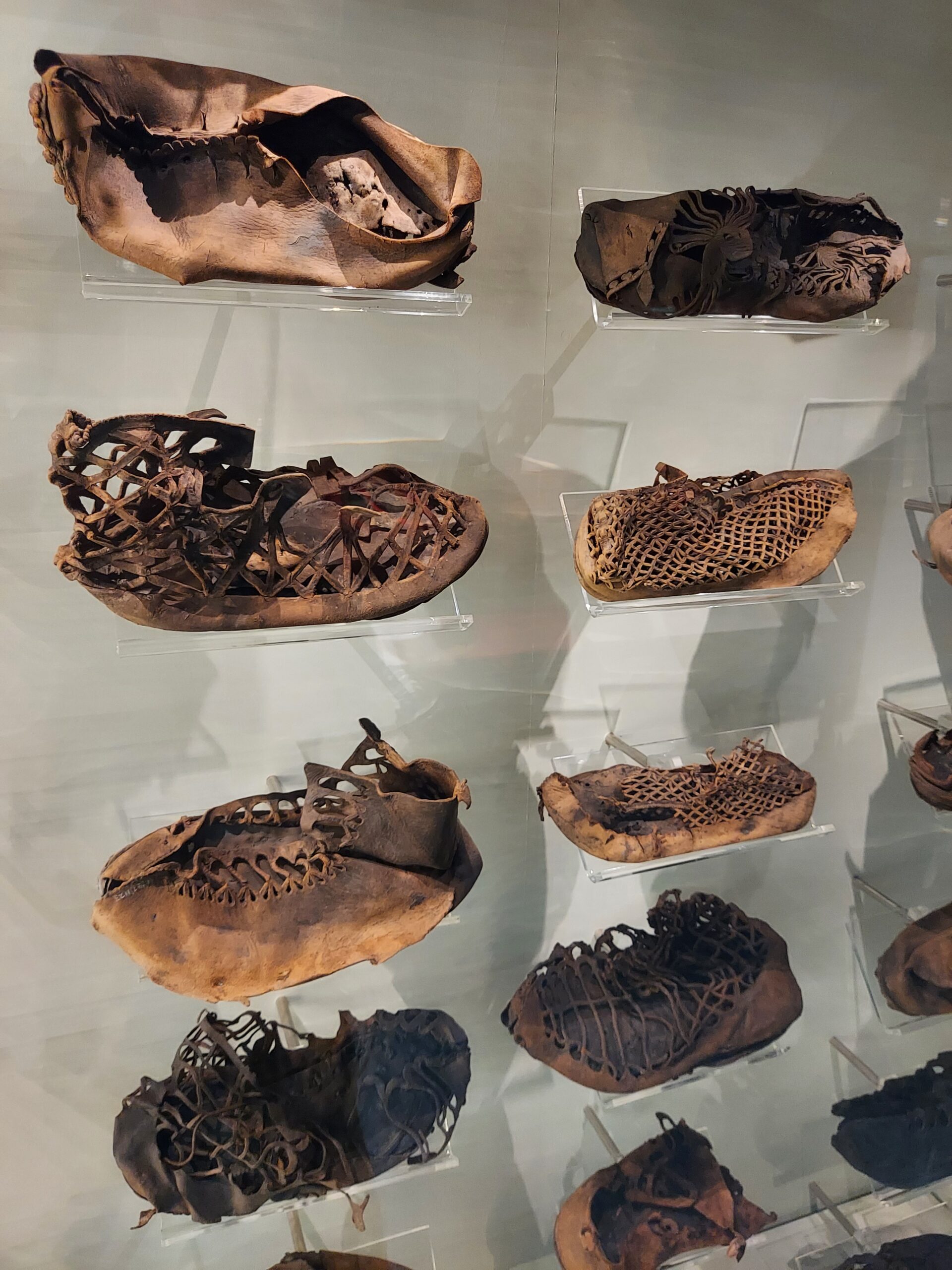
Other items have been preserved in the unique conditions here, including very many leather shoes, which are displayed in a striking case within the informative museum. Vindolanda actually has the largest collection of Roman leather items anywhere in their historical Empire, including bags and purses as well as shoes. Wooden objects have been discovered too, including parts of furniture, tent pegs and combs, as well as the more usual jewellery, weapons and bones.

I took a guided tour during my visit which was fascinating. Our guide told us about the history of the site and more information about the people who lived and worked there. I was particularly amused to hear about the sausage seller – Roman fast food!

Vindolanda

The site at Vindolanda is large and I think it would be possible to spend an entire day there. Sadly I had to leave in time to get the bus to the next place. There is a lovely café in the same building as the museum, so you can stop for a break.

FACTS

Address: Hexham, NE47 7JN

Website: vindolanda.com

Opening Hours: 9:30am – 5pm

Price: Adult £16.50, child £7.50. Joint tickets available with the Roman Army Museum.

Segedunum Roman Fort

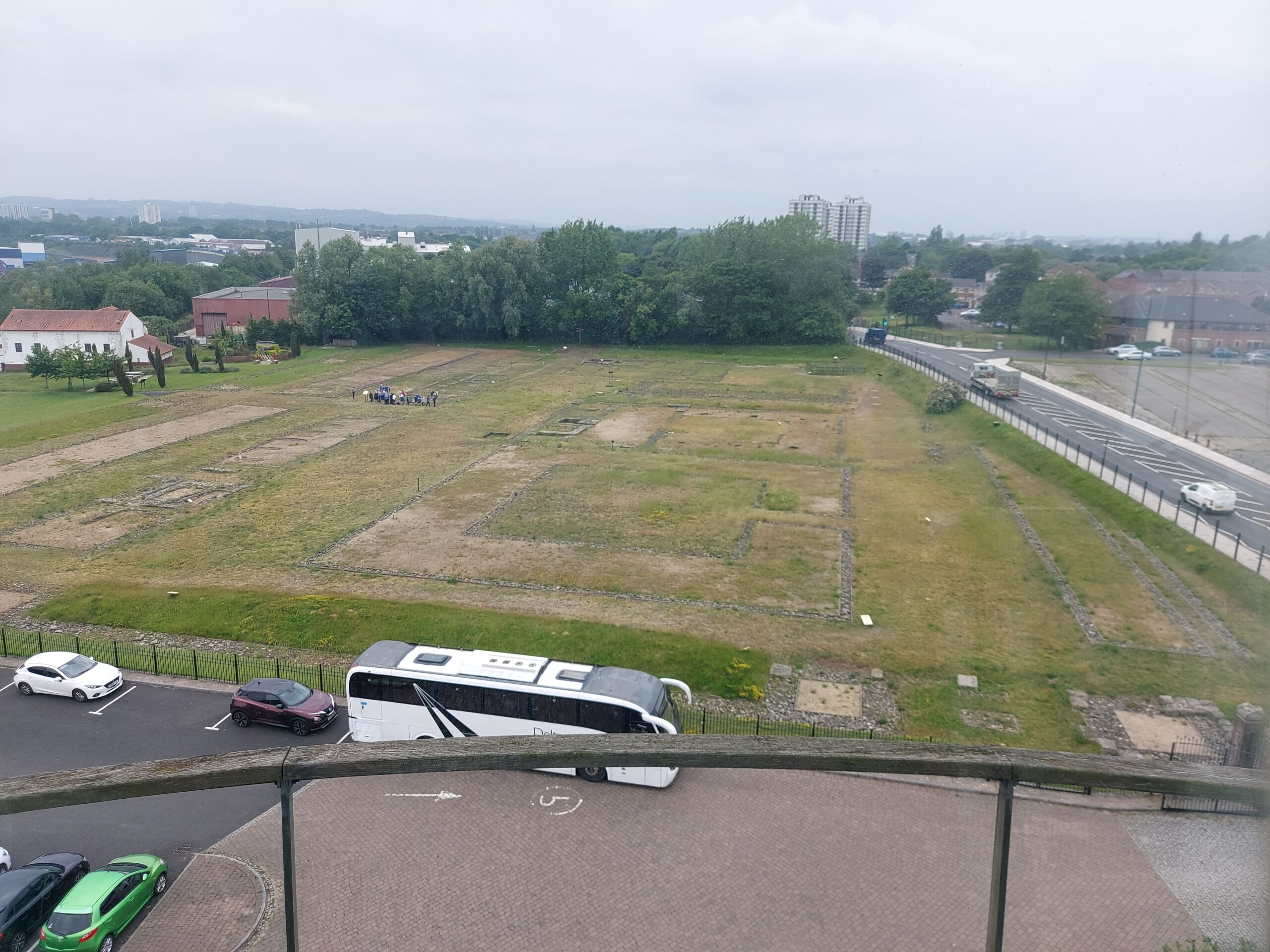
Aerial view of the fort

I took advantage of a day off to visit Segedunum Roman Fort. This was the starting point for last year’s Hadrian’s Wall walk, but we didn’t have time to actually visit, and I wanted to change that.

The fort stood at the eastern end of Hadrian’s Wall, built around AD125, a few years after the construction of the main Wall, and was home to Roman soldiers for nearly 300 years. The site of the fort, on a plateau on the north bank of the river Tyne, was perhaps chosen because of the views eastwards downriver towards South Shields, and upriver towards Newcastle. The name ‘Segedunum’ means ‘strong fort’. 

The museum contains information about the construction of the fort, the people who lived and worked here, and the role the fort played defending the Roman frontier. Before the fort was built, the area was mostly farmland, part of the territories of the Brigantes tribe. People would have lived in farmsteads, around a 15 minute walk apart, made up of roundhouses surrounded by earth banks and ditches. In between the ditches were fields for crops and pasture for animals. Cattle and other animals might have lived on the ground floor, with people living above them. When the Romans arrived to build the fort, they confiscated the land.

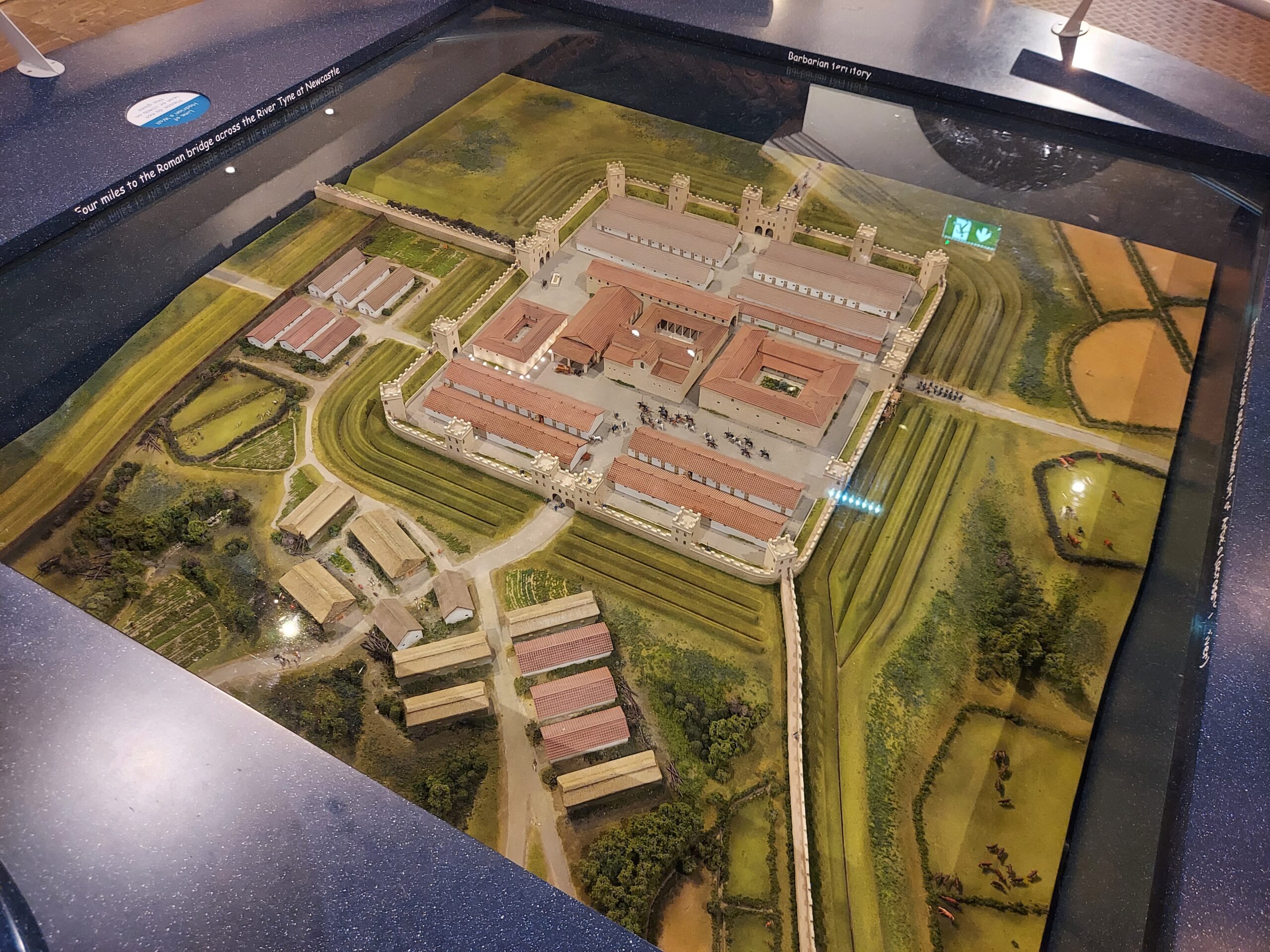
Model of Segedunum

When first built, the barracks were made from timber, though they were later rebuilt in stone. Eventually, these stone buildings were demolished and replaced by new back-to-back barracks. A stone hospital was also demolished at this time. Later, the west gates area seems to have become a marketplace. Use of the site probably ended in around AD380.

The site as it exists today is one of the most completely excavated forts anywhere in the Roman Empire. It is laid out as it would have been in AD200. Visible are walls and gateways, granary stores, barrack blocks and the Commanding Officer’s house. There is also a hospital and, discovered more recently, the foundations of a bath house. Part of Hadrian’s Wall can also be seen here, alongside a reconstruction of the Wall.

FACTS

Address: Buddle Street, Wallsend, Newcastle upon Tyne, NE28 6HR

Website: northeastmuseums.org.uk/segedunum

Opening Hours: Mon-Sat; hours vary depending on season

Price: Adults £7.75* | Concessions £5.50* (*includes £1 voluntary donation) | Young people 21 and under and all NE28 residents FREE

Rebel Fest! 2026

It’s been a while since I was able to attend a Rebel Fest, but I managed to keep myself free for this one. As usual, it was a fun, eventful weekend.

Saturday kicked off with a cheerleading class with Emily. I enjoyed giving it a go even though my dad walked in while I was trying to film myself! It was then time for flood icing biscuits with Kate. I’d made the biscuits in advance as advised, and liked how they looked with the icing, although the professional efforts of some other Rebels put mine to shame.

Flood iced biscuits

After a short break, it was time for a talk by Sammie Aplin, who makes colourful art with the rubbish she picks up on beaches. During the breakout session, I took a break to work on my dried flower wreath (a Rebel Cup challenge).

During the craft & chat with Charly, I worked on a mosaic, and then it was time for a ‘Bakineering Takes Flight’ talk by Andrew Smyth, a Rebel Fest regular. After a break for tea, we had a fascinating talk on ‘The History of Mermaids, Sea Spirits & Women’ by Professor Diane Purkis.

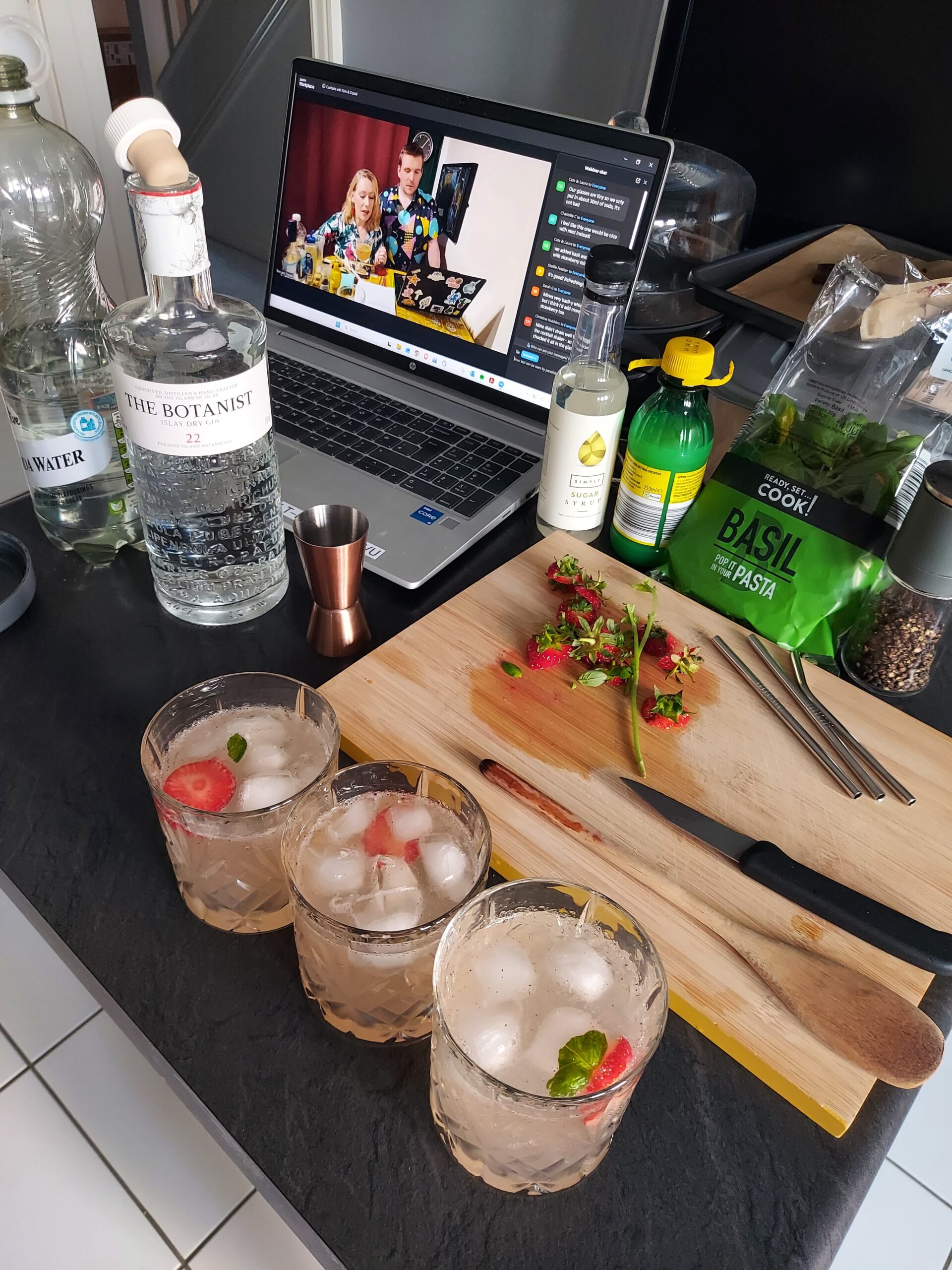
Finally, it was time for the standard Rebel Fest cocktail making session with Tom and Crystal. I made the Strawberry Basil Black Pepper Smash for myself and my family, and enjoyed it very much.

preparing cocktails

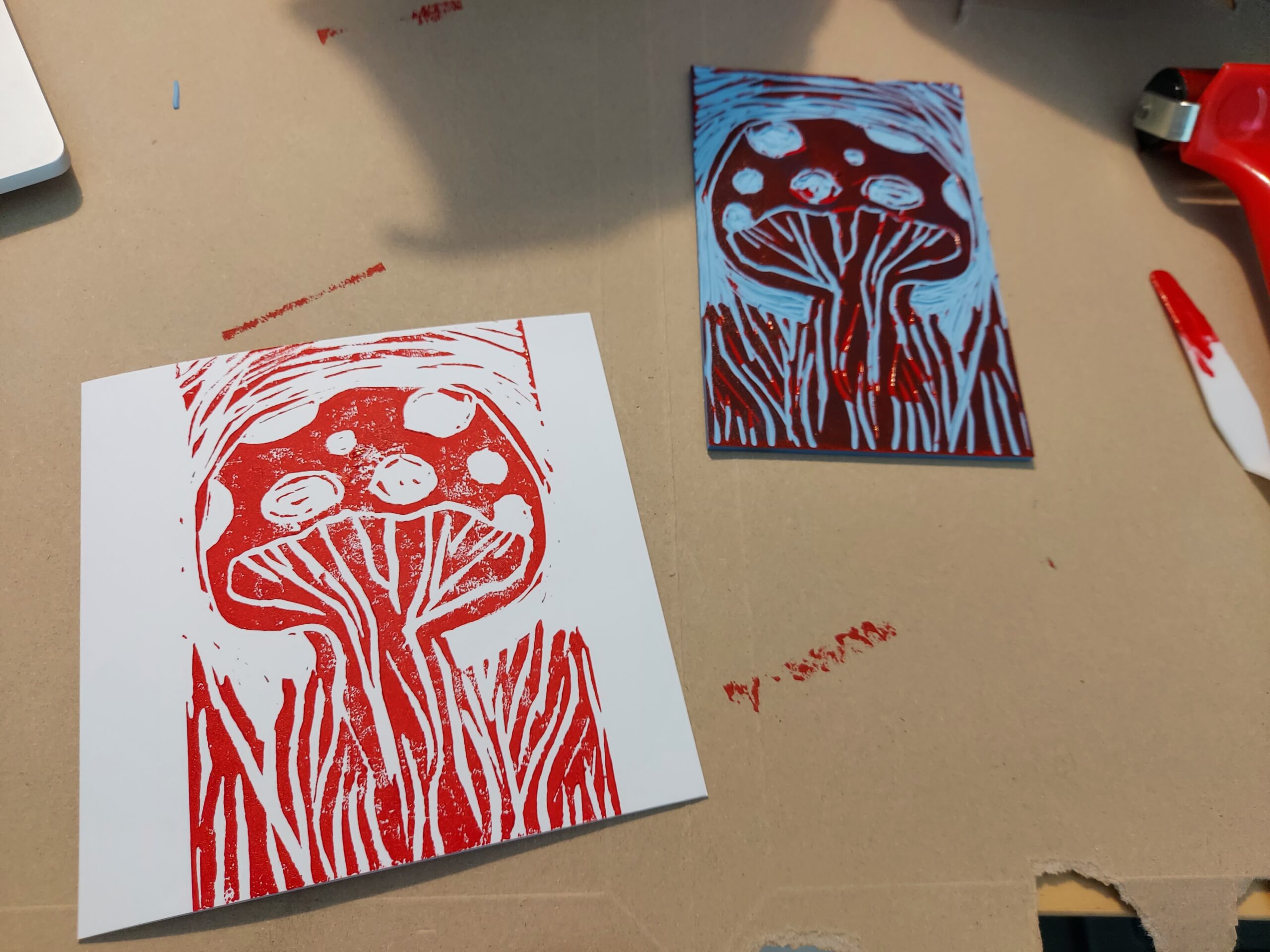
Sunday began with a gentle, relaxing yoga session with Emma, before we embarked upon lino cutting with Emma – a very enjoyable and rewarding session. After an apothecary session with Charly, we had a break for lunch before a talk from Seal Watch coordinator Julie Forshaw, about ‘Marine Mammals & the Hilbre Island Atlantic Grey Seal Colony’. Following a Bollywood dance session with Shaneen, I hosted a breakout room on my recently-achieved Gold Maverick.

Linoprinting cards

We then had a break for tea. I missed the Sign Language Choir session as I was so tired I had to have a nap, but I was back online for Toby’s pub quiz, where I got more correct answers than I was expecting, though nowhere near the winning total.

Once again I had a thoroughly enjoyable time at Rebel Fest, and I bought my ticket for the Winter Edition as soon as the earlybird tickets went on sale!

The King’s Observatory

The Royal Observatory

I’ve been trying to get a ticket for a King’s Observatory tour for years. Finally I managed it, as tickets were coincidentally available for a day I was in London.

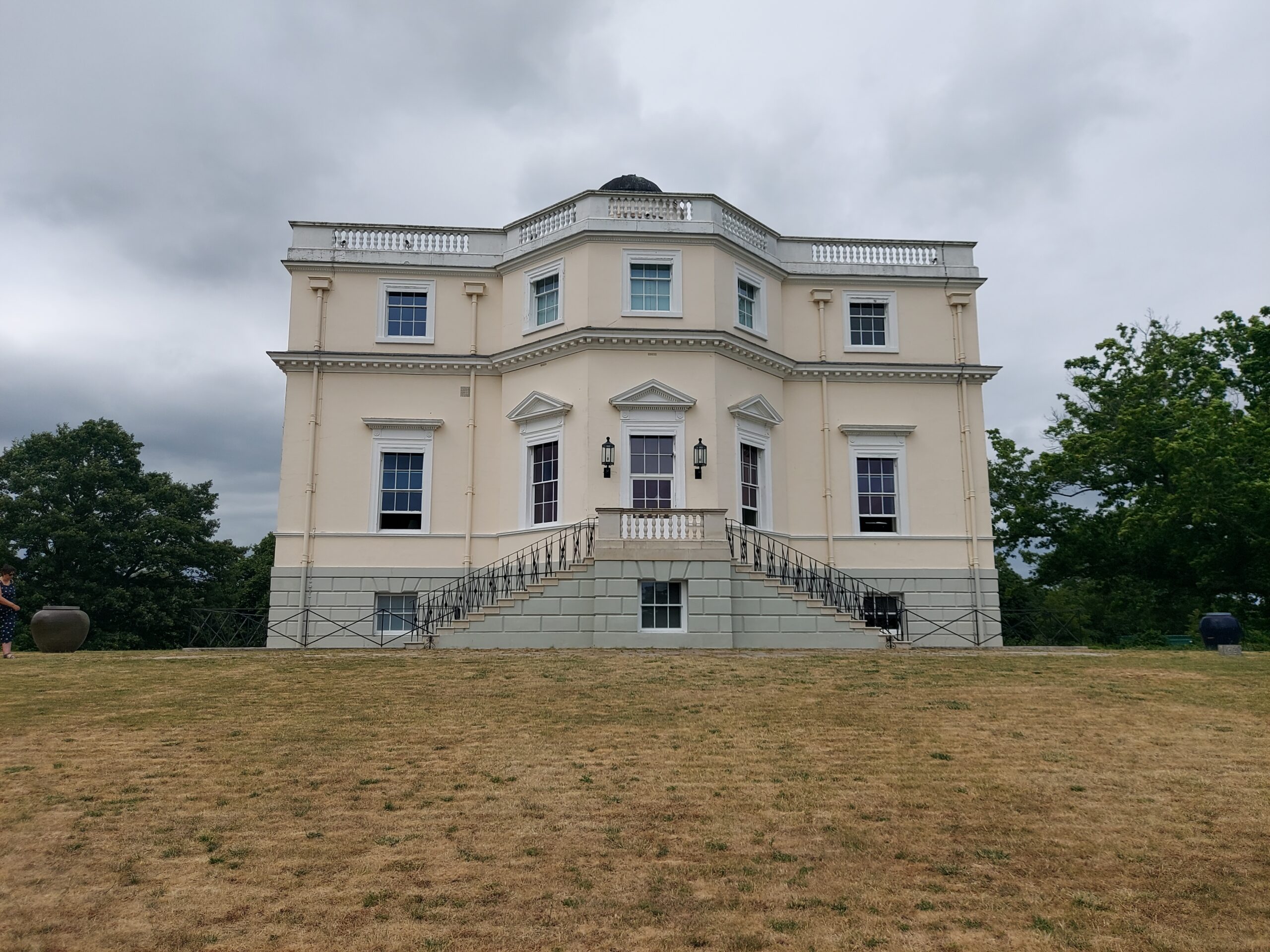
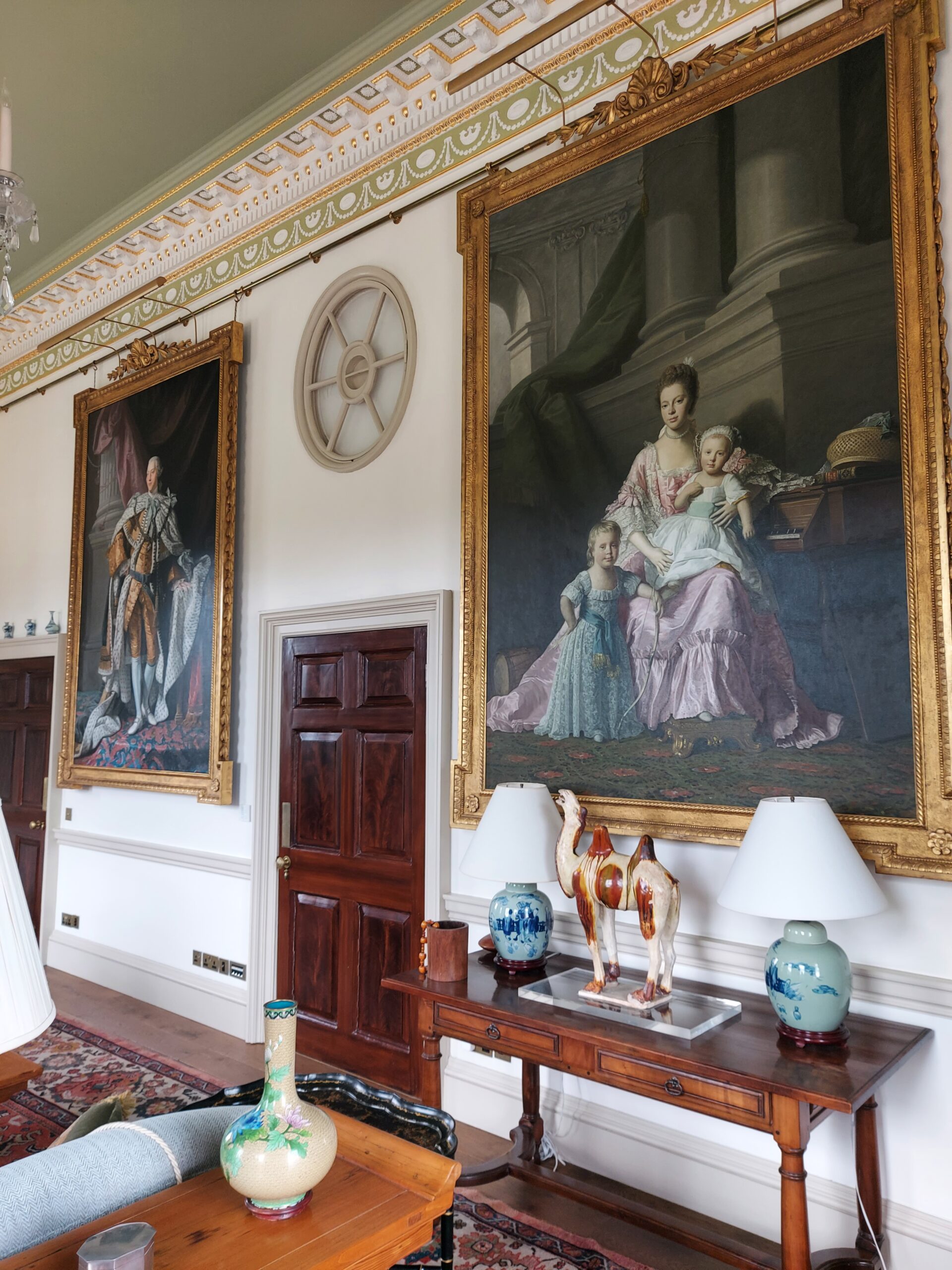
The King’s Observatory is located in Richmond, a Grade 1 listed Palladian house commissioned by King George III in 1769 and designed by architect Sir William Chambers. Originally built to observe the transit of Venus, it holds the world’s oldest surviving revolving observatory dome.

The sitting room

As the building is now a private residence, it is usually out of bounds to the public, but visits are possible on occasional guided tours. It can be reached via the Royal Mid-Surrey Golf Club grounds and is situated in Old Deer Park.

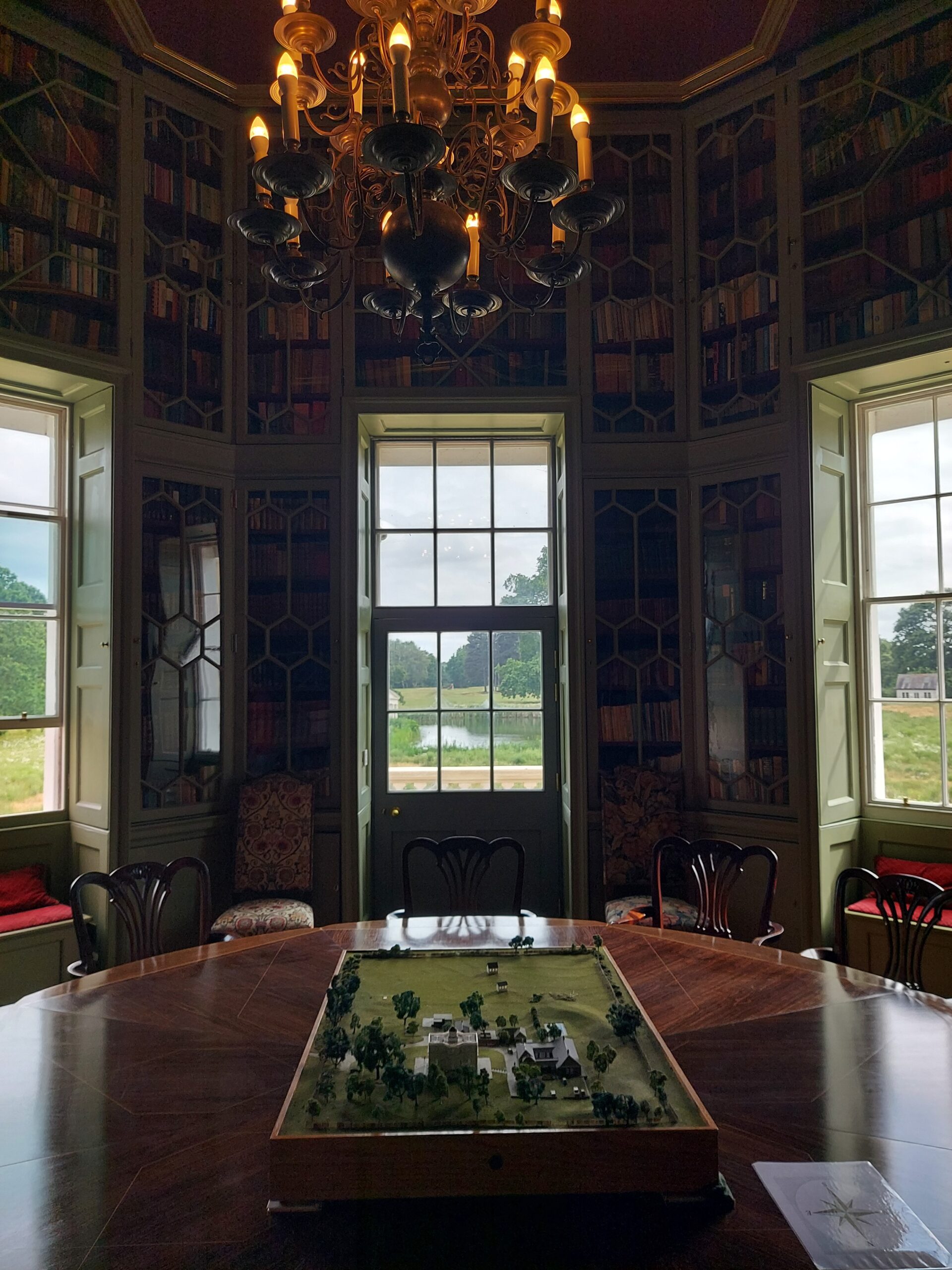
I enjoyed my tour around this beautiful building, with a comprehensive library, stunning artefacts and a grand reception room. The most exciting part of the tour was getting to go upstairs and look closely at the observatory dome.

The library

Behind the Scenes – Secret Dome Tour

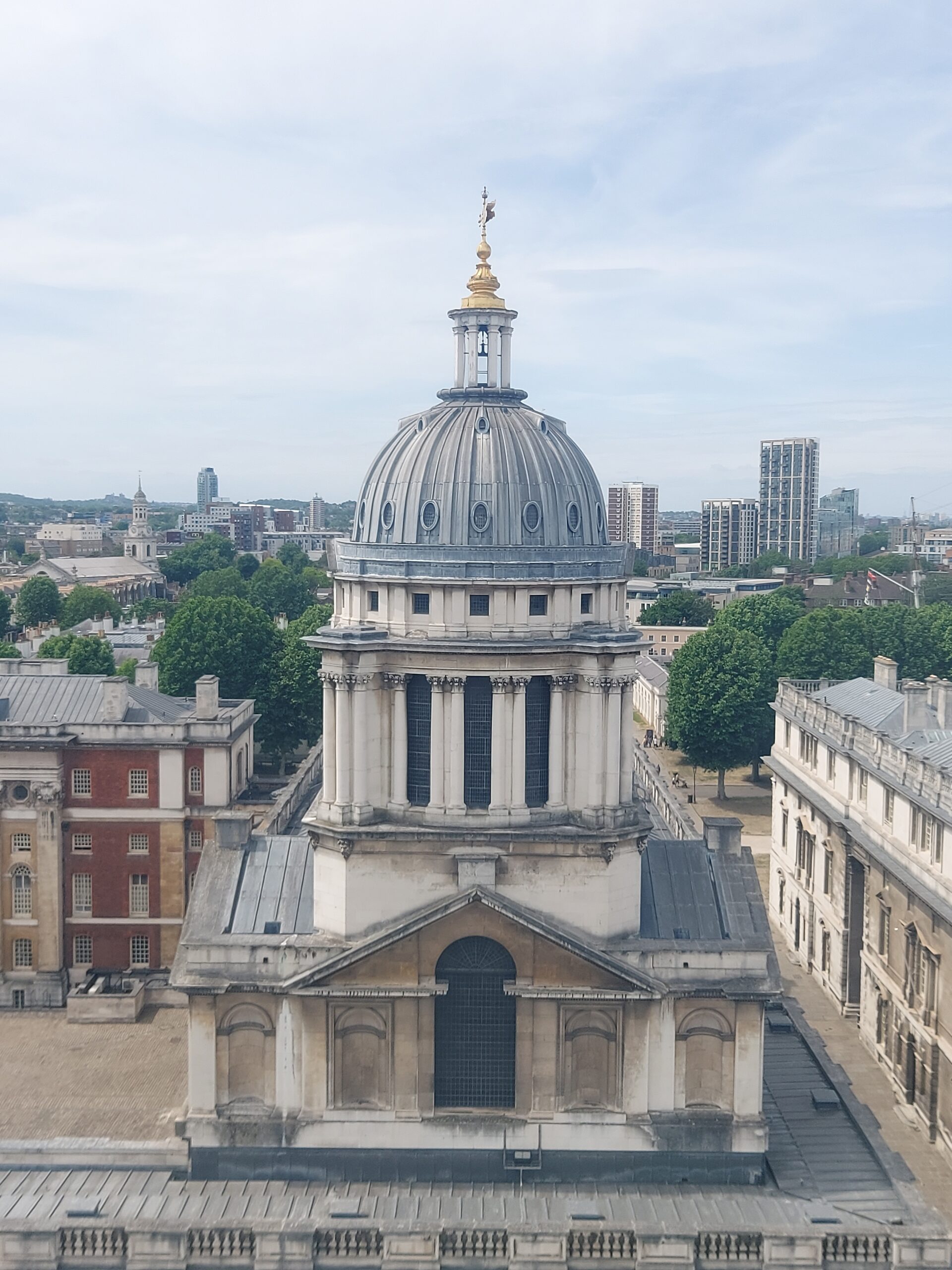
View out of the window


While I was down in London I took part in a Behind the Scenes Secret Dome Tour at the Old Royal Naval College in Greenwich. The tour takes you up to the dome at the Chapel of St Peter and St Paul, offering splendid views of Greenwich and wider London.

The site was designed by Christopher Wren, but he died before it was completed, and it was finished by Thomas Ripley in 1751. Originally, the glass in the chapel was plain – Wren said that one could not improve upon light – but the Victorians changed it to stained glass. After the building sustained damage during World War II, the glass was replaced with plain once more. The décor was made with coadstone, a man-made stone. A fire on 2 January 1779 tore through the chapel, after which it was rebuilt to a new design by James ‘Athenian’ Stuart, decorated in the ‘Greek Revival’ style.

At the top of the dome


Worship in the chapel was compulsory for the pensioners resident at the Royal Hospital for Seamen. The bells in the chapel served different purposes, including calling people to church and notifying them that lunch was ready.

Pulpit


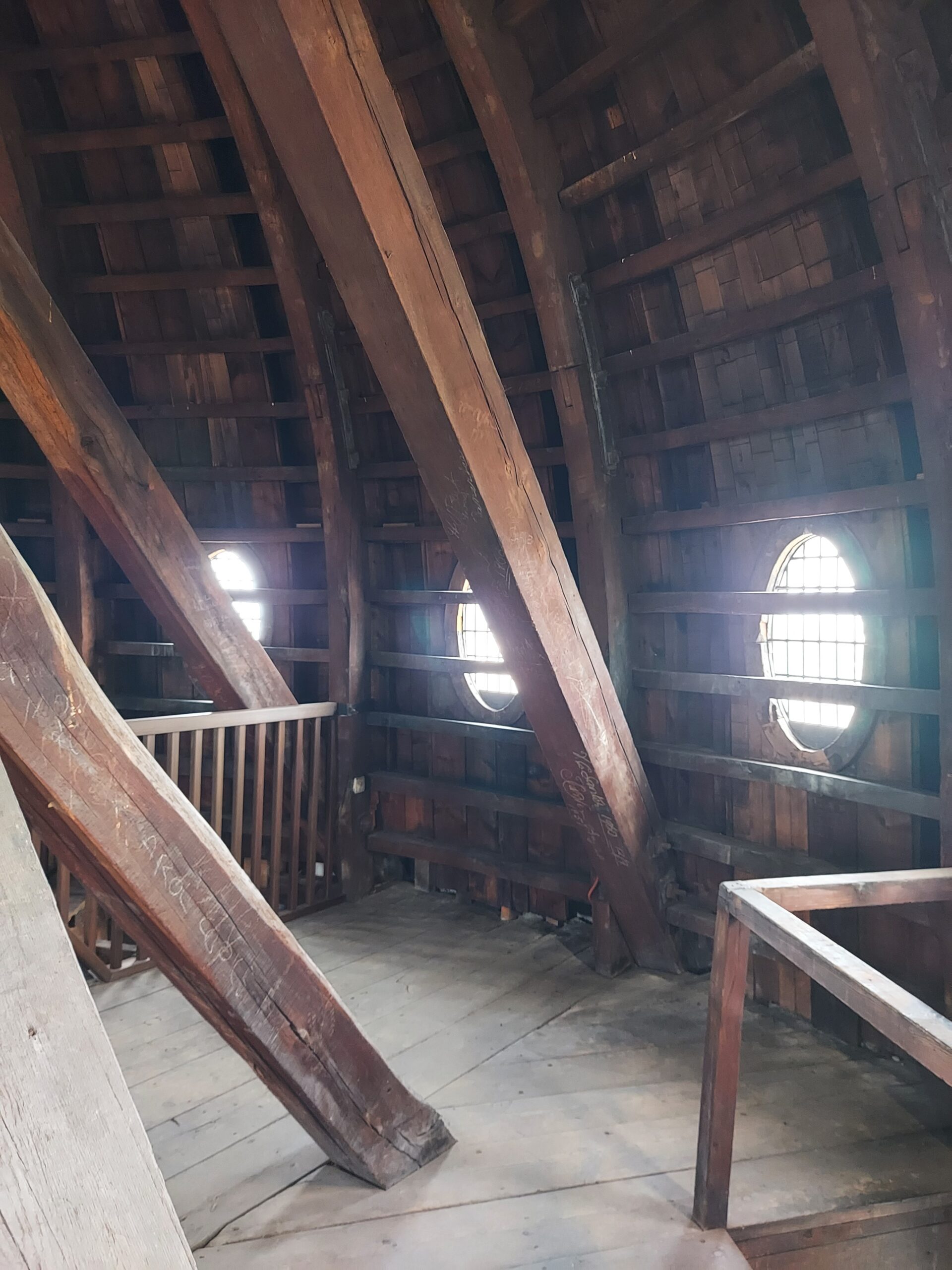
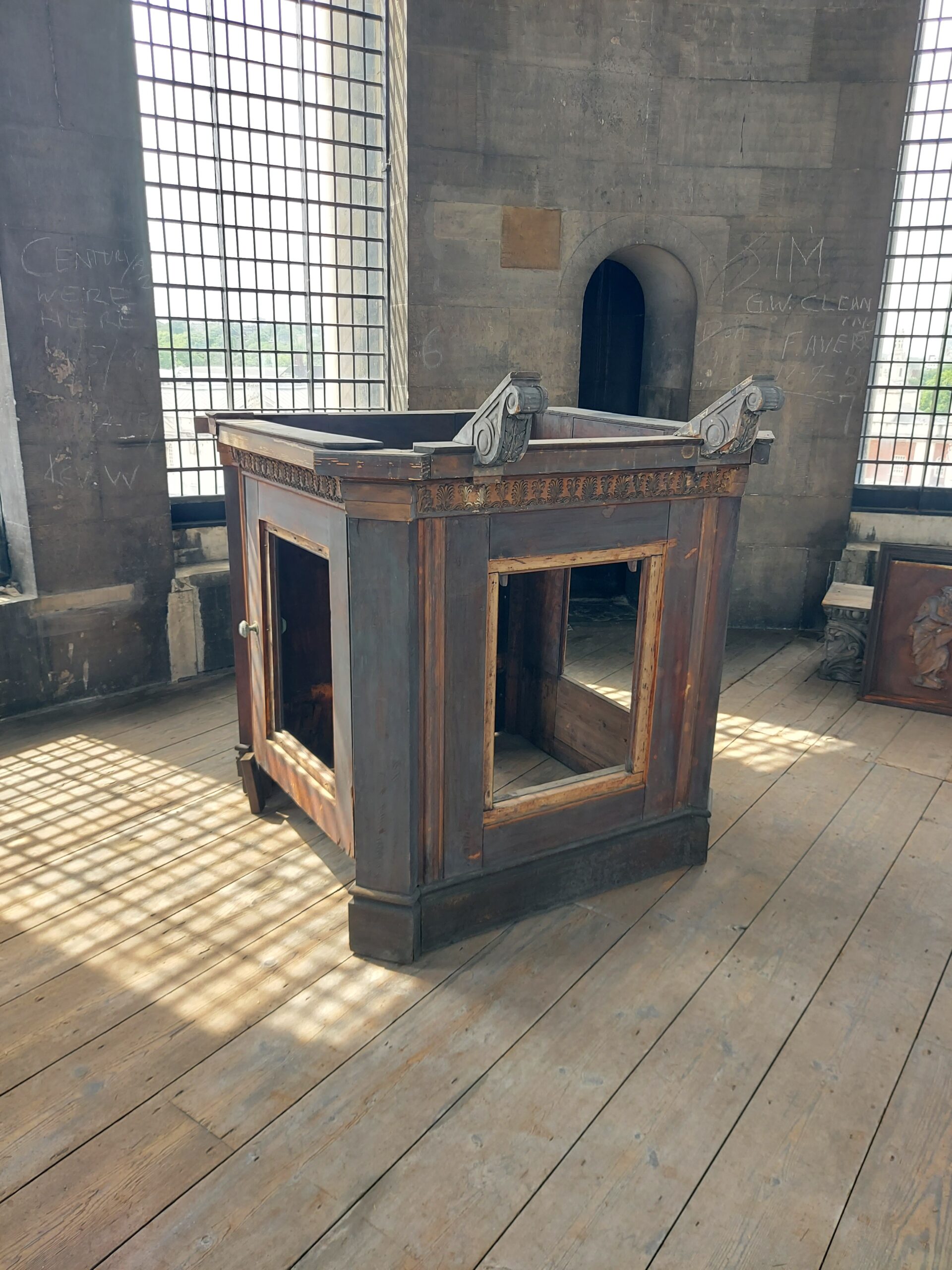
We climbed up the different layers of the dome one by one, pausing at each to note anything of interest. On one level we found the remains of a triple-decker lectern, which had been brought upstairs in sections via the trapdoors in the floor. On another level we got to see the clock close-up. The clock has two faces, and is wound once a week – it loses one minute of time per week. Originally, a pensioner, paid with extra tobacco, was responsible for winding.

Relics of WW2


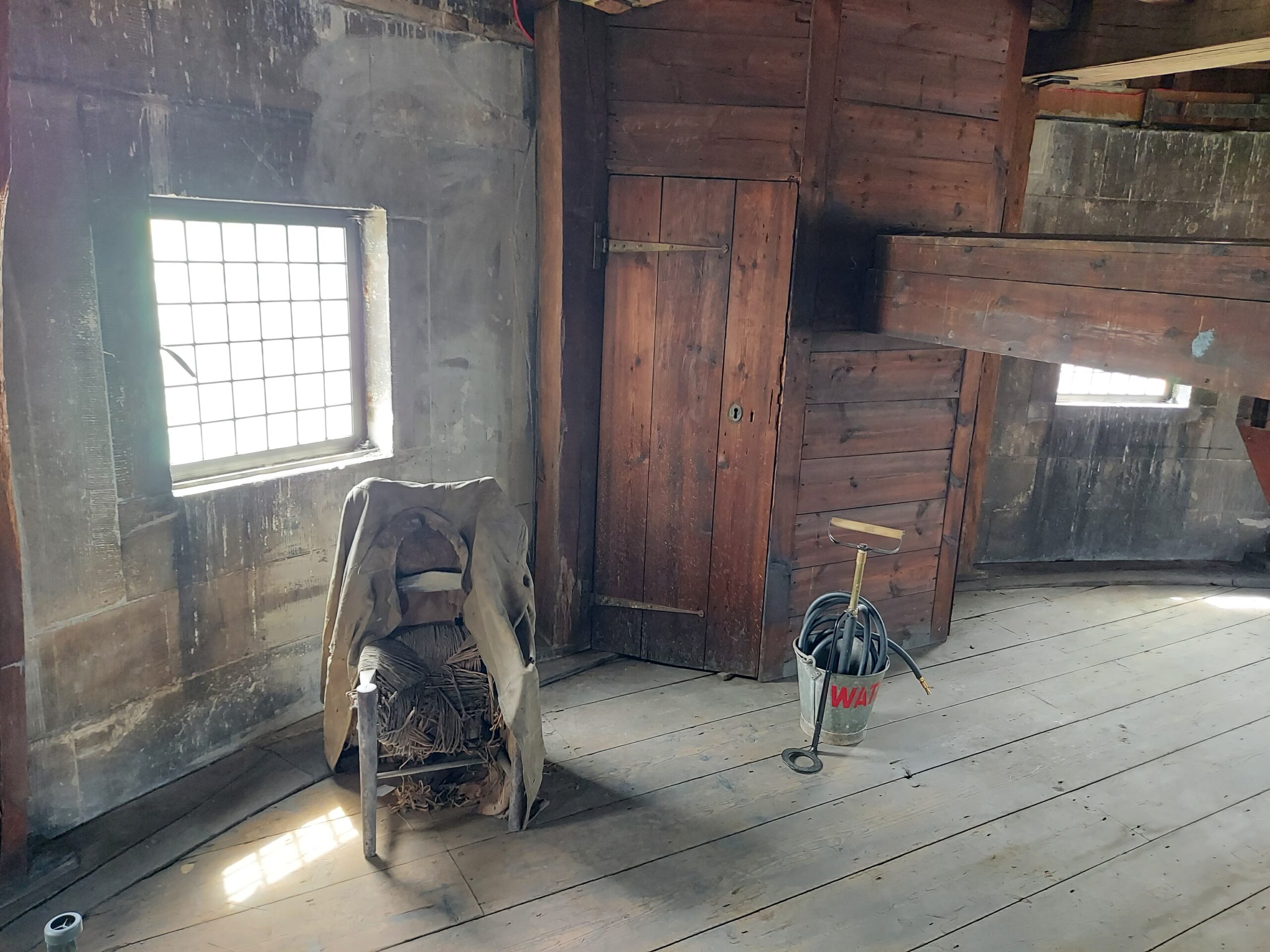
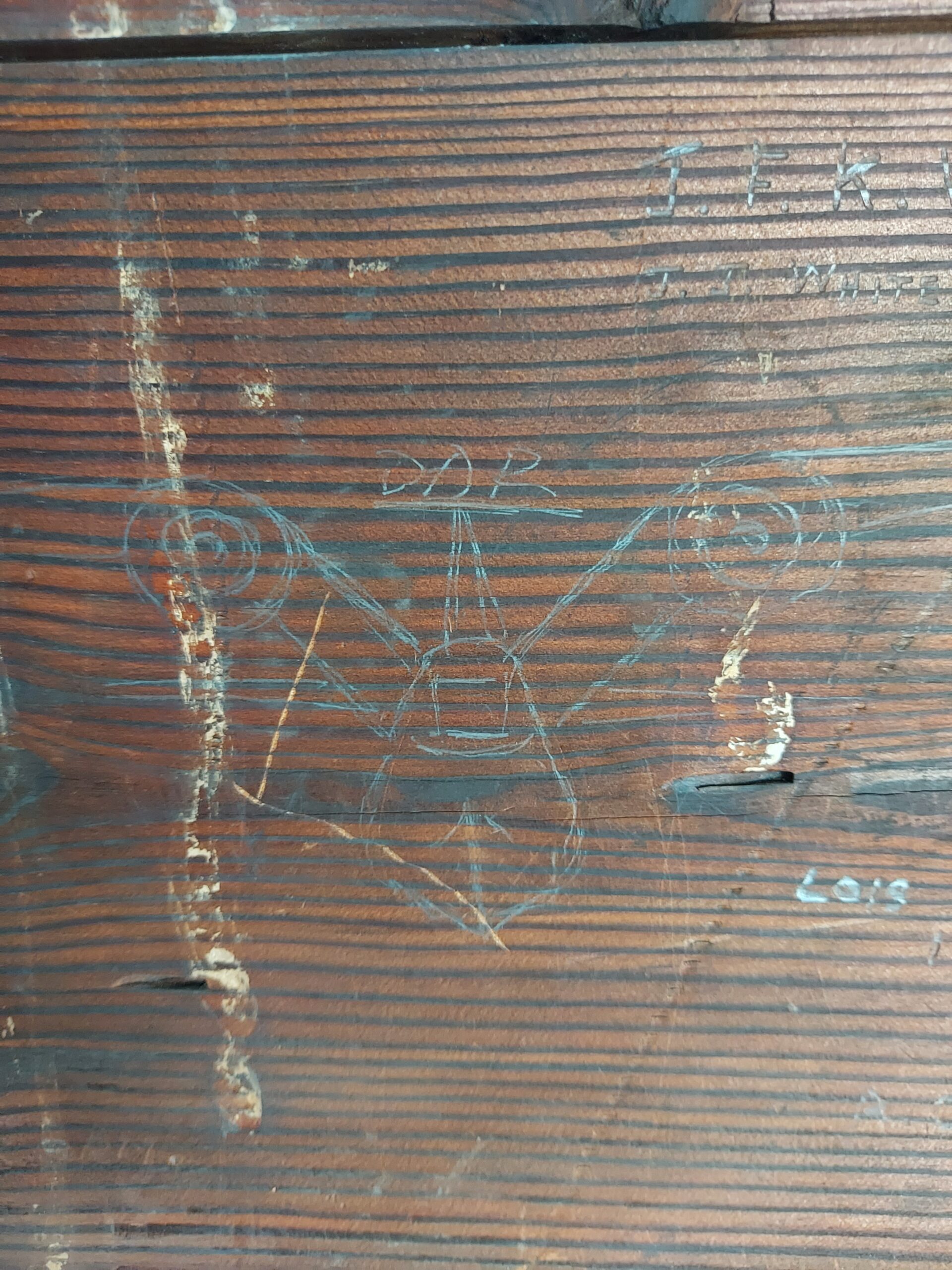
During World War II, the dome was used as a fire lookout owing to its excellent views of the surrounding area. Graffiti made by service personnel (as well as workers over the centuries) remains as a sign of their presence. I loved seeing these signs of human activity, as much as I loved looking at the views out of the window.

Graffiti


I definitely recommend completing one of these tours. There is a lot to learn and to see, and the experience is well worth it.

Schiaparelli: Fashion Becomes Art – V&A

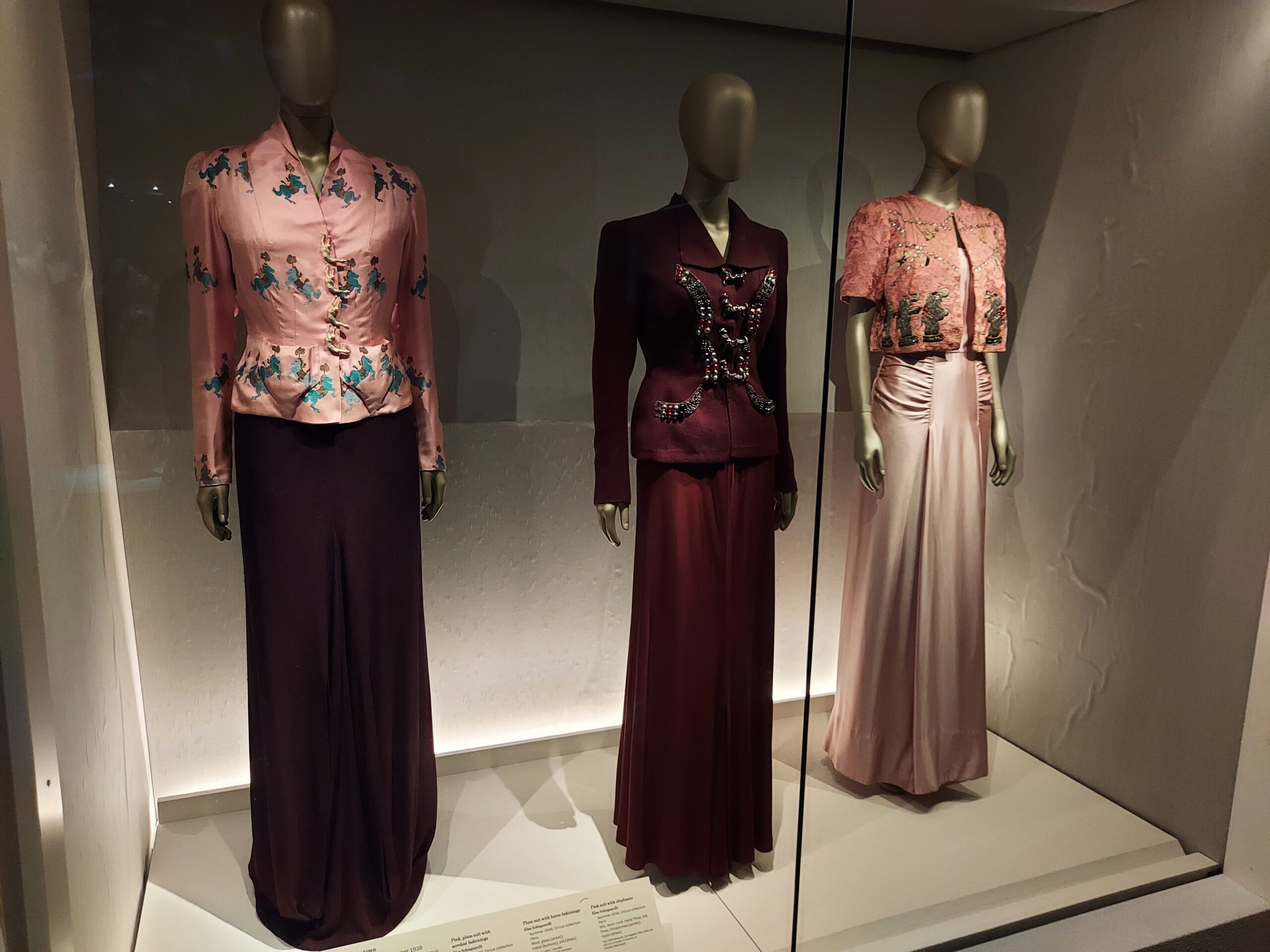
During my trip to London I visited the Schiaparelli: Fashion Becomes Art exhibition at the V&A. This is the UK’s first exhibition on Schiaparelli, and spans a century from Elsa Schiaparelli’s beginnings in the 1920s to the brand’s resurgence under current creative director Daniel Roseberry.

Schiaparelli outfits


Born in Rome in 1980, Schiaparelli thought herself a plain child and, jealous of her sister’s supposed beauty, ‘planted’ flower seeds in her ears, nose and mouth, hoping they would bloom. The picture this image inspires in the mind’s eye is particularly surreal. Her first collection was launched in Paris when she was in her 30s, and featured sweaters with ‘optical illusion’ patterns suggesting bows or waistcoats.

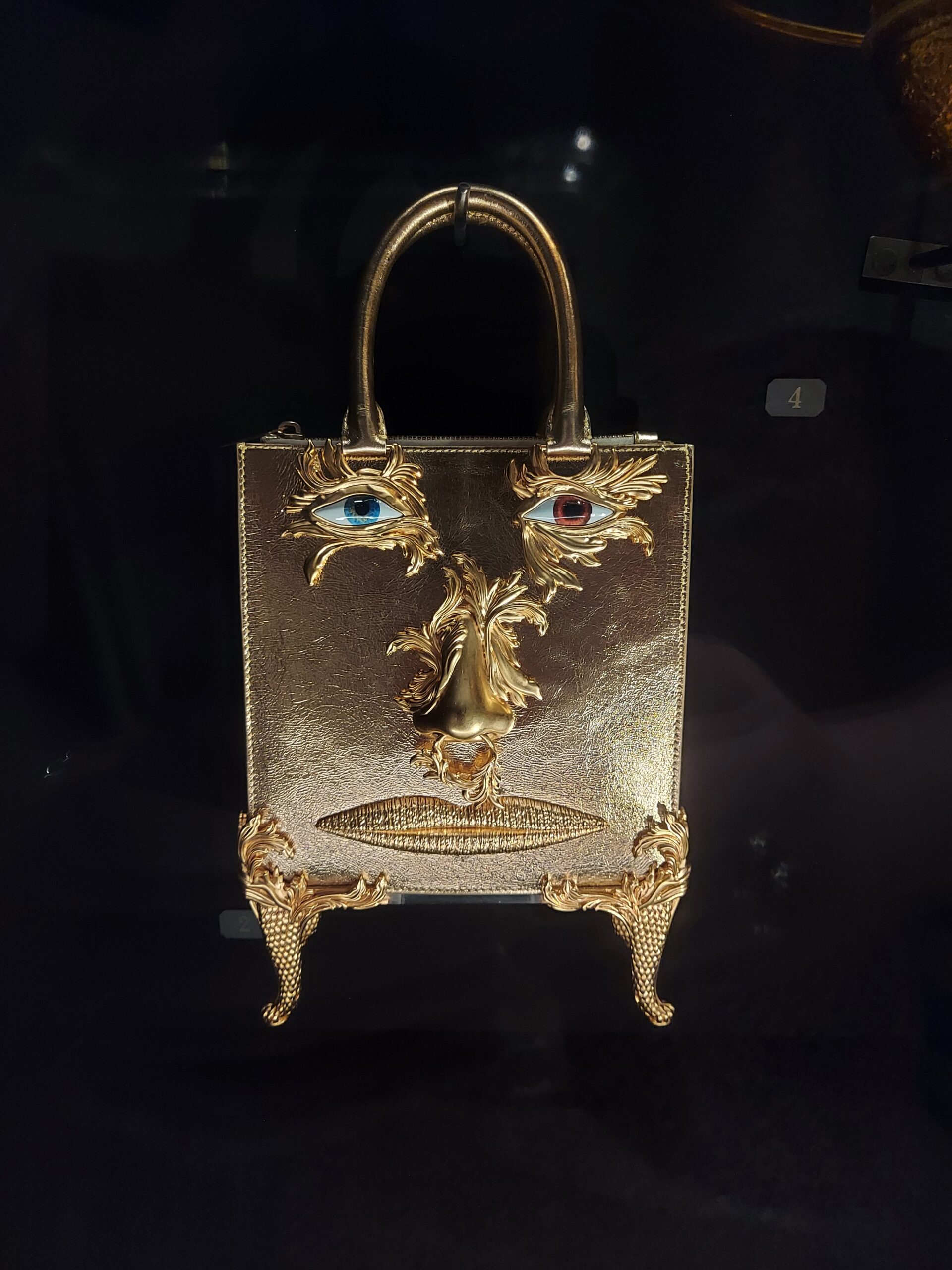
The clothes, accessories and other items on display in this exhibition demonstrate Schiaparelli’s unique, surreal and quirky style. She was friends with Cocteau and Dalí, and it shows. Pieces from her collections are interspersed with pieces from the brand’s modern day revival, sharing the same surreal, unusual yet artistic qualities. I particularly loved the telephone dial compacts and the unusual bags, as well as the hat that resembled a shoe.

Schiaparelli bag