
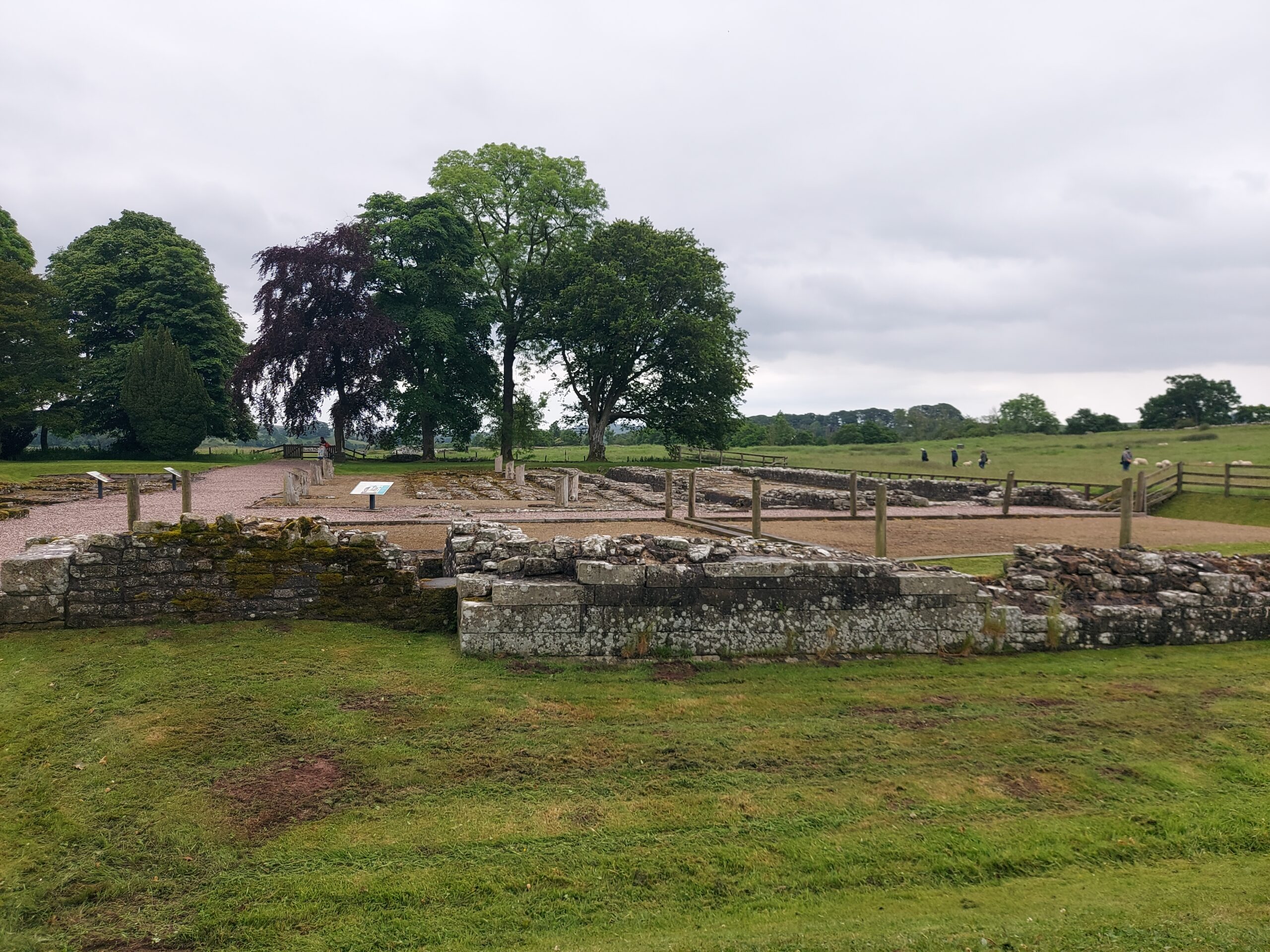
The final fort I visited on my holiday was Birdoswald. I passed through the area on my Hadrian’s Wall walk, and bought a much-needed ice cream at the café, but didn’t get a chance to have a look around at the time.
Birdoswald, known to the Romans as Banna, is further west than the other forts I visited – it is in Cumbria, rather than Northumberland. Like Housesteads, it lies along Hadrian’s Wall, and the location is one of the best places to see the first Wall, which was made of turf. The Romans had to clear and drain the land of forest and bog before they could start building.
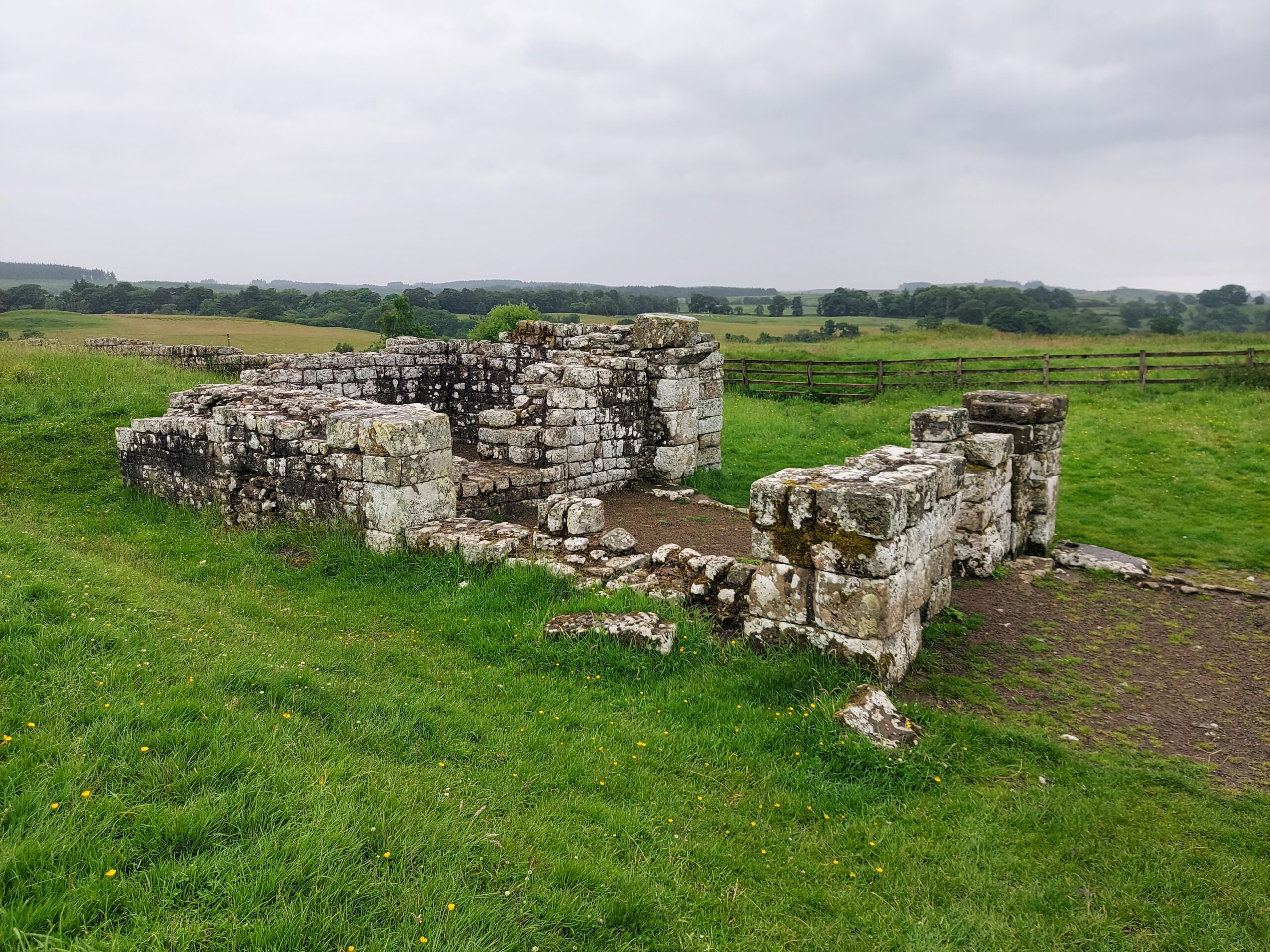
The site has very well preserved defences. The military unit most associated with Birdoswald is the Dacians, who came from modern-day Romania. Symbols from their homeland can be seen in the fort walls, and like many units, worshipped local gods as well as Roman ones. Among the items excavated from the fort are several burial urns, revealing that women and children were buried here as well as military men.
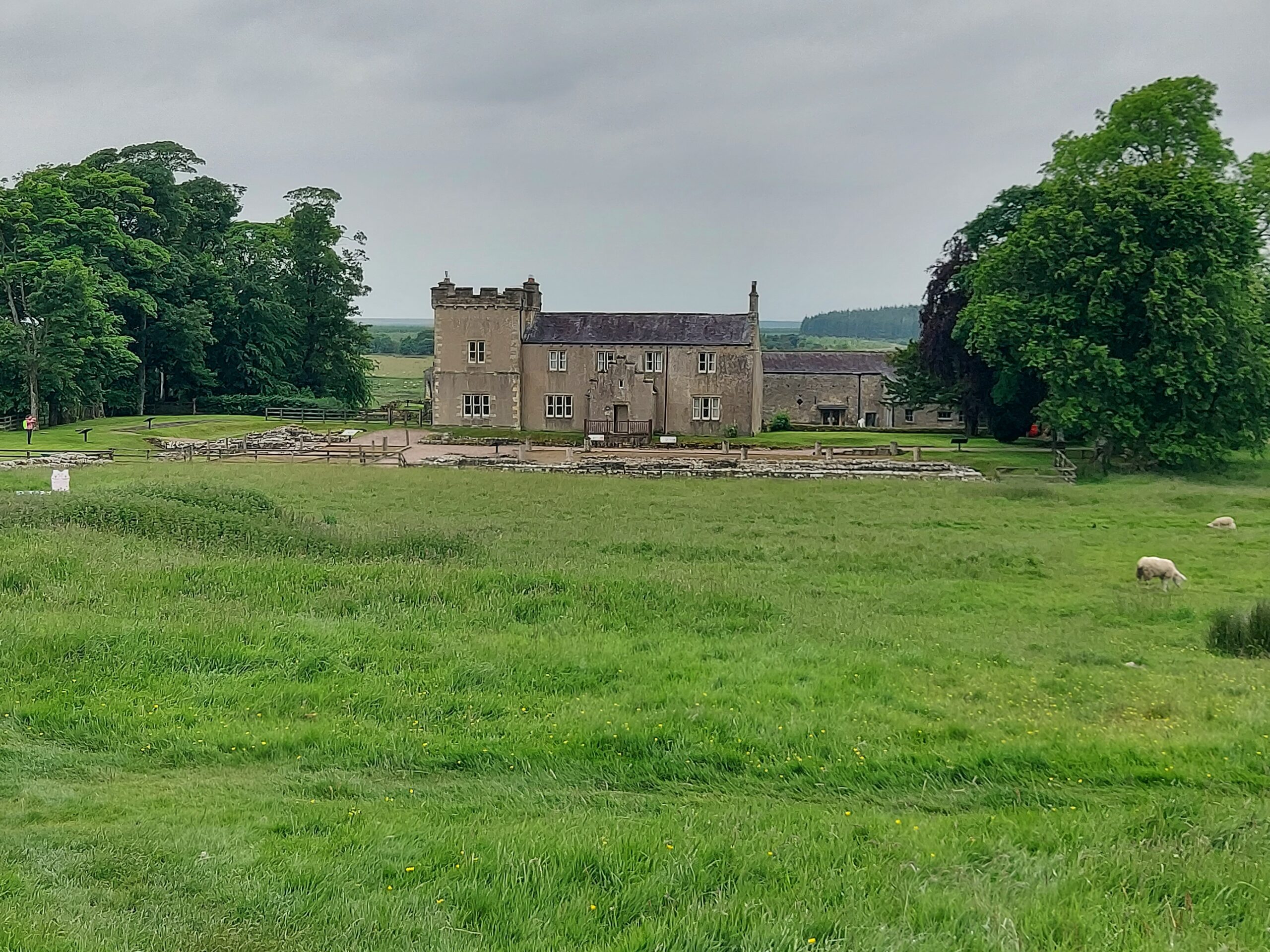
Excavations reveal that the fort carried on after the Romans left. The history of the site continued over the next few centuries, with a bastle house – a fortified farmhouse – built in the 16th century to protect against border raiders. Archaeological research began in the 19th century, and has continued to unearth more and more about Birdoswald and its role in defending the Roman frontier.
FACTS
Address: Gilsland, Brampton, CA8 7DD
Website: english-heritage.org.uk/visit/places/birdoswald-roman-fort-hadrians-wall
Opening Hours: 10am – 5pm
Price: Adult £14, child £7, concession £13. Discounts are available for booking in advance or visiting at quieter times.