The monthly badge for November is Myths & Legends, and although I’ve had a busy month this month, I’ve enjoyed this one.
Understand the difference between a myth and a legend.
Myths tend to be concerned with gods, goddesses and supernatural happenings, while legends often have some basis in historical fact.
Research the origins of dragons.
Dragons appear in virtually all countries around the globe. Possible inspirations for dragons include dinosaur fossils, ancient crocodiles, Goannas (in Australia at least), whale bones and – interestingly – the human brain, hardwired to fear snakes and large cats – a fear that, in the imagination, combined to create the dragon.
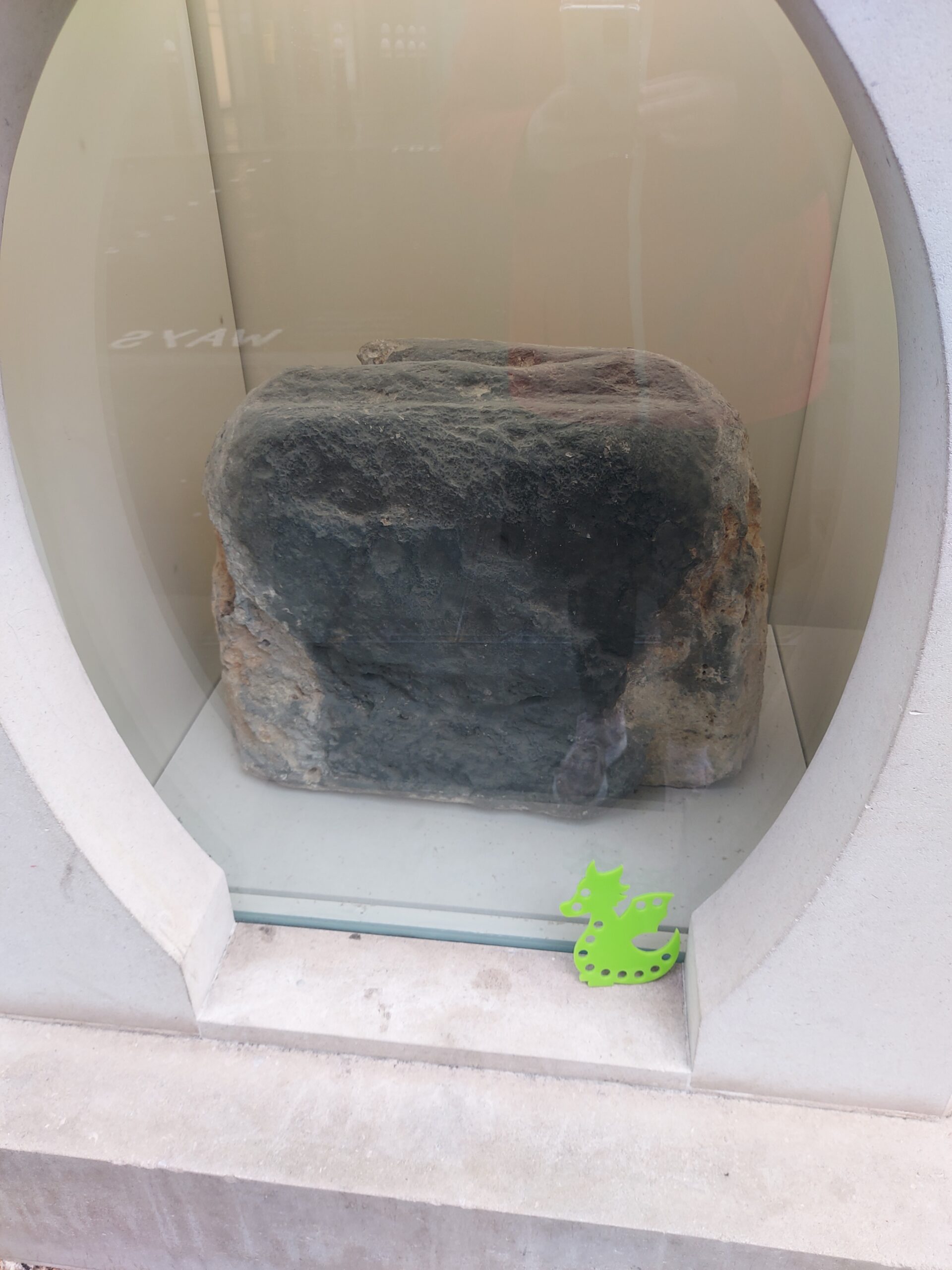
Take a dragon on a field trip to explore a local legend.
I took a dragon on a visit to the London Stone.
Find 3 stories from 3 different countries which involve dragons.
Iraq: In Sumerian mythology, the dragon Kur is a personification of the underworld. He kidnaps the goddess Ereshkigal and takes her to the underworld. The god Enki goes to rescue her, and a war ensues between Enki and Kur.
Russia: Slavic folklore tells of Zmey Gorynych, a green, three-headed dragon who walks on his hind legs and spits fire. In one legend, he is killed by the knight Dobrynya Nikitich after breaking a promise to stop kidnapping young women.
Iceland: a dragon is one of the landvættir (land-spirits) protecting the island from invaders. According to the Icelandic sagas, they turned away the would-be invader Harald Bluetooth.
Watch a film or TV series based on a myth or a legend.
I went to see the new Frankenstein film, based on the book by Mary Shelley which in turn took inspiration from the Greek legend of Prometheus.
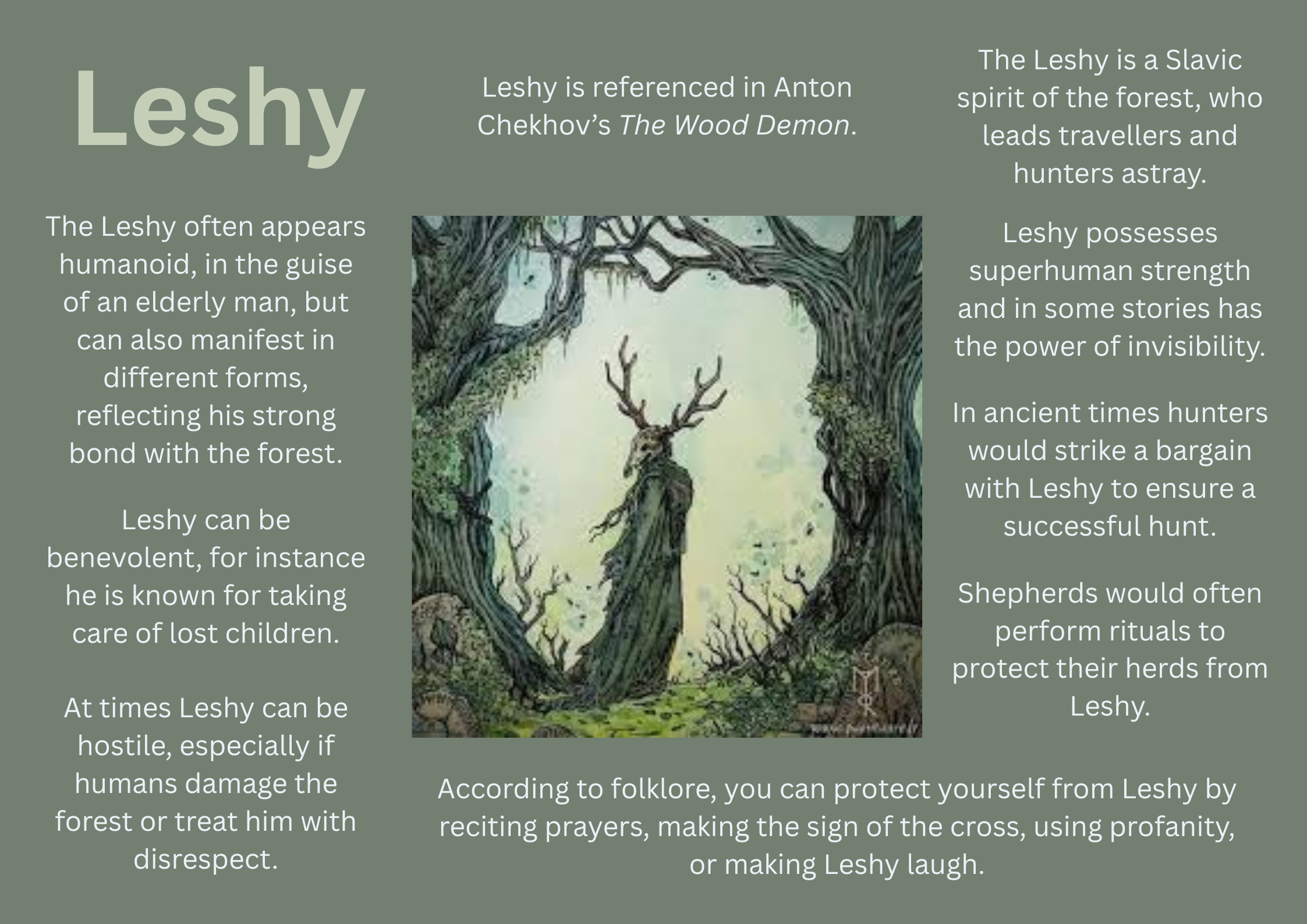
Make a fact sheet about a lesser known mythical creature.
I made a fact sheet about the Slavic spirit Leshy.