James McNeill Whistler – Tate Britain

While I was in London I visited the James McNeill Whistler exhibition at Tate Britain.

Whistler was born in the US but grew up in St Petersburg. He began his career with linocuts and etchings, but after coming into a small inheritance aged 27, he took up art seriously. He was inspired by Chinese and Japanese art, and influenced by bohemian Paris.
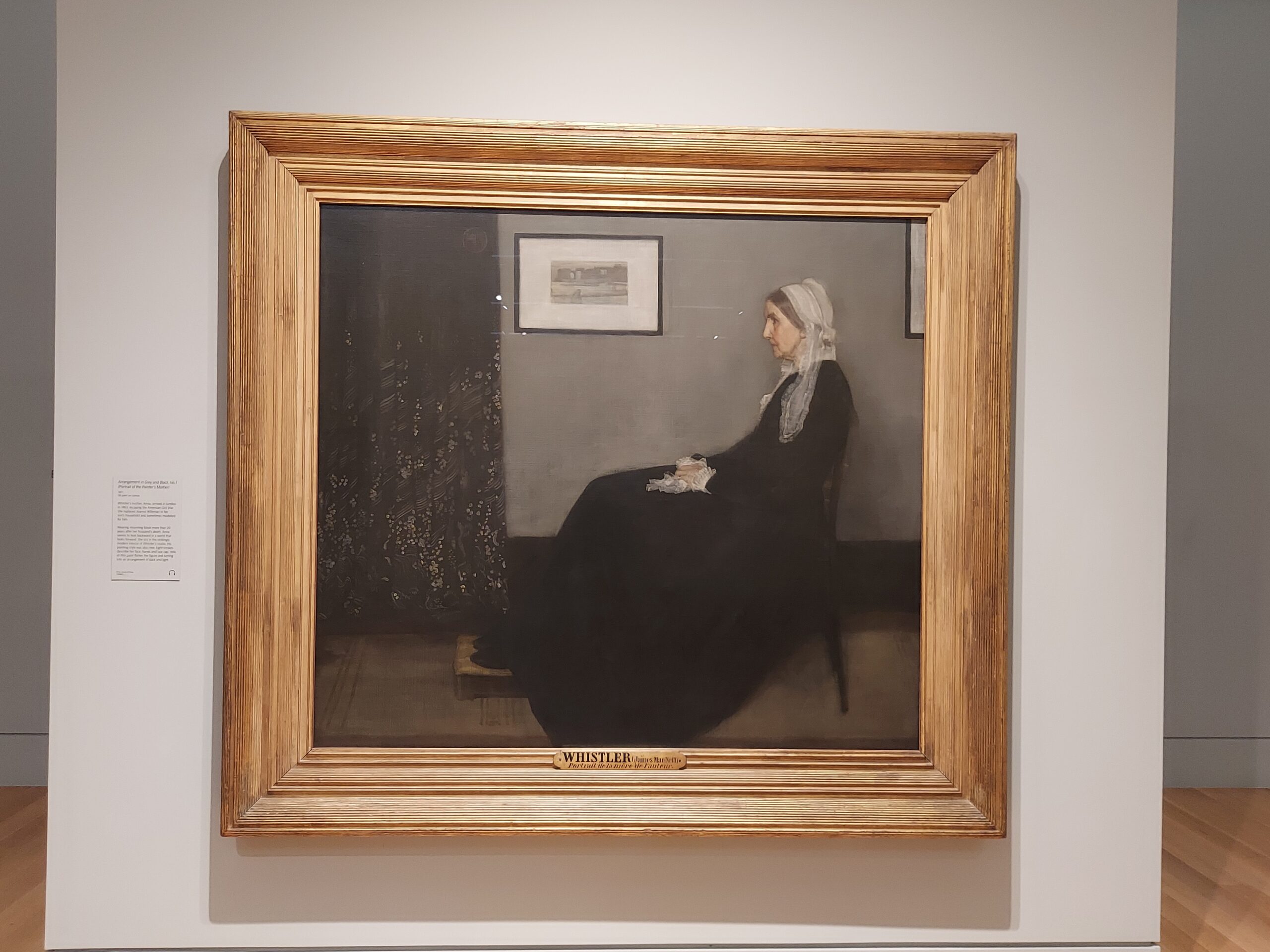
Whistler's Mother

Whistler’s philosophy of art argued that art should improve on nature. His works displayed here illustrate his interests and influences. His use of colour is notable, as well as his interpretation of light and shade.
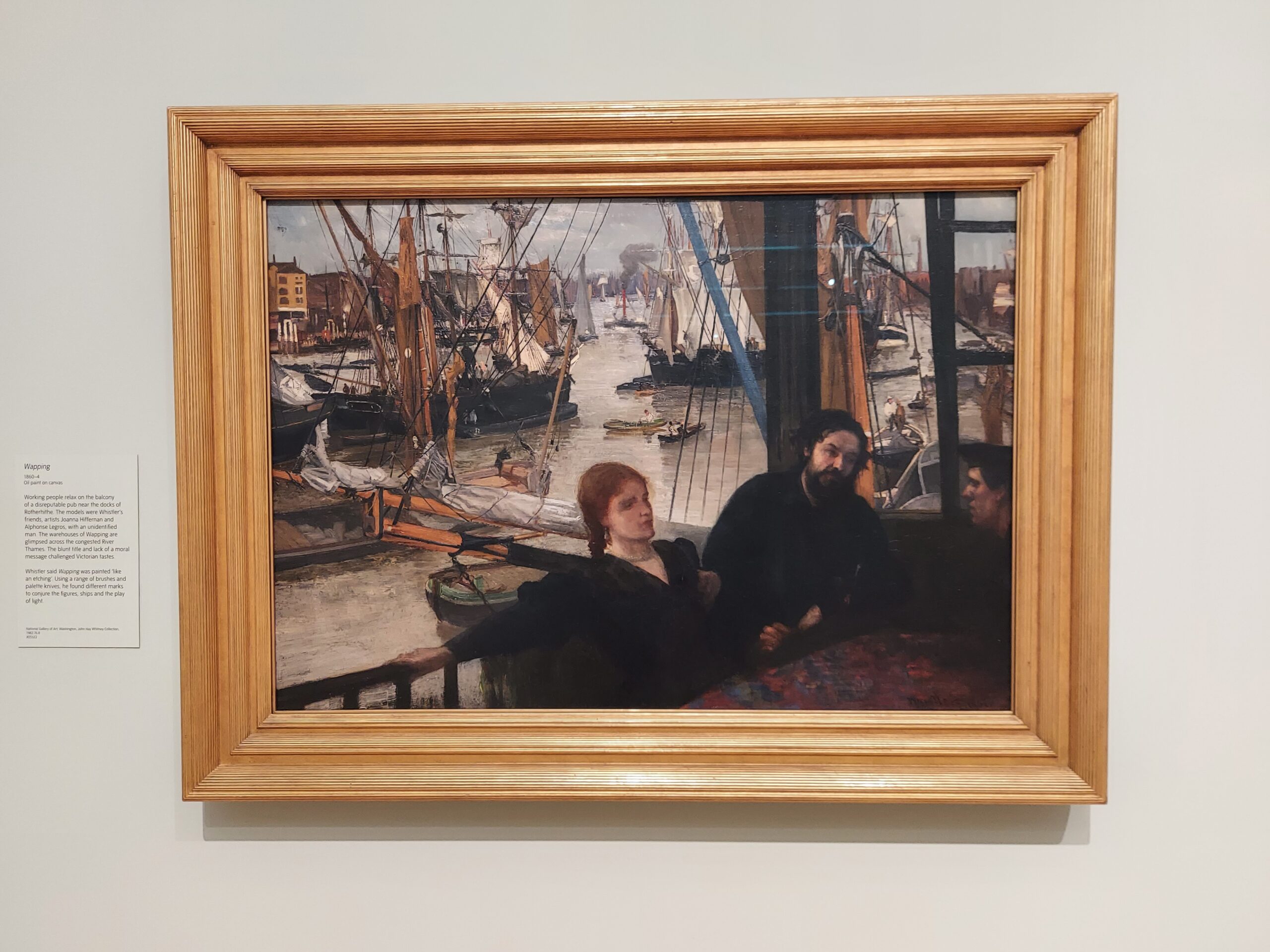
'Wapping'

I was interested to learn about his feud with Leighton – a reconstruction of the Peacock Room he created for the other artist is displayed in the exhibition, complete with cartoon featuring Whistler and Leighton as fighting peacocks. Whistler was also involved in a libel case with Ruskin: not all those in the contemporary art world understood him and his work.
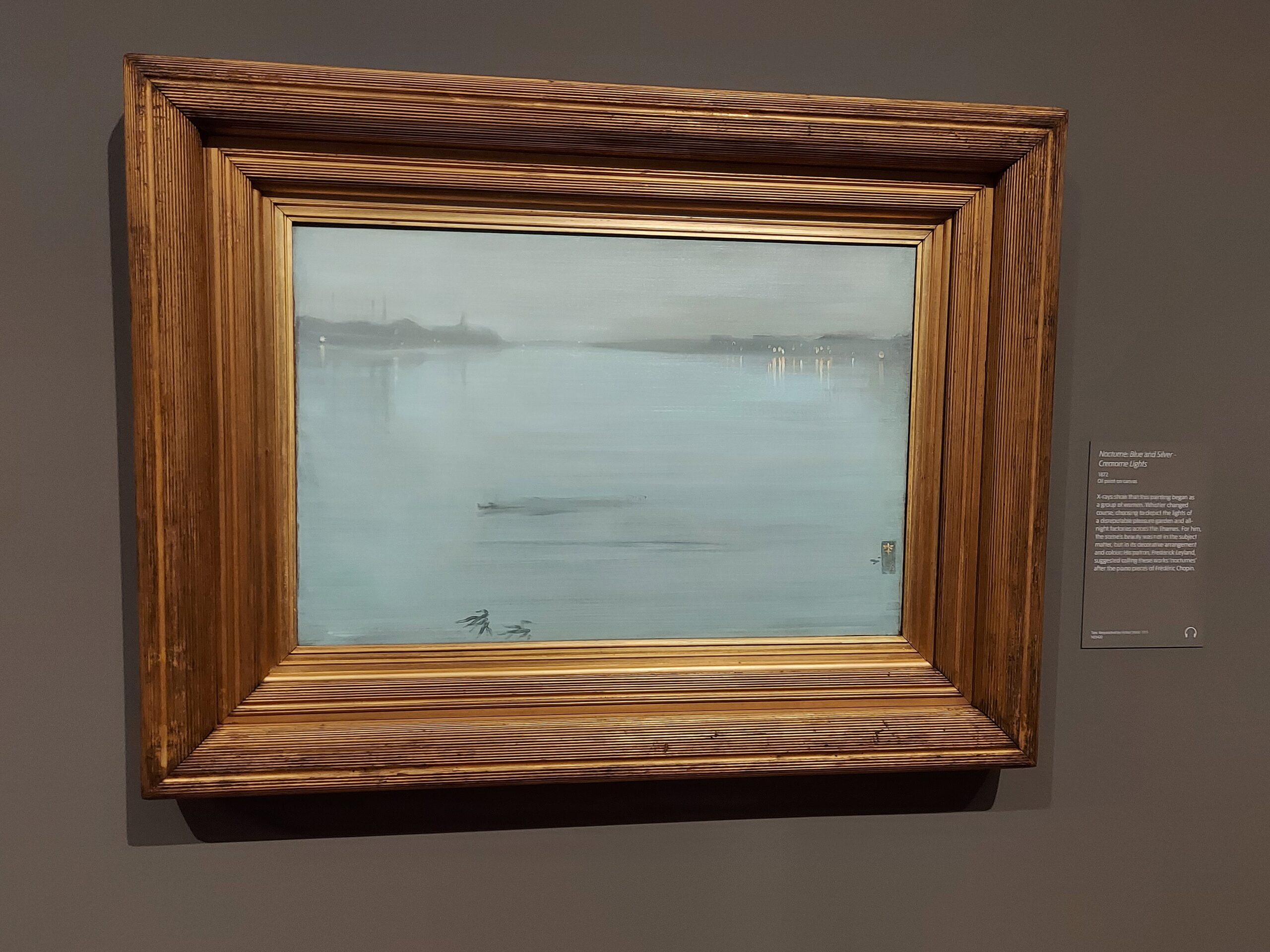
Nocturne

I was impressed with Whistler’s use of black, grey and white (as in his portraits of society women and of his own mother), his vivid landscapes of London (such as ‘Wapping’), and his ‘Nocturnes’. I enjoyed the exhibition and found a lot to appreciate in it.
Wright of Derby: From the Shadows – National Gallery

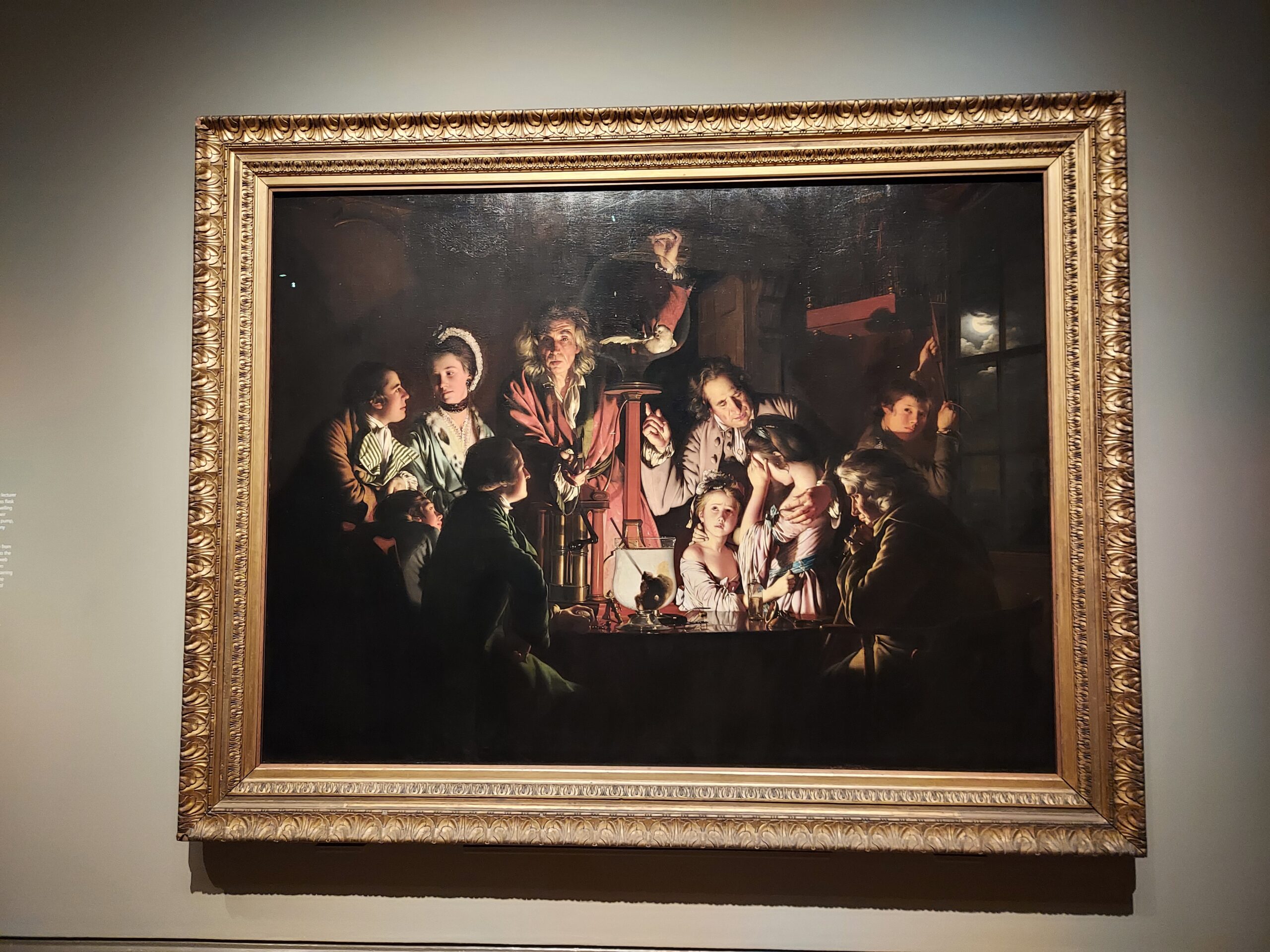
An Experiment on a Bird in the Air Pump, 1768

Wright of Derby: From the Shadows is a small but powerful exhibition at the National Gallery. It is the first major exhibition to look at the British artist’s ‘candlelight’ paintings, shedding new light on them – no pun intended.

Wright is most famous for his scientific paintings and Enlightenment associations. This exhibition reveals a gothic aspect to his work: a hint of the Romantic age that would succeed the Enlightenment. Perhaps they are not as different as you might think: both eras inspire wide-eyed wonder.

Cecil Beaton’s Fashionable World – National Portrait Gallery

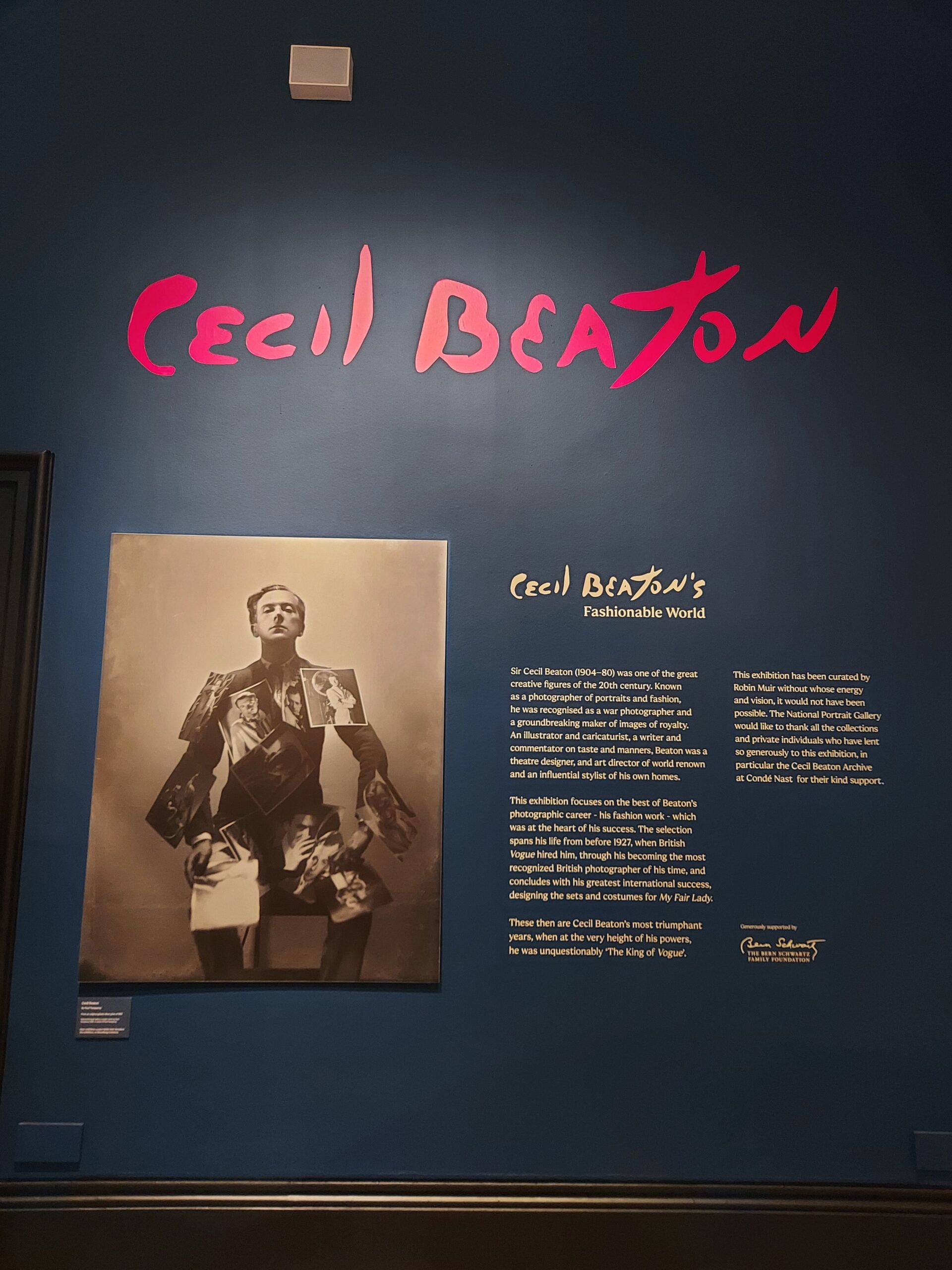
Cecil Beaton exhibition intro

In a previous life, I worked in a library and catalogued the letters of Cecil Beaton, so any exhibition relating to him or his work is a must-see for me. Cecil Beaton’s Fashionable World at the National Portrait Gallery looks at his work in the realms of fashion and portrait photography.

The work on display here covers the Bright Young Things of the 1920s and the Jazz Age, the interwar years, the glamorous 1950s and the dazzle of Hollywood. The exhibition includes over 200 items including photographs, sketches, illustrations and letters, and features stars such as Marilyn Monroe, Audrey Hepburn and Elizabeth Taylor.

This enjoyable exhibition is well worth a visit to appreciate Beaton’s talent, variety, and the styles of the mid-20th century.

Michelangelo, Leonardo, Raphael: Florence, c. 1504 – Royal Academy

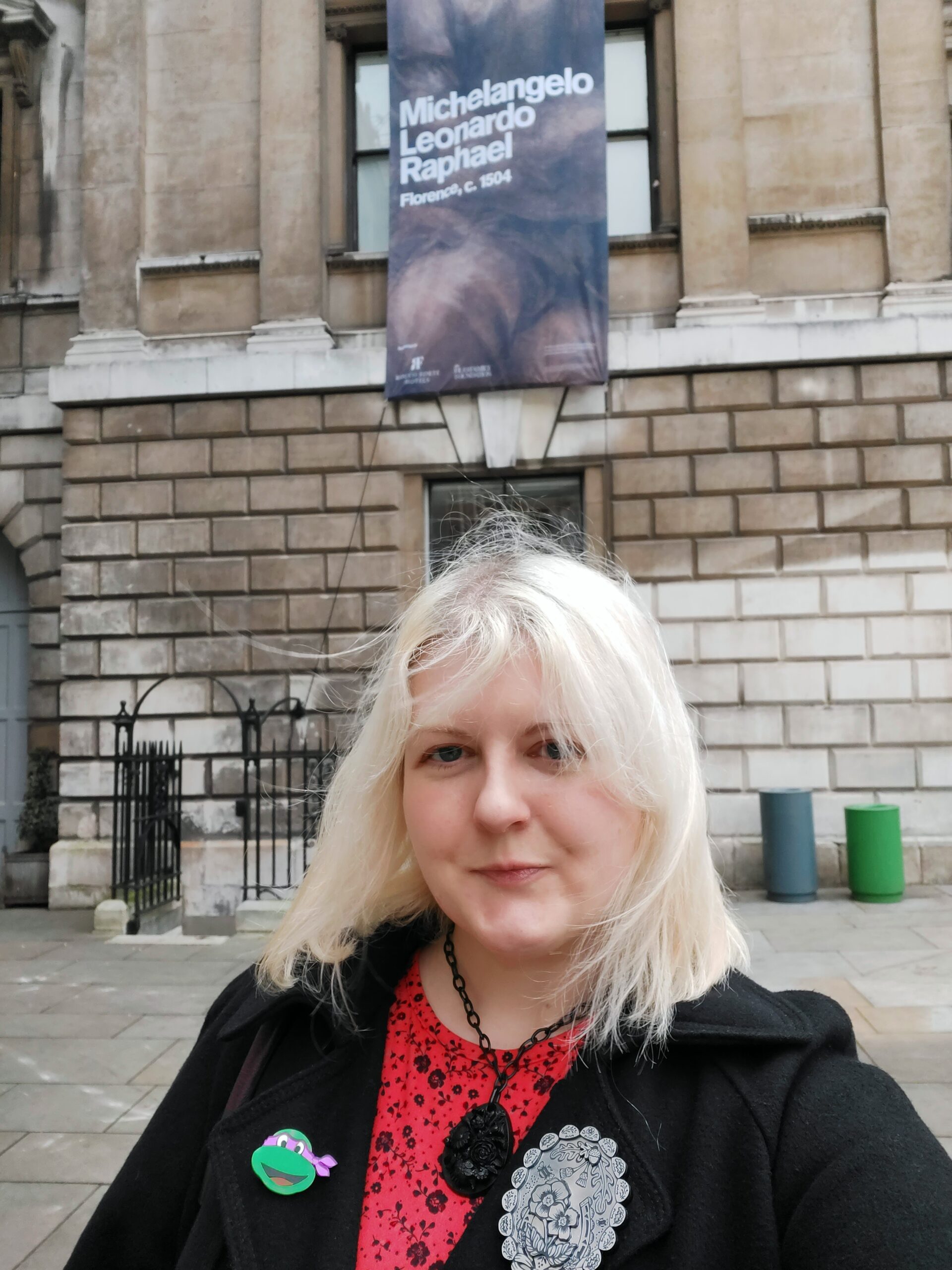
Selfie in front of the RA

I visited the exhibition Michelangelo, Leonardo, Raphael: Florence, c. 1504 at the Royal Academy. I wore my Donatello brooch to the exhibition so that he wouldn’t feel left out. This was probably the most exciting thing about the exhibition.

These three leading artists gathered in Florence on 25 January 1504 to discuss an appropriate location for Michaelangelo’s David. The exhibition uses this point in time to look at the work of these three titans of the art world and explore their similarities and differences. Sadly, I found it rather dull.

The first room brings together Michaelangelo’s Taddei Tondo, Leonardo da Vinci’s drawing The Virgin and Child with St Anne and the Infant St John the Baptist and Raphael’s oil, The Bridgewater Madonna. They are all key works of the Renaissance and worth seeing together.

One room compares battle murals by Leonardo and Michaelangelo, both commissioned to paint them in the same location. Apparently there was a tense rivalry between the two, but this doesn’t really come across here. Michaelangelo’s Battle of Cascina features nude men climbing out of a river: it tells the story of a battle in which soldiers on a break pause their swim to arm themselves and defeat the incoming Pisans. The mural was approved by Machiavelli. Leonardo’s Battle of Anghiari, in which Florence defeated Milanese mercenaries, is a more traditional depiction of war, but immense in its power.

The quality on offer in this exhibition is unquestioned, I just wish the story behind it had been more effectively conveyed.

Now You See Us: Women Artists in Britain 1520-1920 – Tate Britain

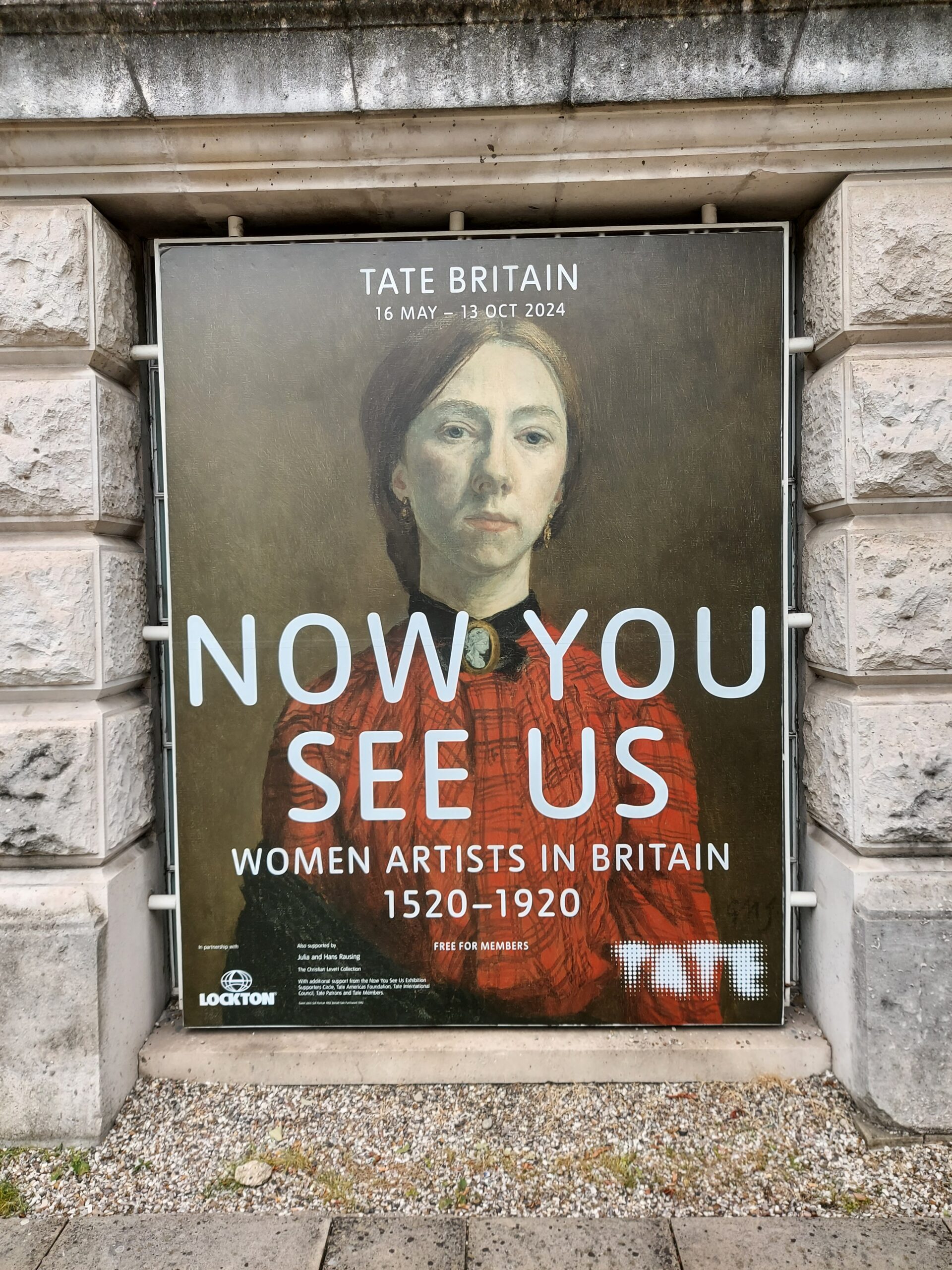
Poster for the exhibition

The second exhibition I went to see at Tate Britain was Now You See Us: Women Artists in Britain 1520-1920. This exhibition, spanning 400 years, features art by women through the centuries struggling to be taken seriously and be recognised as professional artists.

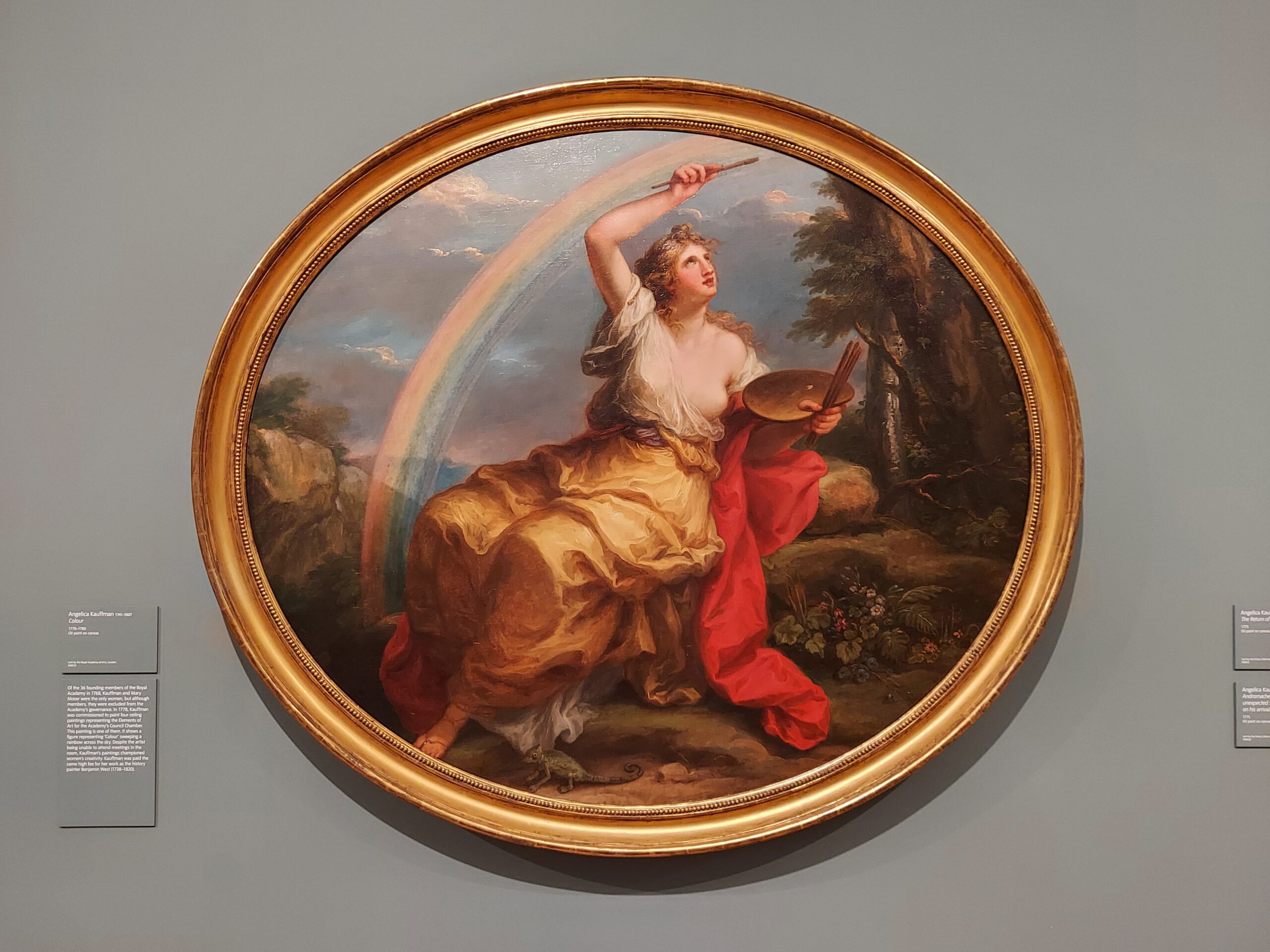
The art in the exhibition is displayed in a roughly chronological manner. It begins with artists like Mary Beale, one of Britain’s first professional women artists, and Angelica Kauffman, who was Swiss but who had a successful career in London and was one of the founder members of the Royal Academy.

painting of a woman and a rainbow
Colouring, Angelica Kauffman, 1788-80

Female artists of the period often painted portraits, usually, though not exclusively, of women.

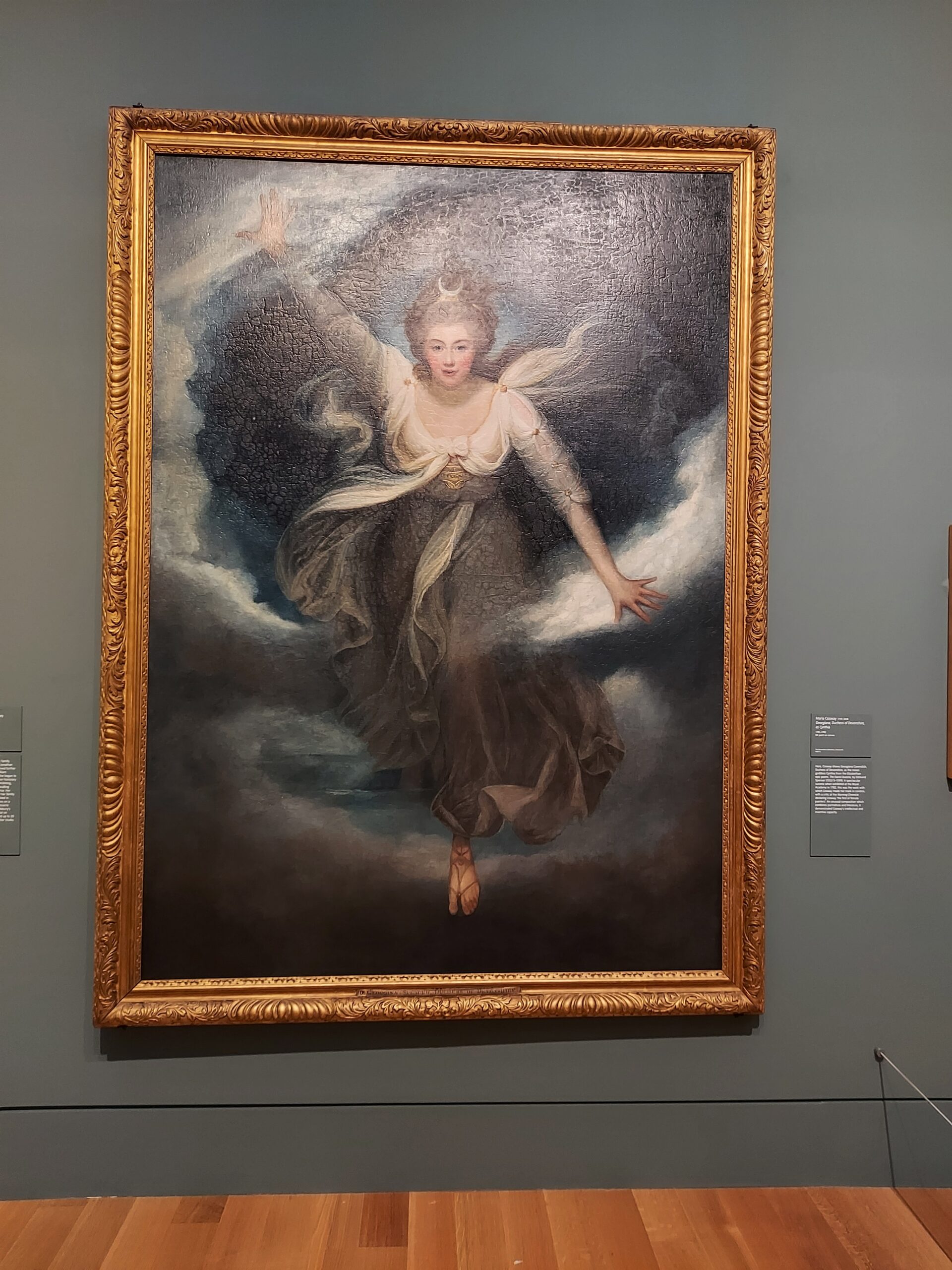
Painting of a woman
Maria Cosway, Georgiana as Cynthia from Spenser’s ‘Faerie Queene’, 1781-82

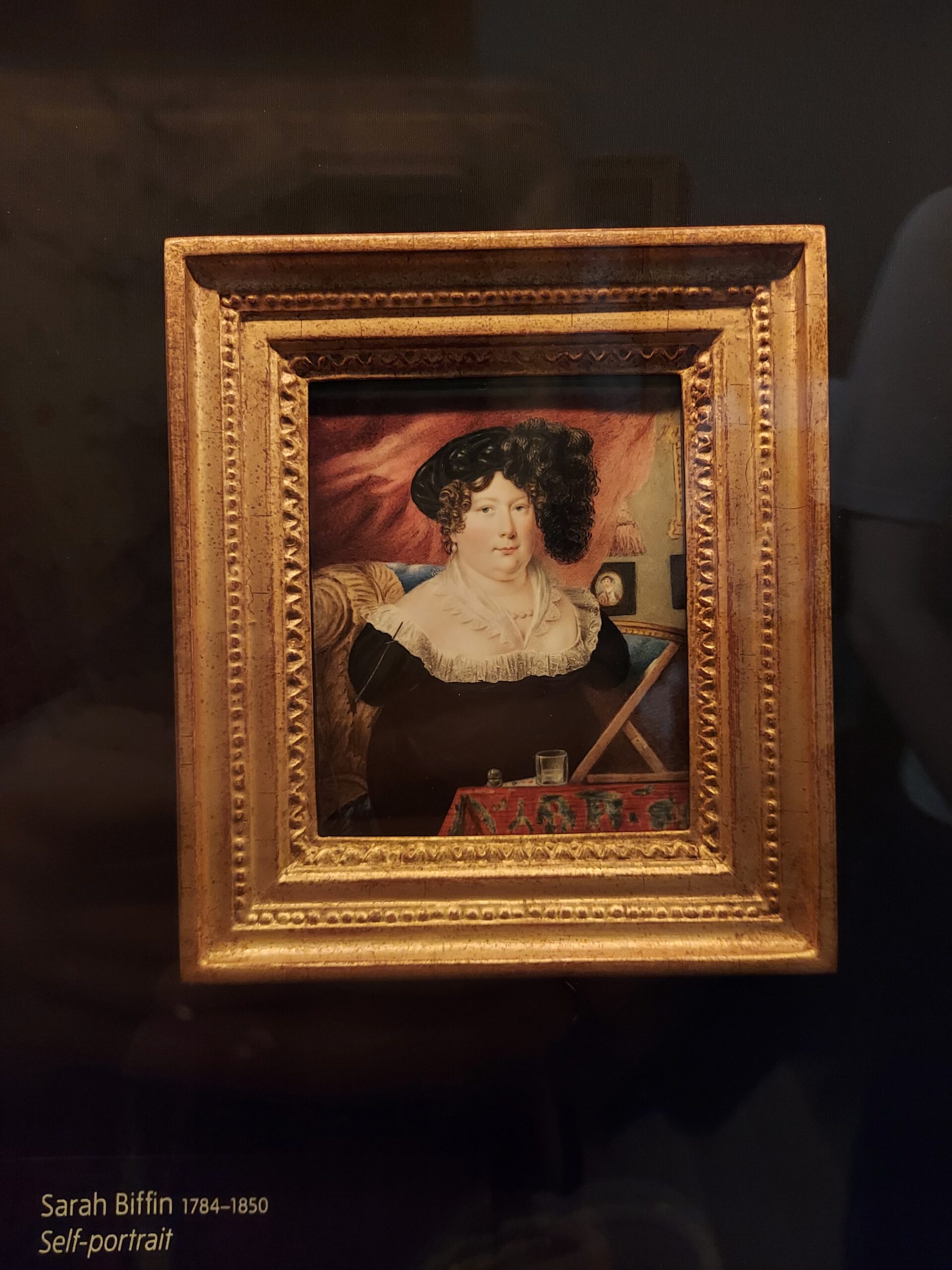
I was particularly impressed by the work of Sarah Biffin, who was born without legs or arms and learned to paint using her mouth.

Portrait of a woman
Sarah Biffin, Self-portrait, 1820s

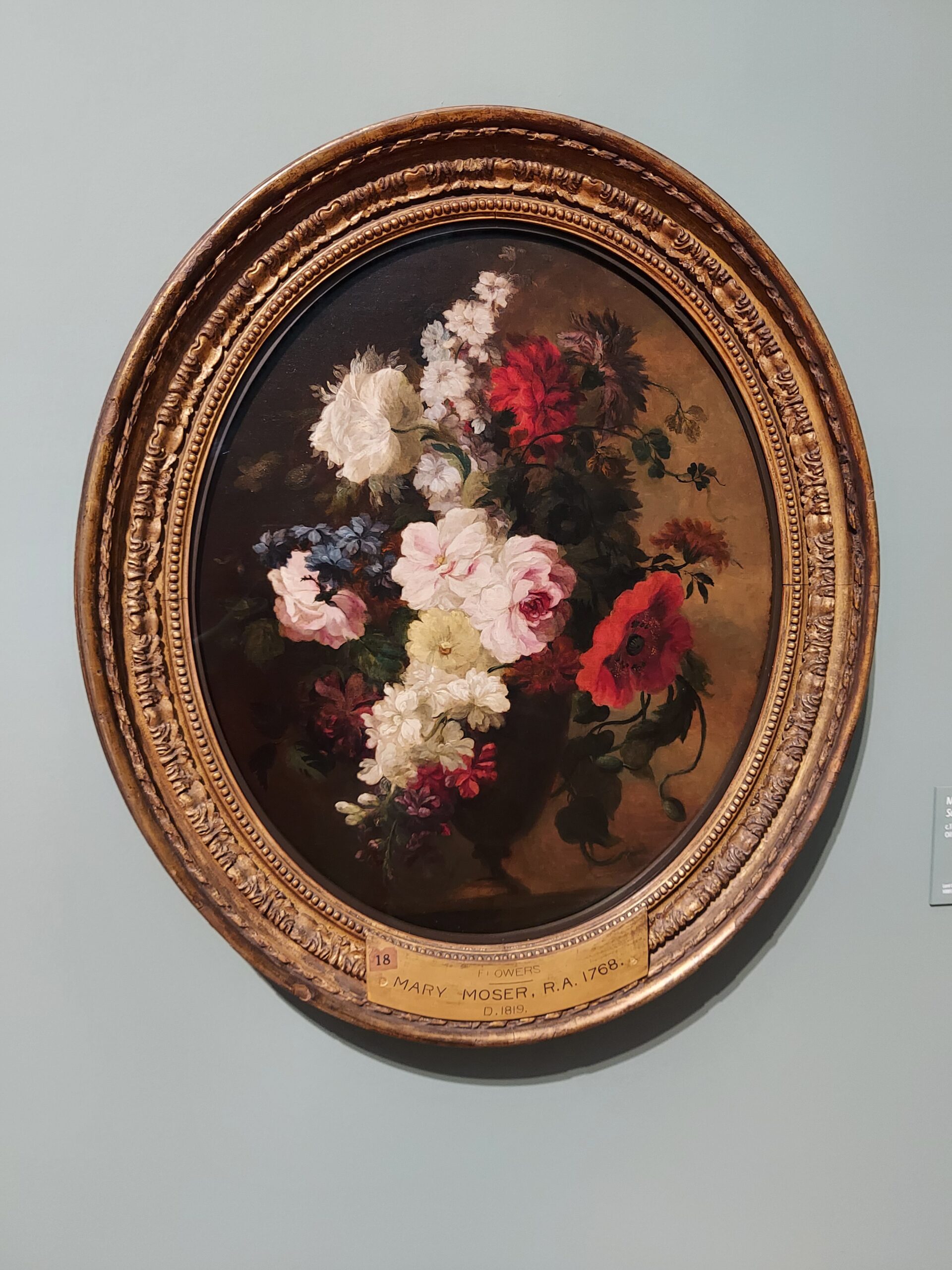
Still life paintings, especially flowers, were seen as an appropriate subject for women; while not groundbreaking, the floral works in the exhibition are technically as skilfully produced as any man’s. The only other female founder member of the Royal Academy, Mary Moser, was famous for her floral works.

Still life with flowers
Mary Moser, Summer, c. 1780

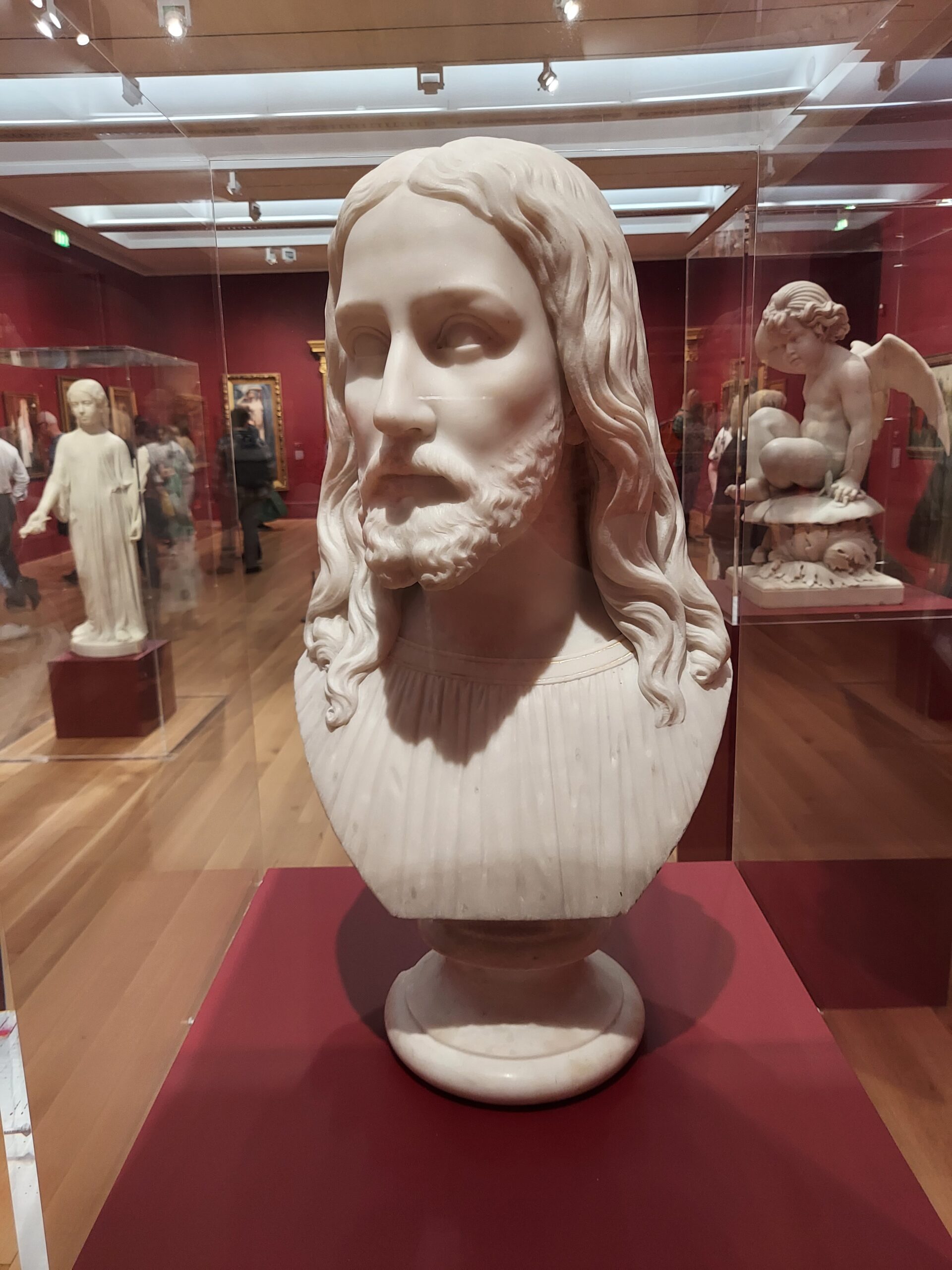
Not everything in the exhibition is a painting. Some sculptures are on display, including a bust of Christ by Edmonia Lewis, the first female black American to work as a professional sculptor.

Sculpture of the bust of Christ
Bust of Christ, Edmonia Lewis, 1870

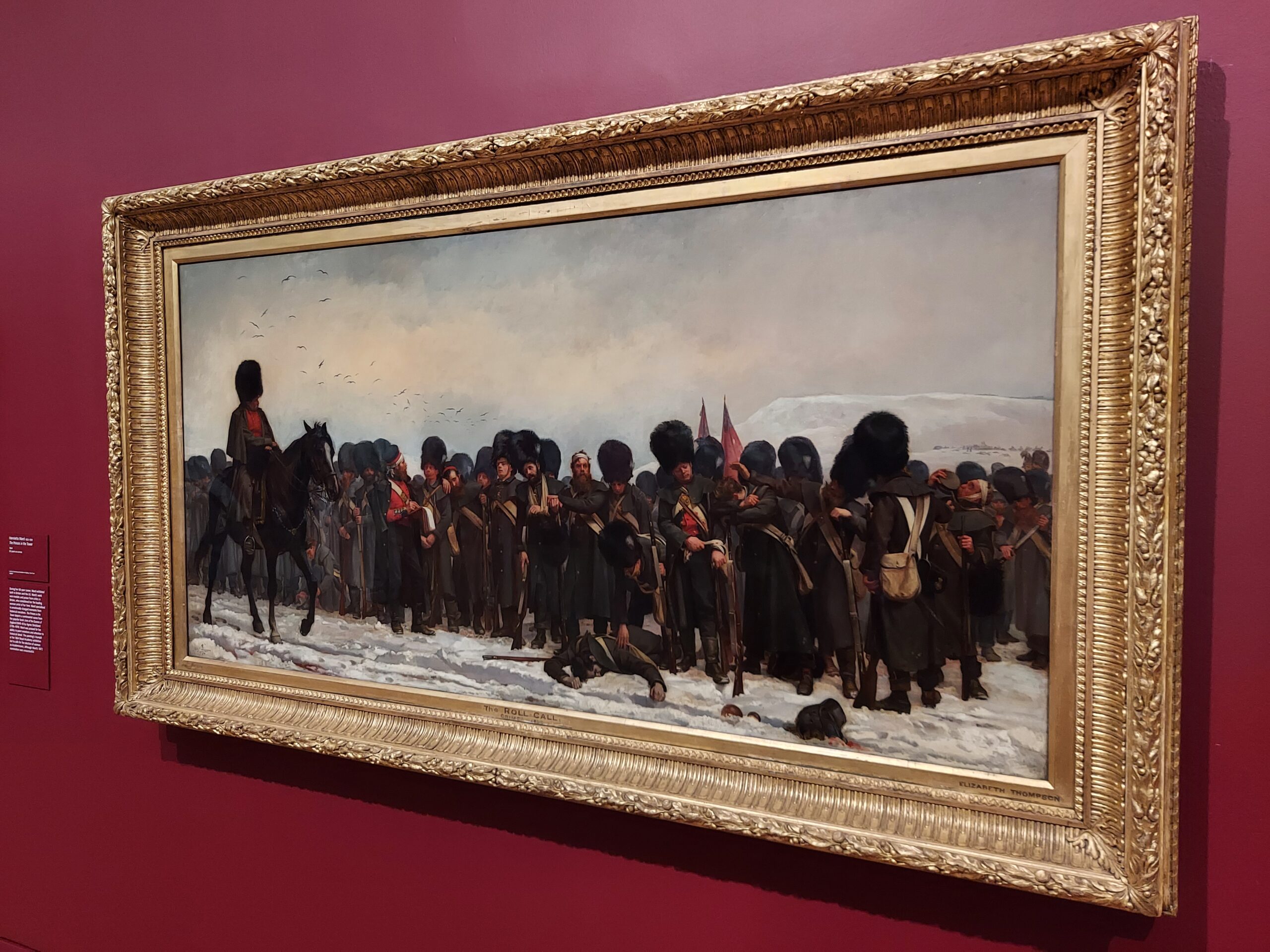
As time wore on, more and more women were able and willing to challenge the expectations laid down for them. For example, Elizabeth Butler (Lady Butler) painted works with the theme of war, usually thought of as a ‘male’ subject.

Soldiers in the snow
Lady Butler, The Roll Call, 1874

Other women ventured outside the confines of the studio and painted outdoor and social scenes.

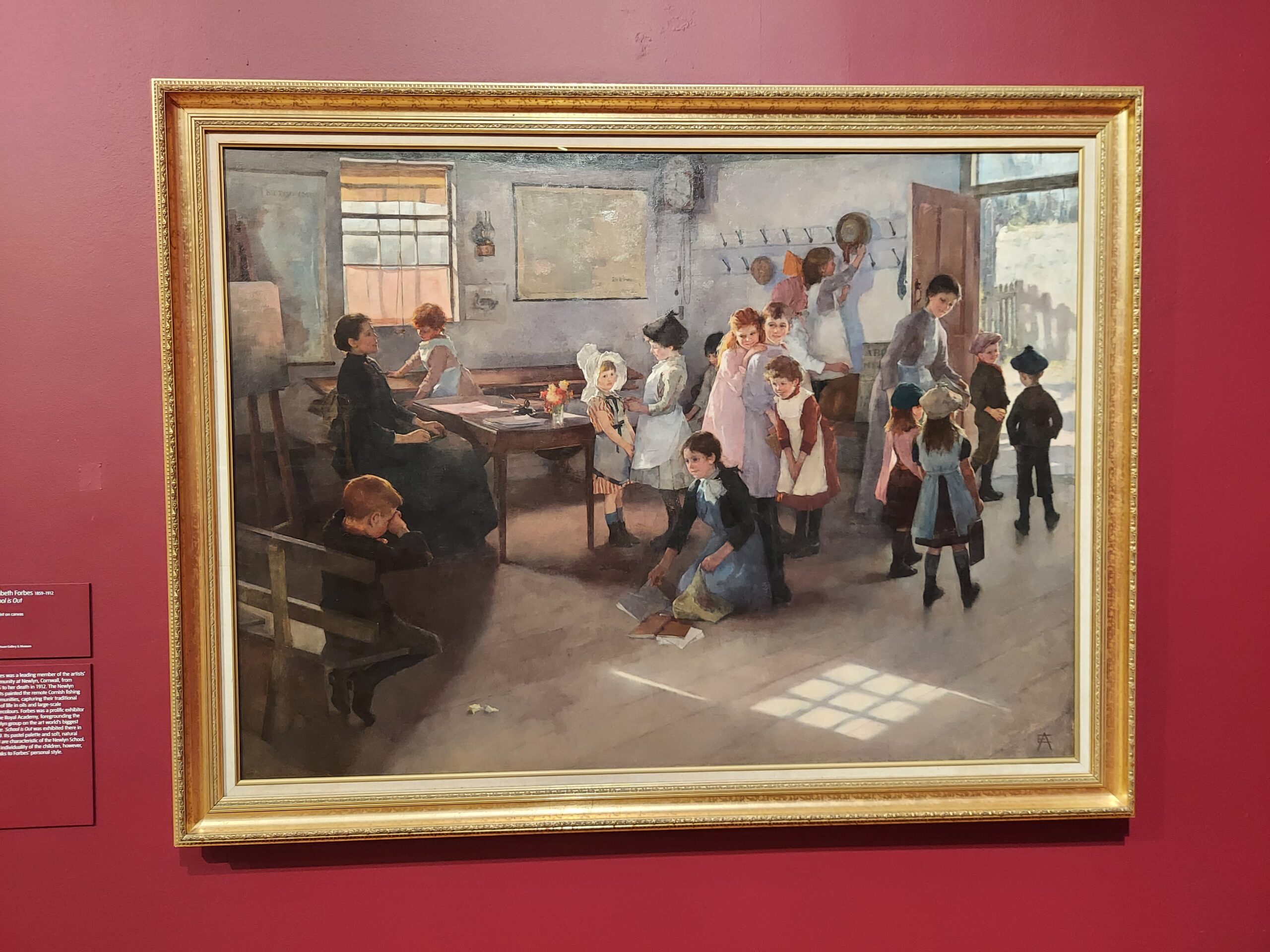
Children in a classroom
Elizabeth Adela Stanhope Forbes, School Is Out, 1889

I was impressed with the exhibition, which introduced me to some superb artists I was unfamiliar with and who paved the way for gender equality in the art world. I understood more about their struggles and was grateful for their efforts as well as their wonderful creations.

Sargent and Fashion – Tate Britain

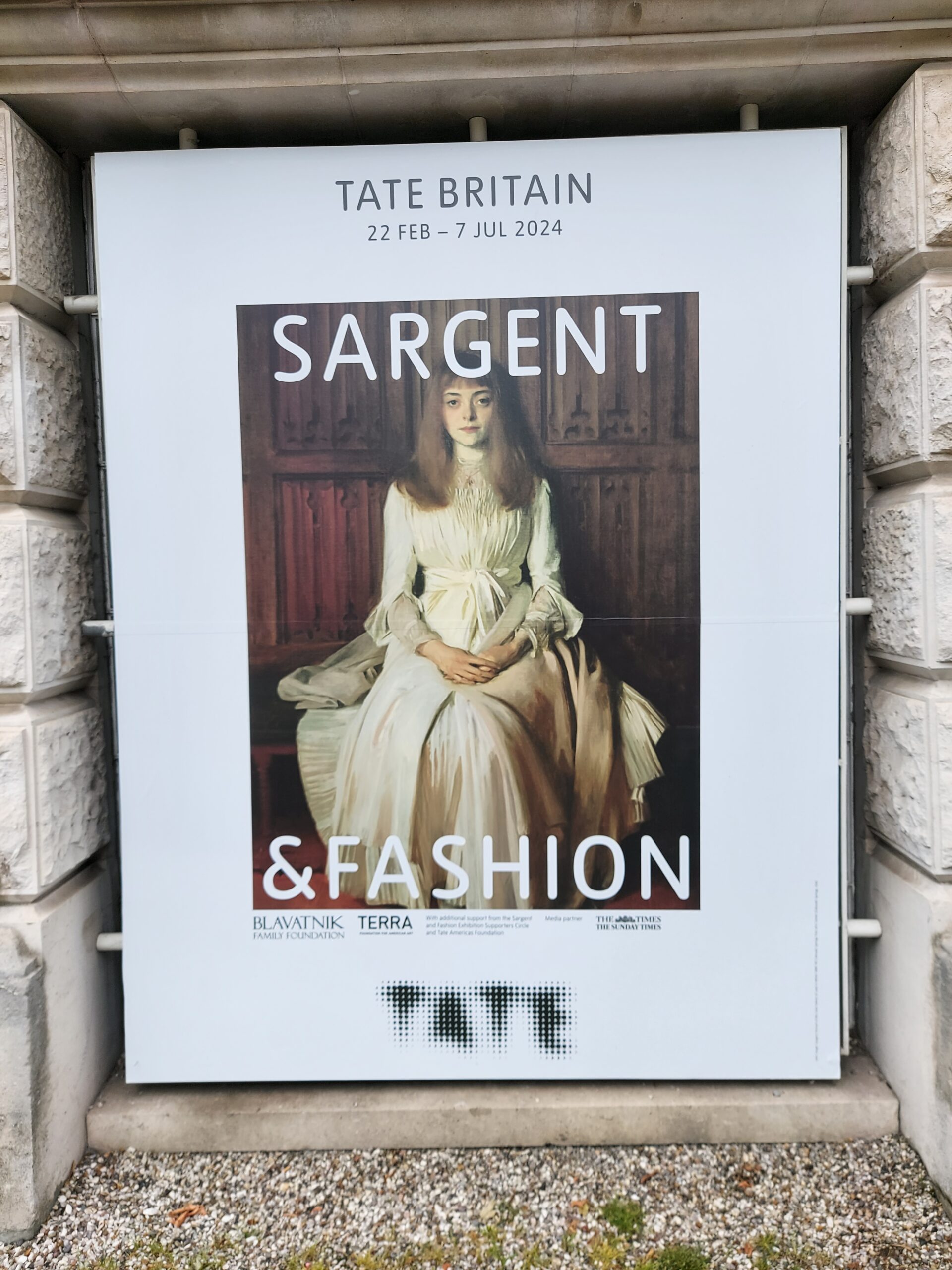
Exhibition poster for Sargent and Fashion

At the weekend I visited Tate Britain to check out a couple of exhibitions. The first one I saw was Sargent and Fashion.

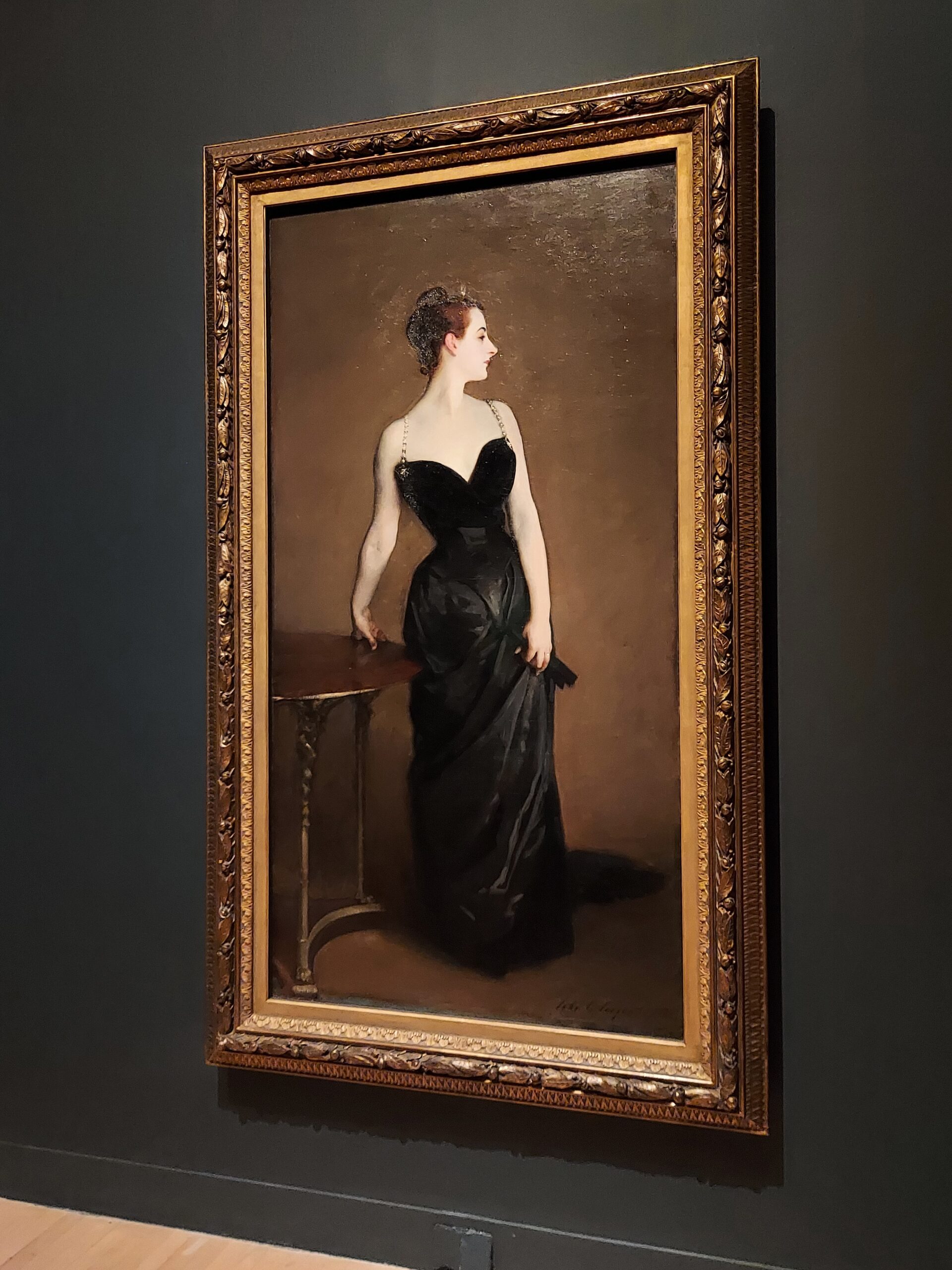
Painting of a pale white woman wearing long black evening dress
Portrait of Madame X, 1883-84

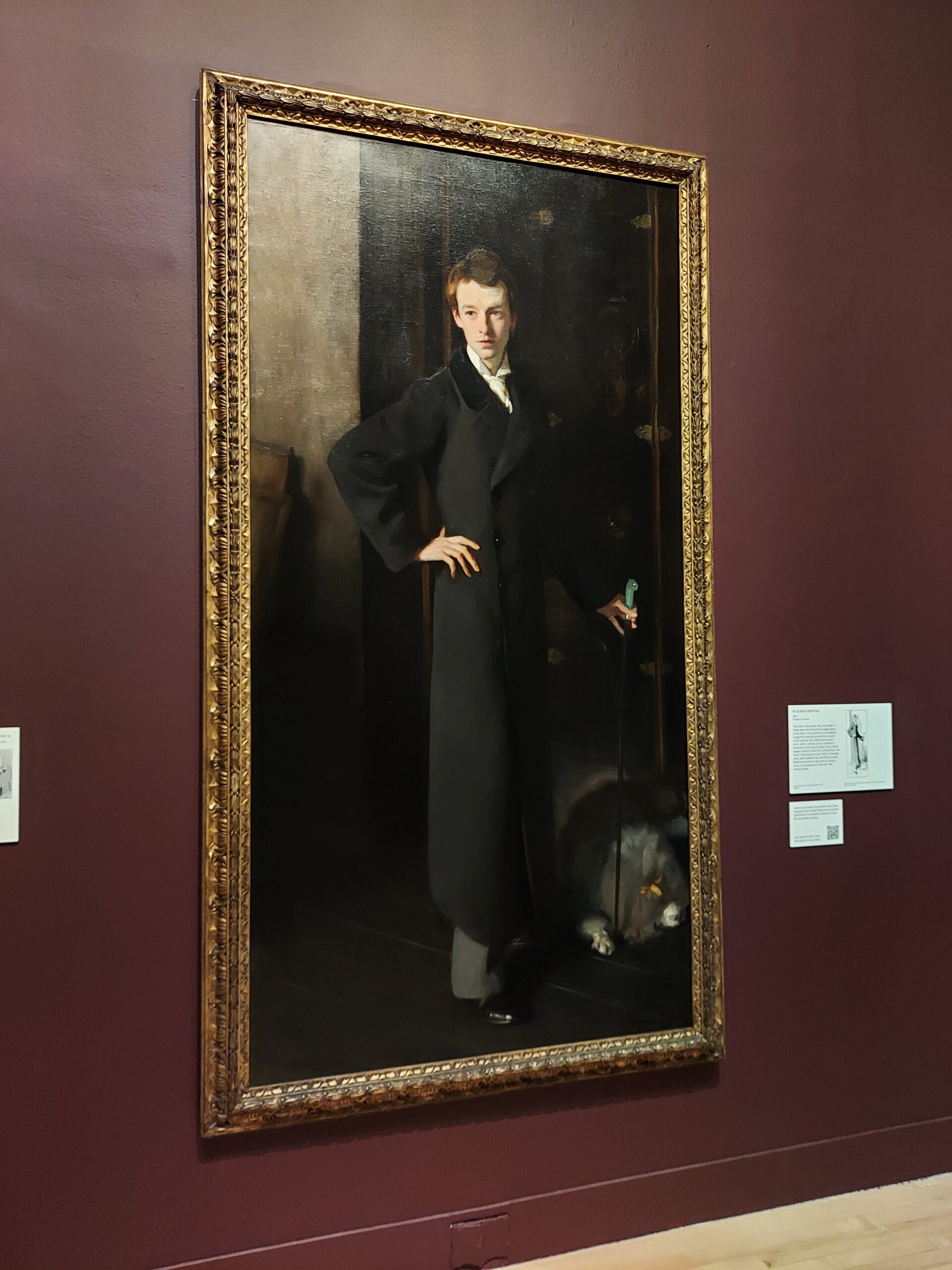
This exhibition explores the relationship between artist John Singer Sargent and the fashions of his day. The paintings in the exhibition emphasise focus on the clothes worn by his sitters: some of their choice, others at his suggestion. Sometimes these clothes caused controvery: Singer’s famous Portrait of Madame X was originally painted with one of Virginie Amélie Avegno Gautreau’s straps hanging from her shoulder, but this was seen as too risqué and he edited the painting.

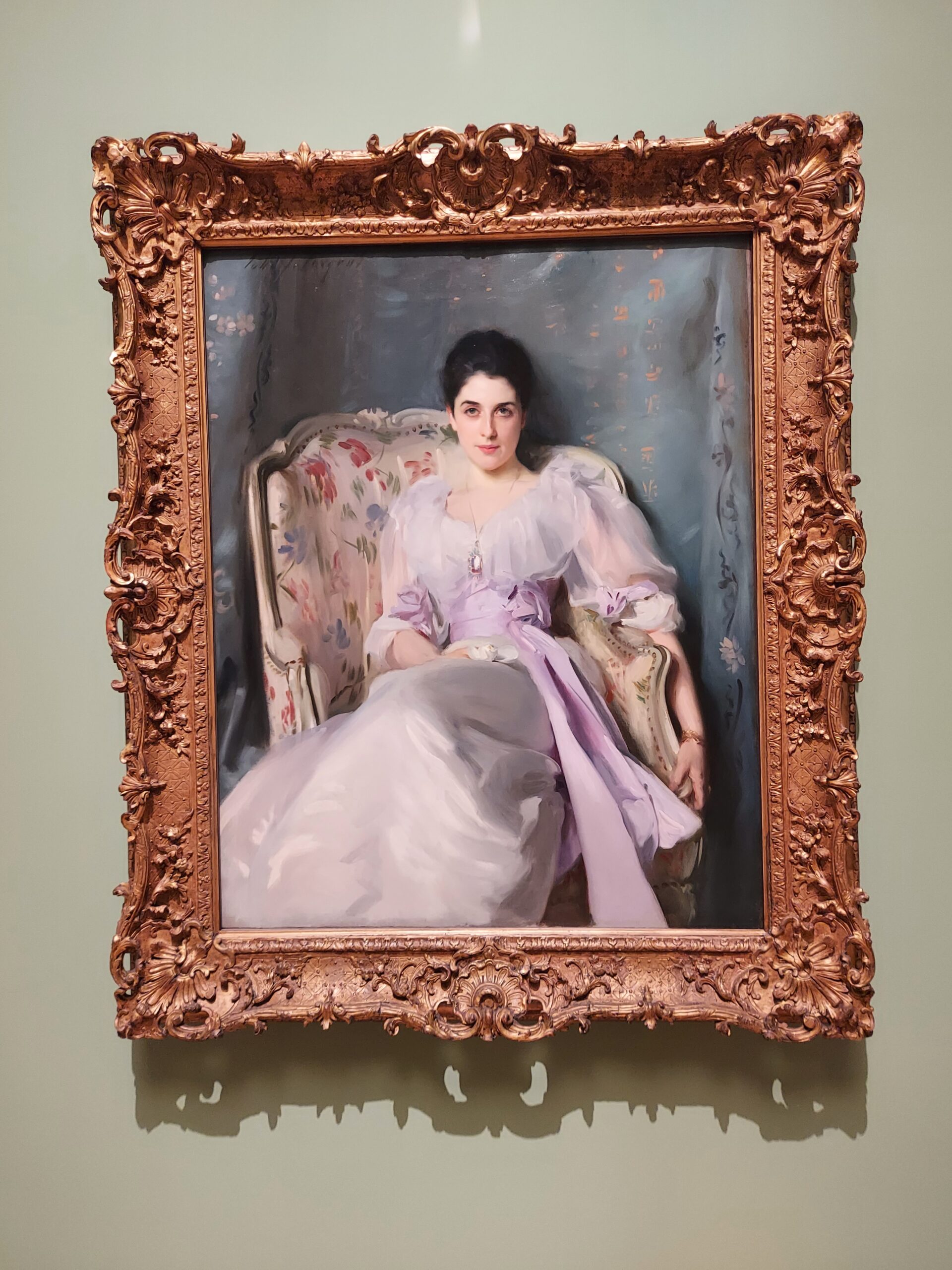
The exhibition made me realise that he was really wonderful at painting clothes, capturing the ripples of the fabric and the different shades evoked. He used clothes to convey the personality of the sitter, whether long flowing gowns, delicate fabrics, or clean lines.

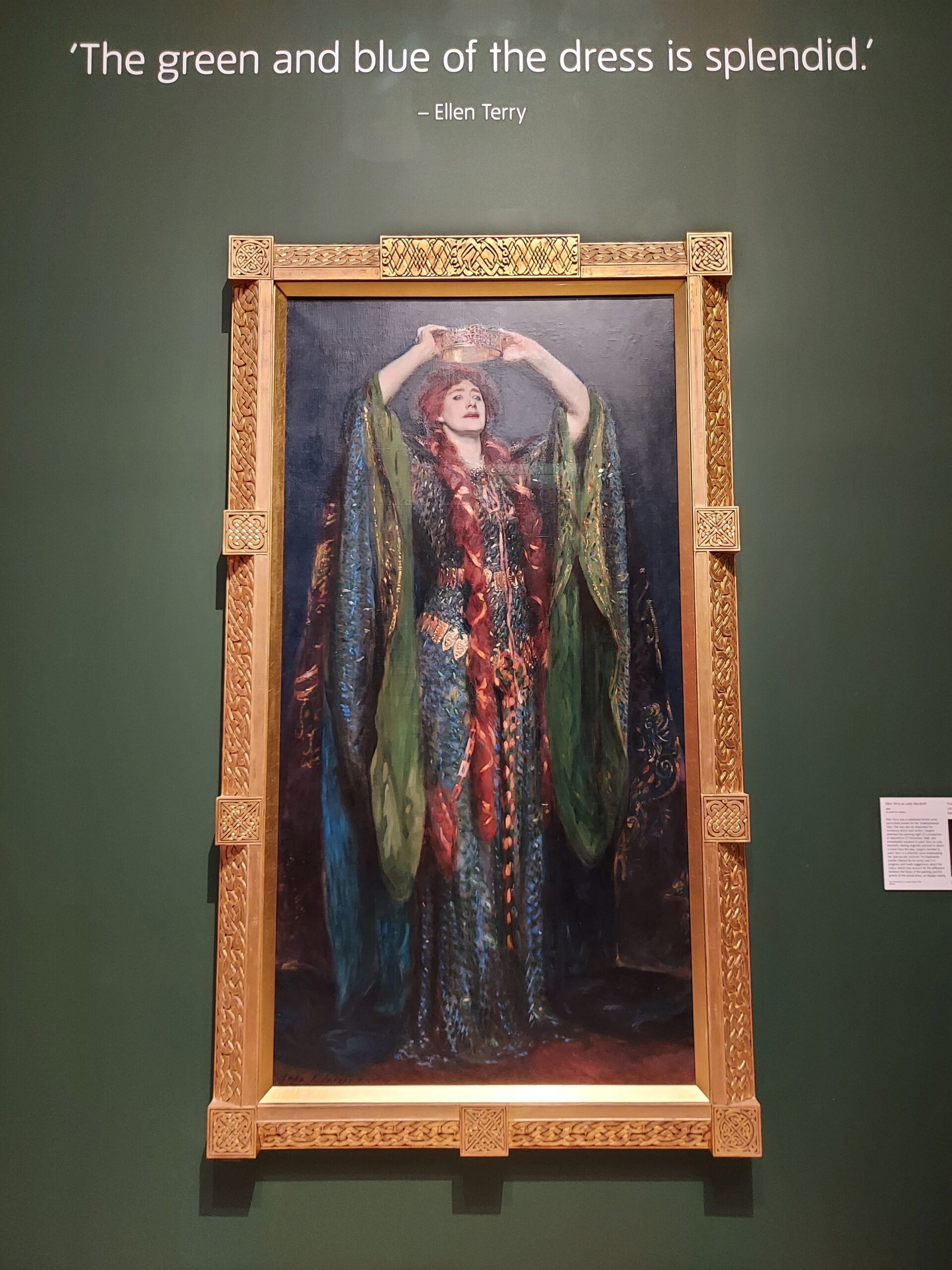
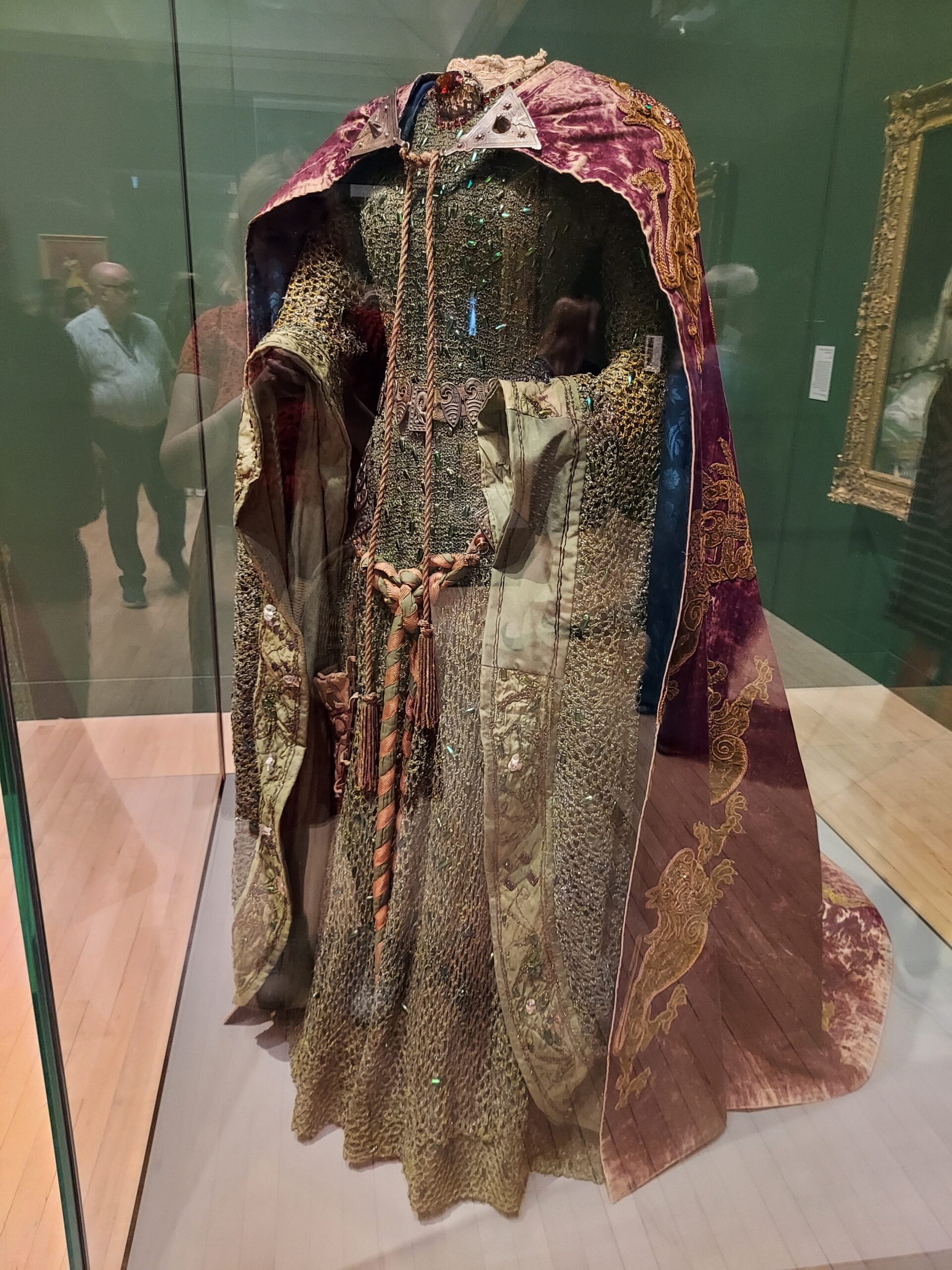
One thing I loved about the exhibition was the display of some of the costumes and clothes worn in the paintings, alongside the pictures. I especially loved seeing Sargent’s portrait of Ellen Terry as Lady Macbeth alongside the dress she wore in the production and the painting. Interestingly, the real life dress was green, whereas the painted version is blue – presumably for artistic reasons.

I found this exhibition hugely enjoyable, and appreciated seeing all this beautiful art. I left with a better understanding of how Sargent, art and fashion intertwined.

The Rossettis: Radical Romantics – Tate Britain

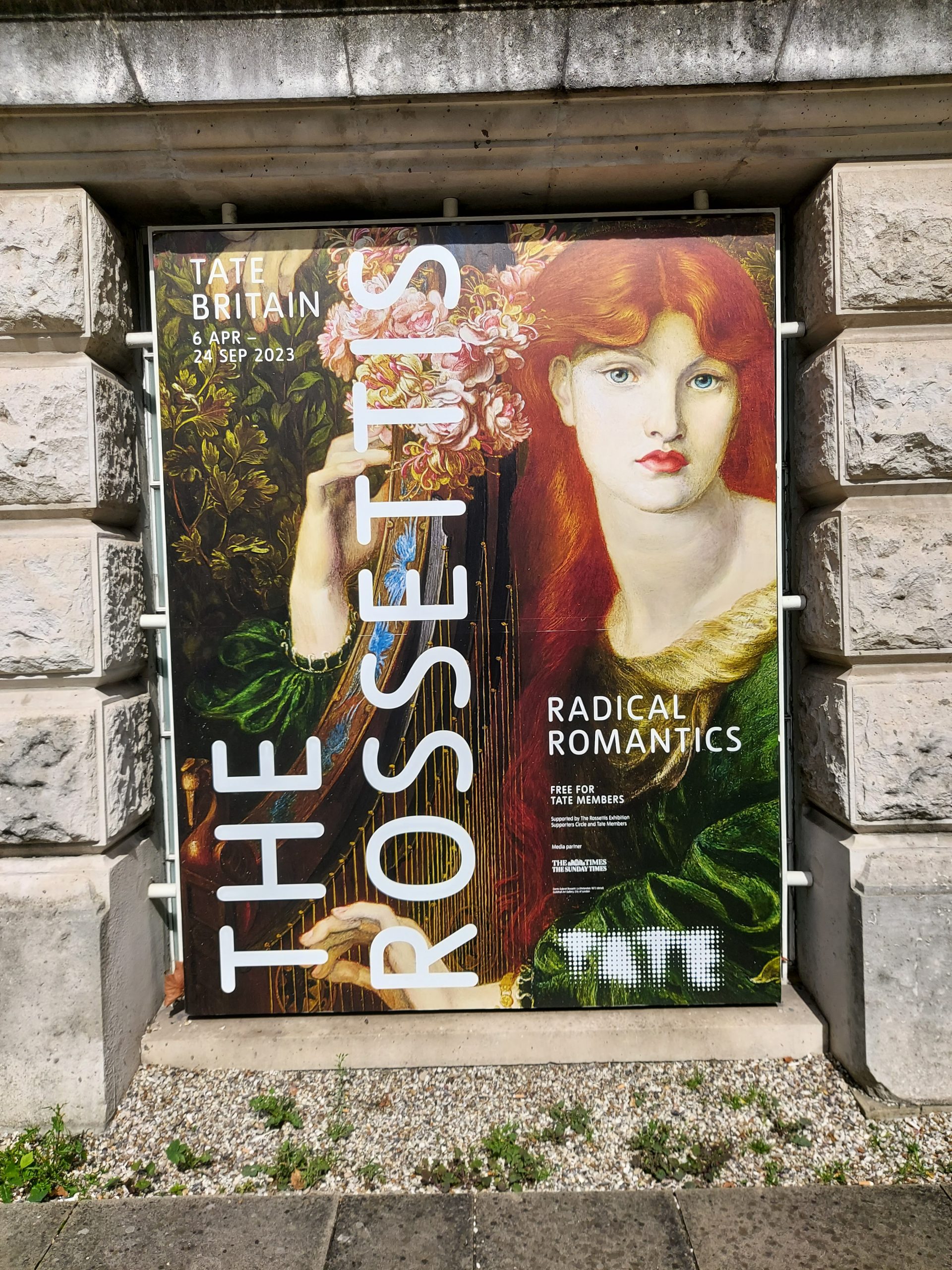
Poster for The Rossettis exhibition

I’m very interested in the Pre-Raphaelites, so was excited to see the exhibition The Rossettis: Radical Romantics at Tate Britain. It focused on brother and sister Dante Gabriel Rossetti (painter) and Christina Rossetti (poet), and, for the purposes of this exhibition, Gabriel’s wife Elizabeth (painter), born and better known to us as Elizabeth Siddal.

The exhibition explored how the family’s background – their parents were scholars of Italian heritage, and their four children, Maria (writer), Gabriel (who later adopted the name Dante), Christina, and William (writer and co-founder of the Pre-Raphaelite Brotherhood) had unconventional lives and shared anti-establishment views. Their father, Gabriele, was a revolutionary who had to flee Italy, and passed on many of his ideas to his children.

Poem by Christina Rossetti‘Remember’ by Christina Rossetti

Both Gabriel and Christina published poems at an early age. Today, Christina is the better known poet: her verse was inspired by poetry, love and religion, and is often passionate and full of life. Gabriel’s admiration for less conventional artists led him to co-found the Pre-Raphaelite Brotherhood with his own brother William and several other artists; his own work was inspired by the likes of Dante and William Blake.

Painting by Dante Gabriel RossettiLady Lilith by Dante Gabriel Rossetti
The inclusion of Elizabeth Siddal’s work here is interesting. I’m very glad her work is becoming better known and she is no longer seen as ‘just’ Dante Gabriel Rossetti’s muse. However I would be more interested to see how her background and experiences shaped her own work, rather than lump her in with the Rossetti family who had a very different upbringing. The exhibition, it must be said, does make a good case for her inclusion, showing how her work and Gabriel’s inspired one another, and the similarities between her poetry and Christina’s in terms of exploring women outside of the conventions of the time.

I really liked how the exhibition tried to dive in to the lives of the working class models that often featured in Gabriel’s paintings, as well as confronting the problematic portrayal of different cultures in his later works. Ultimately, the exhibition did a very good job in highlighting the Rossettis’ impact on art, literature and culture.

After Impressionism: Inventing Modern Art – National Gallery

Entrance to the After Impressionism exhibition

On my day off I also paid a visit to the exhibition After Impressionism: Inventing Modern Art at the National Gallery.

The exhibition explored the years between 1880 and 1914 when artists such as Paul Cézanne, Vincent van Gogh and Paul Gauguin pushed the boundaries of art and inspired new generations.

It featured almost one hundred works by artists such as Klimt, Munch, Matisse and Kandinsky, loaned by the likes of the New York Museum of Modern Art, the Musée d’Orsay in Paris, and the Museu Nacional d’Art de Catalunya in Barcelona.

The sheer variety of art on display was impressive and really showed just how creative and original the artists of the period were. The exhibition showed how they experimented and pushed the boundaries of art, and it was fascinating to see.

Spain and the Hispanic World – Royal Academy of Arts

The front of the Royal Academy

At the weekend I attended an exhibition at the Royal Academy of Arts. Spain and the Hispanic World: Treasures from the Hispanic Society Museum & Library is the exhibition’s full title, and sums up what it is all about.

The Hispanic Society was founded in 1908 in New York by Archer M. Huntington. A childhood love of Spain grew into an obsession with the country, its culture and art, and subsequently Latin America. The works on display reflect his wide-ranging interests: manuscripts and rare books, Old Master paintings, modern art and prehistoric pottery. Indigenous works from Latin American artists also made it into the collection, and Huntington was unique among his peers in recognising the Arabic contribution to Spanish culture: he learnt Arabic and included related arts and crafts in his collection.

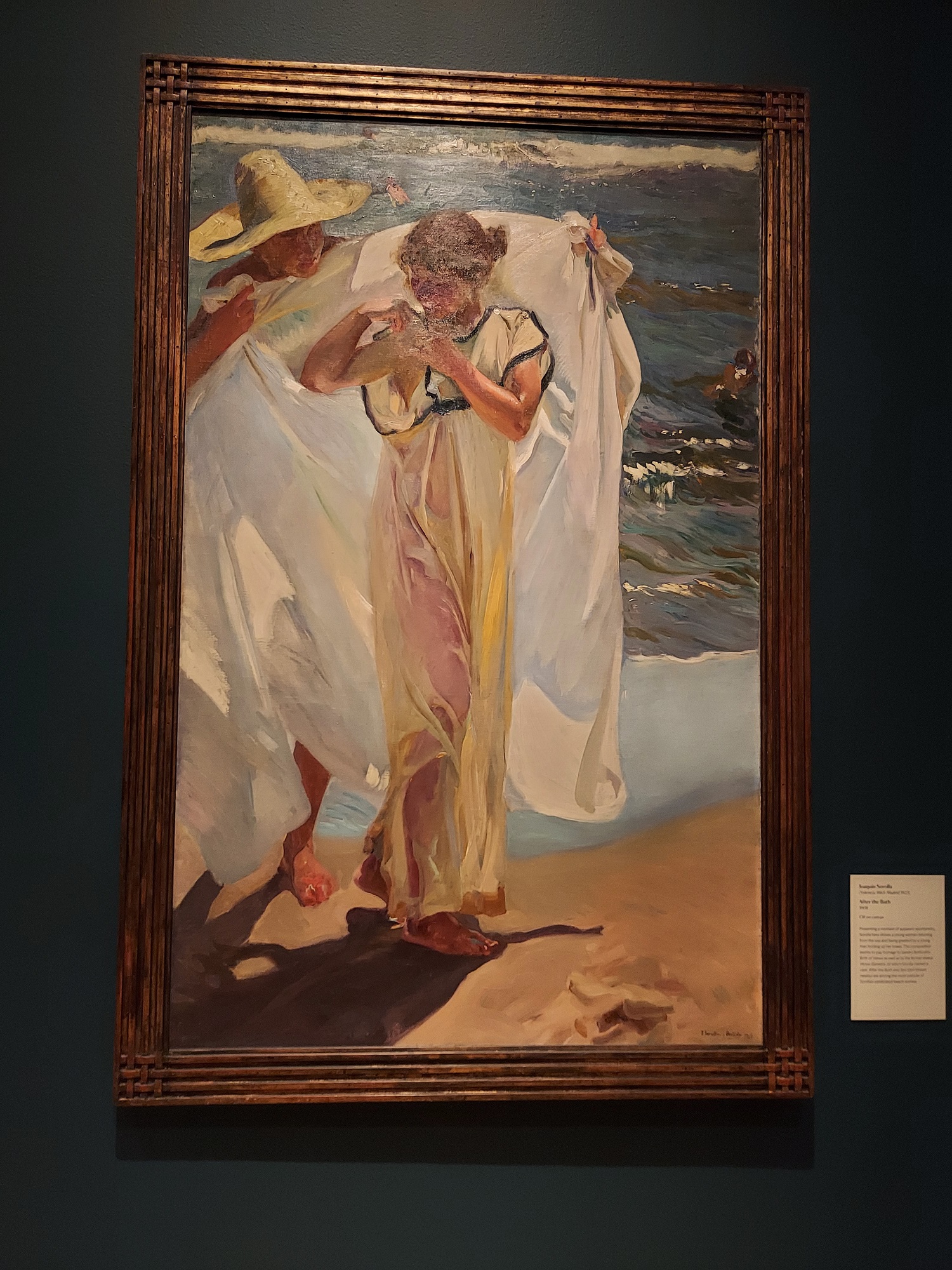
There was plenty to see in the exhibition: it is rare to find such a wide-ranging selection on display. Multiple facets of Spain and the Hispanic world’s culture were represented. The Celtiberian jewellery was impressive, I loved the beautiful books on display, and enjoyed the historic artwork, but my favourites were the more modern paintings, such as those by Sorolla.

M.K. Čiurlionis: Between Worlds – Dulwich Picture Gallery

Entrance to the exhibition

The third and final exhibition I visited was M.K. Čiurlionis: Between Worlds at Dulwich Picture Gallery. Čiurlionis, revered in his native Lithuania, is not an artist I’d ever heard of, but after seeing this exhibition, I’m so grateful to the Gallery for introducing me to his work.

Painting showing a ghostly figure travelling by water beneath the light of a moon

Mikalojus Konstantinas Čiurlionis (1875-1911) was an artist, composer and writer. All of the works in this exhibition, loaned by the M. K. Čiurlionis National Museum of Art in Lithuania, were made over the course of just 6 years, and for most of them it is their first time on display in the UK.

Čiurlionis’ works are magical and mythical. They are symbolist and sometimes abstract but they have an unearthly beauty all of their own. Many of his works are fantastical, inspired by fairy tales, and many have a pagan flavour, shot through with Lithuanian folklore. This makes sense when you discover that Lithuania was the last European country to adopt Christianity, meaning that its pagan heritage is longer and deeper than most.

Painting showing two royal figures bending over a small world

Lithuania was connected to Poland at the beginning of Čiurlionis’ life, but later came under control of Russia, despite protests. It wasn’t until after the First World War that Lithuania’s independence was confirmed. Čiurlionis was a founder member of the Society of Lithuanian Art in 1907, and dreamed of helping to create a ‘House of the Nation’ – a museum, concert hall and library of Lithuanian arts and culture. In his nationalism he rather reminds me of Alphonse Mucha, whose own later work aimed to uplift and unite the Slav peoples.

Čiurlionis was also interested in Eastern philosophy and religion. His works often feature a figure called Rex, representing a godlike monarch, creator or protector, symbolising the unity of the Earth. The mythical nature of his work reminded me of William Blake, who was also inspired by the tales and legends surrounding his homeland.

Painting showing a tower and walkways with tiny figures