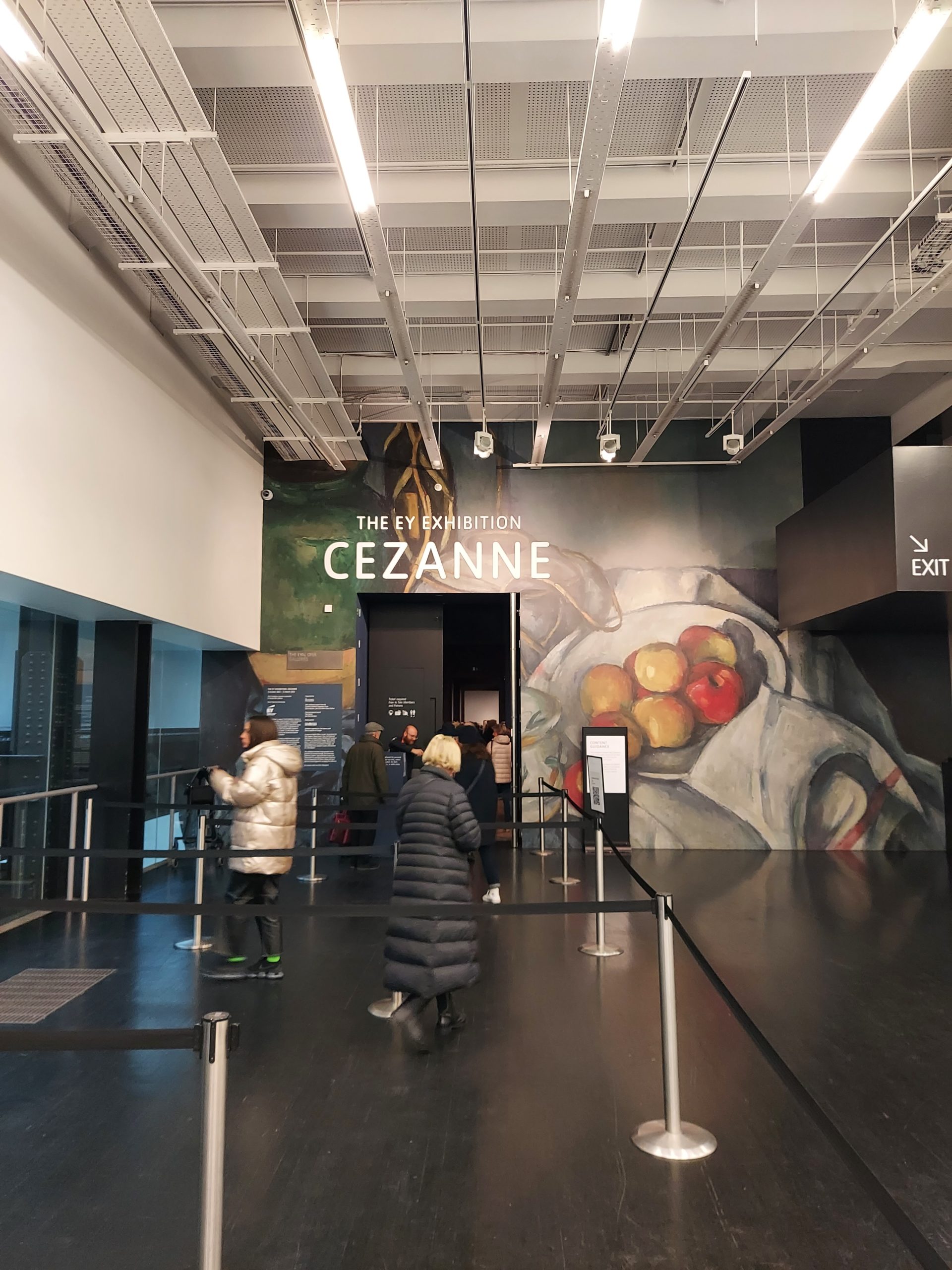
Cezanne – Tate Modern

Entrance to the exhibition

I had a midweek day off work last week and decided to visit several exhibitions. The first one I chose was Cezanne at the Tate Modern, which is coming to the end of its run.

Paul Cezanne (1839-1906) is one of the most respected artists of the late nineteenth century. He revolutionised painting, seeing it as a process of investigation. The exhibition contains several works which have rarely been seen outside of France. The first half looks at Cezanne in the context of his time, while the second half focuses on particular themes.

As a young adult, Cezanne’s father wanted him to pursue a career in law, but his school friend, the novelist Émile Zola, encouraged him to move to Paris and pursue art. He was befriended and mentored by fellow artist Camille Pissarro, whose influence is present in his early work. Cezanne lived through times of social and political upheaval: this can be seen in paintings such as The Conversation, which hint at his political views, and Scipio, which was possibly influenced by abolitionism.

Painting showing skulls and flowers

Cezanne preferred to paint models he knew well, such as his partner  Marie-Hortense Fiquet and their son Paul. However, he also painted many works of bathers, which influenced painters such as Matisse and Picasso. He worked on several landscapes, particularly during his stay on the south coast of France, and is also famous for his still lives, mostly featuring apples.

I must admit I struggled to engage with many of the paintings. I don’t find still lives particularly interesting and I wasn’t enamoured with the pictures of bathers. I could see the appeal in the landscapes, but my favourite works included the skulls that Cezanne painted towards the end of his life. There was also one particular work that seemed to show a murder, which had a strong compelling energy.
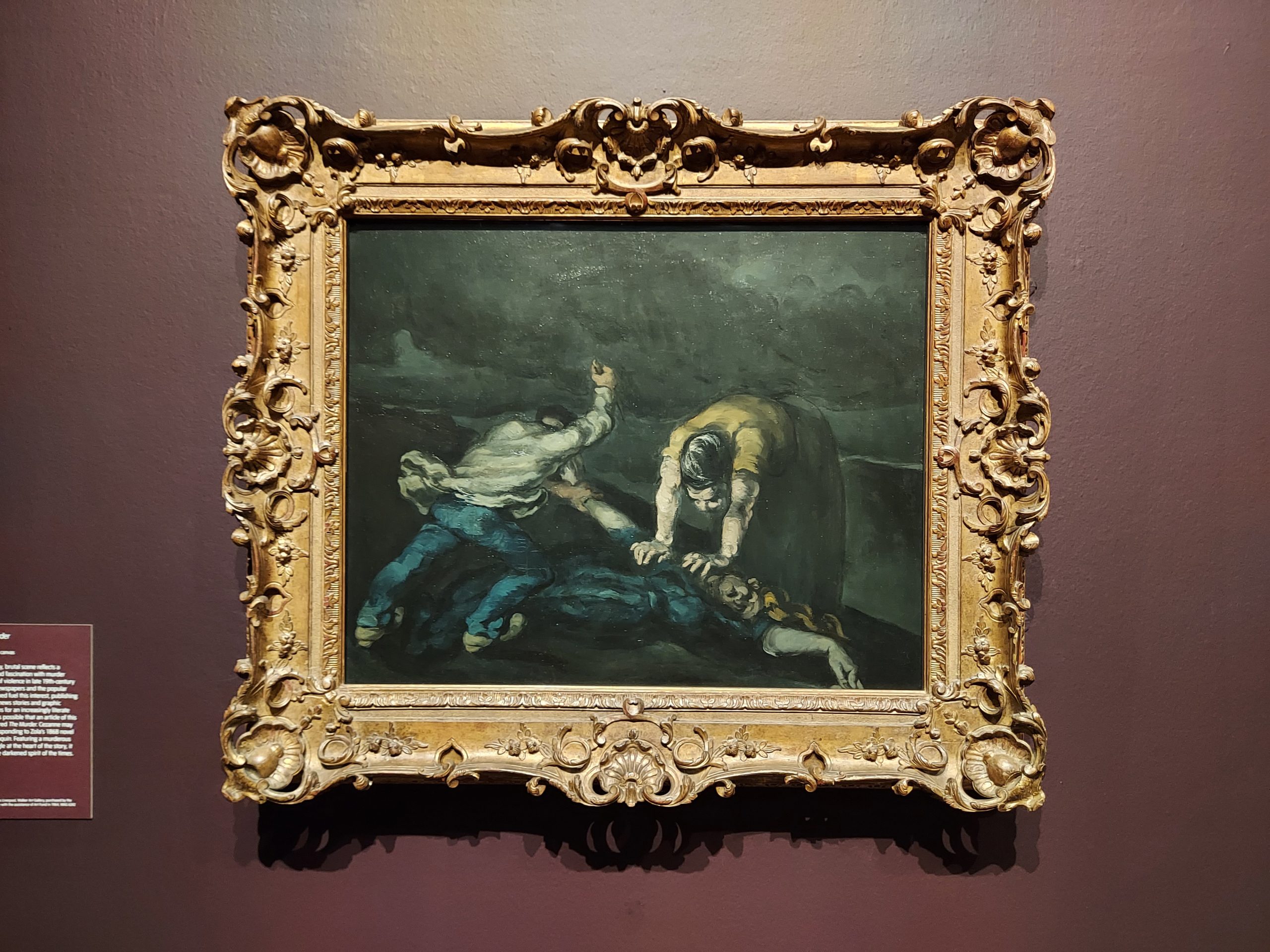
Cezanne painting showing two figures attacking another

I feel a bit guilty saying all of this as Cezanne is an acclaimed artist and I really don’t have the knowledge to be able to criticise his works properly. All I can do is comment from my own uneducated perspective, and I guess these works just aren’t really my thing.

Walter Sickert – Tate Britain

Poster for the Walter Sickert exhibition

Before heading up north for the second time this year, I visited the Walter Sickert exhibition at Tate Britain. I only knew Sickert from his ‘Camden Town Murder’ paintings – which are on display here – but there is much more to his work.

Sickert was born in Germany in 1860, but moved with his family to England aged eight. He initially sought to become an actor, but switched to art in 1882 – his artistic career would eventually span six decades.

The exhibition begins with an exploration of Sickert’s self-portraits, which show him experimenting with light and shade. It continues with a look at his early career and work in England and France, inspired by Whistler and, later, Degas.

My favourite pictures were those related to performance – theatres and music halls, circuses and outdoor performances. These were reminiscient of Degas’ paintings of ballet dancers, and were incredibly atmospheric, bringing the spaces to life. Sickert’s work spans the development and decline of music halls from lively entertainment venues to their role as the first cinemas.

Sickert’s portraits were mostly of well-known public figures, such as Aubrey Beardsley. They are vivid and demonstrate the sitters’ character. More informal portraits made much of their interior settings.

Landscapes, mainly of scenes in France and Italy, were particularly successful for Sickert, and often encompassed urban settings. He also painted nudes, often in more naturalistic, even dingy, settings than were traditional, leading to criticism.

The Camden Town Murder series features paintings of men and women in dingy, dark rooms in Camden Town, featuring props such as iron bedsteads. Their ambiguity led some to connect Sickert with the murders and even Jack the Ripper. They are atmospheric and have quite sinister undertones.

Sickert’s skill for portraying emotions and relationships were developed in his “conversation pieces”, exploring contemporary narratives and scenes. These paintings were innovative for the time and sought to illustrate everyday life in modern Britain.

I left the exhibition with a new-found appreciation for Sickert’s talent, range and focus – definitely worth seeing.

Raphael – National Gallery

I visited the Raphael exhibition at the National Gallery, shortly before it closed. I wasn’t going to go, but realised the Gallery was open late on a Friday and I thought I would take the opportunity.

I didn’t know much about Raphael (1483-1520) – except that he was a key figure in the Italian Renaissance (and he was a turtle). In fact, most of what I knew about him was what he was not – having a longstanding interest in the Pre-Raphaelites.

This exhibition is the first outside Italy to encompass his entire career. As well as a painter, Raphael was a printmaker, draughtsman, poet, architect and archeologist – he was one of the first people to recognise the importance of Italy’s Roman heritage.

Raphael had a turbulent early life, losing his mother at 8 and his father at 11. He was brought up by his uncle, a priest, which perhaps goes some way to explain the high proportion of his works with a religious bent, although I suppose most works of art were religious at this time. He painted altarpieces and other devotional scenes, including numerous Madonnas. I was shocked to read that he died young – suddenly, of a fever, at the age of 37.

Highlights for me included his portraiture – images of friends and patrons mostly found at the end of the exhibition. These were full of life and really captured the character of the sitter – I wish more of the works had been like this rather than religious paintings. However, I did like the dragon in Raphael’s St George scene, and the near-lifesize reproduction of his fresco The School of Athens, which centres the philosophers Plato and Aristotle.

Beatrix Potter: Drawn to Nature – V&A

While I was at the V&A I also took the opportunity to visit the Beatrix Potter: Drawn to Nature exhibition. This informative exhibition looked at the author’s life and was a fascinating experience.

Beatrix Potter grew up in London, where her family encouraged her interests in drawing and natural history. Some of her early drawings are on display and it was amusing to learn about the assorted animals she and her brother looked after and – after their deaths – dissected in an effort to learn more about their anatomy. These experiences stood Beatrix in good stead when she came to write her famous tales, as her portrayals of animals such as rabbits and hedgehogs are accurate and well-observed despite their anthropomorphic characteristics.

Spending her holidays in the country, she grew to prefer it to the town, and in particular fell in love with the Lake District, where she would eventually settle. She would later marry, buy a farm, and help to breed and maintain a herd of Herdwick sheep, ensuring the species’ survival. On her death she left most of her land to the National Trust, which has helped to preserve the land which is now part of the Lake District National Park.

Of course, Beatrix Potter is mostly famous for her whimsical and humorous stories, which had their roots in letters she wrote to children of her acquaintance. The Tale of Peter Rabbit was the first to be published, in 1902, shortly followed by The Tale of Squirrel Nutkin (my own childhood favourite) and several others. In total, 23 of these little books were published. Some of them are displayed here as early editions, while other displays include original drawings. I learned that the Dutch edition of The Tale of Jemima Puddle-Duck called her “Kwakkel Waggel-Eend”, a fact that pleases me greatly.

This exhibition is worthwhile for children and for the young-at-heart who remember Beatrix Potter’s work fondly, as well as those who are interested in nature.

Art in the Age of Now – Fulham Town Hall

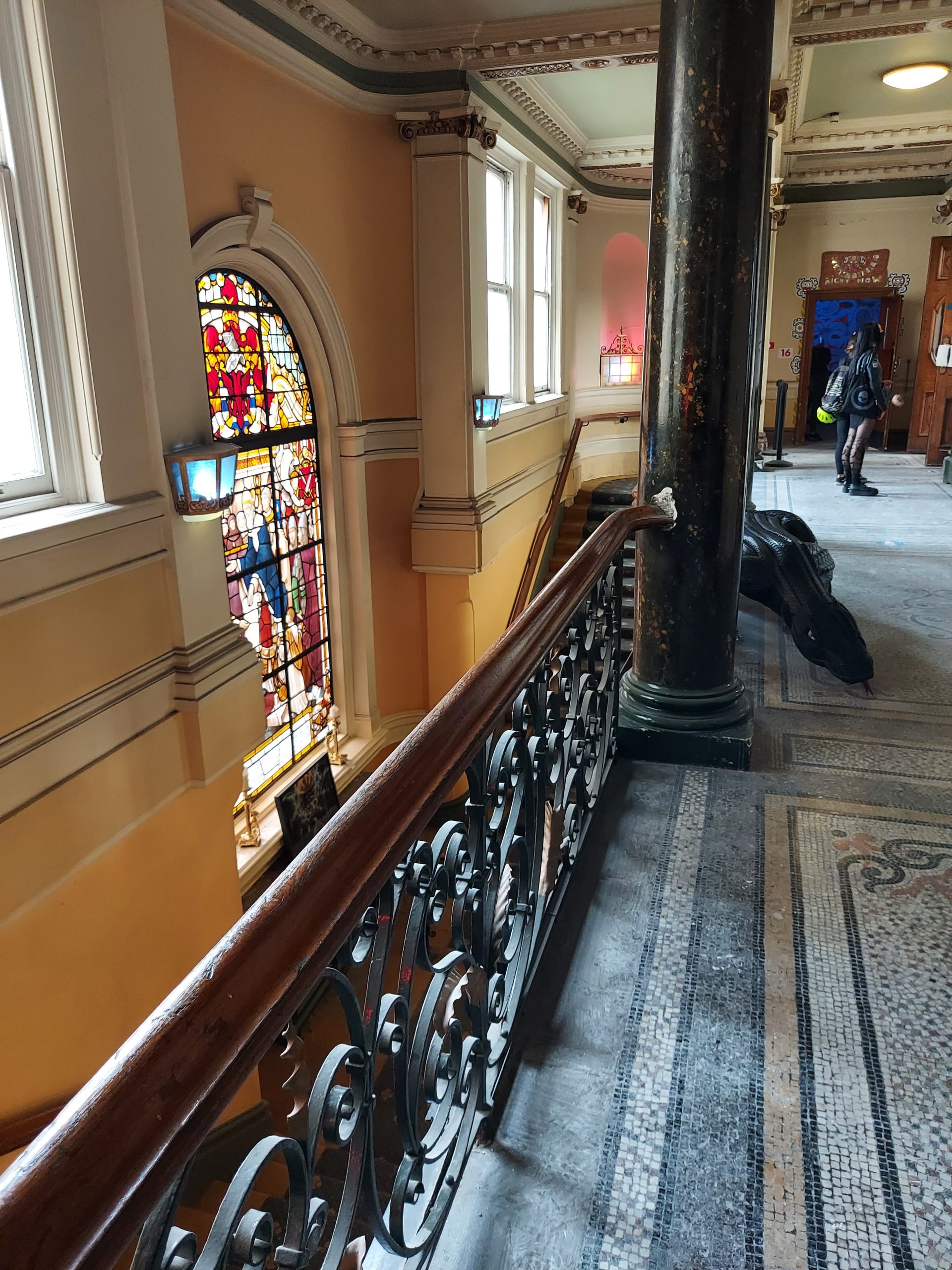
Fulham Town Hall

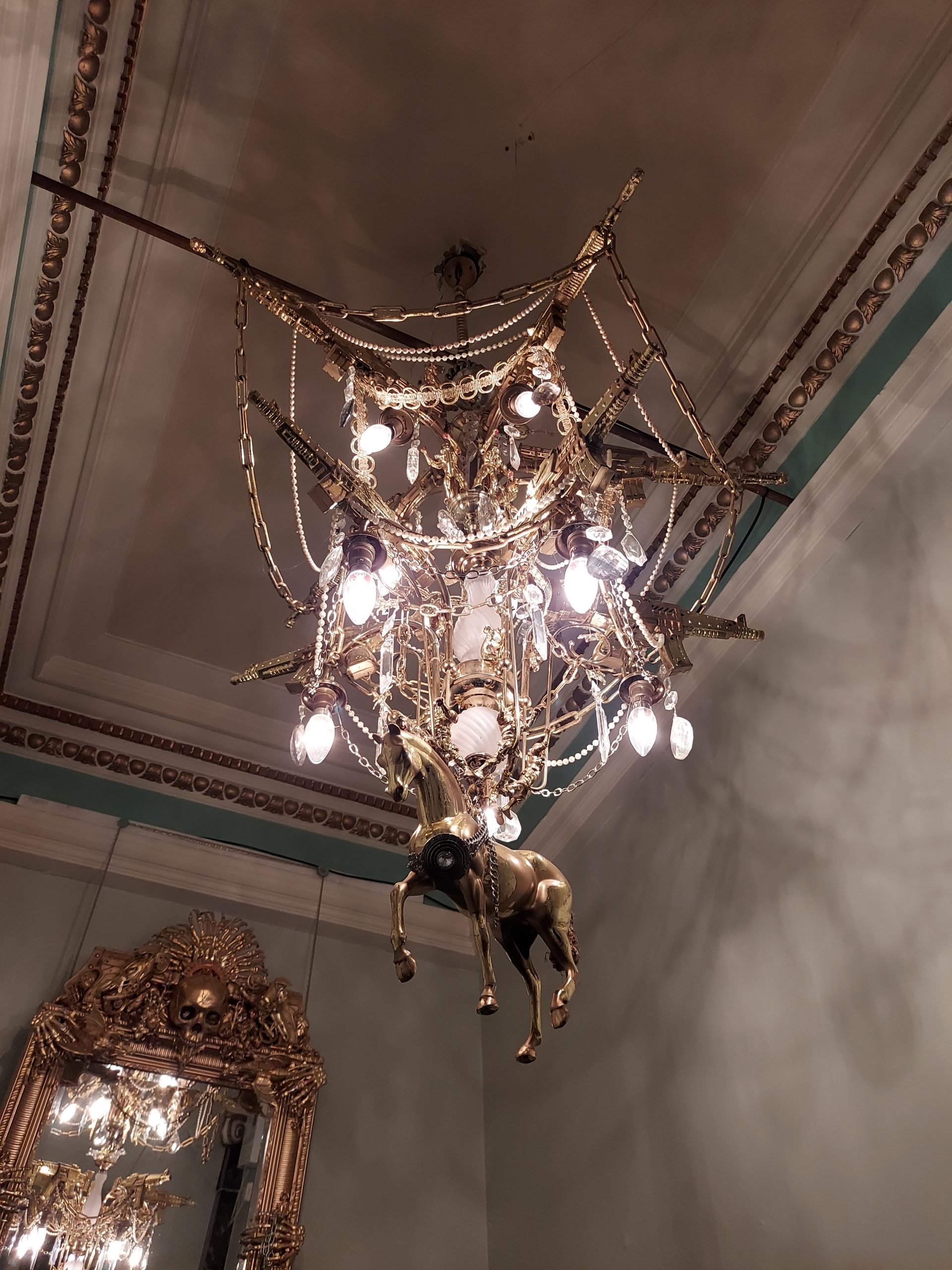
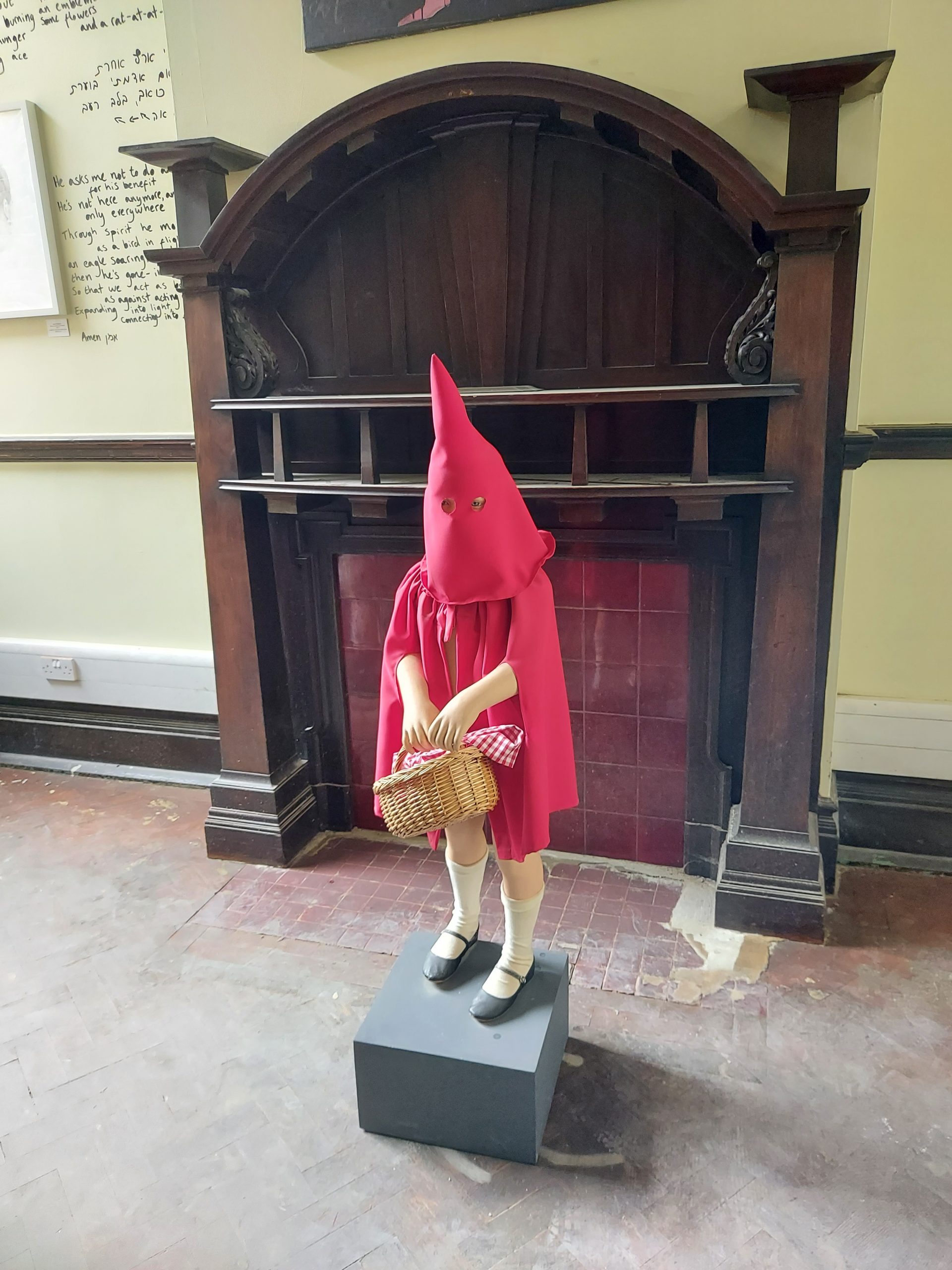
After attending the Bags exhibition I decided to head down to Fulham Town Hall to see the Art in the Age of Now exhibition. The building on Fulham High Street has been abandoned for 20 years and is about to be redeveloped, but not before hosting an exhibition of modern art.

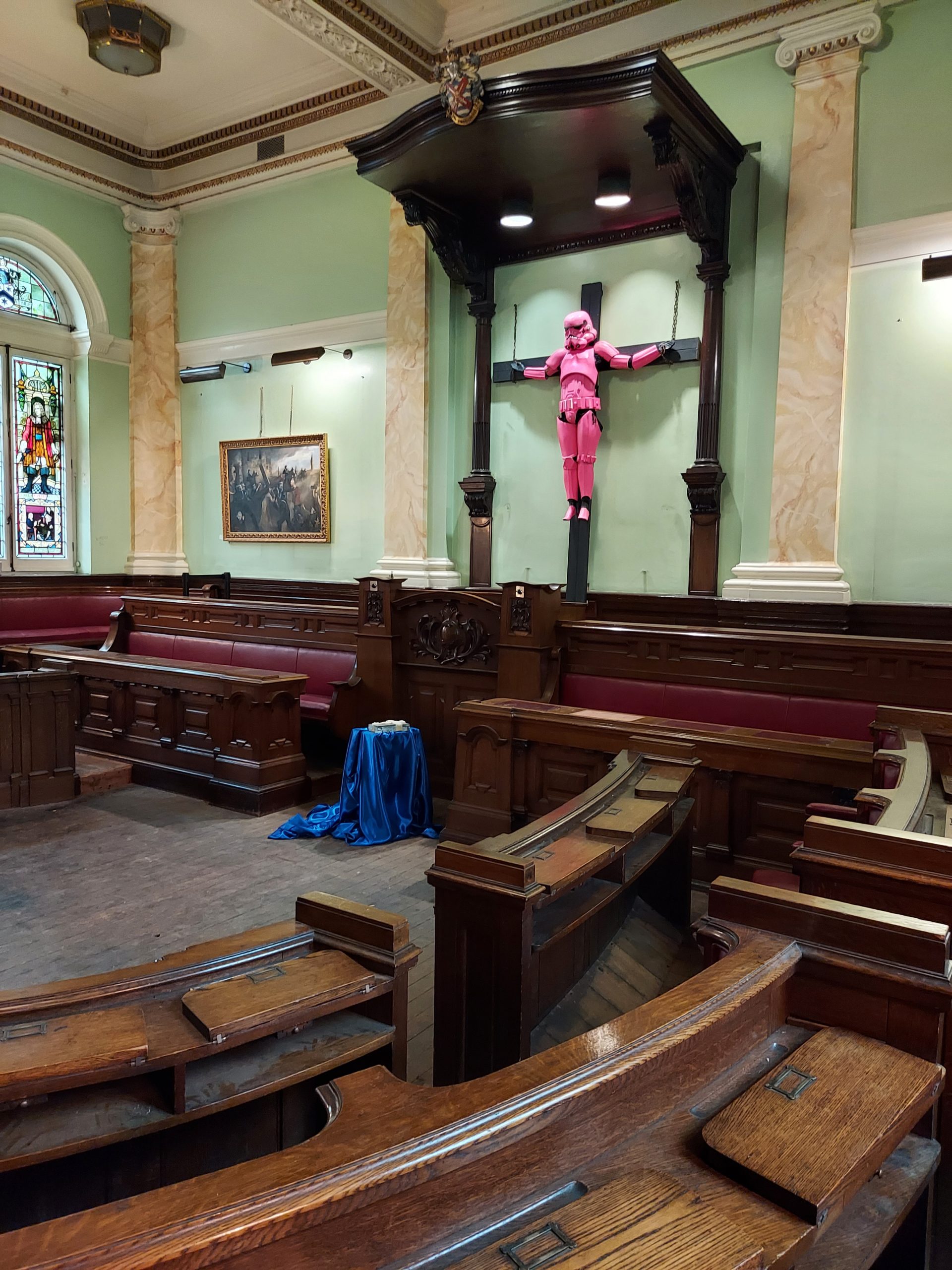
For me the hall itself, built in 1890, was the main attraction. Shabby and run-down, it had the kind of faded grandeur that I love – it felt like somewhere Punchdrunk would host an immersive theatre production. For every crumbling ceiling or damp floorboard there was an ornate balustrade or a beautiful bit of stained glass. The original council chamber is still intact, and very impressive, but the main draw was the old ballroom.

model of Stonehenge in a Victorian ballroom
Los Hengeles by Ben Moore

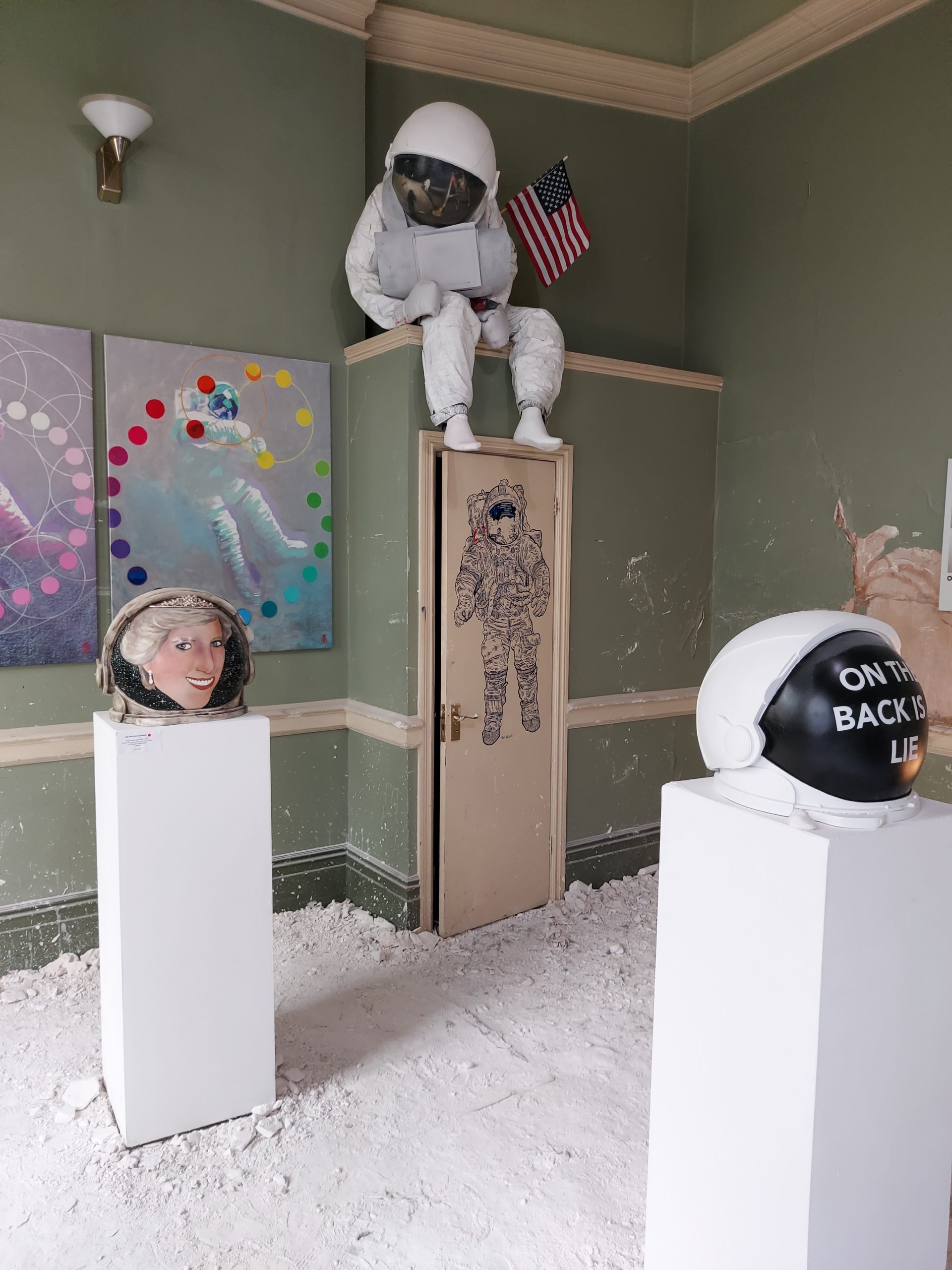
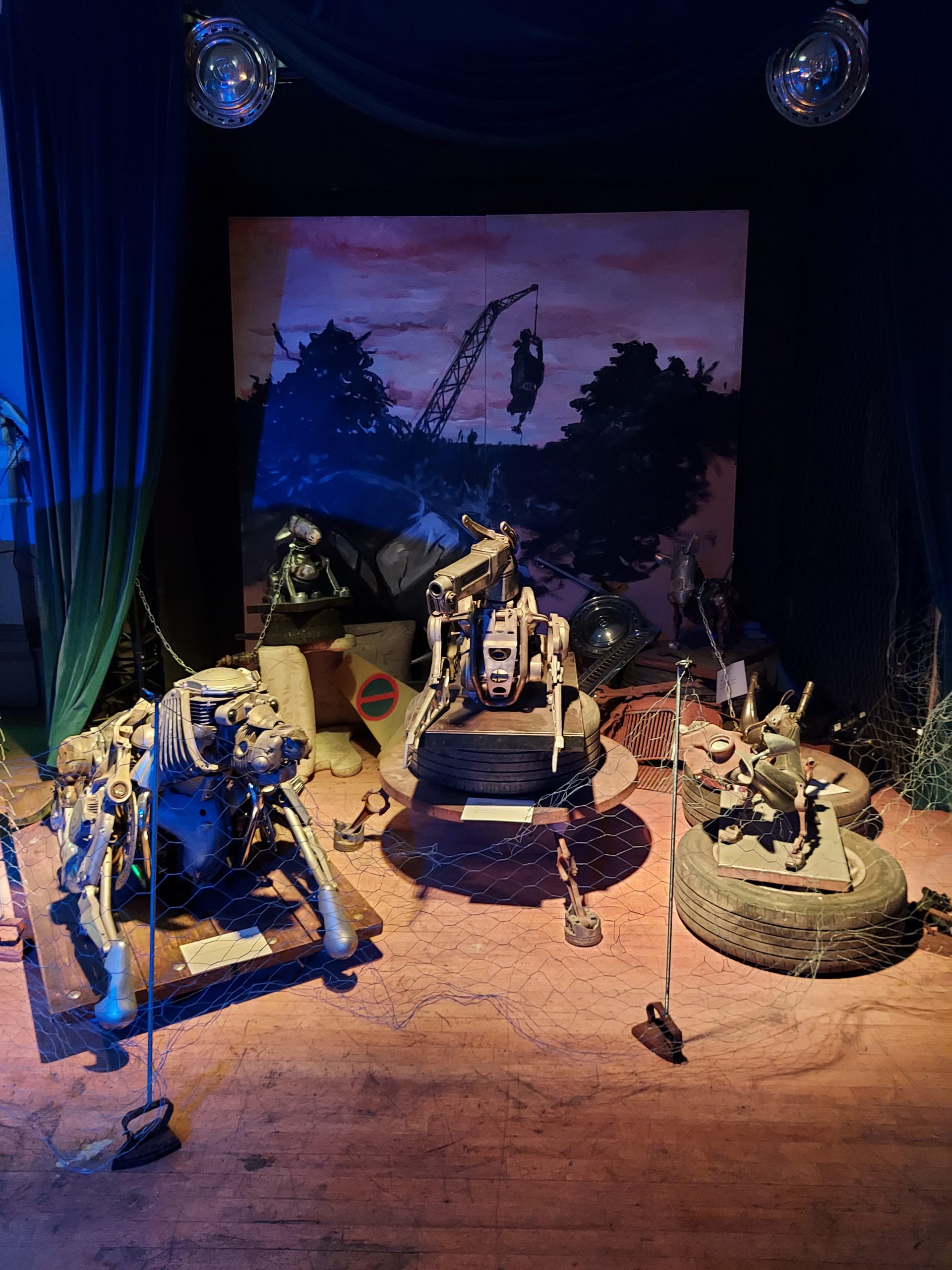
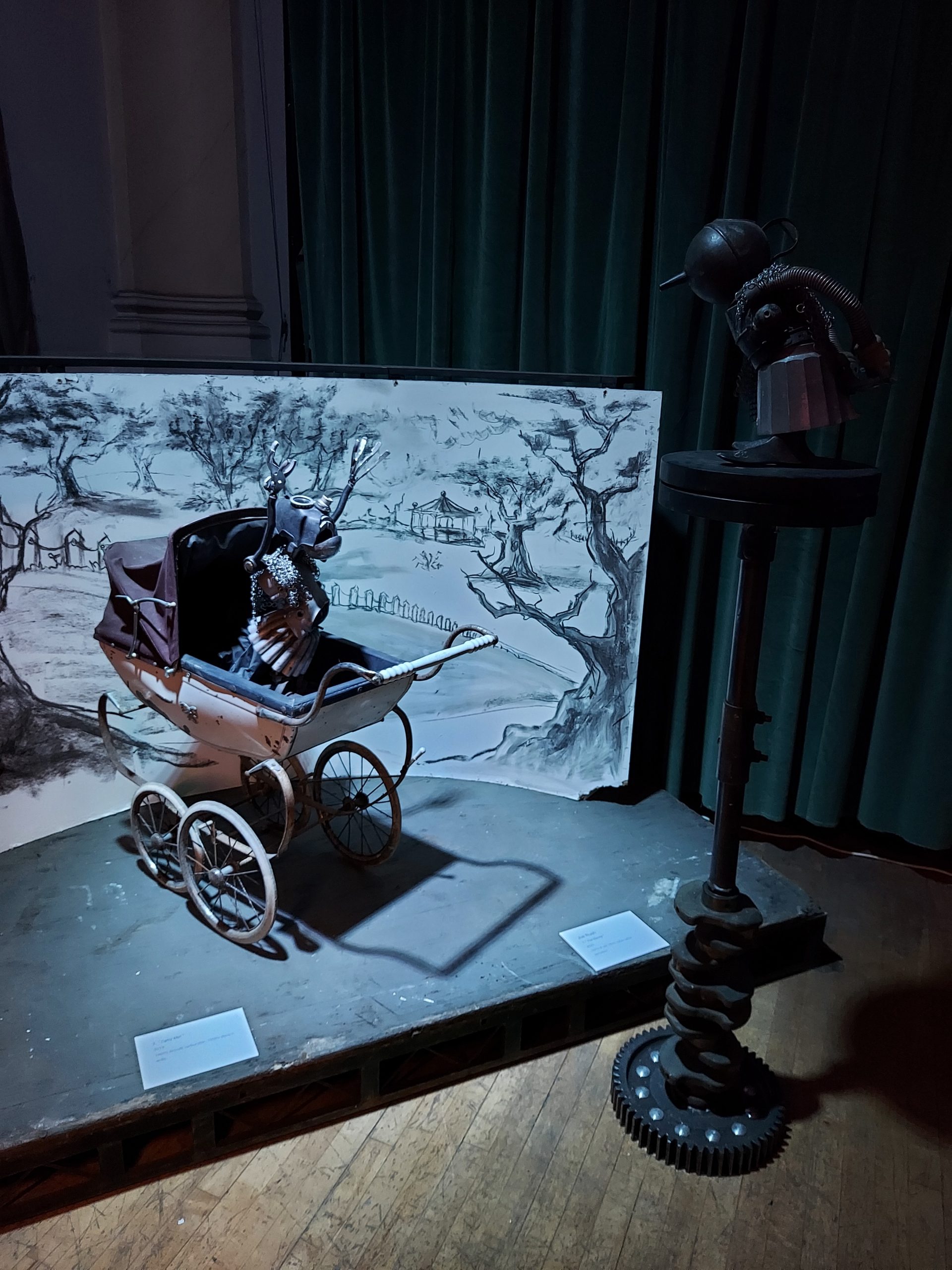
Having said that, the art itself, curated by Ben Moore, intrigued me too – modern art is very hit and miss for me, but there was plenty here to pique my interest. All kinds of artworks are on show, including sculptures, paintings, collages and photography.

My absolute favourite works were the mechanical sculptures by Joe Rush. These were incredible and full of detail – a definite highlight for me.

The building was such a maze I didn’t manage to get round it completely; I’m sure there were bits I missed. However, what I did see was fascinating and definitely worth a look.

Artemisia – National Gallery

Artemisia exhibition

I’m no art expert, but I’ve been aware of Artemisia Gentileschi and her work for a while. At university, I took a module on Renaissance Rome and she featured; in recent years I’ve encountered her life and work in stories and plays. I was excited, therefore, to visit the Artemisia exhibition at the National Gallery, making it there in between lockdowns.

Self portrait
Artemisia Gentileschi, Self-portrait as the Allegory of Painting, 1638-39

Artemisia, one of the most famous female artists in history, was the daughter of acclaimed painter Orazio Gentileschi. In an age when few women had the opportunities that men had to pursue artistic careers, she was painting professionally by the age of fifteen and enjoyed a successful lifelong career, painting for numerous wealthy patrons, befriending other artists and eventually becoming the first female member of Florence’s Accademia di Arte del Disegno.

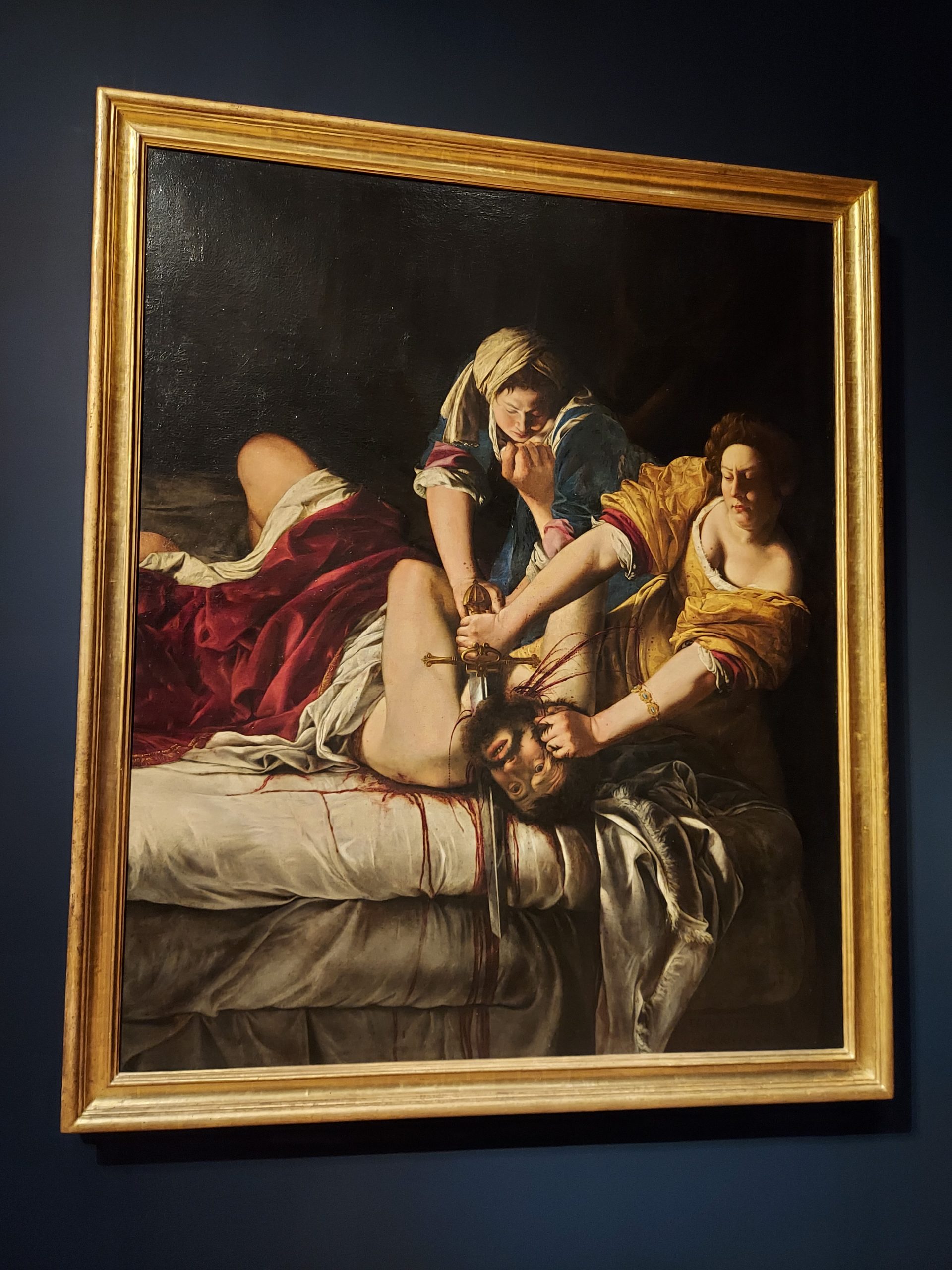
Judith Slaying Holofernes
Artemisia Gentileschi, Judith Slaying Holofernes, 1614-1620

The most famous incident of Artemisia’s life is probably her rape by a fellow painter at her home in Rome. During the subsequent trial, Artemisia was tortured with thumbscrews – a particularly frightening prospect for an artist, I’d imagine – to prove her testimony. Breach Theatre have produced a powerful play about the trial, but I was glad to see that the National Gallery did not allow this incident to overshadow Artemisia’s life and career. There is just as much focus on her subsequent marriage and move to Florence, her affair with a Florentine nobleman, her children and, later, her move back to Rome and visits to Venice, Naples and England.

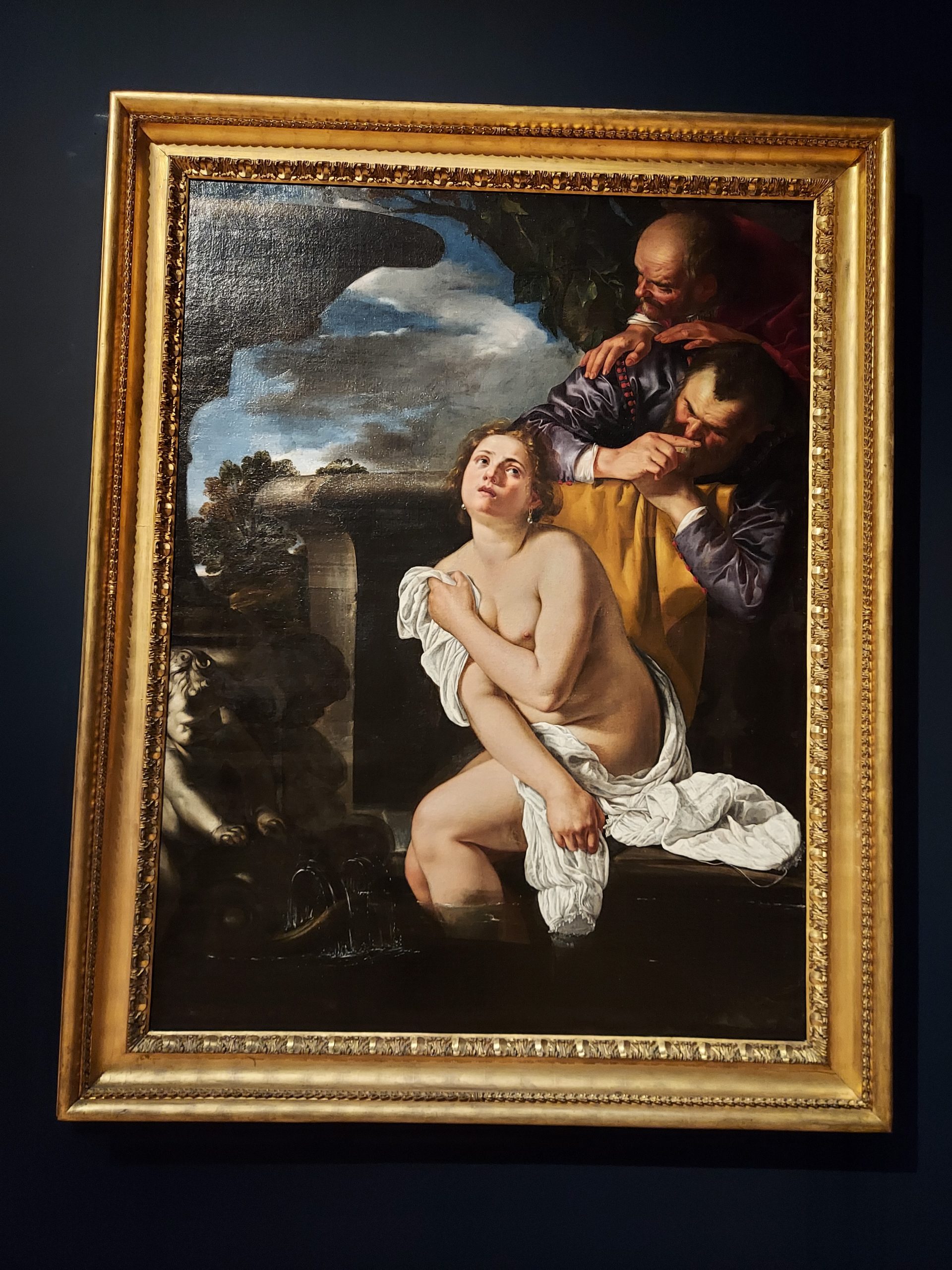
Susanna and the Elders
Artemisia Gentileschi, Susanna and the Elders

Even my untrained eye can see there is something different and special about Artemisia’s work: perhaps her gender helped her to see things differently; perhaps she was just incredibly talented; perhaps a bit of both. Some of her works are shown alongside her father’s: though Orazio was clearly an accomplished painter, Artemisia’s creations are (to my mind) far superior. Her versions of Susannah and the Elders show a frightened Susannah overlooked by lecherous old men, instead of the provocative nude often pictured by male artists. Judith beheading Holofernes, particularly the later version which is much more bloody and brutal, demonstrates visceral anger, and her self-portrait as the Allegory of Painting is an honest depiction of an artist lost in her work, not an idealised muse.

I loved this exhibition, and I’m so glad I got the chance to go.

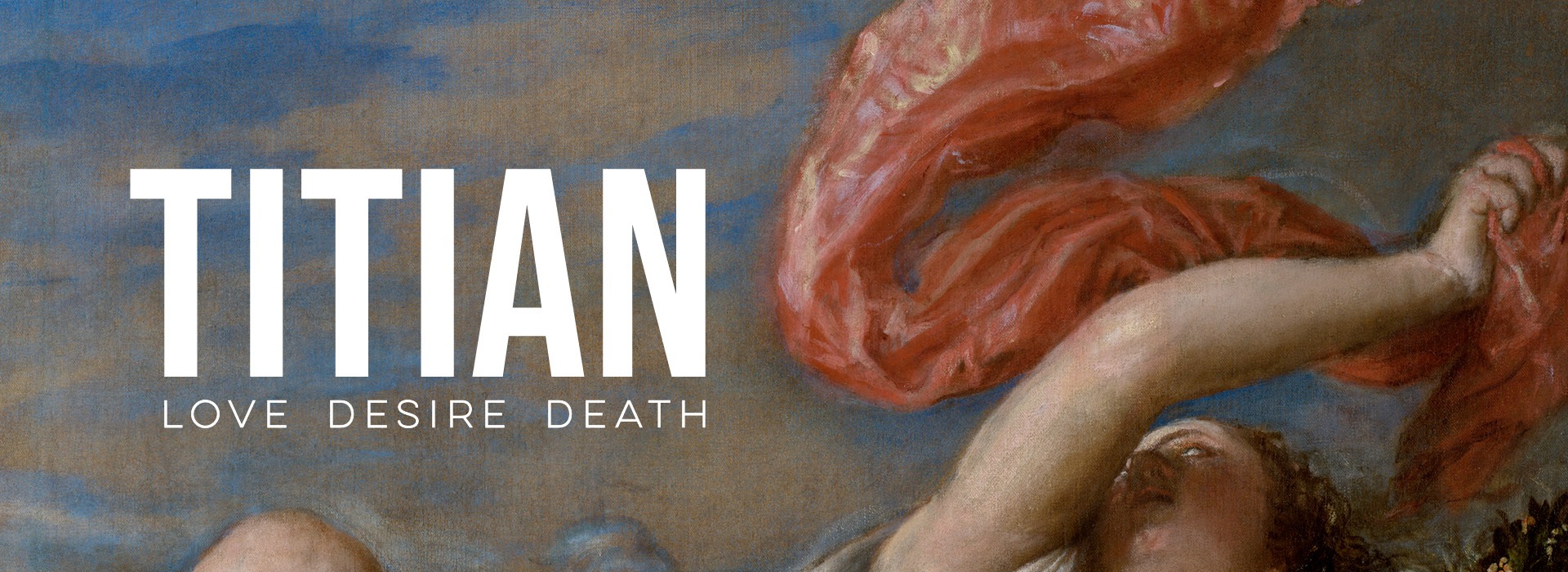
Titian: Love, Desire, Death – National Gallery

After months of closures, museums were slowly starting to reopen, so I took my birthday off work and planned a few days out. My first stop was the Titian: Love, Desire, Death exhibition at the National Gallery.

Organised by the National Gallery, the National Galleries of Scotland, the Museo Nacional del Prado, and the Isabella Stewart Gardner Museum, Boston, the exhibition brings together all six paintings in the series commissioned by Philip of Spain, the future King Philip II, in 1551. Philip requested Titian, who at the time was the most famous painter in Europe, to produce a group of paintings representing classical myths, taken mostly from the Metamorphoses of the poet Ovid.

The paintings include ‘Diana and Actaeon’ and ‘Diana and Callisto’, works owned jointly by the National Gallery and the National Galleries of Scotland; ‘Venus and Adonis’, owned by the Prado, Madrid; ‘Danaë’, in the care of English Heritage and usually displayed at Apsley House; ‘Rape of Europa’, belonging to the Isabella Stewart Gardner Museum in Boston; and ‘Perseus and Andromeda’, part of the Wallace Collection.

The exhibition is certainly about quality rather than quantity; Titian described the works as his ‘poesie’, a visual equivalent of poetry, and they are certainly impressive even to a non-art expert like me. They are dramatic and full of detail, powerfully conveying a range of emotions: anger, shame, lust, guilt, sadness.

Dora Maar – Tate Modern

Dora Maar exhibition poster

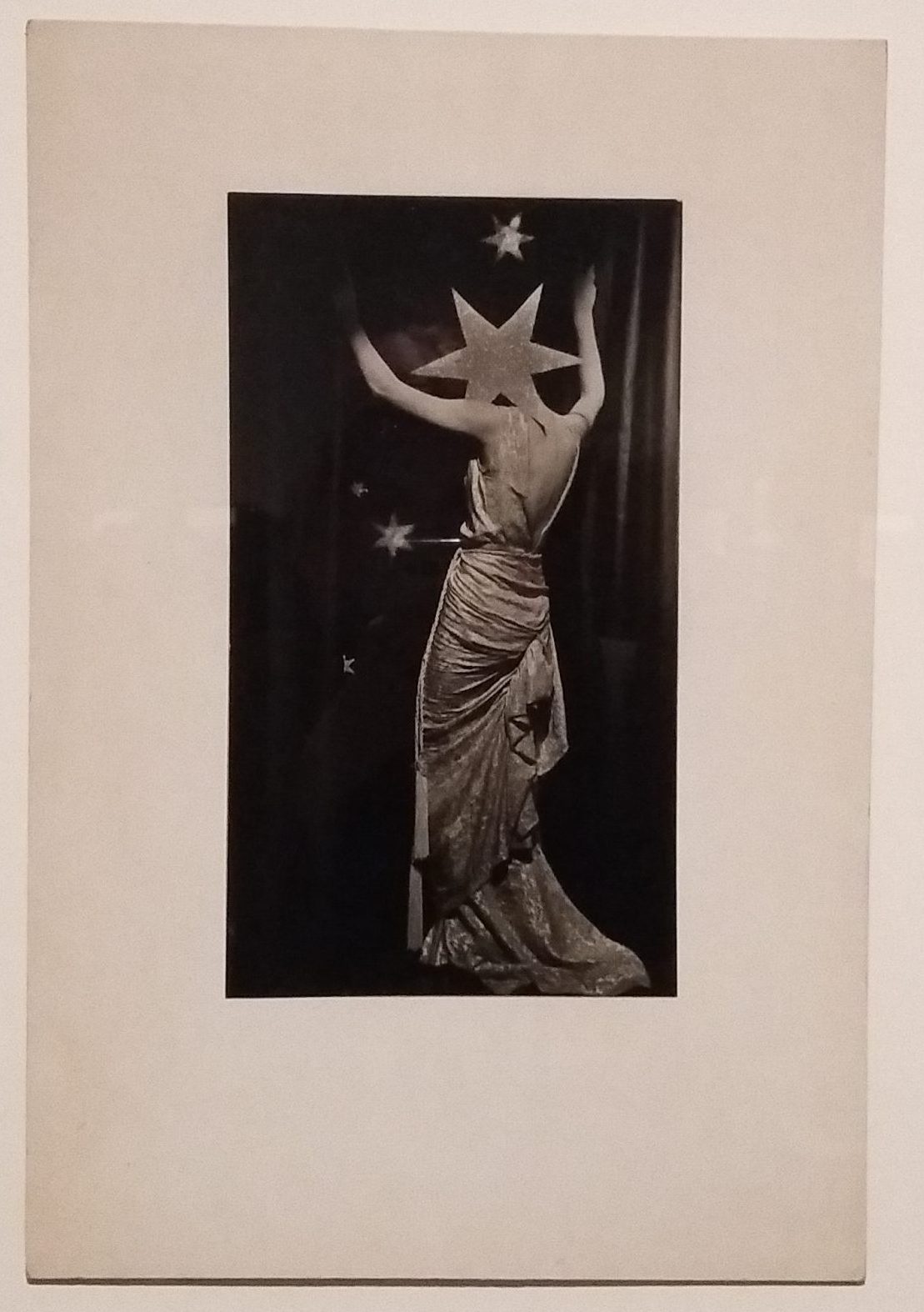
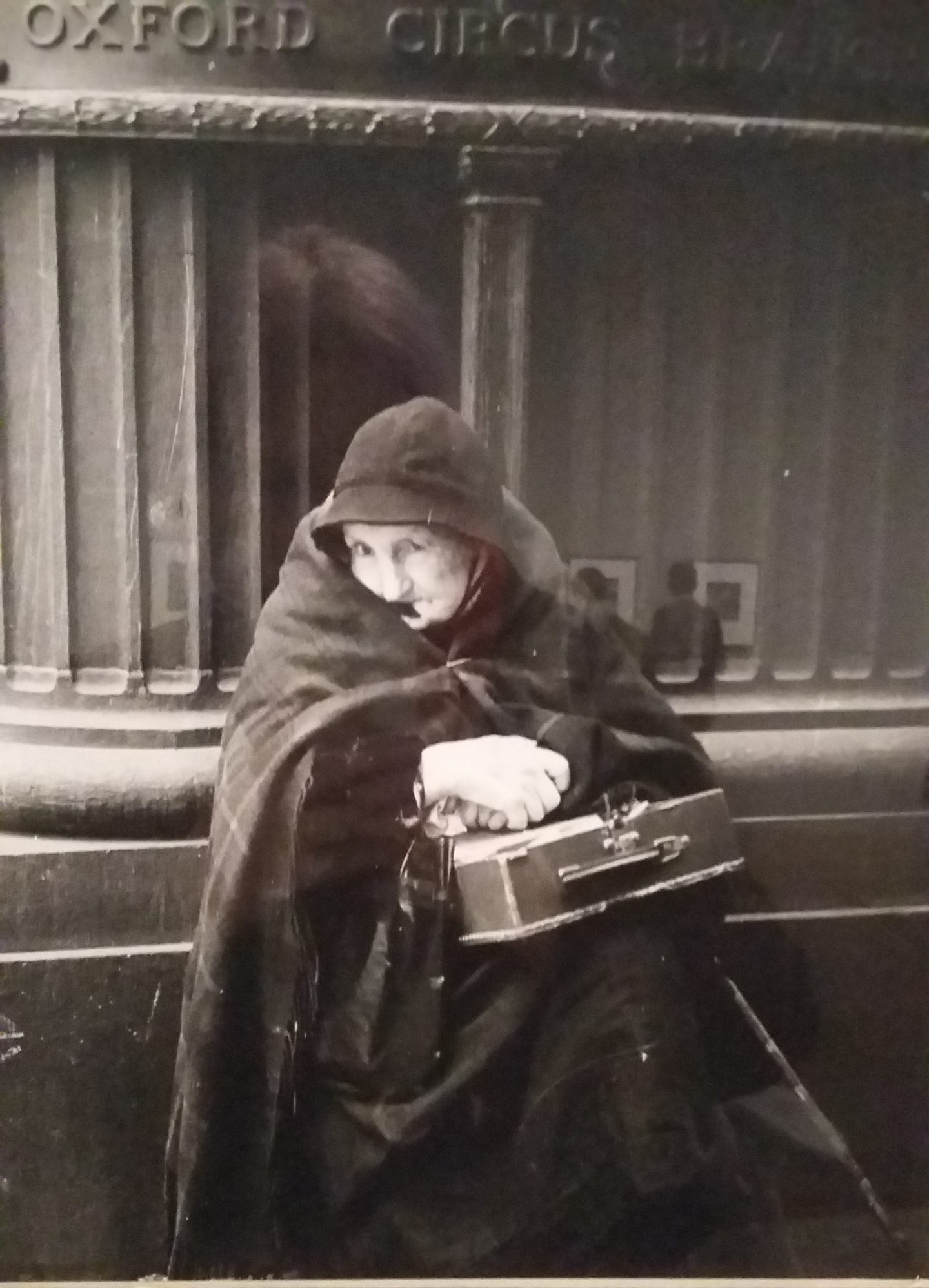
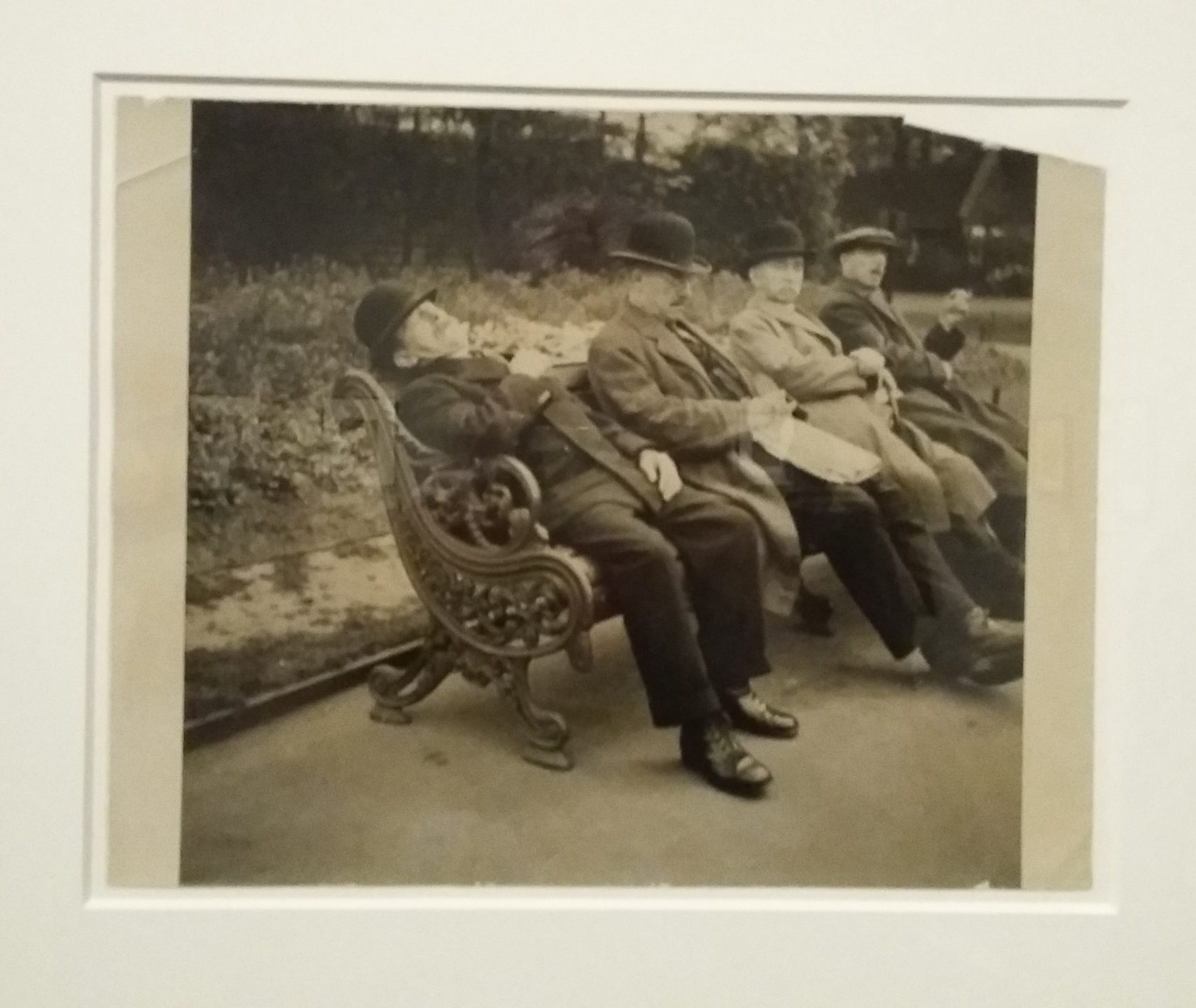
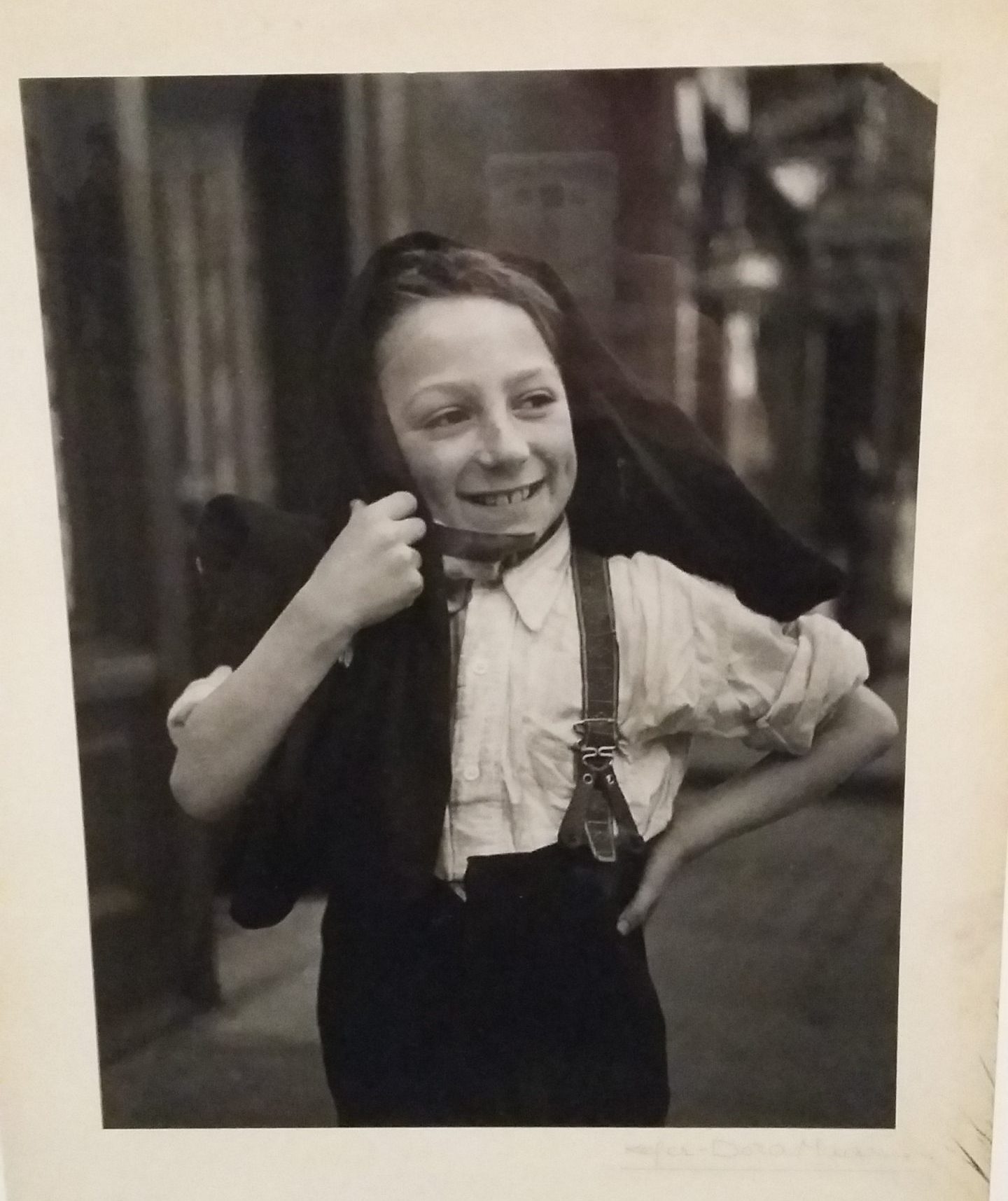
When I visited Tate Modern‘s Dora Maar exhibition I didn’t know it would be my last exhibition for a while, but with hindsight it was a good one to go out on. I confess I had never previously heard of Maar, but I ended up loving her work.

While Maar (1907-1997) had a long and illustrious career, she is barely remembered today, forgotten mainly thanks to her gender and also perhaps her relationship with Pablo Picasso, which overshadowed her. She helped to document his Guernica of 1937, in the period which most defined her – her works of Surrealism were celebrated at the time and these are the most remembered today. Her images from this period are striking and unique.

What I liked even more, however, were Maar’s realism-influenced photographs taken on the streets of Barcelona, Paris and London during the Great Depression of the 1930s. These really stood out to me, revealing the characters behind the faces, and making me want to know more about them. It doesn’t surprise me that Maar signed her name to many left-wing manifestos – an unusual guesture for a woman in that period, but one which seems natural in her obvious appreciation and admiration for ordinary people.

I’m so glad I got the chance to visit this unique exhibition before everything closed down – it’s one which will stick in my mind for many years.

William Blake – Tate Britain

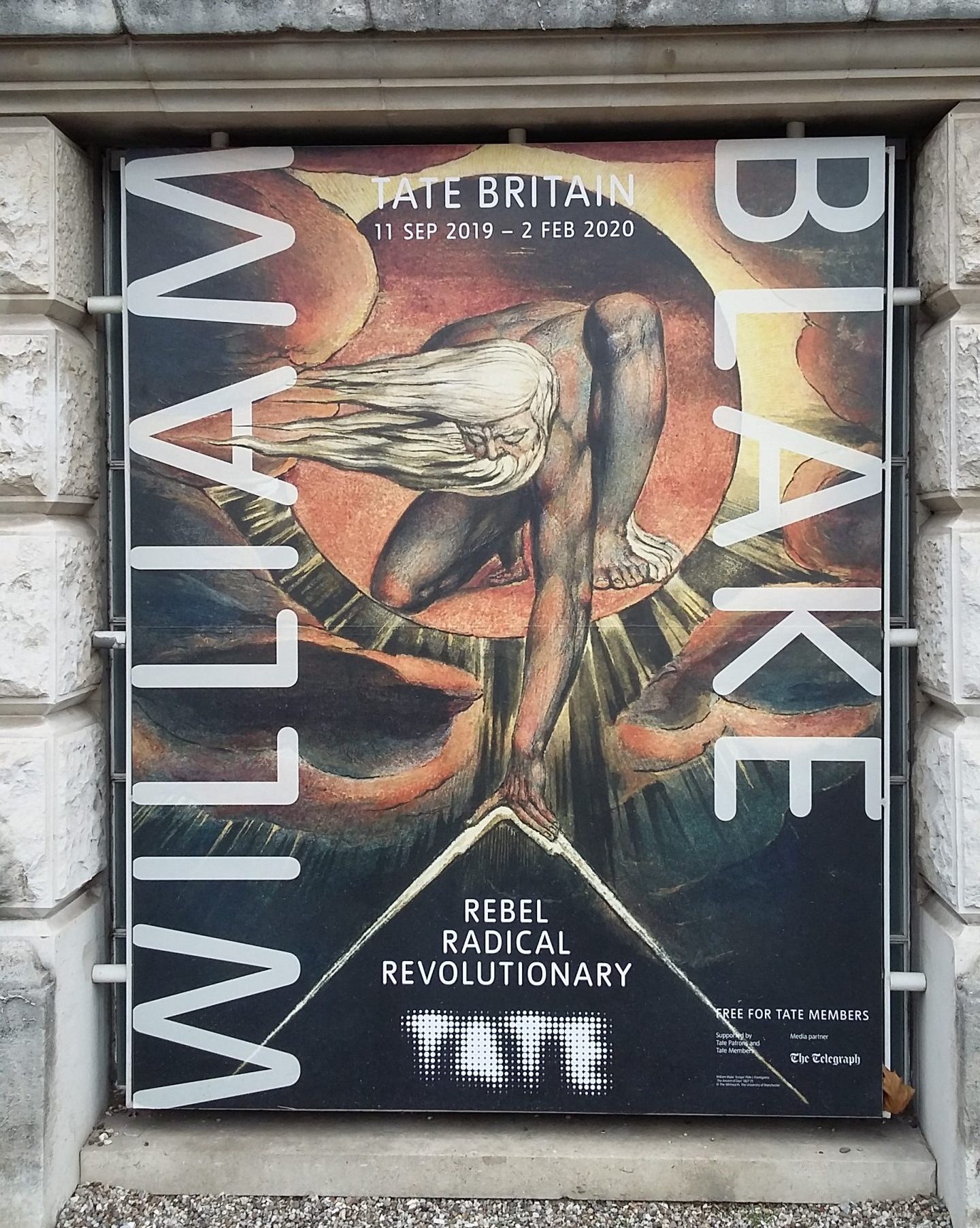
Exhibition poster

I first encountered William Blake’s work in sixth form, when I studied his Songs of Innocence and of Experience for A level. This major exhibition at Tate Britain explores Blake’s whole life, tracing his development as an artist from his beginnings at the Royal Academy through to his unique and visionary works. It acknowledges the complex questions raised by his images of slavery, and mentions the contribution his wife Catherine made to his work.

Blake was born in 1757 in London, where he lived for almost all of his life, most famously in Lambeth, south of the river.  As a teenager he was apprenticed to an engraver, and later studied at the Royal Academy. He initially followed the prescribed course of study, practising by sketching the classical statues provided for this purpose, but grew frustrated with the restrictions this placed on him, and began to explore his own myths in his art. One example of this is his long poem Tiriel: he envisioned this as a combination of words and images, integrated as one whole. Much of his early work, and his images for Tiriel, are displayed in the first rooms of the exhibition.

Blake spent much of his career as an engraver and print maker. He pioneered a technique, still not fully understood, of relief etching, which he used to create beautiful illuminated books, which were not commercially lucrative but were nevertheless admired by a select few collectors. Blake would often produce images without text to sell individually. Two of his key collections, displayed here, are the pages from his famous Songs of Innocence and of Experience, and America: A Prophecy, inspired by the American War of Independence.

Patrons were crucial to Blake being able to make a living. He had several patrons throughout his life, and and a section of the exhibition is devoted to the work he produced for them. However, his relationship with them was often tense as he felt they restricted his creativity and artistic freedom. In later life Blake hosted his own exhibition, above the shop owned by his family, in 1809, however, it was poorly received by the critics.

Towards the end of his life, Blake did receive appreciation from younger artists who saw him as a radical, someone who had refused to compromise his vision. It was at this time that he began his work Jerusalem. The exhibition is a comprehensive, intelligent and engaging exploration of Blake’s work.

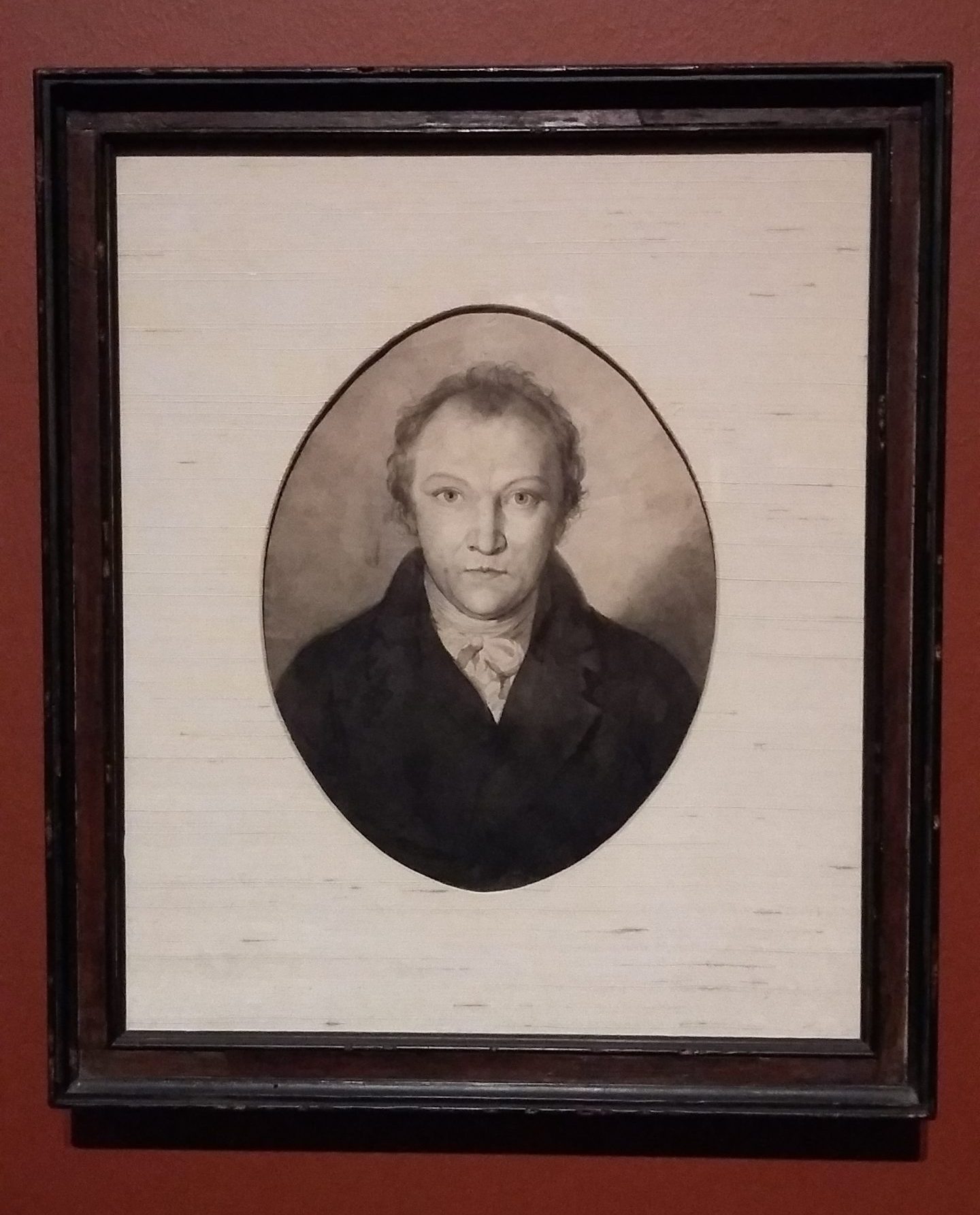
William Blake

Edvard Munch: Love and Angst – British Museum

The Scream
The Scream (lithograph)

I visited the Edvard Munch: Love and Angst exhibition at the British Museum with a friend on its very last day. I actually knew nothing about Munch except for his painting The Scream, which I do love, so was interested to find out more.

Madonna
Madonna

Munch came from a loving family in Norway but over the years his family became a source of deep worry and tragedy to him. His mother died when he was five and his oldest sister, Sophie, died of tuberculosis when he was thirteen. Another sister, Laura, spent time in a psychiatric hospital with schizophrenia and Munch himself had a breakdown later in life. This is reflected in much of his art, including his ‘vampire’ works, his images of illness and death, and the famous ‘Scream’. It’s the black and white lithograph that’s on display here, not the famous painting, but it still makes an impact.

The Sick Child
The Sick Child

As a theatre fan. I was intrigued by Munch’s stage sets for the works of Norwegian dramatist Henrik Ibsen, and some of his designs are displayed alongside his painting of the great playwright himself. Overwhelmingly, though, this is an exhibition of work that focuses on the dark side of the mind.

Henrik Ibsen
Henrik Ibsen