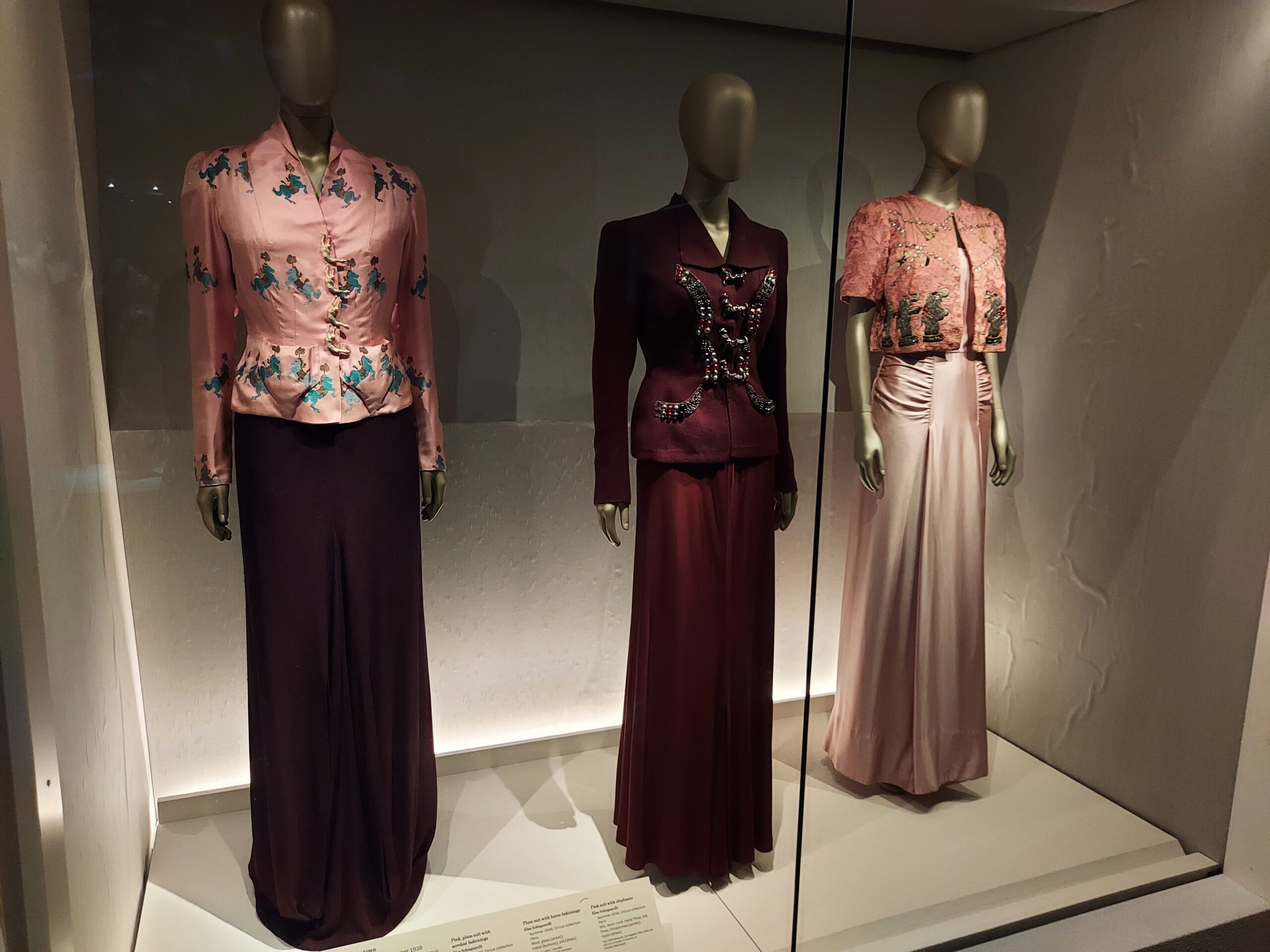
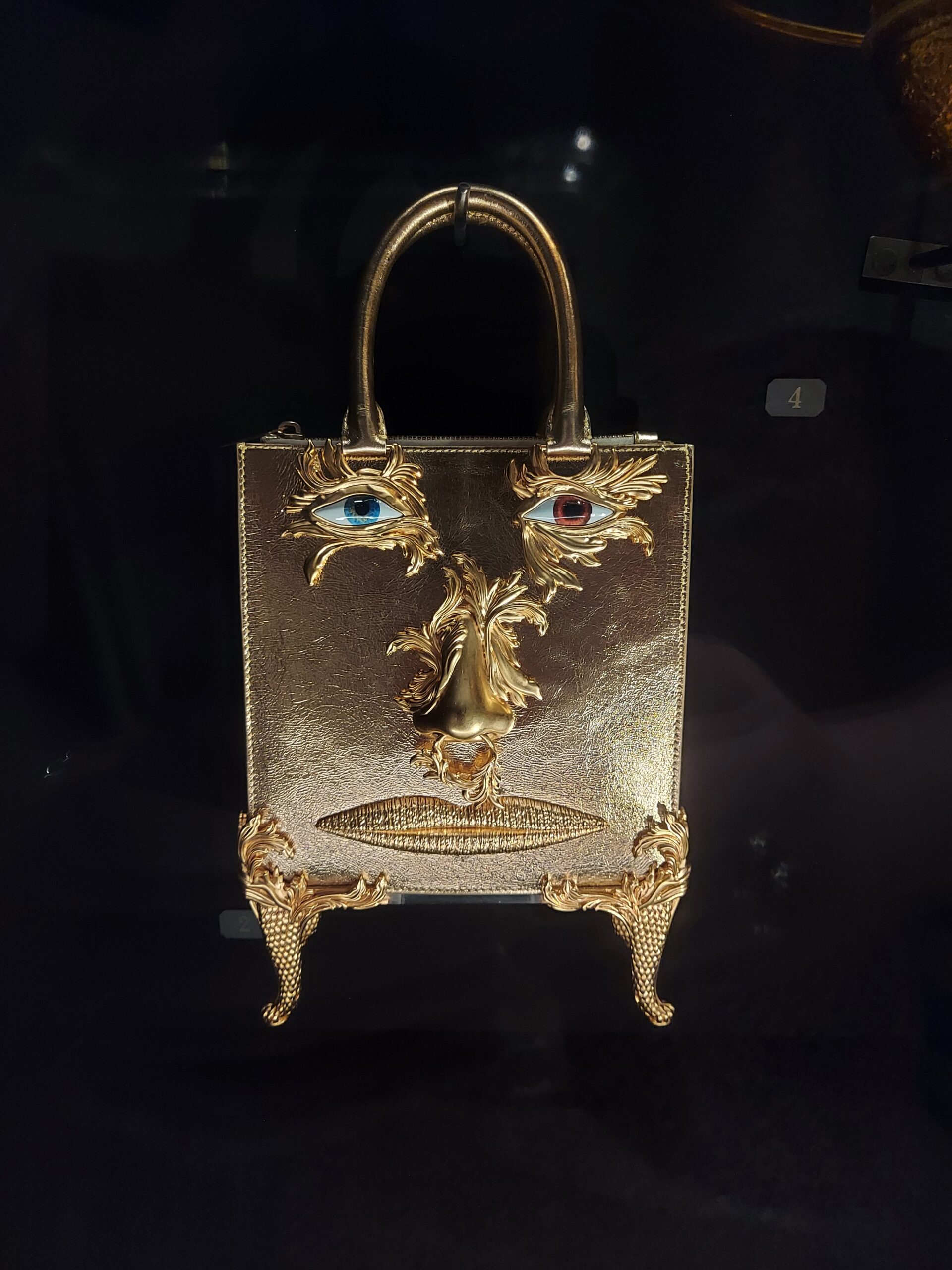
During my trip to London I visited the Schiaparelli: Fashion Becomes Art exhibition at the V&A. This is the UK’s first exhibition on Schiaparelli, and spans a century from Elsa Schiaparelli’s beginnings in the 1920s to the brand’s resurgence under current creative director Daniel Roseberry.
Born in Rome in 1980, Schiaparelli thought herself a plain child and, jealous of her sister’s supposed beauty, ‘planted’ flower seeds in her ears, nose and mouth, hoping they would bloom. The picture this image inspires in the mind’s eye is particularly surreal. Her first collection was launched in Paris when she was in her 30s, and featured sweaters with ‘optical illusion’ patterns suggesting bows or waistcoats.
The clothes, accessories and other items on display in this exhibition demonstrate Schiaparelli’s unique, surreal and quirky style. She was friends with Cocteau and Dalí, and it shows. Pieces from her collections are interspersed with pieces from the brand’s modern day revival, sharing the same surreal, unusual yet artistic qualities. I particularly loved the telephone dial compacts and the unusual bags, as well as the hat that resembled a shoe.
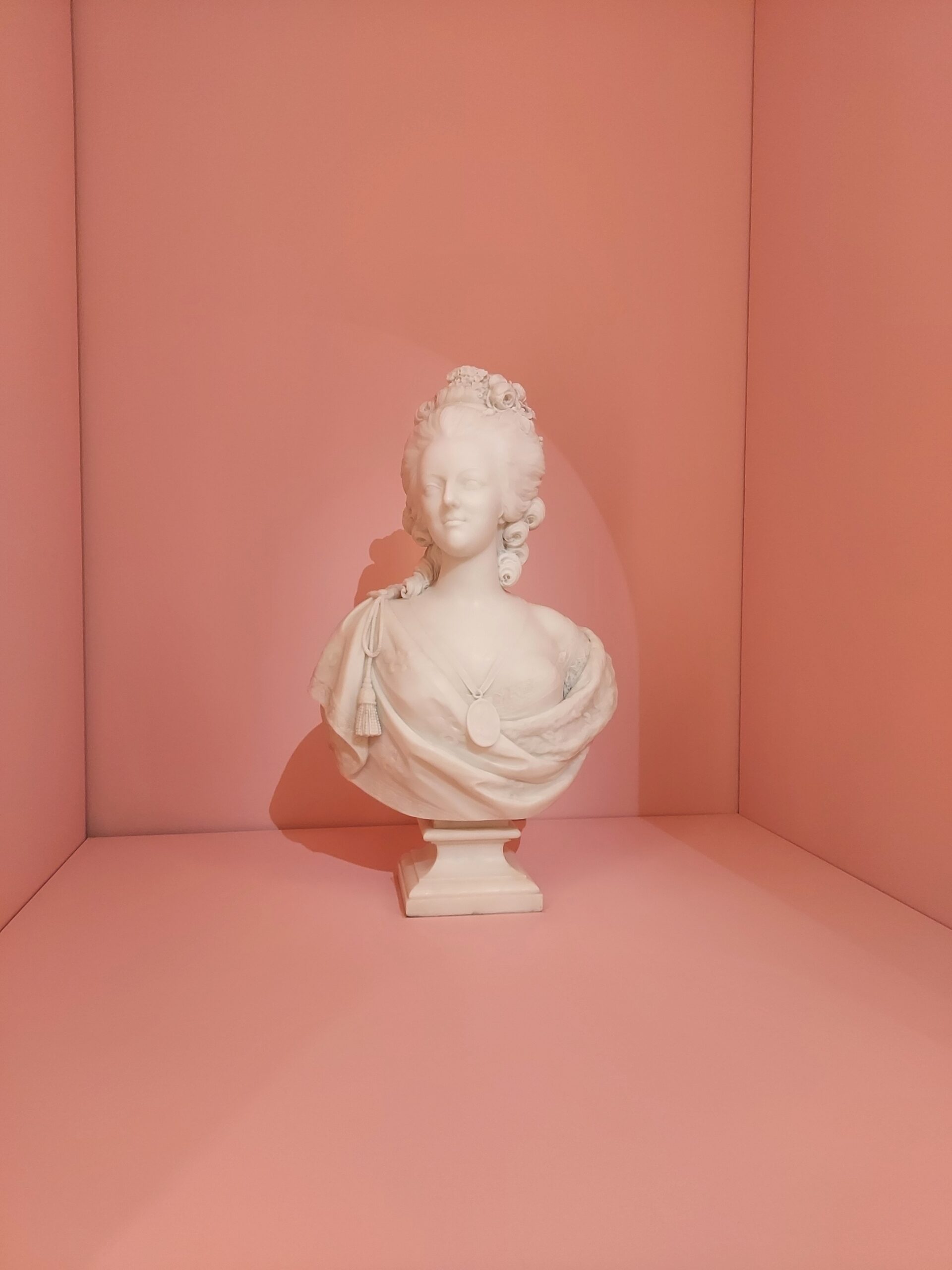
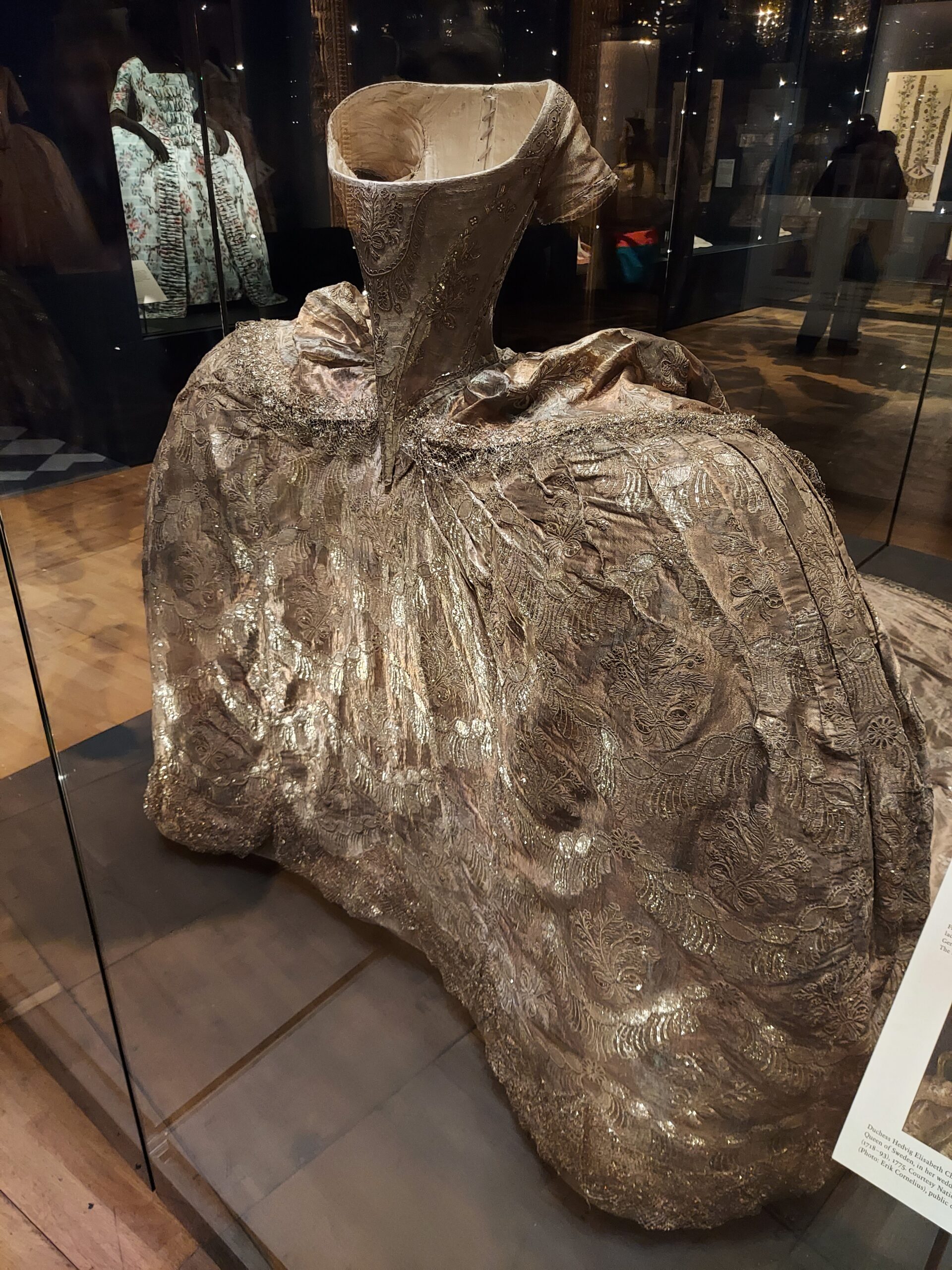
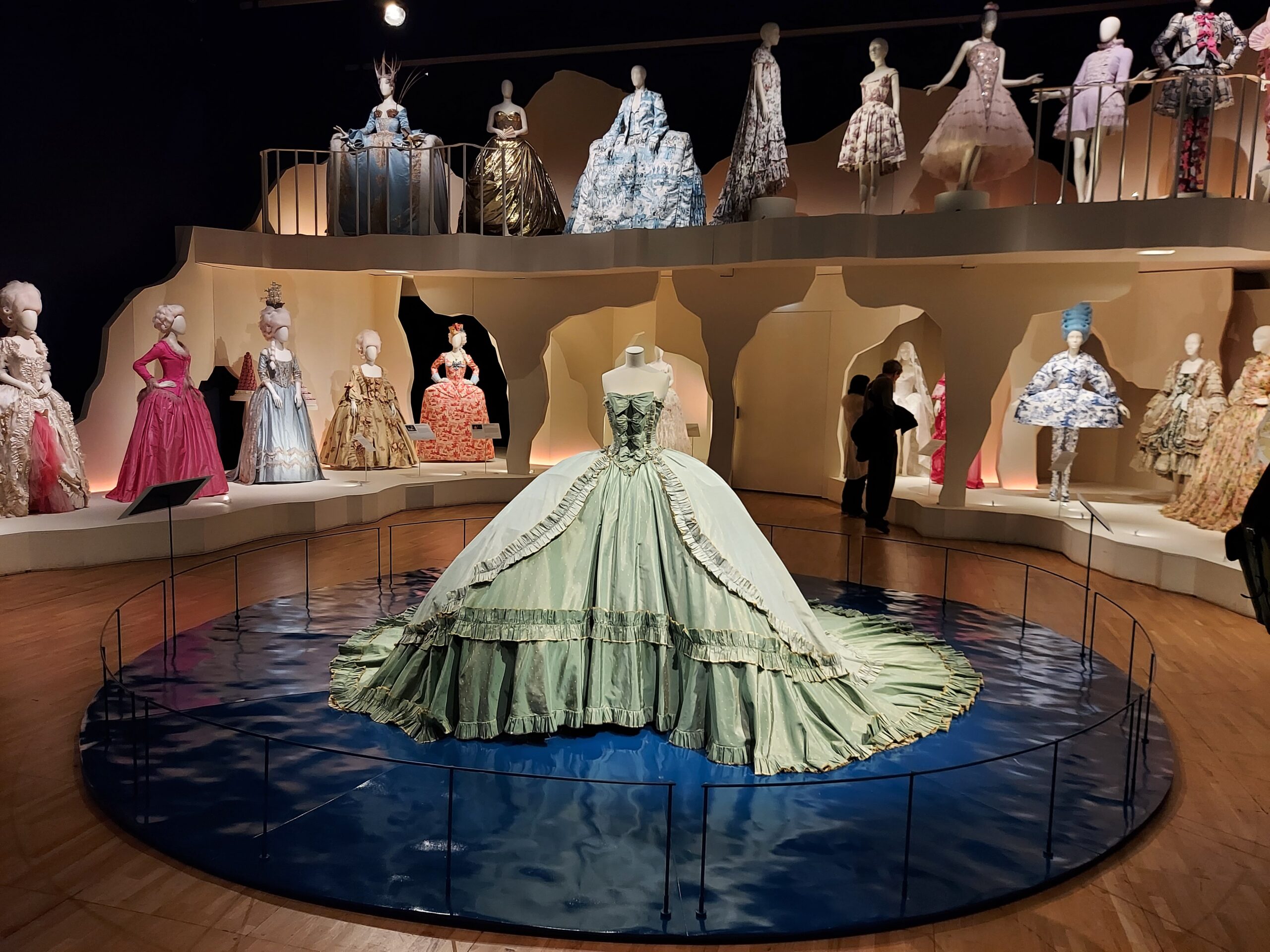
During my latest trip to London I visited the Marie Antoinette Style exhibition at the V&A. Marie Antoinette, Queen of France, is a controversial figure in history but the exhibition focused on her influence in terms of fashion and style, which has lasted to this day.
Daughter of the Empress of Austria, Maria Antonia Josepha Johanna von Österreich-Lothringen was sent to Paris aged 14 in order to marry the French Dauphin. She used fashion to make an impact, setting new trends with the help of her dressmaker, Rose Bertin. This was a way to showcase her power and influence as a woman and Queen. Many of her dresses, accessories and other possessions are on display in the exhibition.
The French public were unimpressed at their Queen’s show of wealth, and she became a beacon for their discontent, understandably though perhaps unfairly given there were plenty of aristocrats far more to blame for the state of the nation than she. The French Revolution followed soon after, and Marie Antoinette was executed along with the rest of her family, at the age of 37.
In more recent years, the French queen’s reputation has enjoyed something of a renaissance, at least where her sense of style is concerned. She was played by Kirsten Dunst in the 2006 Sofia Coppola film, channelled by Madonna in the 80s, and was the source of inspiration for numerous fashion designers. The second part of the exhibition focuses on her influence, which is considerable.
Overall, the exhibition is a must for anyone interested in history, fashion, and how the two coincide.
As a fan of jewellery, accessories and other shiny things, I knew I had to visit the Cartier exhibition at the Victoria and Albert Museum. The exhibition features more than 350 objects, including gemstones, watches and clocks, charting the development of Cartier’s art, design and craftsmanship since the beginning of the twentieth century.
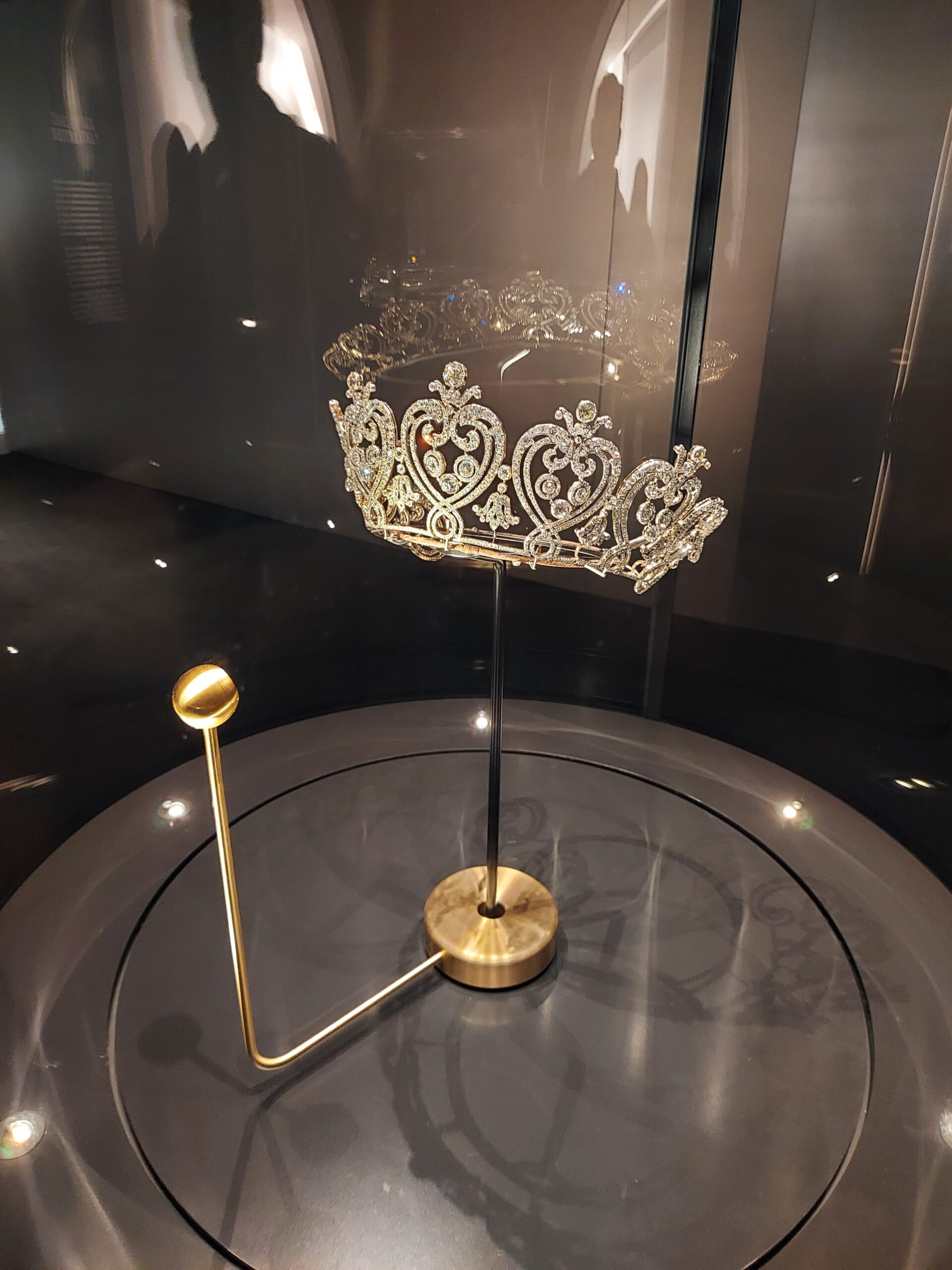
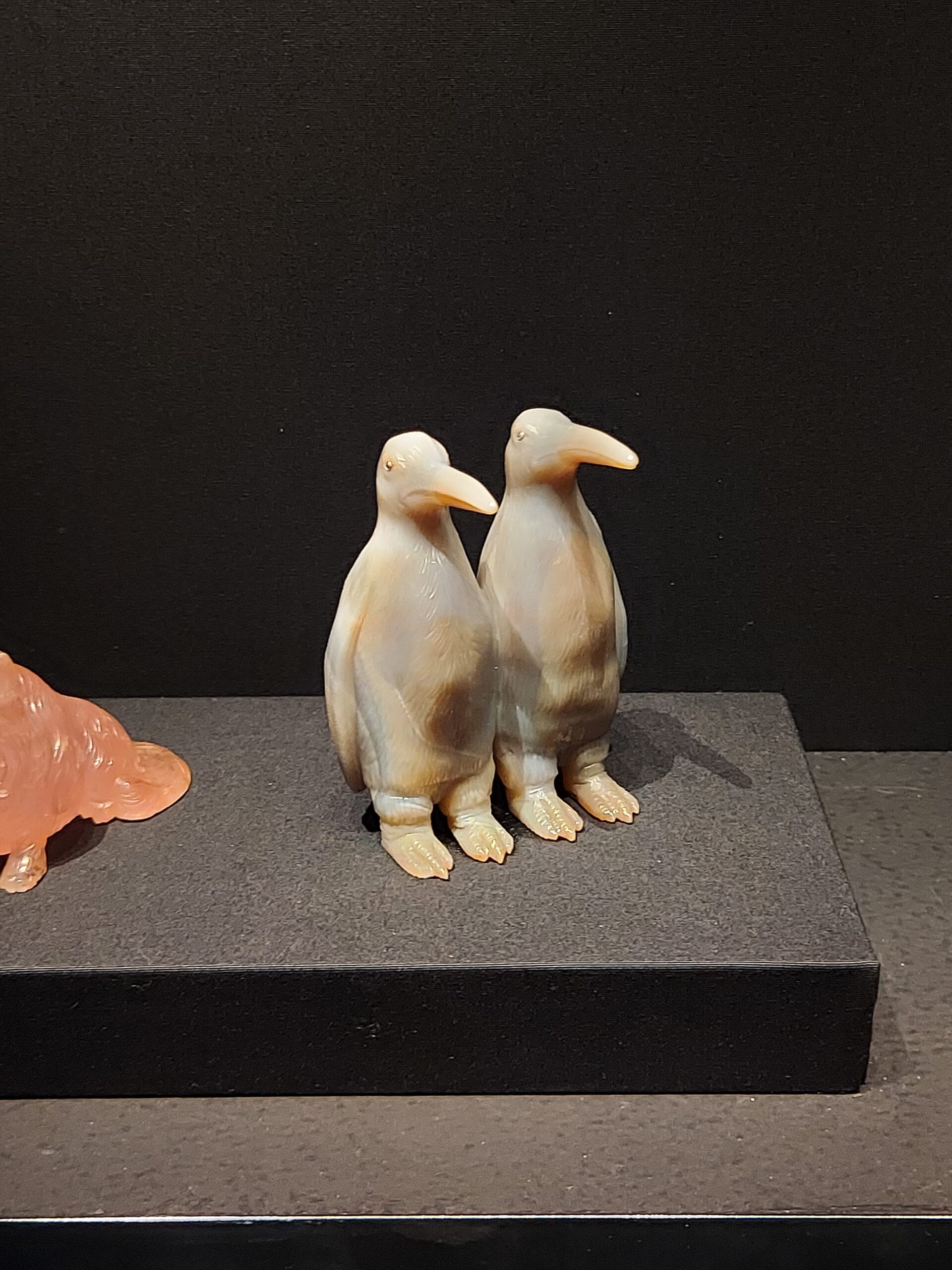
The exhibition begins with the Manchester tiara, dating from 1903 and made on the order of Consuelo, Dowager Duchess of Manchester. The tiara is set with more than 1400 diamonds and features a design of hearts and graduated scrolls. We then see rooms of beautiful jewellery, ornaments and decorations, with sparkle enough to take your breath away. As a penguin lover, I was drawn to the penguin ornament, but many items feature Cartier’s signature panther.
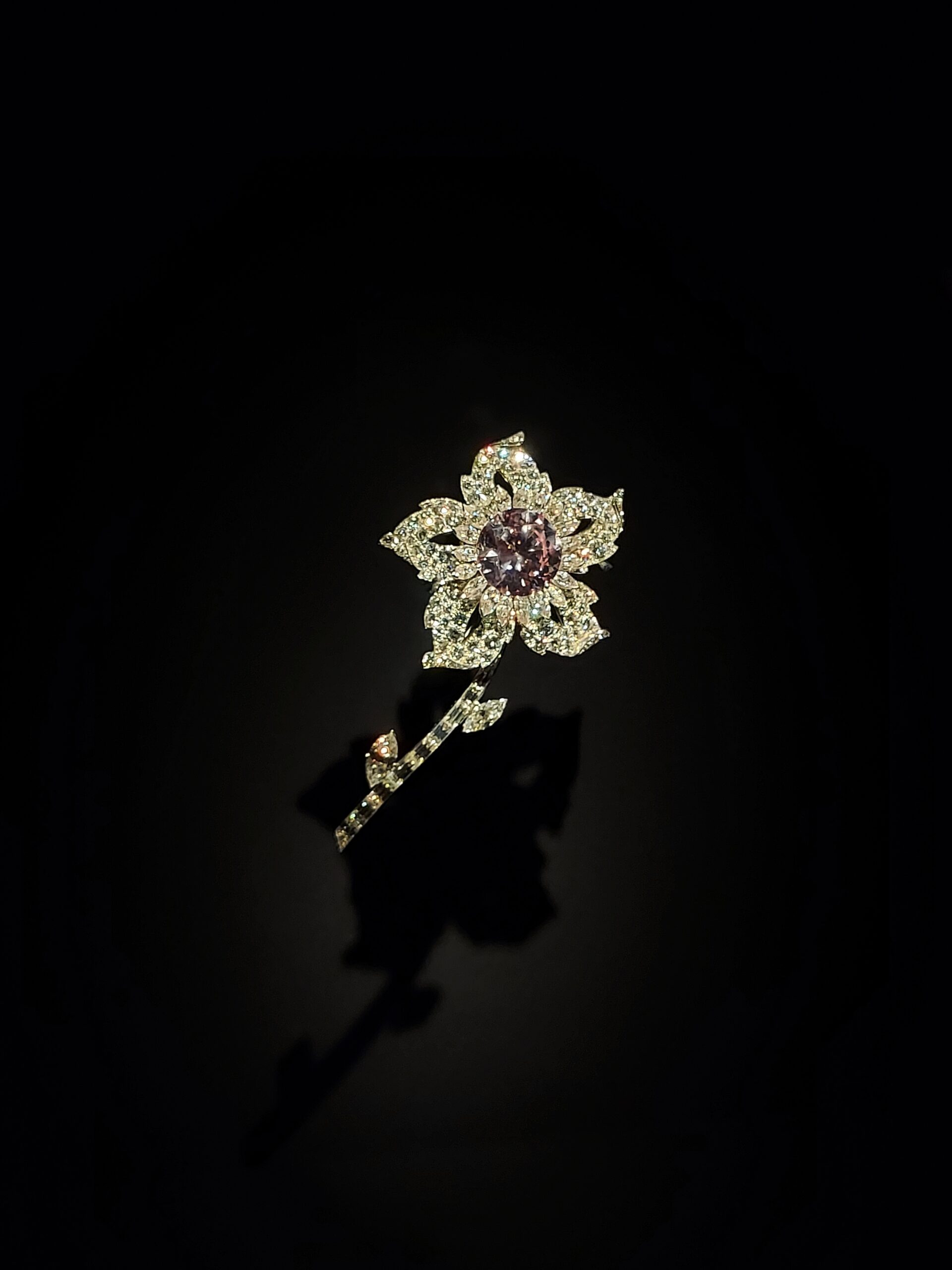
I also enjoyed looking at the novel ‘mystery’ clocks and Dali-inspired watches. However, my favourite item of all was the Williamson Pink Diamond Brooch, frequently worn by Queen Elizabeth II. I actually have an acrylic replica of this brooch – much more affordable than the real thing!
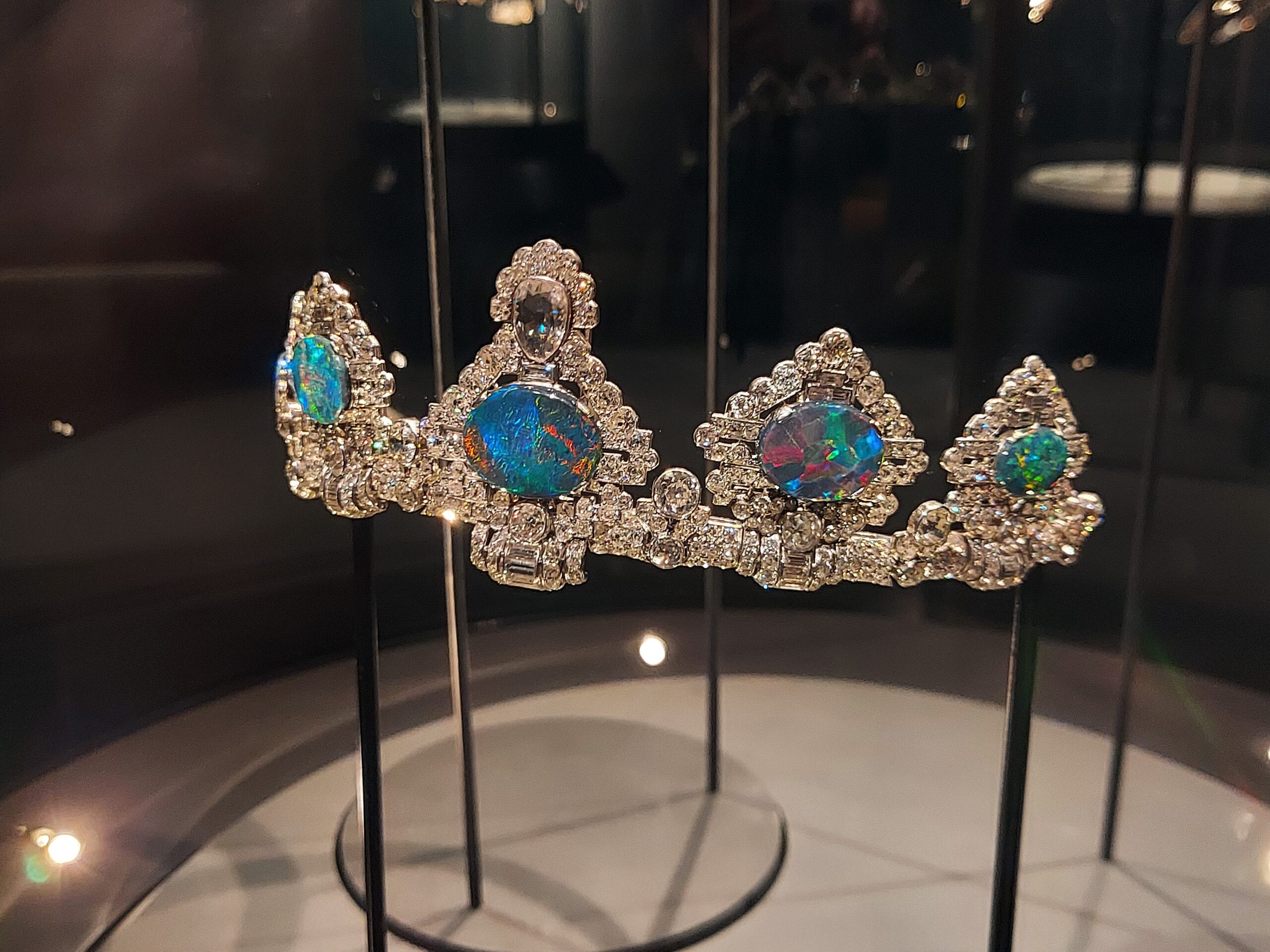
I came across another room of tiaras, and spent several minutes choosing my favourite – rather as I used to choose my favourite toys from the Argos catalogue when I was younger. In the end I picked a beautiful diamond and opal affair.
While the exhibition does mention the provenance and history of the items on display, the main focus is on their design and how beautiful they are – which is fine by me. I was overwhelmed by the sparkle and had a lovely time at this exhibition.
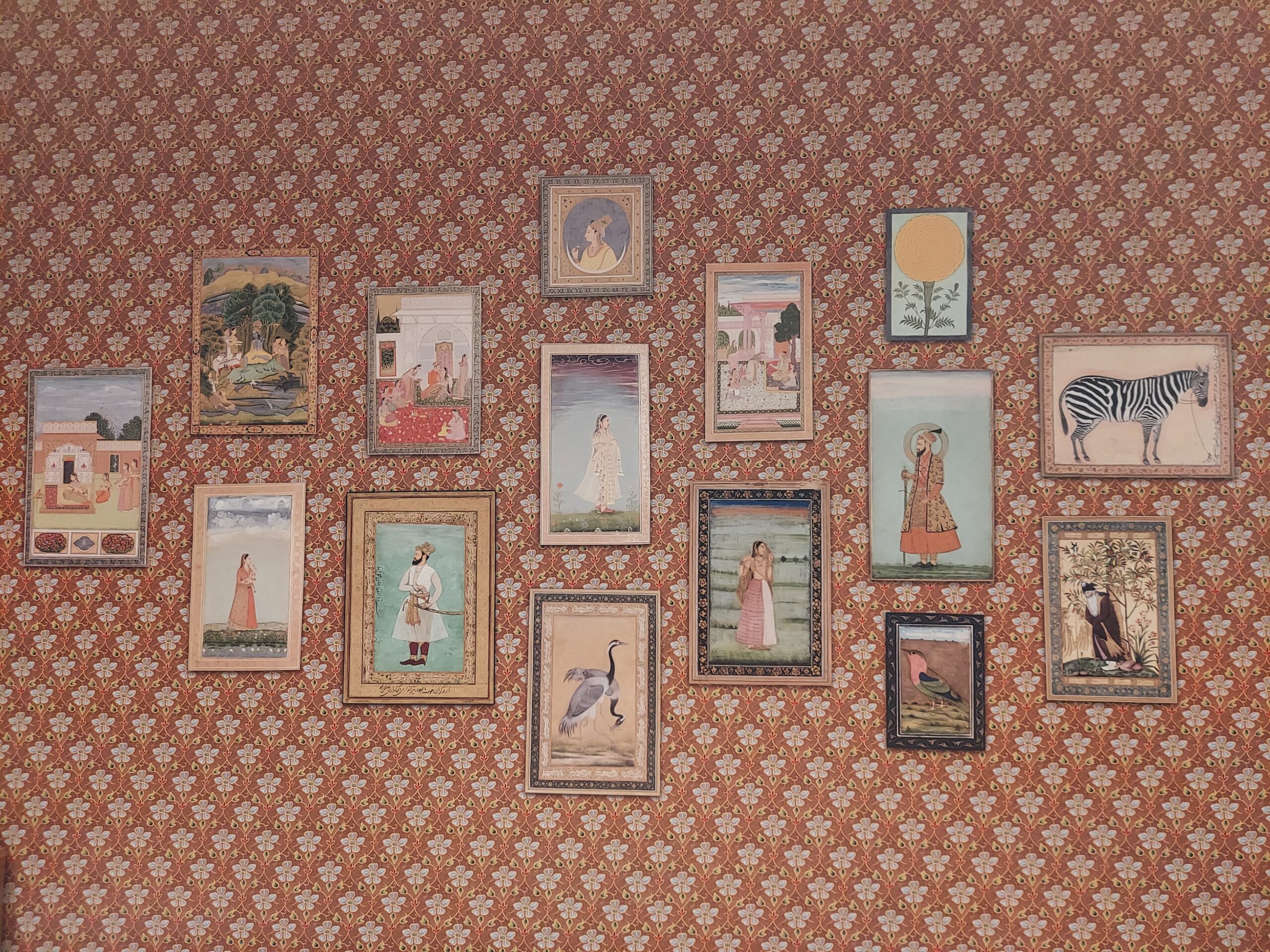
I visited The Great Mughals: Art, Architecture and Opulence at the Victoria and Albert Museum. This exhibition focuses on the reigns of emperors Akbar, Jahangir and Shah Jahan, considered the Golden Age of the Mughal court (c. 1560-1660), in terms of its culture and creative output. In fact, Shah Jahan is most famous for the Taj Mahal, one of the most beautiful buildings in the world.
The exhibition contains some absolutely beautiful examples of art, such as paintings, jewellery, embroidered clothing, cups and swords. The Mughal rulers, despite being warlike and despite the fact that Akbar was illiterate, cared deeply for arts and culture and this is clear in the wonderful objects on display.
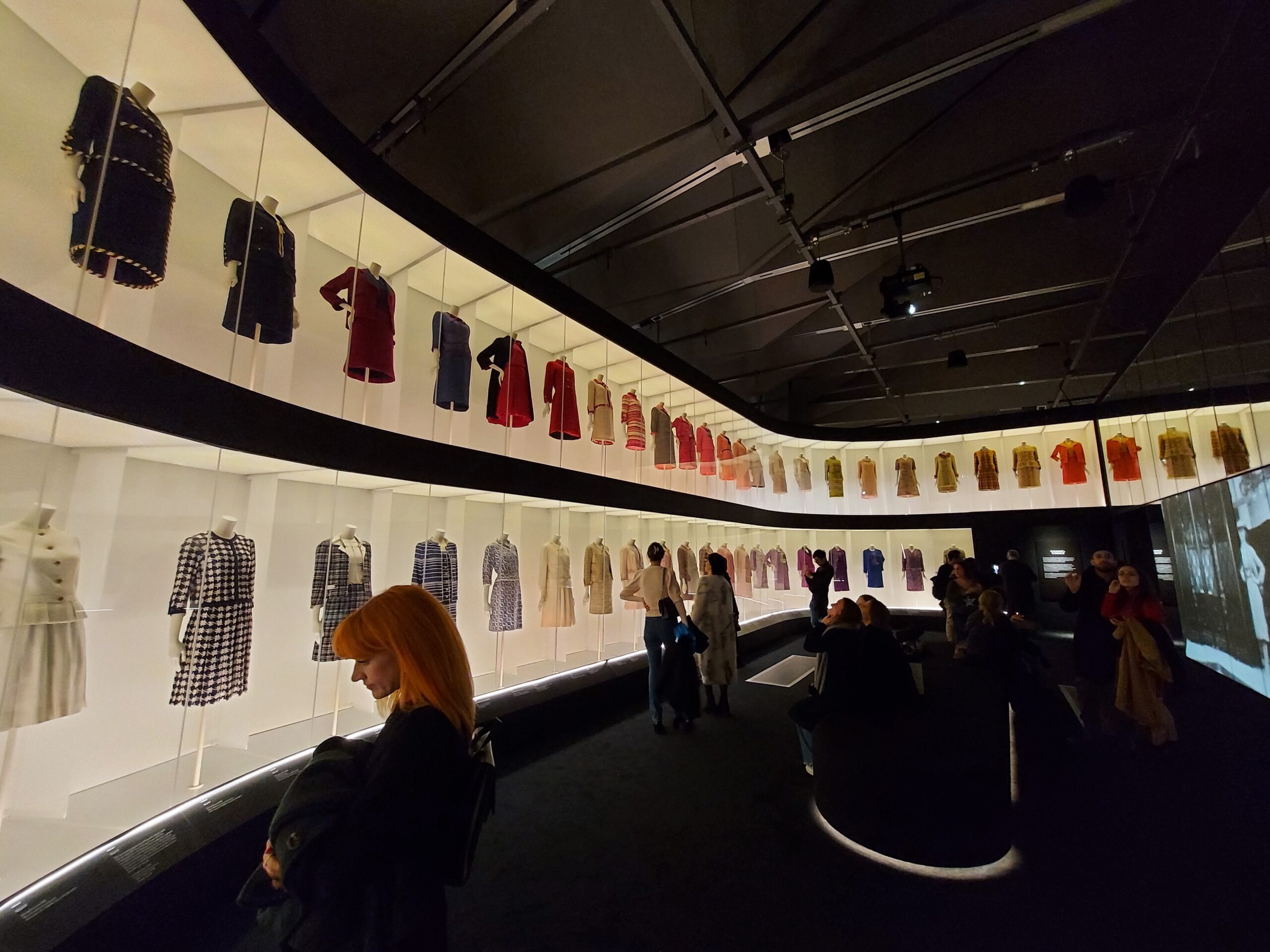
The exhibition Gabrielle Chanel. Fashion Manifesto was actually sold out, but then the V&A released more tickets for Friday evenings, and I managed to get one. I was very glad to get the chance to see this exhibition, the first in the UK dedicated to Gabrielle ‘Coco’ Chanel. Featuring over 200 looks, it explored the establishment of the House of CHANEL and the evolution of her unique style of design, which continues to influence how women dress today. Curated by Oriole Cullen, it is expanded from a show first created at the Palais Galliera in Paris in 2020.
An early Chanel silk blouse
I have to admit I am not the biggest fan of the Chanel style. I prefer designers like Dior, with a Fifties-style silhouette and wider use of colour. However, I can appreciate the deceptive simplicity of her designs and the craftsmanship behind her looks, as well as the influence she has undoubtedly had on fashion through the ages.
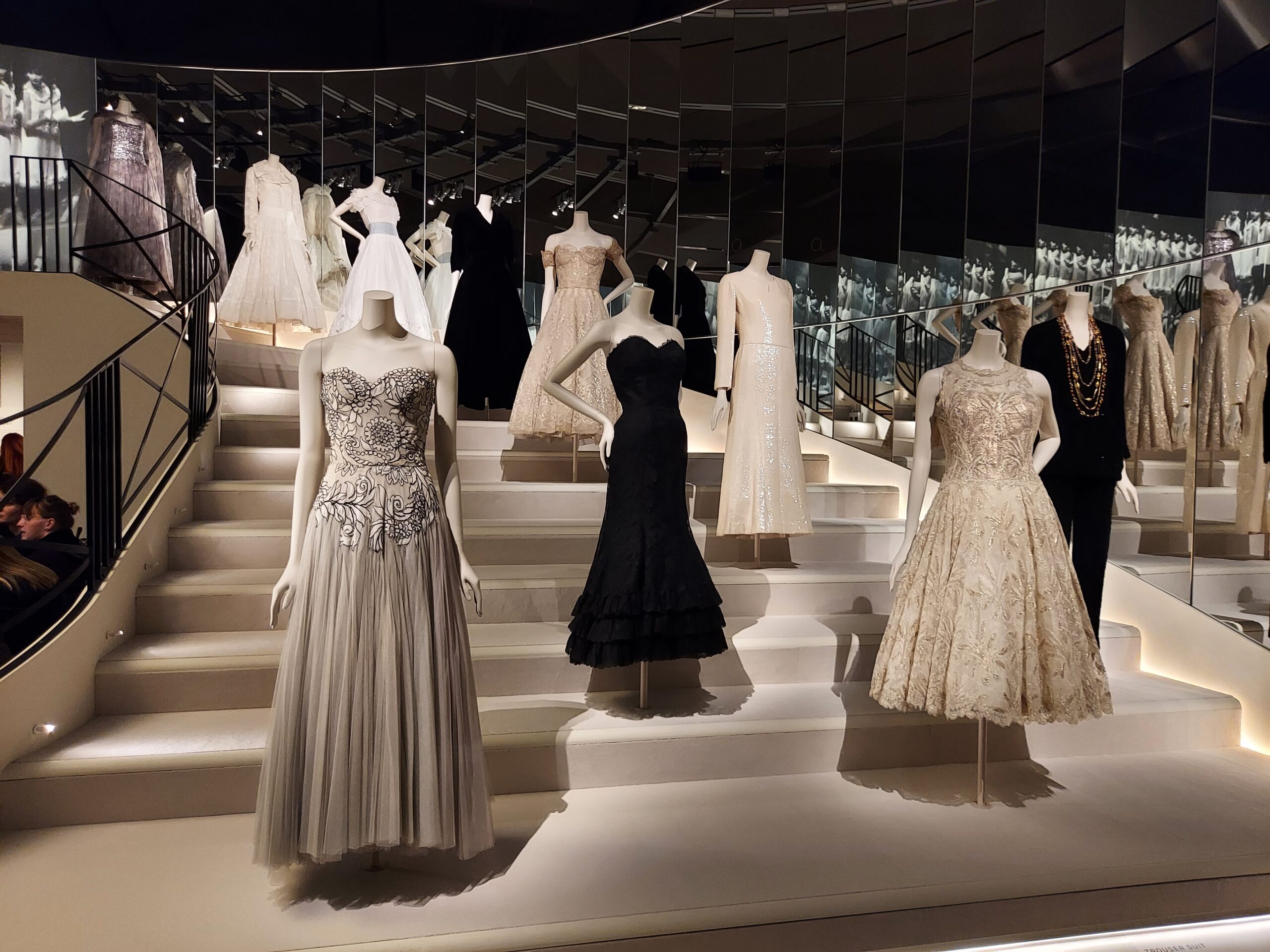
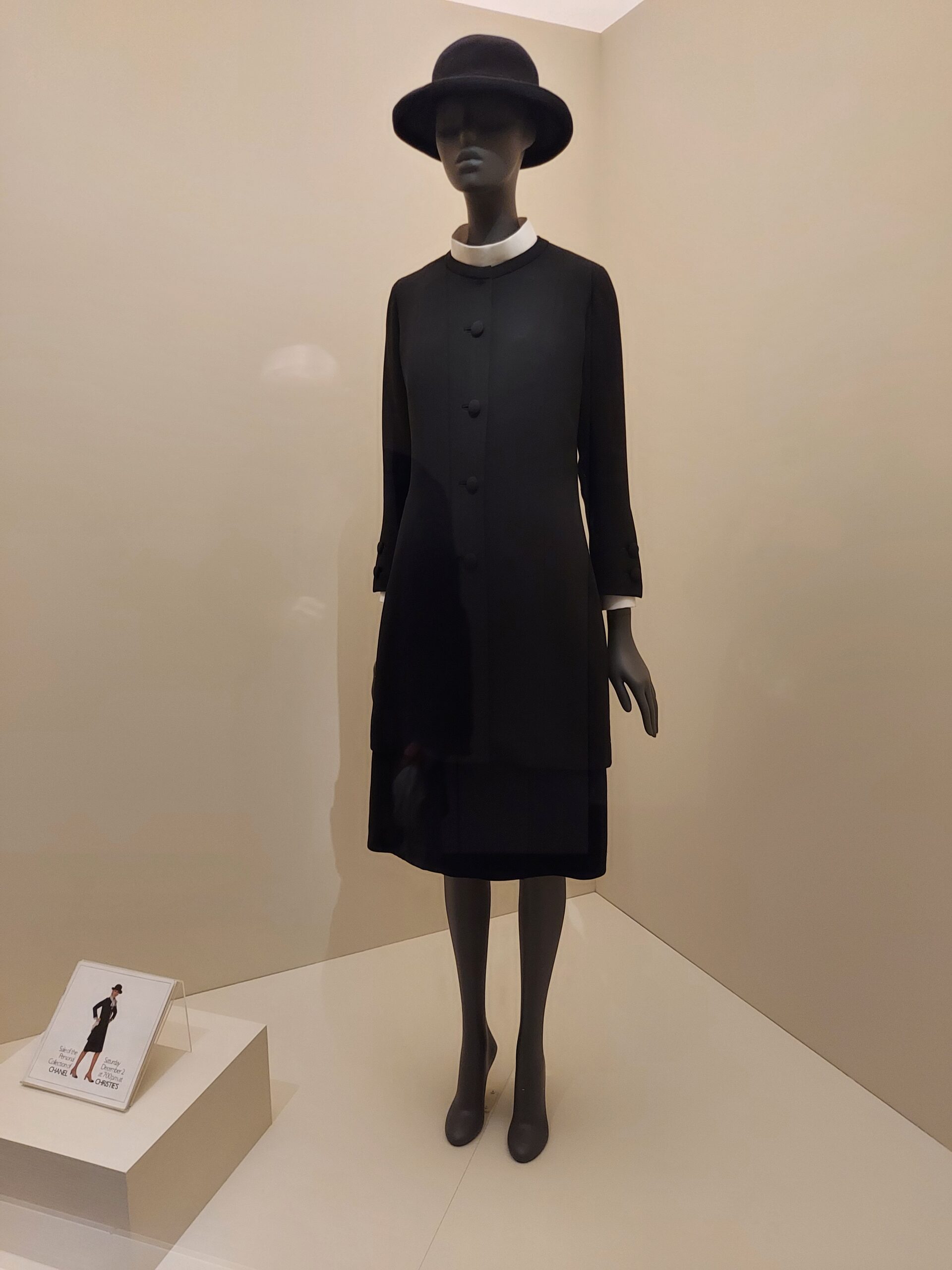
There are lots of beautiful outfits in the exhibition, some arranged chronologically, others thematically. Black dresses make up one key group; suits another, including one pink set belonging to Lauren Bacall. I did enjoy looking at them, and tracing the evolution of Chanel’s style throughout the decades, taking on elements from outside but still remaining definitively Chanel.
Some examples of Chanel bags
It’s certainly impressive how a poor, illegitimate woman born in 1883 was able to rise to the heights that she did. Placed in a convent aged eleven after the death of her mother, she was taught to sew by the nuns and worked as a seamstress alongside her aunt after leaving school. With the help of a textile heir, Étienne Balsan, she moved to Royallieu, northern France, and sold hats to his friends. In 1910, an English lover, Arthur ‘Boy’ Capel, enabled her to open the first Chanel boutique in Paris. In 1918 she established her couture house in the city, and her empire grew from there.
Some of Chanel’s famous suits
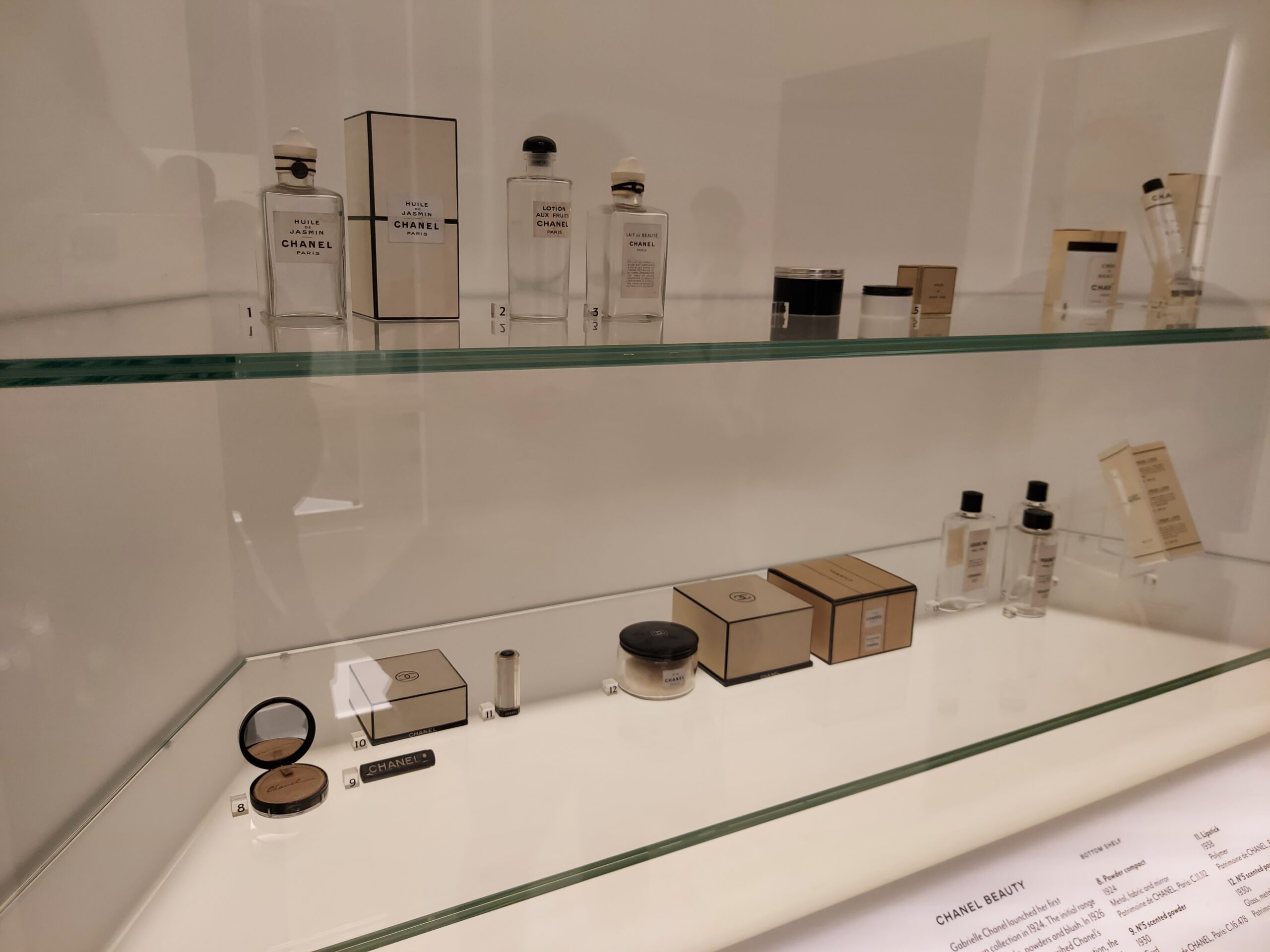
Some rooms focus on her cosmetic and perfume creations – Chanel No. 5 is still one of the more popular scents worn by women today. Other elements explore her relationship with Britain: she had romances with several British figures, including the Duke of Westminster, and knew Winston Churchill, who painted a picture of her. I was interested to learn about her connection to British manufacturing: one item on display is a red evening gown in silk velvet, made for Chanel by the Manchester Velvet Company in 1932. The designer established a company, British Chanel Ltd., in the 30s to allow for her designs to be manufactured in British fabrics including Nottingham lace and Northern Irish linens.
A selection of Chanel perfumes and cosmetics
There have been suggestions over the years that Chanel was a supporter of the Nazis. She certainly took up with a German spy, Hans Günther von Dincklage, during the occupation of Paris. In 1941 the Nazis recorded her as a trusted source, but recent research suggests she was also an occasional agent for the French resistance. My instinct, to be honest, is that she did whatever she could to survive and thrive regardless of which ‘side’ she was helping – but I honestly don’t know enough about it to comment seriously.
I did enjoy the exhibition, which was fascinating and very thorough, and I’m really glad I got the chance to see it.
I visited the DIVA exhibition at the V&A, all about the history of the ‘diva’ figure throughout history. Taken from the Italian term for goddess, the term was popularised in the nineteenth century as composers wrote outsize roles for female sopranos.
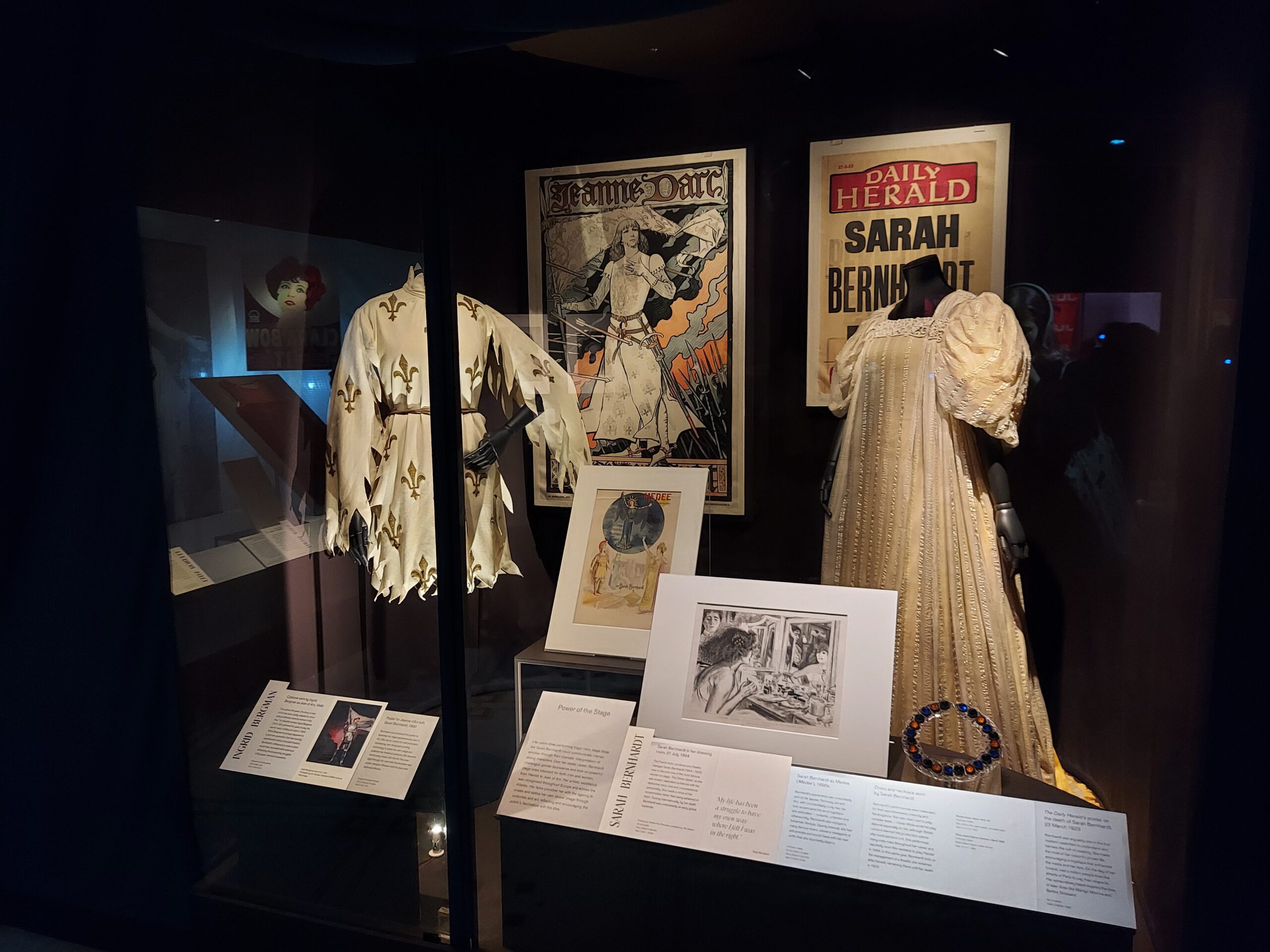
The exhibition begins with an exploration of the earliest divas, from the actresses Ellen Terry and Sarah Bernhardt to the singers Jenny Lind and Adelina Patti. As time moves on, the term is applied to movie stars, such as Clara Bow, Mae West and Elizabeth Taylor.
Items relating to Sarah Bernhardt
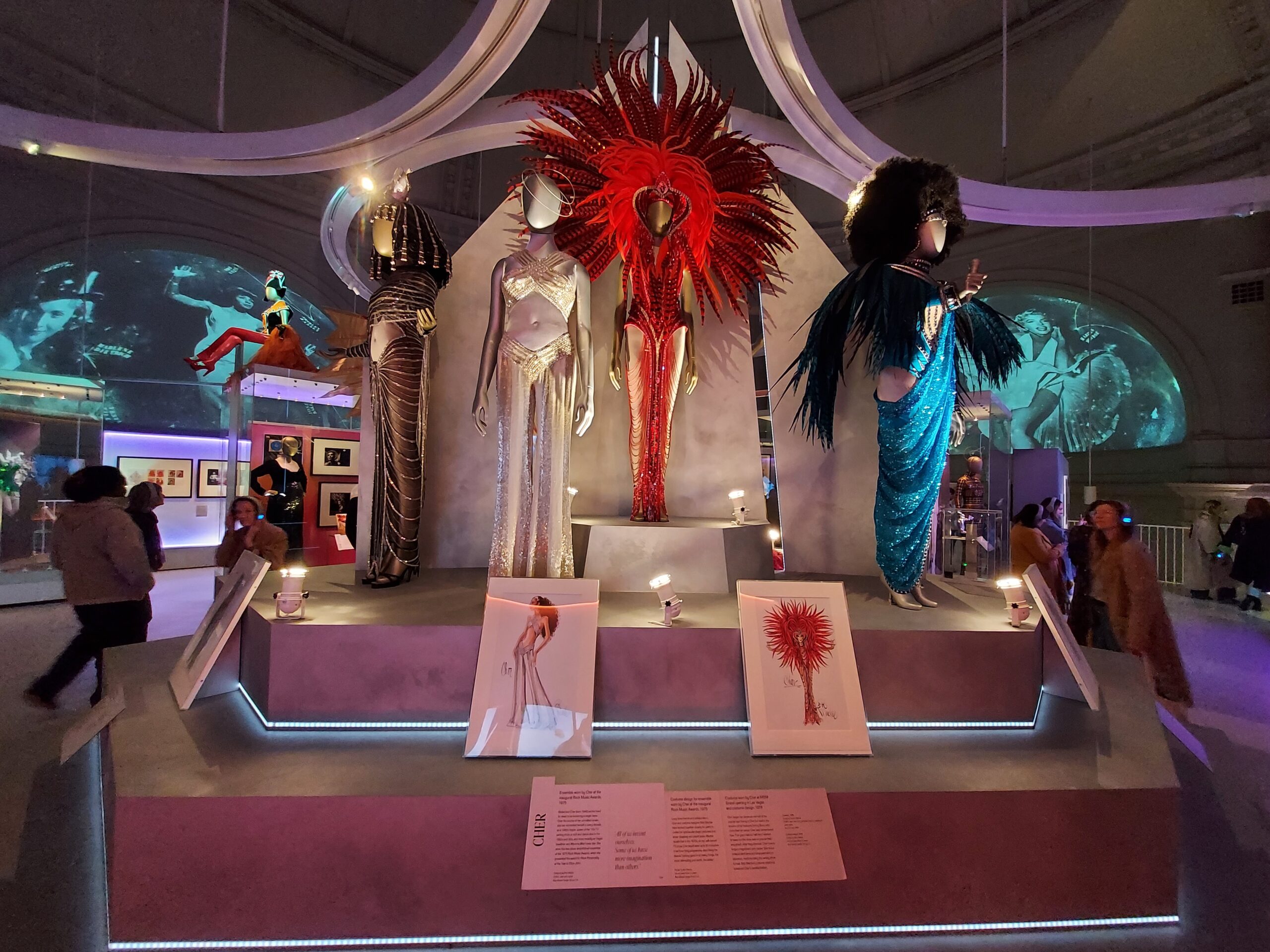
The term is often loaded with negative connotations: “divas” are frequently seen as difficult, demanding and rude. The exhibition tries to show the positives of the designation, emphasising their artistry and the sense of control they seek in their work. Upstairs, the second half of the exhibition looks at modern-day divas, with costumes from the likes of Tina Turner, Cher, Lady Gaga, and even Elton John (the term is no longer exclusively female).
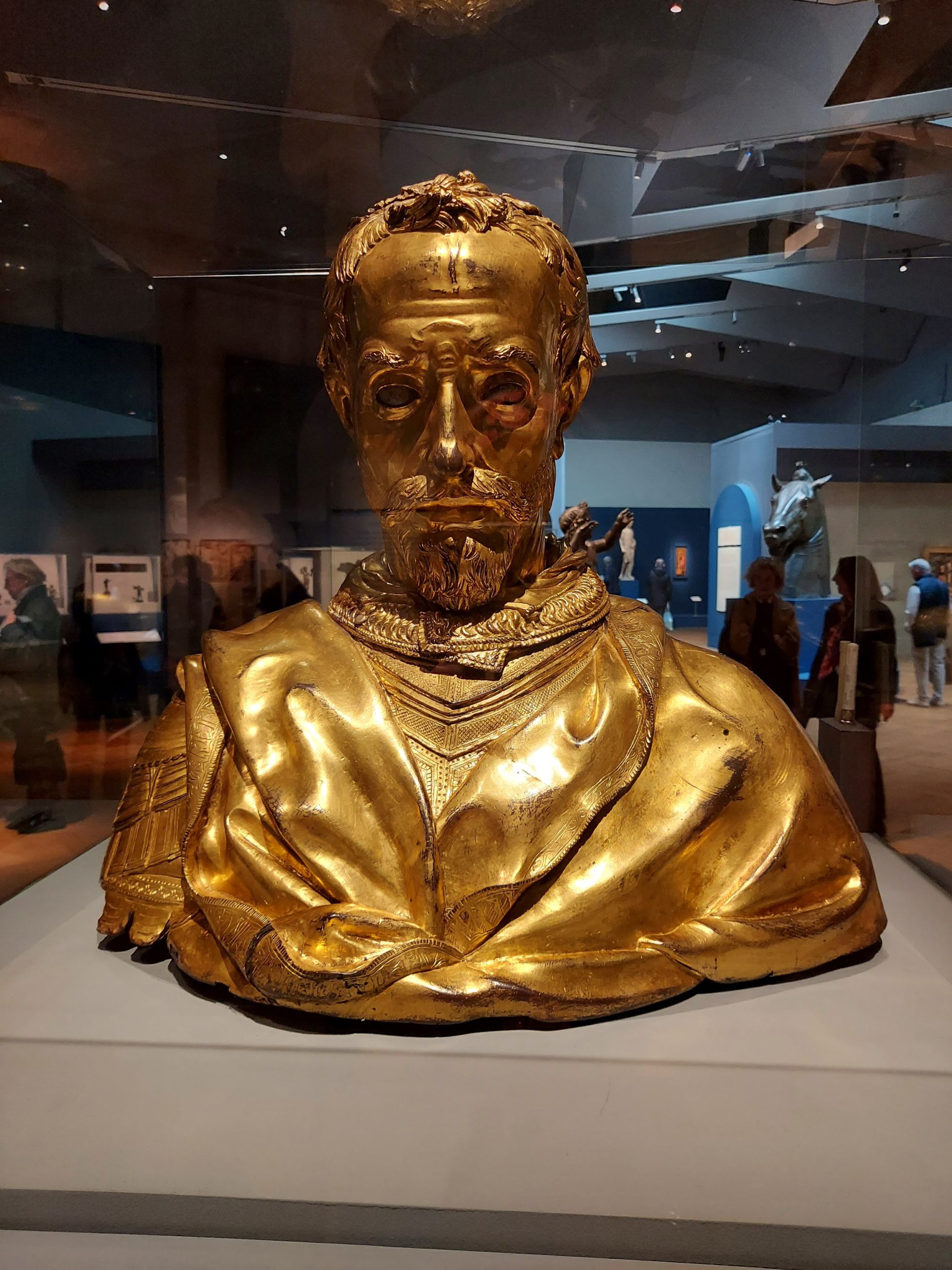
I clearly hadn’t had enough of Italian sculpture after returning home from Italy, because before I went back to work I went along to the Donatello exhibition at the V&A. As a child, like many of my era, I only knew Donatello as a turtle, but now I know better! Florence-born Donatello has been called the greatest sculptor of all time. The exhibition looks at his work as well as the impact he made on subsequent generations of artists.
Donatello’s ‘David’
I admittedly don’t know all that much about sculpture, but Donatello’s pieces did seem superb, full of detail and humanity. I found his David particularly intriguing, contrasted with Michaelangelo’s version of the same figure. My only real criticism is that too many of the sculptures on display were not by Donatello, but his contemporaries.
At the weekend I went along to see Hallyu! The Korean Wave at the V&A with a friend. I visited Korea a few years ago, so I was looking forward to it.
As I would have expected, the exhibition began with the video of PSY’s ‘Gangnam Style’, the 2012 hit that was absolutely everywhere and inspired hundreds of parody videos. It’s the most famous, but by no means the only, aspect of Korean culture that has fascinated Britain.
After a short section on the recent history of Korea, focusing on the Korean War which divided the country into North and South, we got to see exhibits from Korean romantic and historical dramas that have gained in prominence, as well as more modern shows such as Squid Game. Korean film is also looked at, with exhibits from the recent Oscar winner Parasite.
Later the exhibition begins to focus on K-pop and how it has achieved increased popularity abroad, with bands like BTS achieving superstar status. My favourite part of this section of the exhibition was the opportunity to have a go at some dance moves and get yourself recorded and displayed on screen. My friend and I didn’t do this but we enjoyed watching everyone who did!
Overall this exhibition is a fascinating exploration of modern Korean popular culture – and well worth visiting.
While I was at the V&A I also took the opportunity to visit the Beatrix Potter: Drawn to Nature exhibition. This informative exhibition looked at the author’s life and was a fascinating experience.
Beatrix Potter grew up in London, where her family encouraged her interests in drawing and natural history. Some of her early drawings are on display and it was amusing to learn about the assorted animals she and her brother looked after and – after their deaths – dissected in an effort to learn more about their anatomy. These experiences stood Beatrix in good stead when she came to write her famous tales, as her portrayals of animals such as rabbits and hedgehogs are accurate and well-observed despite their anthropomorphic characteristics.
Spending her holidays in the country, she grew to prefer it to the town, and in particular fell in love with the Lake District, where she would eventually settle. She would later marry, buy a farm, and help to breed and maintain a herd of Herdwick sheep, ensuring the species’ survival. On her death she left most of her land to the National Trust, which has helped to preserve the land which is now part of the Lake District National Park.
Of course, Beatrix Potter is mostly famous for her whimsical and humorous stories, which had their roots in letters she wrote to children of her acquaintance. The Tale of Peter Rabbit was the first to be published, in 1902, shortly followed by The Tale of Squirrel Nutkin (my own childhood favourite) and several others. In total, 23 of these little books were published. Some of them are displayed here as early editions, while other displays include original drawings. I learned that the Dutch edition of The Tale of Jemima Puddle-Duck called her “Kwakkel Waggel-Eend”, a fact that pleases me greatly.
This exhibition is worthwhile for children and for the young-at-heart who remember Beatrix Potter’s work fondly, as well as those who are interested in nature.
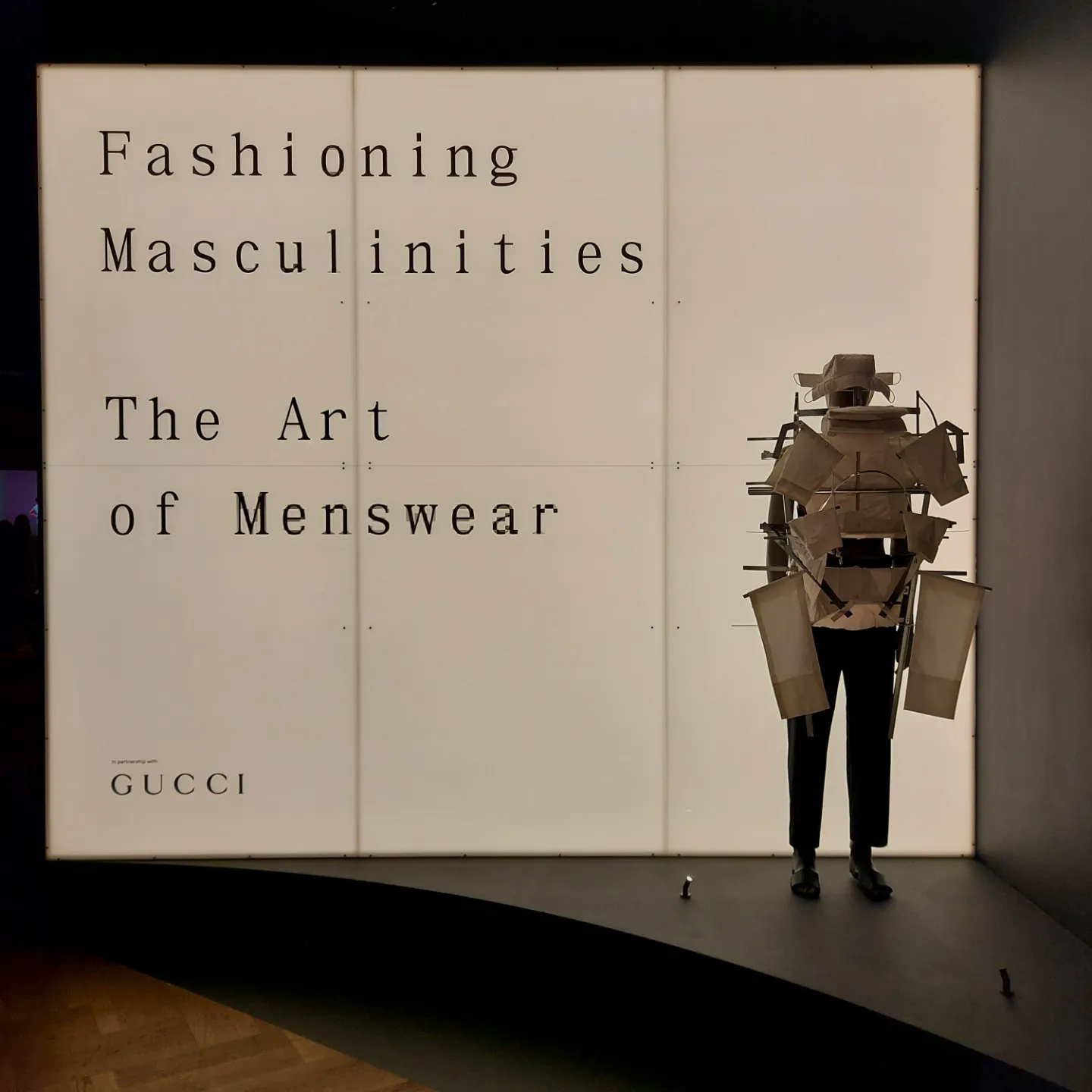
At the weekend I attended the Fashioning Masculinities exhibition at the V&A, which I thoroughly enjoyed. At a time when ideas of masculinity are being questioned, the exhibition reminds us that these ideas have always been in flux, and throughout the centuries masculine ideals – reflected in fashion – have always been subject to change.
The show is divided into three parts: “Undressed” looks at the history of the male body ideal and how ancient Greek and Roman perceptions influenced eighteenth-century men on the Grand Tour and led to a concept of masculinity that still endures today. “Overdressed” explores the flamboyant styles of early modern menswear, while “Redressed” looks at more sombre masculine dressing, largely focusing on suits and uniforms. Rather than adopting a chronological approach, it looks at similarities across different epochs. So ancient Greek statues sit alongside modern underwear and Regency shirts, contemporary bright and embroidered suits are shown next to sixteenth-century capes, and suit styles from the last couple of centuries can be seen beside their modern equivalents, including those worn by women and non-binary figures.
Among the artefacts on show to illustrate these points are a video of Matthew Bourne’s New Adventures dance company, Calvin Klein underwear posters, Giovanni Battista Moroni’s The Tailor (1565-70), and Sofonisba Anguissola’s Portrait of Prince Alessandro Farnese (about 1560). In terms of actual clothes, we get some gorgeous examples from the V&A’s collection, with suits from the likes of David Bowie and examples of dramatic seventeenth-century dress.
It’s fascinating and freeing to be aware of the notion that masculinity is not fixed, and that our modern ideas and standards aren’t the only ones that can work. The exhibition ends with dresses worn by the likes of Billy Porter and Harry Styles, showing that even traditionally feminine garments can be given a masculine twist.