Rebel Badge Club: Designer

The Designer badge was the badge I chose to complete for Deeds Not Words which would allow me to learn a practical or manual skill. I actually started the badge during the Big Rebel Sewing Bee monthly badge, when I learned how to use a sewing machine and completed the first clause.

I don’t have room for a sewing machine where I live now, but I plan to practise sewing when I’m up north, and hopefully make a few more things in the future.

Create a garment for yourself using a shop-bought pattern.

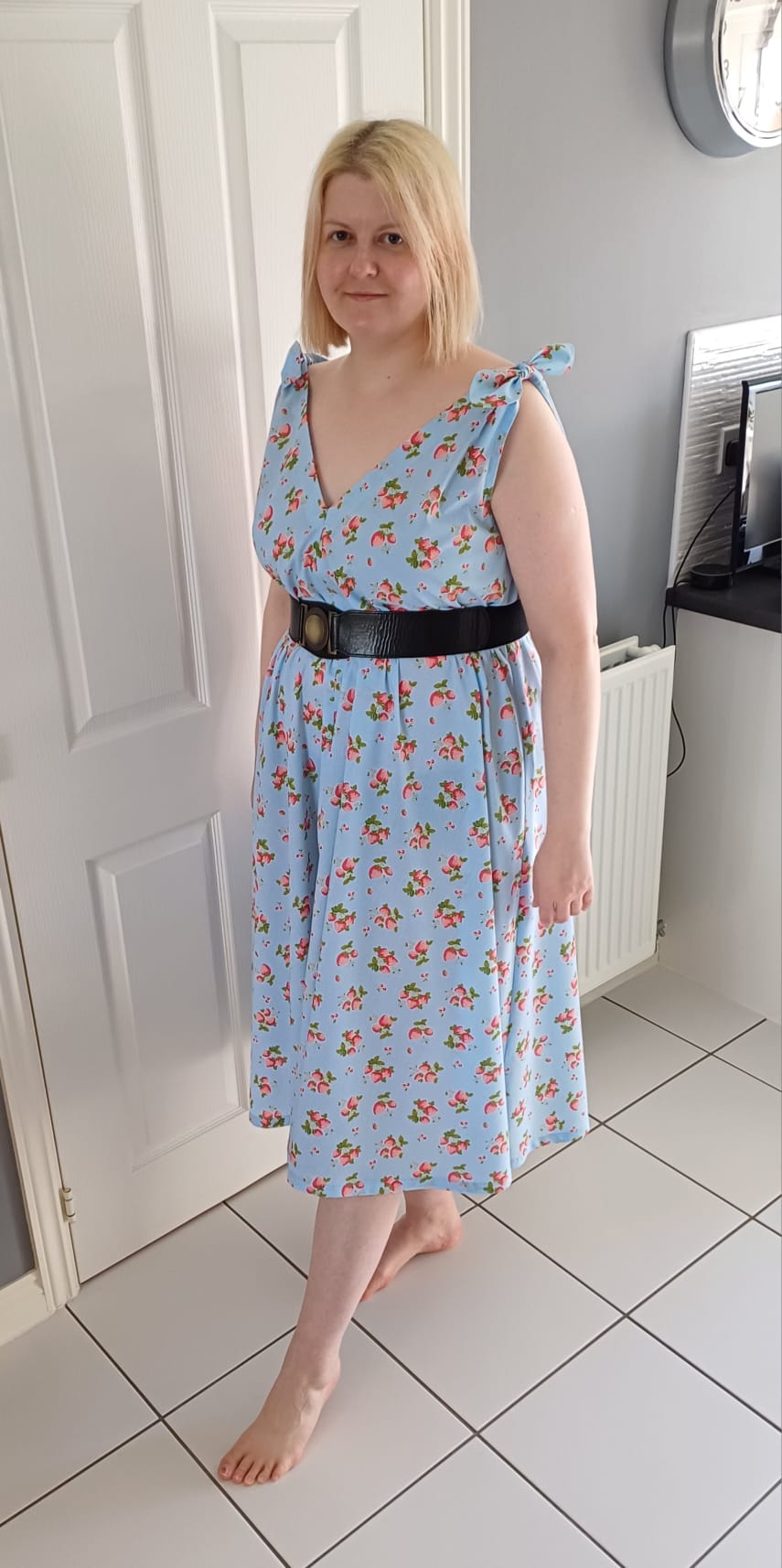
I made the popover dress from Gertie Sews Jiffy Dresses, a vintage-style sewing book. I’m happy with how it turned out, although it wasn’t easy!

Me wearing a midi dress, light blue with a red strawberry pattern

Create a garment for a child or baby following a shop-bought pattern.

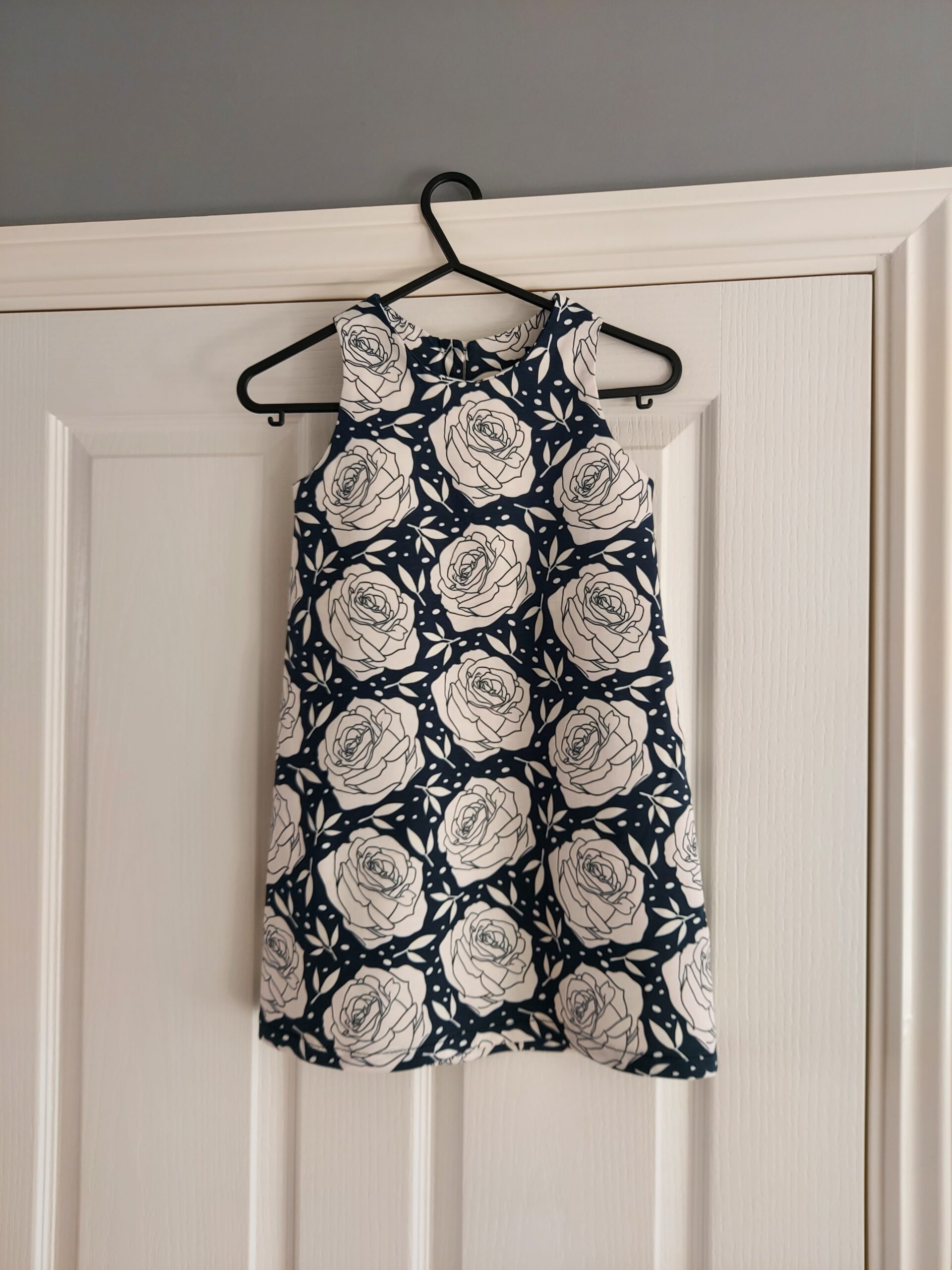
I made a dress for my friend’s little girl, the A Line Dress from The Lily Bird Studio on Etsy. It doesn’t look very exciting, but the fabric changes colour in the sunlight!

A small child's dress on a coat hanger, dark blue with a pattern of white roses

Create a new garment from at least two second-hand garments.

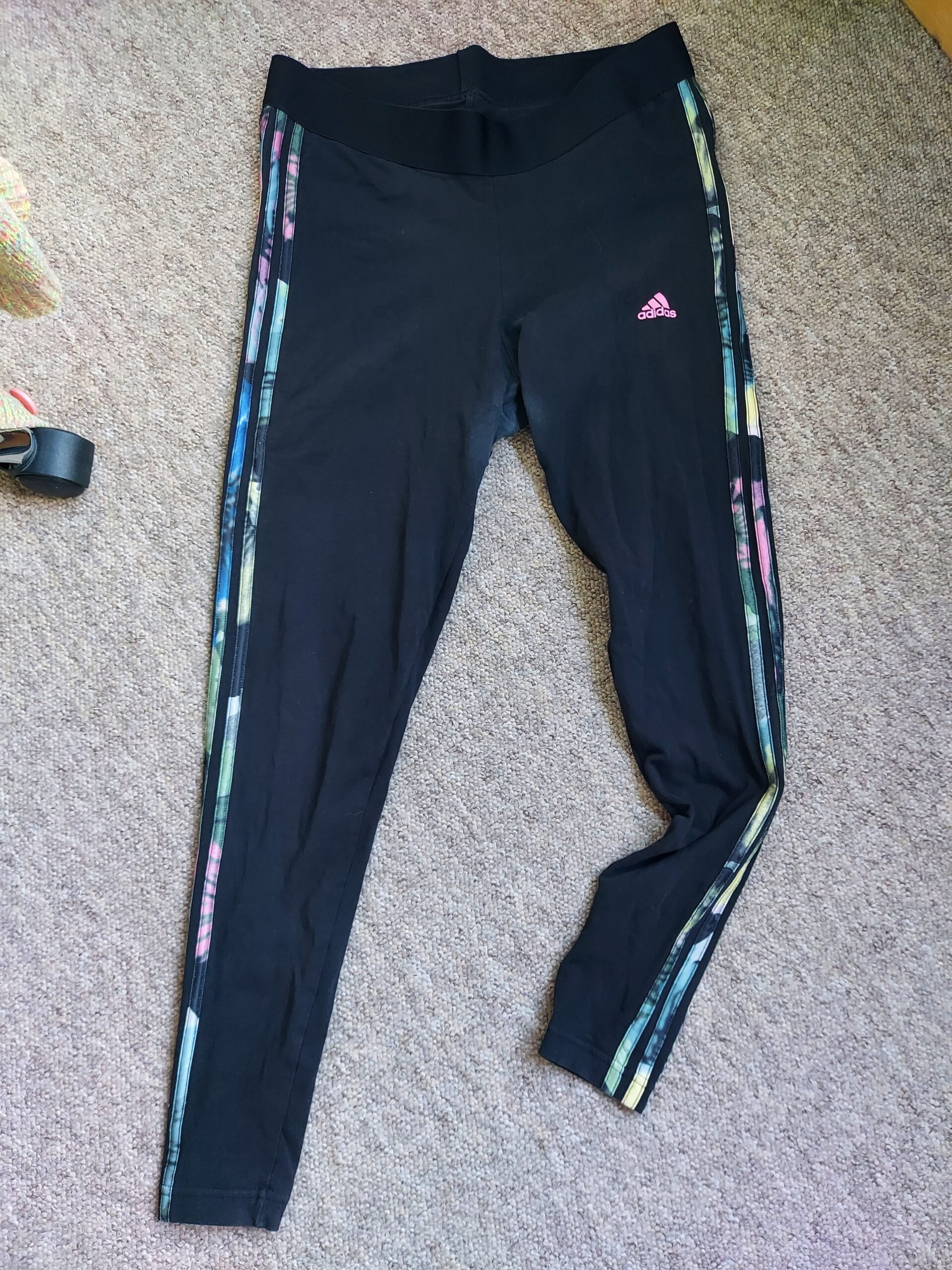
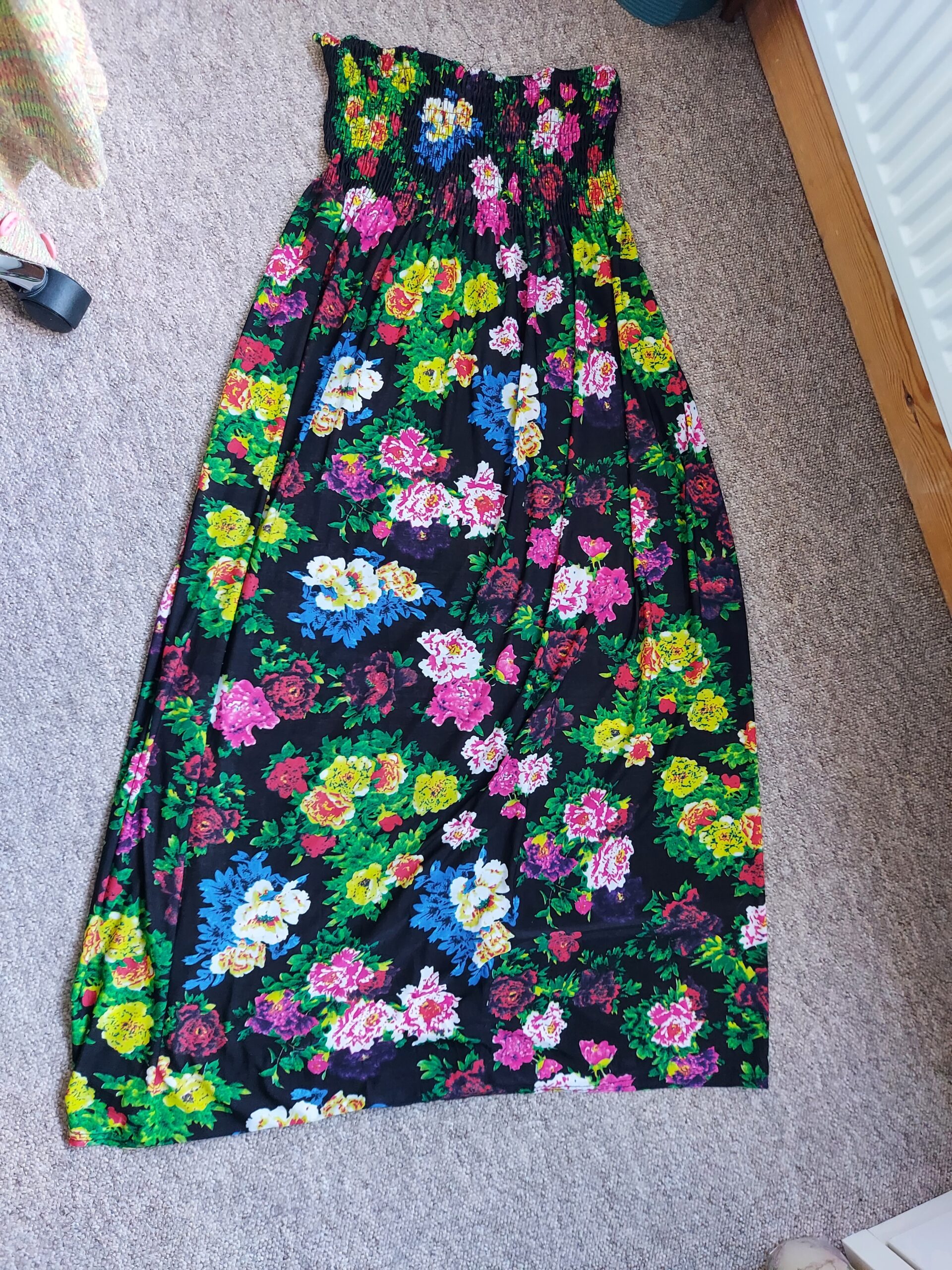
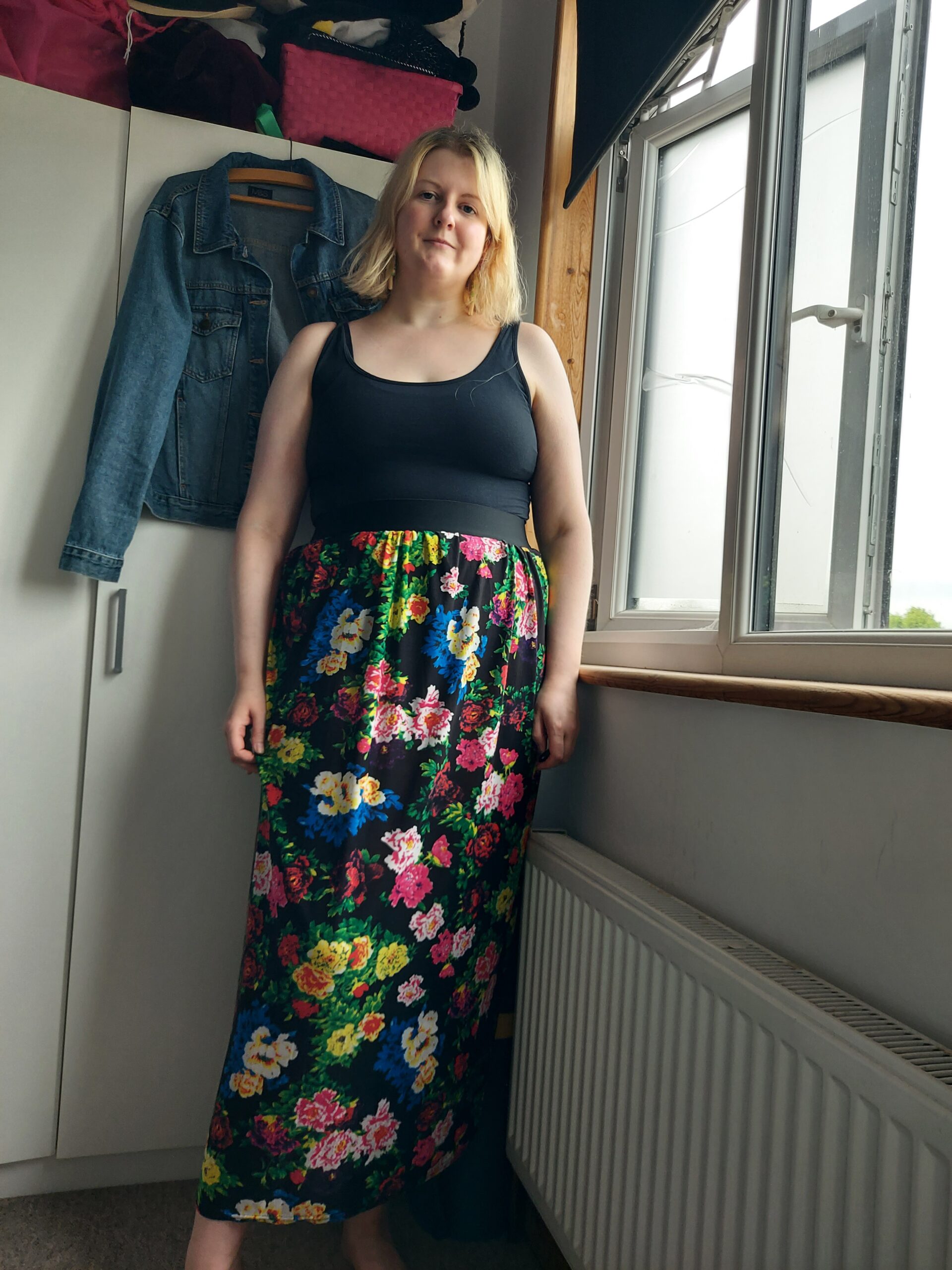
I had an old pair of leggings with a wide elasticated waistband, which I cut off and kept. I bought a cheap second-hand maxi dress on Vinted and removed the shirred bodice. I then combined the two to make a bright summer skirt.

Selfie wearing a black top and a black floral maxi skirt

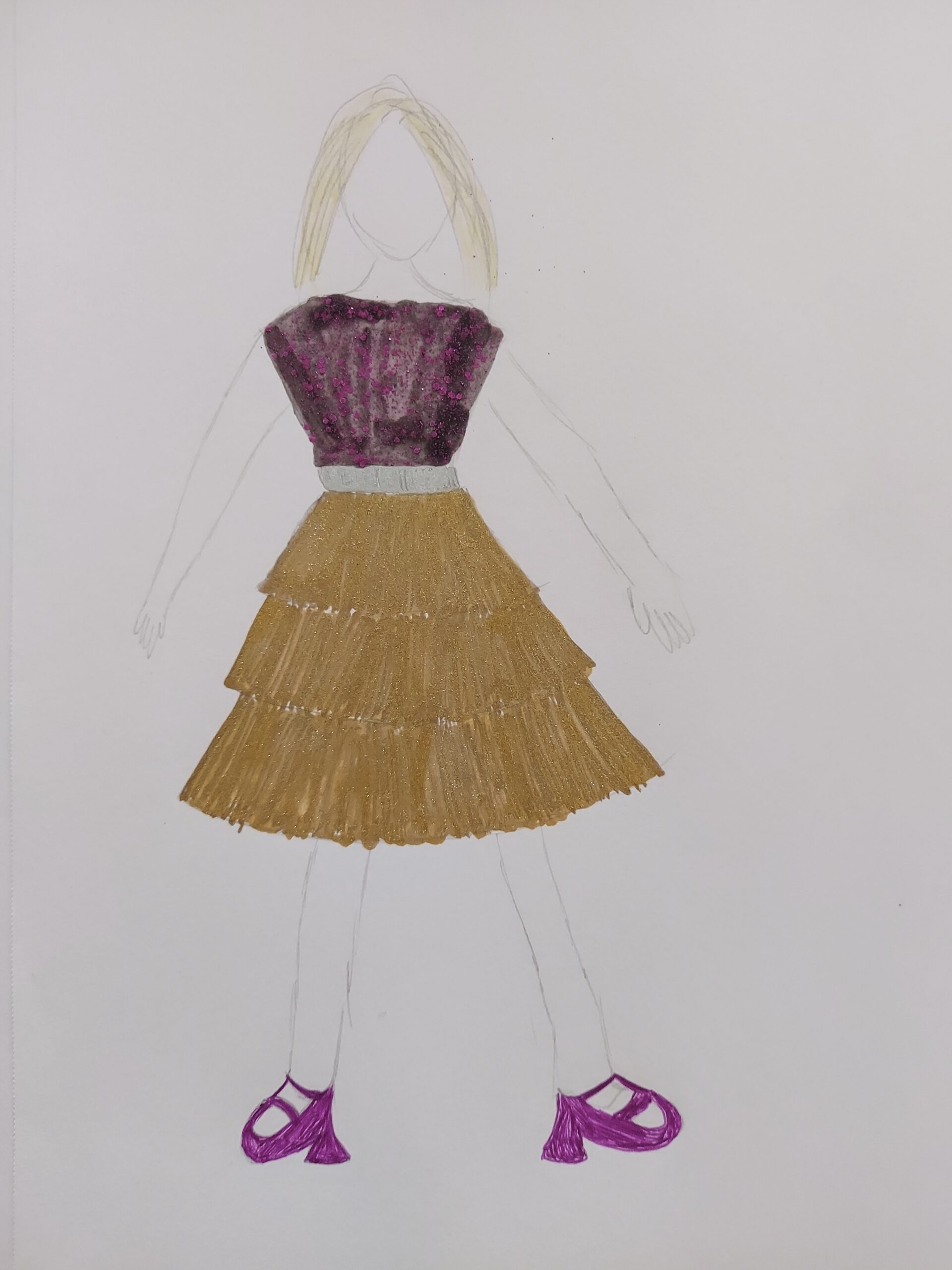
Design a full outfit for yourself, and make at least one of the garments.

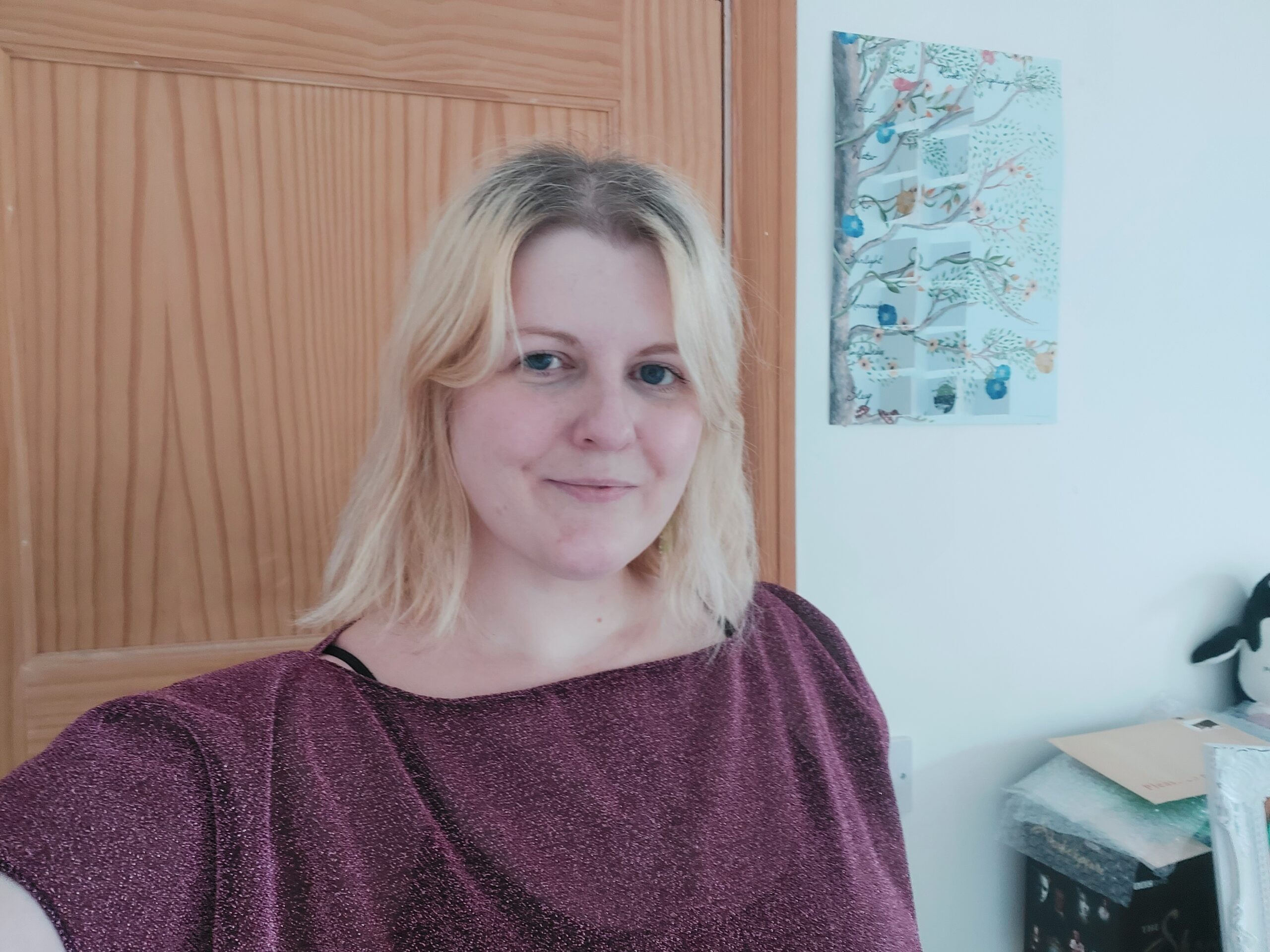
I designed myself a Jem and the Holograms-inspired outfit. Much as I would love to make the tiered gold skirt, I kept it simple and made the purple batwing-style top out of a second-hand scarf.

Make a scrapbook about the designer of your choice.

I chose to make a scrapbook about the French fashion designer Paul Poiret.

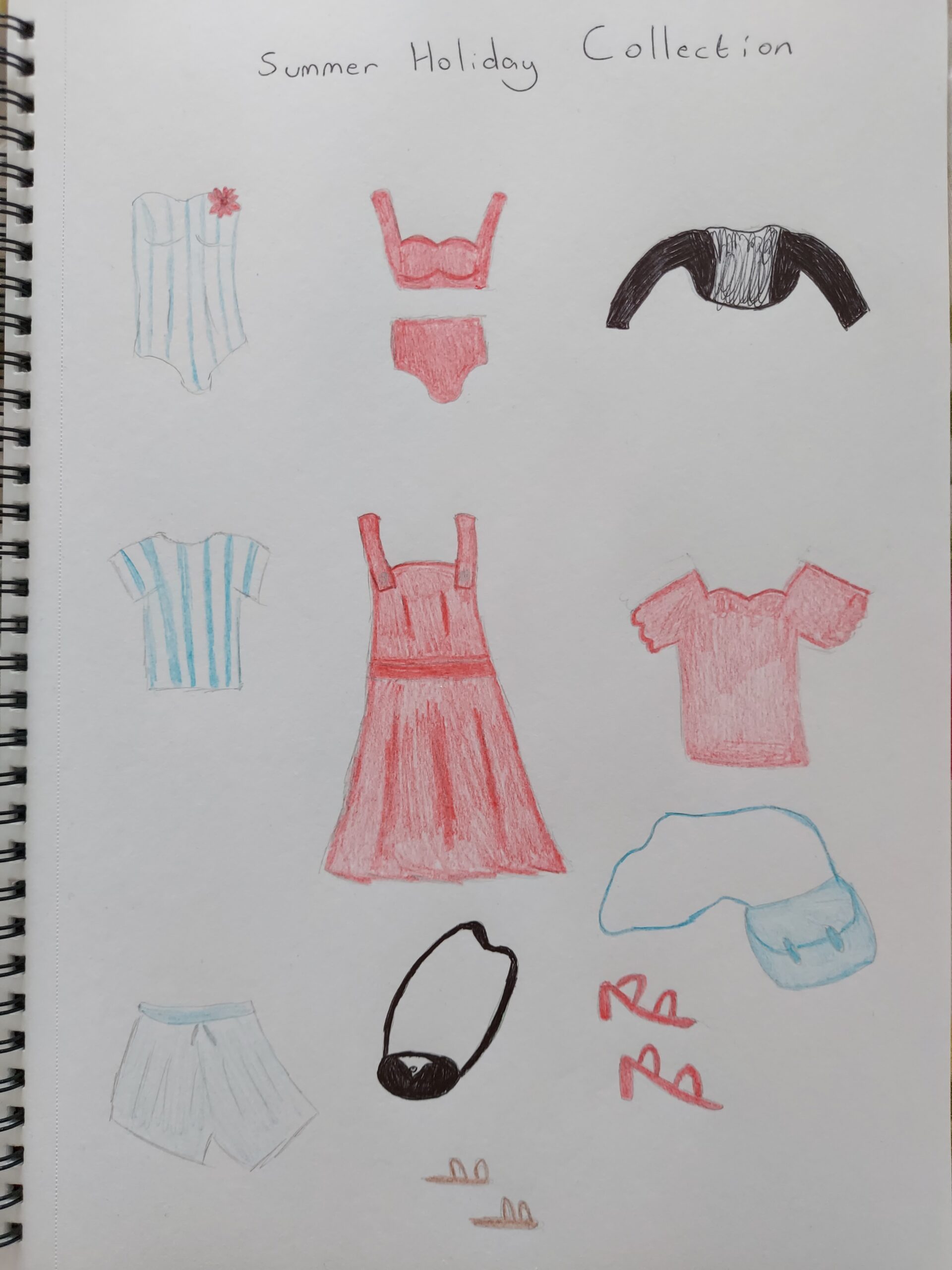
Design a capsule collection.

I designed a summer collection, the kind I would want to take on holiday and wear myself. I’m not the greatest artist but I did the best I could (The ‘dress’ in the middle is supposed to have a removable bodice so you can mix and match).

Make a non-clothing item.

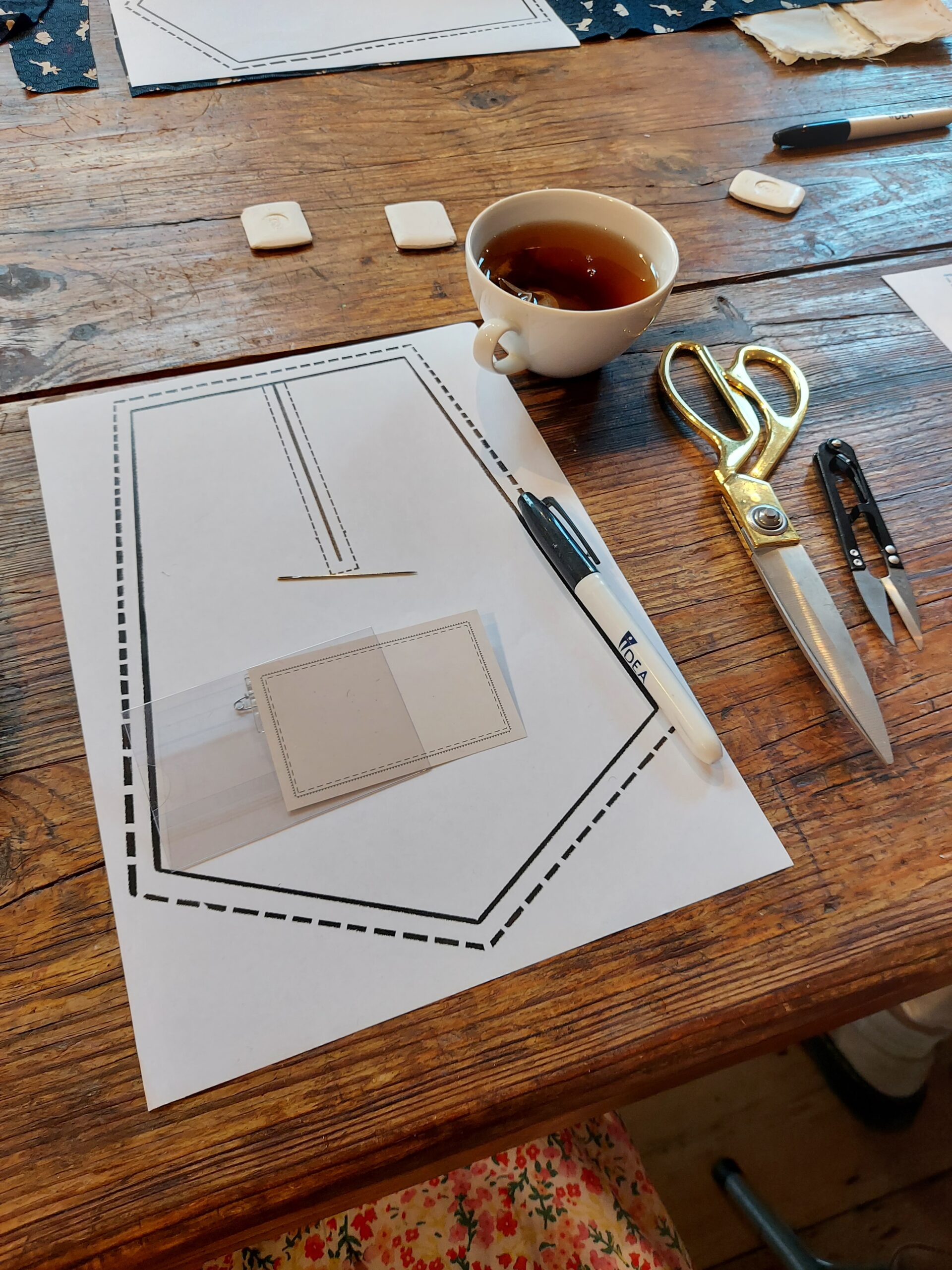
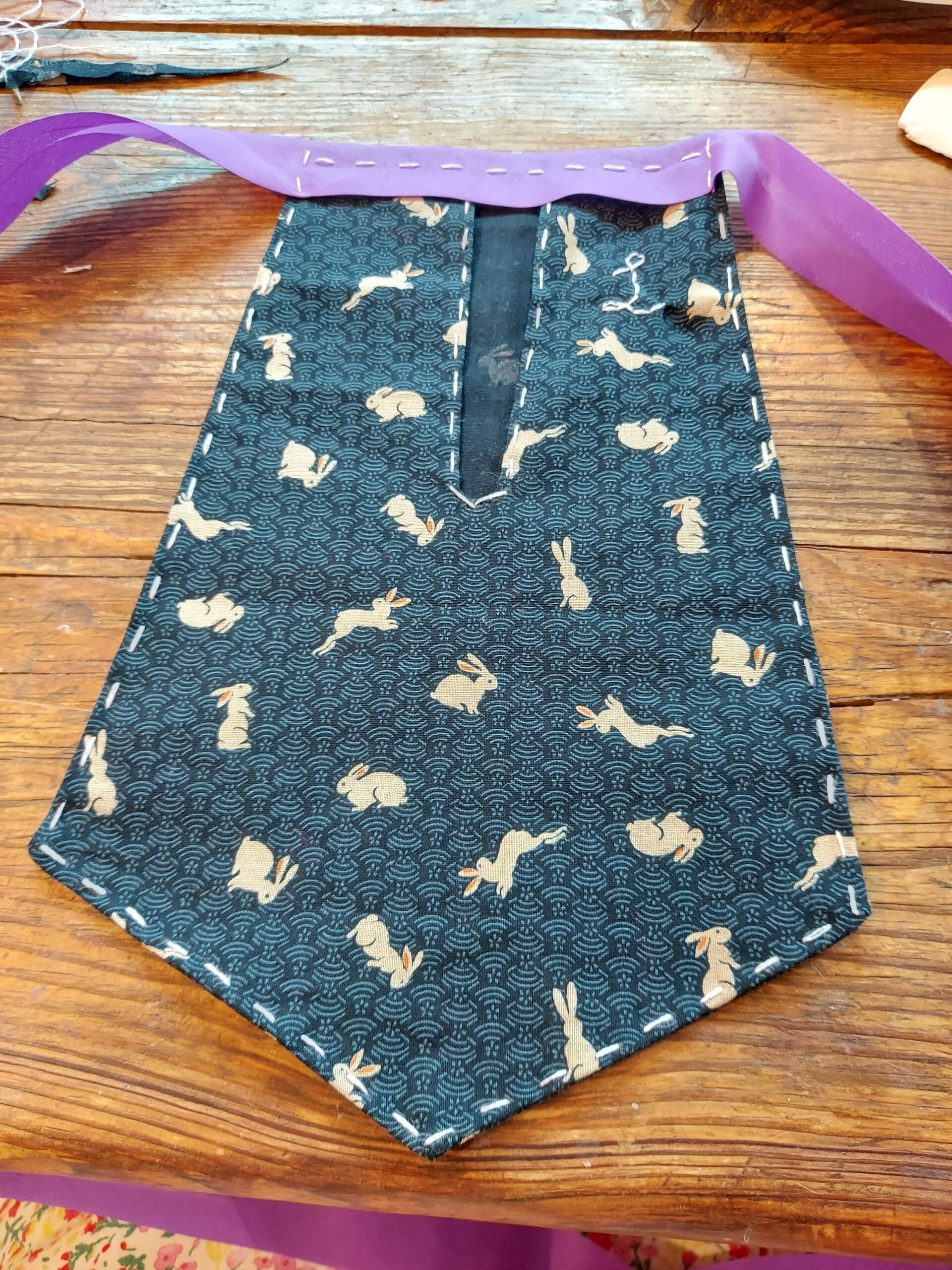
I attended a class run by Synonym Lab and Silkworm Collective to make a Victorian pouch pocket.

Date completed: 29 June 2024

Rebel Badge Club: Historian

I actually have a degree in History, so I was really looking forward to the Historian badge. Doing the badge has reminded me how much I love studying history and how much I miss reading around topics, weighing the evidence and coming to my own conclusions.

Understand the difference between a primary and secondary source.

A primary source is an authentic source with direct access to the time period or experience: e.g. letters, documents, wills, photographs, paintings, diaries.

A secondary source is one that is removed from firsthand experience in some way: e.g. a textbook or a book written by an historian.

Primary sources tend to be raw data, while secondary sources are usually interpretations of that data.

Compare and contrast two or more perspectives of the same historical event.

I have chosen to look at the events in India in 1857, commonly called the Indian Mutiny but also known as the Great Rebellion, the Revolt of 1857, the Indian Insurrection, and the First War of Independence. These events played out as an uprising against the rule of the British East India Company.

The traditional explanation for the mutiny is that new rifle cartridges were introduced in early 1857, believed by infantrymen (sepoys) to have been greased by cow and pig fat, which was insulting to Hindus and Muslims respectively. As a result, the soldiers rebelled against their officers.

I read three books on the topic:

Saul David, The Indian Mutiny, Penguin, 2002

Julian Spilsbury, The Indian Mutiny, Phoenix, 2007

William Dalrymple, The Last Mughal, Bloomsbury, 2009

Saul David’s work explores the causes of, and progress of, the mutiny as it developed throughout India. He suggests that the causes of the mutiny were primarily economic, professional and political. The British East India Company had recently taken over more or less every territory, culminating in the annexation of Oudh, from which a large proportion of the Bengal Army came. David suggests that many soldiers would have preferred to go back to the old days of war and plunder, where they had the chance of becoming rich by collecting spoils of war. The British also lacked understanding of local rules and traditions of land ownership.

David argues that mutineers wanted to replace their colonial overlords with traditional Indian rulers, mainly because they thought service to these new overlords would be more rewarding. There was also widespread dissatisfaction with uniform, housing and pay. He remarks that older soldiers were most likely to remain loyal, because they had more to lose – such as their pension.

However, he also suggests that a change in the relationship between the British and Indians helped to contribute to the rebellion, arguing that soldiers were more likely to mutiny if they didn’t have a longstanding, respected officer as leader. When the British first came to India, they often integrated into society, taking Indian wives and mistresses and embracing local culture. In more recent years, a division had become more apparent: for instance, many British officials now married before arriving in India, and with their white wives and families remained aloof from local customs, even looking down on them.

Julian Spilbury’s thoughts are along similar lines to David’s. He points out the British soldiers’ increasing distance from Indian troops. The conquest of Oudh meant that sepoys lost the right of petition in the courts to the British Resident at Lucknow, a privilege which they greatly valued. Once the Sikhs of the Punjab had been defeated, the last independent nation state in the area had gone, and sepoys feared that they would be sent overseas – something that high-caste Hindus in particular feared. Victory also meant a pay cut for the soldiers, as they were no longer entitled to extra allowances once Scinde and the Punjab became British provinces.

Spilsbury does touch on possible religious reasons for the uprising. The growing evangelical lobby in Parliament meant that missionaries were sent to India in increasing numbers, and there was a fear among Indians that they were going to be forcibly converted to Christianity.

William Dalrymple’s work is different from the others because he doesn’t draw on only English sources. In his research he used Persian and Urdu documents relating to Delhi in 1857, known as the Mutiny Papers, from the National Archives of India. He also uses plenty of other sources which expose the brutality of the British response to the uprising (English-language sources tend to focus on the atrocities committed against the British).

Dalrymple, in common with Spilsbury, argues that the growing disconnect between the British and Indians helped to fuel the uprising. He suggests that the British became increasingly arrogant as they had defeated their Indian rivals as well as the French.

He also emphasises the religious reasons for the revolt: the growth of evangelical Christianity and the plans to impose Christianity on Muslims and Hindus. He argues that the mutiny was primarily a war of religion, as well as a more generalised desire for freedom from foreign domination. He notes that participants cited religious reasons for their involvement rather than social or economic ones. In addition, he points out that British people who had converted to Islam were not hurt in the rebellion, whereas Indians who had converted to Christianity did suffer. While focusing primarily on events in Delhi, Dalrymple suggests that rather than a coherent mutiny or war, there were several different uprisings and acts of resistance across Hindustan (modern-day north India) which had different causes and rationales depending on location and circumstances.

Choose a historical figure, read a book about them, and create a timeline of the major events in their life.

I read Robert K. Massie’s Catherine the Great: Portrait of a Woman (Random House, 2012), a biography of the Russian empress. My timeline is below.

Identify a critical moment in history and explain its significance.

There are so many choices I could have made for this clause, but I’ve gone for the death of Arthur, Prince of Wales on 2 April 1502. He was the eldest son of Henry VII – the first Tudor king – and Elizabeth of York, and was married to Catherine of Aragon in 1501. Six months later, he died, possibly from the sweating sickness, at Ludlow Castle in Shropshire.

Arthur’s death meant that his younger brother Prince Henry became heir to the throne. He ruled as Henry VIII from 1509 to 1547. Henry married his brother’s widow, Catherine, and divorced her years later after she failed to bear him a son. One reason given for the divorce was that their marriage was invalid because Catherine had been married to Henry’s brother.

Without Henry VIII, England would not have broken with Rome, the dissolution of the monasteries would not have taken place, and the Church of England would not exist. Culturally, Henry VIII and his six wives are well known; if Arthur had reigned as king, Henry’s multiple marriages would not have happened. Six: The Musical would not exist!

The history of the sixteenth century would have looked very different. We would not have had Elizabeth I (or Mary I or Edward V). Since James VI of Scotland became James I of England after the death of Elizabeth I, who died without children, it is possible that England and Scotland might never have been united if Arthur and his heirs had ruled England.

Visit a museum or historical exhibit. Consider how they approach the subject and the choice of artefacts and exhibits. If you were tasked with creating an exhibition on the same era, event or topic, what would you change?

I visited the exhibition Legion: life in the Roman army at the British Museum. I loved the exhibition and liked how they chose a particular soldier to follow throughout his army career. I loved how they made the exhibition appeal to children through the use of a cute rat character. The items on display were incredible, including an original longshield and several grave markers, as well as tablets granting retired soldiers citizenship.

It would have been interesting to follow two soldiers, one a citizen and one not, to see how their experiences contrasted. It would also have been good to find out more about actual battles: how they played out, soldiers’ experiences and so on.

Choose a historical period, event, or topic, and study it. Read or listen to at least two books, and watch at least one film or documentary about it. Present your findings in the format of your choice – e.g. a scrapbook, video, exhibition.

Mindful of recent events, I chose to study the Israel-Palestine conflict. It’s an incredibly complex and emotive topic, and though I’ve learned a great deal I want to continue to study it. My booklet showing what I learned is below.

Date completed: 28 June 2024

Rebel Badge Club: Big Rebel Adventure 2024

I’m claiming the Big Rebel Adventure 2024 badge.

The big challenge for this badge was the Three Peaks Challenge, but I knew I wouldn’t be able to manage that – however, there were other ways to claim the badge, one of which was to attend one of the training walks. I attended the Surrey Three Peaks training walk and managed to complete two out of the three peaks, which for me is an achievement, as I’m not very good with hills.

Major respect to everyone who did manage the Three Peaks Challenge!

Now You See Us: Women Artists in Britain 1520-1920 – Tate Britain

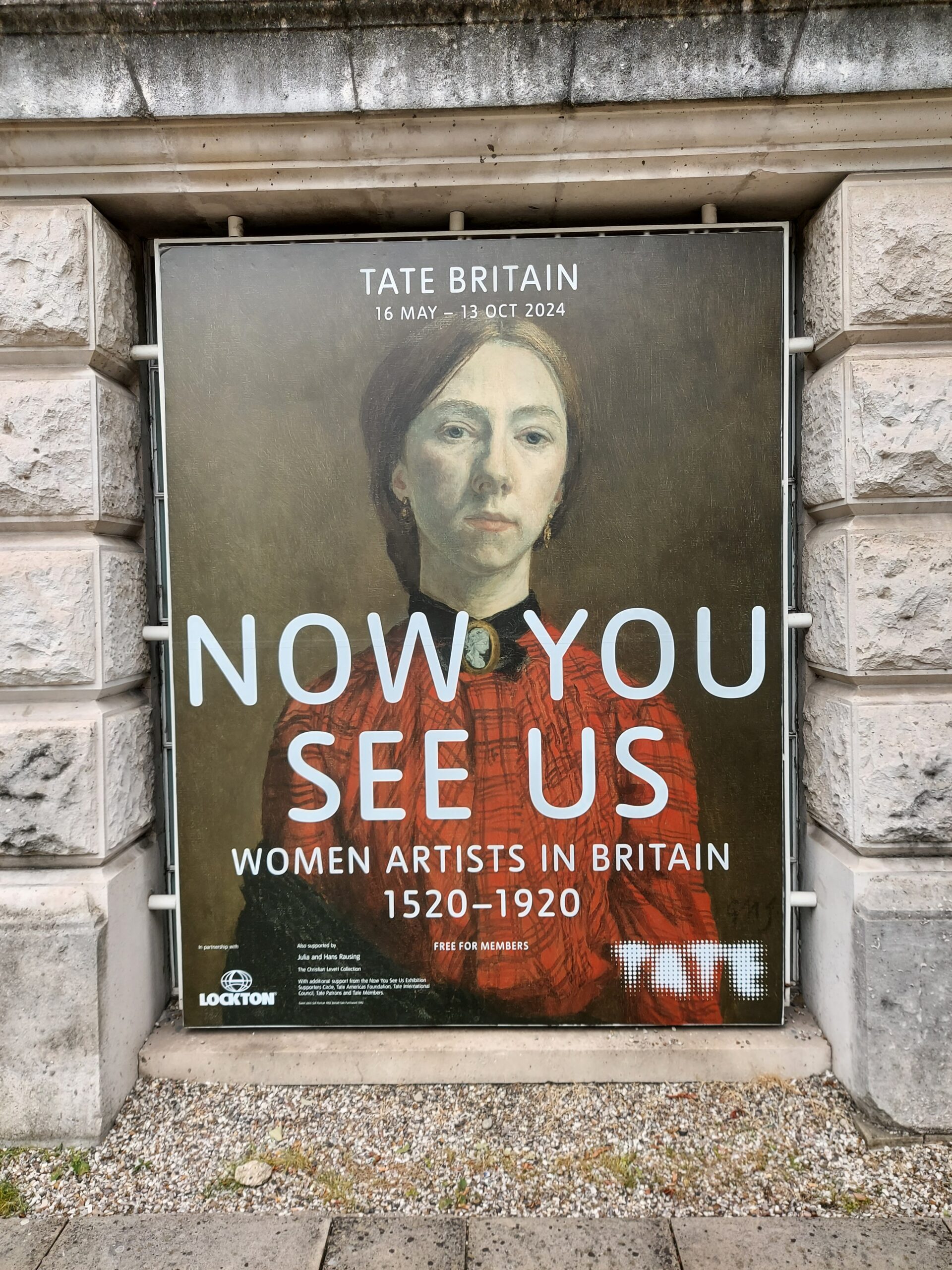
Poster for the exhibition

The second exhibition I went to see at Tate Britain was Now You See Us: Women Artists in Britain 1520-1920. This exhibition, spanning 400 years, features art by women through the centuries struggling to be taken seriously and be recognised as professional artists.

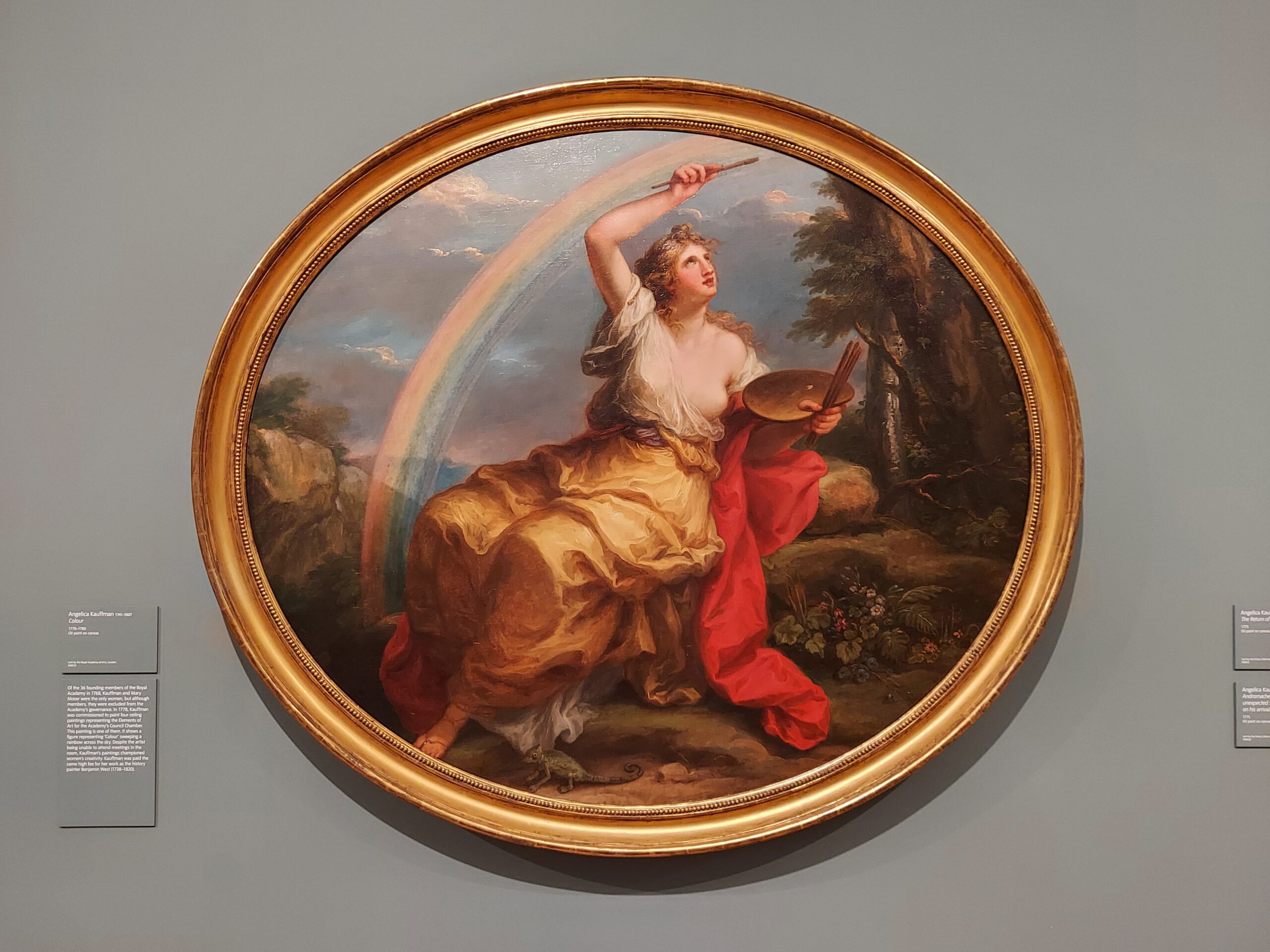
The art in the exhibition is displayed in a roughly chronological manner. It begins with artists like Mary Beale, one of Britain’s first professional women artists, and Angelica Kauffman, who was Swiss but who had a successful career in London and was one of the founder members of the Royal Academy.

painting of a woman and a rainbow
Colouring, Angelica Kauffman, 1788-80

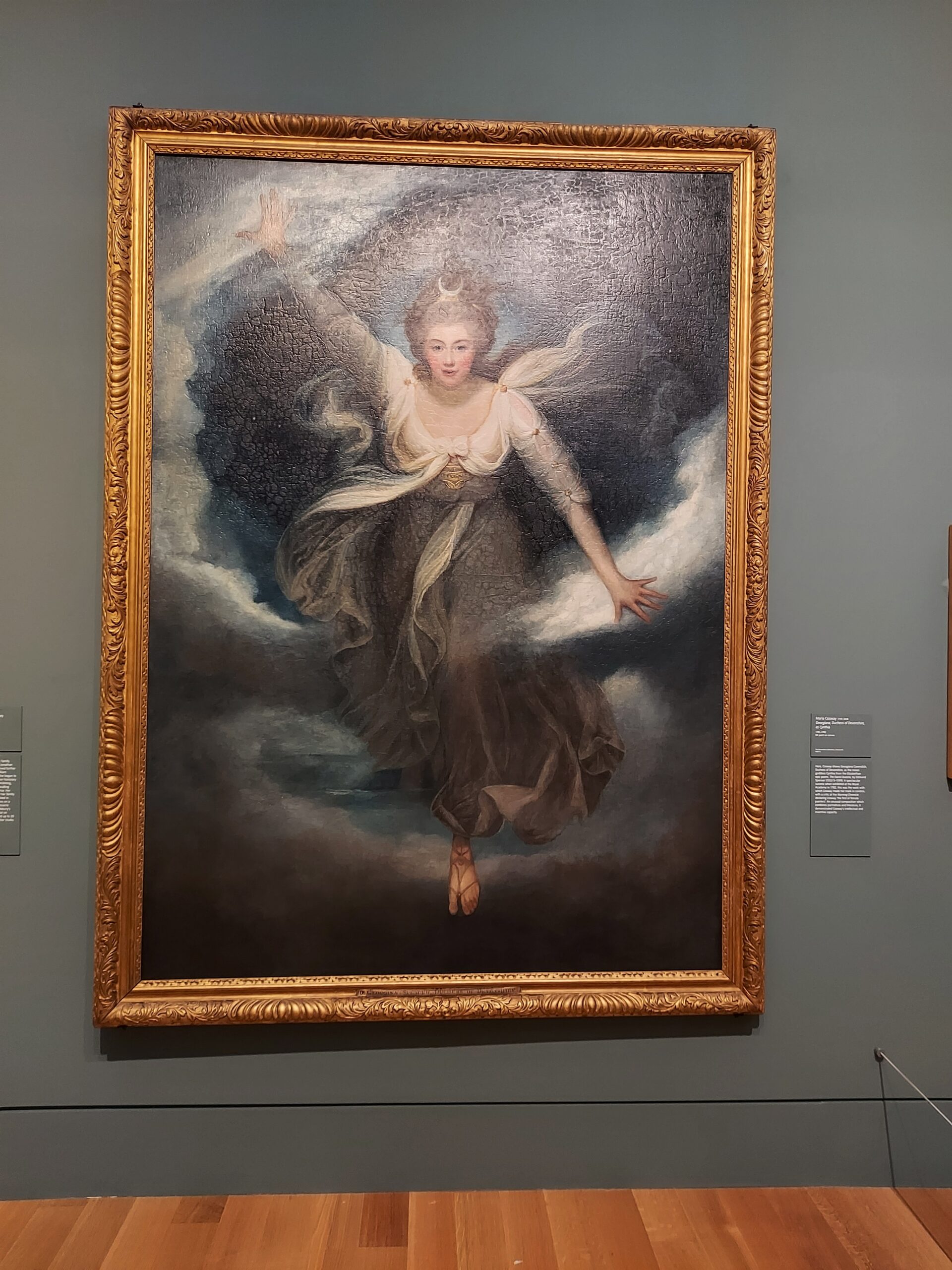
Female artists of the period often painted portraits, usually, though not exclusively, of women.

Painting of a woman
Maria Cosway, Georgiana as Cynthia from Spenser’s ‘Faerie Queene’, 1781-82

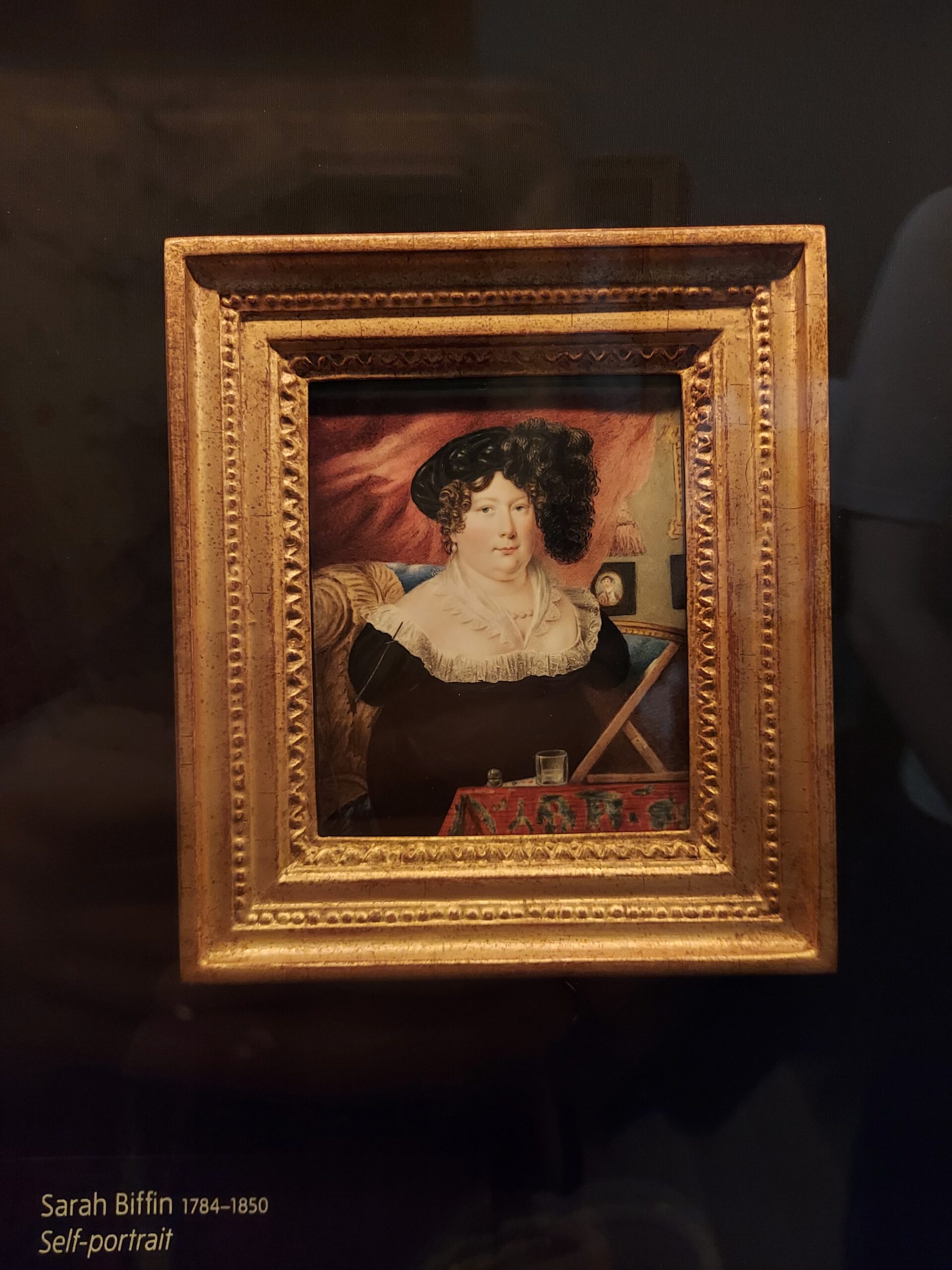
I was particularly impressed by the work of Sarah Biffin, who was born without legs or arms and learned to paint using her mouth.

Portrait of a woman
Sarah Biffin, Self-portrait, 1820s

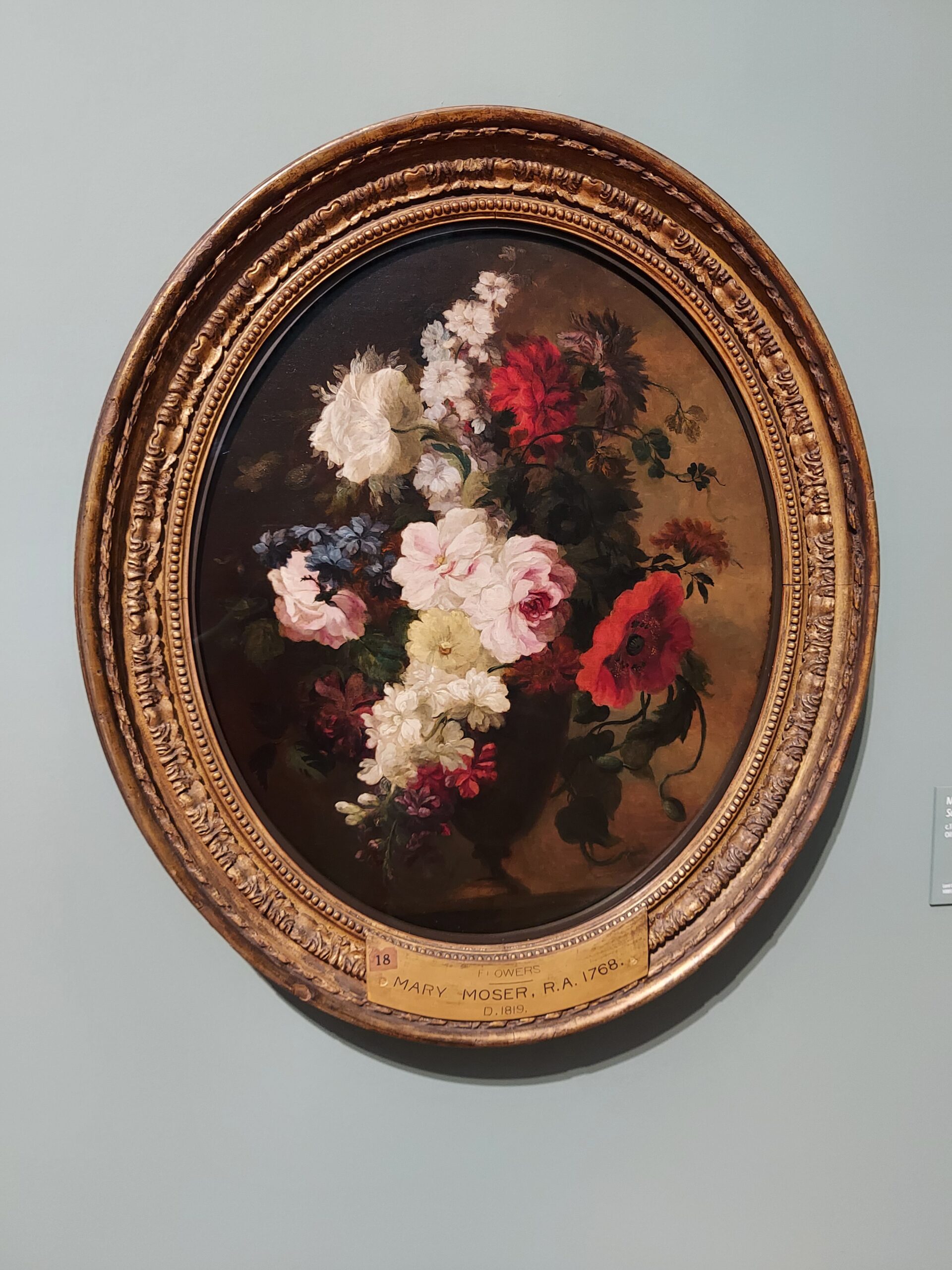
Still life paintings, especially flowers, were seen as an appropriate subject for women; while not groundbreaking, the floral works in the exhibition are technically as skilfully produced as any man’s. The only other female founder member of the Royal Academy, Mary Moser, was famous for her floral works.

Still life with flowers
Mary Moser, Summer, c. 1780

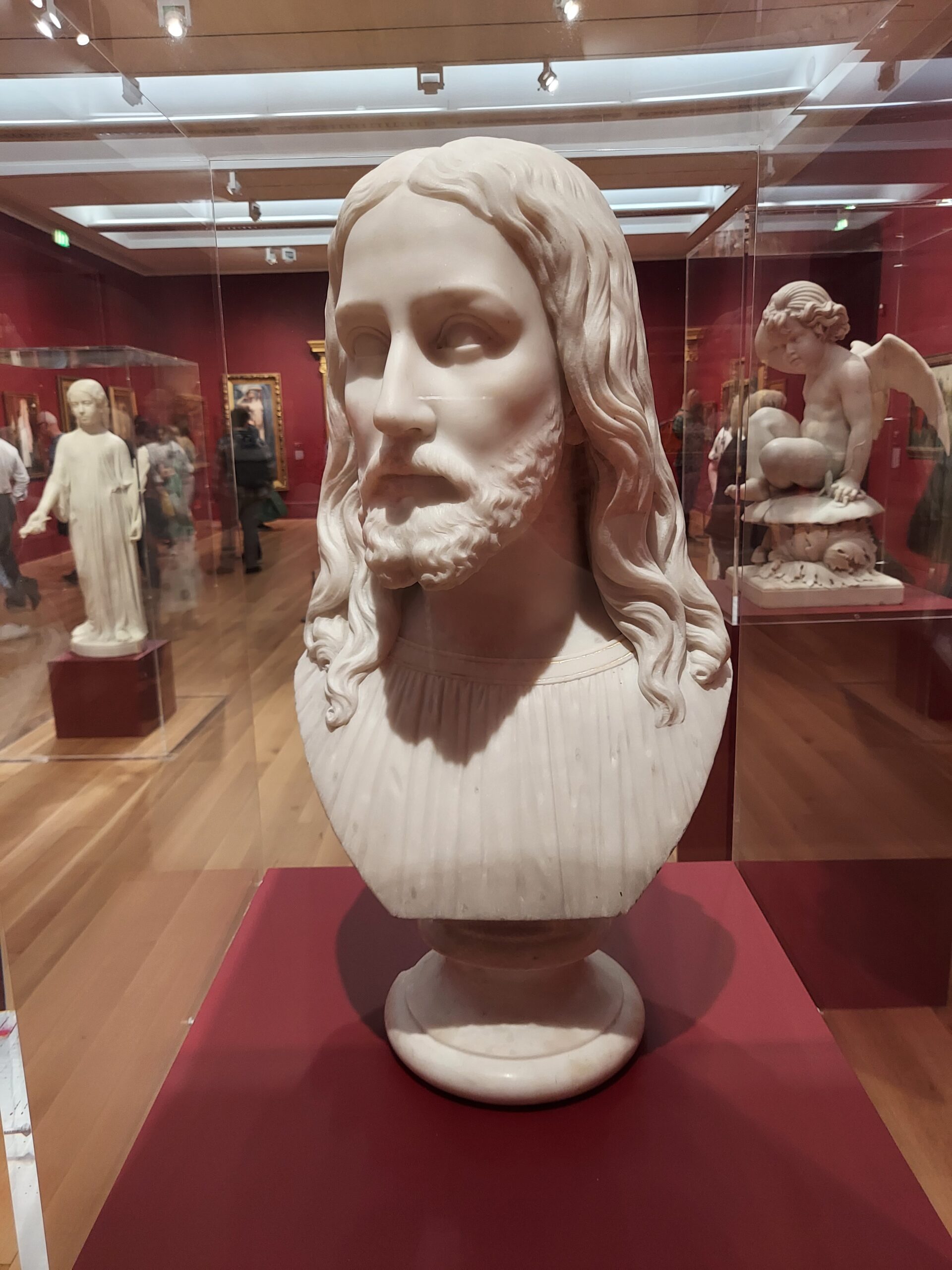
Not everything in the exhibition is a painting. Some sculptures are on display, including a bust of Christ by Edmonia Lewis, the first female black American to work as a professional sculptor.

Sculpture of the bust of Christ
Bust of Christ, Edmonia Lewis, 1870

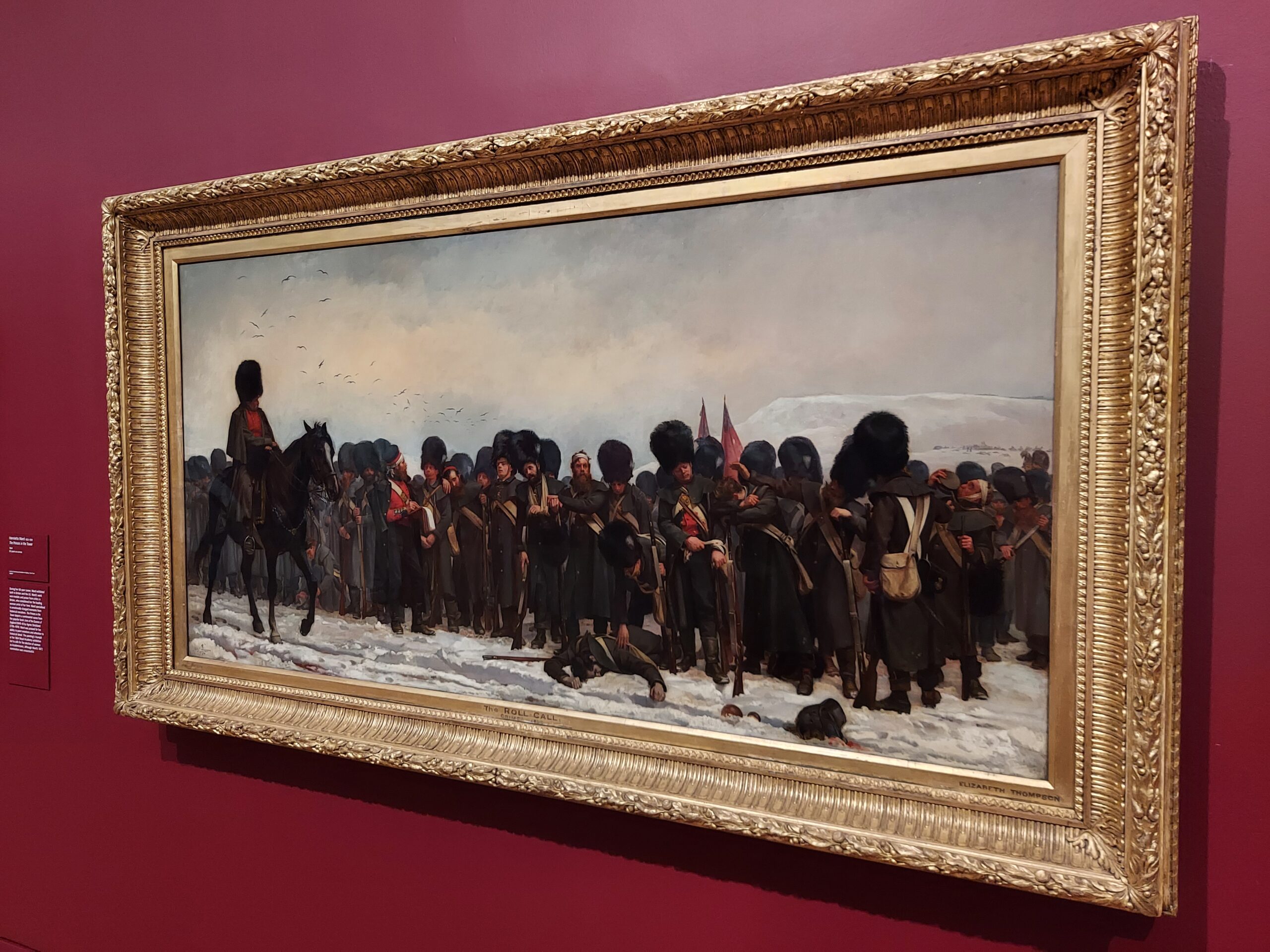
As time wore on, more and more women were able and willing to challenge the expectations laid down for them. For example, Elizabeth Butler (Lady Butler) painted works with the theme of war, usually thought of as a ‘male’ subject.

Soldiers in the snow
Lady Butler, The Roll Call, 1874

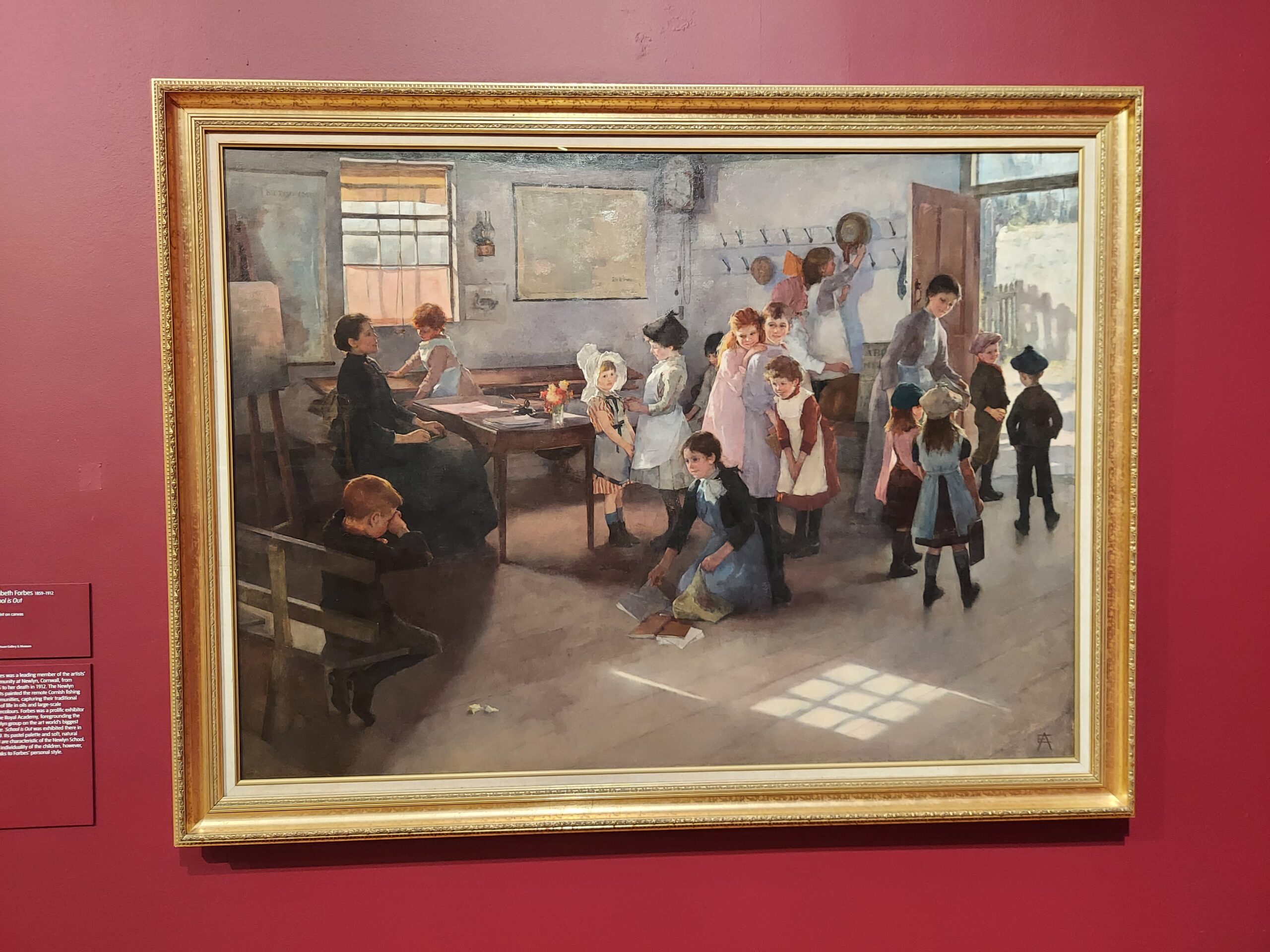
Other women ventured outside the confines of the studio and painted outdoor and social scenes.

Children in a classroom
Elizabeth Adela Stanhope Forbes, School Is Out, 1889

I was impressed with the exhibition, which introduced me to some superb artists I was unfamiliar with and who paved the way for gender equality in the art world. I understood more about their struggles and was grateful for their efforts as well as their wonderful creations.

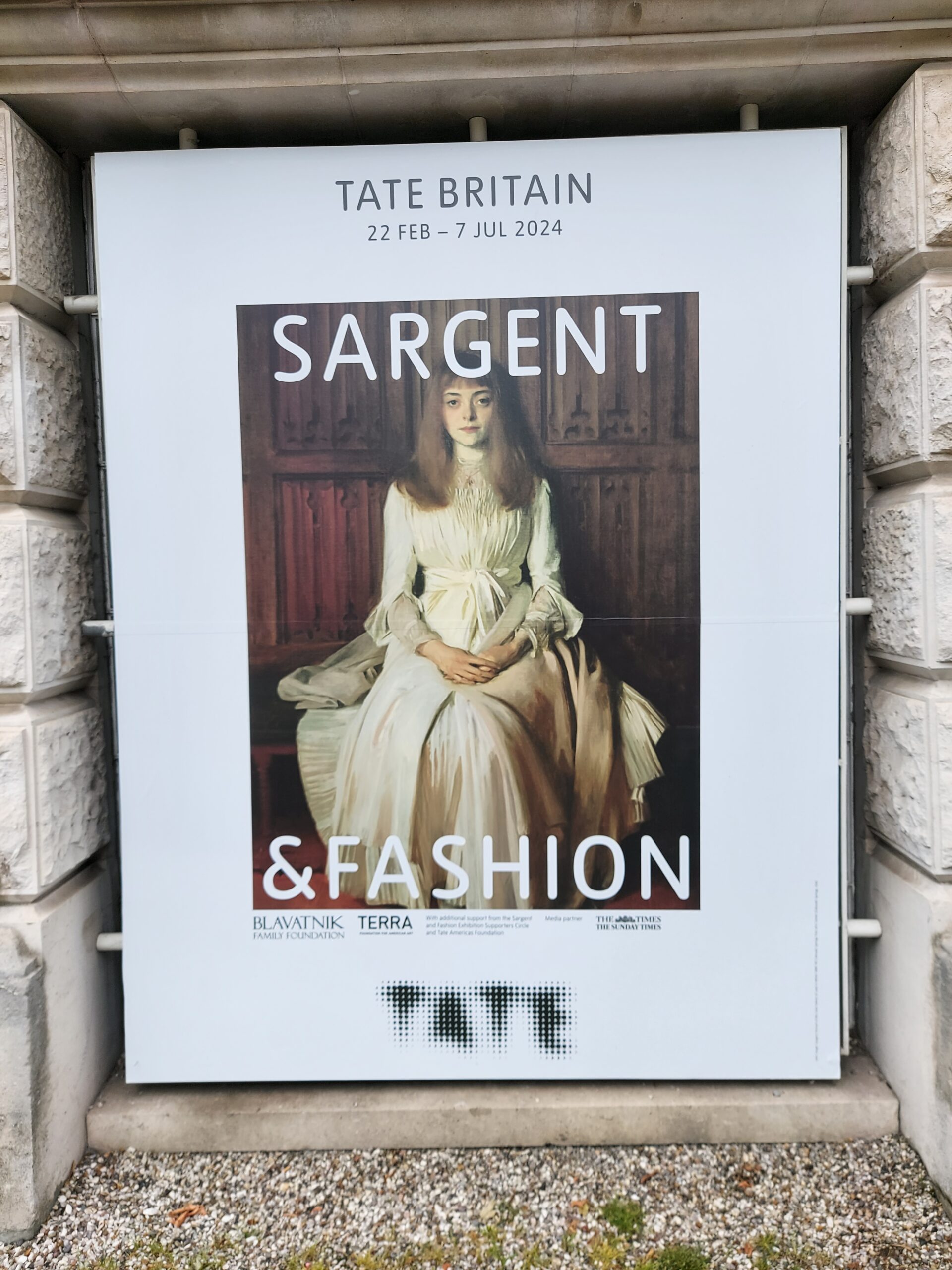
Sargent and Fashion – Tate Britain

Exhibition poster for Sargent and Fashion

At the weekend I visited Tate Britain to check out a couple of exhibitions. The first one I saw was Sargent and Fashion.

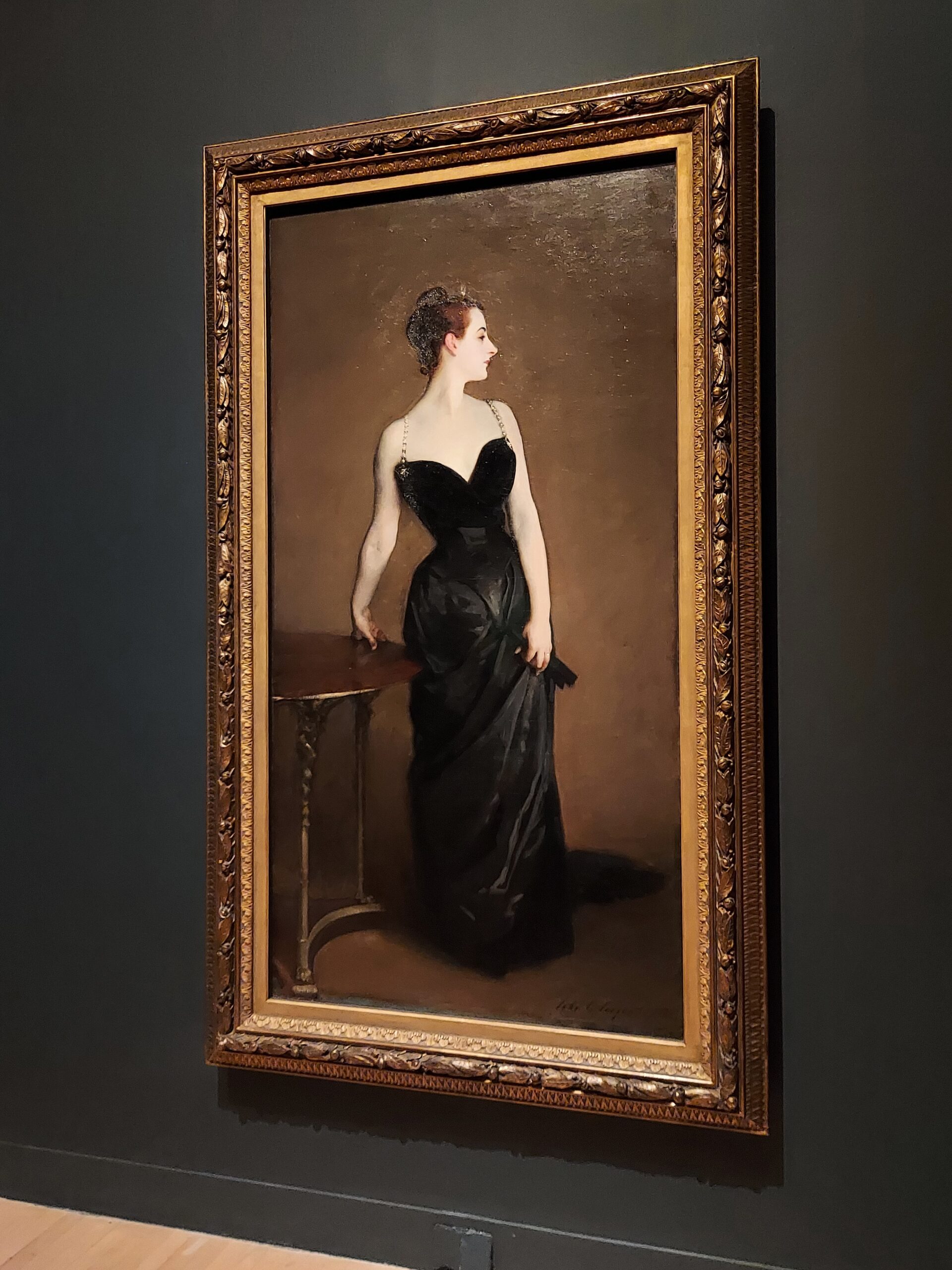
Painting of a pale white woman wearing long black evening dress
Portrait of Madame X, 1883-84

This exhibition explores the relationship between artist John Singer Sargent and the fashions of his day. The paintings in the exhibition emphasise focus on the clothes worn by his sitters: some of their choice, others at his suggestion. Sometimes these clothes caused controvery: Singer’s famous Portrait of Madame X was originally painted with one of Virginie AmĂ©lie Avegno Gautreau’s straps hanging from her shoulder, but this was seen as too risquĂ© and he edited the painting.

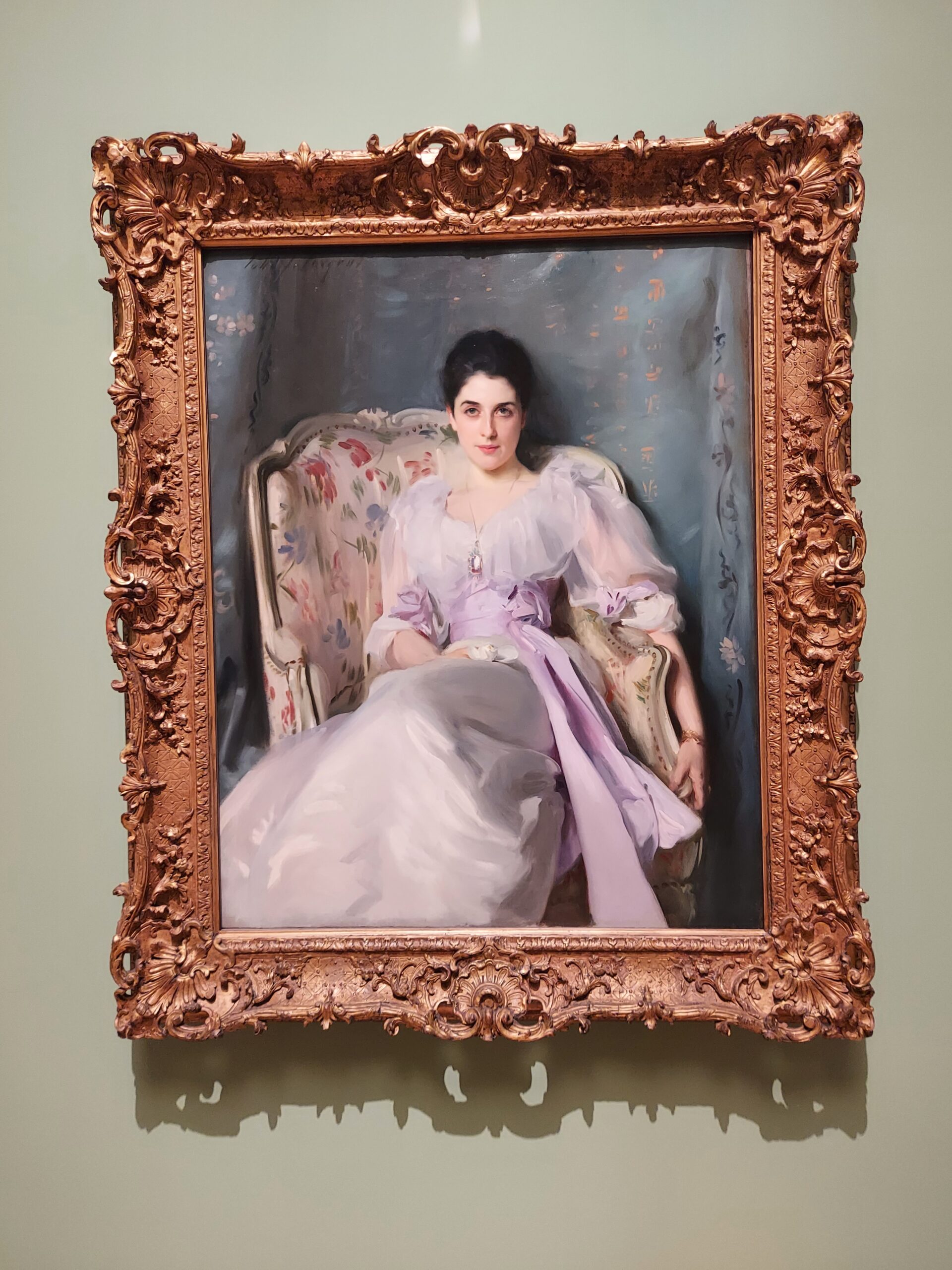
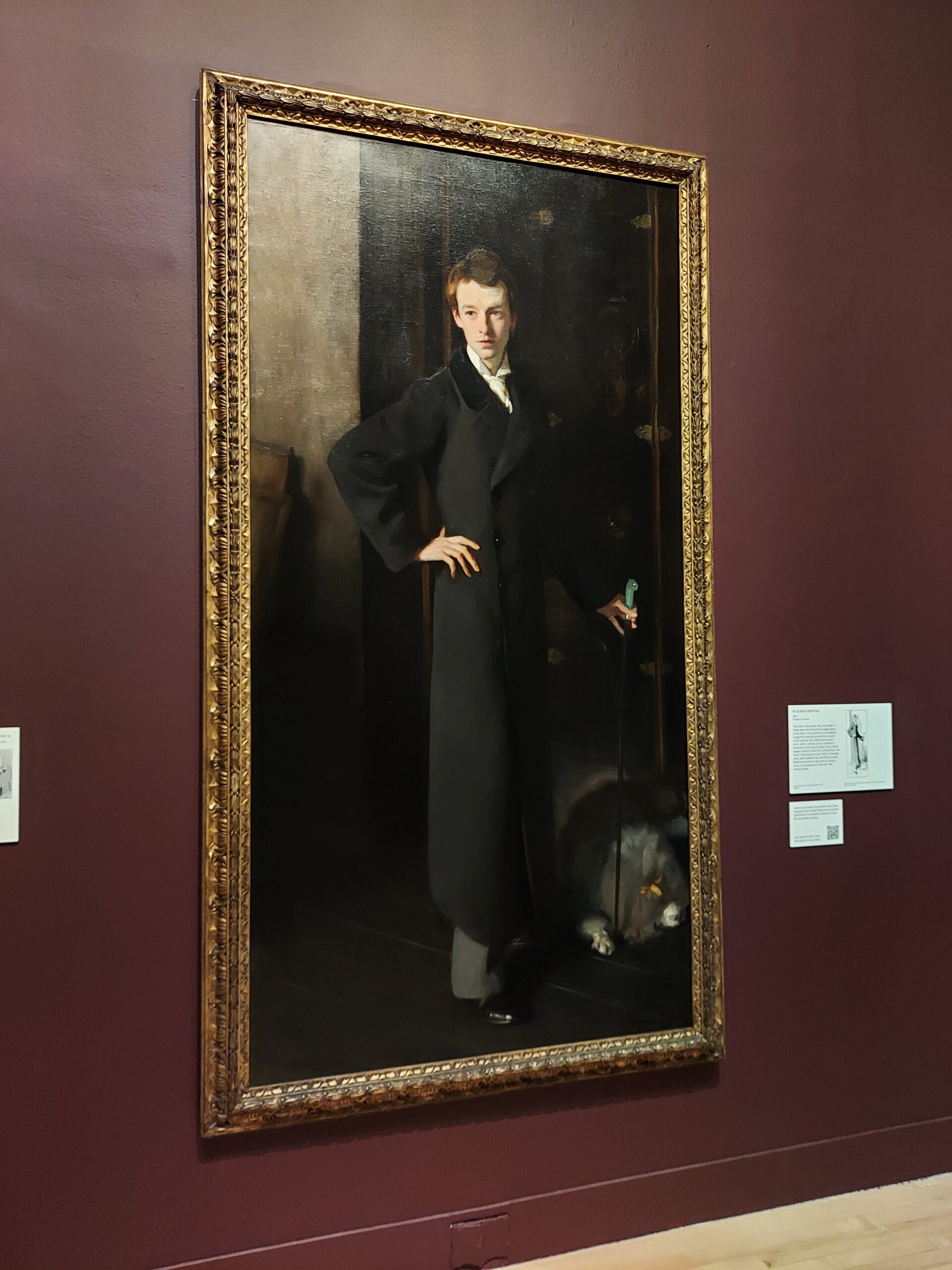
The exhibition made me realise that he was really wonderful at painting clothes, capturing the ripples of the fabric and the different shades evoked. He used clothes to convey the personality of the sitter, whether long flowing gowns, delicate fabrics, or clean lines.

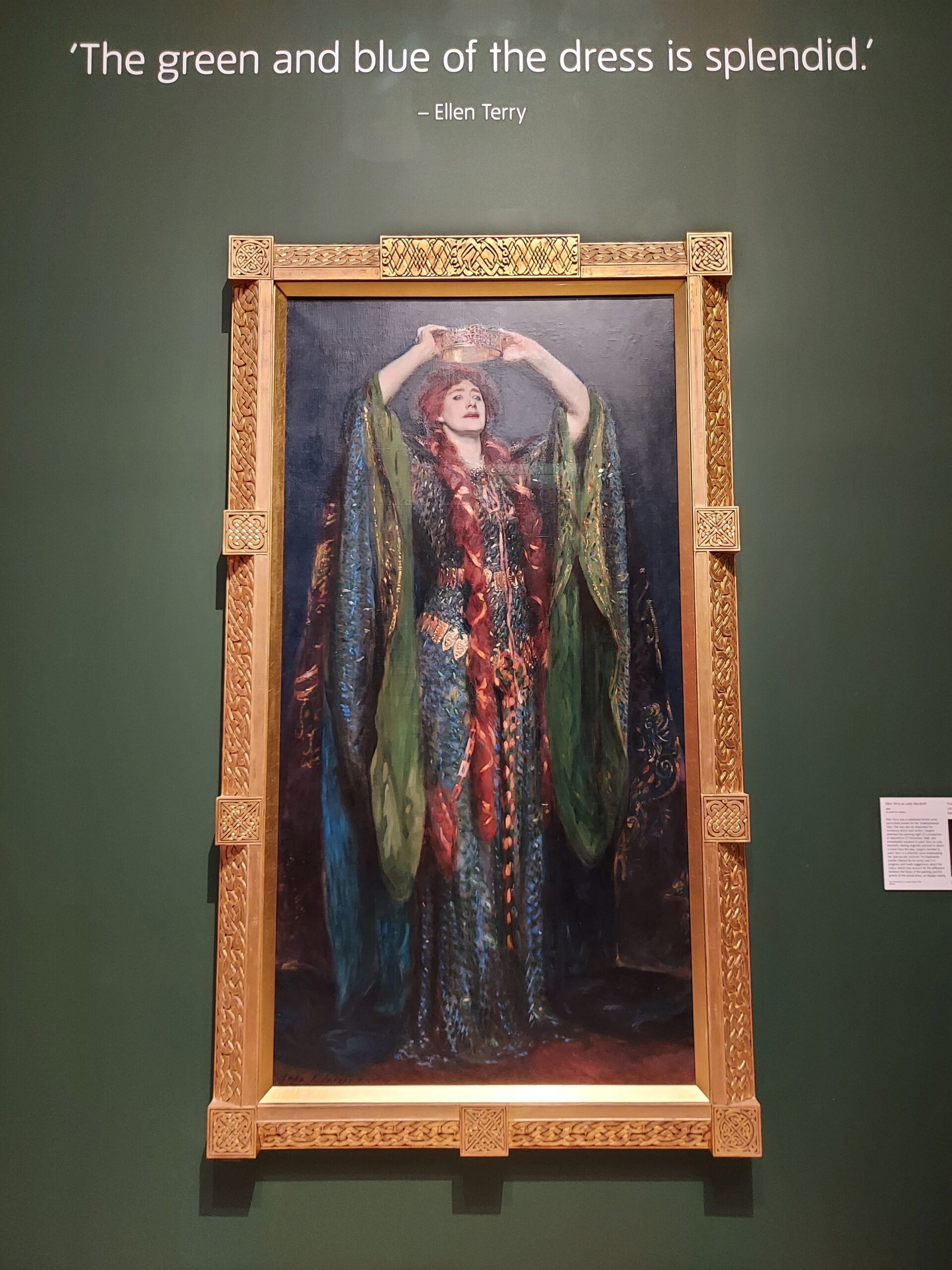
One thing I loved about the exhibition was the display of some of the costumes and clothes worn in the paintings, alongside the pictures. I especially loved seeing Sargent’s portrait of Ellen Terry as Lady Macbeth alongside the dress she wore in the production and the painting. Interestingly, the real life dress was green, whereas the painted version is blue – presumably for artistic reasons.

I found this exhibition hugely enjoyable, and appreciated seeing all this beautiful art. I left with a better understanding of how Sargent, art and fashion intertwined.

Rebel Badge Club: Glamper

The Glamper badge was a badge I got in my Badge Roulette. I had never been glamping before, but I really enjoyed doing this badge – it was certainly more relaxing than standard camping!

Spend at least two consecutive nights in a vehicle

I stayed in a gypsy caravan near Ringwood, Hampshire.

Spend a further two nights in a structure in the wild

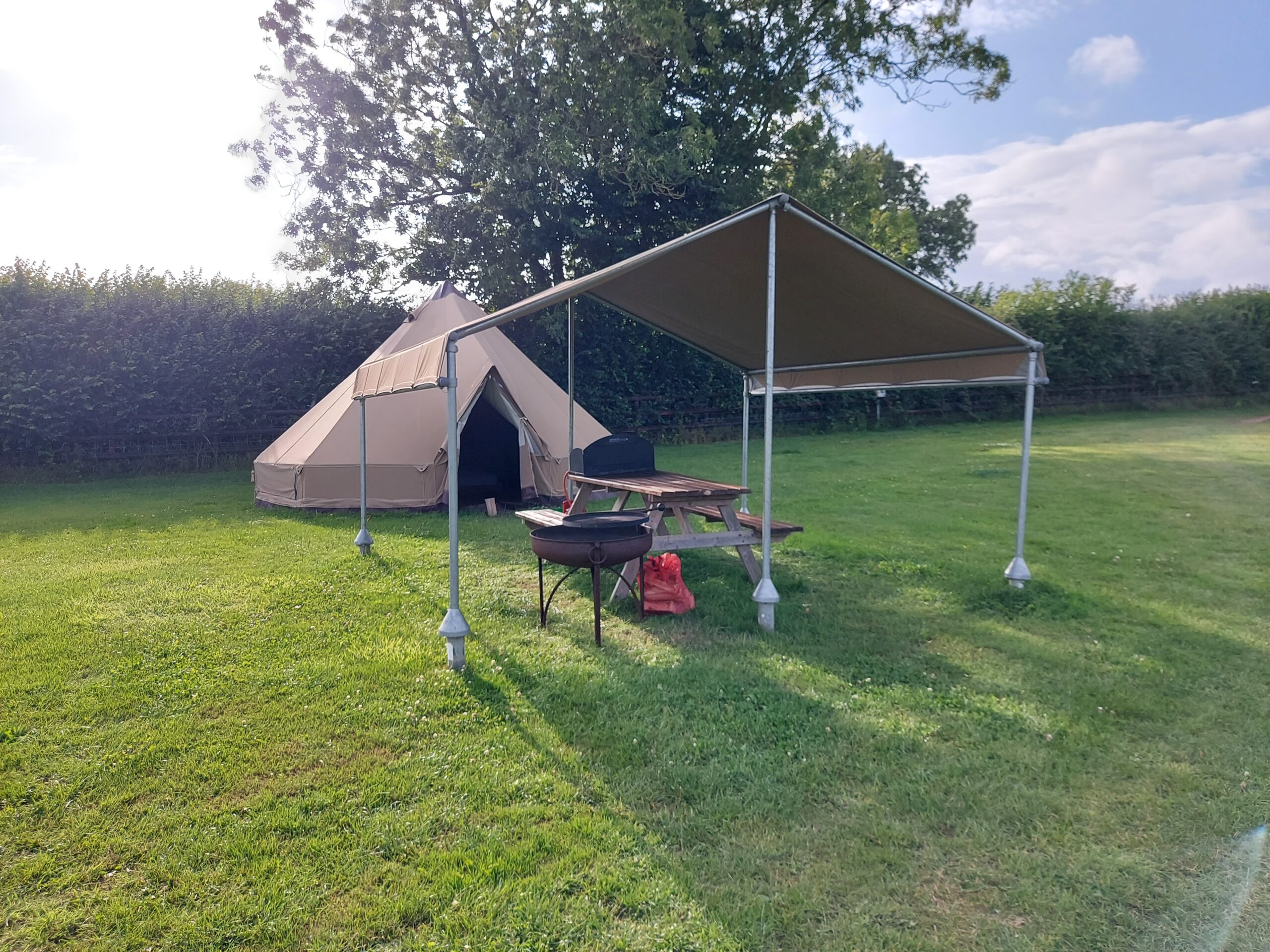
I stayed in a bell tent near Dorchester, Dorset.

Design the menu for both your trips

I had access to a fridge for both my trips so was able to keep food cold. I planned a varied vegetarian menu for both my trips.

Cook at least two meals outdoors

At the caravan, I cooked halloumi wraps and sweet potato fries. In the bell tent, I made a bean stew and some veggie burgers with chips and tenderstem broccoli.

Kit out your camp kitchen

I took tinfoil, barbecue tongs, cutlery and a plate to cook my meals.

Sanitary arrangements for the vehicle

While staying in the caravan I had access to a compost toilet and made sure to dispose of all waste safely.

Leave minimal trace

I recycled all my waste where possible and tidied up after myself.

Know how to treat camp injuries

Last year I did a three-day First Aid at Work course so I would know how to treat any injuries.

Prepare a first aid kit for your trip

I took plasters, painkillers and antiseptic cream with me on my trips.

Take part in three outdoor activities in camp

At the caravan, I went wild swimming, explored a nature reserve and visited an owl, raptor and reptile sanctuary. Staying in the tent, I explored an Iron Age hill fort, went sailing, and made a campfire.

Date completed: 16 June 2024
Glamping in Hampshire

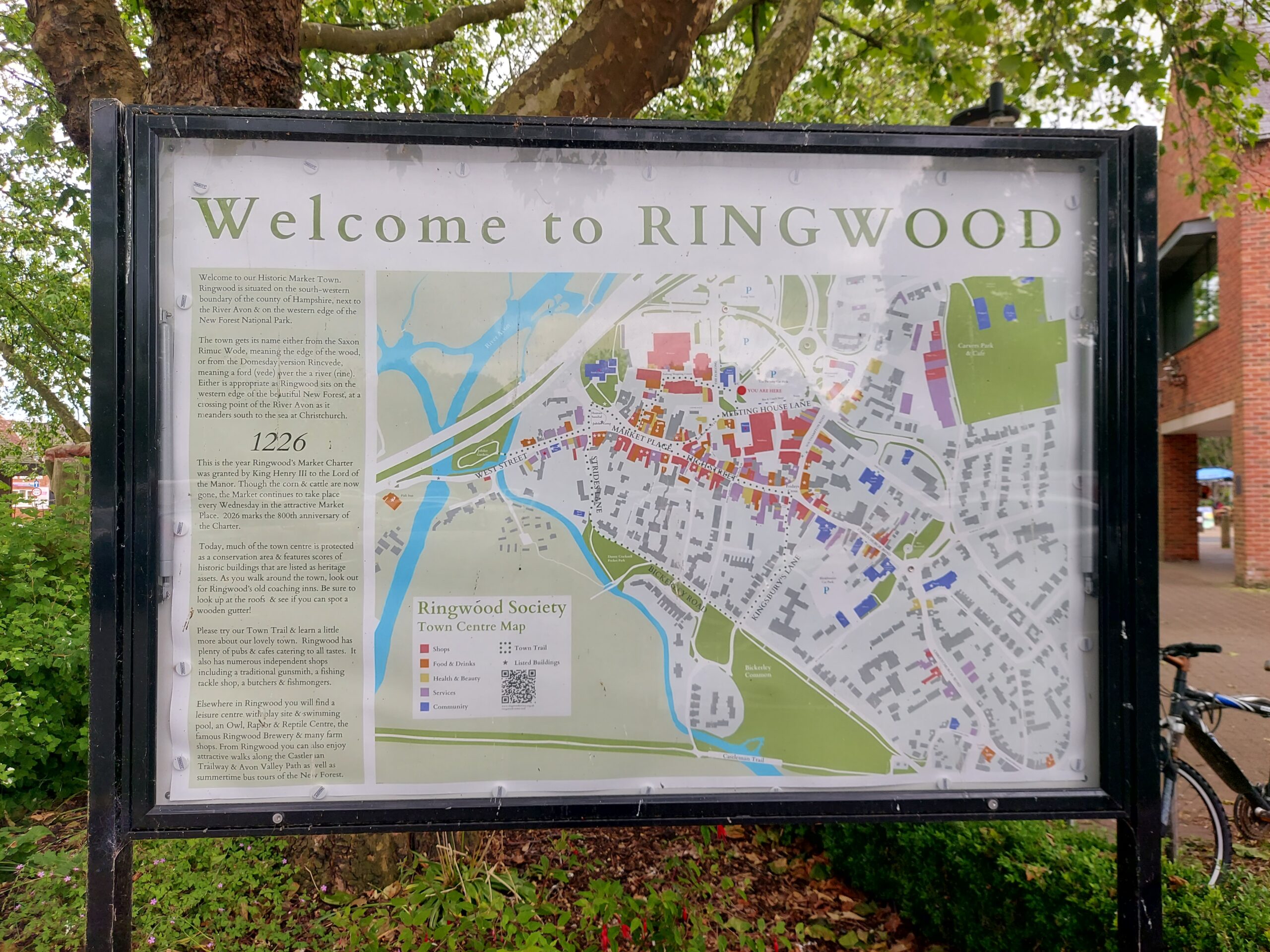
A sign with a map of Ringwood

I’ve just got back from a weekend in Ringwood, Hampshire, where I went in order to complete my Glamper badge for Rebel Badge Club. I needed to stay for at least 2 nights in a vehicle, and found a beautiful gypsy caravan courtesy of Fernwood Glamping. I thoroughly recommend staying there – it’s a beautiful place, and host Rachel is really attentive and friendly. There’s a shepherd’s hut too if a caravan isn’t your thing, and if there are a few of you you can book both and have the site to yourself.

A gypsy caravan

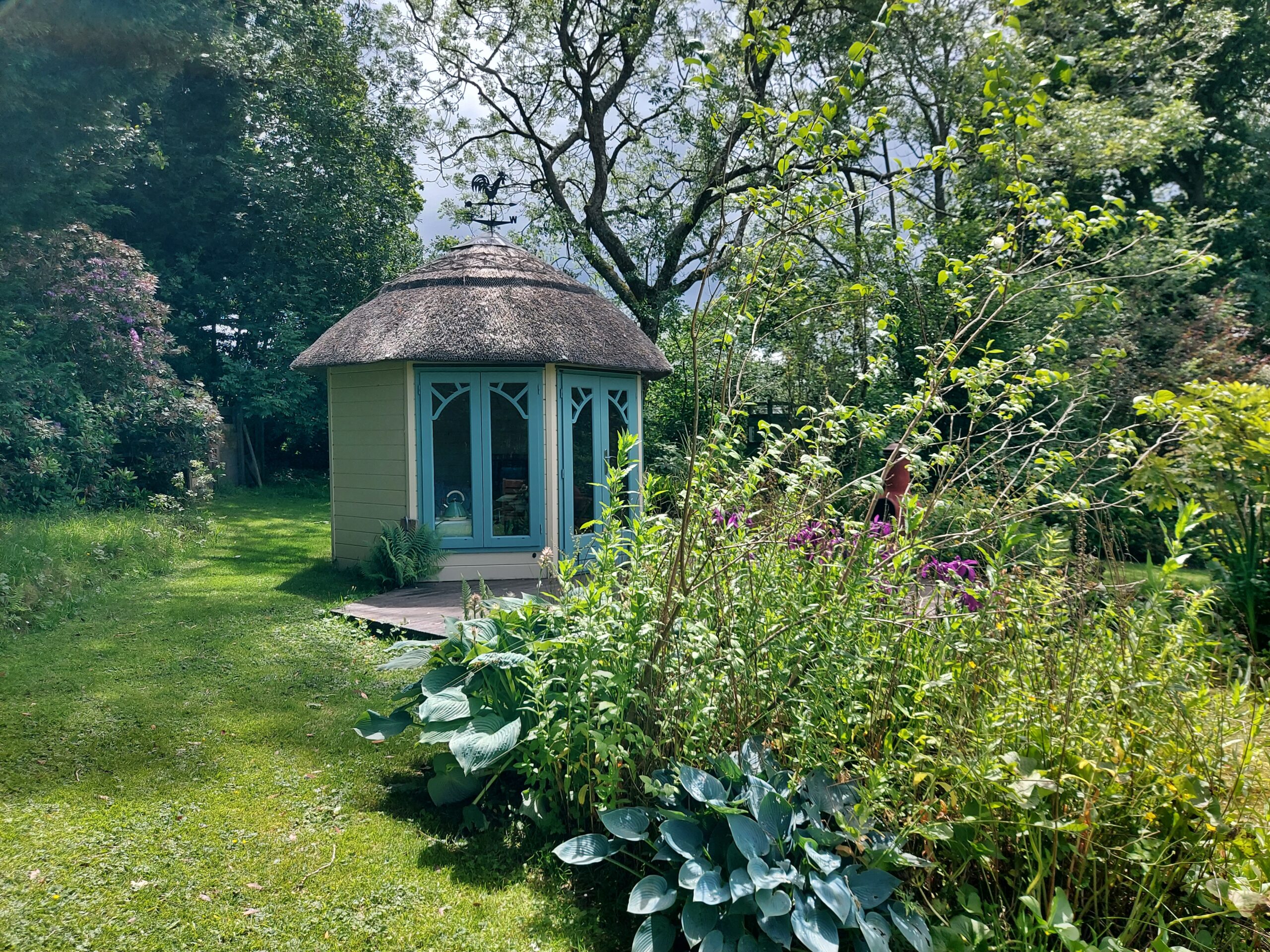
Use of the summer house was included, and I spent a lot of time just reading and drinking tea, or looking out at the pond. I lit the chiminea each night and sat out with a glass of wine while I cooked (or should I say, warmed up) my food.

A summer house

I travelled to Ringwood via coach from Victoria. It took less than three hours and the walk to the campsite was doable even with a large backpack (or it would have been, but Rachel very kindly gave me a lift!). Ringwood itself is a nice little town, but I spent most of my time exploring the outdoors.

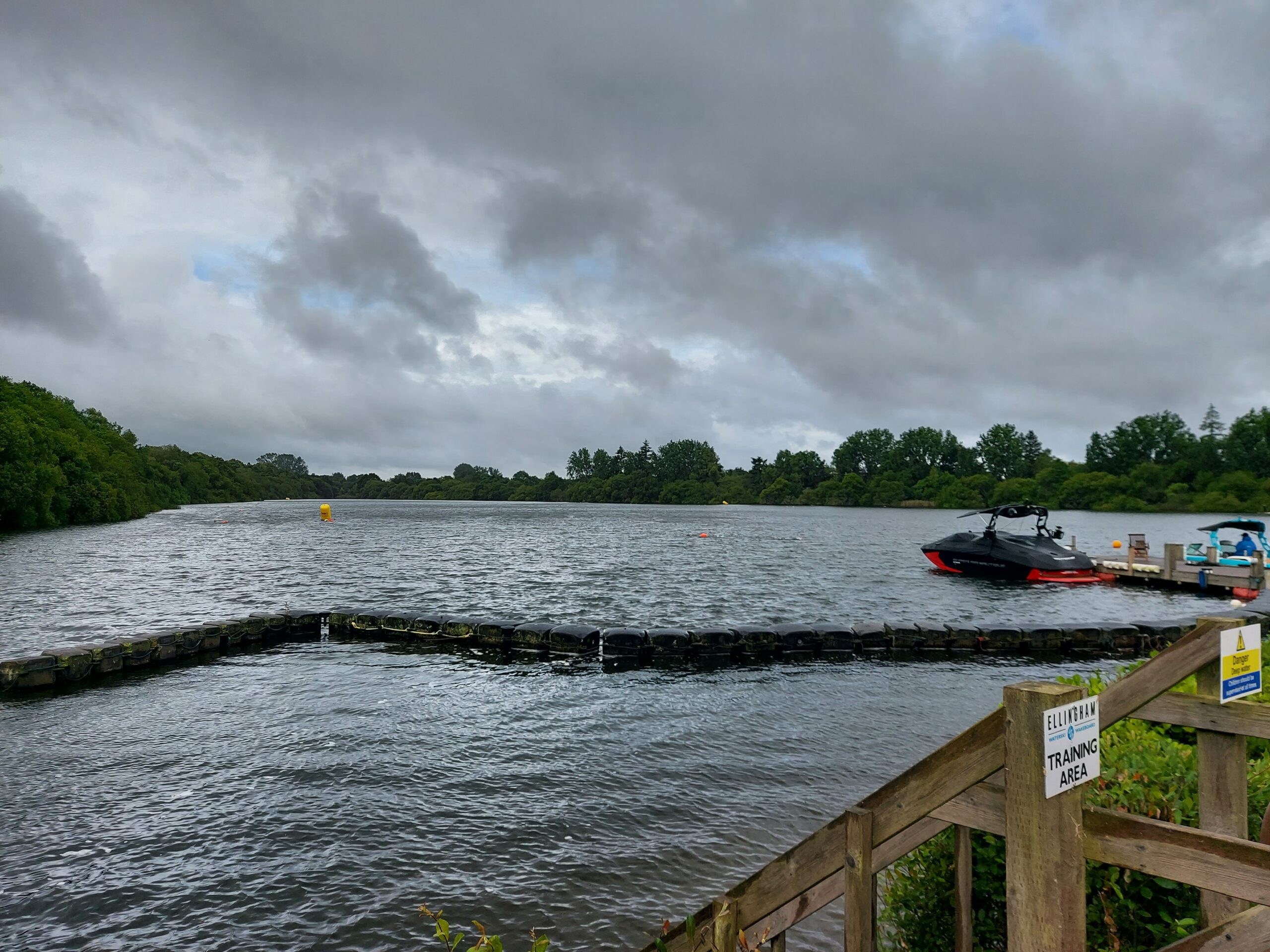
Ellingham Lake

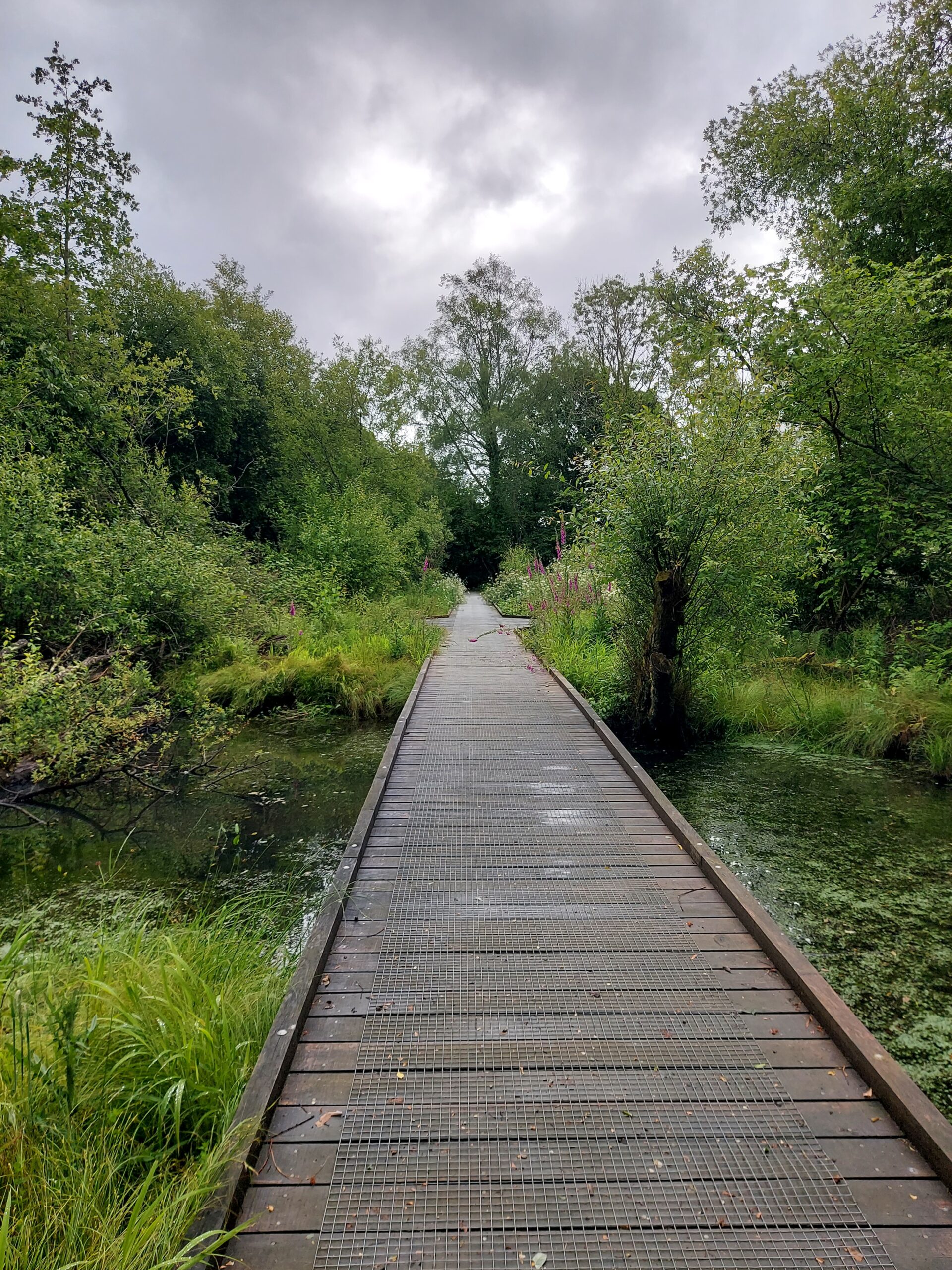
I was up early on the Saturday to go swimming at Ellingham Lake. It was a chilly, drizzly day, but I still enjoyed my swim. I then spent some time walking around Blashford Lakes Nature Reserve.

A wooden path though a wetland

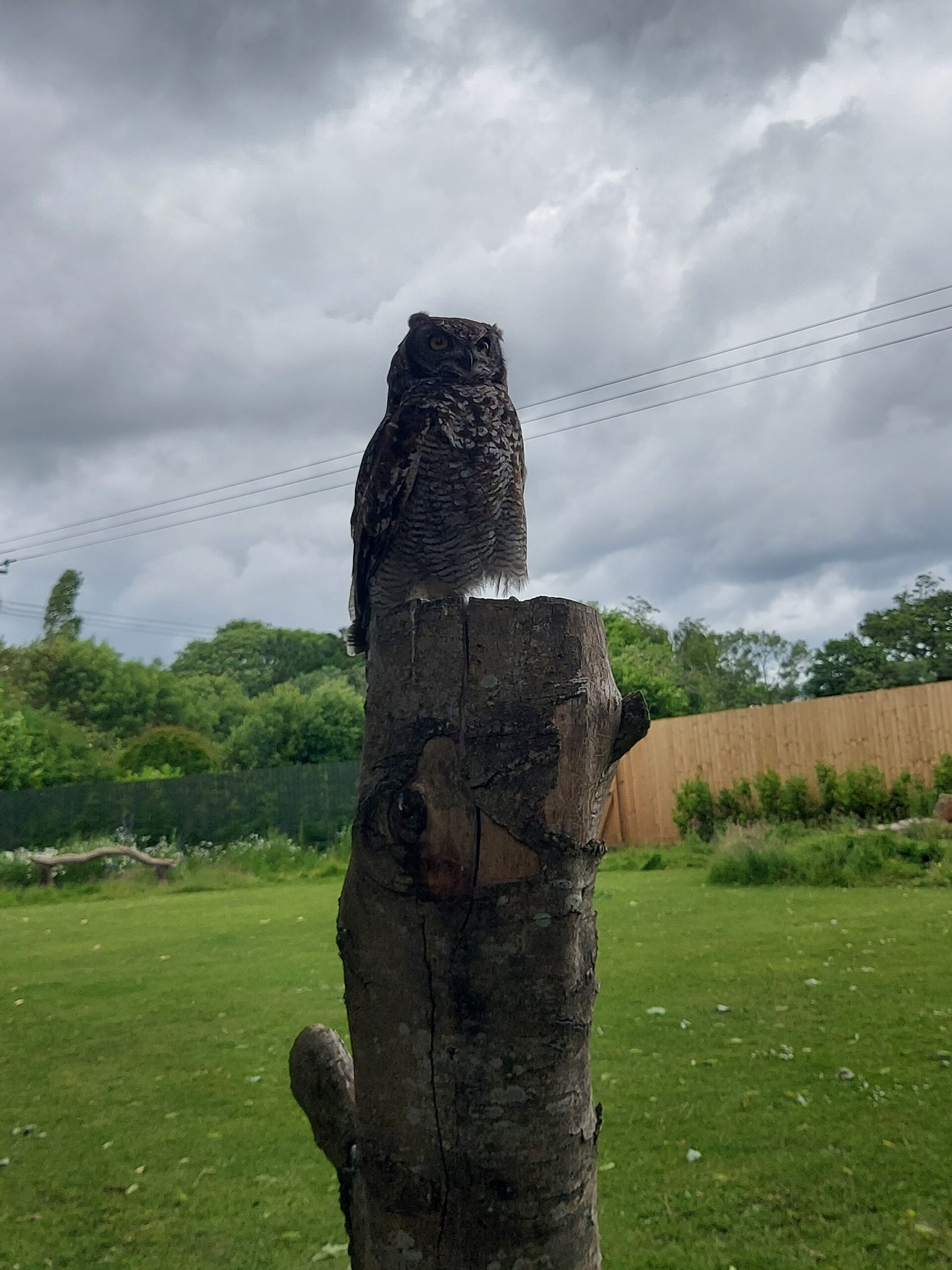
Later on I headed to Liberty’s Owl, Raptor and Reptile Centre and enjoyed a flying demonstration.

An owl on a post

The weather wasn’t the best, but I still enjoyed myself and had a lovely relaxing trip.

A chiminea

Rebel Badge Club: Carbon Footprint

Carbon Footprint badge

June’s monthly badge is Carbon Footprint, and requires Rebels to learn about the origins of the concept and then either look at individual ways of reducing one’s footprint, or look at the wider community impact. I’ve chosen to do the latter, mainly because there’s a limit to what I can do as an individual – I already produce fairly little waste, use public transport, don’t eat meat, and live in a shared house so can’t change bill suppliers.

Learn about the origins of the Carbon Footprint concept, and how and why it was brought into public usage.

The term carbon footprint was first used in a BBC vegetarian food magazine in 1999, deriving from the broader concept of an environmental footprint which had been around since 1979. It was popularised in 2005 when fossil fuel company BP hired an advertising company to promote the idea of a carbon footprint for individuals.

These origins are disappointing, but not really surprising, and makes me glad I have chosen to look at the wider community impact, as I do think there is too much emphasis on individual responsibility.

COMMUNITY IMPACT

Research the impact of clean air zones in cities.

Cities with clean air zones include Bath, Birmingham, Bradford, Bristol, Portsmouth, Sheffield and Tyneside (Newcastle and Gateshead). Not to mention, of course, London which has its own ULEZ (Ultra Low Emission Zone).

In London, “concentrations of air pollution have declined across London due to the ULEZ, but remain above the safe limits set by the World Health Organization.” The linked article suggests that the ULEZ is having a positive impact.

Research some of the natural alternatives to trees for reducing carbon dioxide levels.

Restoration and maintenance of peatlands can help create carbon sinks, as well as agricultural soils more generally. Biochar (a charcoal-like biomass by-product) also helps enhance carbon held in soil.

In the ocean, carbon-storing habitats include: kelp forests, salt marshes, seagrass beds, cold-water coral reefs, flame shell and mussel beds, and maerl.

Find out the difference between carbon-offsetting and carbon zero.

Carbon offsetting or carbon neutral means that any CO2 released into the atmosphere from a company’s activities is balanced by an equivalent amount being removed.

Carbon zero or net zero mean that an activity releases net zero carbon emissions into the atmosphere.

This article explores the differences further.

Research new technology to reduce the amount of carbon in the atmosphere.

Many such technologies exist and are being developed, though they are not without controversy. More research is needed to see how well they work.

Technologies include carbon-based concrete, carbon-eating crops, carbon-sequestering fertiliser and trapping carbon in rock. The section on Reversing existing damage in this article discusses them in more depth.

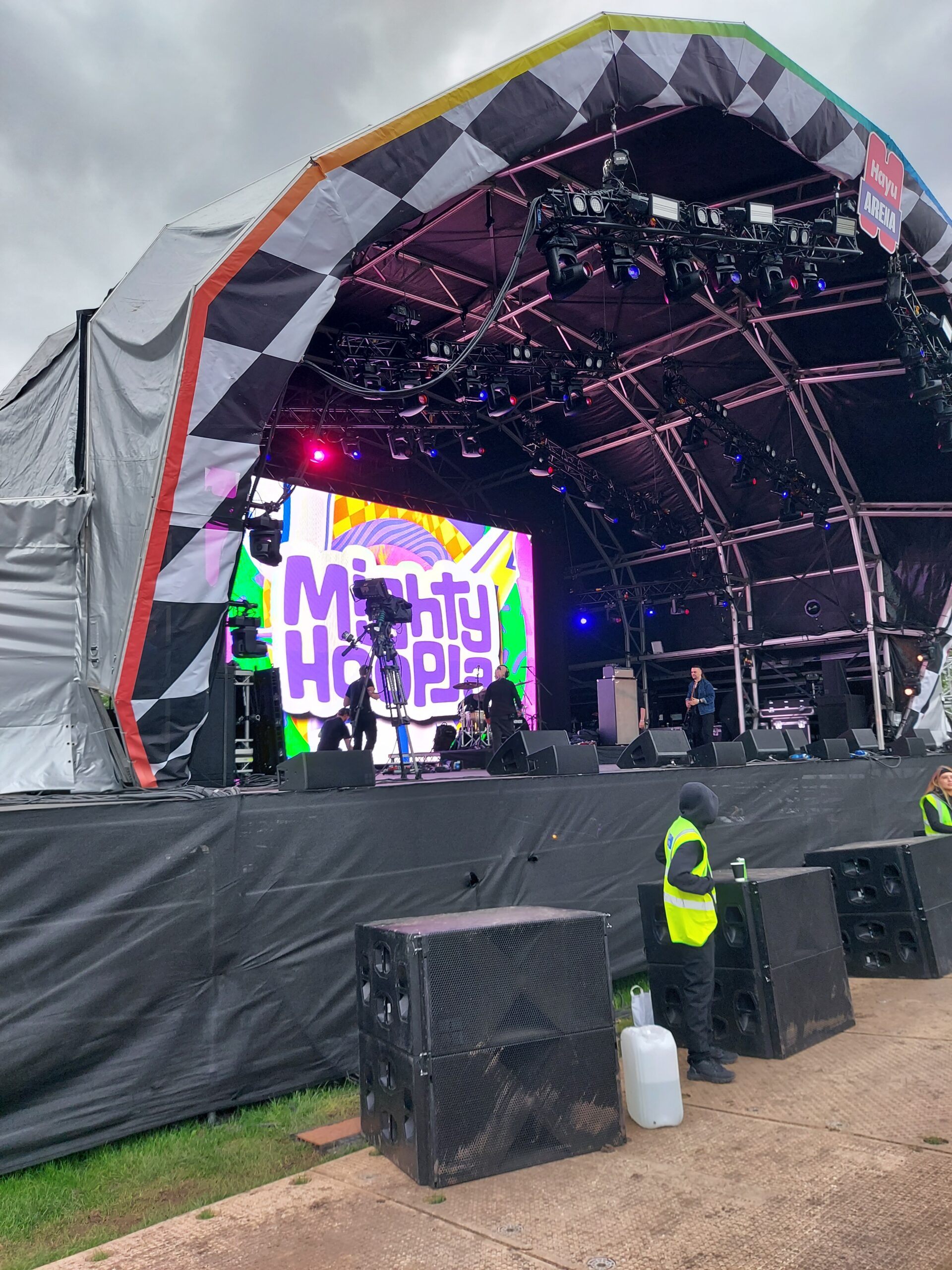
Mighty Hoopla

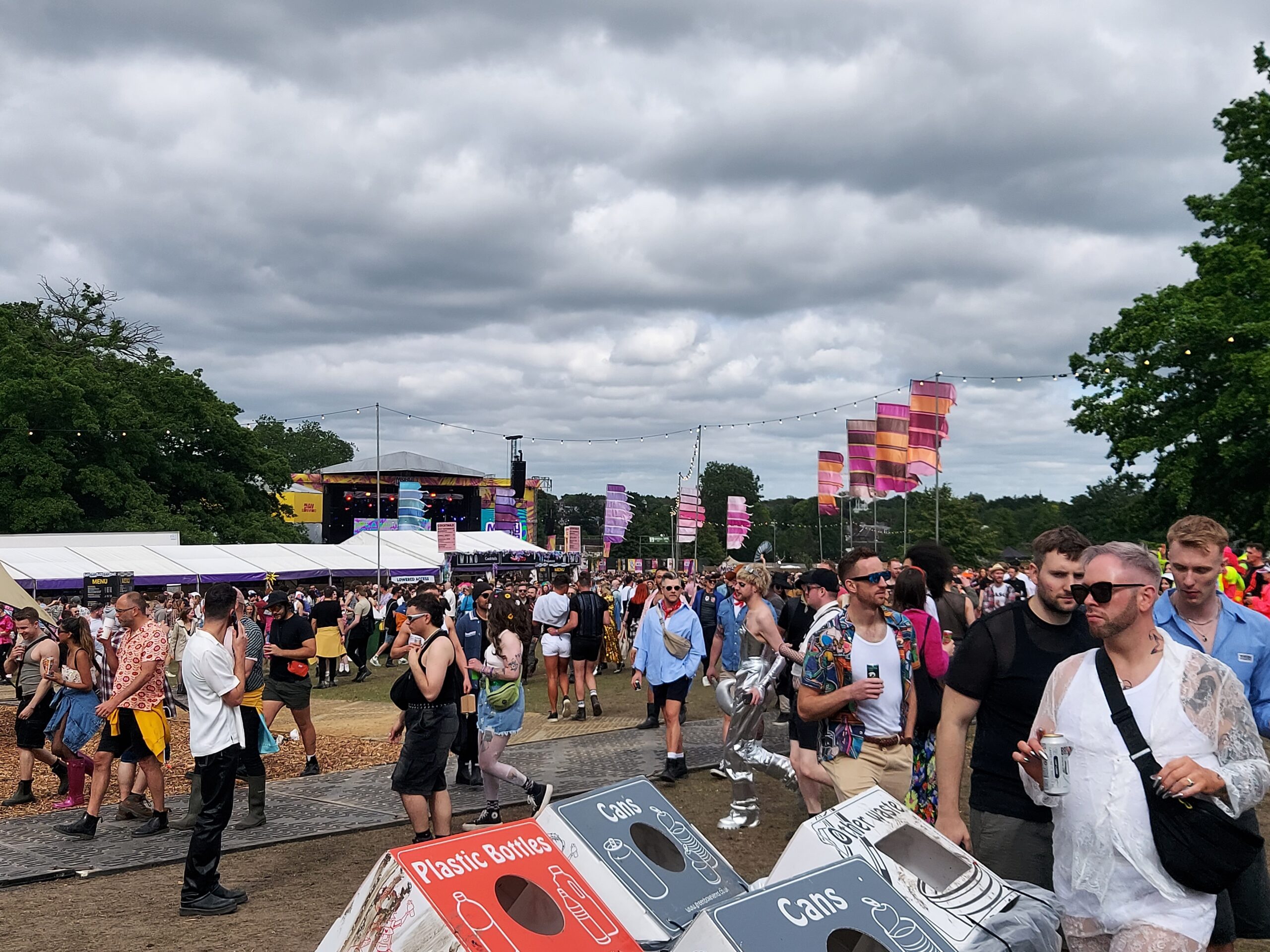
Hayu Arena stage at Mighty Hoopla

A few years ago, I started thinking about which artists I hadn’t seen live yet that I really wanted to, and Nelly Furtado was top of that list. Therefore, when she was announced for the Mighty Hoopla in June 2024, I knew I had to go – never mind that I would be there by myself. As it turned out, there were loads of other artists that I fancied seeing, too, so it was definitely worth the ticket price.

Mighty Hoopla was founded in 2016 by Jamie Tagg, Glyn Fussell, Sean Rowley and Ally Wolf. It started out at Butlins, before moving to Victoria Park then to Brockwell, south London, in 2018. It was started with the aim of being a safe and inclusive space for all music fans, particularly the LGBTQIA+ community. While not a member of that community, I felt incredibly safe during the festival, even as a solo woman: the atmosphere was brilliant and I got chatting to a few different people while I was there.

The weather prior to the festival had been incredibly wet, but the organisers did a fantastic job of securing and covering the ground to ensure the mud was kept to a minimum. There’s a bigger conversation to be had about the ethics of fencing off large portions of public parks for fee-paying customers and the inevitable noise pollution (plus the condition these parks are inevitably left in after the event), but that’s beyond the scope of this blog post. Luckily the festival itself stayed dry, though Saturday was freezing – more than once I found myself wishing I’d brought gloves!

On the Saturday, I got there just in time to catch the end of Michelle Gayle’s set on the Hayu Arena stage. I hadn’t heard her song ‘Sweetness’ in a long time! I then wandered over to the Main Stage to see Rebecca Black, who was unexpectedly good – her dancers also deserve some sort of award, because they were brilliant.

I hung around this area for a while, checking out the stalls and buying a couple of drinks, before watching Eve’s set. Turns out I knew more of her songs than I thought I did. I then wandered back to the Hayu Arena just in time for the end of Cher Lloyd’s set, which was a lot of fun. As people were leaving I managed to squeeze to the front in time for B*Witched, which I was chuffed about. They opened with ‘Rollercoaster’, ended with ‘C’est La Vie’ and in between performed several hits including my favourite, ‘Blame It On The Weatherman’.

I stayed in place to wait for the next act, Claire Richards from Steps, who performed a selection of Steps tracks as well as her own songs. There was an incredible moment when she brought out Delta Goodrem to duet on their track from Claire’s latest album.

Afterwards, I headed back to the Main Stage where I caught the end of En Vogue’s set, before getting as far to the front as I was able to catch Nelly Furtado’s performance. She was amazing, and I only wish her set had been longer, as she has a massive back catalogue which I would have loved to hear. She focused on her more mainstream club hits, whereas I would have loved to hear songs like ‘Turn Off The Light’ and ‘Try’. Still, I was just so happy to be able to see her live!

The next day, I got to Brockwell Park just as The Veronicas were finishing up. I headed to the Main Stage to see Rachel Stevens, who was great, and Bambie Thug, who made a bigger impact with their three songs than some other artists did with ten or more. They performed a song they’d written about Palestine and finished up with their Eurovision track ‘Doomsday Blue’, complete with crowdsurf.

I had a long time to wait before the next act I wanted to see, so found a shady spot and read a book for a while. I took my ereader with me on both days and it came in handy while waiting for bands to start!

I went over to the Hayu Arena in time to see Louise. She was absolutely brilliant and I feel like I’ve been underrating her all these years. Excitingly I’d managed to get to the front again, and stayed firmly put while waiting for Delta Goodrem to come on stage, chatting to a couple of other fans while I waited.

I was lucky enough to see Delta live on her tour last year, but I was so glad I was able to see her again here. She gave a brilliant performance and I hope she’s managed to gain some new fans so that she can play in the UK more often in the future!

I left the park after her performance in order to beat the rush. I had an absolutely fantastic weekend – buying a ticket to Mighty Hoopla was a great decision.

The crowds at Mighty Hoopla

Making More Mischief: Folk Costume in Britain – London College of Fashion

With a growing interest in folklore, I was keen to visit the exhibition of folk costume at the London College of Fashion. Making More Mischief: Folk Costume in Britain is a continuation of Compton Verney’s 2023 exhibition, Making Mischief: Folk Costume in Britain, which was the first of its kind to explore the importance of costume in folk customs across Britain today and the people bringing them to life.

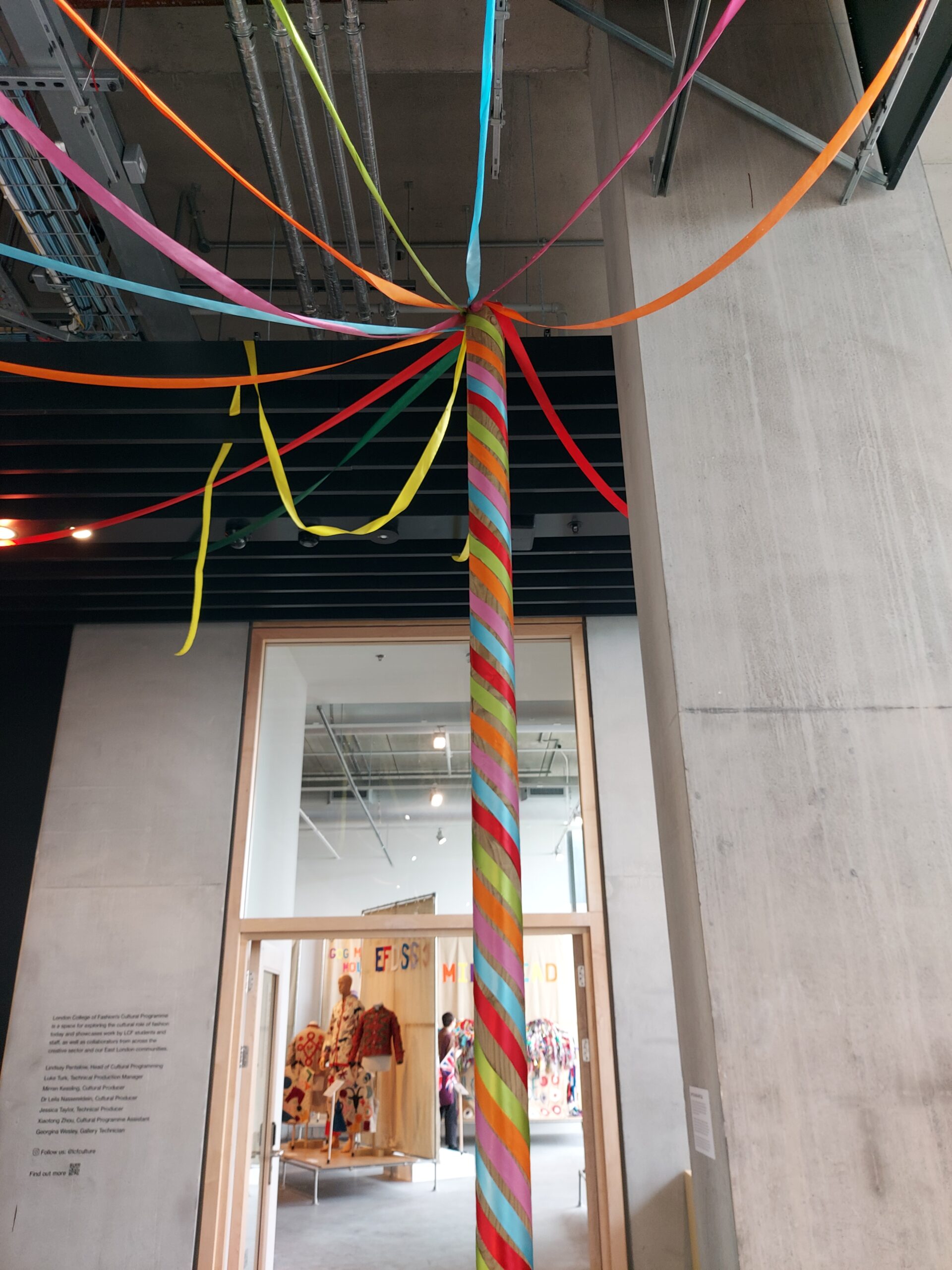
Maypole
A colourful maypole

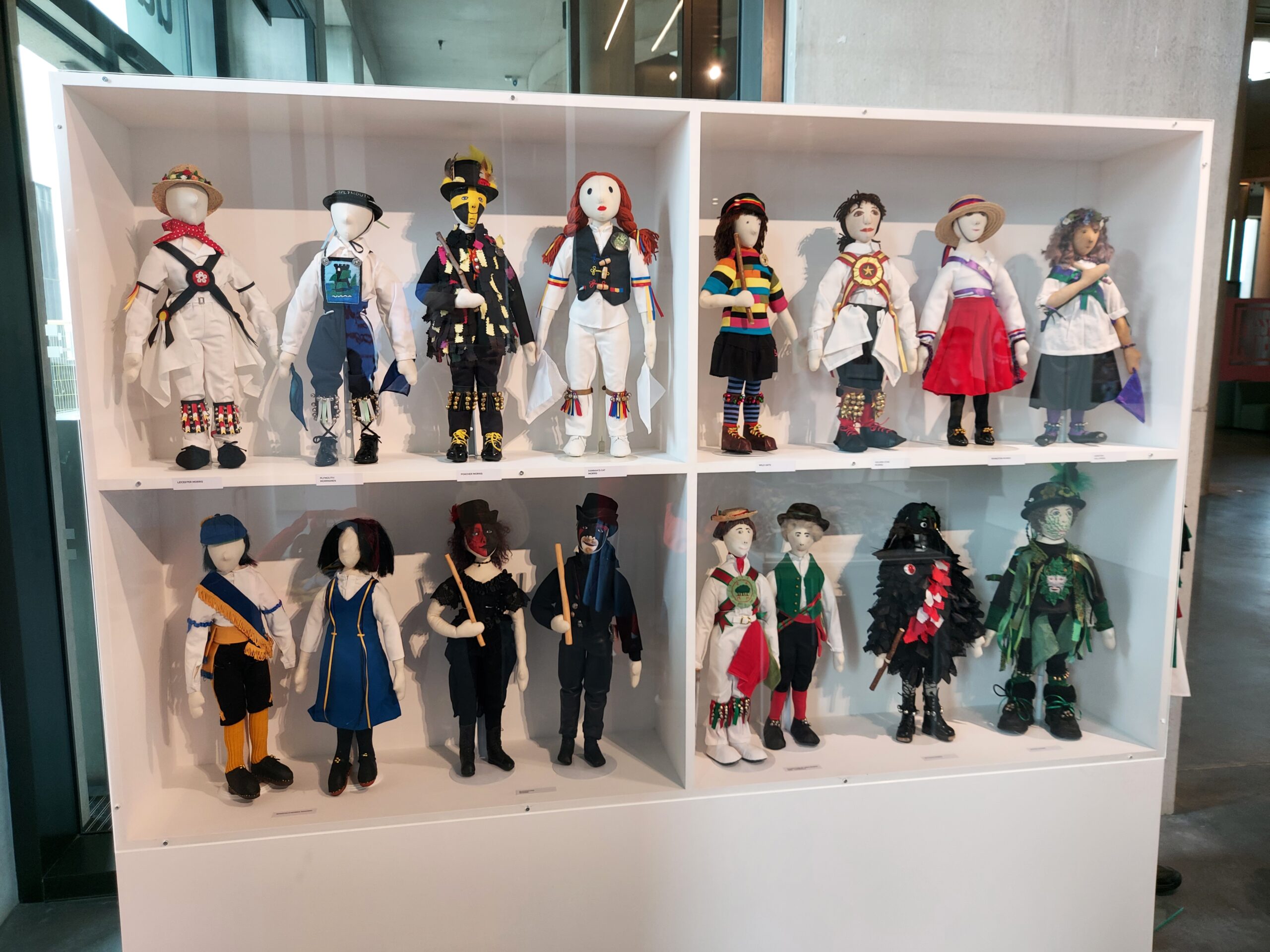
The exhibition features all kinds of folk costume: one of the standout exhibits is a selection of dolls each dressed in the costume of their Morris troupe. Morris dancing is one example of British folklore which is growing and thriving in the modern day.

Dolls dressed in Morris dancing costume
Some of the dolls dressed in Morris costume

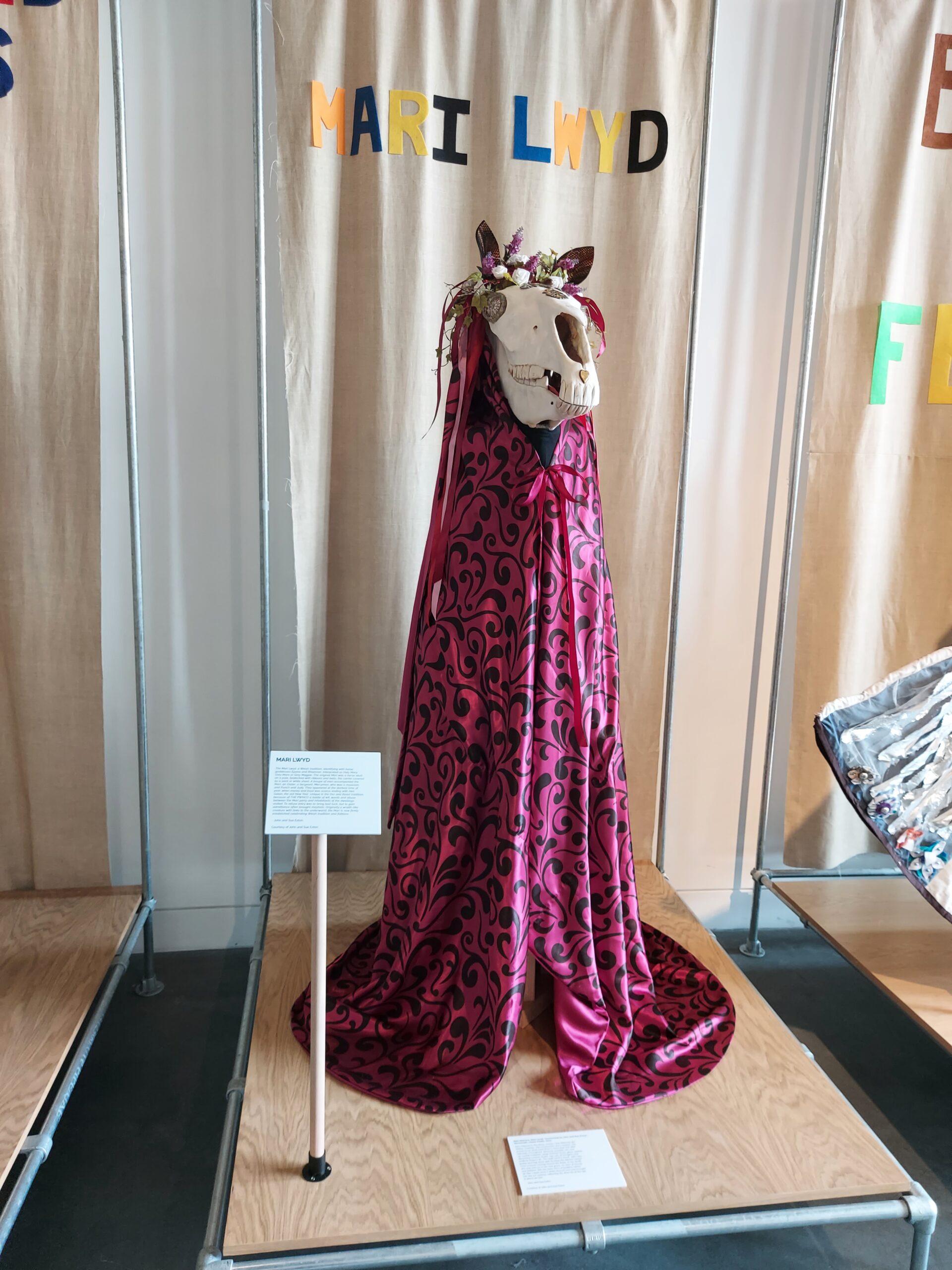
Customs from all over Britain are represented, including Mari Lwyd from Wales, Jack in the Green from Hastings and Deptford, and the Ooser from Dorset.

Mari Lwyd costume
Mari Lwyd costume

In addition, festivals and customs from London specifically are represented, including Doggett’s Coat and Badge Race, Swan Upping, and Somali May Day traditions.

Doggett's Coat and Badge Race costume
Costume from Doggett’s Coat and Badge Race

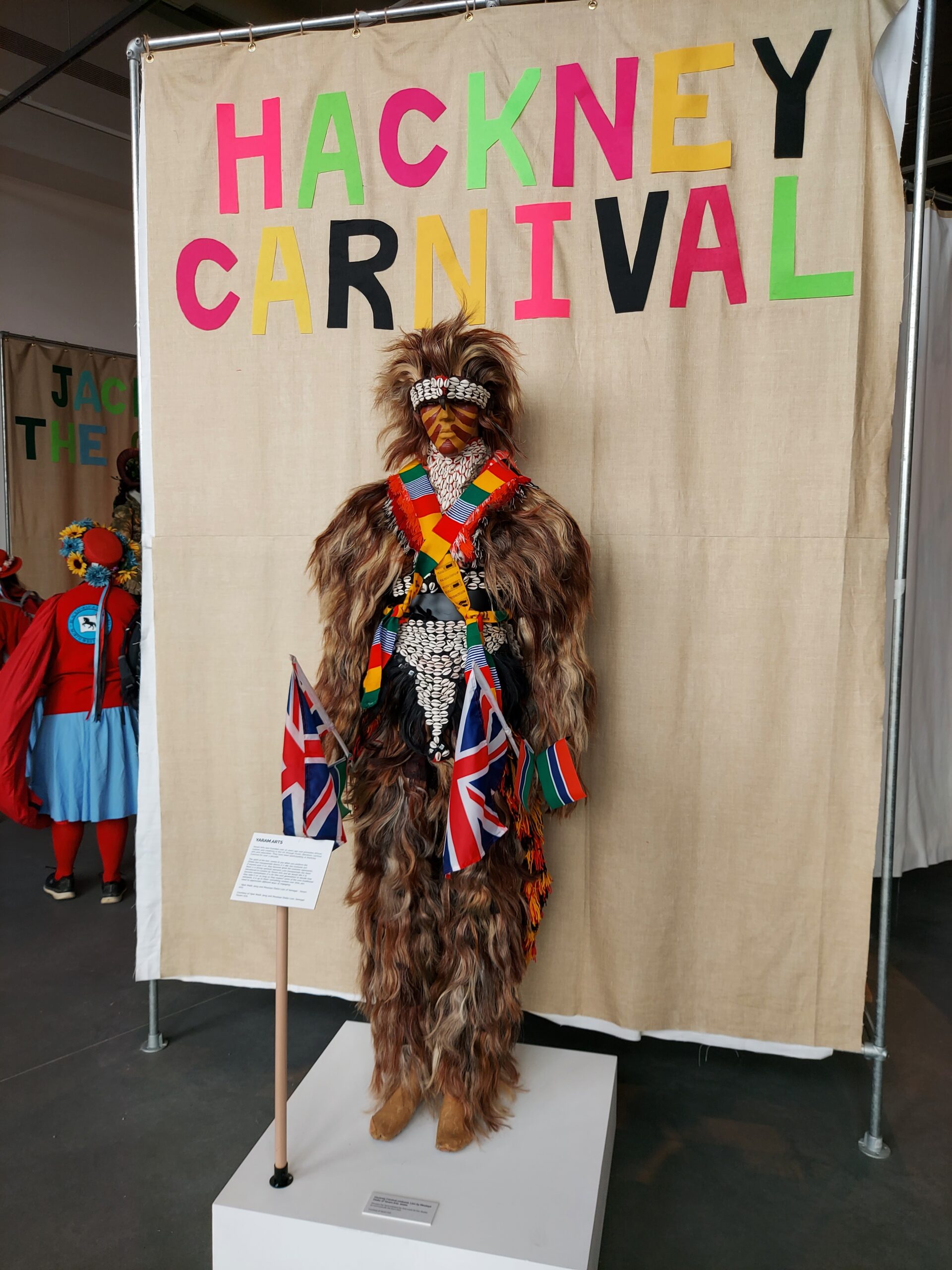
Several costumes from the Notting Hill and Hackney Carnivals are also displayed.

Costume from Hackney Carnival

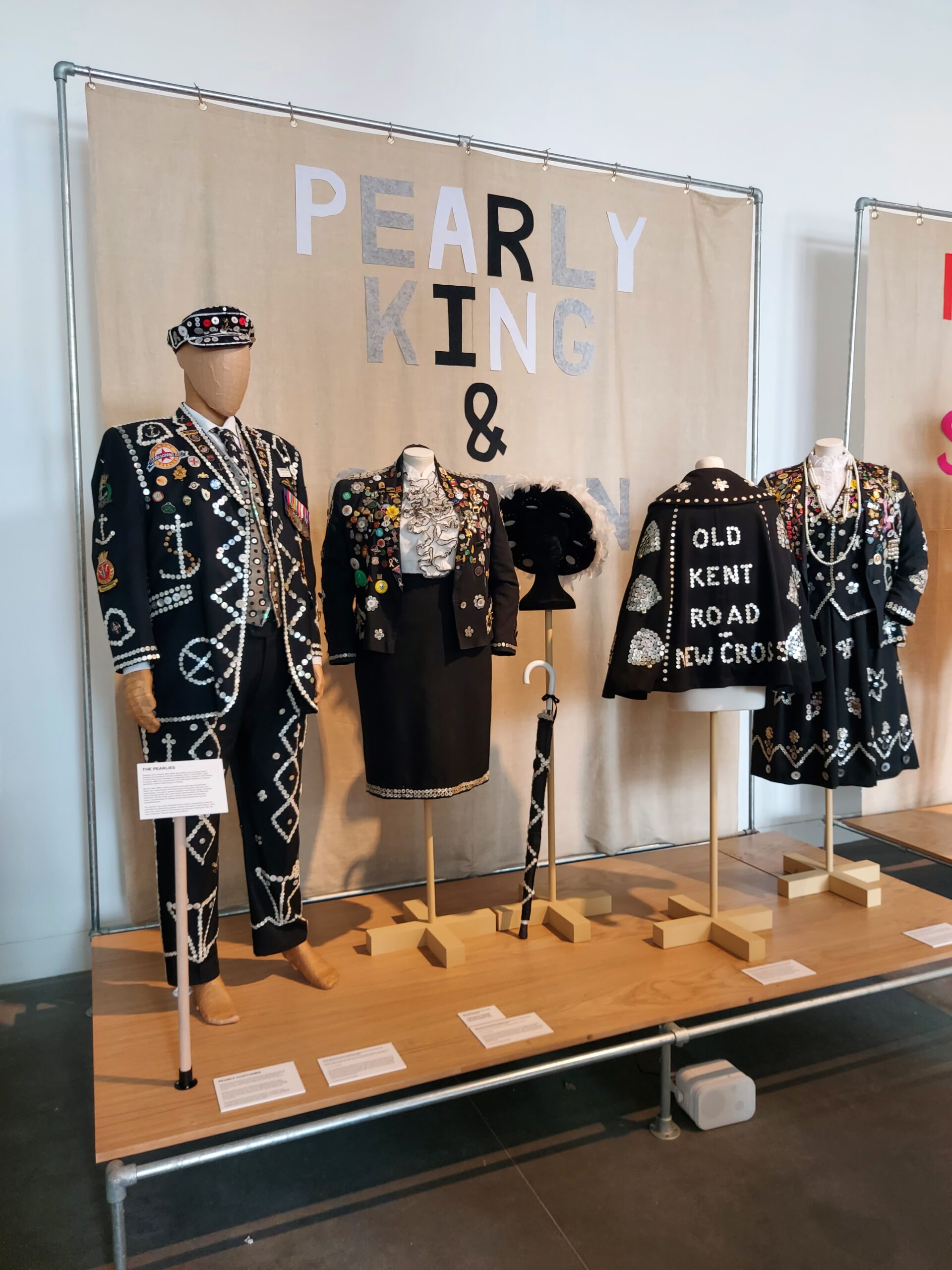
Pearlies are well represented in the exhibition, with costumes on display as well as sections looking at how pearl buttons were traditionally made.

Pearly King & Queen costumes

The exhibition really showcased how folk customs are thriving today and are increasingly subversive and inclusive. The testimonies from costume wearers helped to bring them to life and reveal their importance in folk culture.