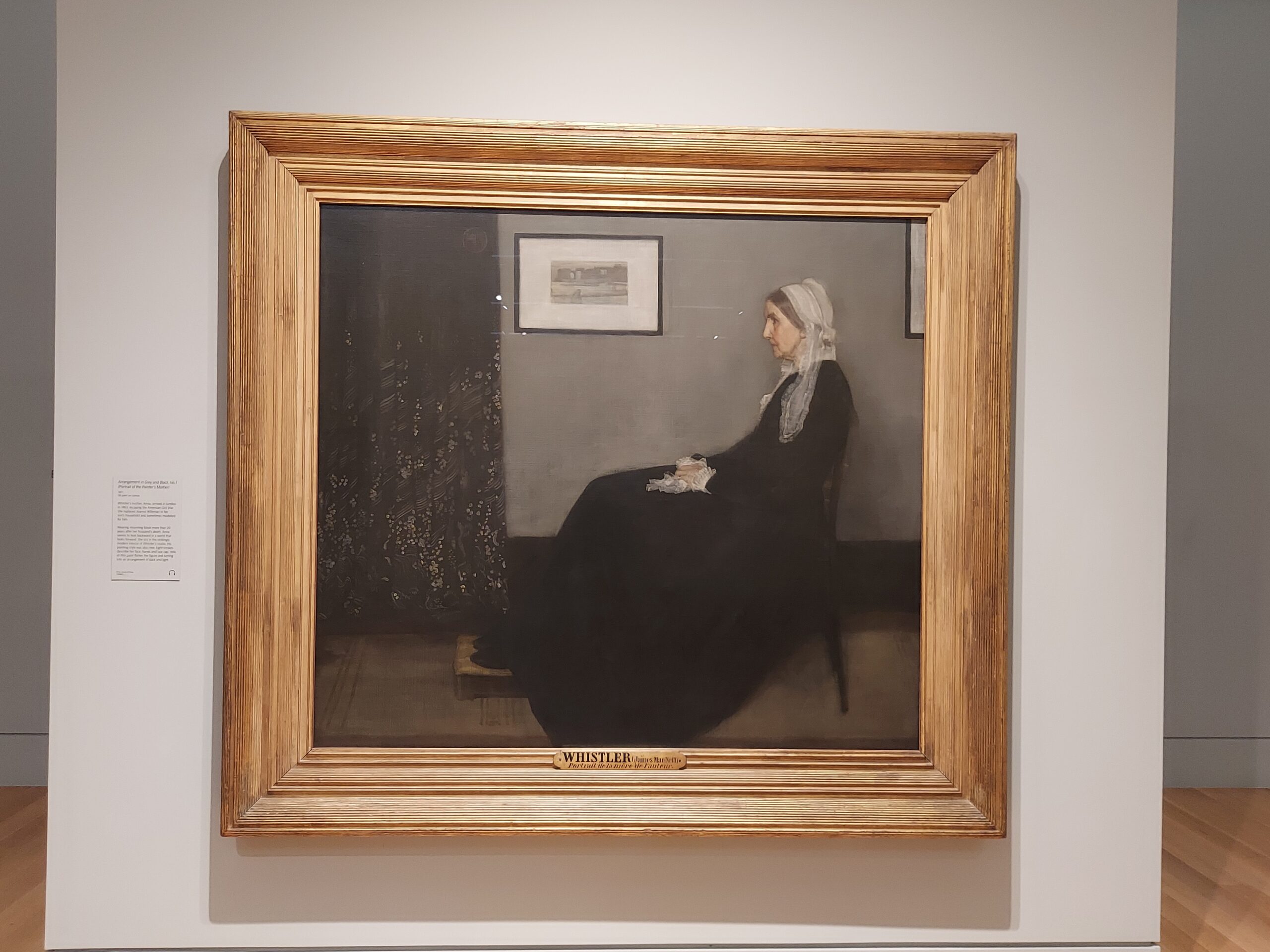
Whistler was born in the US but grew up in St Petersburg. He began his career with linocuts and etchings, but after coming into a small inheritance aged 27, he took up art seriously. He was inspired by Chinese and Japanese art, and influenced by bohemian Paris.
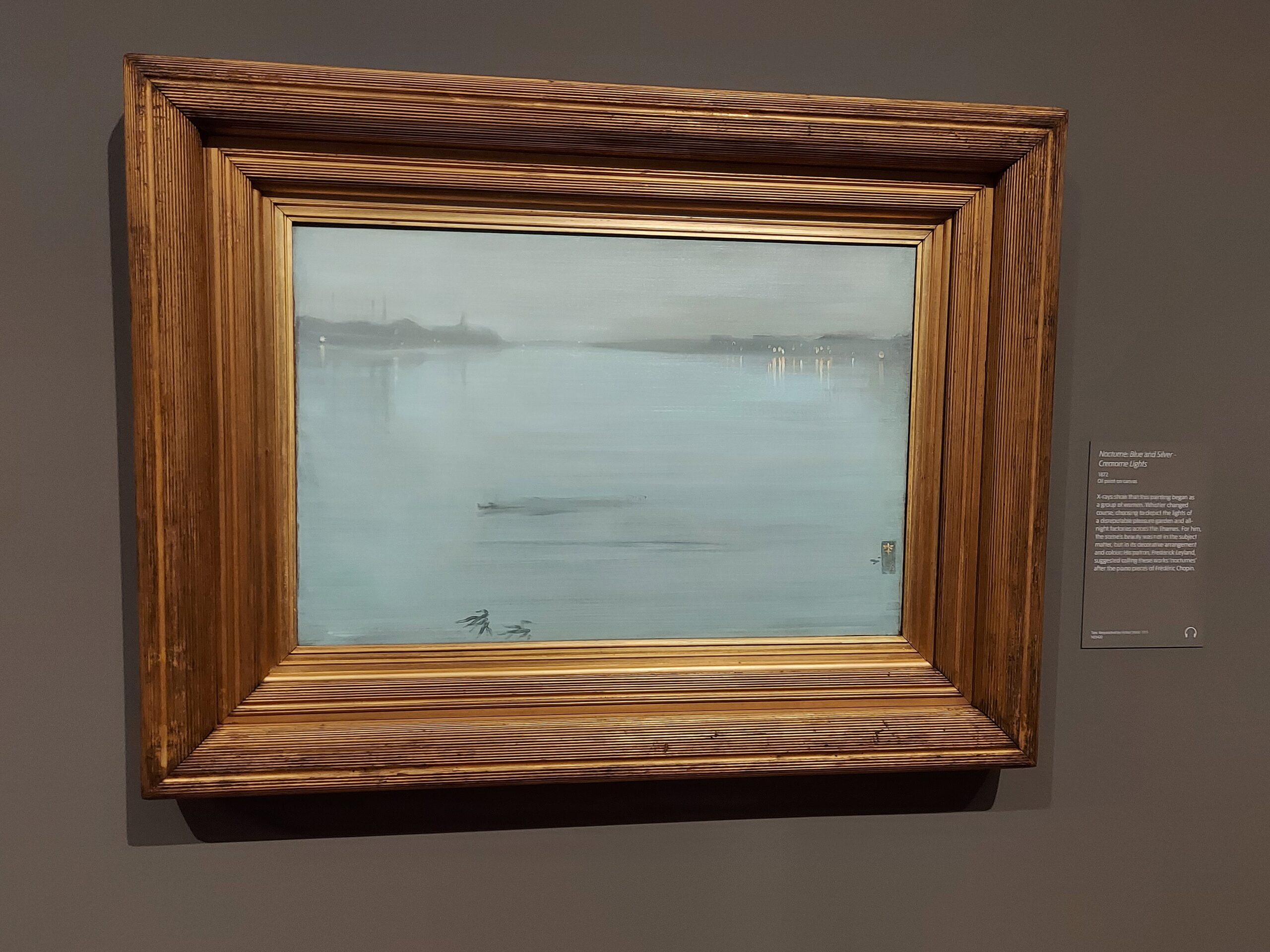
Whistler’s philosophy of art argued that art should improve on nature. His works displayed here illustrate his interests and influences. His use of colour is notable, as well as his interpretation of light and shade.
I was interested to learn about his feud with Leighton – a reconstruction of the Peacock Room he created for the other artist is displayed in the exhibition, complete with cartoon featuring Whistler and Leighton as fighting peacocks. Whistler was also involved in a libel case with Ruskin: not all those in the contemporary art world understood him and his work.
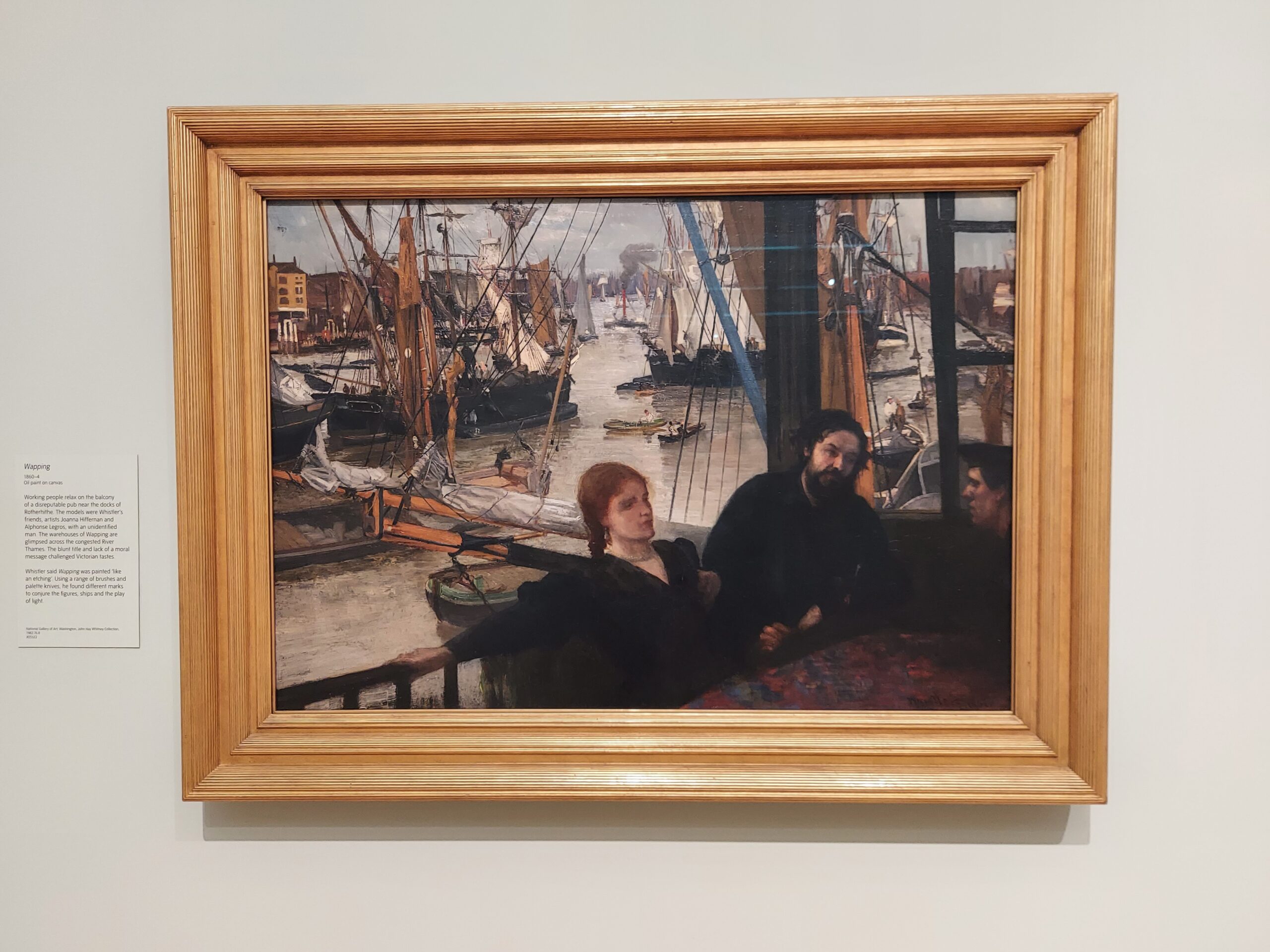
I was impressed with Whistler’s use of black, grey and white (as in his portraits of society women and of his own mother), his vivid landscapes of London (such as ‘Wapping’), and his ‘Nocturnes’. I enjoyed the exhibition and found a lot to appreciate in it.
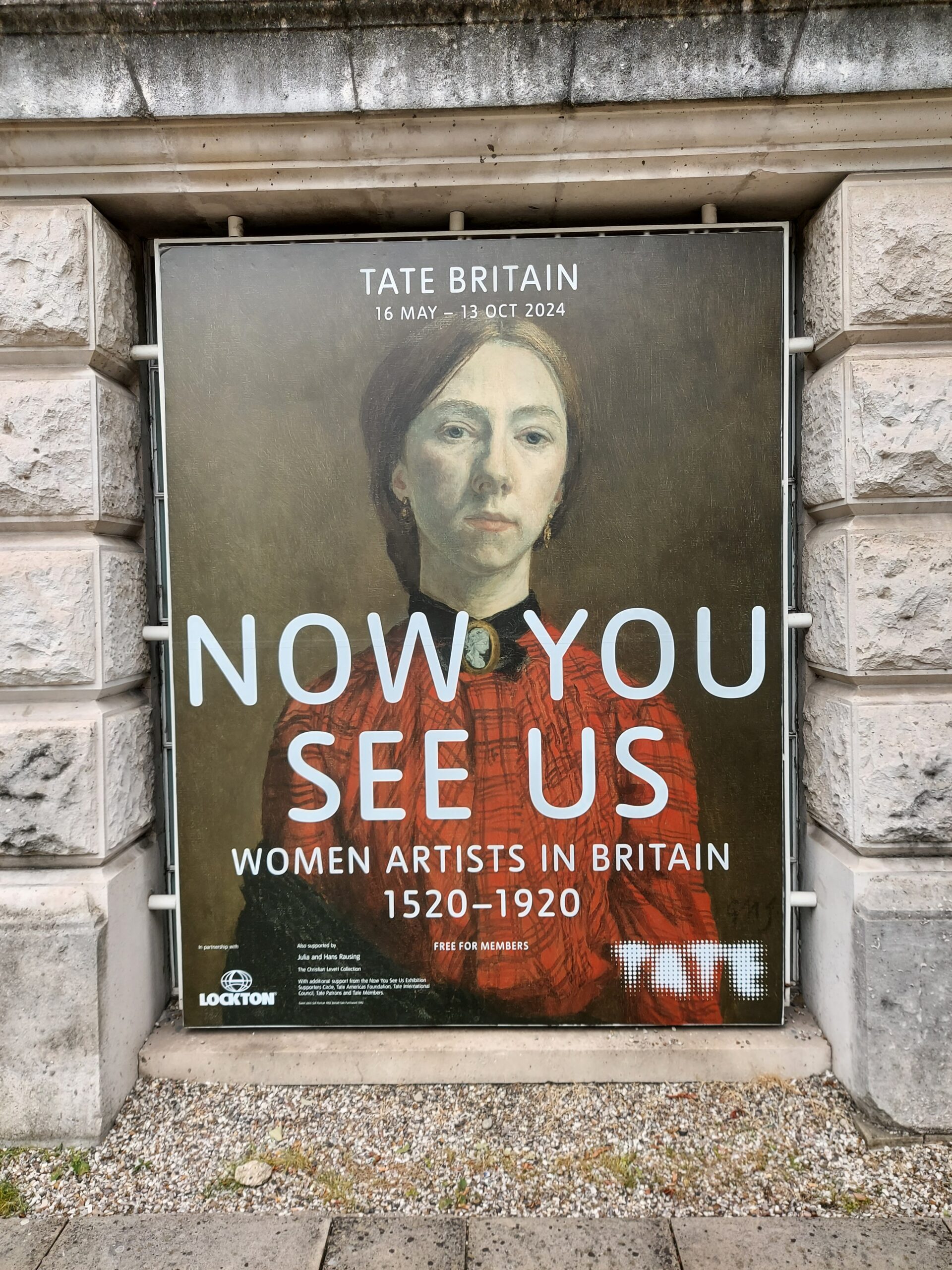
The second exhibition I went to see at Tate Britain was Now You See Us: Women Artists in Britain 1520-1920. This exhibition, spanning 400 years, features art by women through the centuries struggling to be taken seriously and be recognised as professional artists.
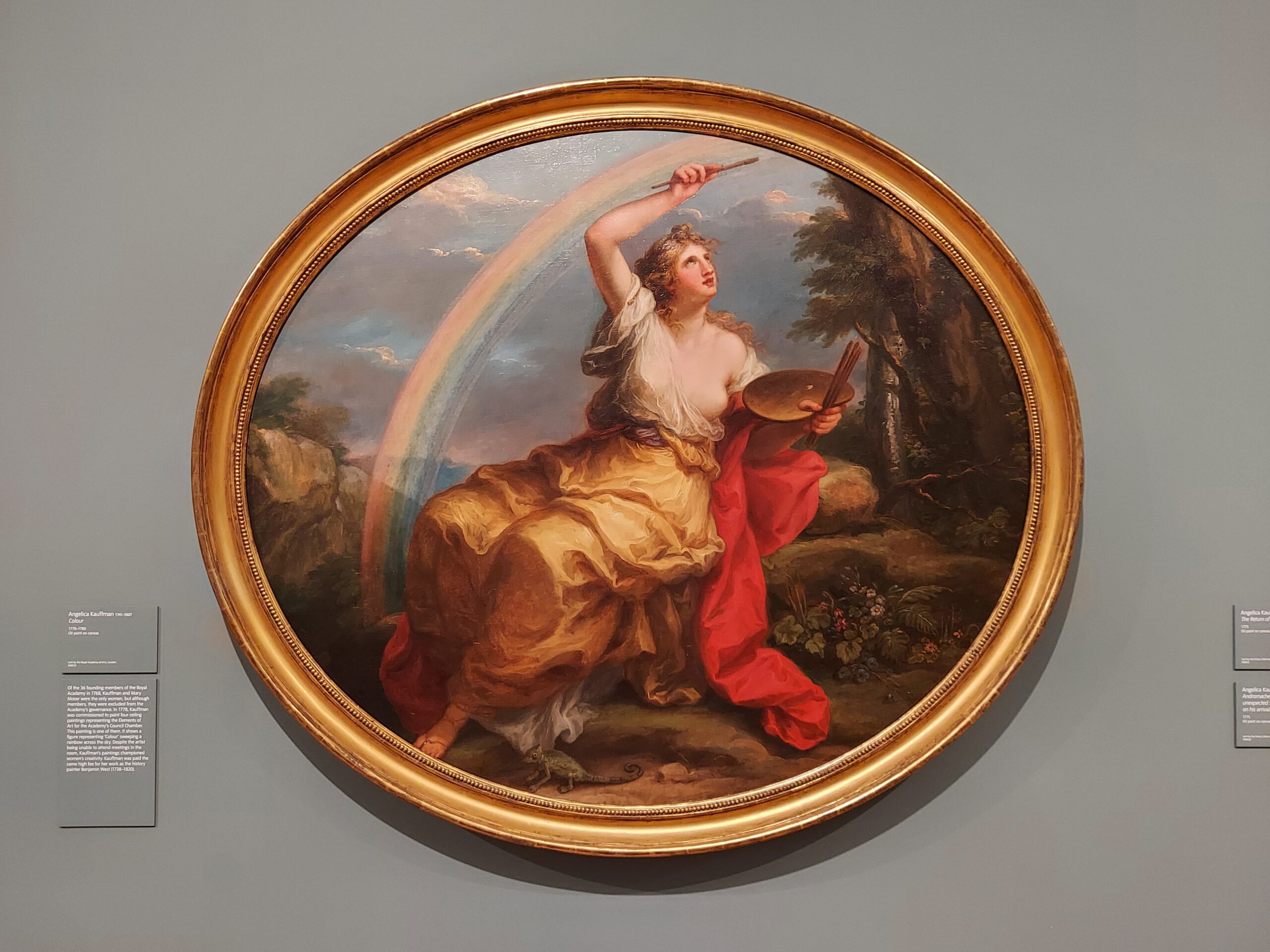
The art in the exhibition is displayed in a roughly chronological manner. It begins with artists like Mary Beale, one of Britain’s first professional women artists, and Angelica Kauffman, who was Swiss but who had a successful career in London and was one of the founder members of the Royal Academy.
Colouring, Angelica Kauffman, 1788-80
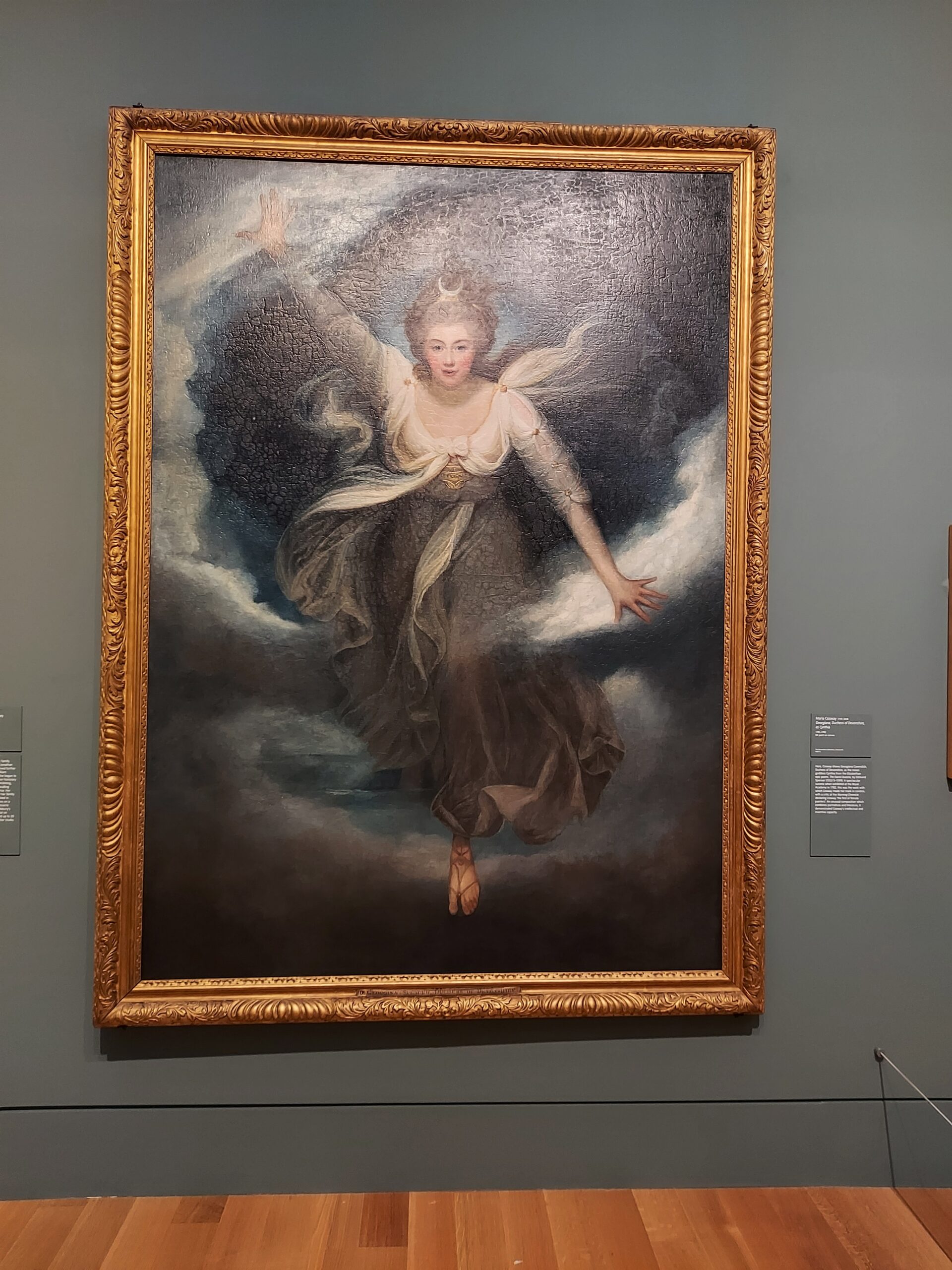
Female artists of the period often painted portraits, usually, though not exclusively, of women.
Maria Cosway, Georgiana as Cynthia from Spenser’s ‘Faerie Queene’, 1781-82
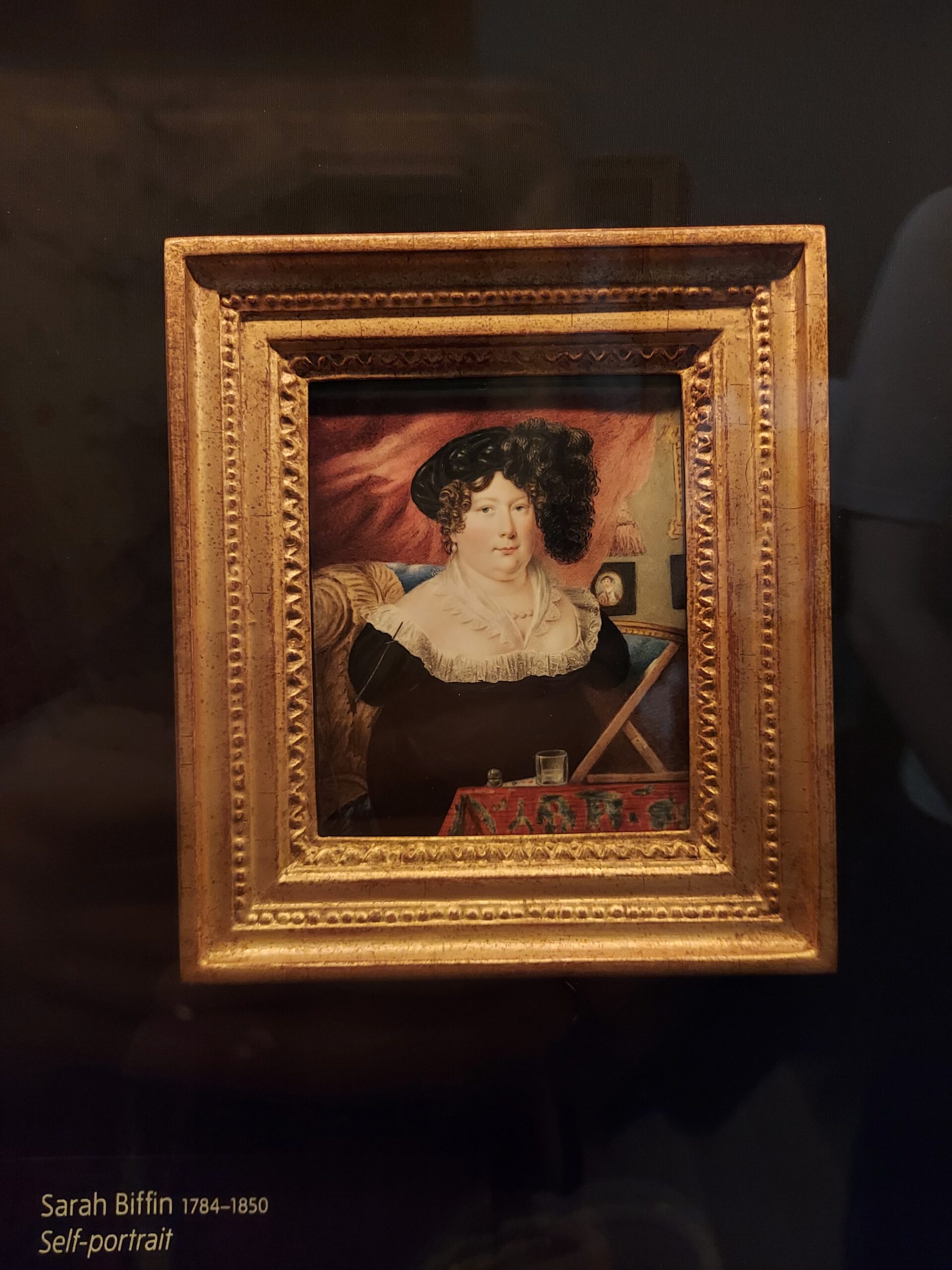
I was particularly impressed by the work of Sarah Biffin, who was born without legs or arms and learned to paint using her mouth.
Sarah Biffin, Self-portrait, 1820s
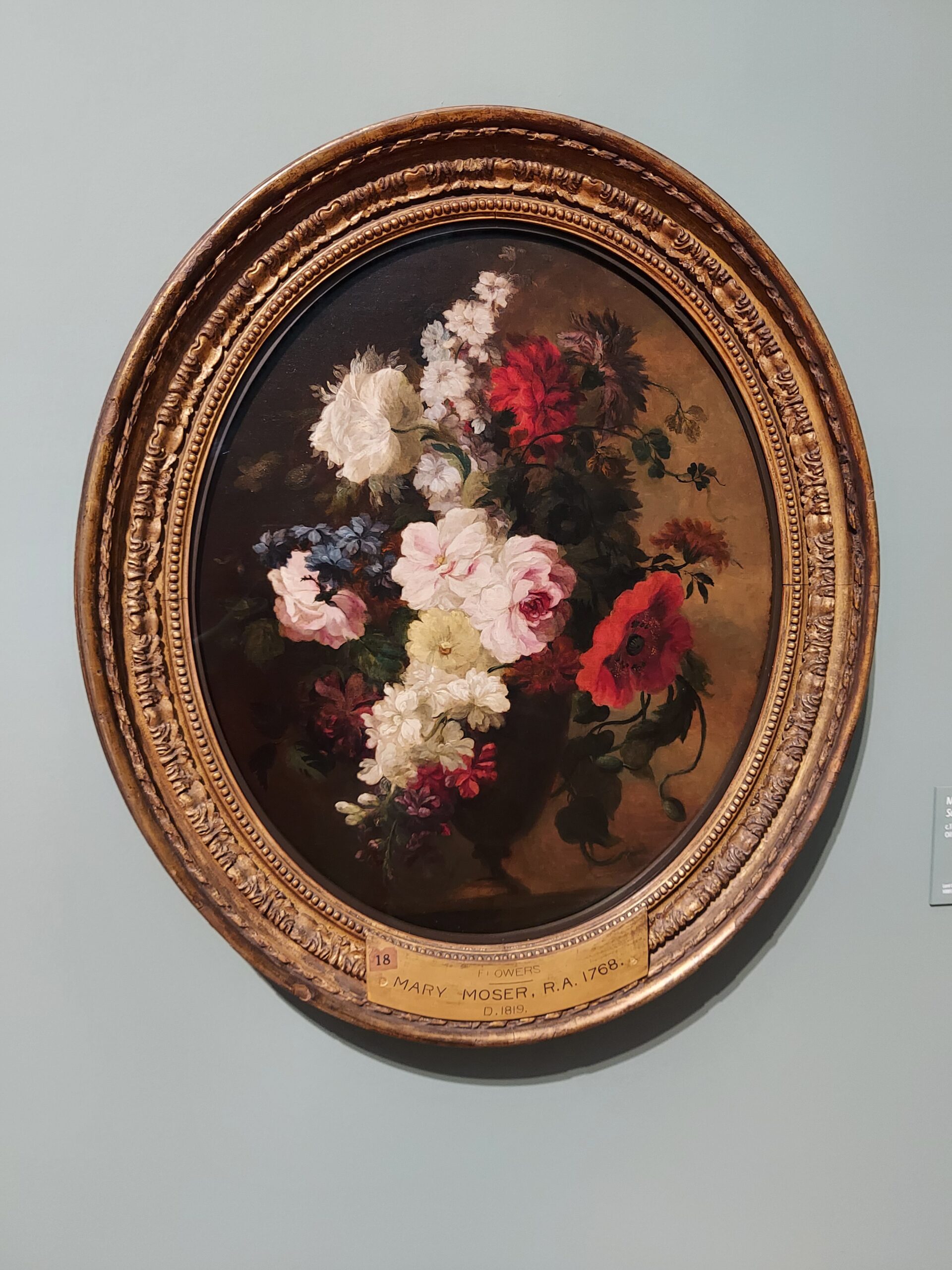
Still life paintings, especially flowers, were seen as an appropriate subject for women; while not groundbreaking, the floral works in the exhibition are technically as skilfully produced as any man’s. The only other female founder member of the Royal Academy, Mary Moser, was famous for her floral works.
Mary Moser, Summer, c. 1780
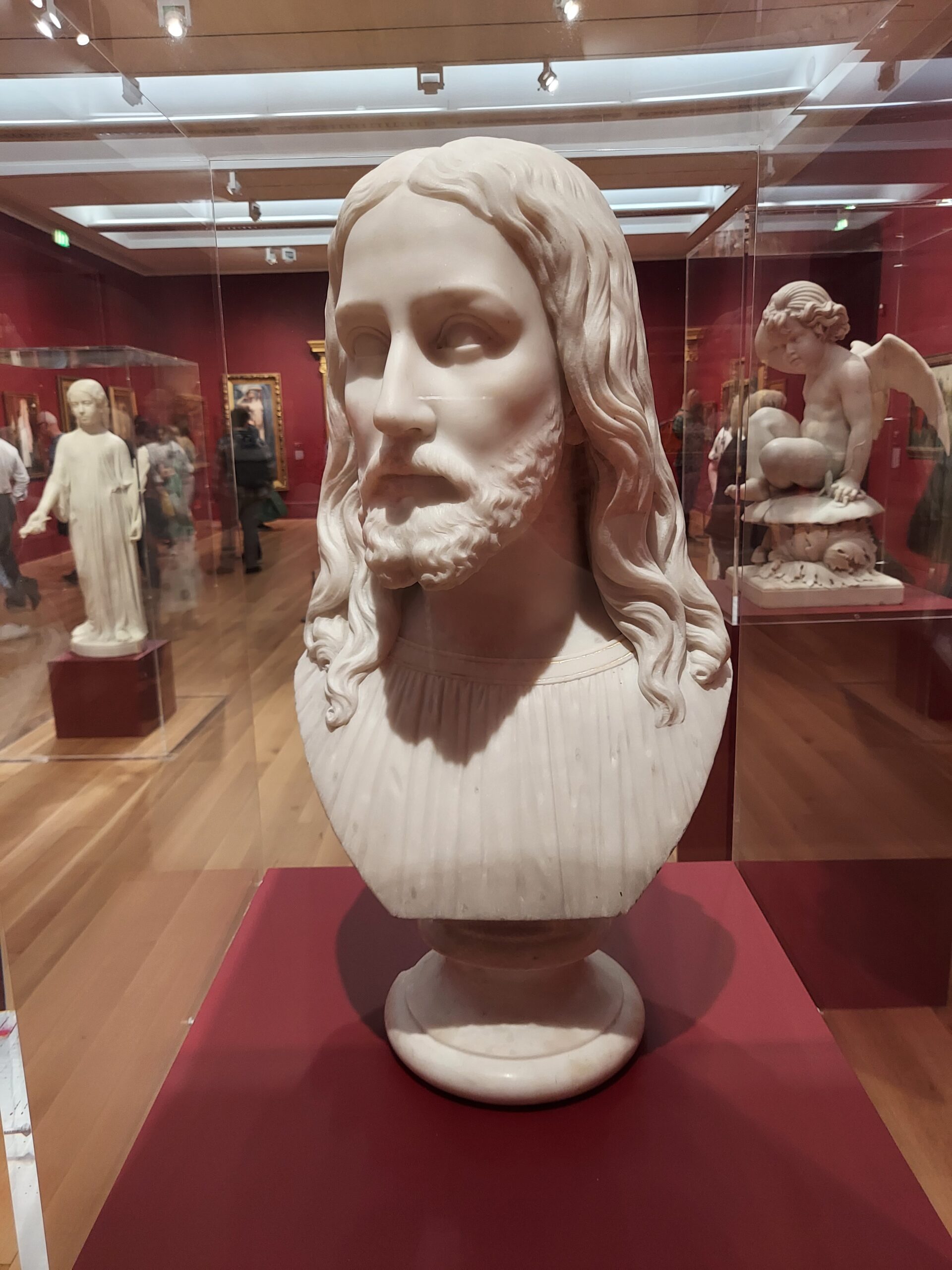
Not everything in the exhibition is a painting. Some sculptures are on display, including a bust of Christ by Edmonia Lewis, the first female black American to work as a professional sculptor.
Bust of Christ, Edmonia Lewis, 1870
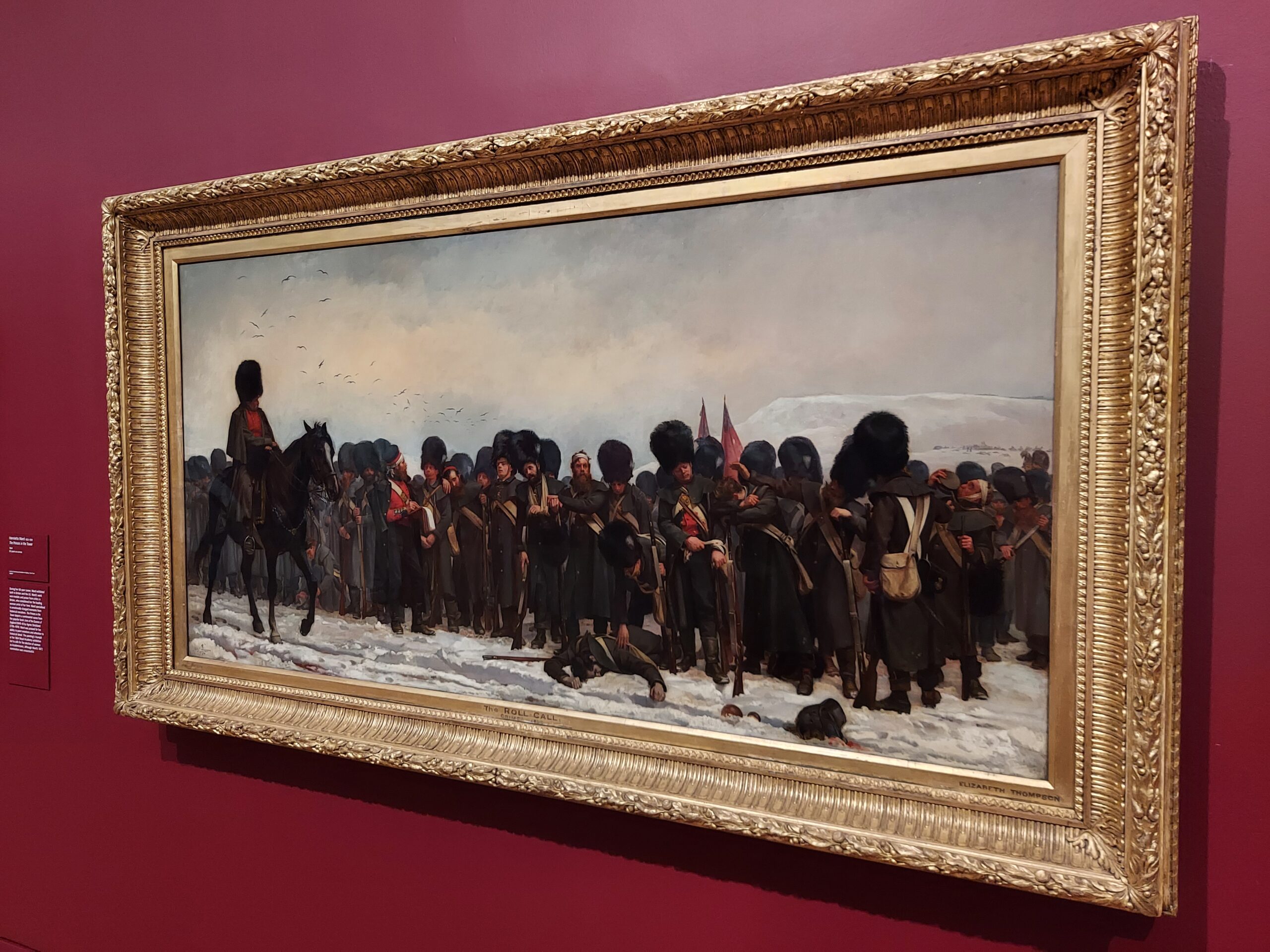
As time wore on, more and more women were able and willing to challenge the expectations laid down for them. For example, Elizabeth Butler (Lady Butler) painted works with the theme of war, usually thought of as a ‘male’ subject.
Lady Butler, The Roll Call, 1874
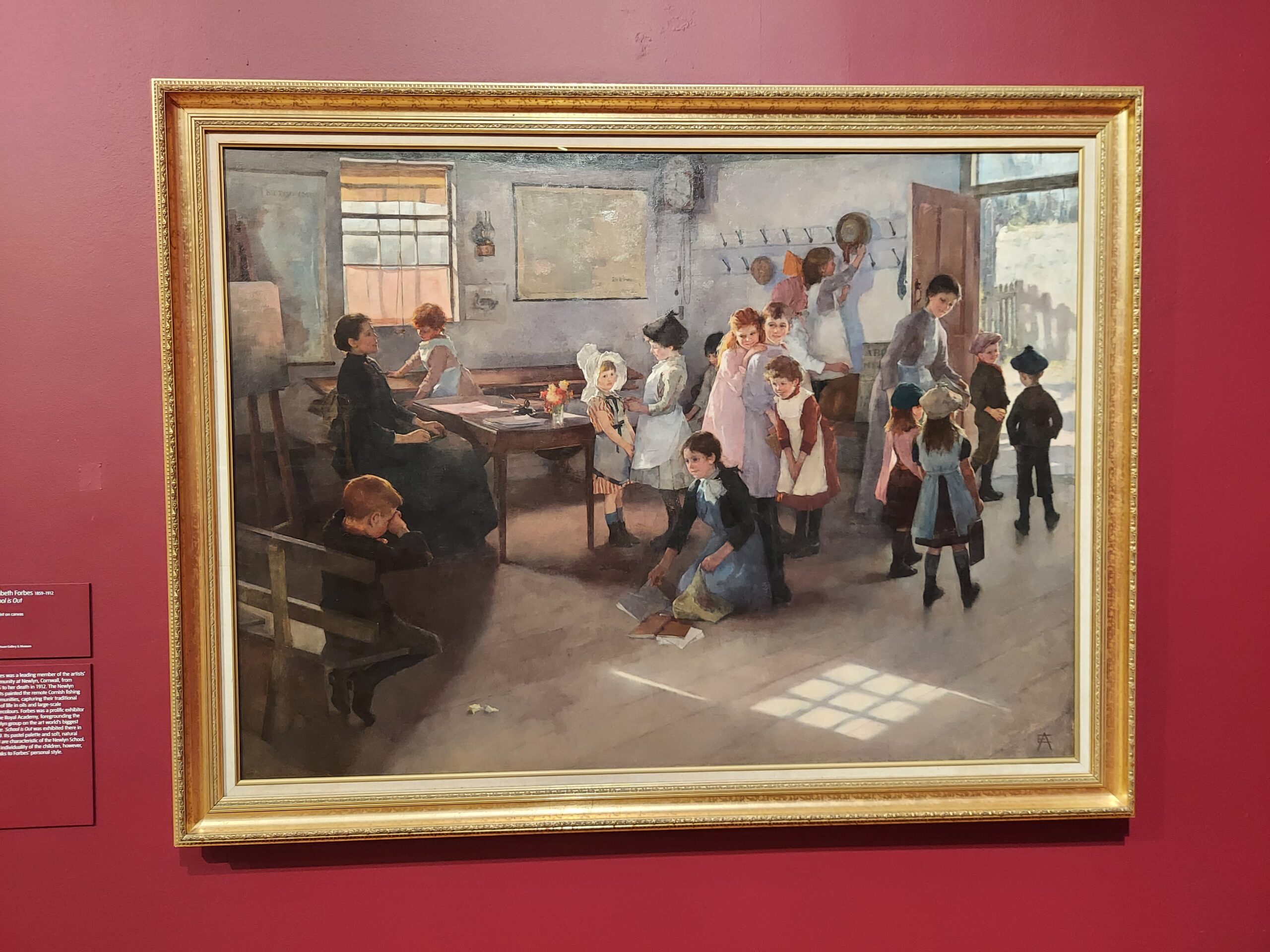
Other women ventured outside the confines of the studio and painted outdoor and social scenes.
Elizabeth Adela Stanhope Forbes, School Is Out, 1889
I was impressed with the exhibition, which introduced me to some superb artists I was unfamiliar with and who paved the way for gender equality in the art world. I understood more about their struggles and was grateful for their efforts as well as their wonderful creations.
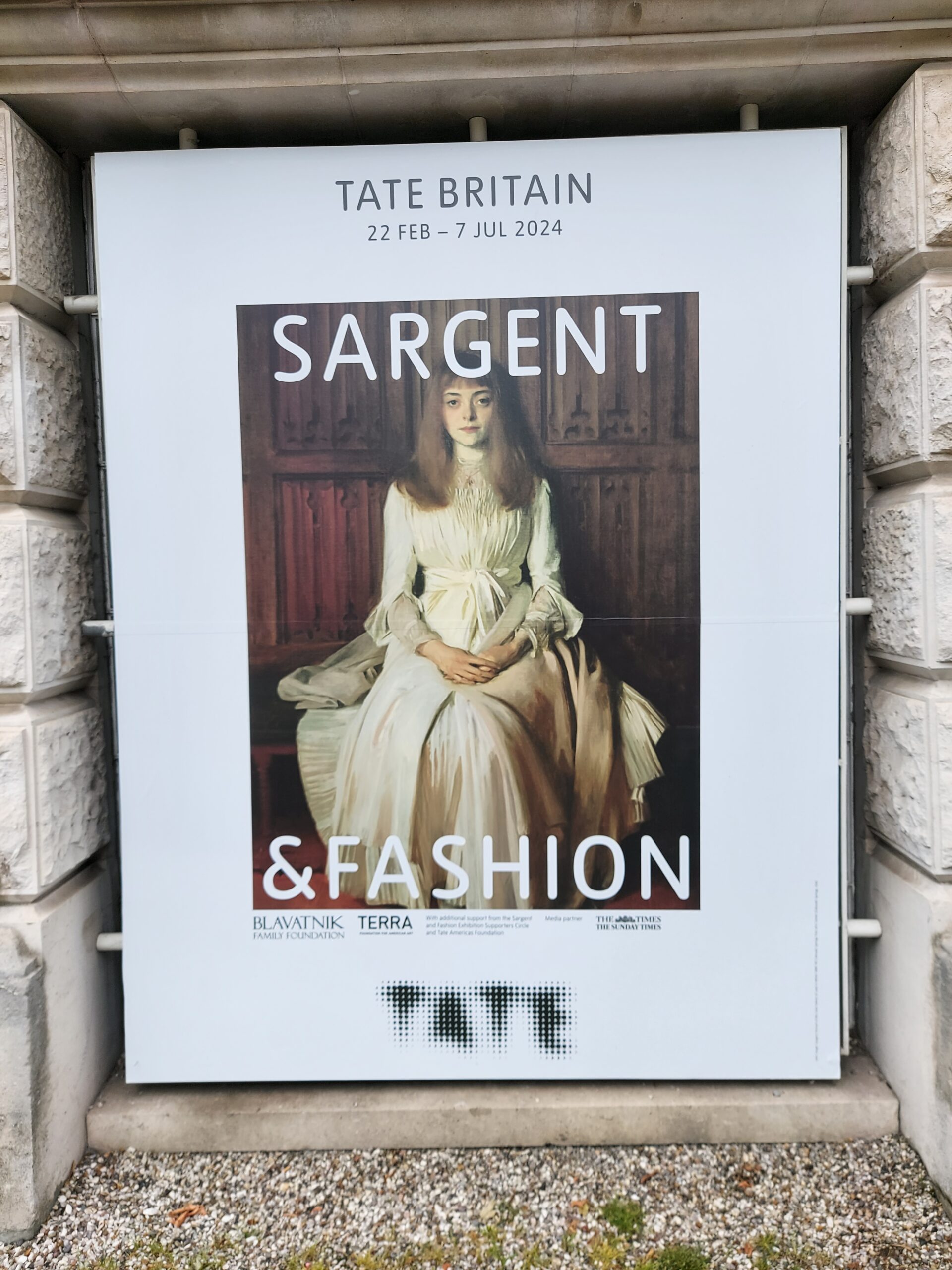
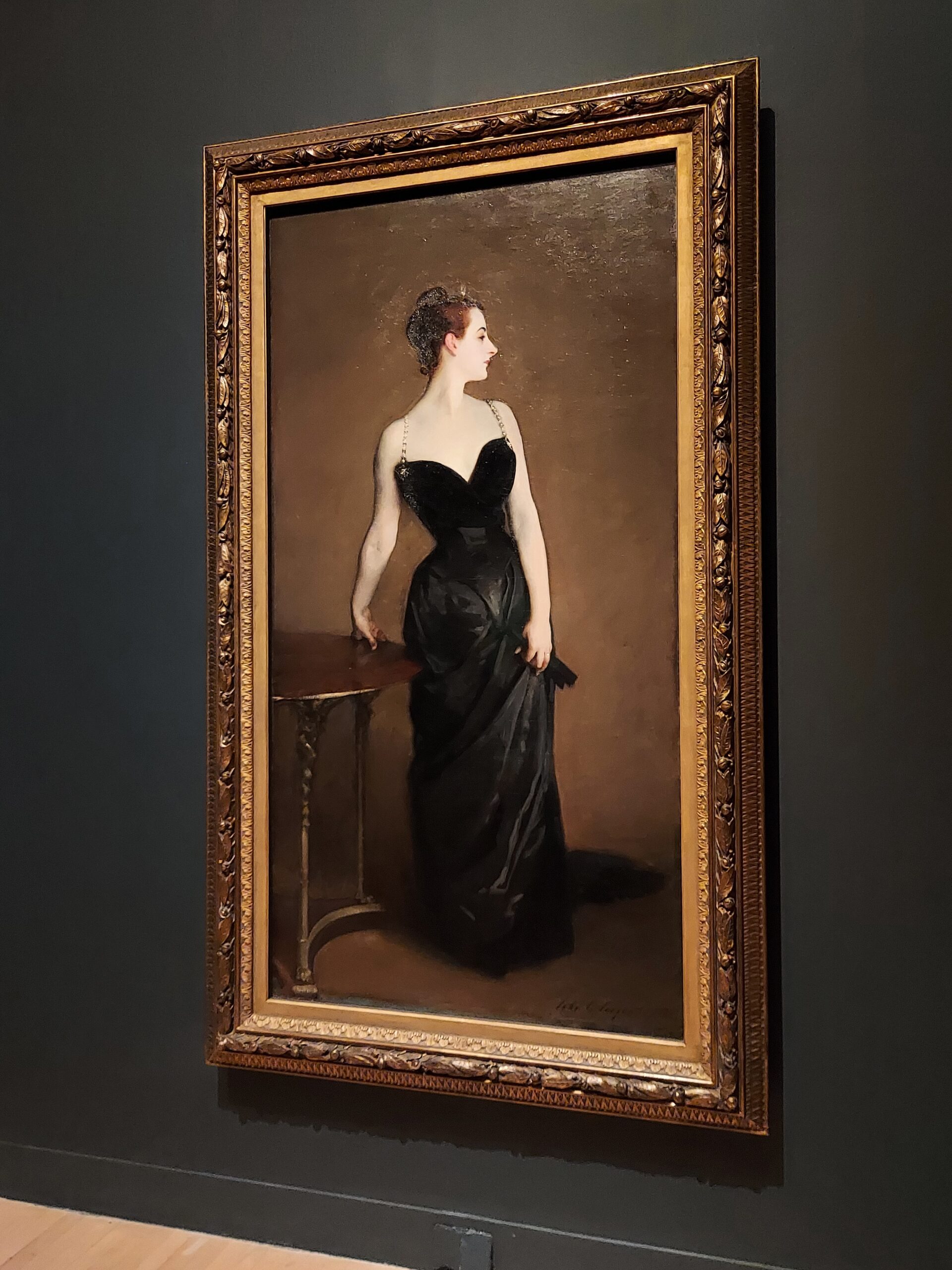
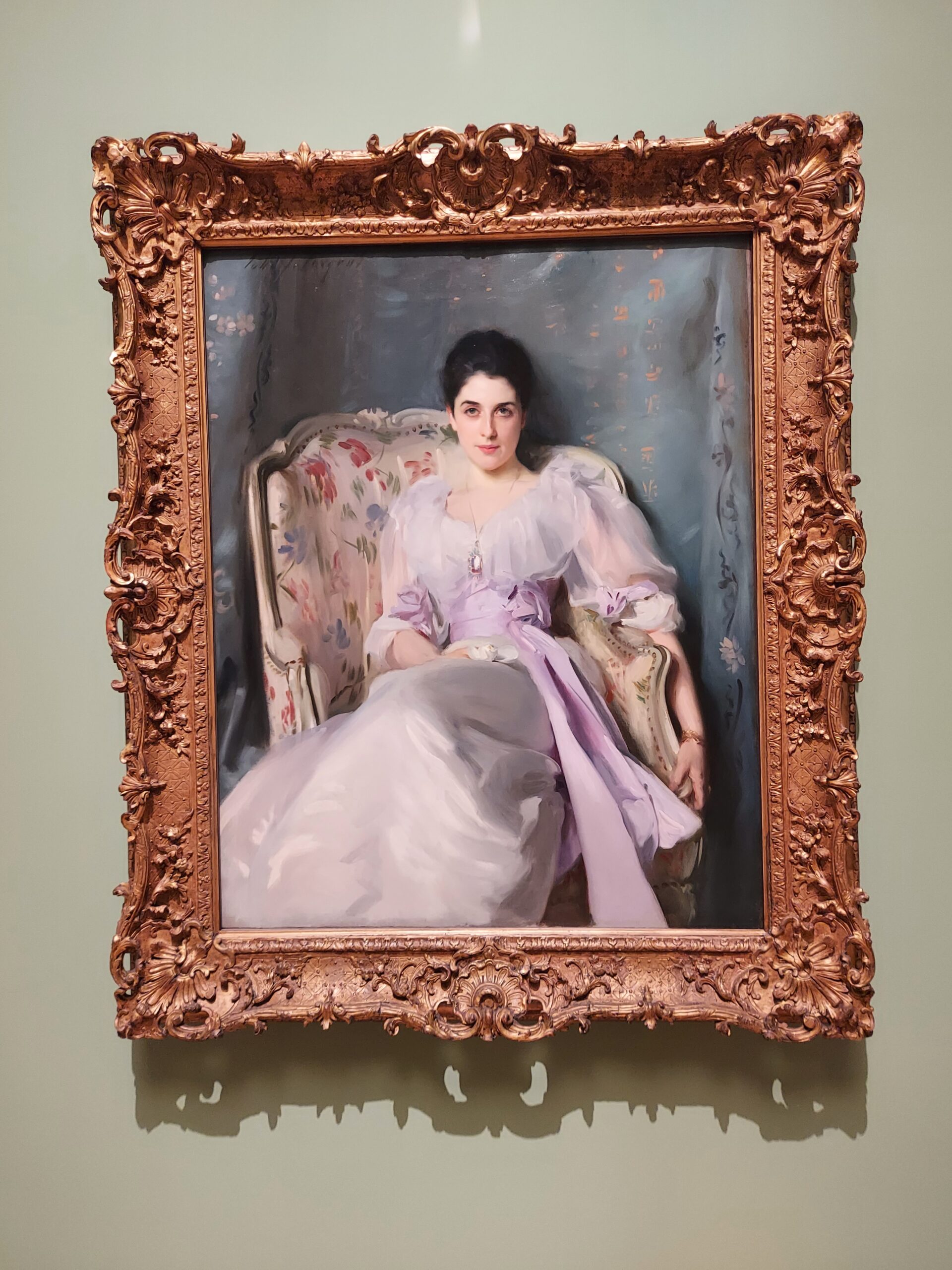
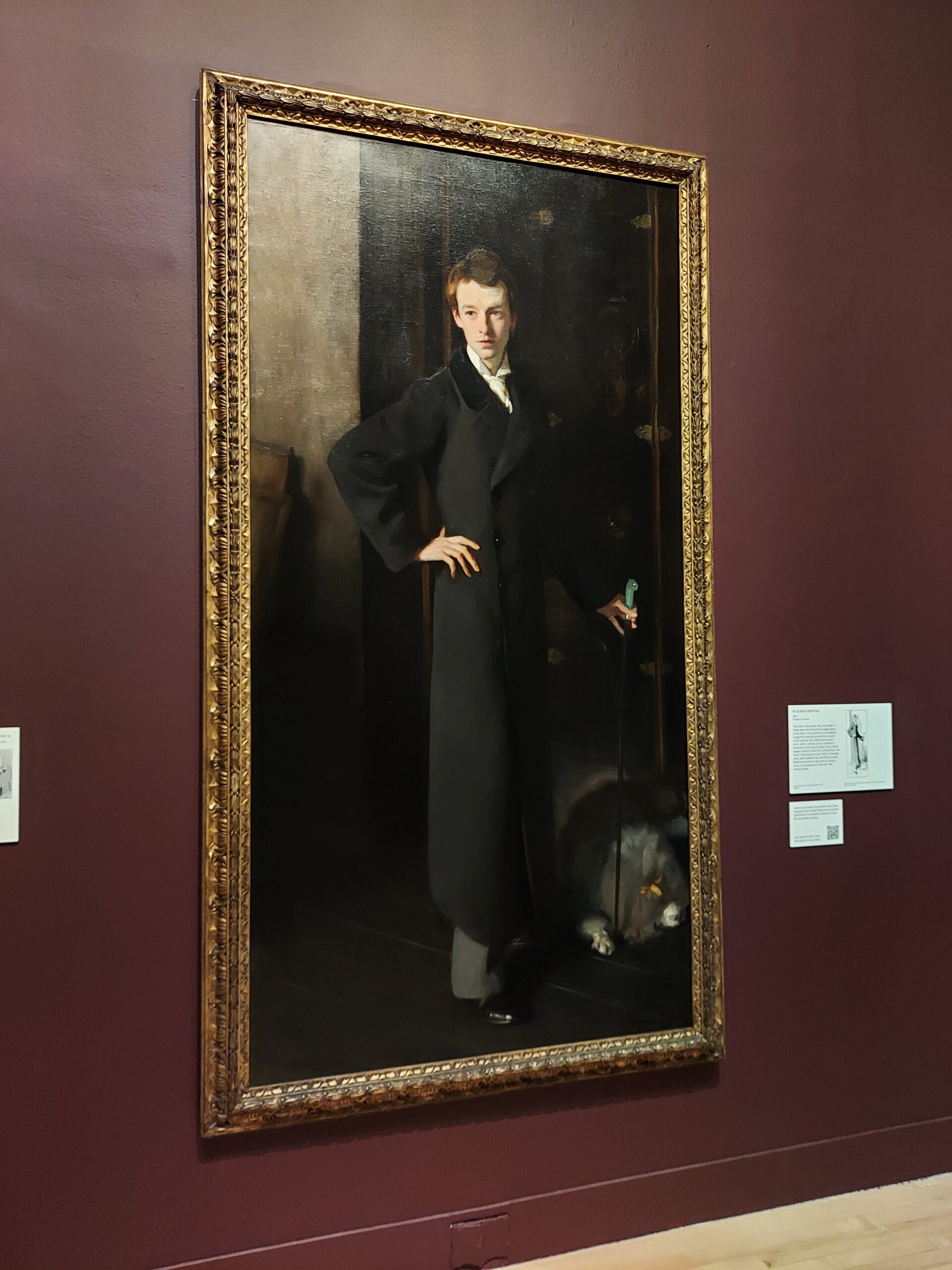
This exhibition explores the relationship between artist John Singer Sargent and the fashions of his day. The paintings in the exhibition emphasise focus on the clothes worn by his sitters: some of their choice, others at his suggestion. Sometimes these clothes caused controvery: Singer’s famous Portrait of Madame X was originally painted with one of Virginie Amélie Avegno Gautreau’s straps hanging from her shoulder, but this was seen as too risqué and he edited the painting.
The exhibition made me realise that he was really wonderful at painting clothes, capturing the ripples of the fabric and the different shades evoked. He used clothes to convey the personality of the sitter, whether long flowing gowns, delicate fabrics, or clean lines.
Lady Agnew of Lochnaw, 1892W. Graham Robertson, 1894
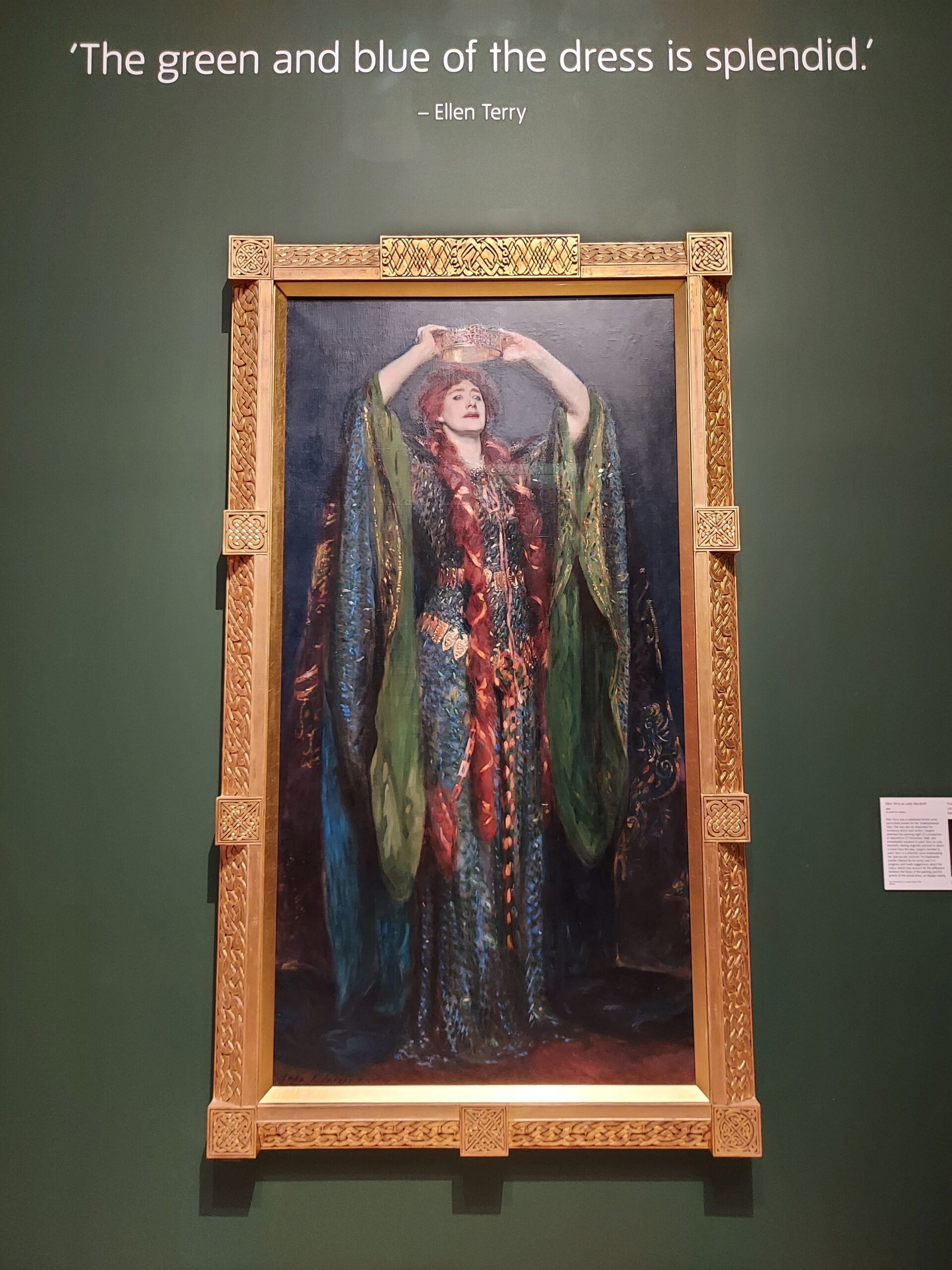
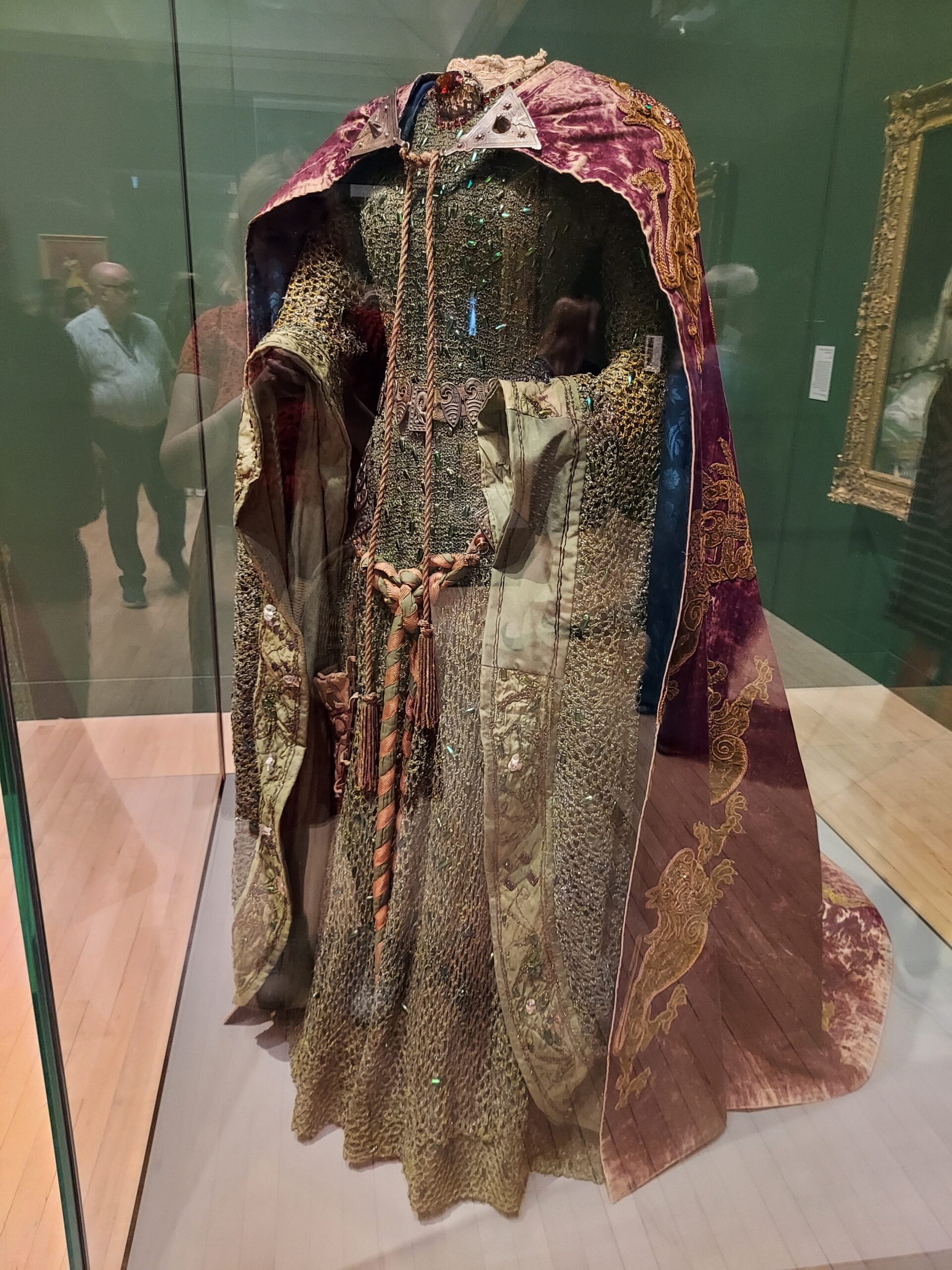
One thing I loved about the exhibition was the display of some of the costumes and clothes worn in the paintings, alongside the pictures. I especially loved seeing Sargent’s portrait of Ellen Terry as Lady Macbeth alongside the dress she wore in the production and the painting. Interestingly, the real life dress was green, whereas the painted version is blue – presumably for artistic reasons.
Ellen Terry as Lady Macbeth, 1889Dress worn by Terry as Lady Macbeth
I found this exhibition hugely enjoyable, and appreciated seeing all this beautiful art. I left with a better understanding of how Sargent, art and fashion intertwined.
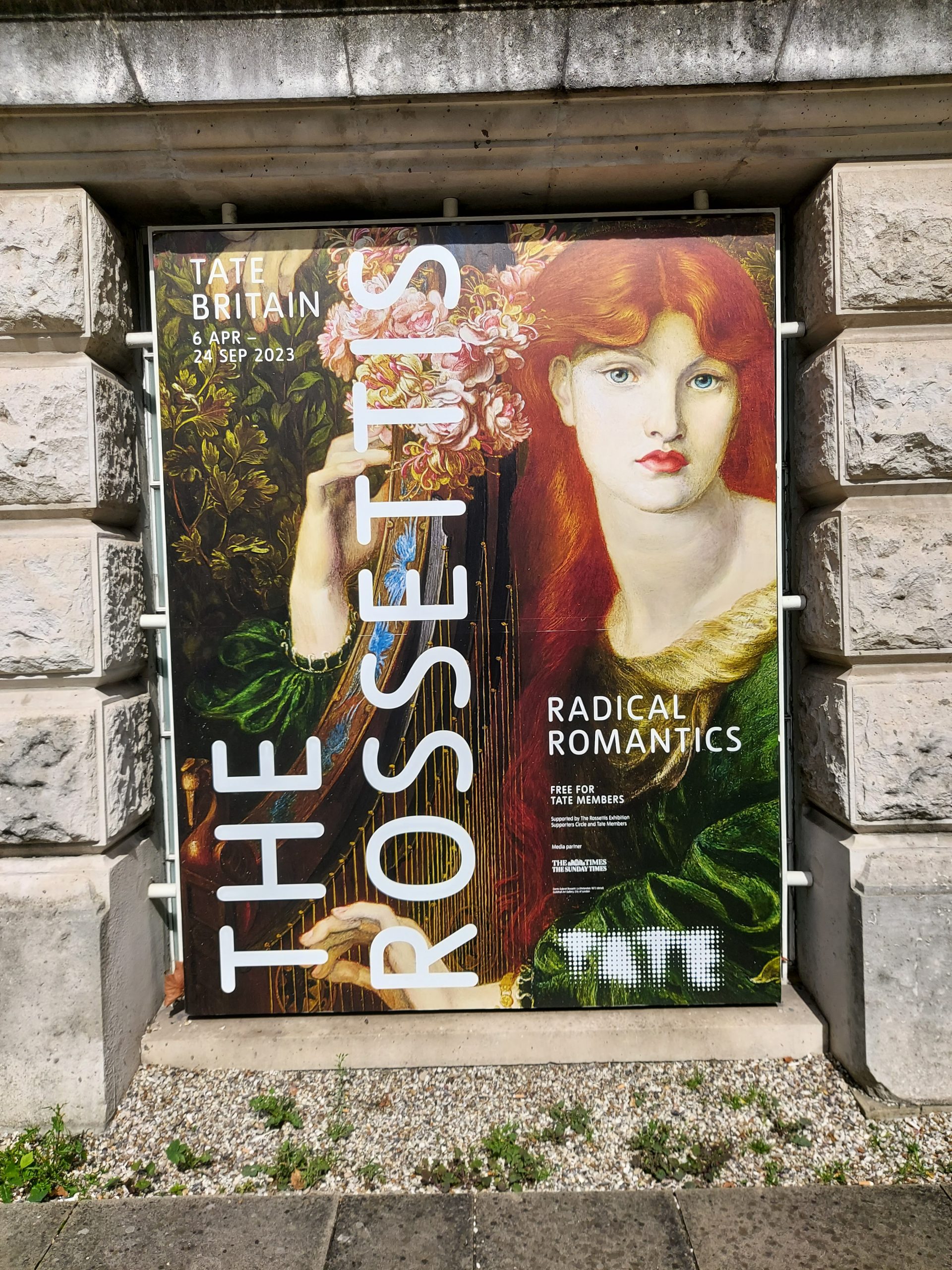
I’m very interested in the Pre-Raphaelites, so was excited to see the exhibition The Rossettis: Radical Romantics at Tate Britain. It focused on brother and sister Dante Gabriel Rossetti (painter) and Christina Rossetti (poet), and, for the purposes of this exhibition, Gabriel’s wife Elizabeth (painter), born and better known to us as Elizabeth Siddal.
The exhibition explored how the family’s background – their parents were scholars of Italian heritage, and their four children, Maria (writer), Gabriel (who later adopted the name Dante), Christina, and William (writer and co-founder of the Pre-Raphaelite Brotherhood) had unconventional lives and shared anti-establishment views. Their father, Gabriele, was a revolutionary who had to flee Italy, and passed on many of his ideas to his children.
‘Remember’ by Christina Rossetti
Both Gabriel and Christina published poems at an early age. Today, Christina is the better known poet: her verse was inspired by poetry, love and religion, and is often passionate and full of life. Gabriel’s admiration for less conventional artists led him to co-found the Pre-Raphaelite Brotherhood with his own brother William and several other artists; his own work was inspired by the likes of Dante and William Blake.
Lady Lilith by Dante Gabriel Rossetti
The inclusion of Elizabeth Siddal’s work here is interesting. I’m very glad her work is becoming better known and she is no longer seen as ‘just’ Dante Gabriel Rossetti’s muse. However I would be more interested to see how her background and experiences shaped her own work, rather than lump her in with the Rossetti family who had a very different upbringing. The exhibition, it must be said, does make a good case for her inclusion, showing how her work and Gabriel’s inspired one another, and the similarities between her poetry and Christina’s in terms of exploring women outside of the conventions of the time.
I really liked how the exhibition tried to dive in to the lives of the working class models that often featured in Gabriel’s paintings, as well as confronting the problematic portrayal of different cultures in his later works. Ultimately, the exhibition did a very good job in highlighting the Rossettis’ impact on art, literature and culture.
Before heading up north for the second time this year, I visited the Walter Sickert exhibition at Tate Britain. I only knew Sickert from his ‘Camden Town Murder’ paintings – which are on display here – but there is much more to his work.
Sickert was born in Germany in 1860, but moved with his family to England aged eight. He initially sought to become an actor, but switched to art in 1882 – his artistic career would eventually span six decades.
The exhibition begins with an exploration of Sickert’s self-portraits, which show him experimenting with light and shade. It continues with a look at his early career and work in England and France, inspired by Whistler and, later, Degas.
My favourite pictures were those related to performance – theatres and music halls, circuses and outdoor performances. These were reminiscient of Degas’ paintings of ballet dancers, and were incredibly atmospheric, bringing the spaces to life. Sickert’s work spans the development and decline of music halls from lively entertainment venues to their role as the first cinemas.
Sickert’s portraits were mostly of well-known public figures, such as Aubrey Beardsley. They are vivid and demonstrate the sitters’ character. More informal portraits made much of their interior settings.
Landscapes, mainly of scenes in France and Italy, were particularly successful for Sickert, and often encompassed urban settings. He also painted nudes, often in more naturalistic, even dingy, settings than were traditional, leading to criticism.
The Camden Town Murder series features paintings of men and women in dingy, dark rooms in Camden Town, featuring props such as iron bedsteads. Their ambiguity led some to connect Sickert with the murders and even Jack the Ripper. They are atmospheric and have quite sinister undertones.
Sickert’s skill for portraying emotions and relationships were developed in his “conversation pieces”, exploring contemporary narratives and scenes. These paintings were innovative for the time and sought to illustrate everyday life in modern Britain.
I left the exhibition with a new-found appreciation for Sickert’s talent, range and focus – definitely worth seeing.
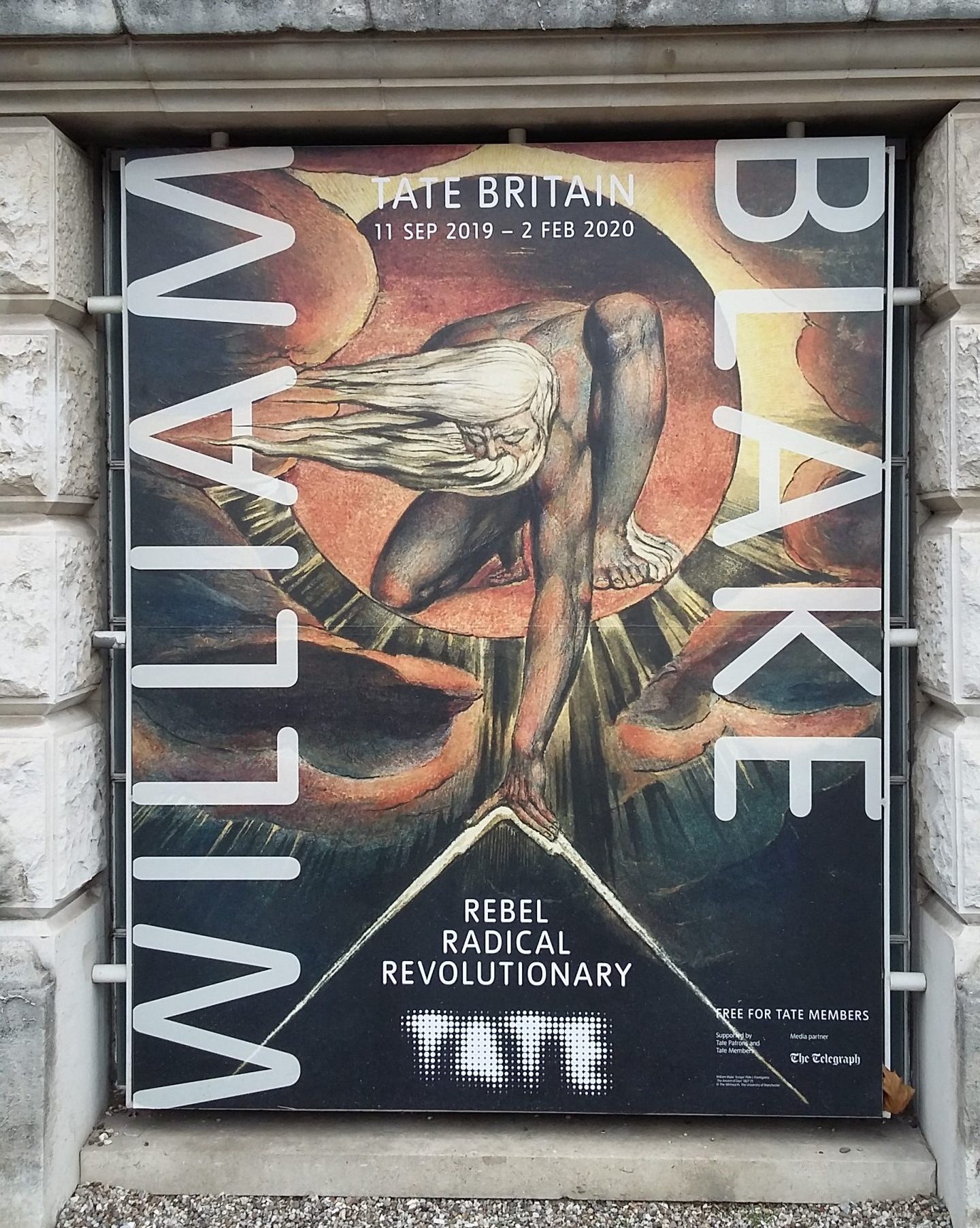
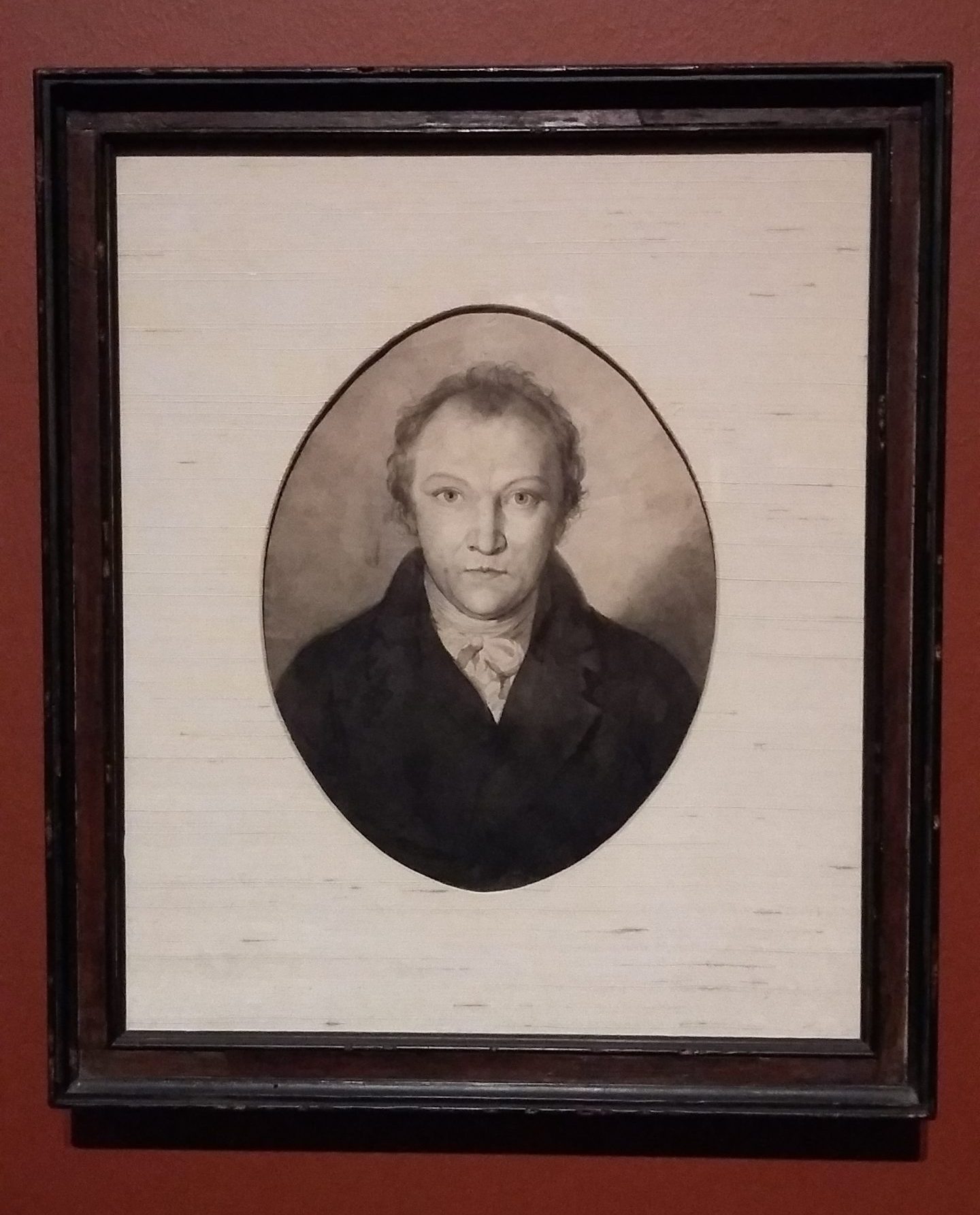
I first encountered William Blake’s work in sixth form, when I studied his Songs of Innocence and of Experience for A level. This major exhibition at Tate Britain explores Blake’s whole life, tracing his development as an artist from his beginnings at the Royal Academy through to his unique and visionary works. It acknowledges the complex questions raised by his images of slavery, and mentions the contribution his wife Catherine made to his work.
Blake was born in 1757 in London, where he lived for almost all of his life, most famously in Lambeth, south of the river. As a teenager he was apprenticed to an engraver, and later studied at the Royal Academy. He initially followed the prescribed course of study, practising by sketching the classical statues provided for this purpose, but grew frustrated with the restrictions this placed on him, and began to explore his own myths in his art. One example of this is his long poem Tiriel: he envisioned this as a combination of words and images, integrated as one whole. Much of his early work, and his images for Tiriel, are displayed in the first rooms of the exhibition.
Blake spent much of his career as an engraver and print maker. He pioneered a technique, still not fully understood, of relief etching, which he used to create beautiful illuminated books, which were not commercially lucrative but were nevertheless admired by a select few collectors. Blake would often produce images without text to sell individually. Two of his key collections, displayed here, are the pages from his famous Songs of Innocence and of Experience, and America: A Prophecy, inspired by the American War of Independence.
Patrons were crucial to Blake being able to make a living. He had several patrons throughout his life, and and a section of the exhibition is devoted to the work he produced for them. However, his relationship with them was often tense as he felt they restricted his creativity and artistic freedom. In later life Blake hosted his own exhibition, above the shop owned by his family, in 1809, however, it was poorly received by the critics.
Towards the end of his life, Blake did receive appreciation from younger artists who saw him as a radical, someone who had refused to compromise his vision. It was at this time that he began his work Jerusalem. The exhibition is a comprehensive, intelligent and engaging exploration of Blake’s work.
The exhibition Edward Burne-Jones: Pre-Raphaelite Visionary at Tate Britain looks at the career of Burne-Jones (1833-1898), taking a partly chronological and partly thematic approach to his life and work. There are sections on Burne-Jones as an apprentice and as a draughtsman, revealing another, humorous side to the artist. One room looks at the pictures Burne-Jones chose for exhibition, including some of his most famous works, such as King Cophetua and the Beggar Maid. Another explores the portraits he painted of family and friends, while one striking room displays his Briar Rose series of panels. Burne-Jones isn’t my favourite Pre-Raphaelite, but I enjoyed the exhibition.
Following my visit to Tate Modern a few weeks ago, I decided to head to Tate Britain in Pimlico. This gallery, which specialises in British art, does hold more attractions for me than Tate Modern does, and has some of my all-time favourite pictures.
The bulk of the permanent collection forms the ‘Walk Through British Art’ which allows the visitor to explore 500 years of art chronologically. I do like this ordered way of doing things. Naturally enough, I started at the beginning.
The early pictures in the collection suffer in my mind from a comparison with the National Portrait Gallery. They’re similar in style but unlike the NPG, they aren’t of anyone famous. One exception is the picture of Elizabeth I, and I was amused by an angular painting of a pair of identical twins holding their babies, apparently born on the same day.
Steven van der Meulen, Steven van Herwijck. Portrait of Elizabeth I, c.1563
Henry Fuseli. Lady Macbeth Seizing the Daggers, ? exhibited 1812
The rooms take you through the sixteenth, seventeenth and eighteenth centuries, featuring such artists as Lely, Gainsborough, Hogarth and Constable. Along the way I popped into a room to view John Martin’s incredible apocalyptic canvases.
John Martin. The Destruction of Pompei and Herculaneum, 1822
I came to my favourite room in the gallery, which focuses on nineteenth century and Pre Raphaelite art. I’ve been reading a book about poetical deaths recently, so I was fascinated to see the picture of Chatterton. Millais’ picture of Ophelia, one of my favourites, is also displayed here as well as Carnation, Lily, Lily Rose, which always reminds me of The Family From One End Street.
My favourite room
John Singer Sargent. Ellen Terry as Lady Macbeth, 1889
As well as familiar favourites, I came across a few unfamiliar pictures which I really loved.
The next few rooms cover later art, which isn’t generally as interesting to me, although I find Francis Bacon’s picture of a man screaming rather chilling. Also, I quite like a Lowry.
Francis Bacon. Study for a Portrait, 1952
L.S. Lowry. The Pond, 1950
Before leaving I ventured to the back of the gallery to see the Turner Collection and the works of William Blake, both of which have their own spaces.
Turner Collection
William Blake. The Ghost of a Flea, c.1819–20
After my visit, my conclusion is that I should go to Tate Britain more often. There are some incredible paintings here, including some of my favourites, and while I can readily view them online, nothing compares to the real thing.
On Saturday I had a bit of time to spare so I popped into Tate Britain to check out their latest exhibition, Artist and Empire. The exhibition encompasses art from the past five hundred years or so, concerned with the British Empire. It includes works by diverse artists, both oppressors and oppressed, conquerors and the conquered, from different perspectives.
The exhibition acknowledges that the issue of ’empire’ is a difficult one to explore and come to terms with these days. However, remnants of the British Empire are all around us, and the exhibition attempts to face these head on in order to explore the issues they raise. I really like the way exhibitions at Tate Britain tend to mix old and new works and all different kinds of art, and this one is no exception.
The exhibition is divided into themes, with one room containing maps, one about heroics, one focused on costume and portraiture, and so on. Maps in particular were often used to denote conquest, while naming places implied ownership over that place. Portraits were often used as symbols of power, and the clothes worn by the sitter were often suggestive: Western dress worn by Indian royalty and Native American dress worn by the British, for example, implied a receptivity to other cultures. Having said that, the power balance was hardly equal: many works painted (pun intended) the British as morally correct, honourable conquerors. One section of the exhibition looked at trophies: collections of plants, animals and birds, drawings and paintings of them, and artefacts created by humans.
The latter part of the exhibition looks at the work of modern artists examining the legacy of empire in often-provocative ways. The exhibition is a thought-provoking one: for me, it wasn’t so much about viewing and enjoying art for its own sake, but using it as a lens through which to view beliefs and attitudes concerning empire.
The final exhibition I saw at Tate Britain was Salt and Silver: Early Photography 1840 – 1860. It was a fascinating exhibition with some of the earliest photographs ever taken on display. William Henry Fox Talbot pioneered a method of taking pictures with salted paper prints in 1839, the same year as Louis Daguerre invented the daguerrotype. Talbot’s images included pictures of china, glass, paper and people – including his daughter – as he explored the potential of the new medium. Other photographs on display include fascinating Paris landmarks including the Arc de Triomphe, images of India and the American Civil War, and the construction of Nelson’s Column in Trafalgar Square.
Later, Gustave Le Gray improved the salted paper print method by using waxed paper negative proofs. Further images displayed showcase the extra detail this method offered: the pyramids of Egypt, the Crimean war and ordinary life, in the shape of some Newhaven fishwives, are pictured. Early photography was inspired by portraiture when it came to pictures of people: pictures were often posed, but they were unique in being able to capture individuals, particularly children, at a specific moment in time. Most of the pictures are of ordinary people, but there is one notable image of French author Victor Hugo.
A fascinating exhibition, this is a must-see for anyone interested in photography or history.

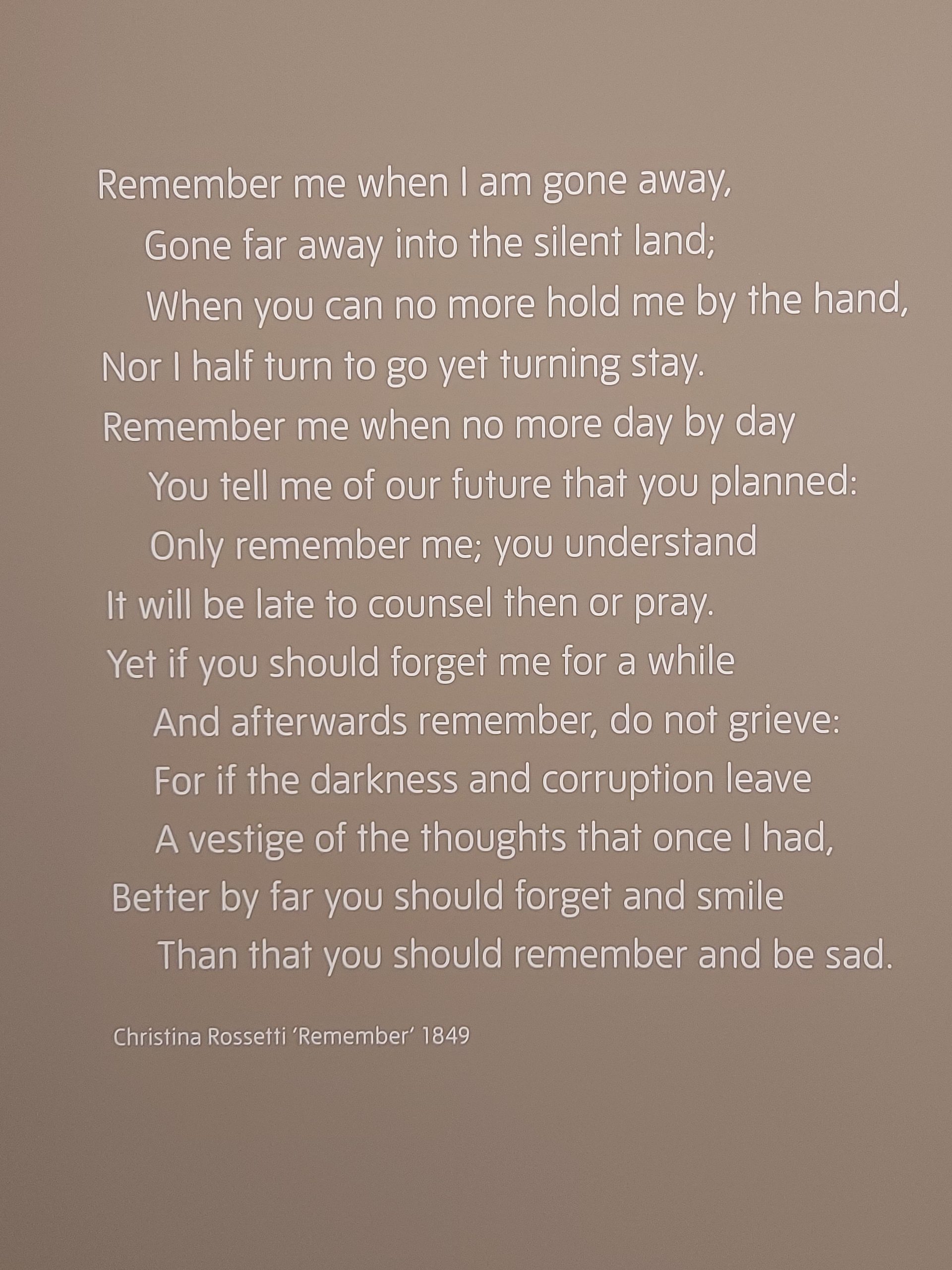 ‘Remember’ by Christina Rossetti
 Lady Lilith by Dante Gabriel Rossetti