Unearthed: Photography’s Roots – Dulwich Picture Gallery

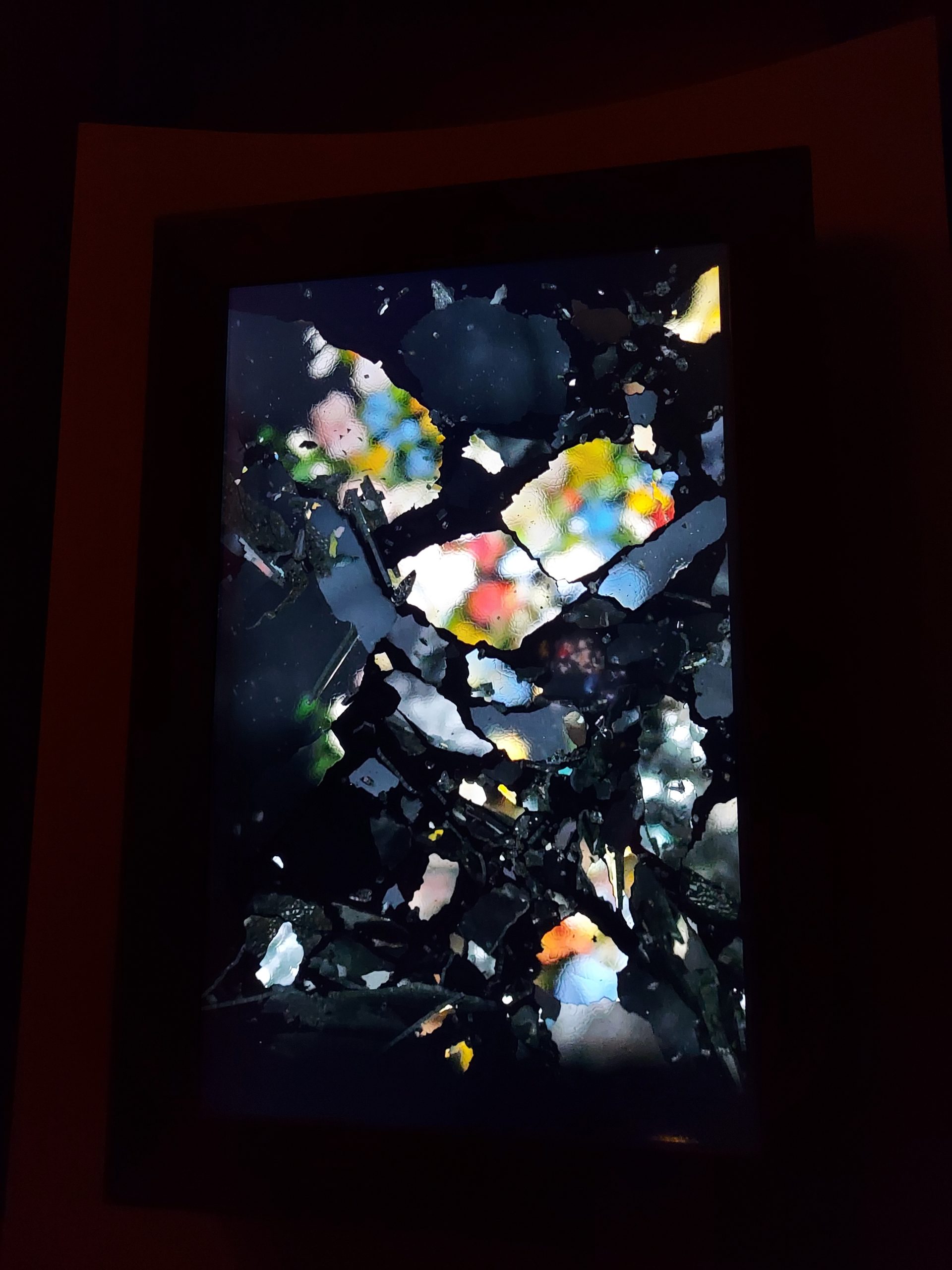
Crackling mirror effect
Ori Gersht, On Reflection

On the Wednesday of my day off work I headed down to Dulwich Picture Gallery to see their latest exhibition. Unearthed: Photography’s Roots was described as looking at the “pioneering story of photography from the 1840s to today told through stunning still lifes of plants and botany.” The exhibition began with Victorian still life pictures by early pioneers such as William Henry Fox Talbot and Anna Atkins. Most of these were of flowers and other plants – ferns were a popular choice, as these were a passion for many Victorians. Also on display were photographs by Japanese artist Kazumasa Ogawa and English gardener Charles Jones. Jones’ pictures were particularly interesting knowing the background behind them – they were discovered in a trunk at Bermondsey Market in 1981, 20 years after his death.

Later in the exhibition, more modern versions of still life pictures were displayed by the likes of Robert Mapplethorpe and Richard Learoyd, using many of the same techniques as the Victorian photographers. I definitely preferred the nineteenth century images, early photography being an interest of mine, but the later pictures had merit too.

In the mausoleum, an installation from Ori Gersht was displayed, based on a still life painting by Brueghel the elder. It showed the painting ‘cracking’ like a mirror and coming back together, which was compelling to watch.
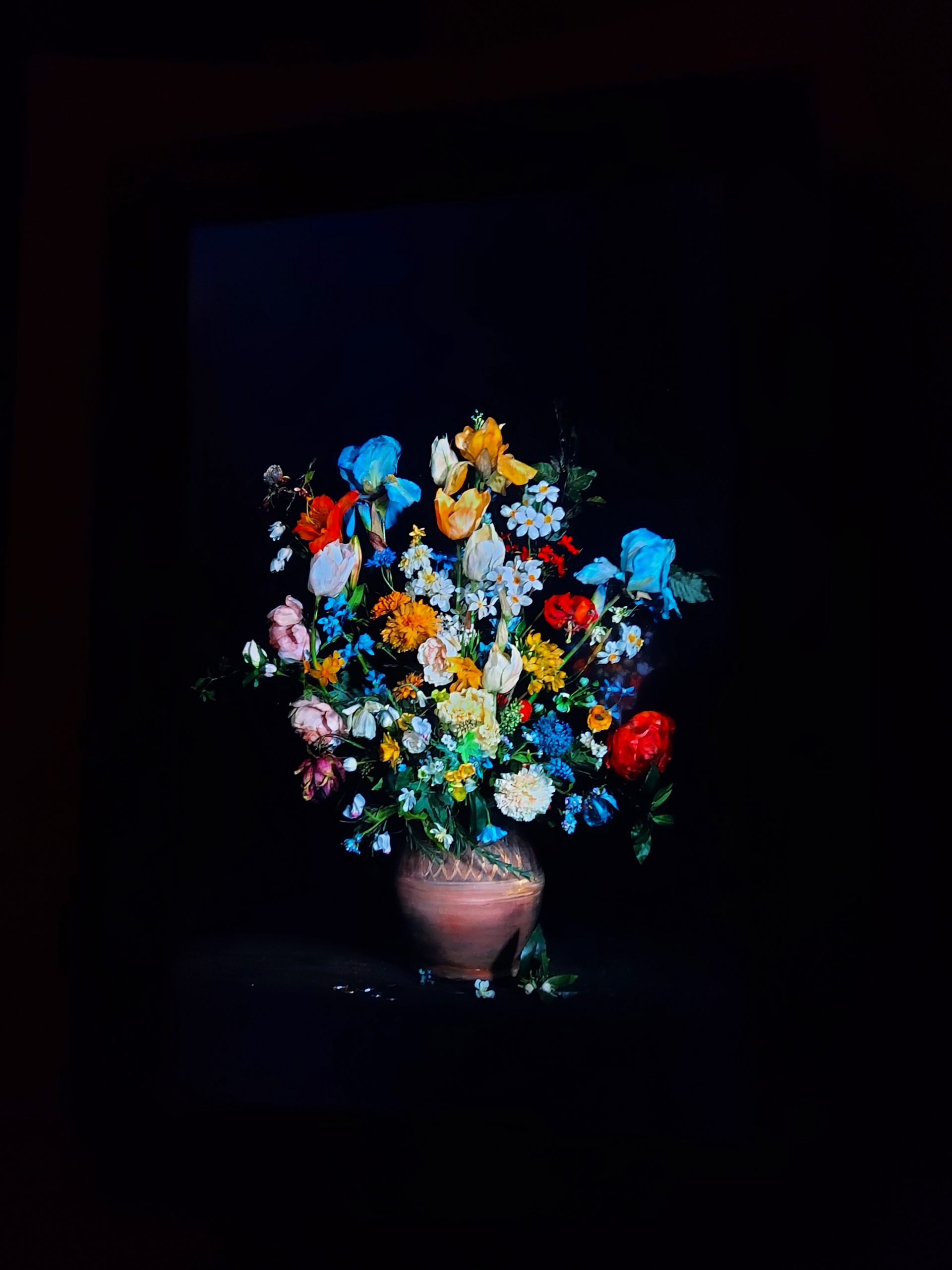
Photograph of still life flower bouquet painting
Ori Gersht, On Reflection

Beneath the Surface – Embankment Galleries, Somerset House

With an afternoon off, I went to Somerset House to check out some of their exhibitions. Beneath the Surface is presented by the Victoria & Albert Museum, Photo London and Somerset House and includes works from the V&A that are rarely displayed.

Commissioned by Photo London, the exhibition contains a huge breadth of works, ranging from Charles Thurston Thompson’s (1816-68) early photographs of paintings for conservation purposes to Nigel Shafran’s (b. 1964) unusual images taken for the 2012/13 V&A Annual Report. Because of Somerset House’s location by the river, the pictures selected largely focus on the water, too. They have been chosen by the V&A’s Senior Curator of Photographs, Martin Barnes.

Among my favourites were William Strudwick’s (1834-1910) photos from the Old London series, taken in the 1860s: these captured the riverside shortly before the construction of the Embankment, and include scenes of Lambeth, Westminster and nearby areas, as well as several medieval coaching inns shortly before they were demolished to make way for the railways. I also liked Thurston Hopkins’ (1913-2014) scenes of underground London life in the 50s; the street scenes in particular were full of energy.

Some of the pictures were more abstract: John Gay (Hans Göhler (1909-99) took pictures of lots of different manhole covers in the 1960s, revealing a wealth of different patterns. Robert Brownjohn (1925-70) took interesting pictures of street signs at around the same time, while Naoya Hatakeyama’s (b. 1958) image of a darkened sewage tunnel in Japan, from his series “Underground 1999”, is atmospheric and haunting.

Other works were particularly unusual: Benjamin Stone (1838-1914) and George Scamell (active 1900s) photographed Newgate Prison before its demolition in 1900-1902, resulting in some truly eerie images of immense historic significance. As part of the National Photographic Record Association, their job was to record a variety of subjects, many more sinister than those typically captured on film. I really liked Pedro Meyer’s (b. 1935) work, in which he set a digitally-manipulated photograph of himself as a young boy with his father alongside a picture of his adult self with his own son.

The exhibition runs until 24 August and is fascinating viewing for anyone enraptured by old photographs.

Salt and Silver: Early Photography 1840–1860 – Tate Britain

The final exhibition I saw at Tate Britain was Salt and Silver: Early Photography 1840 – 1860. It was a fascinating exhibition with some of the earliest photographs ever taken on display. William Henry Fox Talbot pioneered a method of taking pictures with salted paper prints in 1839, the same year as Louis Daguerre invented the daguerrotype. Talbot’s images included pictures of china, glass, paper and people – including his daughter – as he explored the potential of the new medium. Other photographs on display include fascinating Paris landmarks including the Arc de Triomphe, images of India and the American Civil War, and the construction of Nelson’s Column in Trafalgar Square.

Later, Gustave Le Gray improved the salted paper print method by using waxed paper negative proofs. Further images displayed showcase the extra detail this method offered: the pyramids of Egypt, the Crimean war and ordinary life, in the shape of some Newhaven fishwives, are pictured. Early photography was inspired by portraiture when it came to pictures of people: pictures were often posed, but they were unique in being able to capture individuals, particularly children, at a specific moment in time. Most of the pictures are of ordinary people, but there is one notable image of French author Victor Hugo.

A fascinating exhibition, this is a must-see for anyone interested in photography or history.

Drawn by Light: The Royal Photographic Society Collection – Science Museum

Drawn By Light is an exhibition at the Science Museum‘s Media Space encompassing the collection of the Royal Photographic Society. It focuses chiefly on early photography, the invention of which was publicly announced in 1839, but also includes some later works of significance.

The Great Exhibition, coming soon after the invention of photography, acted as a catalyst for the formation of the Royal Photographic Society owing to the increasing popularity of the new medium. The inaugural meeting was held on 20 January 1853, with Sir Charles Eastlake as the chair and Roger Fenton as the honorary secretary. One of my favourite pictures in the exhibition is of members of the RPS Club on an outing to Hampton Court in 1856, looking dapper in suits and top hats. The Society began to collect photographs in 1892, and has gathered donations from the time as well as earlier periods and later works, including Steve McCurry’s iconic 1985 Afghan Girl, an image which has been in the news again recently.

The works are unusual, often experimental: this was a new medium, after all, and pioneers were still working out how best to use it. Abstract images sit alongside human expressions: the pictures of the inmates of Surrey County Asylum in the 1850s, taken by Hugh Welch Diamond, are fascinating, while Erna Lendvai-Dirksen’s images of blond-haired, blue-eyed children in 1930s Germany have sinister overtones considering the rise of Nazism. The poster image, a red-cloaked, windswept girl on a beach, was, extraordinarily, taken in 1913, by Lieutenant Colonel Mervyn O’Gorman. Very early photographic images from the early nineteenth century are included, as are beautiful images of familiar and exotic places. This is one exhibition for which I certainly want to buy the accompanying book.

The exhibition has now closed at the Science Museum but is moving to the National Media Museum in Bradford, where it can be viewed between the 20th of March and the 21st of June.