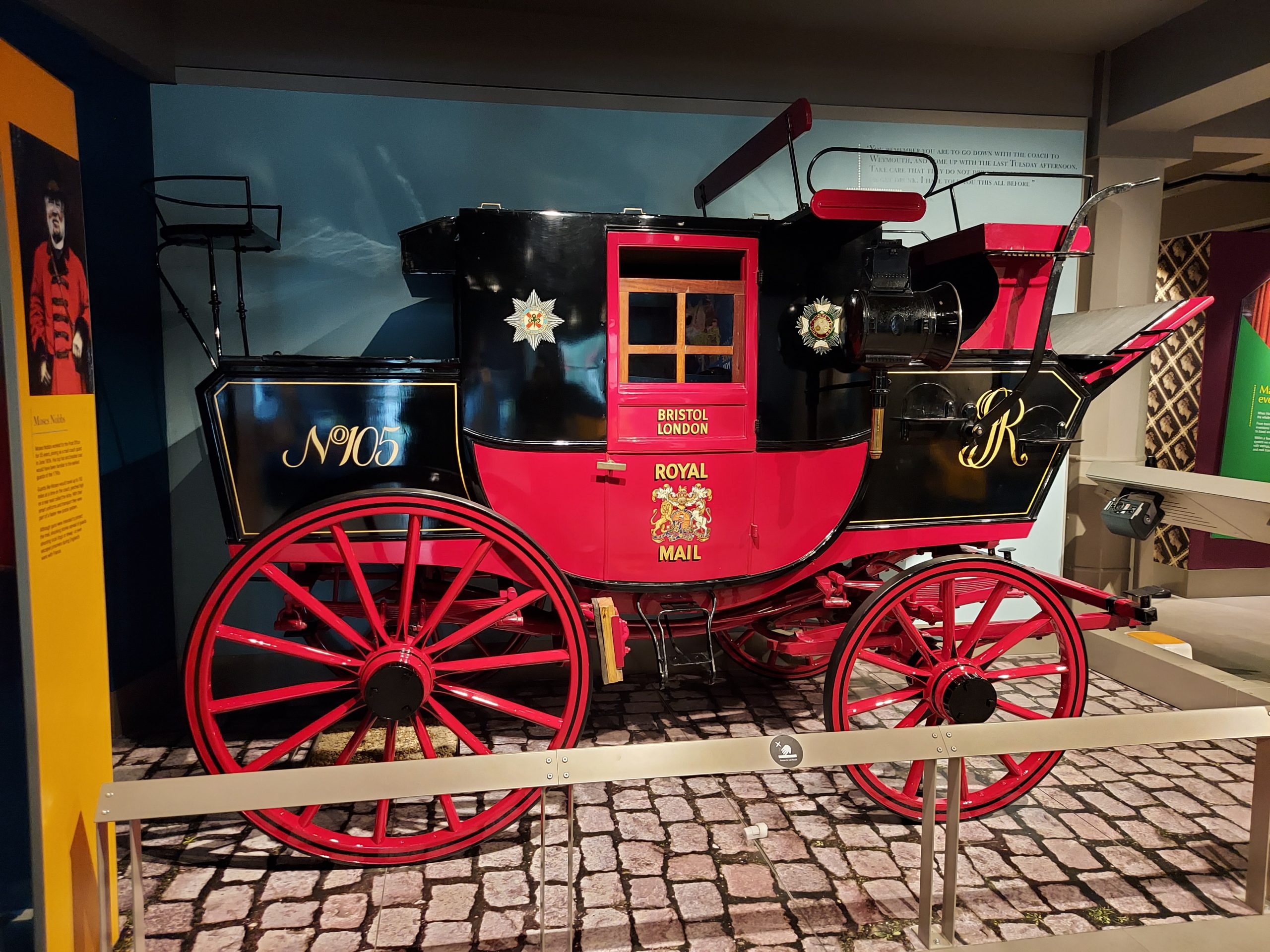
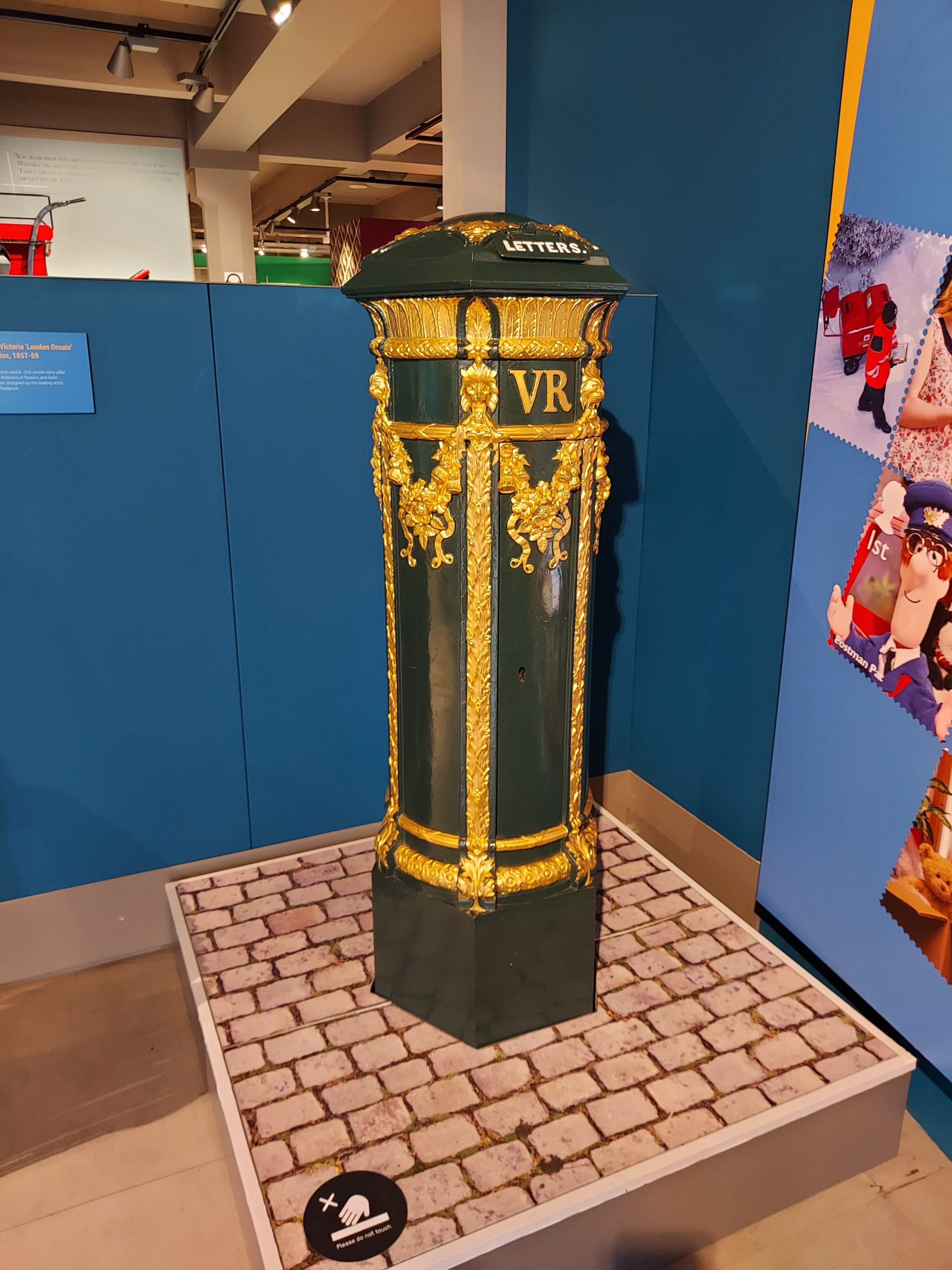
The Postal Museum, which has only been open in its current form for a few years, has been on my list of places to visit for a while, and I finally decided to visit one day in December. It is located near the site of the old sorting office at Mount Pleasant, and there are two sites across the road from one another: the museum itself and the Mail Rail, which I wrote about here.
The Museum is packed full of artefacts which explore the history of mail transportation and delivery in the United Kingdom. From horse-drawn carriages emblazoned with Royal Mail livery, to specialist Air Mail post boxes, by the way of post buses, bicycles and motorbikes, the range of items is very impressive. The museum explores how the postal system has developed over the years, and how it has helped bring people together by delivering letters, postcards, cards and parcels.
The Museum holds regular special exhibitions and their current one explores the Great Train Robbery: this was a fun exhibition which told the story of this famous event and how the perpetrators were caught.
The Postal Museum is a great place to visit no matter what your age. The history of the postal service is fascinating, and, despite our increasingly digital world, still very much needed.
Opening Hours: Thurs-Sun 10:30am-5pm (6:30pm on Saturdays)
Price: Adult £16, young person £11, child £9 (other concessions available). Tickets include a 1-year pass to the Postal Museum and one ride on Mail Rail on your first visit.
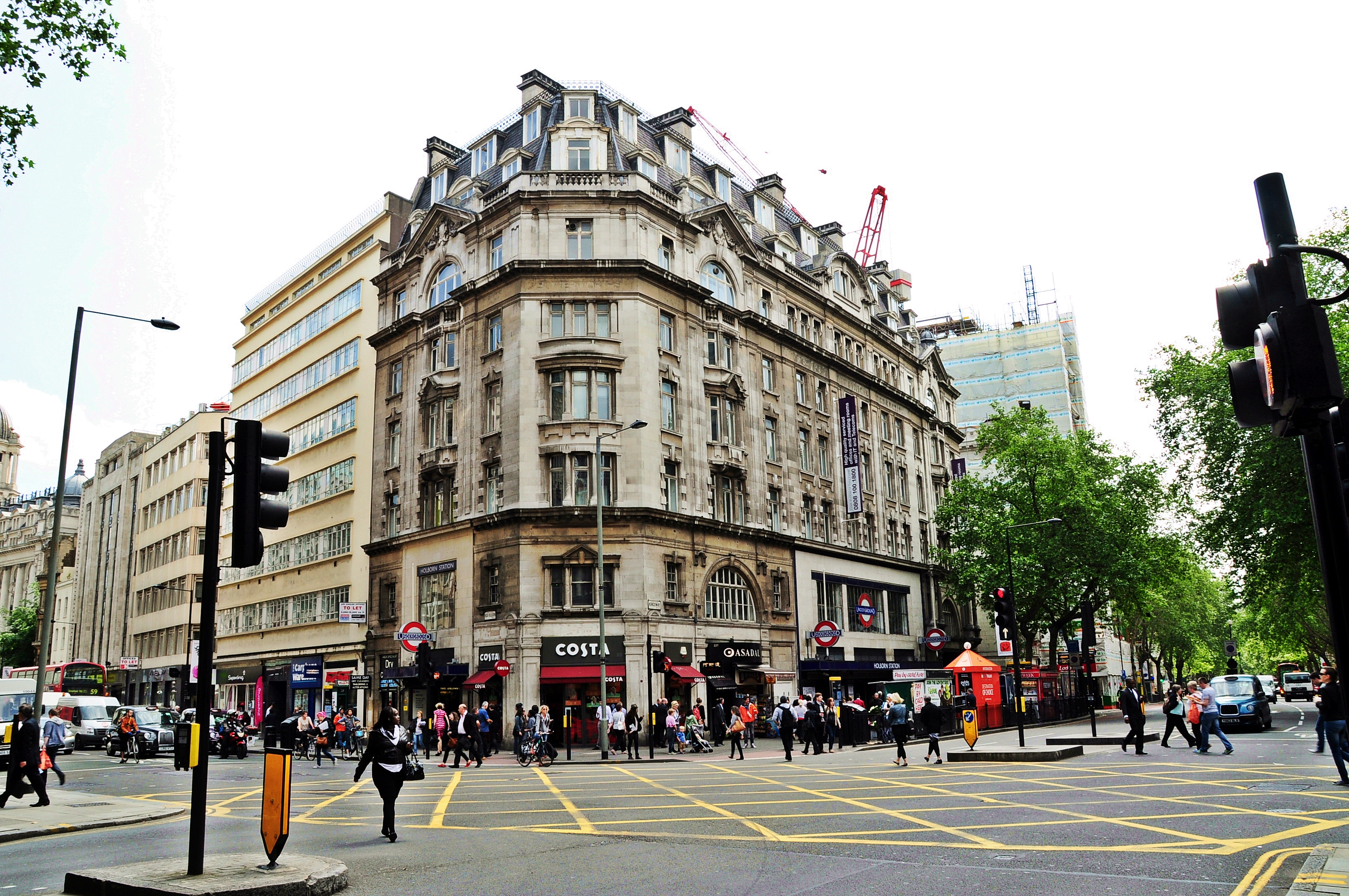
I signed up to the Hidden London digital tour of Holborn Kingsway because I thought it looked pretty interesting, and I wasn’t wrong. Even though I’ve been to Holborn station plenty of times, this talk covered the Kingsway area in general, and was fascinating.
Kingsway runs from Holborn to the Strand, and was transformed at the turn of the twentieth century by the London County Council (LCC), from Victorian slums to a modern thoroughfare with modern transport infrastructure built in. The Underground station was well-used from the start and remains so today, starting off as a Piccadilly line station and expanding in 1930 to fit the Central line too; the branch line to Aldwych (a now-disused station which you can visit on virtual and, in non-Covid times, in-person tours) was not, and eventually closed. However, the talk mainly focused on the tramway.
The Kingsway Tram Subway ran beneath Kingsway allowing trams to travel between the Victoria Embankment to Southampton Row easily, linking the tramways of north and south London. It was built using a cut-and-cover method, like the early Underground lines. Originally designed for single-decker trams, it was later upgraded to fit double-decker trams, and reopened in 1931. Owing to dwindling usage, trams were eventually discontinued in central London, with the final trams running through the Kingsway Tram Subway in 1952. The subway still exists, however, and the photos of waiting passengers side-by-side with modern pictures of the empty and derelict space were really evocative.
After a rest of a few days, I headed back into central London to complete the final two ShaLT walks. Walk 4 began in Whitechapel, at the site of the Red Lion, founded in 1567.
Site of the Red Lion
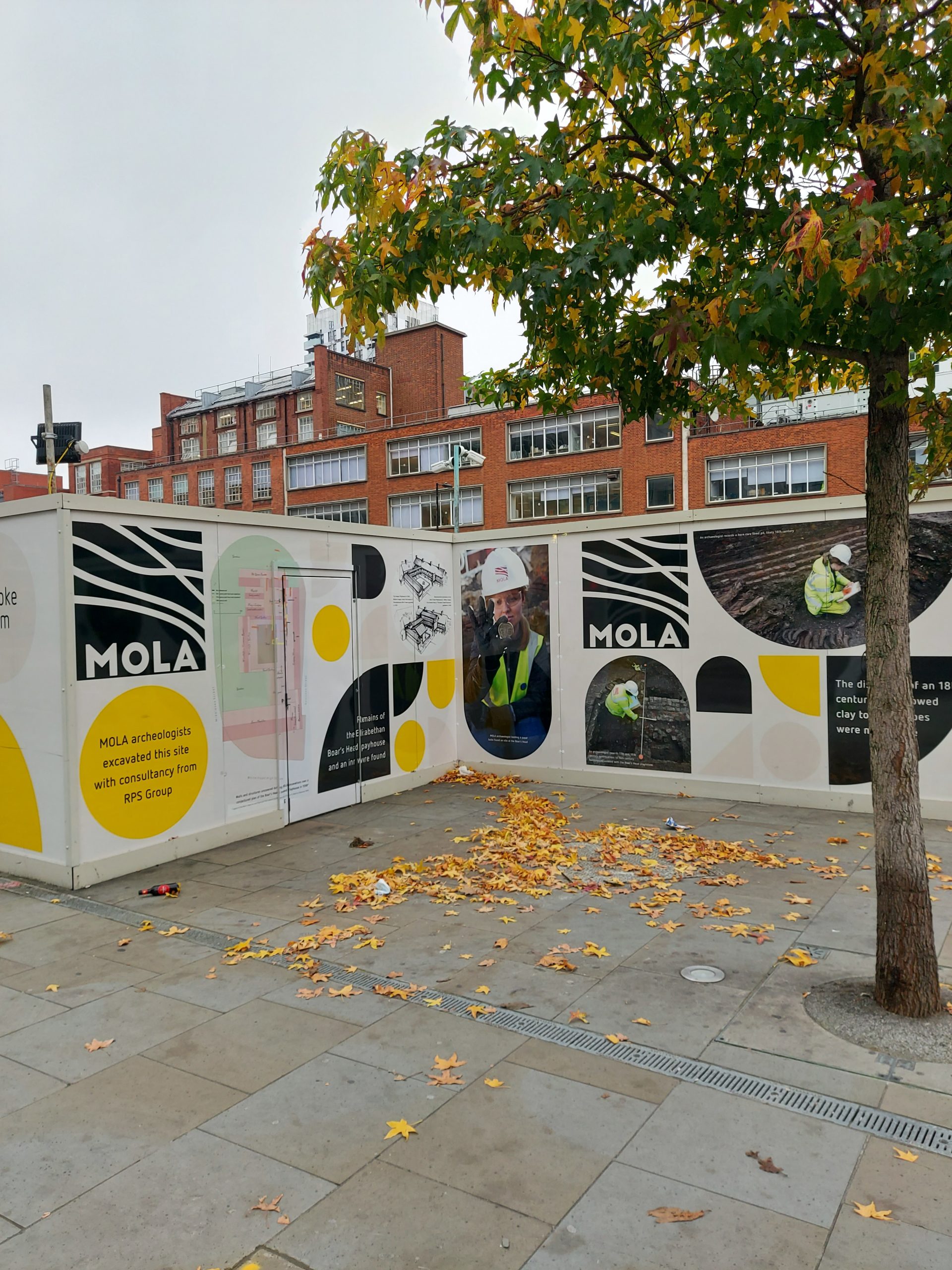
Walking west along Whitechapel Road, I came to the Boar’s Head site, soon to be built on. Hoardings around the site acknowledge it as the location of this playhouse, a converted inn, built in 1598. It was used by Queen Anne’s Men and possibly Prince Charles’s Men, but ceased to be a playhouse in 1616.
Site of the Boar’s Head
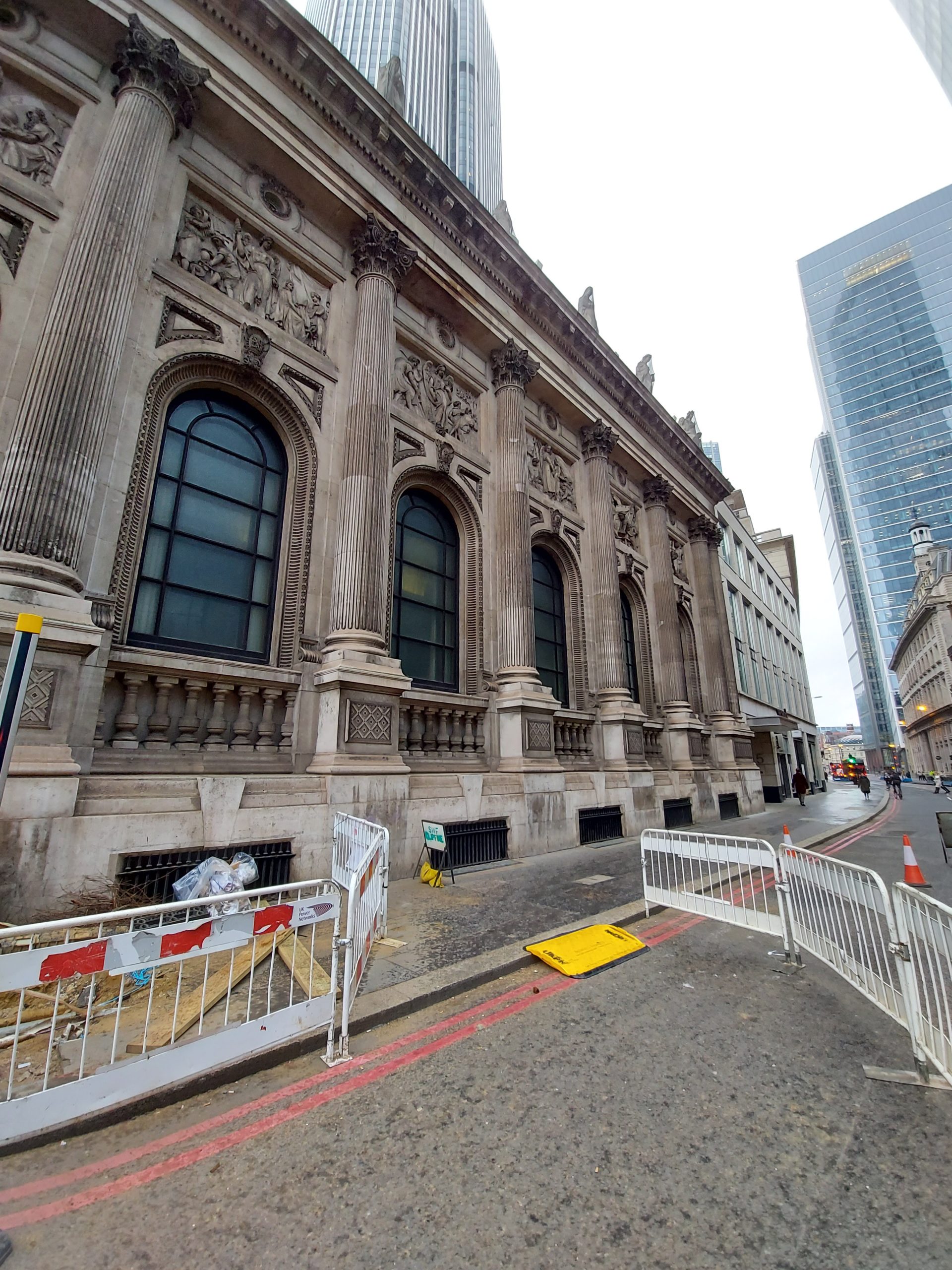
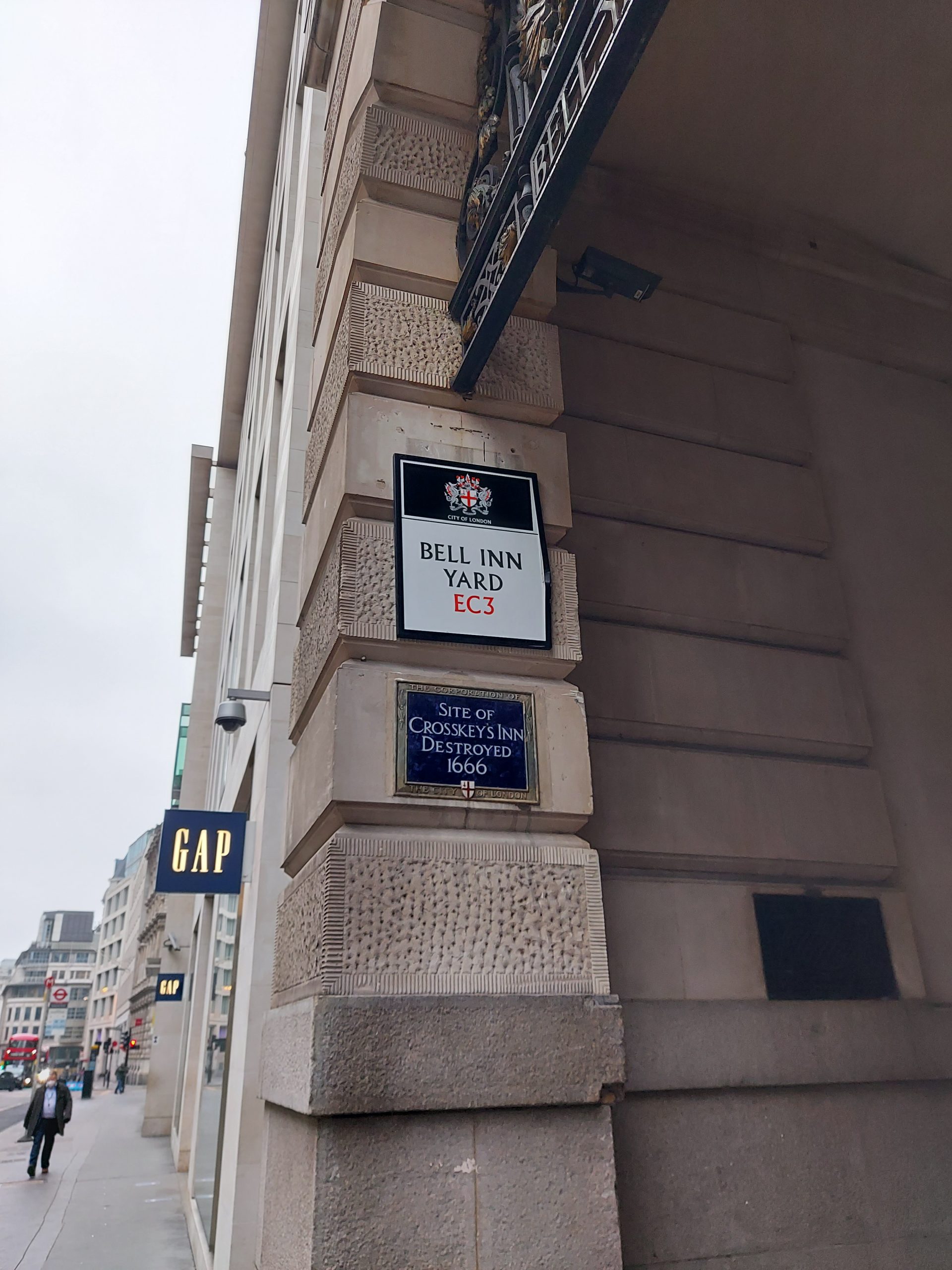
Walking south down Bishopsgate and then Gracechurch (Gracious) Street, I passed the sites of the Bull Inn, the Bell and the Cross Keys, the other inns that along with the Bel Savage were granted licenses by the City to perform plays.
Site of the Bull Inn
Site of the Bell and Cross Keys inns
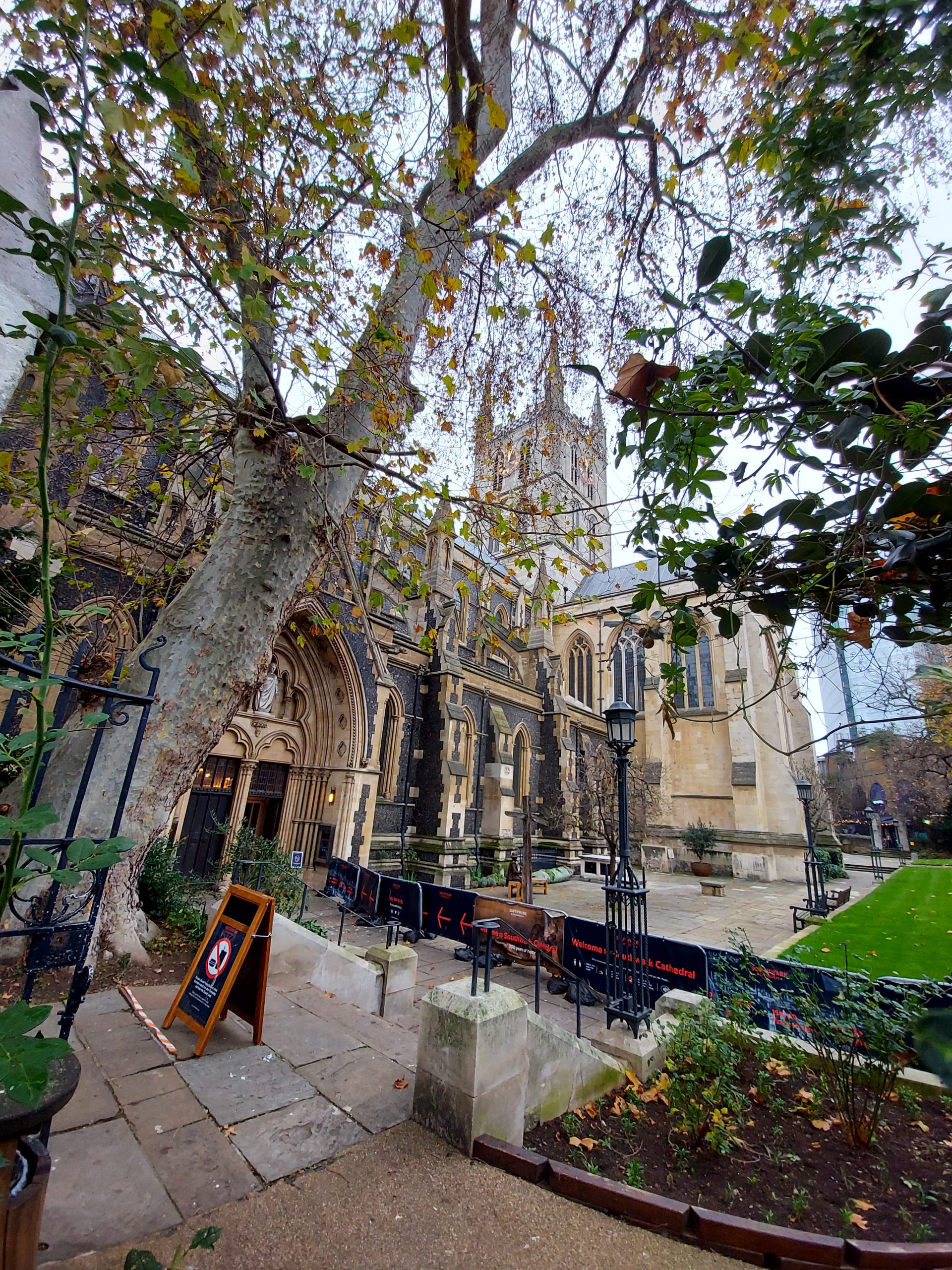
By now I’d almost reached the river, so I crossed at London Bridge and made my way to the start of Walk 5. This final walk began at Southwark Cathedral, which has memorial slabs to Edmond Shakespeare, John Fletcher and Philip Massinger.
Southwark Cathedral
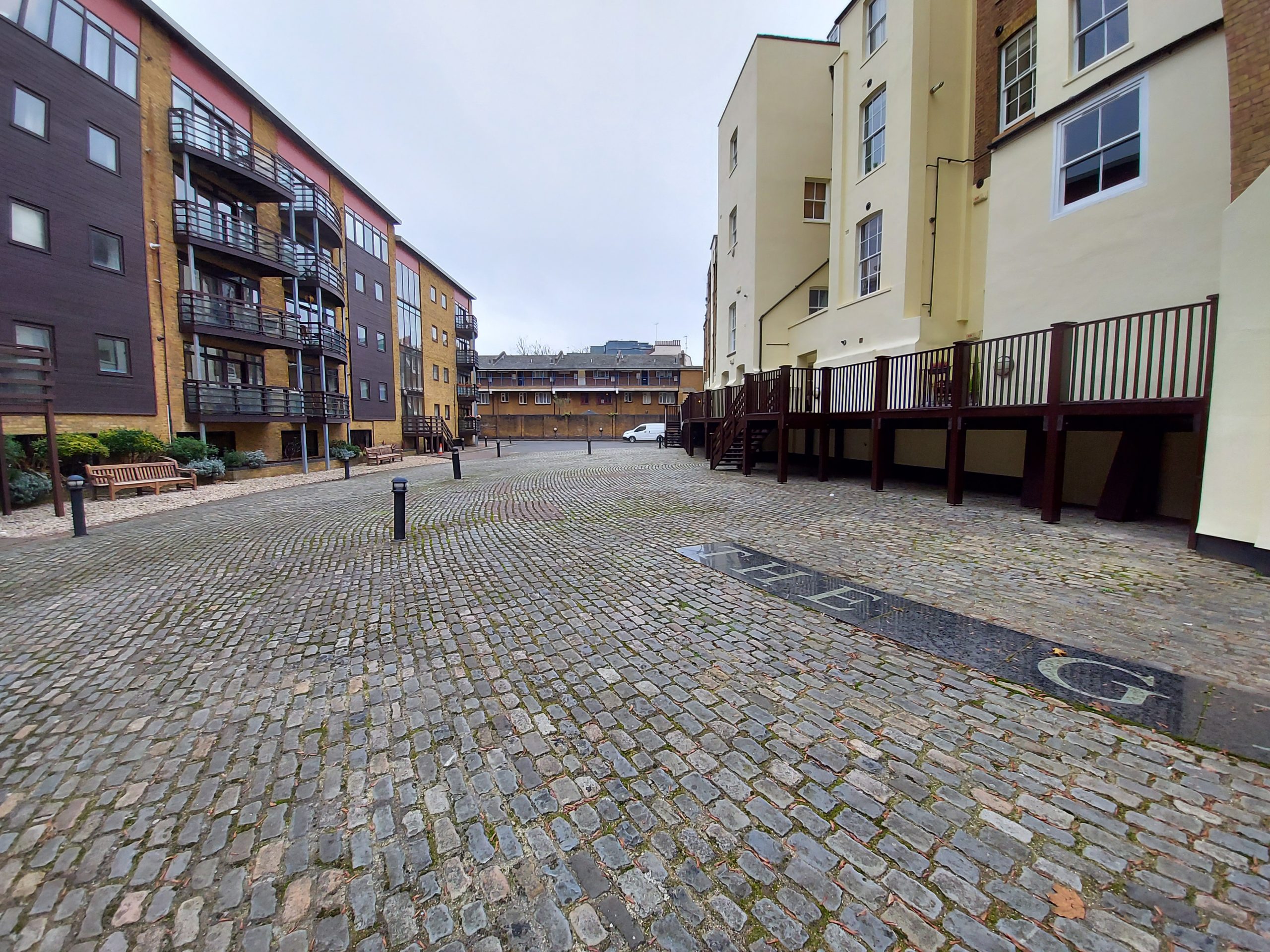
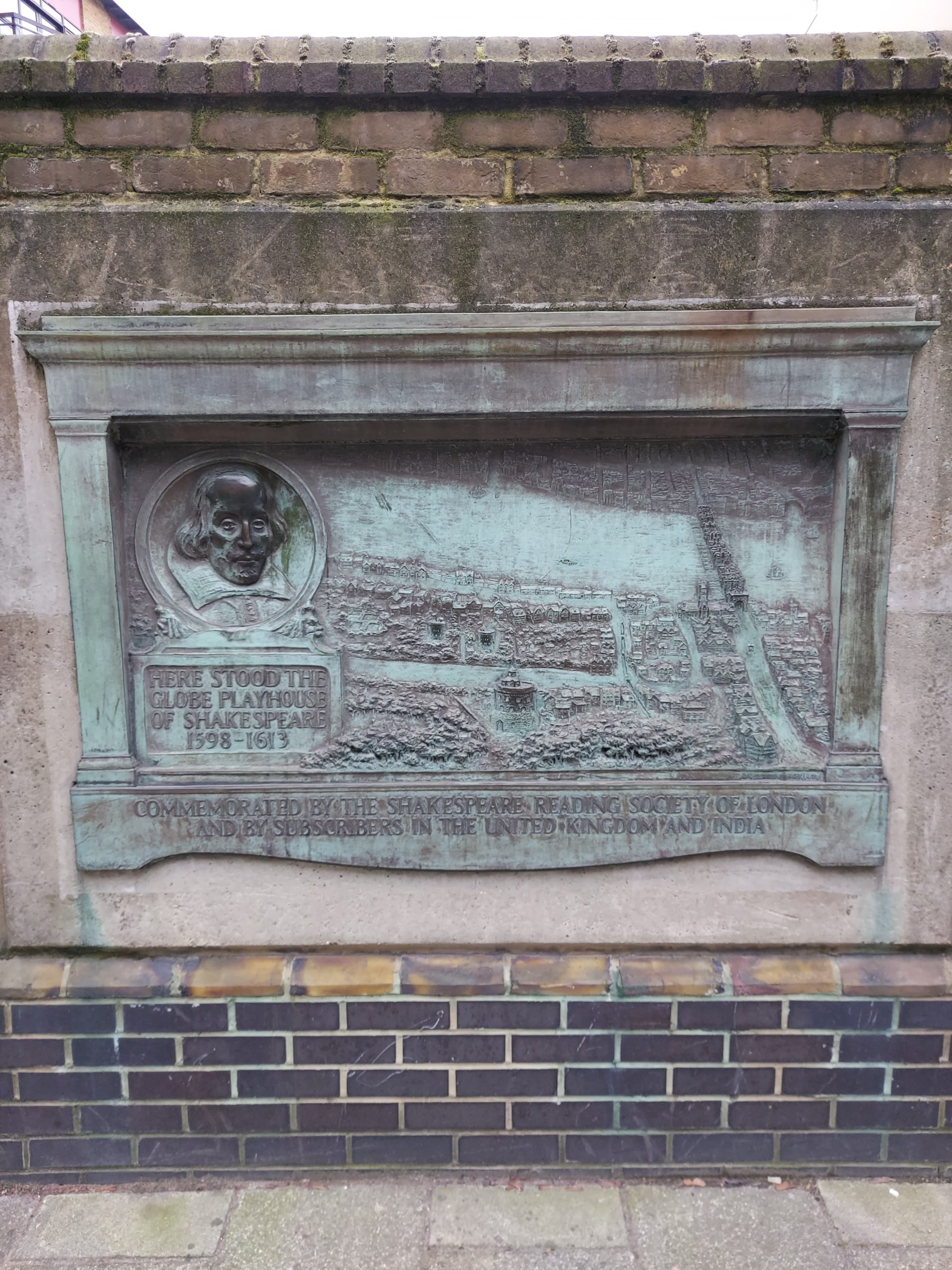
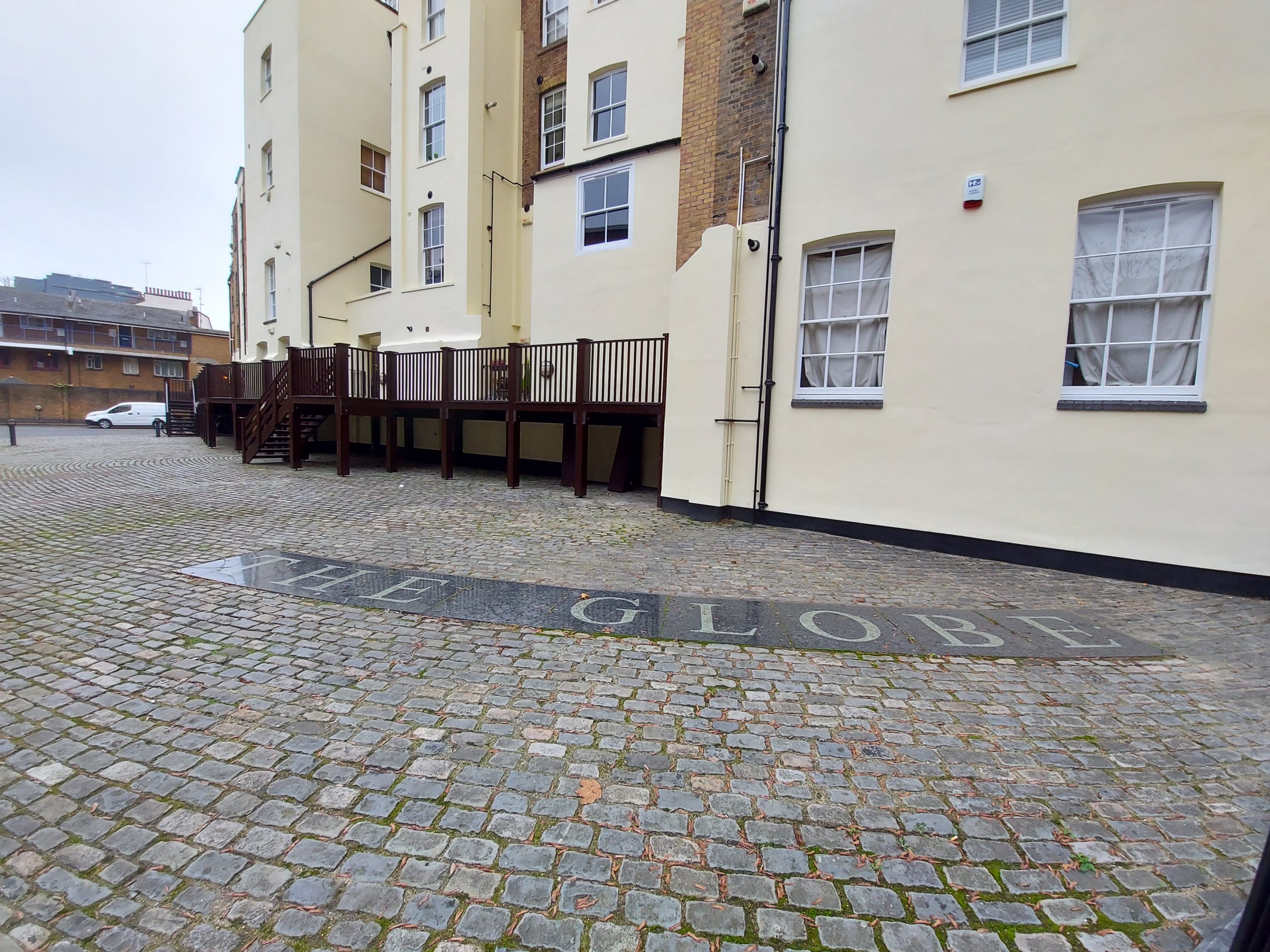
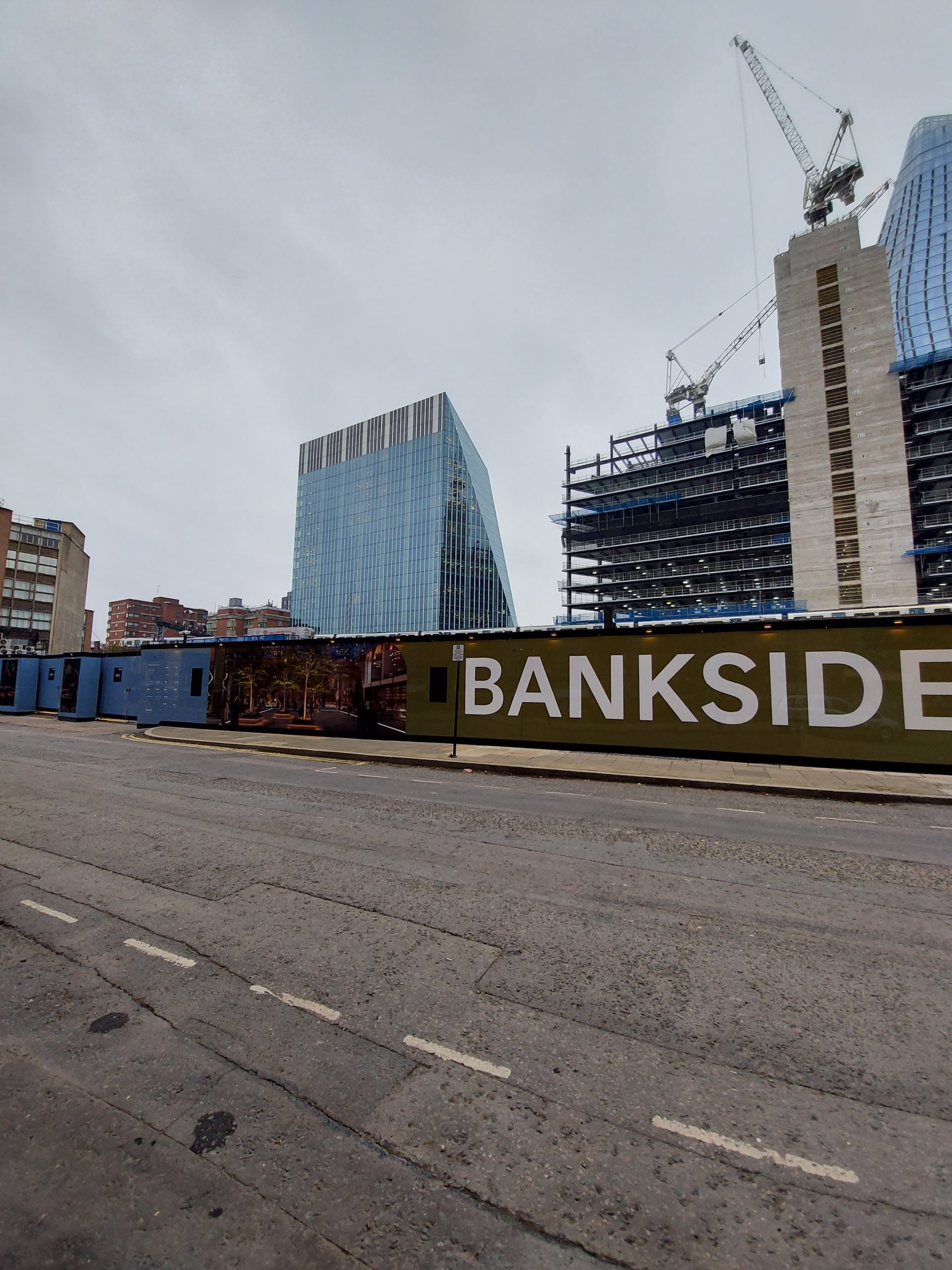
I then headed west to the site of the original Globe theatre, which opened on Bankside in 1599 and remained open (apart from the interval between the first Globe burning down in 1613, during a performance of Henry VIII, and the second Globe being built) until 1642. This theatre hosted the Chamberlain’s, later the King’s, Men and premiered many of Shakespeare’s plays including Hamlet, King Lear and Othello.
Site of the Globe
Plaque showing the location of the Globe
Site of the Globe
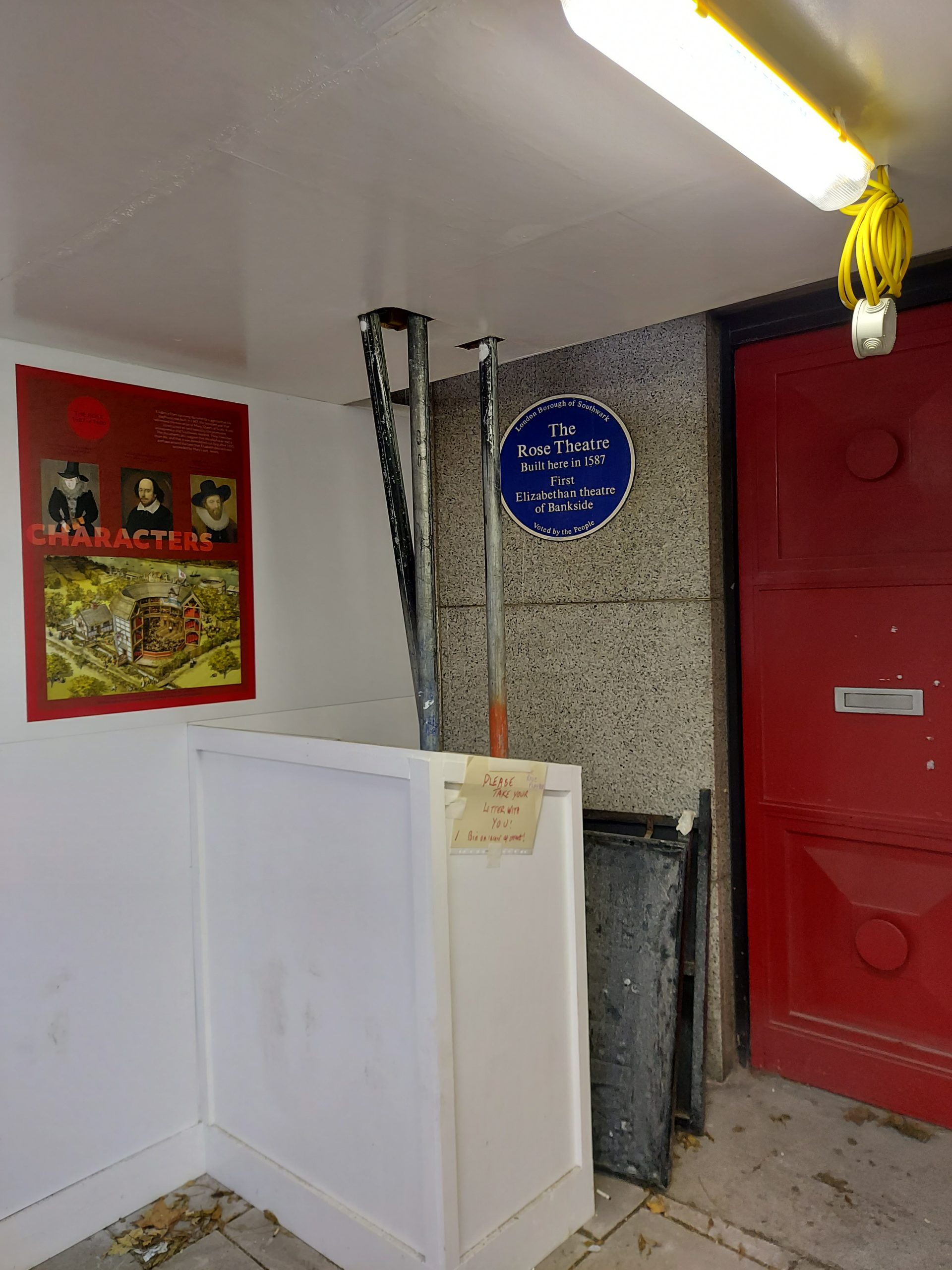
A little further along the same road is the site of the Rose, the first theatre to open on Bankside, built by Philip Henslowe in 1587. It staged plays until 1604, and was home to the Admiral’s Men between 1594 to 1600. The theatre showed many plays by Christopher Marlowe, including Tamberlaine, The Jew of Malta and The Massacre at Paris. The site was discovered and excavated in 1989; after a campaign by many key figures in the arts, it was preserved and is now enclosed beneath offices.
Location of the Rose
Nearby is the site of the Hope Theatre in Bear Gardens. Opened in 1614 by Philip Henslowe, it had a dismountable stage so that it could show bear-baiting and swordfighting as well as theatrical performances. Ben Jonson’s Bartholomew Fair premiered here in 1614, and in the printed text Jonson complains about the smell.
Location of the Hope
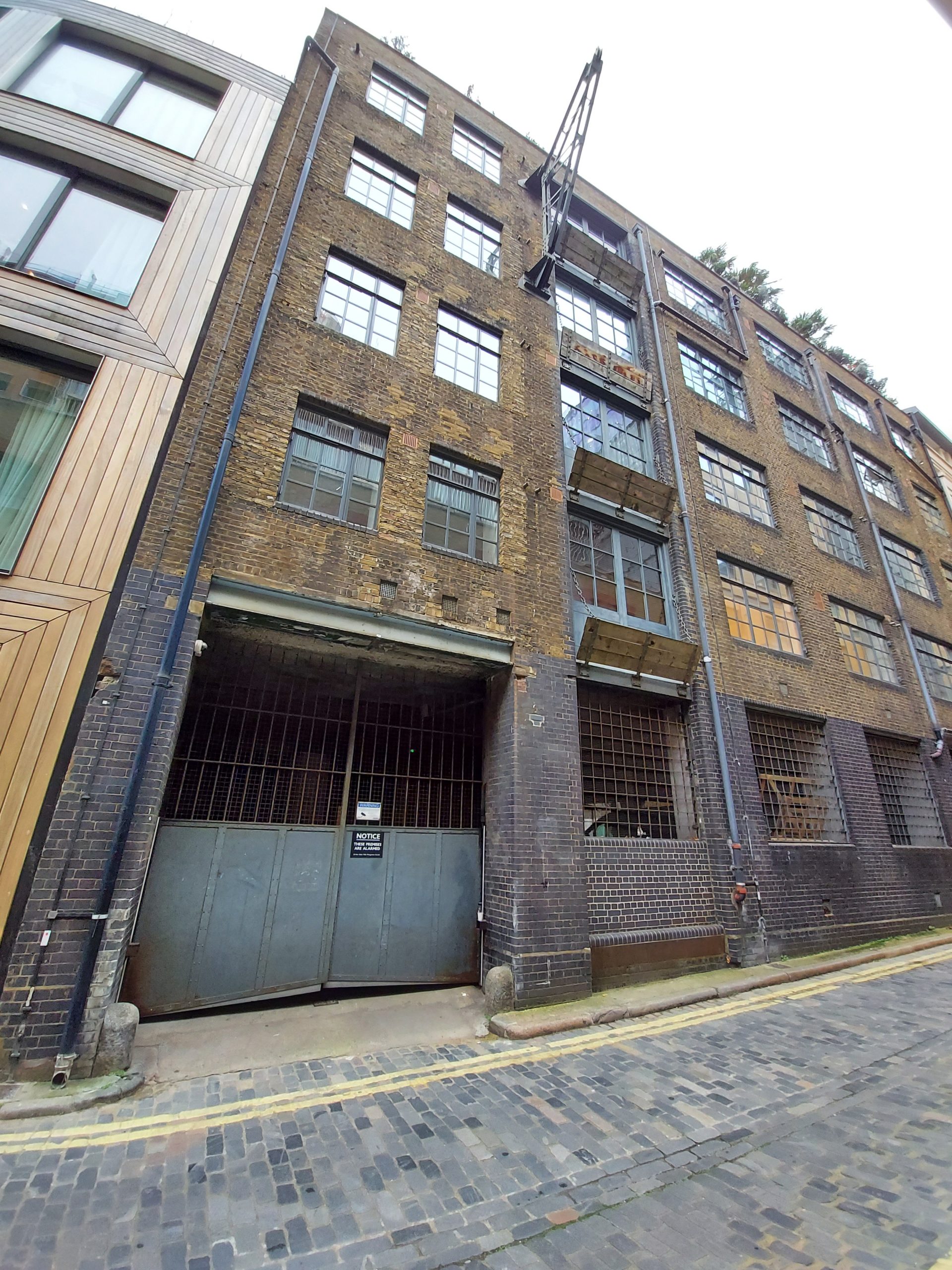
Finally, the walk ended at the site of the Swan, opened in 1595 by Francis Langley to compete with the Rose. It was handily positioned near Paris Garden stairs where patrons arriving by river would land, but did not enjoy the success of the Globe and the Rose. It closed in around 1628.
Location of the Swan
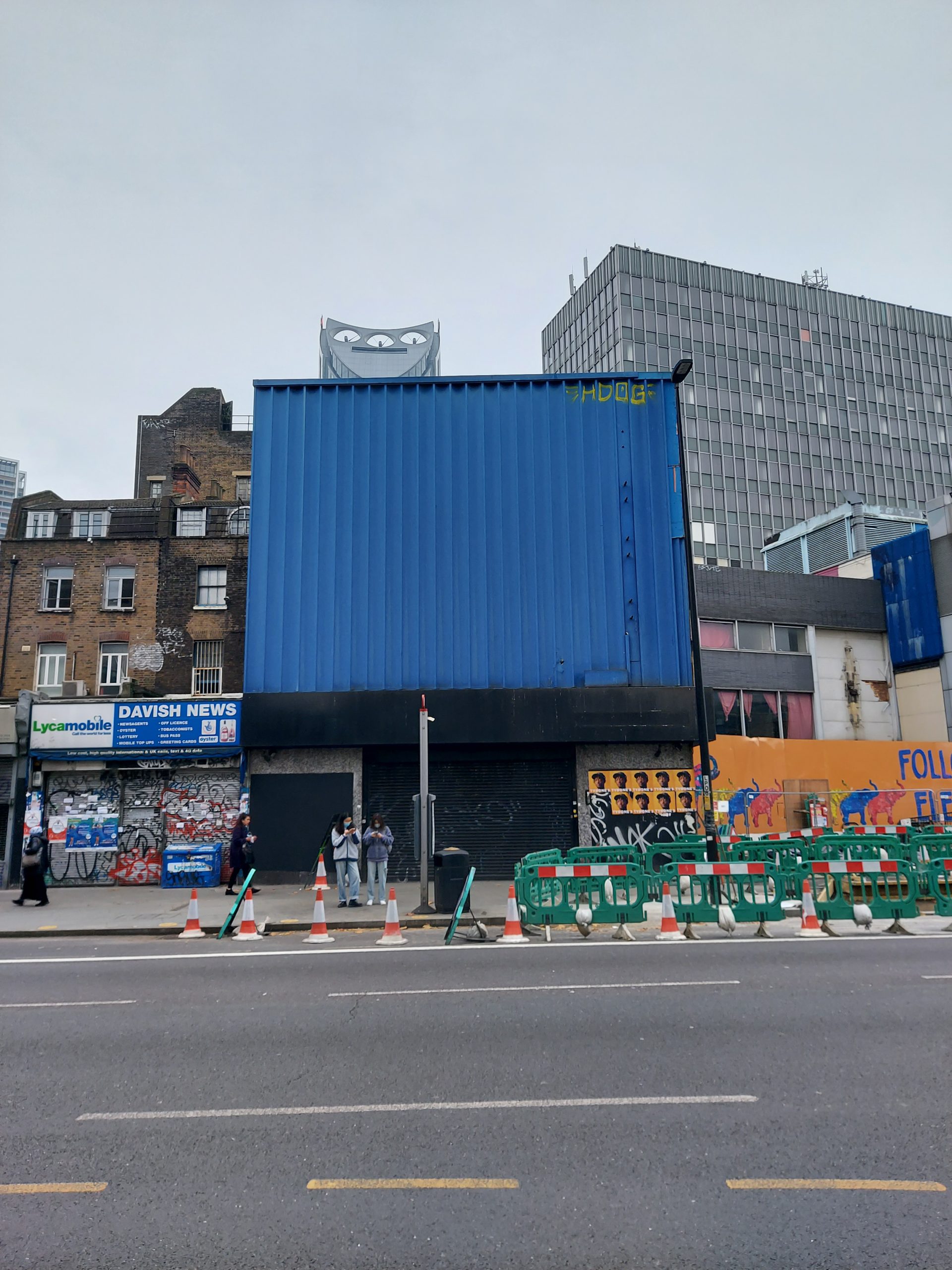
Having reached the end of the walk, I decided to travel south to Elephant & Castle to check out a couple of other sites on the map. The Newington Butts theatre (1575-95) was on the site of what is now (albeit not for long) the Coronet music venue.
Location of Newington Butts
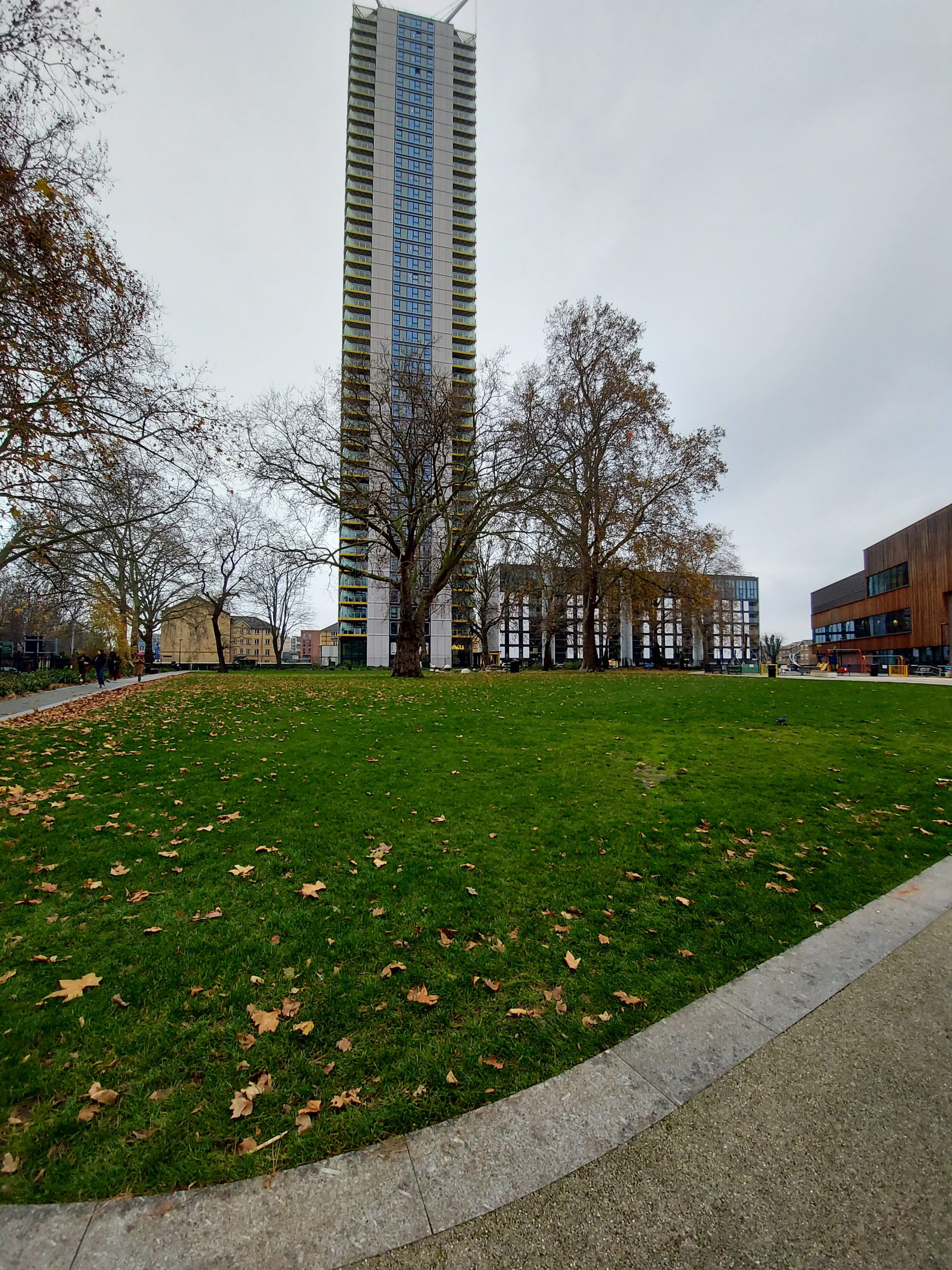
Finally, I ended up in St Mary’s churchyard. No longer recognisable as a churchyard, except for the name, it is the burial place of playwright Thomas Middleton, who lived in the area and died in 1627.
St Mary’s churchyard
So with that I come to the end of the ShaLT walks. I have more of a sense now of the geography of Elizabethan and Jacobean theatreland, and how everything fits together. I hope in the future even more can be discovered about performance and theatregoing during this period.