I popped in to the National Army Museum to check out their exhibition on Shakespeare and War before it closed. The exhibition looks at how Shakespeare’s plays have been used across the centuries to criticise, justify and explore the consequences of war.
The material featured dates from the English Civil War and covers the period up to the current Ukraine conflict. It includes propaganda created by those at the top, including a World War I recruitment poster featuring a line from Macbeth, and more personal reflections by soldiers who looked to Shakespeare’s plays to find meaning in times of conflict. Recent productions of plays featuring war have taken their soldierly background seriously, such as a Royal Shakespeare Company production of Othello that explored the idea that the general was suffering from PTSD. The exhibition was interesting and covered a topic I wasn’t all that familiar with.
After a rest of a few days, I headed back into central London to complete the final two ShaLT walks. Walk 4 began in Whitechapel, at the site of the Red Lion, founded in 1567.
Site of the Red Lion
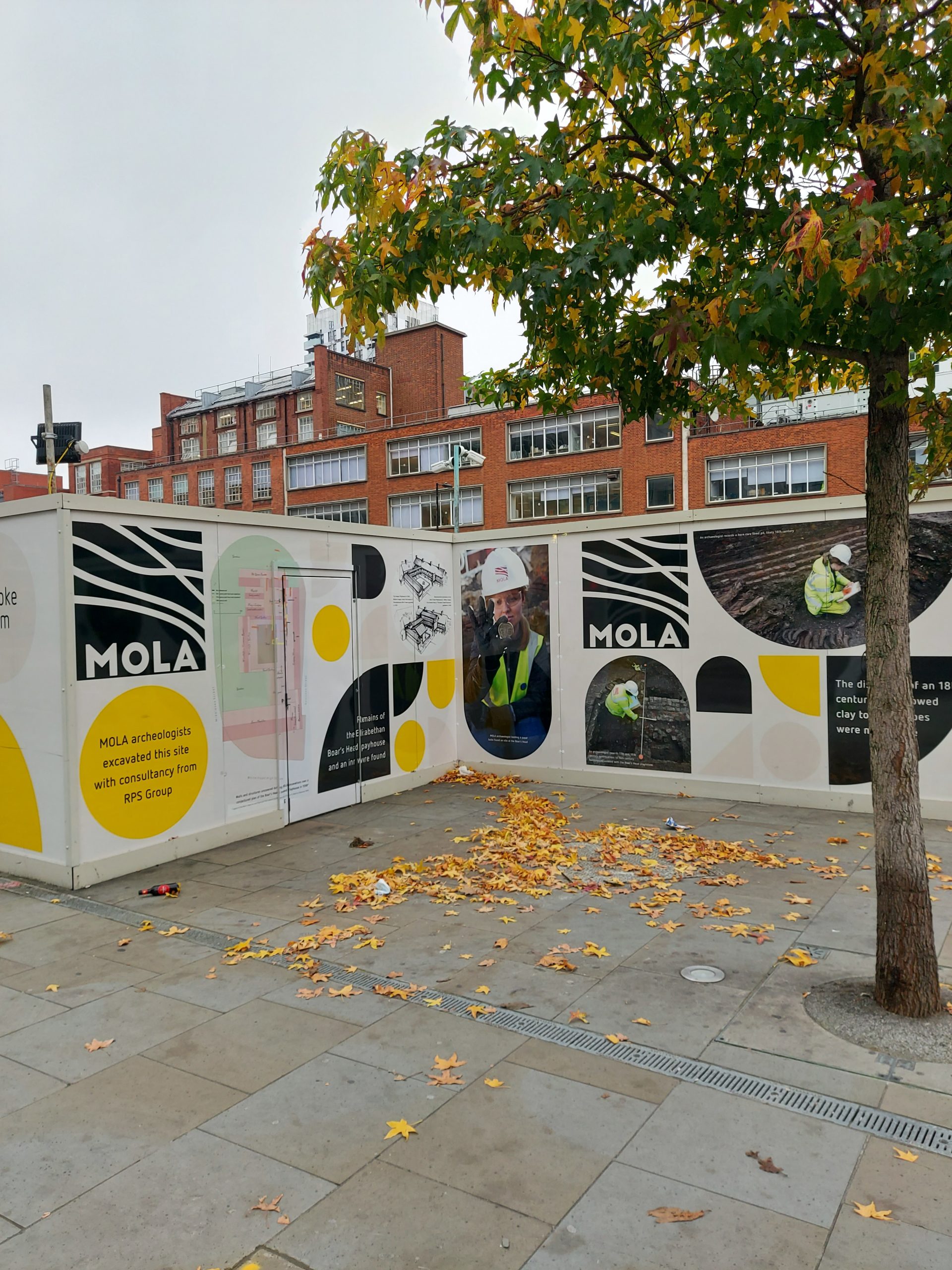
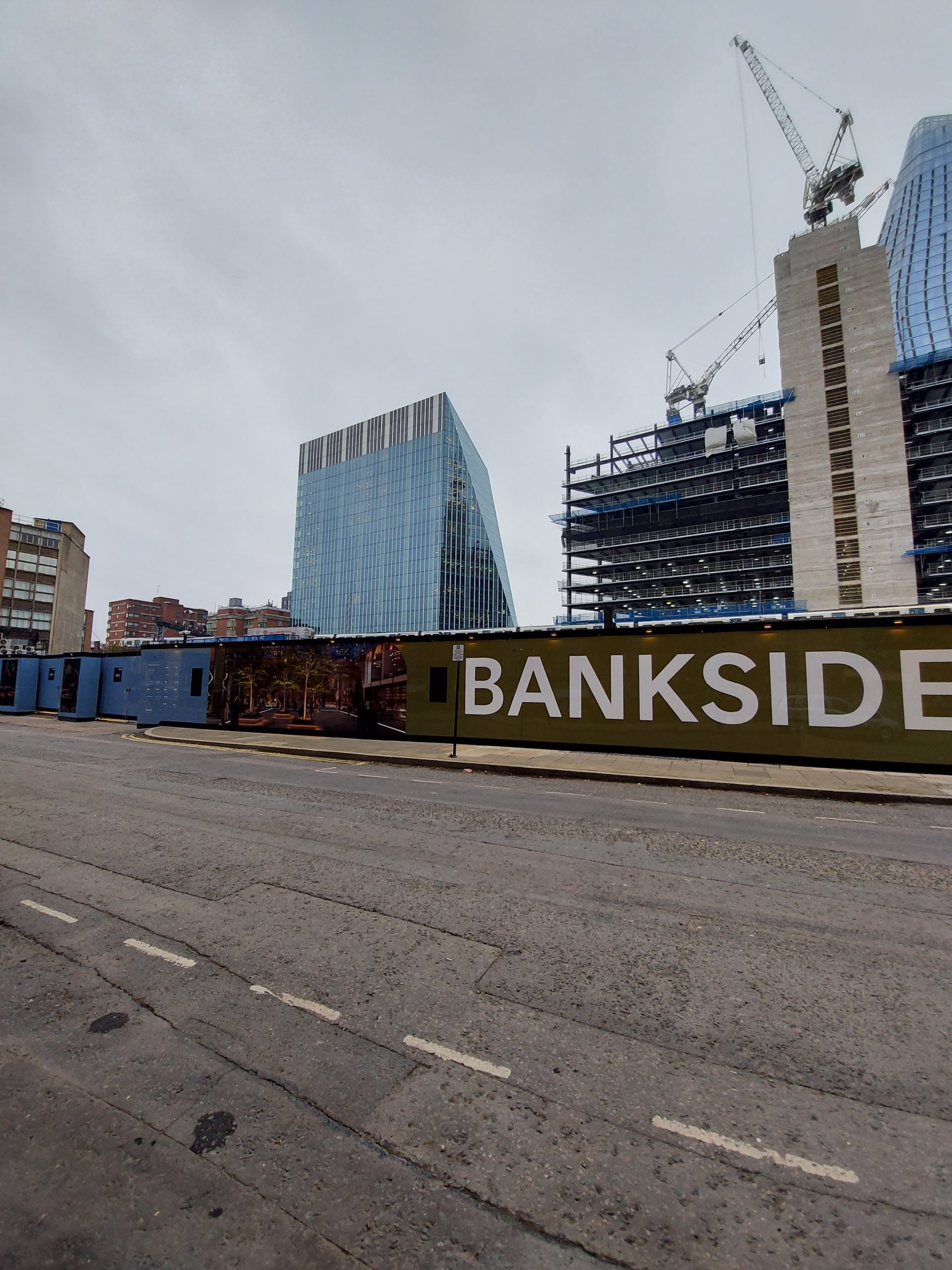
Walking west along Whitechapel Road, I came to the Boar’s Head site, soon to be built on. Hoardings around the site acknowledge it as the location of this playhouse, a converted inn, built in 1598. It was used by Queen Anne’s Men and possibly Prince Charles’s Men, but ceased to be a playhouse in 1616.
Site of the Boar’s Head
Walking south down Bishopsgate and then Gracechurch (Gracious) Street, I passed the sites of the Bull Inn, the Bell and the Cross Keys, the other inns that along with the Bel Savage were granted licenses by the City to perform plays.
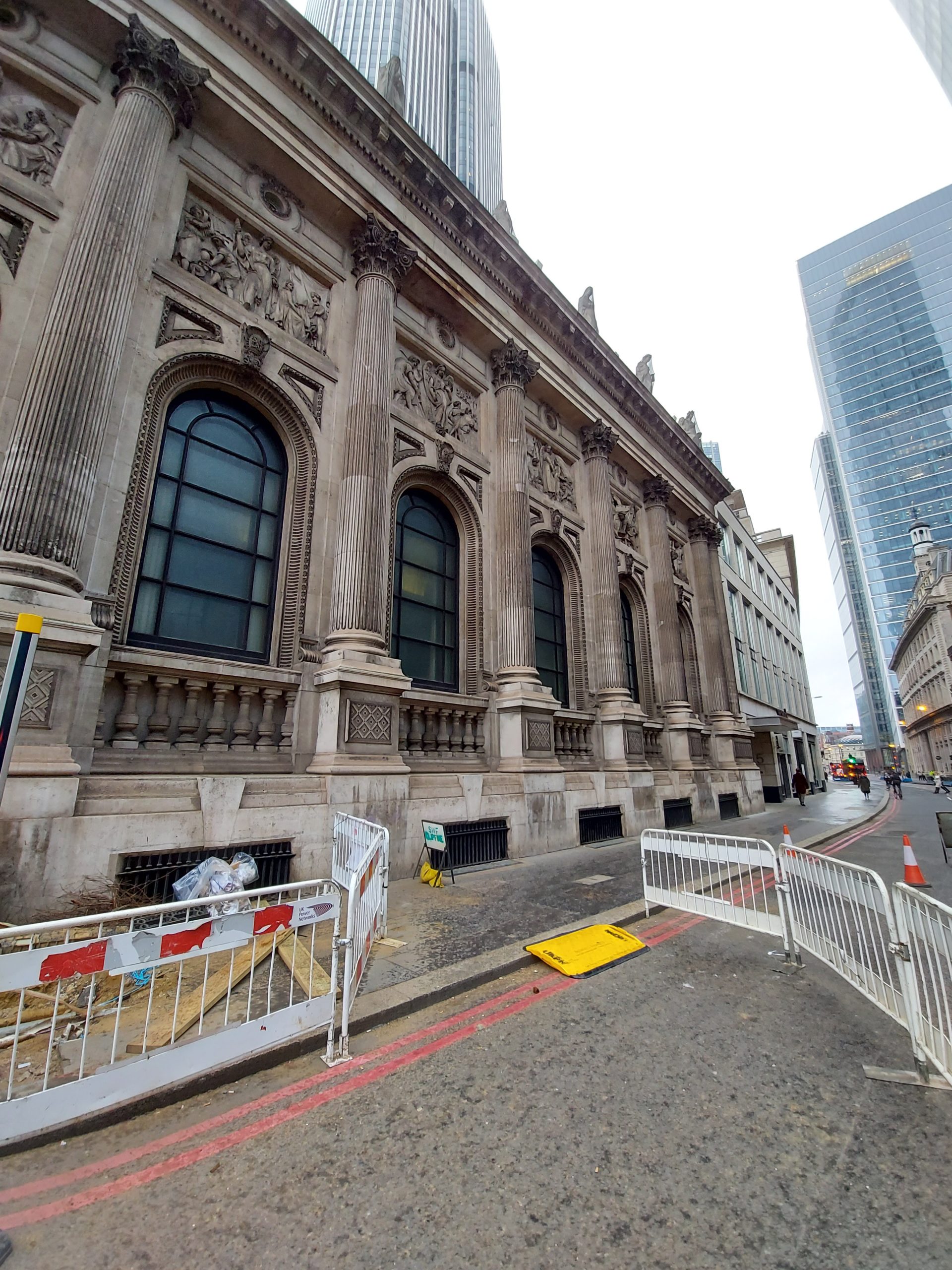
Site of the Bull Inn
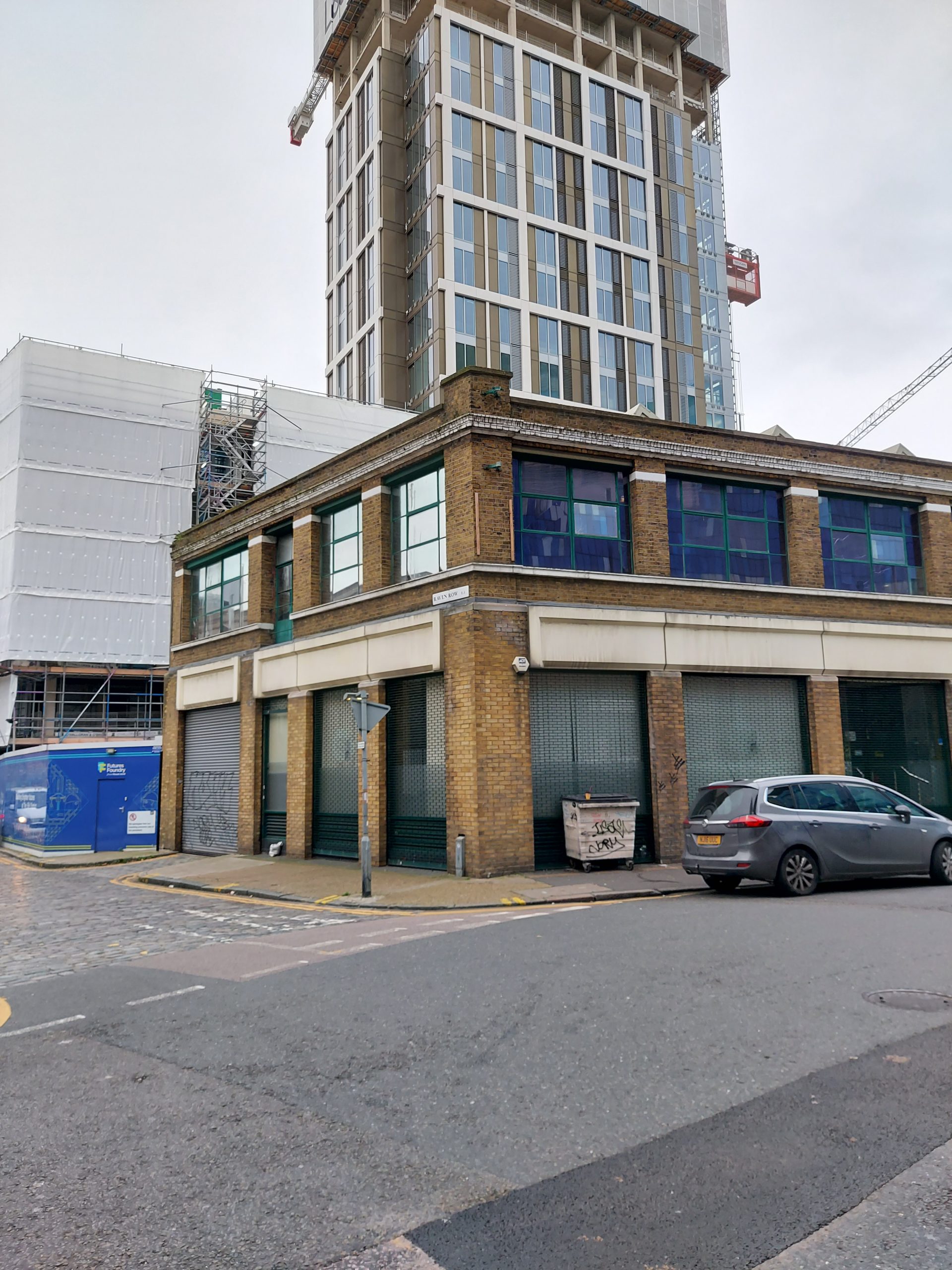
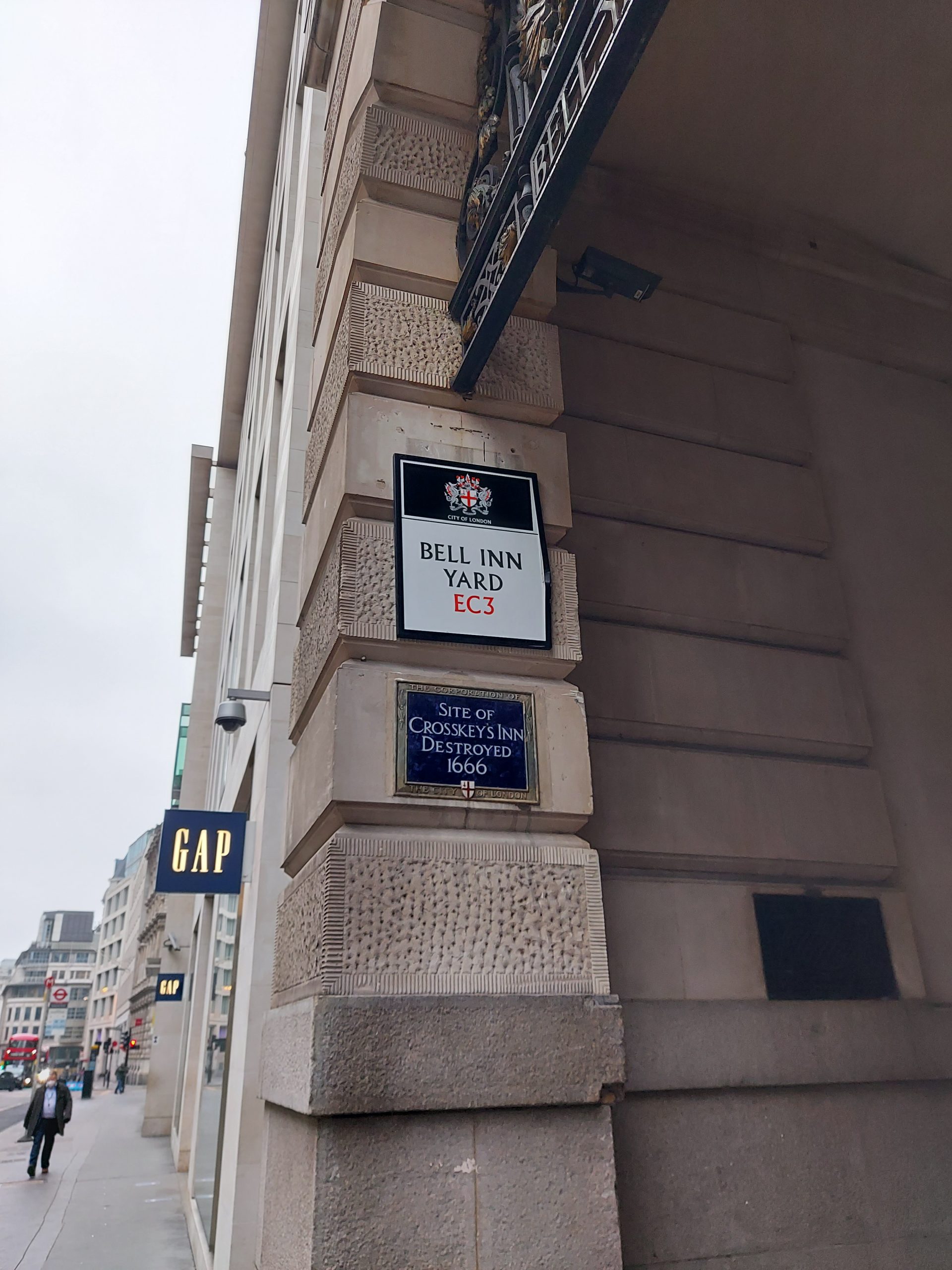
Site of the Bell and Cross Keys inns
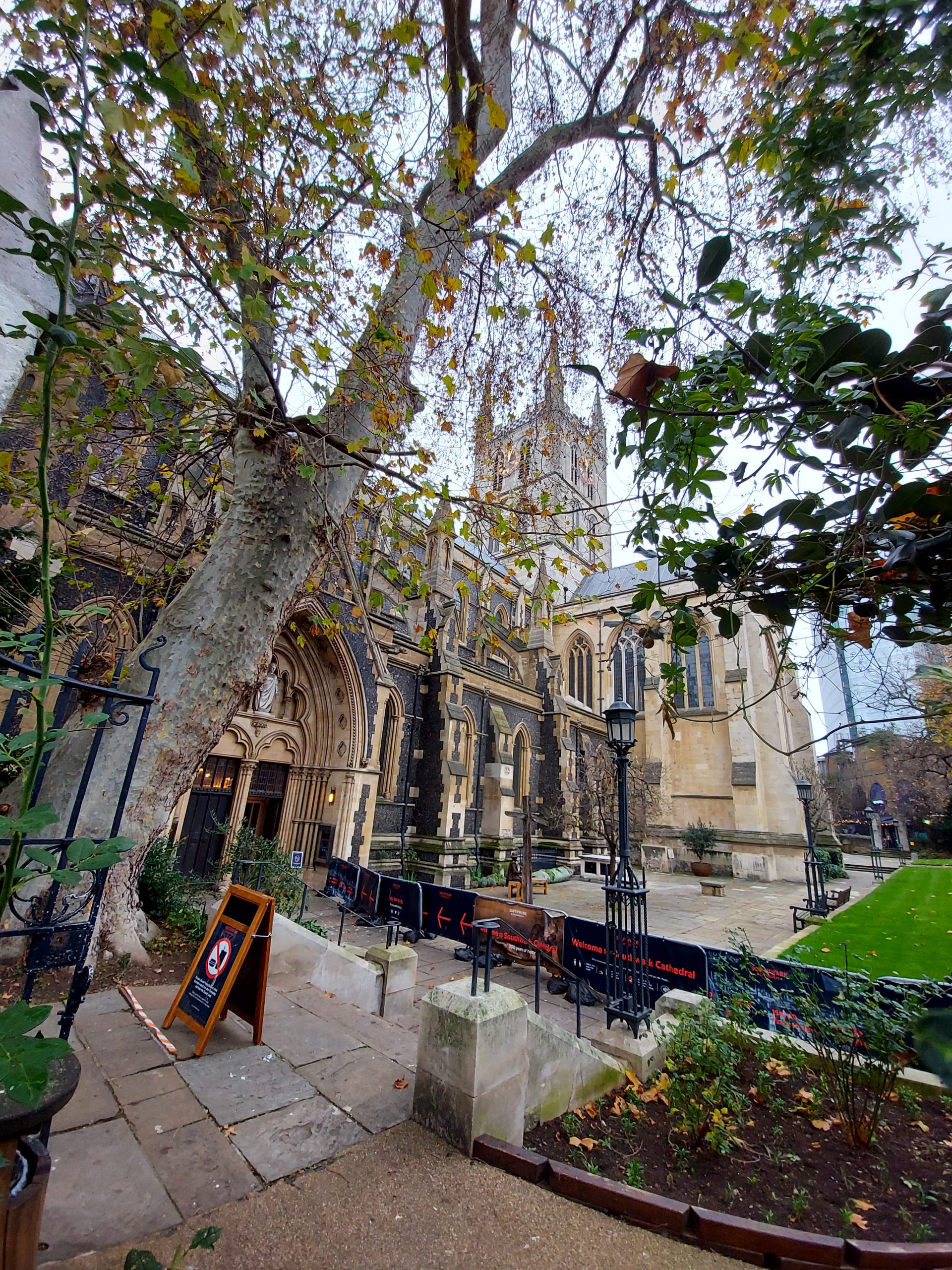
By now I’d almost reached the river, so I crossed at London Bridge and made my way to the start of Walk 5. This final walk began at Southwark Cathedral, which has memorial slabs to Edmond Shakespeare, John Fletcher and Philip Massinger.
Southwark Cathedral
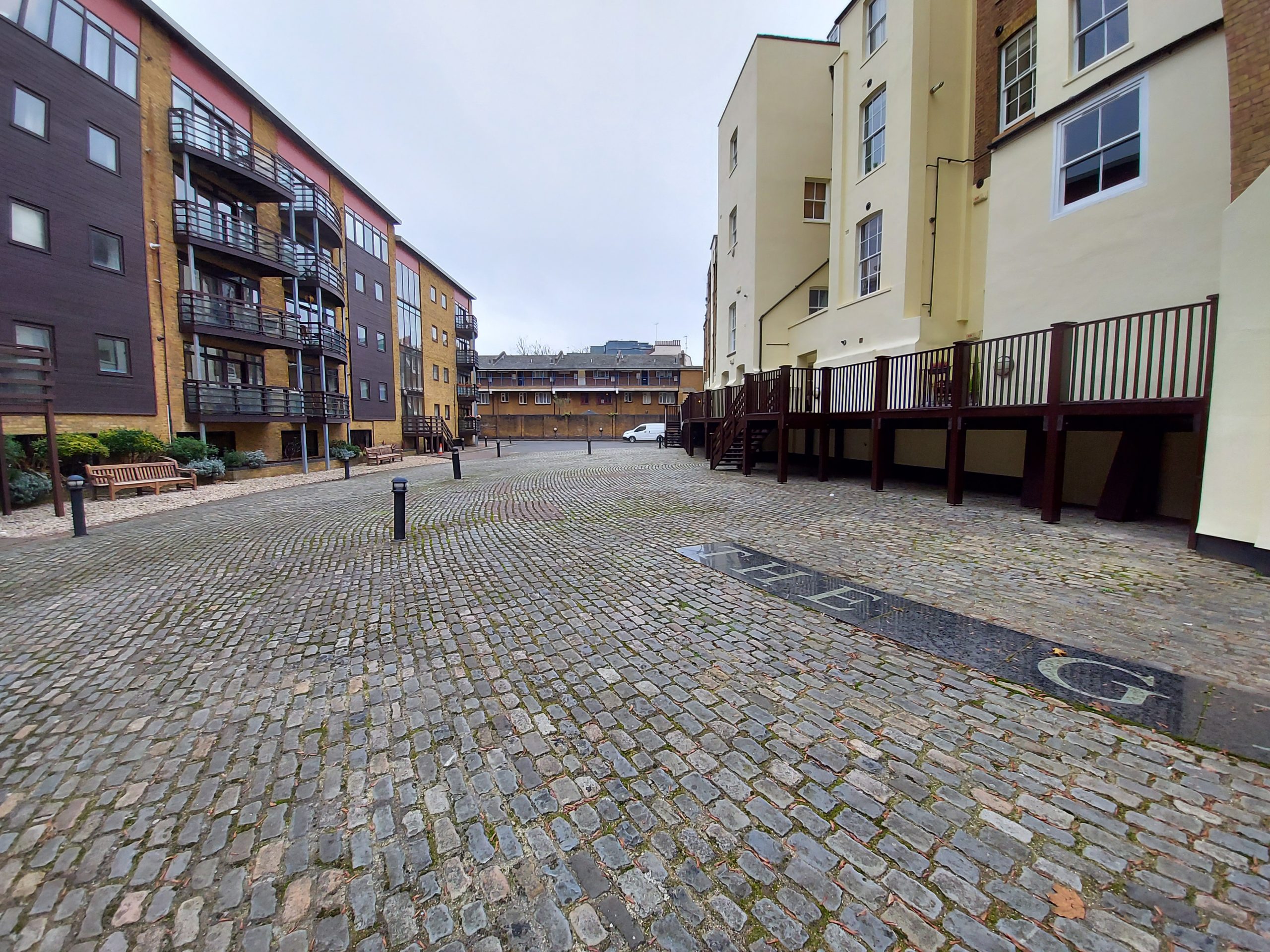
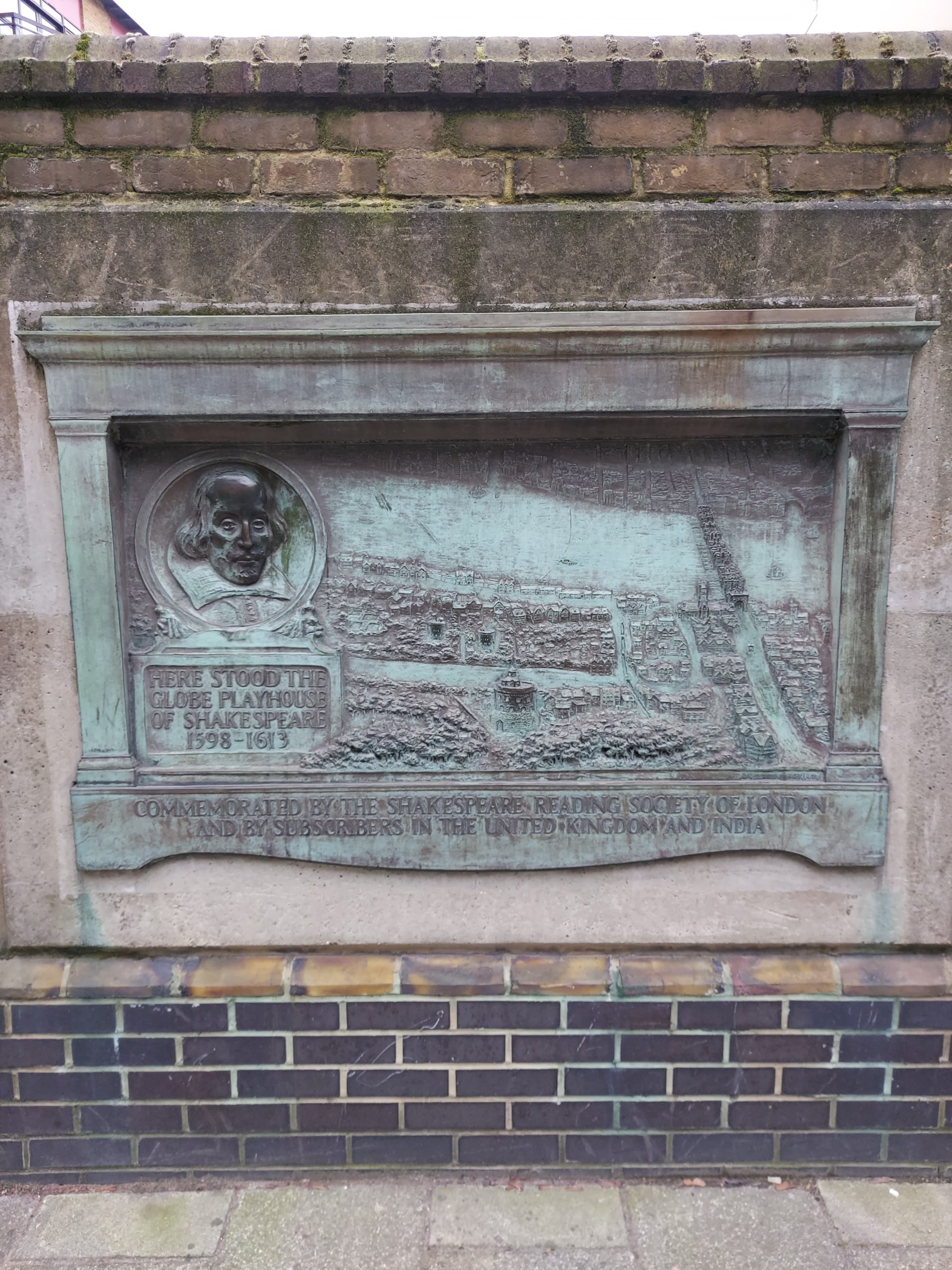
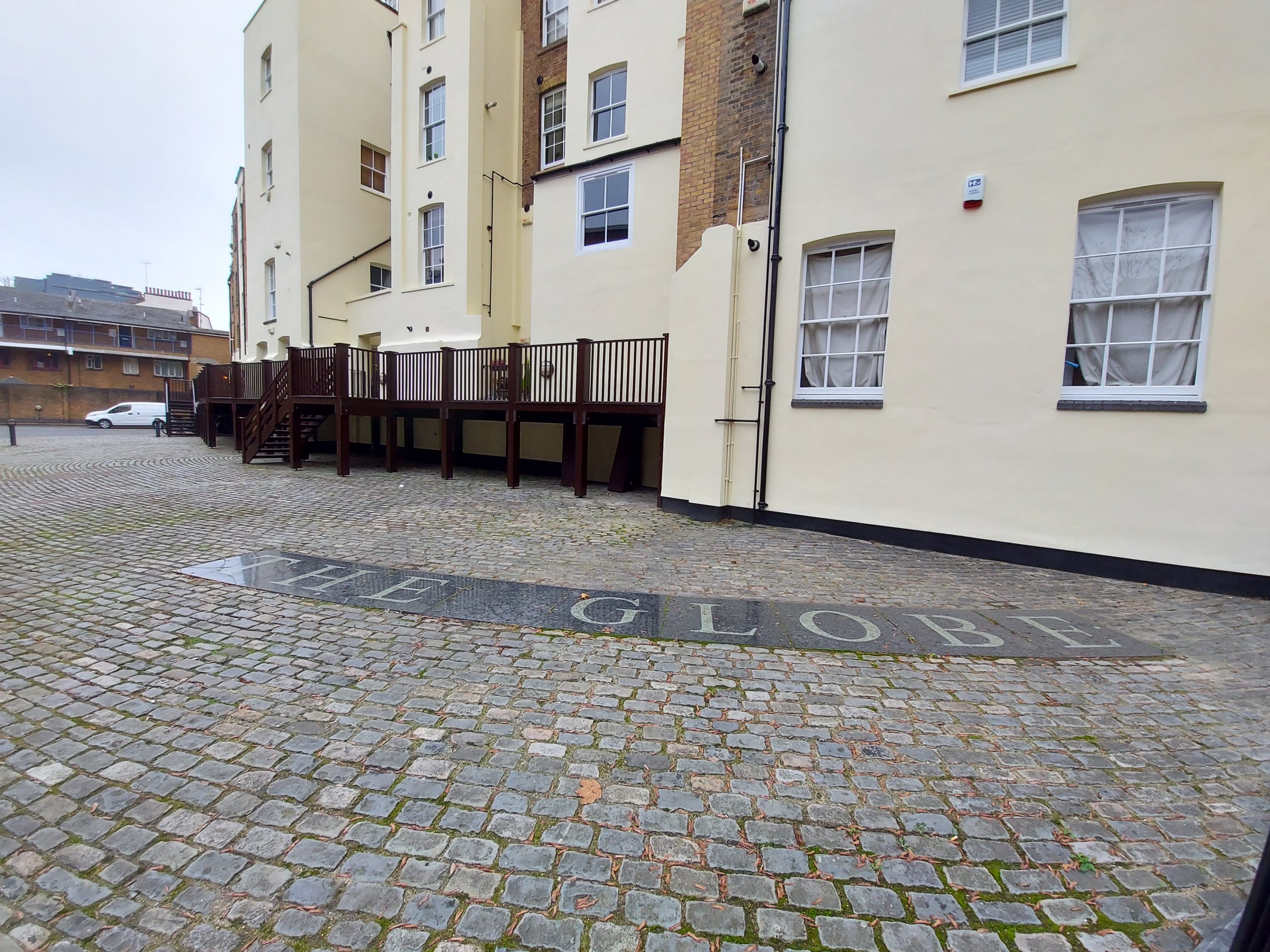
I then headed west to the site of the original Globe theatre, which opened on Bankside in 1599 and remained open (apart from the interval between the first Globe burning down in 1613, during a performance of Henry VIII, and the second Globe being built) until 1642. This theatre hosted the Chamberlain’s, later the King’s, Men and premiered many of Shakespeare’s plays including Hamlet, King Lear and Othello.
Site of the Globe
Plaque showing the location of the Globe
Site of the Globe
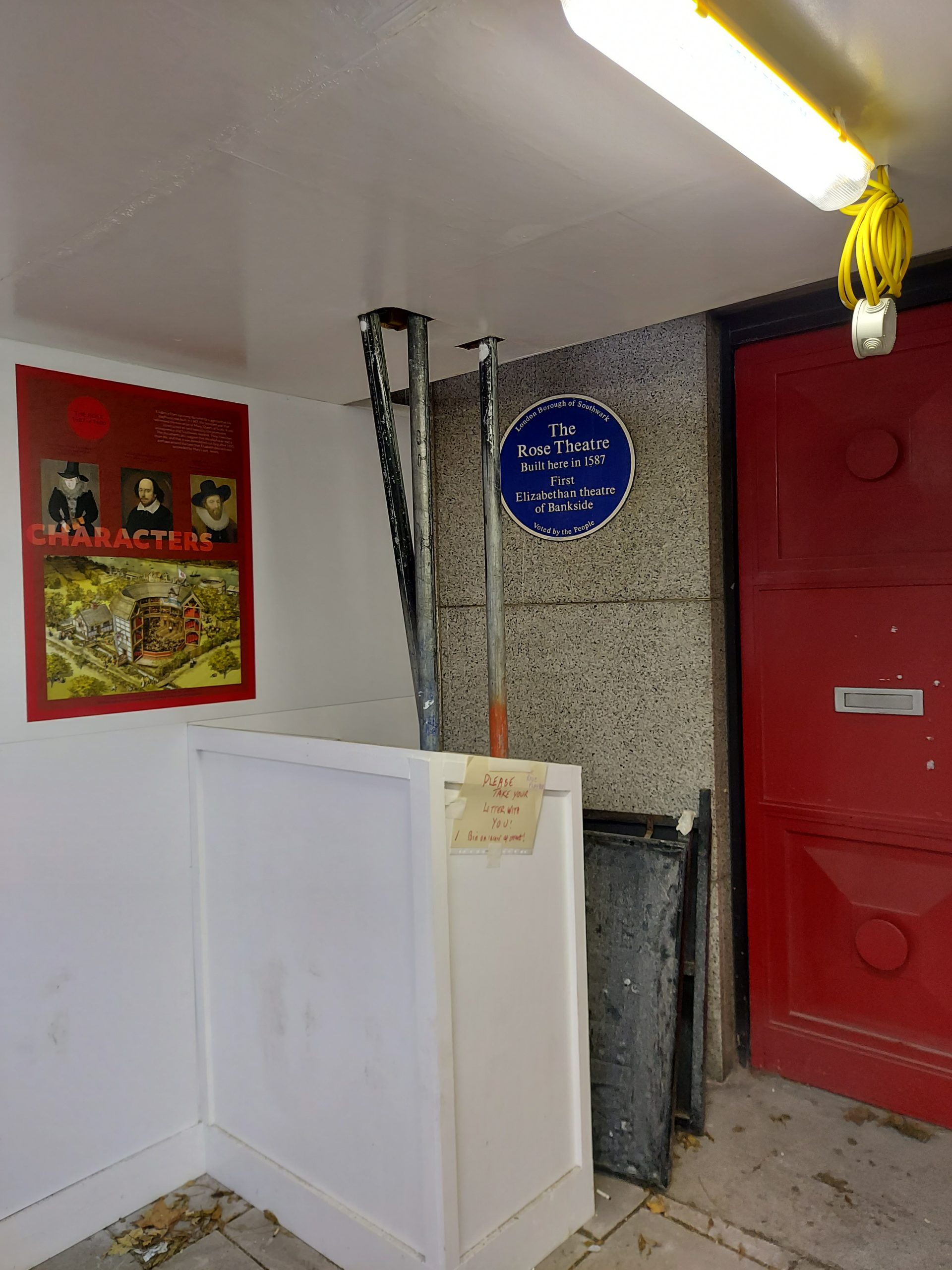
A little further along the same road is the site of the Rose, the first theatre to open on Bankside, built by Philip Henslowe in 1587. It staged plays until 1604, and was home to the Admiral’s Men between 1594 to 1600. The theatre showed many plays by Christopher Marlowe, including Tamberlaine, The Jew of Malta and The Massacre at Paris. The site was discovered and excavated in 1989; after a campaign by many key figures in the arts, it was preserved and is now enclosed beneath offices.
Location of the Rose
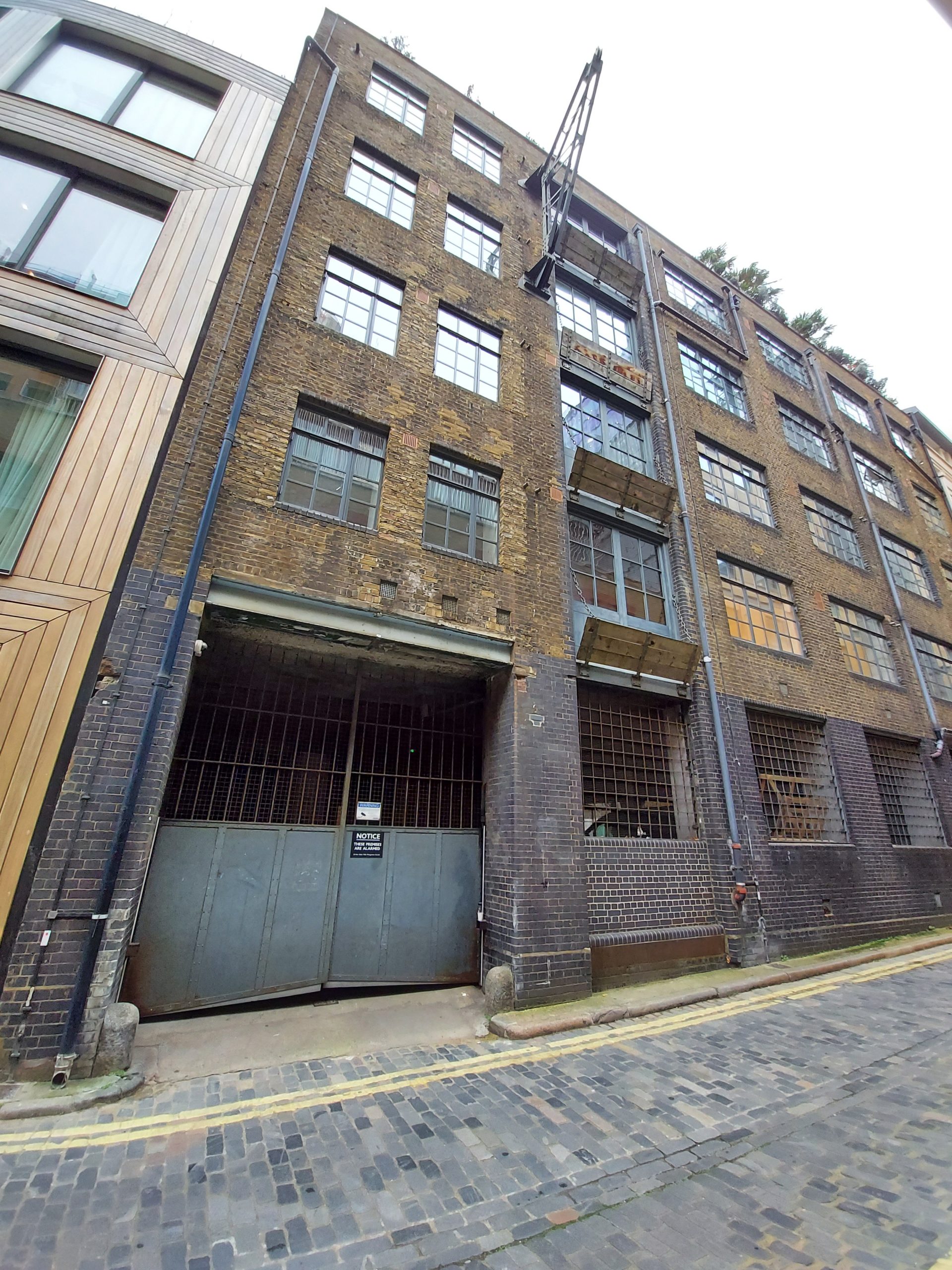
Nearby is the site of the Hope Theatre in Bear Gardens. Opened in 1614 by Philip Henslowe, it had a dismountable stage so that it could show bear-baiting and swordfighting as well as theatrical performances. Ben Jonson’s Bartholomew Fair premiered here in 1614, and in the printed text Jonson complains about the smell.
Location of the Hope
Finally, the walk ended at the site of the Swan, opened in 1595 by Francis Langley to compete with the Rose. It was handily positioned near Paris Garden stairs where patrons arriving by river would land, but did not enjoy the success of the Globe and the Rose. It closed in around 1628.
Location of the Swan
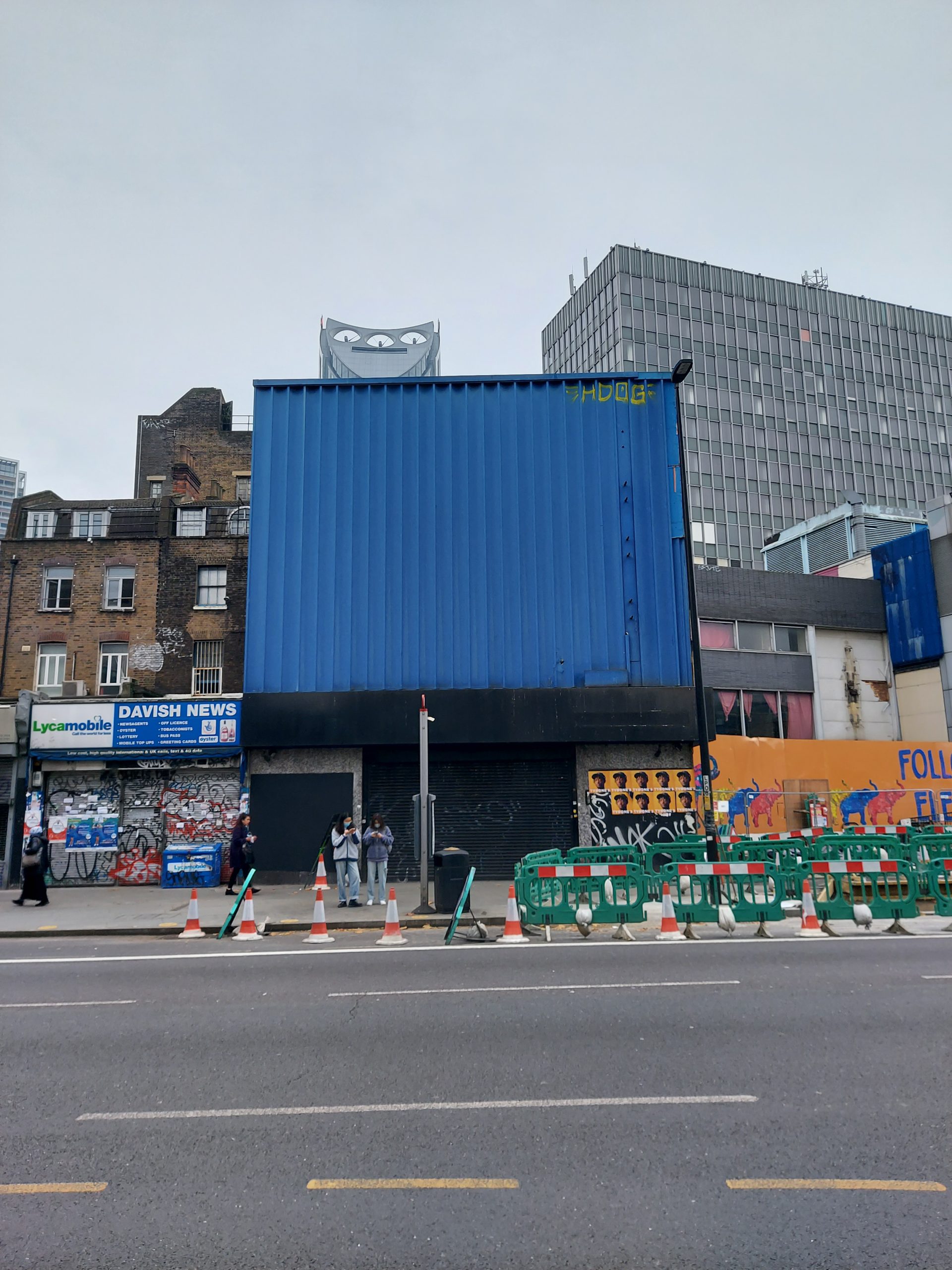
Having reached the end of the walk, I decided to travel south to Elephant & Castle to check out a couple of other sites on the map. The Newington Butts theatre (1575-95) was on the site of what is now (albeit not for long) the Coronet music venue.
Location of Newington Butts
Finally, I ended up in St Mary’s churchyard. No longer recognisable as a churchyard, except for the name, it is the burial place of playwright Thomas Middleton, who lived in the area and died in 1627.
St Mary’s churchyard
So with that I come to the end of the ShaLT walks. I have more of a sense now of the geography of Elizabethan and Jacobean theatreland, and how everything fits together. I hope in the future even more can be discovered about performance and theatregoing during this period.
After completing the first two ShaLT walks, I went back to central London the very next day to tackle Walk 3. I only did one walk today as it was by far the densest in terms of locations.
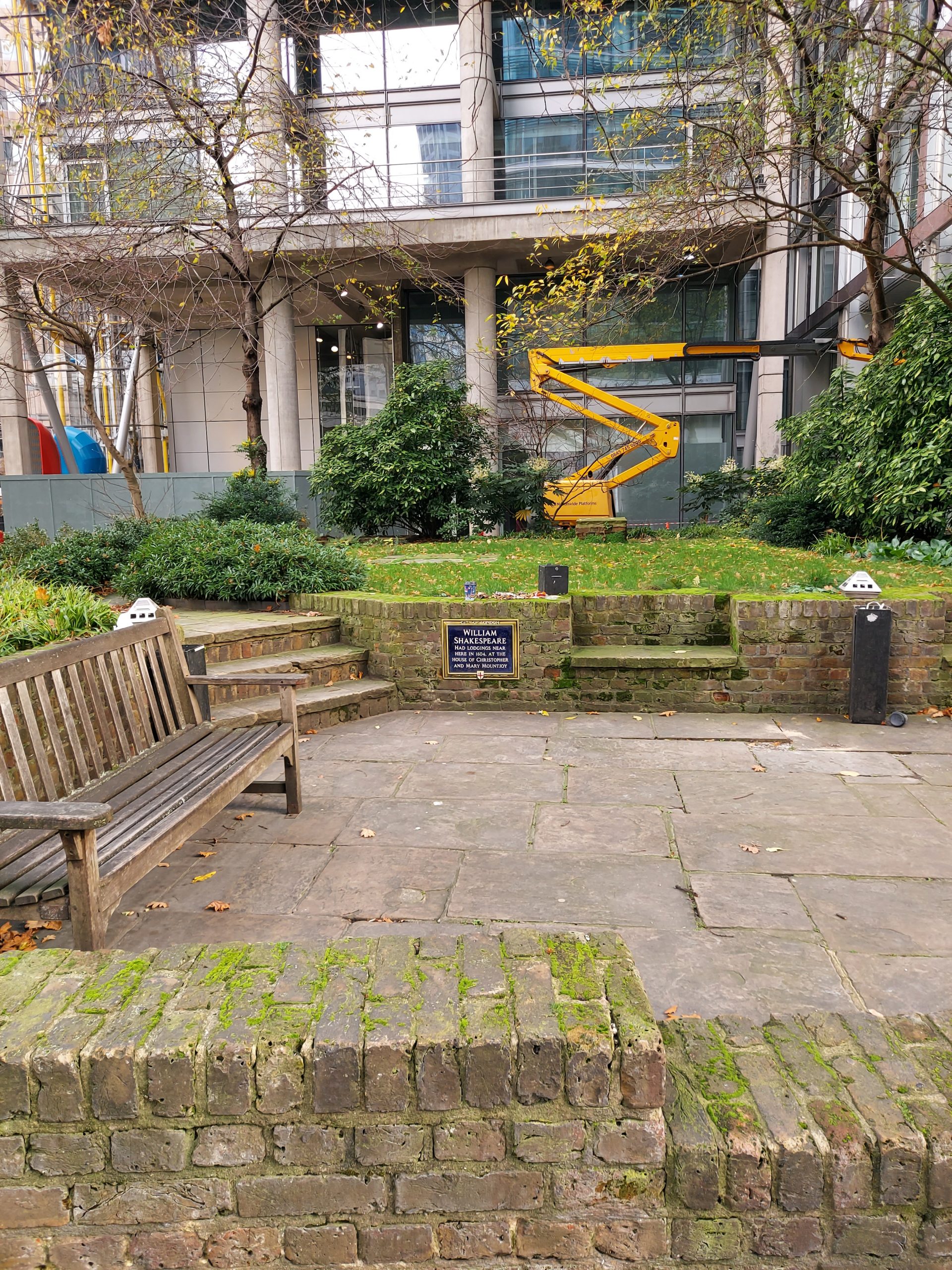
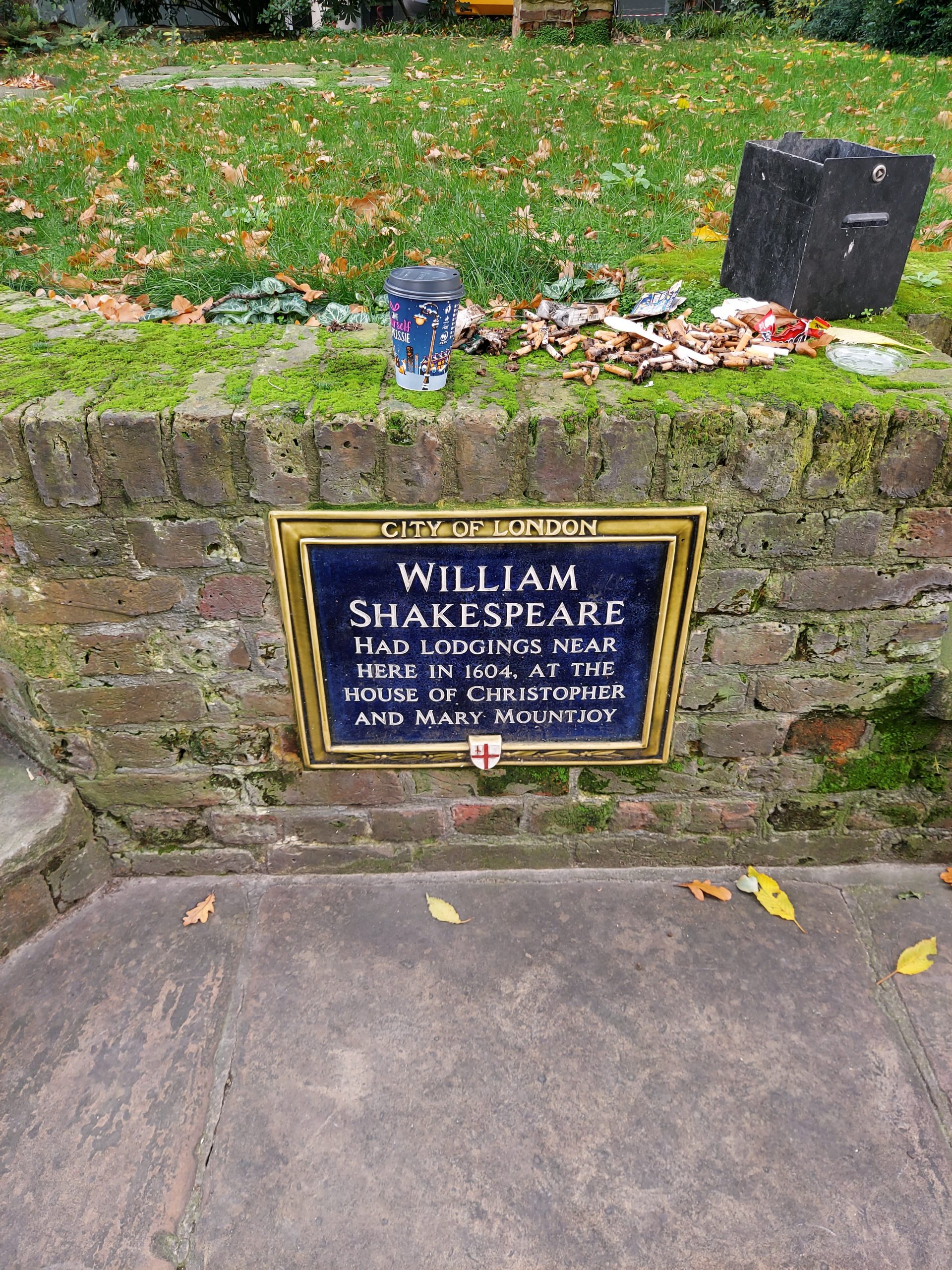
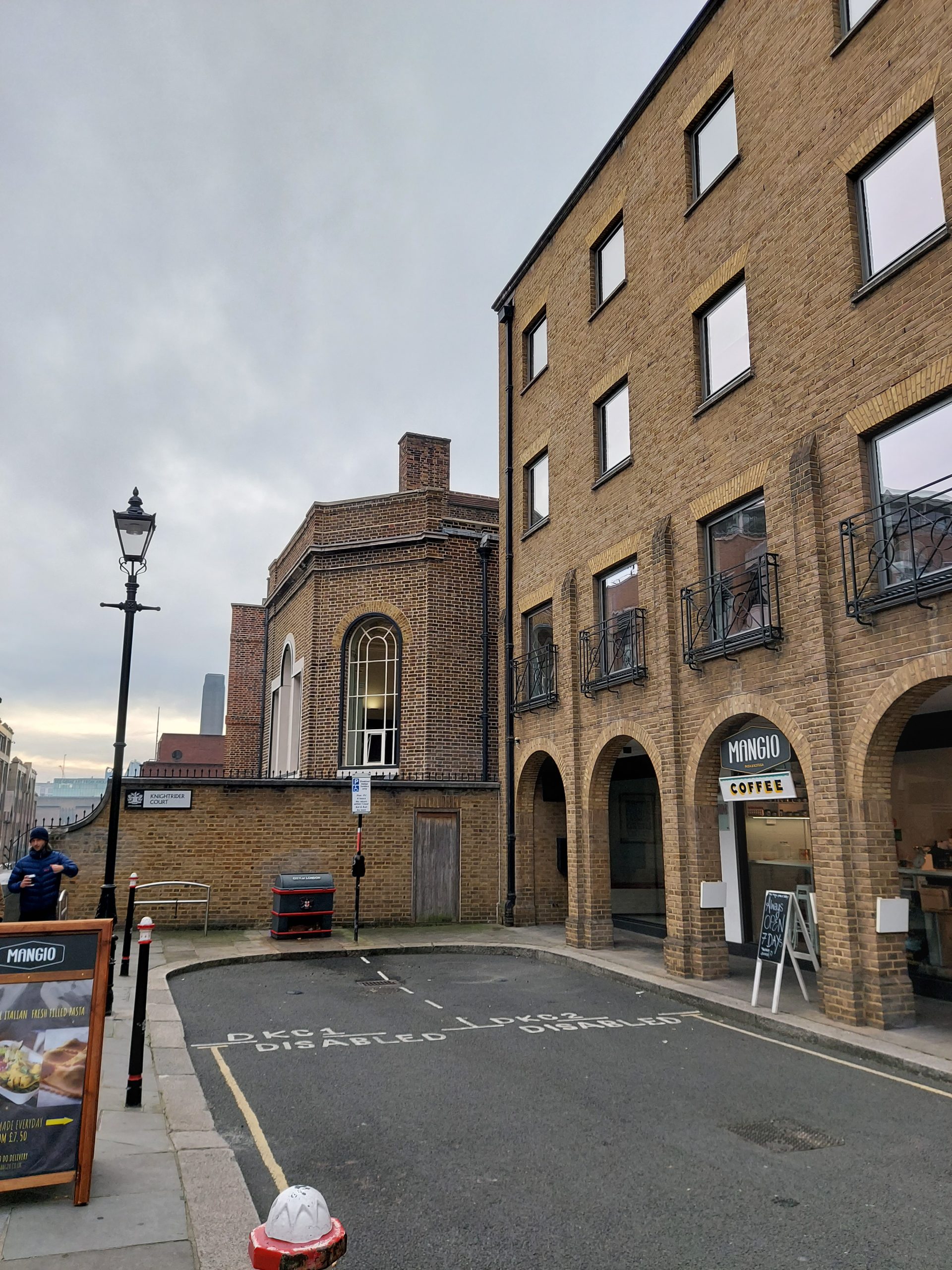
The walk began at St Paul’s, and the first thing I did, although it wasn’t officially part of the walk, was to head north to find the site of Shakespeare’s former lodgings on Silver Street, near St Giles’s Church. I also found the third location of the Revels Office (1612-30), on Peter’s Hill near the College of Arms.
Derelict church now used by the public
Plaque showing that William Shakespeare’s lodgings were nearby
Location of the Revels Office
I then followed the map to the location of the Bel Savage at Limeburner Lane. In 1583 four inns were licensed by the City for dramatic performances; the Bel Savage was one of these taverns. Playing in the City was banned in 1594.
Location of the Bel Savage
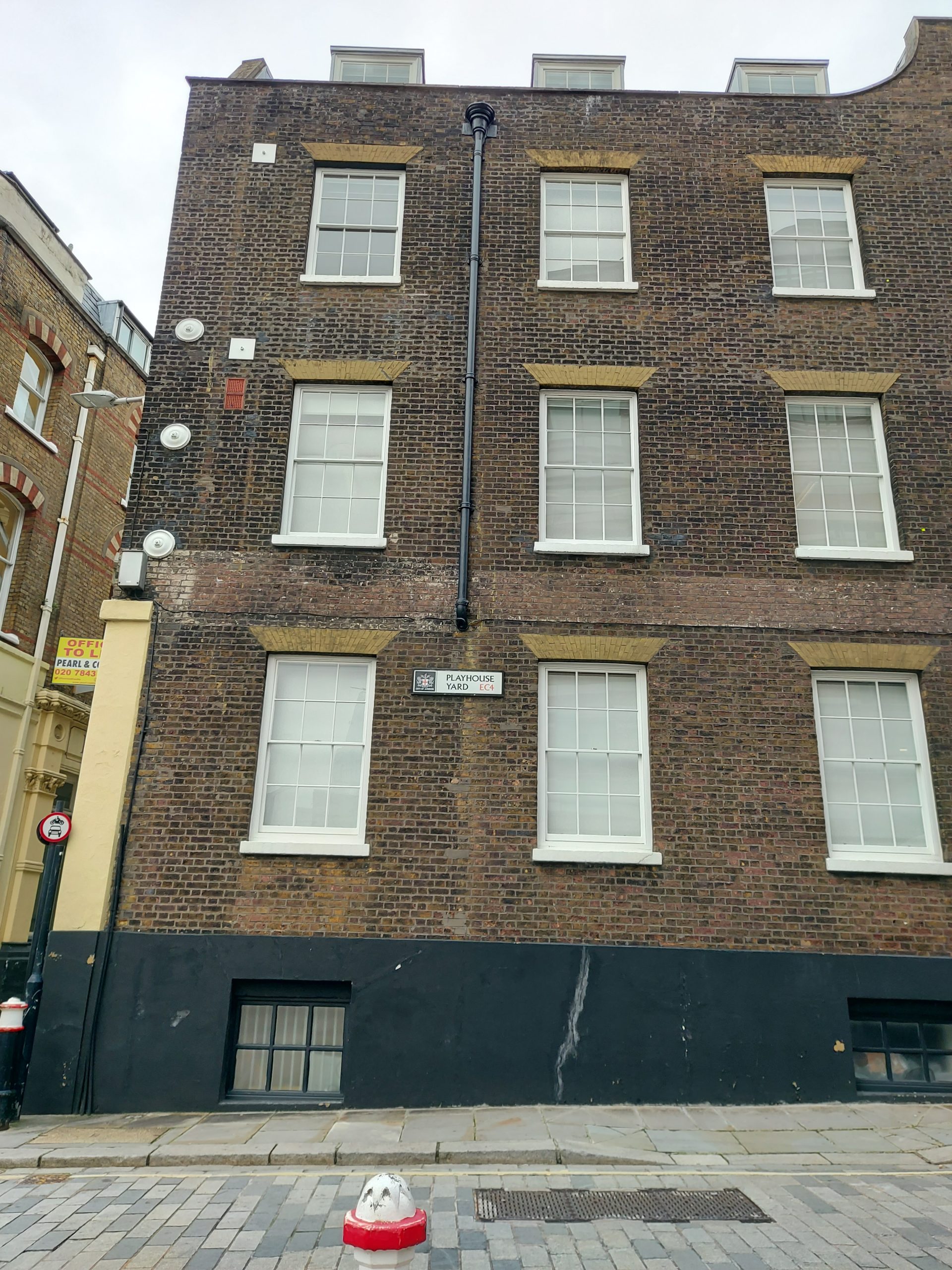
I tried to find Shakespeare’s other known London residence at the Blackfriars East Gatehouse, but I struggled with this and gave up in the end. I had a bit more luck with the site of the two Blackfriars theatres: originally a smaller stage in an upper room from 1576-90, then a purpose-built stage in upper rooms, accessed from Playhouse Yard, which staged plays between 1596 and 1642. This second theatre became the model for all future theatres, and was used by Shakespeare’s company, who staged plays at the Globe in summer and the Blackfriars in winter – a programme emulated by the modern-day Shakespeare’s Globe.
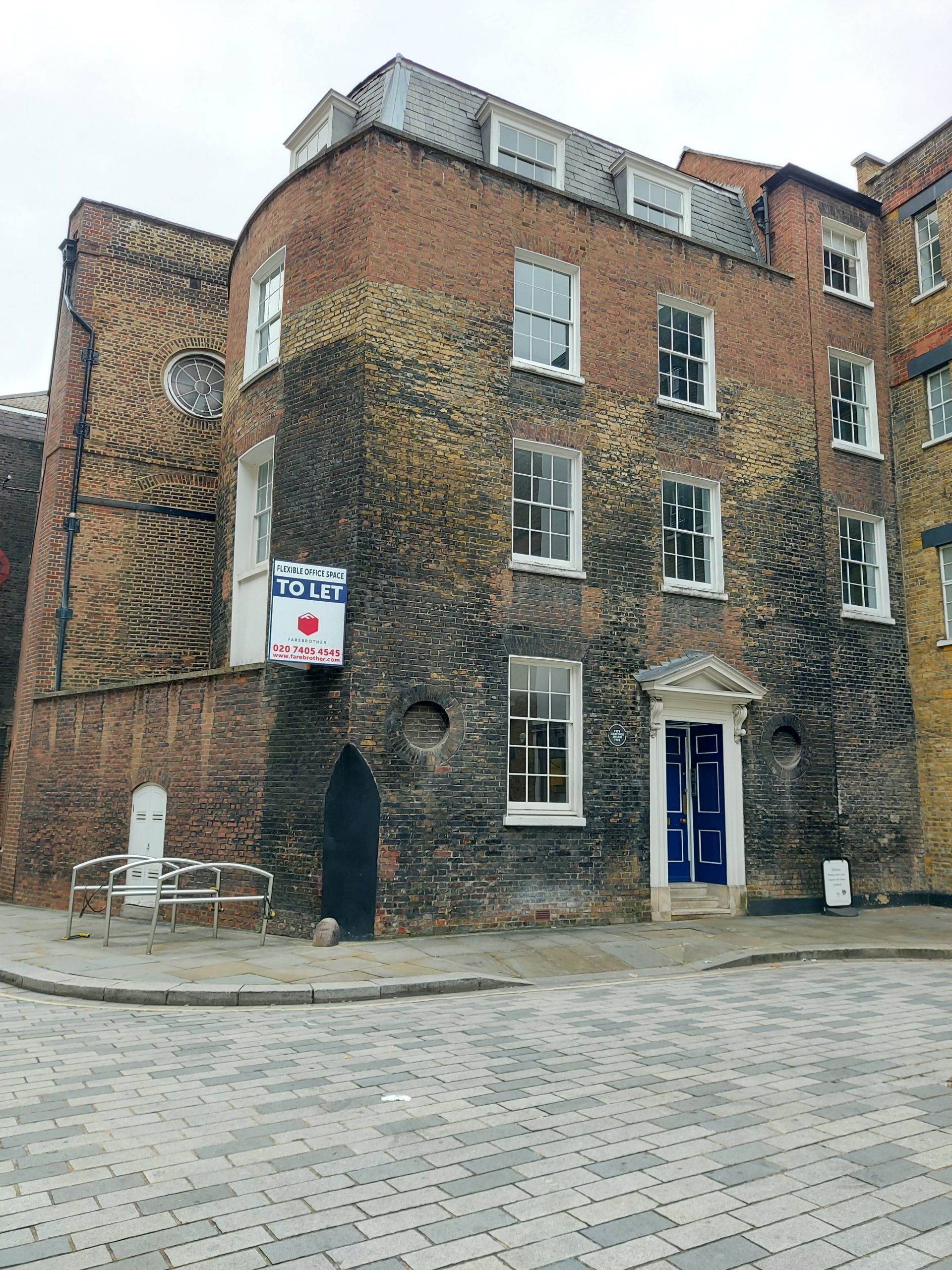
Location of the first Blackfriars
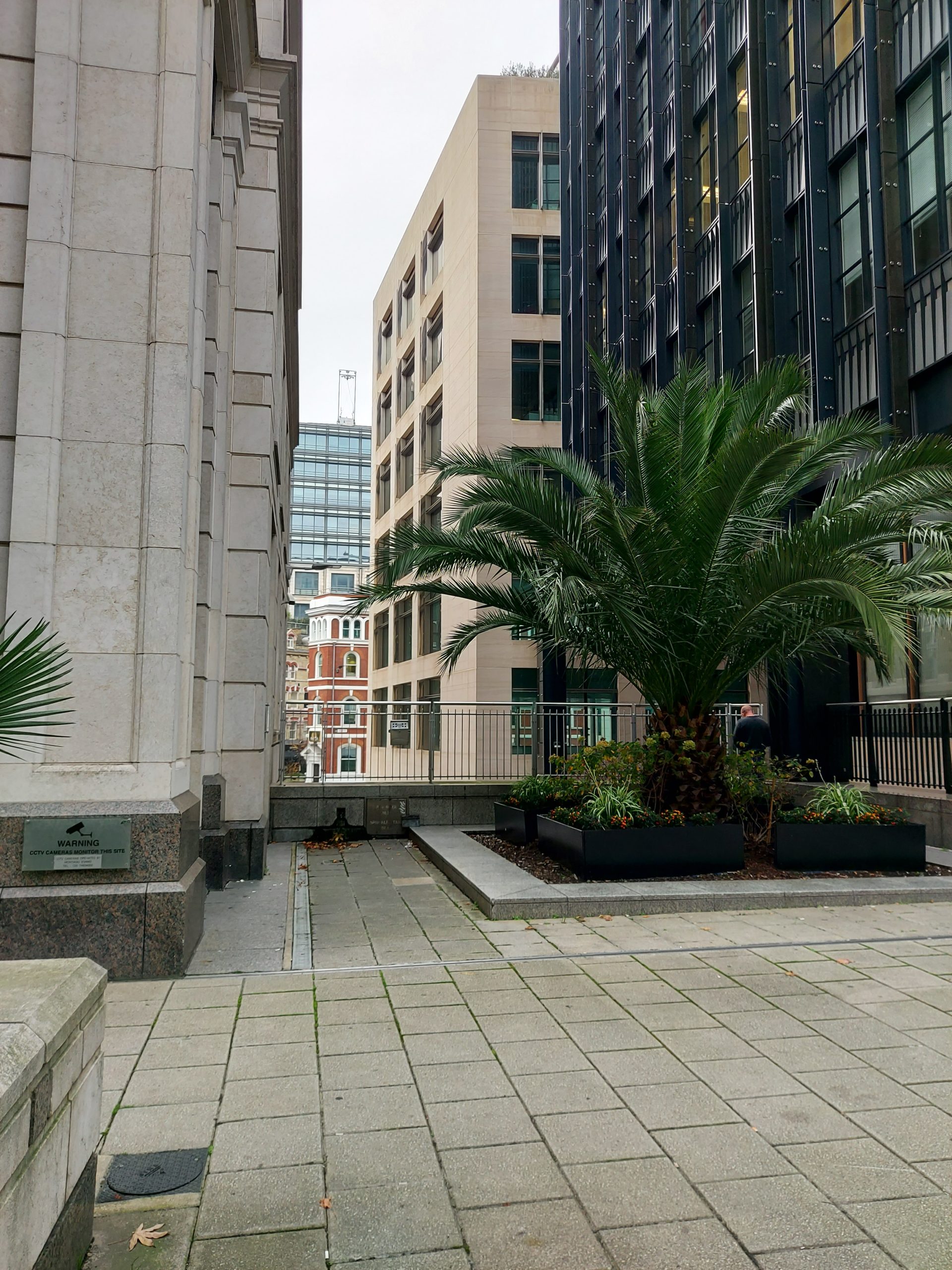
Location of the second Blackfriars
Disentangling myself from the maze of streets surrounding Blackfriars, I headed west towards the location of Salisbury Court. This indoor theatre was opened in 1629, the last of the period’s theatres to open. William Blagrave (Deputy Master of the Revels) and actor Richard Gunnell hoped that it would compete with the other nearby indoor theatres including the Blackfriars. Later on the Richard Brome became the resident writer, and many of his more famous works were staged here, including The Asparagus Garden.
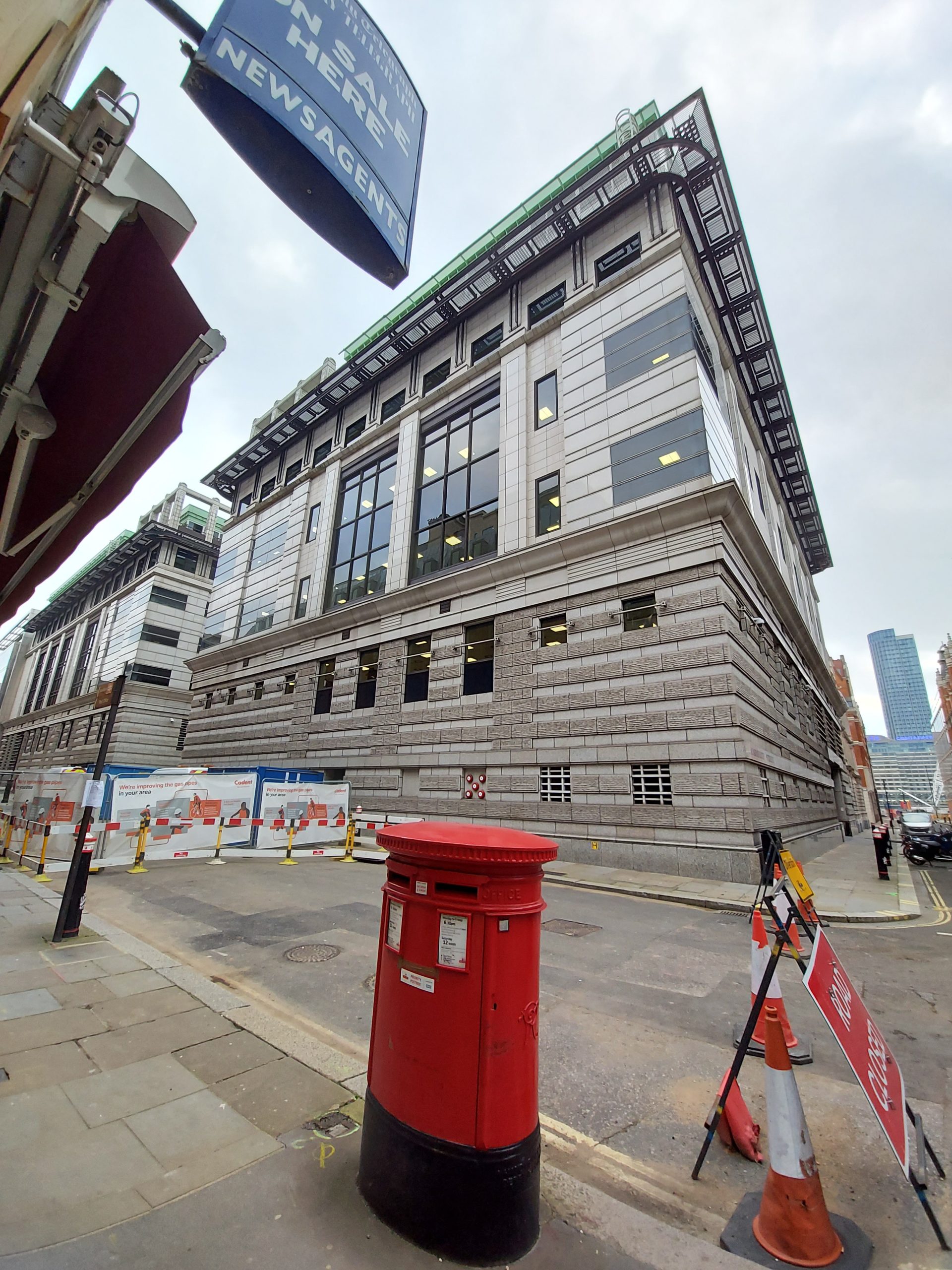
Location of Salisbury Court
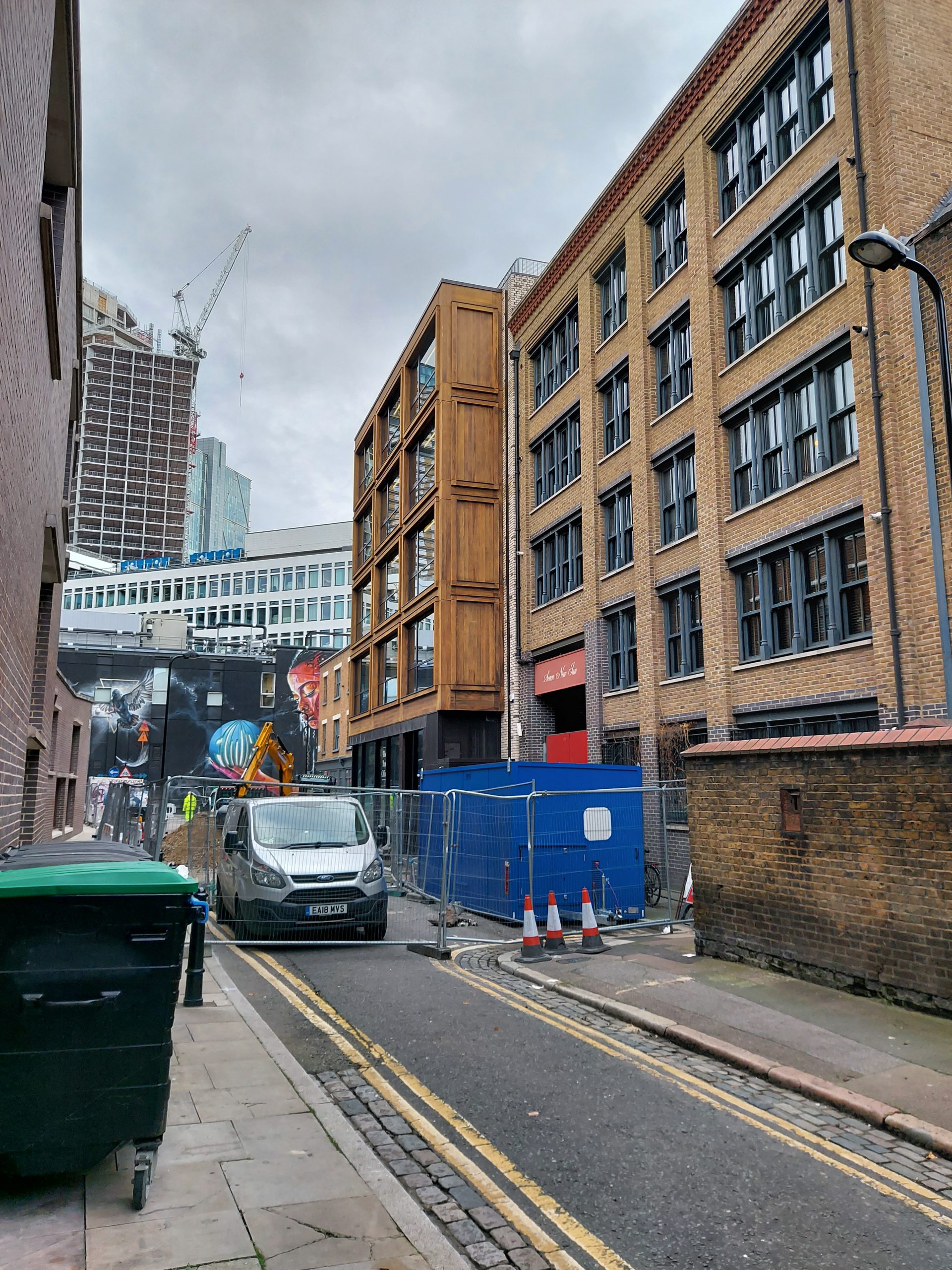
A little further along was the location of the Whitefriars (as well as the second Revels Office, 1608-1611). Paul Rosseter opened this theatre in 1609, and at first it was home to the boy actors from the Blackfriars, until 1613 when the company combined with the Lady Elizabeth’s Men until the lease ended in 1614.
Location of the Whitefriars
This walk included the Inns of Court: Inner Temple Hall, Middle Temple Hall, Lincoln’s Inn Hall, and Grays’s Inn Hall. However, these sites were all shut when I tried to visit. I have attended performances of Elizabethan plays at both Inner Temple and Middle Temple Halls, so I wasn’t too upset about this. Several of Shakespeare’s plays were performed at the Inns in front of the Queen, such as The Comedy of Errors and Twelfth Night.
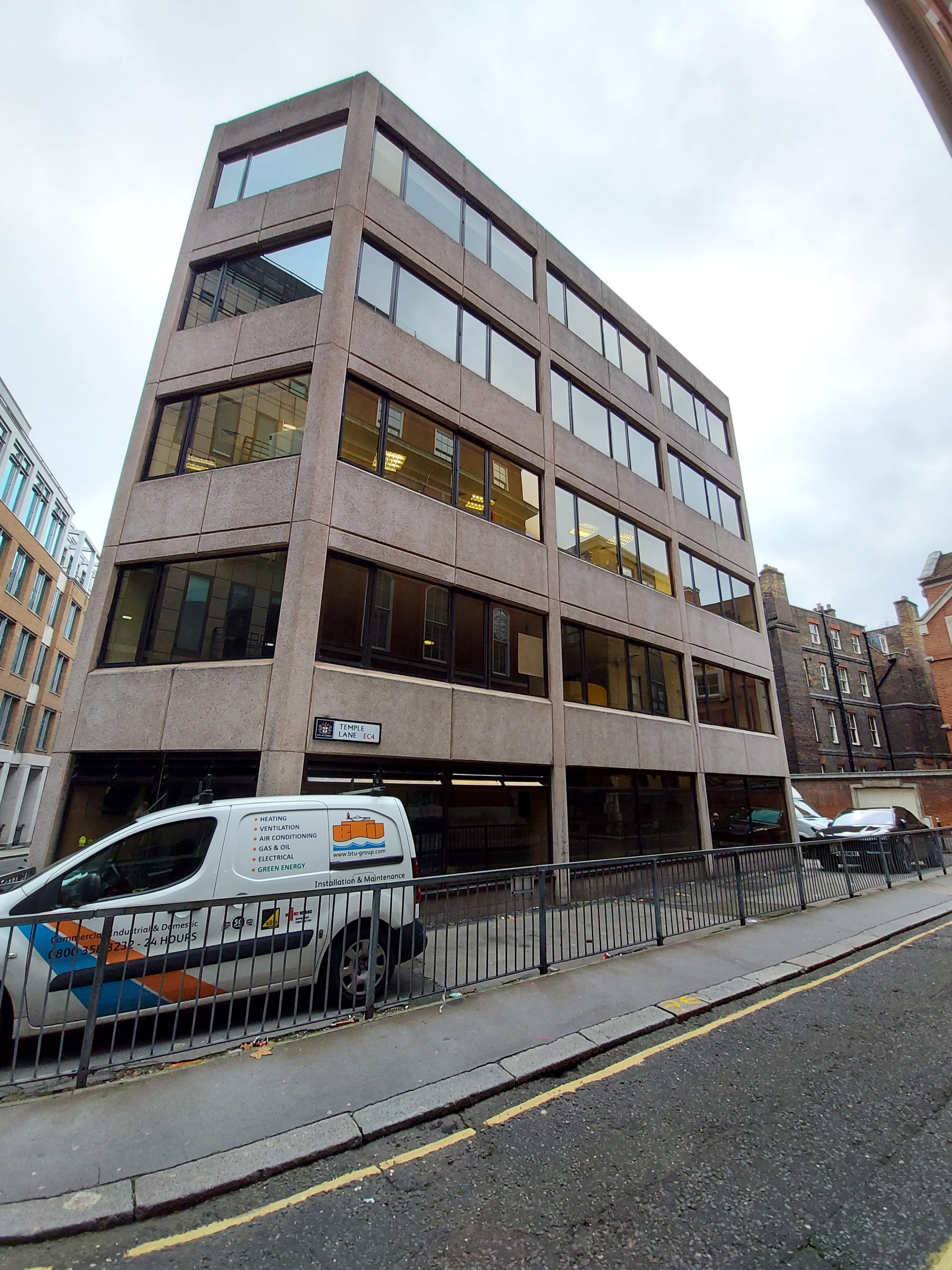
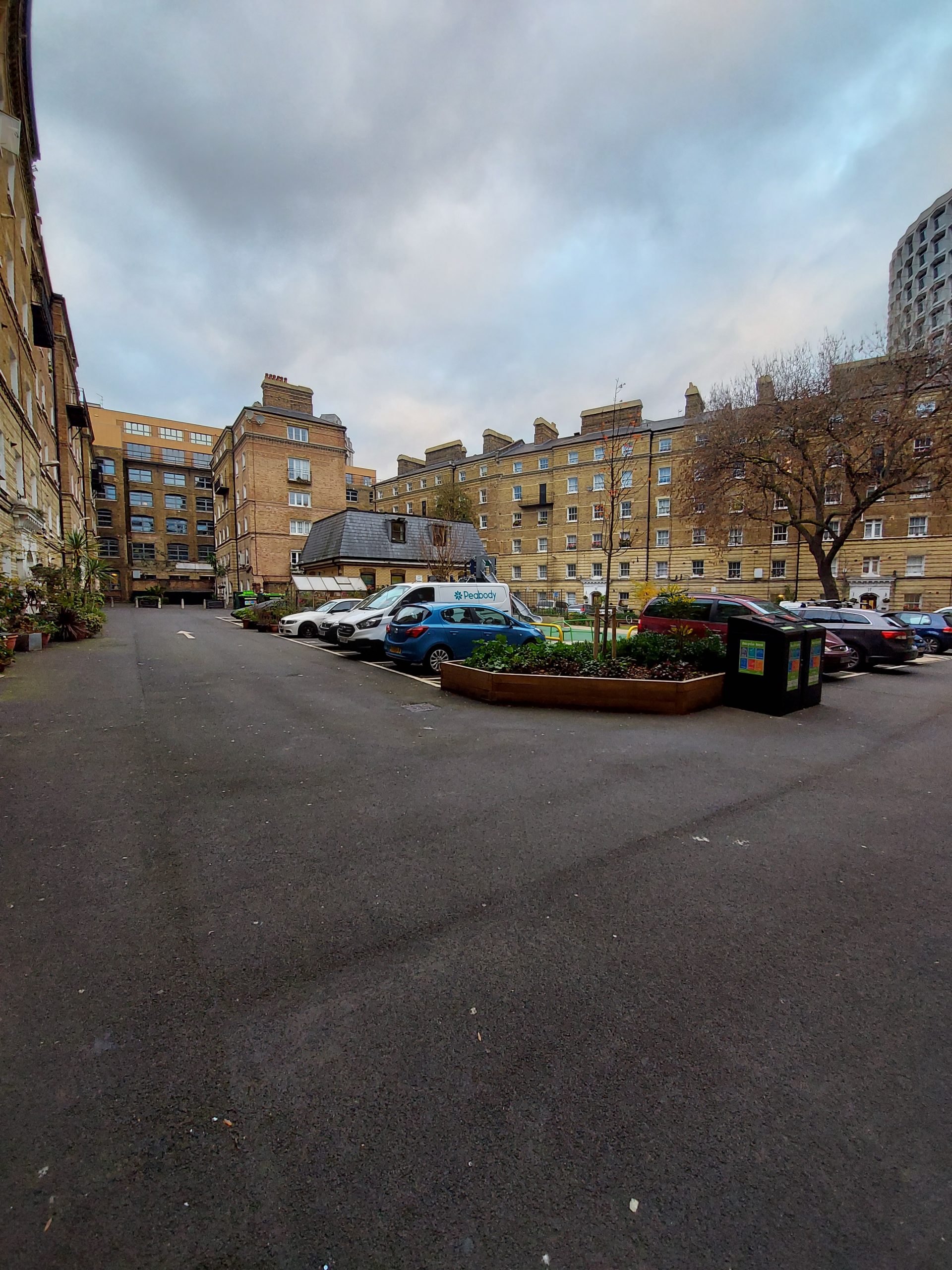
Location of the Cockpit/Phoenix
The walk ended in the modern West End – the location of the Cockpit/Phoenix, now the inner courtyard of a modern housing estate. This theatre was founded in 1616-17 by actor Christopher Beeston, and named after a real cockpit in Cockpit Court. Angry playgoers burnt down the theatre soon after it opened – annoyed that the Queen’s Men from the Red Bull were performing here and charging higher prices – but was almost immediately rebuilt.
ShaLT, the Shakespearean London Theatres project, has created a map of London containing five walks designed to show theatre fans the sights and sounds of the city’s early theatres (1567-1642). I had some annual leave to use up, and not much planned owing to the latest lockdown, so I decided to use my time wisely – to follow each of these walks.
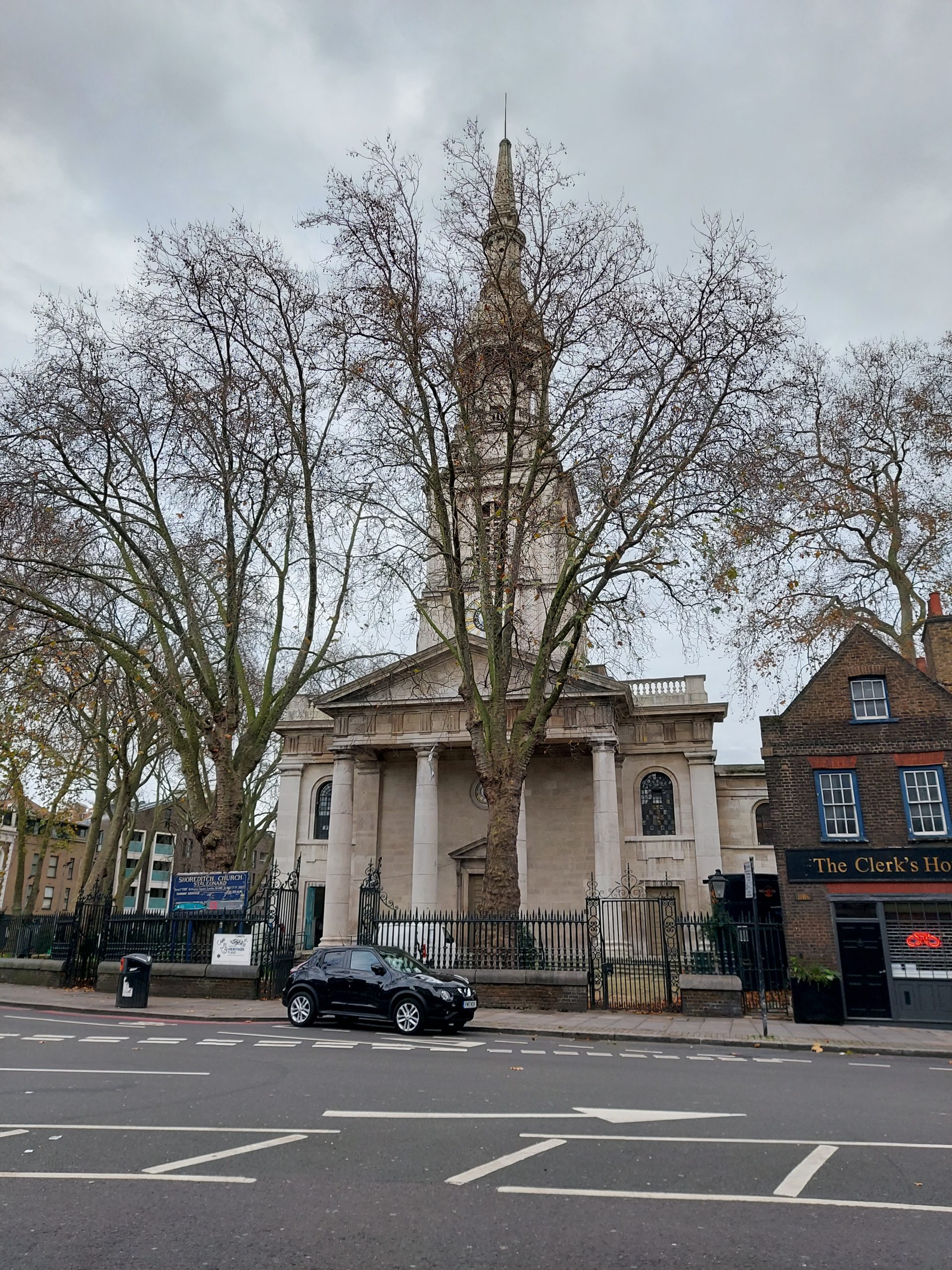
Being nothing if not logical, I began with Walk 1. It began in Shoreditch, the home of many of the earliest Elizabethan theatres. Being just outside of the City of London, it wasn’t subject to the same rules and regulations, which came in handy when putting on plays. The first stop was St Leonard’s Church, the burial place of many notable actors of the period, including Richard Burbage, the leading man in many of Shakespeare’s plays, as well as the comedian Richard Tarlton and the actor Gabriel Spenser (who was killed by Ben Jonson in a duel). Also buried here is Richard’s father James, the founder of the Theatre.
St Leonard’s Church, Shoreditch
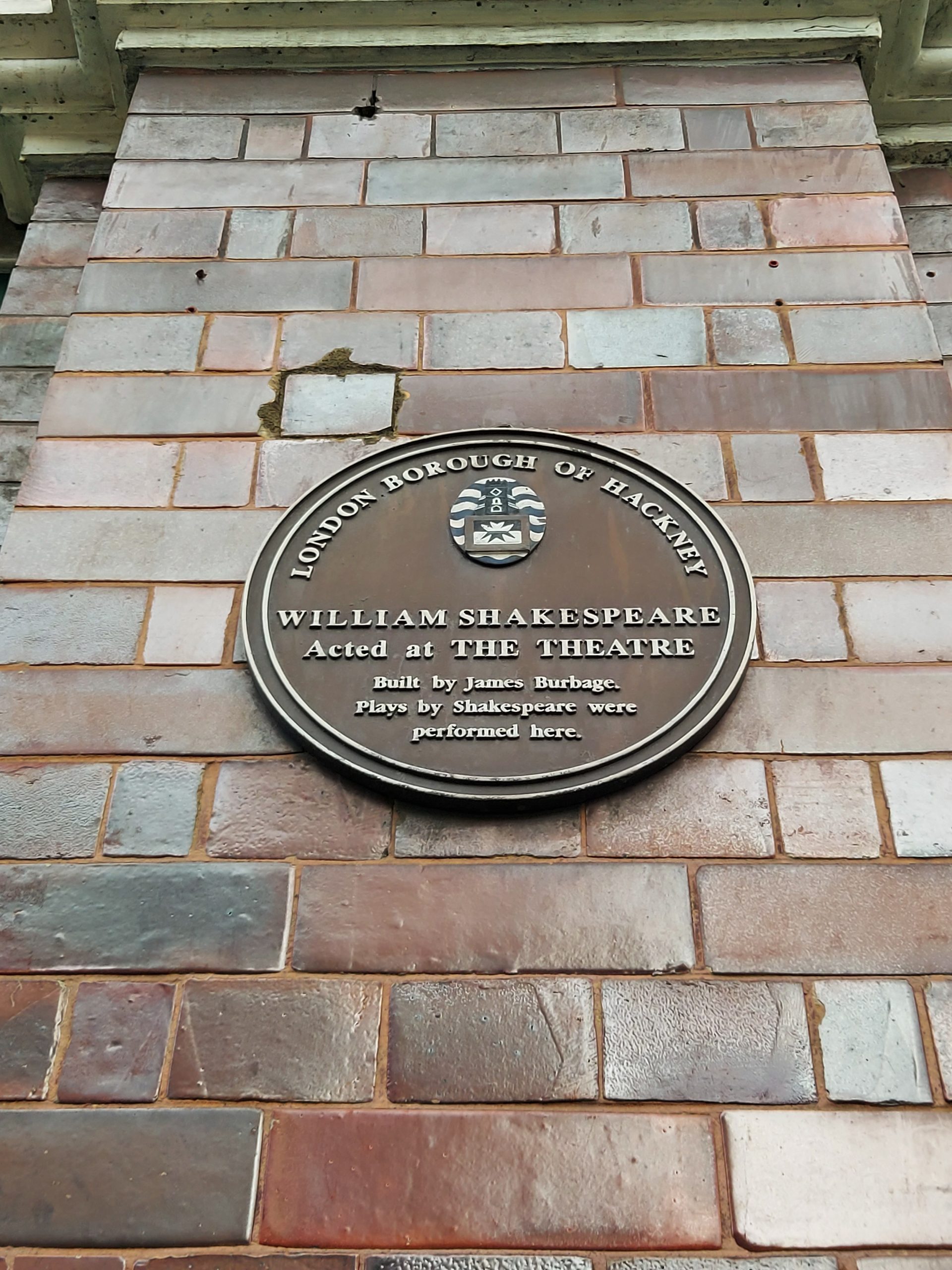
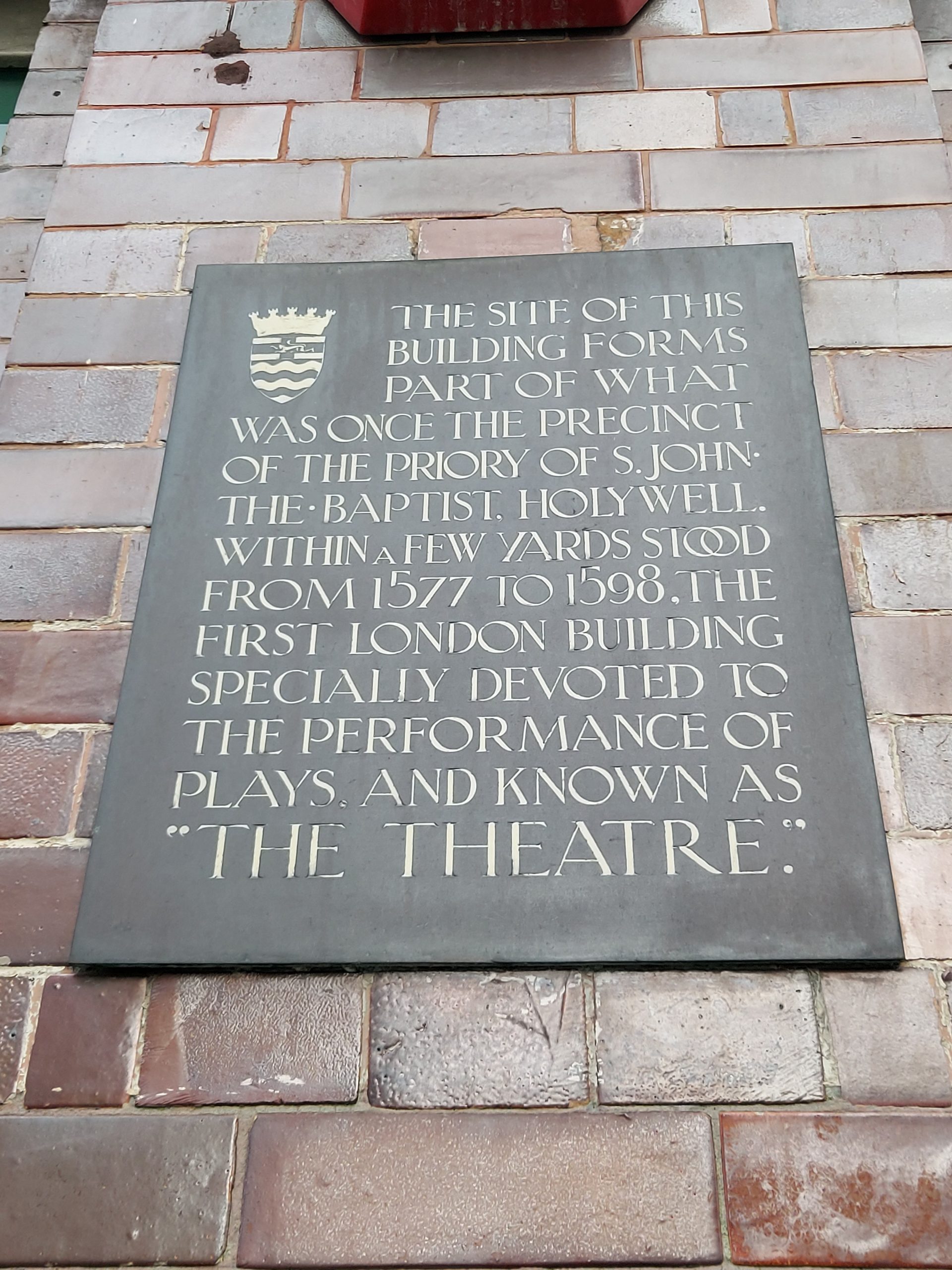
From here, the route follows a southeast course, taking in the sites of the early theatres, the Theatre, the Curtain and the Fortune. Nothing is left above ground of these historic theatres, though plaques mark the location of the Theatre and the Curtain.
The Theatre was the first purpose-built playhouse in Elizabethan England, opening in 1576. Its name evoked the Roman amphitheatre, or theatrum, design. It premiered Shakespeare’s plays, including Romeo and Juliet, in the 1590s and also staged plays by the likes of Thomas Kyd and Christopher Marlowe. A popular legend states that after a dispute with the landowners, the Theatre was dismantled overnight and transported over the river to be rebuilt as the Globe.
Site of the Theatre
Plaque marking the site of the Theatre
Newer plaque marking the site of the Theatre
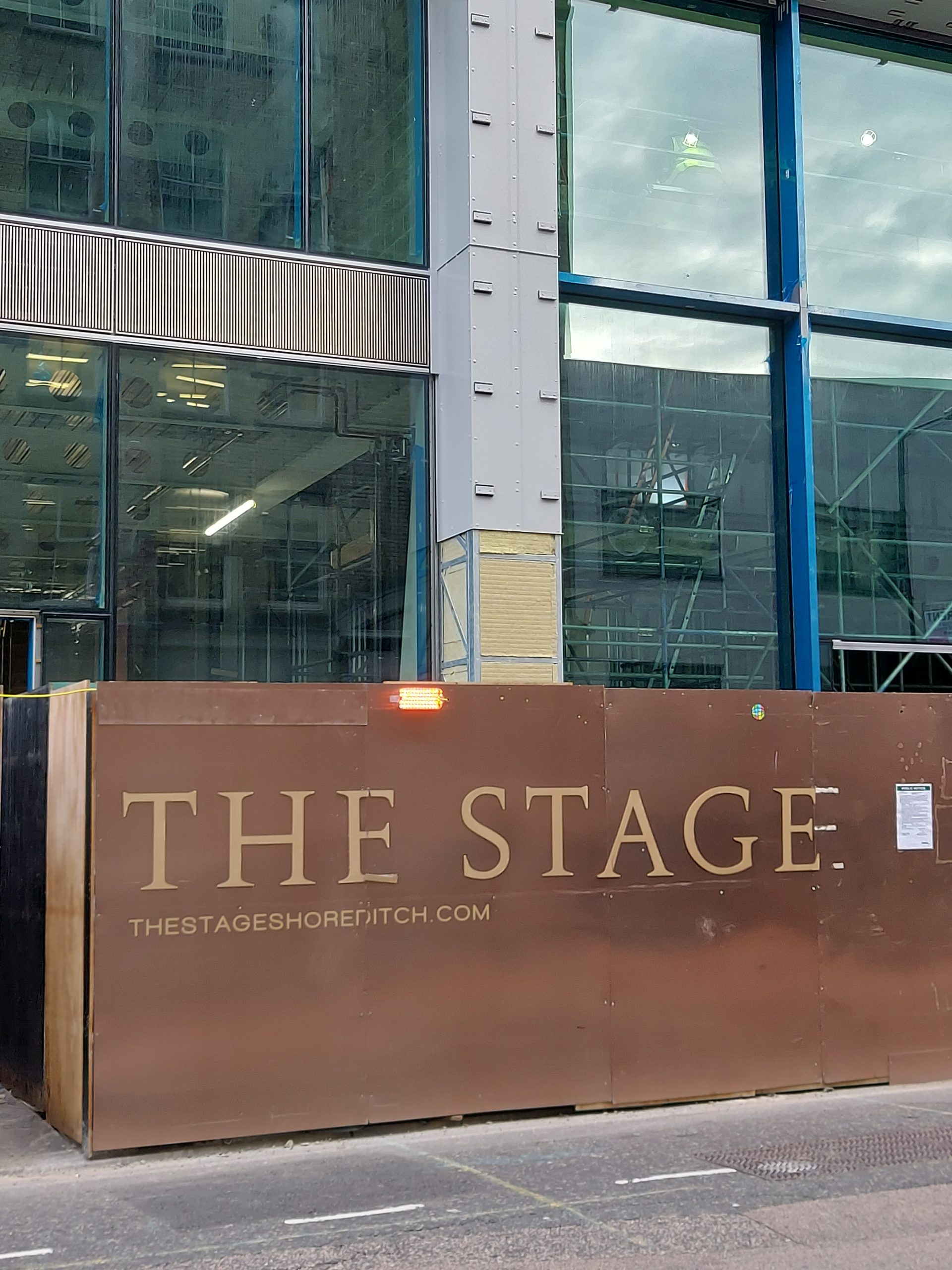
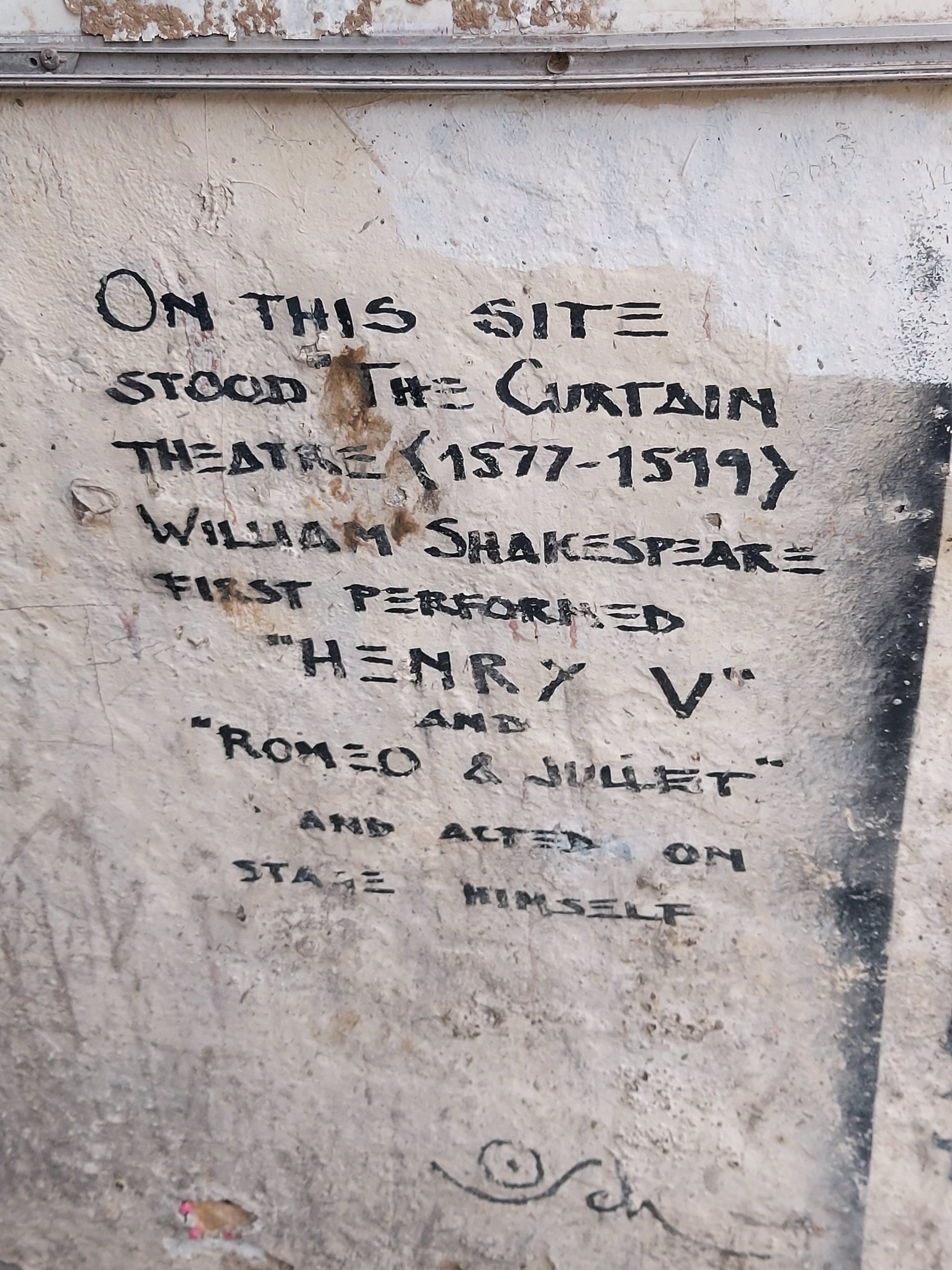
The Curtain was opened by Henry Lanman in 1577. Only 100 yards away from the Theatre, it showed many of the same plays. It is possible that the Horse and Groom pub near the site marks the location of a former victualling house. Recent archaeological work on the site of the Curtain uncovered the remains of the playhouse and once the site – known as The Stage Shoreditch – is redeveloped into housing, there are plans for a heritage centre.
Location of The Curtain
Writing that marks the site of the Curtain
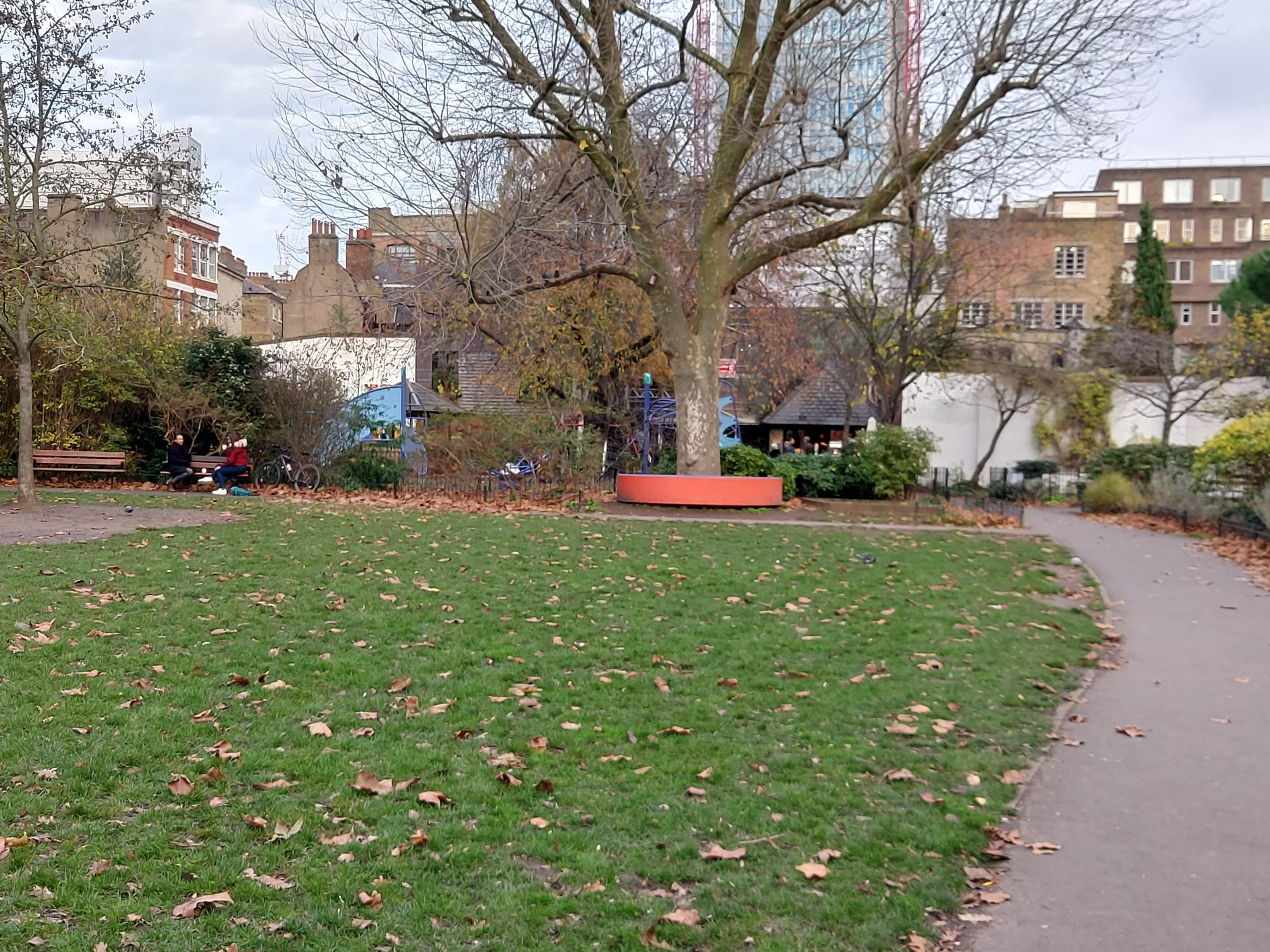
The Fortune playhouse was built in 1600, replacing the Rose as the main theatre of Philip Henslowe and Edward Alleyn. Destroyed by fire in 1621, it was rebuilt and remained open until 1642. The theatre hosted classics as well as new productions such as The Roaring Girl by Thomas Middleton and Thomas Dekker. The Fortune theatre site is now occupied by a community park – I wonder if there is anything interesting to be found beneath the grass?
Fortune Street Park, site of the Fortune Theatre
Walk 1 ends at the Barbican, and leads nicely into Walk 2, which begins at St Giles’s Church on the Barbican site – the burial place of John Milton, poet and keen theatregoer. This walk heads northwest into Clerkenwell and takes in the earliest location of the Revels Office. From 1578 to 1607 Sir Edmund Tilney oversaw and censored plays from here, including Shakespeare’s.
The Revels Office, St John’s Priory buildings, Clerkenwell
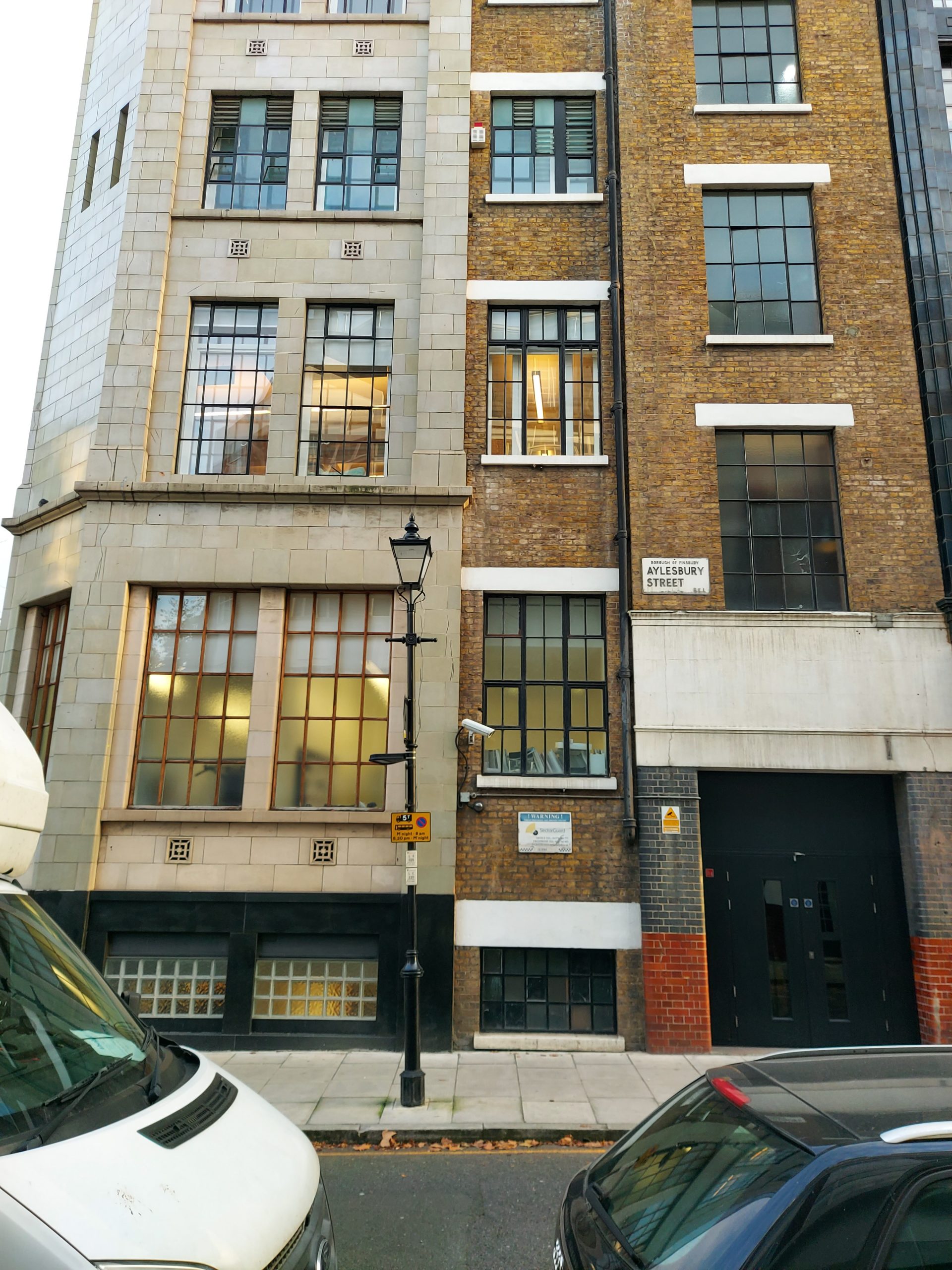
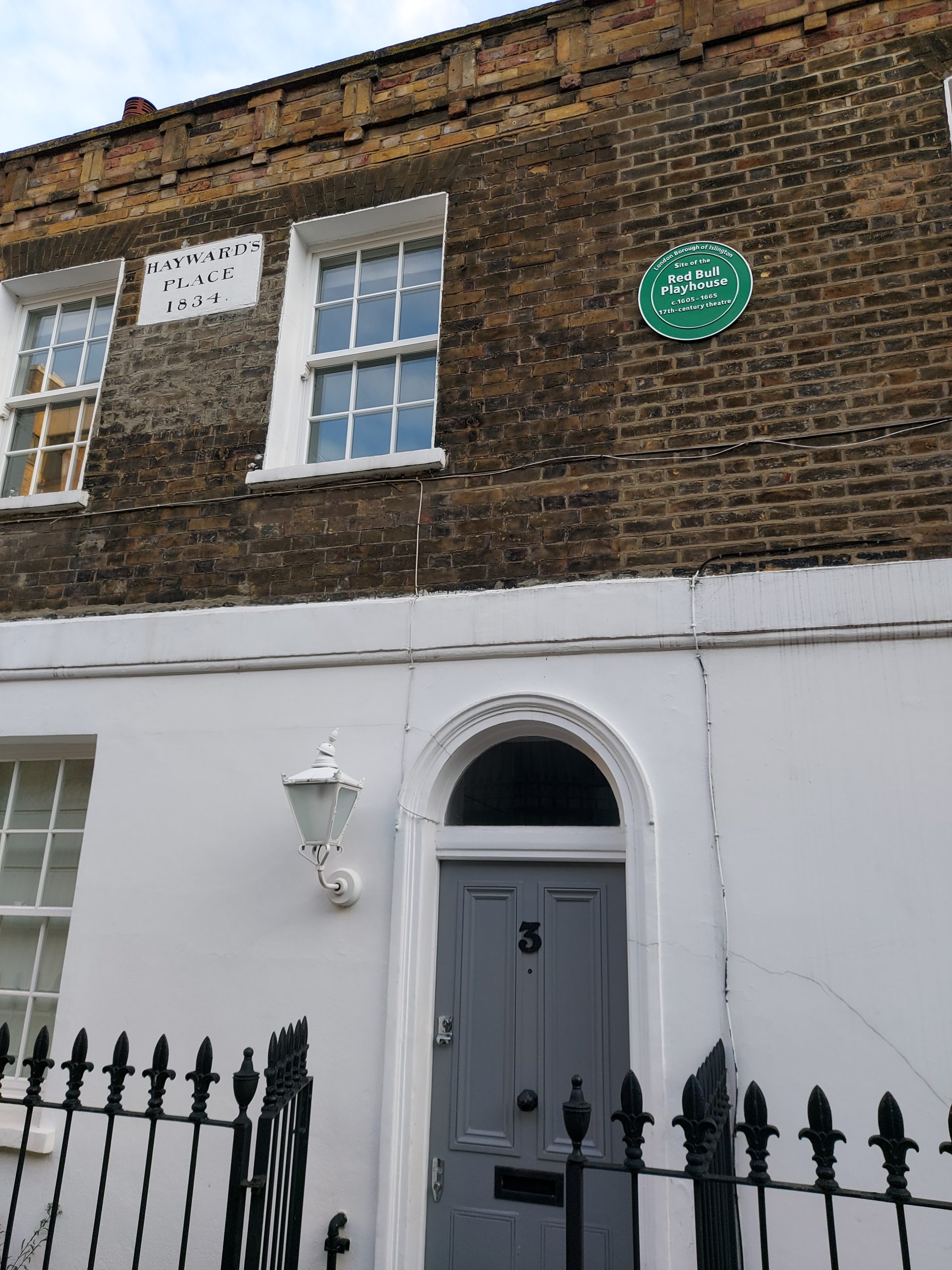
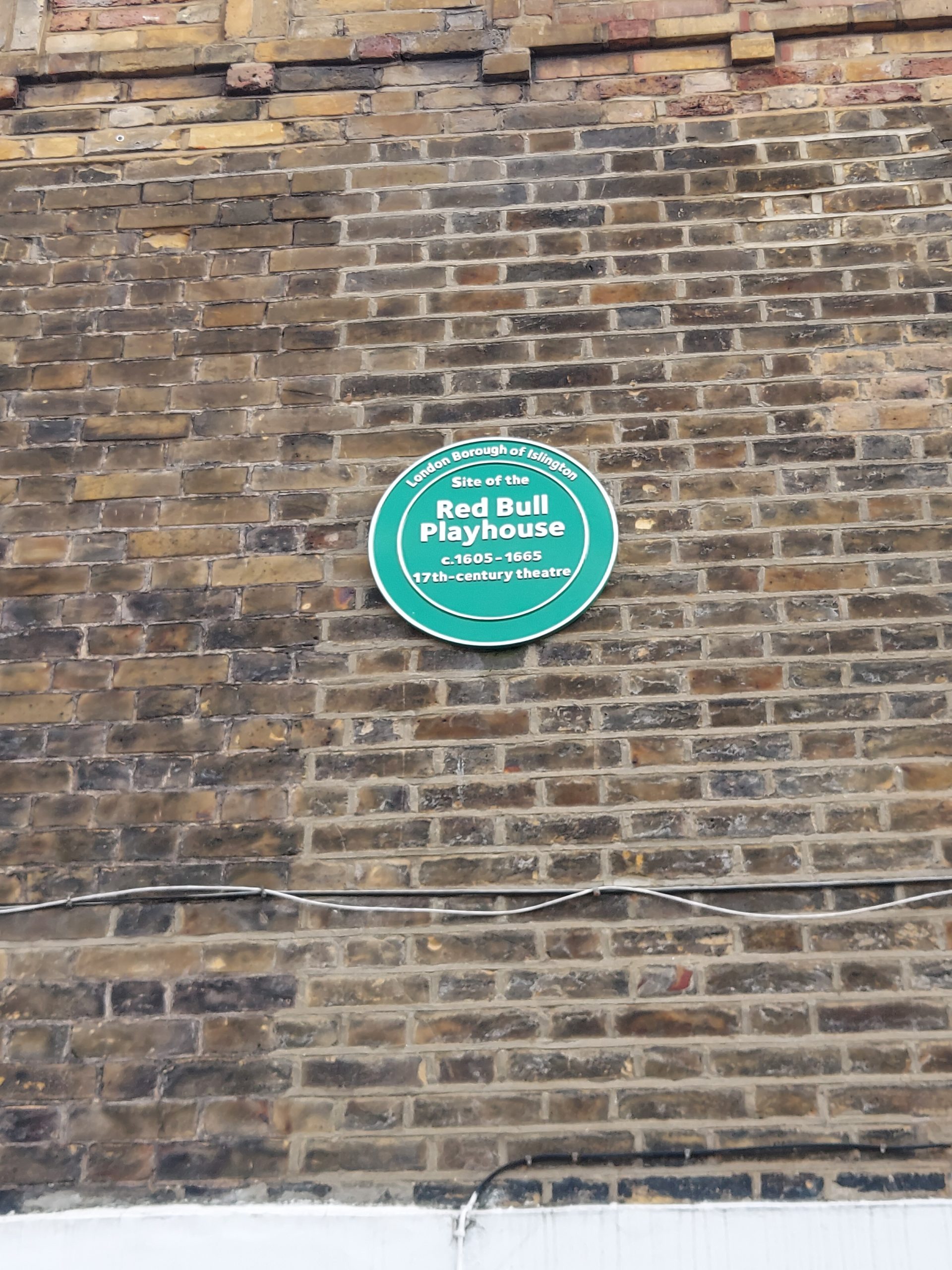
Walk 2 ends at the site of the Red Bull playhouse. This theatre was converted from an inn in 1604 and remained open until 1642. For many years it was the home of the Queen’s Men. Notable plays staged here include Thomas Heywood’s The Four Prentices of London and John Webster’s The White Devil.
Site of the Red Bull playhouse in Clerkenwell
Close-up of the green plaque that reads ‘Site of the Red Bull Playhouse’
I went to see the exhibition By Me William Shakespeare, held at the Inigo Rooms, Somerset House, part of King’s College London, before it closed. The exhibition was an opportunity to view Shakespeare’s will, as well as other documents relating to his life. It incorporated research, scientific analysis and a digital installation, with the nine “most nationally important” documents selected by academics from the London Shakespeare Centre at King’s and specialists from the National Archives.
Although the exhibition doesn’t sound like much, consisting as it does of nine documents, the curators have done a great job illuminating what they all mean and exploring the context. Documents on display include Shakespeare’s Last Will and Testament (he famously left his wife the “second best bed”, though the exhibition does make clear this was not necessarily the snub it is thought to be), as well as those that include four of his six known signatures. One document refers to the infamous incident when Richard Burbage and Shakespeare dismantled the Theatre in Shoreditch and rowed it across the Thames, where they rebuilt it as the Globe. Another concerns the dowry dispute in which Shakespeare was involved because he lodged in the house of the family concerned.
As a lover of Shakespeare, this exhibition was a real treat for me and I enjoyed it, although non-fans may find it a bit dry.
The other day I went to a talk at Guildhall Library given by by Dr Lucy Munro from King’s College London. The talk was about the London of Shakespeare and Beaumont, marking the 400th anniversary of the death of both writers. William Shakespeare of course died on 23 April 1616, but Francis Beaumont also died that year (on 6 March, aged only 31): he has been rather overshadowed by Shakespeare over the past four centuries, but his life is worth celebrating too.
Munro began her talk by showing us a 1572 map of London, revealing a much smaller-scale city than the one we are familiar with today. Playhouses were growing up all over London. One of the first such houses Shakespeare wrote for was “The Theatre” – not such an unimaginative name as it sounds, as the term “theatre” was usually used for private indoor spaces. The name harks back to the classical world of Greek and Roman drama.
Shakespeare lived on Silver Street for a time; he also, in 1613, bought a gatehouse on Blackfriars (the road on which another playhouse for which he wrote was located). Beaumont was born in Leicestershire in 1584, his father a judge, his mother a recusant Catholic. His wife may have been Roman Catholic too, which would have marked out Beaumont as an outsider. He entered the Inner Temple in 1600 after studying at Oxford, and began his collaboration with the writer John Fletcher in 1605.
The pair’s first play The Woman Hater was written for the Children of St Paul’s, though the pair also wrote for the Children of the Queen’s Revels at the Blackfriars Theatre. Beaumont and Fletcher lodged together on Bankside: an anecdote from John Aubrey, found in his Brief Lives, suggests the closeness of their relationship, as they lived together and shared everything. When Beaumont died he was buried in London, in Westminster Abbey.
Whereas Shakespeare set most of his plays in fairly exotic locations (excepting the histories, which mention such landmarks as the Tower of London, Westminster, and the Boar’s Head Tavern at Eastcheap), Francis Beaumont wrote regularly about specific London locations including the Mermaid Tavern (mentioned in a poem to Ben Jonson). A painting by the nineteenth-century artist John Ford imagines what poets’ meetings at the Mermaid might have looked like, although it is not particularly accurate: it is not known that Shakespeare was involved in these meetings, but he has a central place in Ford’s painting.
Beaumont’s writing makes reference to the London streets, their smells and sights; locations reflect the social, moral and economic circumstances of the characters. The Knight of the Burning Pestle, his significant solo play, mentions London locations, transforming them from real-life places into fantastical locations for his knight’s Quixotic journey.
I really enjoyed this talk: I think Beaumont is a vastly underrated writer (The Knight of the Burning Pestle, which I saw at the Sam Wanamaker Playhouse, is a masterpiece) and I enjoyed learning about how he uses London in his work and his relationship to the city.
This year marks the 400th anniversary of the death of William Shakespeare, and as such there are several special events going on. One such event, Shakespeare’s London, taking place at the Museum of London Archaeological Archive in Hackney, is a tour of the archive which includes a look at artefacts discovered at London’s Elizabethan theatres. I booked this pretty much as soon as I heard about it, as I love both history and Shakespeare.
Mortimer Wheeler House
The Archive is held at Mortimer Wheeler House; I looked up how to find it and I’m glad that I did, as it isn’t the easiest building to find. It’s located in east London, north of Old Street, just below the canal. We waited in the foyer for the tour to begin; there were quite a few of us, so we were taken around in two separate groups. As we explored the Archive, we were able to learn more about it, as well as the history of theatres in Shakespeare’s day.
The Museum of London Archaeological Archive is part of the museum’s Department of Archaeological Collections and Archive. Over the past century, nearly 8,500 archaeological sites have been investigated in Greater London: this archive holds information relating to all of these, with full archives for over 3,500 of them. There is also an archaeological library collection. It has been officially recognised as the largest archaeological archive in the world.
The Archive is of international significance, the primary source of evidence for early London. As archaeology itself is a destructive process – accessing one layer usually involves removing another – the only evidence of its existence is in the archive. There is an online catalogue containing information about object collections and archive records, and the Archive can also be visited for research purposes. This is free, but you need to make an appointment.
Early in the tour we got to play “archive lottery” – choosing a number and taking the relevant box off the shelf to see what it contained. Our box wasn’t particularly exciting, containing bits of pottery – however, as our tour guide (one of the Archive’s volunteers) explained, pottery is actually a really valuable tool for dating a site. We were subsequently introduced to some very special artefacts relating to the theatre.
Theatres like the Globe, the Rose and the Curtain, popular in Shakespeare’s day, were actually known as playhouses: the term “theatre” tended to refer to indoor, private theatres located in houses (similar to the Globe’s new Sam Wanamaker Playhouse). However, for the purposes of the tour they were referred to as theatres. We saw a cannonball that was found on a theatre site, once used to help create the sound of thunder (a similar item from the Rose Theatre is about to go on display at the British Library as part of their Shakespeare exhibition). Some of the smaller artefacts that we got to handle included copper pins, seals for rolls of cloth, and fragments of tobacco pipes. We also saw – but because of its fragility, understandably weren’t allowed to touch – an almost complete leather boot from the Elizabethan period: an incredible sight.
Many of the small items recovered were things which could have been dropped easily in the tightly packed, busy atmosphere of the playhouse. Gambling dice and makeup brushes were also found, as were tokens used to gain admittance into the playhouse. Money boxes were used to collect payment; when they were full, they were smashed, and the contents counted. They were kept in the money box office – what would later become the box office.
The area around Southwark where most of the theatres were situated was also known for bear-baiting, and the skull and bones of a bear and of a dog, possible rivals in the ring, are testament to this. The bear bone that we saw had tooth marks on it – possibly chewed by a dog after the poor dead or dying bear was discarded.
In a small room with a table, we were able to look at newspaper cuttings and letters related to the discovery and excavation of the Rose Theatre in 1988. When an archaeological excavation began on this site, no one had any idea just what an incredible find would be unearthed. The discovery sparked a campaign to retain and restore the site (the original developers just wanted to cover it over), and inspired a change in the law, meaning that excavations are now required when developers take over a site in London.
It was once thought that the hazelnut shells found at the Rose site indicated that theatregoers ate hazelnuts during performances, in the same way we might eat sweets or popcorn today. However, it is now thought that the thick layer of hazelnut shells would have provided cheap and effective flooring – especially as, with long performances and no toilets, groundlings would often just go where they stood – it makes me cringe to imagine walking over a spongy, urine-soaked floor of shells, but I guess they would have been used to it!
Finally, we ended up in a ceramics room, looking at some of the Shakespeare-related items held in the Archive. These included whole, and nearly whole, money boxes (which were always green, seemingly), and a figurine of Othello and Iago. We got to have a look around the room for a while before leaving, at some of the impressive collections which ranged from Roman amphorae to Victorian hot water bottles.
I absolutely loved my trip to the Archive and would recommend it for all those interested in London’s history. The Shakespeare tours are taking place again on 16 April, so it’s not too late if you want to take part.
While I was in Stratford upon Avon recently to see a Shakespeare play I came across a leaflet stating that tours were being offered around Shakespeare’s old school, King Edward VI School in the heart of the town. I made an impromptu visit, eager to enjoy the chance to look around.
Entrance to the building on Church Street
I was given a tour by a very pleasant and polite pupil of the school (feeling incredibly old as I write that). The building incorporates the 16th century Upper and Lower Guildhall, still used today. The school itself is still going and it is a state school, not a private school, as I’d thought at first. Shakespeare attended this school, then Stratford Grammar School, between the ages of approximately 7 and 14.
The Lower Guildhall
Wall paintings can still be seen
From the back
Way in from the back
The Upper Guildhall
More “hidden” pictures are just visible on the wall
Table around which Guild members would have sat
The schoolroom, where Shakespeare would have received his education
This pane of glass was kept when the rest was replaced, as it may bear William Shakespeare’s signature
The school was raising money for a forthcoming performance of John Ford’s The Lady’s Trial at the Sam Wanamaker Playhouse in London (the Jacobean playhouse at the Globe Theatre). I wish them the best of luck with their production.
The small display Shakespeare: Greatest Living Playwright is on in the Theatre & Performance area at the Victoria & Albert Museum until the 28th of September. It celebrates the 450th anniversary of Shakespeare’s birth, and consists of artefacts such as a copy of the First Folio and videos of several theatre practitioners currently involved with Shakespeare. These include Sinead Cusack, Cush Jumbo and Simon Russell Beale, and I really enjoyed hearing about their experiences, especially Cusack, as she played Cleopatra in the first ever RSC production I saw back in 2002.
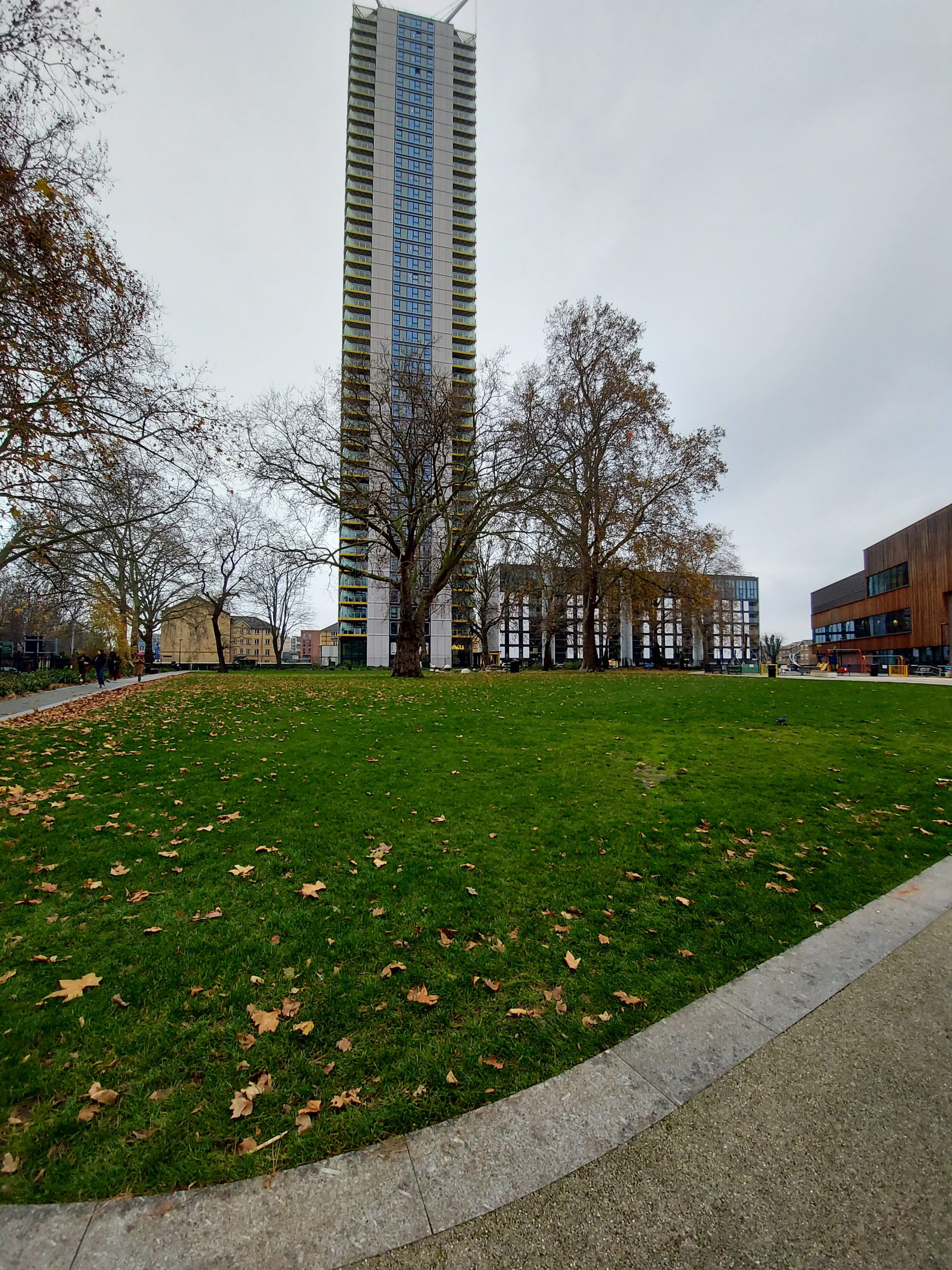
The Balfron Tower was designed by Erno Goldfinger in 1963
I’m going to write a proper review of RIFT’s Macbeth, but in the meantime I want to write something about the experience itself, as it was one of the craziest, most intense things I’ve ever done. I booked it for myself for a birthday treat, and I tried to get some friends to come along, but none of them were particularly keen on the idea. Despite initial apprehensiveness about going on my own, I needn’t have worried. I talked to loads of really interesting people, about the show and about our shared interest in immersive theatre (practically everyone there had already been to Punchdrunk’s The Drowned Man). In any case, most of our time was spent taking in the show, and we didn’t have to worry too much about chatting.
Webcowgirl and Playhouse Pickings have already written really helpful guides to the experience, so all I will do is emphasise the importance of following their tips – they came in very handy for me. Having said that, there were no super-hot peppers at our banquet – only perfectly innocuous, not at all spicy ones. I felt rather smug that I’d heeded the warnings about eating beforehand and going to the loo (I spent a couple of hours at Westfield Stratford before heading to Langdon Park DLR) as many of my fellow audience members were dying for the toilet almost immediately and when we were finally allowed to go there was a huge queue.
I stayed overnight and slept very well in my bunk bed – a bit TOO well, to my disappointment, as I slept right through the whopping thunderstorm that occurred on Thursday night, and missed out on the chance of watching the action from my flat’s 18th floor balcony. The flat itself – the hall and bathroom, at least – was still covered in blood from the performance, which was somewhat disconcerting. I was able to wash my face and brush my teeth, but after much-appreciated coffee and croissants in the morning I was very happy to get home and finally have a shower.
Still, this performance will go down as one of my favourite London experiences, and it was definitely one of the best birthdays ever!