Fairy Tales – The British Library

Before getting the train back up north, I paid a visit to the Fairy Tales exhibition at the British Library.

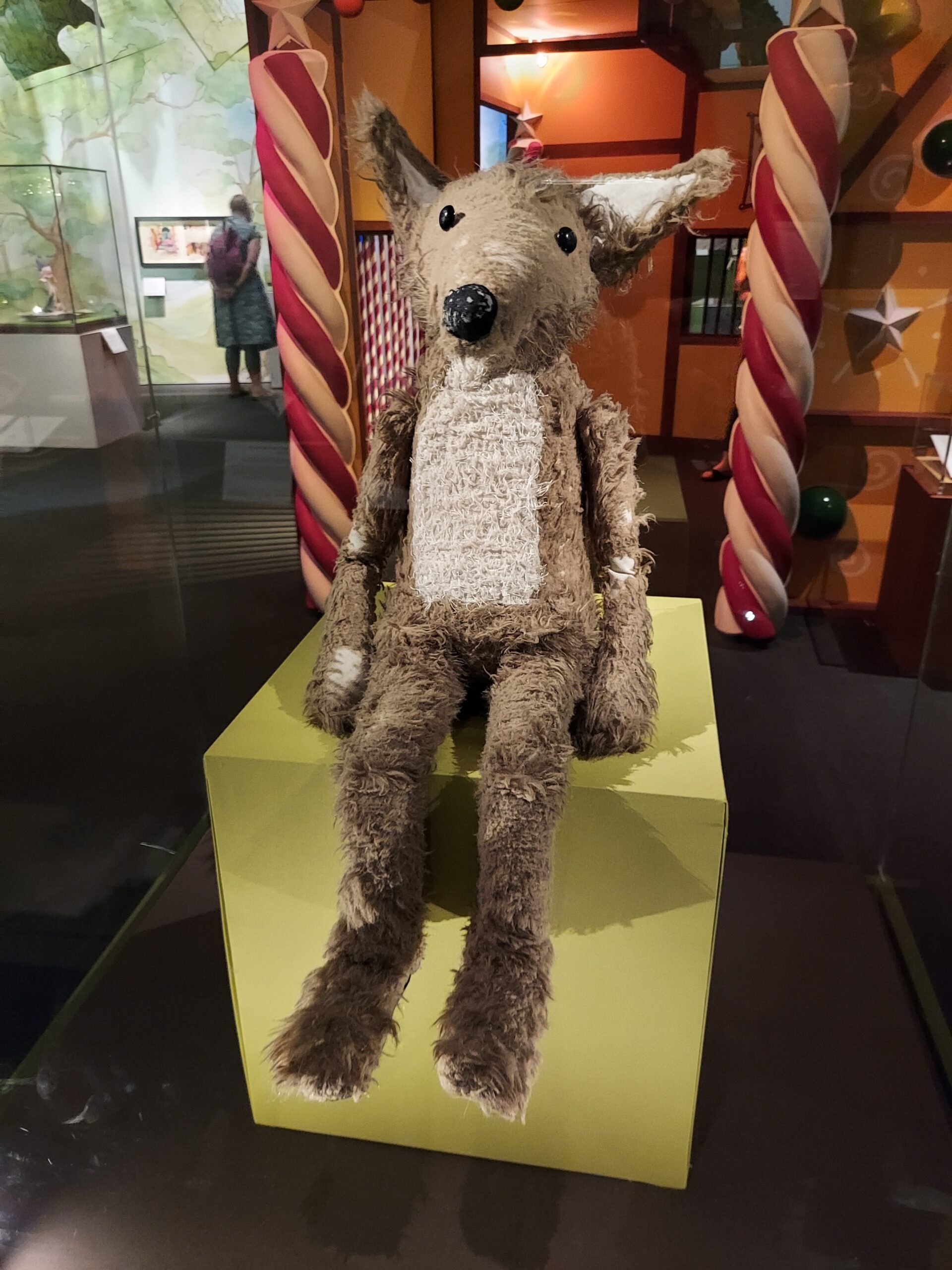
Wolf puppet

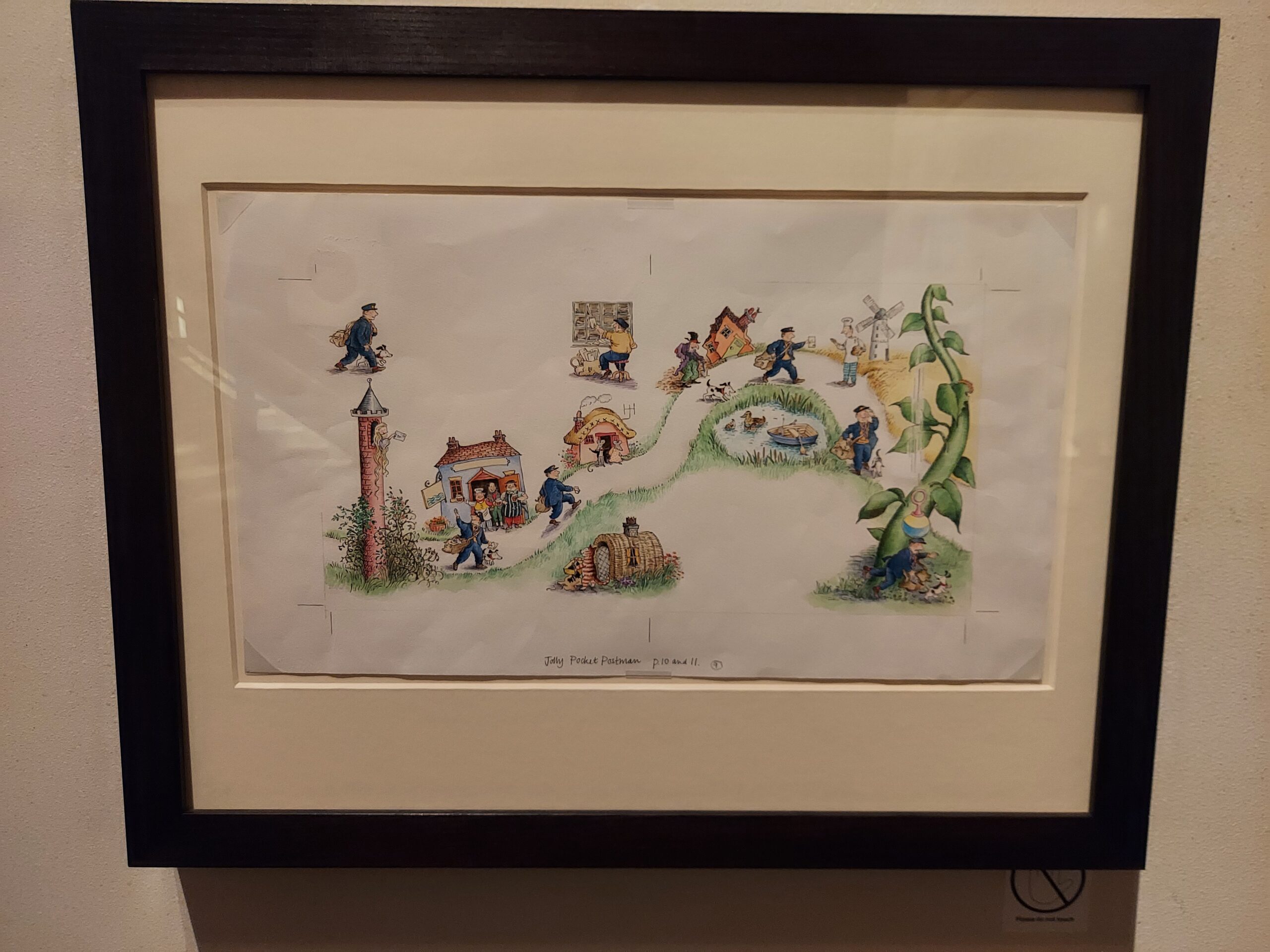
As the title suggests, the exhibition explores the concept of fairy tales over the centuries, the kinds of fairy tales that remain popular and how they have changed over time. Much of the exhibition is aimed at children, with activities for them to do and questions designed to draw them in, but there is plenty for adults to enjoy as well. I particularly enjoyed looking at the puppets from the Little Angel Theatre, and the illustrations from The Jolly Postman, a book I loved as a child.

Original artwork from The Jolly Postman

Marilyn Monroe: A Portrait – National Portrait Gallery

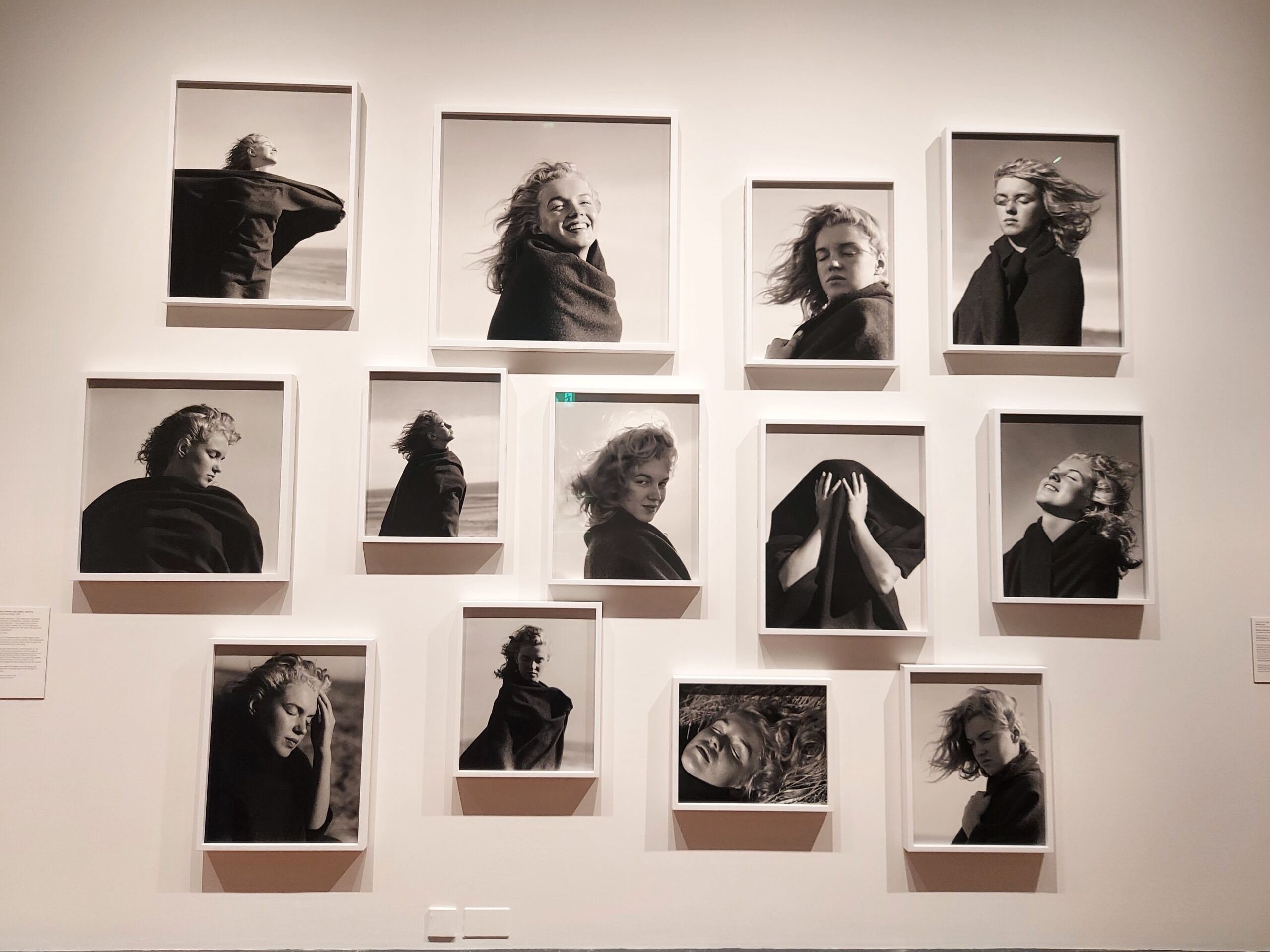
Marilyn Monroe in black and white


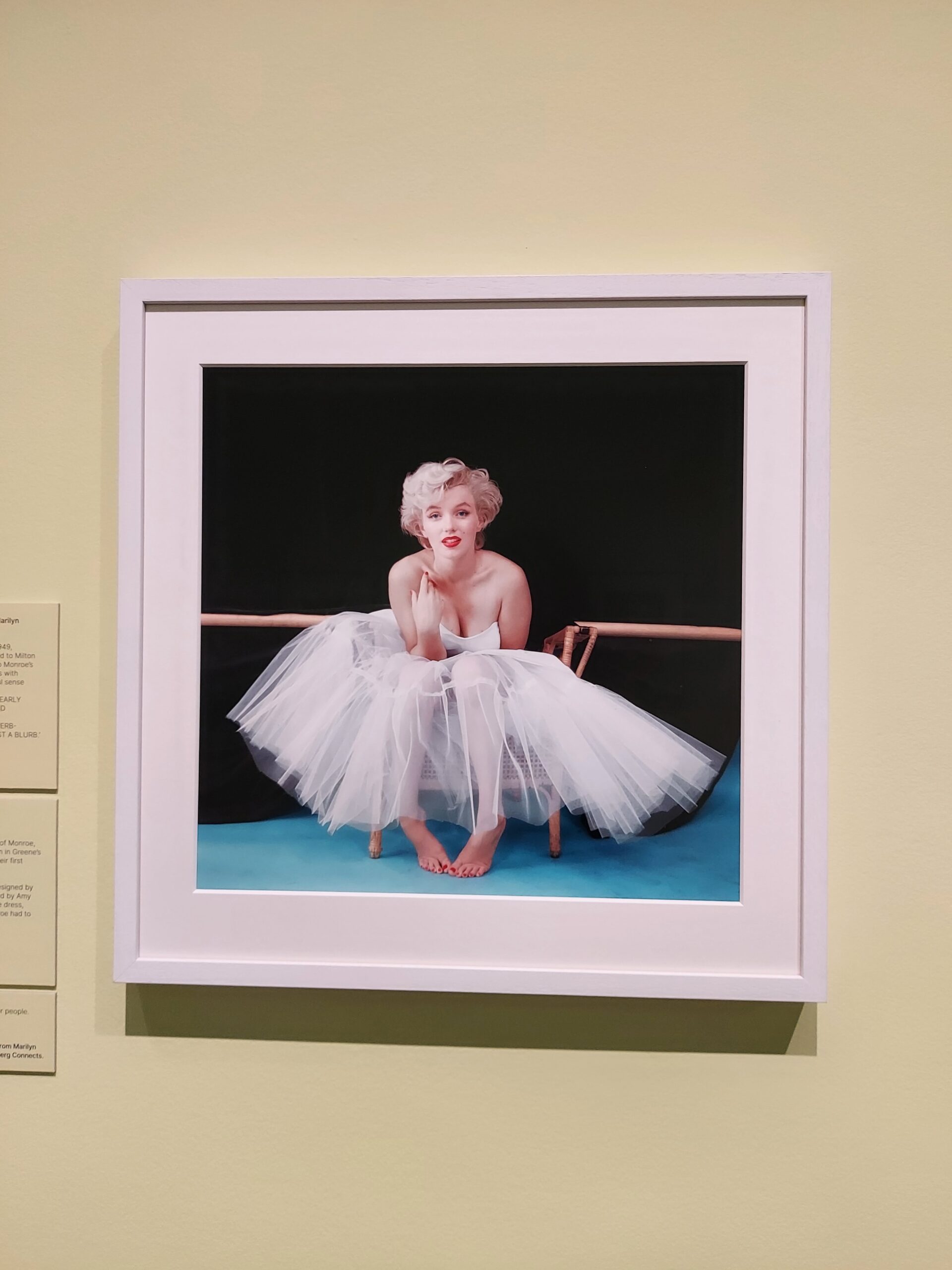
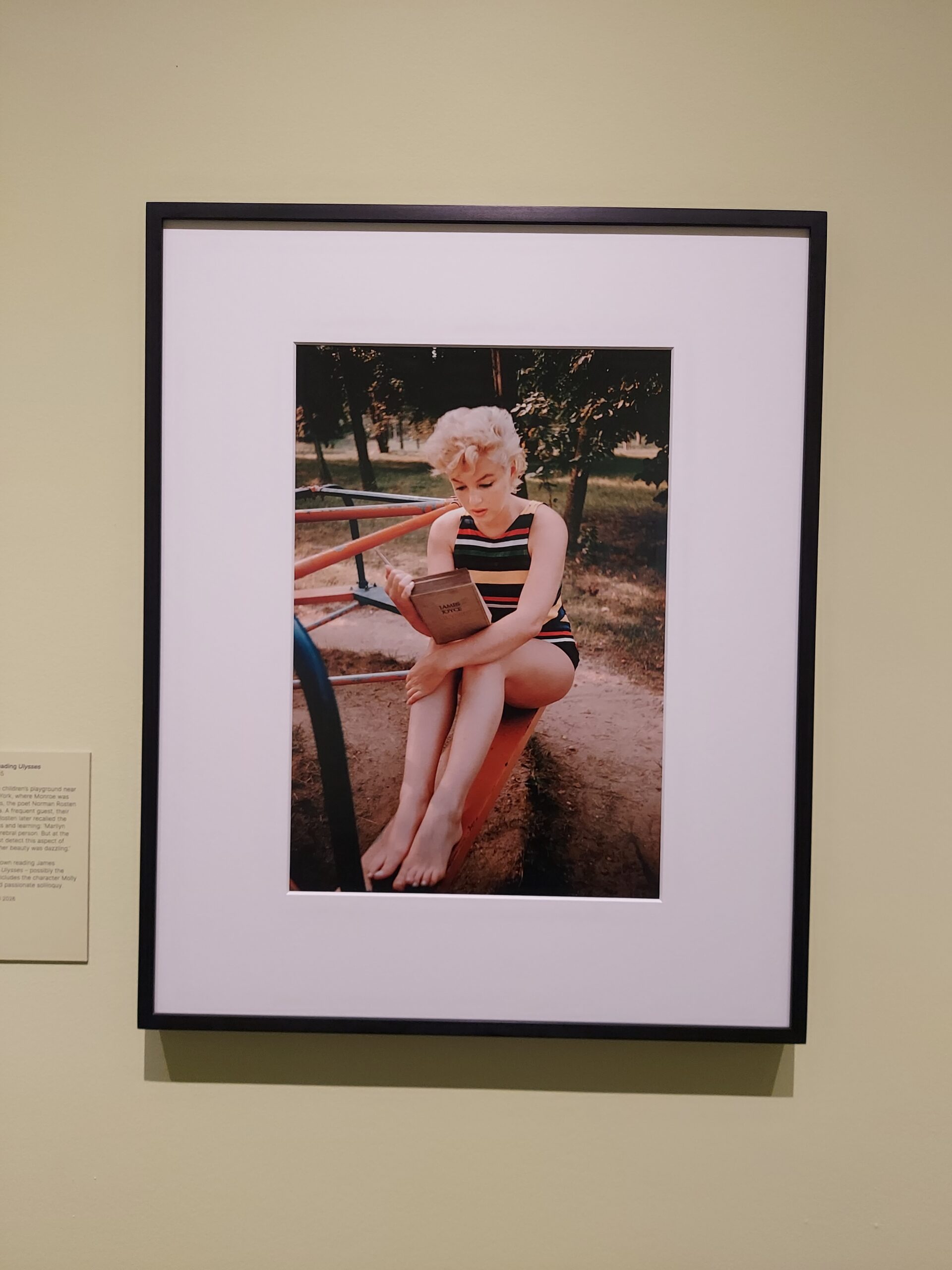
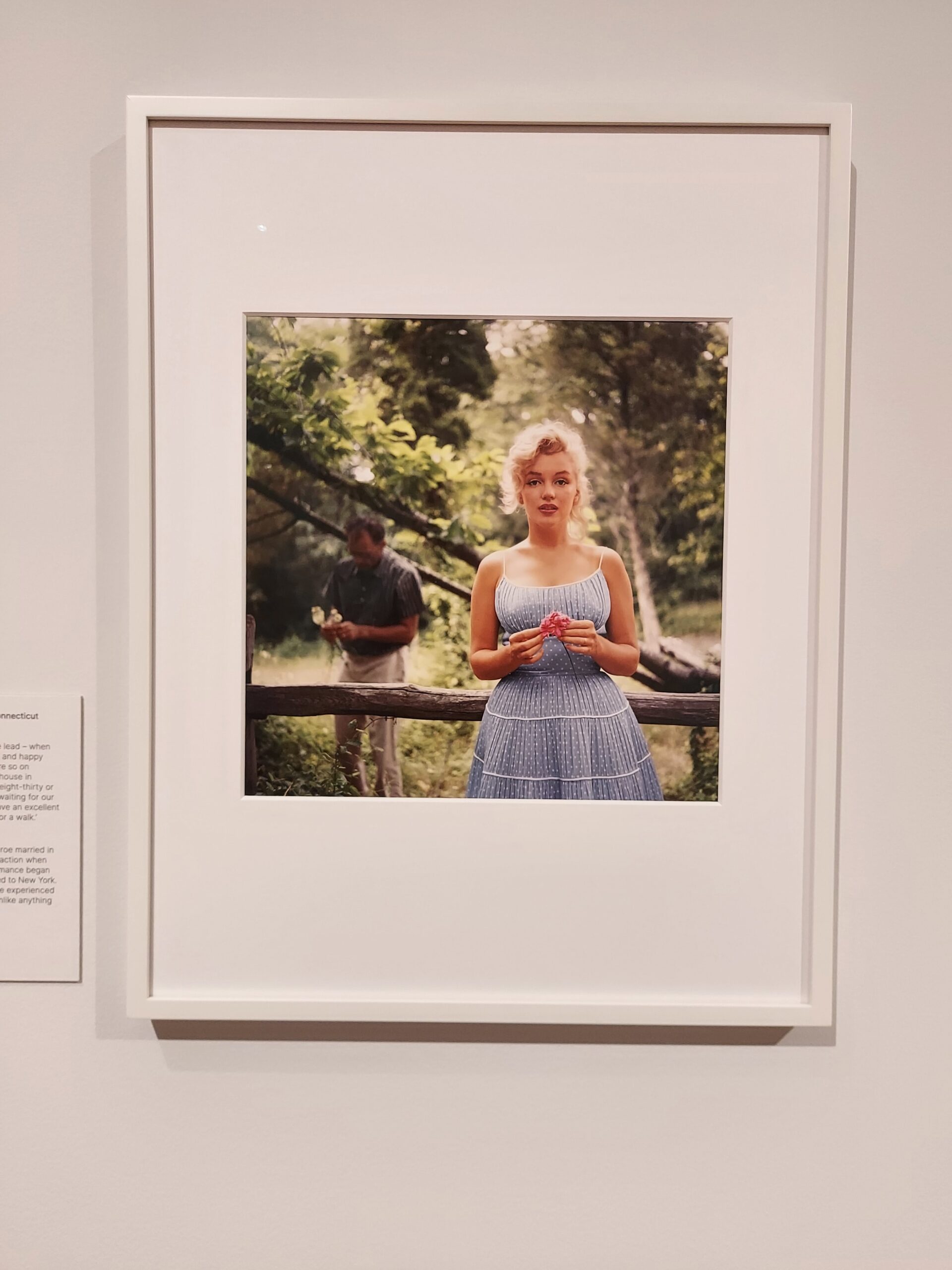
While in London I popped along to the National Portrait Gallery to check out the exhibition Marilyn Monroe: A Portrait. Marking Monroe’s 100th birthday, the exhibition features portraits from across her career by some of the most significant photographers and artists of the 20th century.

The exhibition features works by the likes of Andy Warhol, Pauline Boty, Marlene Dumas, Cecil Beaton, André de Dienes, Eve Arnold and more. It also exhibits some of her personal possessions, such as scripts and clothes. The exhibition aims to show how multi-faceted Monroe was as a person and an actress, and I think succeeds admirably.

Inside Aardman: Wallace & Gromit and Friends – Young V&A

Entrance to the exhibition


I wanted to visit the Inside Aardman: Wallace & Gromit and Friends exhibition at the Young V&A as soon as it was announced, and during my last visit to London there was a special adults-only evening opening, which was perfect timing.

The exhibition begins with a selection of drawings and stills from various Aardman animations, including Morph and the Wallace and Gromit films. It goes on to show how the characters are designed, how sets are built, and how the films are made, including lighting, direction and sound.

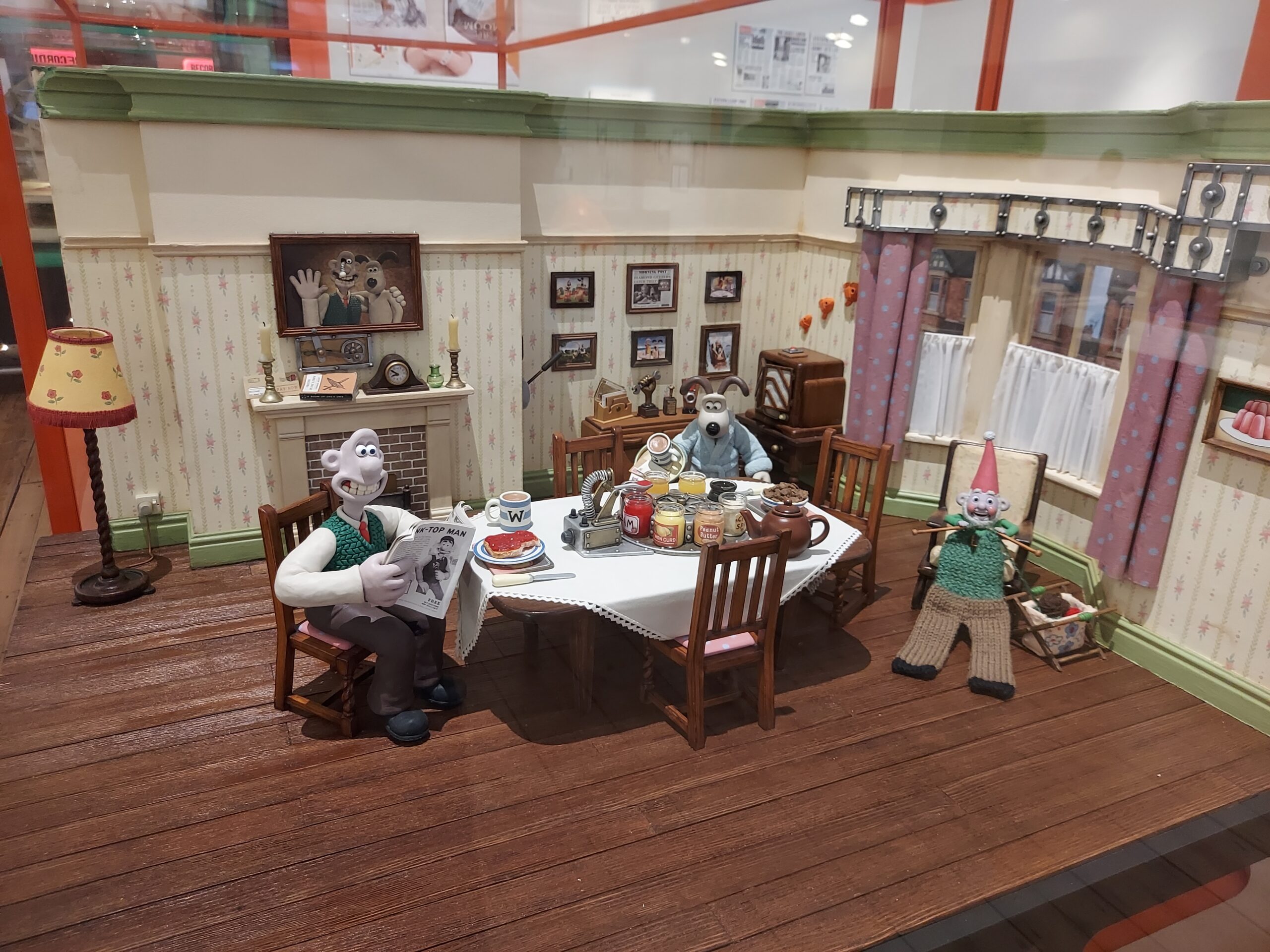
Model of Wallace's living room with Gromit and Norbot


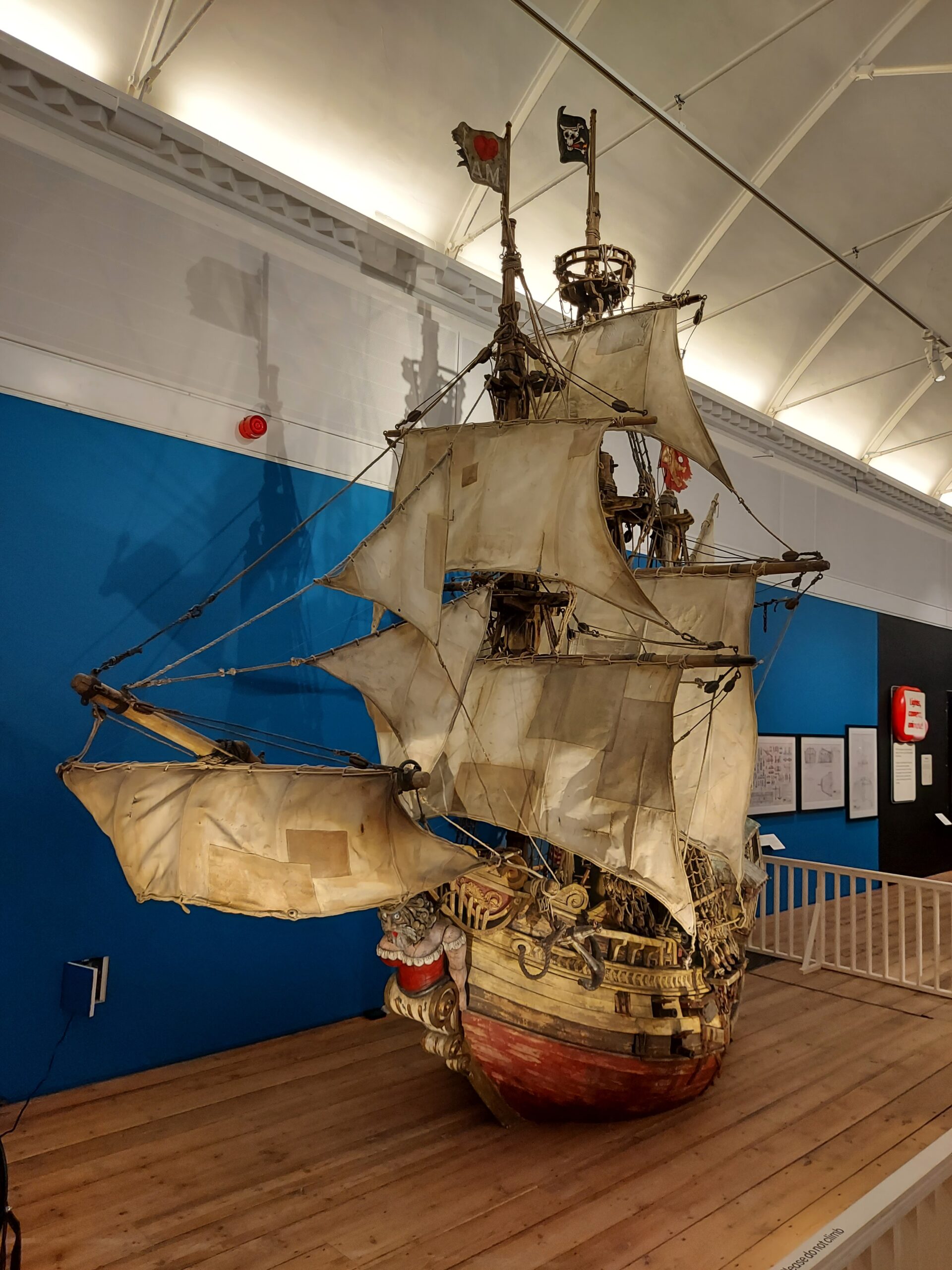
Within the exhibition there are several models of the characters and sets that form part of Aardman’s world. Among the most impressive is the pirate ship from Pirates! In an Adventure with Scientists, which reveals the sheer amount of detail that goes into a model of this size. There is also the spaceship from A Grand Day Out, which features lentils as rivets! Some of the more complex models, such as the were-rabbit from the Wallace and Gromit film, contain mechanical machinery within, but even the simplest of models take painstaking work to animate, with – for example – multiple different heads available depending on the facial expression the character requires.

Model of pirate ship from The Pirates in an Adventure with Scientists


Any fan of Aardman will love this exhibition. It was fascinating to learn more about how their works are made.

James McNeill Whistler – Tate Britain

While I was in London I visited the James McNeill Whistler exhibition at Tate Britain.

Whistler was born in the US but grew up in St Petersburg. He began his career with linocuts and etchings, but after coming into a small inheritance aged 27, he took up art seriously. He was inspired by Chinese and Japanese art, and influenced by bohemian Paris.

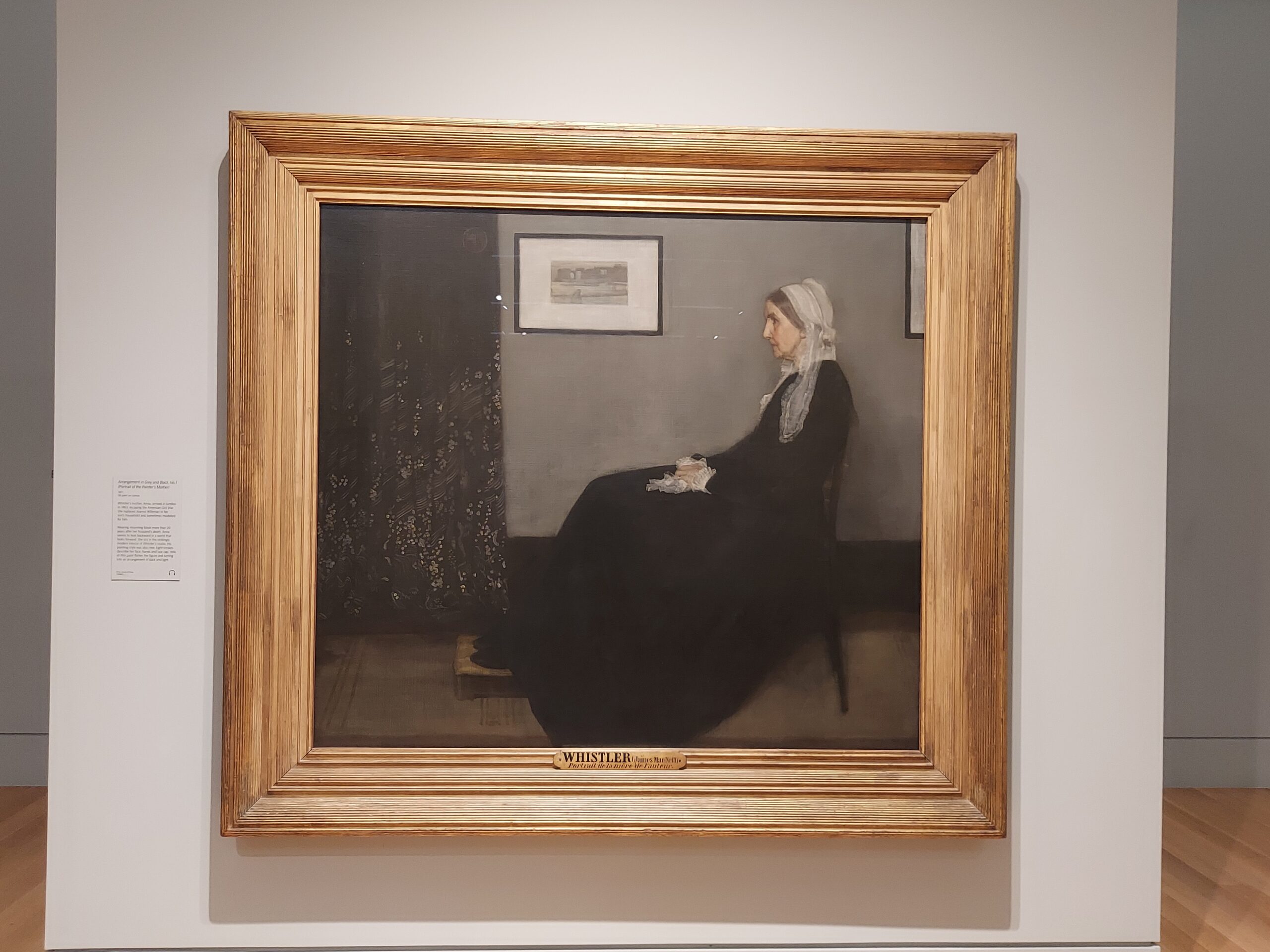
Whistler's Mother

Whistler’s philosophy of art argued that art should improve on nature. His works displayed here illustrate his interests and influences. His use of colour is notable, as well as his interpretation of light and shade.

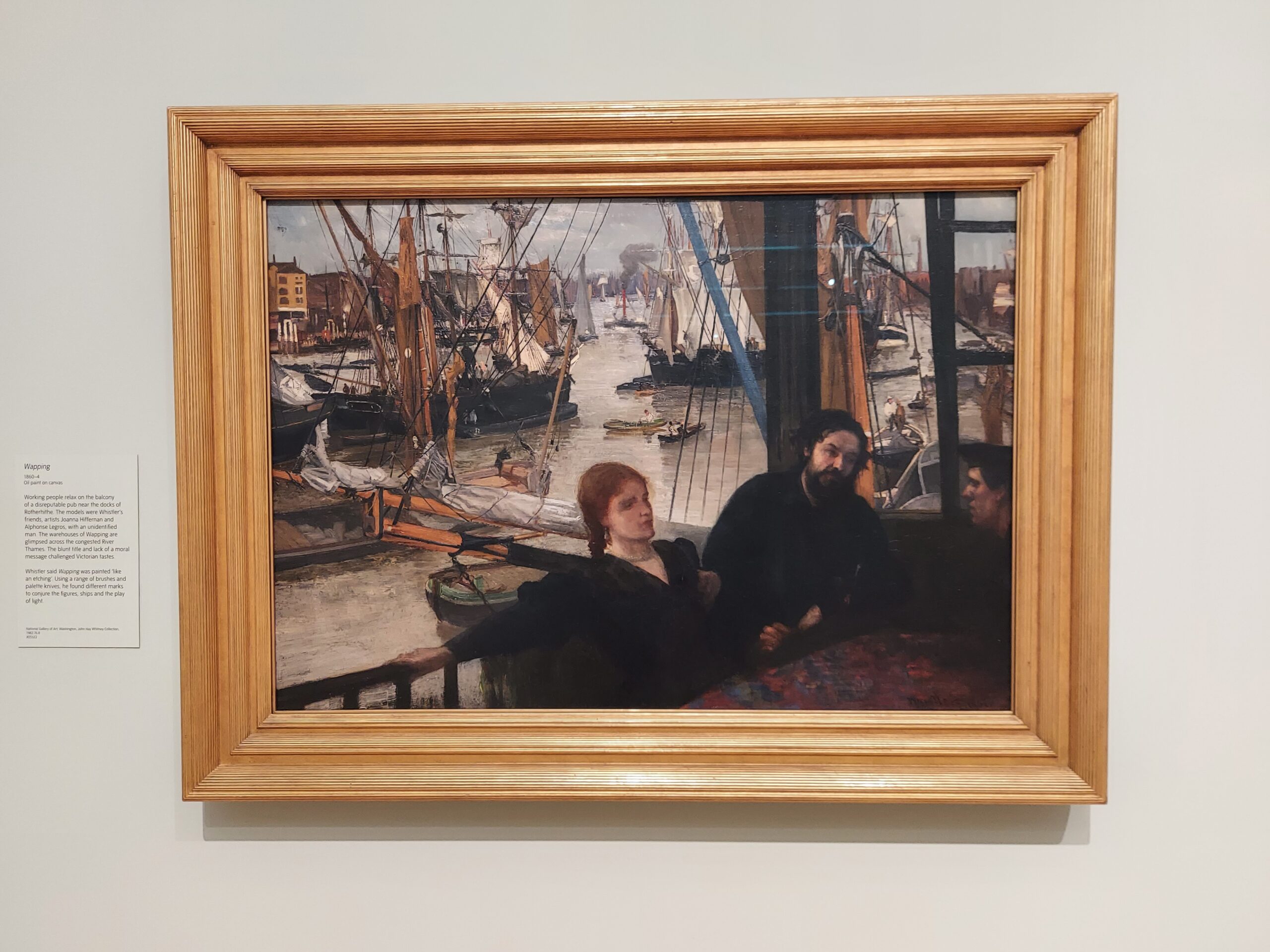
'Wapping'

I was interested to learn about his feud with Leighton – a reconstruction of the Peacock Room he created for the other artist is displayed in the exhibition, complete with cartoon featuring Whistler and Leighton as fighting peacocks. Whistler was also involved in a libel case with Ruskin: not all those in the contemporary art world understood him and his work.

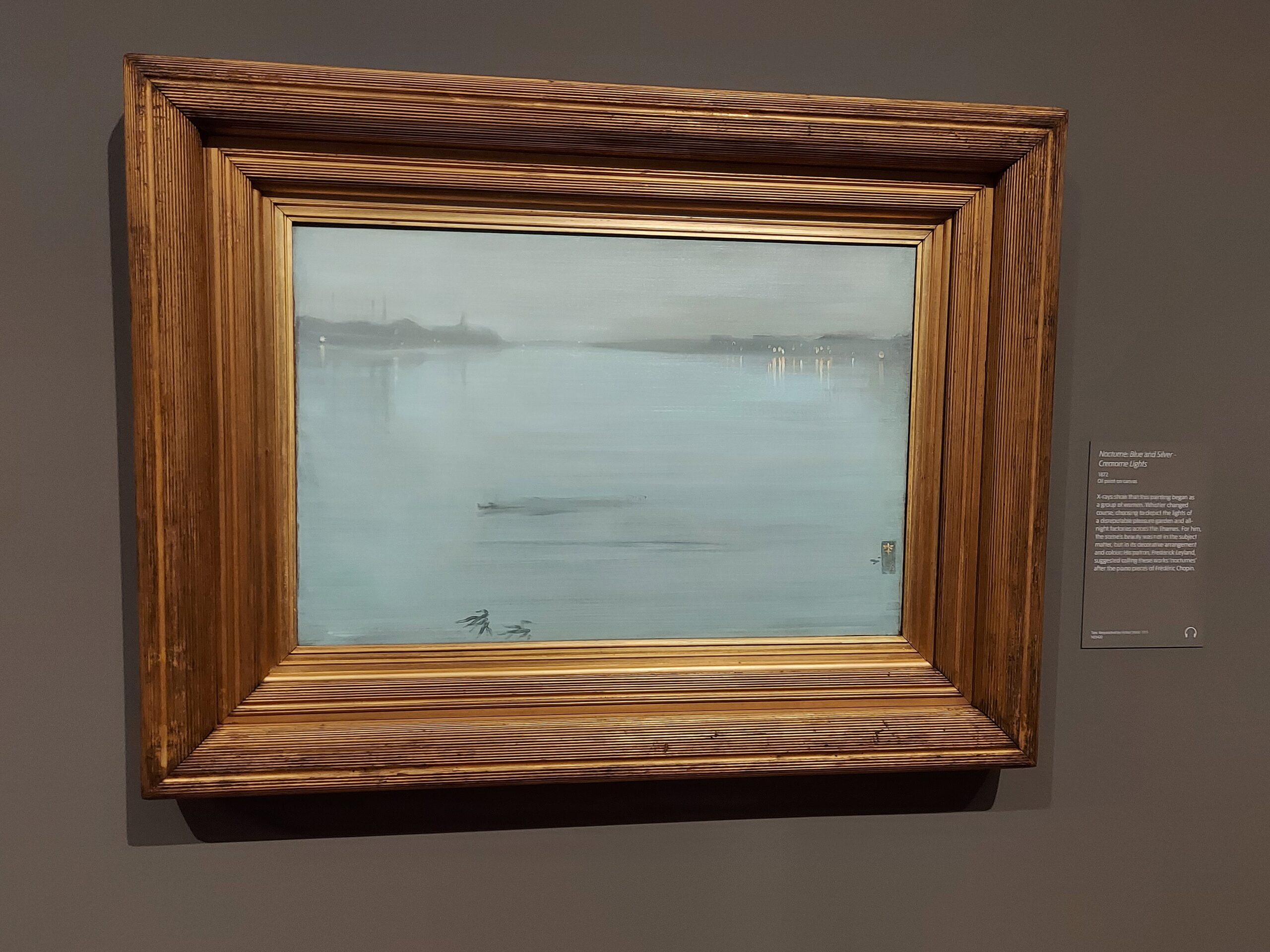
Nocturne

I was impressed with Whistler’s use of black, grey and white (as in his portraits of society women and of his own mother), his vivid landscapes of London (such as ‘Wapping’), and his ‘Nocturnes’. I enjoyed the exhibition and found a lot to appreciate in it.

Schiaparelli: Fashion Becomes Art – V&A

During my trip to London I visited the Schiaparelli: Fashion Becomes Art exhibition at the V&A. This is the UK’s first exhibition on Schiaparelli, and spans a century from Elsa Schiaparelli’s beginnings in the 1920s to the brand’s resurgence under current creative director Daniel Roseberry.

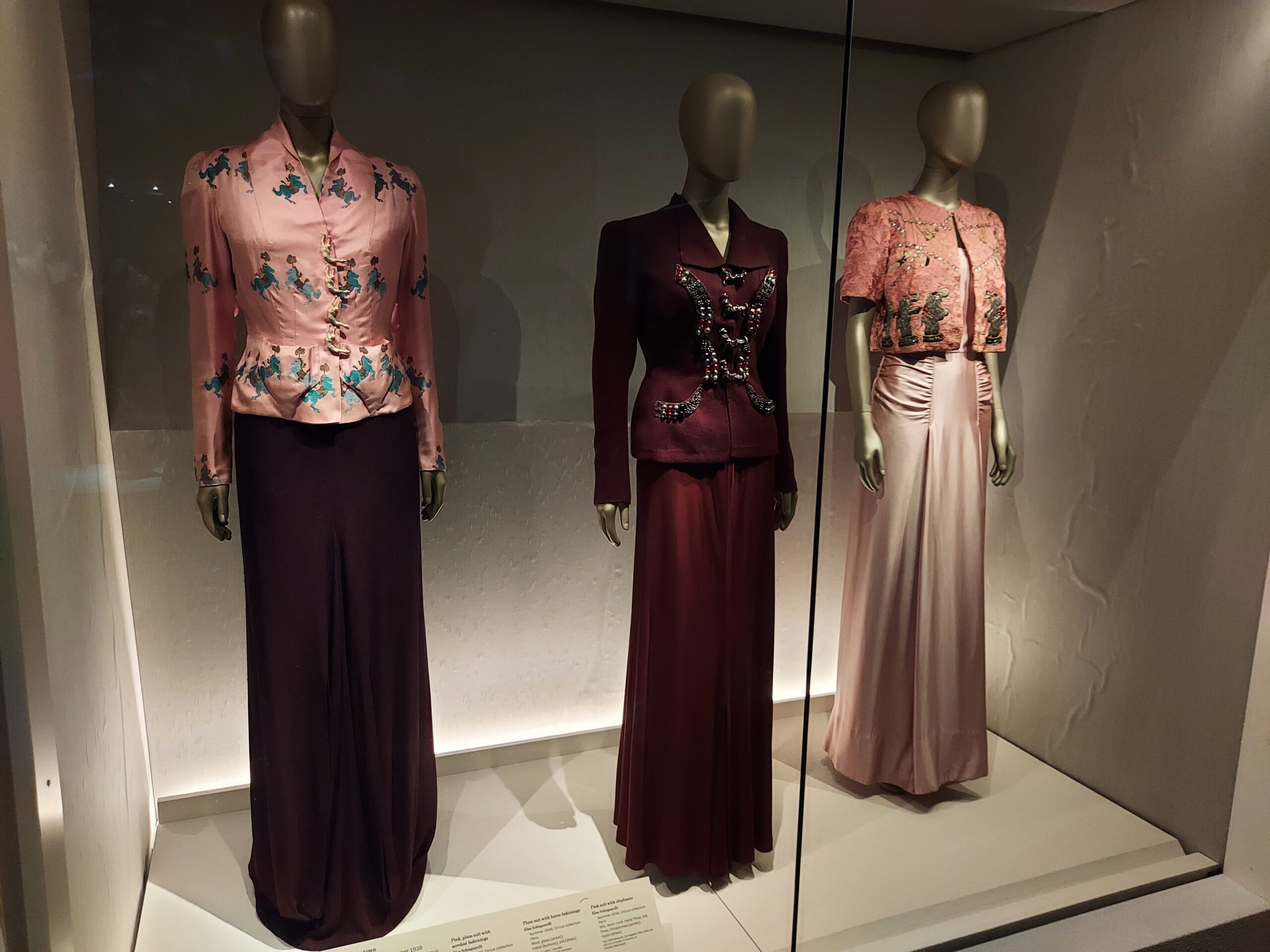
Schiaparelli outfits


Born in Rome in 1980, Schiaparelli thought herself a plain child and, jealous of her sister’s supposed beauty, ‘planted’ flower seeds in her ears, nose and mouth, hoping they would bloom. The picture this image inspires in the mind’s eye is particularly surreal. Her first collection was launched in Paris when she was in her 30s, and featured sweaters with ‘optical illusion’ patterns suggesting bows or waistcoats.

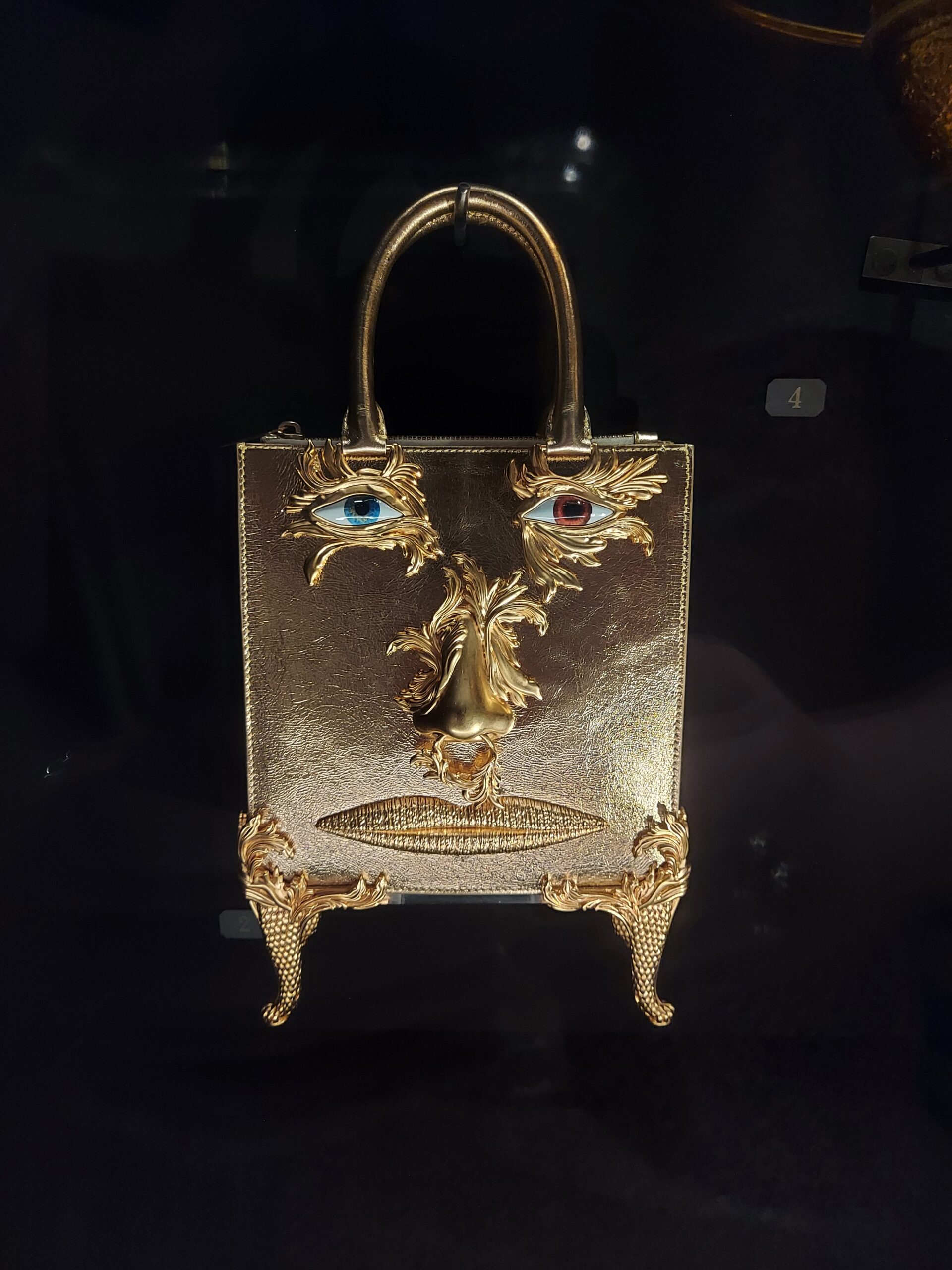
The clothes, accessories and other items on display in this exhibition demonstrate Schiaparelli’s unique, surreal and quirky style. She was friends with Cocteau and Dalí, and it shows. Pieces from her collections are interspersed with pieces from the brand’s modern day revival, sharing the same surreal, unusual yet artistic qualities. I particularly loved the telephone dial compacts and the unusual bags, as well as the hat that resembled a shoe.

Schiaparelli bag

Wright of Derby: From the Shadows – National Gallery

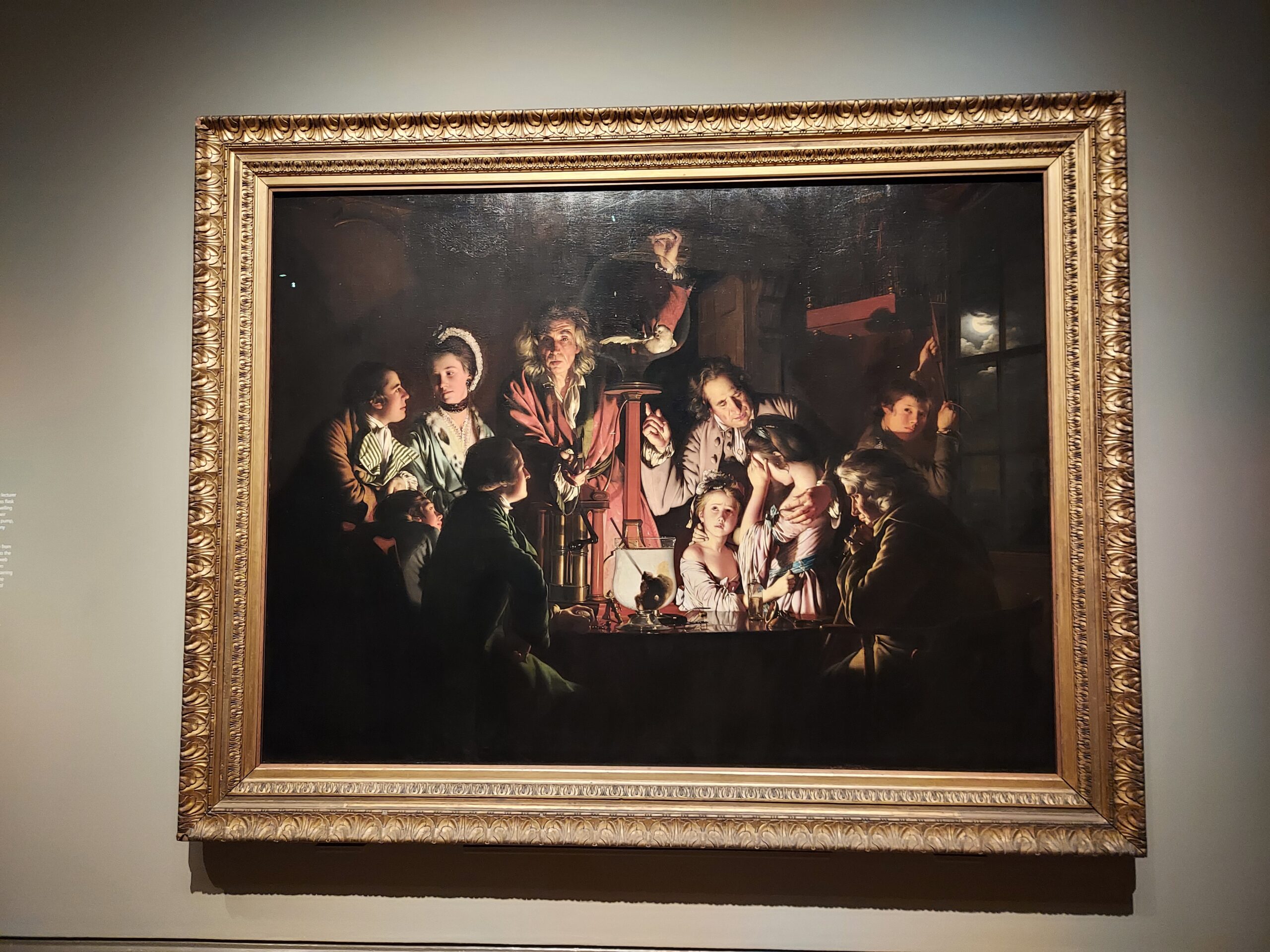
An Experiment on a Bird in the Air Pump, 1768

Wright of Derby: From the Shadows is a small but powerful exhibition at the National Gallery. It is the first major exhibition to look at the British artist’s ‘candlelight’ paintings, shedding new light on them – no pun intended.

Wright is most famous for his scientific paintings and Enlightenment associations. This exhibition reveals a gothic aspect to his work: a hint of the Romantic age that would succeed the Enlightenment. Perhaps they are not as different as you might think: both eras inspire wide-eyed wonder.

Marie Antoinette Style – V&A

During my latest trip to London I visited the Marie Antoinette Style exhibition at the V&A. Marie Antoinette, Queen of France, is a controversial figure in history but the exhibition focused on her influence in terms of fashion and style, which has lasted to this day.
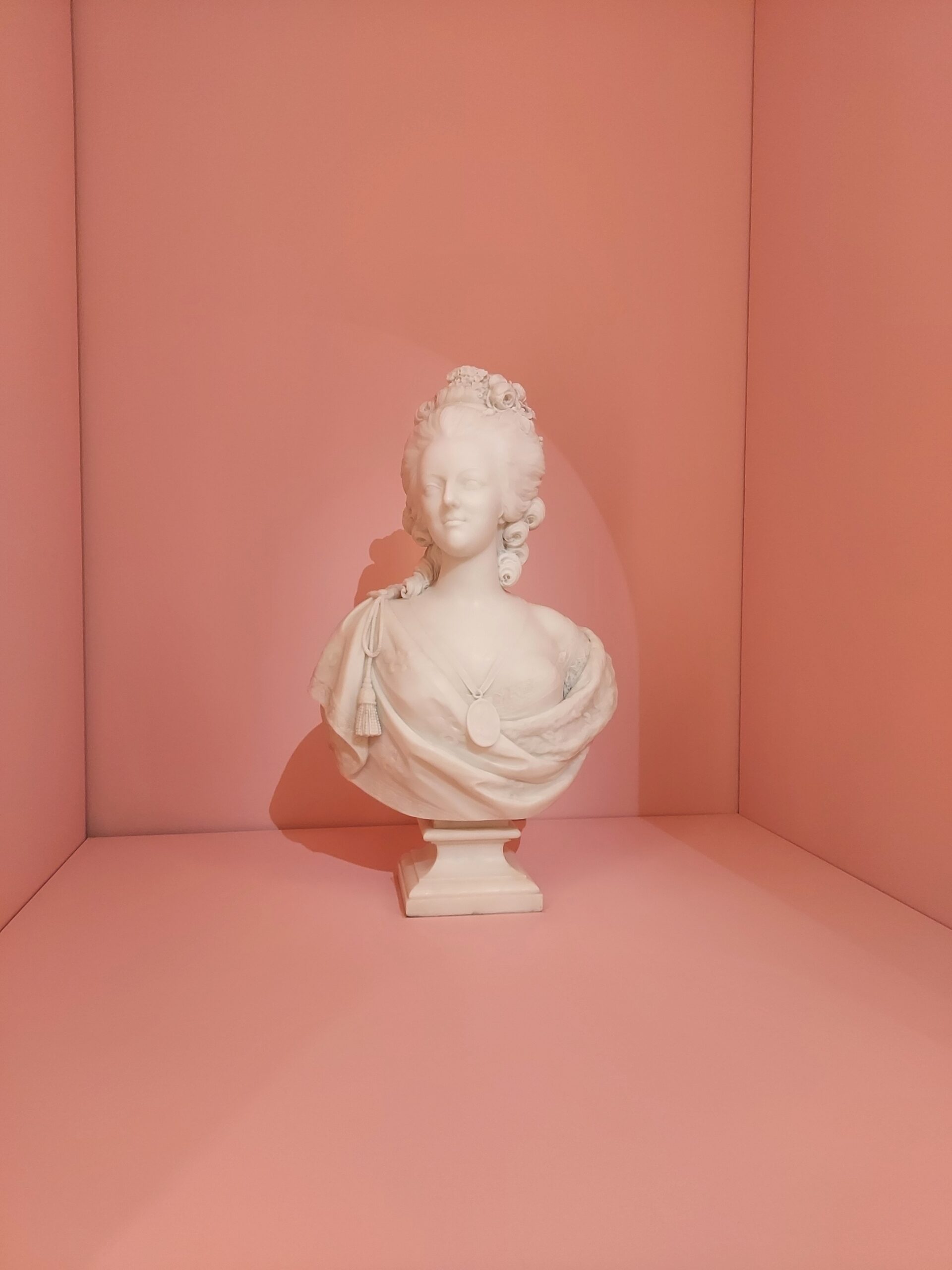
Daughter of the Empress of Austria, Maria Antonia Josepha Johanna von Österreich-Lothringen was sent to Paris aged 14 in order to marry the French Dauphin. She used fashion to make an impact, setting new trends with the help of her dressmaker, Rose Bertin. This was a way to showcase her power and influence as a woman and Queen. Many of her dresses, accessories and other possessions are on display in the exhibition.

The French public were unimpressed at their Queen’s show of wealth, and she became a beacon for their discontent, understandably though perhaps unfairly given there were plenty of aristocrats far more to blame for the state of the nation than she. The French Revolution followed soon after, and Marie Antoinette was executed along with the rest of her family, at the age of 37.
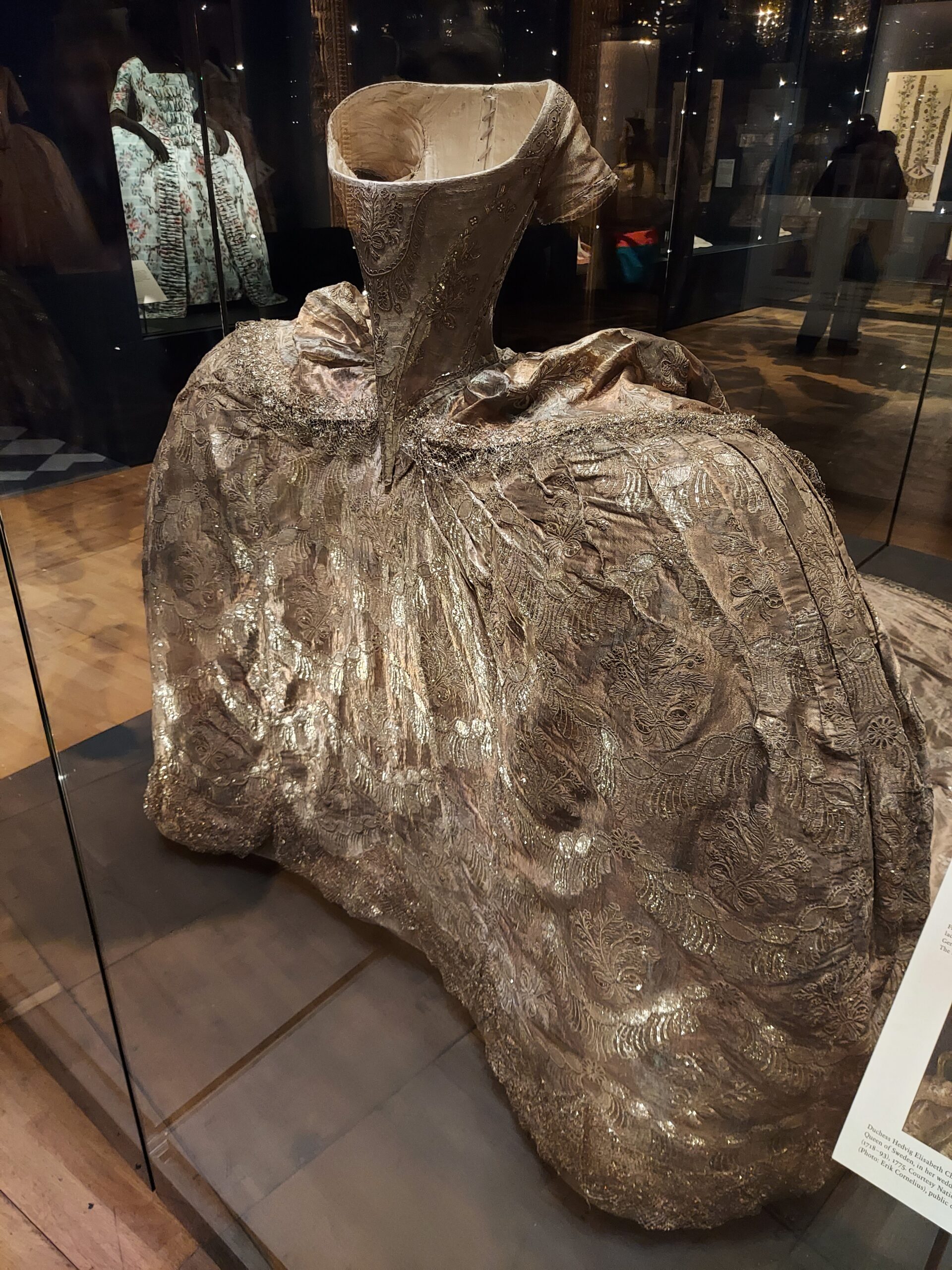
A wedding gown modelled on a dress of Marie Antoinette's

In more recent years, the French queen’s reputation has enjoyed something of a renaissance, at least where her sense of style is concerned. She was played by Kirsten Dunst in the 2006 Sofia Coppola film, channelled by Madonna in the 80s, and was the source of inspiration for numerous fashion designers. The second part of the exhibition focuses on her influence, which is considerable.
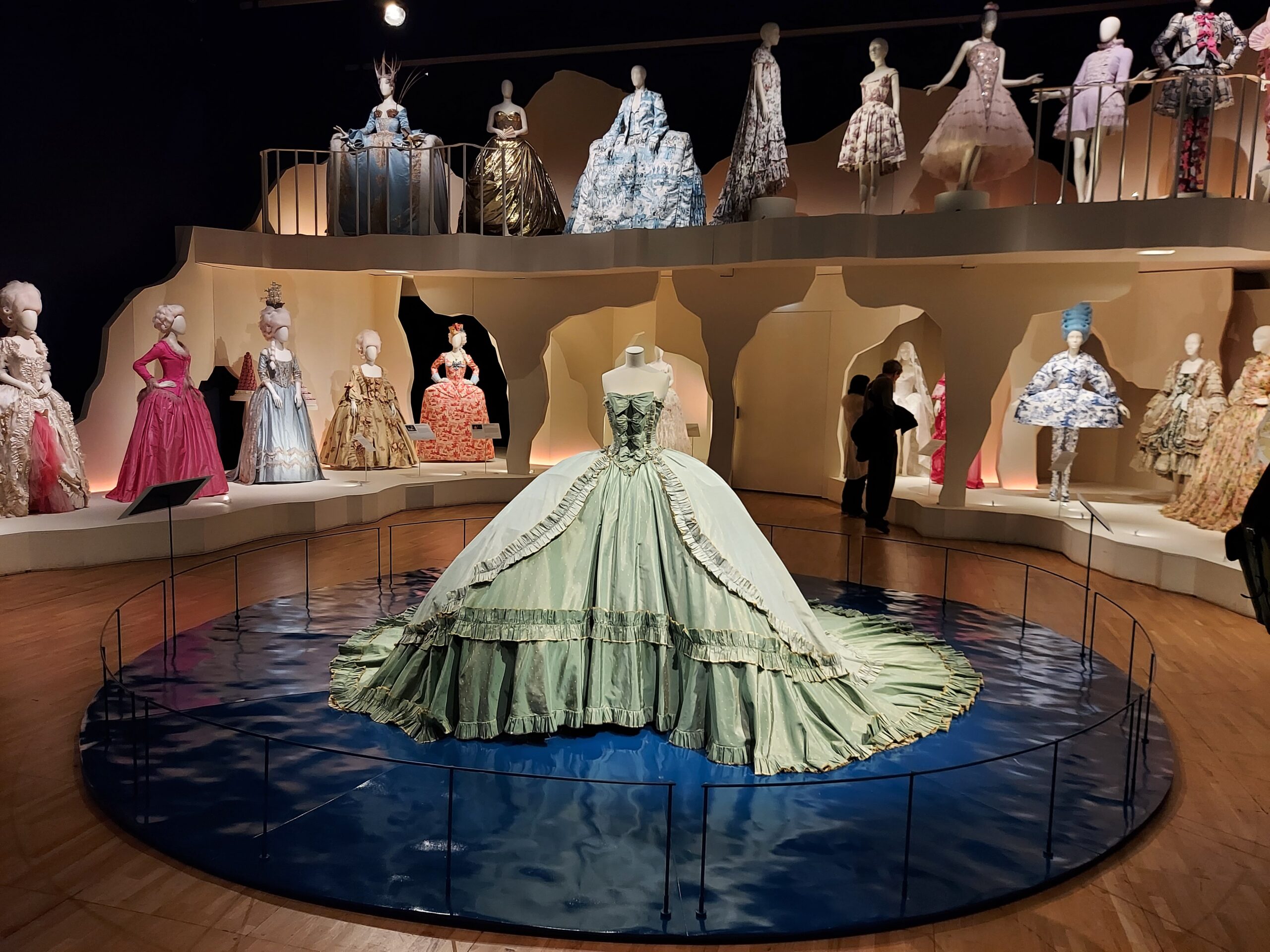
Outfits inspired by Marie Antoinette

Overall, the exhibition is a must for anyone interested in history, fashion, and how the two coincide.

Ben Edge: Children of Albion – Fitzrovia Chapel

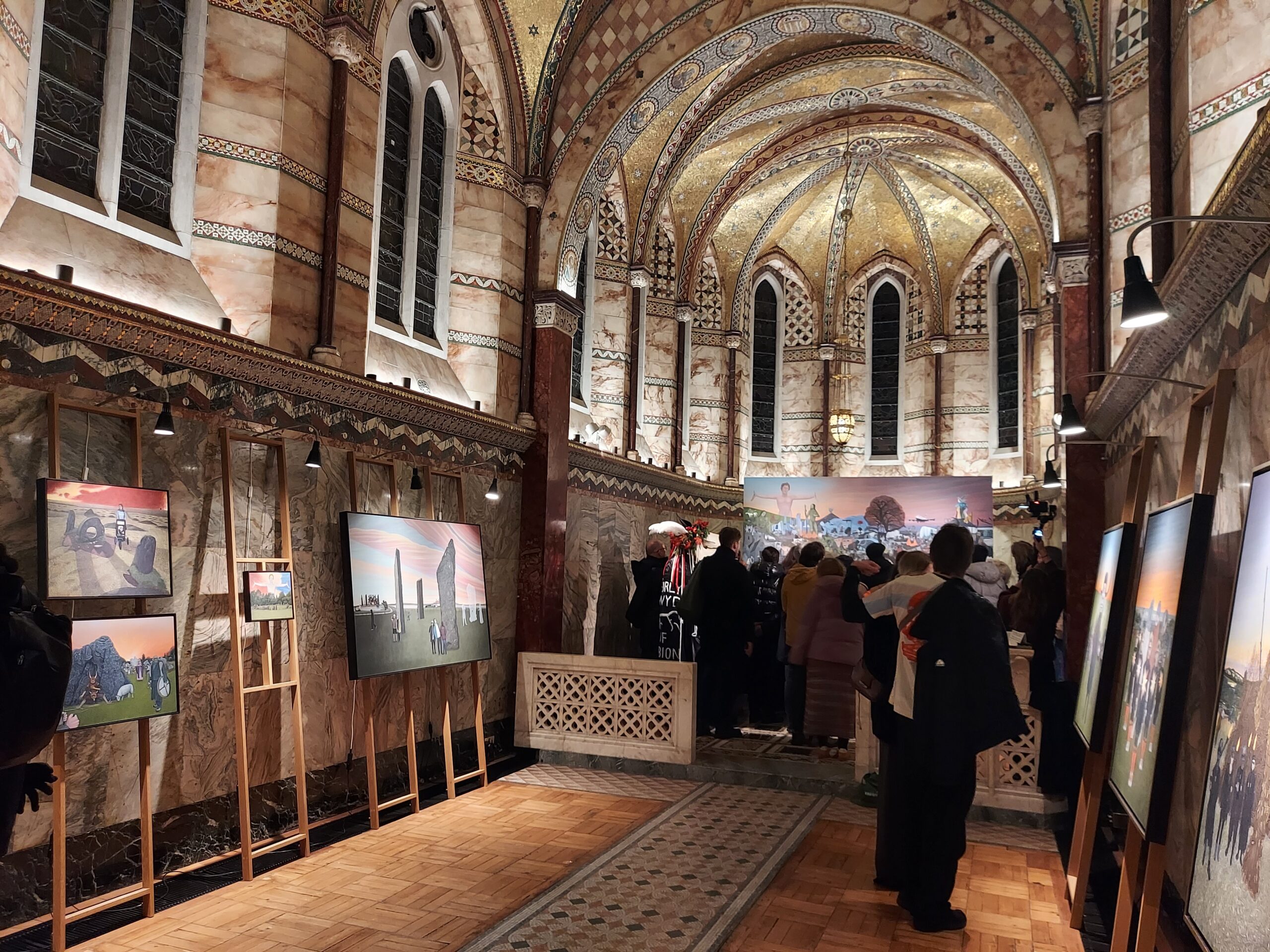
Fitzrovia Chapel

As part of my last weekend in London, I visited the exhibition Ben Edge: Children of Albion in Fitzrovia Chapel. It explores the ideas of the artist Ben Edge surrounding folklore and the relationship of traditional folk belief to the modern day. The large, detailed painting Children of Albion provides the exhibition’s centrepiece, and is a fascinating work, with new discoveries at every point.

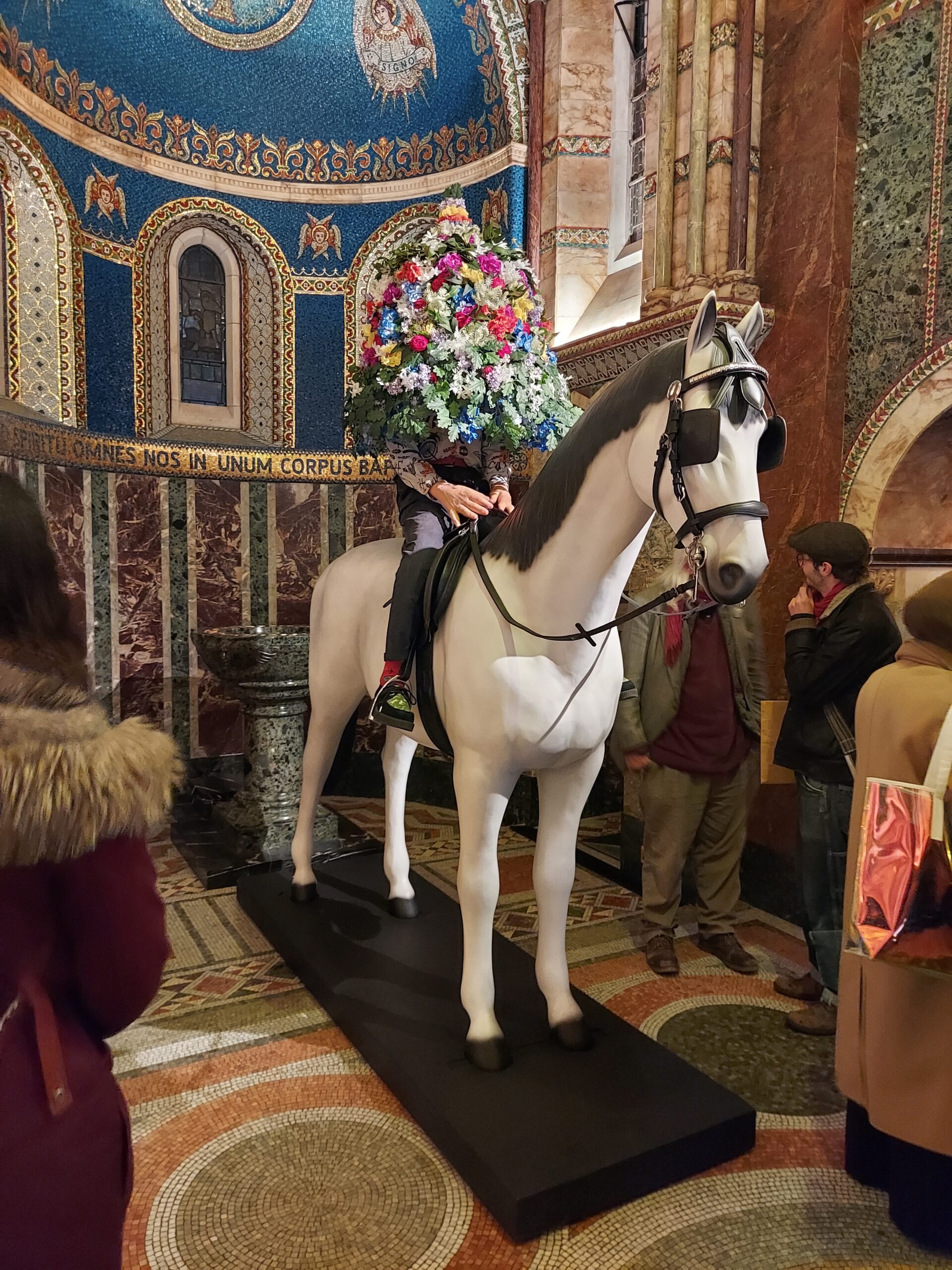
White horse with a man surrounded by foliage on its back

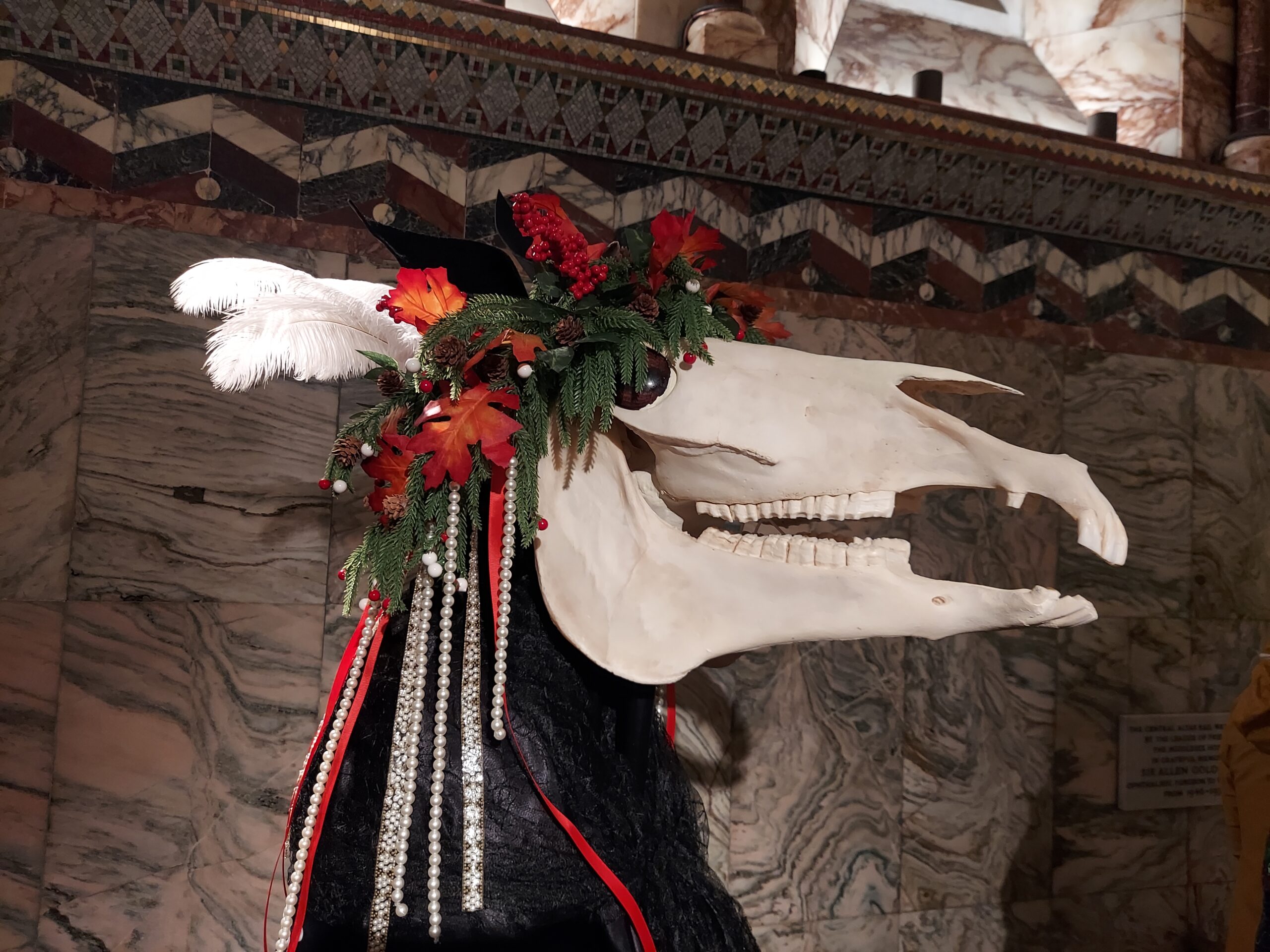
The exhibition featured many other works of art, including a Mari Lwyd figure, and the sculpture Where Must We Go in Search of Our Better Selves, a white horse ridden by the Garland King, a figure of Derbyshire folklore. Folklore has enjoyed a renaissance in the country in the last few years, and the exhibition reflects that.

Mari Lwyd

Secrets of the Thames: Mudlarking London’s lost treasures – London Museum Docklands

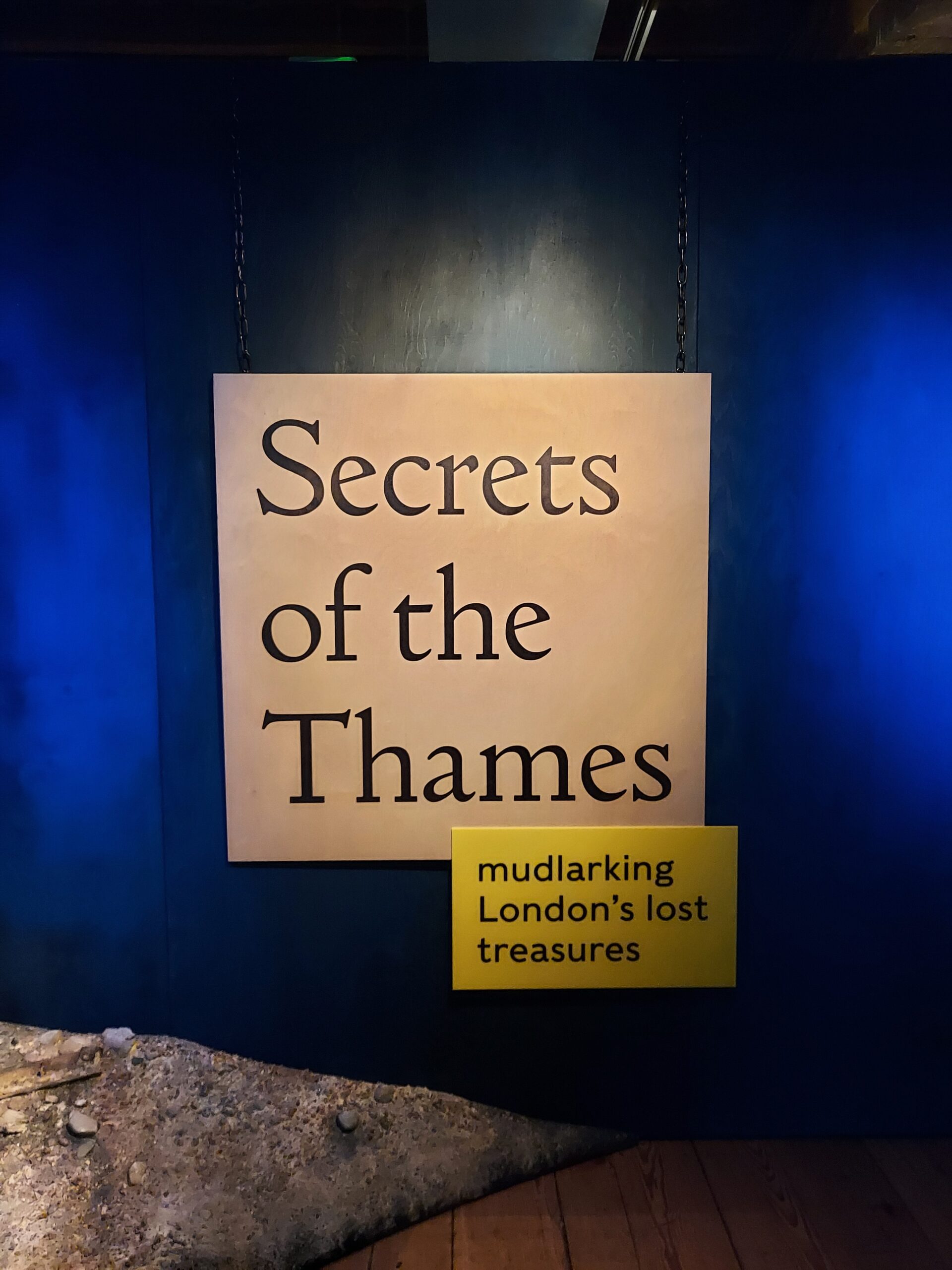
Secrets of the Thames entrance

At the weekend I also went to see the Secrets of the Thames exhibition at London Museum Docklands. I find the concept of mudlarking fascinating (while knowing that I’m far too impatient to enjoy it for real), and this exhibition is all about the amazing treasures that have been found in the river, featuring over 350 mudlarked objects.

Humans have lived alongside the Thames for over 10,000 years. Their lives have left traces in and beside the river as London developed. The earliest mudlarkers were active in the early 1800s, searching the Thames foreshore for coal, metal and rope in order to make their living. Today, mudlarkers need to be licensed by the Port of London Authority, and they primarily search for historical treasures. Around 700 finds are recorded each year.

There are some absolutely fascinating items on display, including the Iron Age Battersea Shield, a medieval ring, a Viking dagger and eighteenth-century false teeth, as well as a sixteenth-century ivory sundial (the two halves of which were discovered by different mudlarks years apart), a typeface, and numerous clay pipes.

This exhibition is a fascinating testament to London’s history and the secrets that are hidden within the Thames.

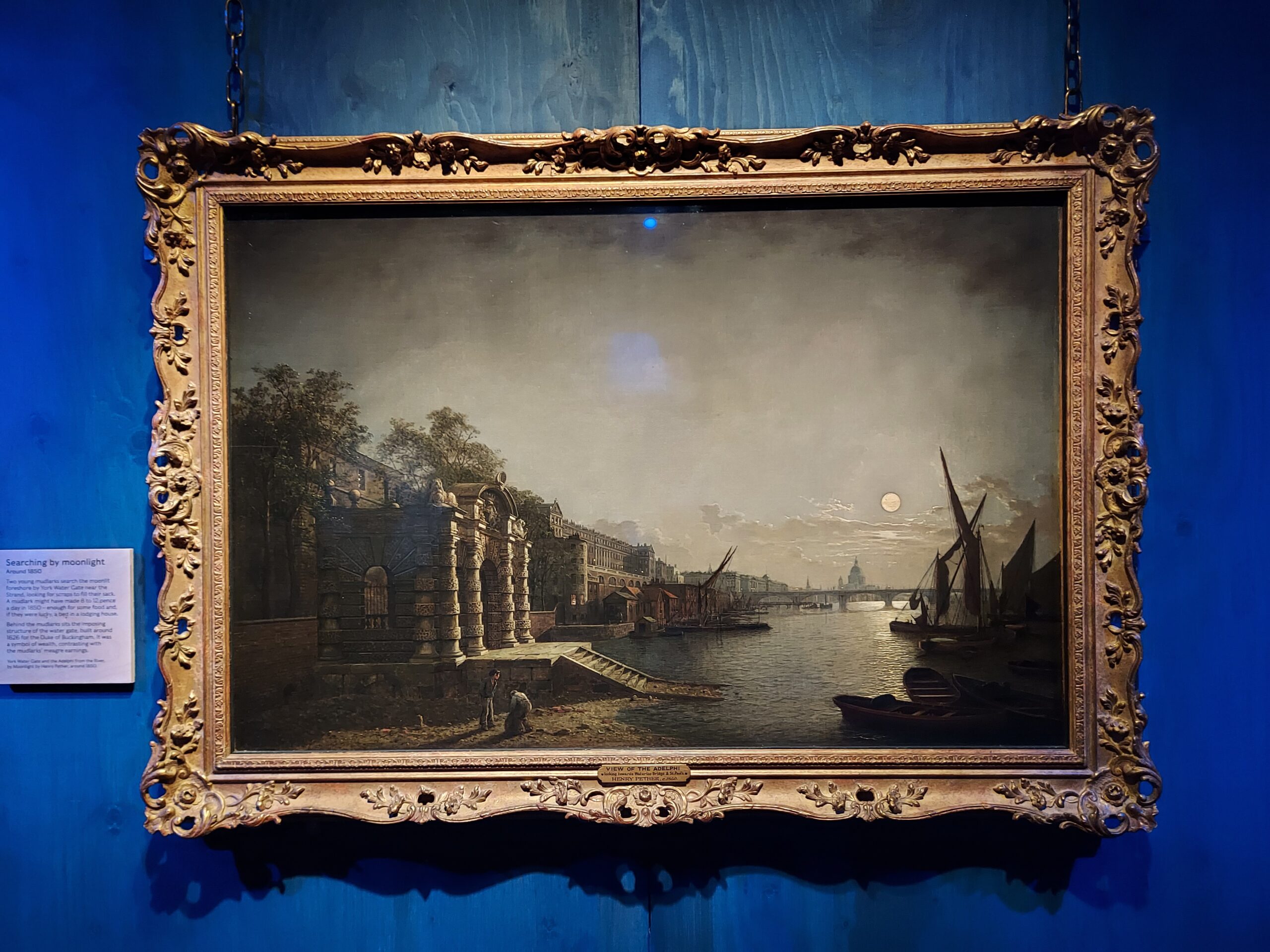
Painting of the Thames at moonlight

Secret Maps – British Library

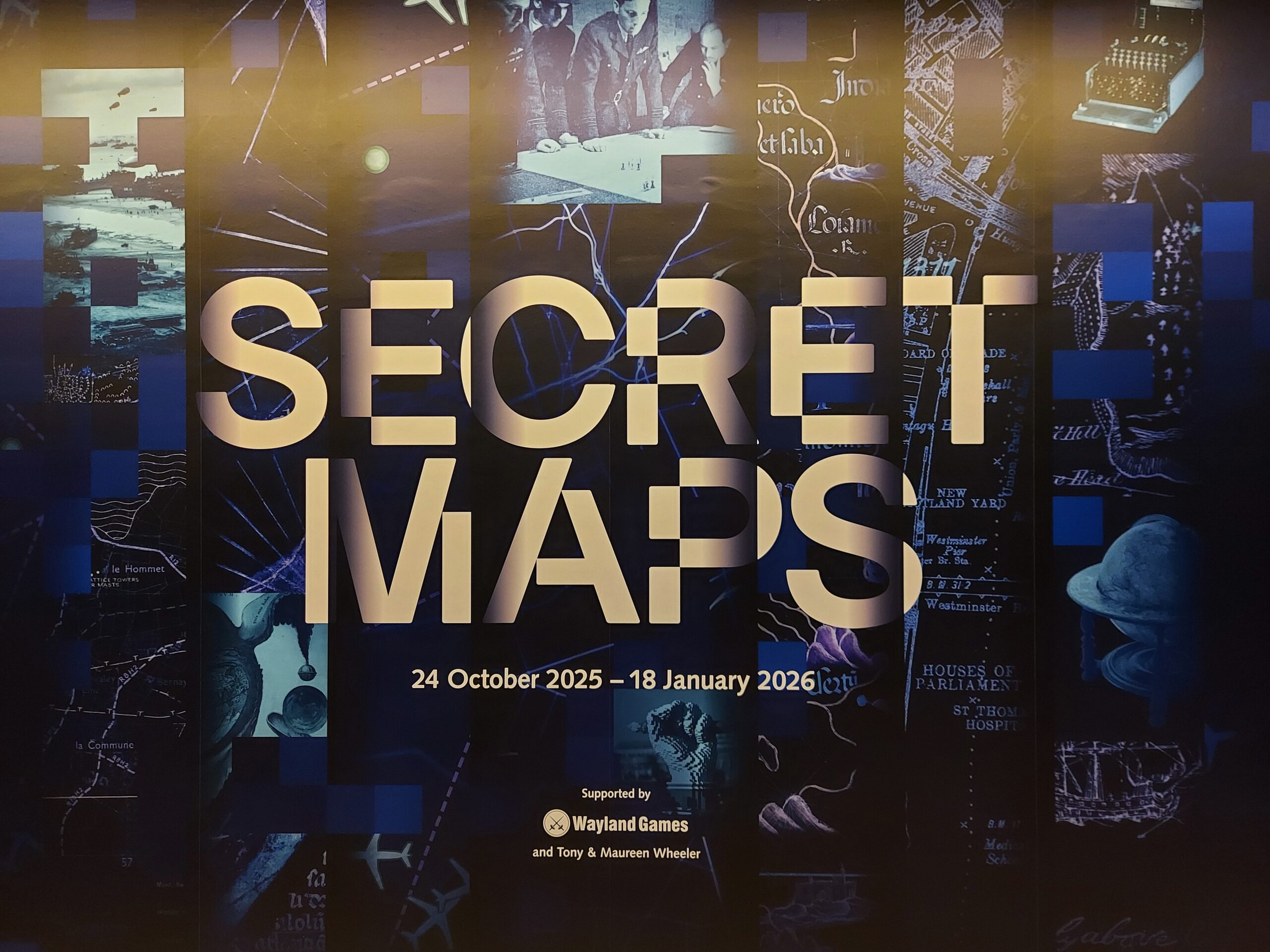
Secret Maps poster

At the weekend I went along to the British Library to see the Secret Maps exhibition. Featuring over 100 items, the exhibition looks at how maps have played a role in secrecy through the ages, covering several centuries. It shows how maps can be political tools, valuable in global conflict as well as helping create a sense of community.

Some of the maps shown in the exhibition include maps of the English south coast commissioned for the Tudor court, trading routes used by the Dutch East India Company, and military plans for the D-Day landings. Others include the first maps of the proposed Partition of India, maps of sacred landscapes created by the Incas, and an A-Z of apartheid-era South Africa only featuring white neighbourhoods.

The fascinating exhibition shows how maps can take different forms, show very different things, and reveal contemporary prejudices, preoccupations and standards. Maps are certainly not neutral, and we can learn a lot from them.