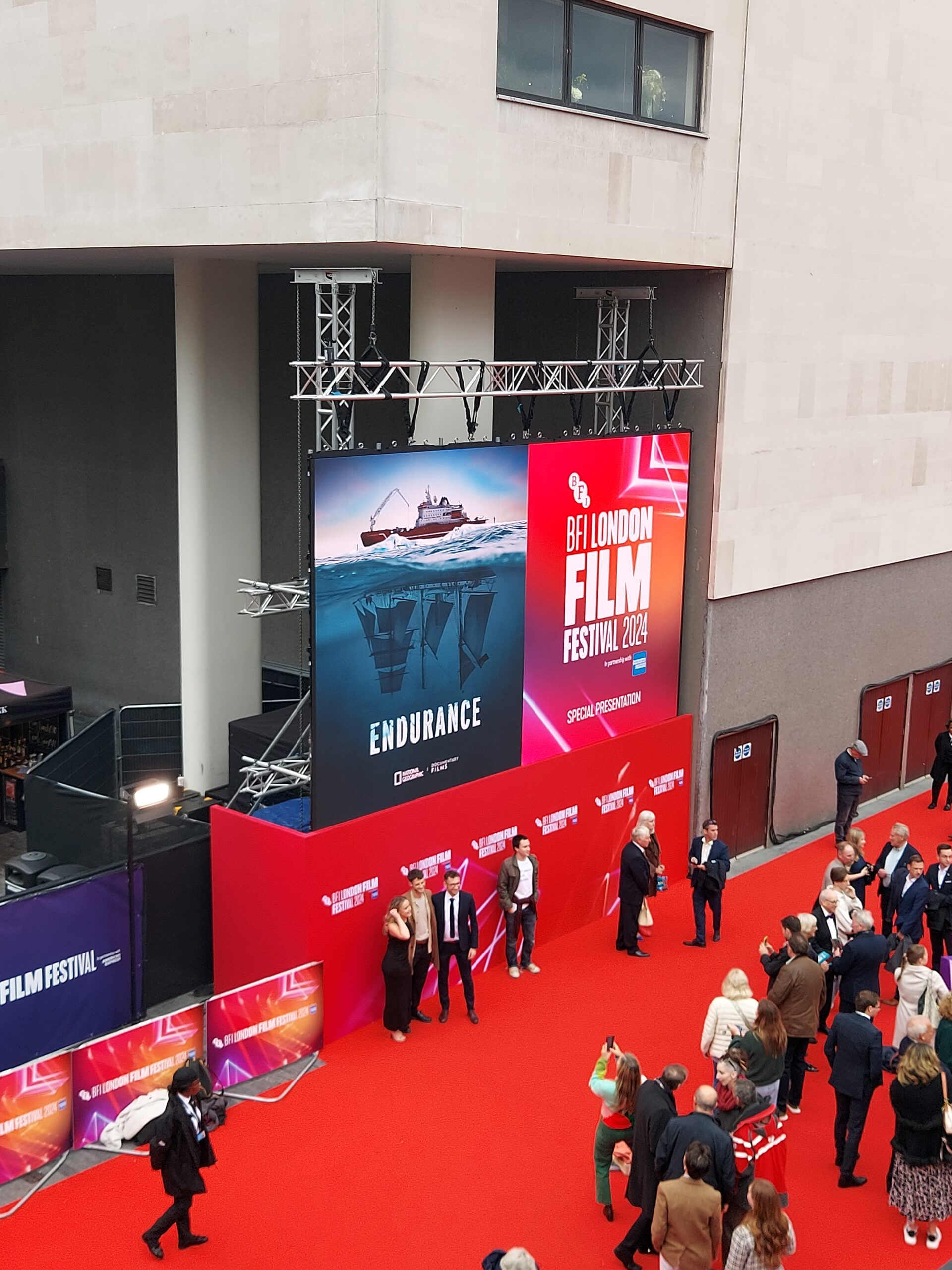
I attended the premiere screening of the new Endurance documentary on Saturday, as part of the BFI London Film Festival. Directed by Elizabeth Chai Vasarhelyi, Jimmy Chin and Natalie Hewit for National Geographic, the film tells the story of the hunt for Shackleton’s lost ship Endurance in the icy Weddell Sea. Interspersed with footage of the 2022 search is filmed footage, photographs and re-enactments of the original Imperial Transantarctic Expedition, that failed to achieve its objectives but ended up as one of the most glorious tales of survival in history. Once the ship became trapped in ice and crushed, Shackleton got his crew to dry land and along with five other men embarked on an incredibly dangerous voyage – in one of the lifeboats – to South Georgia in order to alert the whalers to their plight. Not a man was lost.
The film footage has been colourised, which really brings it to life on the big screen. The words of the members of the expedition, as recorded in their diaries, are read out loud, their voices recreated by AI. The effect is incredibly powerful.
It’s fascinating to see the sailors and scientists searching for the wreck of the Endurance, in a race against time before the colder season hits. Even knowing the outcome of their hunt, it’s still nerve-wracking to watch them wait, and heartwarming to see their excitement once all their hard work pays off. The film ends with stupendous underwater images and scans of the surprisingly complete wreck, which are worth the ticket price alone.
5 January 2022 marks the 100th anniversary of the death of Sir Ernest Shackleton, who died while embarking on another expedition. His death in 1922 is said to mark the end of the “heroic age” of Antarctic exploration. 2022 is also the centenary of Britain’s first attempt to summit Mount Everest. The BFI’s To the Ends of the Earth season explores tales of human hardship and endurance focusing on extreme environments such as the poles and high altitudes. I spent my Sunday at the BFI Southbank watching two films from this season.
South: Sir Ernest Shackleton’s Glorious Epic of the Antarctic (1919)
South is the film, photographed and filmed by Frank Hurley, of Shackleton’s famous Endurance expedition of 1914-1916, during which the ship was crushed by ice, leaving Shackleton and five of his men to embark on a risky journey to South Georgia in a lifeboat. Today it is considered the world’s first documentary feature, and has been restored for the centenary with a new score by Neil Brand.
The film is engrossing and rather magical, with moving footage of the key players in the expedition, the journey to Antarctica, exercising the dogs and life on the ice. Once the men have to abandon the ship there is no more video footage until Shackleton reaches South Georgia, but vivid photographs take their place. Watching this film, I feel incredibly glad that Hurley insisted the negatives be saved when so much else was abandoned.
The Red Tent (Krasnaya palatka) (1969)
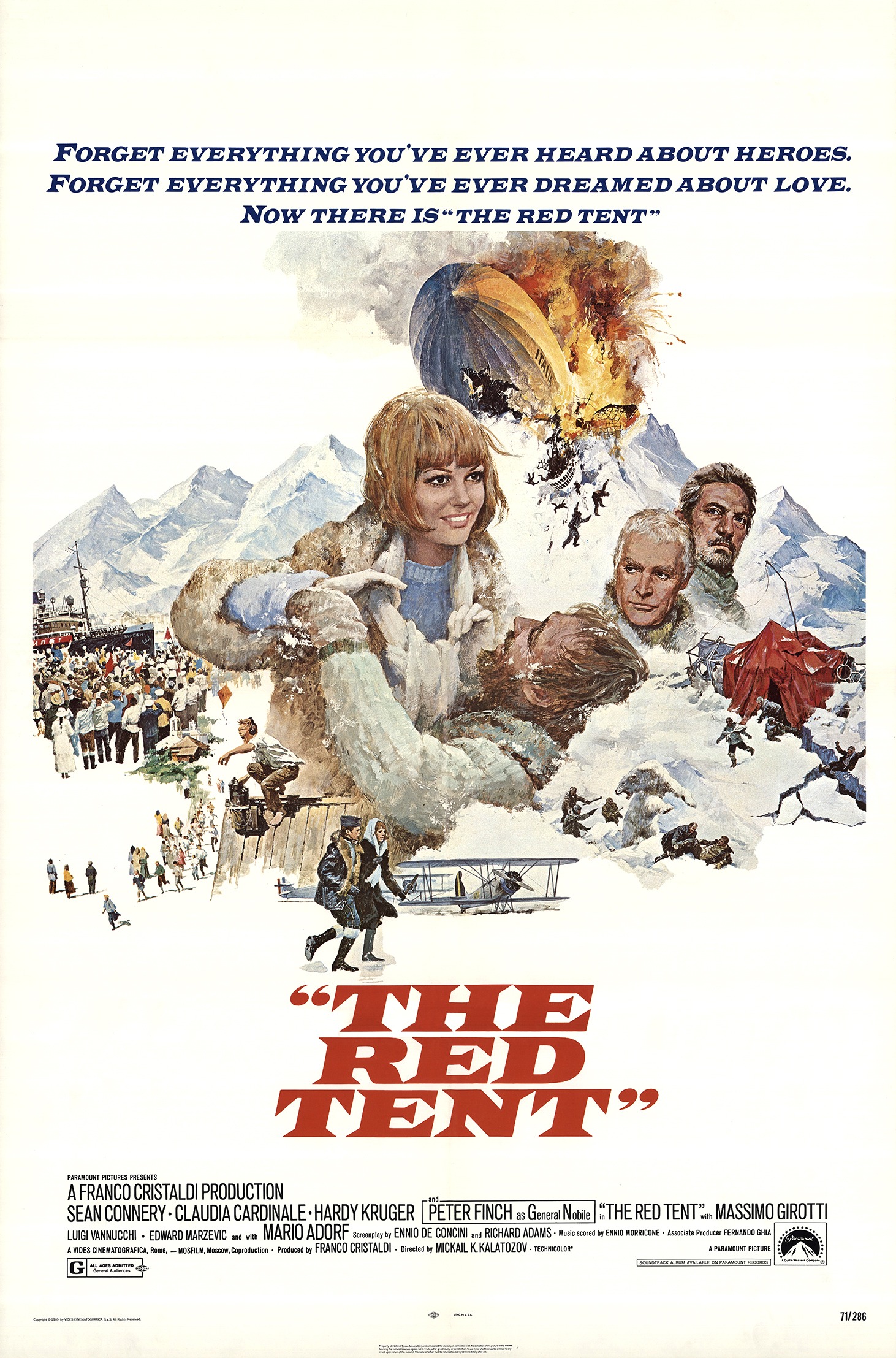
I’d never heard of this intriguing film, which looks at the 1928 Italia airship disaster by means of a series of ghosts haunting Commander Nobile, the leader of the expedition, later in life. Peter Finch plays Nobile and none other than Sean Connery plays Roald Amundsen, who went missing trying to rescue the stranded crew. The film was gripping and very well-made – it really evoked the frozen wastes of the Arctic. There was definitely some artistic licence taken in the reenactment of events, but it was broadly based on fact, and was an interesting examination of what makes a leader.
Being obsessed with anything to do with Antarctica, I decided to go and see the IMAX film Antarctica 3D at the Science Museum at the weekend. Narrated by Benedict Cumberbatch, the film showcases the weird and wonderful wildlife that lives on this frozen continent.
The filmography was simply beautiful, with gorgeous shots of Antarctic sunsets, icebreakers on their way to the continent, and all kinds of creatures. Some of the most impressive sequences showed the Antarctic seabed and the sea creatures that live here, including fish that are prevented from freezing by the antifreeze in their bodies. Later, on land, we got to see close-up shots of elephant seals fighting, leopard seals chasing penguins, and whales doing their thing.
If you’re interested in Antarctica this film is simply a must-see. Its beauty took my breath away.
It’s been several years since I’ve seen the Lord of the Rings trilogy, so I thought it would be a good time to refresh my memory. The Prince Charles Cinema holds all-night marathons every December, and I went along armed with snacks and energy drinks.
The marathon featured all three films, in extended editions, over a period of more than twelve hours with minimal breaks. It was less of an endurance test than I’d expected (the energy drinks helped), because the movies are so good, and still hold up well twenty years after they were first made. Boromir’s “One does not simply walk into Mordor” line got a particular laugh.
When the final credits rolled I went for a Wetherspoon’s breakfast and went back home, where I spent the whole day sleeping.
I love Halloween and I wanted to do something special to mark the occasion. I found the perfect event to attend: a screening of the F. W. Murnau classic from 1922, Nosferatu, at Gunnersbury Park in west London, organised by the The Cabinet of Living Cinema.
I had seen the later version of Nosferatu – an adaptation of the vampire legend – but not the original silent film, although I was aware of its status as a classic and an Expressionist masterpiece. The Cabinet of Living Cinema write and perform live scores to accompany classic films, and here they did a fantastic job: I loved both the film and the score, the latter genuinely enhancing the former.
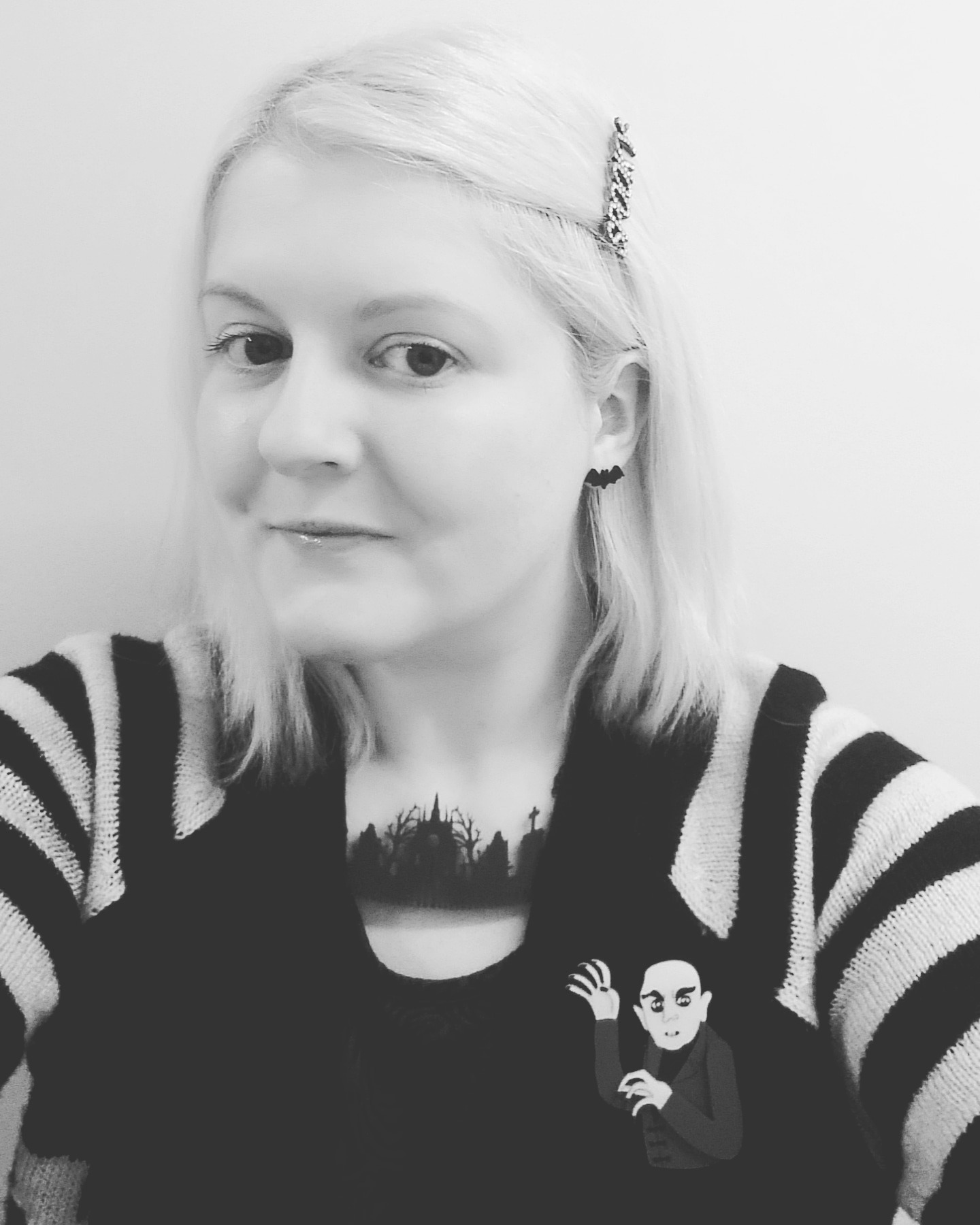
Of course I dressed up for the occasion, with my Halloween cardigan, Curiology Cemetery Necklace and La Vidriola Nosferatu brooch.
I visited the BFI Southbank to attend a panel discussion about 90s Kids’ TV shows. This is exactly my era so I was incredibly excited.
First of all we were treated to a montage of TV shows including Chucklevision, The Queen’s Nose, Art Attack, Power Rangers, Clarissa Explains It All, and many many more, including shows I know and those I wasn’t familiar with. Afterwards, there was a panel discussion featuring actor and writer Sir Tony Robinson, performer Francis Wright, and producer Catherine Robins.
Naturally enough, the discussion focused on the shows that the panel members were involved in. This began with Maid Marian and Her Merry Men (my personal favourite), and it was interesting to hear Sir Tony’s stories and anecdotes about the production of the series. I was particularly excited when Marian and Robin from the series, Kate Lonergan and Adam Morris, made an appearance and came up to the front to talk about their experiences. Another show we heard about was Five Children and It, as Francis Wright was responsible for operating the puppet Psammead.
It was interesting that all three panellists seemed to think the 90s were something of a golden age in childrens’ television: I’ve always thought so but I lived through it, I wondered if it was just nostalgia, but apparently not. It seems officials were more willing to take risks back then, and to educate as well as entertain.
I left the event with my only regret being that I chickened out of asking Kate and Adam for a picture.
I’ve had dinosaurs on the brain since going to see a 25th anniversary screening of Jurassic Park at the Prince Charles Cinema a few weeks ago, so was very happy to have the opportunity to check out an even earlier example of dinosaurs in cinema. The Lost World, based on the Arthur Conan Doyle novel and directed by Harry O. Hoyt, was made in 1925; once thought lost, it has now largely been recovered, and was shown at the BFI Southbank with an accompanying live piano score from Lucky Dog Picturehouse.
I absolutely loved this movie; the animation was incredibly impressive for the time and I particularly loved the section which saw the diplodocus rampaging through the streets of London. I believe it’s available on YouTube, and it’s well worth a watch.
I’d never been to a Secret Cinema event, although I’d heard of them. It was always at the back of my mind as something I’d like to do, but I never got around to it… until they announced Moulin Rouge! as the next film, at which point I knew I would just HAVE to go. This modern classic, released in 2001, happens to be one of my favourite films of all time.
I ended up going by myself – at first I was nervous at the prospect, until I reminded myself that I’ve been to plenty of immersive theatre alone in my time, and this probably wouldn’t be that different. As the day approached, I visited the website, filled in all the forms I needed to and gathered my outfit together. You are meant to register with the website once you’ve bought your ticket and you are allocated a character, complete with a backstory and outfit guidelines. My character was Nina Boucicault, a comedian. Here I hold my hands up and frankly admit I completely ignored my character’s suggested outfit. It involved trousers, but I haven’t worn trousers for years, and I wasn’t going to start now.
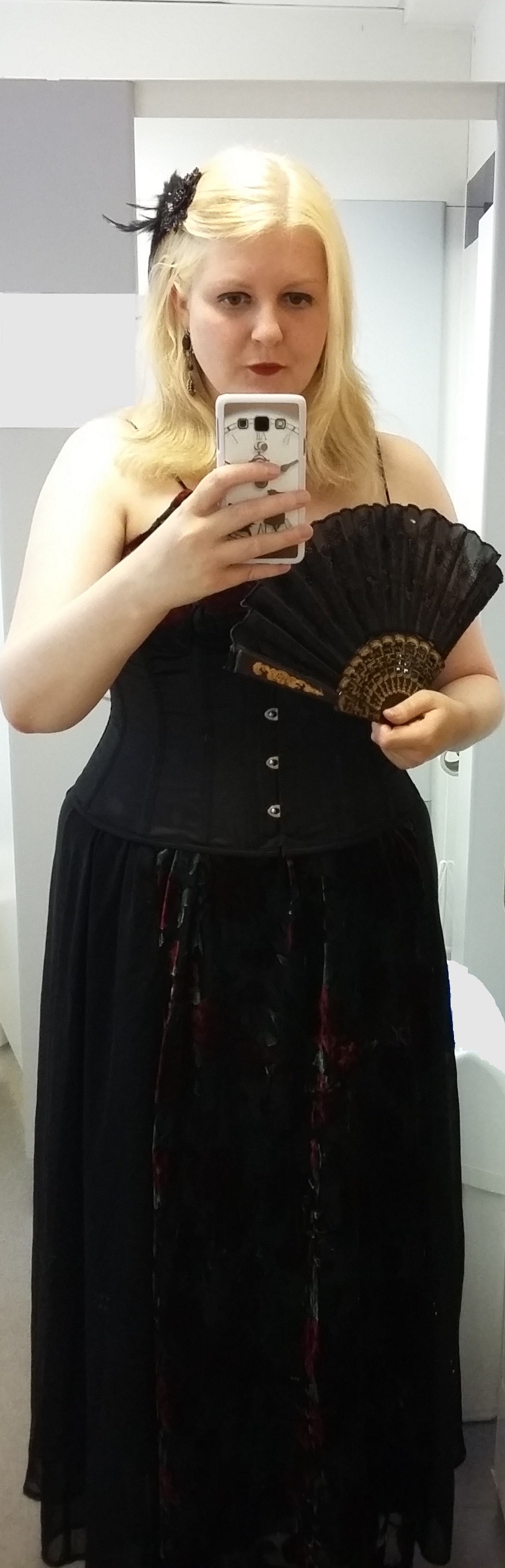
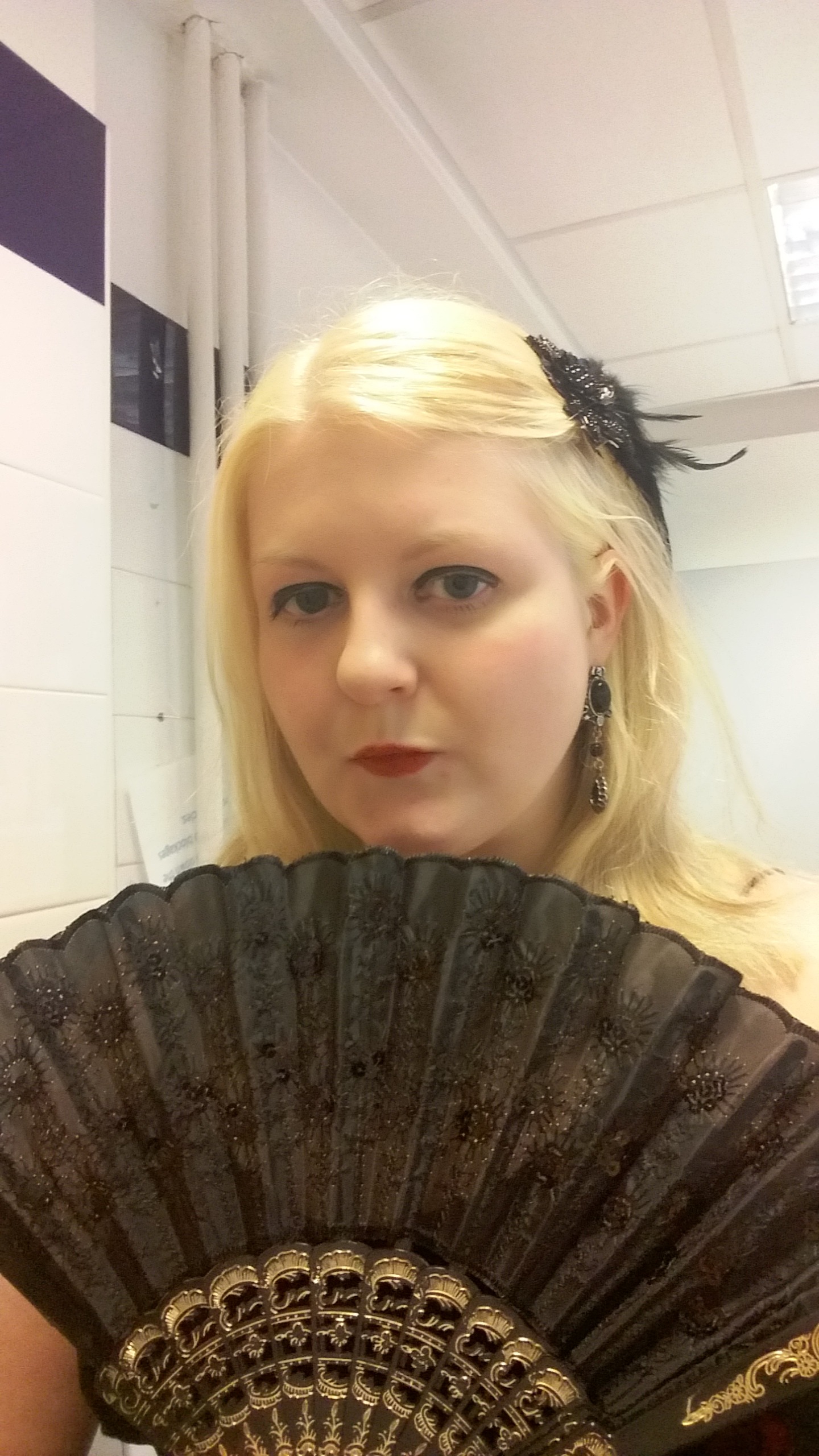
I don’t know what it says about me that I didn’t actually have to make any special purchases at all in order to dress up. I wore a dress I got from ASOS (mega sale bargain) a couple of years ago, with a corset over the top. I took a fan (that I think came from Accessorize) and wore my ‘She Walks In Beauty’ earrings from Alchemy Gothic.
I got changed in the toilets at work (classy) and then I had to get the tube to Canning Town station. Now I was a bit nervous about the prospect of having to get on the tube with all those commuters, but one of the reasons I love London is that no one pays any attention to you on the Underground (unless you’ve got a dog. Everyone loves dogs), so no one looked at me twice the whole way there. At the station, I began to see other people dressed in a similar way to me, so I knew I was in the right place.
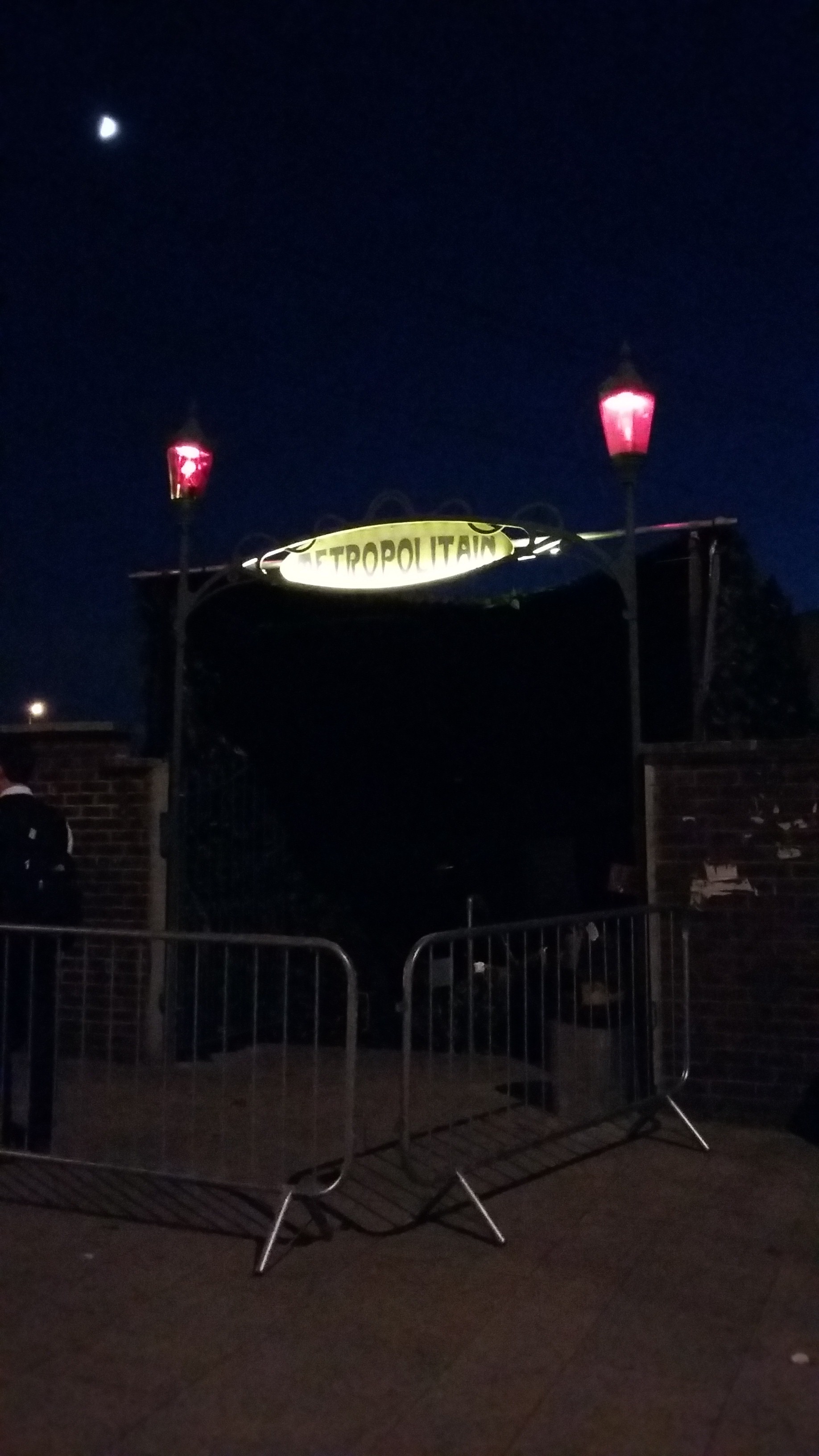
The venue was really close to the station. It was supposed to be top secret, but to be honest, any locals or anybody passing through would notice the queue of people building up at around 6pm. We didn’t have long to wait, we were soon invited to enter the world of the Moulin Rouge. No phones or photos allowed, naturally.
Wow. Inside it was incredible, like stepping into another world. There were bars and storefronts, cafes and stalls, all designed to draw you in to the fin de siècle world in which the film is set. Costumed actors added to the atmosphere, and sometimes it was hard to tell the actors from the ordinary ticket-holders. I only saw one person without costume, and I felt quite sorry for her as she really stood out!
Everyone was so friendly. I didn’t talk to many people – I didn’t need to – for most of the event, but I got chatting to people in the queue to get in and in the ladies’ loos, and I even danced with some people at one point. There’s something about immersing yourself in something like this that makes you forget yourself and act much more confident than usual – I guess that’s true for me, anyway.
I spent the time before the film started just wandering around, exploring as much as I could, and sampling the drinks on offer (which included absinthe). I also won a bet on some lesbian wrestling (don’t ask). There were performances and songs and I was almost sorry when it was time for the film to start.
Almost, that is. There was still loads going on while the film was showing, with actors performing key scenes in front of the screen. I never did see Moulin Rouge! at the cinema, as no one wanted to go with me and at sixteen I was much less inclined to do things by myself than I am now, so it was so good to actually see the movie on the big screen.
By the time it finished I didn’t want to leave. I’d had SUCH a good time and it was an unforgettable experience. I wonder what Secret Cinema will do next year?
As part of the London International Mime Festival I attended a screening of the 2010 documentary Puppet at the Barbican Cinema. Made by David Soll, the film followed the New York puppeteer Dan Hurlin as he worked on his production Disfarmer, based on the life of Depression-era photographer Mike Disfarmer. I thought it was fascinating, an intriguing glimpse into how an adult puppet show is made interspersed with the history of puppetry. As someone who loves this art form I found it fascinating.
Happy New Year! As I stumble through the beginning of another year, back in London, settling back into work in a luckily still-quiet office, I’m taking the opportunity to catch up on all those TV shows I missed over the Christmas period when I was busy reading, visiting family, and eating my own body weight in chocolate. Then I thought: why not write a post about all the Christmas television I enjoyed? Why not, indeed, so here it is. N.B. Most of these shows were on the BBC, mainly because I find the iPlayer so easy to use. Other channels are available.
Peter Pan Goes Wrong
I always feel a bit smug when I talk about Mischief Theatre, the company behind Peter Pan Goes Wrong, because as a theatre lover I was one of the first people among my friends and acquaintances to discover them and their brilliant début The Play That Goes Wrong. I’ve dragged friends along to both that and Peter Pan and they have all, without exception, loved them. This is their special filmed-for-TV version of Peter Pan Goes Wrong, featuring David Suchet. It isn’t as good as the live show, but it’s still laugh-until-you’re-on-the-floor hilarious.
The Witness for the Prosecution
Not quite as good as last year’s And Then There Were None (not entirely because of the absence of Aidan Turner), the 2016 Agatha Christie drama for the festive season was still an impressive offering. It may have been bleak, but it was gripping.
Inside No. 9: The Devil of Christmas
I love Steve Pemberton and Reece Shearsmith’s creepy and bizarre series and this Christmas special featured a folkloric figure that seems to have become more popular in the last couple of years – Krampus. Very funny as usual with a dark twist at the end, and gloriously filmed in a 70s style.
Life in the Snow
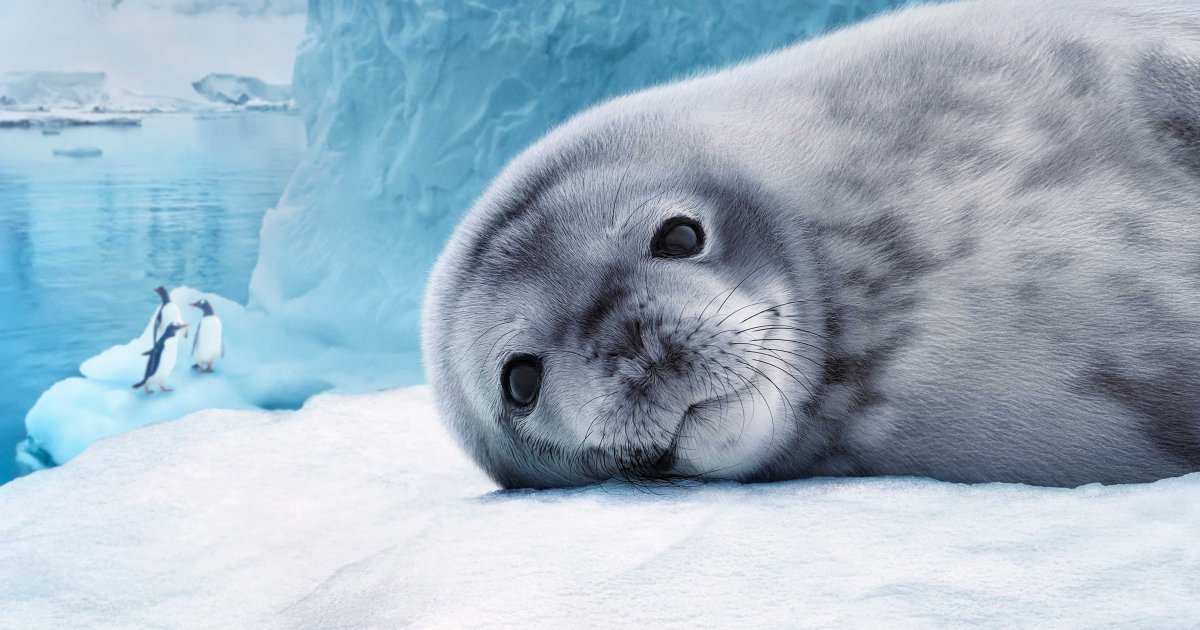
I have a bit of a thing about the Arctic/Antarctic so I really wanted to watch this documentary about animals who live in the snow. Obviously I loved the penguins the most, but the owls and the Arctic foxes were incredibly adorable too.
Red Bull Soapbox Race
A bit of a departure from what I usually watch, but my dad loves this show and binged on it over the festive period, and I grew addicted to it too. It’s on Dave, a channel which I wouldn’t normally watch (I don’t even know if we have it in our house in London) but I’ve just discovered Red Bull have their own TV channel so I can watch it online! Hooray! Basically, the show involves ordinary people – some with specialist knowledge, others with none at all – building soapbox cars and racing them. They decorate them in elaborate fashion and perform pre-race sketches. Sometimes these homemade cars do pretty well and fly down the course, other times they fall apart mid-race or crash dramatically into the side partway through. I’m really not a sport or racing person at all but this is just so funny. Races take place all over the world and it’s coming back to London this summer – I’m so tempted to get a ticket and see it “live”.
I’m not too gutted about the end of the festive TV season, because January means a new series of Great British Railway Journeys. Woo hoo!