Rebel Badge Club: Dancer

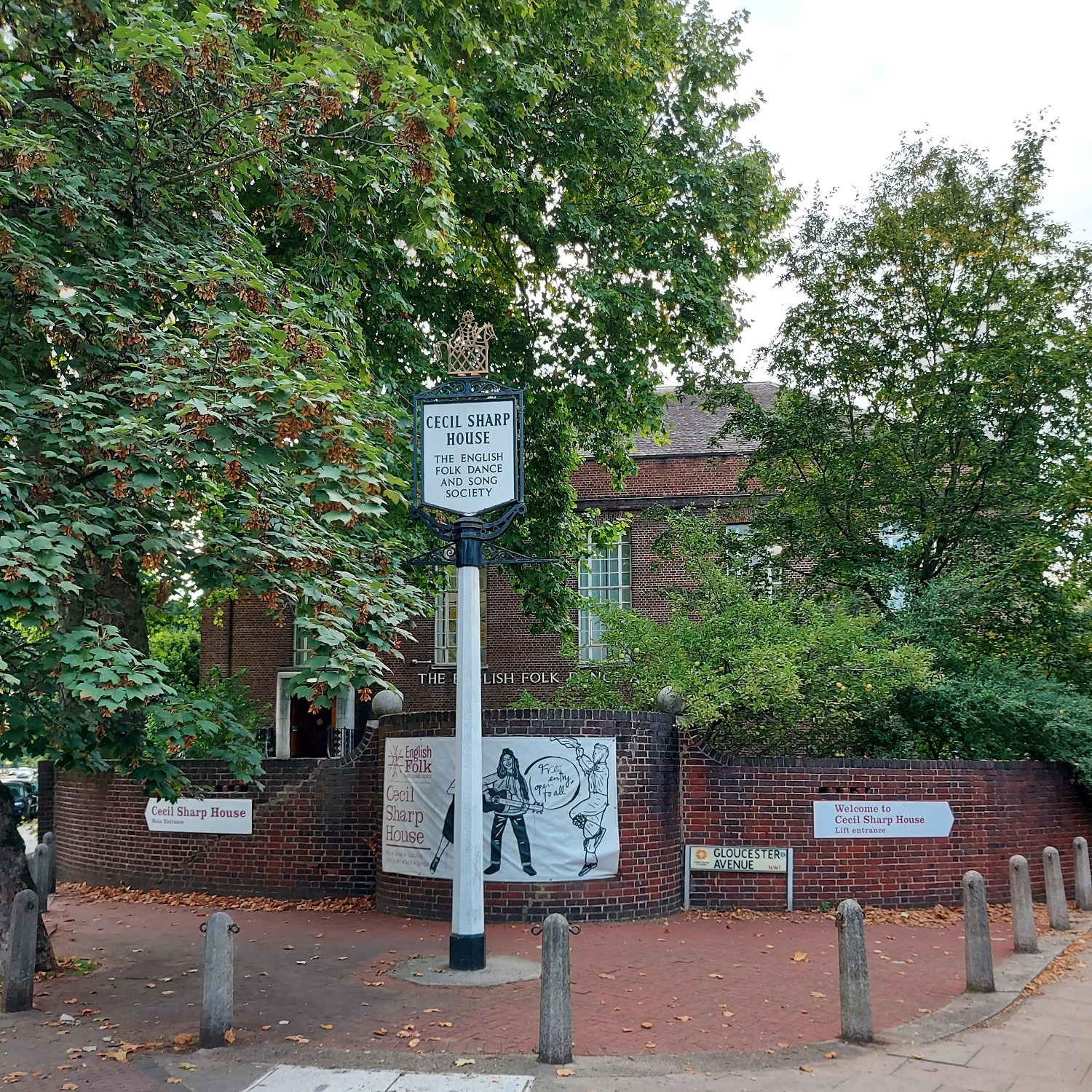
Cecil Sharp House
Cecil Sharp House in Camden, where I took a clog dancing class

One of the clauses for the Carpe Diem challenge was to choose a badge that scares you or that you’ve been putting off. The Dancer badge definitely fell into this category for me, although strangely – with one notable exception – I ended up loving it!

Choose one dance form, and spend at least three months practising it regularly.

So I actually chose burlesque for this clause! Anyone who knows me will probably be like, “WTF”, but I love the history, the theatricality, the costumes and the vintage associations. I’m not planning on going on stage any time soon, but I’ve enjoyed the classes I’ve found on YouTube – shoutout to Vera Valentinaa whose channel is great for short burlesque tutorials which are beginner-friendly. I found the classes great for balance, poise and confidence, and this dance form is surprisingly demanding – I definitely feel I’ve developed strength over the last three months.

Research the history of this dance form, and create a scrapbook with the information you’ve discovered.

My scrapbook is here – I had lots of fun making this!

Choose three countries, and learn about their traditional national dances. What outfits do people wear, and why?

I learned about the Hopak of Ukraine, the Bharatanatyam of India and the Adowa of Ghana. I created a document with what I found out.

Attend at least three different dance classes.

I booked three separate dance classes in London. The first was a taster ballet class booked via Dance Buzz, held in central London. It was super tough but I really enjoyed it. You can do beginner courses over a number of weeks and I would seriously consider signing up for one.

The second class was a swing dance class courtesy of Swing Patrol. Funnily enough I’d actually fancied doing this for a while – as with burlesque, mainly because of the cool vintage costumes (see a theme here?). However, when I was actually doing the class, I hated every minute. I struggled to pick up the initial steps, so when the time came to practice with a partner I was pretty much making it up as I went along. I haven’t felt so embarrassed and awkward in a long time, and frankly if I could have escaped halfway through the class I would have done – but silly me had positioned myself at the other side of the room to the door.

I should stress that everyone there was lovely, and no one made me feel stupid for being a bad dancer – I did that all by myself! I guess dancing with a partner isn’t for me (metaphor for my life)?

For my third class I went along to Cecil Sharp House in Camden – home of the English Folk Dance & Song Society – and took part in a clog dancing class. This was great fun and I enjoyed myself much more than I did at swing dancing. The teacher even told me that I had good rhythm!

Learn and perform at least three dances of at least three minutes each.

To fulfil this clause I took the opportunity to learn some absolute classics by Steps that I never got round to learning properly as a kid (YouTube wasn’t a thing then). You may laugh, but knowing the moves to 5, 6, 7, 8, One For Sorrow, and Tragedy is no mean feat.

Date completed: 30 September 2022

Rebel Badge Club: Food Bank Challenge

food bank challenge badge

The September challenge for Rebel Badge Club was the Food Bank Challenge – sadly, so many people are facing food poverty this winter so the challenge was incredibly timely.

For this challenge, you needed to complete eight out of a possible sixteen clauses. I chose the following clauses – here’s how I got on.

Find out where your local food bank is, and how you can help them – are they looking for specific produce at the moment? Volunteers, etc.?

My local food bank has a number of sites around Ealing. At the moment their most needed items are rice, tinned fish, UHT milk (semi-skimmed and whole) and fruit squash. The volunteer opportunities require the ability to drive or be available Monday to Friday, when I am at work, however I can still help by donating food or money.

Choose a set budget, e.g. £1, £2 – and find three recipes you can make with that amount of money.

I found this clause pretty straightforward, mainly thanks to Jack Monroe’s recipes and tips which I’ve used for years. My chosen recipes are as follows, each costing under £1 per portion (I use Tesco value rice and pasta which are 45p and 35p per bag respectively):

  • Rice, lentils & onions (serves 1): boil 75g of rice (10p) and 25g of red lentils (20p). Meanwhile, chop an onion (12p) and fry in a little oil (2p) on a low heat. Once ready, drain the rice and lentils and add to a bowl. Top with the caramelised onions. Multiply quantities to serve multiple people. 42p per portion
  • Cannellini bean pasta (serves 2): gently fry a chopped onion (12p) in a little oil (2p) on a medium heat. Once the onions have browned, add a drained tin of cannellini beans (65p) and cook slowly, breaking up the beans. Add a little salt and pepper, and a teaspoon of paprika (5p). Meanwhile, boil 150g of pasta (15p). Once cooked, drain, and mix into the bean and onion mixture. Serve. 49p per portion
  • Mushroom pasta (serves 2): gently fry a chopped onion (12p) in a little oil (2p) on a medium heat. Once the onions have browned, add a pack of sliced mushrooms (£1) and fry until browned. Meanwhile, boil 150g of pasta (15p). Add half a packet of Philadelphia or the supermarket own-brand version to the onions & mushrooms (50p) – use a non-standard variety such as garlic & herb for a more exciting meal. Cook slowly to melt the Philadelphia into a sauce. Drain the pasta, add to the Philadelphia mixture, stir and serve. 90p per portion

Find out which non-food items you can donate to your local food bank.

Toiletries such as deodorant and toothpaste, household items like laundry detergent, period products like sanitary towels and tampons, baby supplies such as nappies and baby wipes, and face masks and hand sanitiser all come in handy.

Learn about online food donation, and food waste apps.

Apart from donating money to foodbanks, you can donate when online grocery shopping, which is good to know. I’ve heard about food waste apps, but never used them – this article from The Independent is a really good round-up of the best on offer.

Learn about how your local food bank is funded and who can access it. Is it an independent bank or part of a national scheme?

Ealing Foodbank is part of the Trussell Trust’s network, probably the most famous foodbank-related charity in the UK. In Ealing the foodbank is managed by local churches and community groups.

To receive a food parcel, you need to get a voucher from an organisation like Citizens Advice or a local support agency.

Find out about other parallel schemes in your area – for example baby essentials banks, period poverty schemes and school uniform funds.

The Ealing Salvation Army runs a Baby Bank every Tuesday, providing second-hand baby clothes and equipment. I couldn’t find anything about a period poverty scheme beyond the general schools initiative, or help for school uniforms beyond the requirement for schools to make second-hand uniforms available to buy.

Research ways that you can preserve food for longer in your kitchen. Try one!

I found this article useful as a general guide to keeping food fresher for longer. My mam is always telling me to prevent salad from going soggy by adding a piece of kitchen roll inside the bag to soak up excess moisture. This clause was the push I needed to actually try it, and it works!

Donate a basket of food to your local food bank, community fridge or local supermarket drop-off point.

My supermarket makes this so easy by having a drop-off point just after the checkout – I need to do this more often.

Rebel Badge Club: Water Sports

If you had told me at the start of my Rebel Badge Club journey that I would not only begin, but complete, my Water Sports badge, I would have laughed in your face. And yet here we are! Once I realised Explorer was going to take me much longer than three months, I looked into the other Wild badges and realised that this one was within my grasp. To complete the badge, I had to choose 5 different water sports from a given list to take part in. I avoided the ones that obviously involve going underwater (e.g. scuba diving) and looked into some above-the-surface options.

Wakeboarding – The first sport I took part in was wakeboarding – talk about being thrown in at the deep end! I signed up for a session at Wakeup Docklands. The instructor was great and it was a welcoming place to be but I just could not get the hang of it at all and faceplanted into the water numerous times! Still, at least I tried, I suppose. One thing I learned is that, while falling into the water is never pleasant, it is a much better experience doing it in open water rather than a chlorine-infused swimming pool.

Kayaking – I signed up for an introductory session at the Lee Valley White Water Centre. I actually loved this activity – I found it quite relaxing and was able to get the hang of propelling myself along. I would definitely consider doing this more regularly – plus it’s a great workout for the arms!

Paddleboarding – I attended a paddleboarding session just after my kayaking one. I found it fairly tricky to keep my balance and very tough on my legs, as I spent most of the session on my knees, being too wary to actually stand up. After my kayaking session, I found that trying to paddleboard with a one-ended paddle was tricky and kept going around in circles, plus I managed to hit myself on the head with my own paddle at one point (luckily I was wearing a helmet!). I would give paddleboarding another go, and try to stand up this time!

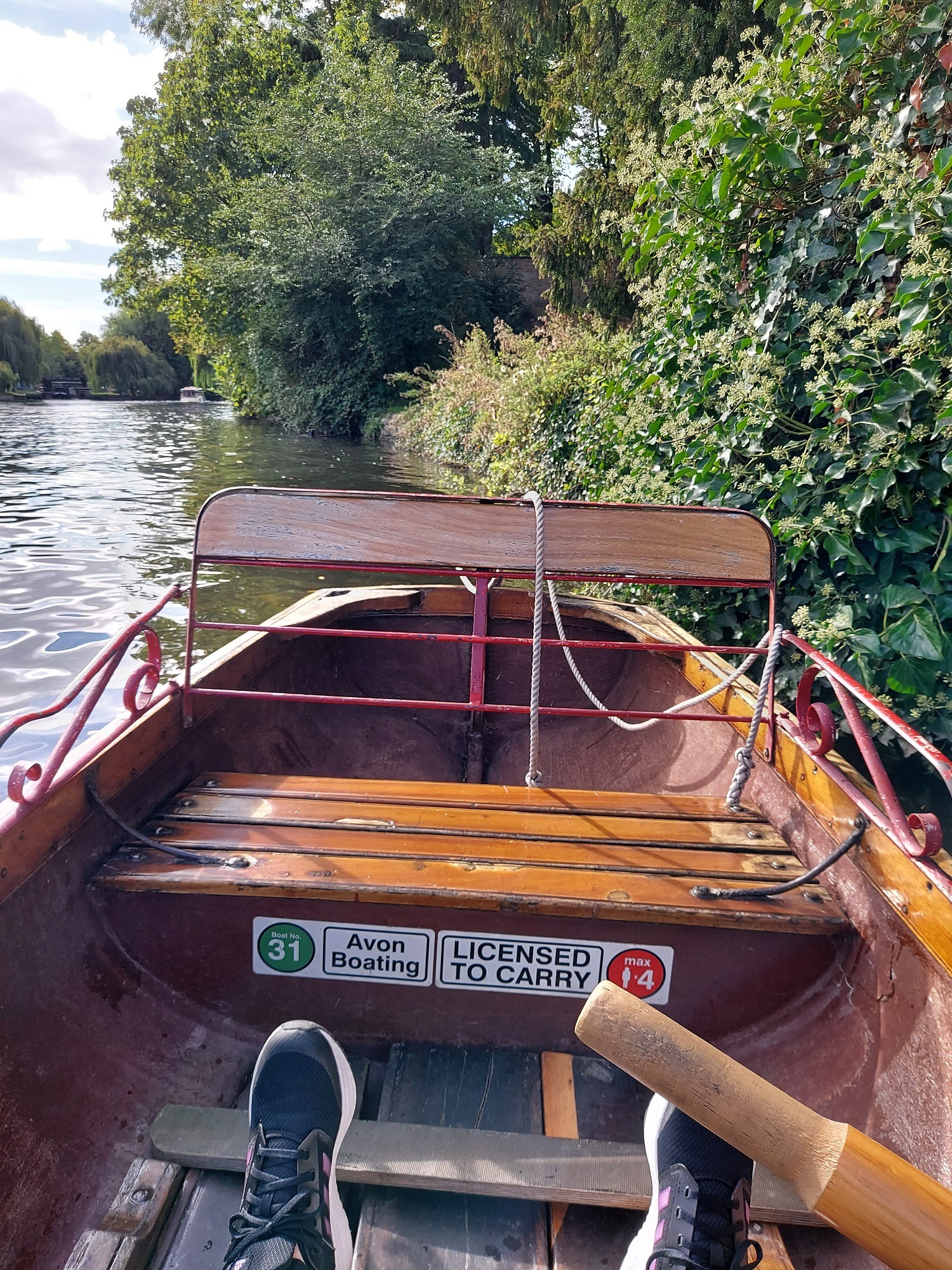
Rowing – I visit Stratford-upon-Avon quite a lot to go to the theatre. I’ve often seen hired boats sailing down the river but it had never occurred to me that I could do this myself. On my latest trip I decided to hire a rowing boat, my head filled with romantic ideas about the Famous Five and Swallows and Amazons. Well, I don’t suppose Julian, George et al had to contend with the entire Stratford Rowing Club getting in the way. I found the rowing itself doable (though it definitely made my arms ache after a while) but steering was another matter – particularly as you of course face backwards as you row. I got all the way to the Holy Trinity Church (where Shakespeare is buried) and then made my way back, where my skills had improved to the point I sailed right under the arch of the bridge and got a compliment from the man from the boat club as I came in to land.

White water rafting – To complete my badge I went back to the Lee Valley White Water Centre, where I’d signed up for a white water rafting session. Before we even got onto the raft, we had to do a “swim test” where you jump into the water, let yourself be carried over one of the smaller rapids, and swim to the side. Or else, in my case, be unable to reach the side (that dratted current again) and have to be thrown a rope.

Once in the raft, let’s just say I did not have an enjoyable time. If I’d been on a theme park ride where you’re strapped in I reckon I would have enjoyed myself – as it was I was constantly worried about falling in, not helped by our guide’s remarks about how to manoeuvre yourself if you end up under the raft. I was rather relieved by the end!

I have to say I’m pretty chuffed that I manage to complete this badge. Next year I’d like to have a go at some of the other things on the list – sailing, and a water-based inflatable obstacle course.

Date completed: 25 September 2022

Rebel Badge Club: Codebreaker

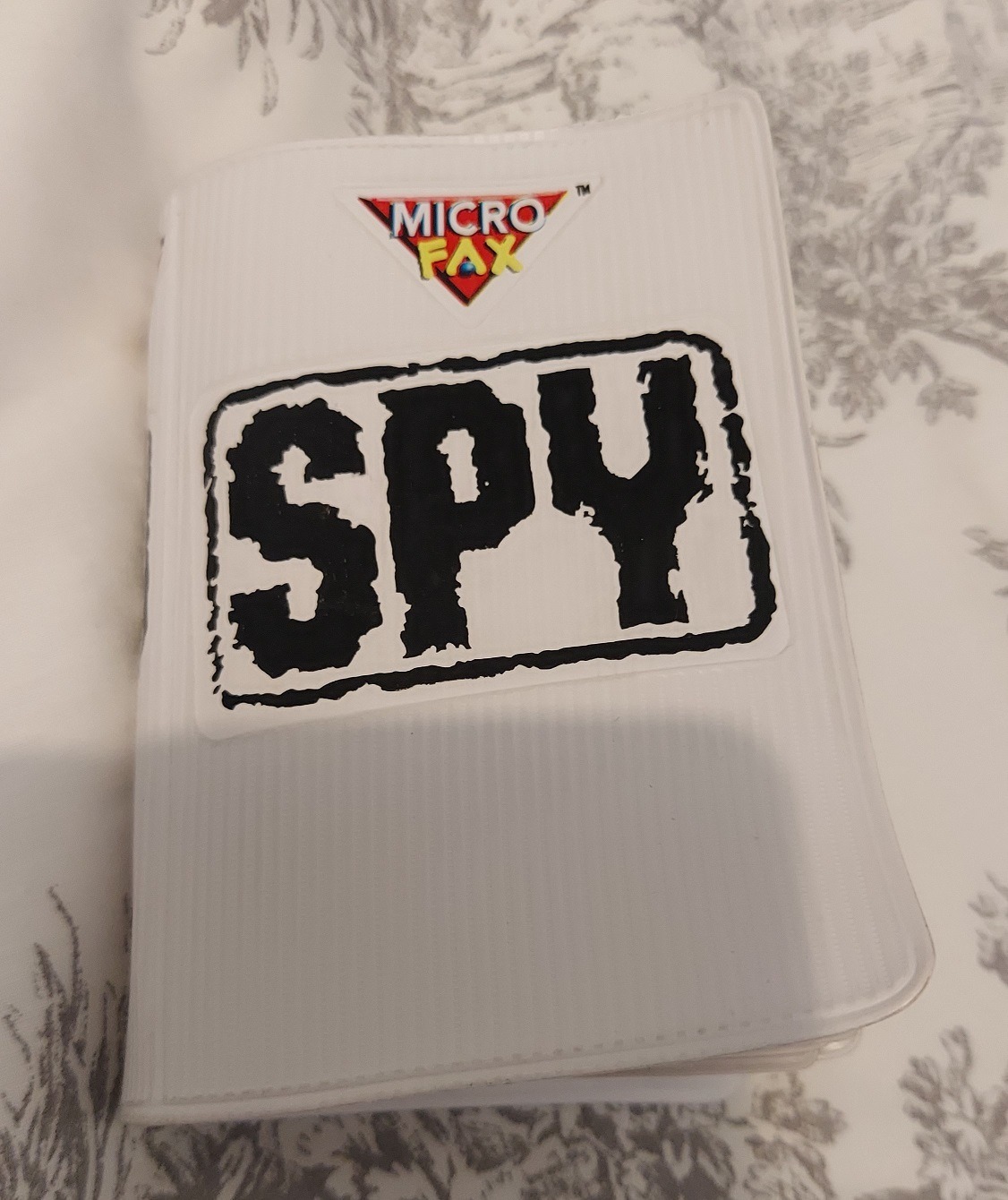
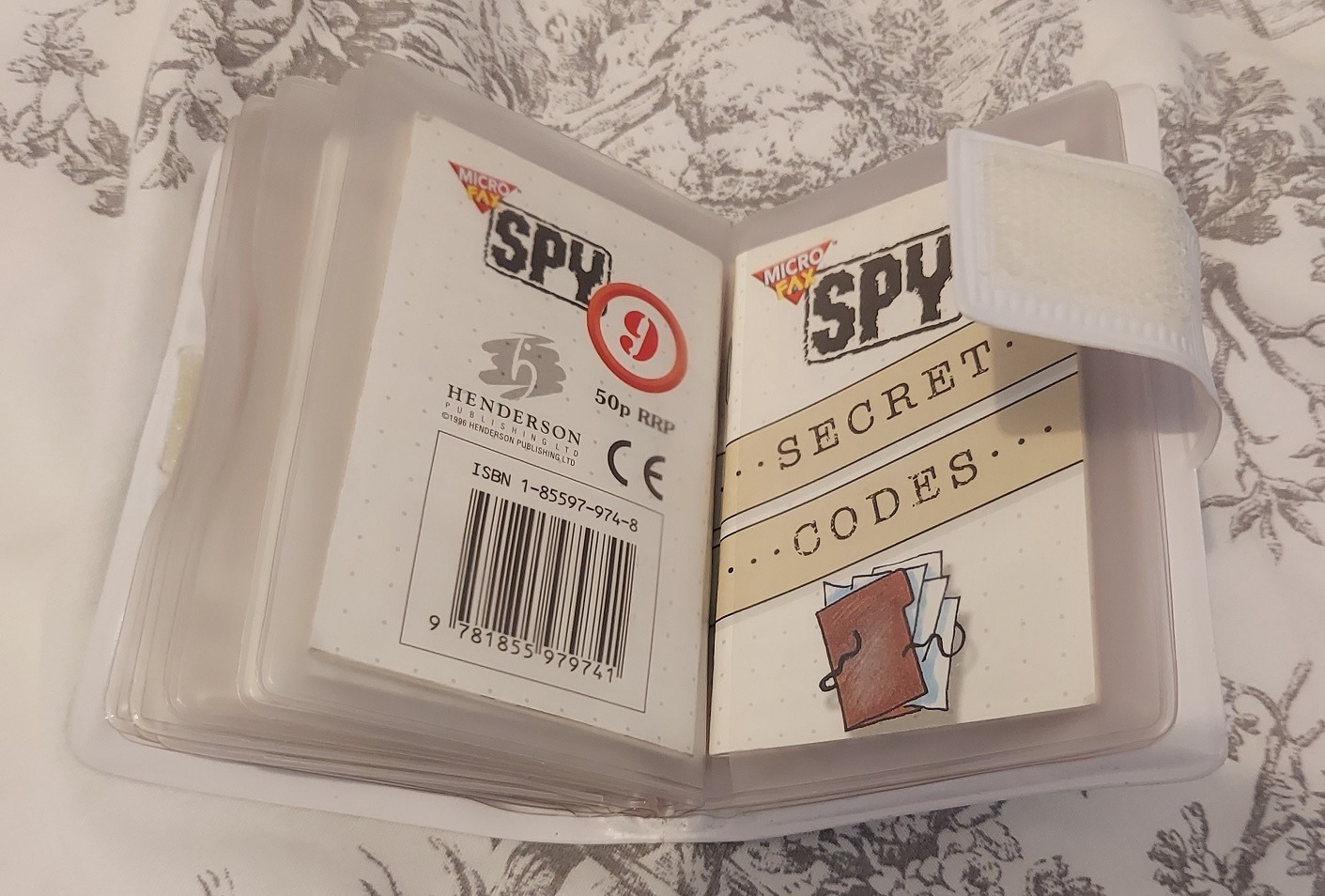
When I started the Carpe Diem challenge and needed to pick two Wild badges to work on, I knew that Codebreaker was going to be one of them. I was that kid who loved anything to do with detecting and secret societies – I even had a Micro Fax with all but one of the little books that fit inside. I was looking forward to this badge so much that I decided I wanted to do all of the clauses, not just 5 out of a possible 10.

(Note – I did backdate some of the clauses, and only partially completed others, but I still completed enough of them during this three month period to qualify for the badge).

Learn Morse Code or Semaphore.

I decided to learn Morse Code as it’s something I’ve always been interested in. I found the website MorseFree very helpful as it works through groups of letters in stages, so you master one lot before moving on to the next.

Learn the phonetic alphabet.

I did this a few years ago when I was working at a call centre but I decided to refresh my memory. I was surprised at how quickly I remembered all the different letter codes!

Over a period of up to three months, visit at least three different themed escape rooms.

Escape rooms have been around for a while and I’ve always been curious about them, but this badge gave me the push I needed to try one out for real, after giving an online escape room (Mr X: The Online Treasure Hunt from Escape Rooms Durham) a try during lockdown. Along with a friend I booked the Plague escape room at Escape Key Newcastle, which was brilliant and I highly recommend it. We made it out of the room with thirty seconds to spare!

I didn’t get a chance to visit more than one escape room over the three months, but I definitely plan to check out more in the future!

Research the following ciphers: classic substitution, Caesar cipher, homophonic substitution, Vigenère cipher, book cipher, Playfair cipher, ADFGVX cipher, Enigma cipher

I had fun researching all of these ciphers and discovering the different ways ciphers have developed throughout history. I won’t write down everything I learned here, but I made notes for myself.

Learn three practical ways to hide a message.

This clause took me back to my childhood and reminded me of some of my favourite Enid Blyton books! Some ways to hide a message include using invisible ink, using constrained writing (e.g. acrostics or intentional spelling mistakes), and hiding messages within digital photographs.

Make a code wheel.

I definitely made a code wheel as a child from some spy kit or other. I wish I’d kept it. Never mind, I found a template online and made a new one.

Either take part in a treasure hunt, or set one for other people.

Again, this brought back memories as I used to make a lot of treasure hunts as a child! I actually made one a few years ago for my parents – I’d bought them concert tickets as a joint 60th birthday present; I hid them in a drawer and created a treasure hunt around the house to lead my parents to the tickets. I spent a tense few months, after setting up the hunt at Christmas and going back to London, hoping that they wouldn’t accidentally move anything around before spring!

Learn about the history of codebreaking, and if possible visit a museum related to codebreaking.

A couple of years ago I visited an exhibition at the Science Museum called Top Secret: From Ciphers To Cyber Security. I’ve also visited Bletchley Park in the past, as well as the Imperial War Museum.

To complete this clause, I took a free Introduction to Encryption and Cryptography course on FutureLearn. I also read The Code Book by Simon Singh, which was fascinating, especially the stuff on Beale ciphers.

If you were to create your own escape room, what theme would you choose? What kinds of activities would you include in it? Plan at least 3 puzzles.

As a former librarian, of course I had to create a library-themed escape room. Check it out here!

Read a “choose your own adventure” book or complete a puzzle book or puzzle game.

Like pretty much everyone else in Rebel Badge Club doing the Codebreaker badge, I chose Being Elizabeth Bennet for this clause. It was great fun, and I eventually managed to marry Mr Darcy after several detours, including breaking my neck on some ice, marrying Mr Whickham and living in penury, and being shot dead by Lady Catherine de Bourgh.

I also picked up some other books in this style via Kindle Unlimited, including zombie and pirate adventures by James Schannep, and fantasy novels by Daniel Heck. I also want to mention Ryan North’s To Be Or Not To Be and Romeo And/Or Juliet, choose-your-own-adventure books based on Hamlet and Romeo and Juliet respectively, which I read a few years ago and which are great fun.

Date completed: 22 September 2022

Royal Gunpowder Mills

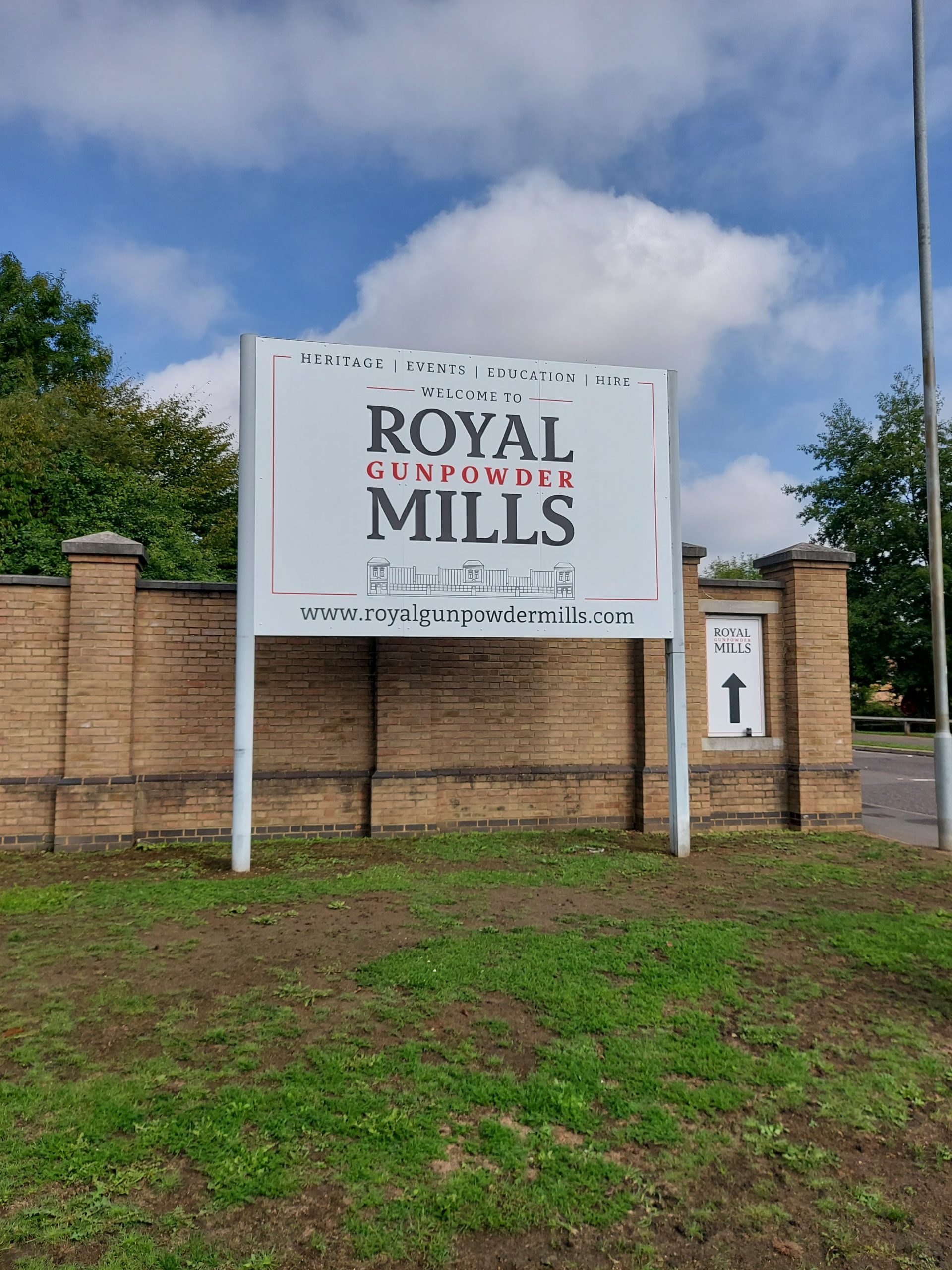
Sign to Royal Gunpowder Mills

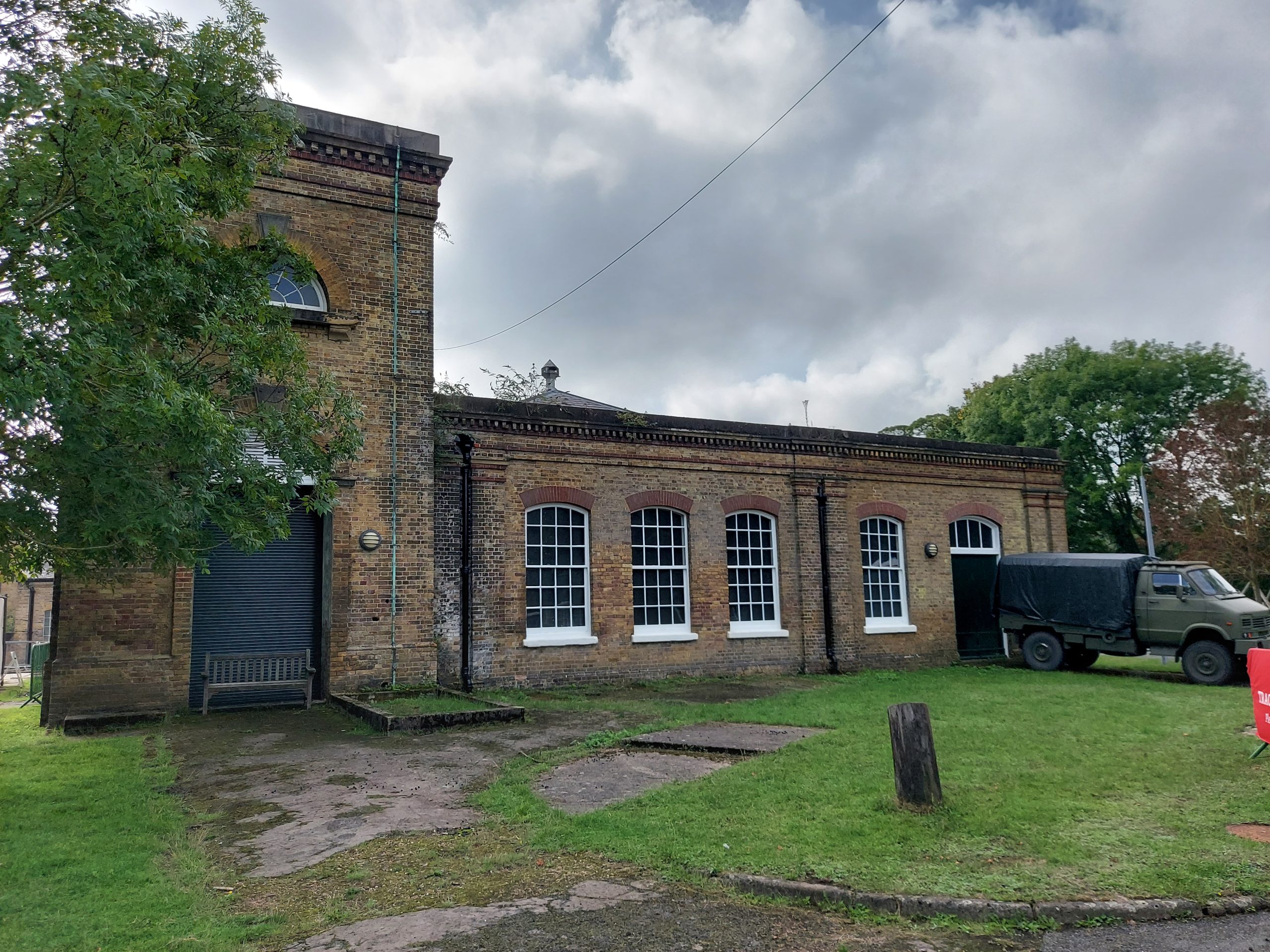
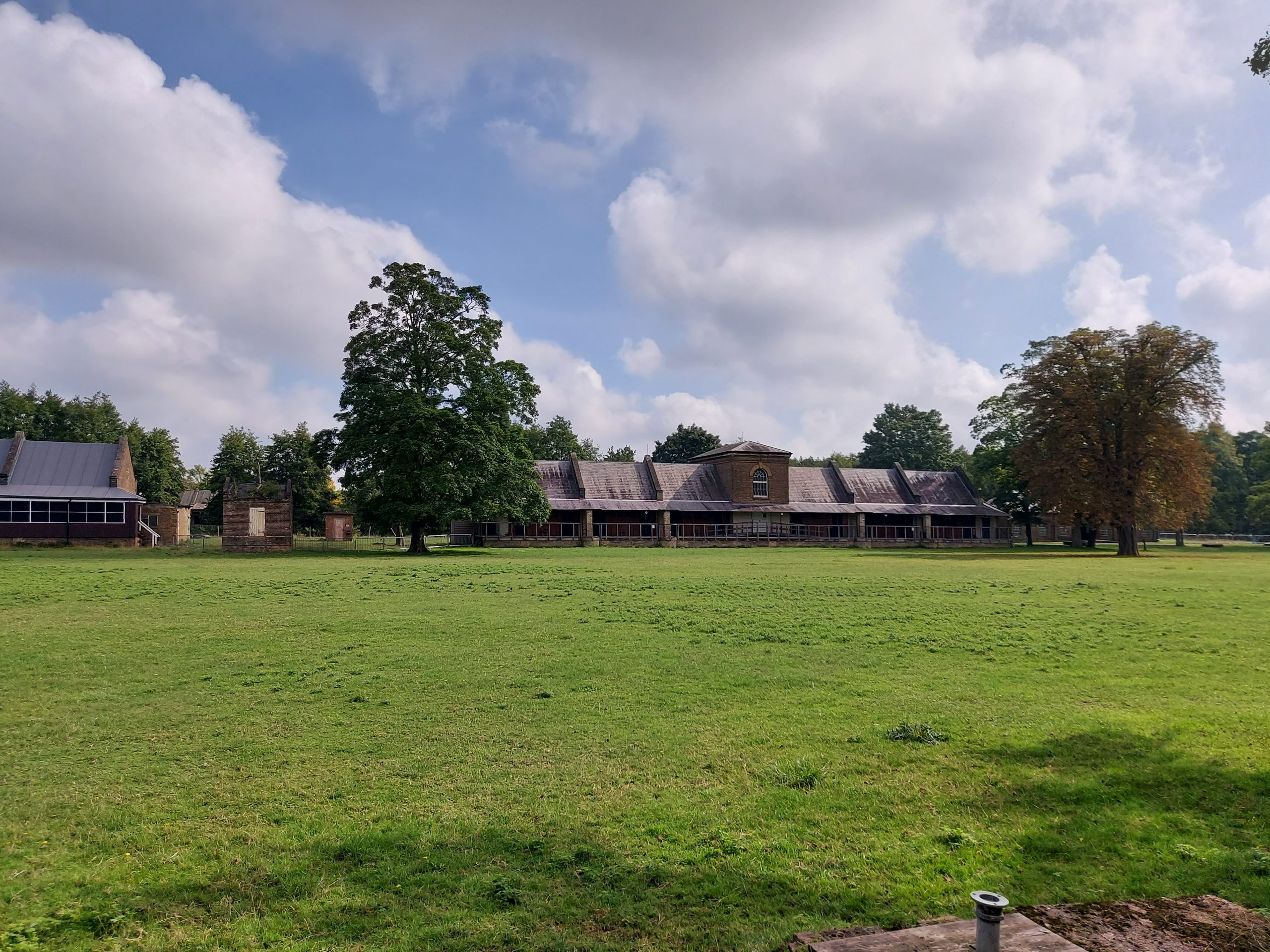
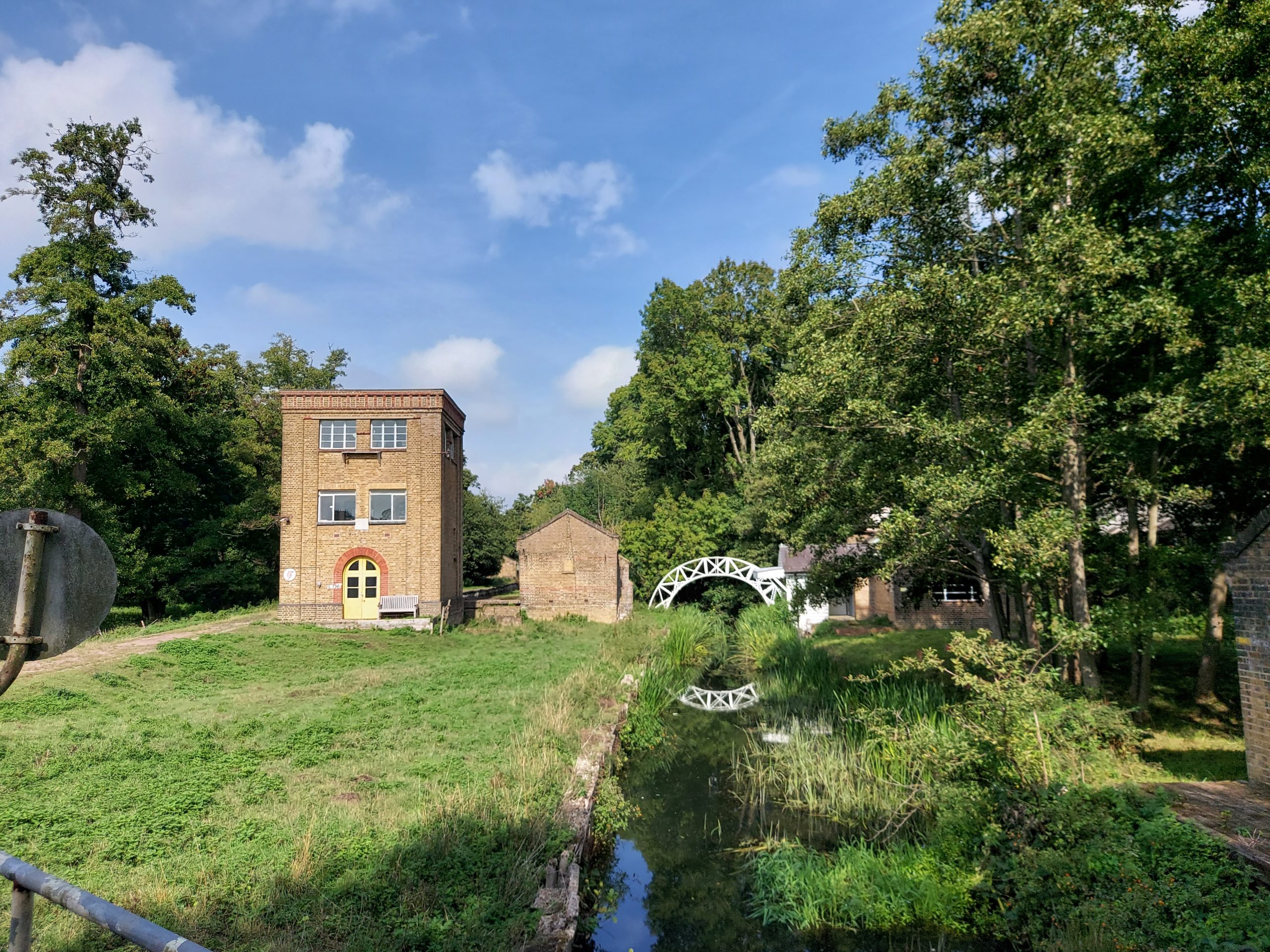
I spent the weekend in the Lee Valley and took some time to visit the Royal Gunpowder Mills. These are located not far from Waltham Cross, and are found at the end of a pleasant walk up a quiet road.

The mills played an important part in military history and national defence over centuries. The site was originally used as a fulling mill for cloth production, but was converted to gunpowder production at some point during the seventeenth century. The gunpowder produced at the mills was known for its reliability and high quality.

Royal Gunpowder Mills

Demand surged during the First World War, and women were employed to replace men who had gone off to war. During the inter-war years, production was gradually moved off-site, with the mills finally closing in 1943. However, the site reopened in 1945 as a research centre, before closing for good in 1991.

My visit began with a tractor tour, which are offered to visitors in order to see the whole site, much of which is out of bounds to those on foot because of safety (I should say here that you ride in a trailer, not on the tractor itself!). On the tour, which took around half an hour, passengers are treated to a commentary on what can be seen and the history behind the site. We also saw a deer hiding in one of the derelict buildings.

One of the blocks of the Royal Gunpowder Mills

After the tour, I wandered round the main visitor area of the site, looking at some smaller exhibitions including one about rockets and another about accidents that occurred at the mills and how these were investigated. Finally, I went inside the main exhibition building to check out a display on the history of gunpowder and more information about the mills.

I can’t pretend that military history is a subject that fascinates me, but I really enjoyed my visit to the Royal Gunpowder Mills, and I’d definitely recommend it. If you have kids, they can enjoy live science shows and a play area. There is also a cafe on-site.

Royal Gunpowder Mills

FACTS

Address: Beaulieu Drive, Waltham Abbey, EN9 1JY

Website: royalgunpowdermills.com

Opening Hours: 11am-4.30pm on Sundays during the summer months

Price: £10 adults, £8 concessions

Epping Forest District Museum

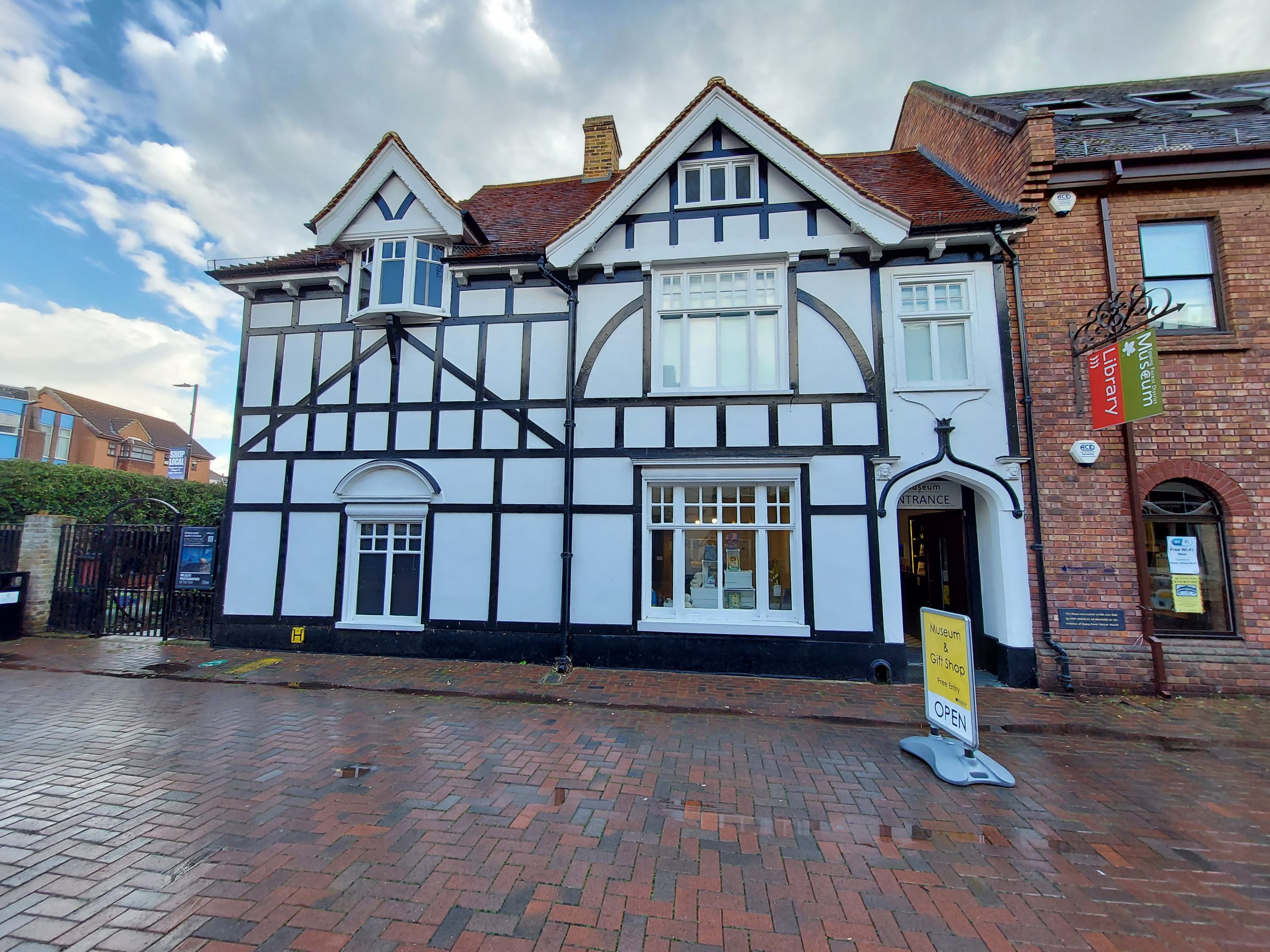
A black and white Tudor building

During my weekend in the Lea Valley, I ended up in Waltham Cross and, as well as exploring the grounds of the ancient Waltham Abbey, paid a visit to the Epping Forest District Museum. The museum tells the story of the people and events that shaped the local area, and is based in a 2* listed Tudor building.

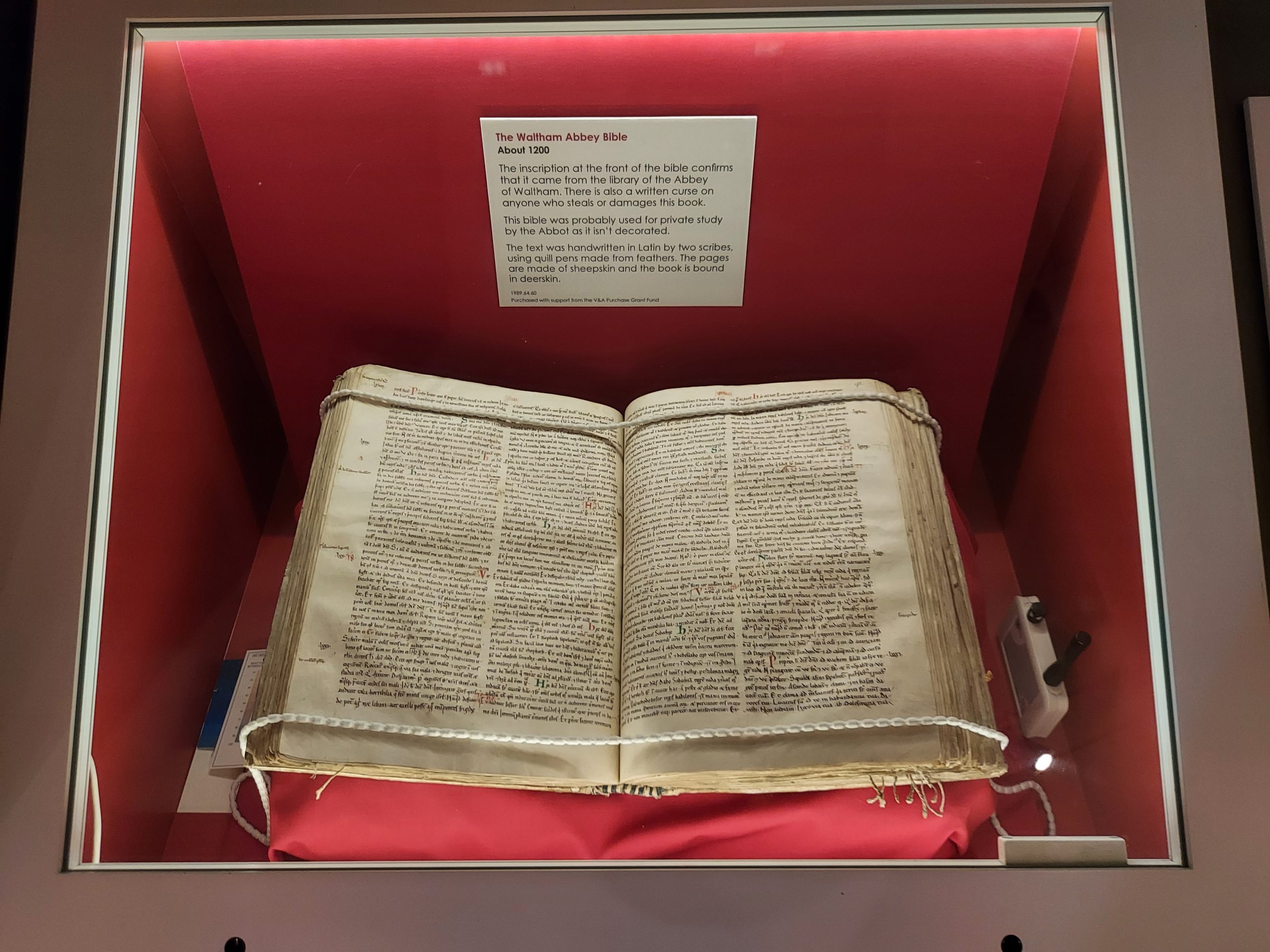
The small museum manages to pack a lot in. It features a treasures room including original wooden Tudor panelling and the Waltham Abbey Bible, dating from approximately 1200. A pattern made of pins in the wooden fire surround is a poignant reminder of the people who once lived here.

An historic book inside a glass case

Upstairs, a room features toys and other items used by people from the area over the years, mainly the 20th century. Another gallery includes archaeological finds, some discovered when excavating the nearby abbey. There are also collections of interesting items formerly owned by local people including some rather amusing teapots.

Finally, a room at the top of the museum focuses on local firms and celebrities.

The Epping Forest District Museum is a lovely little museum that is well worth visiting if you are in the area.

FACTS

Address: 39-41 Sun Street, Waltham Abbey, EN9 1EL

Website: eppingforestdc.gov.uk/museum

Opening Hours: Mon-Wed and Fri-Sat 10am-4pm

Price: Free

August Bank Holiday in Whitby

On the August Bank Holiday Monday I headed to Whitby with my mam for a couple of nights. I’d been once before, for a couple of hours, but that was years ago and I hadn’t really explored properly.

View over Whitby looking towards the Abbey

We arrived around lunchtime, and unfortunately it had started to rain. So we went into the cafe beside the train station for lunch. Afterwards we had a quick look round the shops before heading up the hill to our B&B. We stayed at the Chiltern Guest House, which was really nice, and the lady who runs it was lovely and helpful. We opted not to have breakfast there, as we know from experience that if we eat massive breakfasts we just want to lie down for the rest of the day, and we wanted to make sure we had the energy to explore!

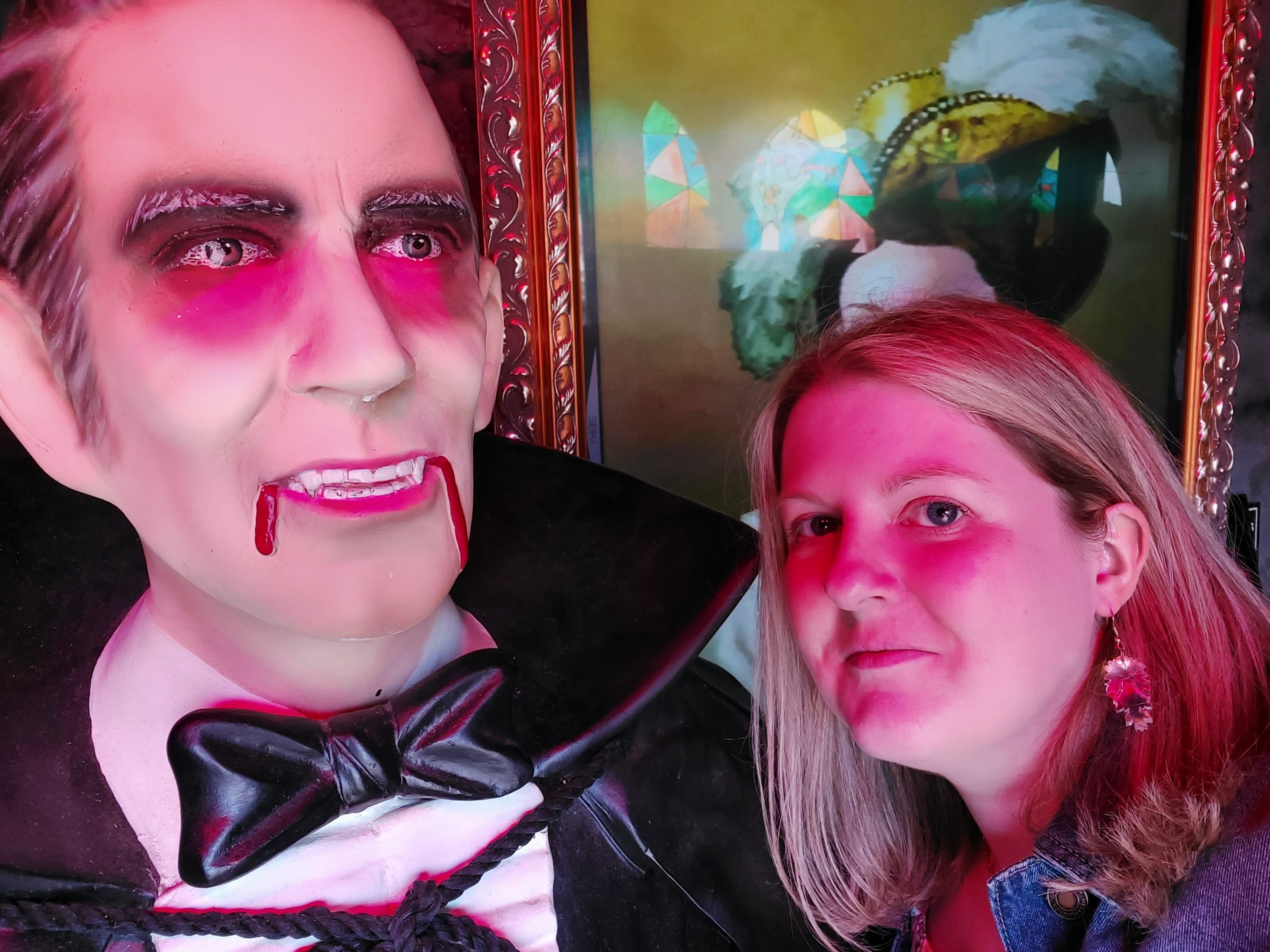
Dracula and I

We spent the rest of the day wandering around the shops by the waterfront, and went for tea in the Magpie Cafe. Afterwards we went for a couple of drinks but we were so tired we were back in the hotel and in bed pretty early. Not even the ridiculously loud coughing coming from someone nearby could keep us awake.

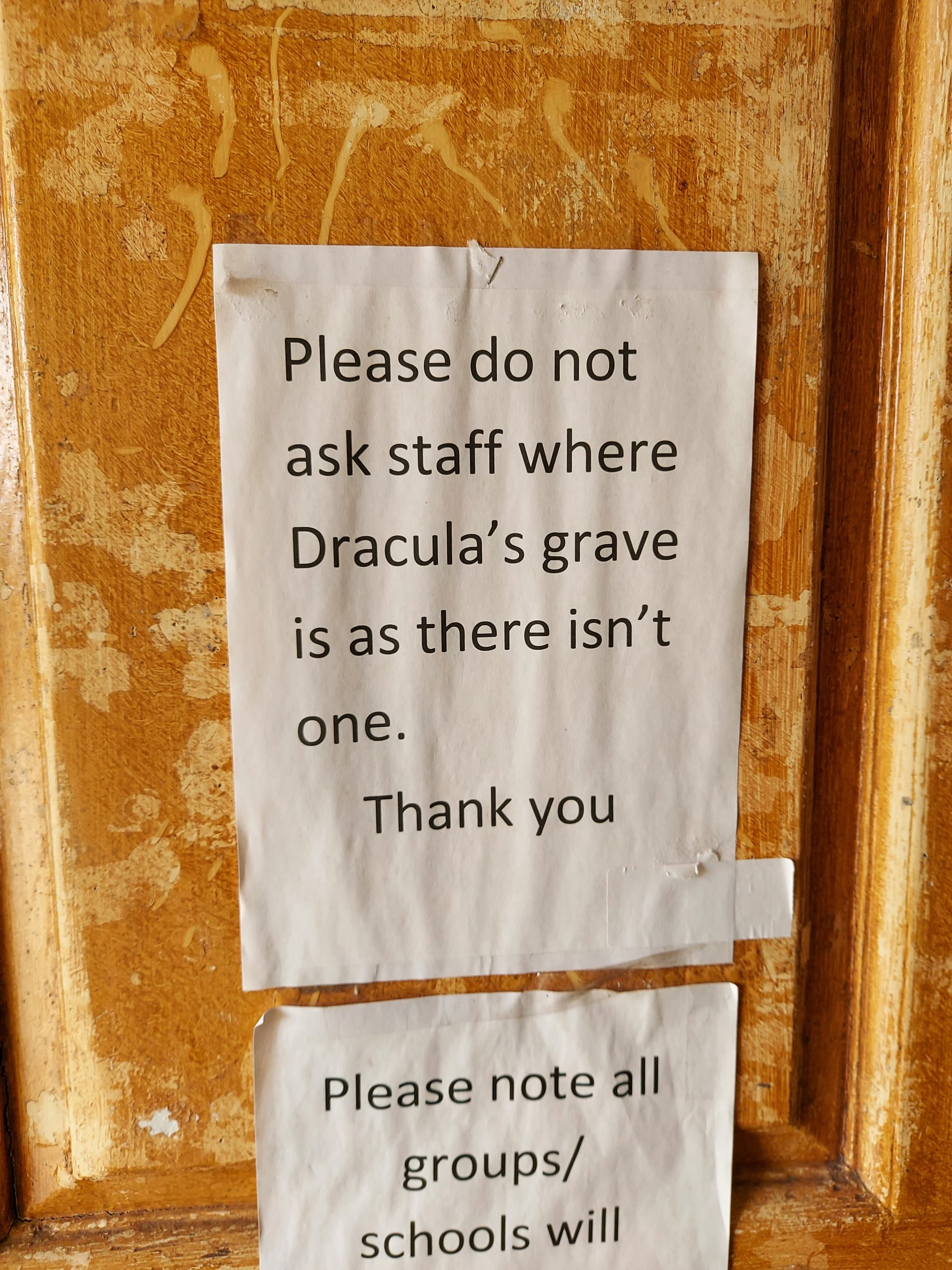
The next day, we got on the open-top bus tour and had an enjoyable trip around Whitby. We got off at the Abbey for some tea and cake, but didn’t go in owing to the massive entry fee. We visited the Church of St Mary though, and were amused by the sign in large letters stuck on the door.

Sign which reads, "Please do not ask staff where Dracula's grave is as there isn't one. Thank you"

Once back at the harbour we visited the Dracula Experience. This was my idea but I was terrified all the way round. There was a funny moment towards the end when someone in a scary wolf mask jumped out from behind a corner. I screamed, but Mam walked past completely unfazed: “You poor soul, having to stay here and wait for folk. I hope they pay you well”.

The Dracula Experience

We spent the afternoon at the other side of the harbour, visiting pretty much every Whitby jet shop in the town, as well as the museum. We ate pizza for tea and had a drink in the pub and then went to bed early.

Beautiful examples of Whitby jet jewellery

Our last day was spent taking the open-top bus one final time, getting off at Whitby Museum. This was a local museum with plenty of interesting fossils, some incredibly creepy toys, and a fascinating exhibition on Scoresby’s Arctic. After some lunch, it was time to get the train back home.

Rebel Badge Club: Investor

One of the clauses of the Carpe Diem quarterly challenge was to complete either the Money Saver or the Investor badge. I Chose Investor as I had already done Money Saver.

I worked my way through the Investing courses on Clever Girl Finance which I found thanks to a recommendation in the Rebel Badge Club Facebook group. The courses are focused on the USA but much of the information is still relevant to the UK. I also did a Managing my investments course on OpenLearn.

Actively spend time learning how stock markets work.

I used various Internet sites to research this topic and developed my understanding of stock markets. I won’t write down what I found out here but I did make notes for my own use.

Over a 3-6 month period, track the share price of at least six different companies.

I used Google Finance to set up a “portfolio” of six companies that are interesting to me for one reason or another, and set an alert to check them on the first of the month. I was surprised at how they would go up and down from one month to the next – a reminder that fluctuations in market value are normal.

Research the different options you have for storing personal savings.

I want to establish an emergency fund before I think about doing anything else. I aim to have £1,000 in a NatWest E-savings account and £1,000 in my Regular Savings account.

I will then aim for a total of £6,000 in easily-available savings – possibly in a cash ISA or another easy-access savings account. I am prepared to open more regular savings accounts to take advantage of the high interest rates before moving them into my usual savings after a year.

I also want to open a Lifetime ISA at some point before I turn 40.

Then, I will start to look at investing – maybe in a Stocks & Shares ISA. I have tried several investing apps (mainly to get the free shares!) but don’t want to investigate them fully until I have a decent amount of savings.

What is an investment fund? Research at least three different funds.

A mutual fund is a company that pools money from many investors and invests the money in securities such as stocks, bonds, and short-term debt. The combined holdings of the mutual fund are known as its portfolio. Investors buy shares in mutual funds. Each share represents an investor’s part ownership in the fund and the income it generates.

Unicorn UK Ethical Income – 92.18p

Invests in UK companies which meet the ACD’s ethical guidelines.

Artemis High Income – 68.67p

Invests flexibly across the fixed-interest markets, from government bonds to higher-risk high yield bonds. It also invests in some shares, which could boost long-term income and growth.

Schroder ISF Global Climate Change Equity – 2,208.53p

This fund aims for capital growth primarily through investment in equities securities of worldwide issuers which will benefit from efforts to accommodate or limit the impact of global climate change.

Actively research your pension options.

I looked up both of my pensions: my work pension and my personal pension. I’m happy with how they’re doing at the moment, but I will continue to keep an eye on them. I also worked through a Retirement planning made easy course on OpenLearn.

Read at least one book about investment and listen to at least 3 podcast episodes.

While I was doing the Money Saver badge I signed up to Clever Girl Finance and borrowed the founder Bola Sokunbi’s book Clever Girl Finance: Learn How Investing Works, Grow Your Money from the library. Despite its US focus I found it really clear and straightforward, and actually quite inspiring.

I listened to an episode of the Clever Girls Know podcast relating to the stock market, an episode of the Millennial Money podcast about creating a diversified portfolio, and an episode of the Which? Money podcast about investing from as little as £1.

Date completed: 1 October 2022