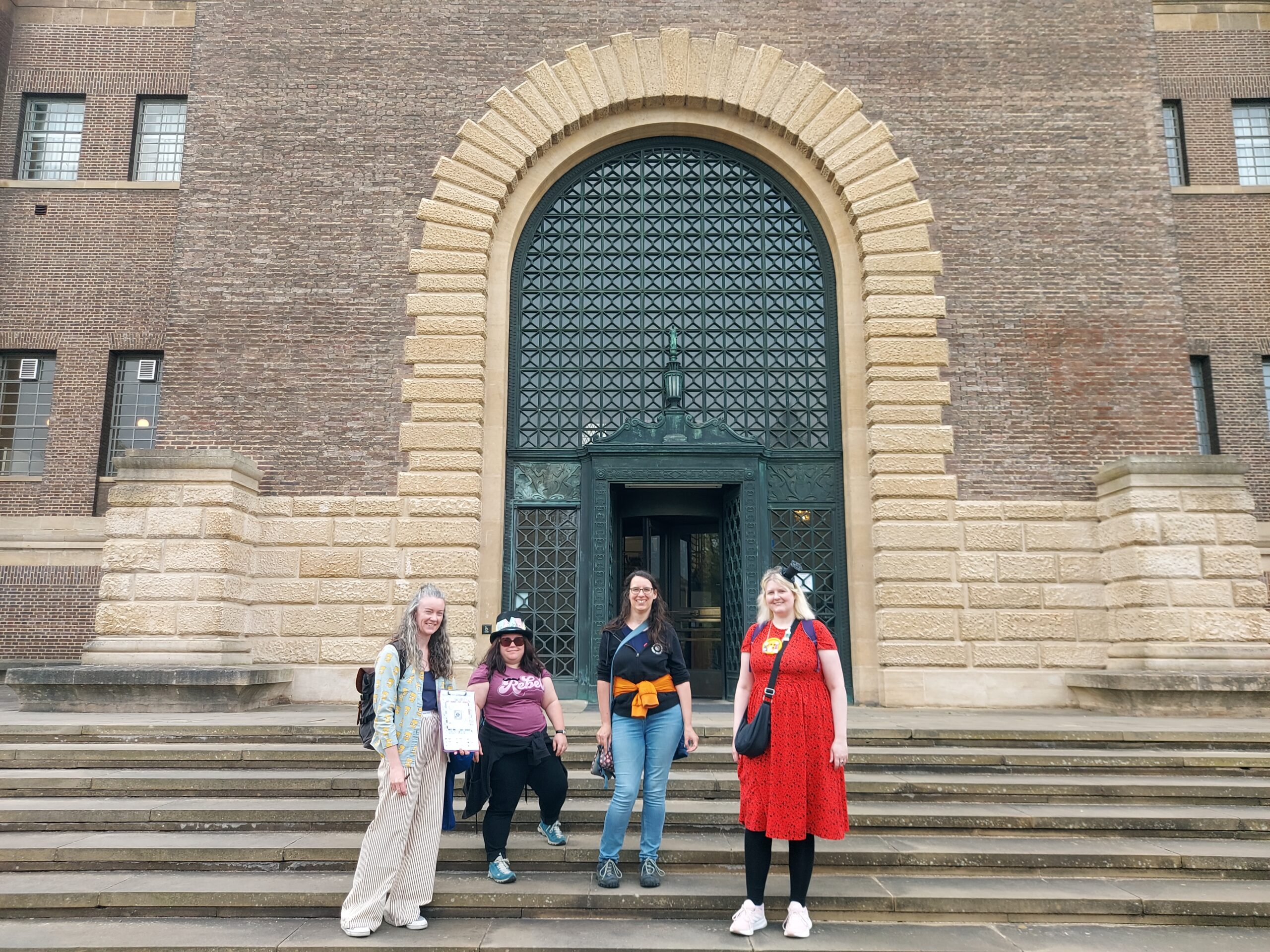
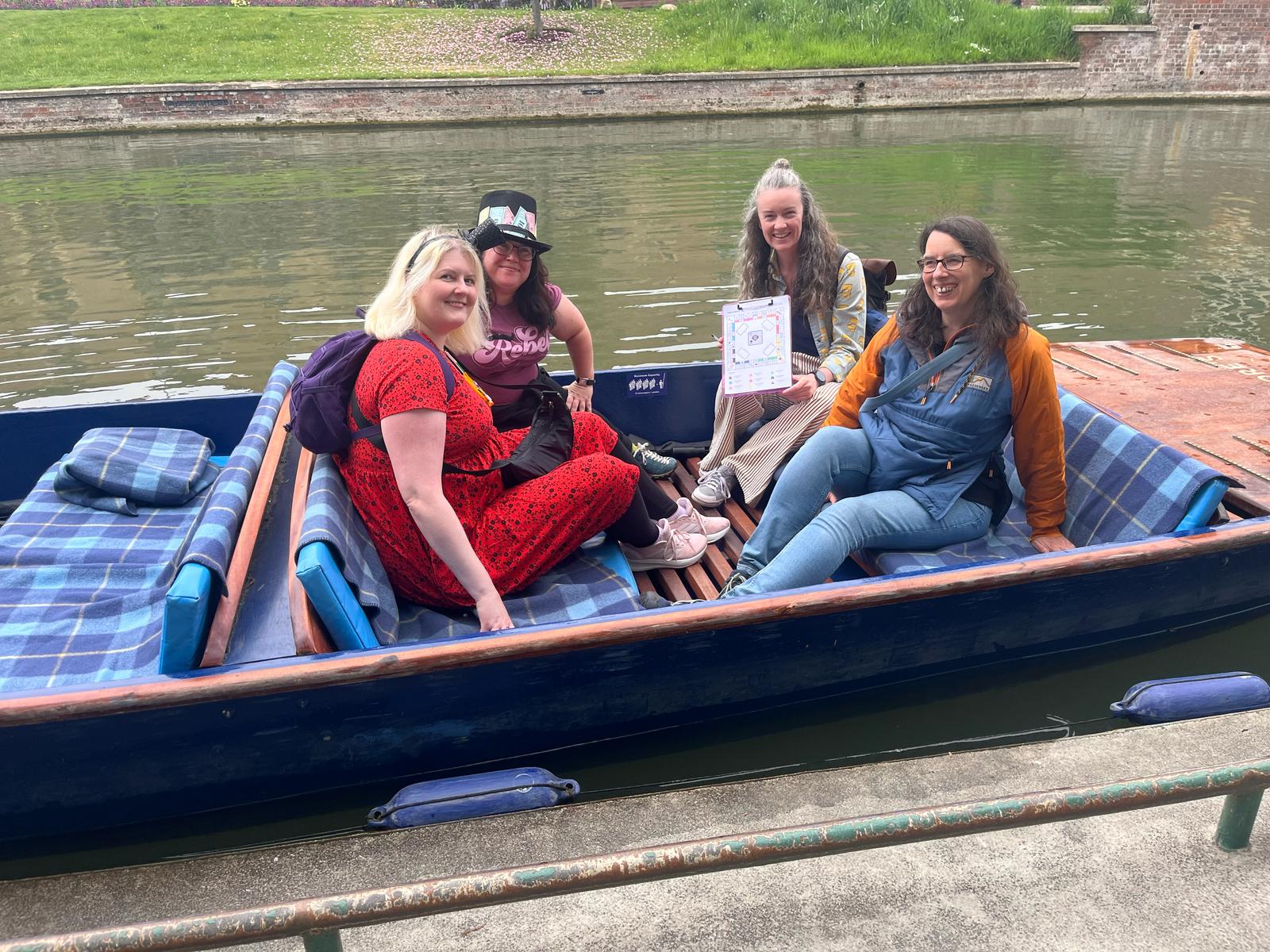
I loved last year’s Rebel Monopoly so much that I signed up for the three Monopoly games due to take place this year. The first of these took place in Cambridge, a city I know reasonably well due to having lived there for a year. I was in a team with Claire, Katrina and Ruth and after we all met up on Parker’s Piece – some of us wearing top hats – we made a plan to visit the furthest ‘stop’ before tackling the others.
It turns out Cambridge is a lot bigger than I had remembered! We visited colleges I hadn’t ever walked past back in the day. Luckily, the Banker (Sam) was located just outside St John’s College, a familiar area to me. As well as college stops, we had to try and pick up bonus money by visiting other places, like the railway station, and completing other tasks. Highlights of the day included our enthusiastic Uber driver, who took us to the station and back, and Katrina asking a couple of students to borrow their Blues blazer (which saved us trying to find one in a shop!).
At various points during the day, Charly positioned herself at a particular location in the city, announced that she was ‘Go’ and the first teams to find her would get bonus money. When she posted a picture of Shackleton’s sextant I knew exactly where she was (the Polar Museum) and we raced to get there. At the beginning of the day, we had decided we weren’t very competitive; as we were racing towards the Polar Museum, trying to beat the North East Rebels, I realised we needed to rethink that stance!
In the end, all our hard work paid off and we came second overall. I’m very pleased with that result, but ultimately what made it a great day was my lovely team, the hardworking crew and the fun challenges.
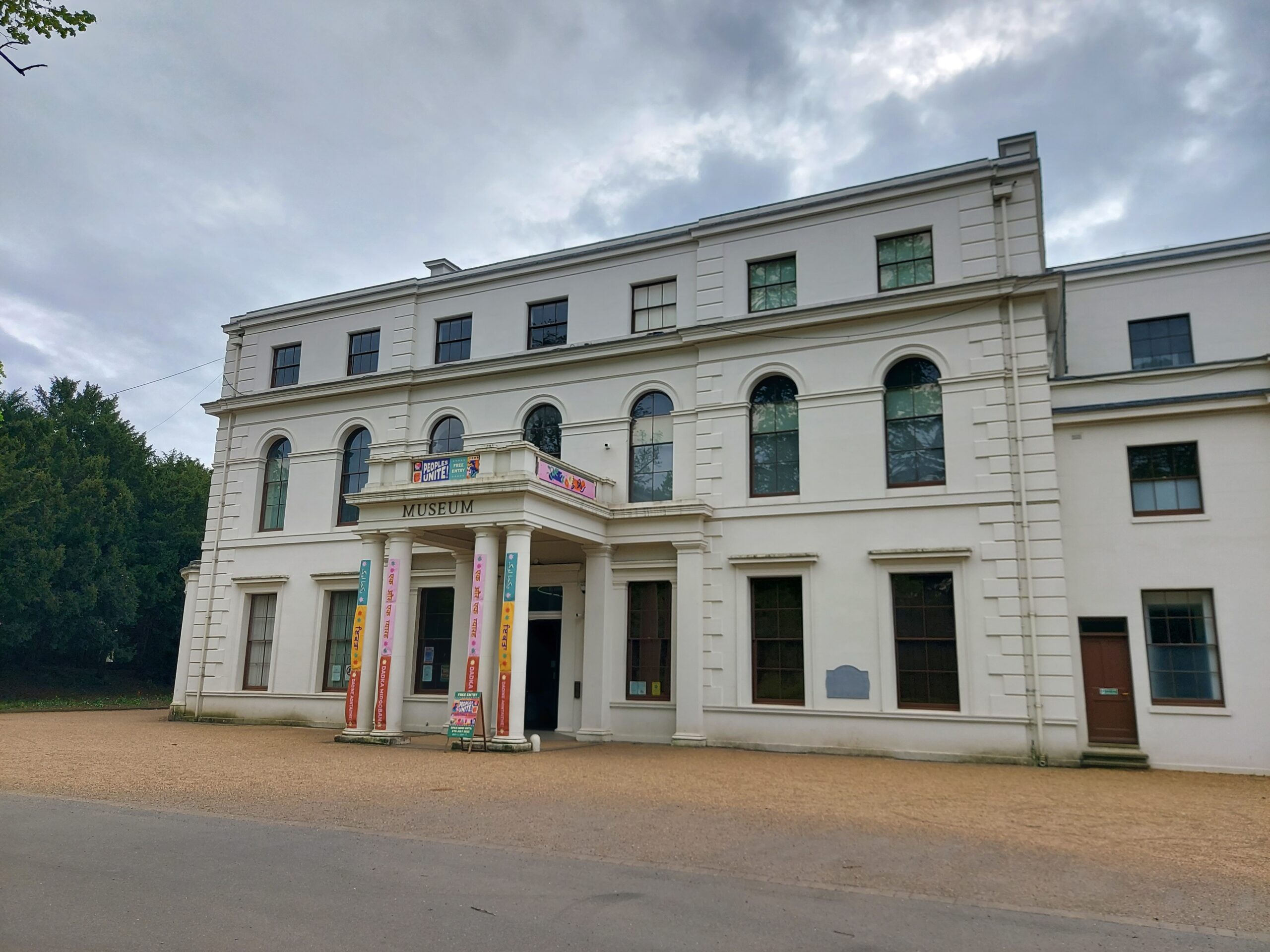
I visited Gunnersbury Park Museum for the first time in several years. The museum is located in Gunnersbury Park, which isn’t far from me, so it’s a shame I hadn’t managed to visit earlier, except for after-hours events.
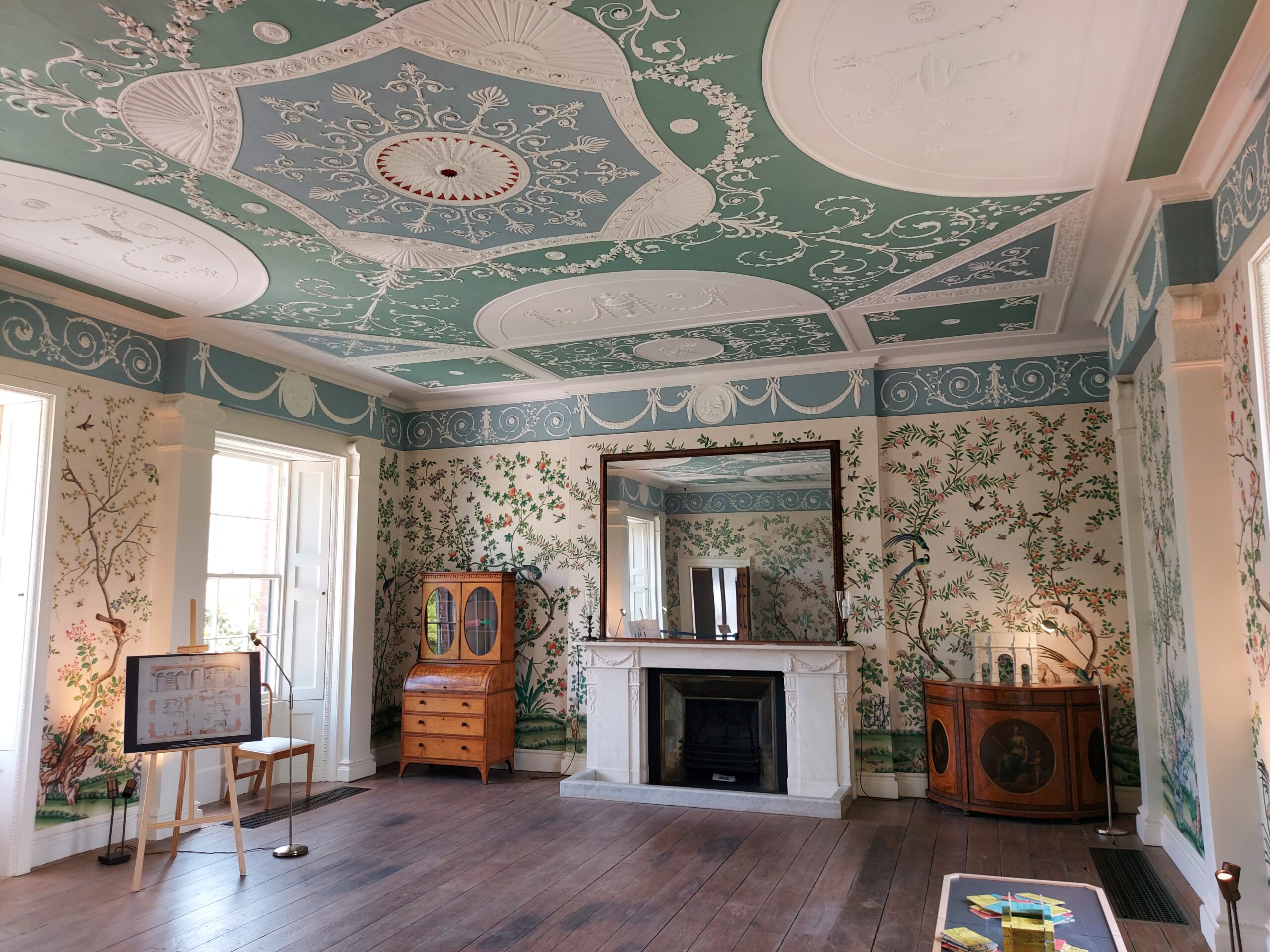
The museum opened in 1929 and has a varied collection of around 50,000 items, focusing on the heritage of Ealing and Hounslow. For a small museum, it has a wide-ranging series of exhibitions. One focus is on the history of the house and the estate, formerly home to the Rothschilds; another is on the history of the boroughs, from Palaeolithic times to the modern day. There is a childhood collection of toys and games, information about local religion and schools in the area, and artefacts from local businesses and public places. In addition there is a fashion collection, including items as varied as a 1760s court dress and a modern South Asian wedding dress, as well as a restored butler’s pantry.
When I visited I also explored the temporary exhibition, Peoples Unite! How Southall changed the country. Southall is known as the home of a large community made up of people from Britain’s former colonies, especially South Asians. The exhibition explores the richness, diversity and variety of experiences within this neighbourhood, the racism faced by its inhabitants, and how residents have fought back.
Gunnersbury Park is a lovely park in itself, and a visit to the museum is highly recommended. It definitely punches above its weight.
FACTS
Address: Gunnersbury Park, Popes Lane, London, W5 4NH
I’ve been living in Ealing for fourteen years now, and I’ve learned a bit about the history of the area in that time. There’s always room to learn more, however, and the Local History badge (chosen as part of the ‘Curiouser and Curiouser’ quarterly challenge) has helped me to do so.
Visit a local museum to learn more about the history of your local area.
I visited Gunnersbury Park Museum to learn more about the history of Ealing. The main galleries had exhibitions about notable people, industries and fashions of the area, while there was also a special exhibition on the history of Southall specifically which was really interesting.
Visit a local historic attraction.
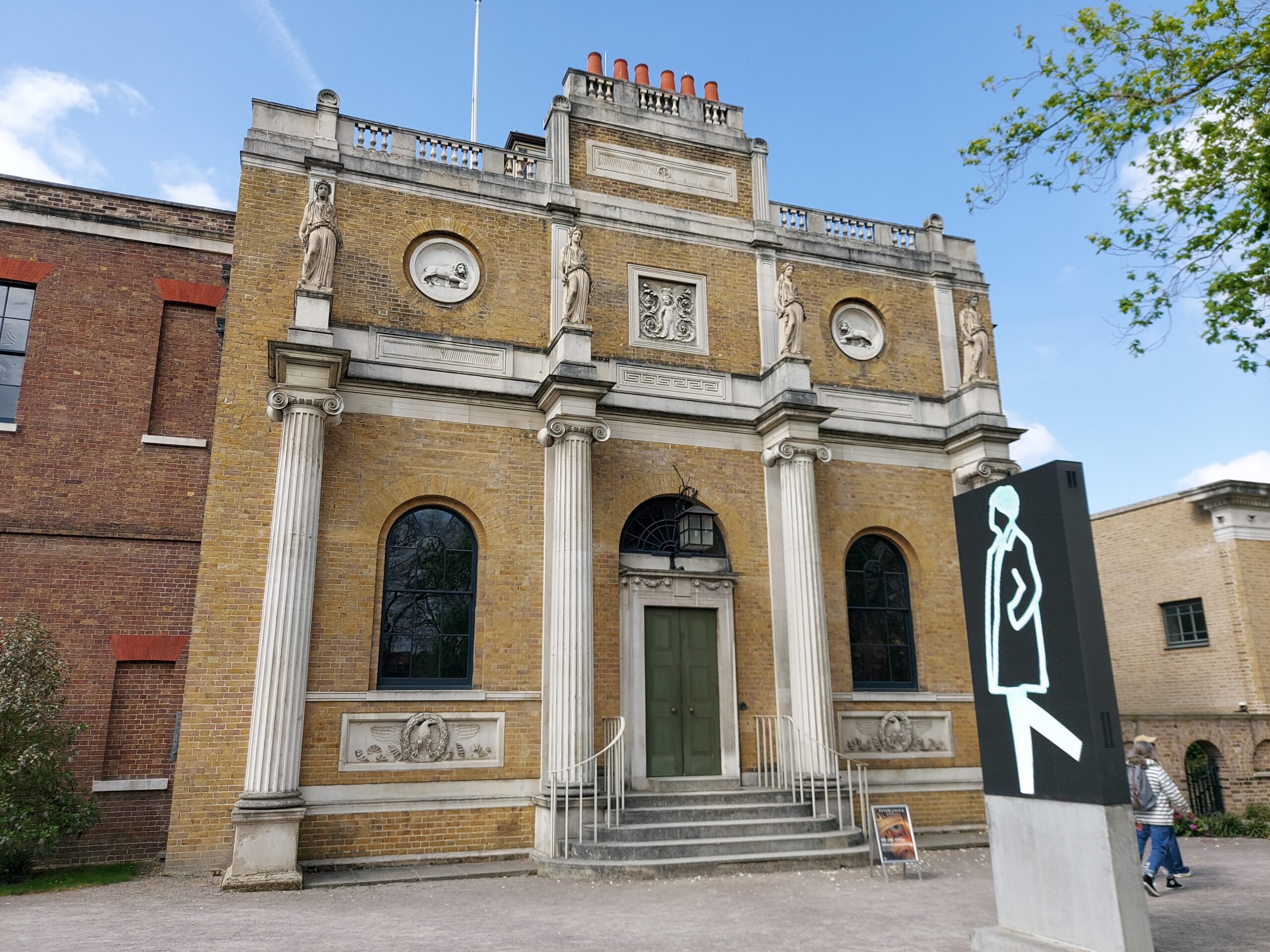
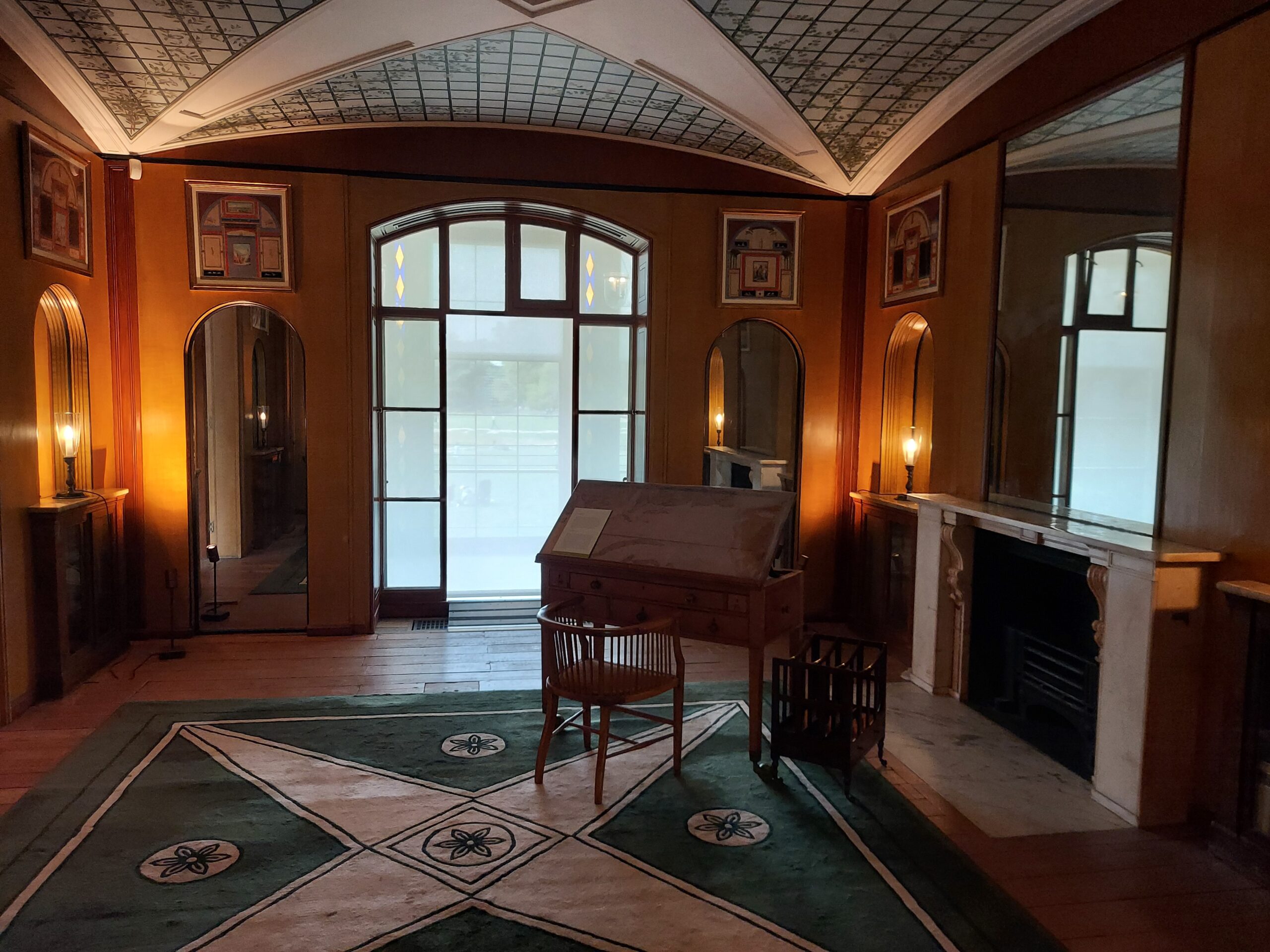
I visited Pitzhanger Manor, the country home of architect Sir John Soane. I have visited before, but had never done a guided tour. I learnt a lot.
Access the census records for your home.
I accessed the 1939 Register for my home. At this time, there were three single women living here.
I used other resources such as censuses to find out more about them.
Charlotte was born in Leeds but at some point moved to Kensington. Until 1911 she was living there with her parents and siblings.
Hilda was born and also lived in Kensington. The 1921 census shows her living with her mother in Battersea.
Mabel was born in Wandsworth. The 1921 census records her as a servant in Ealing.
I don’t know how these women met or ended up living together in what is now my home. I like to think that they were proto-Rebels, living their best lives and enjoying freedom and companionship.
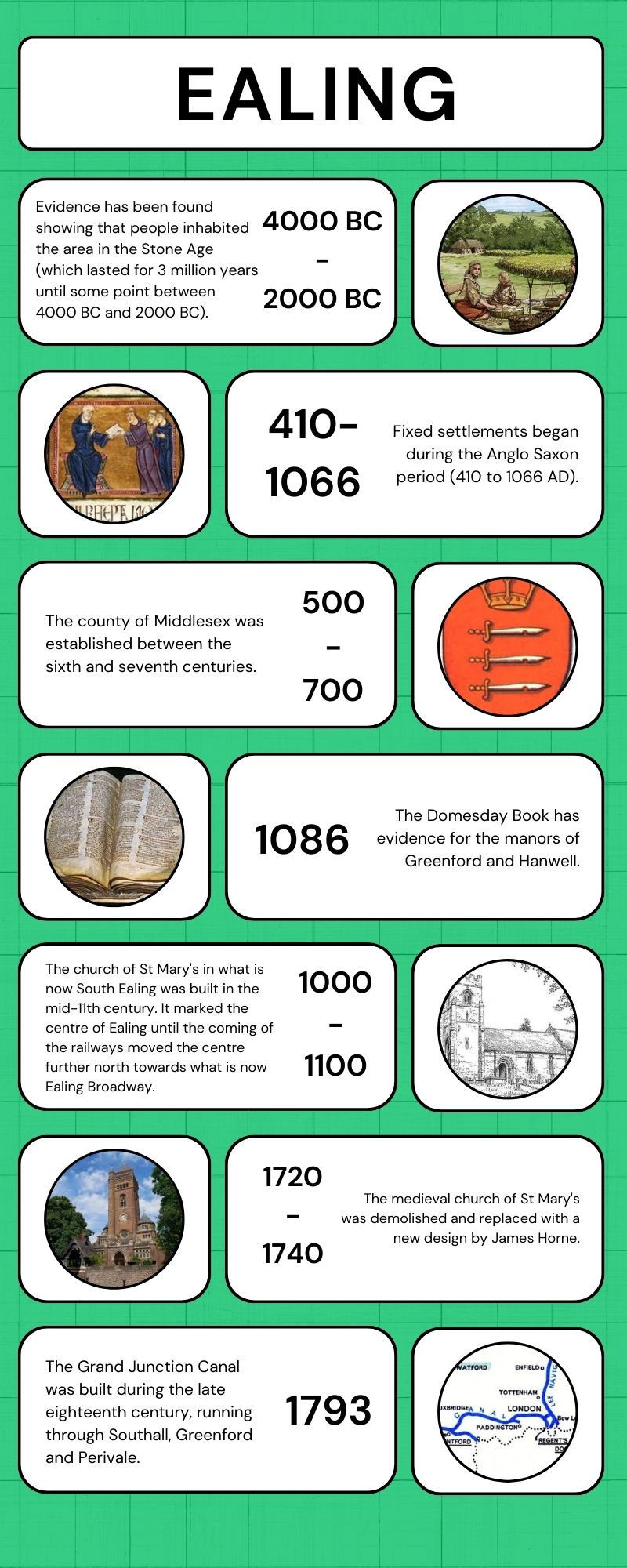
Write a timeline of important dates for your local area.
Learn about key historical figures in your local area. Make a presentation in the medium of your choice about what your area is famous for.
There are quite a few historical figures with links to Ealing.
Lady Byron, born Anne Isabella Milbanke (Lord Byron’s widow) of Fordhook House, Ealing, founded Ealing Grove School in 1834. This was the first industrial school of its type. In 1860 C. N. Atlee, a former headmaster of the Lady Byron school, set up the Byron House School in St. Mary’s Road (South Ealing Road). The site is now the University of West London, and a blue plaque at the entrance is dedicated to Lady Byron.
Thomas Henry Huxley (1825–1895), biologist known as “Darwin’s Bulldog” for his adherence to his theory of evolution, was born in Ealing. His father was a mathematics teacher at Great Ealing School until its closure.
Ho Chi Minh (né Nguyễn Sinh Cung, 1890–1969), revolutionary and politician, worked in the kitchens of the Drayton Court in 1914. He was the founder and the first president of the Democratic Republic of Vietnam.
Spencer Perceval (1762–1812), British Prime Minister from 1809 until his assassination, lived in a large house at Elm Grove, on the south side of Ealing Common.
Dusty Springfield (1939–1999), soul singer, lived in Kent Gardens, West Ealing during the 1950s, attending St Anne’s Convent School in Northfields and later working at Bentalls department store in Ealing Broadway.
Crime novelist Agatha Christie’s parents are buried in South Ealing Cemetery. She herself is listed in the 1911 census at 99 Uxbridge Road as Agatha Miller (her maiden name). She was visiting her great aunt Margaret Miller (supposedly the inspiration for Miss Marple) who had lived in Ealing for more than three decades.
I created a presentation about what the seven towns in the modern London Borough of Ealing are famous for.
I attended a talk on Secret Ealing at my local library. I also bought and read the associated book, which was full of interesting information.
Does your local area have a coat of arms? Research the meaning of each of the different sections.
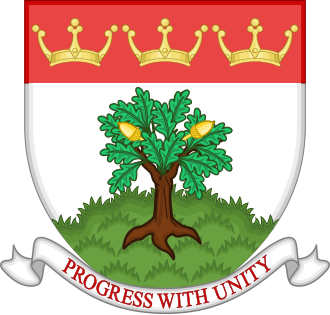
The coat of arms of the London Borough of Ealing was granted on 1 September 1965. At the top are three golden Saxon crowns, representing the three former Middlesex boroughs of Ealing, Acton and Southall.
At the centre is an oak tree, which was also present in the coats of arms of both Ealing and Acton (Acton is considered to mean “oaktown”), referring to the ancient forest west of London which formed much of what is now Ealing. The oak is also appropriate to the origins of Southall and Norwood (“the southern holt and the northern wood”). Originally there were twenty acorns because they stand for the original twenty wards in the present borough. The grassy base comes from the former Acton coat of arms and the silver field was part of the Ealing coat of arms. The motto is ‘Progress With Unity’.
If your country has listed buildings, find out about a local grade listed building.
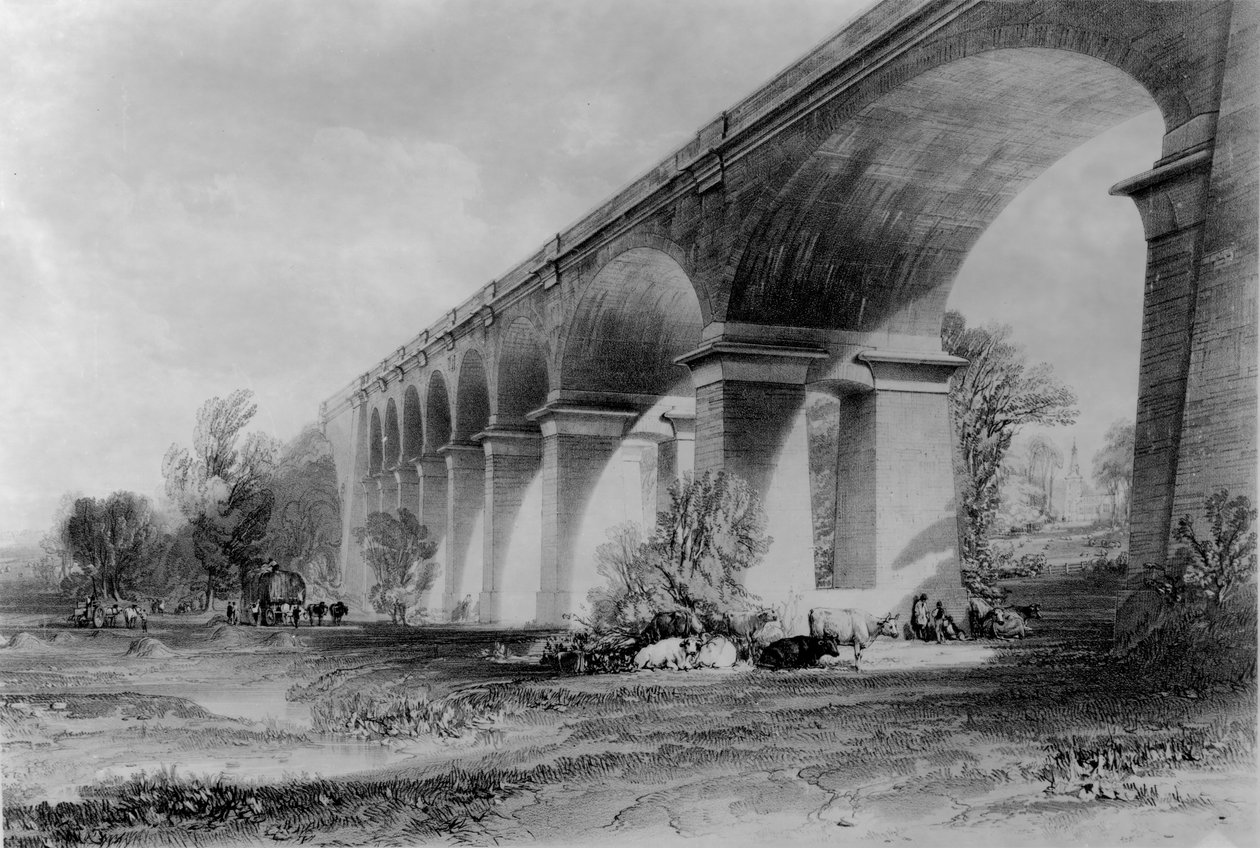
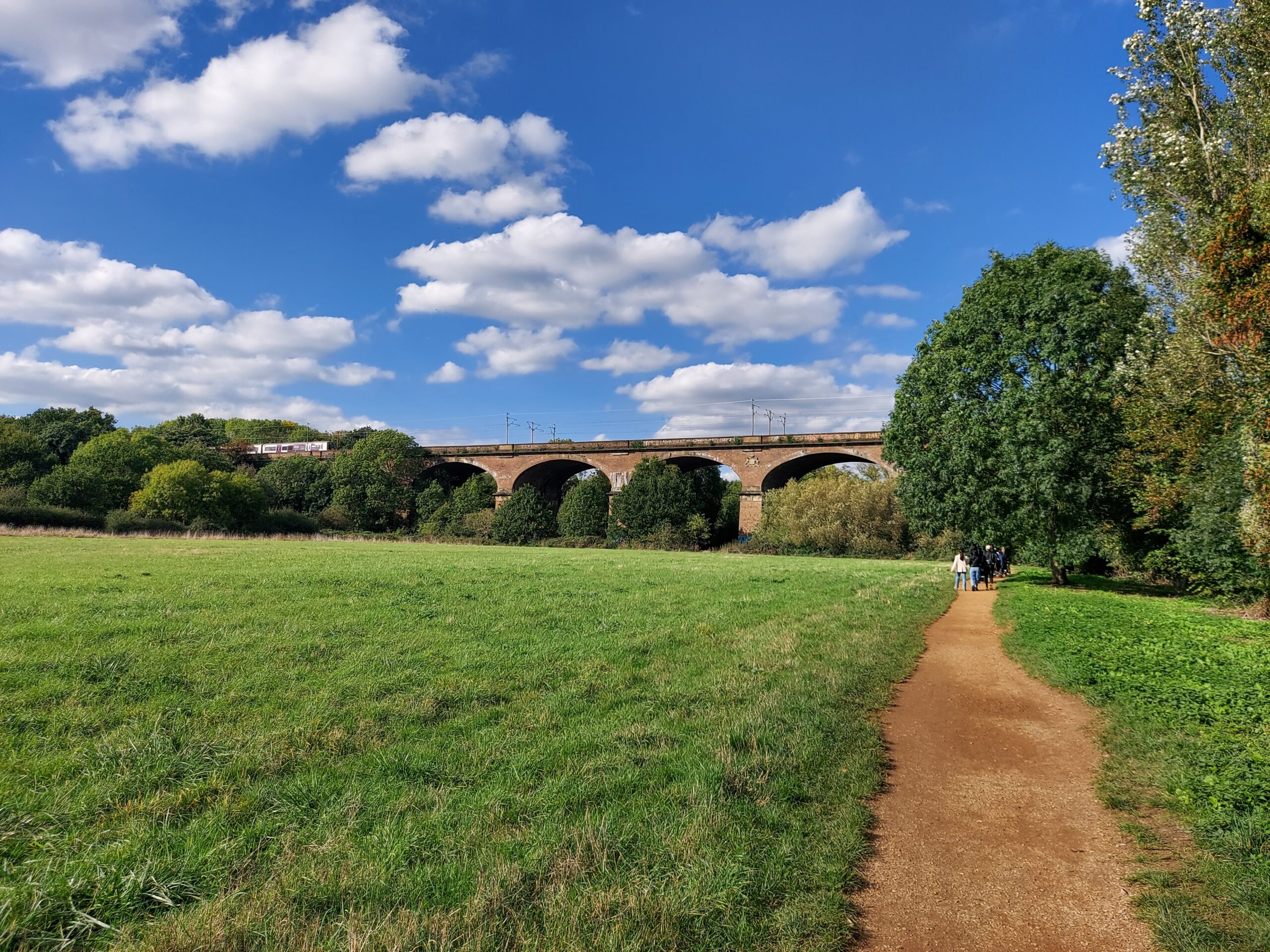
There are six Grade I listed and 18 Grade II* listed buildings in Ealing. The Wharncliffe Viaduct was listed on 8 November 1949.
The brick-built viaduct was constructed in 1836-7 for the Great Western Railway at an elevation of 20 metres (66 ft) in order to carry the railway across the Brent Valley. It was the first major structural design by Isambard Kingdom Brunel, the first building contract related to the GWR project, and the first major engineering work to be completed. The 270-metre-long (890 ft) viaduct has eight semi-elliptical arches, each spanning 70 feet (21 m) and rising 5.3 metres (17 ft). It is 17 metres (56 ft) wide.
The viaduct takes its name from James Stuart Wortley Mackenzie, Lord Wharncliffe, who was chairman of the parliamentary committee that steered the passage of the GWR Bill through Parliament. A carving of his coat of arms is visible on the central pier on the south side. In 1839, the viaduct carried the world’s first commercial electrical telegraph.
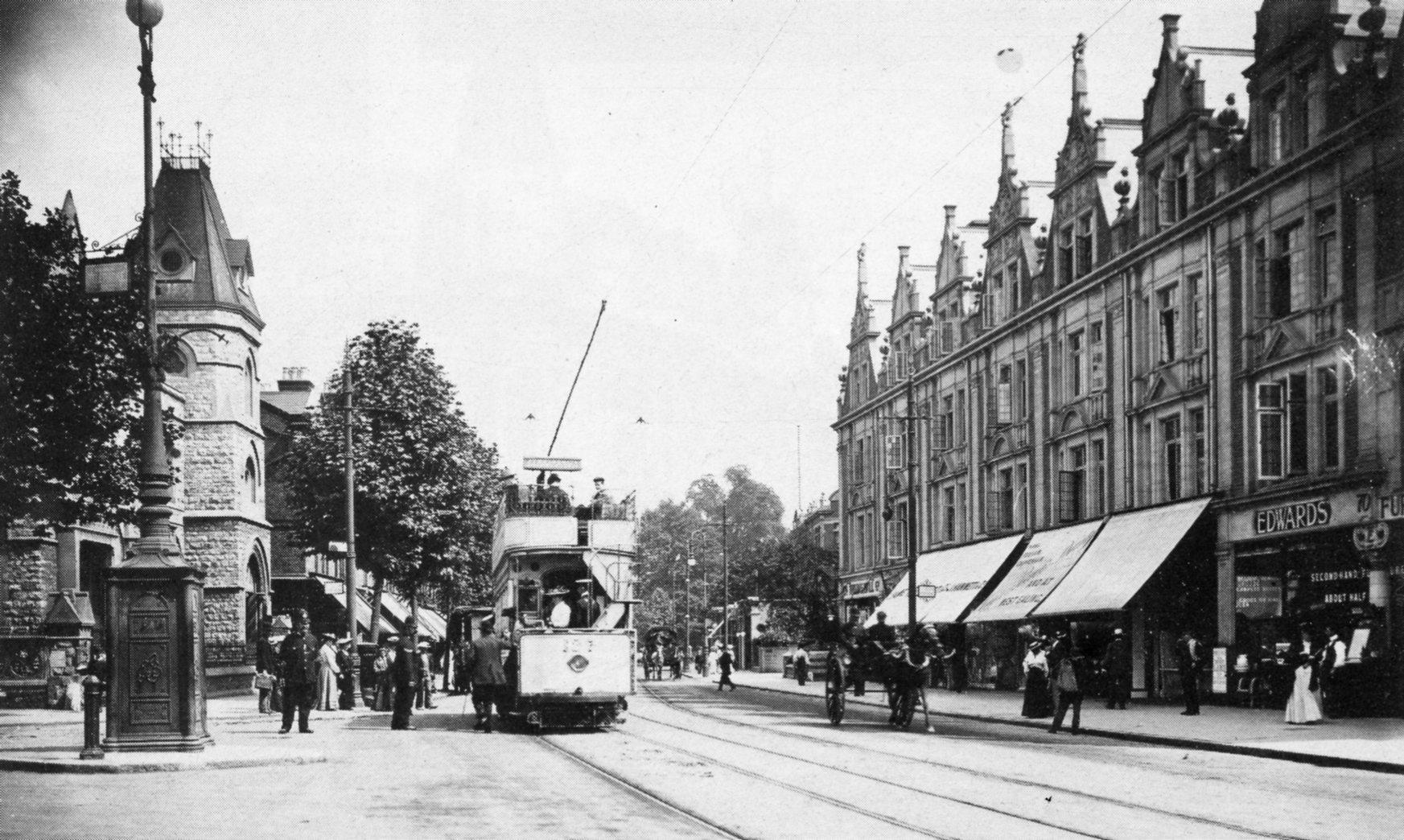
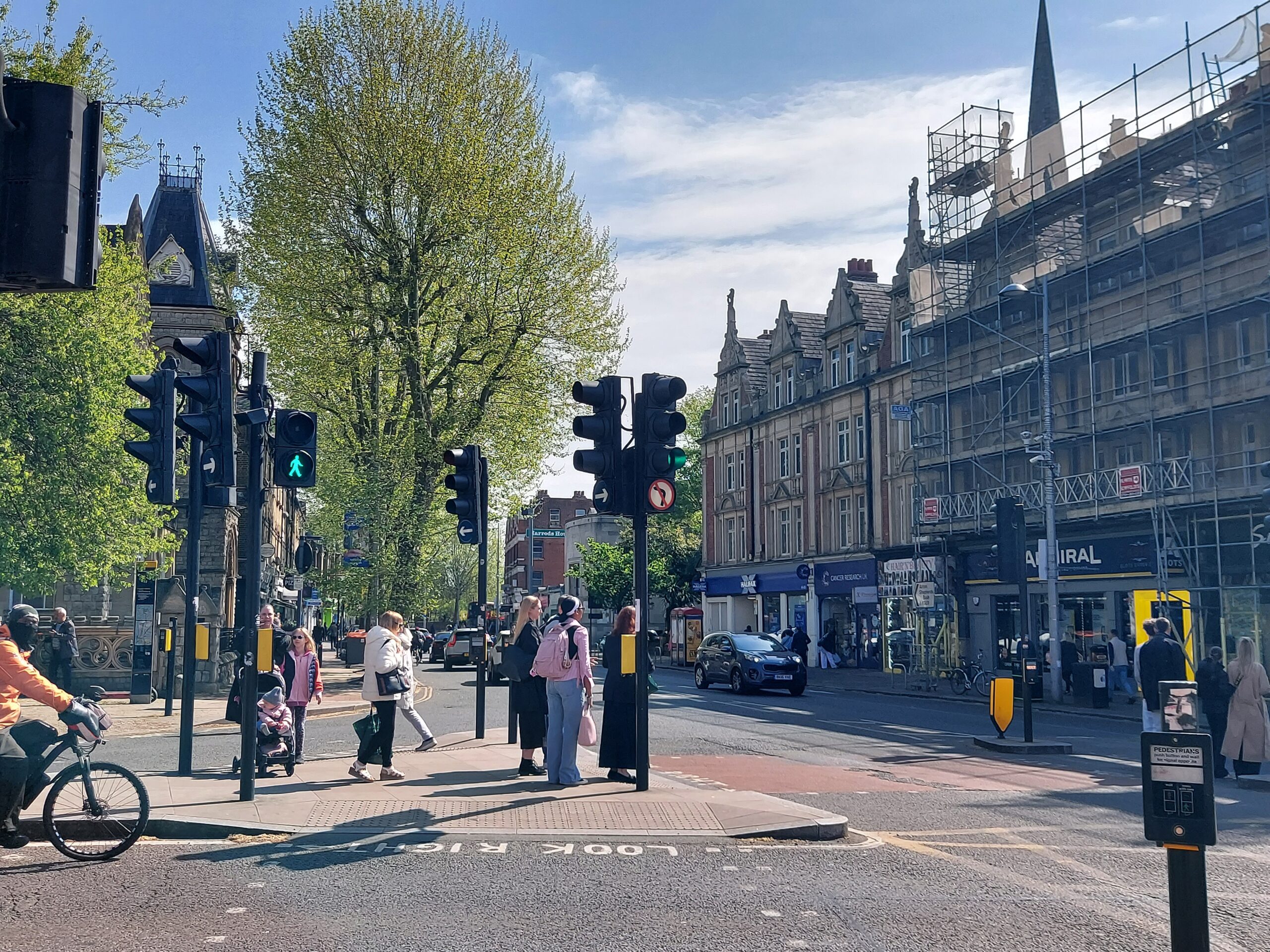
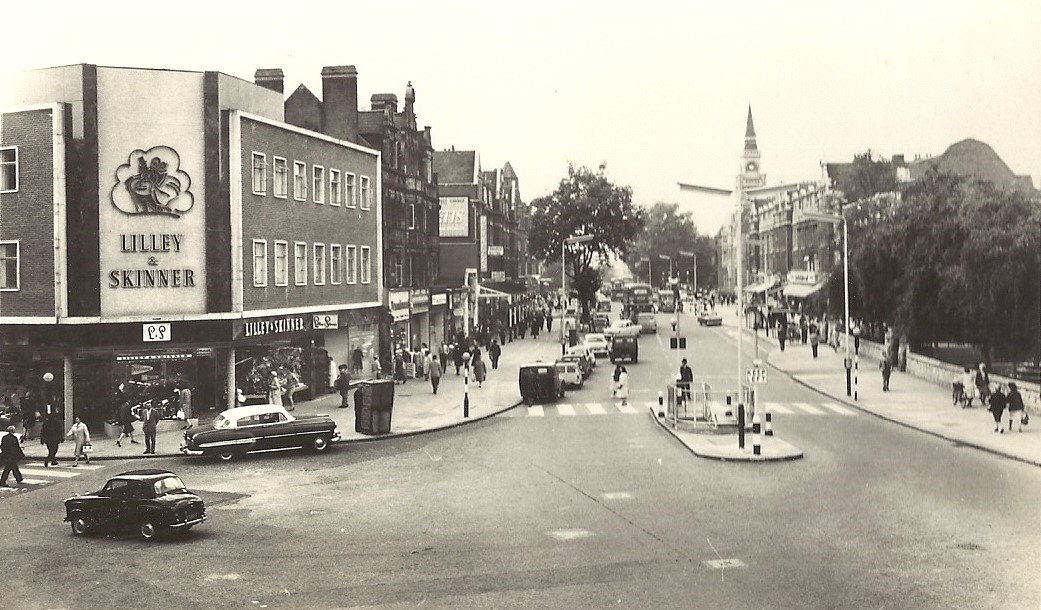
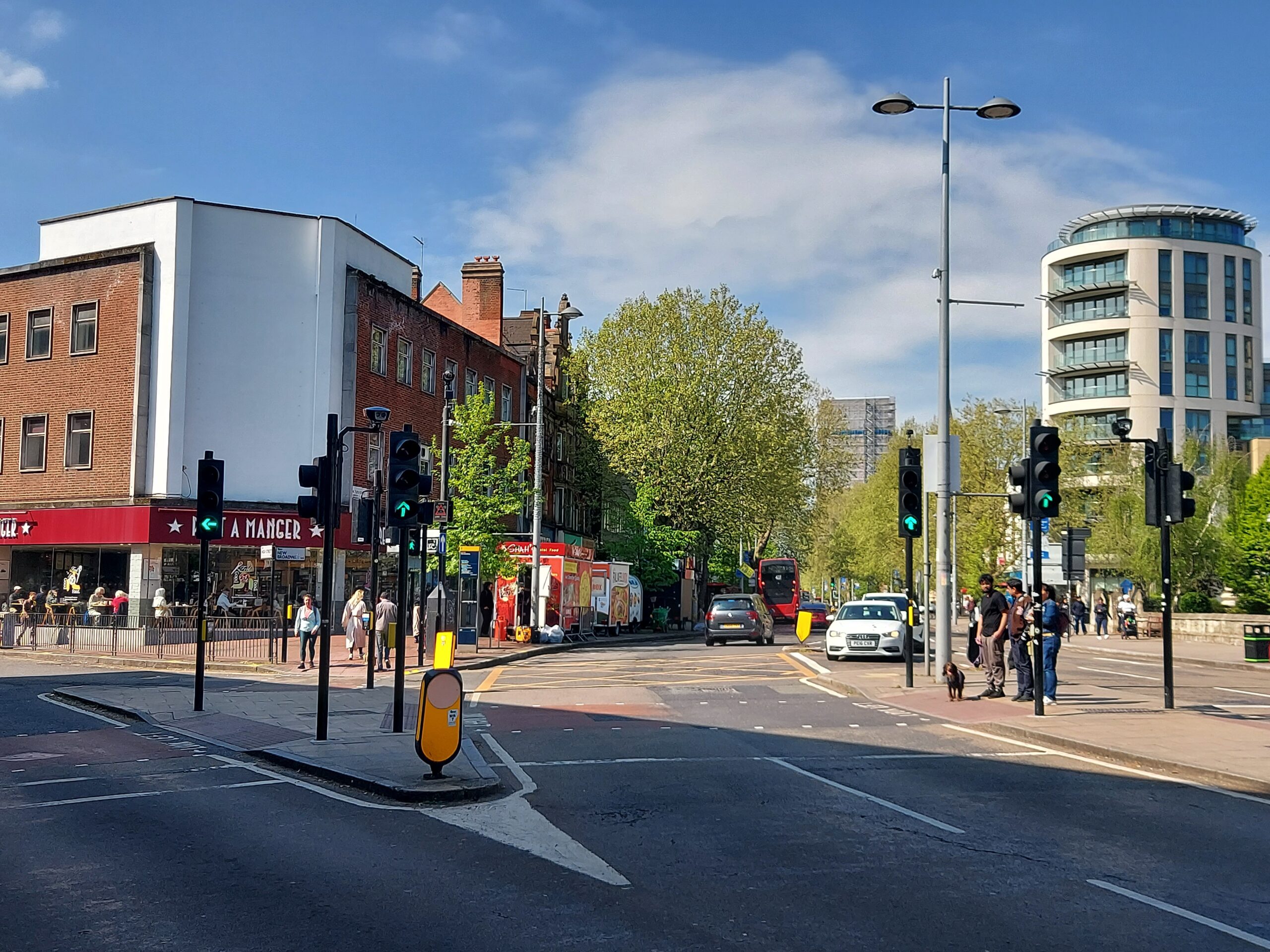
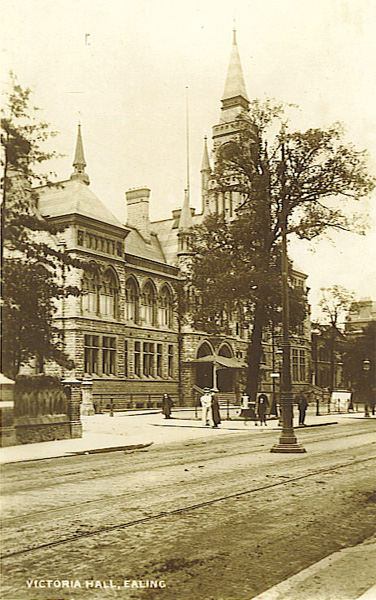
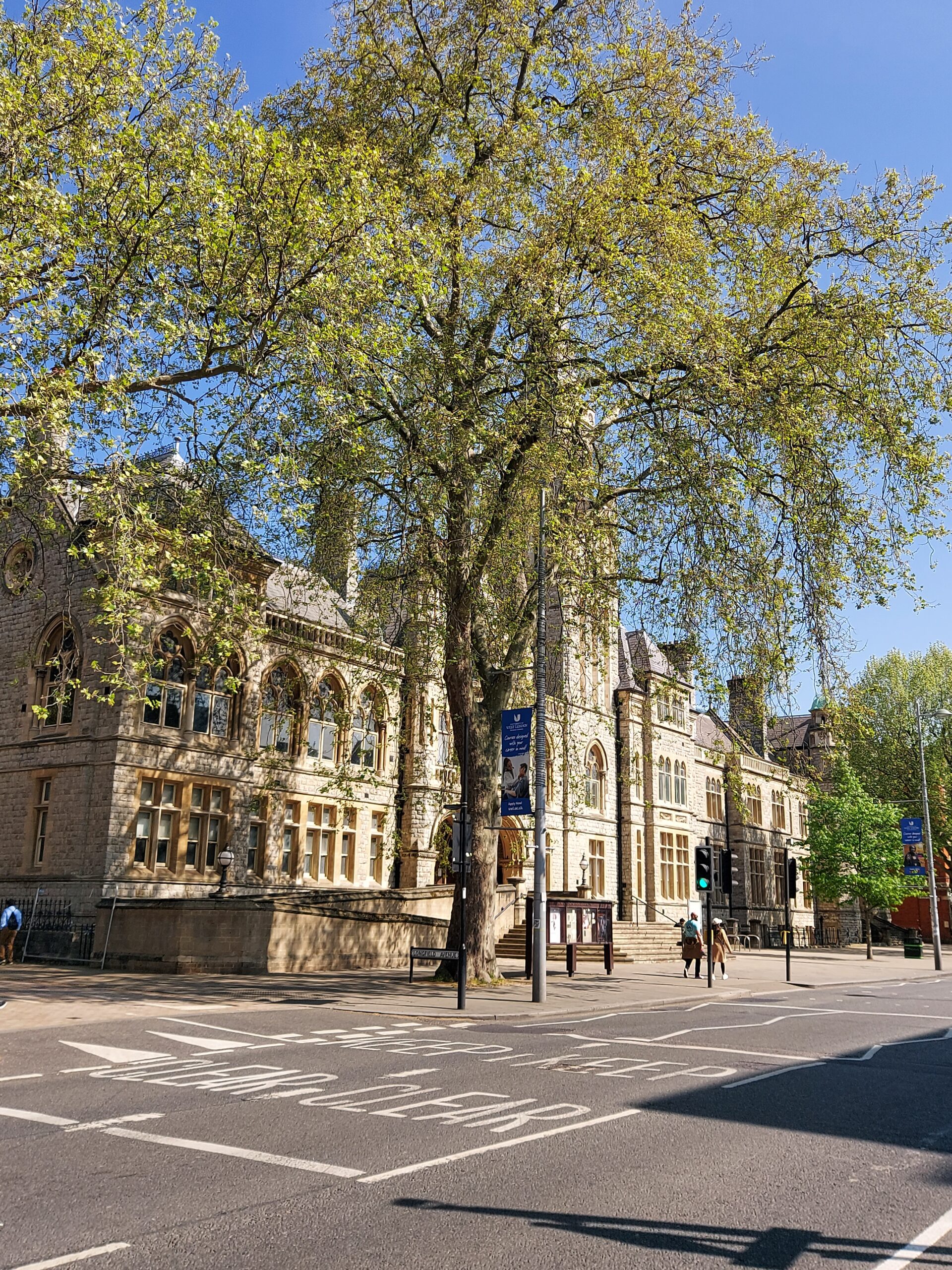
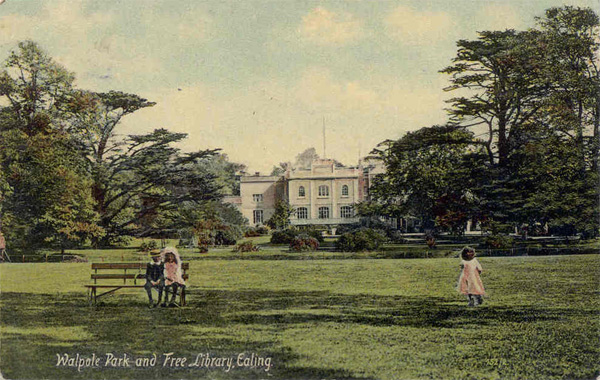
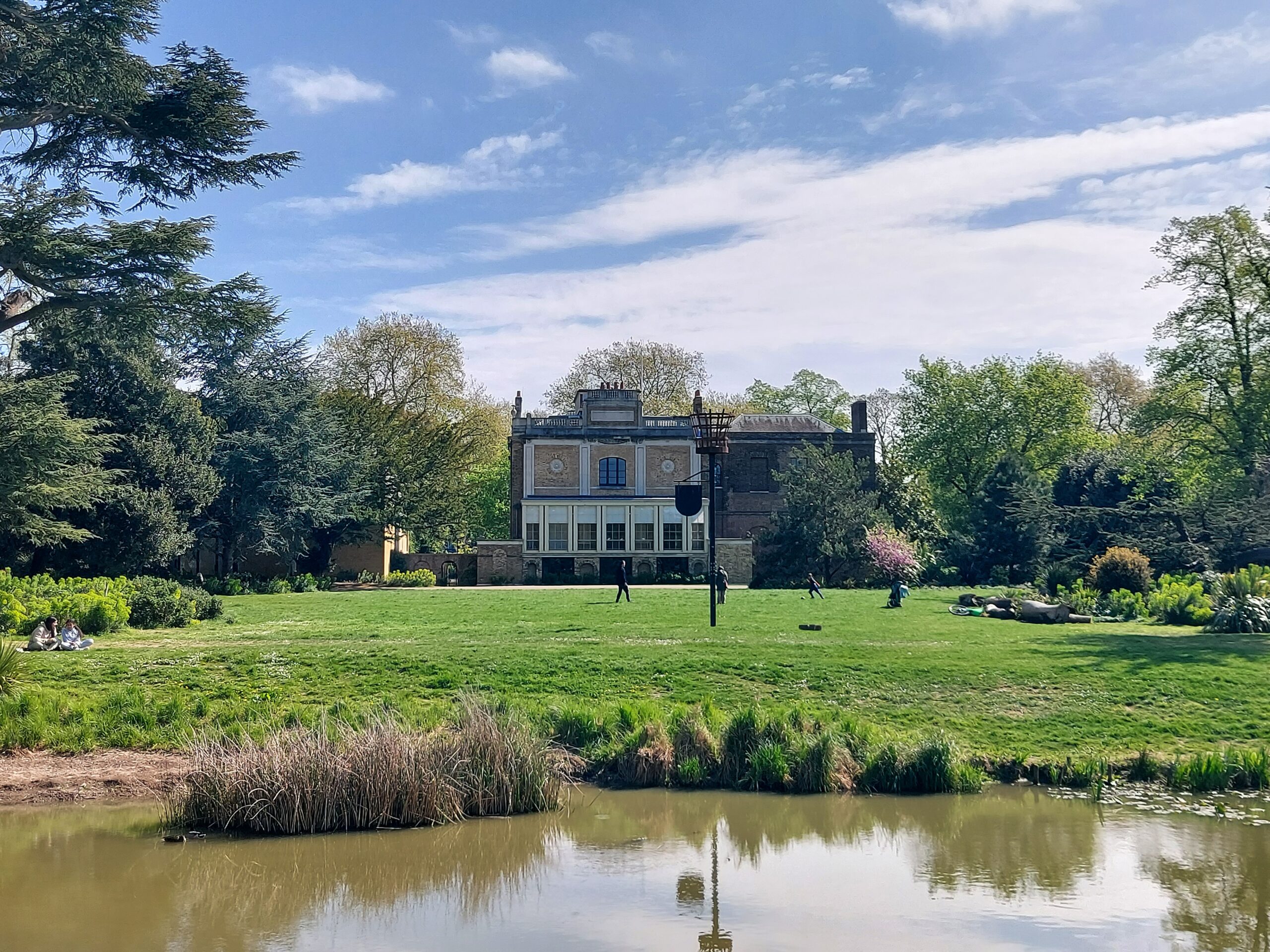
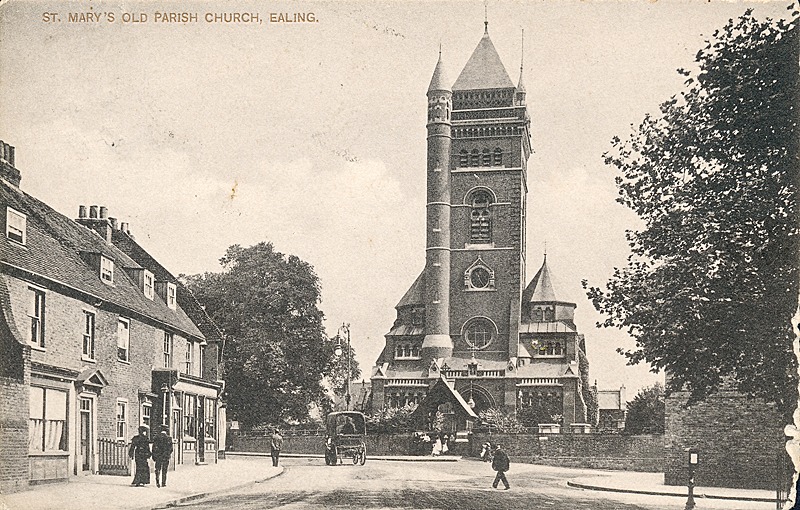
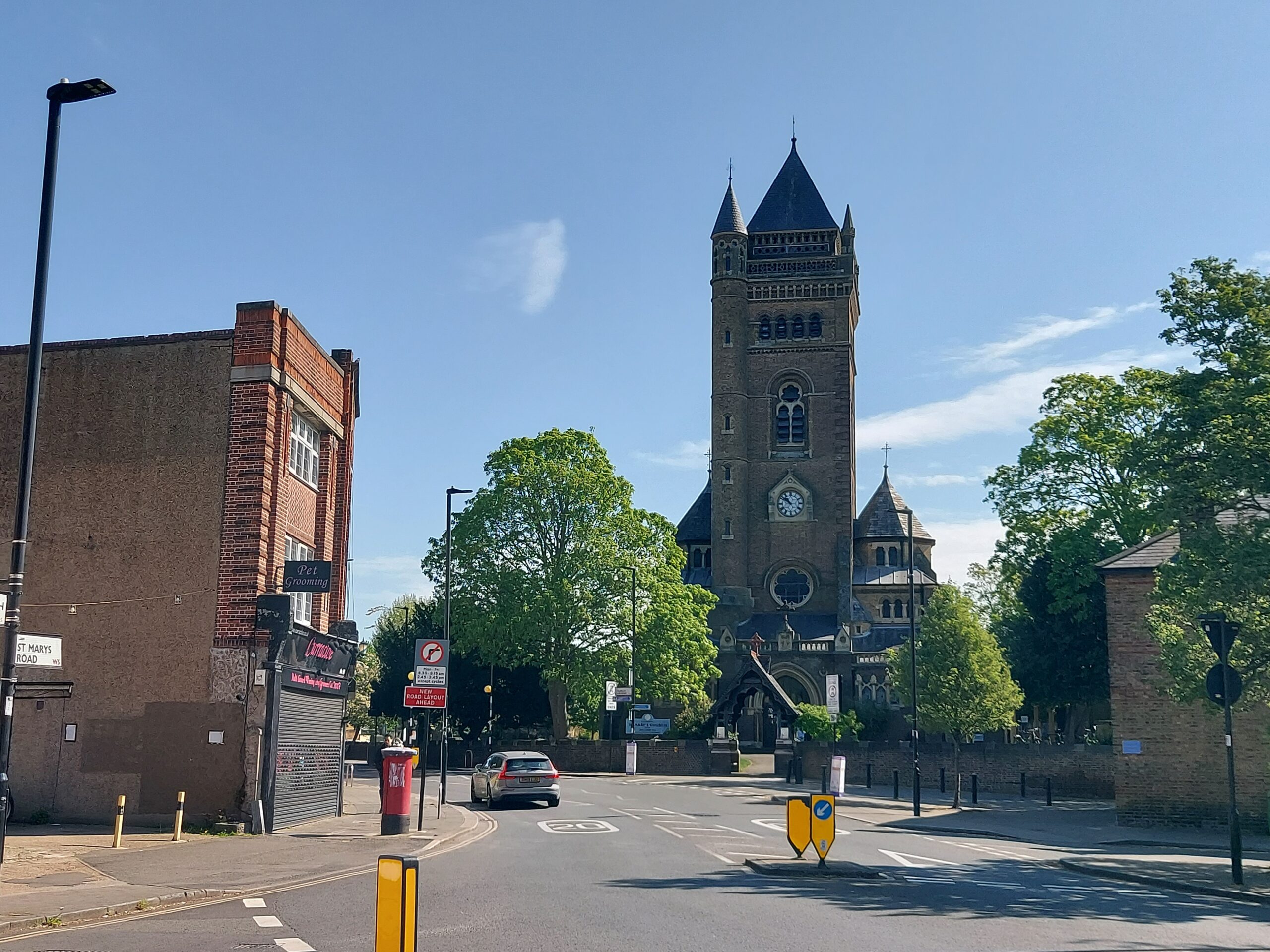
Find historical photos taken in your area. Take new ones in the same places, and compare and contrast them.
Ealing Broadway, 1905Ealing Broadway, 2025New Broadway, c. 1970New Broadway, 2025Ealing Town Hall, 1910Ealing Town Hall, 2025Walpole Park, 1906Walpole Park, 2025St Mary’s Church, 1906St Mary’s Church, 2025Wharncliffe Viaduct in the 19th centuryWharncliffe Viaduct, 2024
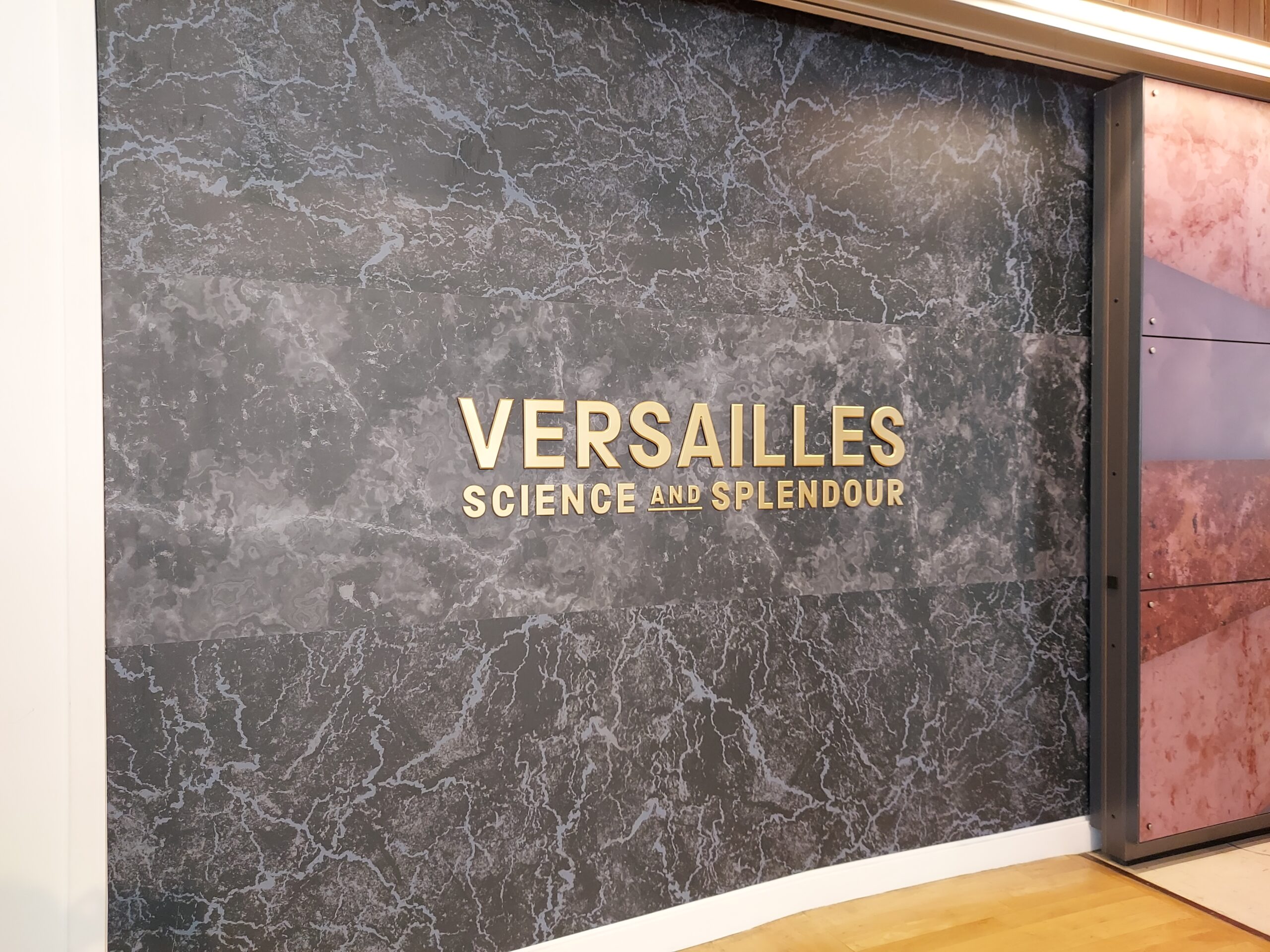
On the same day I visited the V&A, I also popped into the Science Museum to see the exhibition Versailles: Science and Splendour. This exhibition focused on the role the palace of Versailles played as a major site of scientific thinking in the 17th and 18th centuries, an aspect of its history that is not as well known as its architecture and royal and political history.
This rich and intriguing exhibition was enjoyable and illuminating. It explores the scientific developments that took place at the palace, led by the monarchs of the period who were genuinely interested in scientific development. Louis XV commissioned the midwife Angélique Marguerite Le Boursier du Coudray to educate medical personnel involved in helping with childbirth: her working model, made of stuffed fabric, is impressively accurate. When Louis XV died of smallpox, his son Louis XVI agreed to have the family inoculated, influencing the popularity of vaccination in France.
Versailles itself incorporates impressive engineering into its beautiful architecture: the water features worked thanks to a pump taking water from the Seine. The Clock of the Creation of the World is an exquisite and opulent piece designed to tell the time, date and year as well as the movement of the planets. French scientists such as Buffon and Lavoisier worked at the palace, but the work of foreign scientists such as Newton were also popular.
King Louis XIV agreed to a risky fistula operation, successfully performed by the royal surgeon Charles-François Félix, who invented a special scalpel for the occasion – the darker side of this success was the number of peasants killed during his ‘practice runs’, and this example perhaps illustrates why the French Revolution took hold not long after, despite the French kings’ enlightenment in the matter of science.
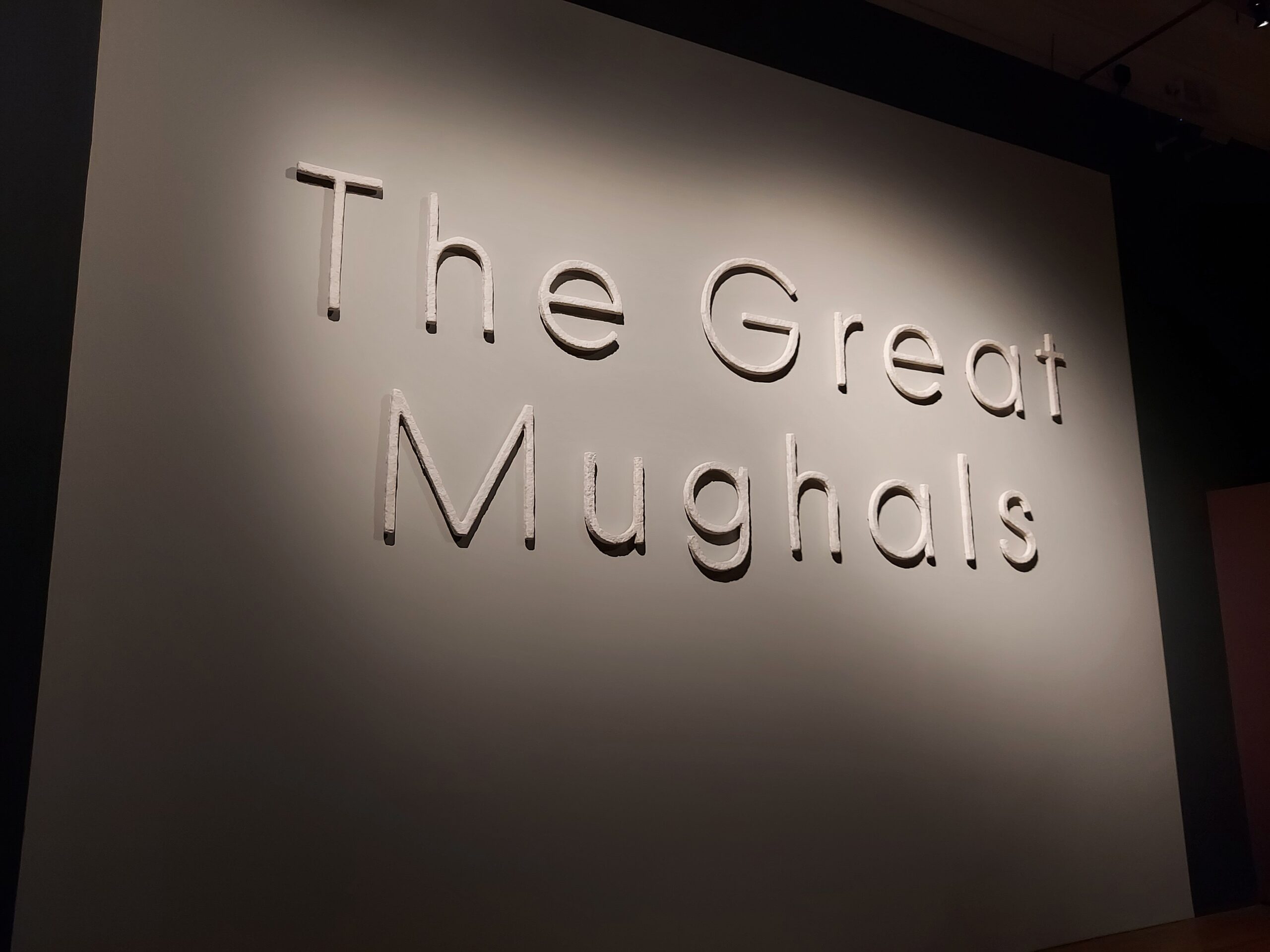
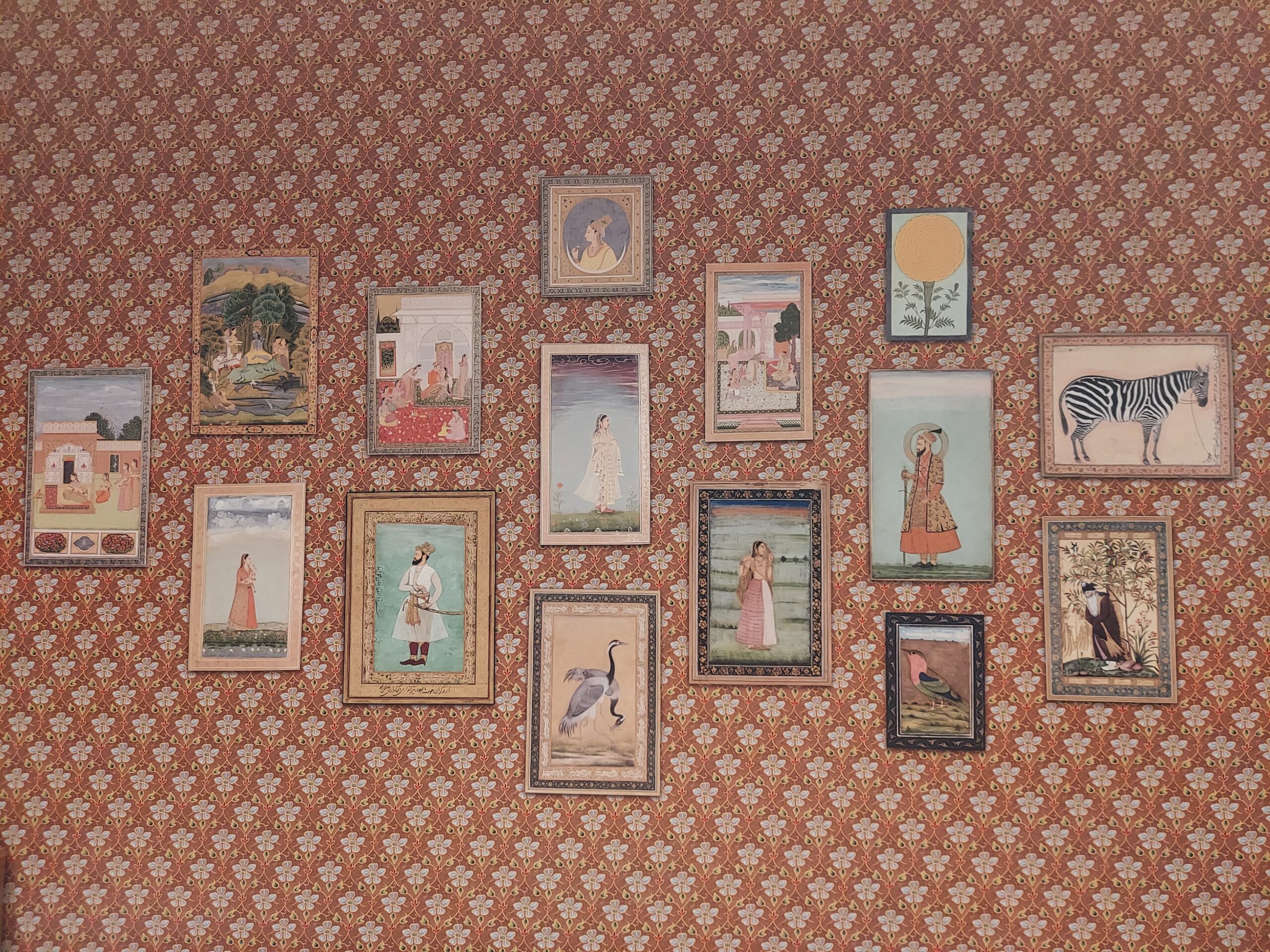
I visited The Great Mughals: Art, Architecture and Opulence at the Victoria and Albert Museum. This exhibition focuses on the reigns of emperors Akbar, Jahangir and Shah Jahan, considered the Golden Age of the Mughal court (c. 1560-1660), in terms of its culture and creative output. In fact, Shah Jahan is most famous for the Taj Mahal, one of the most beautiful buildings in the world.
The exhibition contains some absolutely beautiful examples of art, such as paintings, jewellery, embroidered clothing, cups and swords. The Mughal rulers, despite being warlike and despite the fact that Akbar was illiterate, cared deeply for arts and culture and this is clear in the wonderful objects on display.
This month’s badge was Back to the Future, inspired by the classic movies but incorporating a variety of nostalgic and futuristic clauses. I had a lot of fun with this one.
Watch an episode of a show you watched as a child. Compare it to a modern equivalent.
I decided to watch an old episode of Gladiators, a show I absolutely adored as a child. It was so strange watching it again: it was simultaneously exactly as I remembered it, and clearly of a different time. The hairstyles in particular were glorious. As an adult I have more of an appreciation of just how challenging these games would have been. There is absolutely no way I would have been able to last more than a couple of seconds on Hang Tough, for instance, and as for running up that Travelator – forget it!
I watched one of the new episodes on BBC iPlayer. While it can’t compare to the original in terms of sheer nostalgia, it has definitely kept the spirit of the 90s show, and I’d like to watch more.
Revisit an old childhood collection.
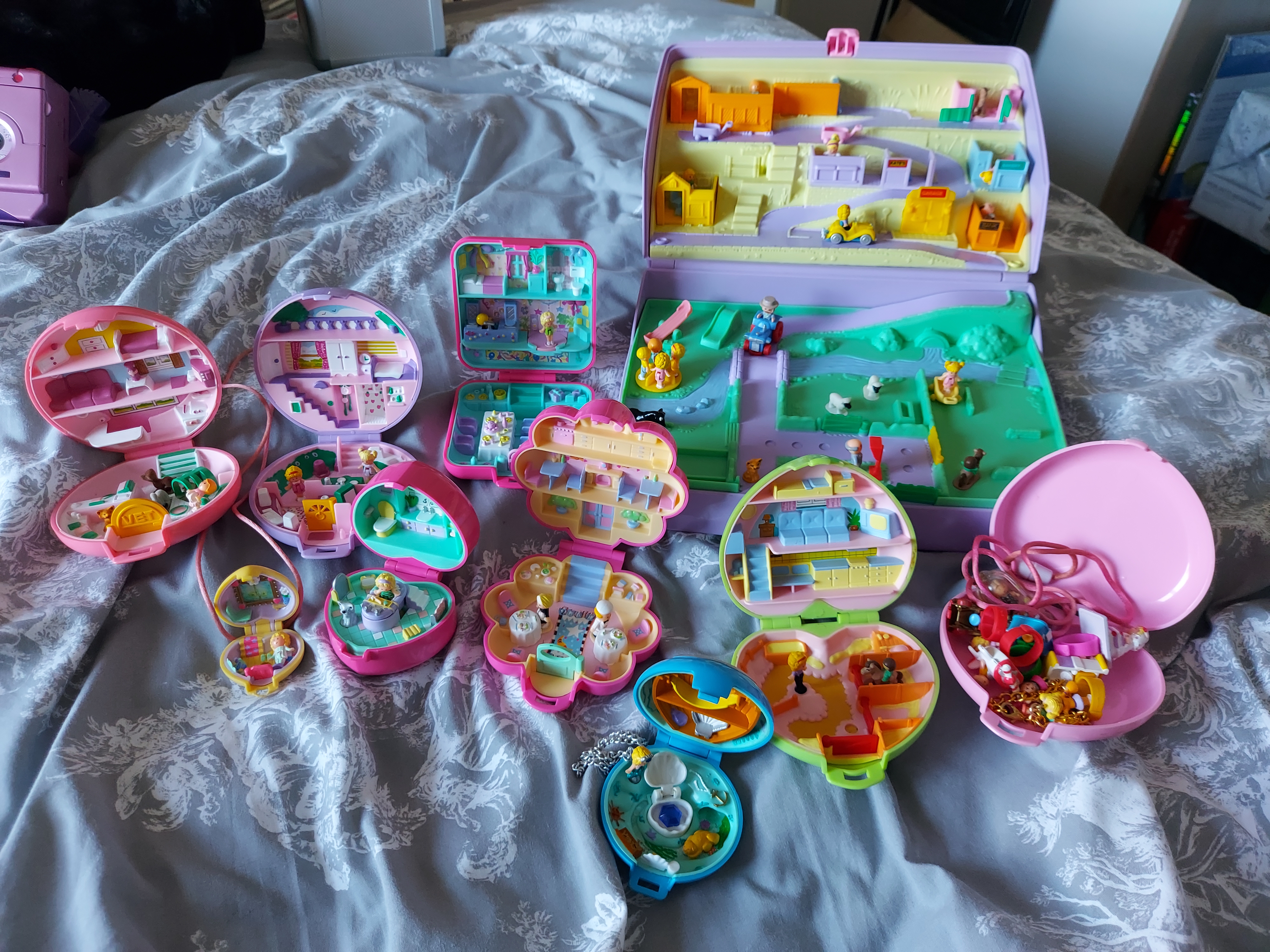
I got out my Polly Pocket collection and had a nice time arranging everything. Playsets are going for £20-200 online which is impressive, but I’ve no intention of selling anything. I’m a bit gutted because I definitely used to have the Funtime Clock but I don’t know what happened to it.
Watch all the Back to the Future films.
Embarrassingly, I’ve never actually seen the films before (although I have seen the stage musical). I really enjoyed watching them – they were brilliant – and it was fun to see what a 1980s idea of 2015 looked like. I’m rather sad we don’t have hoverboards or flying cars. I was particularly disturbed at how much Biff in the alternate 1980s timeline reminded me of Trump.
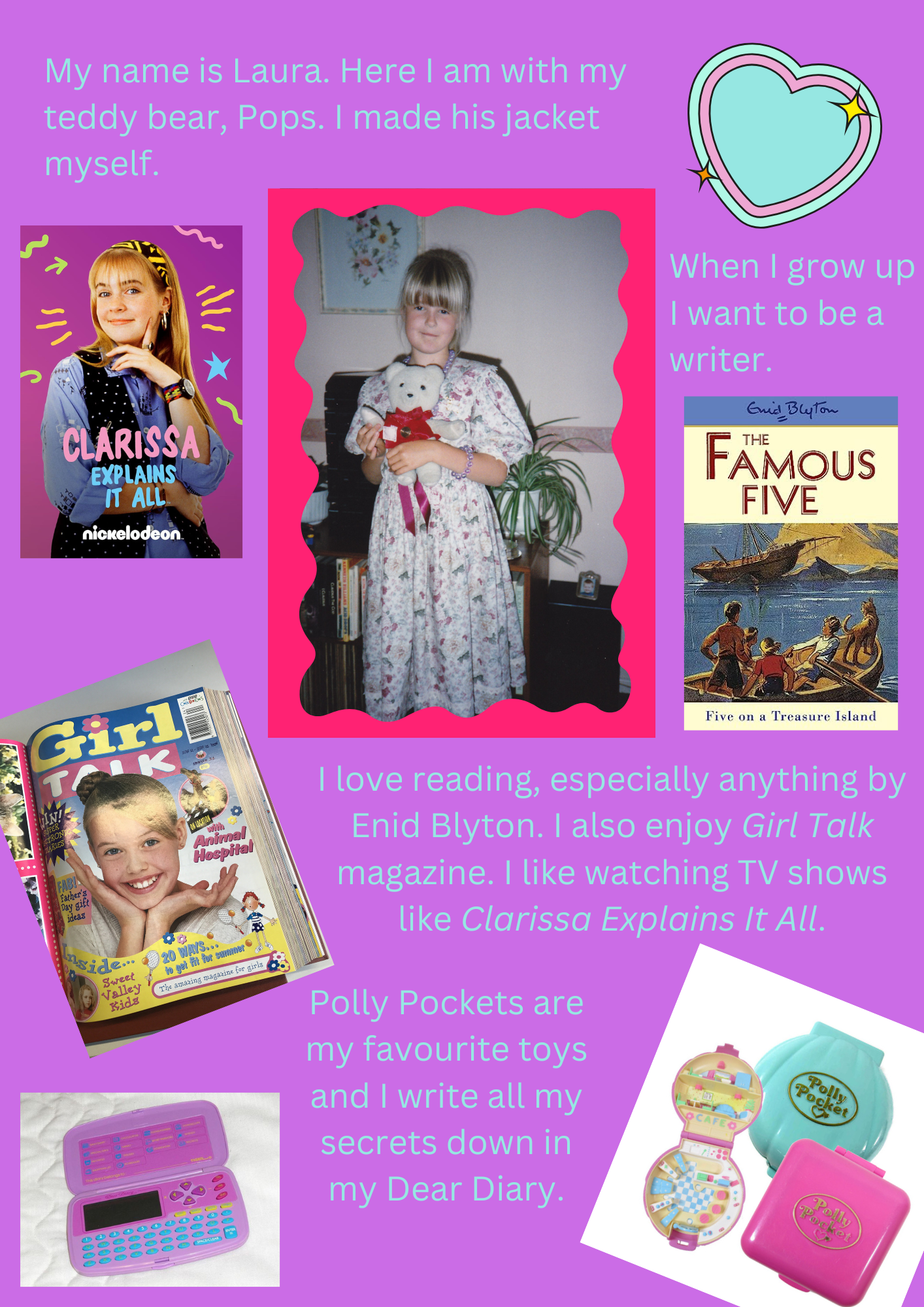
Make a profile of yourself as a child.
It’s 1995 in the photo and I’m not sure why I’m dressed like a haunted Victorian child, but never mind. I still have Pops and he came to Camp last year! I’m pretty sure I was younger than 10 when I played with Polly Pockets, but a lot of my childhood memories have blended together (sure I’m not alone in this).
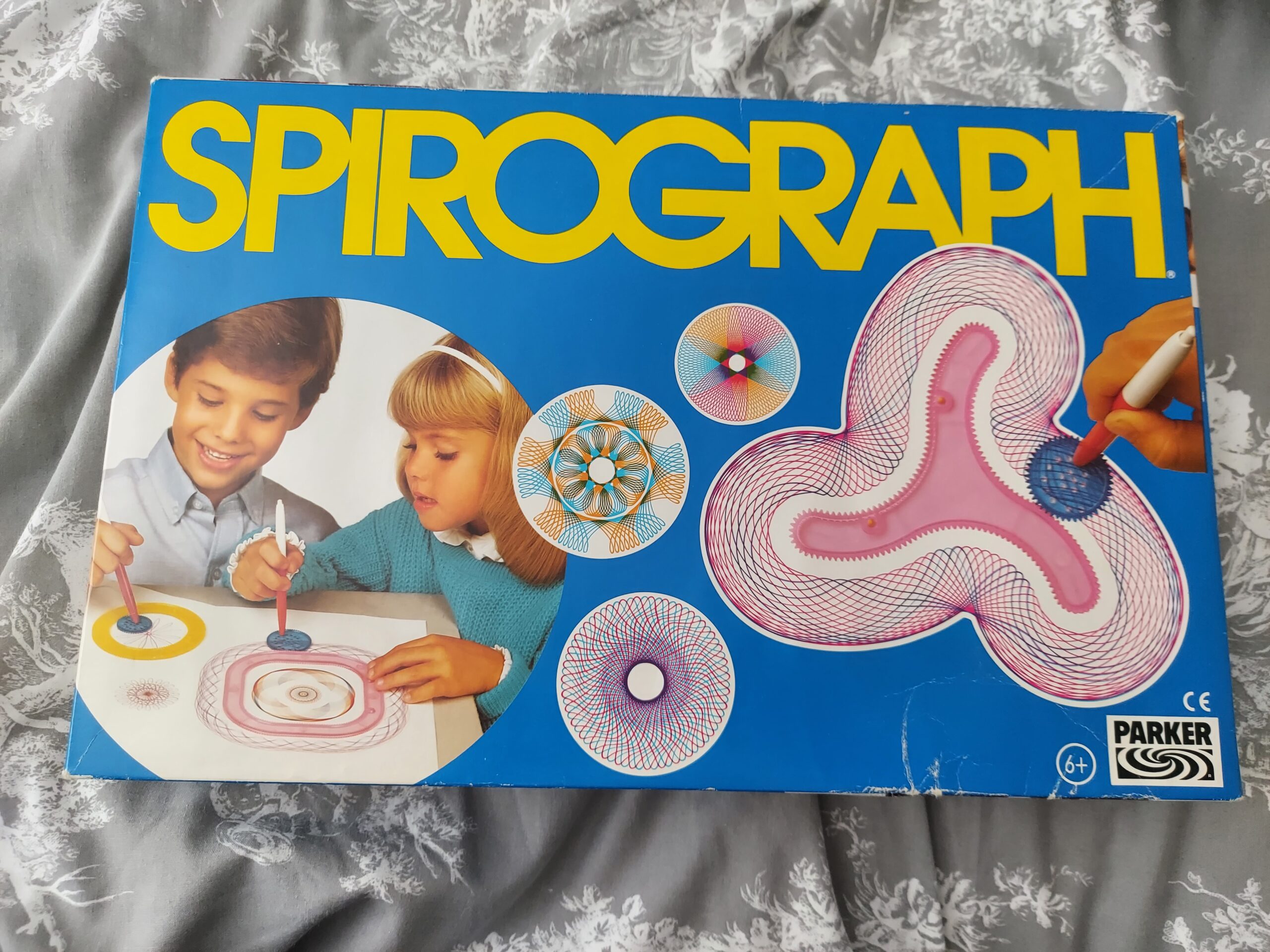
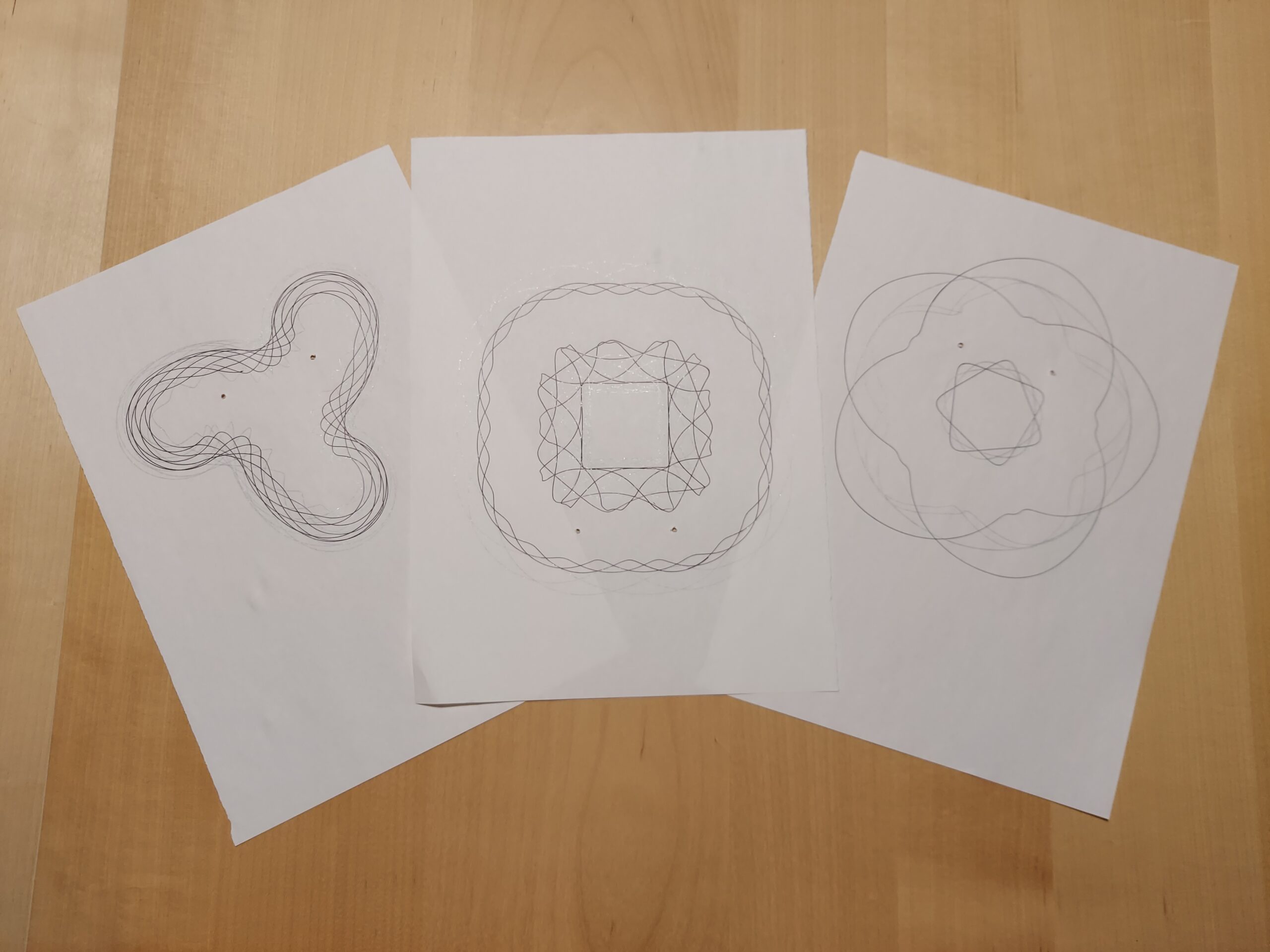
Create some spirograph art.
By some miracle I still have my Spirograph set. The pens have dried out (unsurprising after 30+ years) so I had to use different ones, but otherwise the set still worked just as well as it ever did. I was pleased to see that my own hand-eye coordination has improved.
Learn about a current space exploration mission.
I decided I wanted to do at least one futuristic clause. I chose this one and decided to read about the Psyche mission, which sounds super interesting.
Curiouser and Curiouser is the second Quarterly badge for 2025, and it sounds like it’s going to be a lot of fun.
To complete this badge, I need to do the following:
Complete Event Planner, Confectioner or Barista. I’ve completed Confectioner already and plan to finish Event Planner in July, so I’ve decided to work on Barista for this badge.
Complete Apothecary, Mixologist, or one of the Advanced versions. I’ve decided on Advanced Mixologist.
Complete one Global badge based on learning: I’ve chosen Local History.
Complete one Wild badge based on learning: I’ve chosen Geographer.
I will link to my posts on the above badges once I’ve completed them.
I also need to learn a curious fact each week for 12 weeks, and present the facts in an interesting way.
End of quarter update – Here are my curious facts, which I also presented as a little quiz:
1. The fear of long words is called Hippopotomonstrosesquippedaliophobia.
2. Genghis Khan killed so many people that the carbon dioxide levels in the atmosphere were significantly decreased as a result.
3. The sun is extremely loud, but we can’t hear it because sound can’t travel through the vacuum of space.
4. Lobsters have teeth in their stomachs.
5. 31 October 2000 was the last time all of humanity was on Earth. Since then there has always been at least one person in space.
6. Koala fingerprints are so similar to human fingerprints that they could be mistaken for each other, potentially confusing crime scene investigators.
7. In 2014, there was a Tinder match in Antarctica, between two research scientists, one of whom was working at the US McMurdo Station while the other was camping a 45-minute helicopter ride away.
8. The Chupa Chups logo was designed by Salvador Dalí.
9. The term cereal is derived from the name of the Roman goddess of grain crops and fertility, Ceres.
10. All clown fish are born male and can become female later in life.
11. Sharks evolved before dinosaurs did.
12. In Ancient Egypt, the word for ‘cat’ was actually pronounced ‘mew’, or ‘meow’.