ShaLT Walk 3

After completing the first two ShaLT walks, I went back to central London the very next day to tackle Walk 3. I only did one walk today as it was by far the densest in terms of locations.

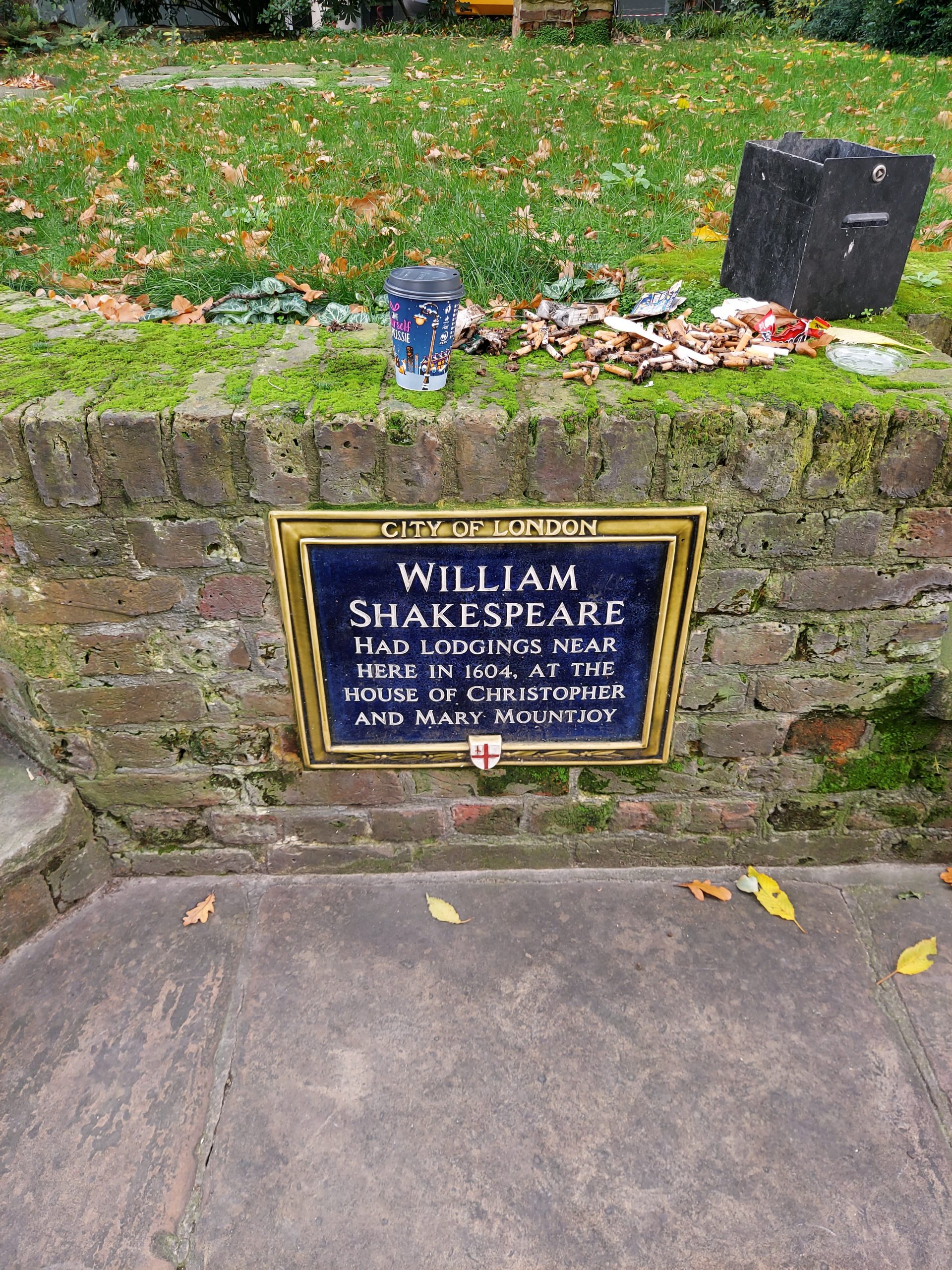
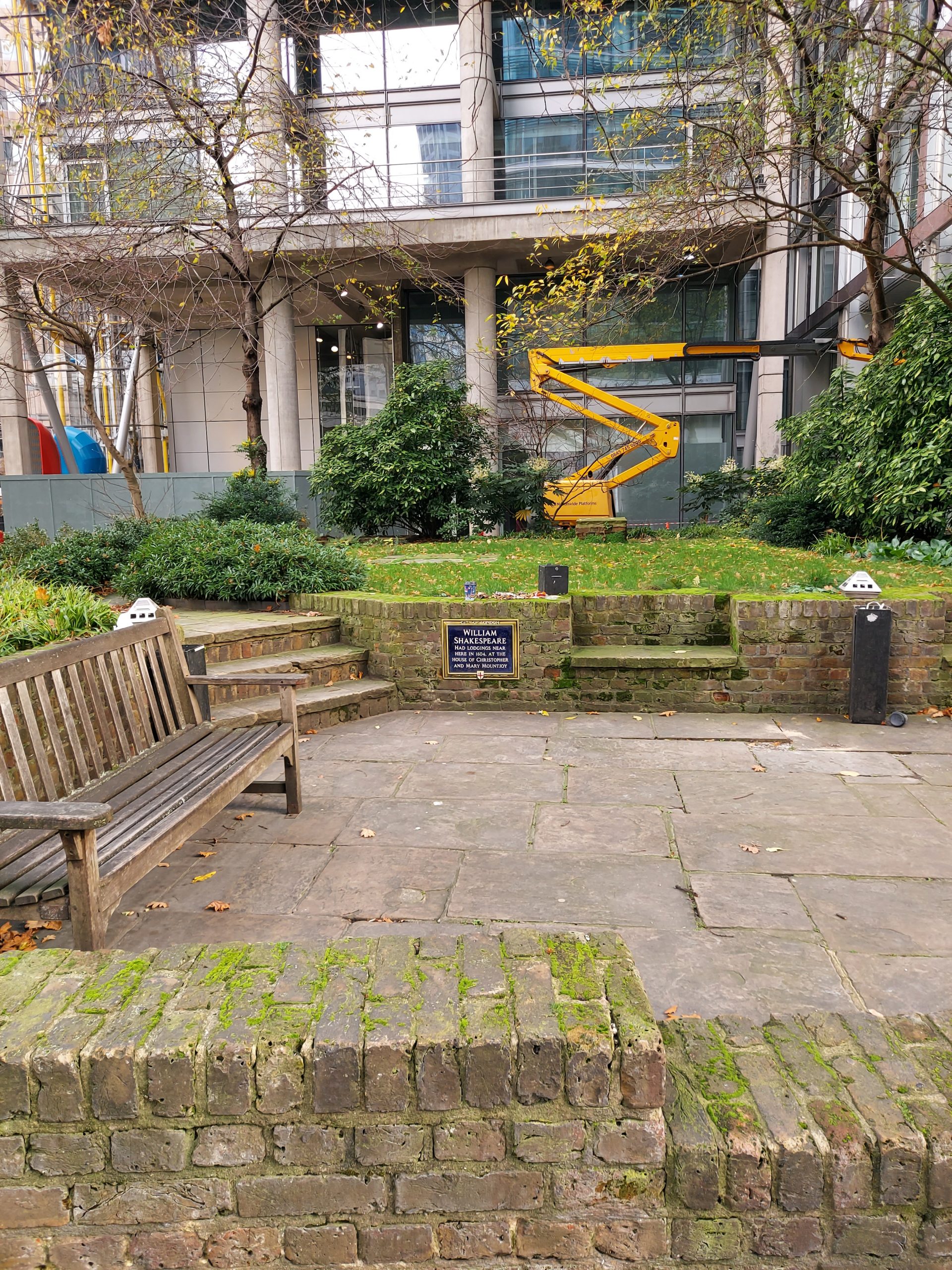
The walk began at St Paul’s, and the first thing I did, although it wasn’t officially part of the walk, was to head north to find the site of Shakespeare’s former lodgings on Silver Street, near St Giles’s Church. I also found the third location of the Revels Office (1612-30), on Peter’s Hill near the College of Arms.
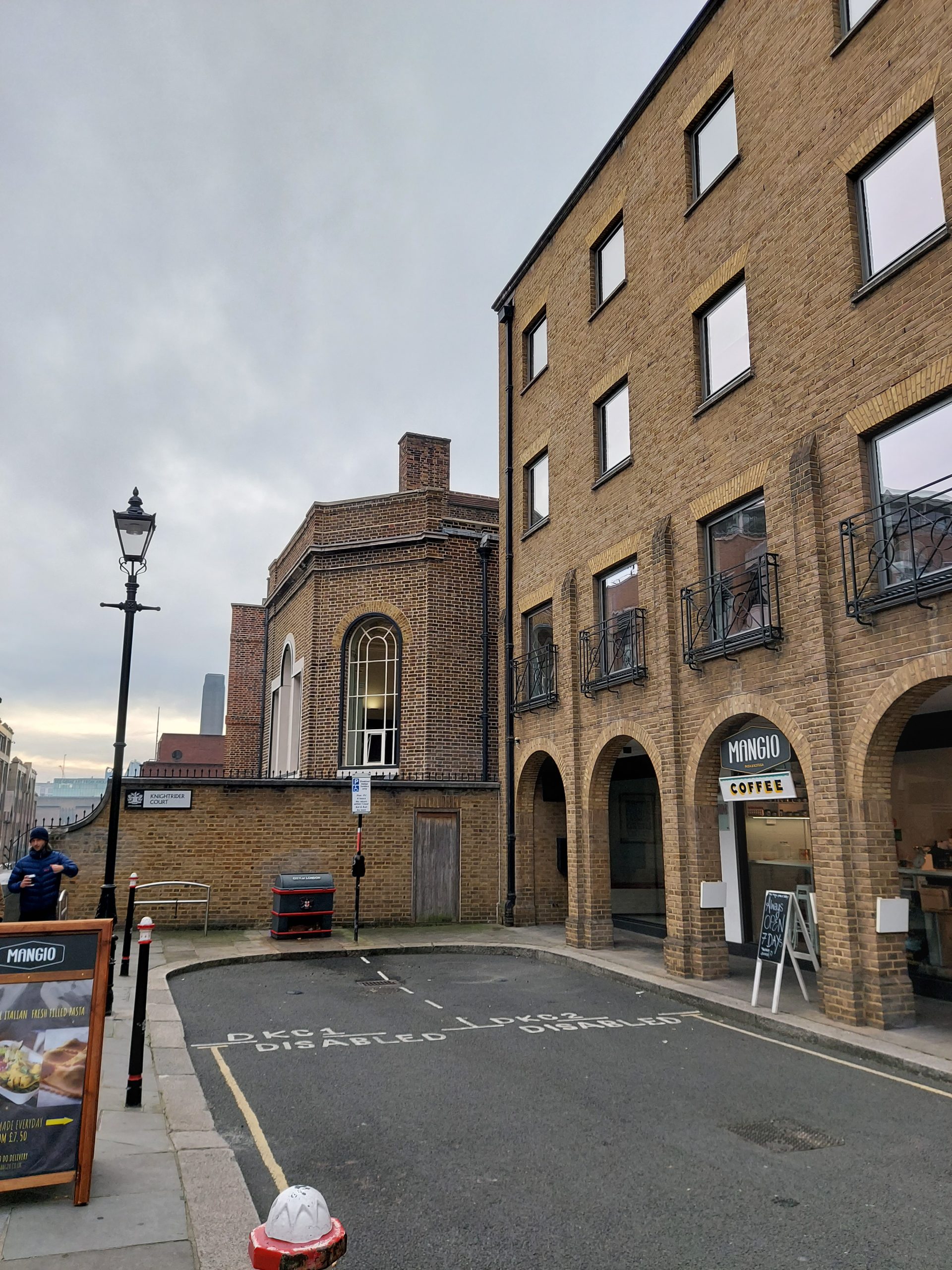
I then followed the map to the location of the Bel Savage at Limeburner Lane. In 1583 four inns were licensed by the City for dramatic performances; the Bel Savage was one of these taverns. Playing in the City was banned in 1594.
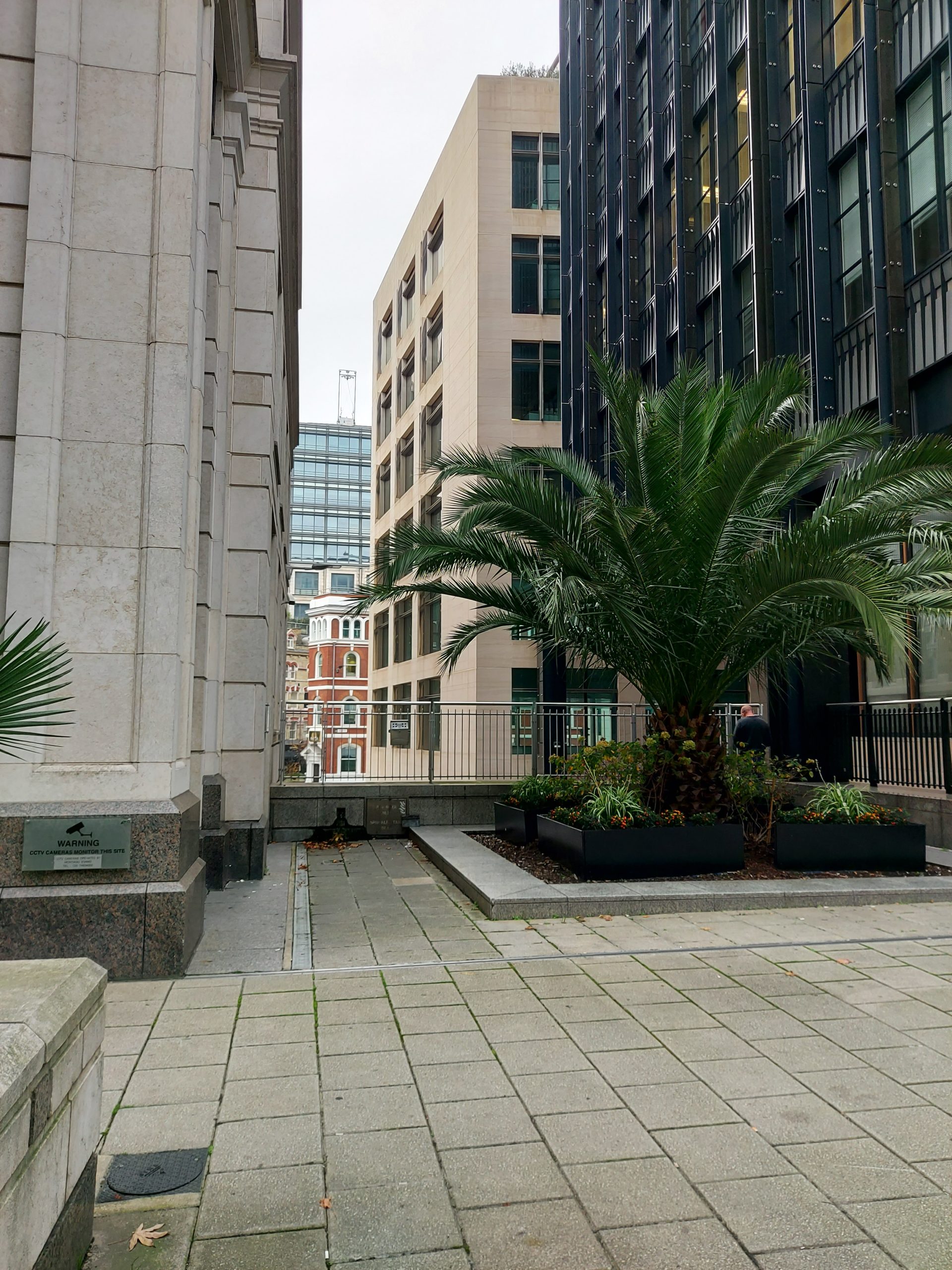
Grey pavement and modern buildings
Location of the Bel Savage

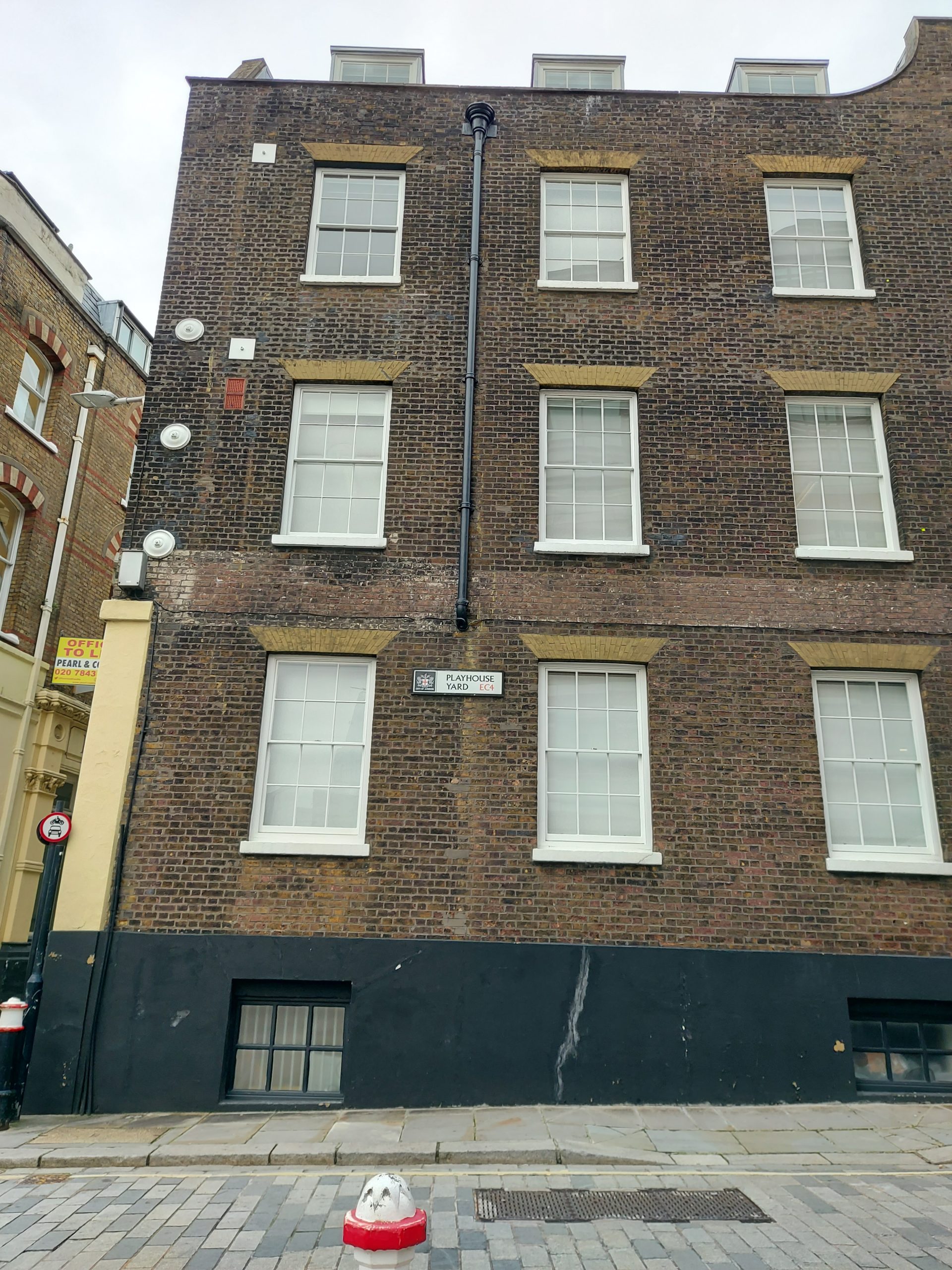
I tried to find Shakespeare’s other known London residence at the Blackfriars East Gatehouse, but I struggled with this and gave up in the end. I had a bit more luck with the site of the two Blackfriars theatres: originally a smaller stage in an upper room from 1576-90, then a purpose-built stage in upper rooms, accessed from Playhouse Yard, which staged plays between 1596 and 1642. This second theatre became the model for all future theatres, and was used by Shakespeare’s company, who staged plays at the Globe in summer and the Blackfriars in winter – a programme emulated by the modern-day Shakespeare’s Globe.
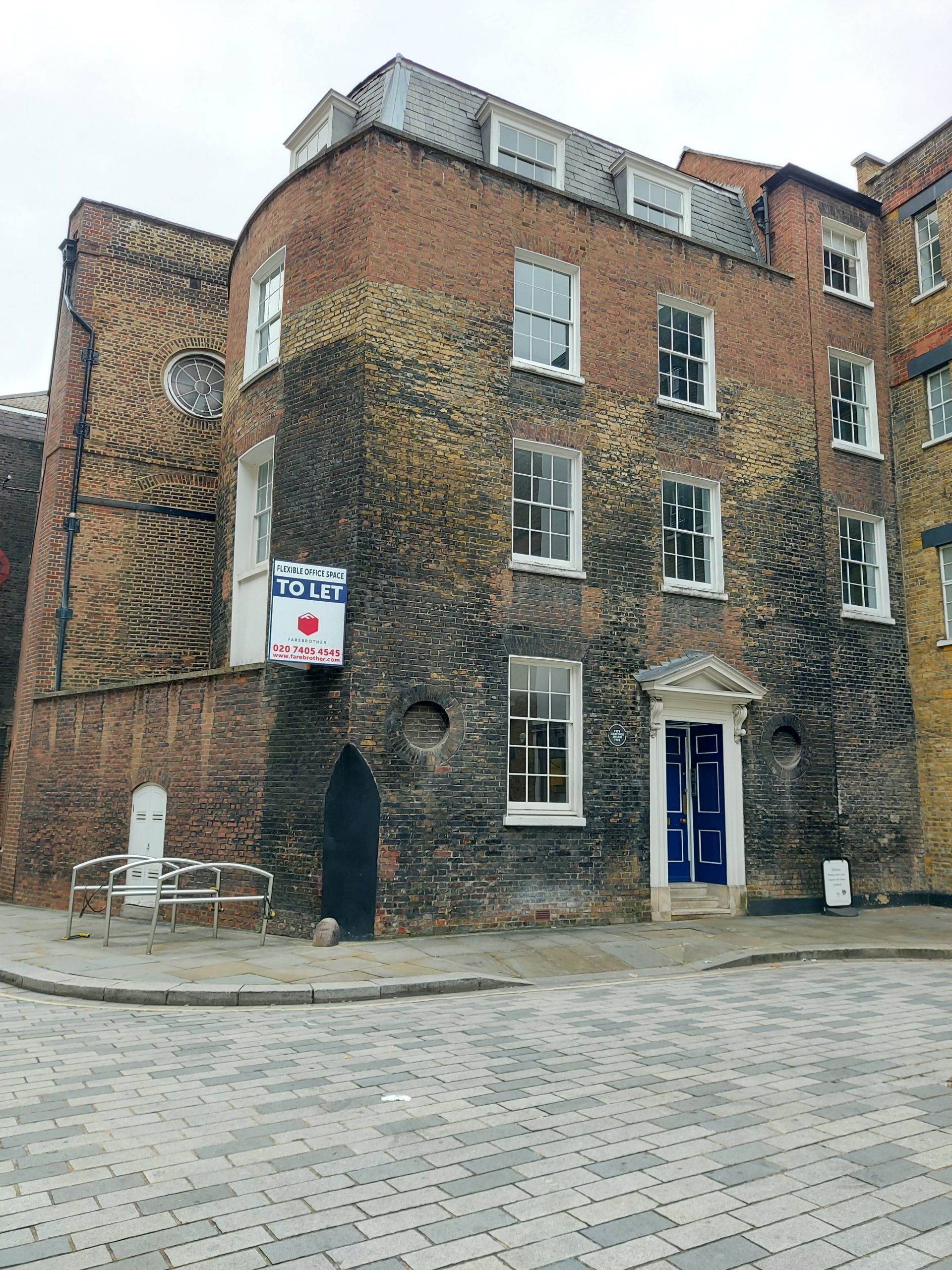
Disentangling myself from the maze of streets surrounding Blackfriars, I headed west towards the location of Salisbury Court. This indoor theatre was opened in 1629, the last of the period’s theatres to open. William Blagrave (Deputy Master of the Revels) and actor Richard Gunnell hoped that it would compete with the other nearby indoor theatres including the Blackfriars. Later on the Richard Brome became the resident writer, and many of his more famous works were staged here, including The Asparagus Garden.
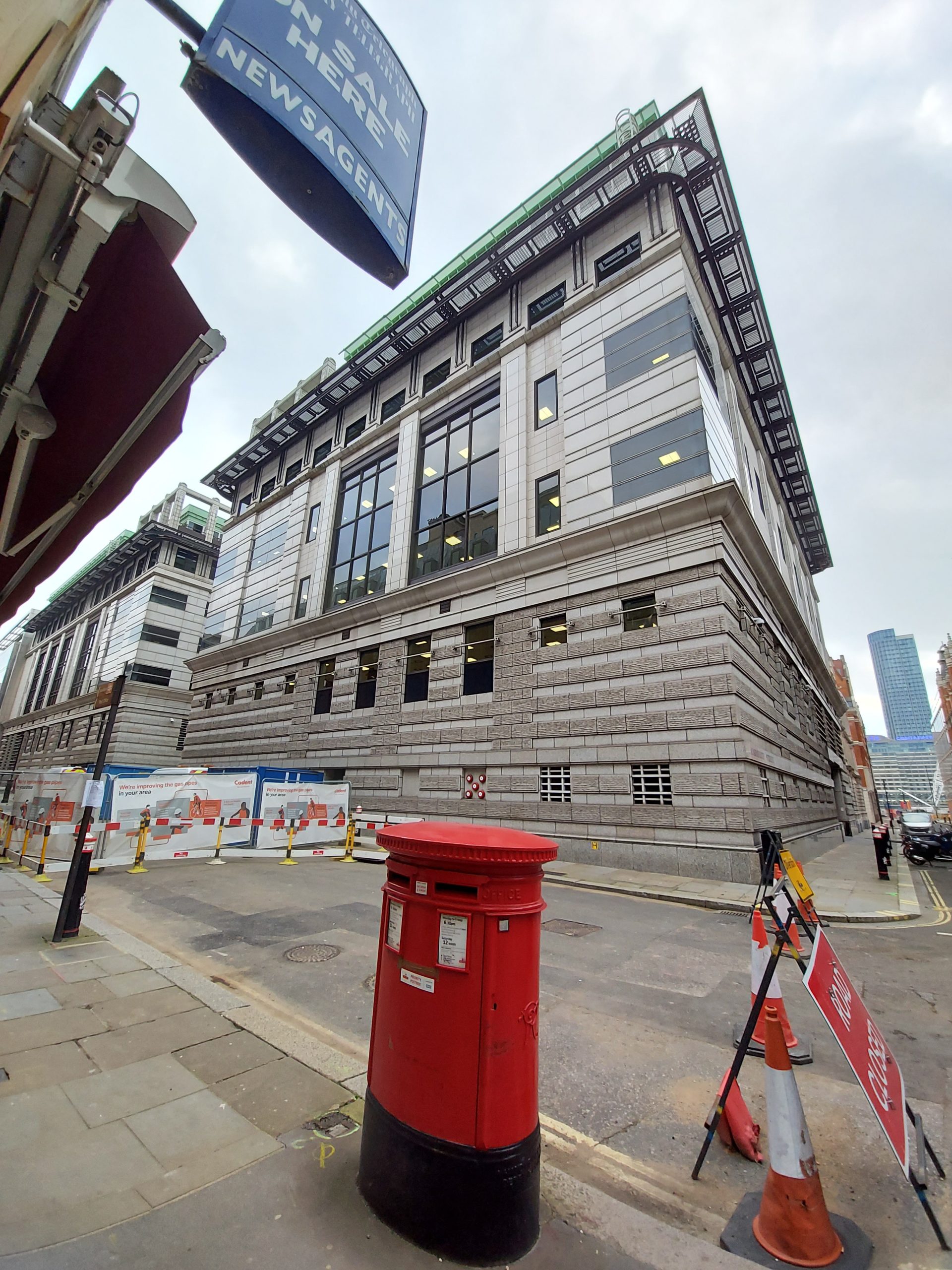
A grey building with a postbox in front
Location of Salisbury Court

A little further along was the location of the Whitefriars (as well as the second Revels Office, 1608-1611). Paul Rosseter opened this theatre in 1609, and at first it was home to the boy actors from the Blackfriars, until 1613 when the company combined with the Lady Elizabeth’s Men until the lease ended in 1614.
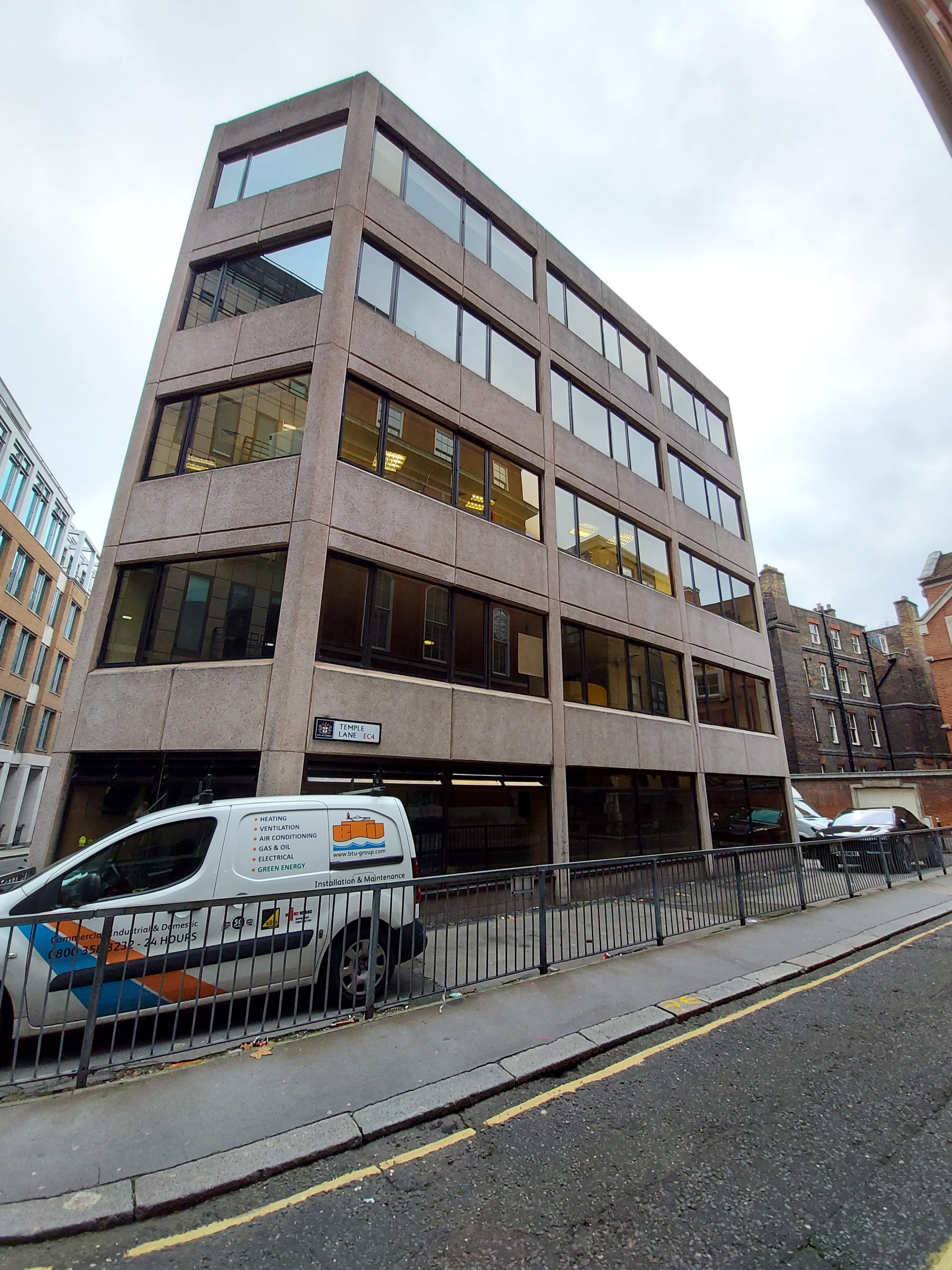
Grey modernist building
Location of the Whitefriars

This walk included the Inns of Court: Inner Temple Hall, Middle Temple Hall, Lincoln’s Inn Hall, and Grays’s Inn Hall. However, these sites were all shut when I tried to visit. I have attended performances of Elizabethan plays at both Inner Temple and Middle Temple Halls, so I wasn’t too upset about this. Several of Shakespeare’s plays were performed at the Inns in front of the Queen, such as The Comedy of Errors and Twelfth Night.
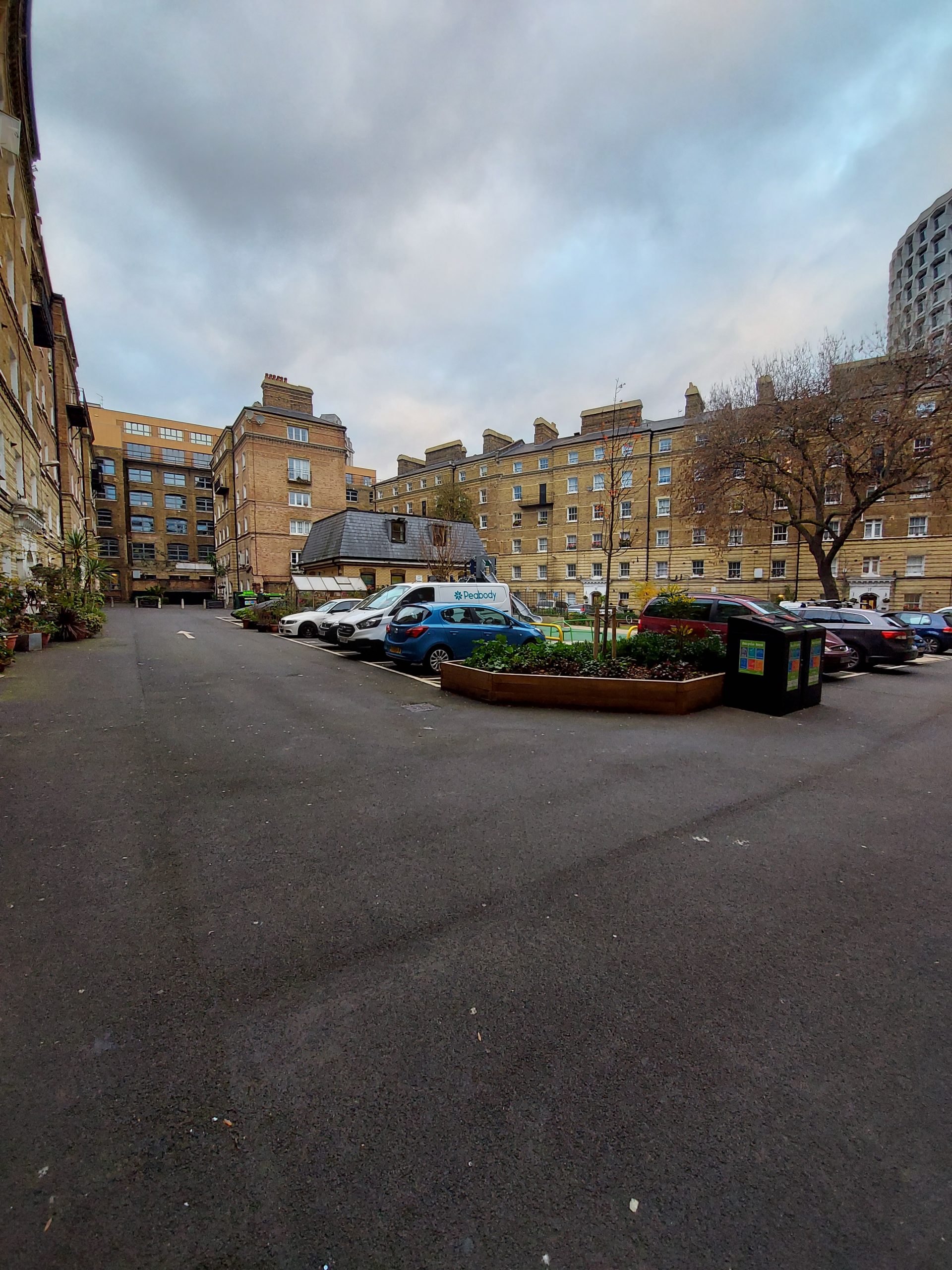
Inner courtyard of a West End housing estate
Location of the Cockpit/Phoenix

The walk ended in the modern West End – the location of the Cockpit/Phoenix, now the inner courtyard of a modern housing estate. This theatre was founded in 1616-17 by actor Christopher Beeston, and named after a real cockpit in Cockpit Court. Angry playgoers burnt down the theatre soon after it opened – annoyed that the Queen’s Men from the Red Bull were performing here and charging higher prices – but was almost immediately rebuilt.
ShaLT Walks 1 & 2

ShaLT, the Shakespearean London Theatres project, has created a map of London containing five walks designed to show theatre fans the sights and sounds of the city’s early theatres (1567-1642). I had some annual leave to use up, and not much planned owing to the latest lockdown, so I decided to use my time wisely – to follow each of these walks.

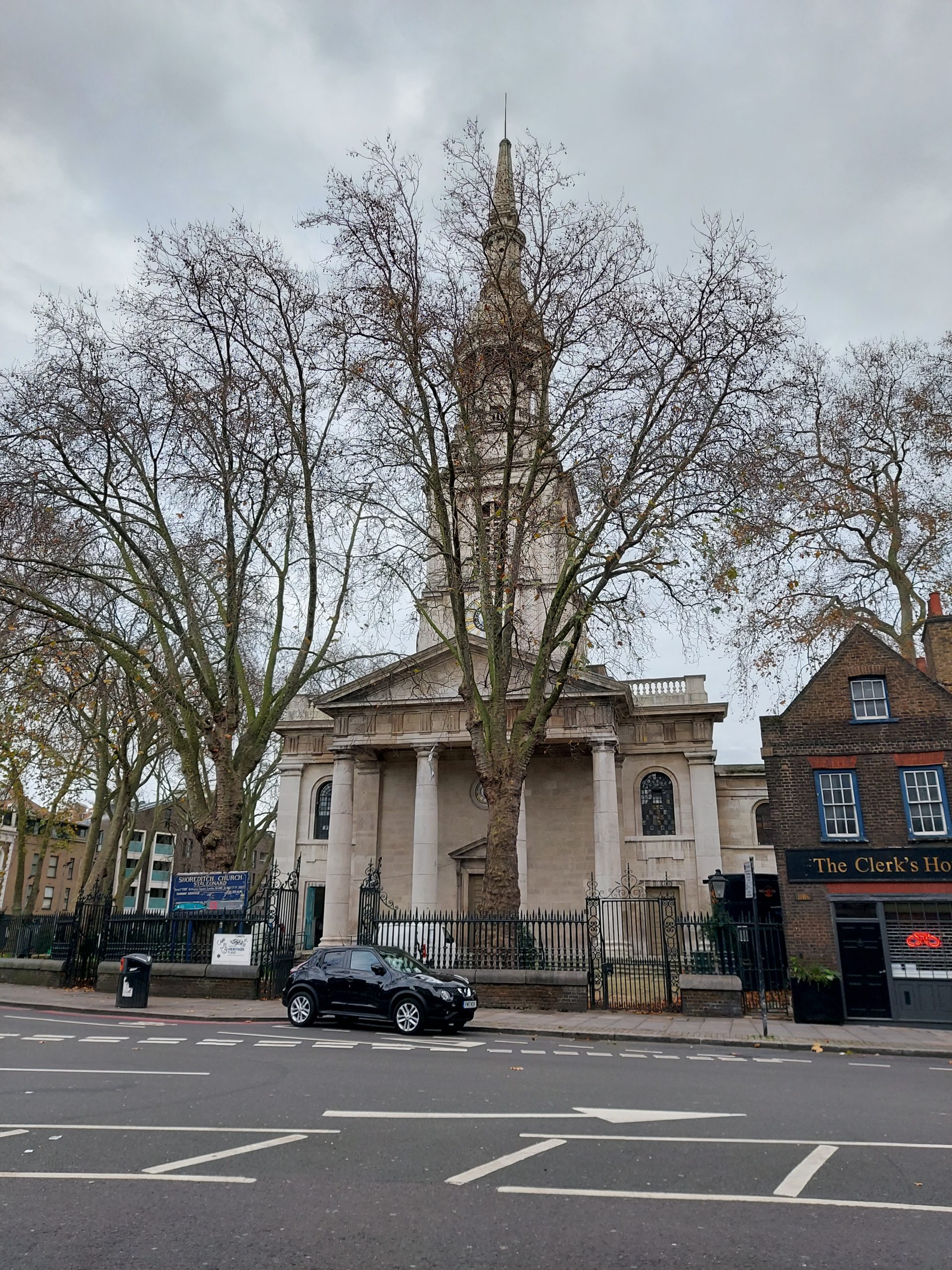
Being nothing if not logical, I began with Walk 1. It began in Shoreditch, the home of many of the earliest Elizabethan theatres. Being just outside of the City of London, it wasn’t subject to the same rules and regulations, which came in handy when putting on plays. The first stop was St Leonard’s Church, the burial place of many notable actors of the period, including Richard Burbage, the leading man in many of Shakespeare’s plays, as well as the comedian Richard Tarlton and the actor Gabriel Spenser (who was killed by Ben Jonson in a duel). Also buried here is Richard’s father James, the founder of the Theatre.

A church with a tall spire
St Leonard’s Church, Shoreditch

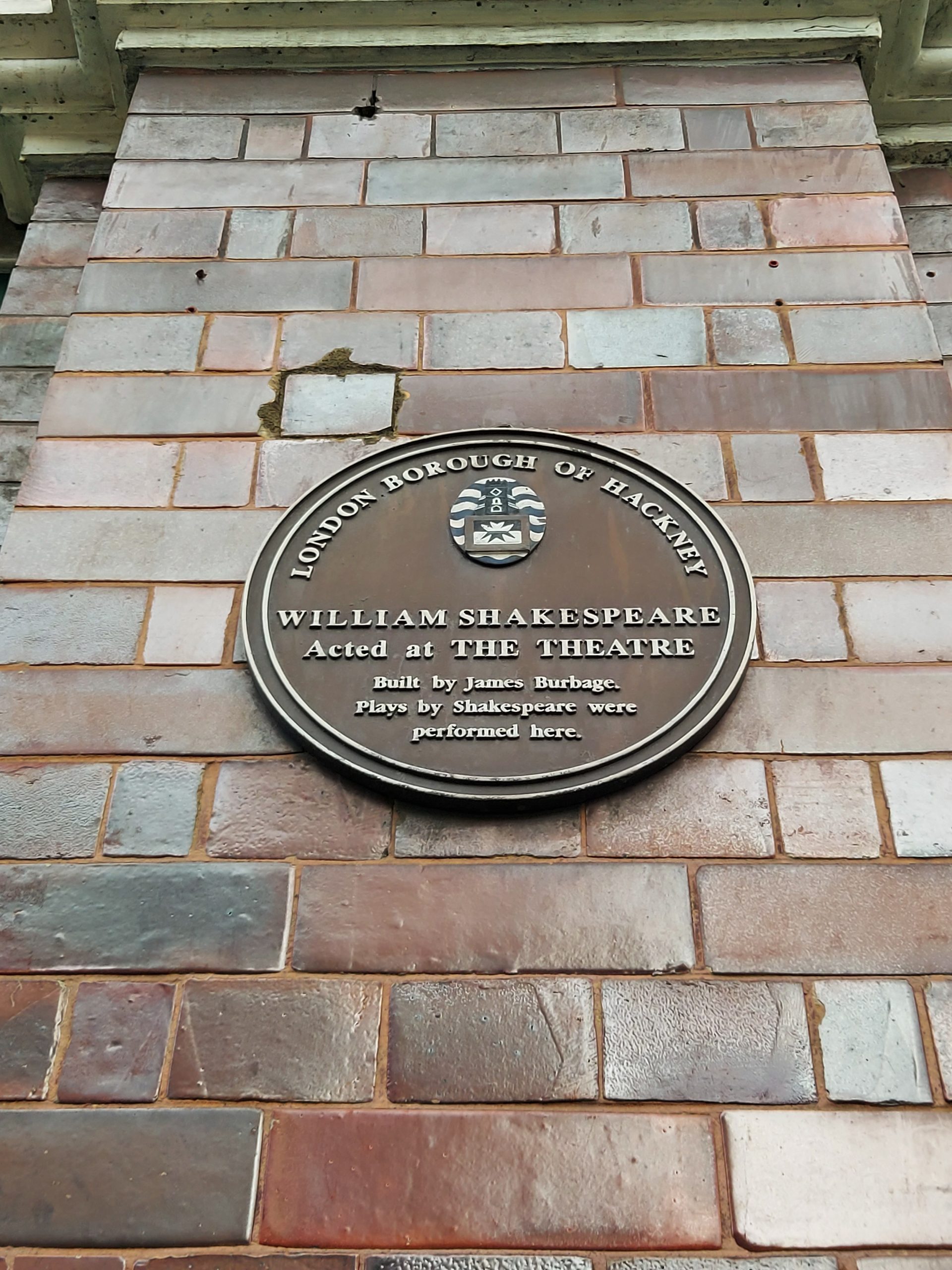
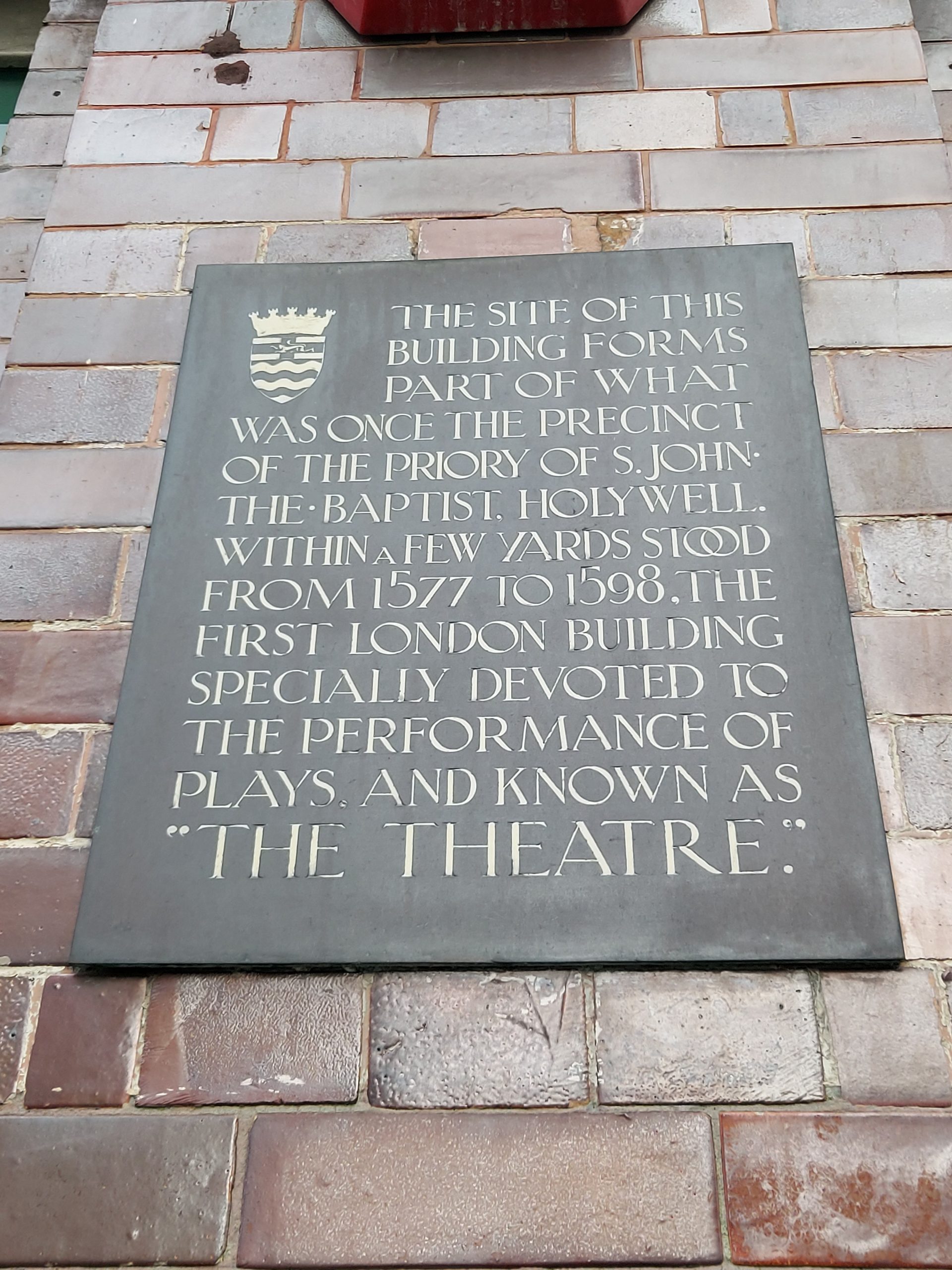
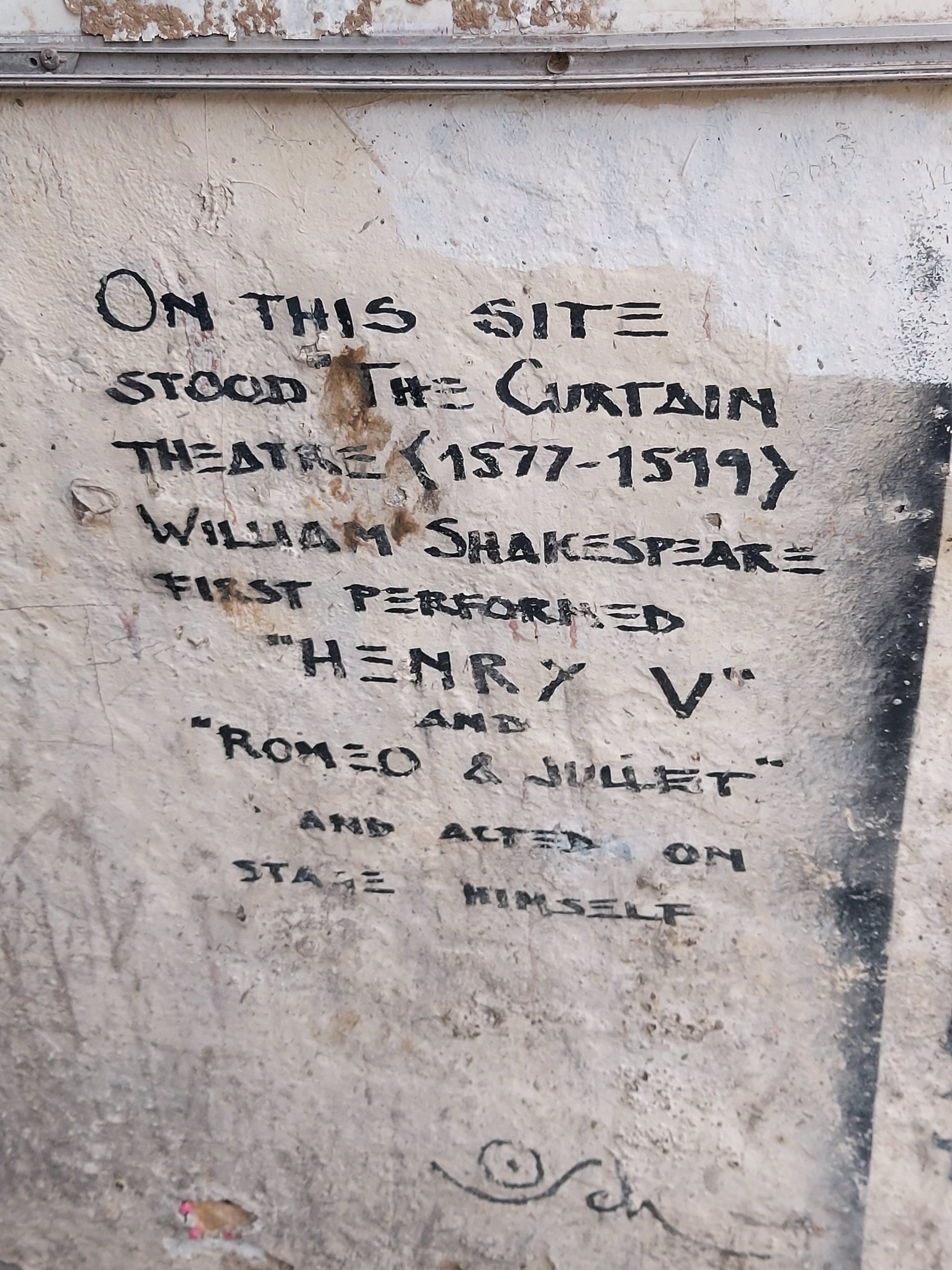
From here, the route follows a southeast course, taking in the sites of the early theatres, the Theatre, the Curtain and the Fortune. Nothing is left above ground of these historic theatres, though plaques mark the location of the Theatre and the Curtain.

The Theatre was the first purpose-built playhouse in Elizabethan England, opening in 1576. Its name evoked the Roman amphitheatre, or theatrum, design. It premiered Shakespeare’s plays, including Romeo and Juliet, in the 1590s and also staged plays by the likes of Thomas Kyd and Christopher Marlowe. A popular legend states that after a dispute with the landowners, the Theatre was dismantled overnight and transported over the river to be rebuilt as the Globe.

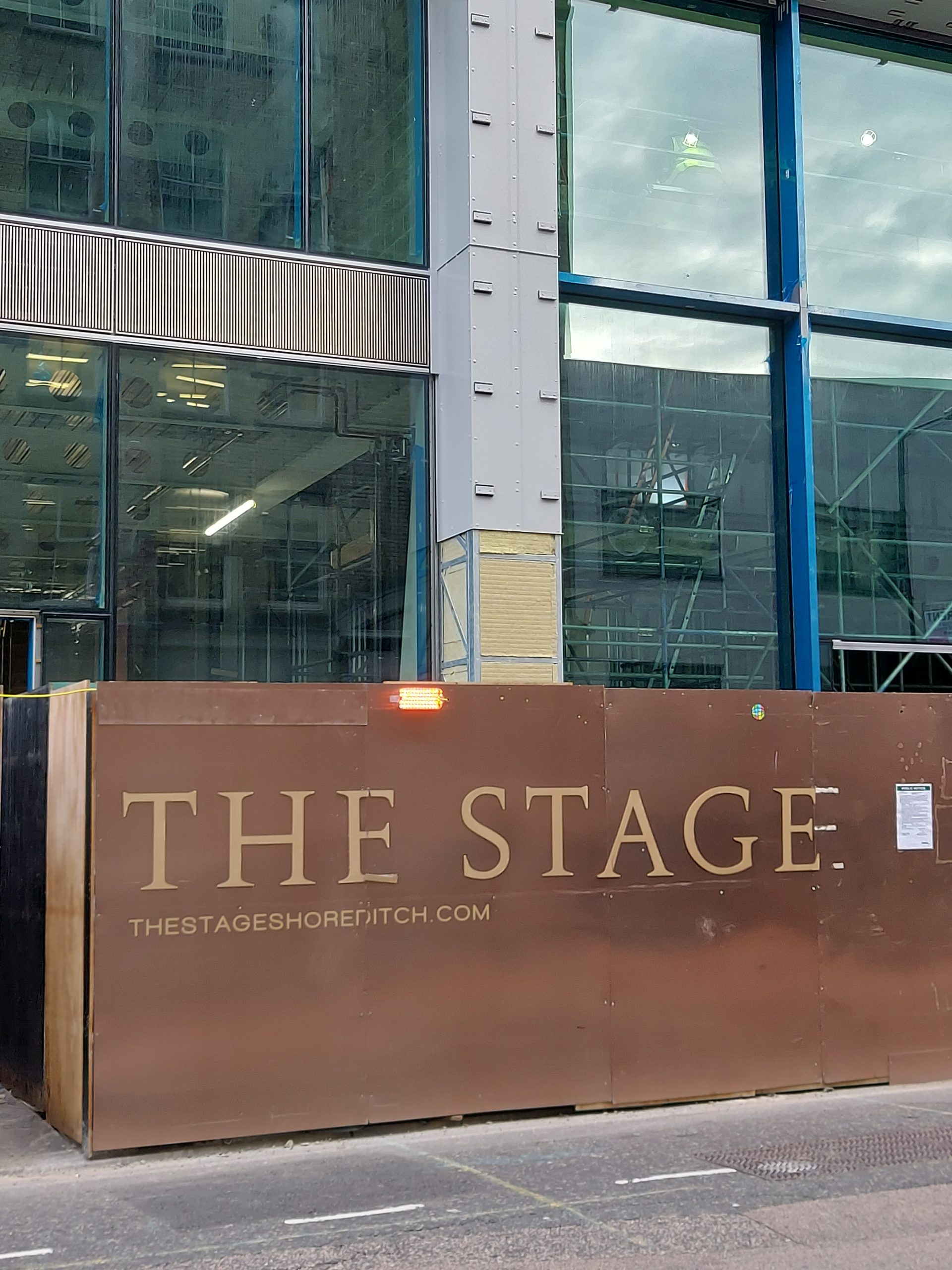
The Curtain was opened by Henry Lanman in 1577. Only 100 yards away from the Theatre, it showed many of the same plays. It is possible that the Horse and Groom pub near the site marks the location of a former victualling house. Recent archaeological work on the site of the Curtain uncovered the remains of the playhouse and once the site – known as The Stage Shoreditch – is redeveloped into housing, there are plans for a heritage centre.

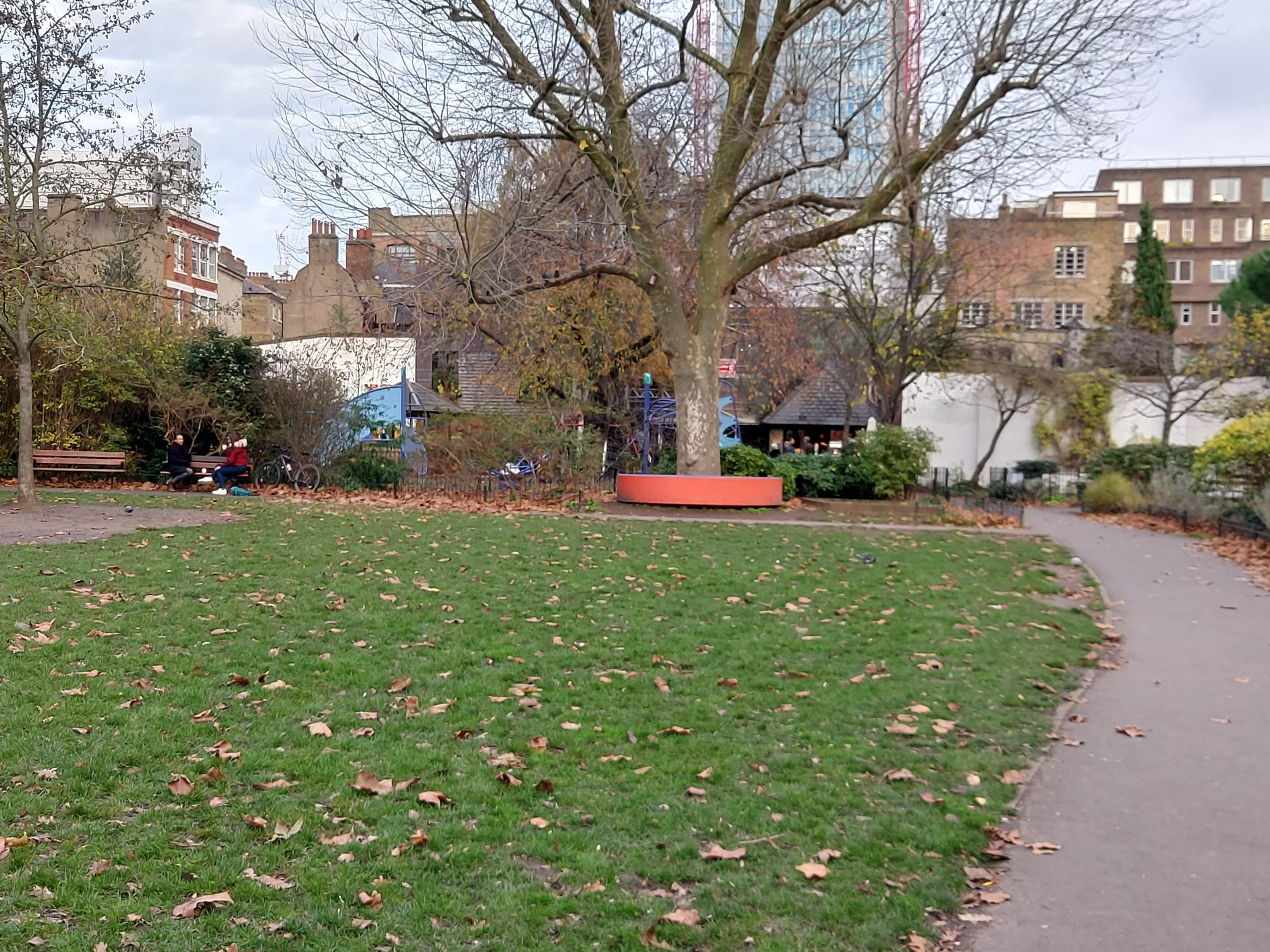
The Fortune playhouse was built in 1600, replacing the Rose as the main theatre of Philip Henslowe and Edward Alleyn. Destroyed by fire in 1621, it was rebuilt and remained open until 1642. The theatre hosted classics as well as new productions such as The Roaring Girl by Thomas Middleton and Thomas Dekker. The Fortune theatre site is now occupied by a community park – I wonder if there is anything interesting to be found beneath the grass?

A grassy community park with a children's play area and footpaths
Fortune Street Park, site of the Fortune Theatre

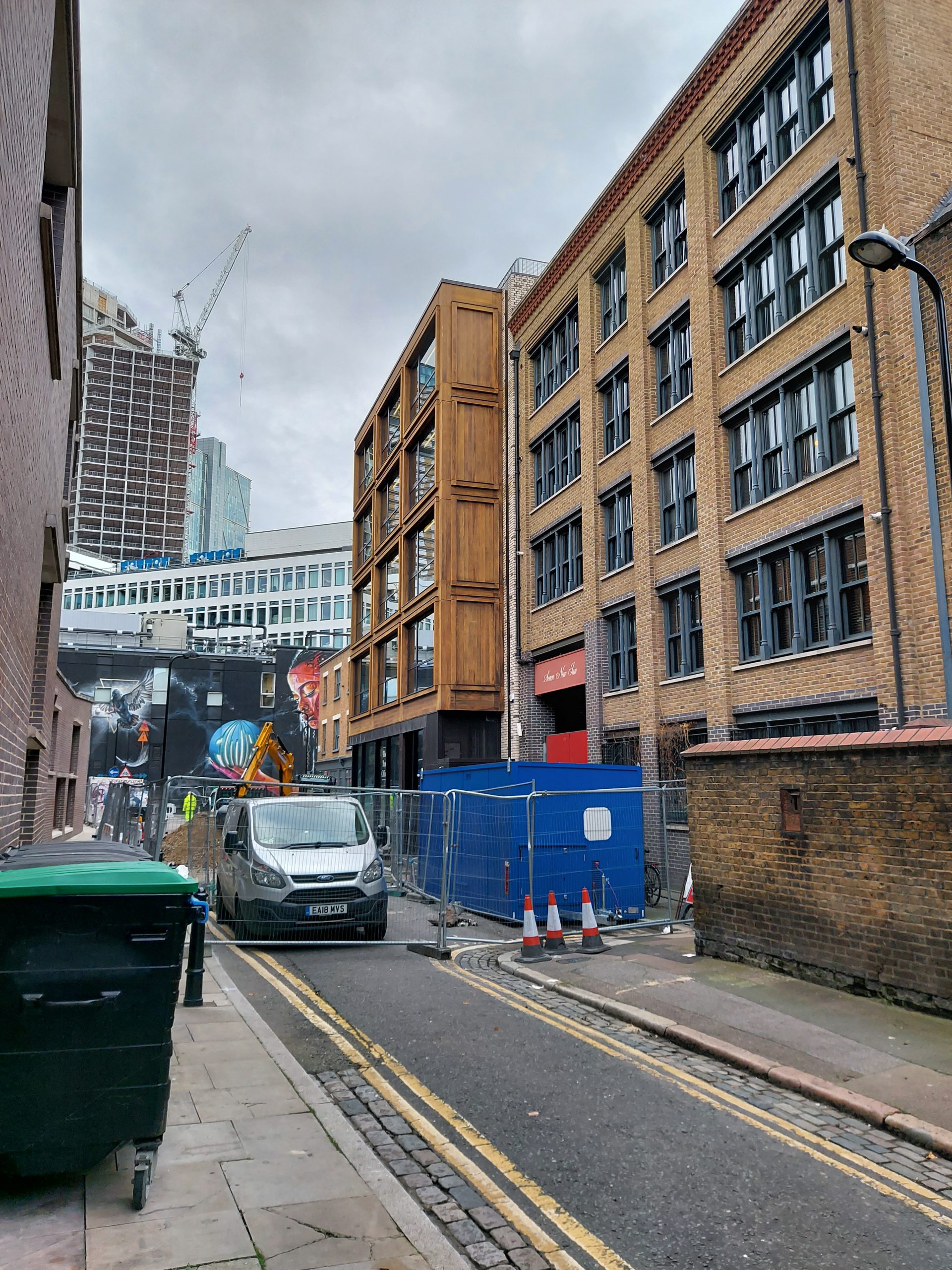
Walk 1 ends at the Barbican, and leads nicely into Walk 2, which begins at St Giles’s Church on the Barbican site – the burial place of John Milton, poet and keen theatregoer. This walk heads northwest into Clerkenwell and takes in the earliest location of the Revels Office. From 1578 to 1607 Sir Edmund Tilney oversaw and censored plays from here, including Shakespeare’s.

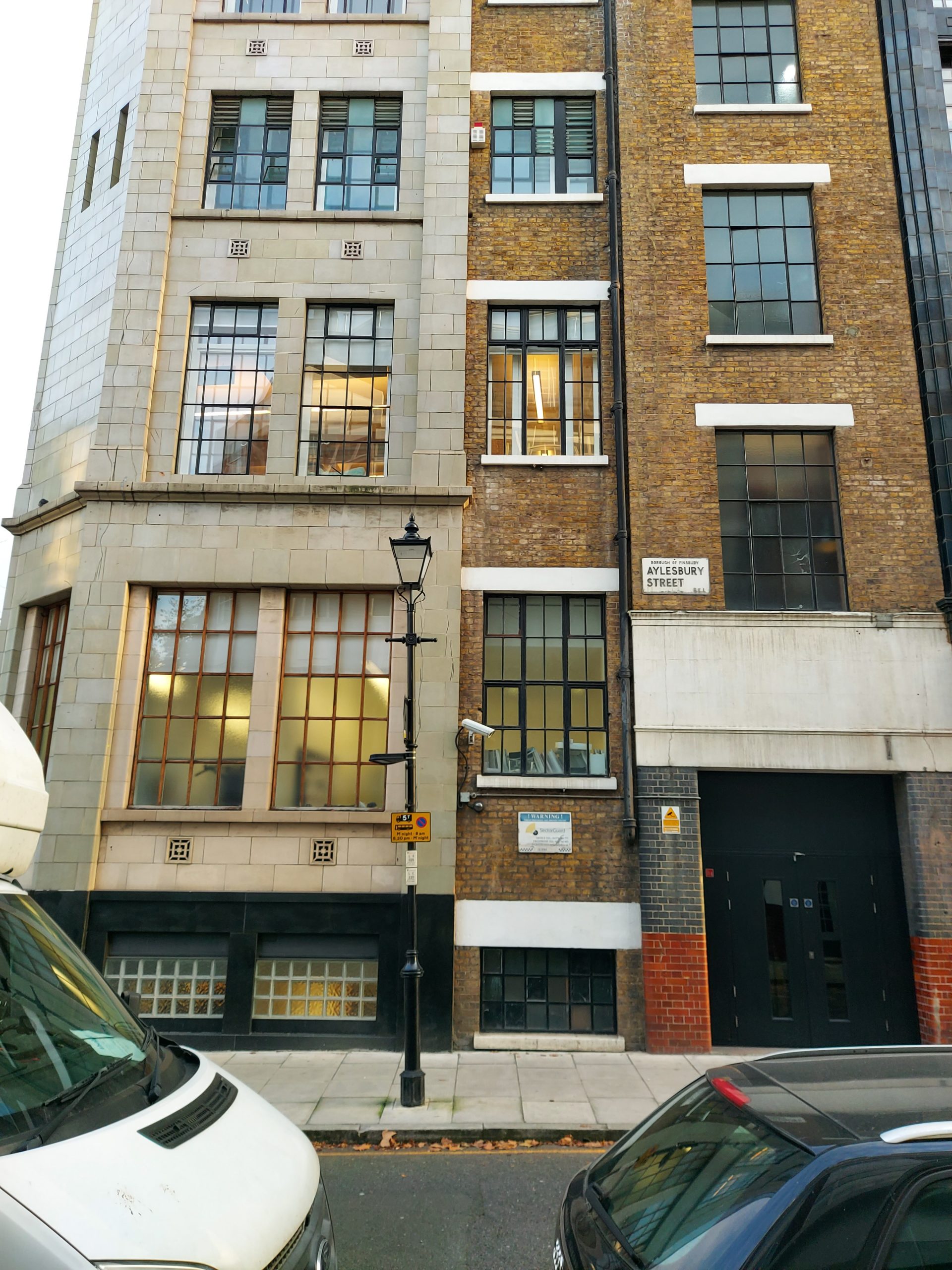
Tall brick building on a street lined with cars
The Revels Office, St John’s Priory buildings, Clerkenwell

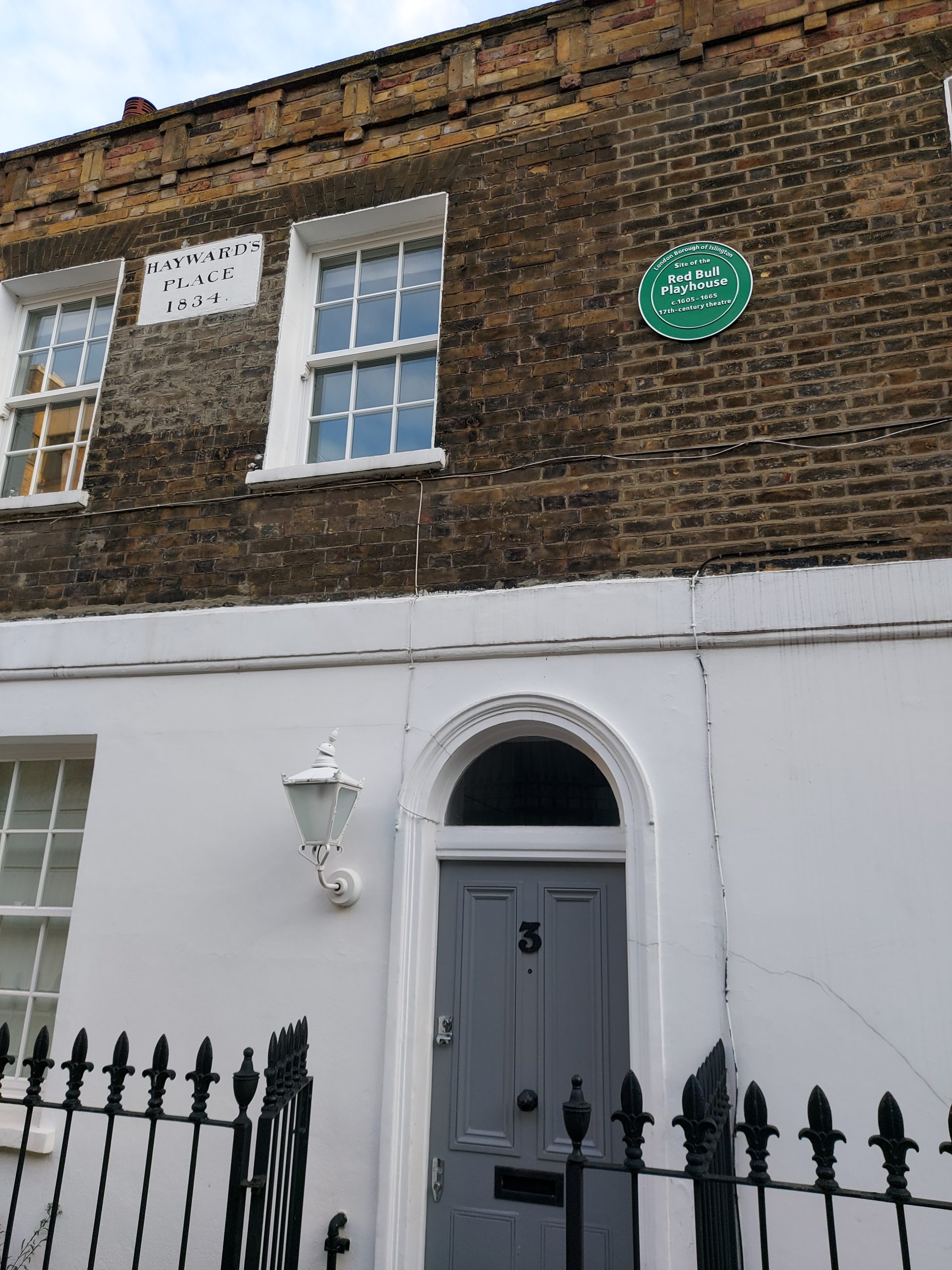
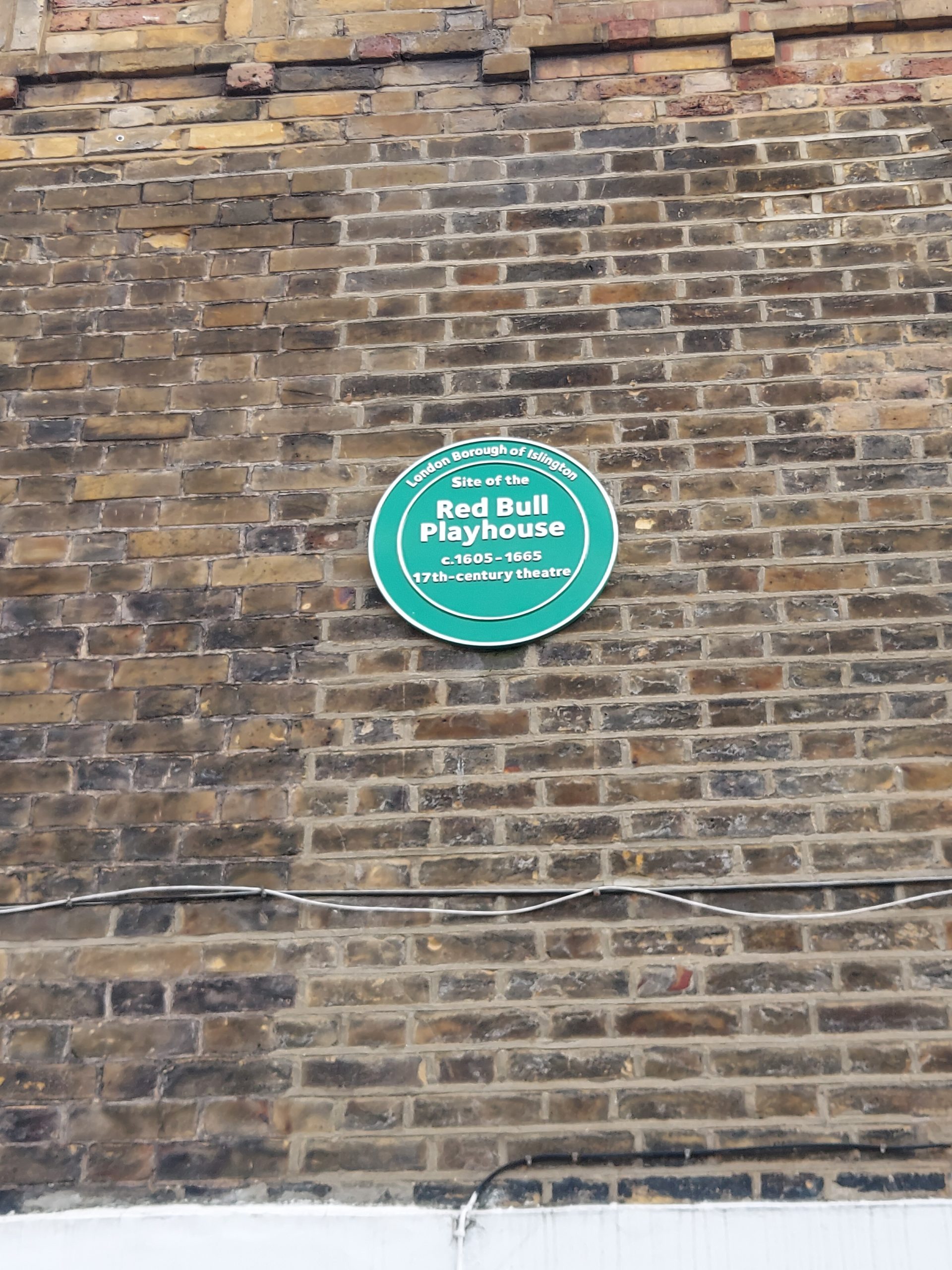
Walk 2 ends at the site of the Red Bull playhouse. This theatre was converted from an inn in 1604 and remained open until 1642. For many years it was the home of the Queen’s Men. Notable plays staged here include Thomas Heywood’s The Four Prentices of London and John Webster’s The White Devil.

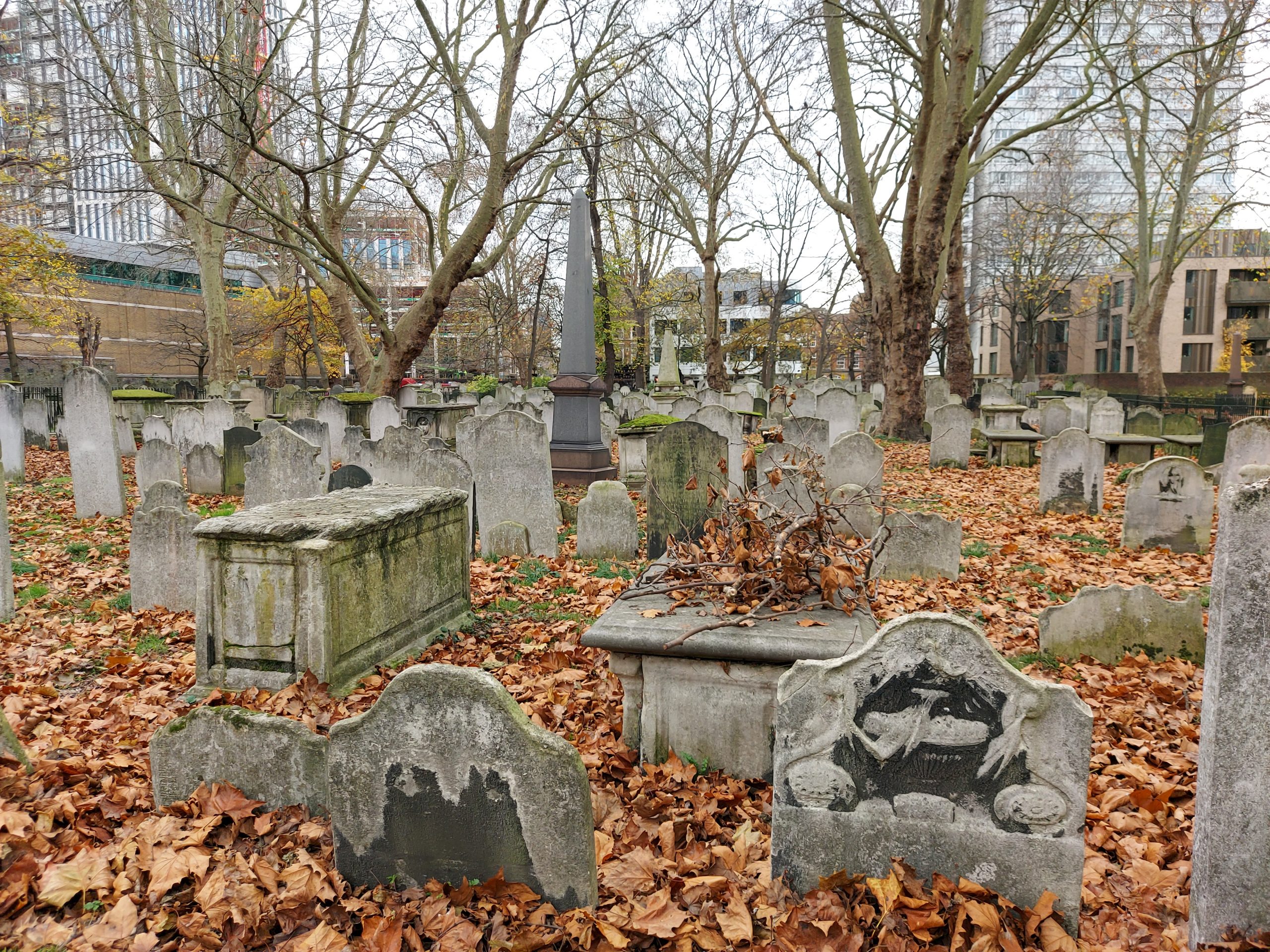
Bunhill Fields

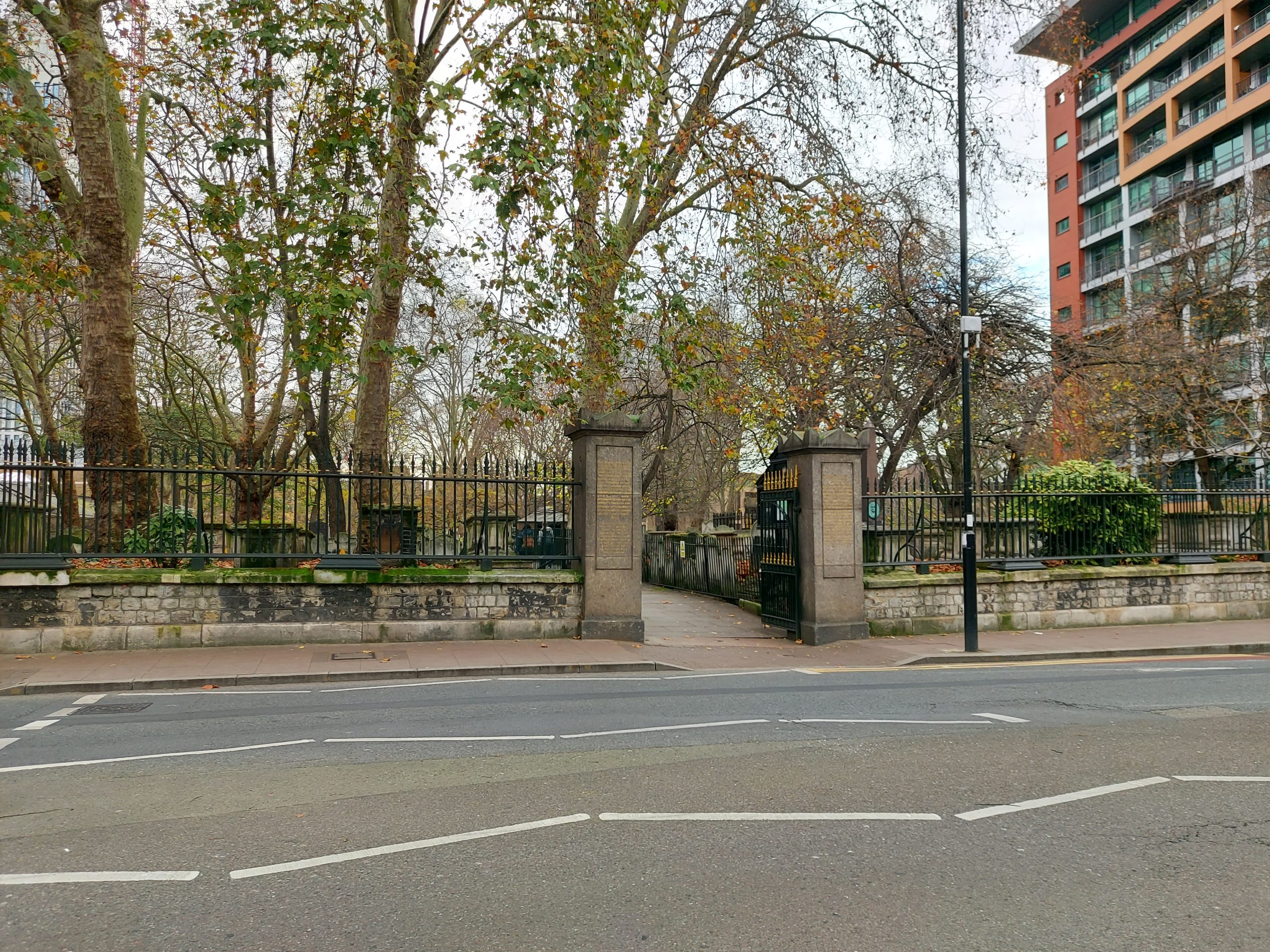
Entrance to Bunhill Fields

I can’t believe I’ve been living in London for nearly a decade and still haven’t visited Bunhill Fields burial ground. This piece of land in the borough of Islington was a burial place for mainly Nonconformists from 1665 until 1854, and is now a pleasant garden for Londoners to walk through and even sit and eat their lunch on a sunny day.

Bunhill Fields

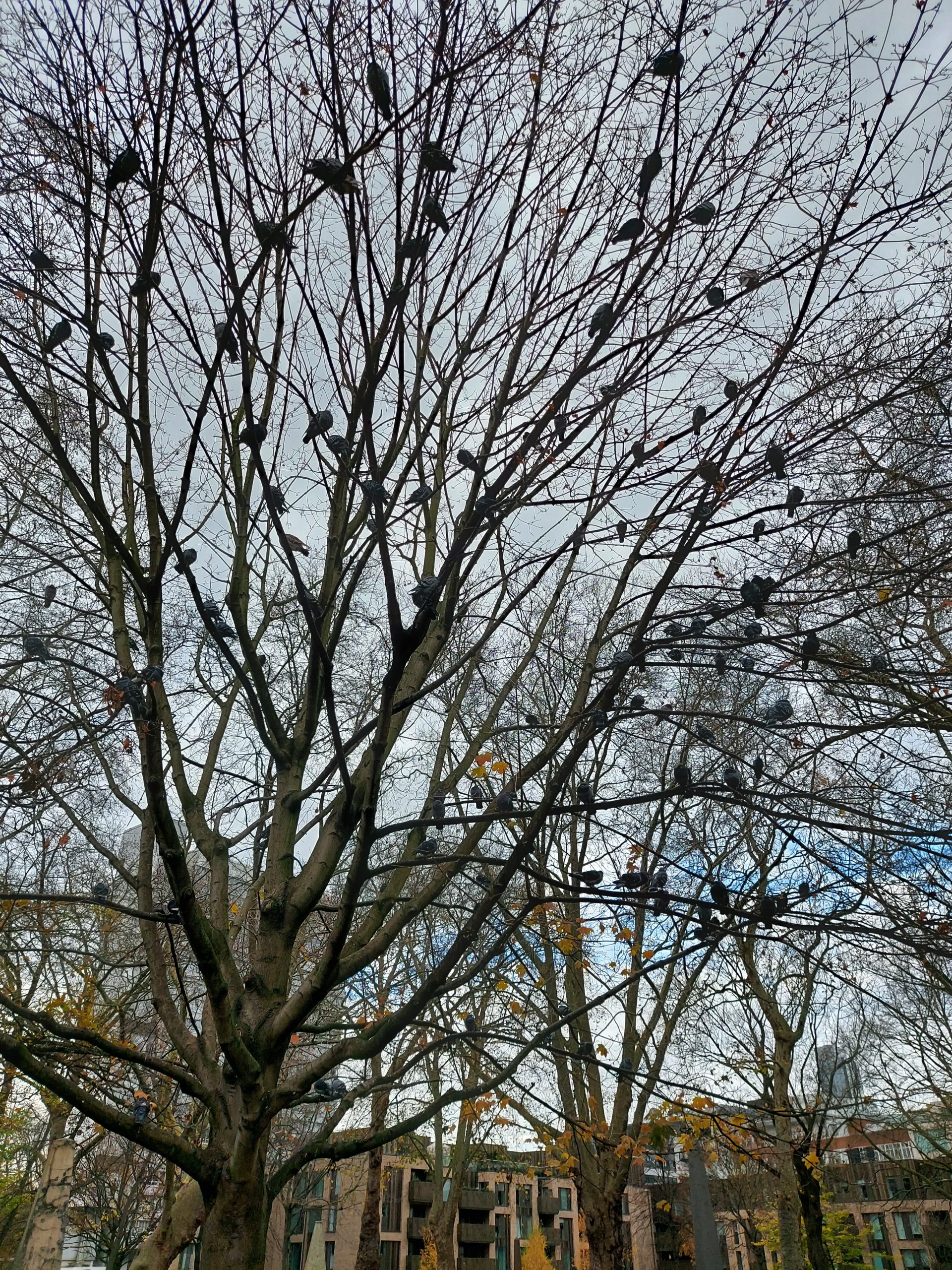
I visited on one of my days off as I was in central London. It was a cold November day, but it was dry, and the orange leaves made the burial ground look delightfully autumnal. A tree on which numerous birds settled made me feel slightly uneasy, but it added to the atmosphere.

Tree of birds

The name ‘Bunhill’ derives from “Bone hill”: the area experienced occasional burials from at least Saxon times, but was used as a mass deposit for human bones (over 1,000 cartloads) brought from St Paul’s charnel house in 1549. These bones, covered with a thin layer of soil, built up a hill across the otherwise flat area.

In 1665, it seemed a natural decision for the City of London Corporation to use some of this land as a common burial ground for those who had died of plague and could not be buried in the churchyards. The ground was never consecrated or used by the Church of England, so when a Mr Tindal took over the lease, and allowed burials, it was popular with nonconformists: Protestant Christians such as Presbyterians, Methodists and Baptists. It was known as ‘Tindal’s Burying Ground’. After closure in the mid-nineteenth century, there was doubt over its future, but it was eventually opened as a public park, and survives as such today, despite extensive damage during World War II.

Bunhill Fields

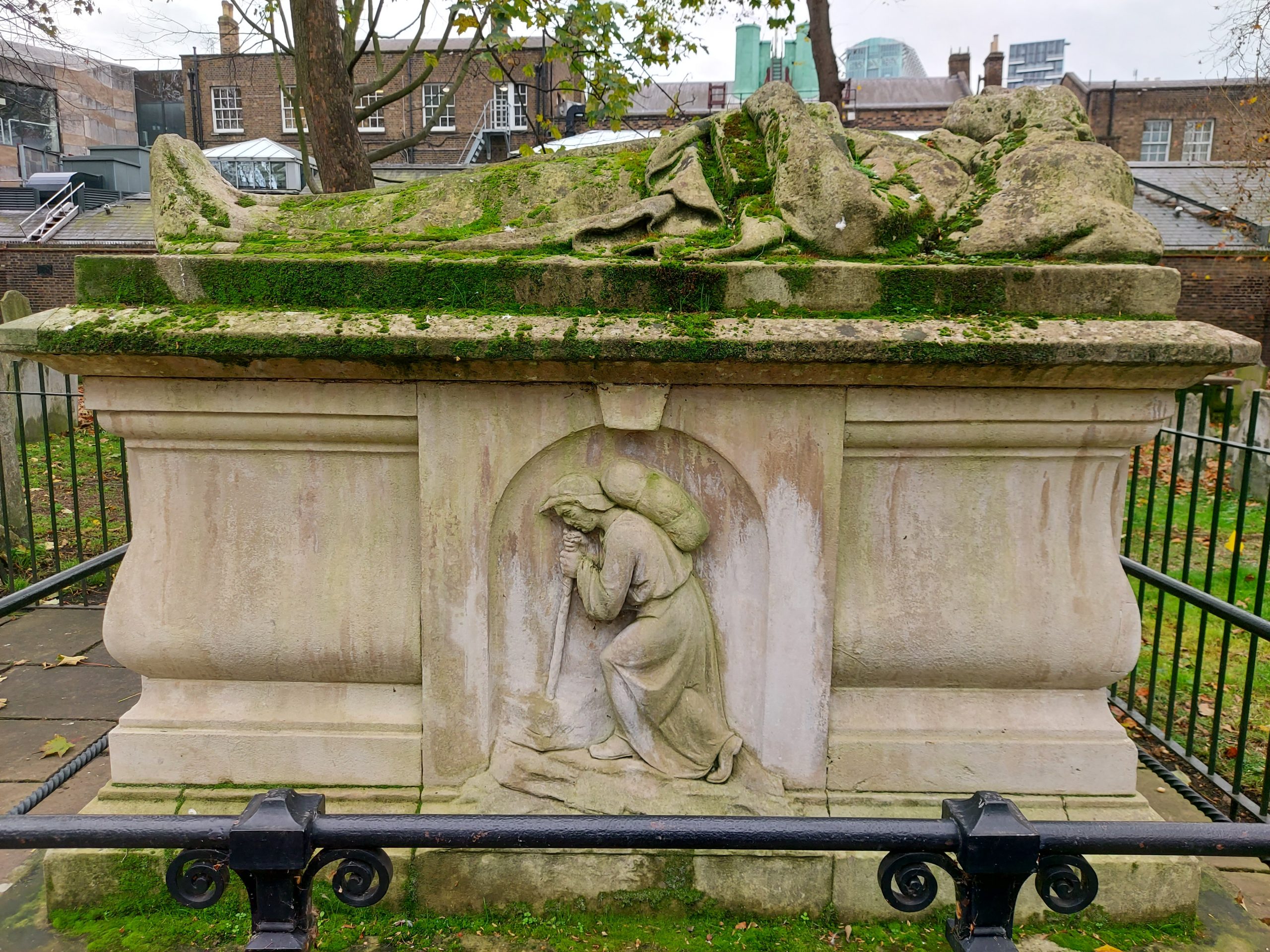
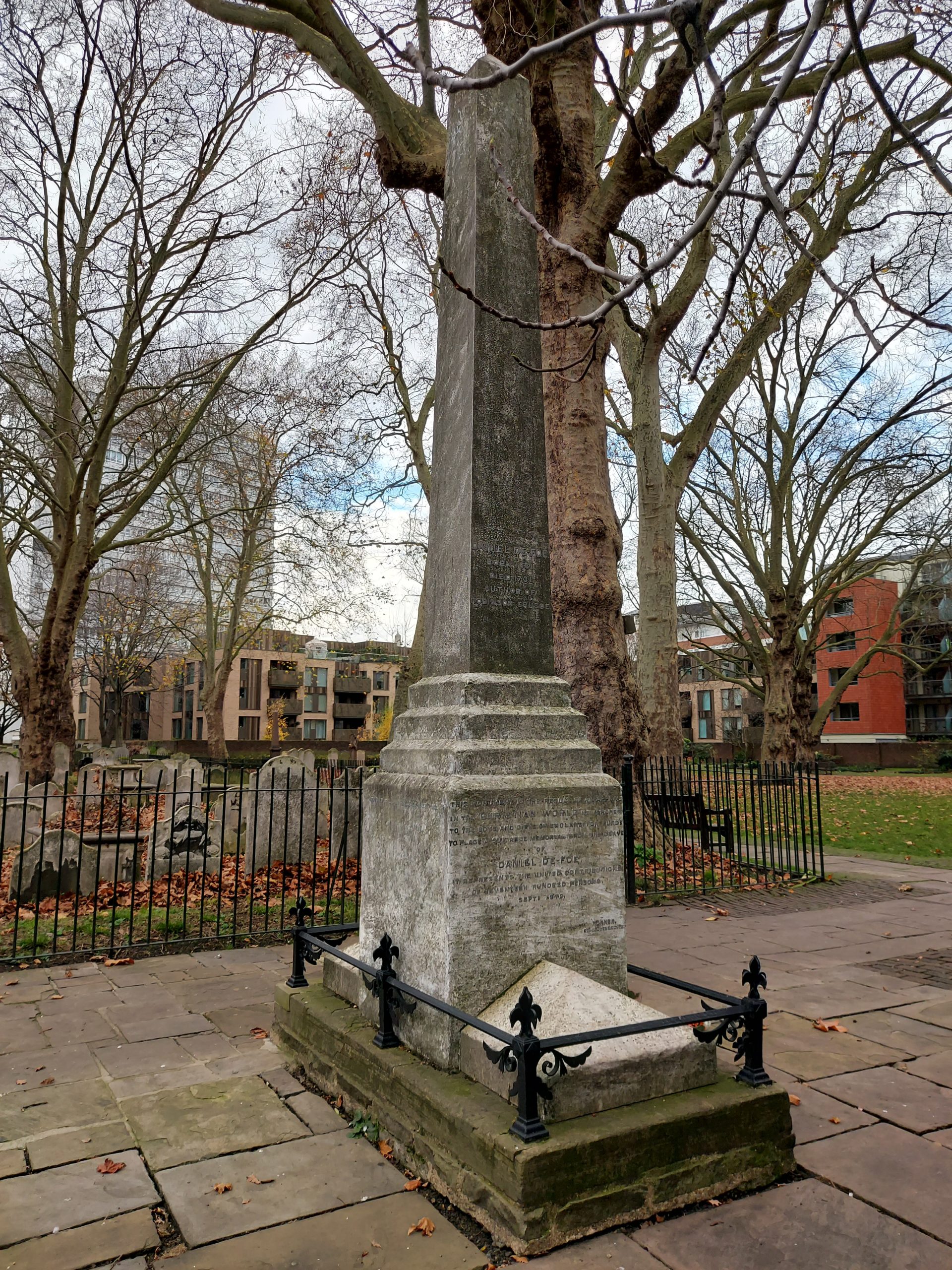
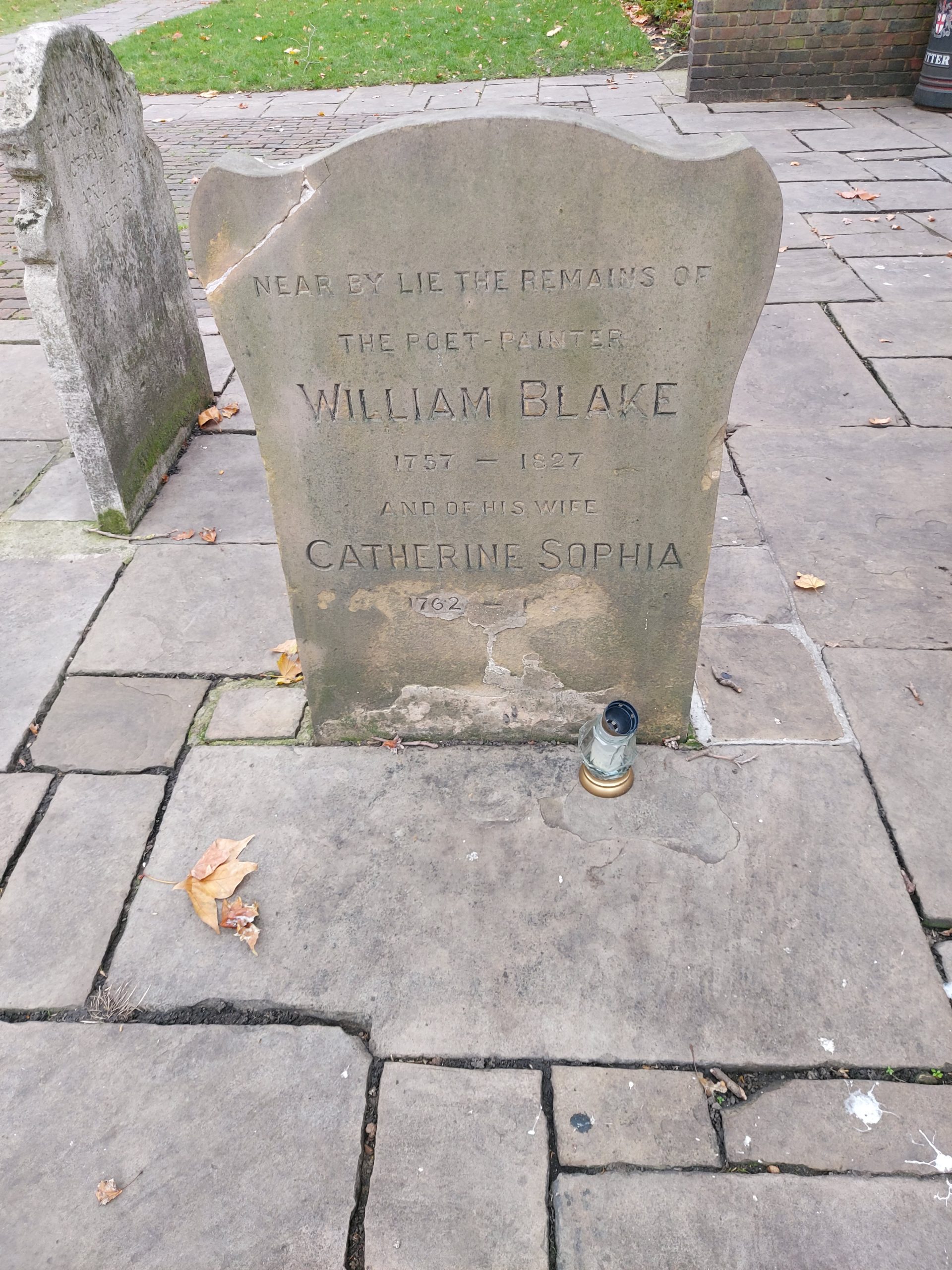
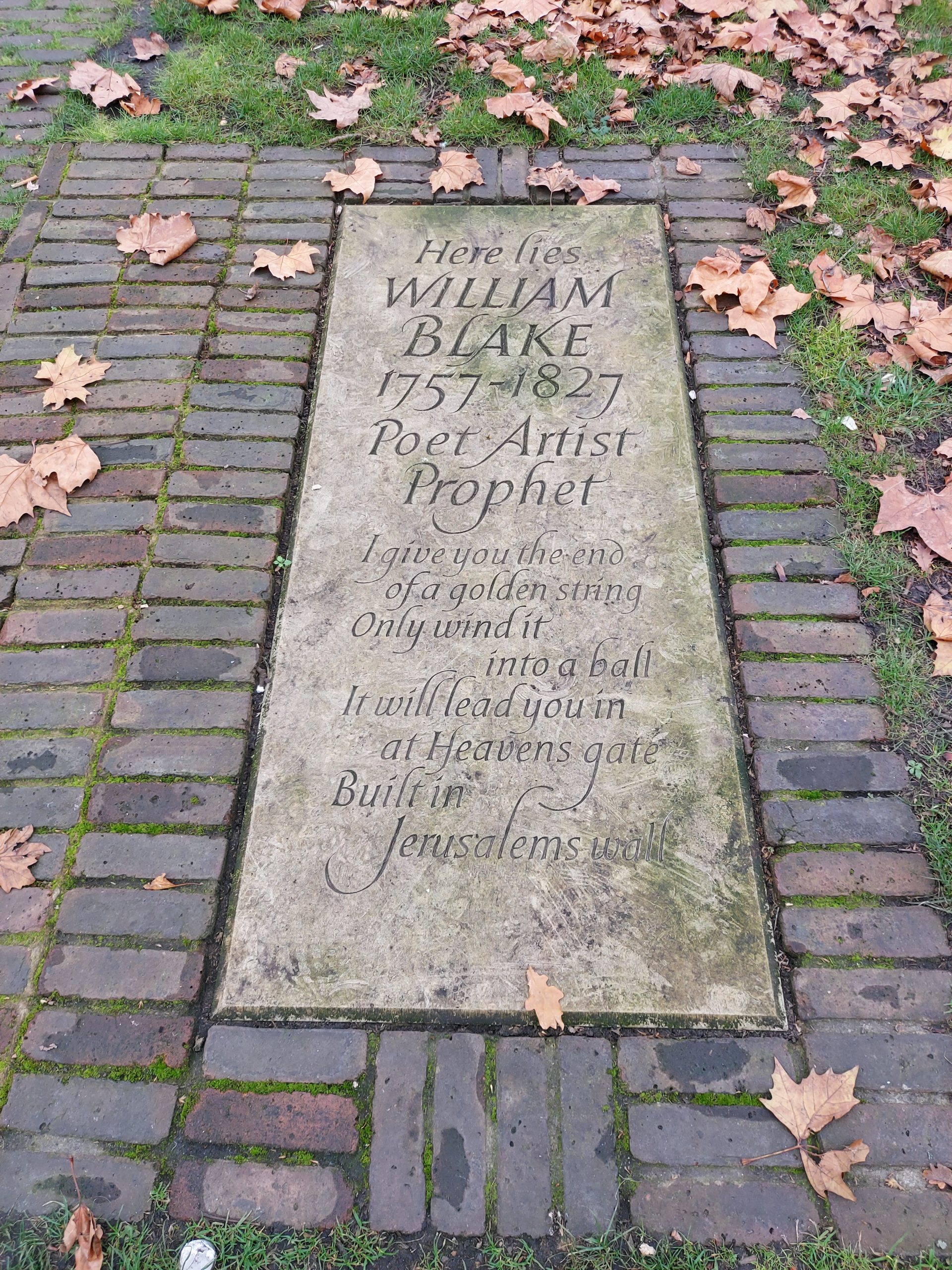
Bunhill is probably best known as the burial place of three of Britain’s most significant literary figures: John Bunyan, Daniel Defoe and William Blake. All three have monuments which were erected after the closure of the cemetery; as Blake’s isn’t actually on his grave, another was erected on the actual site of his burial in 2018. The monuments are very different: Bunyan has a tomb decorated with pictures of his famous Pilgrim, Defoe has an obelisk, and Blake has a simple headstone. Other notable burials include Susanna Wesley (mother of John and Charles) and Isaac Watts (hymn writer).

Obelisk to Daniel Defoe

Bunhill Fields can be found at 38 City Road, London, EC1Y 2BG, and is open daily until 7pm. It is very close to Old Street underground station, and a short walk from Liverpool Street mainline station.

The National Gallery

The National Gallery building

The National Gallery must be one of the most well-known and popular art galleries in the world, standing firmly in the centre of London, looking out over Trafalgar Square. I’ve visited several times over the years, mainly for special exhibitions, but recently decided to go and explore the whole thing.

History

The beginnings of the National Gallery can be traced back to the early nineteenth century, when the House of Commons agreed, in 1824, to purchase the collection of the banker John Julius Angerstein. Intended to form the core of a new collection of art for the nation, the pictures were first displayed at Angerstein’s house on Pall Mall while a building was constructed to house them. Initial administration of the Gallery was disorganised, but following a government enquiry a new post of Director was created, to shape the collection and manage the Gallery.

Trafalgar Square was decided upon as the site of the new gallery, being right in the centre of London. Architect William Wilkins was hired to construct it, using many of the construction methods of the King’s Mews, which originally occupied the site. The artist and collector Sir George Beaumont promised to donate his collection of pictures, and they took their place alongside Angerstein’s until they could all be moved to the new building. At this time the Gallery had no formal collection policy, with pictures being acquired owing to the personal tastes of the Trustees. This began to change when the administration was reformed, and the new Director travelled in Europe to purchase works for the Gallery. In 1871, many paintings were purchased from the estate of the late Prime Minister, Sir Robert Peel.

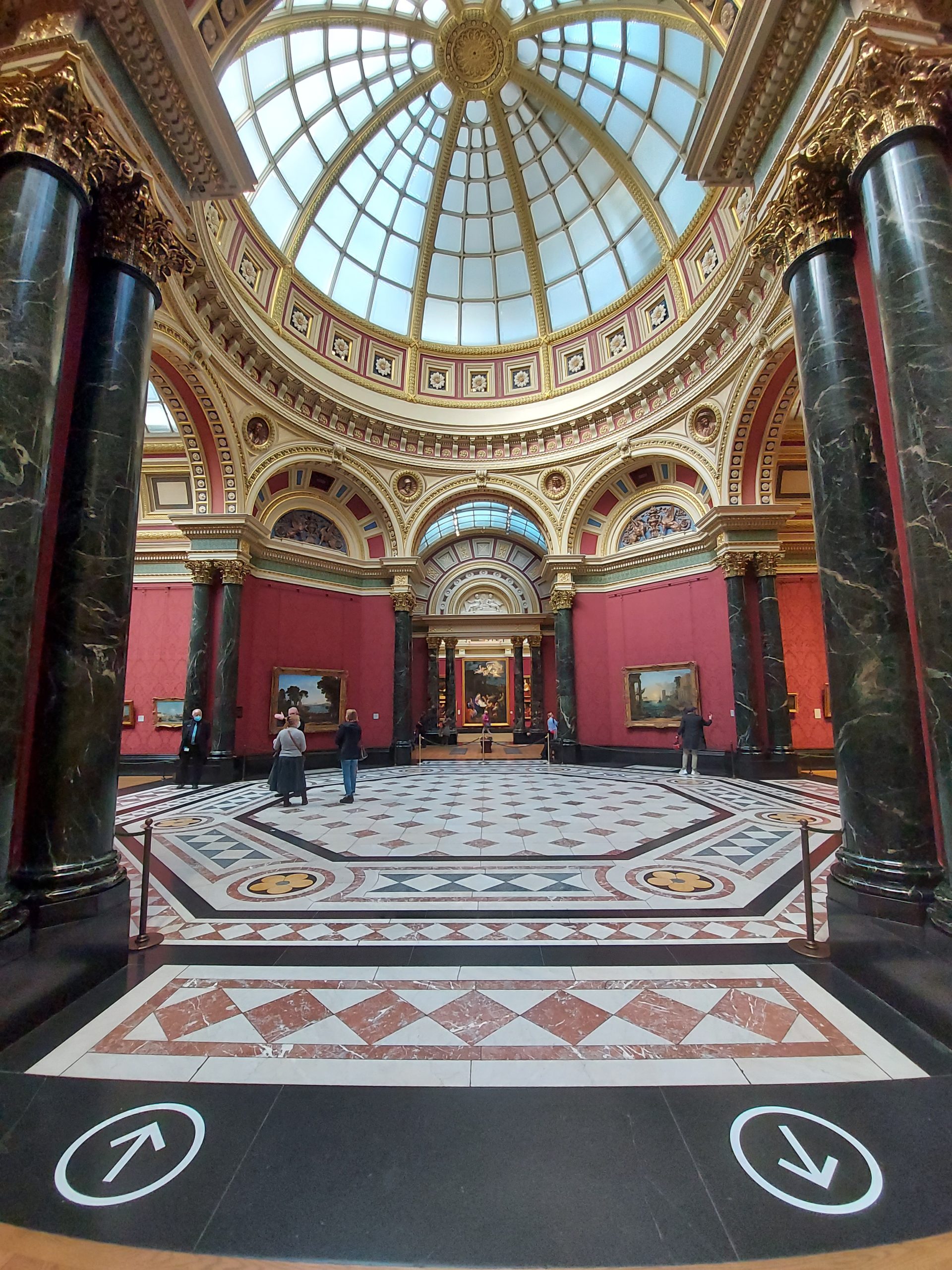
Wilkins’ building had often been criticised, and in 1869 the architect E. M. Barry was asked to submit designs for a new building. However, the original building was retained, albeit with a new wing and an impressive dome being constructed. A few decades later, most of the British collection was moved to the new gallery founded by wealthy industrialist Henry Tate on the banks of the Thames, freeing up more space for European art. Much later – in 1991 – the Sainsbury Wing was constructed, opening in 1991 and providing the National Gallery with even more space.
My Visit

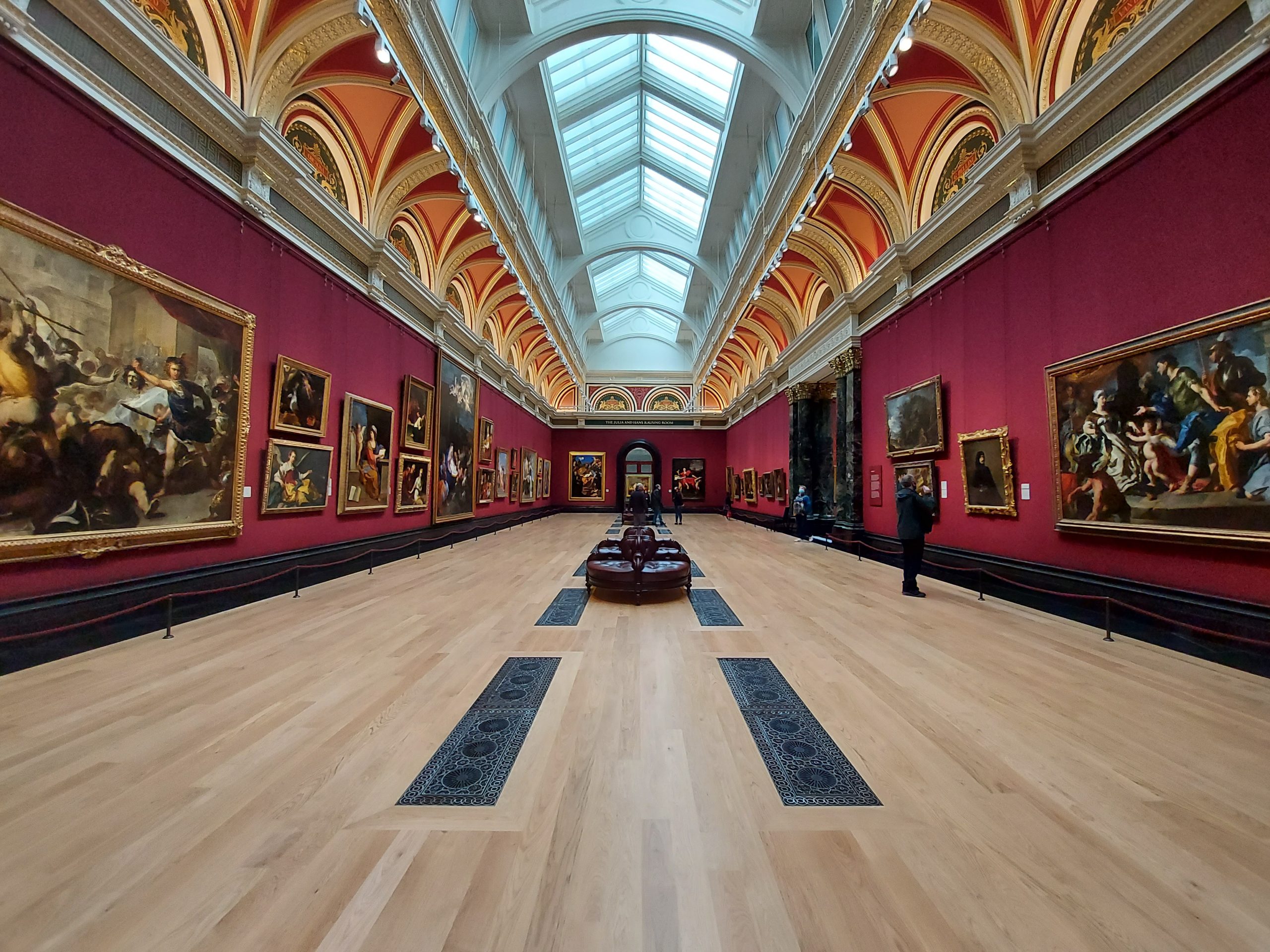
Normally, the Gallery is free to explore as you wish (except for special exhibitions), but in these Covid times, you are required to book a time in advance and follow specific one-way routes around the galleries. This means that it’s impossible to see everything on one visit (I made mine over a couple of days), but honestly, for me, the sheer peacefulness of the galleries at this time made it all worthwhile. I was sometimes the only person in a particular gallery or room – makes a change from the crowds usually jostling to view the paintings. I’m so glad I was able to take advantage of the current situation to experience the National Gallery when it’s quiet.

The Gallery’s rooms are divided into four main sections.

1200-1500
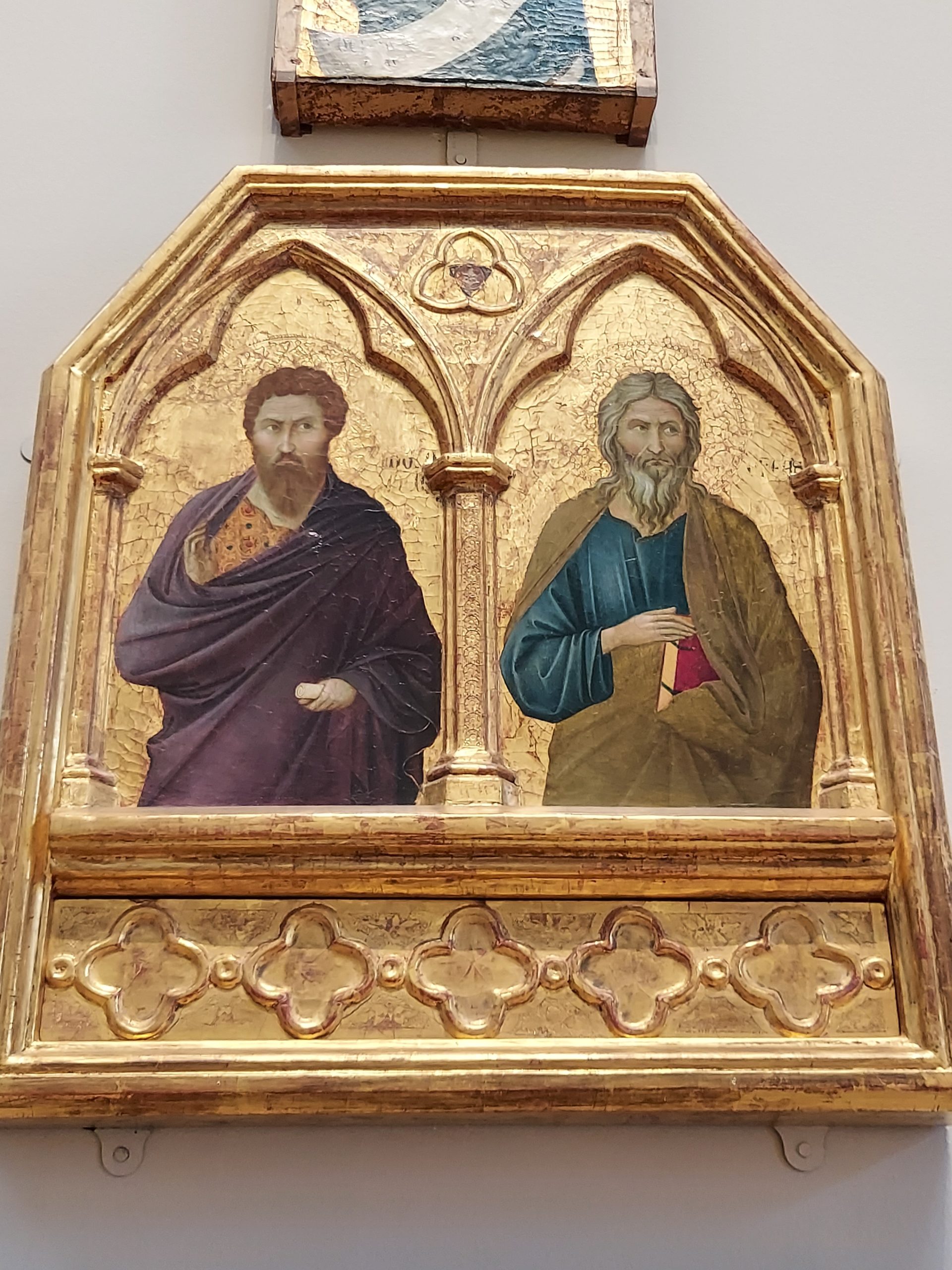
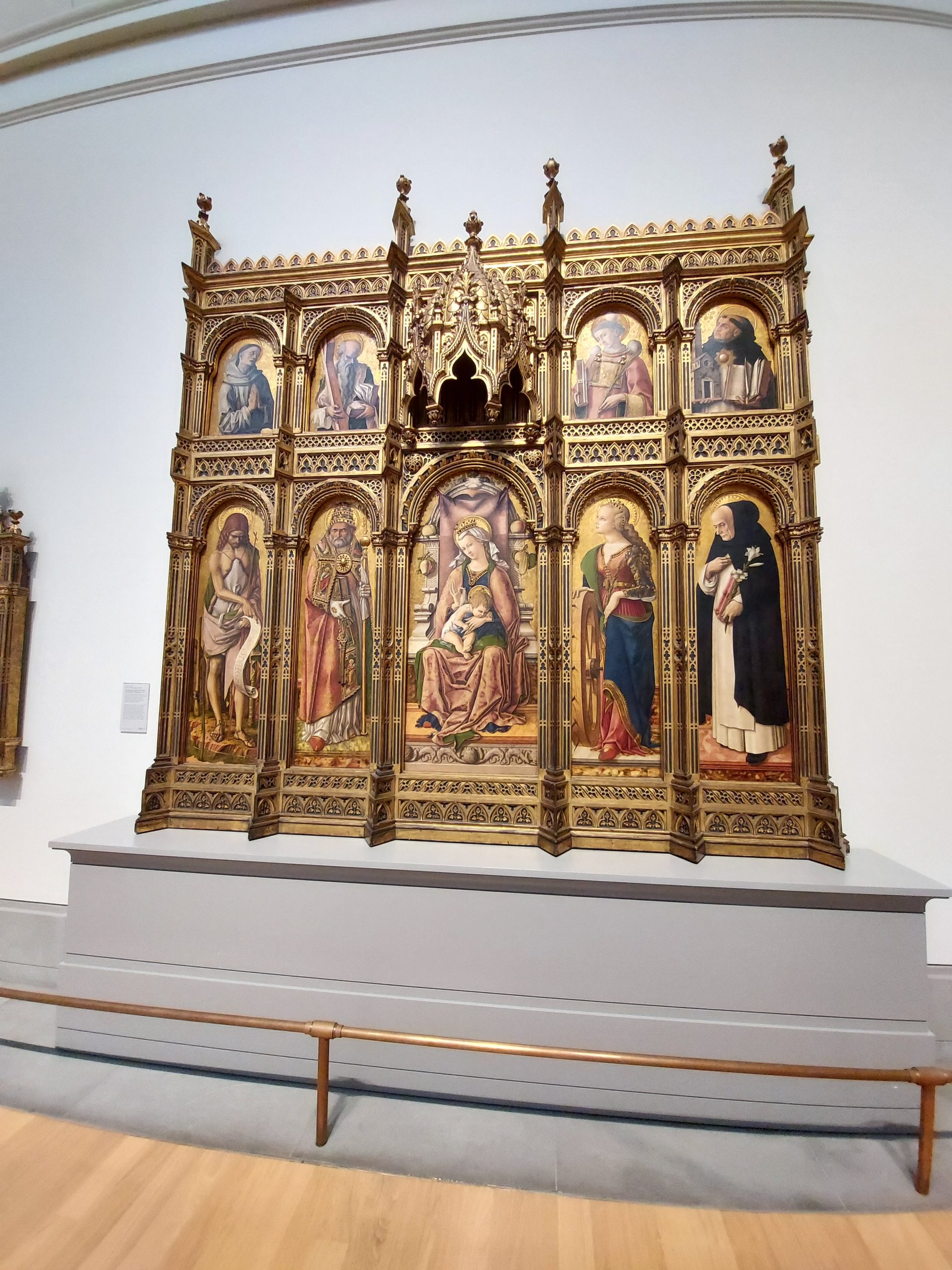
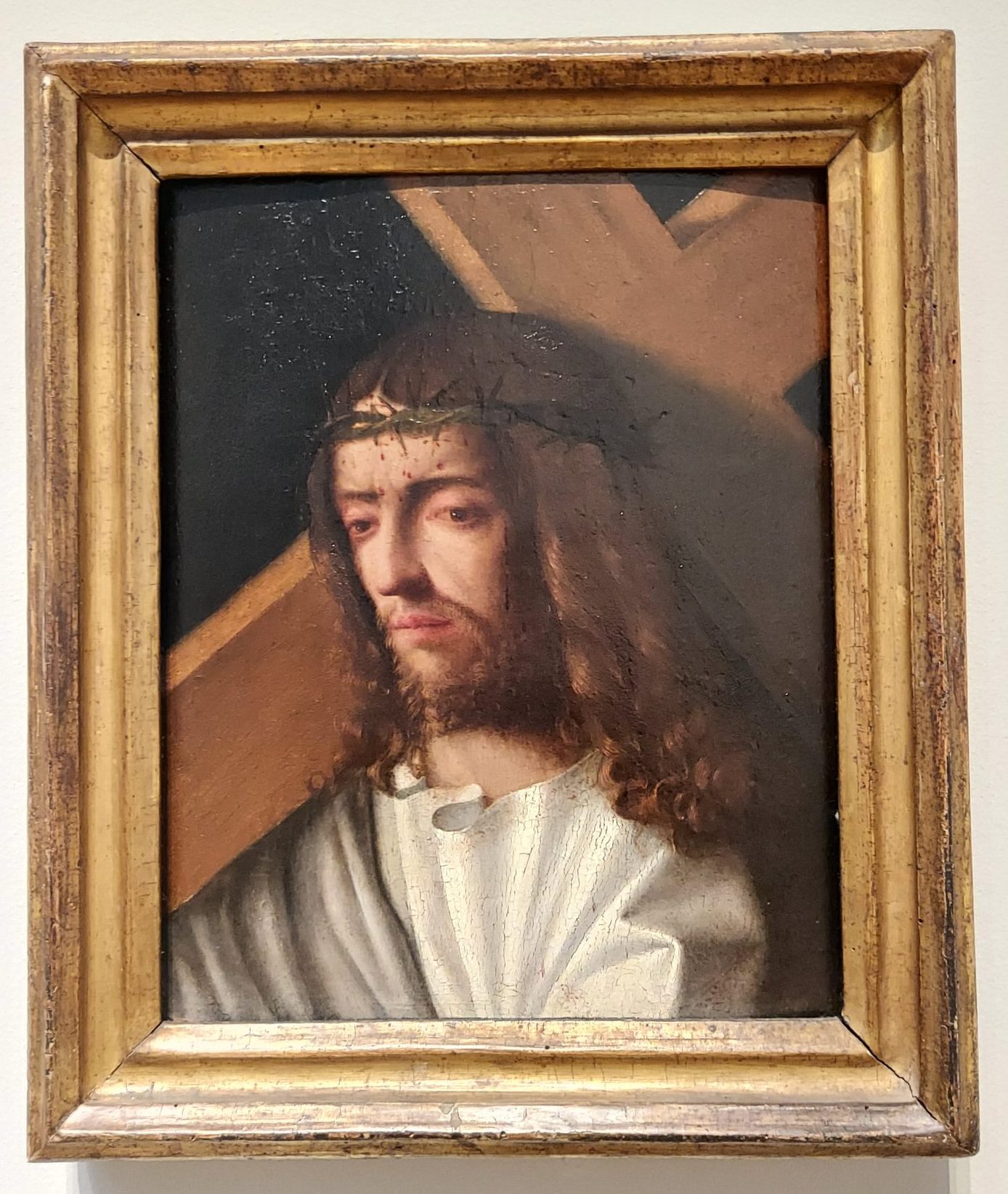
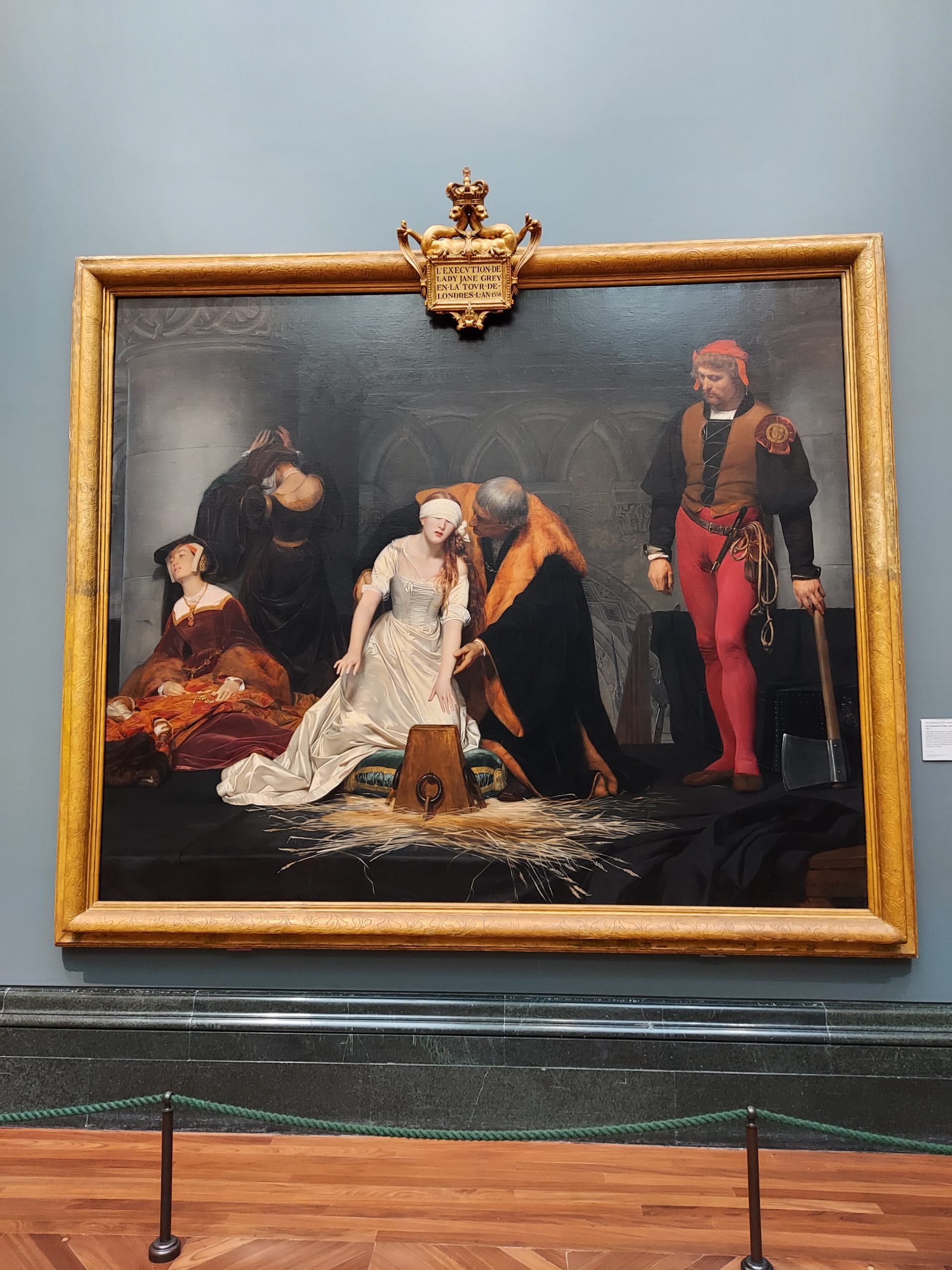
This section focuses on medieval artists such as Bellini, van Eyck, Leonardo, Piero and Raphael. This era of art is not my favourite, but there were some pretty elaborate triptyches and ornate decorations. A picture of Saints Bartholomew and Andrew made me laugh, as they look like they’re really pissed off with each other, but a picture of Jesus carrying the cross I actually found quite moving.

1500-1600
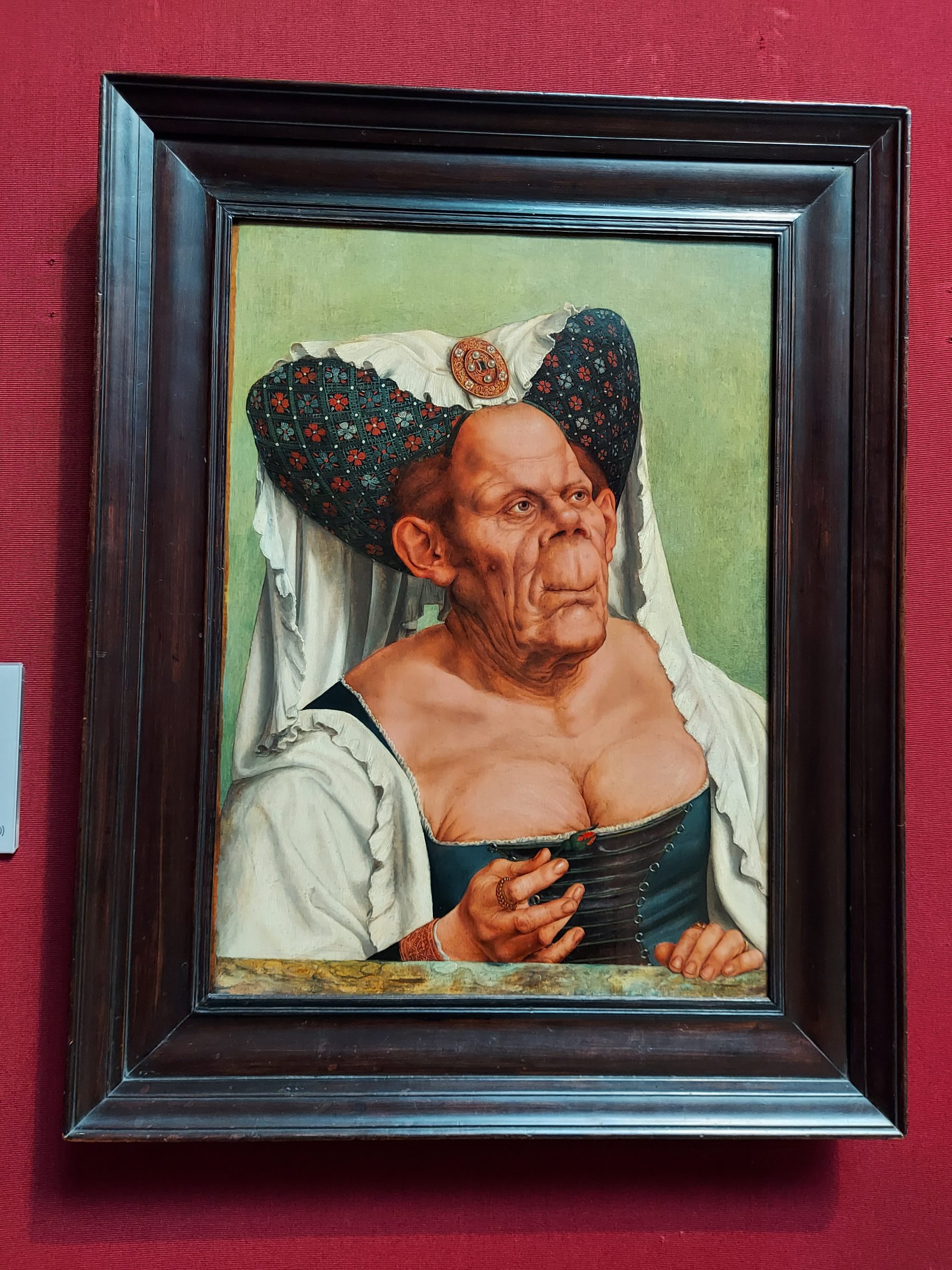
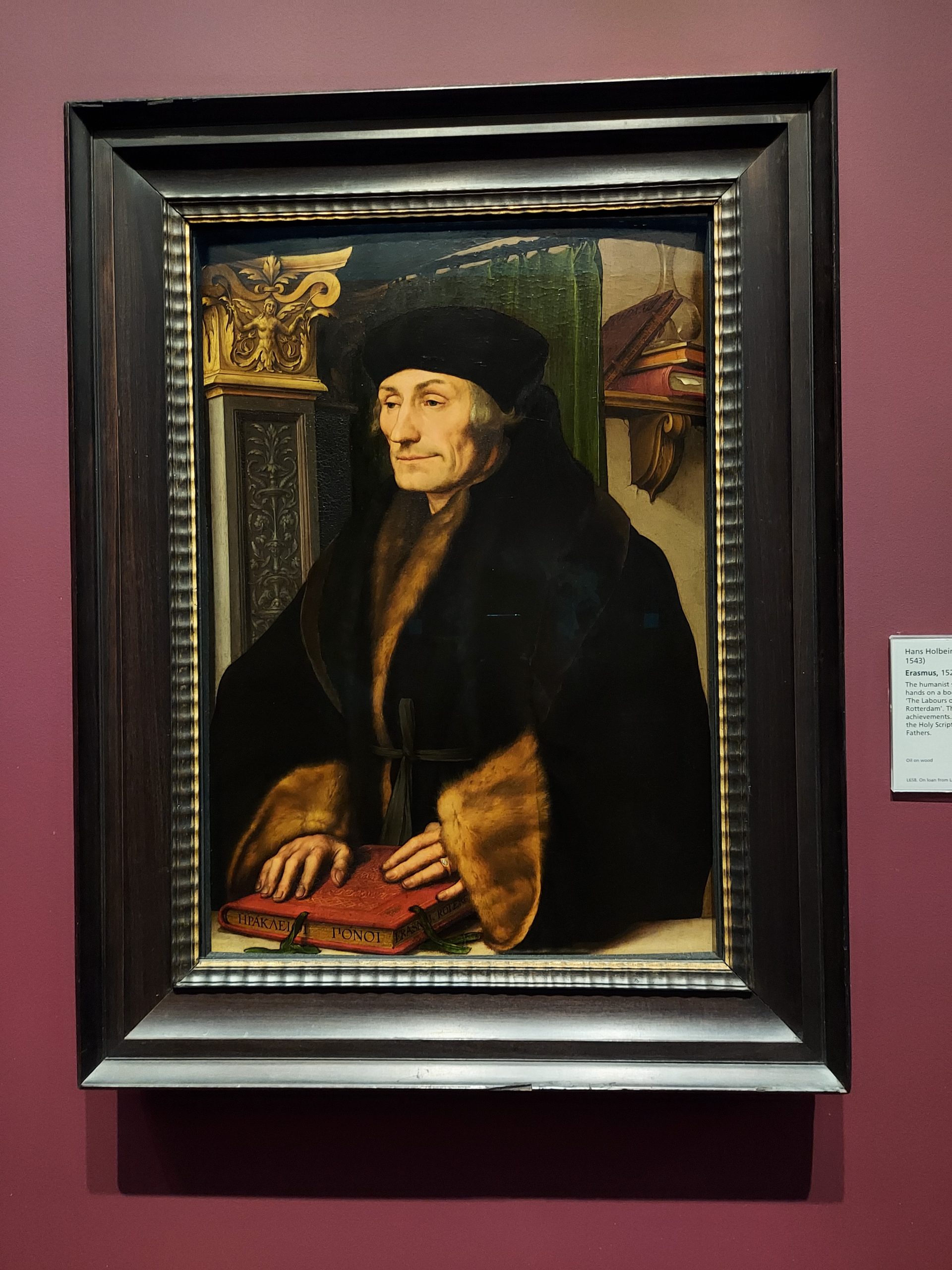
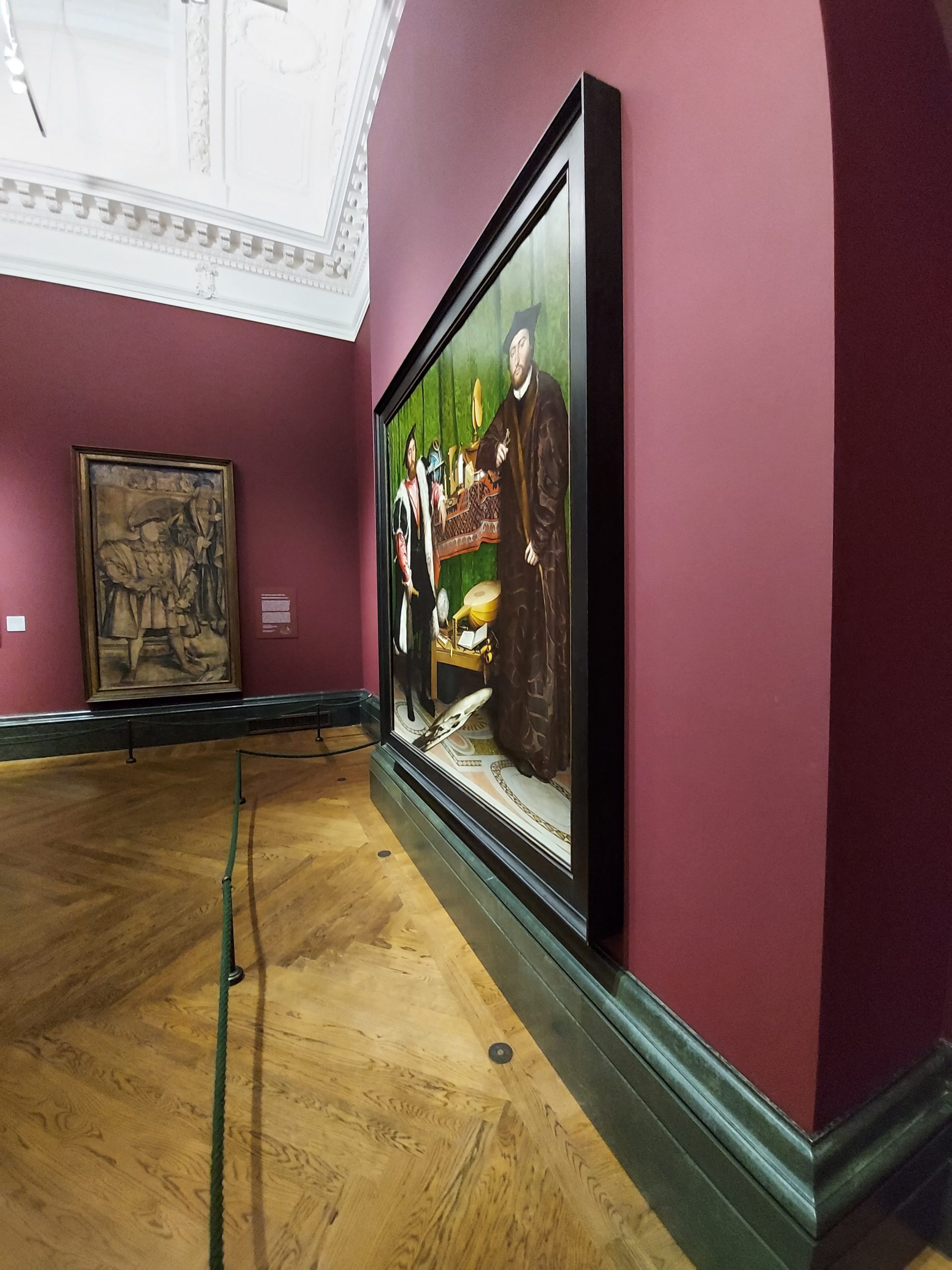
This section is focused on Renaissance art, featuring the likes of Titian, Holbein, Bronzino and Massys. I do like the Holbeins that are currently displayed, and I have a special fondness for the painting of the ‘Ugly Duchess’ since I read that it inspired John Tenniel’s illustrations of the Duchess in Alice’s Adventures in Wonderland.

1600-1700
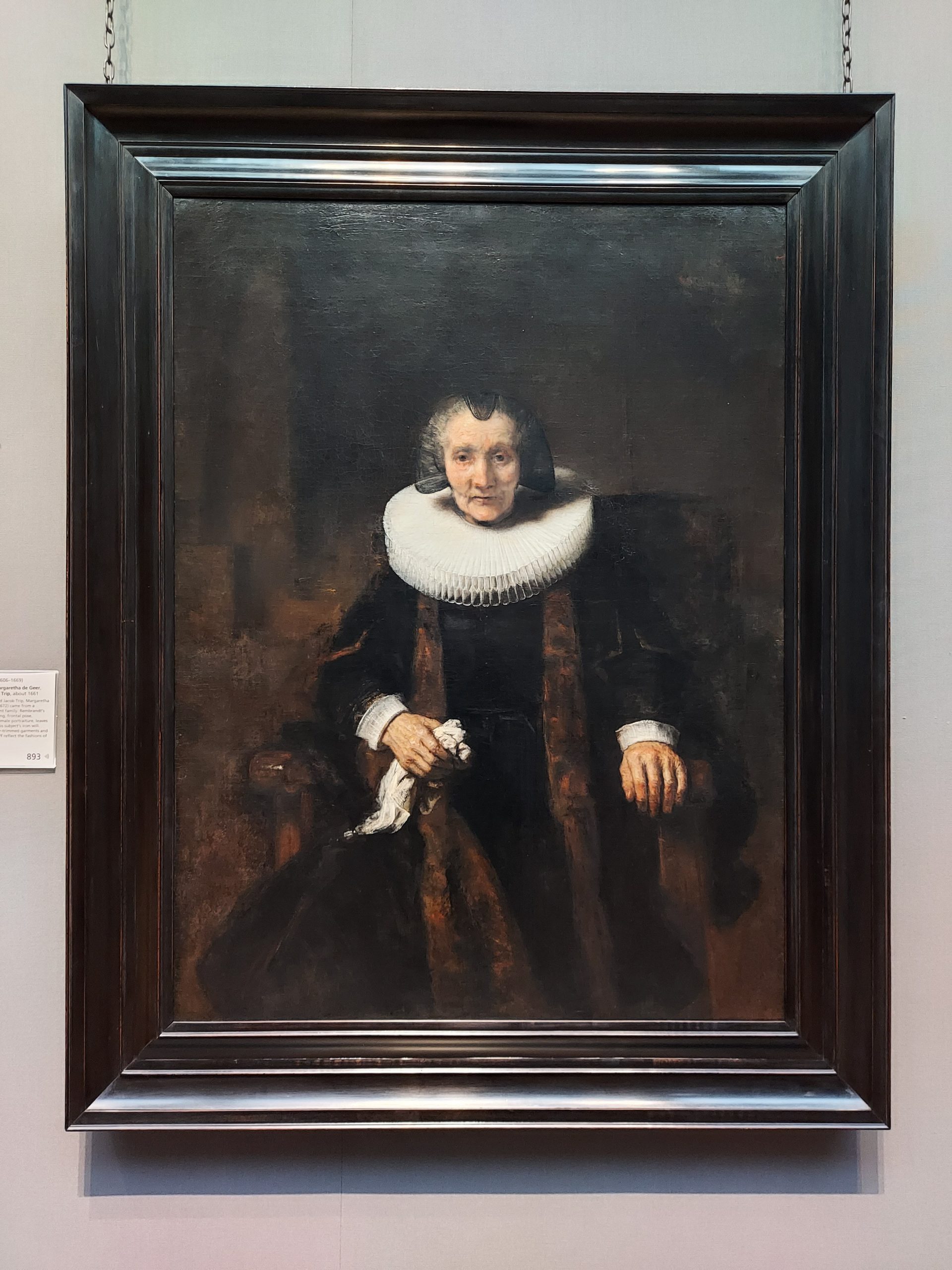
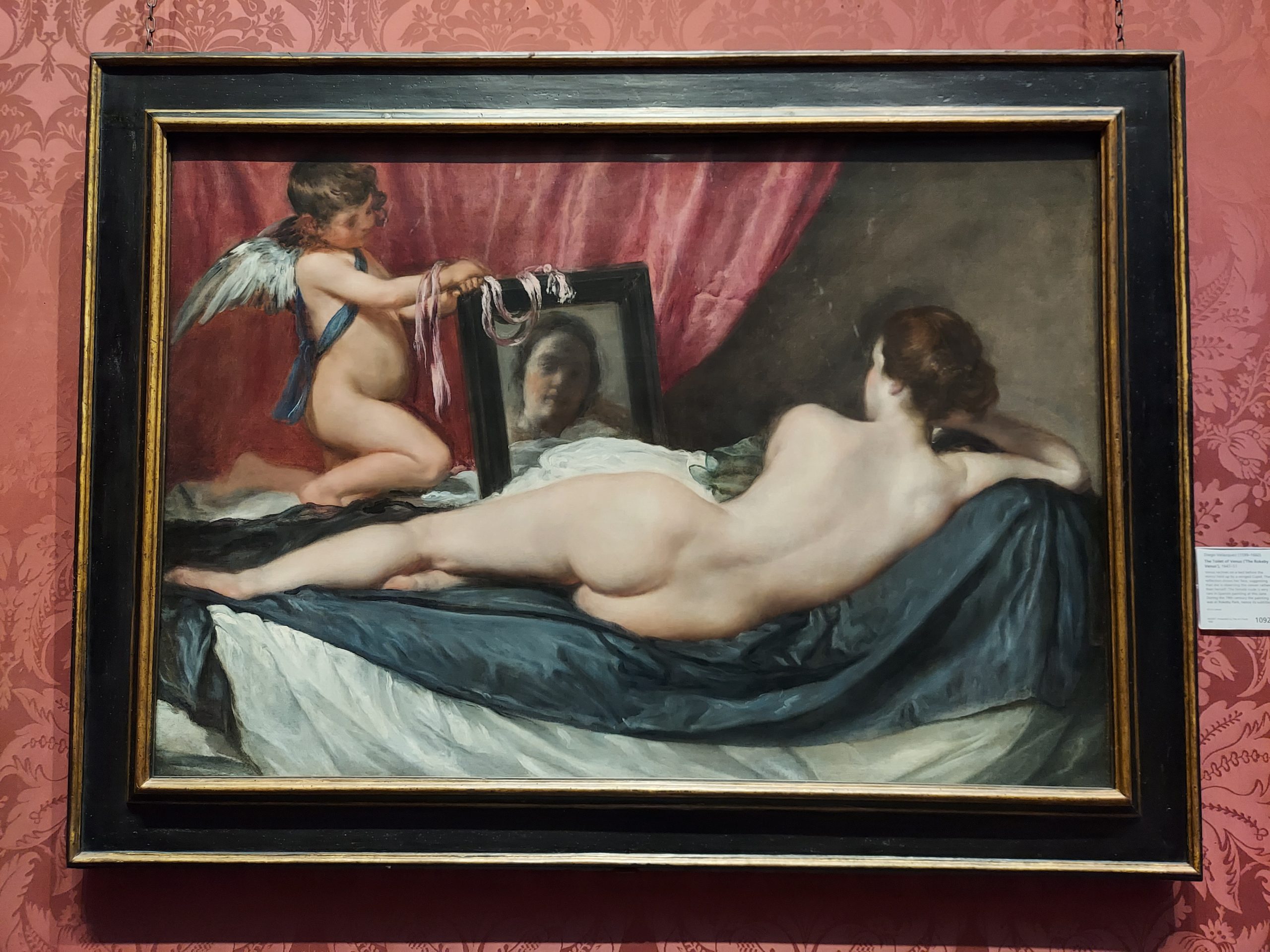
This section features the likes of Vermeer, Velasquez, Caravaggio and van Dyck. It’s not really my favourite, but there were some interesting pictures, including a Rembrandt.


1700-1930
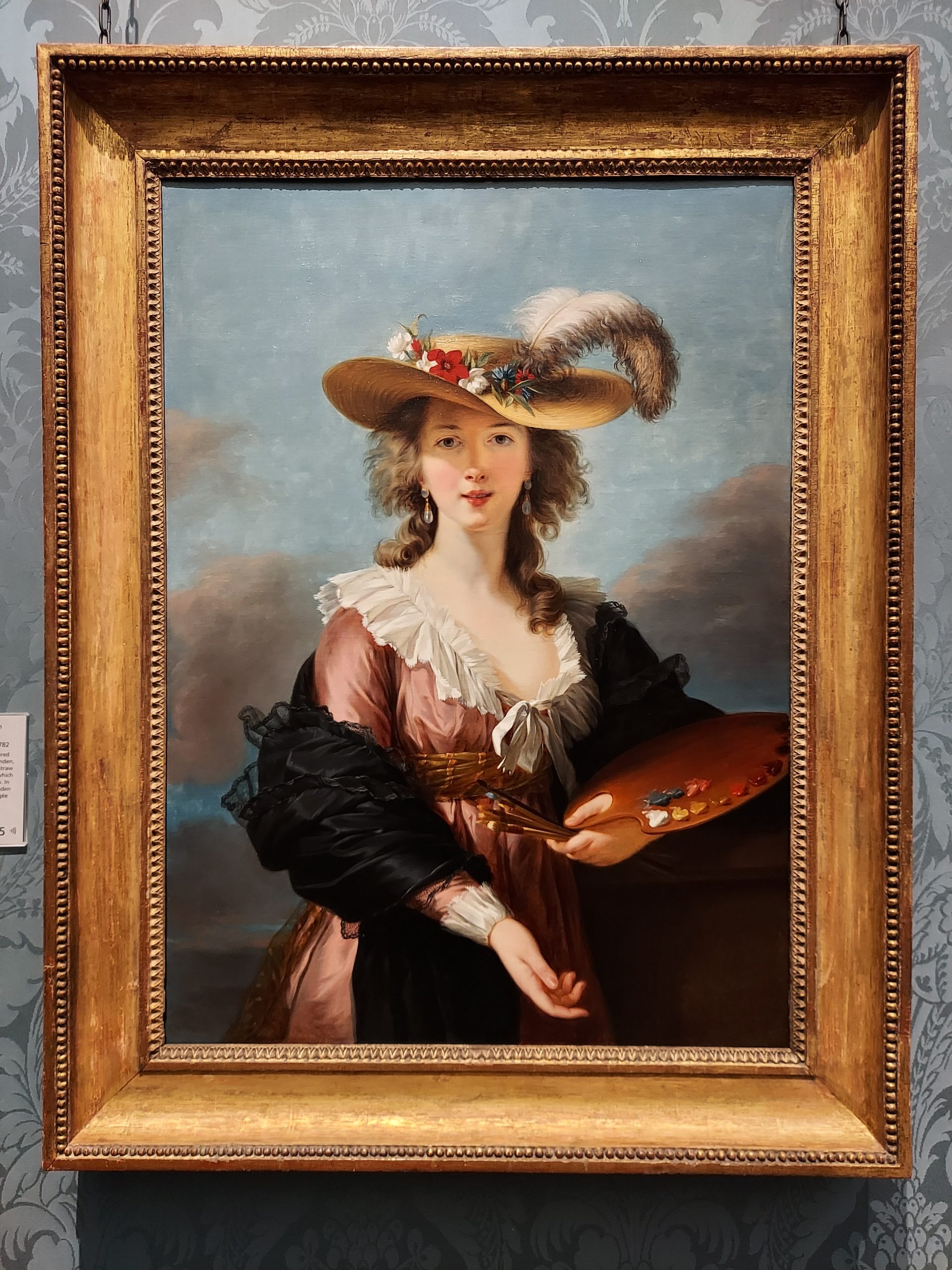
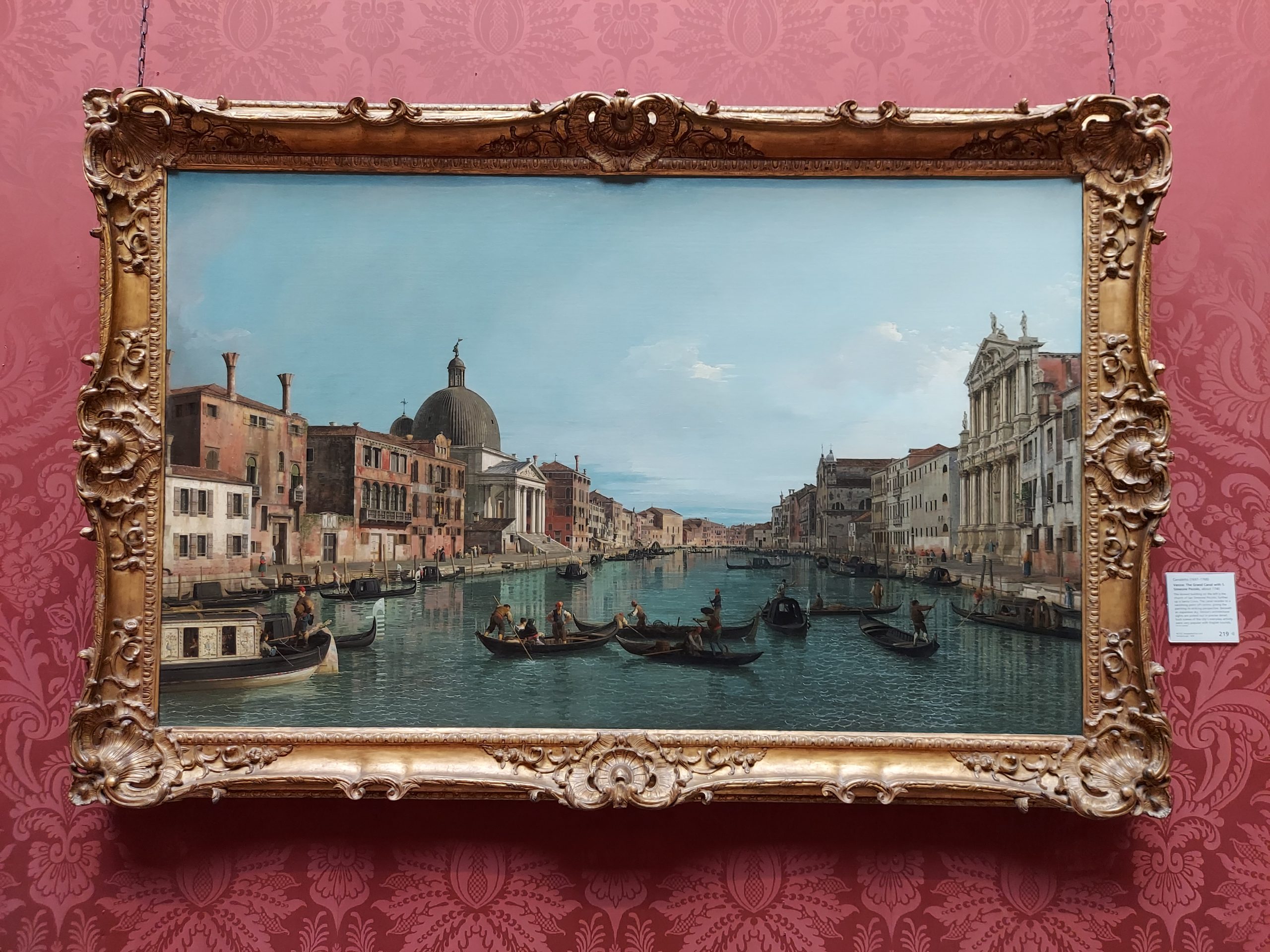
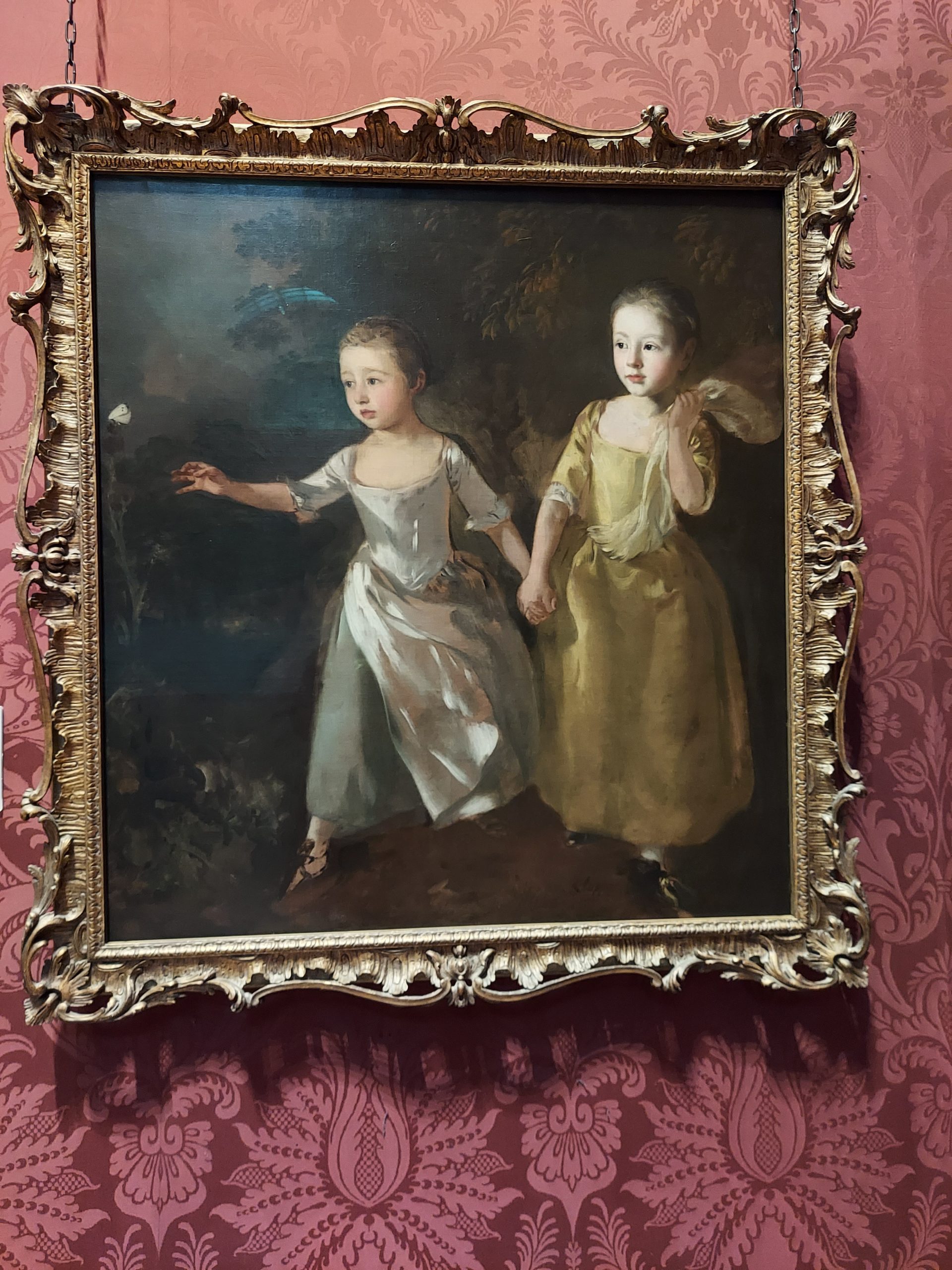
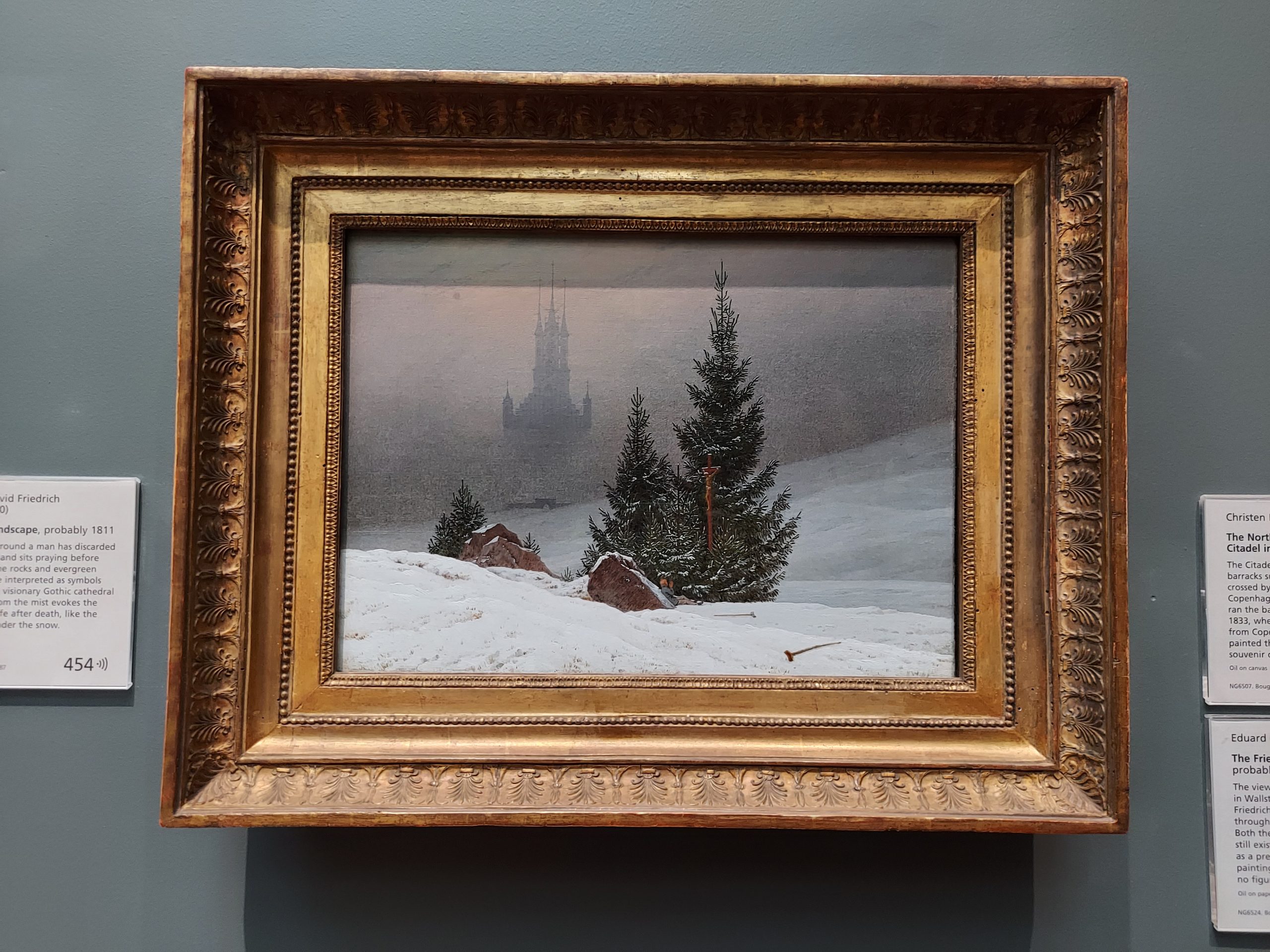
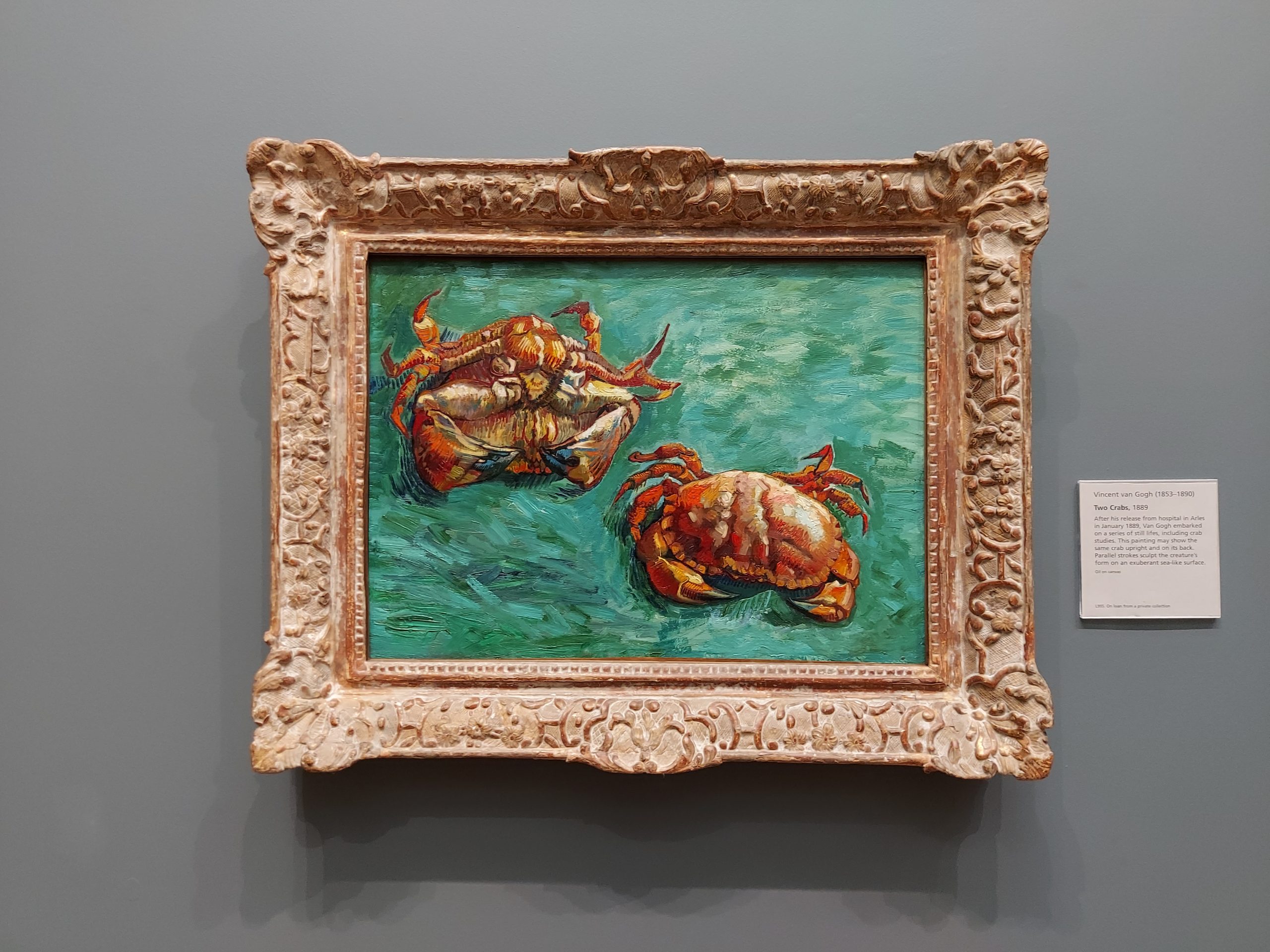
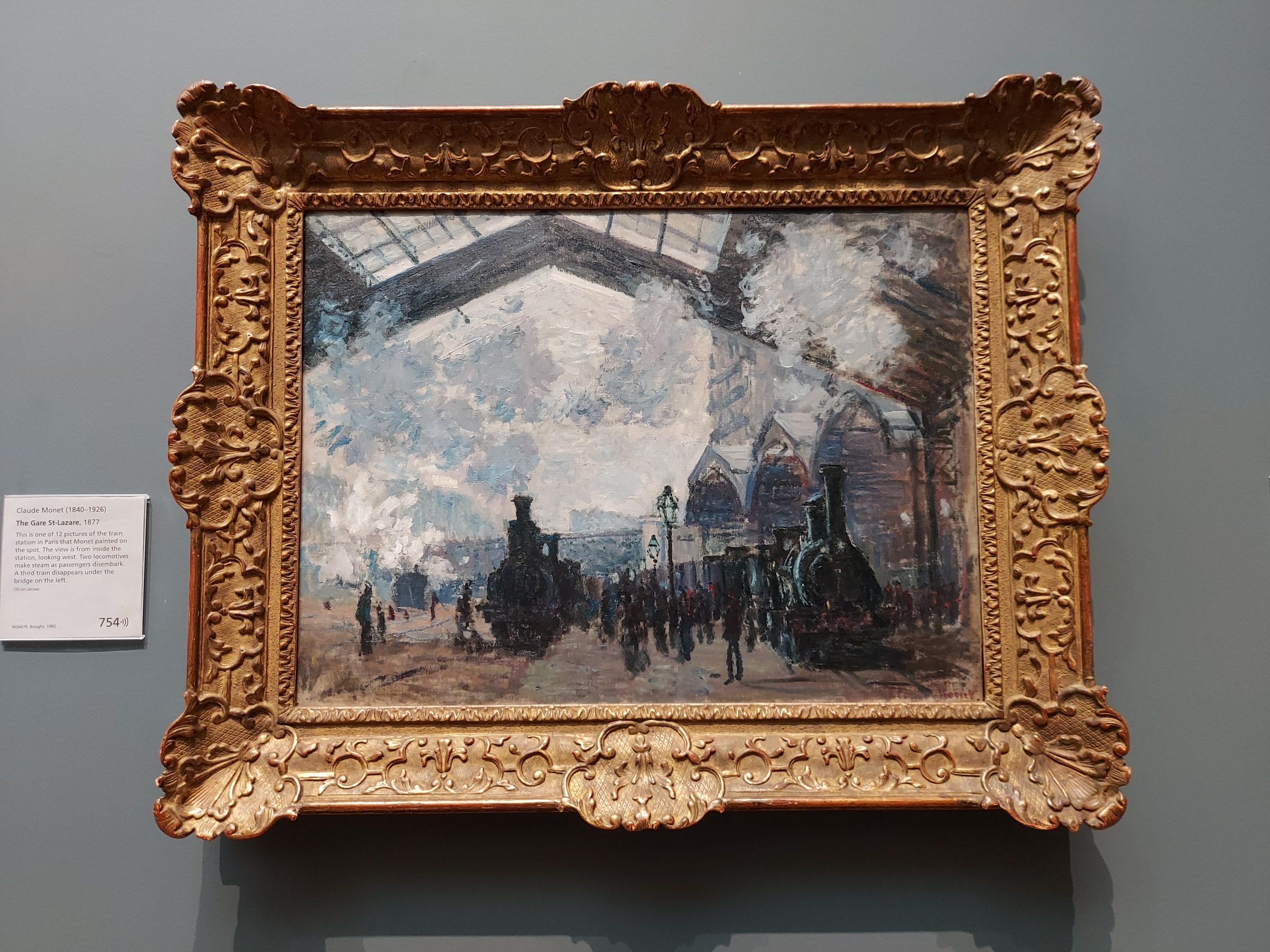
This final section covered a more wide-ranging period and was probably my favourite. Featuring the likes of Turner, Stubbs, Monet, van Gogh and Seurat, I was impressed with the variety. The section began with some eighteenth-century portraits and landscapes.

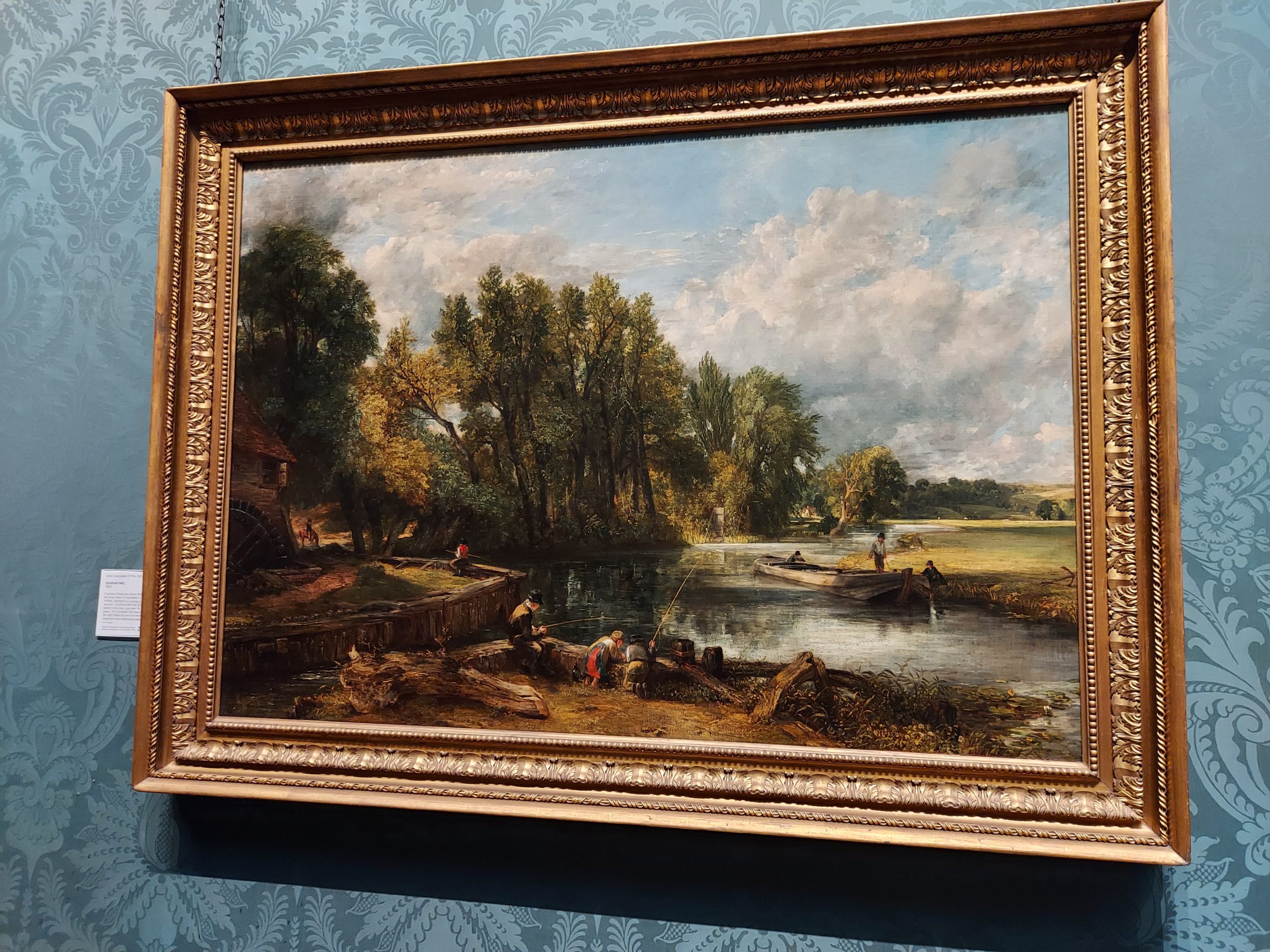
Then moved on to the nineteenth century with some dramatic scenes and landscapes.

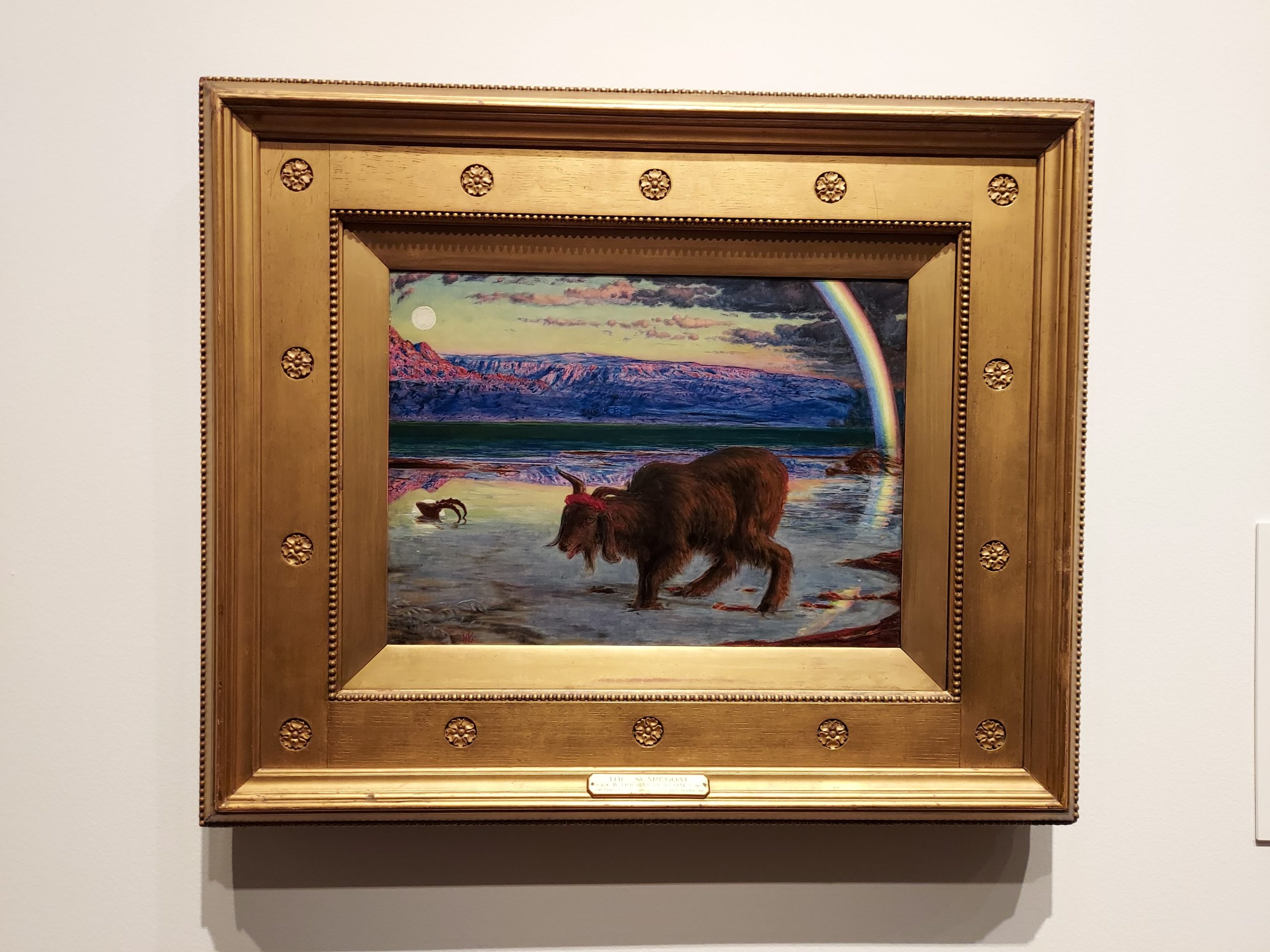
The final section looked at the new artistic styles emerging in the later nineteenth century.

A visit to the National Gallery is definitely recommended, especially as it’s free. If you can get there before the crowds begin to return, even better.

FACTS

Address: Trafalgar Square, London, WC2N 5DN

Website: nationalgallery.org.uk

Opening Hours: 10am-6pm (9pm on Fridays)

Price: Free

South Ealing Cemetery

South Ealing Cemetery

When I went for a walk and ended up at South Ealing Cemetery, I had no idea that Agatha Christie’s parents were both buried here.

Grave of Frederick Alvah Miller
Grave of Agatha Christie’s parents

Fred Miller died from pneumonia at the home of his stepmother, Margaret West Miller, in Ealing in 1901. Margaret had lived in Ealing for several decades, often visited by her step-granddaughter (and great-niece) Agatha Miller, later Christie. Fred’s wife Clara was later buried with him, as were his daughter, Madge, and Margaret Miller herself.

Arctic: Culture and Climate – British Museum

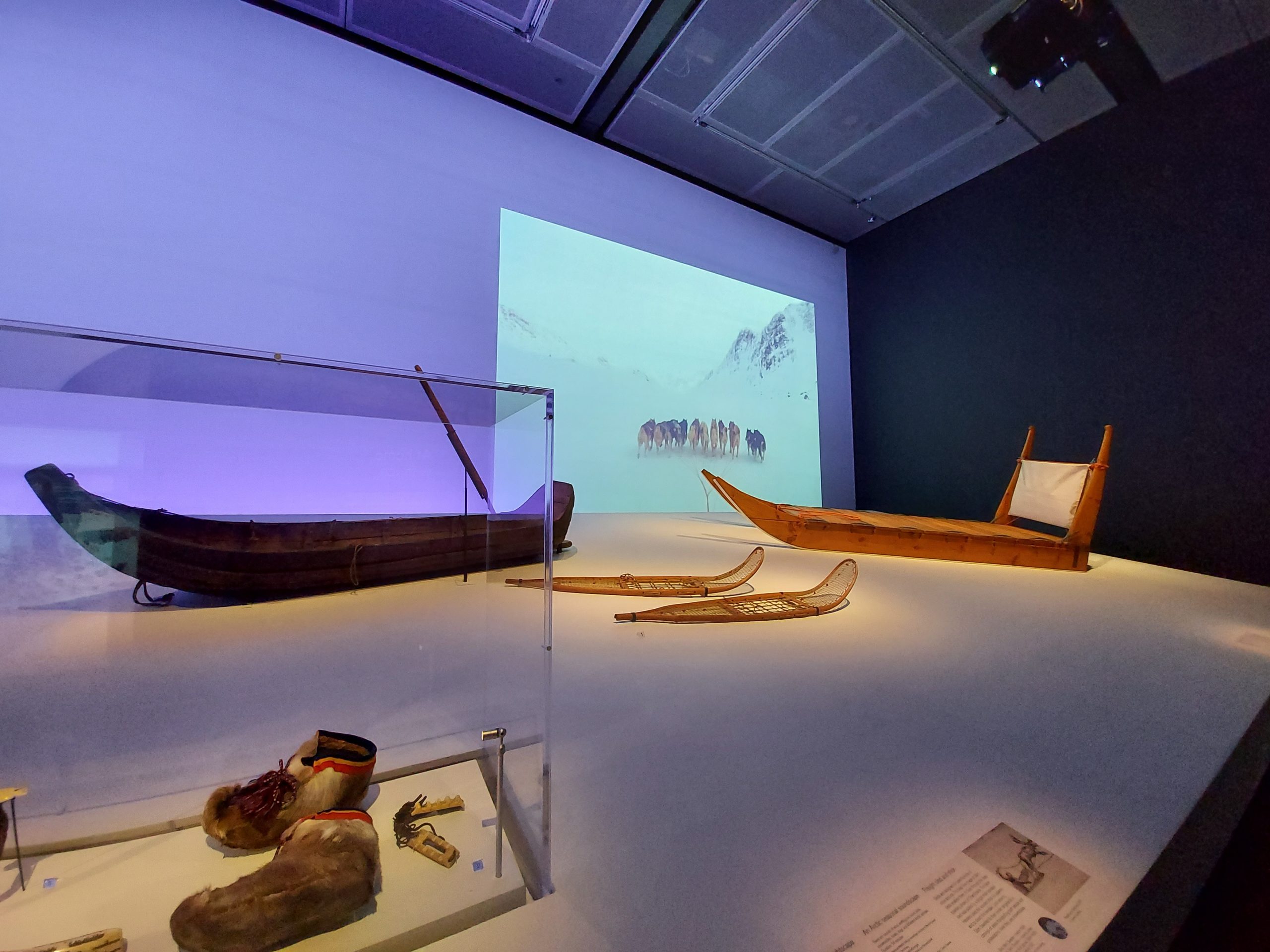
Arctic exhibition

I visited the Arctic: Culture and Climate exhibition at the British Museum while I was off work. I’m fascinated by the history of this region, particularly the various expeditions that have taken place there, but this exhibition focused mainly on the peoples that have made their home in the Arctic for thousands of years. The main theme of the exhibition seemed to be that while Arctic peoples have adapted very well to the conditions of the area, climate change means that conditions in the Arctic are changing so fast that it is becoming more and more difficult to live here, and traditional ways of life are being threatened.

Clothing, tools and household items have been made with local materials, such as animal fur and bone, and decorated with beautiful designs. The artistry as well as functionality of these items is breathtaking. This part of the exhibition was fascinating, but makes it even sadder to learn that erratic weather and the melting of ice are making it increasingly difficult for societies to function.

Artemisia – National Gallery

Artemisia exhibition

I’m no art expert, but I’ve been aware of Artemisia Gentileschi and her work for a while. At university, I took a module on Renaissance Rome and she featured; in recent years I’ve encountered her life and work in stories and plays. I was excited, therefore, to visit the Artemisia exhibition at the National Gallery, making it there in between lockdowns.

Self portrait
Artemisia Gentileschi, Self-portrait as the Allegory of Painting, 1638-39

Artemisia, one of the most famous female artists in history, was the daughter of acclaimed painter Orazio Gentileschi. In an age when few women had the opportunities that men had to pursue artistic careers, she was painting professionally by the age of fifteen and enjoyed a successful lifelong career, painting for numerous wealthy patrons, befriending other artists and eventually becoming the first female member of Florence’s Accademia di Arte del Disegno.

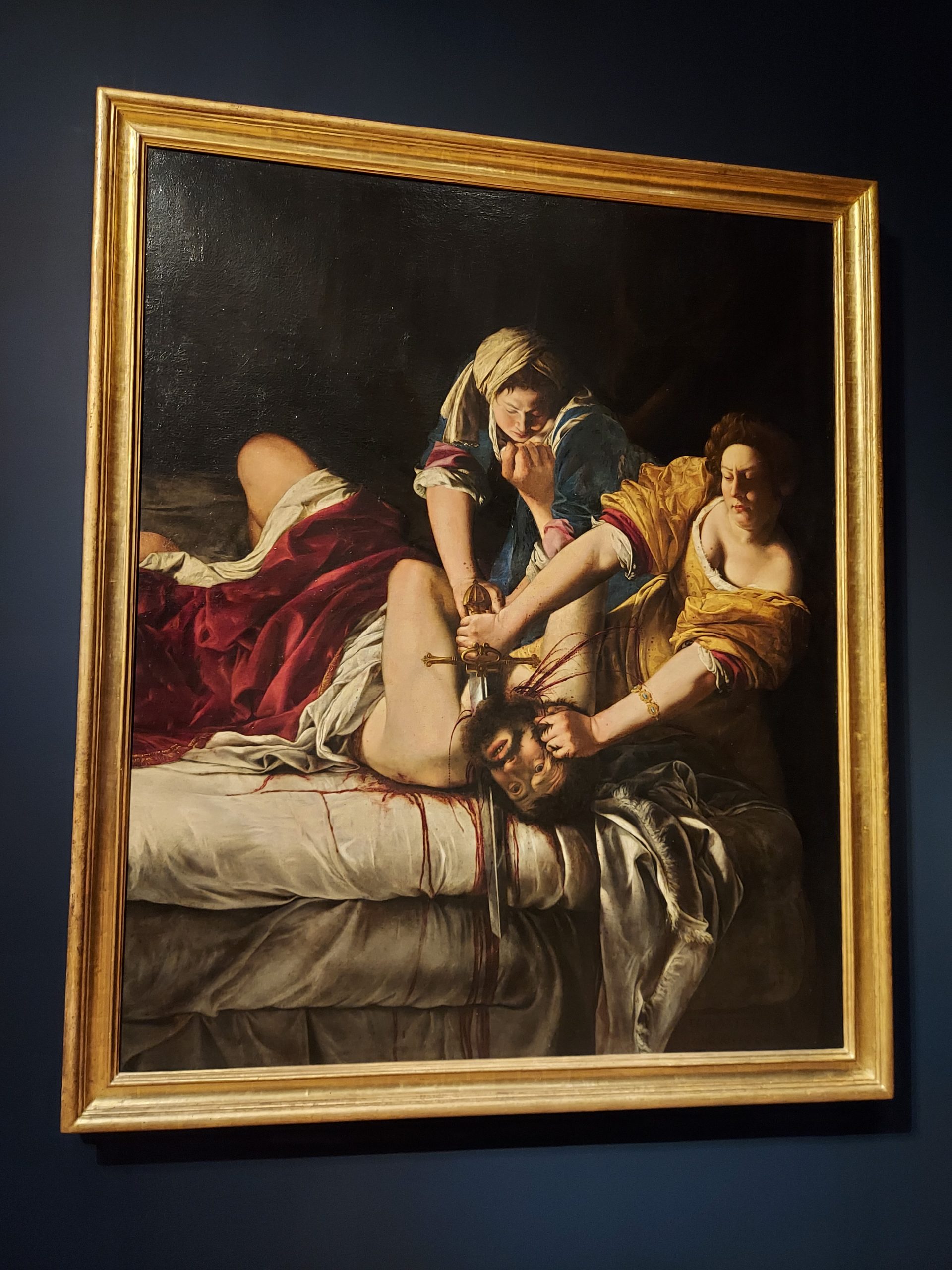
Judith Slaying Holofernes
Artemisia Gentileschi, Judith Slaying Holofernes, 1614-1620

The most famous incident of Artemisia’s life is probably her rape by a fellow painter at her home in Rome. During the subsequent trial, Artemisia was tortured with thumbscrews – a particularly frightening prospect for an artist, I’d imagine – to prove her testimony. Breach Theatre have produced a powerful play about the trial, but I was glad to see that the National Gallery did not allow this incident to overshadow Artemisia’s life and career. There is just as much focus on her subsequent marriage and move to Florence, her affair with a Florentine nobleman, her children and, later, her move back to Rome and visits to Venice, Naples and England.

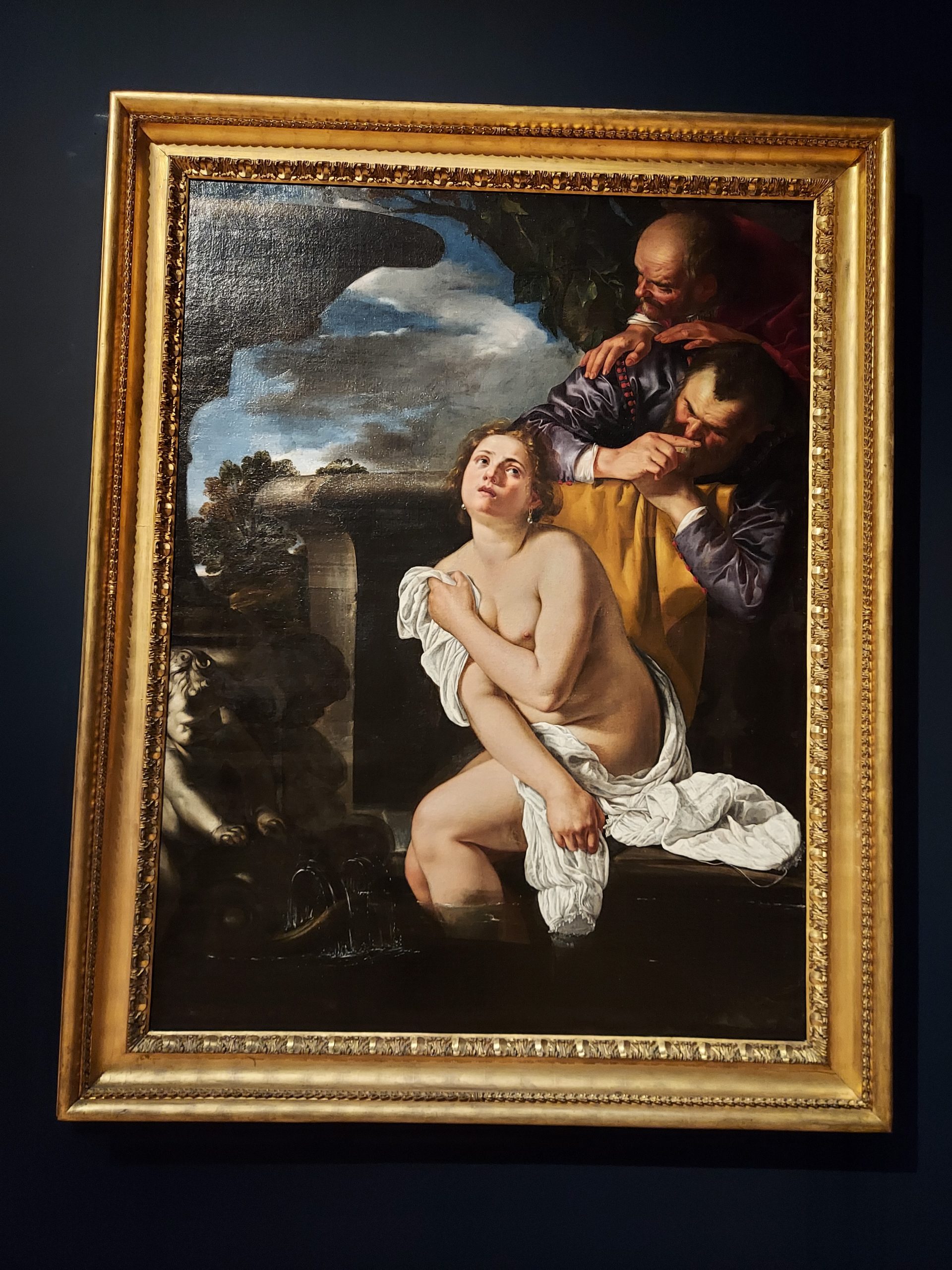
Susanna and the Elders
Artemisia Gentileschi, Susanna and the Elders

Even my untrained eye can see there is something different and special about Artemisia’s work: perhaps her gender helped her to see things differently; perhaps she was just incredibly talented; perhaps a bit of both. Some of her works are shown alongside her father’s: though Orazio was clearly an accomplished painter, Artemisia’s creations are (to my mind) far superior. Her versions of Susannah and the Elders show a frightened Susannah overlooked by lecherous old men, instead of the provocative nude often pictured by male artists. Judith beheading Holofernes, particularly the later version which is much more bloody and brutal, demonstrates visceral anger, and her self-portrait as the Allegory of Painting is an honest depiction of an artist lost in her work, not an idealised muse.

I loved this exhibition, and I’m so glad I got the chance to go.