
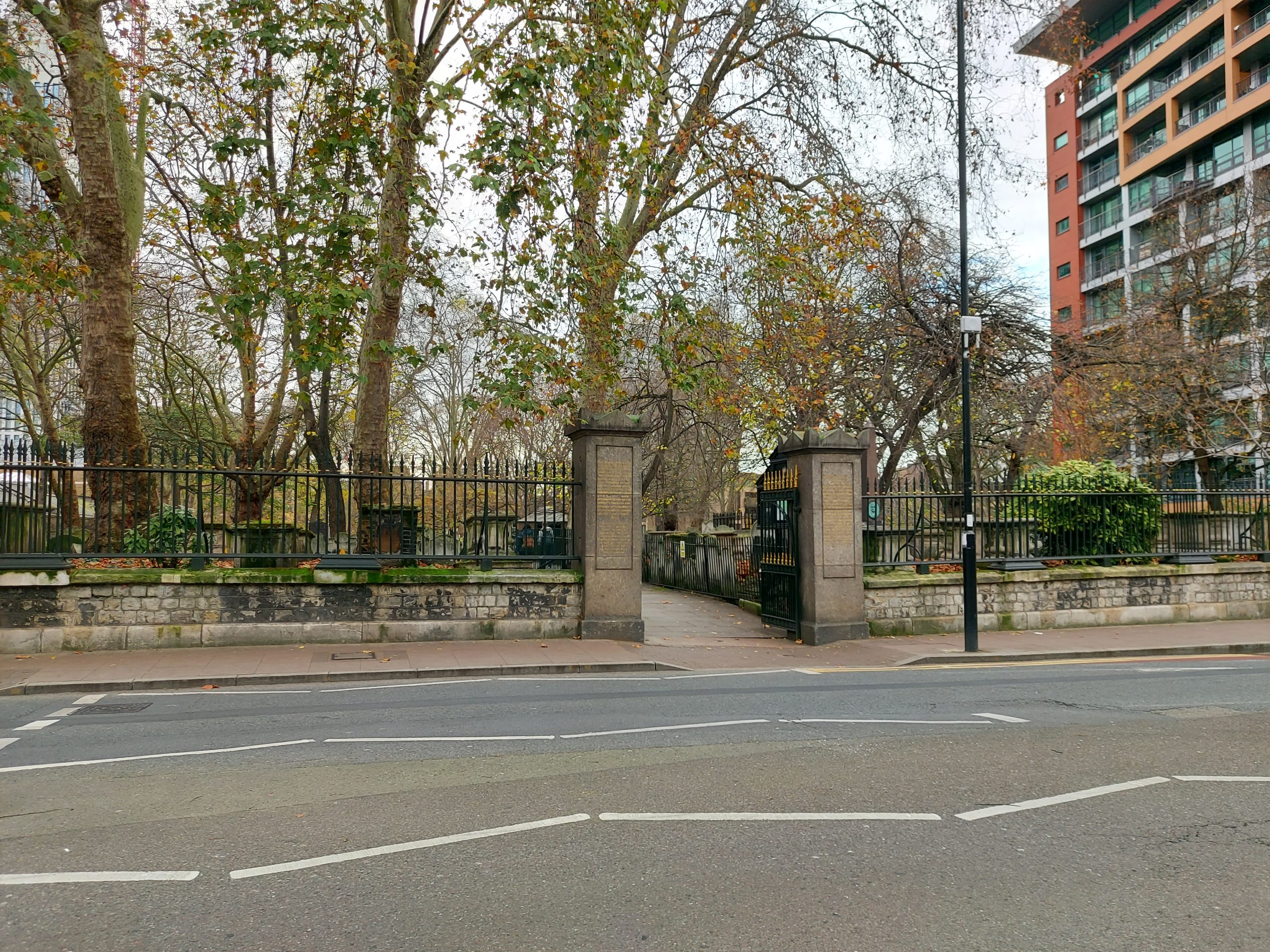
I can’t believe I’ve been living in London for nearly a decade and still haven’t visited Bunhill Fields burial ground. This piece of land in the borough of Islington was a burial place for mainly Nonconformists from 1665 until 1854, and is now a pleasant garden for Londoners to walk through and even sit and eat their lunch on a sunny day.
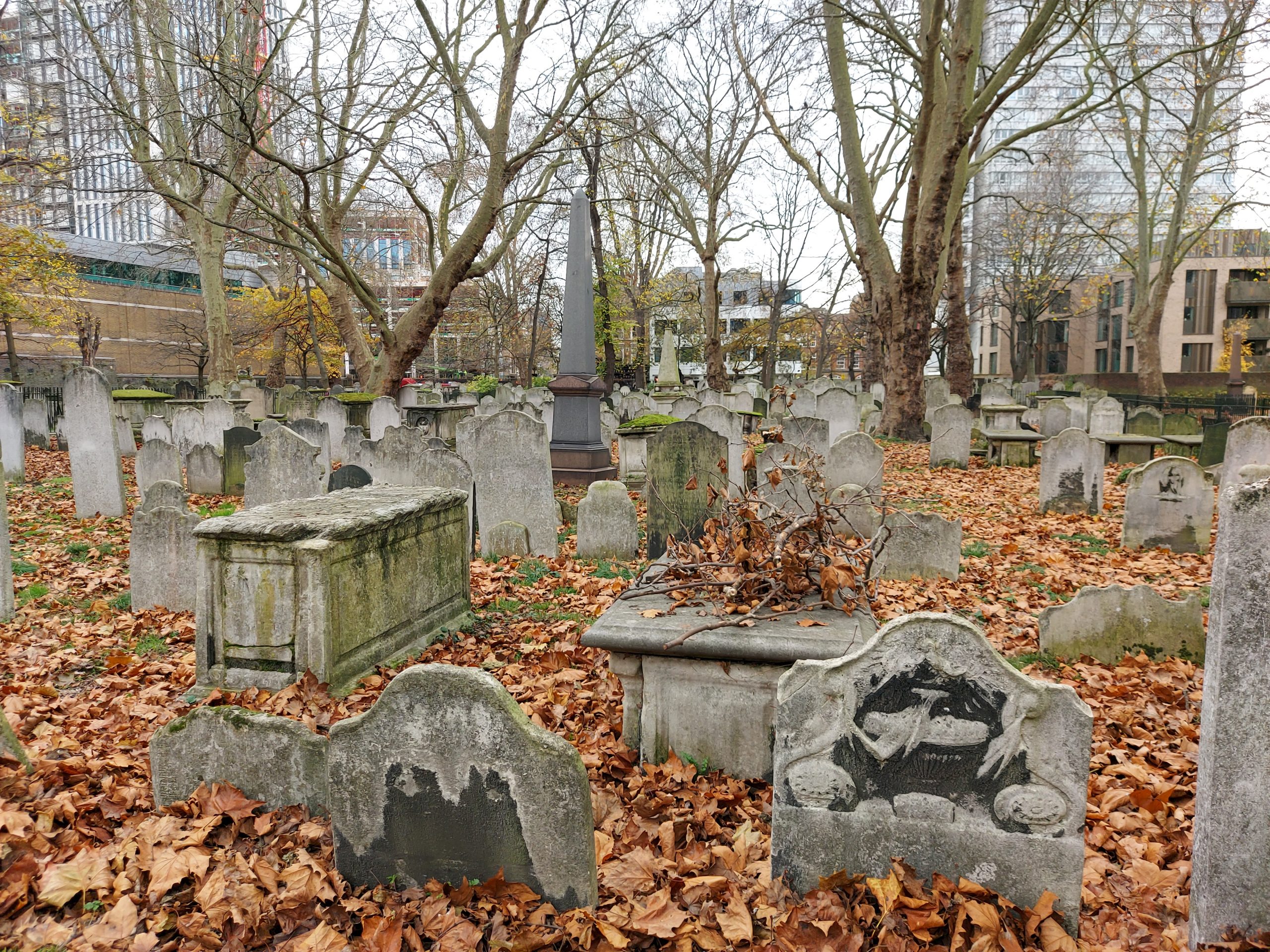
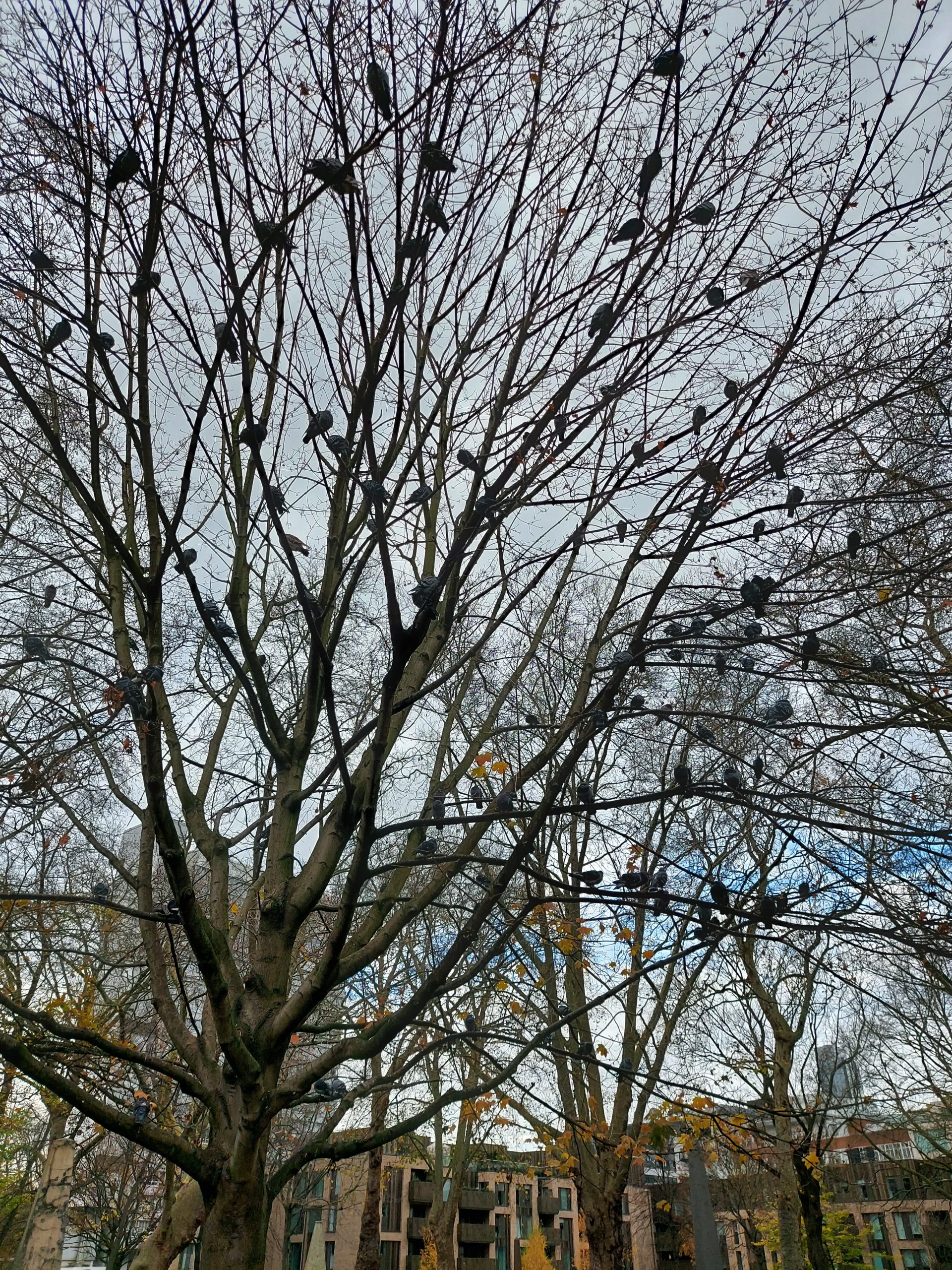
I visited on one of my days off as I was in central London. It was a cold November day, but it was dry, and the orange leaves made the burial ground look delightfully autumnal. A tree on which numerous birds settled made me feel slightly uneasy, but it added to the atmosphere.
The name ‘Bunhill’ derives from “Bone hill”: the area experienced occasional burials from at least Saxon times, but was used as a mass deposit for human bones (over 1,000 cartloads) brought from St Paul’s charnel house in 1549. These bones, covered with a thin layer of soil, built up a hill across the otherwise flat area.
In 1665, it seemed a natural decision for the City of London Corporation to use some of this land as a common burial ground for those who had died of plague and could not be buried in the churchyards. The ground was never consecrated or used by the Church of England, so when a Mr Tindal took over the lease, and allowed burials, it was popular with nonconformists: Protestant Christians such as Presbyterians, Methodists and Baptists. It was known as ‘Tindal’s Burying Ground’. After closure in the mid-nineteenth century, there was doubt over its future, but it was eventually opened as a public park, and survives as such today, despite extensive damage during World War II.

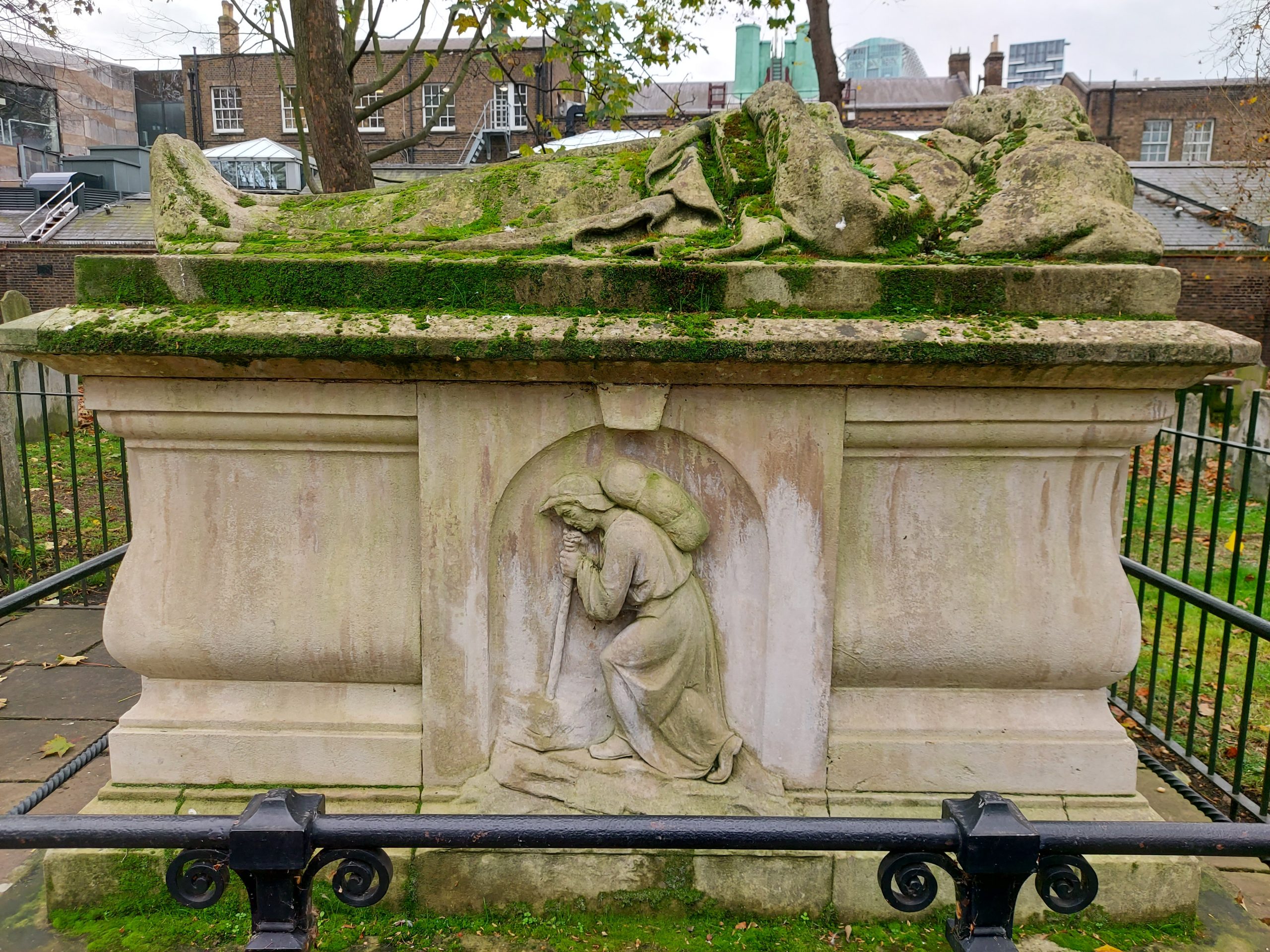
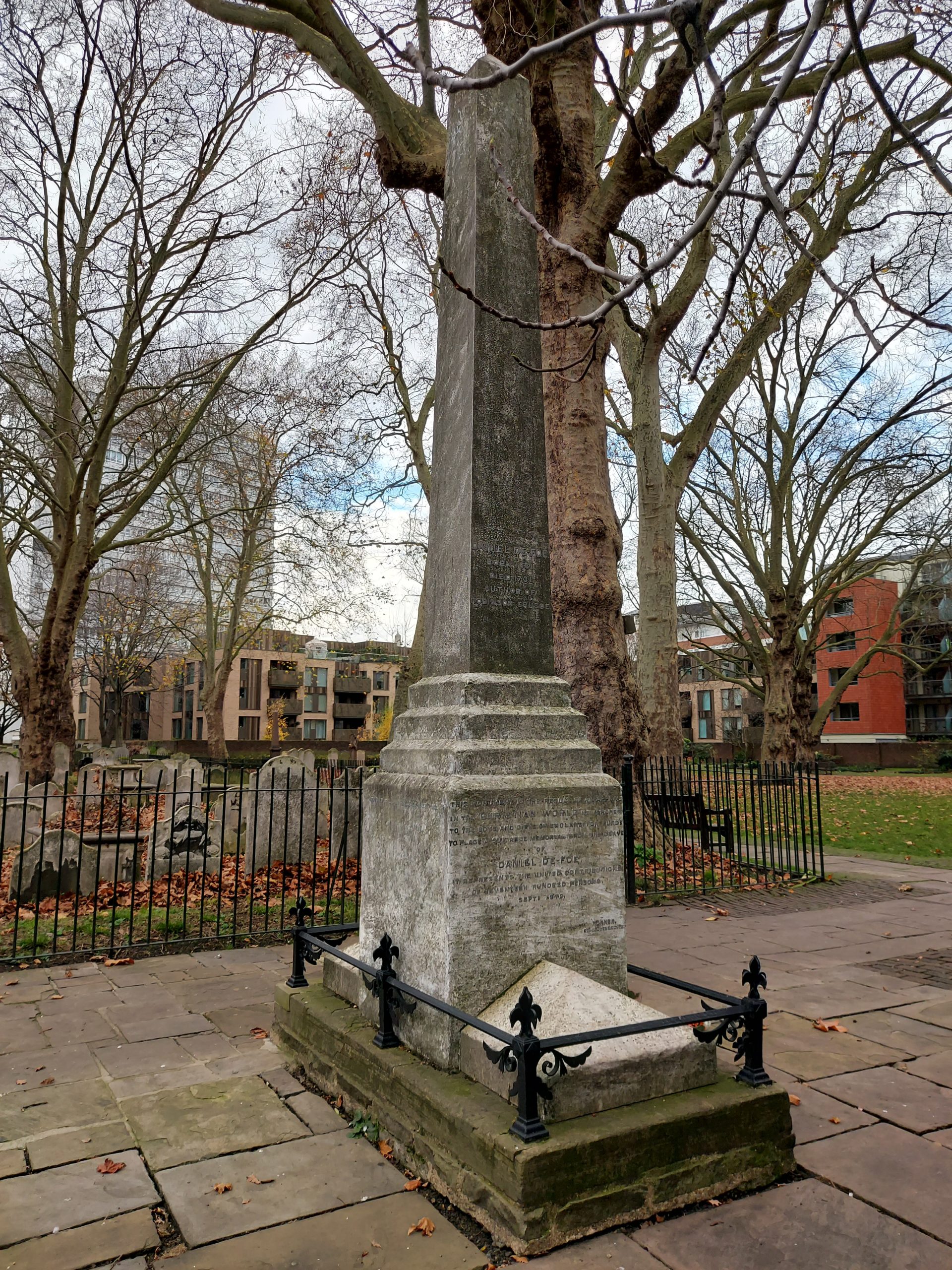
Bunhill is probably best known as the burial place of three of Britain’s most significant literary figures: John Bunyan, Daniel Defoe and William Blake. All three have monuments which were erected after the closure of the cemetery; as Blake’s isn’t actually on his grave, another was erected on the actual site of his burial in 2018. The monuments are very different: Bunyan has a tomb decorated with pictures of his famous Pilgrim, Defoe has an obelisk, and Blake has a simple headstone. Other notable burials include Susanna Wesley (mother of John and Charles) and Isaac Watts (hymn writer).

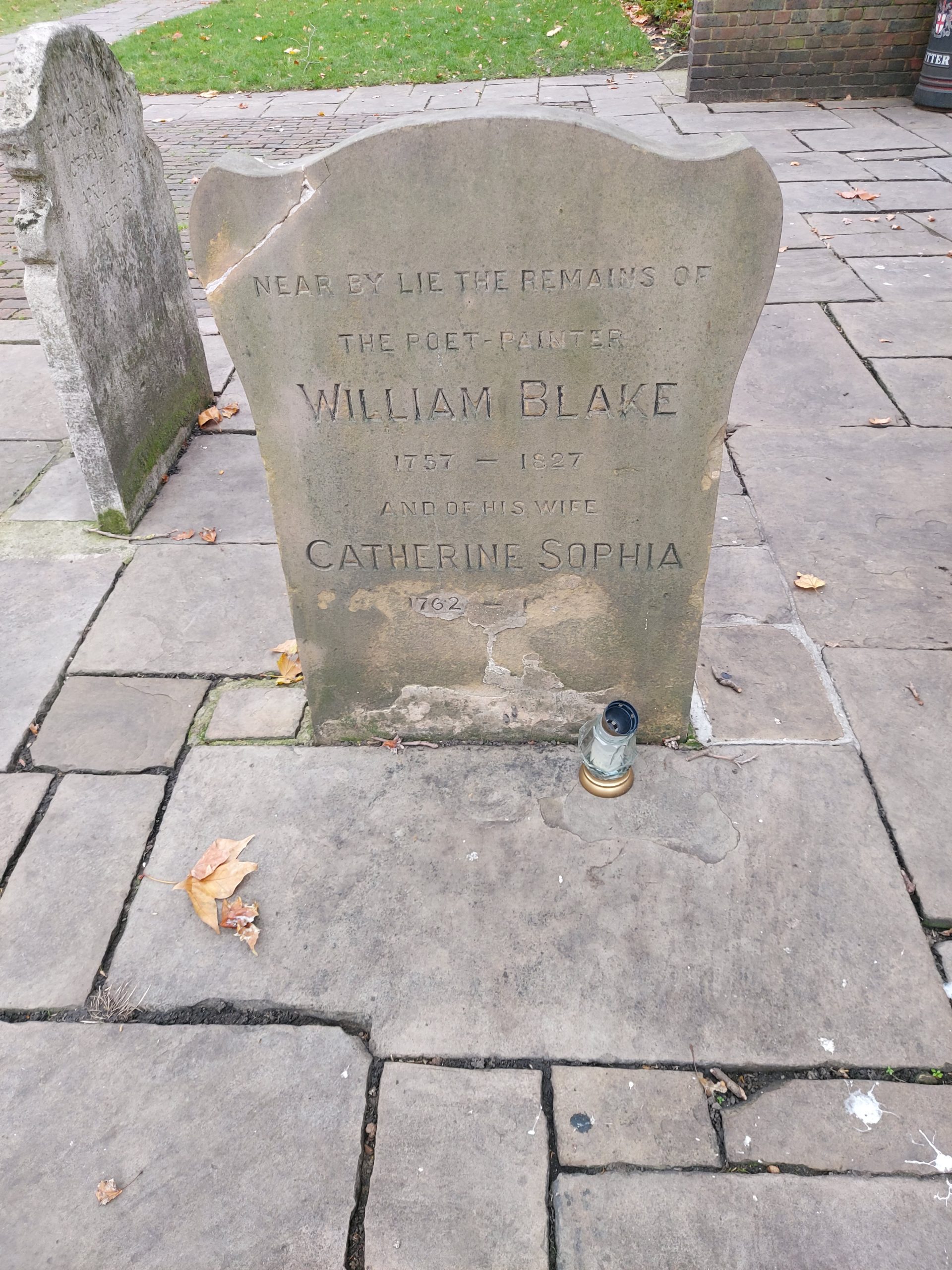
William Blake’s headstone 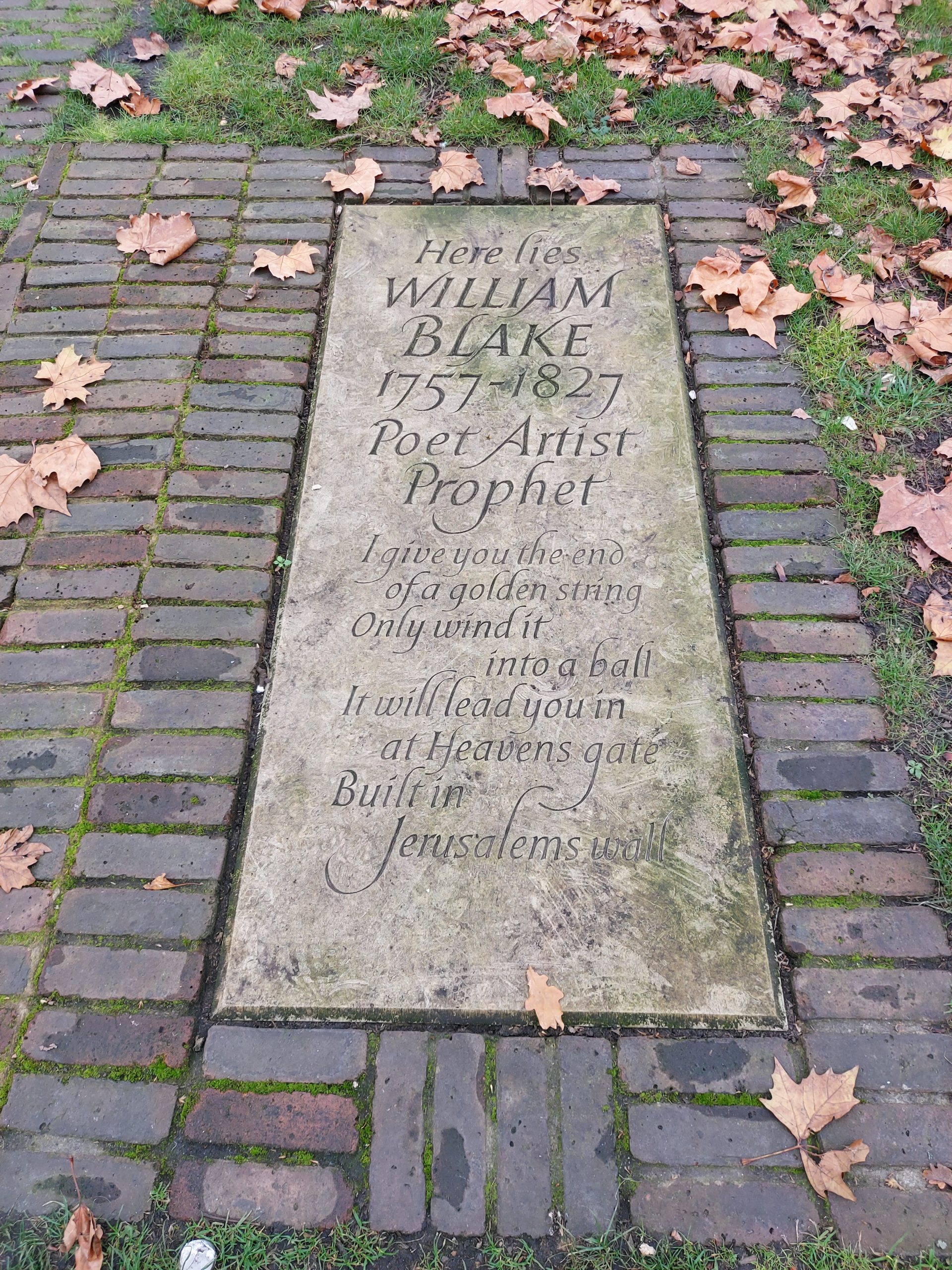
Location of Blake’s actual burial
Bunhill Fields can be found at 38 City Road, London, EC1Y 2BG, and is open daily until 7pm. It is very close to Old Street underground station, and a short walk from Liverpool Street mainline station.