Rebel Badge Club: Rebel Scavenger Hunt 2022

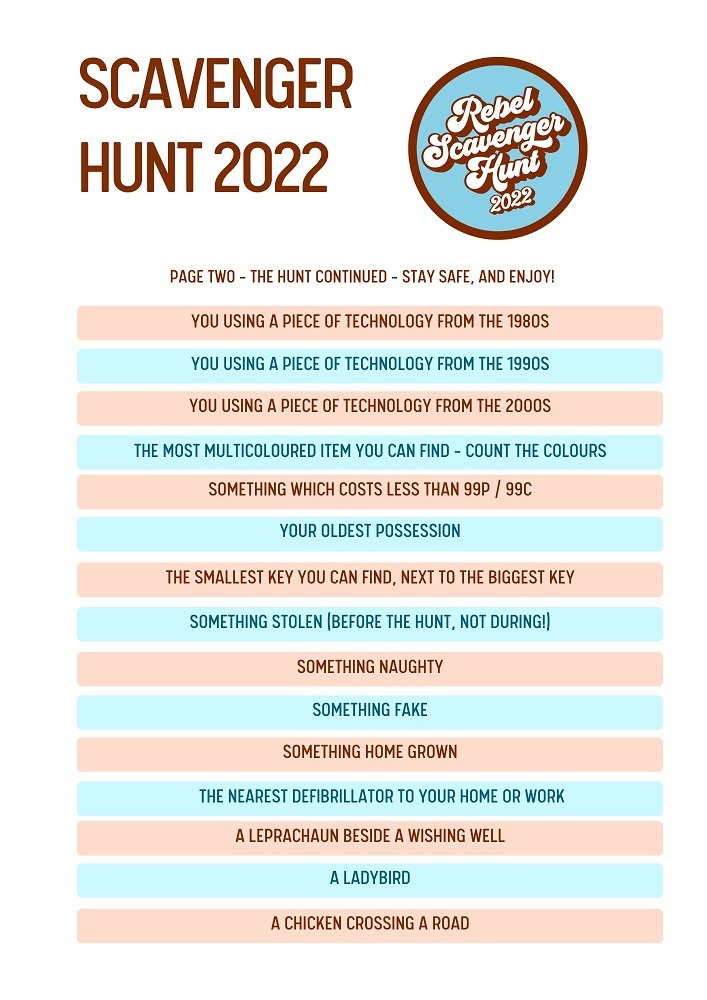
The monthly Rebel Badge Club challenge for August was a scavenger hunt – we were given a list of 30 items to find and photograph. It was great fun trying to get as many as I could – I managed to find something for each clause, although some are definitely a stretch. The one I’m proudest of is “A leprechaun beside a wishing well”, which involved an hour-long round trip on the bus to reach the pub!

My photographs can be found here. Hopefully I will be approved for the Super Scavenger badge!

Walter Sickert – Tate Britain

Poster for the Walter Sickert exhibition

Before heading up north for the second time this year, I visited the Walter Sickert exhibition at Tate Britain. I only knew Sickert from his ‘Camden Town Murder’ paintings – which are on display here – but there is much more to his work.

Sickert was born in Germany in 1860, but moved with his family to England aged eight. He initially sought to become an actor, but switched to art in 1882 – his artistic career would eventually span six decades.

The exhibition begins with an exploration of Sickert’s self-portraits, which show him experimenting with light and shade. It continues with a look at his early career and work in England and France, inspired by Whistler and, later, Degas.

My favourite pictures were those related to performance – theatres and music halls, circuses and outdoor performances. These were reminiscient of Degas’ paintings of ballet dancers, and were incredibly atmospheric, bringing the spaces to life. Sickert’s work spans the development and decline of music halls from lively entertainment venues to their role as the first cinemas.

Sickert’s portraits were mostly of well-known public figures, such as Aubrey Beardsley. They are vivid and demonstrate the sitters’ character. More informal portraits made much of their interior settings.

Landscapes, mainly of scenes in France and Italy, were particularly successful for Sickert, and often encompassed urban settings. He also painted nudes, often in more naturalistic, even dingy, settings than were traditional, leading to criticism.

The Camden Town Murder series features paintings of men and women in dingy, dark rooms in Camden Town, featuring props such as iron bedsteads. Their ambiguity led some to connect Sickert with the murders and even Jack the Ripper. They are atmospheric and have quite sinister undertones.

Sickert’s skill for portraying emotions and relationships were developed in his “conversation pieces”, exploring contemporary narratives and scenes. These paintings were innovative for the time and sought to illustrate everyday life in modern Britain.

I left the exhibition with a new-found appreciation for Sickert’s talent, range and focus – definitely worth seeing.


Off the Rails: The Line That Never Was – Elstree and Borehamwood Museum

Despite the excessive heat we had this weekend, I actually left the house and made the trip up to Elstree & Borehamwood Museum to check out an exhibition that’s been on since January this year. Off the Rails: The Line That Never Was takes a look at a planned Tube extension to the ‘Northern Heights’ that never materialised.

miniature Tube railway
A model of the proposed Northern Heights extension

The Museum

The museum as a whole opened in 2000 as an independent local museum. It is located on the top floor of a community building on the main street that also houses the library. Go into the library and up to the second floor to reach the museum.

The museum hosts a permanent exhibition of items and information relating to the local area, including the history of Elstree and Borehamwood Studios.

Model of Elstree Studios

The Exhibition

As a big fan of the Underground, I found the exhibition fascinating. The Northern Line extension beyond Mill Hill East via Edgware to Brockley Hill, Elstree South and Bushey Heath was planned before the Second World War, aimed at increasing development of the area and turning it into a ‘Metro-Land’ similar to the one that already existed to the north west of the capital. Much of the preparatory work had been done by the time war broke out, including the construction of several arches and parts of the track which are still visible today.

tube map
Section of a tube map showing the proposed extension

The war naturally halted construction, but postwar austerity cannot be held solely responsible for the extension’s cancellation. The development of the Green Belt around London meant that further ‘Metro-Land’ developments were essentially prohibited, and extensions seen as pointless. The exhibition, complete with a working model of the tube route including miniature stations, is a reminder of the complexities involved in any kind of transportation development and a must-see for fans of the Tube. It runs until 22 October 2022.

Bushey Heath station in miniature
A model of the proposed Bushey Heath station

FACTS

Address: 96 Shenley Road, Borehamwood, Herts, WD6 1EB

Website: elstree-museum.org.uk

Opening Hours: Tues, Wed, Thurs 12-6pm; Sat 10am-3pm

Price: Free