Despite the excessive heat we had this weekend, I actually left the house and made the trip up to Elstree & Borehamwood Museum to check out an exhibition that’s been on since January this year. Off the Rails: The Line That Never Was takes a look at a planned Tube extension to the ‘Northern Heights’ that never materialised.
A model of the proposed Northern Heights extension
The Museum
The museum as a whole opened in 2000 as an independent local museum. It is located on the top floor of a community building on the main street that also houses the library. Go into the library and up to the second floor to reach the museum.
The museum hosts a permanent exhibition of items and information relating to the local area, including the history of Elstree and Borehamwood Studios.
Model of Elstree Studios
The Exhibition
As a big fan of the Underground, I found the exhibition fascinating. The Northern Line extension beyond Mill Hill East via Edgware to Brockley Hill, Elstree South and Bushey Heath was planned before the Second World War, aimed at increasing development of the area and turning it into a ‘Metro-Land’ similar to the one that already existed to the north west of the capital. Much of the preparatory work had been done by the time war broke out, including the construction of several arches and parts of the track which are still visible today.
Section of a tube map showing the proposed extension
The war naturally halted construction, but postwar austerity cannot be held solely responsible for the extension’s cancellation. The development of the Green Belt around London meant that further ‘Metro-Land’ developments were essentially prohibited, and extensions seen as pointless. The exhibition, complete with a working model of the tube route including miniature stations, is a reminder of the complexities involved in any kind of transportation development and a must-see for fans of the Tube. It runs until 22 October 2022.
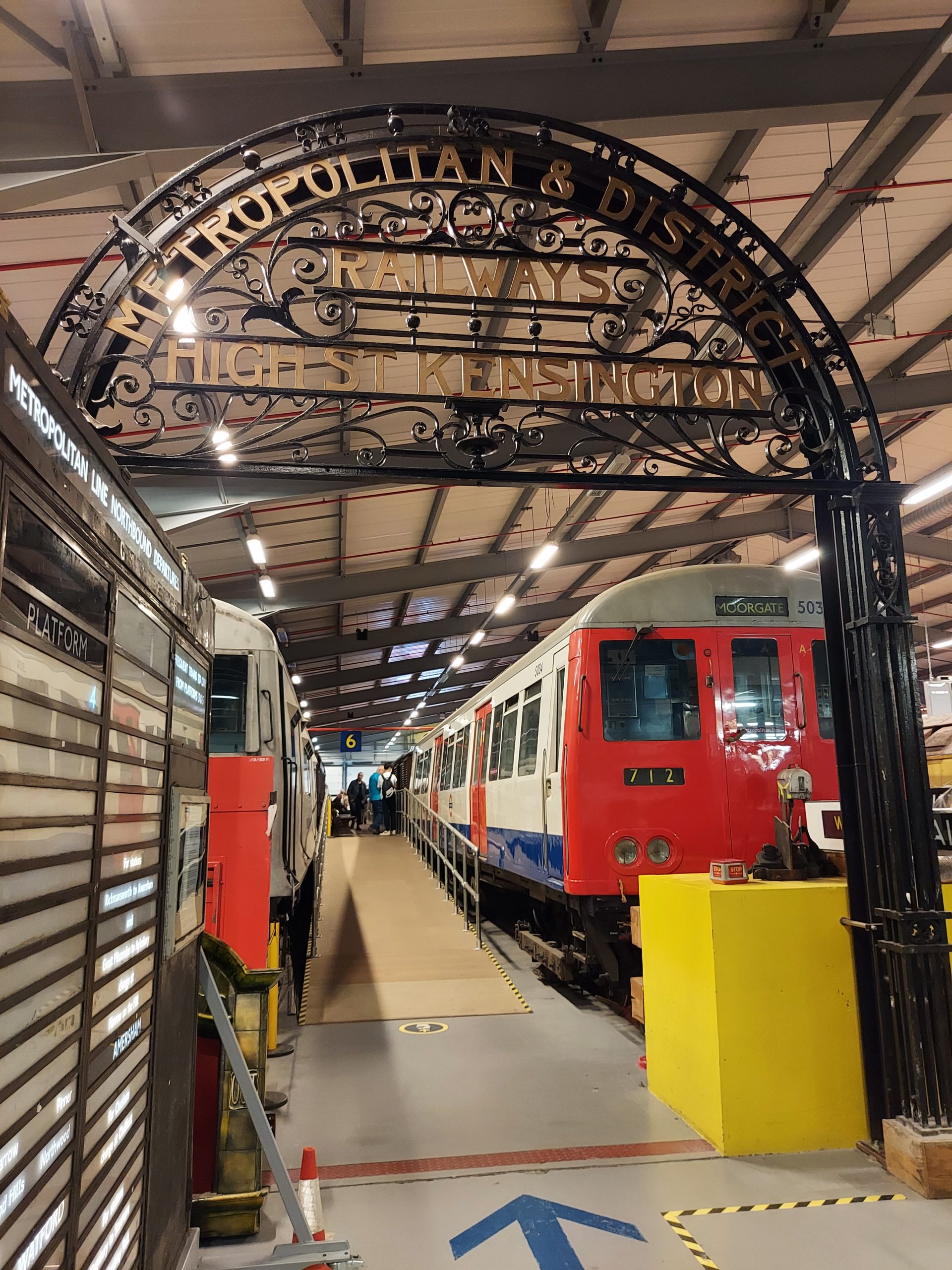
It’s been a long time since I’ve visited the London Transport Museum‘s Acton depot, so I decided to go along to their ‘Underground Uncovered’ event in September. As on my previous visit, there was plenty to see – buses, trams, and Underground cars including one of the District Line carriages that I travelled on frequently before they replaced them a few years ago.
During my visit I attended a talk, The Development of the Underground Logo and Roundel, with Nick Gill. This was fascinating and I learned a lot – not least that the roundel was nearly superseded by a different logo at one point, but the new one did not catch on, to say the least.
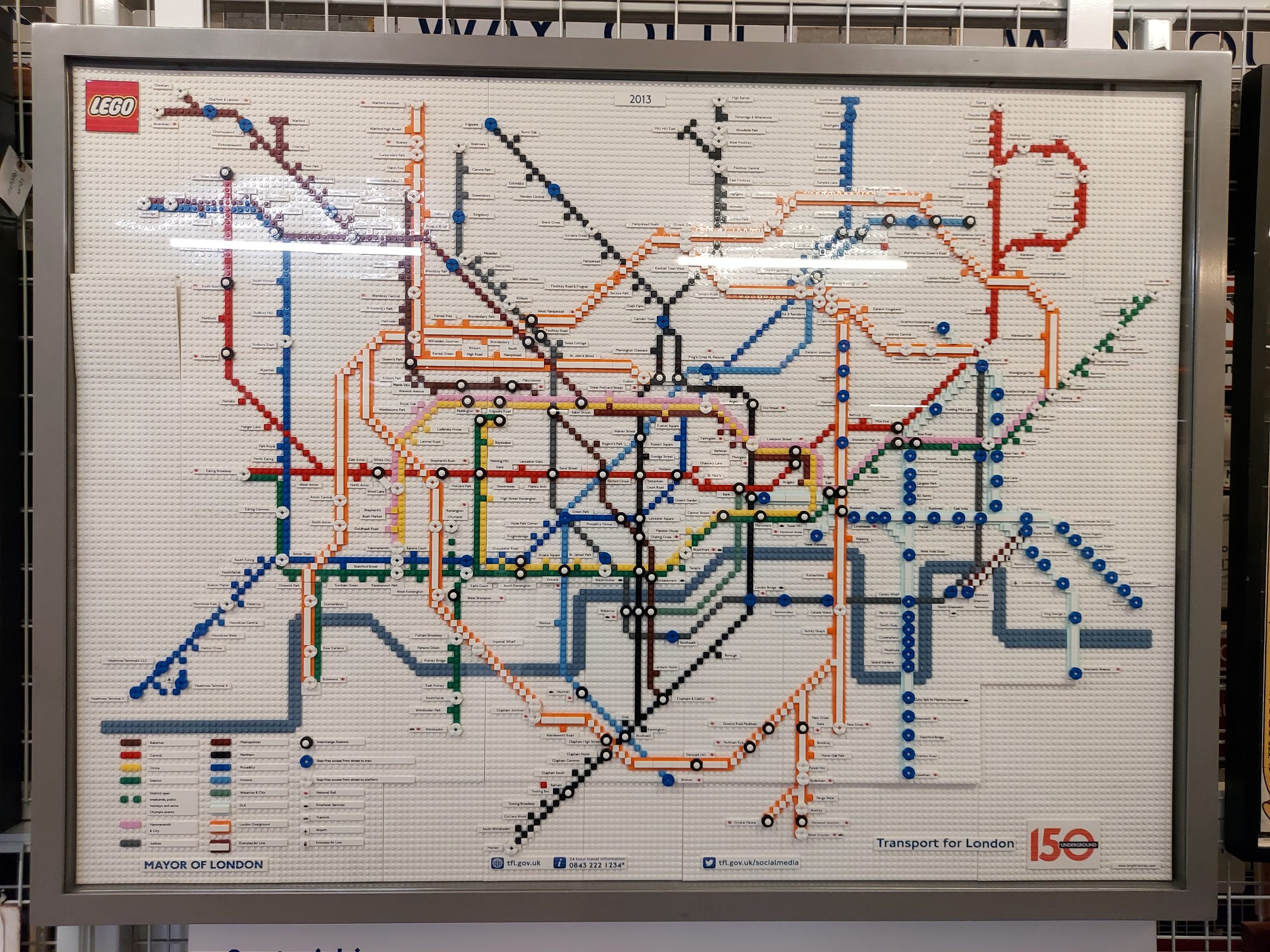
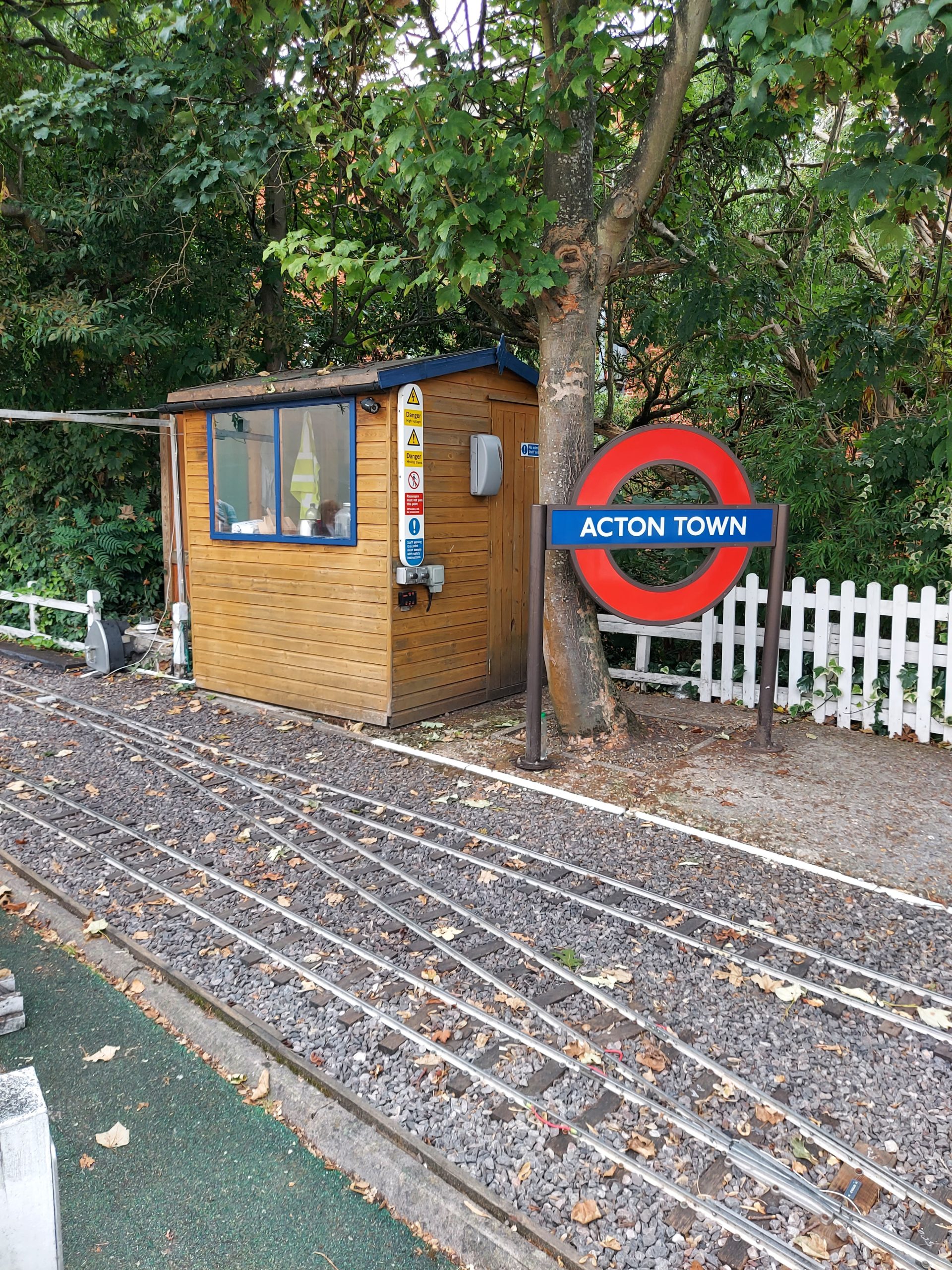
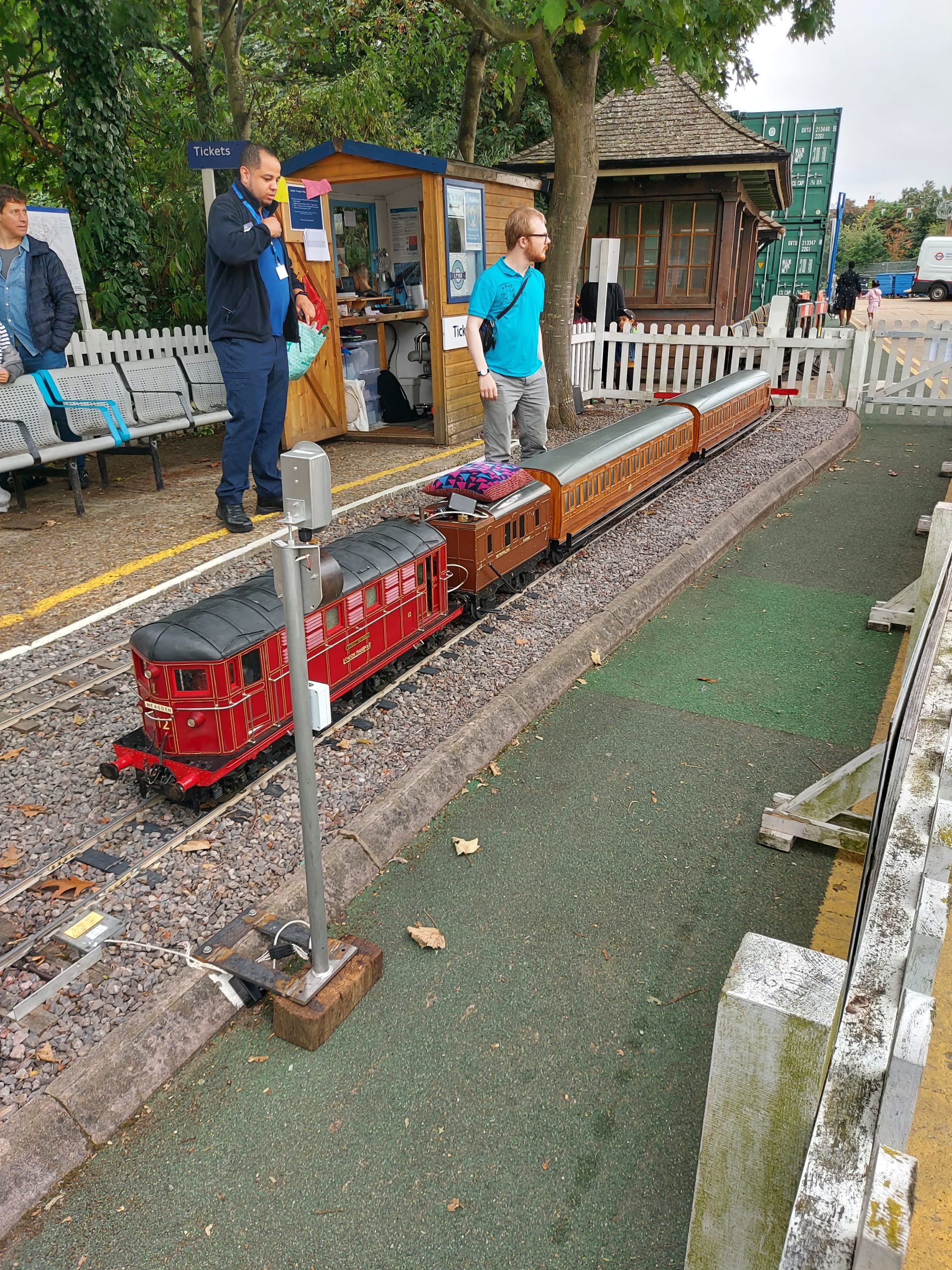
There were also some new things to see: notably a Lego map of the Underground, and – most excitingly – the miniature railway! I got to have a ride on this, and it was great fun.
The Acton depot is open on several weekends throughout the year – check out the museum website for details.
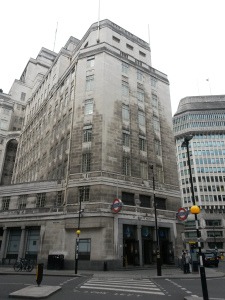
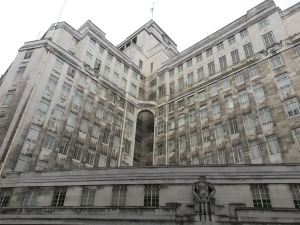
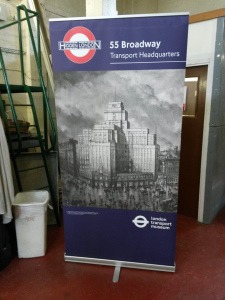
I always make a habit of visiting some interesting buildings when Open House London comes around. This year I was lucky enough to visit 55 Broadway, the former headquarters of London Underground, near St James. The Underground Group was formed from a group including the Tube railways, London General Bus company, tram operators and electrical supply companies, and in 1927 when they decided they wanted their new headquarters to reflect its bold vision of the future, they hired architects Adams, Holden and Pearson for the job.
55 Broadway
It was a challenging job from the start. With its irregular shape and depth (St James’s Park station sitting just 7.3 metres below the site) Adams, Holden and Pearson’s job was a difficult one. They managed to get around it, however, by incorporating the cruciform layout into their design.
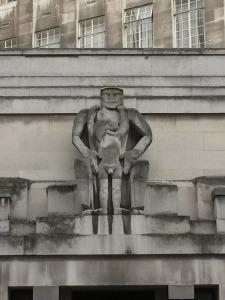
Epstein’s controversial sculpture
Charles Holden, later known for his work on the Northern and Piccadilly Line extensions, used Portland stone and added bronze features to the building. Carvings by Eric Gill, Henry Moore and Jacob Epstein (who’s “Night and Day” caused controversy) adorn the outside of the building, which is now Grade 1 listed.
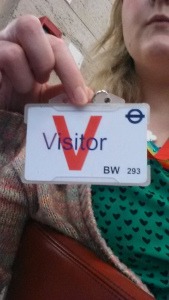
Visitor pass
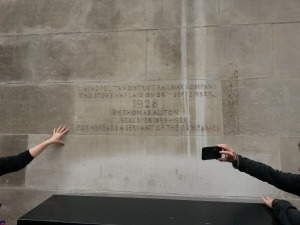
We started off outside, where we were introduced to the history of the building and got to see the original foundation stone.
Foundation stone
The tour took us up several floors, including the seventh floor with its original management rooms, outside to see the roof gardens, and right up to the flagpole.
Underground at Charing Cross, waiting to go through the barriers
The tube is one of my obsessions, and I’ve already toured the closed Aldwych/Strand station, so I was thrilled to have the chance to tour the disused Jubilee Line platforms of Charing Cross station. The tours, organised by the London Transport Museum and Hidden London, sold out almost as soon as they went on sale. We were told to meet by the barriers in Charing Cross underground station – this was unusually quiet for a Sunday, perhaps because the main line station was closed.
This walled-up entrance was once the way to the Jubilee line
We were issued with wristbands and taken through the barrier and down the escalator. Once we had reached the bottom, a door in the unassuming wall directly in front of us was opened and we were ushered through to find another escalator, this time switched off, so that we had to walk down it. At the bottom were the platforms, decorated with film posters left over from the Underground Film Club‘s recent residency.
Hidden London poster
The Jubilee line was first opened in 1979, two years after the Queen’s Silver Jubilee which lent its name to the line as well as the silver/grey colour of the line on the tube map. Known prior to its construction as the Fleet line, after the tributary of the Thames that also gave its name to Fleet Street, it took over what was formerly the Bakerloo line between Stanmore and Baker Street, continuing on to Charing Cross, a station with a chequered history, having originally been two separate stations that were united only when the Jubilee line platforms opened.
Poster showing the stations along the Jubilee line when it first opened
For twenty years the Jubilee line served Charing Cross, alongside the Bakerloo and Northern lines. However, in 1999 the Jubilee line was extended: the line was rerouted from Green Park to Westminster, carrying on south of the river to the Docklands area and the O2 (then the Millennium Dome), curving back up and terminating at Stratford. The Green Park-Charing Cross section of the line has been closed to regular tube trains ever since, though it is still used as a sidings and in certain circumstances trains can be sent down here to help avoid congestion – one of my friends was once on a train that was temporarily rerouted down here, and when she told me about it I was VERY jealous.
One of the platforms
Our knowledgeable and informative volunteer guides told us all about the station, its history, and how it is used today. It is often used for testing new features.
The yellow wall signifies that there is an exit on the opposite side
For the first time in this station, the name of the station was positioned lower on the wall so it could be read from the train
In case of emergency, shining a light on these yellow panels makes them glow green, so that they stand out in the darkness
The station is sometimes used for storage.
You wouldn’t get this in a normal station – it is used for moving things off and on trains
The station has a distinctive look that you can recognise if you see it on screen – so long as you know what to look for.
The open ceiling signifies air vents.
We were shown a series of short film clips featuring Skyfall (2011/12), Paddington (2013) and the TV show 24 (2014), filmed on these platforms. As I had learned at Aldwych station, historical TV programmes and films tend to be filmed in that station, whereas more modern shows tend to be shot here at Charing Cross.
This is the escalator that Bond slid down in Skyfall: thankfully with the spikes at the bottom removed!
After we had explored the platforms we were divided into two groups and taken to see more hidden parts of the station.
In the film Creep (2004) a creature comes out of this very hole.
My group visited a construction tunnel first – entering via the door that Daniel Craig pops out of in Skyfall, blending in seamlessly with the hordes of commuters.
It was dark and rather disgusting in the tunnel – but still incredibly exciting
When the Jubilee line was first being built, constructors couldn’t dig directly beneath Charing Cross station, as this would have been too disruptive for traffic. Instead, they sunk a hole next to the National Gallery – where the Sainsbury Wing is located now – and tunnelled along from there.
We were walking under Trafalgar Square at this point
An older part of the tunnel is now entirely blocked up, in a location directly beneath the Fourth Plinth.
The tunnellers used the same methods as the original Underground workers did back in the nineteenth century.
Posters comparing the construction of Underground tunnels, almost a century apart
Once out of the tunnel, we changed places with the other group, causing passing tube-travellers to look somewhat bemused as we emerged from one door in the wall only to enter another one shortly afterwards.
We had to don hard hats for this part of the journey.
This is the cooling system for parts of Charing Cross station. I had no idea, waiting for a train, that there was all this space above my head.
From here we could LOOK DIRECTLY ONTO THE PLATFORM AND THE TRAINS.
Train is gone…
Train has arrived
I had hoped that somebody on the platform would look up and get a shock, but sadly it was not to be. However, the guy in front of me later managed to frighten a tourist by waving to her from the passage.
We went off down the passage in the other direction to see where the cooling system begins. It’s possible to see it from outside the station, if you know where to look. It was raining outside and we could feel the rain on our faces.
That was the end of the tour. We were taken back to the top of the escalators to make our own way home.
I had an AMAZING time and would definitely recommend the tour to anyone who might be interested. It is sold out at the moment but there may be more tours announced in the future, so I’d recommend signing up to the London Transport Museum’s mailing list to be the first to find out about any future dates. The guides hinted that there would be more exciting tours to look forward to – I’m hoping for Down Street but I’ll have to wait and see!
I headed to Shoreditch to catch the Bob Mazzer – Underground exhibition at the Howard Griffin Gallery, on from 12 June-13 July. The Gallery was decorated in a basic style but as a nice touch had seating from old Tube trains. The photographs themselves were taken across a 40-year period, during which Mazzer explored the London Underground and captured intimate, humorous pictures. Among my favourites were the man standing on a ladder whose face was obscured by a clock on a platform at Stockwell, and the couple embracing while round the corner a man urinated against the wall – quite a contrast!
The end is in sight for my visit-every-Underground-station project – after Saturday’s excursion I only have fifteen stations to do. Fifteen! I can hardly believe it.
So what did I do on my Saturday excursion? I did something I’ve been meaning to do for a while – I headed to the end of the Metropolitan Line, one of the oldest parts of the network, to check out the stations there. These were built before the Green Belt around London was constructed, hence why they are so far out compared to the rest of the stations (Zone 9 no less!). The villages here are actually in Buckinghamshire, and you can hardly believe you’ve just got off the tube, so different is the entire area to busy central London.
First of all, Chalfont & Latimer station (the junction from which you branch off to either Chesham or Amersham) seems to be a housing estate with a main road running past. It was very quiet: this attractive-looking tree and bench seemed the most noteworthy landmark in the place.
I visited Chesham first. I really liked Chesham – it had a really old villagey feel and I could see the hills on one side. There was a market on when I was there, too.
Chesham town centre
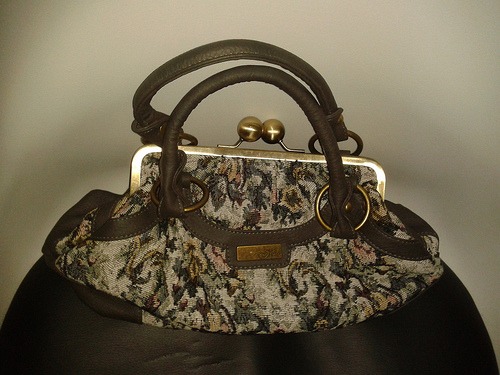
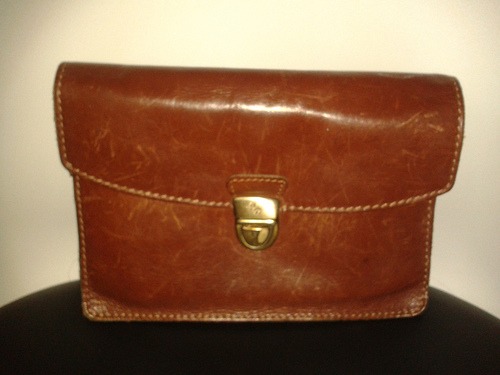
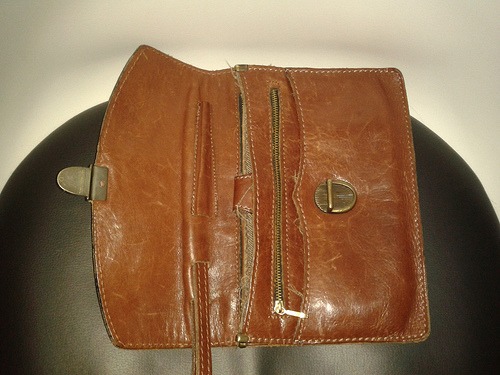
I didn’t like Amersham quite so much, as it wasn’t as pretty – I suspect Old Amersham is the ‘pretty’ village, but I didn’t have time to go there. What I did like – in both Chesham and Amersham – was the number of charity shops. I love a good old charity shop rummage: on this occasion I came back with two bags, one from each town. I love them both, especially the leather one, which is basically Proper Vintage.
I visited the London Transport Museum as a child, but I imagine a lot will have changed since then; also, I can’t remember most of it. So I decided to visit again on Wednesday, after a visit to the Library (which I had arranged on behalf of one of the library groups I am a member of).
The Museum underwent a complete refurbishment a few years ago, and looks very smart. Housed in the old Covent Garden Flower Market, the old and the new fit together very well. The Museum is set out in such a way that you travel through time over two hundred years of history. This is great fun – you get into the lift and as it takes you up to the second floor, you can see the years counting down!
The first part of the Museum looks at the methods of transport available before the railway. London had a much lower population than it does now, and most got about by walking, except for the rich, who ventured out in contraptions like these:
I feel sorry for the guys having to carry this
As far as the river was concerned, most people crossed via boat: London Bridge was the only bridge for several years. Back on land, different kinds of carriages monopolised the roads, and horse-drawn buses became popular:
Horse-drawn tram
The Museum then covers the history of the London Underground, starting with the steam-powered Metropolitan Railway and following with the electrical trains of the Tube.
Early steam train on the Metropolitan Line
Tube carriage
From then, the museum’s scope widens further: it continues to explore the role of railway transport – including the Underground – but also encompasses trams, buses, taxis and – to an extent – cars.
Buses, trams and taxis
Towards the end, mention is made of cycling, and there is a reference to the forthcoming CrossRail line.
I also took the opportunity to visit the exhibition Poster Art 150 – London Underground’s Greatest Designs. Curated to celebrate the 150th anniversary of the London Underground network, it displays 150 of the best posters created to promote the Tube. Viewers are invited to inspect them all and vote on their favourite.
As a bit of a tube geek, I clearly wasn’t going to pass up the chance to visit the London Transport Museum‘s Acton depot on their annual spring Open Weekend. The depot is crammed full of all the things that won’t fit in the museum proper in Covent Garden, and there are plenty of gems to discover, such as this ornate arch:
The depot is basically a giant warehouse and it takes a good while to explore. I liked this rather sweet model of a steam train, and this fascinating cross-section of Westminster station.
There were countless maps, including this one from 1910, showing how the Underground network has changed over the years.
Several corridors were lined with old Tube signs, including those from now-defunct stations such as Ongar and Aldwych.
The largest part of the depot was filled with vehicles: examples of Tube trains and carriages from various eras, as well as several styles of buses.
My trip to the depot was fascinating and I’m glad I went along. London Transport Museum host a couple of these weekends a year, as well as various activities, which are displayed on their events page. I definitely recommend taking a look.
I make no secret of the fact that I have a bit of an obsession with the Tube. So, it seems, do plenty of other people, given the popularity of the heritage train trips that have taken place over the last couple of weekends. I entered the ballot and was lucky enough to be allocated a ticket for Sunday night’s run from Kensington Olympia to Moorgate. I was sent the details in the post, including this beautiful purple celebratory ticket.
This train was comprised of the Metropolitan Railway’s ‘Jubilee’ carriage no. 353 (built in 1892) and the Chesham set of coaches loaned from the Bluebell Railway. At one end of the train was the newly-restored Met Locomotive No. 1; at the other was the Metropolitan Railway electric locomotive ‘Sarah Siddons’.
This journey involved being pulled by the steam locomotive for the first few minutes, after which the train moved in the other direction towards Moorgate, pulled by the electric locomotive. I chose this journey because of the price – £50 as opposed to £150. This way I was able to experience a steam journey as well as an electric one.
I spent Sunday exploring some tube stations in the north before heading to Kensington Olympia station about an hour before I needed to – I was so paranoid in case I was late. I had time to get a coffee and sit down for a bit, which was just as well seeing as I was going to be spending a lot of time in the cold!
I got back to the station at 5.20 on the dot as the letter had instructed. There were several people milling around already. I had been worried in case the trip was cancelled due to the snow, but this didn’t happen. We had to register at the table corresponding to our carriage (mine was D), and received a wristband, the kind you get when you go to a gig.
Clearly this makes the trip so much cooler
After that, it was a matter of waiting for the train to arrive. A couple of District Line shuttle trains from Earl’s Court arrived first and the passengers seemed rather puzzled to find so many people lined up on the platform. It was pretty cold, and it was snowing, but there wasn’t much shelter, so everyone was a bit squashed huddling under the canopy.
Eventually the train arrived and I clambered into my carriage. I was pleased to get a window seat. The train began to move and whistled loudly. Several people armed with cameras waved us off from the road.
The journey was brilliant. I imagined myself as a nineteenth-century passenger travelling on the Underground. The smoke flew past our carriage, clouding our view of the tunnel walls. I can imagine that this experience would have been none too pleasant one hundred and fifty years ago, with open windows and even more smoke.
I recorded a video showing the train on its way through Earl’s Court station:
At every station along the route, from this one to West Kensington where we changed direction, right through to Moorgate via Bayswater, Paddington, Farringdon and Barbican, there were crowds watching and taking photographs. Some people had obviously come prepared with cameras, others appeared bewildered at the sudden appearance of this historical relic. They waved, and I waved back, feeling rather like royalty!
All too soon, it seemed, the train reached Moorgate. Here, we had the chance to take pictures of the train before it set off on its next journey. I took full advantage of this opportunity. I was pleased that one of the brand new Hammersmith & City Line trains was standing alongside the heritage train: an impressive juxtaposition of the old and the new.
I had a brief look round the London Transport Museum pop-up shop; I didn’t buy anything but I made a mental note of several items to purchase later.
I know spending £50 on an Underground journey sounds crazy, especially since I could use my Travelcard to travel along this stretch of track whenever I like. However I don’t regret it at all: it was a once-in-a-lifetime experience and a journey back into the Underground’s past.
The New Year only began a fortnight ago but already I’ve been keeping up with my exploration of the Tube. Last week I travelled on the eastbound Piccadilly Line and ticked off a few stations. I didn’t quite make it to the end as I had to go back into central London to meet a friend*, but I did manage about four stations and also took a detour to take a look at the window of George Moore Menswear at 99 Myddleton Road, near Bounds Green station. I read about the store in this blog post by Peter Berthoud: this is no ordinary window display. Established during World War II, the business was run first by George and then by his son Brian. When Brian retired, he left the window display as it was on the last day of trading. The items in the window – from shirts and jumpers to underpants and socks – are slowly decaying. I took some pictures, but sadly the window was rather dirty so they didn’t come out very well.