Hidden London – Holborn: The Secret Platforms

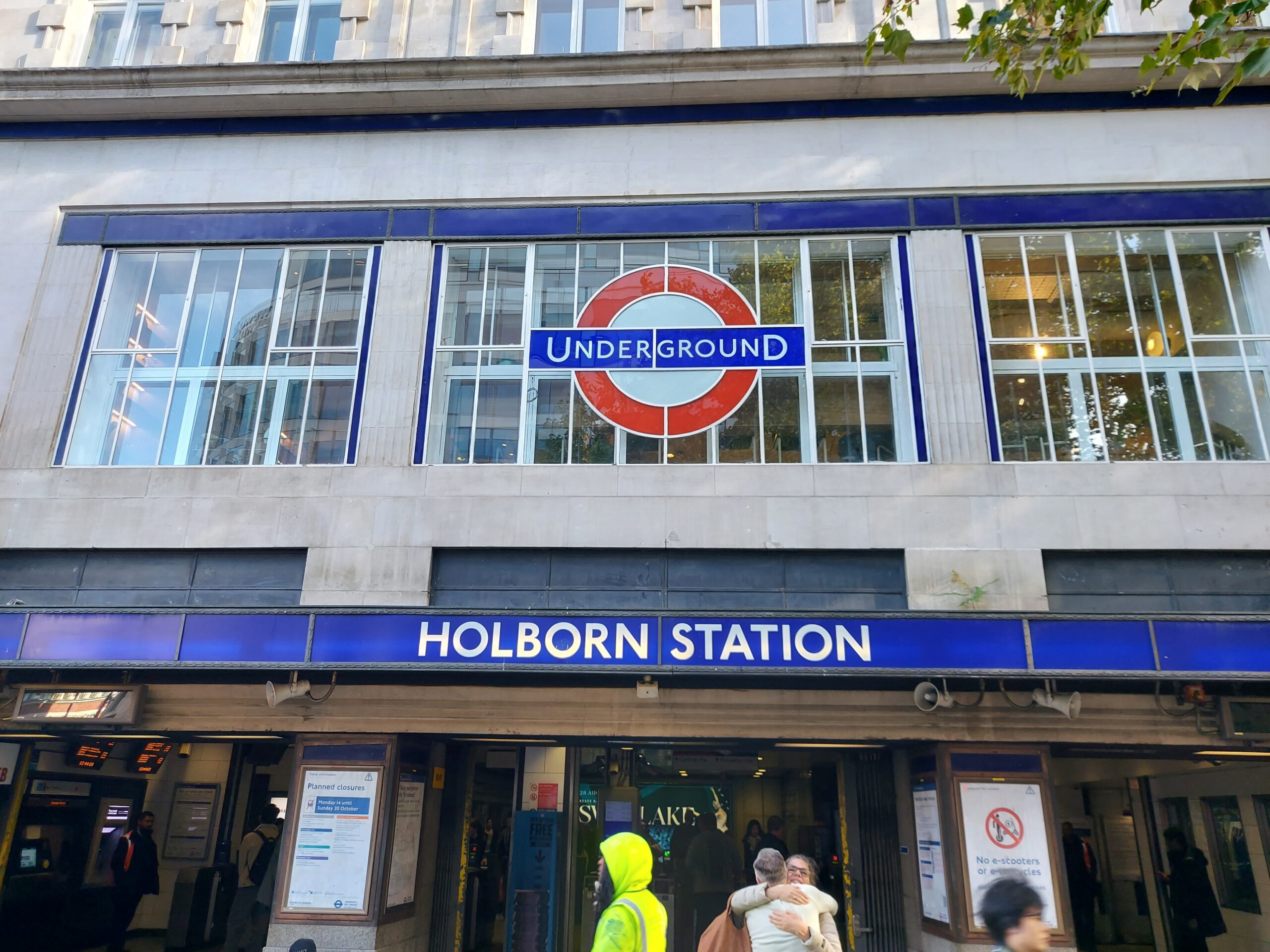
Outside Holborn station
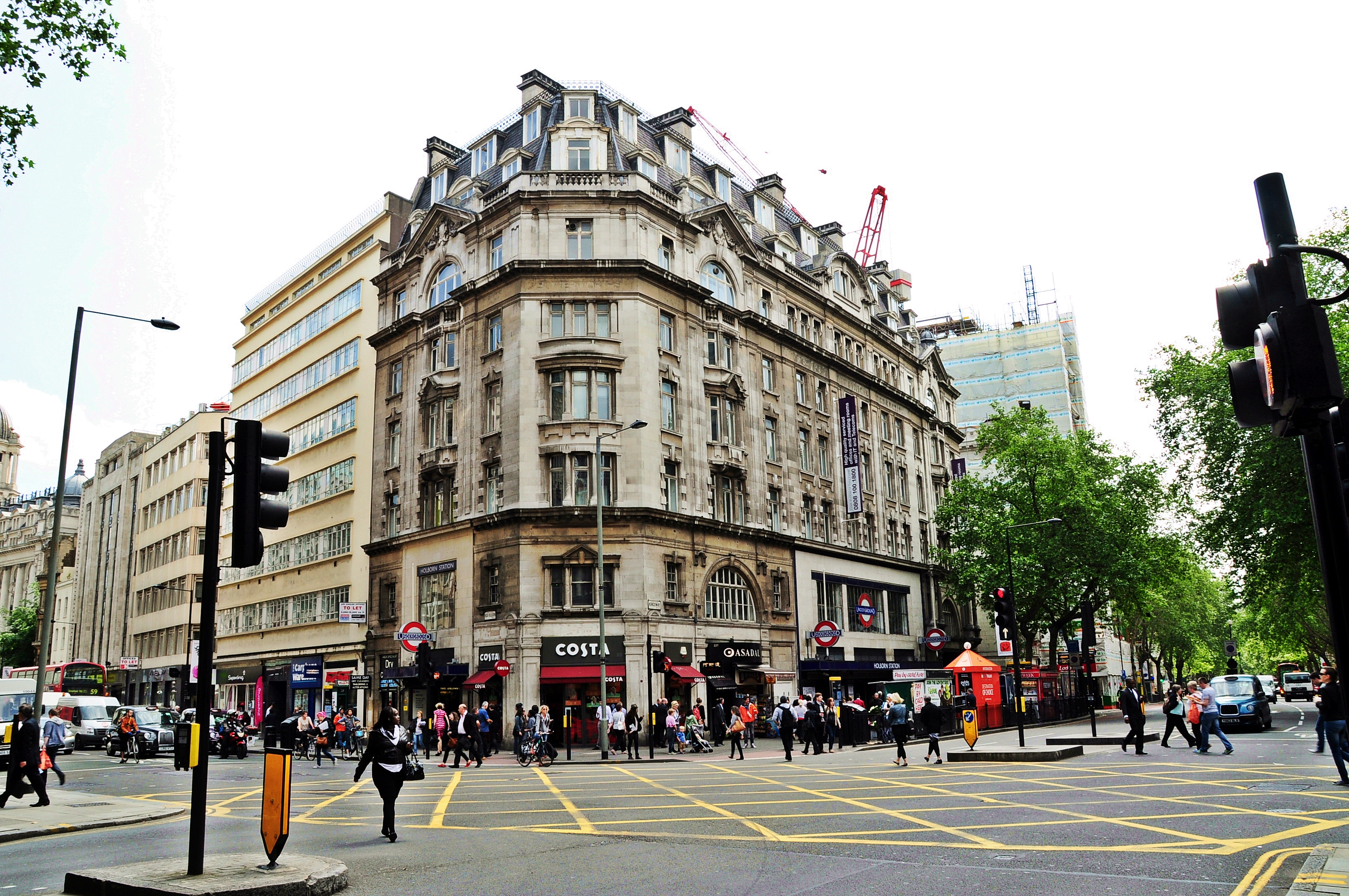
Holborn station today

I got to take part in another Hidden London tour recently – this time Holborn: The Secret Platforms. This is a new tour offering insights into one of central London’s most popular stations. Despite being a busy working station, a third of the station is not open to the public, and this tour opens up those hidden areas.

The station originally opened in 1906 and featured four platforms, all serving the Piccadilly line. At the time, the surrounding area was notorious for its poverty and crime, but the station helped it to develop into an important business district. In 1933, the station was reorganised and expanded to include escalators and encompass the Central line, leading to the closure of the nearby British Museum station.
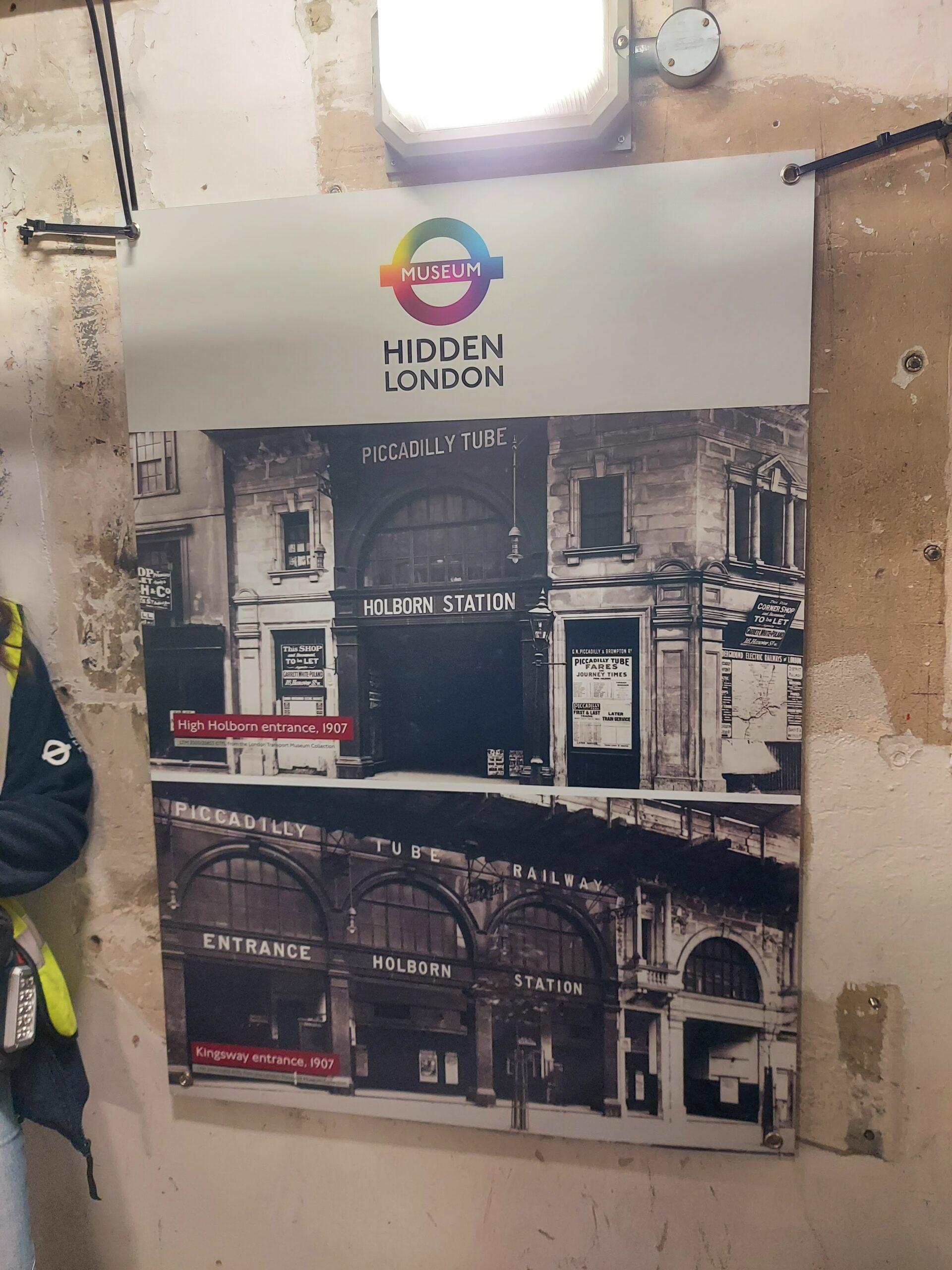
Original entrances to Holborn Station

The original station was designed by Leslie Green, although the facade was of polished granite stained red, not the usual brickwork, in order to fit in with local architecture. We got to walk down the emergency spiral staircase, fitted to complement the lifts that were originally in place.
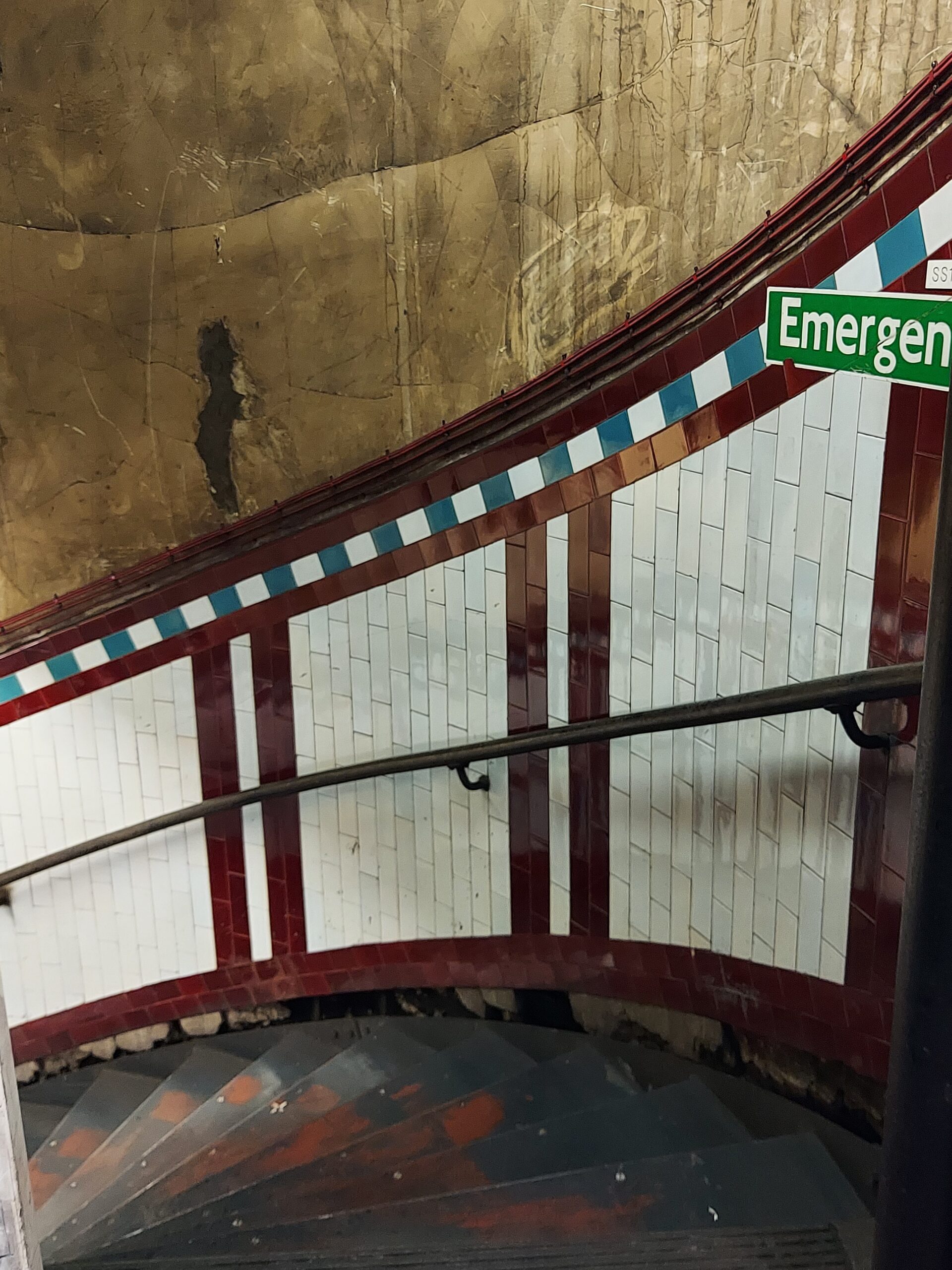
Emergency spiral staircase at Holborn

The main reason that so much of this station is now disused is the closure, in 1994, of the little-used Aldwych extension. I visited Aldwych on my very first Hidden London tour (before it was even called Hidden London) around a decade ago, so it was exciting to be able to see the disused tracks from the other end. In the past they have been used as wartime accommodation, a science lab, a model railway club, a substation, and signalling.
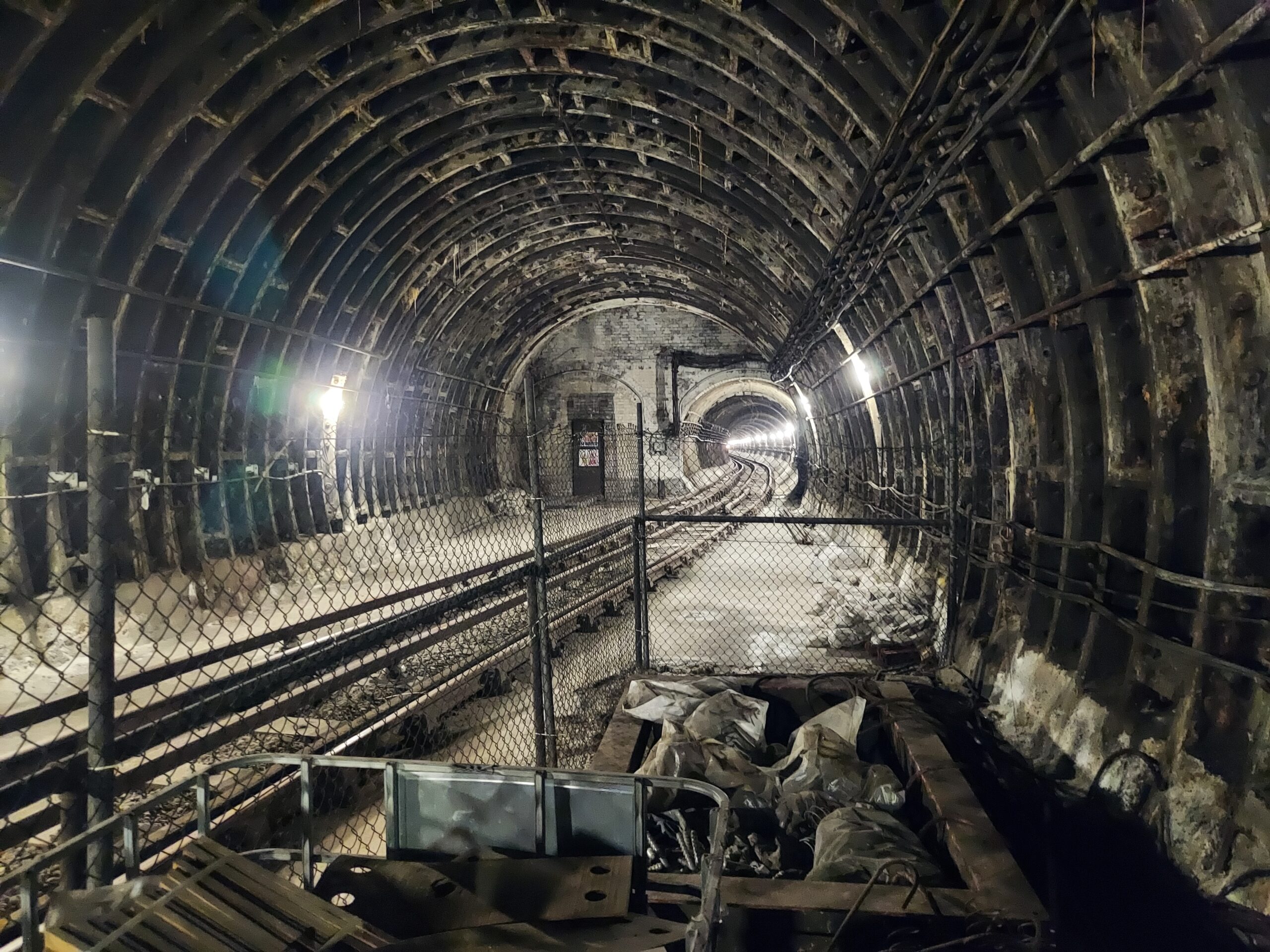
Disused tunnel heading to Aldwych

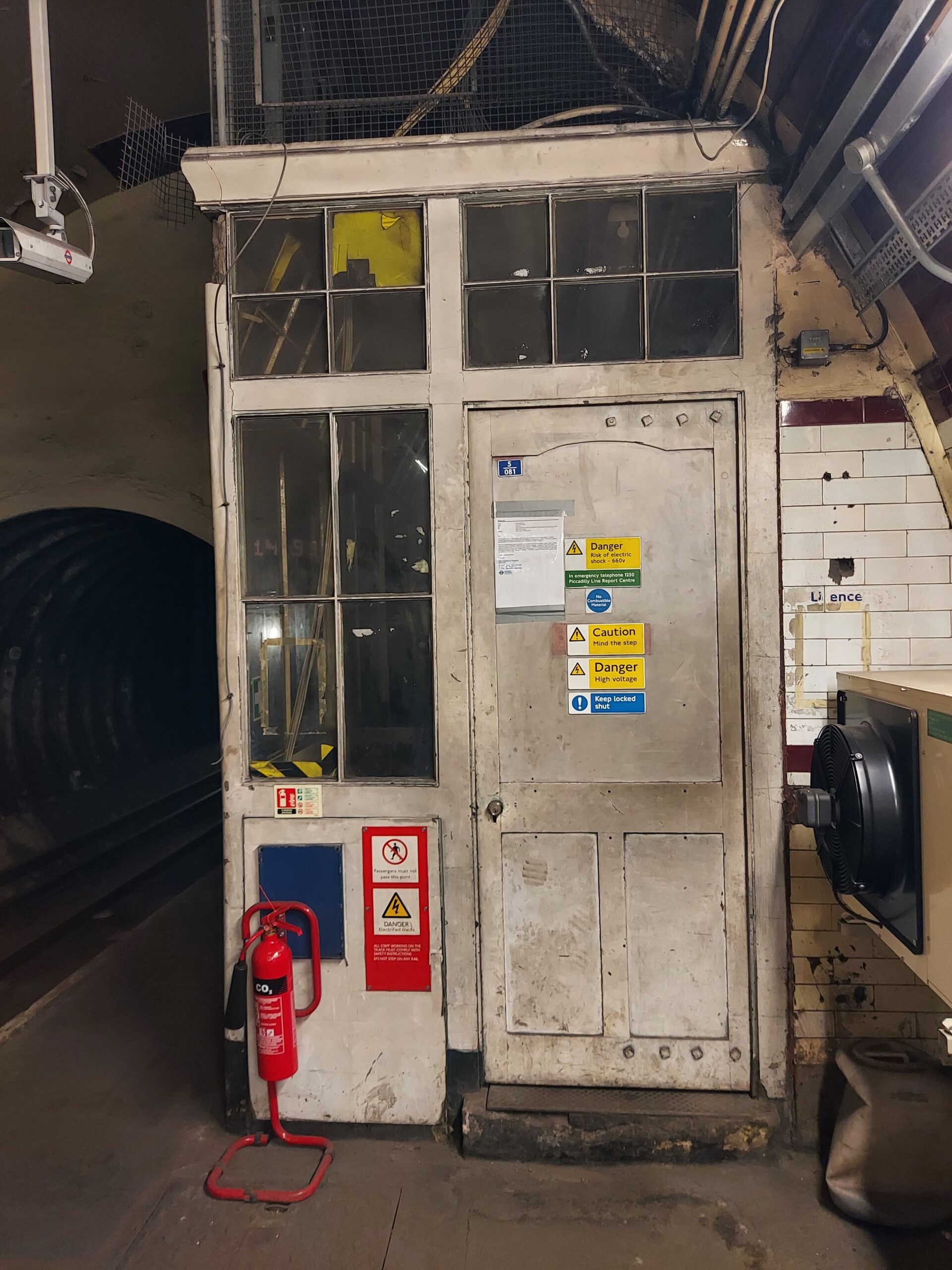
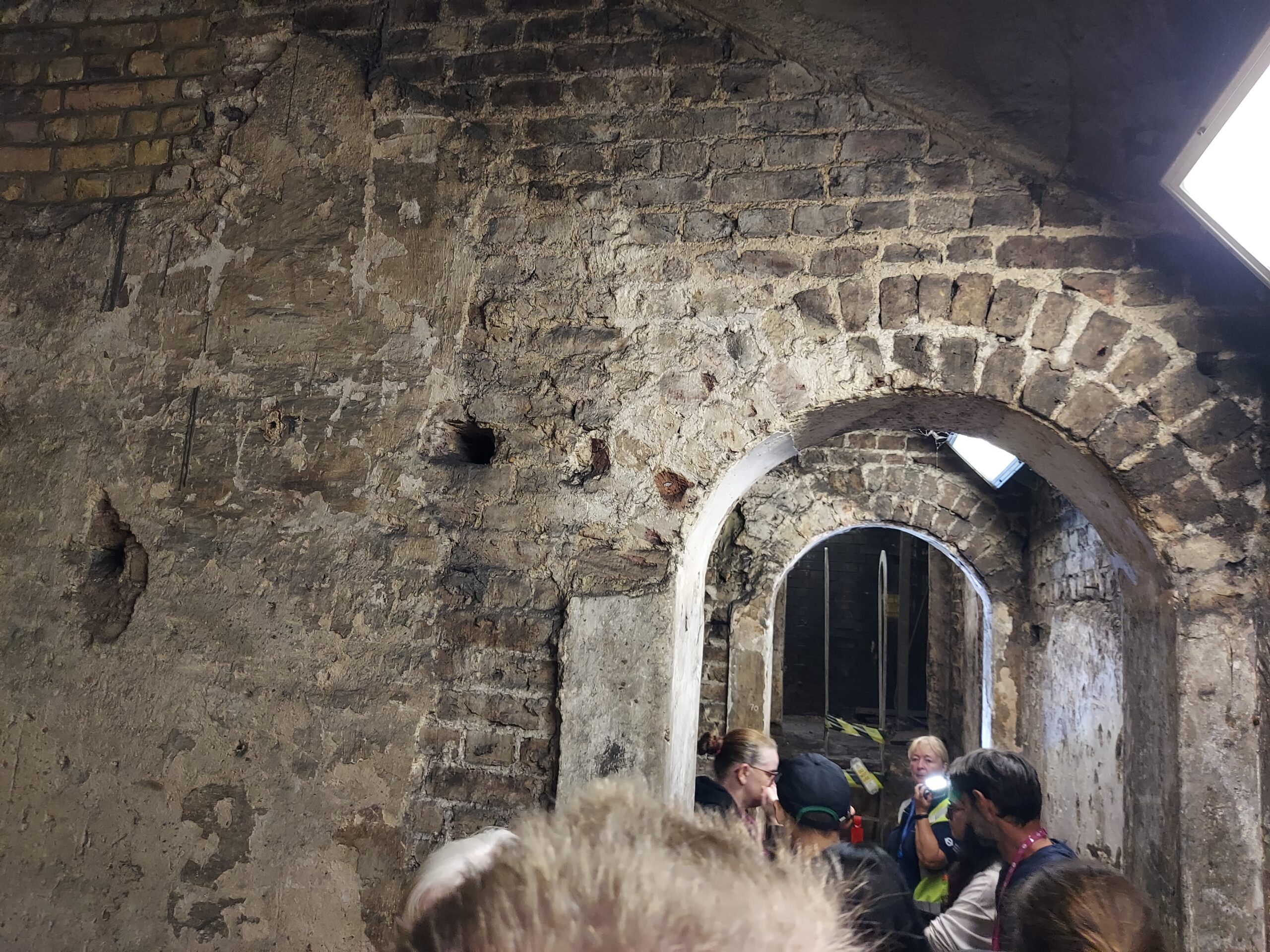
We also got to see some of the disused tunnels and platforms. I was surprised to learn that filming has taken place here – including one of the Superman movies starring Christopher Reeve, and Aqua’s video for ‘Turn Back Time’. One of the old platforms is home to an early 20th-century signalling cabin.
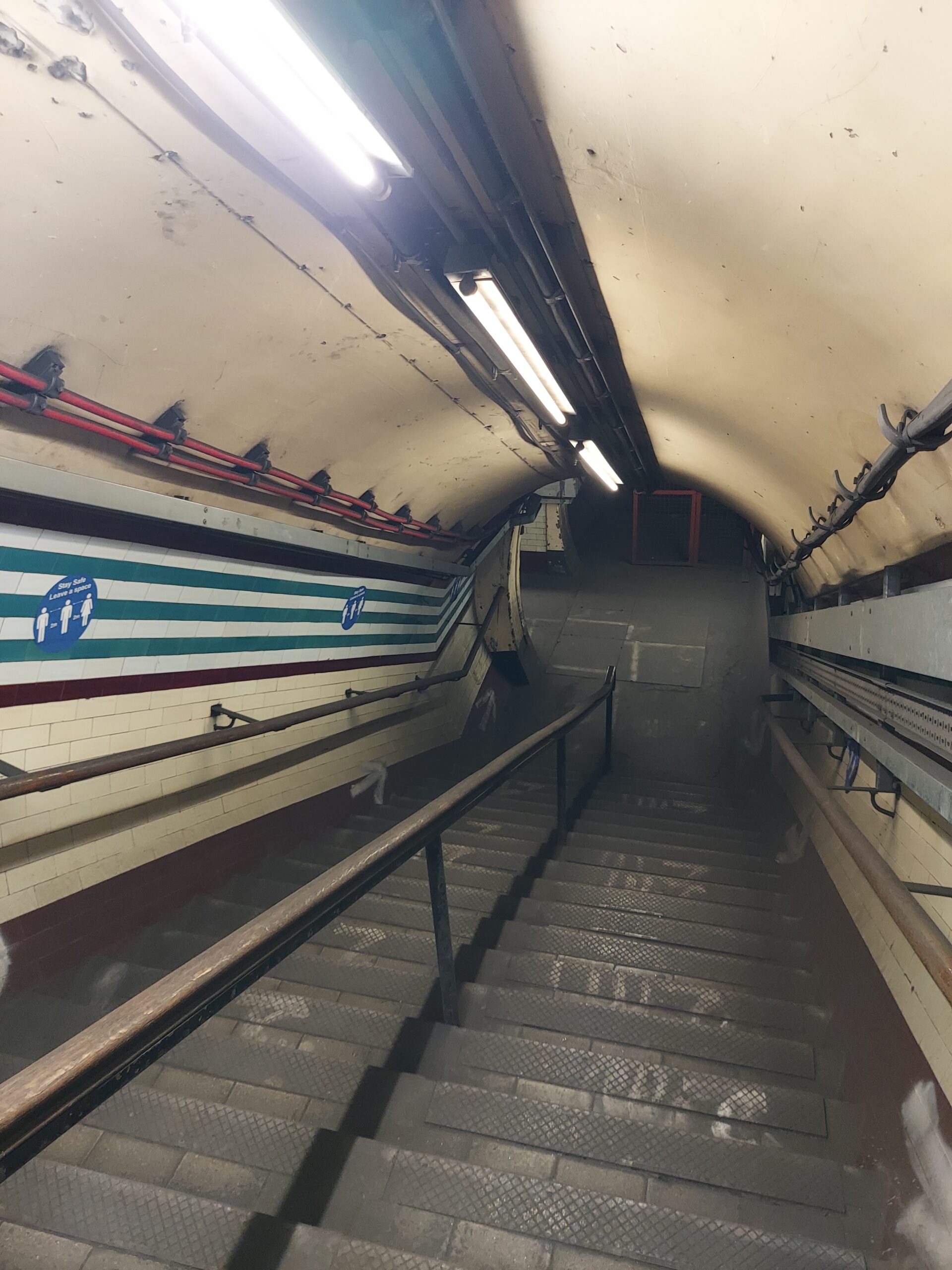
Disused Holborn staircase
Disused staircase
Early 20th-century signalling cabin
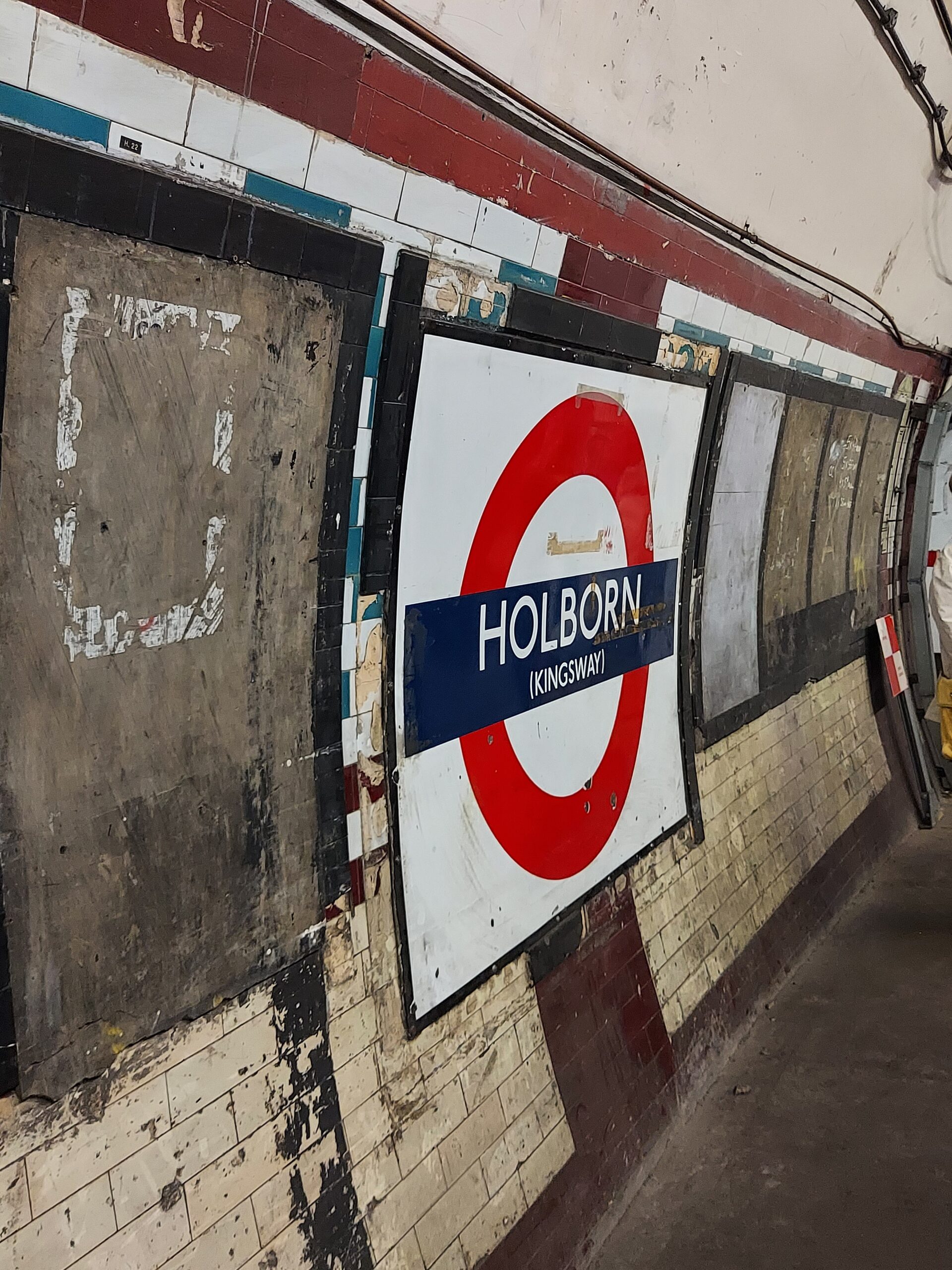
Holborn (Kingsway) sign on one of the disused platforms

I know I say this every time, but the Holborn tour was one of my favourites so far! I would definitely recommend it for any Tube fans.

Hidden London – Baker Street: The World’s First Underground

In recent years, Hidden London tours have expanded to encompass not only disused stations, but working stations with lots of history. Baker Street is one such station, and I attended a tour on a sunny Sunday.

Baker Street is one of the earliest Underground stations, and is Grade II* listed. Today, it has 10 platforms served by 5 different lines – more than any other on the network. It first opened in 1863 as part of the Metropolitan Railway: these original platforms are still in use by the Circle and Hammersmith & City lines and look a lot like they did back then.

The oldest platforms at Baker Street
Original Baker Street platforms

We got to go into some hidden corners of the station; in particular a space once used as a waiting room.

Former waiting room
Former waiting room

Later platforms were built in 1868 as part of the Metropolitan & St John’s Wood Railway. The platforms were rebuilt in 1892, but still struggled to cope with increased demand, so a decision was taken to rebuild the station and create a new headquarters for the Metropolitan Railway at the same time.

Jubilee line platforms
Metropolitan line platforms

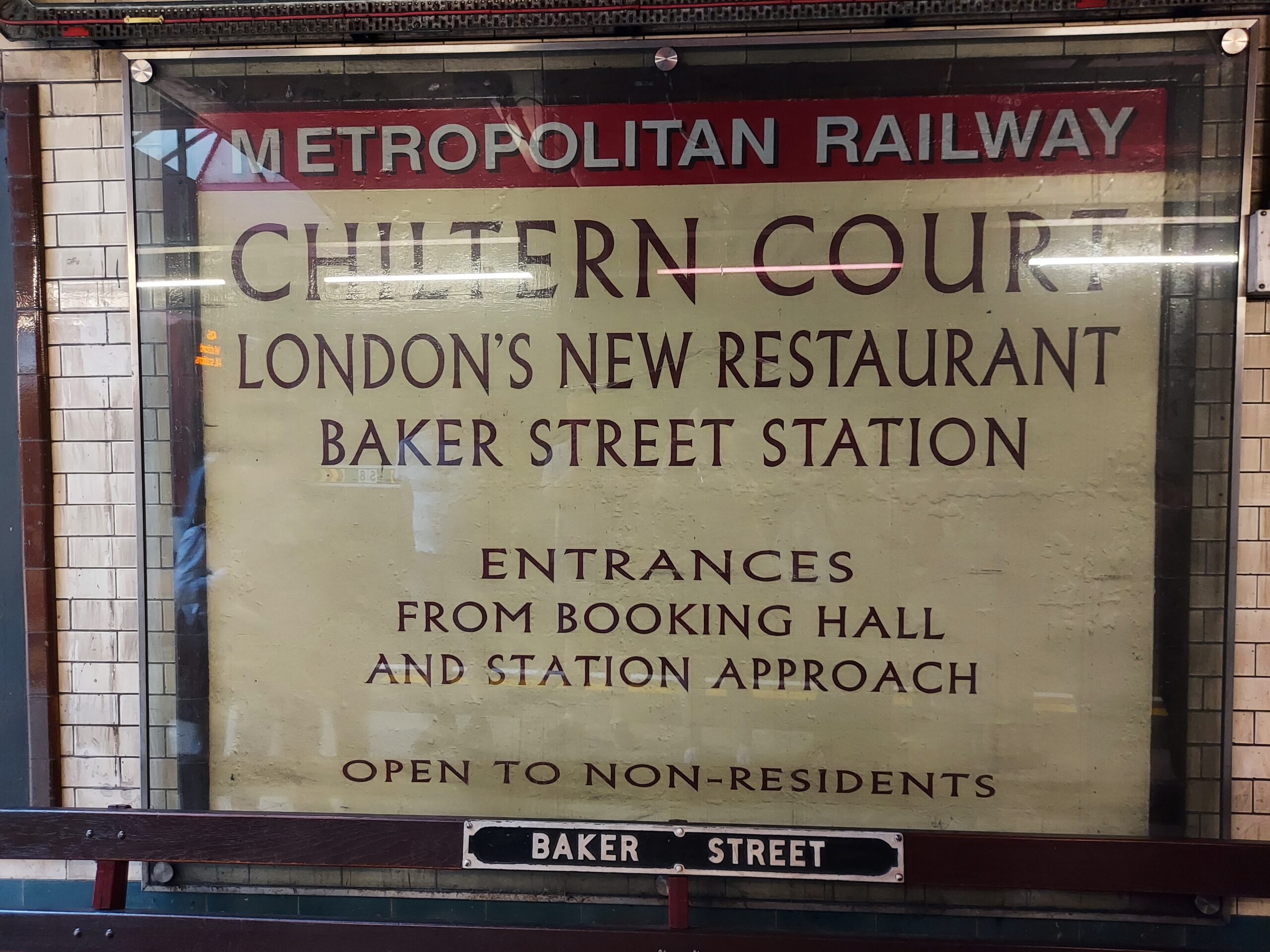
The architect Charles Walter Clark replaced the original buildings and created a single sub-surface ticket hall, as well as a subway linking the Circle and Bakerloo lines (the latter had originally opened on a separate site with a Leslie Green station). Plans to build a hotel on top of the station were halted by the First World War, but similar plans were revived in the 1920s with the construction of Chiltern Court. This block of flats was highly prestigious and included such distinguished residents as H. G. Wells and Arnold Bennett.

Poster advertising the Chiltern Court restaurant

One of the most exciting parts we got to see was the original underground Bakerloo station, including tiling and lift shafts. We also got to look down through gratings to see the trains pulling in to the platform (now the Jubilee line).

Original Bakerloo line tunnel
Original Bakerloo line tunnel, with tiling visible

As the home of the Metropolitan line, the station has been a headquarters for transport staff for many years. Its facilities have included the Central Control Rooms for the Bakerloo, Central, Jubilee and Metropolitan lines; one of the first operational sites of the British Transport Police; a canteen staff training school; and the Lost Property Office. The London Transport Rifle Club was also located here until the 1990s.

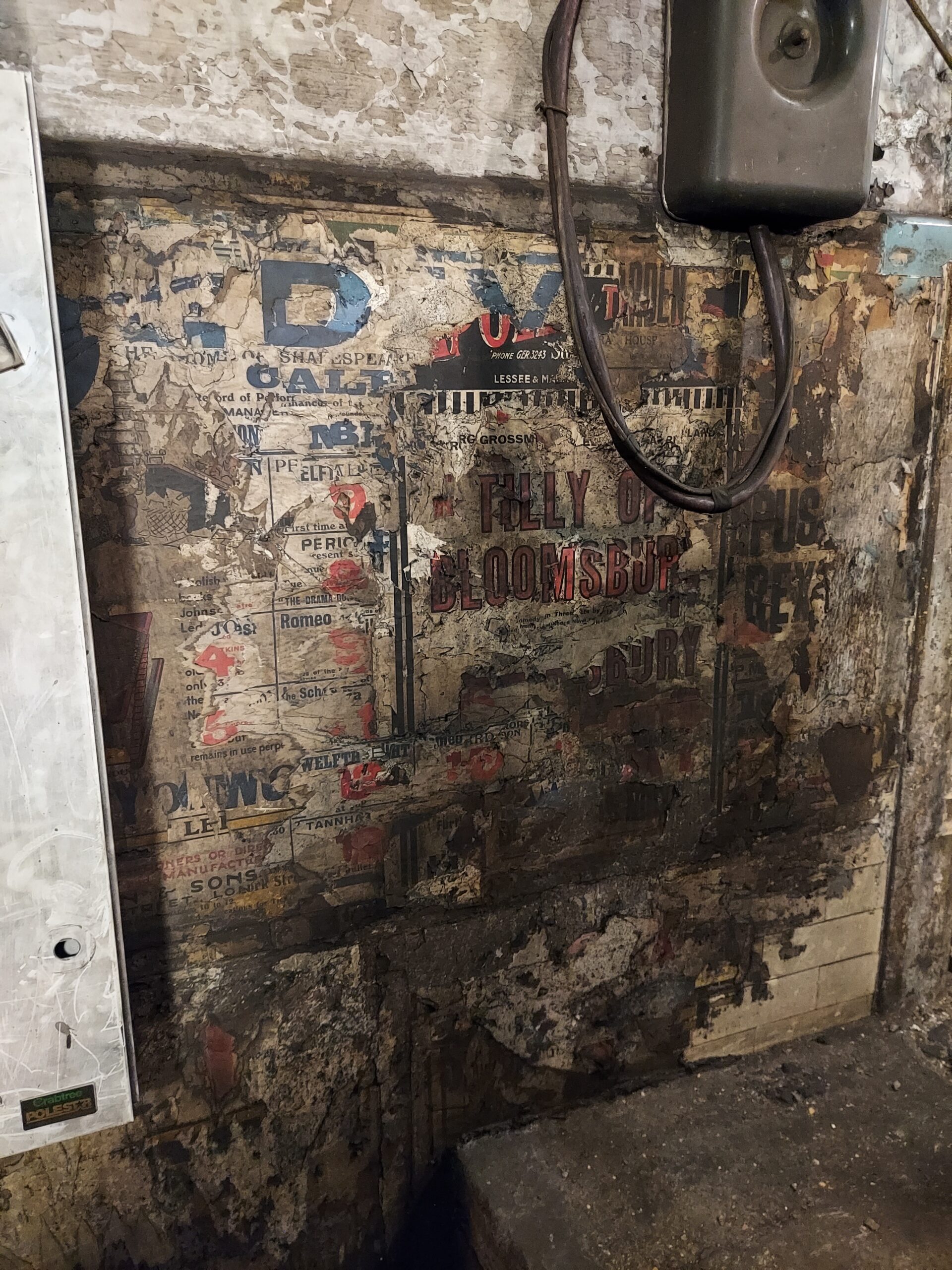
Original posters
Original posters

My tour of Baker Street proves that even current stations have a lot of history and hidden areas to explore. Definitely recommended, and I can’t wait to book another Hidden London tour.

Hidden London – Euston: The Lost Tunnels

A couple of years ago I signed up for a virtual tour of Euston tube station’s lost tunnels. The tour was fascinating and I resolved to sign up for an in-person tour if and when they reopened. At the weekend I was lucky enough to get my chance.

Leslie Green-designed entrance to Euston station (CCE&HR branch) with its iconic oxblood bricks

We met at Euston Square station and watched a short video about the history of Euston mainline and Underground stations. I won’t repeat the information here as I put much of it in my blog post about the virtual tour, but it was a useful refresher. We then walked over to the old CCE&HR building, now surrounded by railings and facing imminent demolition. Finally we headed towards Euston station, through the barriers and down the escalators to the southbound Northern line platform (Bank branch), from where we headed through a door at the end of the platform to reach the disused tunnels.

Inside the disused tunnels at Euston

After checking out the tunnels we walked into another area where yellow paint was recently discovered – this shade of yellow in an Underground station means the Second World War. These tunnels were marked for use as a shelter during possible air raids for railway staff who weren’t able to get home.

Finally we went into a very secret space above the tracks and got to see the trains pulling into the station – it felt very surreal.

There’s no point in repeating what I said about the virtual tour, so instead, here are some pictures I took of the inside of the station.

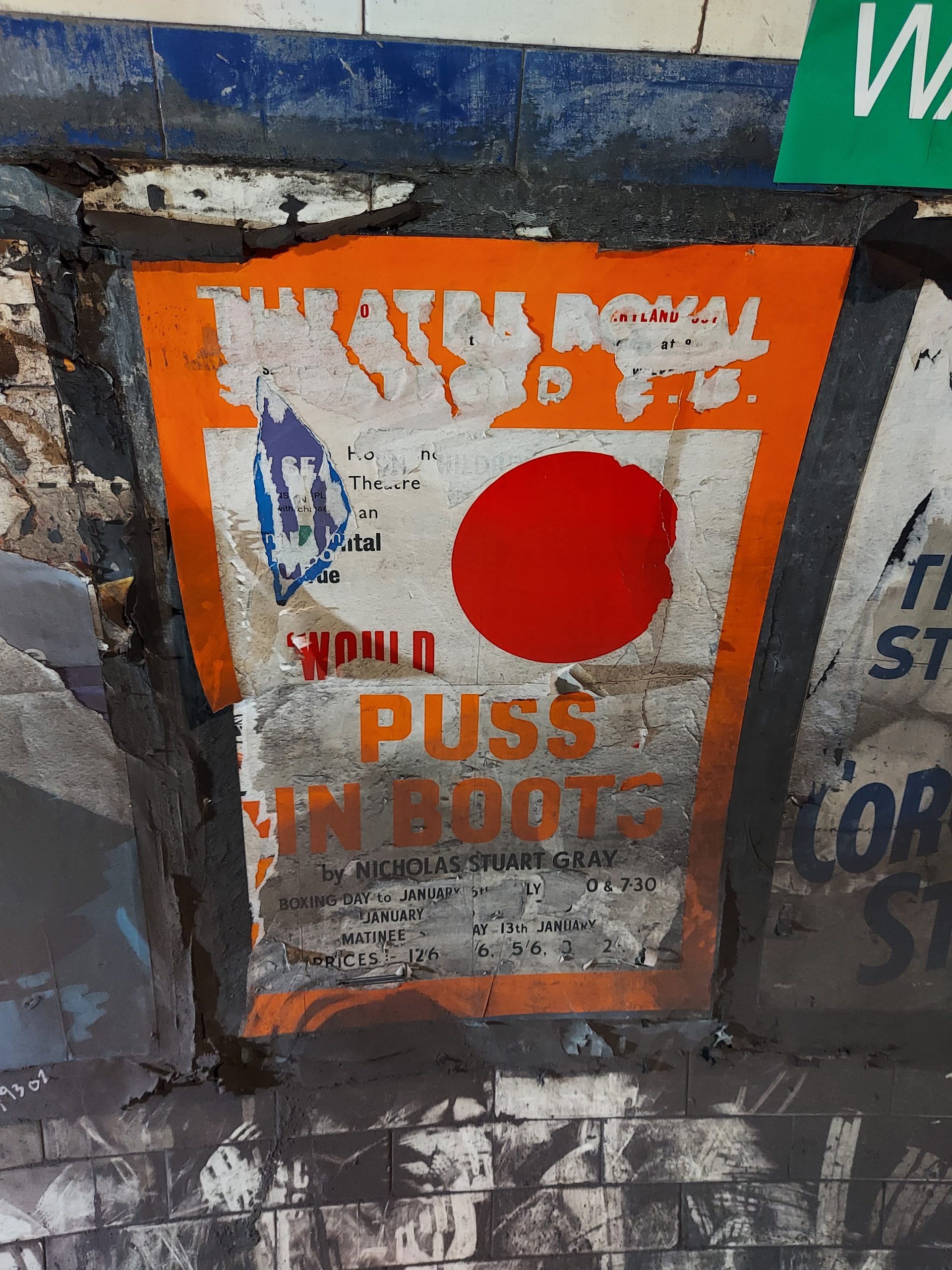
Poster for 'Puss In Boots' in the Euston tunnels
Poster for the musical 'West Side Story' in the Euston tunnels

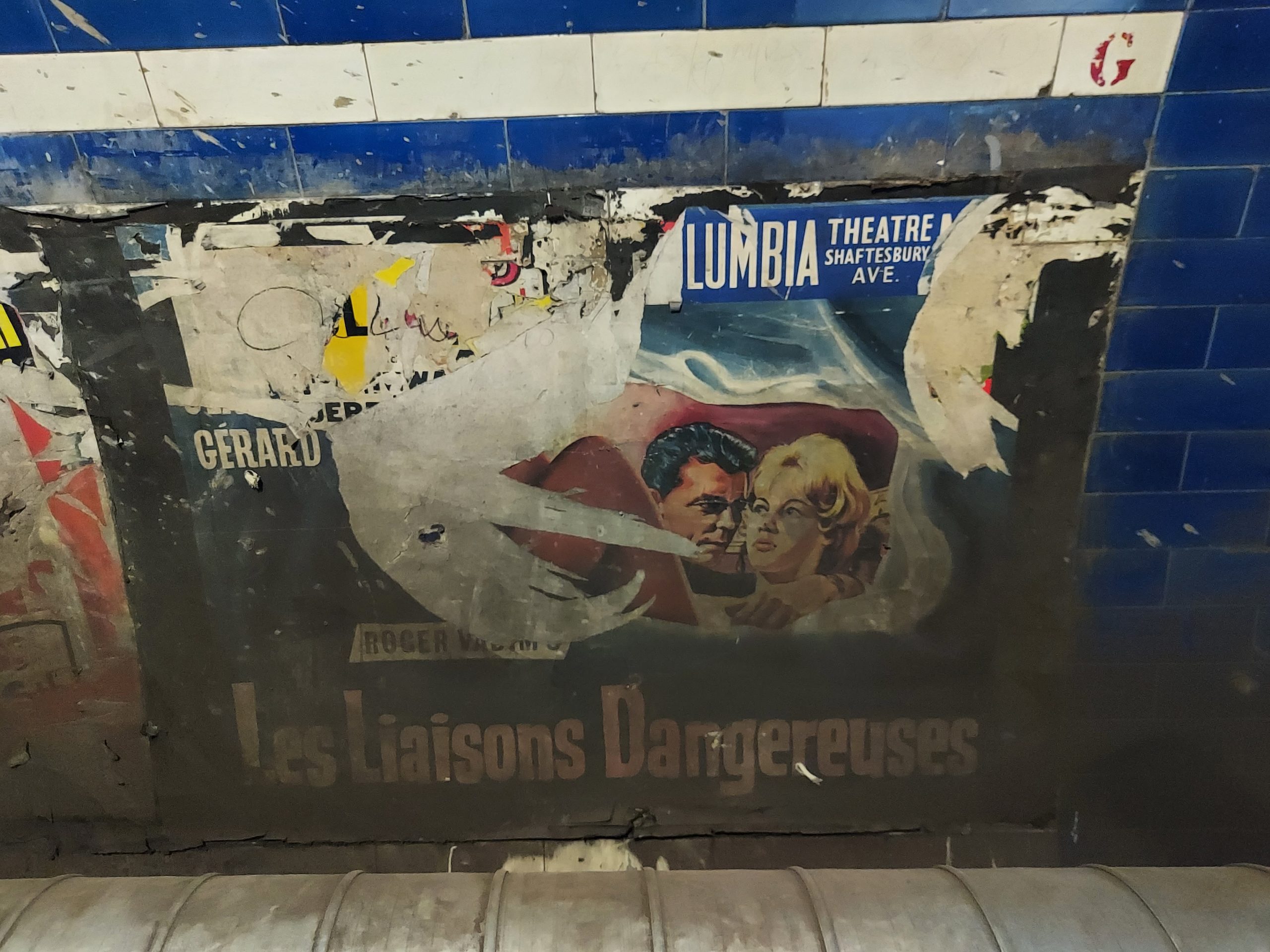
Poster for the film 'Les Liaisons Dangereuses' in the Euston tunnels
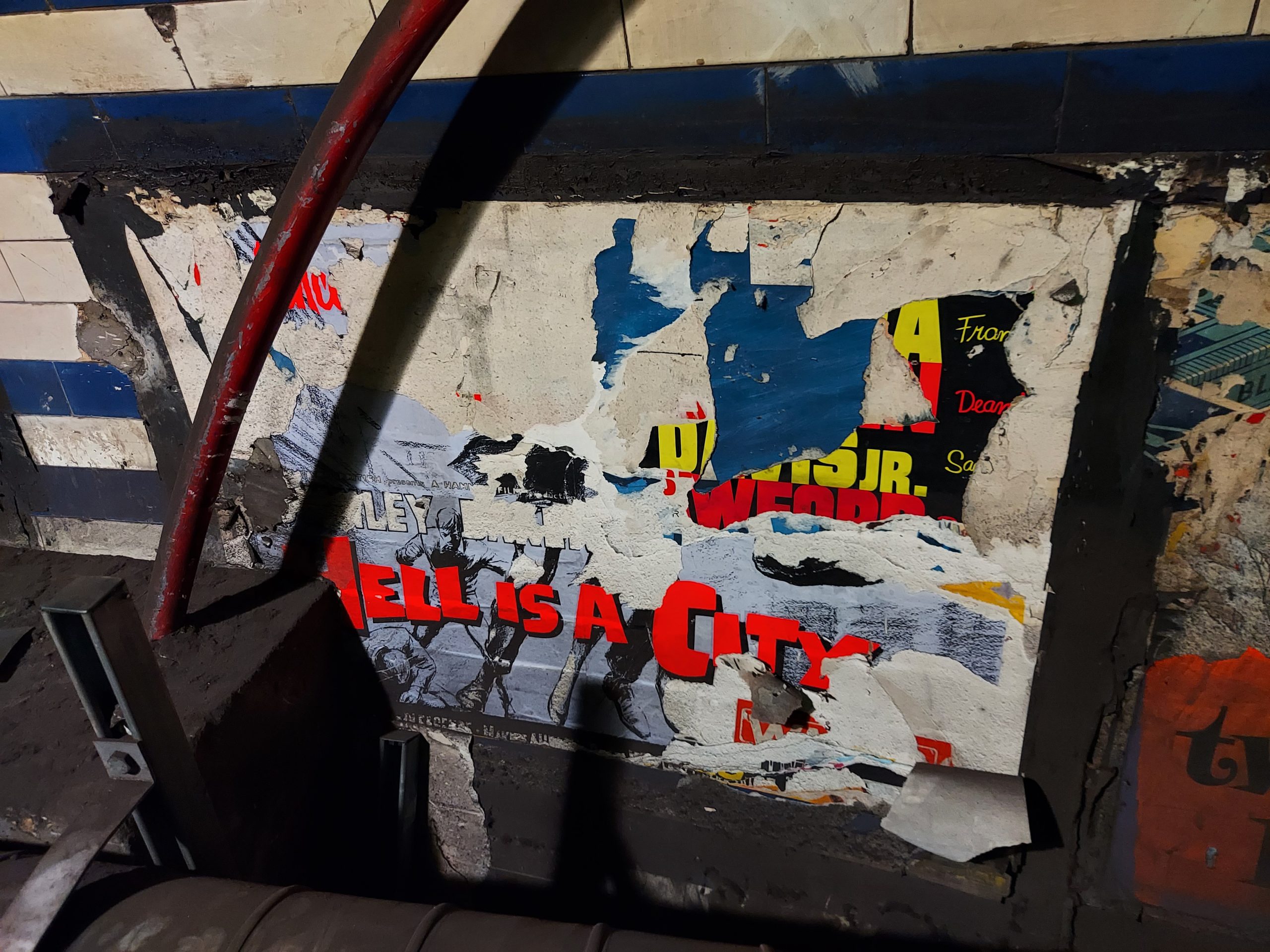
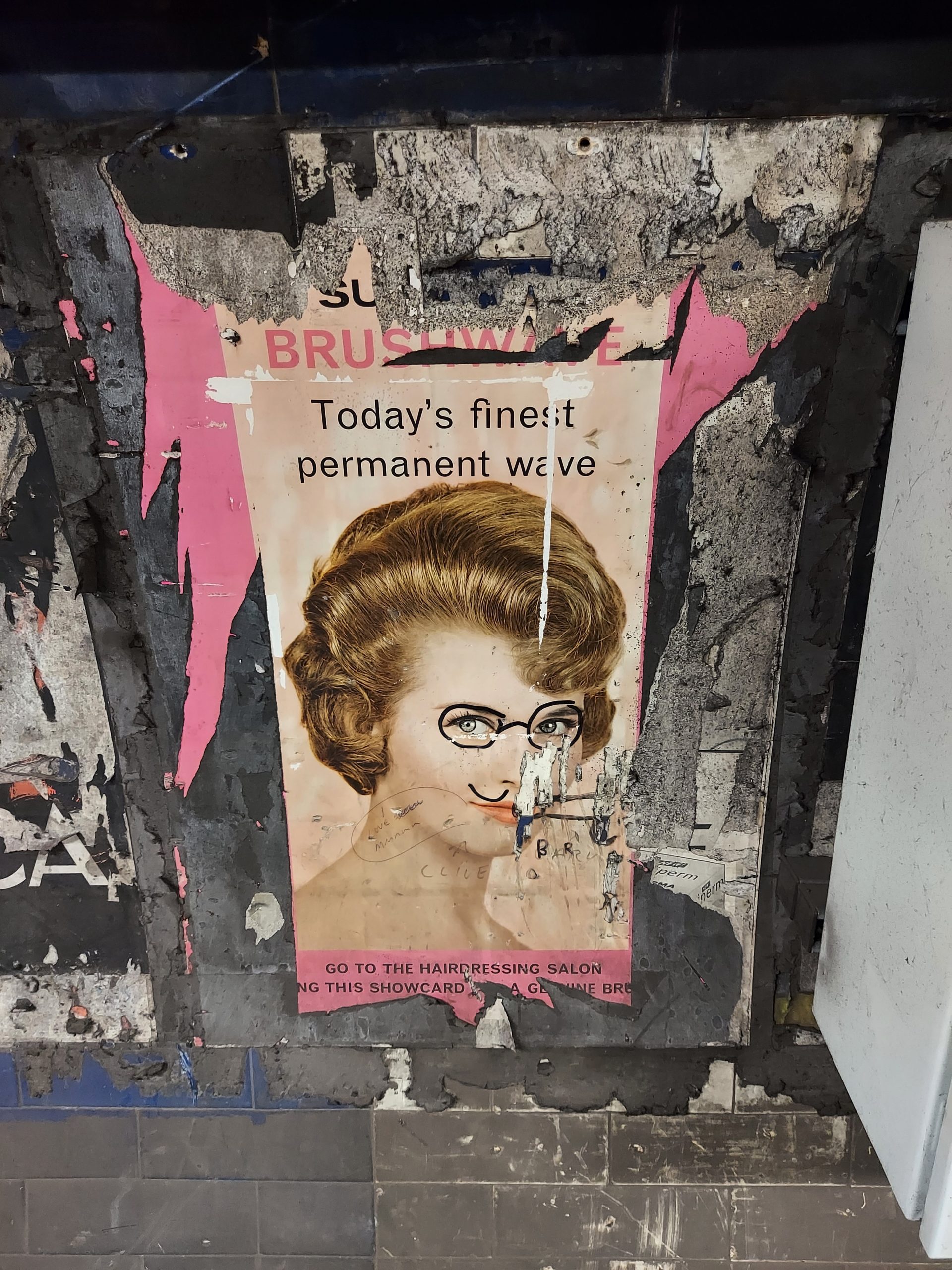
Poster in the Euston tunnels
Poster for the film 'Spartacus' in the Euston tunnels
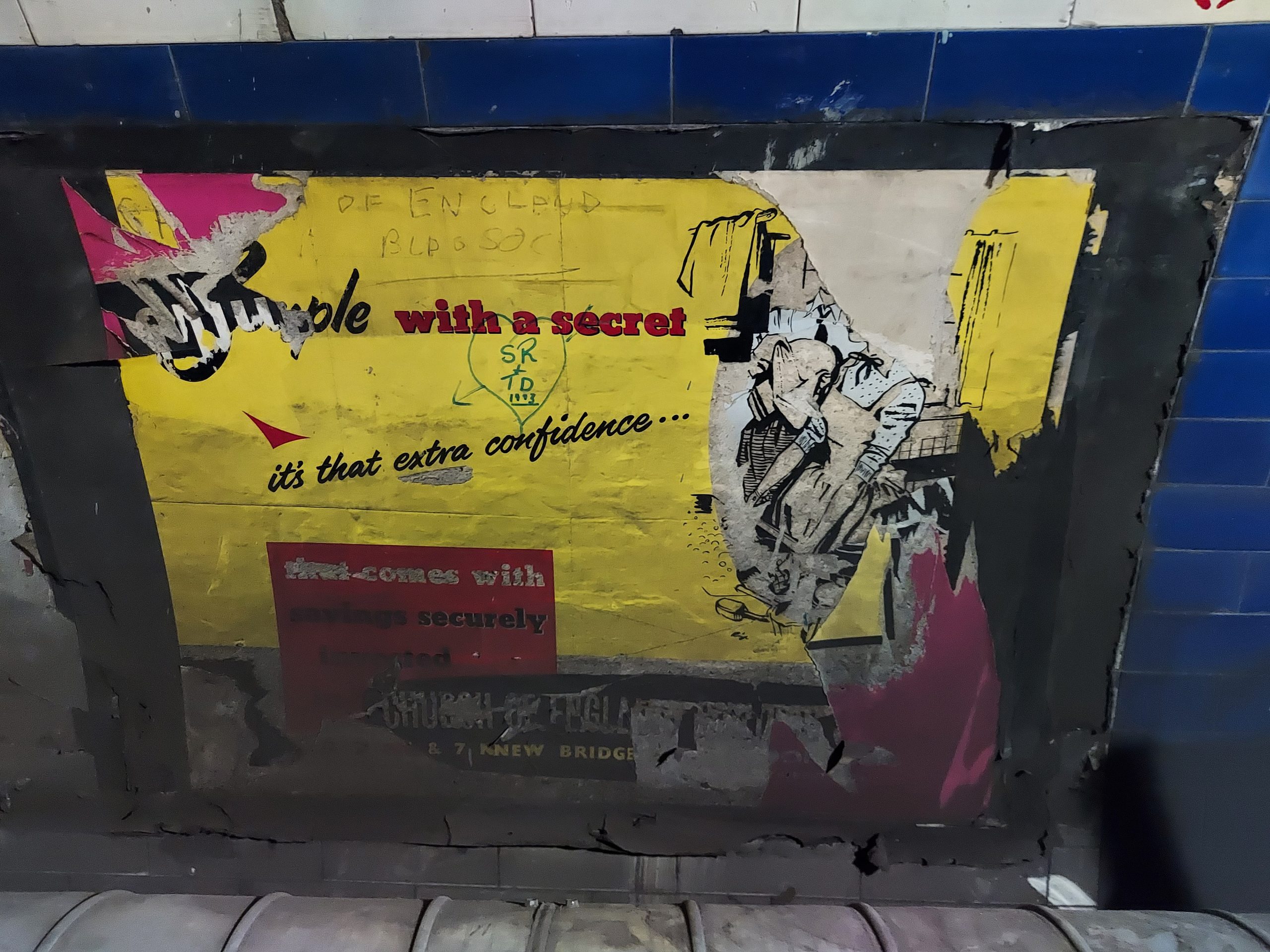
Advert poster in the Euston tunnels
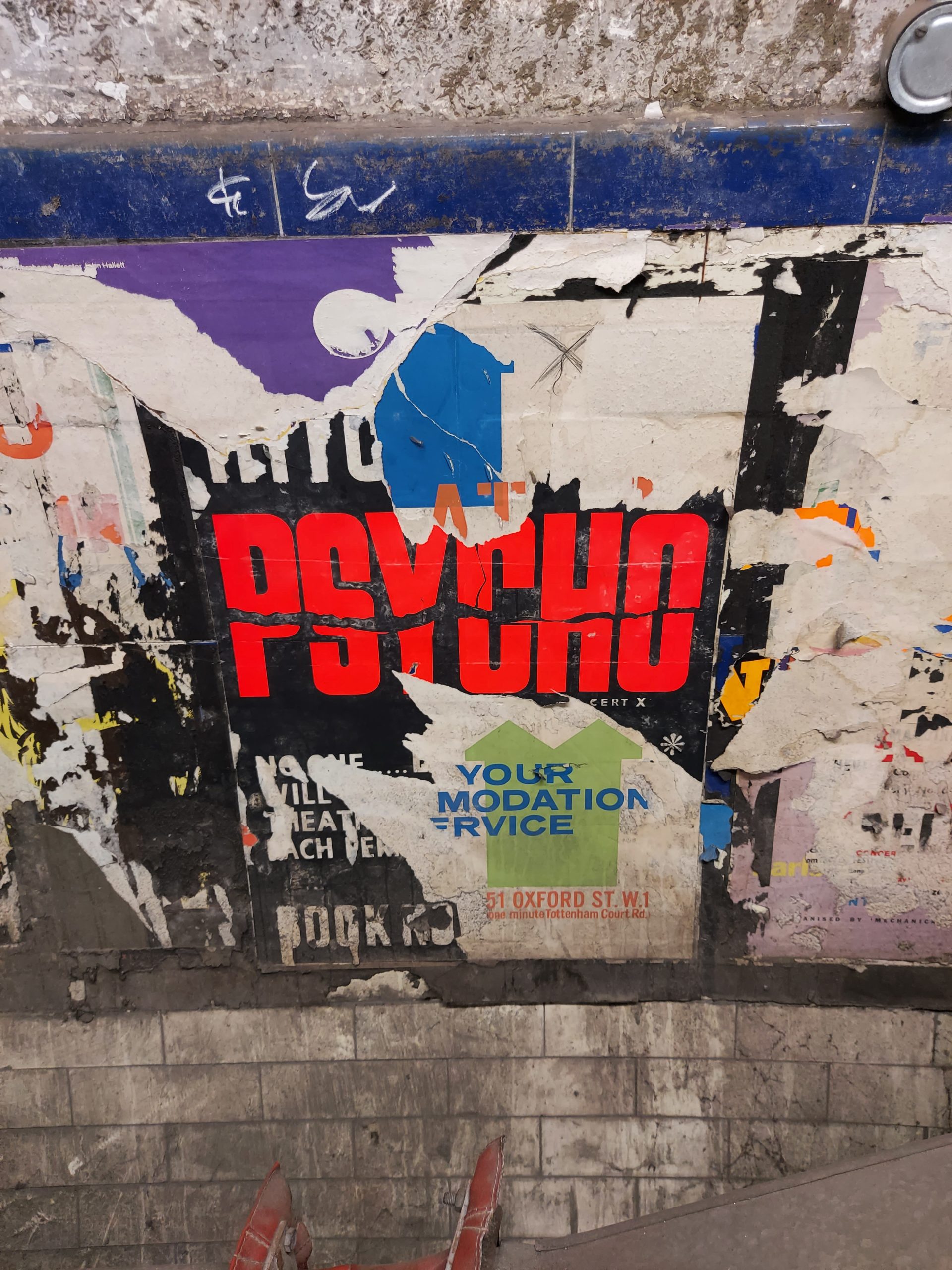
Poster for the movie 'Psycho' in the Euston tunnels
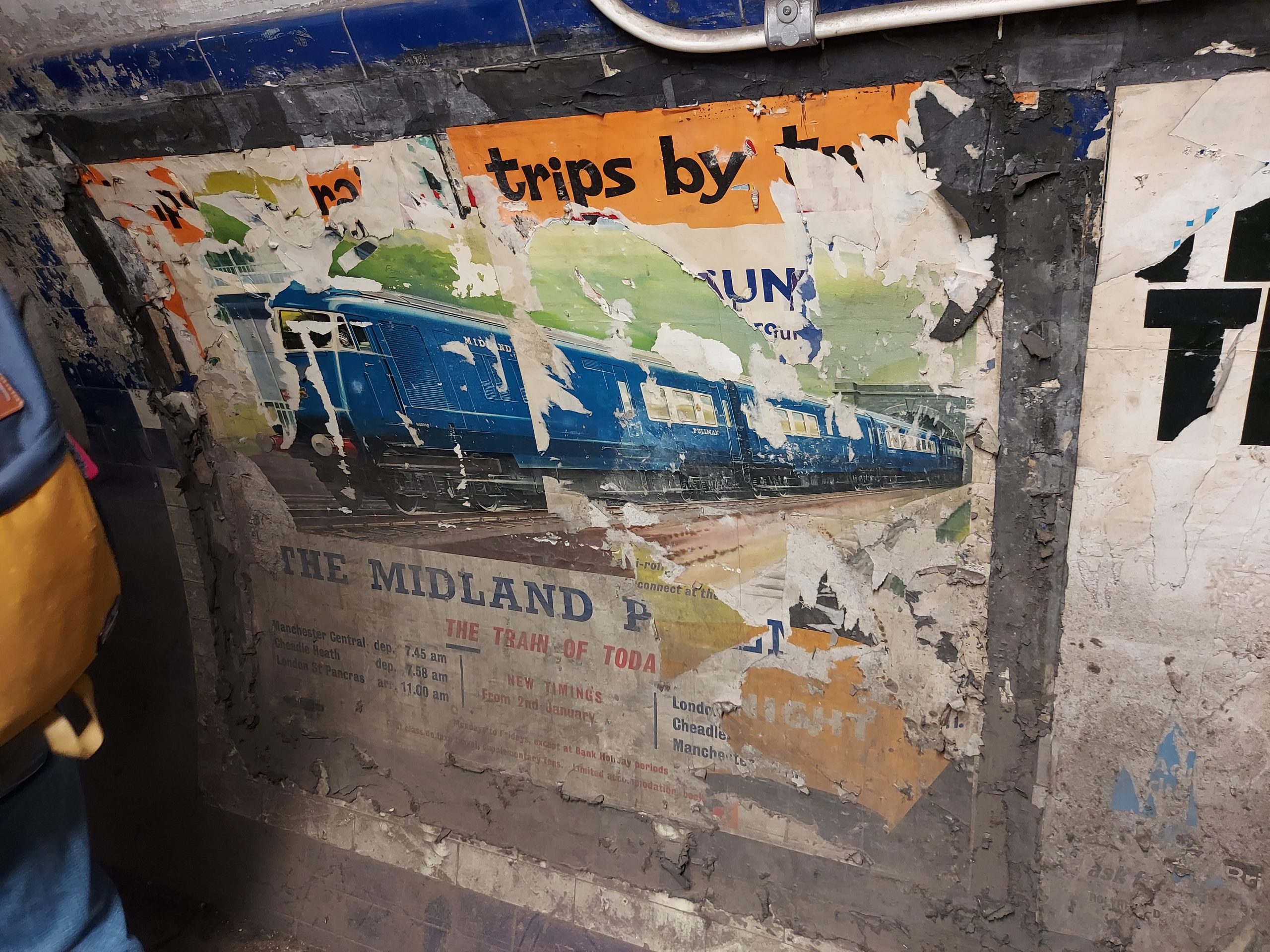
Railway poster in the Euston tunnels

Hidden London – Kingsway Tram Tunnel

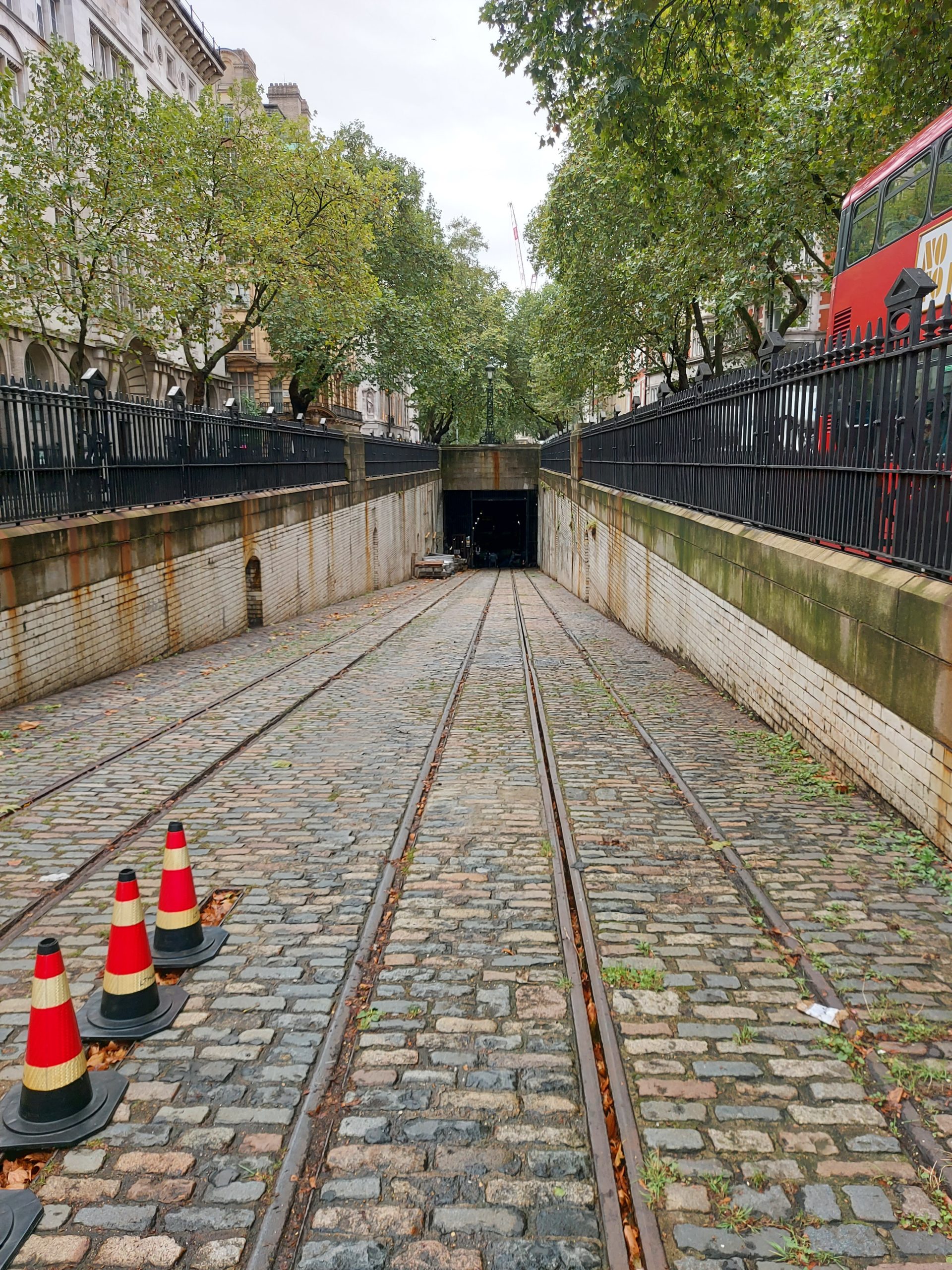
The Kingsway Tram Tunnel

I attended a virtual tour of the Kingsway Tram Tunnel during lockdown, so I was excited to get the chance to attend a real, in-person tour when lockdown eased. I booked the day off work specially, and headed to the entrance ready for the start time.

Entrance to the Kingsway Tram Tunnel

I’ve seen the entrance plenty of times before – a line of tram tracks, heading down into a tunnel, with black railings on either side and lamps marking the beginning of the tunnel. This time, I actually got to go through the gate and see what was hidden in the depths of that tunnel.

The old station

We were shown a map of tram routes in London at the beginning of the 20th century, and it became apparent just how necessary the Kingsway tram tunnel was in order to connect north and south. Originally built between 1906 and 1908, the tramway finally closed in 1952.

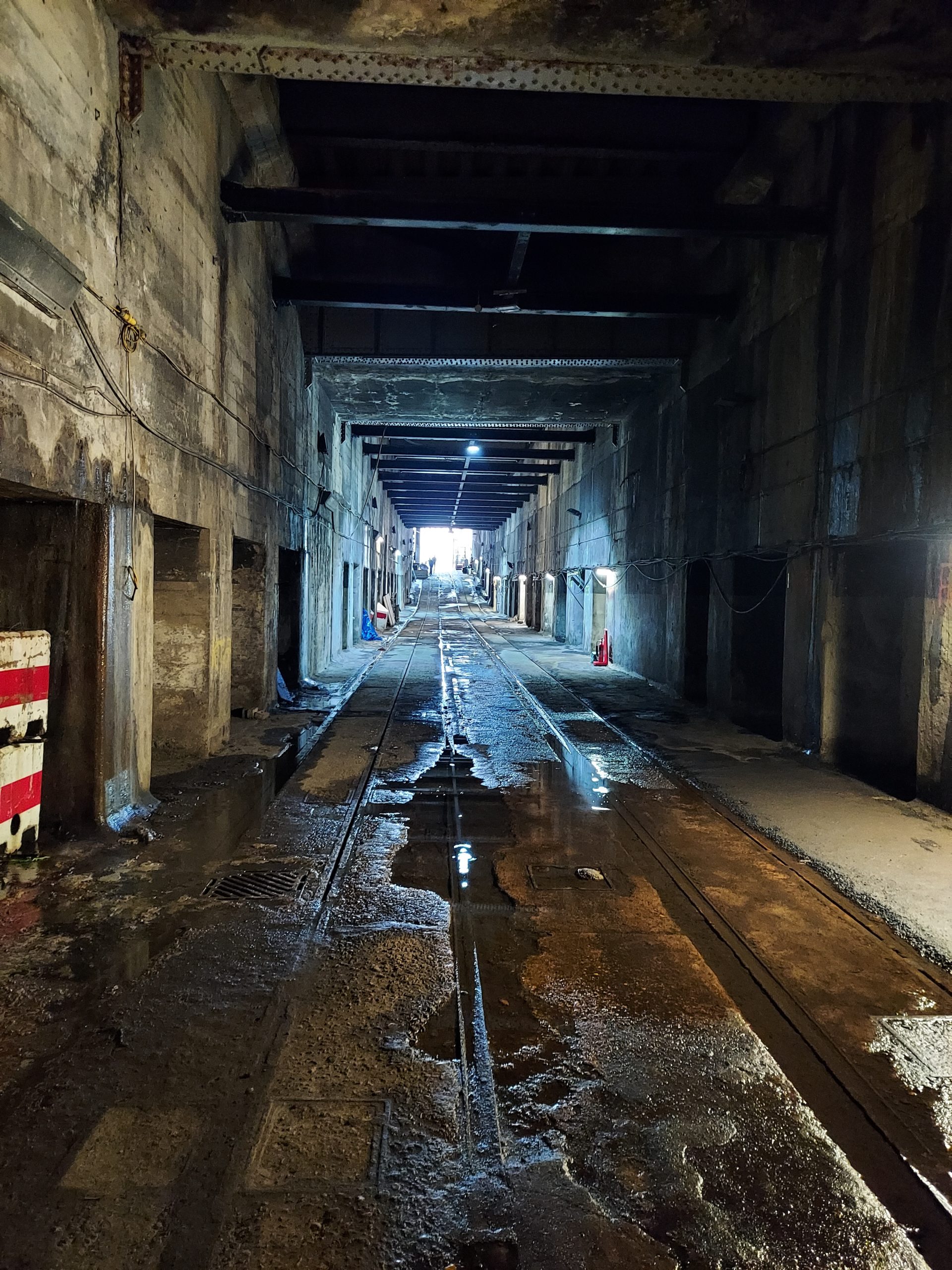
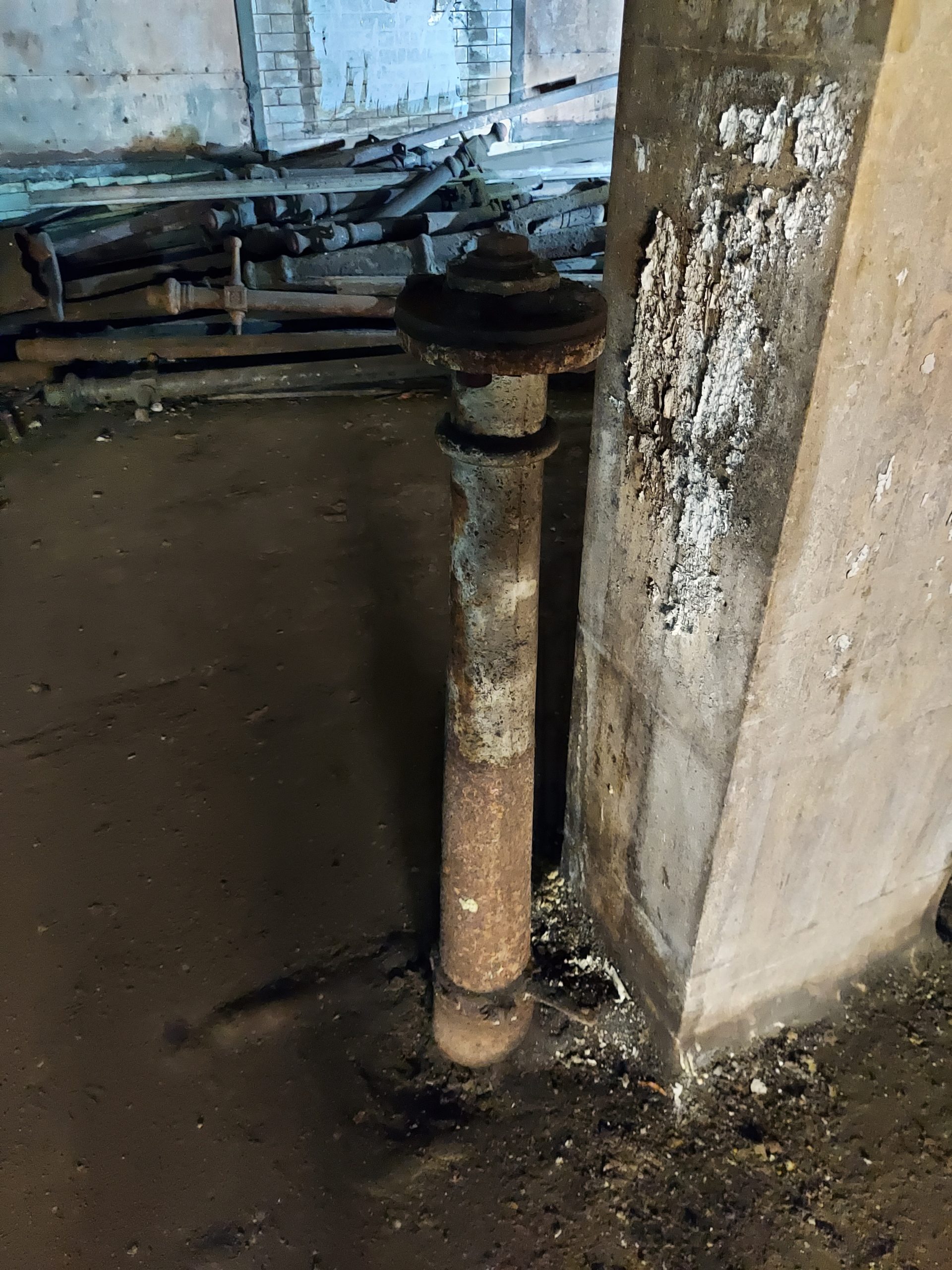
The tunnel is dirty and dusty, and there is plenty of equipment lying about left over from when construction workers used the tunnel as a way in to the Crossrail construction site. The original tram tracks and iron ceiling, however, still remain. In the 1920s the tunnel was made bigger to accommodate double-decker trams, and this was mostly done by lowering the floor – which can be seen at various points along the route (at this northern end the roof was raised, and this can still be seen). The hill down to the tunnel is quite steep, and trams used to speed up at this part, slowing down when they got to the bottom. Alcoves are situated at several points along the tracks, allowing workers to safely hide as the trams were going by.

The tunnel

The central point of the tour was the platform itself, with staircases (now closed off above ground) marking the entrance and exit points for travellers. I’ve seen black and white photos of passengers waiting for trams, and it was eerie to be in that very same place, decades later.

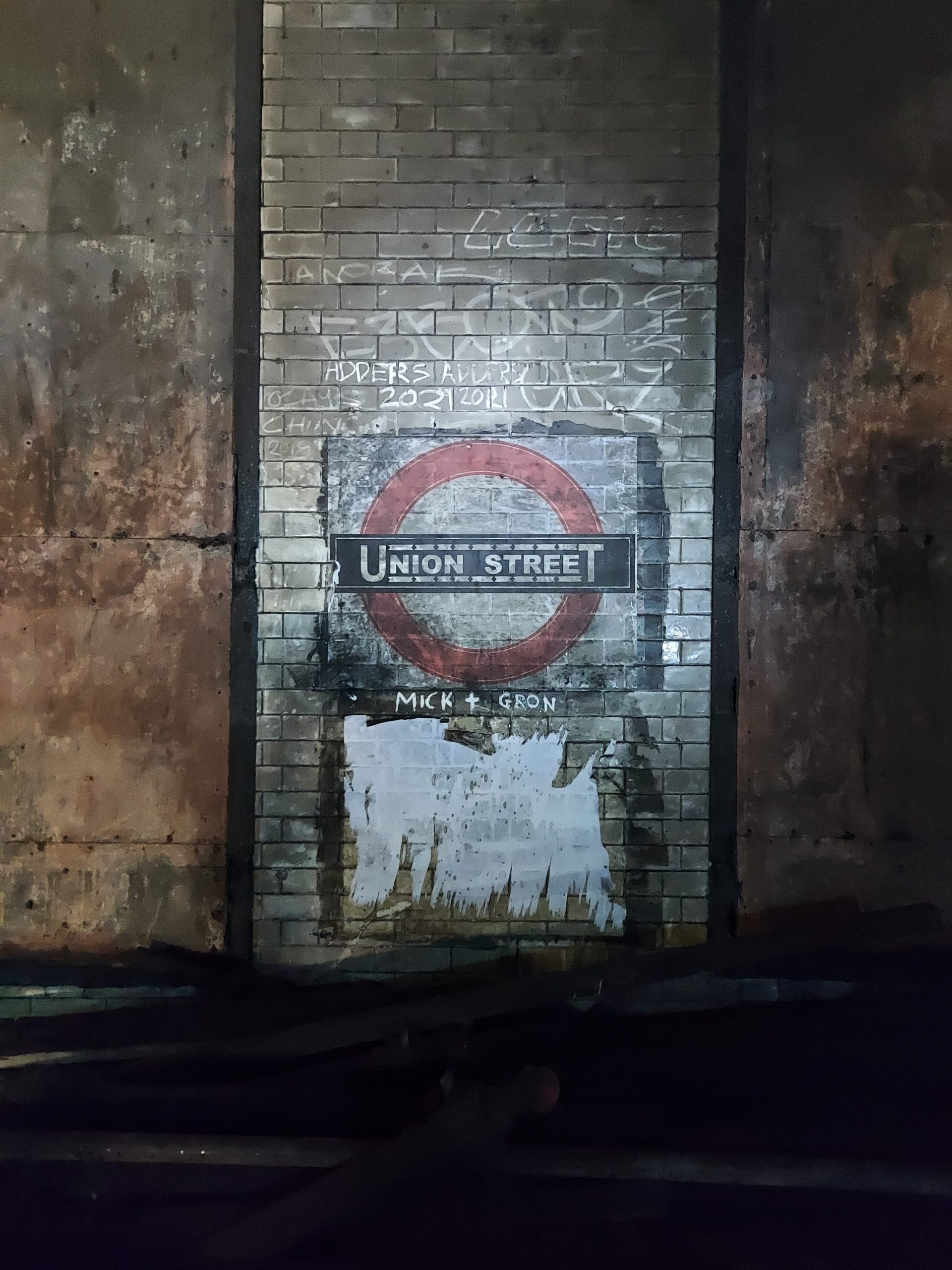
roundel

A TfL roundel can be seen on the wall, labelled ‘Union Street’, but this is not original – it is left over from when the tunnel was used as a filming location and stood in for an Underground station. Much of the equipment and other assorted items down here are from Camden Council, who use it for storage – but the poster display rack is probably original.

Our guides regaled us with stories about the trams and the people who used them, including tales from those who remember travelling on the original trams, and those who travelled alongside them – such as cyclists who got their bikes stuck in the tram tracks and were told off by angry drivers! It was fascinating to hear these stories and imagine what it would have been like to travel on these trams all those years ago.

Hidden London – York Road (Digital Tour)

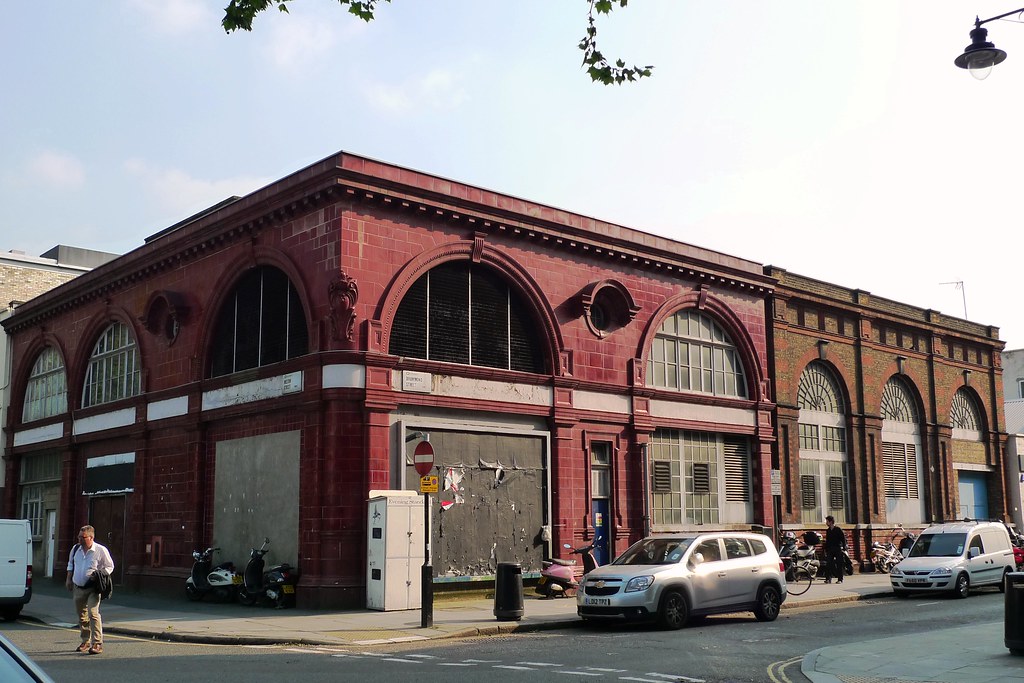
york road station

I’ve passed York Road station before – it’s a red brick Leslie Green building not far from King’s Cross – so was glad to have the opportunity to see inside on a Hidden London online tour.

Located between King’s Cross and Caledonian Road on the Piccadilly Line (formerly the Great Northern, Piccadilly and Brompton Railway), the station, on the corner of York Road (now York Way) and Bingfield Street, opened in 1906. However, it was never heavily used, and closed in 1932 when the northern extension to the Piccadilly Line – Finsbury Park to Arnos Grove – opened.

The station featured lifts, which – uniquely to this station and a couple of others – took passengers directly to the platforms. Because of this, the tracks curved outwards around the platform. The station contains a small signalling cabin, which remained in use until 1964, many years after the station had closed. I don’t envy the poor workers who had to sit there all alone!

The station platforms no longer exist, but the site is used as an emergency exit, so lights do still exist on one of the pathways out. It’s possible to view the station from the train – why not have a look next time you’re travelling north from King’s Cross?

Hidden London – Euston (Digital Tour)

The now-disused, Leslie Green-designed entrance to Euston Underground (CCE&HR branch)

When thinking of Euston station, I suspect most people would think of the ugly 60s building that, amid much controversy, replaced the famous arch which marked the entrance to the railway station. However, in a virtual tour entitled ‘Euston: The Lost Tunnels’ I learned that there is much more going on beneath this station. There are no less than two disused stations in amongst the tracks and tunnels of Euston as it is now; some of these tunnels have not been used by passengers for over a century.

The mainline station opened in 1837, linking passengers in the Midlands to London. Companies operating the city’s tube lines wanted to take advantage of the passenger traffic from the station, and in the early 1900s the Charing Cross, Euston & Hampstead Railway (CCE&HR) and the City & South London Railway (C&SLR) had both been permitted to build stations near, albeit not directly on, the mainline terminus. They were allowed to construct a shared underground ticket hall below ground, which linked up their two stations on either side of the main station – the only such ticket hall which still survives.

The C&SLR, London’s first deep level tube line, opened in 1890 and extended to Euston in 1907. The station building was designed by Sidney Smith and the façade was green and white, Doulton’s glazed Carraraware. Today, the building no longer stands but the C&SLR is now the Bank branch of the Northern line. Like many stations on this line, the C&SLR at Euston had an island platform, but this has now been modified (this is why some platforms at Euston seem massive).

Later the same year, the CCE&HR opened its station, a typical Leslie Green design with oxblood-red tiles, with a green and cream design inside. However, passengers largely preferred the joint ticket office below ground and both station buildings had relatively low usage. By 1914, both companies were part of the Underground Electric Railways of London (UERL), aka the Underground Group, and the individual station buildings were closed.

The 1960s rebuild of the mainline station prompted a redesign and expansion of the Underground ticket hall, and the construction of the Victoria line that same decade also led to changes. The station was remodelled and rationalised, the ventilation system was upgraded, and many tunnels were closed off to passengers, remaining in use as ventilation shafts and storage areas, and acting as time capsules, with old advertising displays and movie posters fixing the tunnels in time.

With the construction of HS2, the CCE&HR station building pictured above is due to be demolished, but the disused tunnels will remain – something I’m extremely glad about.

Hidden London – Aldwych (Digital Tour)

The frontage of Aldwych/Strand station
Image: Wikimedia Commons

I’ve already done the real-life Hidden London tour of Aldwych – in fact, it was the first tour I ever went on, several years ago. However, these digital tours often show you things you could never see on an in-person tour, so I signed up anyway.

Aldwych was always a bit of an odd station: as I mentioned in my previous post on the Holborn Kingsway digital tour, it was a station on its own at the end of a branch line, only reachable by shuttle from Holborn. Even the name caused confusion: it was originally known as Strand, but changed its name to Aldwych when Charing Cross Strand station was to be renamed just Strand. It was never heavily used – plans to extend this branch of the line to Waterloo never came to fruition – and ended up closing in 1994, not before being used as storage space for valuable artworks and an air raid shelter during both World Wars.

Since closure Aldwych has frequently been used for filming, its old-fashioned appearance perfectly serving films and TV shows set in the past (the old Jubilee Line platforms at Charing Cross, being a bit more modern, are typically used for present-day settings). Films that have used the station include Atonement (2007), The Edge of Love (2008), and Darkest Hour (2017). Aldwych was also the location for The Prodigy’s music video for Firestarter. It is a lovely station to visit, both in-person and online, as it has so many original features including lifts, tiles and ticket booths.

See my post on my in-person visit to Aldwych here.

Hidden London – Holborn Kingsway (Digital Tour)

Holborn Station today
Image: Wikimedia Commons

I signed up to the Hidden London digital tour of Holborn Kingsway because I thought it looked pretty interesting, and I wasn’t wrong. Even though I’ve been to Holborn station plenty of times, this talk covered the Kingsway area in general, and was fascinating.

Kingsway runs from Holborn to the Strand, and was transformed at the turn of the twentieth century by the London County Council (LCC), from Victorian slums to a modern thoroughfare with modern transport infrastructure built in. The Underground station was well-used from the start and remains so today, starting off as a Piccadilly line station and expanding in 1930 to fit the Central line too; the branch line to Aldwych (a now-disused station which you can visit on virtual and, in non-Covid times, in-person tours) was not, and eventually closed. However, the talk mainly focused on the tramway.

The Kingsway Tram Subway ran beneath Kingsway allowing trams to travel between the Victoria Embankment to Southampton Row easily, linking the tramways of north and south London. It was built using a cut-and-cover method, like the early Underground lines. Originally designed for single-decker trams, it was later upgraded to fit double-decker trams, and reopened in 1931. Owing to dwindling usage, trams were eventually discontinued in central London, with the final trams running through the Kingsway Tram Subway in 1952. The subway still exists, however, and the photos of waiting passengers side-by-side with modern pictures of the empty and derelict space were really evocative.

Hidden London – Brompton Road (Digital Tour)

Brompton Road tube station facade
Image: Wikimedia Commons

My second Hidden London virtual tour after King William Street was Brompton Road. It’s another station that could never be visited on an in-person tour (as it can only be accessed via the driver’s cab of a Piccadilly line train), so I was happy to have the chance to attend this one.

Brompton Road was opened on 15 December 1906 on what is now the Piccadilly line, and was then the Great Northern, Piccadilly and Brompton Railway. The façade was the typical Leslie Green design, familiar to many Tube users, with its striking oxblood tiles, although little evidence of this frontage remains today (the main entrance was demolished in 1972). Located, as the name suggests, on Brompton Road, it closed in 1934 owing to low passenger numbers; most people used Knightsbridge or South Kensington which were located on either side, and there weren’t that many potential passengers to begin with considering the area was fairly affluent and most people here preferred their own forms of transport. Even before the 1930s trains often skipped this stop, and the station inspired the name of a 1928 play, Passing Brompton Road.

In 1938, the station enjoyed a new lease of life when it was bought by the War Department and converted into the headquarters and command centre of the 1st Anti-Aircraft division of the Territorial Army (responsible for protecting London from aerial attack during the Second World War). Still visible is a map of London, varnished onto one wall, to show where anti-aircraft guns should be deployed. The Ministry of Defence later used it as a training facility for new cadets, and in 2013 the surface buildings were sold off. While little remains above ground, however, there is plenty to see below ground, including some spectacular tiling on the original platforms, and remnants of its past as a wartime headquarters.

The London Transport Museum has details of the virtual tours you can take – they are well worth it.

Hidden London – King William Street (Digital Tour)

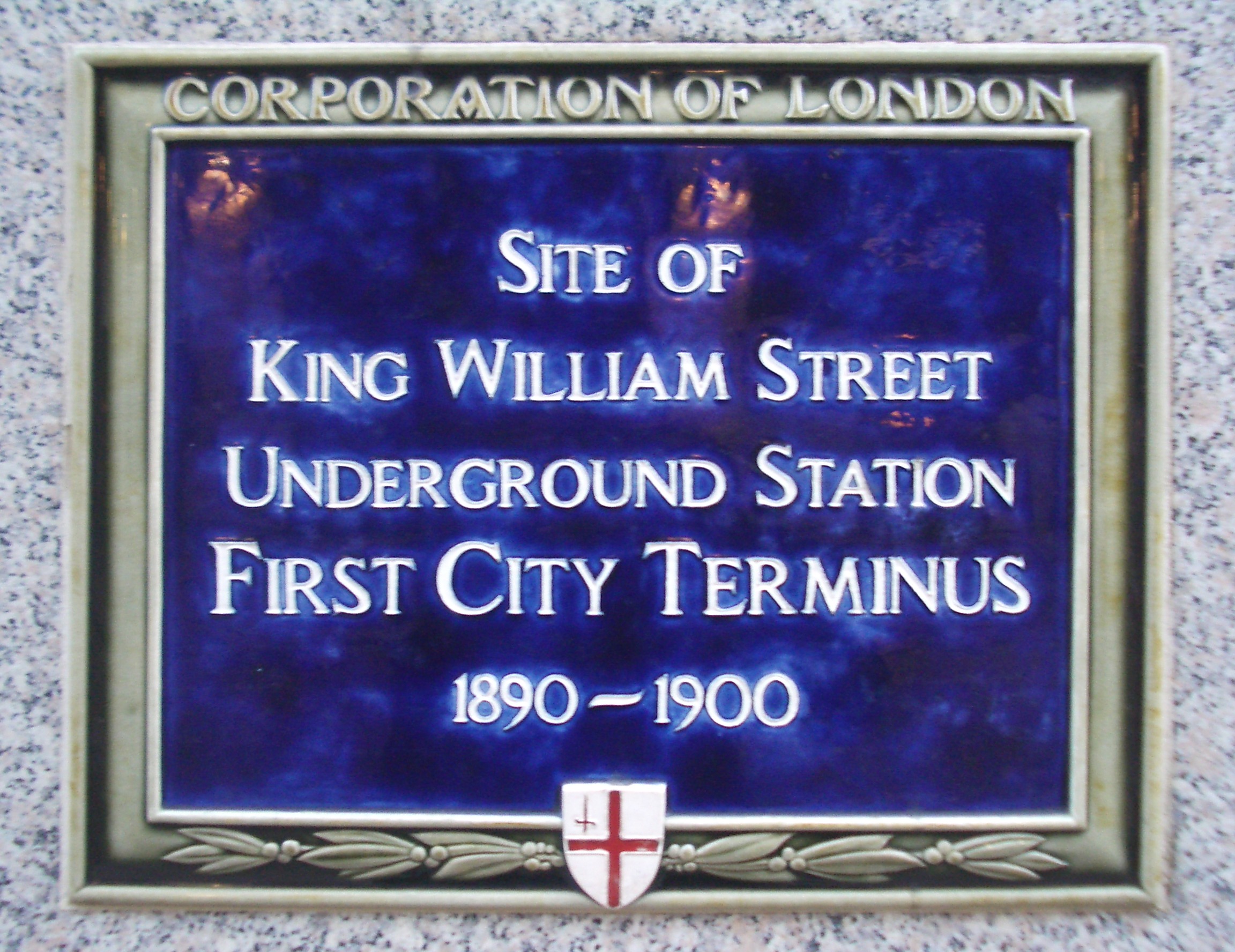
Plaque marking the site of King William Street Station
Image: Wikimedia Commons

I’ve been on several Hidden London real-life tours, but naturally these have had to be cancelled because of Covid. Not to worry, because the enterprising team at the London Transport Museum have put on some virtual events instead, many covering brand new sites, and visiting areas the general public would never be allowed in.

The very first virtual, or digital, tour I joined was King William Street, which was the world’s first deep Tube station and also has the dubious honour of being the first station to be disused. Opened on 18 December 1890, it formed part of the City and South London Railway which began at Stockwell and carried passengers into the City, but difficulties with the curve and the gradient surrounding the area meant that the line was eventually rerouted and the station closed at around the turn of the century.

Interestingly, the line was originally planned to use cable cars, but this idea was scrapped as unworkable and electric locomotives were used instead.

The station was used as an air raid shelter during World War II and later for archival storage before once again falling into disuse. Excitingly, the station is enjoying something of a new lease of life, as it is the access route for the Bank extension and upgrade project.

This station could never be included on in-person tours so I was glad to have had the chance to attend this virtual one. It was fascinating to see pictures from the station’s heyday and the tunnels and staircases that still exist underground – some with original tiling, others with 1940s posters and remnants of the yellow paint often used during the war. A plaque marking the station is still visible near the site, and I intend to check it out once London opens up again.