Off the Rails: The Line That Never Was – Elstree and Borehamwood Museum

Despite the excessive heat we had this weekend, I actually left the house and made the trip up to Elstree & Borehamwood Museum to check out an exhibition that’s been on since January this year. Off the Rails: The Line That Never Was takes a look at a planned Tube extension to the ‘Northern Heights’ that never materialised.

miniature Tube railway
A model of the proposed Northern Heights extension

The Museum

The museum as a whole opened in 2000 as an independent local museum. It is located on the top floor of a community building on the main street that also houses the library. Go into the library and up to the second floor to reach the museum.

The museum hosts a permanent exhibition of items and information relating to the local area, including the history of Elstree and Borehamwood Studios.

Model of Elstree Studios

The Exhibition

As a big fan of the Underground, I found the exhibition fascinating. The Northern Line extension beyond Mill Hill East via Edgware to Brockley Hill, Elstree South and Bushey Heath was planned before the Second World War, aimed at increasing development of the area and turning it into a ‘Metro-Land’ similar to the one that already existed to the north west of the capital. Much of the preparatory work had been done by the time war broke out, including the construction of several arches and parts of the track which are still visible today.

tube map
Section of a tube map showing the proposed extension

The war naturally halted construction, but postwar austerity cannot be held solely responsible for the extension’s cancellation. The development of the Green Belt around London meant that further ‘Metro-Land’ developments were essentially prohibited, and extensions seen as pointless. The exhibition, complete with a working model of the tube route including miniature stations, is a reminder of the complexities involved in any kind of transportation development and a must-see for fans of the Tube. It runs until 22 October 2022.

Bushey Heath station in miniature
A model of the proposed Bushey Heath station

FACTS

Address: 96 Shenley Road, Borehamwood, Herts, WD6 1EB

Website: elstree-museum.org.uk

Opening Hours: Tues, Wed, Thurs 12-6pm; Sat 10am-3pm

Price: Free

Pub Crawl and Culture in St Albans

2015_0905StAlbans01
The Clock Tower

I spent another day in St Albans at the weekend in order to spend time with some friends. We alternated visits to pubs with various cultural activities. I was excited to finally get the chance to go up the Clock Tower.

2015_0905StAlbans02
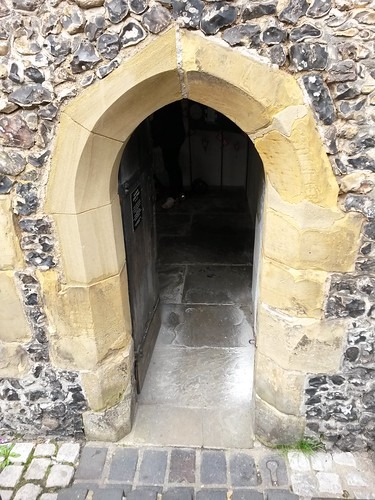
Going in…

This is located on the High Street of St Albans. It was built between 1403 and 1412, the only medieval town belfry in England. It is designated a Scheduled Ancient Monument. It’s possible to go up the tower at weekends during the summer months, at a cost of £1 for adults (children go free). The climb is very steep and rather tough, so if you’re unfit you may wish to reconsider!

2015_0905StAlbans04
The clock machinery

2015_0905StAlbans05
Inside the tower

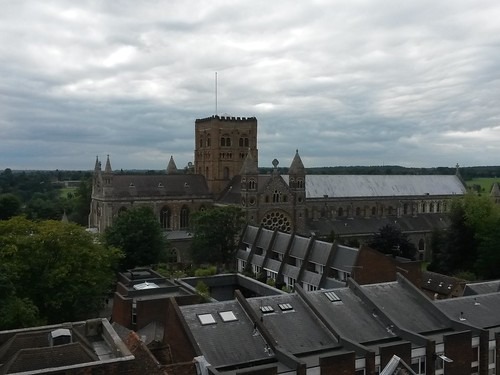
We were exhausted by the time we got to the top of the tower, but it was worth it because the views were amazing.

2015_0905StAlbans07
Cathedral of St Albans

2015_0905StAlbans09
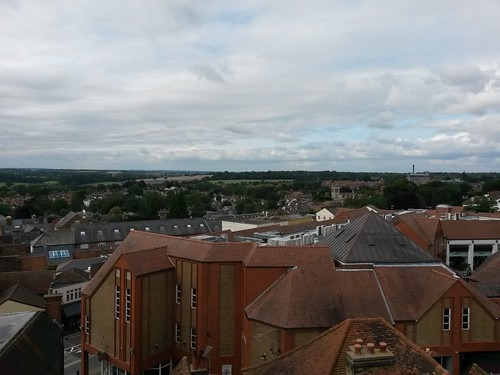
Looking out over St Albans

2015_0905StAlbans13
A formidable-looking gargoyle

Later we visited the Roman remains in the park, before finishing off in a number of pubs.

2015_0905StAlbans17
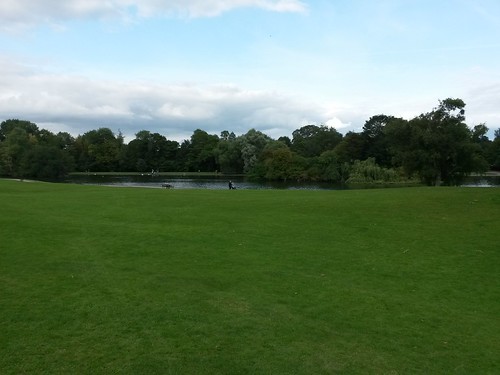
In the park

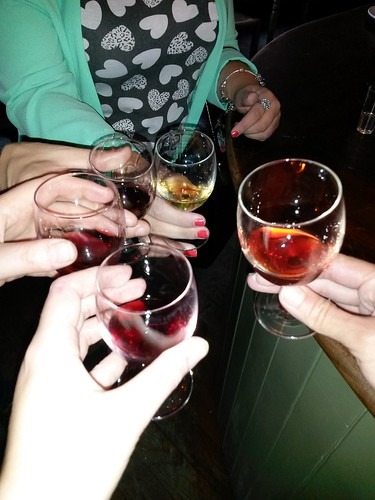
Cheers!

2015_0905StAlbans19

Visit to St Albans

At the weekend I visited some friends who have recently moved to St Albans in Hertfordshire. We embarked on a magical mystery historical tour.

Our first stop was Verulamium Park, so called because it lies on the site of the Roman city of Verulamium. It has a pretty lake with ducks and moorhens and on the edge there is a pub, called Ye Olde Fighting Cocks. We didn’t visit the pub on this occasion, but we did have lunch there the last time I visited. Apparently the pub holds the Guinness Book of Records title for being the oldest pub in England.

We walked away from the lake and came to the remains of the City walls and outline of the main London Gate. During the legendary drought of 1976, planes flying overhead could see the outlines of the old Roman city, made visible by the lack of grass, which had withered away in the heat.

2015_0314StAlbans01
Looking towards the lake at the remains of the London Gate. Apologies for the inconveniently-placed dog waste bin…

2015_0314StAlbans02
The remains of the London Gate

The Hypocaust Mosaic is nearby, covered by a purpose-built building. It is beautifully preserved and, in one corner, the hypocaust – or method of underfloor heating – can be seen.

2015_0314StAlbans03
The Hypocaust Mosaic

Following this we visited the nearby Verulamium Museum, containing many objects of everyday life, more mosaics, and a couple of skeletons. It cost £5 to enter which we thought a bit pricey, but there were some interesting things to see. We didn’t go to see the nearby Roman theatre as you had to pay separately to go in, and none of us felt like forking out more!

2015_0314StAlbans04
Mosaic in Verulamium Museum

Walking back into town, we could see the abbey – officially St Albans Cathedral – in the distance.

2015_0314StAlbans07
View of St Albans Cathedral

We decided to go inside.

2015_0314StAlbans10
St Albans Cathedral

The first thing that struck me was the gorgeous ceiling.

2015_0314StAlbans11
Ceiling

2015_0314StAlbans13
Another part of the ceiling

The rood screen, known as the Wallingford Screen, dates from around 1480, but the statues date from the Victorian period and are replacements of those destroyed in the Dissolution of the Monasteries.

2015_0314StAlbans14
Wallingford Screen

This figure – a replica of an original on display in a case elsewhere in the Cathedral – stood above the Poor Box.

2015_0314StAlbans15
Poor box figure

There were several interesting things to look at, including this skull.

2015_0314StAlbans17

The shrine of St Alban still draws pilgrims to the abbey. Alban died around 300 AD; he lived in Verulamium and the story goes that he gave shelter to a Christian priest, who converted him. Alban changed clothes with the priest, who escaped, and died in his stead.

2015_0314StAlbans24
Shrine of St Alban

2015_0314StAlbans18
Shrine of St Alban

This ancient structure was designed so that priests could watch over the shrine constantly.

2015_0314StAlbans20

2015_0314StAlbans21

2015_0314StAlbans22

The Cathedral is unique in having very good and visible wall paintings, relics of the pre-Reformation days, which incredibly survived the Dissolution.

2015_0314StAlbans23

I loved this gorgeous window.

2015_0314StAlbans26

2015_0314StAlbans29
The Cathedral

2015_0314StAlbans30
The Cathedral

Finally, we visited the Museum of St Albans. This was a free museum and we both enjoyed it. My friend was impressed when she found her street mentioned on one of the information boards. My favourite thing was the stocks: you could put your head and hands through and be pelted by (cloth) fruit and vegetables. Hours of fun!

2015_0314StAlbans31
Museum building

St Albans is a nice place to visit if you want a bit of history. There are some lovely pubs too, and I definitely want to climb the tower when it reopens in the spring.