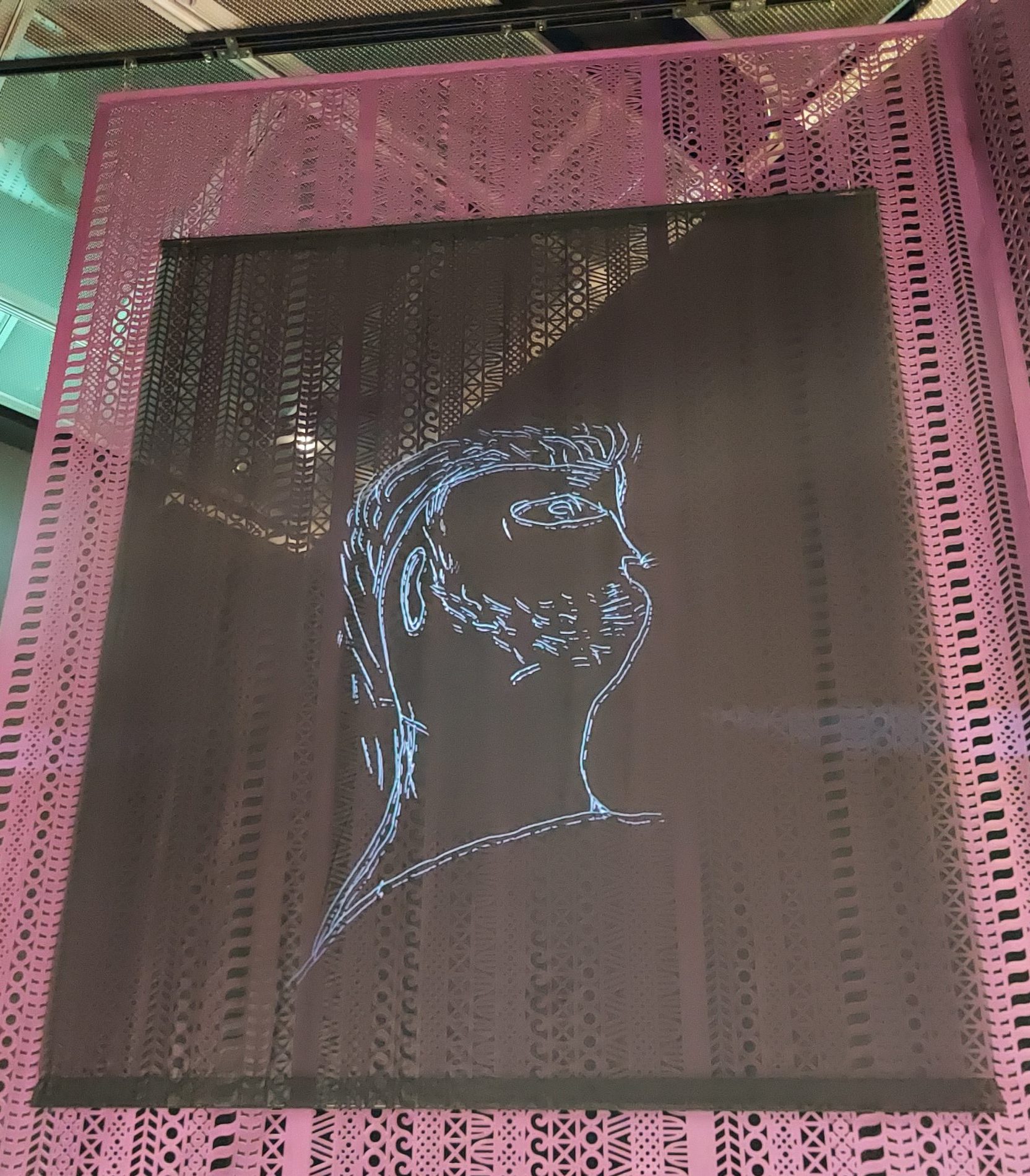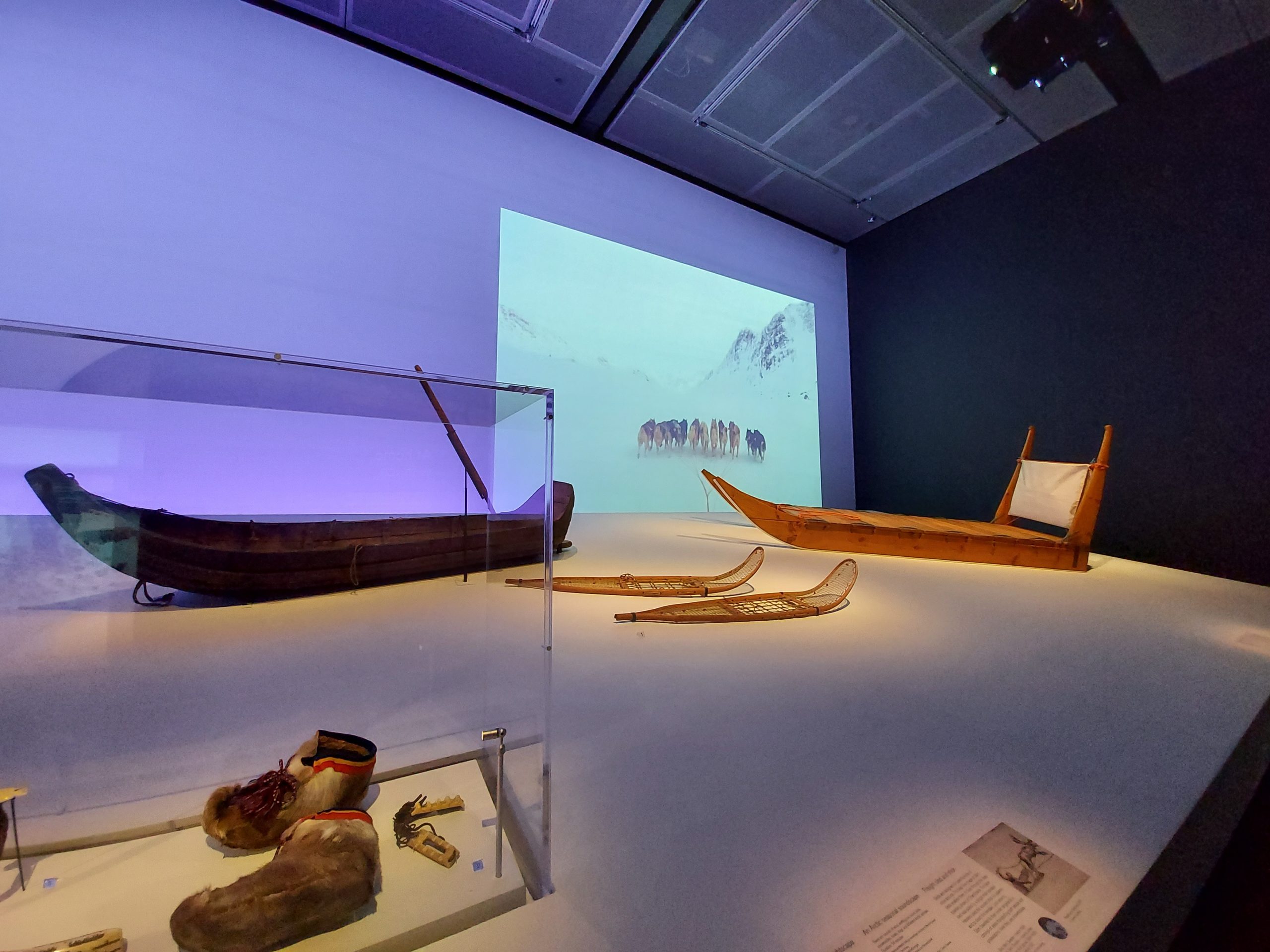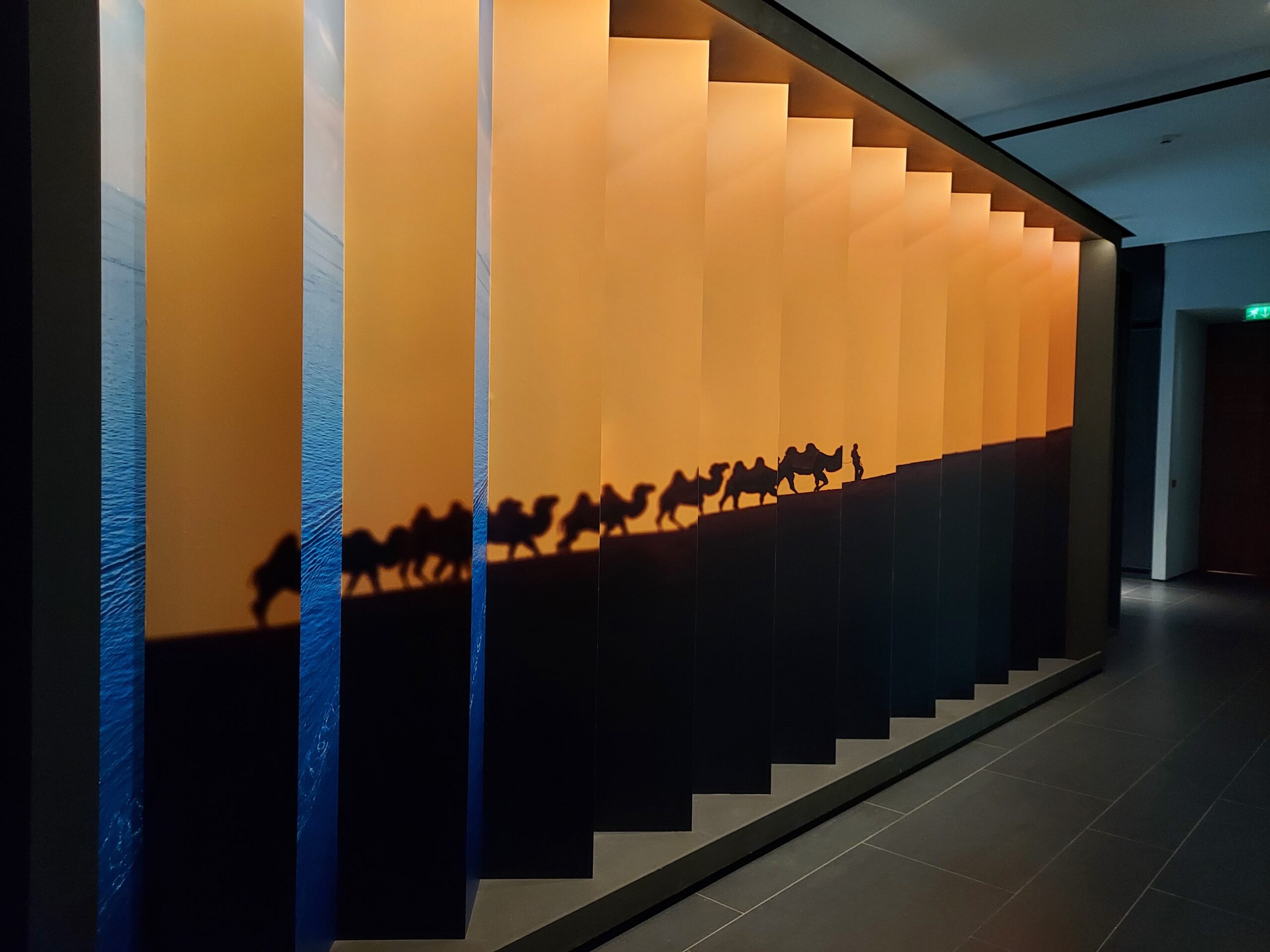
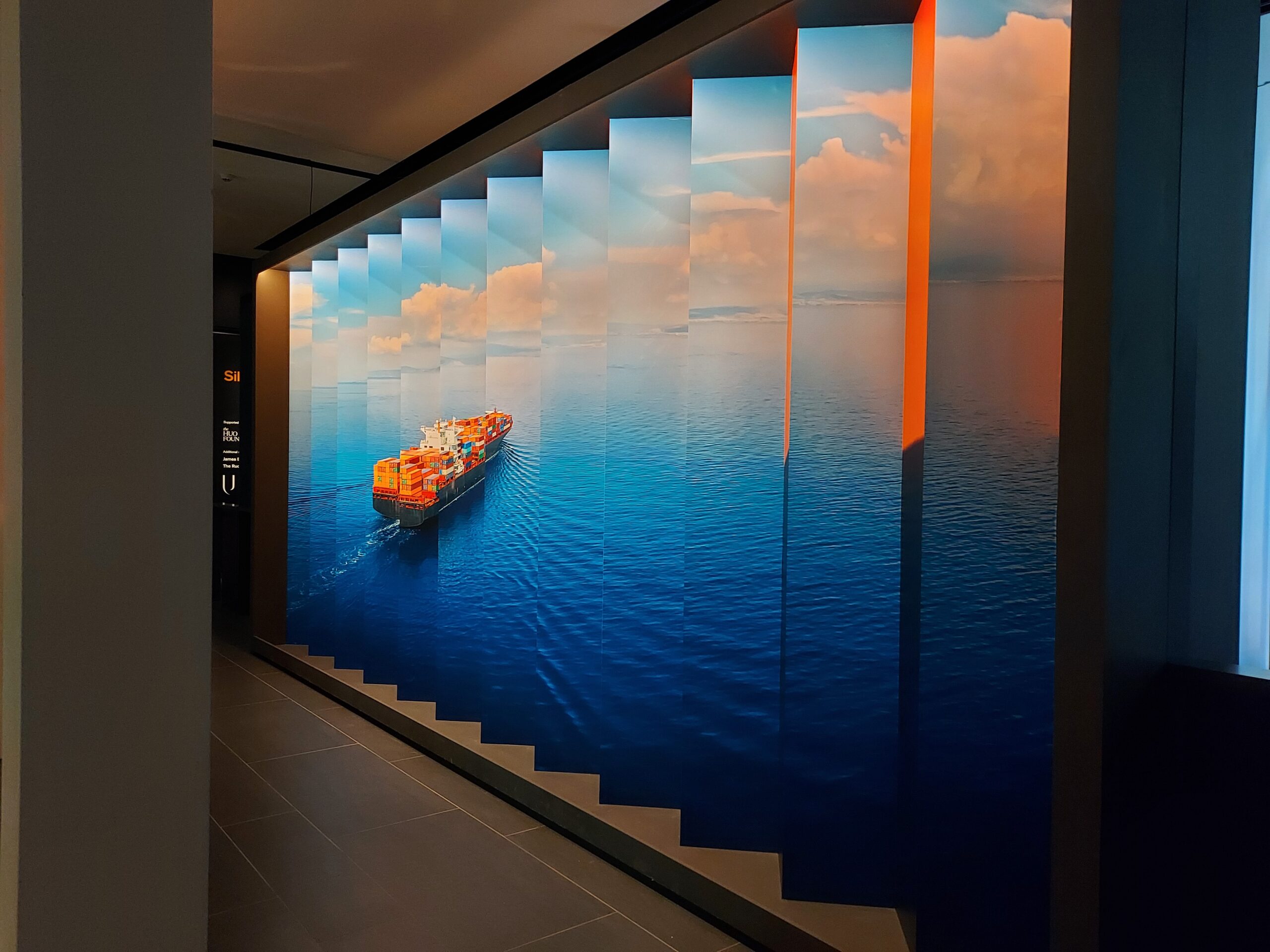
Silk Roads – British Museum

Following on from the British Library’s exhibition about Dunhuang, I went along to the Silk Roads exhibition at the British Museum. This was another fascinating exhibition, this time covering the length of the network that encompassed Europe and Asia.

Silk was just one of the items traded. A key item displayed was a Buddha statue made between the 500s and the mid-600s, probably in the Swat Valley, Pakistan, but found on the Swedish island of Helgö – demonstrating just how far this network spread.
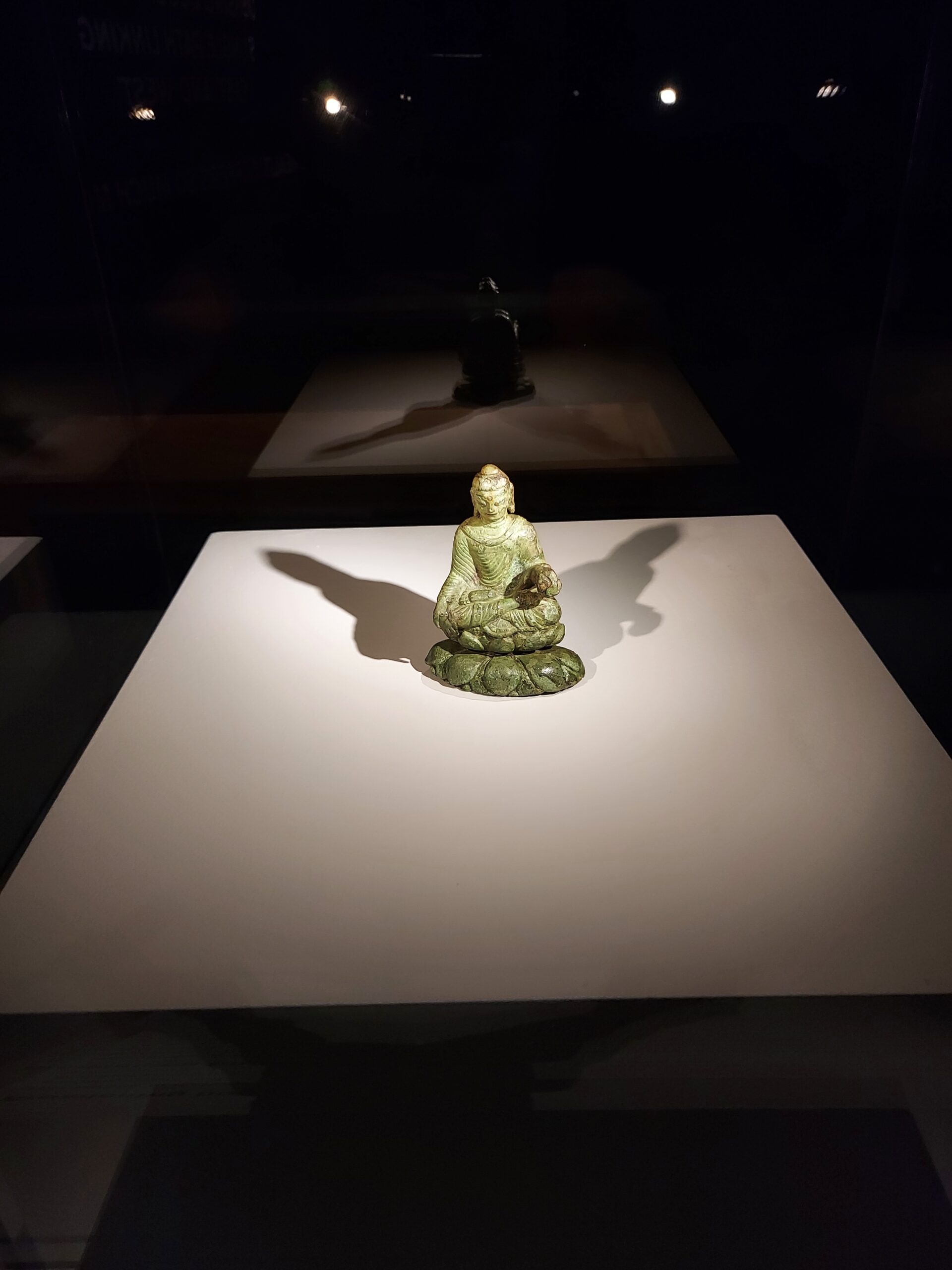
Buddha statue

The exhibition explores the route from east to west, beginning in Nara Japan in the seventh century AD when rulers began to send envoys to Sui-Tang China. Trade took place in both directions throughout Asia: for instance, Buddhism arrived in Japan from western Asia, and burials revealed a taste for expensive imported goods. In Tang China, the capital Chang’an had a population of one million, at the time the largest city in the world. Envoys from as far away as the Mediterranean arrived here. A shipwreck near Belitung Island, Indonesia, in the early AD 800s found over 60,000 items, mostly Chinese ceramics.

Dunhuang and other oasis cities along the desert routes, including two branches around the Tarim Basin, are explored. The exhibition features Samarkand and Uzbekistan, exploring the spread of Islam alongside the tolerance of other religions. There was a notable transmission of knowledge at this time, especially to and from Baghdad, the capital of the Abbasid caliphate, between AD 749 and 1258. Many imported goods were found in the former capital, Samarra.

Later in the exhibition, the Byzantine empire, Aachen, Spain and Sutton Hoo are all referenced. UK burials often contained items from Syria, further examples of the international trade taking place at this time.

The exhibition was fascinating and wide-ranging, and definitely worth seeing, even – and perhaps especially – if you’ve already seen the British Library’s version.
Legion: life in the Roman army – British Museum

An exhibition I really wanted to see was Legion: life in the Roman army at the British Museum. I managed to visit over the Bank Holiday weekend.

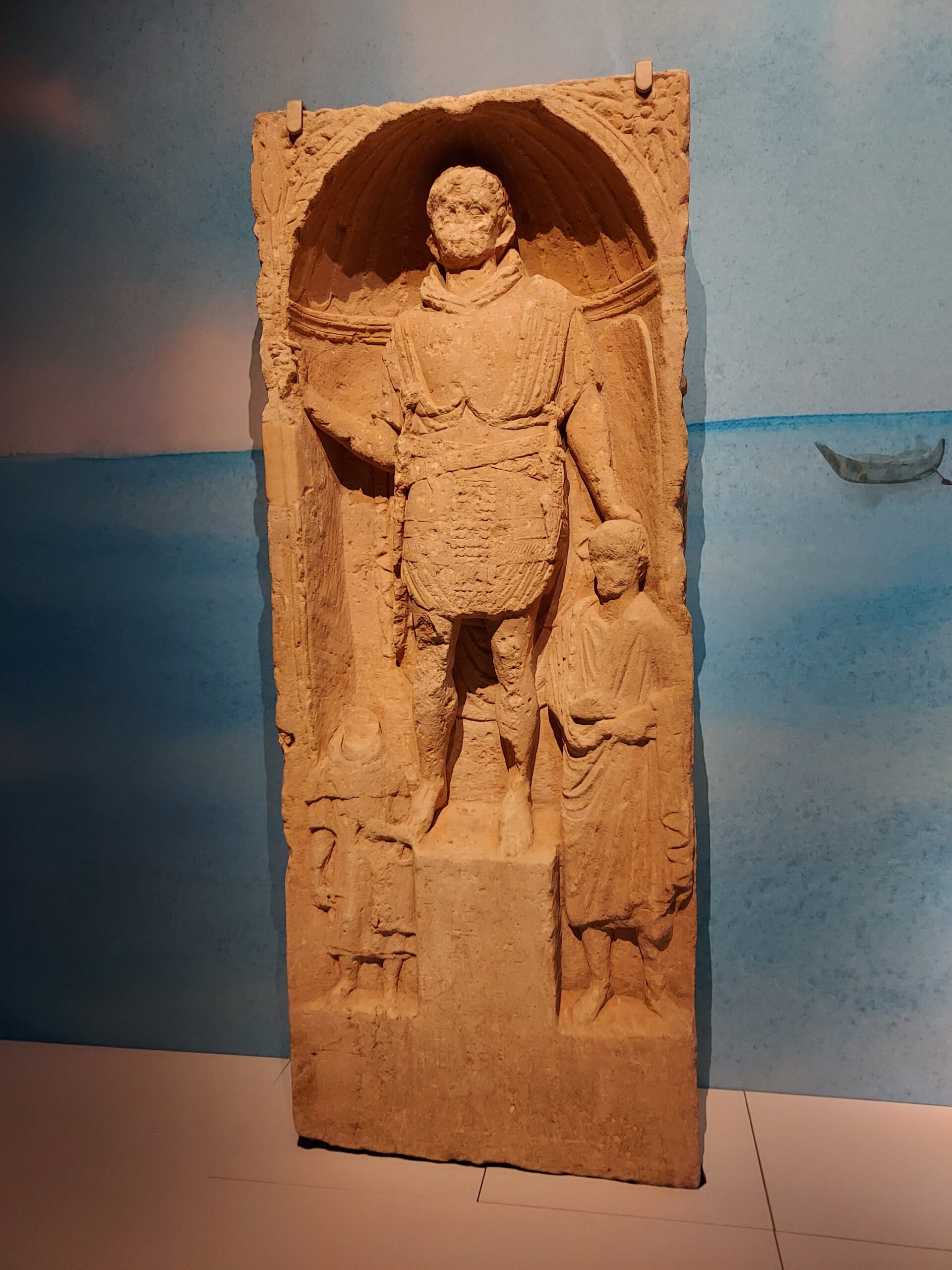
Statue of a Roman soldier

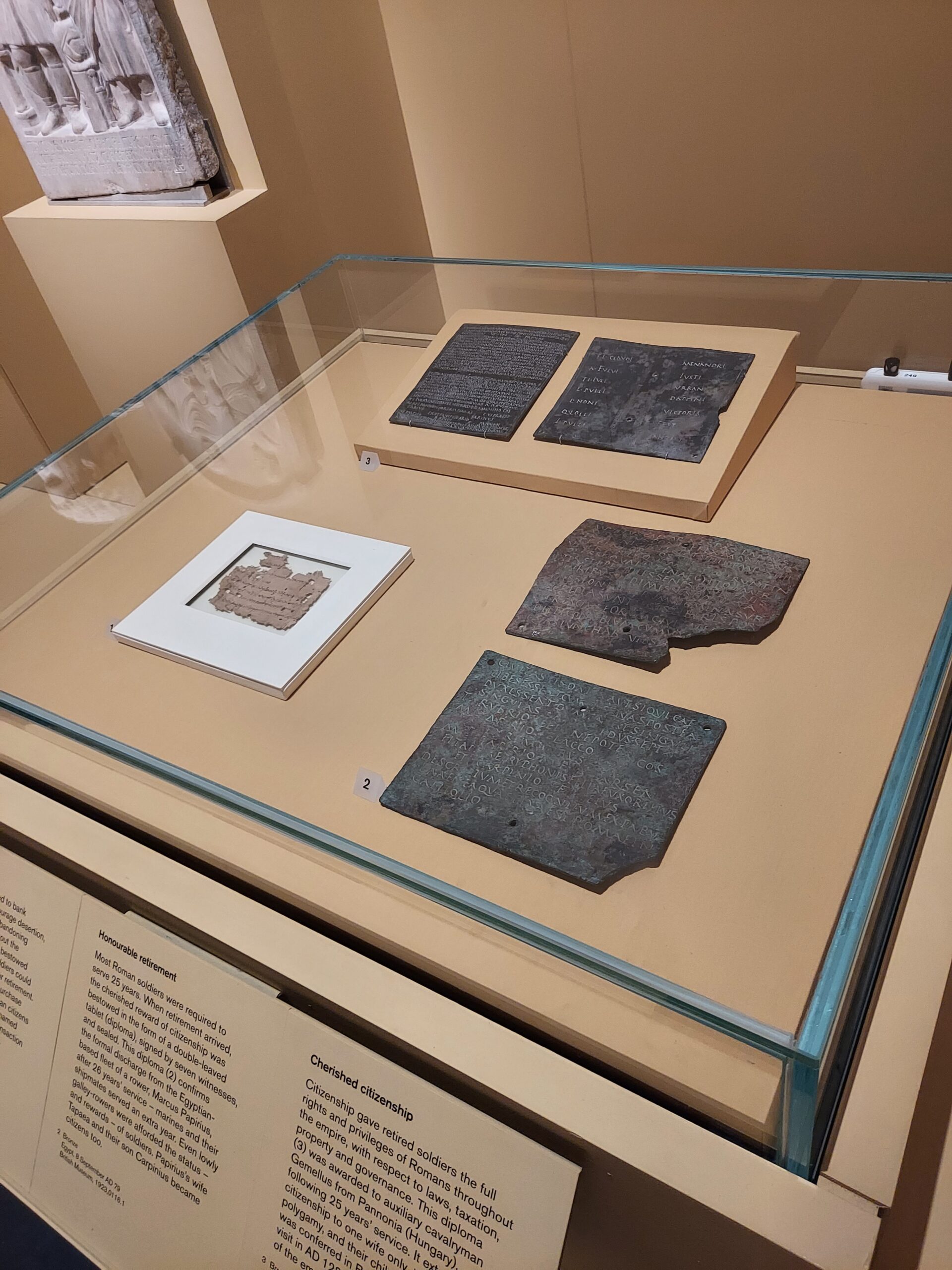
As the title suggests, the exhibition explores what life was like in the Roman army for the soldiers that served in it. Drawn from across the Empire, citizen soldiers were tempted by the prospect of monetary rewards on retirement, while non-citizens could look forward to citizenship for themselves and their families. However, lasting until retirement depended on surviving battles, illnesses and other hardships.

The exhibition focuses on one particular soldier, Claudius Terentianus, as an anchor throughout. We see his journey from enlistment through wars to eventual retirement. Rome was an empire bent on conquest, and required thousands of soldiers in order to conquer and maintain order throughout its territories. Civilians often viewed them with suspicion – the discovery of the skeletons of two soldiers in Canterbury suggests that they were murdered and buried in secret.

Roman longshield
Legionary longshield

The Roman Empire spanned countries and continents, and this is apparent in the objects on display, which include letters written on papyri by soldiers based in Egypt and tablets found at Vindolanda fort near Hadrian’s wall. Some of the most common objects are gravestones, a stark reminder that many soldiers and their family members died of various illnesses. One section in the exhibition focuses on the games and toys families amused themselves with while living at forts and encampments.

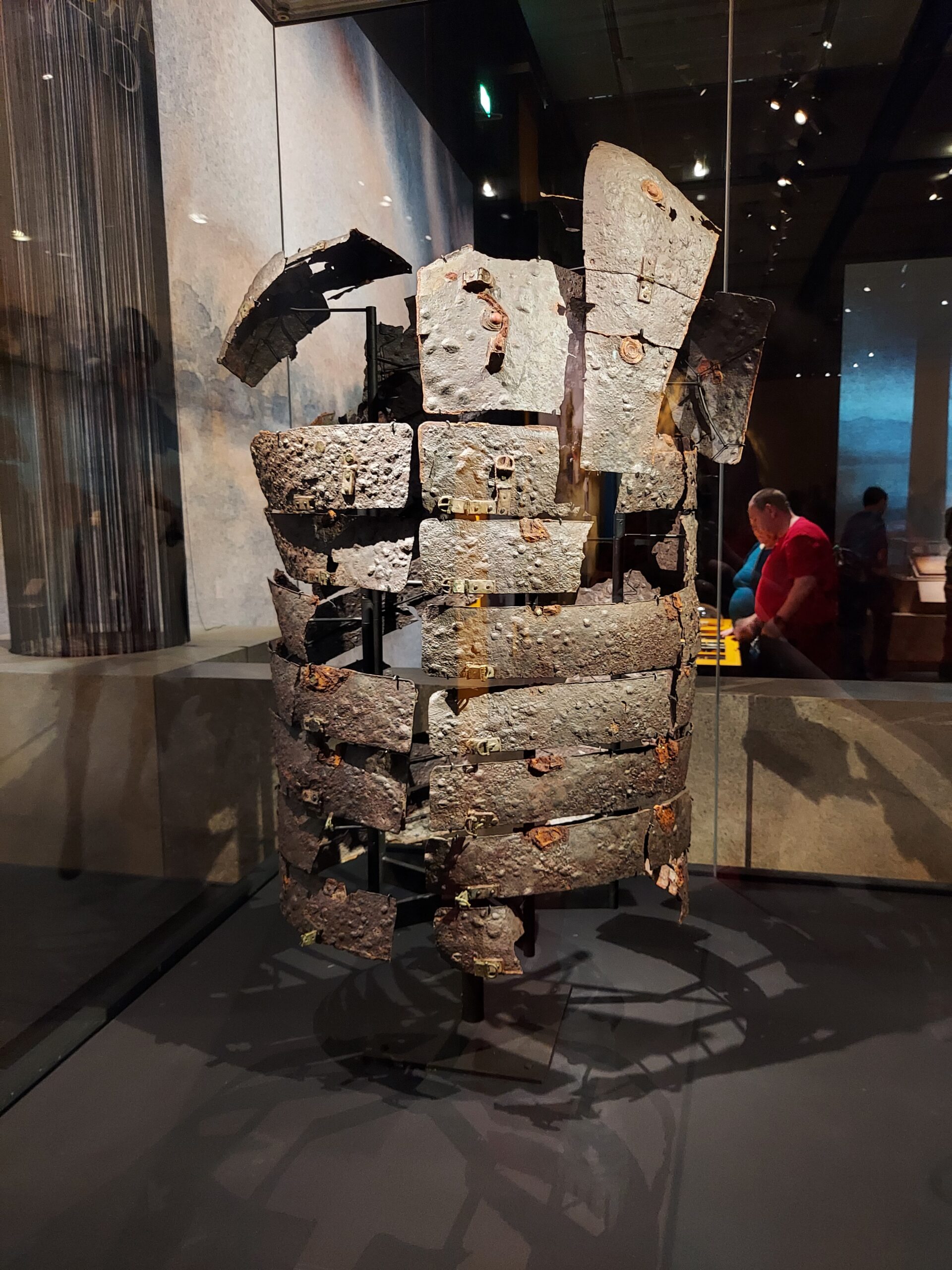
As is to be expected in an exhibition about soldiering, weapons and armour are prominent; one particularly impressive item is the only surviving legionary long shield. It’s incredible seeing this shield, which, owing to its prevalence in popular culture when it comes to the Romans, seems almost larger than life. One cuirass (a piece of torso-fitting armour) comes with a sad story: it was found on the battlefield in Lower Saxony after the Romans were resoundingly defeated by German warriors.

Roman armour
Roman armour

The exhibition is full of fascinating information, such as the structure of the Roman army, how one would go about becoming a soldier, and details of the various Emperors and the campaigns they waged. However, it is the human stories that speak to us the most. Terentianus detailing his troubles in a letter to his father; a Roman lady stationed in a fort sending an invitation to her friend; and most poignantly, a soldier killed by the Vesuvian eruption trying to help civilians escape from Herculaneum. His sword and dagger were with him, still sheathed, and are perfectly preserved.

Tablets conferring Roman citizenship on retired soldiers

Burma to Myanmar – British Museum

Exhibition banner

In January I visited the British Museum to see the exhibition Burma to Myanmar. My granda was posted to Burma during the Second World War so I thought I would be interested to see the exhibition.

Myanmar has experienced decades of civil war, and is once again ruled by a military dictatorship. However, the country has a rich history and the exhibition explores the last 1,500 years of that history, looking at how Myanmar’s peoples interacted with each other and with the world. Diverse cultures flourished as links with Thailand, China, Sri Lanka, and even the Middle East and Europe were established and developed.

A gold and ruby-studded letter
A gold and ruby-studded letter sent by King Alaungpaya to George II

The exhibition is particularly strong when it looks at events from the last 500 or so years. Between the 16th and 19th centuries it was the largest empire in mainland Southeast Asia. A gold and ruby-studded letter sent by King Alaungpaya to George II in 1756 shows how wealthy and powerful this empire was, but sadly (and unsurprisingly) it wasn’t respected by the British, who subsequently colonised Myanmar and contributed to its later unrest.

Despite a turbulent history, Myanmar has strong cultural traditions, and artists and other figures continue to challenge oppressive rulers. I really enjoyed this exhibition.

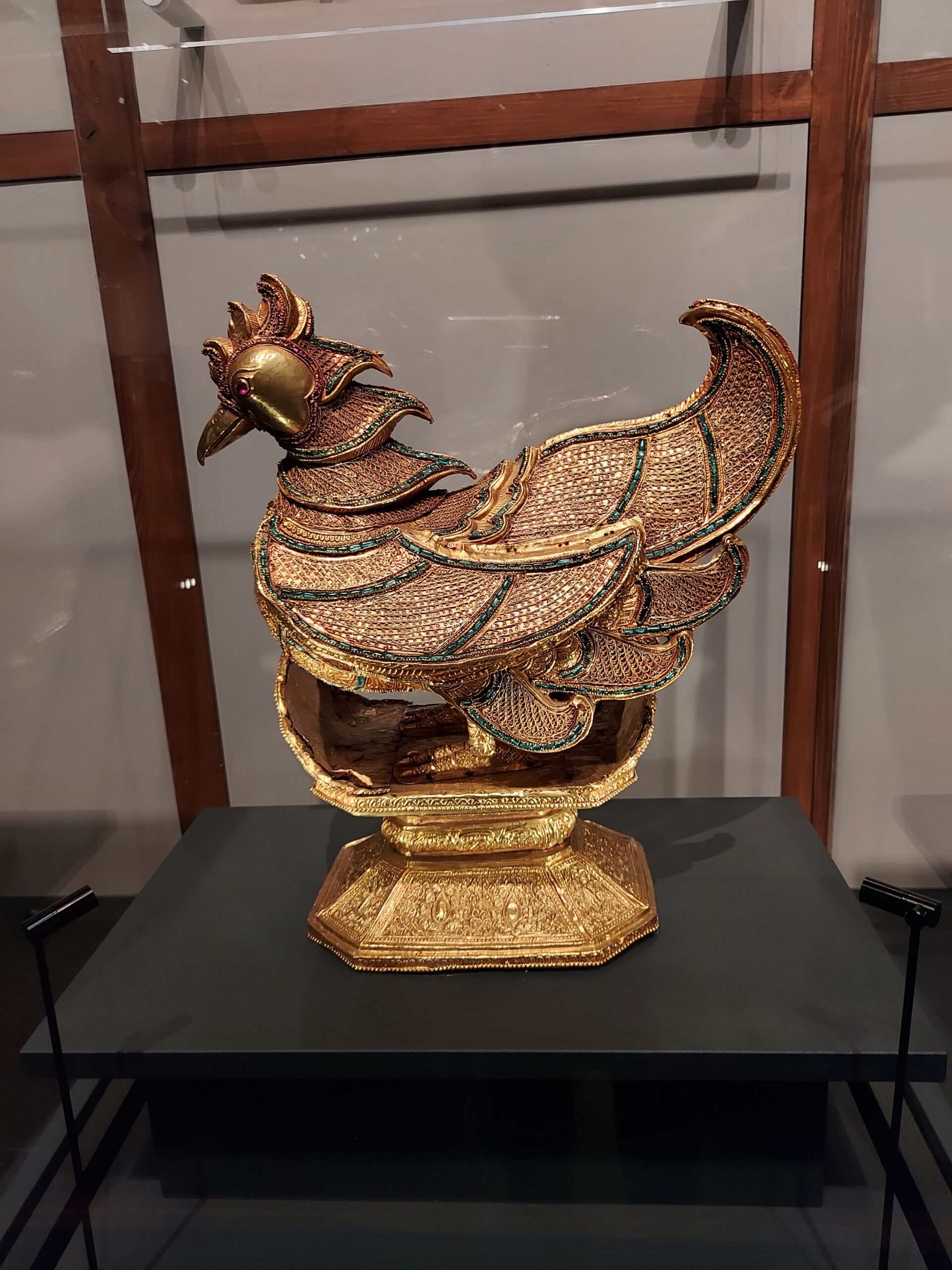
Golden bird
Golden betel container in the shape of a mythical bird known as a karaweik. It formed part of the Burmese regalia used by the last king, Thibaw Min.

Luxury and Power: Persia to Greece – British Museum

Two head sculptures: the Greek god Apollo and a distinguished Persian

At the weekend I decided to visit an exhibition at the British Museum: Luxury and Power: Persia to Greece. The exhibition explores the ancient rivalry between Persia and Greece, and how the Greek view of a decadent Persian empire weakened by excess endured to this day. It suggests that the real situation was more complex, through an examination of material history taken from both empires.

Greek soldiers captured the royal command tent of the Persian king during the Greco-Persian Wars (499-449 BC) and were astounded by the luxury on display. The exhibition examines how luxury functioned as a political tool in the Middle East and nearby.

The concept of the exhibition is summed up at its very start. We see a pair of sculpted heads facing each other, one an ancient Persian with a beard and ringlets, the other the Greek god Apollo. However, both of these figures come from 5th century BC Cyprus, from sanctuaries where both Apollo and the Persian god Reshef were worshipped.

The royal Achaemenid court of Persia made use of precious objects to display authority. Rhytons – large, luxurious drinking cups – are perfect examples of these. Made of gold or silver, these huge cups feature portraits of humans, bulls and griffins. Later in the exhibition, we see how early democratic Athens adapted these to make them more palatable to a Greek audience. These new-style rhytons were made of clay, not gold or silver – which were considered ostentatious – and painted red, white and black. One drinking cup in particular does reinforce the idea that Greeks viewed Persians negatively: the cup is in the shape of a cariacature of a Persian. One can imagine a grinning Greek cheerfully toasting a Persian defeat from this mug.

The Persian empire was finally defeated by Alexander the Great, ensuring the domination of Hellenistic culture and tradition which fused eastern and western styles of luxury. Alexander burned the Persian capital Persepolis, and created a new Greek empire. Objects from the Panagyurishte Treasure, beautiful Thracian objects lent by Bulgaria’s National Museum of History, round off the exhibition. A true fusion of cultures, they combine Greek and Persian themes: a golden cup with bull faces features gods and demigods, while another cup shaped like a Greek amphora features two dancing centuars as handles.

This exhibition was a visual treat and definitely extended my understanding of this period of ancient history. It is well worth a visit.

Hieroglyphs: unlocking ancient Egypt – British Museum

The second exhibition I visited was Hieroglyphs: unlocking ancient Egypt at the British Museum. I love ancient Egypt – who doesn’t? – so I definitely wanted to see this.

Unlike many exhibitions on the topic, there are few mummies and tales of the Pharaohs to be found here – the focus of this show is the struggle to crack the code of Hieroglyphics. The Rosetta Stone, which inspired this breakthrough, is on display here: as it bears the same text, written in three different languages – hieroglyphs, demotic and Greek – it was the key to deciphering the mysterious pictorial language of the ancient Egyptians.

Before this discovery, hieroglyphic writing was thought by many to have magical or occult powers, and artefacts with such writing were often displayed by collectors in cabinets of curiosity. Items on display in the exhibition include a black granite bathtub, inscribed with spells to give bathers relief from lovesickness, and a model of a man’s torso covered with writing and pictures of gods.

The exhibition traces the complex history of how wars, invasions and conflicts both buried the meaning of hieroglyphs and assisted in its rediscovery: the Rosetta Stone was discovered by scholars accompanying Napoleon’s soldiers at a fort they were occupying. It follows the race between British polymath Thomas Young and Frenchman Jean-Francois Champollion to be the first to crack the code; Champollion won, outlining his findings in a letter that was read in public on 27 September 1822.

I really enjoyed the exhibition, but despite all the interesting information outlined above, the best thing I learned from it is that ‘cat’ in ancient Egyptian is ‘mioew’.

Ancient Egyptian statue of a cat

The world of Stonehenge – British Museum

The new exhibition at the British Museum, The world of Stonehenge, really does have an appropriate title. It’s not so much about Stonehenge itself – and considering you can hardly scoop up the stones and drop them into the centre of London, this is understandable – but about the society that created it, how it developed before and after, and how it fits in with the European context. It argues that prehistoric peoples always migrated to and from the British Isles – easier in the days before the sea level rose and created the English Channel – and thus knowledge, understanding and skills were shared throughout the continent.

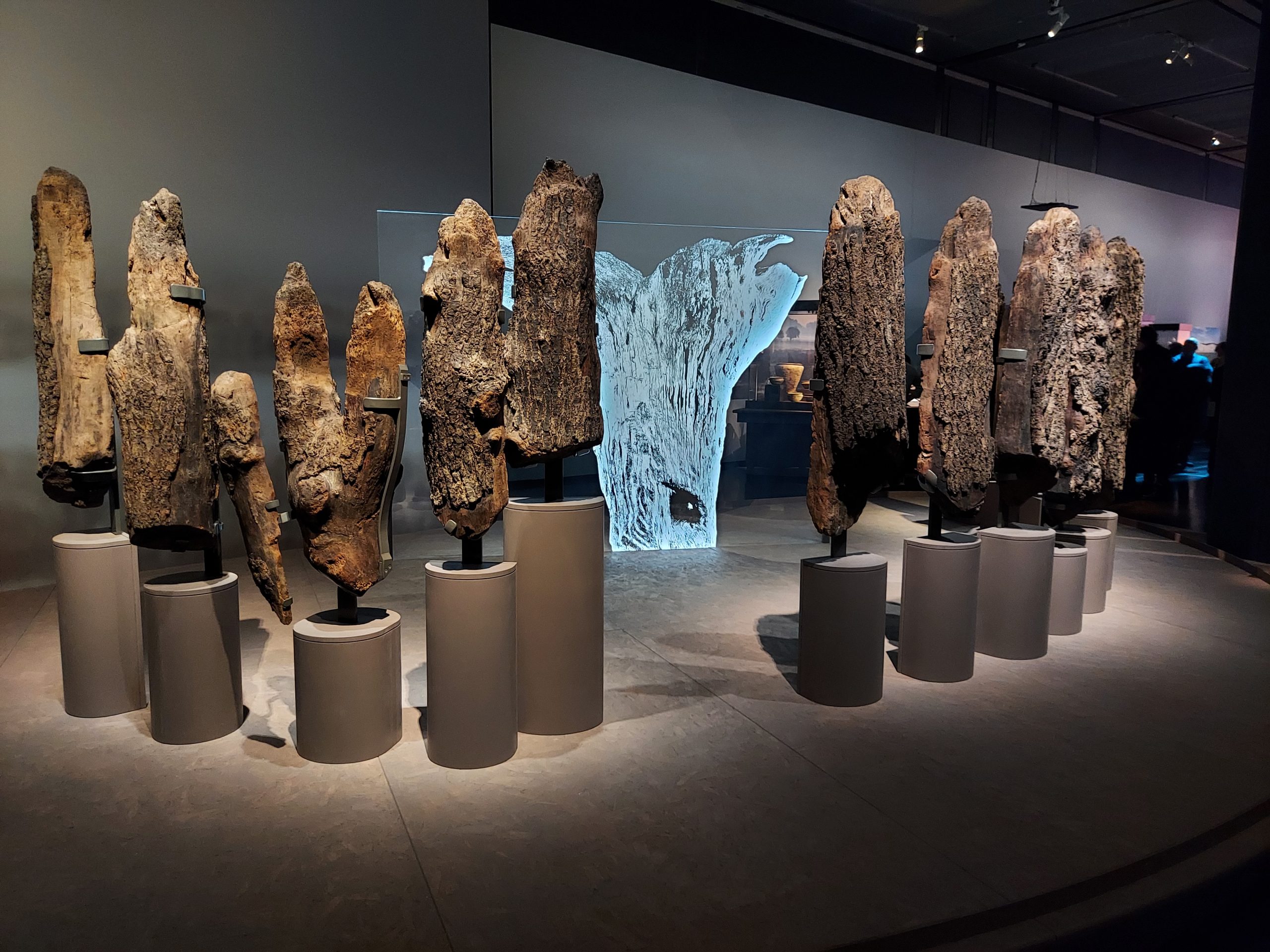
Seahenge

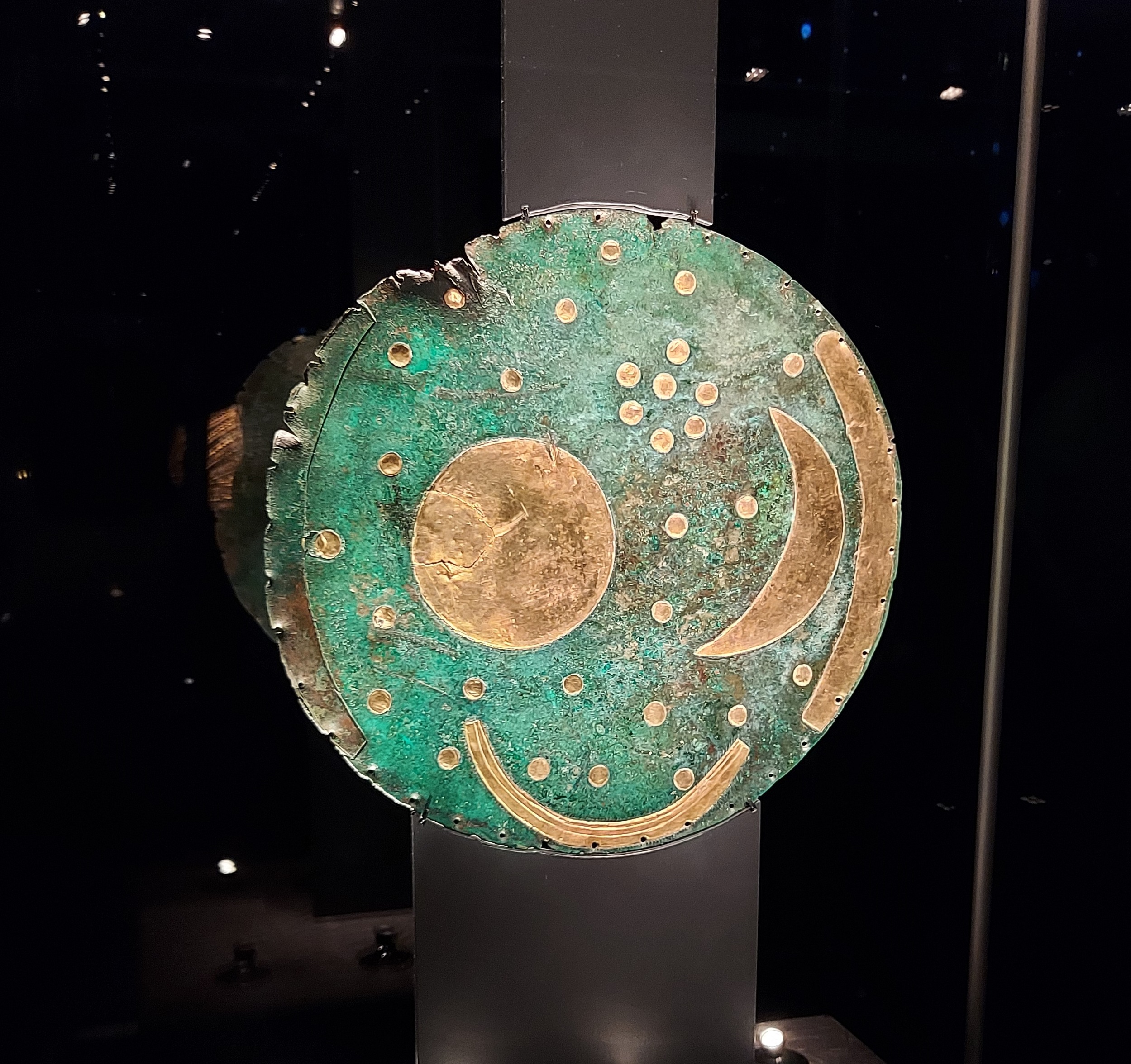
The exhibition covers the period from 4000 to 1000 BC, a time of significant change and development. It begins with tools and other artefacts from the period before Stonehenge was built, and contains an impressively preserved 4,000-year-old timber circle (‘Seahenge’), built in Norfolk around 500 years after Stonehenge. Later we see beautiful gold jewellery and other impressive artefacts such as the Nebra Sky Disc from Germany, the world’s oldest surviving map of the stars, which suggests the exchange of ideas, beliefs and rituals across Europe. To the best of our knowledge, the sun was at the centre of these beliefs, and many of the objects displayed and discussed in this exhibition feature the sun and the sky as a whole. Stonehenge itself is aligned to sunrise on the winter solstice.

The Nebra Sky Disc

The exhibition traces how hunter-gatherers evolved over thousands of years to become settled farmers, communal living morphed into increased inequality (as the wealth of certain individuals’ grave goods suggests), and collaboration eventually gave way to warfare – the exhibition begins with found remnants of a communal feast near Stonehenge, and ends with a display of early armour and weaponry.

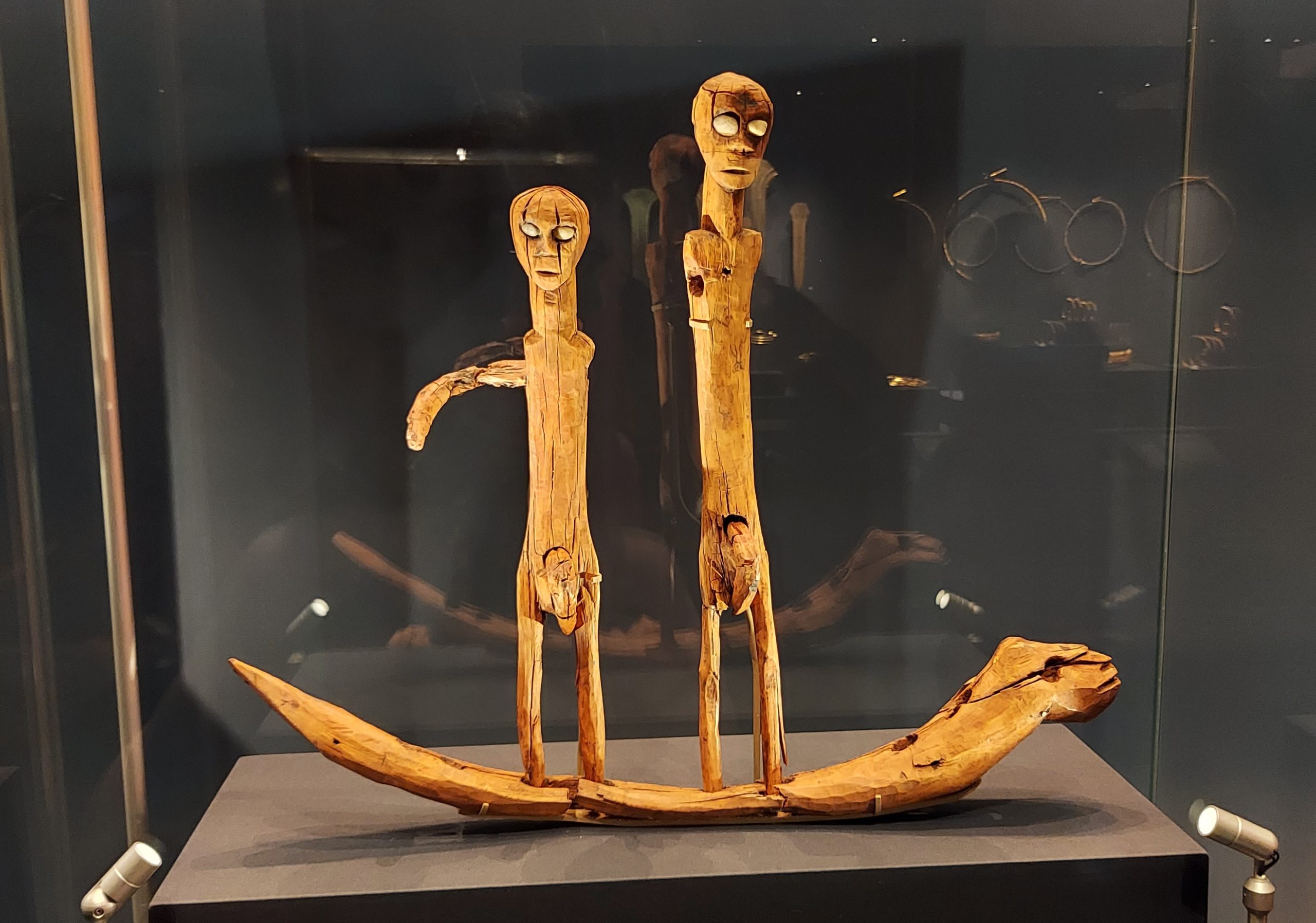
Carved figures on a boat

It’s a powerful, fascinating exhibition that helps to bring an ancient society to life and puts us in touch with even more of our history.

Peru: a journey in time – British Museum

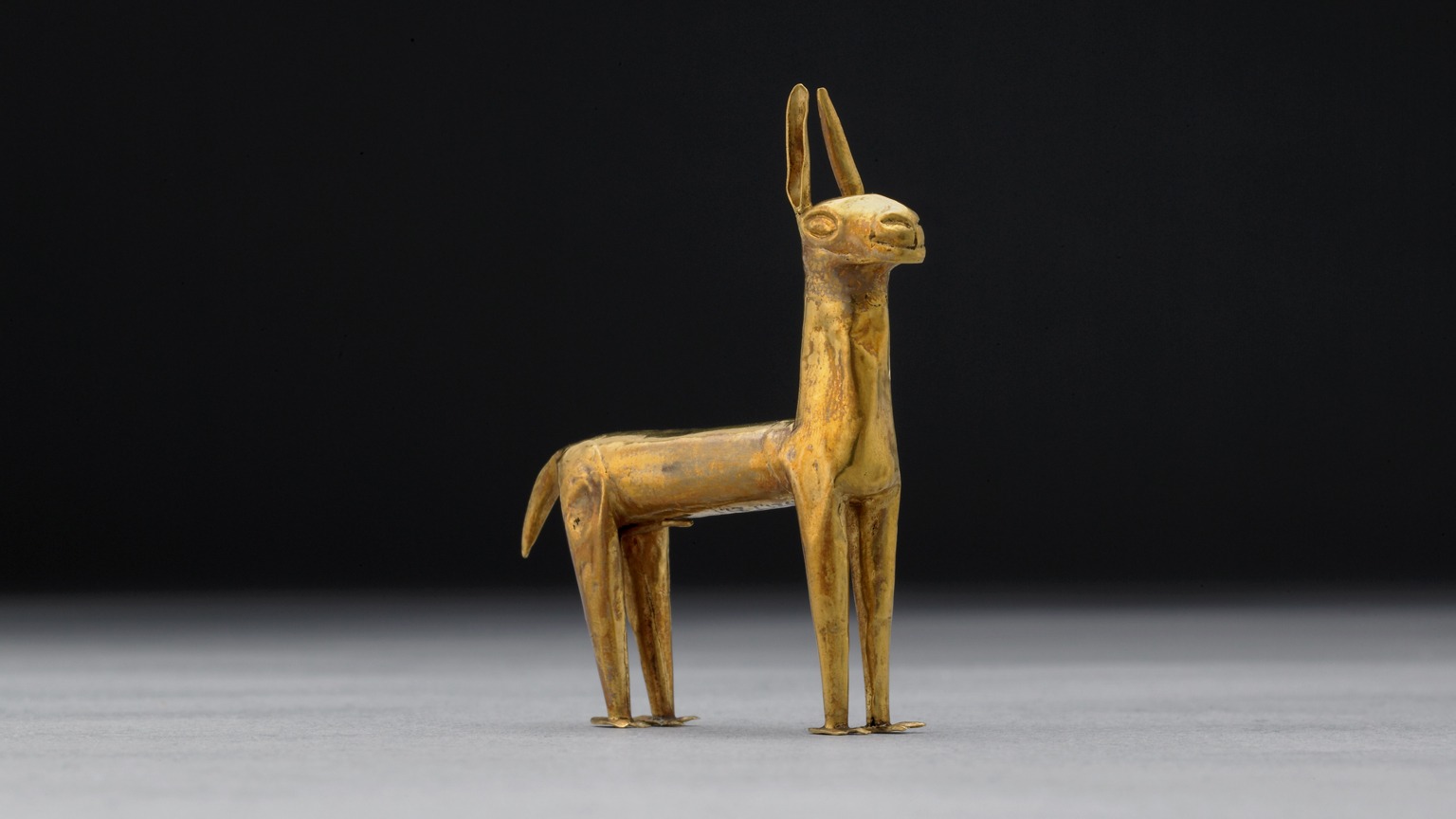
Miniature gold figure of a llama from the Peru exhibition

I decided to visit the British Museum at the weekend, to check out the exhibition Peru: a journey in time. Designed to mark the 200th anniversary of Peru’s independence, the exhibition explores the different societies who have lived in the area over the centuries. In a broadly chronological survey from around 2500 BC to the 1500s, it shows how several indigenous groups made their home in Peru and its varied landscapes, including the mountains, the jungle and the coast.

Like many people, I associate Peru with the Inca and the temple of Machu Picchu. The Inca were one of the last, largest and most successful tribes, but they were far from the only group to live and thrive in the area.

Around 16,000 BC, humans migrated to South America from the north, and established settlements in the Central Andes. As populations expanded and settled, people began to develop agricultural practices and create textiles and pottery. Approaching 1200 BC, the site of Chavin de Huantar began to serve as a destination for pilgrims. It remains one of Peru’s most important archaeological sites, and its mythology merges human, feline, bird and snake imagery, symbolising the earth, the sky and underground. The artefacts on display regarding this part of Peru’s history were fascinating, unusual and vivid.

The Paracas society emerged around 900 BC along the desert coast of Peru. When an individual from this society died, death rituals ensured their journey to the realm of their ancestors: they were folded up in funerary bundles and placed in collective tombs with offerings. There are striking items from this society in the exhibition, including a large mantle depicting beings holding severed heads.

The exhibition touches on the Nasca lines, which were created around 200 BC-650 AD. The Nasca created massive lines and drawings on the earth, known as geolyphs; they made these by removing the top, darker, layer of earth. These amazing symbols can only be seen in their entirety from the sky.

The Moche, a tribe active around 100-800 AD, were known as highly skilful potters. Their pots, which depict lifelike human faces, show us what people in this society really looked like, as opposed to the more abstract depictions of other societies. The pots on display here were some of my favourites of the whole exhibition: they seemed to be staring right at me, as if alive.

The Wari were active around 600-900 AD, and expanded to cover a large area. Their society involved strict religious rituals and urban planned cities. Between the 10th and 15th centuries, the coastal kingdom of Chimú was also hugely significant, with its capital, Chan Chan, the largest cosmopolitan city in South America at the time.

The Inca Empire emerged around 1400 AD in the central Andes, and covered a huge amount of territory, including parts of what are now Argentina, Bolivia, Ecuador and Colombia, as well as all of Peru. The heart of the empire was the capital, Cusco, and they established a network of negotiation and alliances, building a network of roads and connecting different communities and cultures. The stunning Machu Picchu was built in the fifteenth century, and there are impressive images and videos in the exhibition so you can imagine that you are there, exploring its terraced pyramids.

The Spanish conquest brutally repressed traditional ways of life and led to untold suffering and death. Luckily, many traditional practices and forms of knowledge lived on, and descendants of Peruvian peoples continue to keep these practices alive.

Thomas Becket: murder and the making of a saint – British Museum

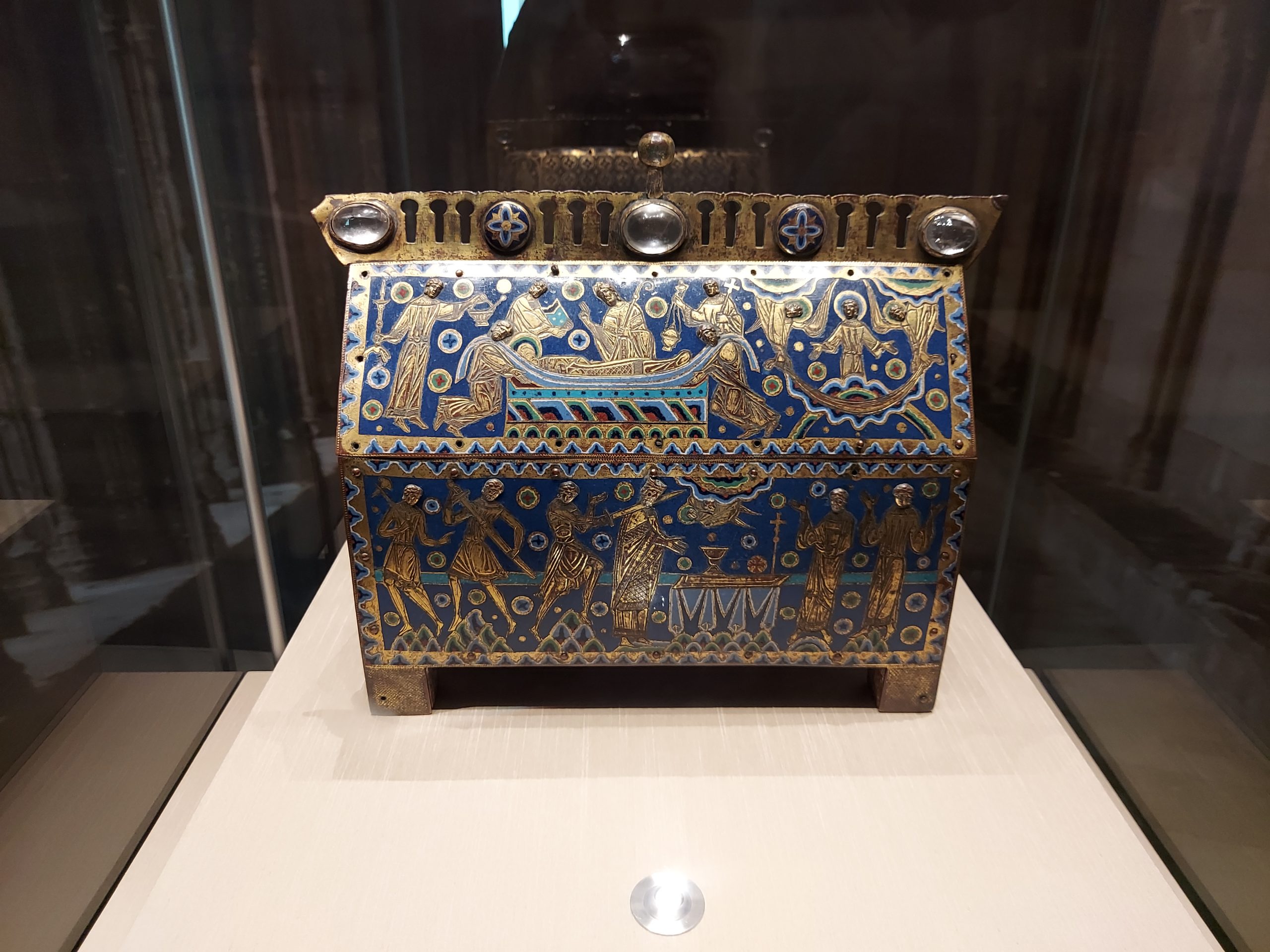
decorated casket
Reliquary casket showing the murder of Thomas Becket

While I was at the British Museum I also took the opportunity to visit the Becket exhibition. Thomas Becket: murder and the making of a saint looks at the life, death and legacy of this key medieval figure, with objects related to his life and later sainthood.Becket was born in London in 1120. Thanks to key contacts and his own ability, he worked his way up to the position of Chancellor, befriending King Henry II. Henry made him Archbishop of Canterbury despite the fact that he wasn’t a priest, intending him to retain his Chancellor role and essentially do what he told him. Thomas wasn’t having any of it though, rejecting the Chancellor role once he had become Archbishop, and repeatedly challenging the authority of the King over the church.

Eventually he fled to France, returning after excommunicating the bishops who had taken part in Henry’s son’s coronation. On 29 December 1170 he was murdered by four knights, who killed him in Canterbury Cathedral.

illuminated manuscript
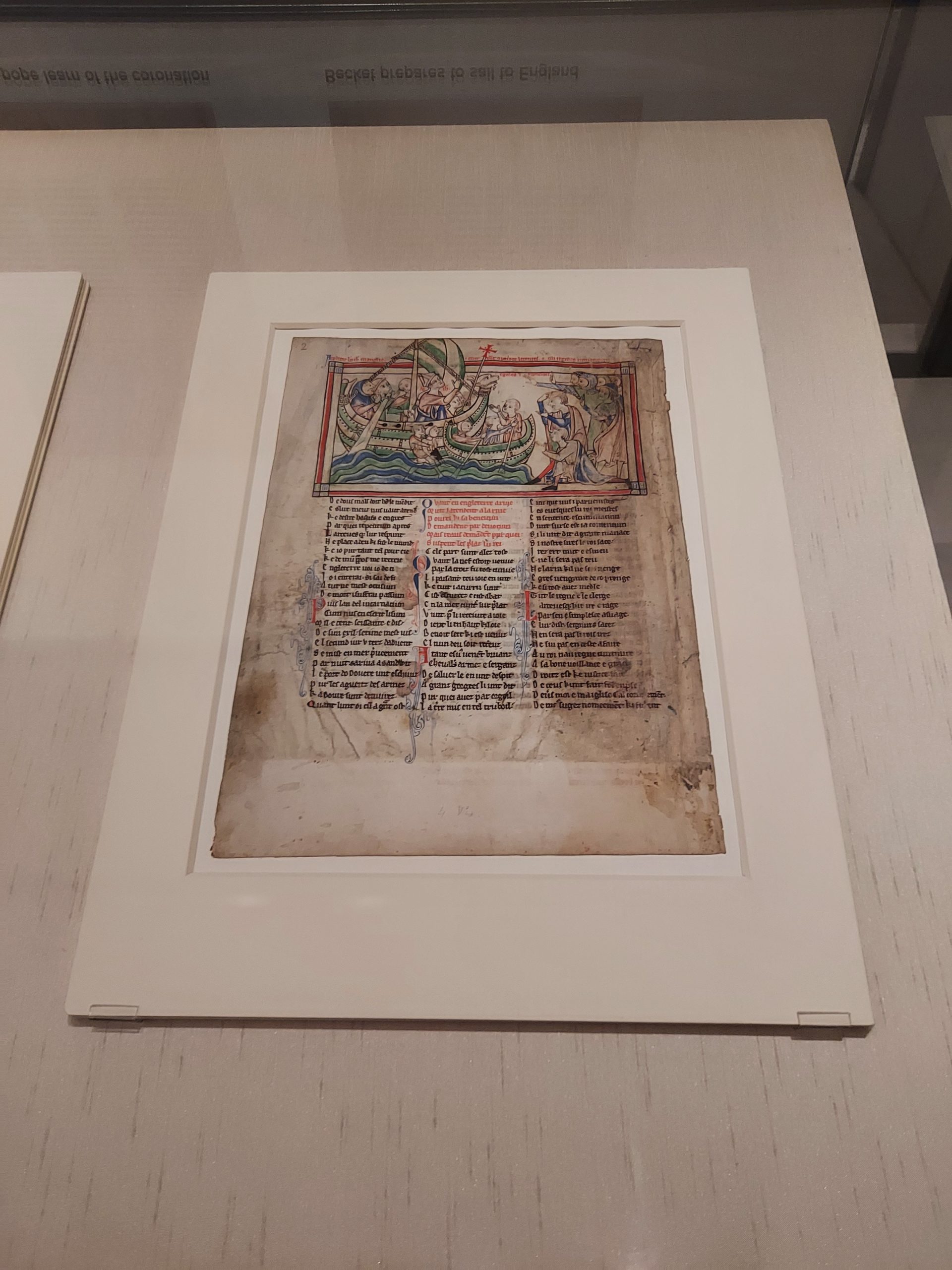
Manuscript page showing Becket’s Channel journey

Becket’s death horrified Europe, and he was later made a saint, his shrine in Canterbury a place of pilgrimage. Without his death we wouldn’t have Chaucer’s Canterbury Tales, based around a group of pilgrims on a journey to Becket’s shrine. He became popular as far away as Sweden and South Italy, and his relics spread far and wide. Some of the relics are on display, including the stained glass windows from the shrine, showing all the miracles St Thomas supposedly performed.

stone font
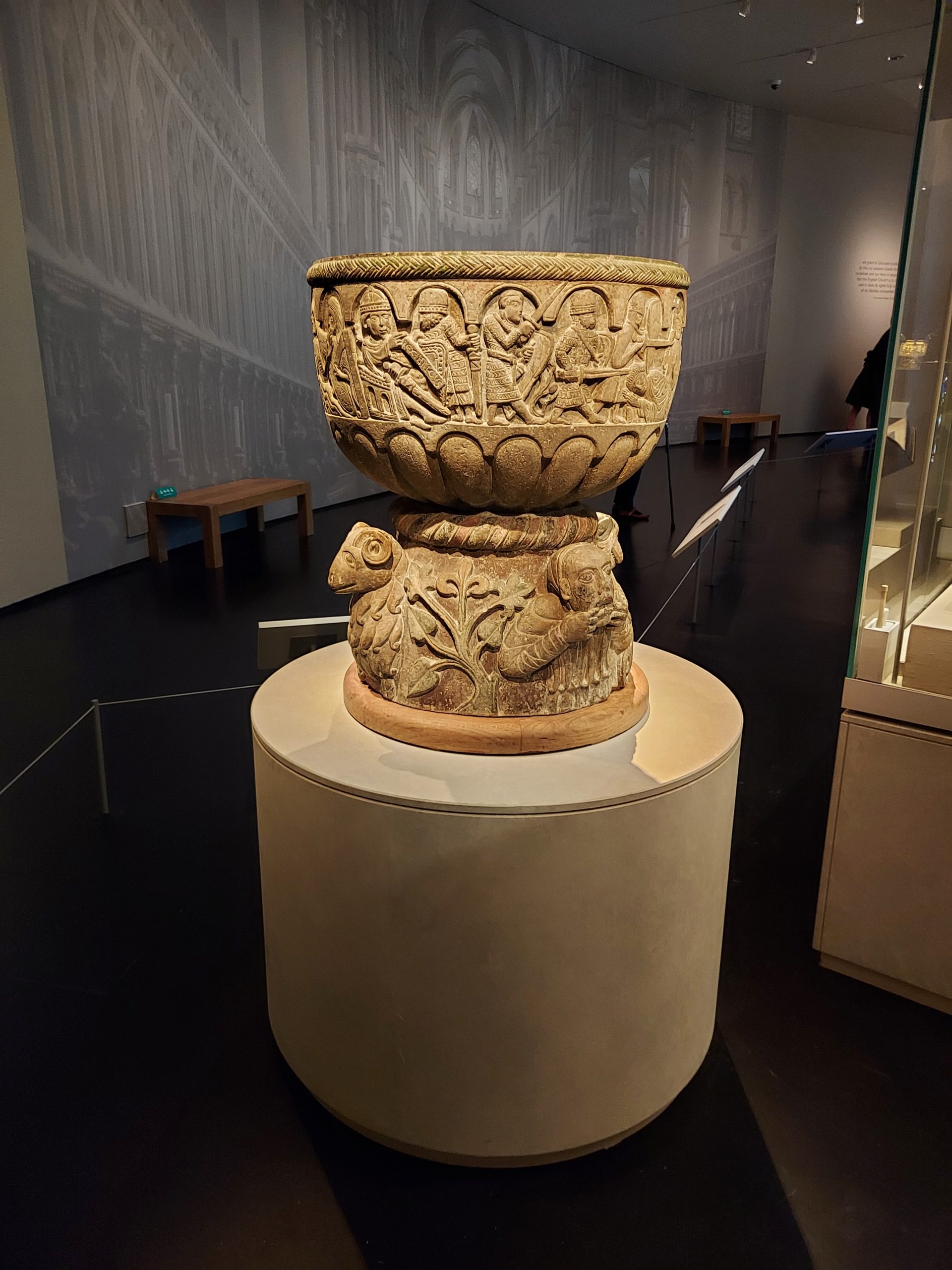
Stone font from Sweden

Becket’s shrine was destroyed during the reign of Henry VIII and veneration of the saint was banned. Historians see parallels between his treatment and the treatment of figures like Archbishop Cranmer and Thomas More – he represented a challenge to the authority of the monarch. Becket’s popularity still survived in Europe and, secretly, in England. In modern times, he remains one of the best known figures of the medieval period.

old book covered in red ink
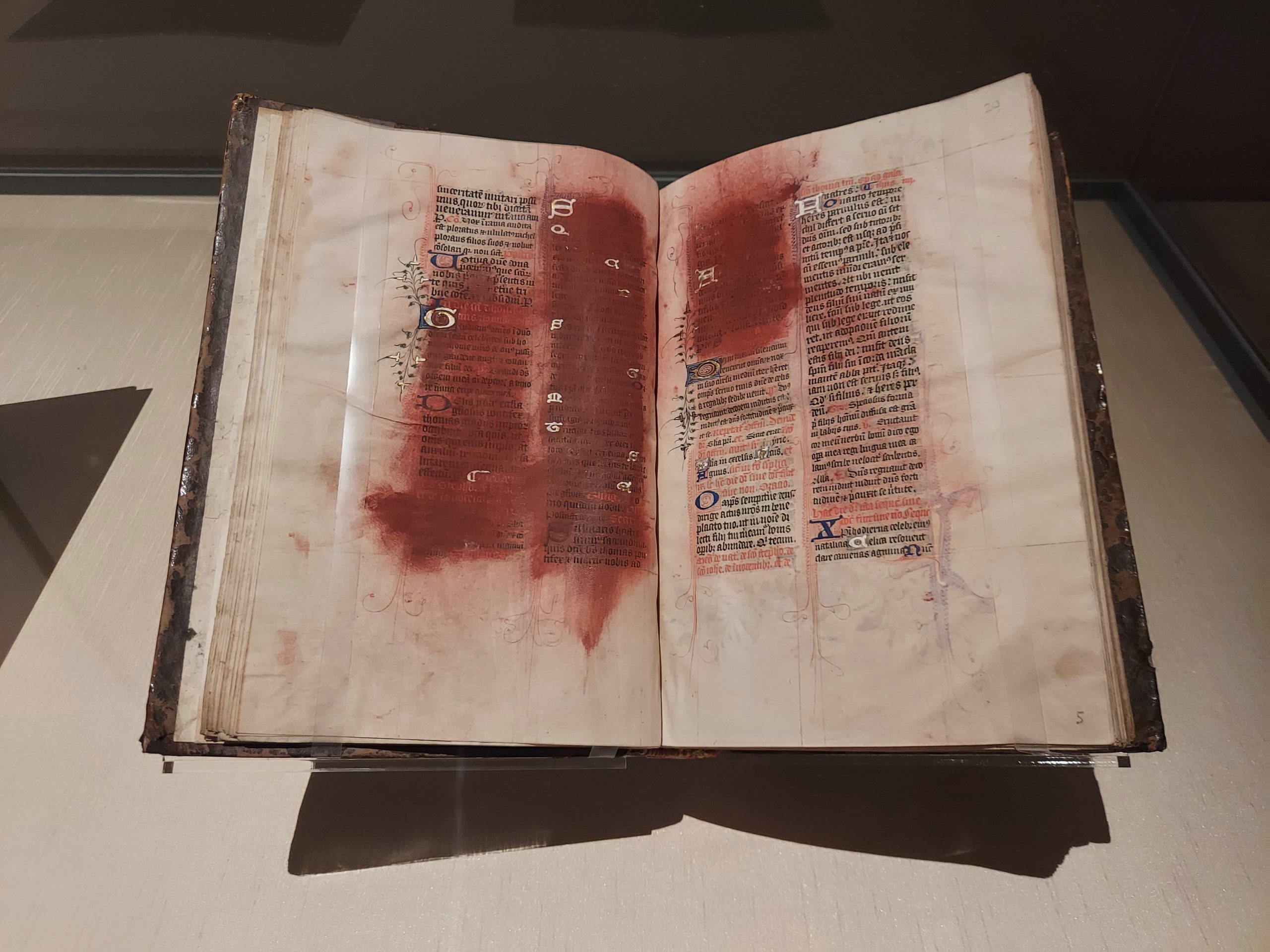
Becket’s story has been obliterated by red ink in this book

I enjoyed this exhibition: I didn’t know much about Becket except his name and the manner of his death. I found I had a lot of respect for this figure who was prepared to challenge authority, even at the cost of his own safety.

Nero: the man behind the myth – British Museum

Bust of Nero
Bust of Nero

On the first day of my week off work I headed to the British Museum to see the Nero exhibition. Nero: the man behind the myth looks at this infamous Roman emperor and examines whether he really was the villain history remembers him as.

The exhibition began with an illustration of the complex family tree that enabled Nero to take power. He became emperor as a teen, and although close to his mother, later had him executed. He also executed his tutor and possibly his wife, although evidence suggests she was more likely to have died after a miscarriage. It’s worth noting that most of the Roman emperors executed members of their family at some point – it was a cut-throat world and, while not ideal(!), doesn’t necessarily make him any worse than the rest of them.

Nero as a child
Nero as a boy

Part of the exhibition focused on the rebellion of Boudicca, which I found very interesting. After the rebellion Nero put another general in place to implement reforms, suggesting that he listened to those who were discontented. On the other hand, another incident closer to home showed that he could be ruthless – when a slave rebelled Nero ensured the law allowing a slave owner to execute all of their slaves was followed to the letter.

Nero was interested in the arts and enjoyed performing in plays, which some figures criticised him for. I can definitely understand this as should the leader of a people really be spending their time acting on stage?

Nero on stage
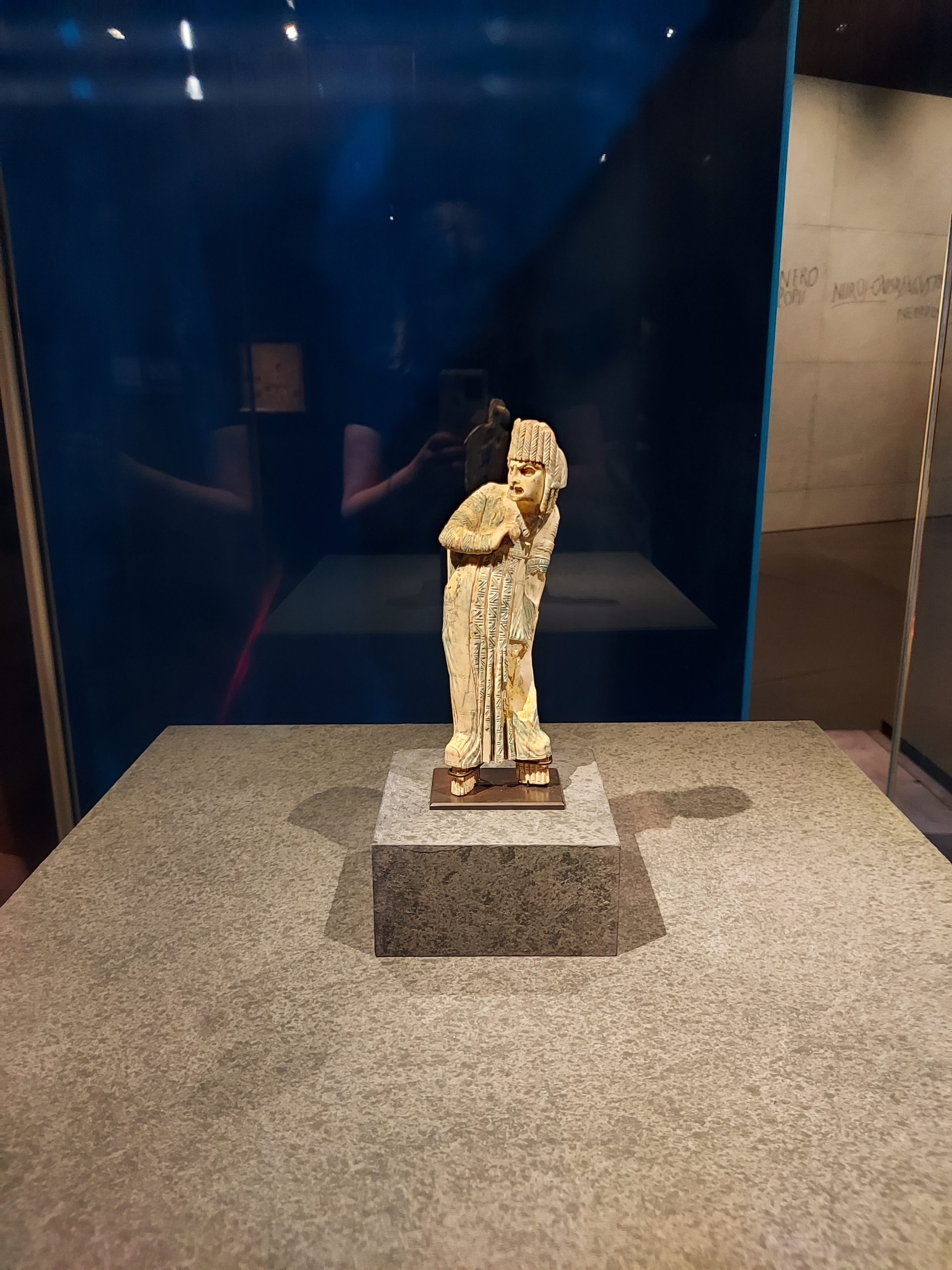
Nero on stage

Nero is probably best remembered for playing the fiddle while Rome burned, but when the infamous fire started he wasn’t even in Rome. He actually came back and put measures in place to house and feed residents displaced by the fire. However, he did unfairly blame members of a new religious sect (later known as Christians) for the blaze. Nero rebuilt his palace in a lavish style, which drew some criticism – although it was no more lavish than the homes of other wealthy Romans. He did try to make events open to people from different classes, and seems to have been popular with ordinary people.

Nero was forced to commit suicide aged 30, and his reign was followed by a year of instability with four different emperors. An expert in Roman history may feel differently, but to me, the exhibition suggests that Nero wasn’t actually as bad as he was made out.

Popular cartoon of Nero

Arctic: Culture and Climate – British Museum

Arctic exhibition

I visited the Arctic: Culture and Climate exhibition at the British Museum while I was off work. I’m fascinated by the history of this region, particularly the various expeditions that have taken place there, but this exhibition focused mainly on the peoples that have made their home in the Arctic for thousands of years. The main theme of the exhibition seemed to be that while Arctic peoples have adapted very well to the conditions of the area, climate change means that conditions in the Arctic are changing so fast that it is becoming more and more difficult to live here, and traditional ways of life are being threatened.

Clothing, tools and household items have been made with local materials, such as animal fur and bone, and decorated with beautiful designs. The artistry as well as functionality of these items is breathtaking. This part of the exhibition was fascinating, but makes it even sadder to learn that erratic weather and the melting of ice are making it increasingly difficult for societies to function.