
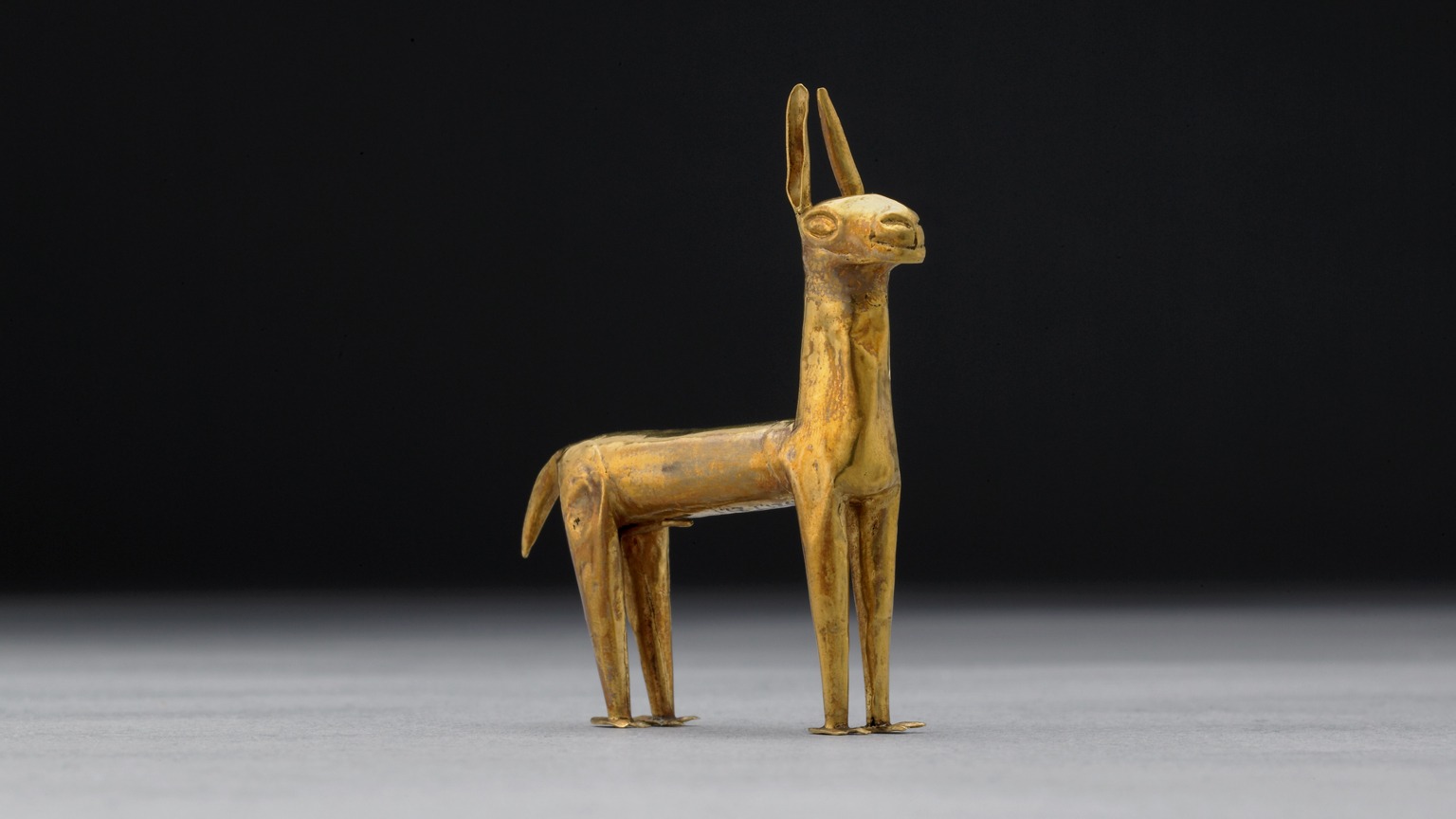
I decided to visit the British Museum at the weekend, to check out the exhibition Peru: a journey in time. Designed to mark the 200th anniversary of Peru’s independence, the exhibition explores the different societies who have lived in the area over the centuries. In a broadly chronological survey from around 2500 BC to the 1500s, it shows how several indigenous groups made their home in Peru and its varied landscapes, including the mountains, the jungle and the coast.
Like many people, I associate Peru with the Inca and the temple of Machu Picchu. The Inca were one of the last, largest and most successful tribes, but they were far from the only group to live and thrive in the area.
Around 16,000 BC, humans migrated to South America from the north, and established settlements in the Central Andes. As populations expanded and settled, people began to develop agricultural practices and create textiles and pottery. Approaching 1200 BC, the site of Chavin de Huantar began to serve as a destination for pilgrims. It remains one of Peru’s most important archaeological sites, and its mythology merges human, feline, bird and snake imagery, symbolising the earth, the sky and underground. The artefacts on display regarding this part of Peru’s history were fascinating, unusual and vivid.
The Paracas society emerged around 900 BC along the desert coast of Peru. When an individual from this society died, death rituals ensured their journey to the realm of their ancestors: they were folded up in funerary bundles and placed in collective tombs with offerings. There are striking items from this society in the exhibition, including a large mantle depicting beings holding severed heads.
The exhibition touches on the Nasca lines, which were created around 200 BC-650 AD. The Nasca created massive lines and drawings on the earth, known as geolyphs; they made these by removing the top, darker, layer of earth. These amazing symbols can only be seen in their entirety from the sky.
The Moche, a tribe active around 100-800 AD, were known as highly skilful potters. Their pots, which depict lifelike human faces, show us what people in this society really looked like, as opposed to the more abstract depictions of other societies. The pots on display here were some of my favourites of the whole exhibition: they seemed to be staring right at me, as if alive.
The Wari were active around 600-900 AD, and expanded to cover a large area. Their society involved strict religious rituals and urban planned cities. Between the 10th and 15th centuries, the coastal kingdom of Chimú was also hugely significant, with its capital, Chan Chan, the largest cosmopolitan city in South America at the time.
The Inca Empire emerged around 1400 AD in the central Andes, and covered a huge amount of territory, including parts of what are now Argentina, Bolivia, Ecuador and Colombia, as well as all of Peru. The heart of the empire was the capital, Cusco, and they established a network of negotiation and alliances, building a network of roads and connecting different communities and cultures. The stunning Machu Picchu was built in the fifteenth century, and there are impressive images and videos in the exhibition so you can imagine that you are there, exploring its terraced pyramids.
The Spanish conquest brutally repressed traditional ways of life and led to untold suffering and death. Luckily, many traditional practices and forms of knowledge lived on, and descendants of Peruvian peoples continue to keep these practices alive.