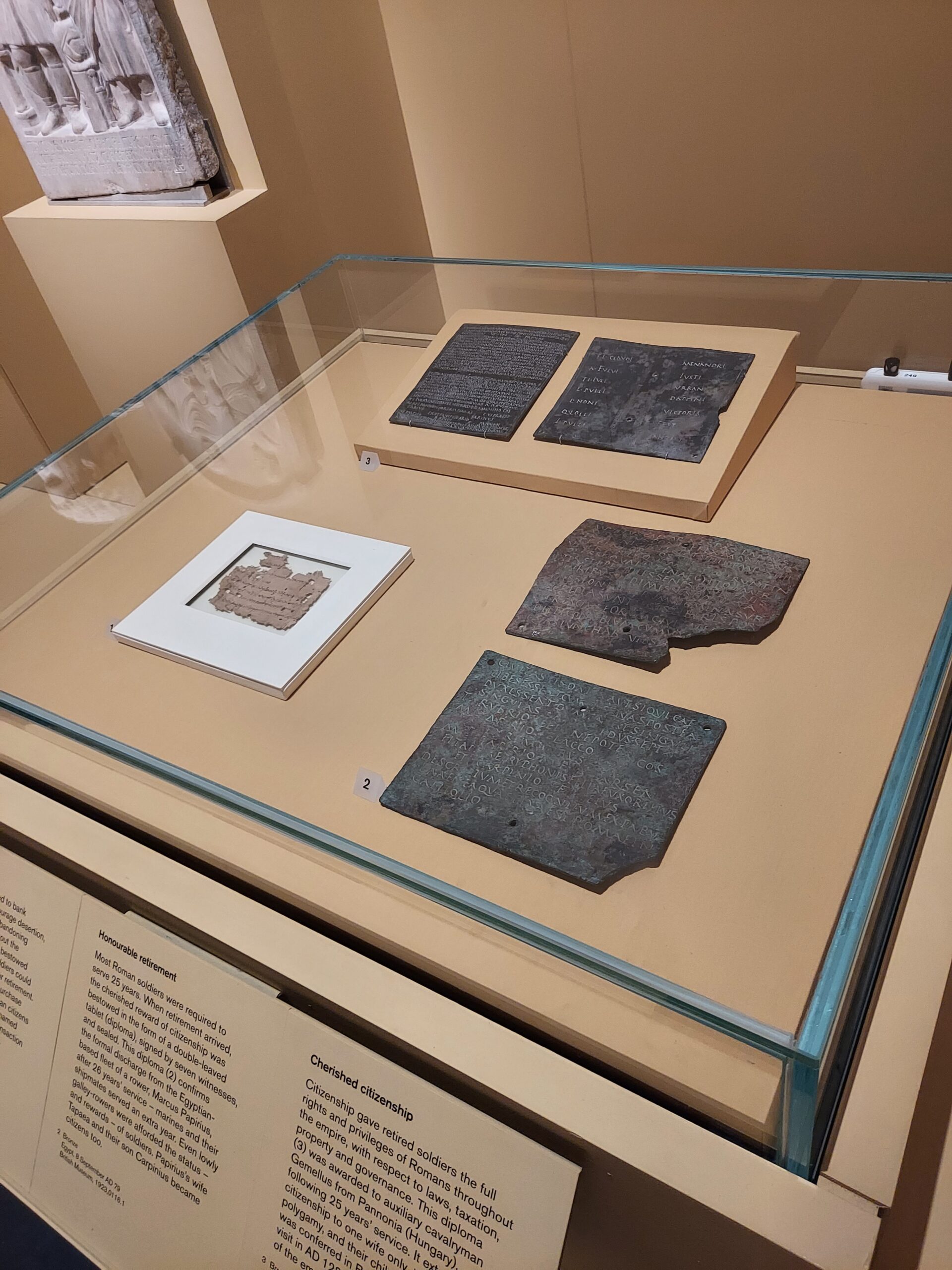
An exhibition I really wanted to see was Legion: life in the Roman army at the British Museum. I managed to visit over the Bank Holiday weekend.
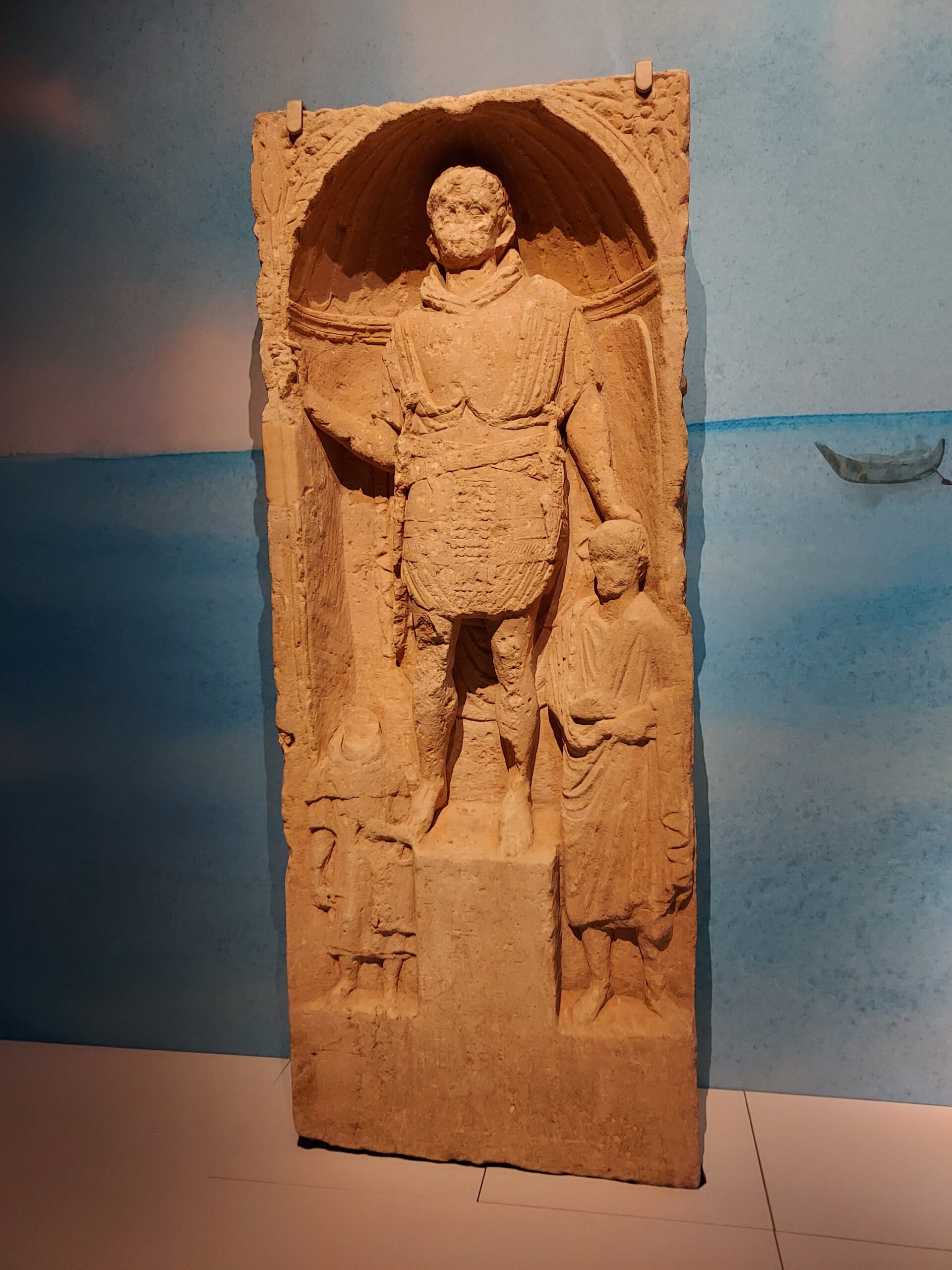
As the title suggests, the exhibition explores what life was like in the Roman army for the soldiers that served in it. Drawn from across the Empire, citizen soldiers were tempted by the prospect of monetary rewards on retirement, while non-citizens could look forward to citizenship for themselves and their families. However, lasting until retirement depended on surviving battles, illnesses and other hardships.
The exhibition focuses on one particular soldier, Claudius Terentianus, as an anchor throughout. We see his journey from enlistment through wars to eventual retirement. Rome was an empire bent on conquest, and required thousands of soldiers in order to conquer and maintain order throughout its territories. Civilians often viewed them with suspicion – the discovery of the skeletons of two soldiers in Canterbury suggests that they were murdered and buried in secret.

The Roman Empire spanned countries and continents, and this is apparent in the objects on display, which include letters written on papyri by soldiers based in Egypt and tablets found at Vindolanda fort near Hadrian’s wall. Some of the most common objects are gravestones, a stark reminder that many soldiers and their family members died of various illnesses. One section in the exhibition focuses on the games and toys families amused themselves with while living at forts and encampments.
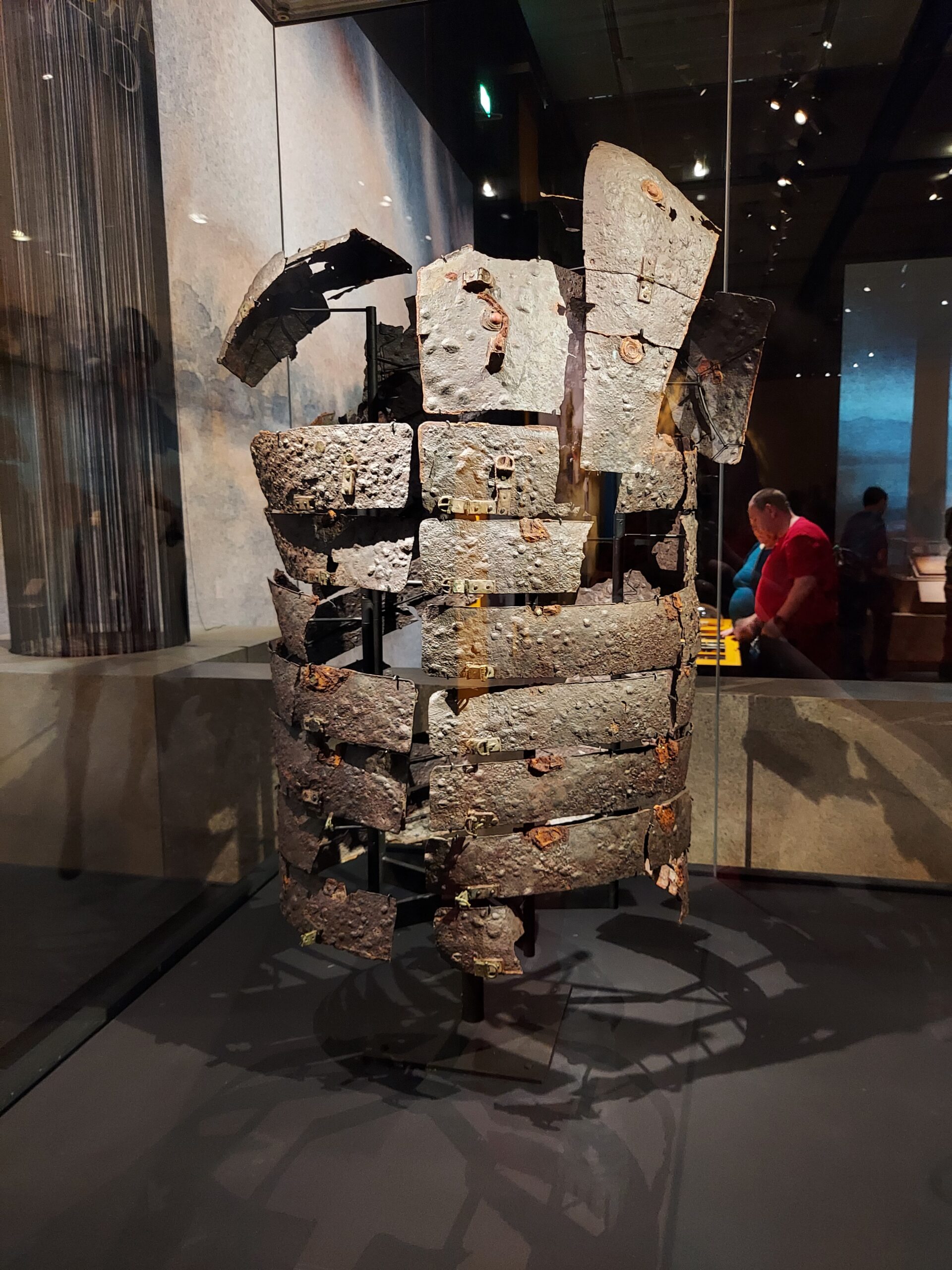
As is to be expected in an exhibition about soldiering, weapons and armour are prominent; one particularly impressive item is the only surviving legionary long shield. It’s incredible seeing this shield, which, owing to its prevalence in popular culture when it comes to the Romans, seems almost larger than life. One cuirass (a piece of torso-fitting armour) comes with a sad story: it was found on the battlefield in Lower Saxony after the Romans were resoundingly defeated by German warriors.
The exhibition is full of fascinating information, such as the structure of the Roman army, how one would go about becoming a soldier, and details of the various Emperors and the campaigns they waged. However, it is the human stories that speak to us the most. Terentianus detailing his troubles in a letter to his father; a Roman lady stationed in a fort sending an invitation to her friend; and most poignantly, a soldier killed by the Vesuvian eruption trying to help civilians escape from Herculaneum. His sword and dagger were with him, still sheathed, and are perfectly preserved.