Thomas Becket: murder and the making of a saint – British Museum

decorated casket
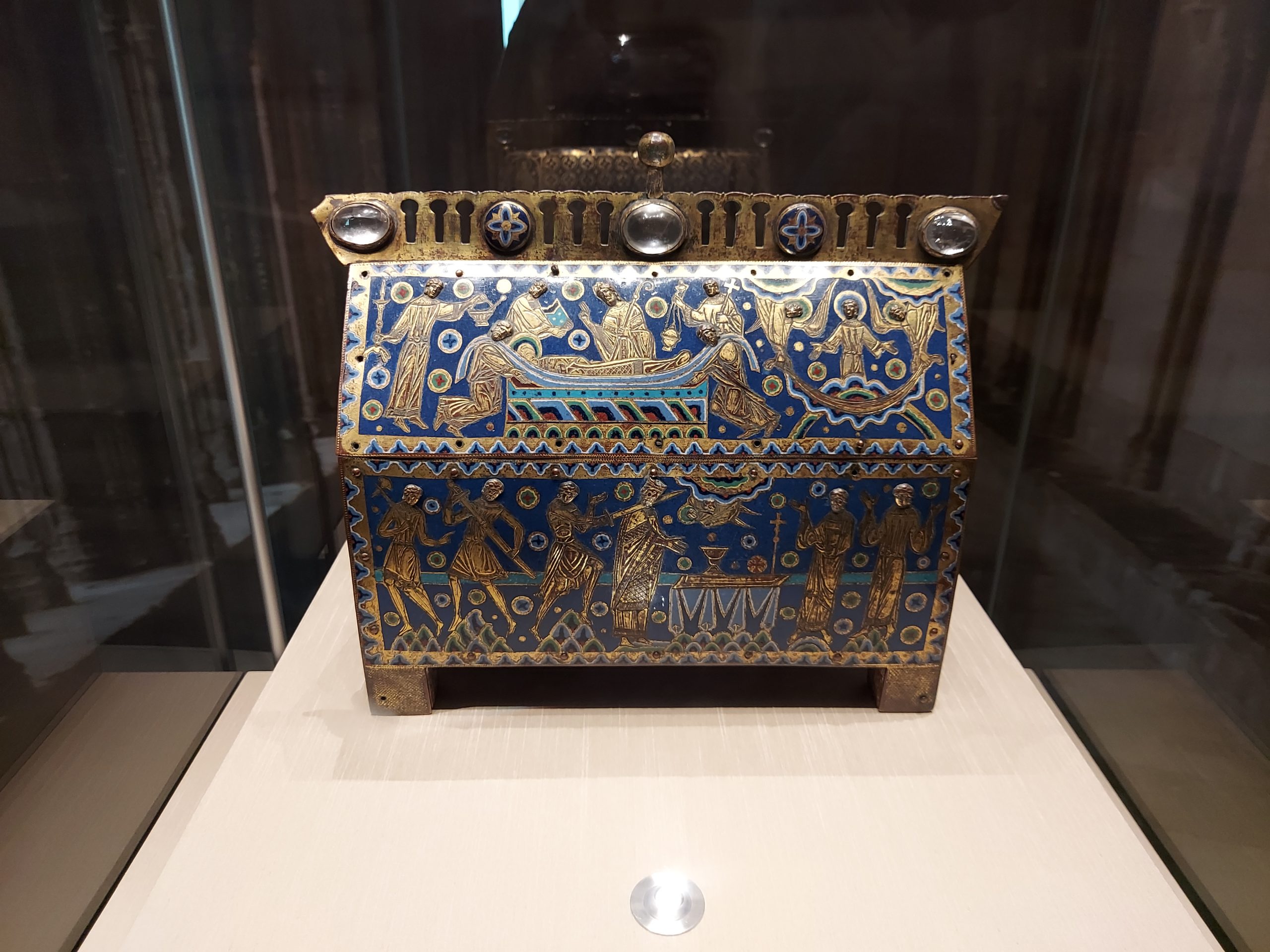
Reliquary casket showing the murder of Thomas Becket

While I was at the British Museum I also took the opportunity to visit the Becket exhibition. Thomas Becket: murder and the making of a saint looks at the life, death and legacy of this key medieval figure, with objects related to his life and later sainthood.Becket was born in London in 1120. Thanks to key contacts and his own ability, he worked his way up to the position of Chancellor, befriending King Henry II. Henry made him Archbishop of Canterbury despite the fact that he wasn’t a priest, intending him to retain his Chancellor role and essentially do what he told him. Thomas wasn’t having any of it though, rejecting the Chancellor role once he had become Archbishop, and repeatedly challenging the authority of the King over the church.

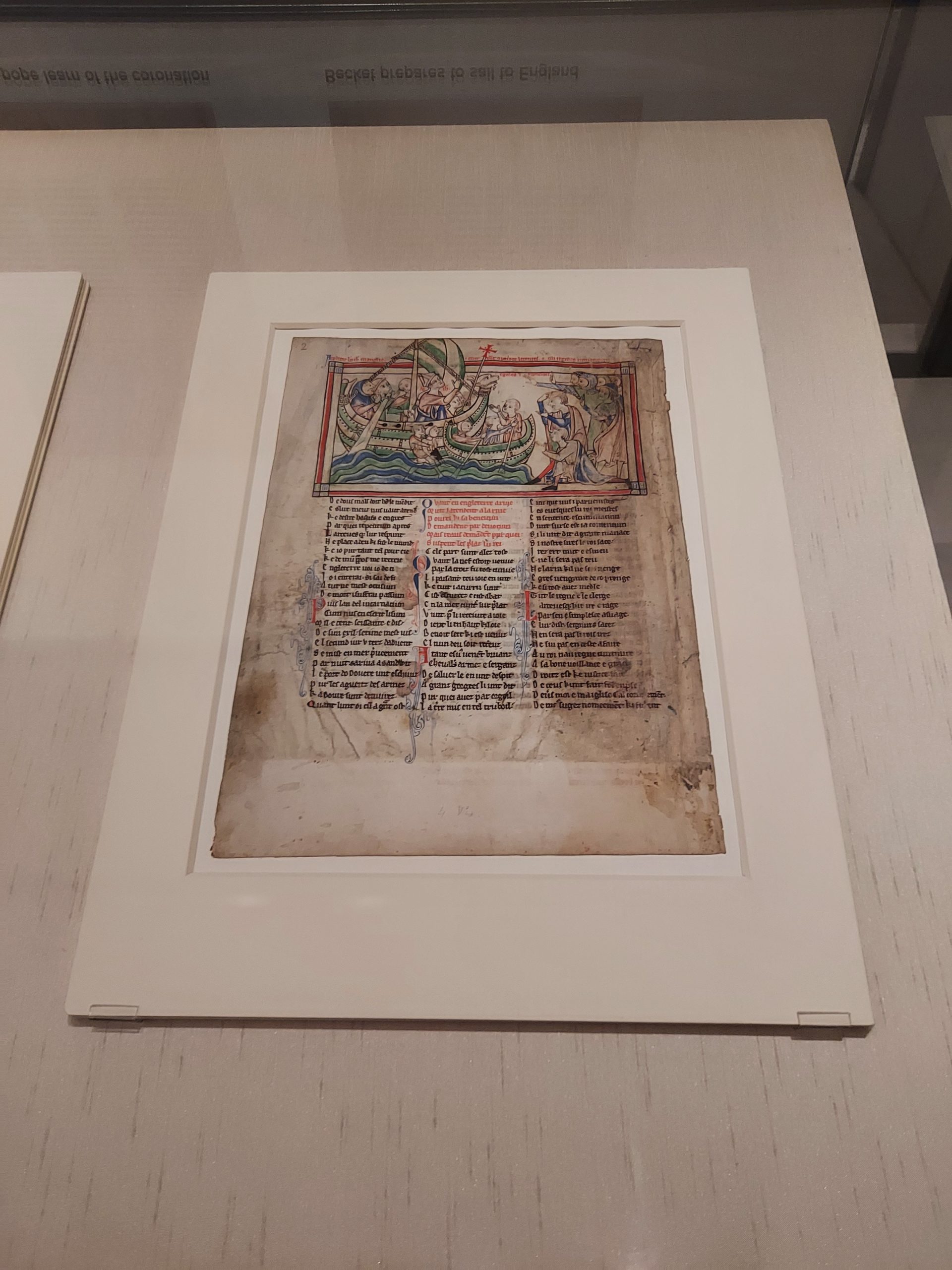
Eventually he fled to France, returning after excommunicating the bishops who had taken part in Henry’s son’s coronation. On 29 December 1170 he was murdered by four knights, who killed him in Canterbury Cathedral.
illuminated manuscript
Manuscript page showing Becket’s Channel journey

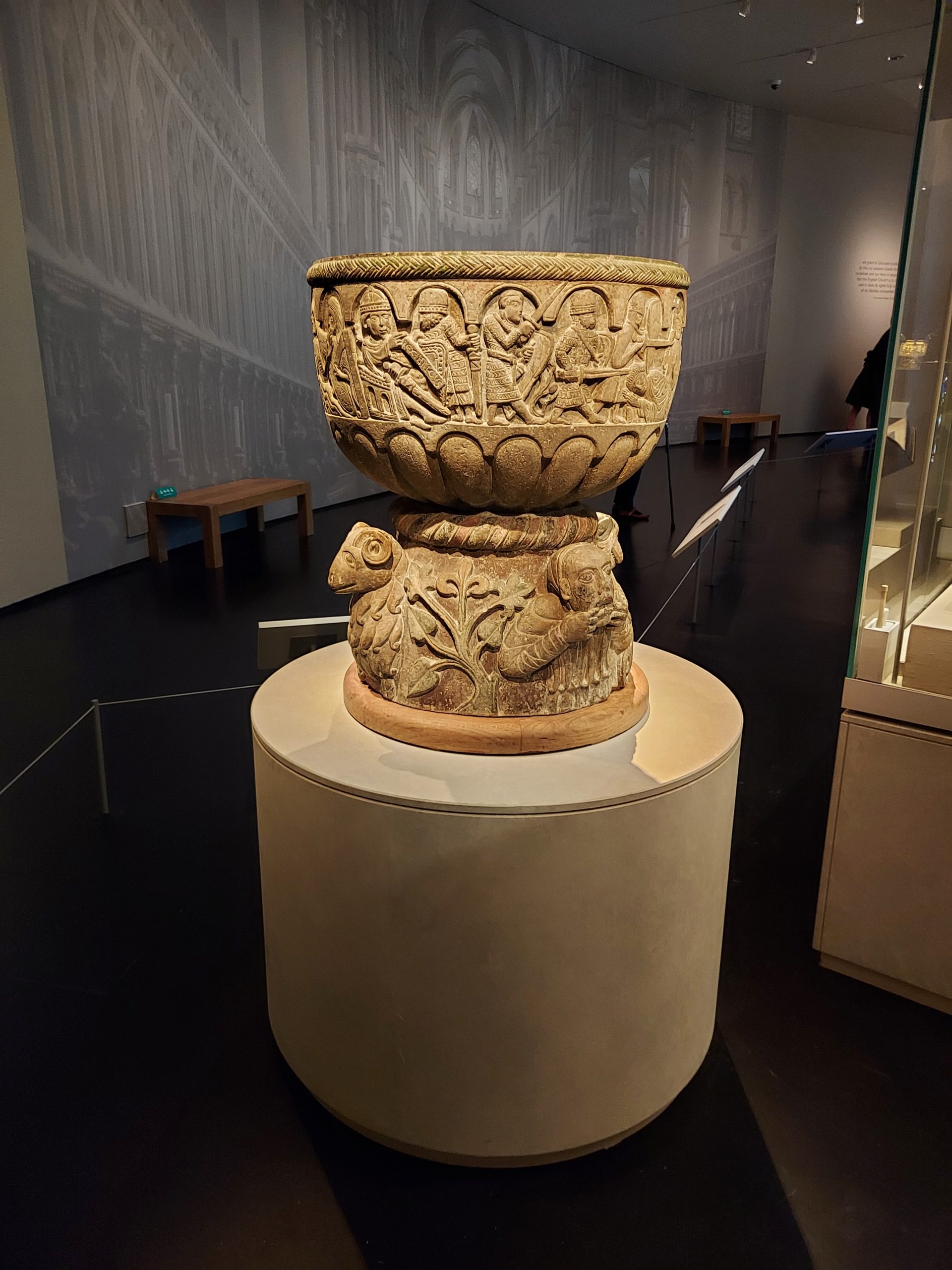
Becket’s death horrified Europe, and he was later made a saint, his shrine in Canterbury a place of pilgrimage. Without his death we wouldn’t have Chaucer’s Canterbury Tales, based around a group of pilgrims on a journey to Becket’s shrine. He became popular as far away as Sweden and South Italy, and his relics spread far and wide. Some of the relics are on display, including the stained glass windows from the shrine, showing all the miracles St Thomas supposedly performed.
stone font
Stone font from Sweden

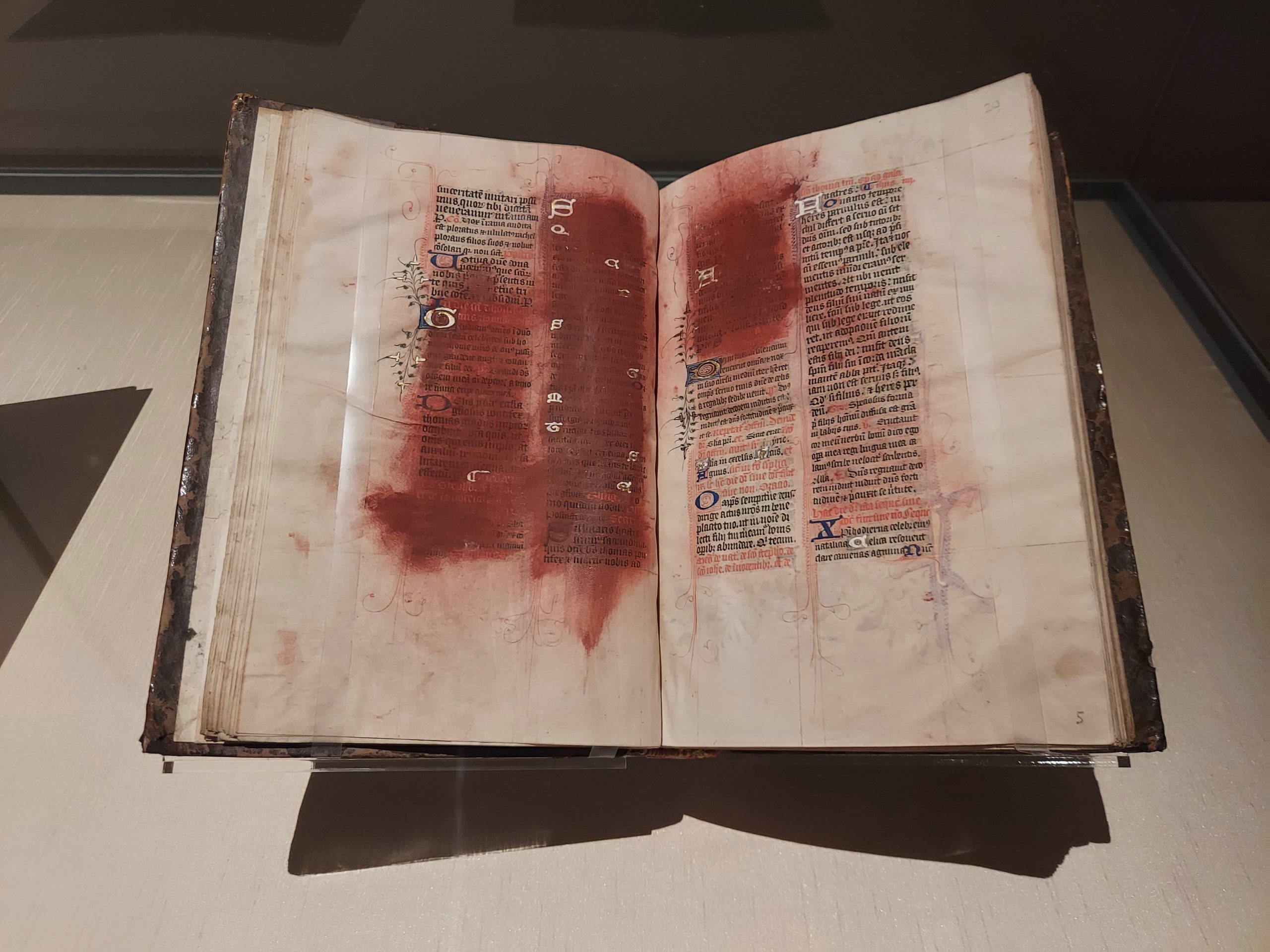
Becket’s shrine was destroyed during the reign of Henry VIII and veneration of the saint was banned. Historians see parallels between his treatment and the treatment of figures like Archbishop Cranmer and Thomas More – he represented a challenge to the authority of the monarch. Becket’s popularity still survived in Europe and, secretly, in England. In modern times, he remains one of the best known figures of the medieval period.
old book covered in red ink
Becket’s story has been obliterated by red ink in this book

I enjoyed this exhibition: I didn’t know much about Becket except his name and the manner of his death. I found I had a lot of respect for this figure who was prepared to challenge authority, even at the cost of his own safety.

Magna Carta: Law, Liberty, Legacy – British Library

Even if you’re not a history lover like me, you’d be hard pressed to have missed the publicity surrounding the 800th anniversary of Magna Carta this year. The British Library, naturally enough, have installed an exhibition celebrating this document and its impact on the world, entitled Magna Carta: Law, Liberty, Legacy.

The exhibition explores how the Magna Carta came about, the context in which it was designed, and its immediate impact, as well as looking at the ways in which it has inspired campaigners throughout the centuries and impacted on political events. Linked to this, it examines how it has been exploited and perceived by the media and by people in general.

The treaty came about after King John, who had lost much territory in Northern France, imposed huge taxes on his wealthy subjects. The barons, angry, forced him into a negotiation, resulting in the “Carta de Ronemede”. Though much of it is now obsolete – one clause, for instance, covered fishing in the Thames – it still had a significant impact, as the exhibition shows. In addition, clauses 39 and 40 – guaranteeing the right to a fair and speedy trial – are still in force today.

The exhibition was very busy when I visited, but that was probably my own fault as I chose to go at the weekend.  I did find that it was incredibly interesting and much more thorough than I had imagined. Partly this was because of the quality of the artefacts on display: two of the four original Magna Carta documents from 1215, plus Jefferson’s handwritten copy of the Declaration of Independence and an original copy of the US Bill of Rights, which both owe a debt to the Magna Carta. Statues, paintings and an assortment of manuscripts also added to the exhibition.

British judge Lord Bingham wrote that: “The significance of Magna Carta lay not only in what it actually said, but in what later generations claimed and believed it has said.” This exhibition brilliantly demonstrates this.