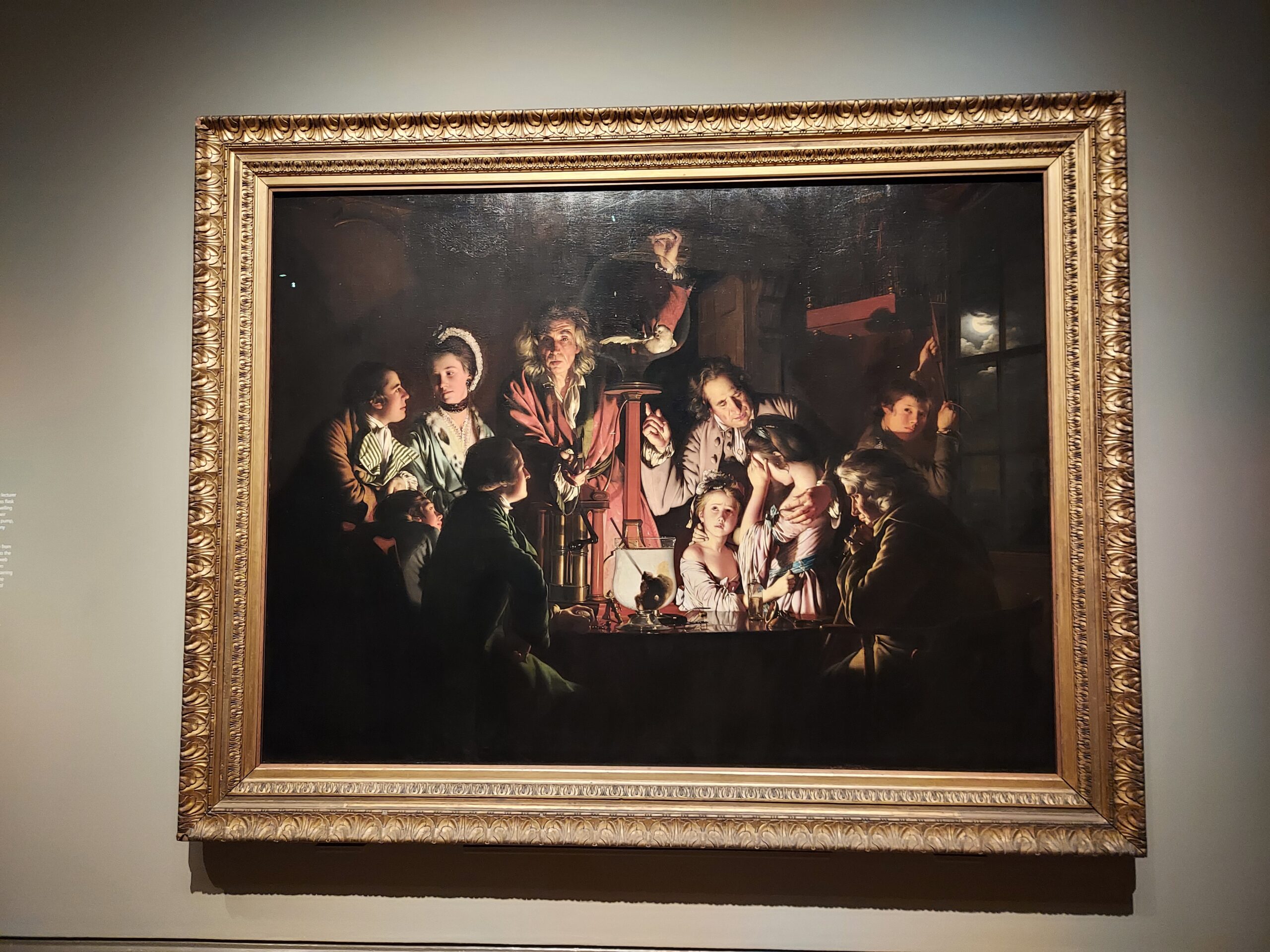
Wright of Derby: From the Shadows is a small but powerful exhibition at the National Gallery. It is the first major exhibition to look at the British artist’s ‘candlelight’ paintings, shedding new light on them – no pun intended.
Wright is most famous for his scientific paintings and Enlightenment associations. This exhibition reveals a gothic aspect to his work: a hint of the Romantic age that would succeed the Enlightenment. Perhaps they are not as different as you might think: both eras inspire wide-eyed wonder.
The exhibition explored the years between 1880 and 1914 when artists such as Paul Cézanne, Vincent van Gogh and Paul Gauguin pushed the boundaries of art and inspired new generations.
It featured almost one hundred works by artists such as Klimt, Munch, Matisse and Kandinsky, loaned by the likes of the New York Museum of Modern Art, the Musée d’Orsay in Paris, and the Museu Nacional d’Art de Catalunya in Barcelona.
The sheer variety of art on display was impressive and really showed just how creative and original the artists of the period were. The exhibition showed how they experimented and pushed the boundaries of art, and it was fascinating to see.
I visited the Raphael exhibition at the National Gallery, shortly before it closed. I wasn’t going to go, but realised the Gallery was open late on a Friday and I thought I would take the opportunity.
I didn’t know much about Raphael (1483-1520) – except that he was a key figure in the Italian Renaissance (and he was a turtle). In fact, most of what I knew about him was what he was not – having a longstanding interest in the Pre-Raphaelites.
This exhibition is the first outside Italy to encompass his entire career. As well as a painter, Raphael was a printmaker, draughtsman, poet, architect and archeologist – he was one of the first people to recognise the importance of Italy’s Roman heritage.
Raphael had a turbulent early life, losing his mother at 8 and his father at 11. He was brought up by his uncle, a priest, which perhaps goes some way to explain the high proportion of his works with a religious bent, although I suppose most works of art were religious at this time. He painted altarpieces and other devotional scenes, including numerous Madonnas. I was shocked to read that he died young – suddenly, of a fever, at the age of 37.
Highlights for me included his portraiture – images of friends and patrons mostly found at the end of the exhibition. These were full of life and really captured the character of the sitter – I wish more of the works had been like this rather than religious paintings. However, I did like the dragon in Raphael’s St George scene, and the near-lifesize reproduction of his fresco The School of Athens, which centres the philosophers Plato and Aristotle.
The National Gallery must be one of the most well-known and popular art galleries in the world, standing firmly in the centre of London, looking out over Trafalgar Square. I’ve visited several times over the years, mainly for special exhibitions, but recently decided to go and explore the whole thing.
History
The beginnings of the National Gallery can be traced back to the early nineteenth century, when the House of Commons agreed, in 1824, to purchase the collection of the banker John Julius Angerstein. Intended to form the core of a new collection of art for the nation, the pictures were first displayed at Angerstein’s house on Pall Mall while a building was constructed to house them. Initial administration of the Gallery was disorganised, but following a government enquiry a new post of Director was created, to shape the collection and manage the Gallery.
Trafalgar Square was decided upon as the site of the new gallery, being right in the centre of London. Architect William Wilkins was hired to construct it, using many of the construction methods of the King’s Mews, which originally occupied the site. The artist and collector Sir George Beaumont promised to donate his collection of pictures, and they took their place alongside Angerstein’s until they could all be moved to the new building. At this time the Gallery had no formal collection policy, with pictures being acquired owing to the personal tastes of the Trustees. This began to change when the administration was reformed, and the new Director travelled in Europe to purchase works for the Gallery. In 1871, many paintings were purchased from the estate of the late Prime Minister, Sir Robert Peel.
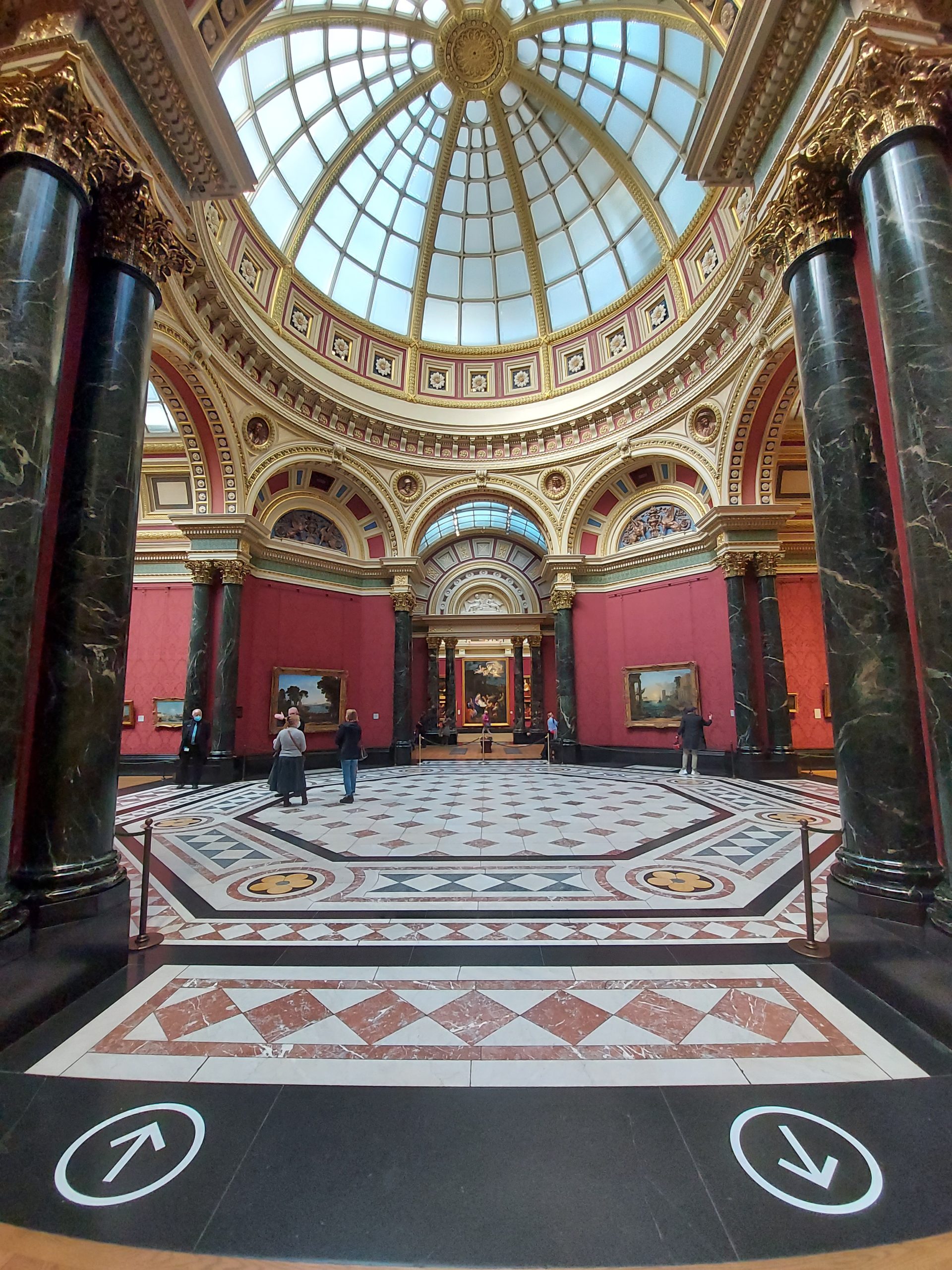
Wilkins’ building had often been criticised, and in 1869 the architect E. M. Barry was asked to submit designs for a new building. However, the original building was retained, albeit with a new wing and an impressive dome being constructed. A few decades later, most of the British collection was moved to the new gallery founded by wealthy industrialist Henry Tate on the banks of the Thames, freeing up more space for European art. Much later – in 1991 – the Sainsbury Wing was constructed, opening in 1991 and providing the National Gallery with even more space.
My Visit
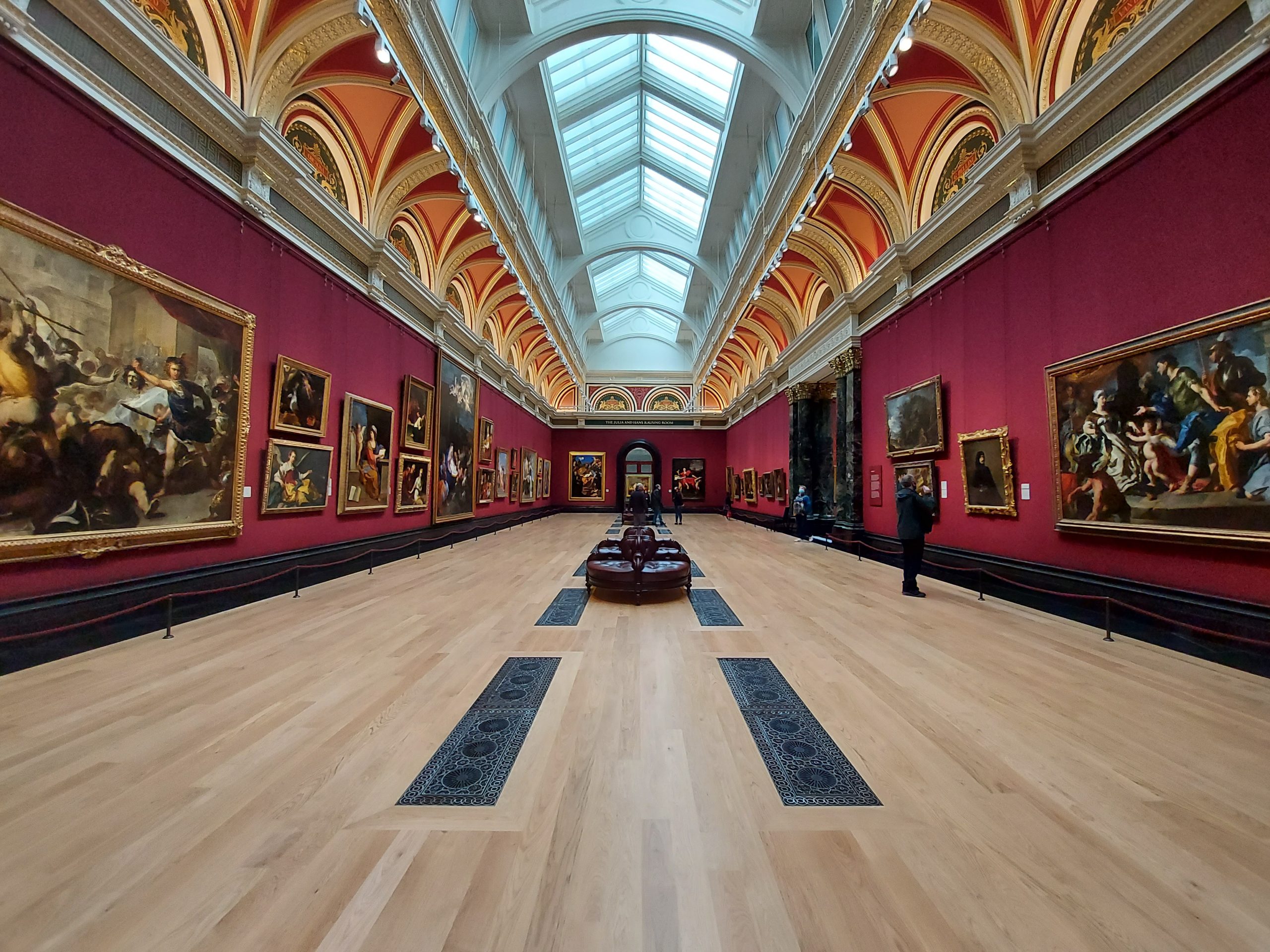
Normally, the Gallery is free to explore as you wish (except for special exhibitions), but in these Covid times, you are required to book a time in advance and follow specific one-way routes around the galleries. This means that it’s impossible to see everything on one visit (I made mine over a couple of days), but honestly, for me, the sheer peacefulness of the galleries at this time made it all worthwhile. I was sometimes the only person in a particular gallery or room – makes a change from the crowds usually jostling to view the paintings. I’m so glad I was able to take advantage of the current situation to experience the National Gallery when it’s quiet.
The Gallery’s rooms are divided into four main sections.
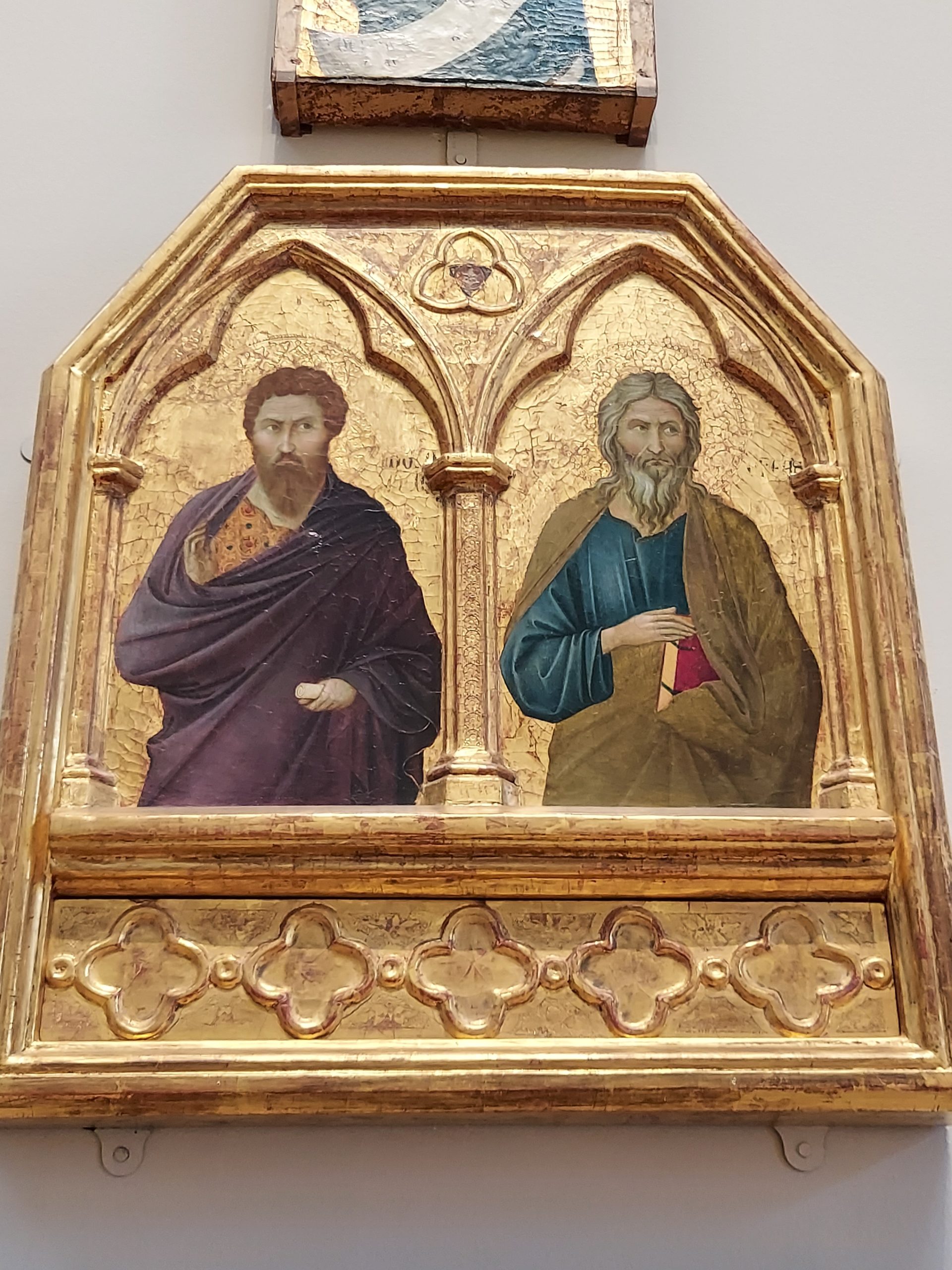
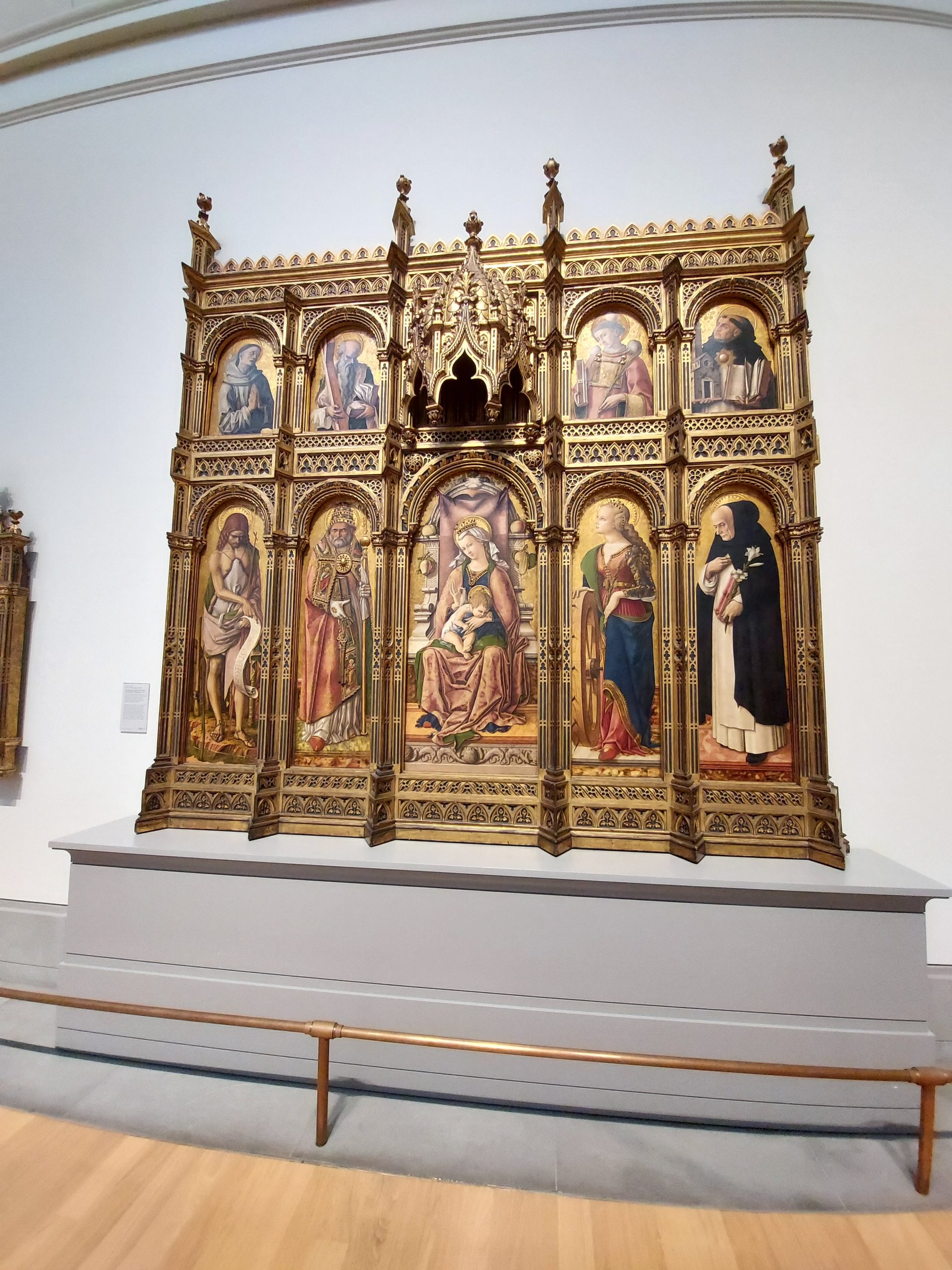
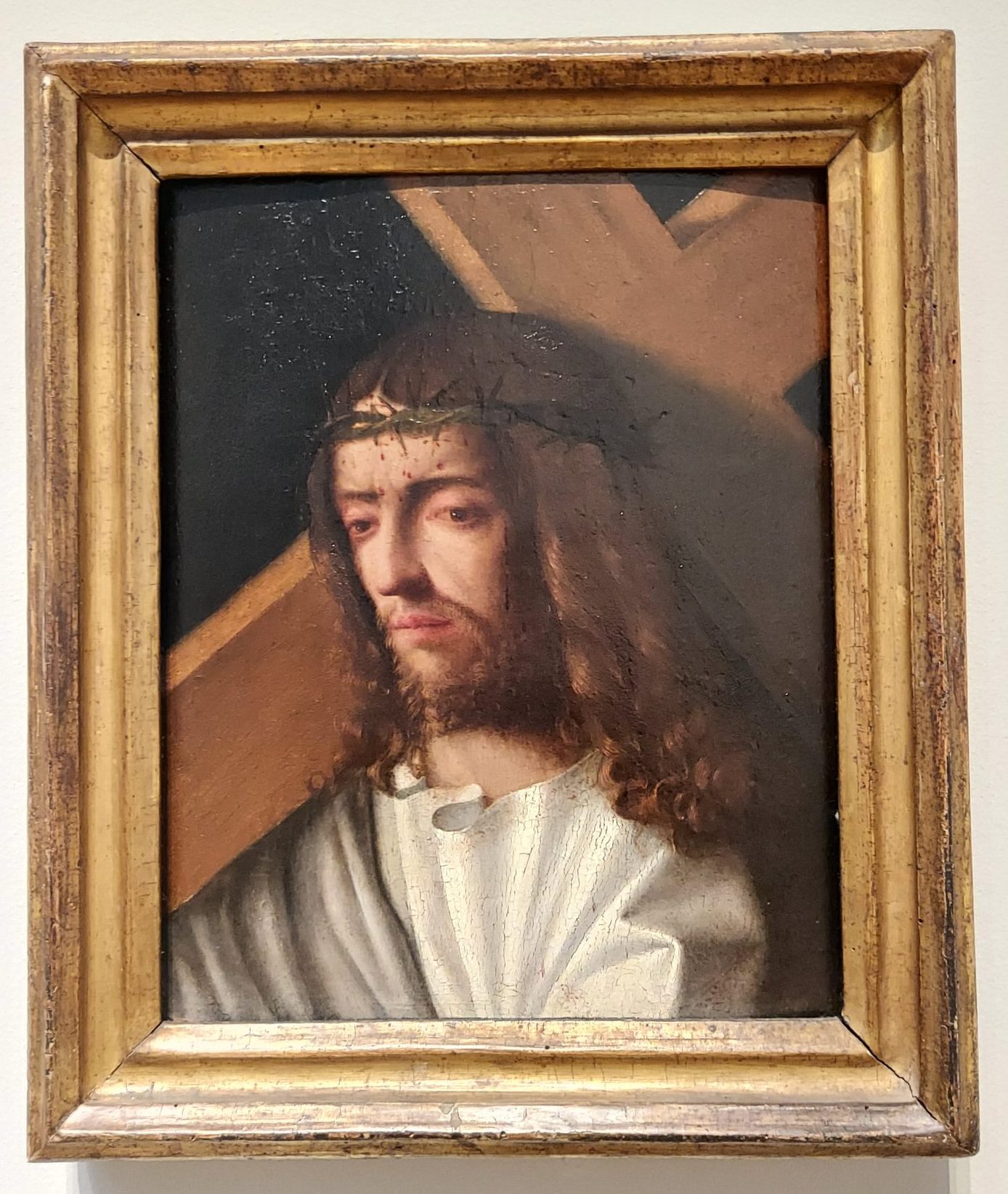
1200-1500 This section focuses on medieval artists such as Bellini, van Eyck, Leonardo, Piero and Raphael. This era of art is not my favourite, but there were some pretty elaborate triptyches and ornate decorations. A picture of Saints Bartholomew and Andrew made me laugh, as they look like they’re really pissed off with each other, but a picture of Jesus carrying the cross I actually found quite moving.
Saint Bartholomew and Saint Andrew
Carlo Crivelli, The Virgin and Child with Saints, 1476
Italian, Venetian, Christ Carrying the Cross, about 1500
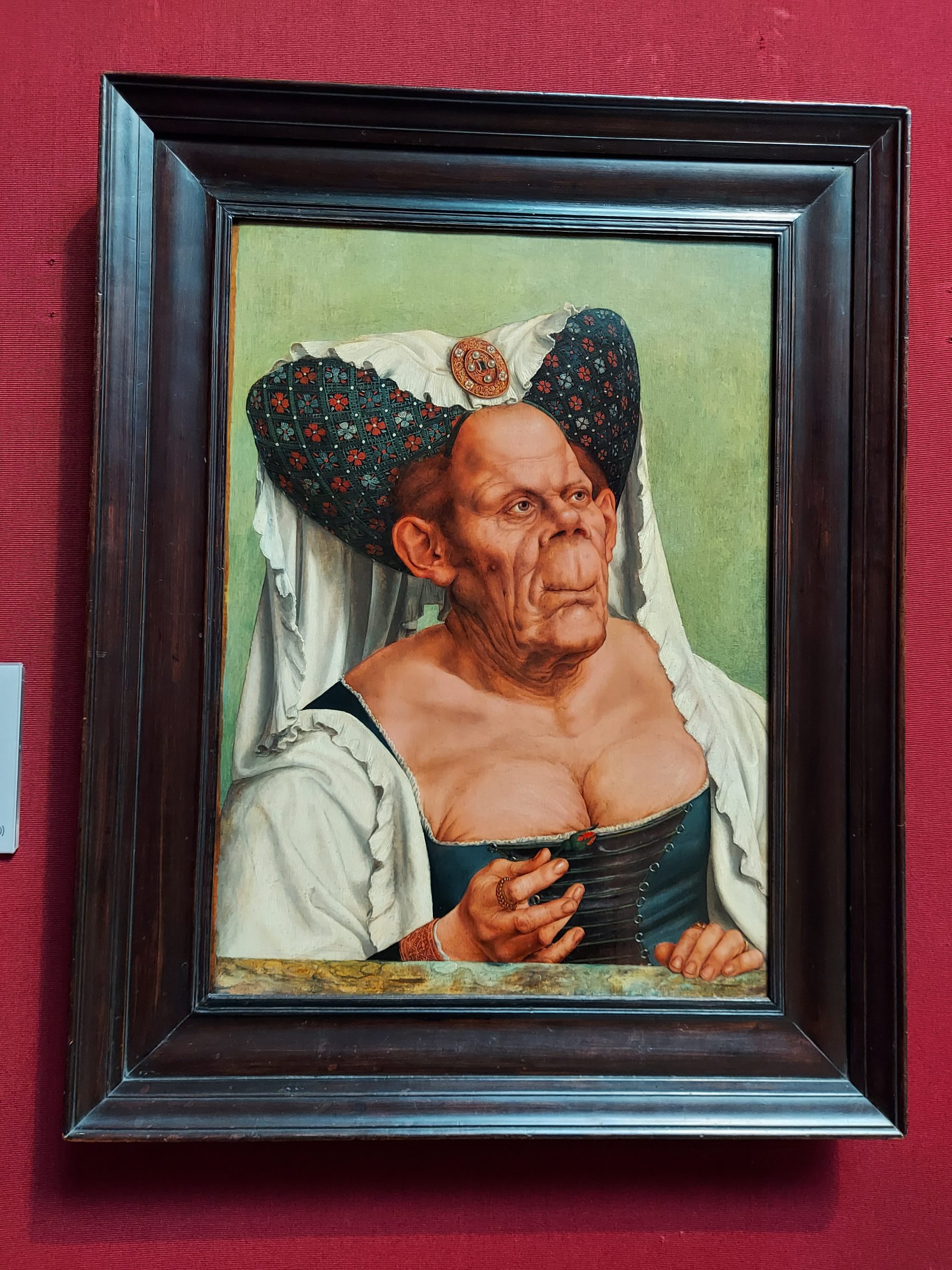
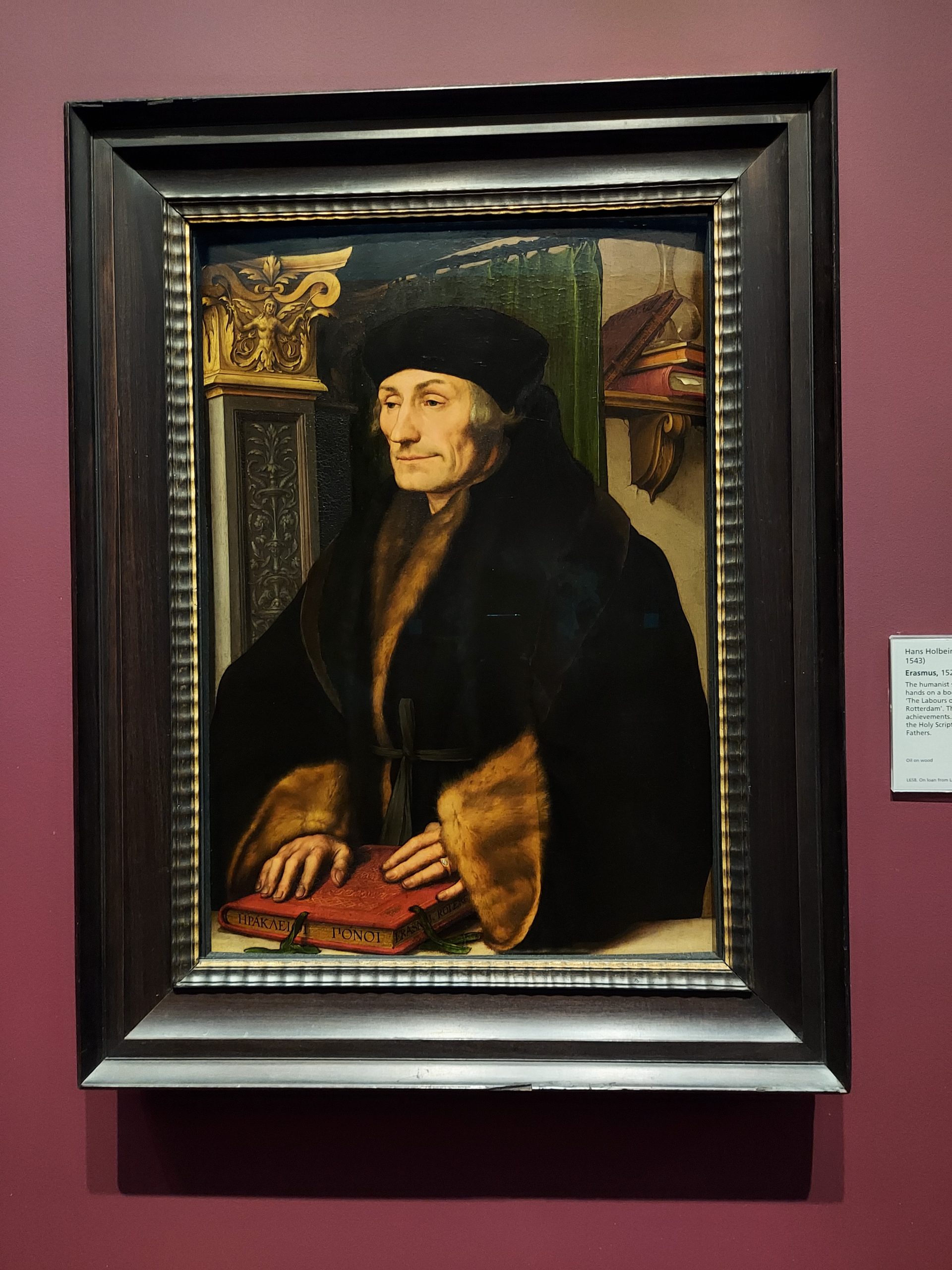
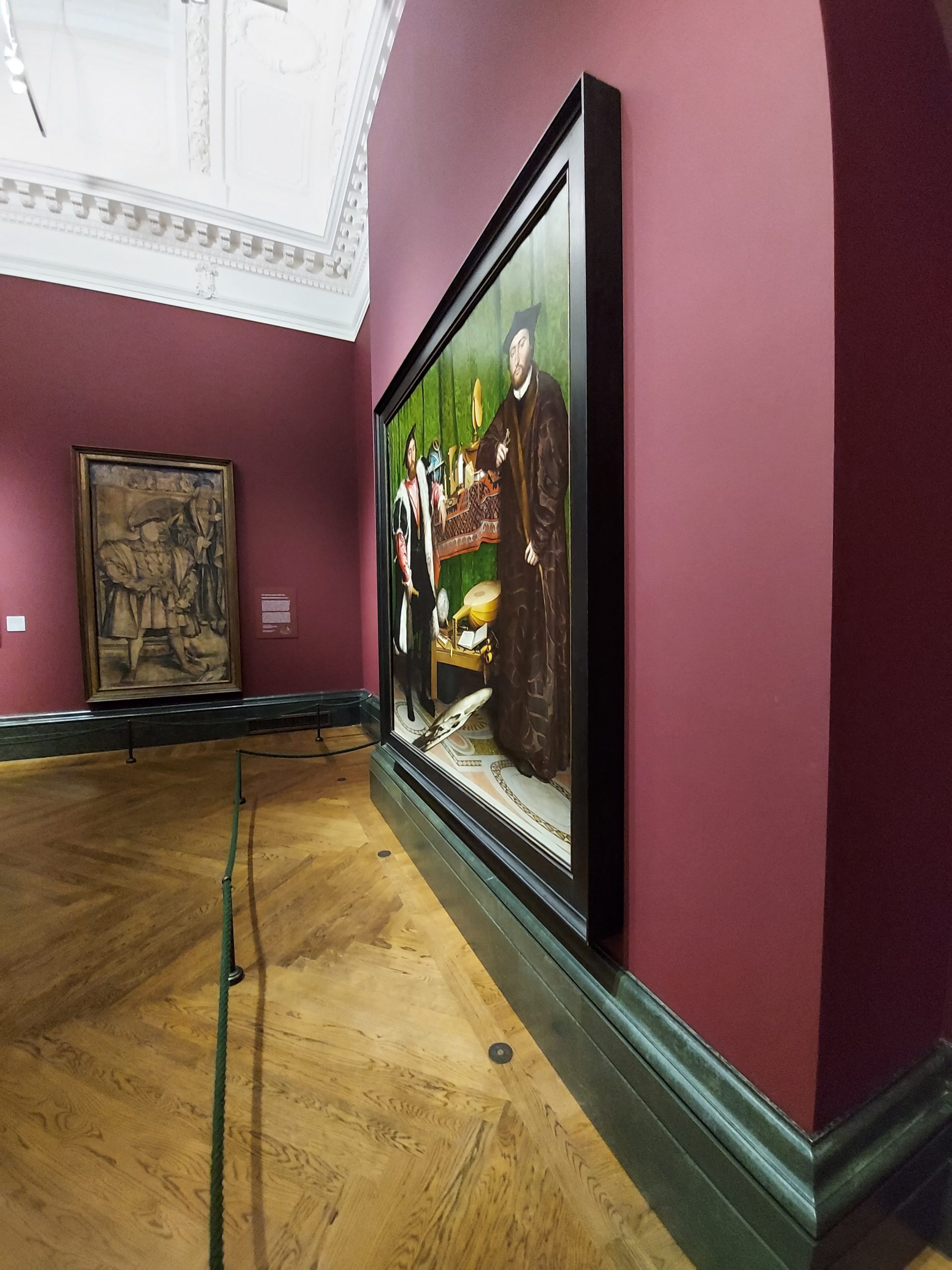
1500-1600 This section is focused on Renaissance art, featuring the likes of Titian, Holbein, Bronzino and Massys. I do like the Holbeins that are currently displayed, and I have a special fondness for the painting of the ‘Ugly Duchess’ since I read that it inspired John Tenniel’s illustrations of the Duchess in Alice’s Adventures in Wonderland.
Quinten Massys, An Old Woman (‘The Ugly Duchess’), c. 1513
Hans Holbein the Younger, Erasmus, 1523
Hans Holbein The Younger, The Ambassadors, 1533
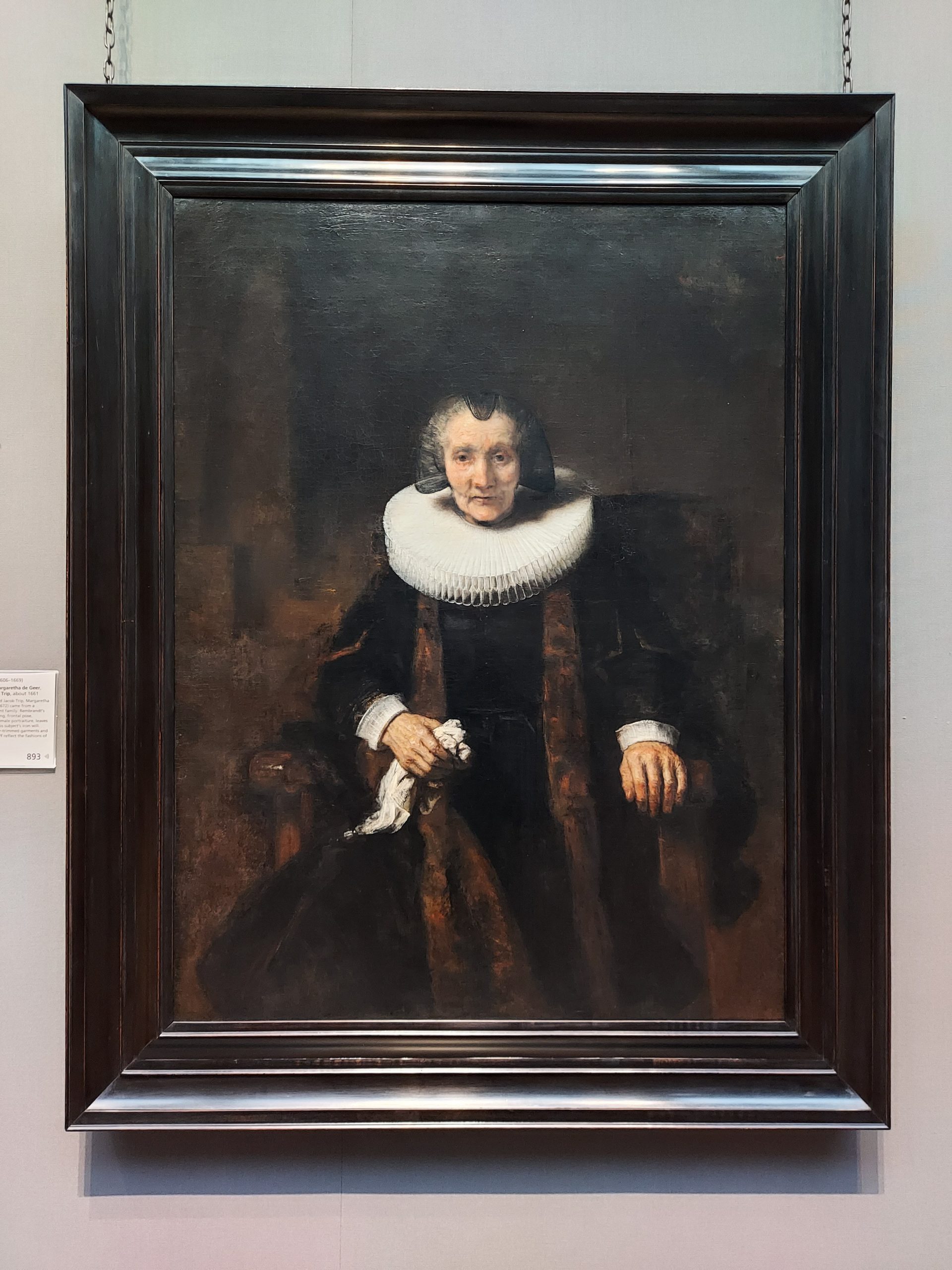
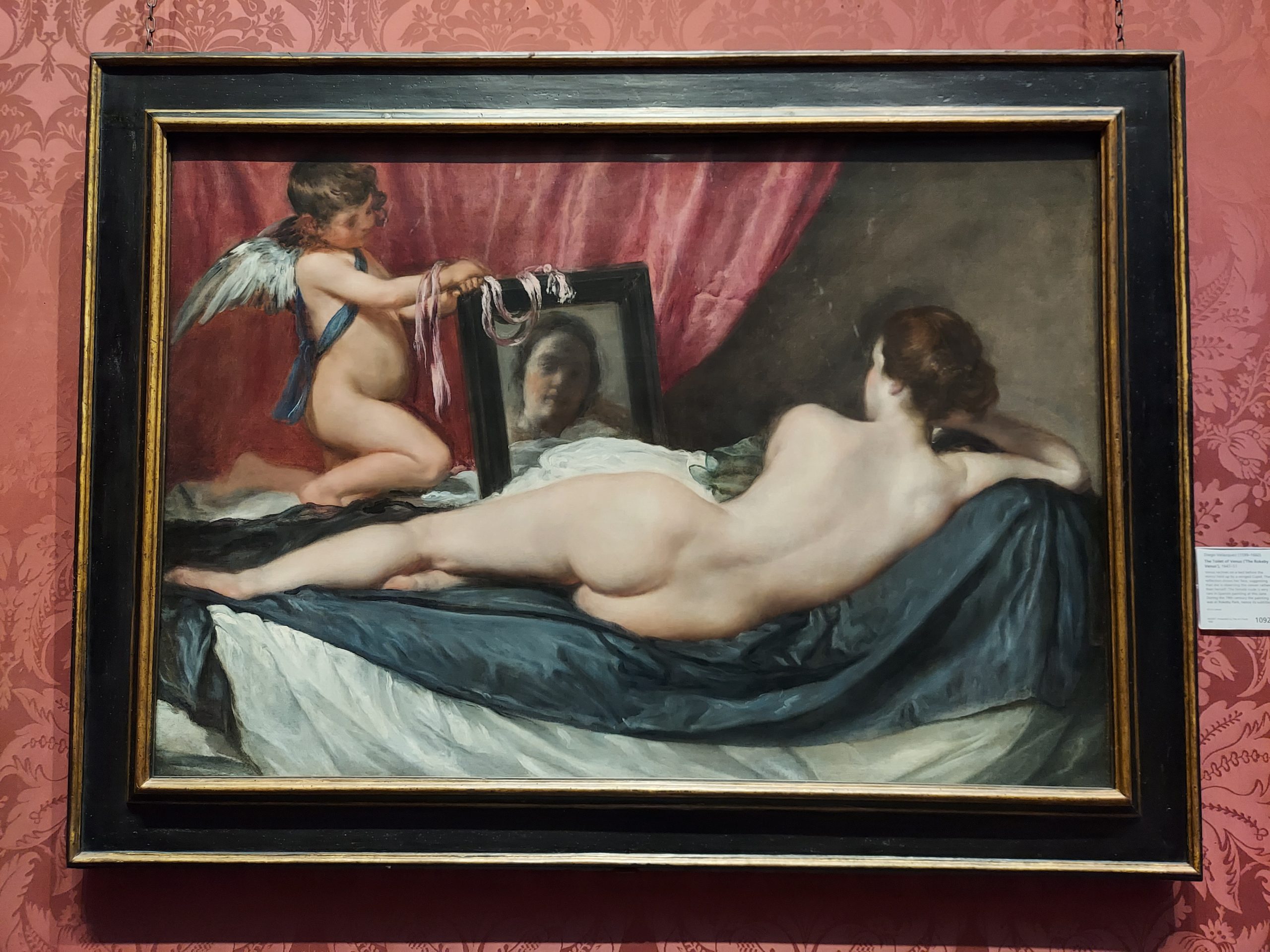
1600-1700 This section features the likes of Vermeer, Velasquez, Caravaggio and van Dyck. It’s not really my favourite, but there were some interesting pictures, including a Rembrandt.
Rembrandt, Margaretha de Geer, c. 1661
Diego Velázquez, ‘The Toilet of Venus (‘The Rokeby Venus’)’, 1647-51
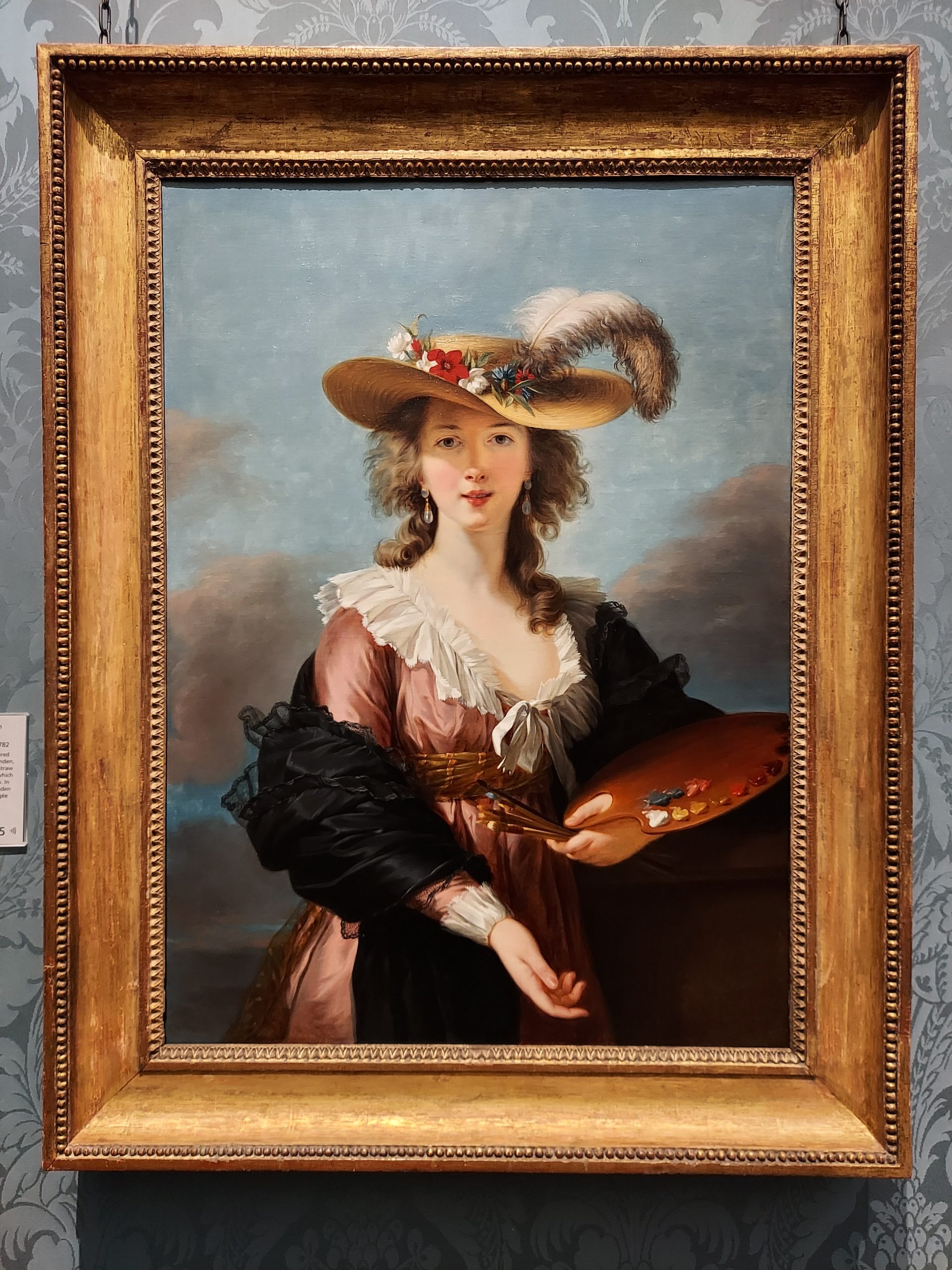
1700-1930 This final section covered a more wide-ranging period and was probably my favourite. Featuring the likes of Turner, Stubbs, Monet, van Gogh and Seurat, I was impressed with the variety. The section began with some eighteenth-century portraits and landscapes.
Élisabeth Louise Vigée Le Brun, Self Portrait in a Straw Hat, after 1782
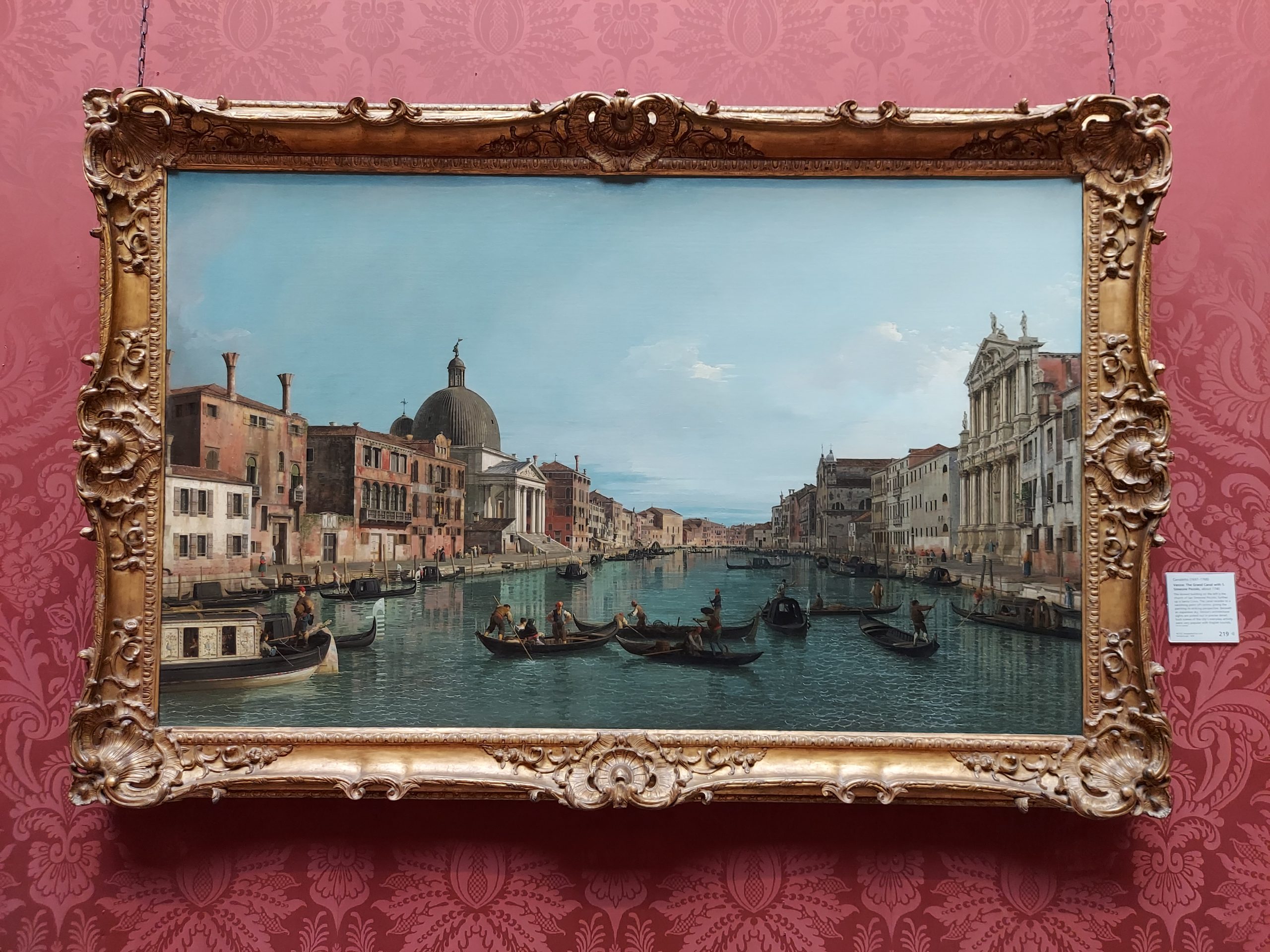
Canaletto, Grand Canal: Looking South-West, c. 1738
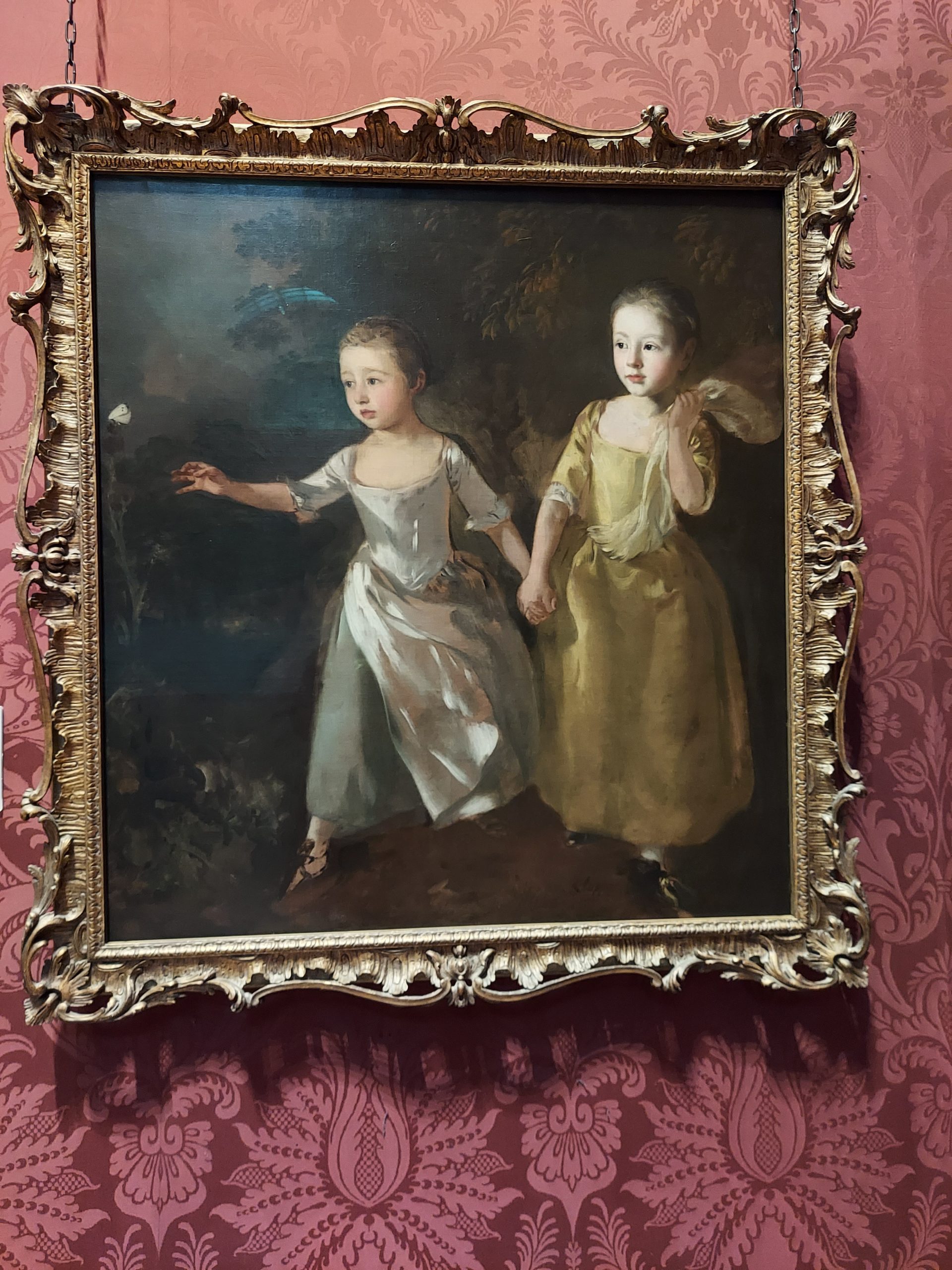
Thomas Gainsborough, The Painter’s Daughters Chasing a Butterfly, 1756
Then moved on to the nineteenth century with some dramatic scenes and landscapes.
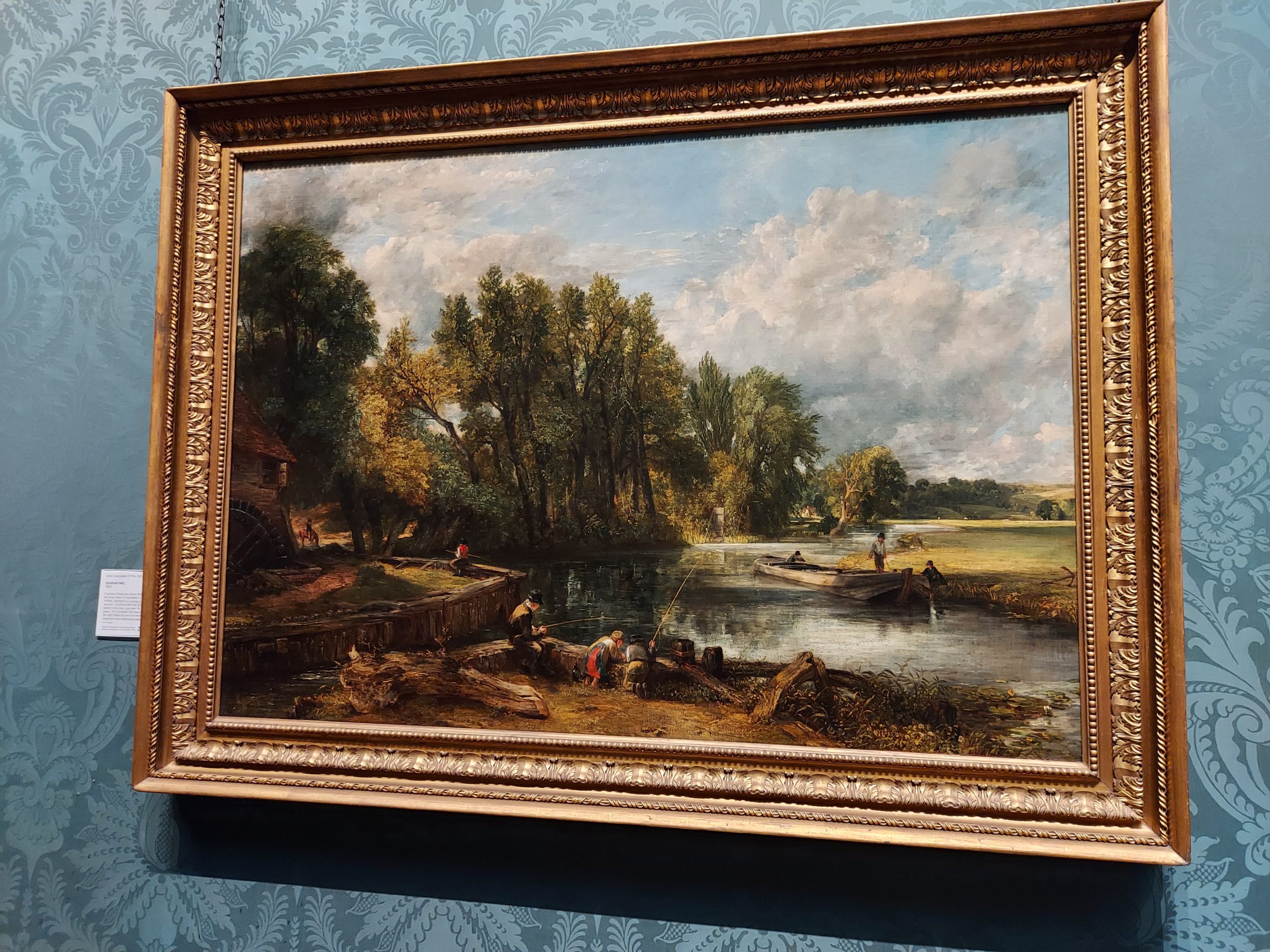
John Constable, Stratford Mill, 1820
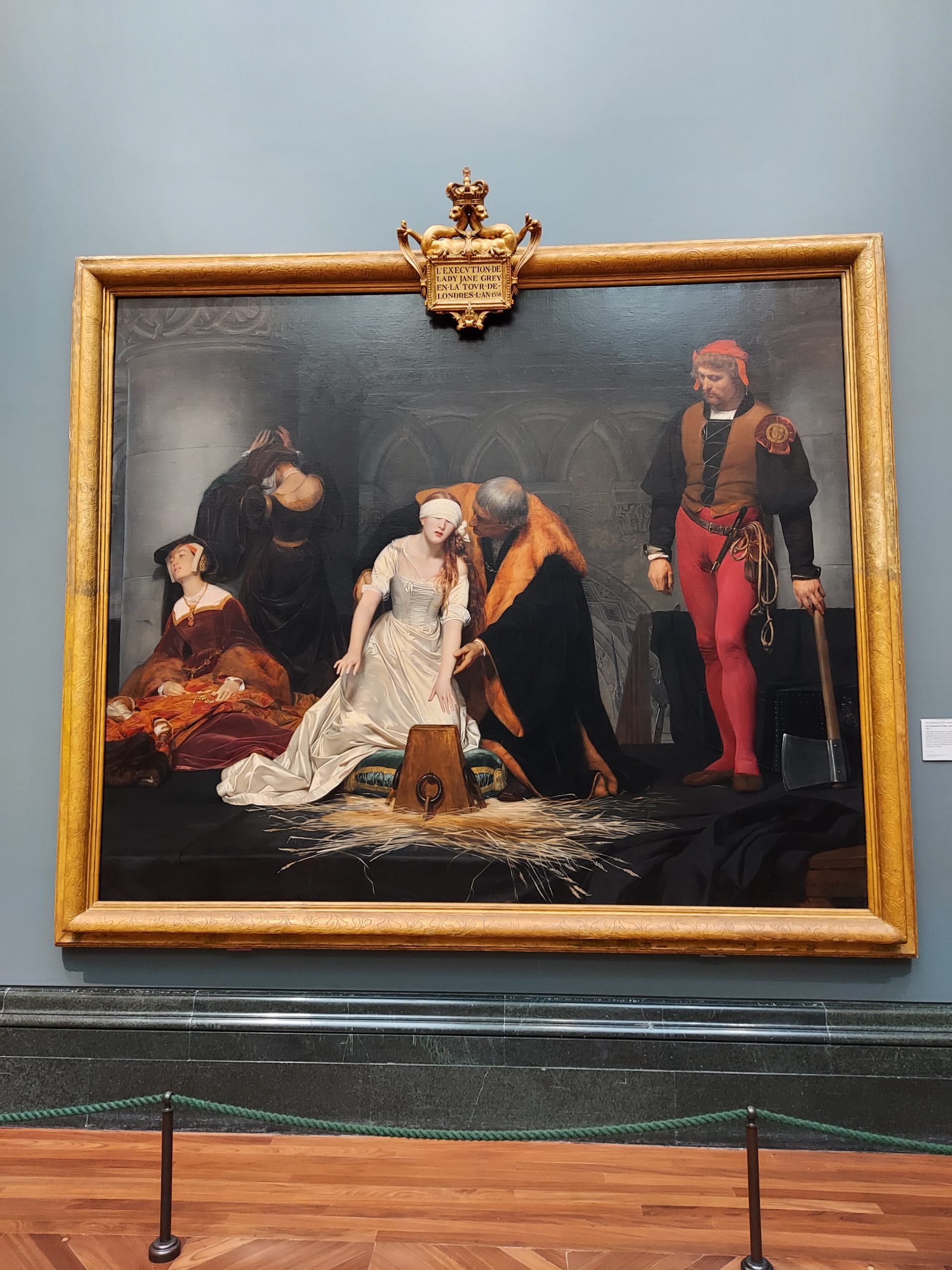
Paul Delaroche, The Execution of Lady Jane Grey, 1833
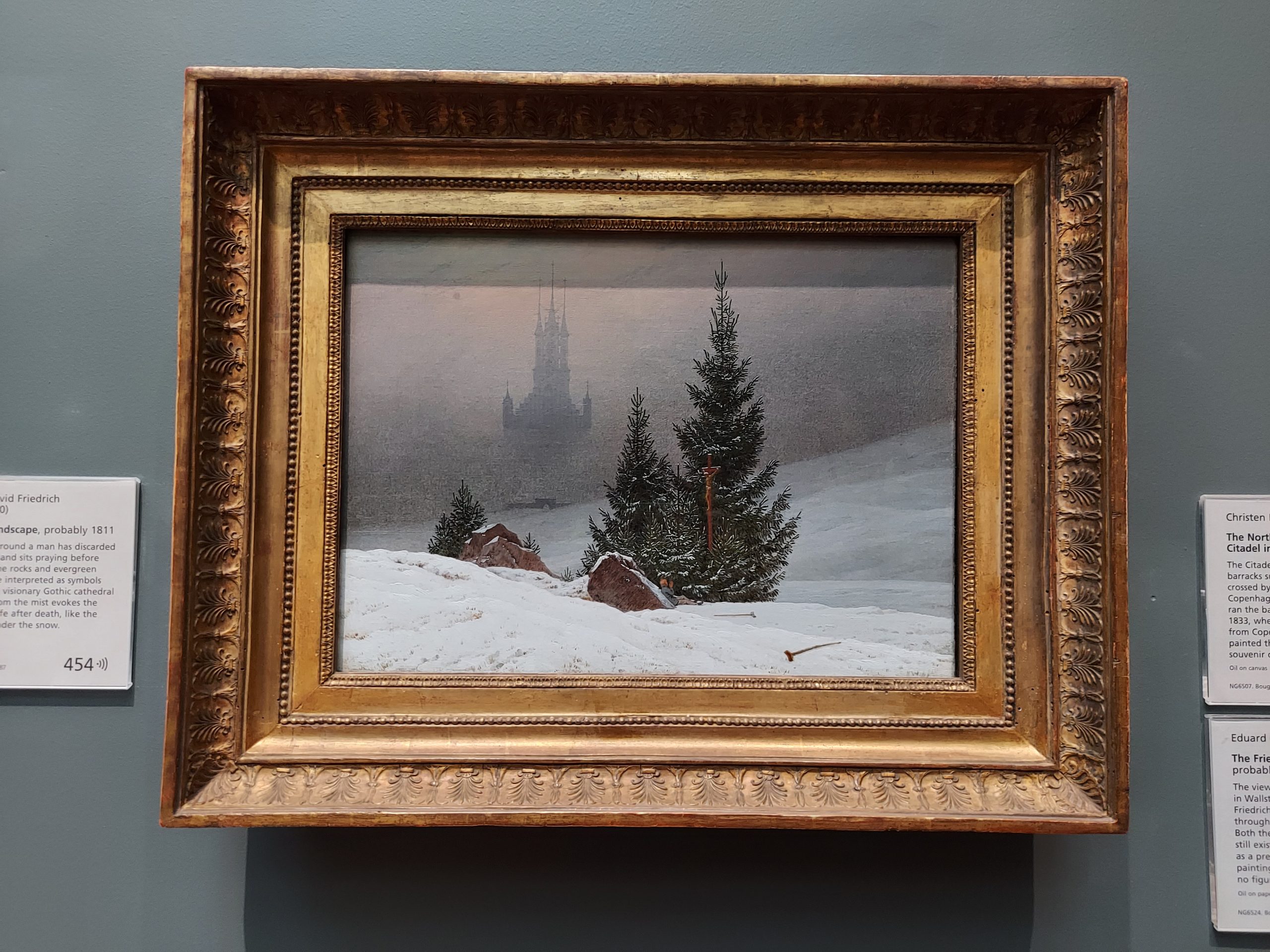
Caspar David Friedrich, Winter Landscape, 1811
The final section looked at the new artistic styles emerging in the later nineteenth century.
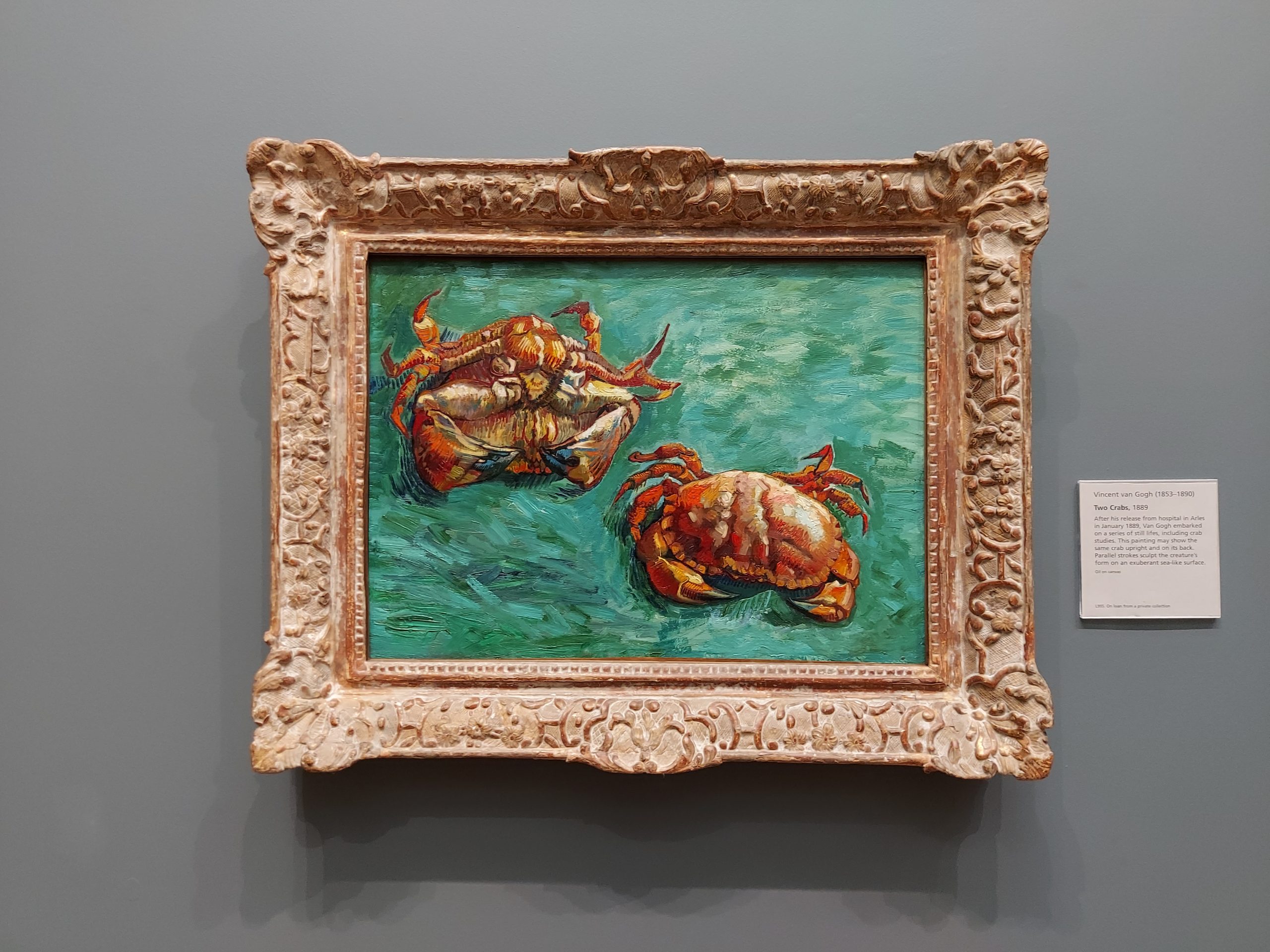
Vincent Van Gogh, Two Crabs, 1889
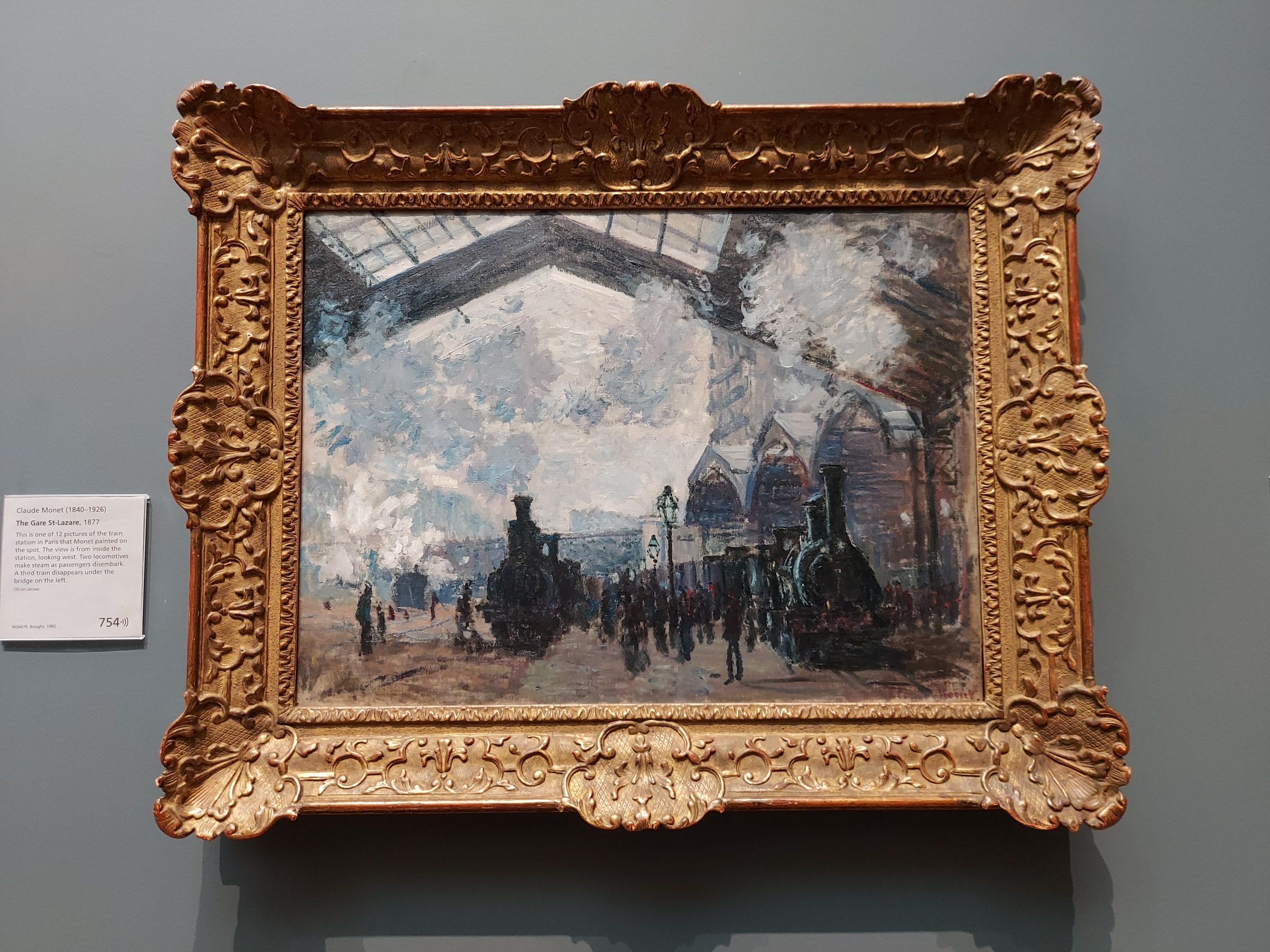
Claude Monet, The Gare St-Lazare, 1877
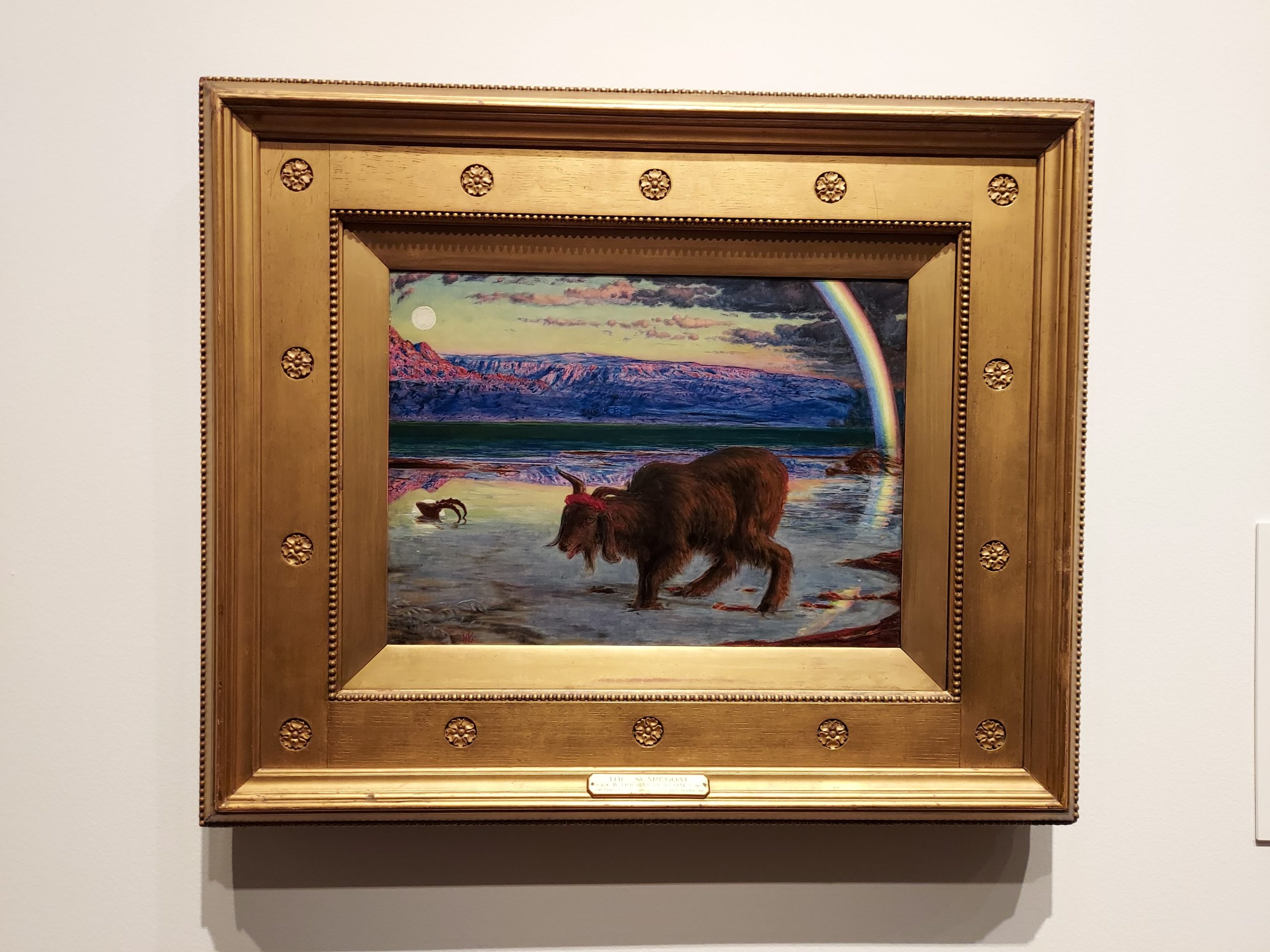
William Holman Hunt, The Scapegoat, 1854-55
A visit to the National Gallery is definitely recommended, especially as it’s free. If you can get there before the crowds begin to return, even better.
I’m no art expert, but I’ve been aware of Artemisia Gentileschi and her work for a while. At university, I took a module on Renaissance Rome and she featured; in recent years I’ve encountered her life and work in stories and plays. I was excited, therefore, to visit the Artemisia exhibition at the National Gallery, making it there in between lockdowns.
Artemisia Gentileschi, Self-portrait as the Allegory of Painting, 1638-39
Artemisia, one of the most famous female artists in history, was the daughter of acclaimed painter Orazio Gentileschi. In an age when few women had the opportunities that men had to pursue artistic careers, she was painting professionally by the age of fifteen and enjoyed a successful lifelong career, painting for numerous wealthy patrons, befriending other artists and eventually becoming the first female member of Florence’s Accademia di Arte del Disegno.
The most famous incident of Artemisia’s life is probably her rape by a fellow painter at her home in Rome. During the subsequent trial, Artemisia was tortured with thumbscrews – a particularly frightening prospect for an artist, I’d imagine – to prove her testimony. Breach Theatre have produced a powerful play about the trial, but I was glad to see that the National Gallery did not allow this incident to overshadow Artemisia’s life and career. There is just as much focus on her subsequent marriage and move to Florence, her affair with a Florentine nobleman, her children and, later, her move back to Rome and visits to Venice, Naples and England.
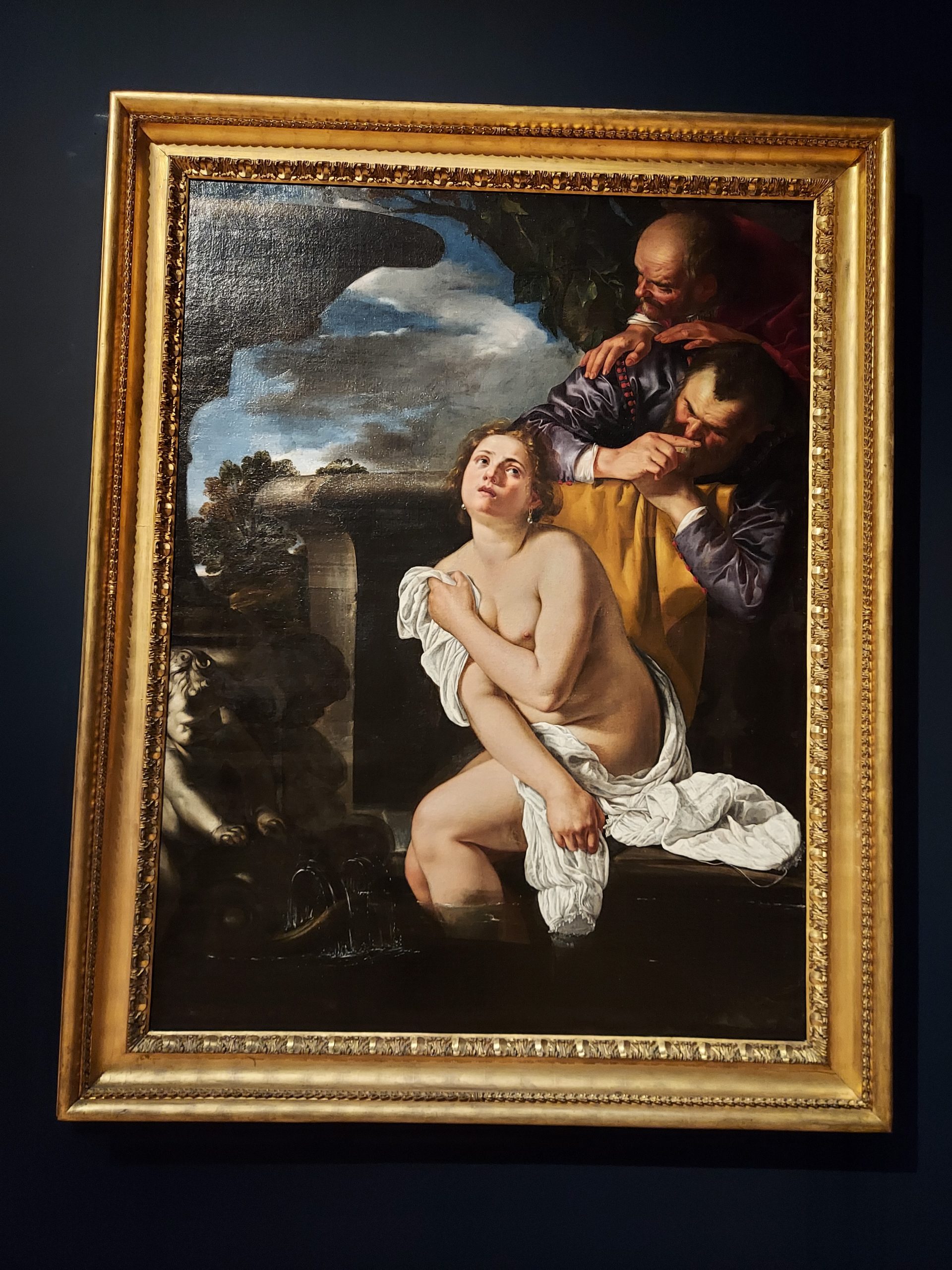
Artemisia Gentileschi, Susanna and the Elders
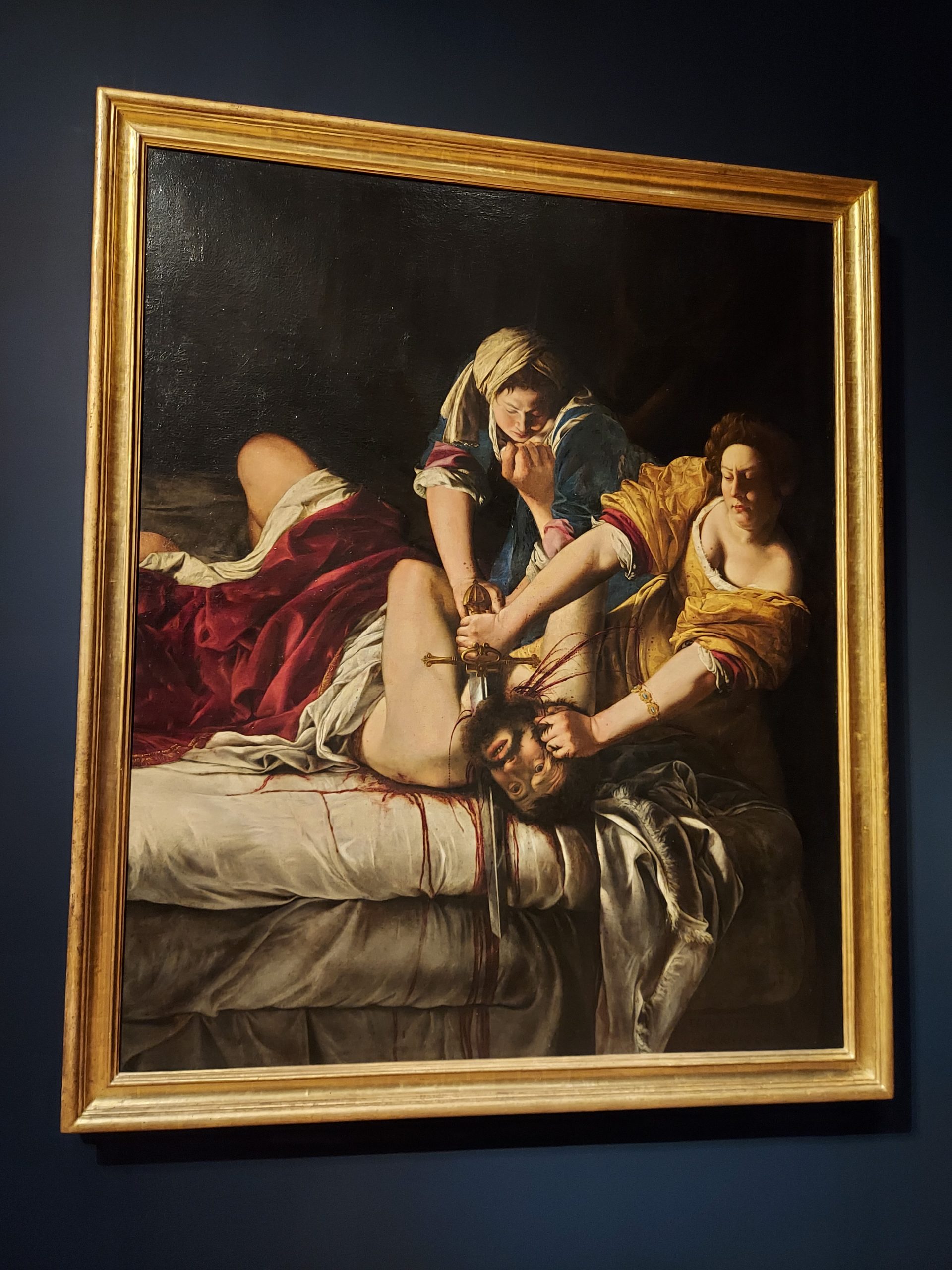
Even my untrained eye can see there is something different and special about Artemisia’s work: perhaps her gender helped her to see things differently; perhaps she was just incredibly talented; perhaps a bit of both. Some of her works are shown alongside her father’s: though Orazio was clearly an accomplished painter, Artemisia’s creations are (to my mind) far superior. Her versions of Susannah and the Elders show a frightened Susannah overlooked by lecherous old men, instead of the provocative nude often pictured by male artists. Judith beheading Holofernes, particularly the later version which is much more bloody and brutal, demonstrates visceral anger, and her self-portrait as the Allegory of Painting is an honest depiction of an artist lost in her work, not an idealised muse.
I loved this exhibition, and I’m so glad I got the chance to go.
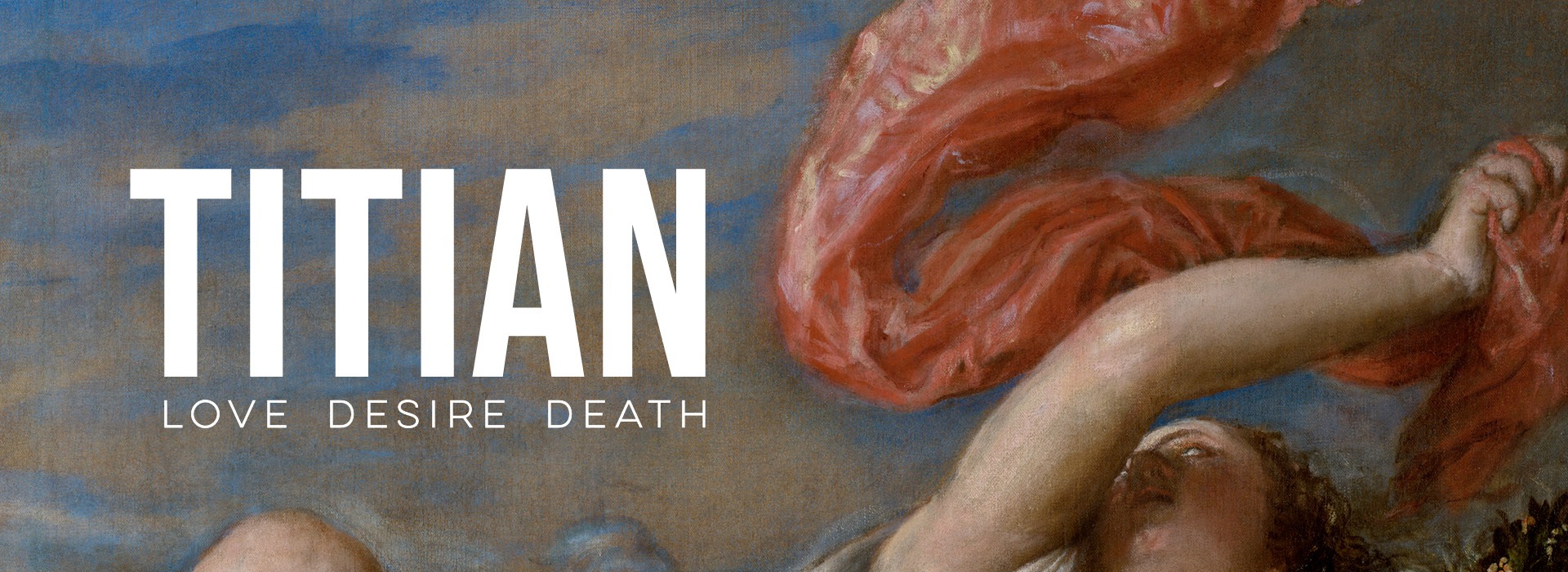
After months of closures, museums were slowly starting to reopen, so I took my birthday off work and planned a few days out. My first stop was the Titian: Love, Desire, Death exhibition at the National Gallery.
Organised by the National Gallery, the National Galleries of Scotland, the Museo Nacional del Prado, and the Isabella Stewart Gardner Museum, Boston, the exhibition brings together all six paintings in the series commissioned by Philip of Spain, the future King Philip II, in 1551. Philip requested Titian, who at the time was the most famous painter in Europe, to produce a group of paintings representing classical myths, taken mostly from the Metamorphoses of the poet Ovid.
The paintings include ‘Diana and Actaeon’ and ‘Diana and Callisto’, works owned jointly by the National Gallery and the National Galleries of Scotland; ‘Venus and Adonis’, owned by the Prado, Madrid; ‘Danaë’, in the care of English Heritage and usually displayed at Apsley House; ‘Rape of Europa’, belonging to the Isabella Stewart Gardner Museum in Boston; and ‘Perseus and Andromeda’, part of the Wallace Collection.
The exhibition is certainly about quality rather than quantity; Titian described the works as his ‘poesie’, a visual equivalent of poetry, and they are certainly impressive even to a non-art expert like me. They are dramatic and full of detail, powerfully conveying a range of emotions: anger, shame, lust, guilt, sadness.
I quite fancied the Delacroix exhibition at the National Gallery, as though I can’t claim to know a great deal about the artist, what I do know I generally like. The exhibition, entitled Delacroix and the Rise of Modern Art, ended on 22 May so I only just managed to catch it.
The exhibition looked at the art of Eugène Delacroix in the context of his influence on later artists. Paintings of his were displayed alongside works by other artists, including Paul Cézanne, Vincent van Gogh and Henri Matisse, to show how he influenced them; these works included landscapes, still lives and portraiture. Interestingly, one of Cézanne’s works directly references Delacroix’ heroic status among artists: his The Apotheosis of Delacroix (1890-1904) shows artists praying to Delacroix, who is being transported heavenwards. Other works displayed included Henri Fantin-Latour’s Immortality, which also paid homage to Delacroix. Some impressive Delacroix paintings were included, such as his 1858 Tangier from the Shore, but sadly his greatest paintings were absent, so I didn’t get the full sense of how impressive he was.
While I did enjoy the exhibition and found it illuminating, I would have liked to see more of Delacroix’ own work, and was slightly disappointed that it was not more closely concerned with him. Apart from that though, it was obviously well planned and thoughtfully organised.
I’d heard of the Spanish artist Francisco José de Goya y Lucientes, more commonly known as Goya, because of his powerful war paintings, but this new exhibition at the National Gallery shows another side to him. Goya: The Portraits encompasses the artist’s career in portraiture, from his earliest work to his final years. The exhibition contains 70 works, made up of paintings, drawings and miniatures.
I enjoyed the exhibition: I thought some works were better than others, but they all had Goya’s unique style and power. I was particularly interested in the self-portraits, most notably the “Self Portrait with Doctor Arrieta” (1820) in which Goya pays tribute to the medical man who saved his life when he was stricken with a serious illness. The picture shows an ill-looking Goya prostrate in bed, attended by the doctor, while shadowy figures – possibly harbingers of death, or waiting to give the last rites – lurk in the shadows. I also thought that the artist’s family pictures, including the sensitive portrait of his wife, Josefa Bayeu de Goya and his final portrait, an image of his beloved grandson Mariano Goya y Goicoechea, were rather touching.
I thought it very impressive how Goya managed to stay in favour for so much of his life, given the tumults within Spanish society. From an established portrait painter to the Spanish aristocracy, he became the official portrait painter to the Spanish court, and yet when the 1808 popular uprising led to conflict between the existing royal family and the French emperor Napoleon, he managed to keep his position, painting all sorts of powerful figures. I hadn’t previously known that a serious illness in his mid-40s left him almost totally deaf: his portraits became a way for him to communicate with his sitters.
I sometimes find looking at portraits to be a bit boring – there’s only so many times you can gaze with interest at powerful figures posing in beautiful outfits – but Goya’s grasp of psychology and his unusual style made these pictures genuinely fascinating for me. The exhibition runs in the Sainsbury Wing until 10 January.
I visited the Inventing Impressionism exhibition at the National Gallery on Sunday. Subtitled Paul Durand-Ruel and the Modern Art Market, the exhibition looks at the role of Parisian art dealer Durand-Ruel in championing and promoting the Impressionist painters. Though Impressionism is now well-respected and loved, this was not always the case – when this new kind of art first began to emerge, most critics and members of the public shunned and mocked it. Monet himself suggested that if it wasn’t for Durand-Ruel, his work and that of his contemporaries would not have flourished.
Filled with works by Renoir, Monet, Manet and Degas, as well as Rodin, Rousseau and Millet, the exhibition is incredibly impressive and it’s hard to imagine how and why contemporary critics rejected the work. Anyone attending the exhibition will surely find themselves feeling extremely grateful to this entrepreneurial art dealer.
After a tense few days during which I feared I’d missed my chance – only a phone call to inquire about tickets saved me – I managed to get a ticket to the National Gallery‘s exhibition Rembrandt: The Late Works on its last day. My efforts proved to be well worth it: the exhibition was very well laid-out and organised, and I really appreciated the fact that information about the pictures was set out in a booklet rather than presented on labels beside the paintings – this meant that though the exhibition was very busy, it was still manageable because you weren’t faced with hordes of people crowded round the pictures trying to read the captions.
Of course, it goes without saying that the actual content – Rembrandt’s work – was stunning. I particularly liked the five self-portraits on display at the beginning: full of variety, they captured the painter in different moods and at different stages. The most affecting was the portrait painted in the year of his death (1669), which shows him as visibly frail, but I also liked the 1659 portrait in which he wears a quizzical expression.
The exhibition focuses on the later years of Rembrandt van Rijn (1606-1669), and like the Late Turner exhibition at Tate Britain that I visited last year, it shows that the artist did not become complacent or enter into a decline during his last years, but continued to experiment and develop as an artist. In particular, The Conspiracy of the Batavians under Claudius Civilis (c.1661) shows a profound mastery of the creation of darkness and light in painting, while his two versions of the Roman heroine Lucretia (1664 and 1666) are extremely powerful.
Less outwardly grand, but equally masterful, is his picture of his son Titus at his desk (1655), an affectionate and intimate portrait. Fully finished paintings sit alongside sketches and drawings in the exhibition, showing the developments of Rembrandt’s ideas and style, and several of these are exquisite, although their role in the development of the artist’s work will likely appeal more to other artists or art students.
This exhibition was well worth the visit and I am glad I managed to make it before the end.