Rebel Badge Club: Advanced Rebel Buddy

At the end of the month I realised I was able to claim the Advanced Rebel Buddy badge.

I have helped at least three new Rebels find their way around the Club, both online and offline. I’ve enjoyed myself – I’m always happy to share the Rebel love.

Date completed: 31 October 2025

Rebel Badge Club: Current Affairs

Current Affairs was the final badge I chose for the Ready Player One quarterly. I know it’s important to keep up with the news (and I do), but it’s certainly depressing. If anything, I feel like we are moving even closer to a dystopian society!

Over a period of at least three months, make an active effort to stay on top of the news.

I recorded the headlines from the Independent each day and checked a number of other news sources, including the Guardian and the BBC, too.

Create a visual political spectrum from far-right to far-left.

Choose a current domestic news story, and compare the different ways the story is presented in different forms of media.

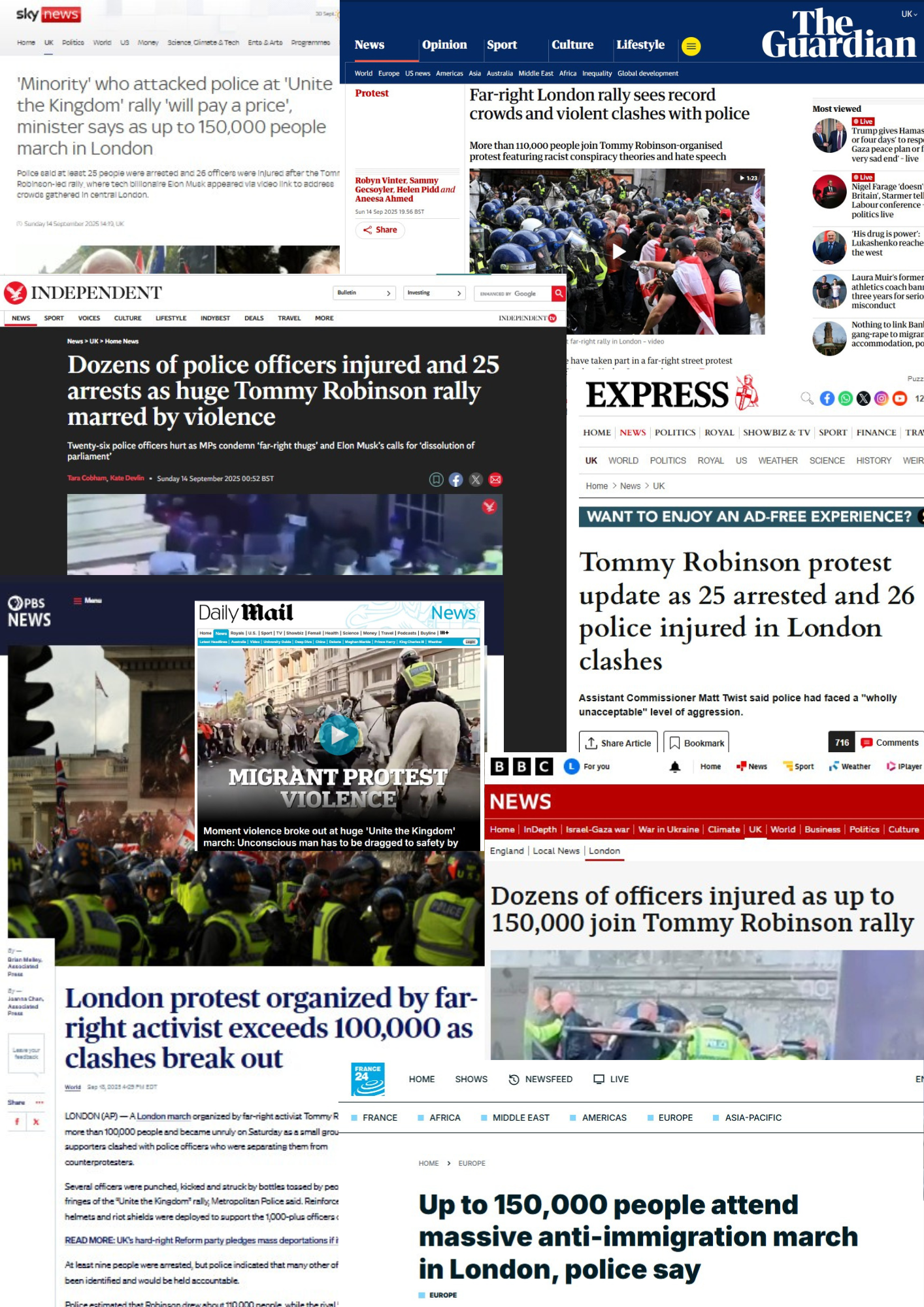
I chose the ‘Unite the Kingdom’ march of 13 September. I was actually surprised at how similar the presentations were across left- and right-wing media. It appears injuring police officers is frowned upon across the political spectrum. Having said that, it was interesting that some sources called it a march, others an anti-immigrant protest, and some named it as a right-wing event.

The sources I used were the Guardian, the Independent, the Daily Express, the Daily Mail, the BBC and Sky News. I also looked at France24 and PBS News from an international perspective.

Presentation of the Unite the Kingdom march

Watch a daily news bulletin regularly for at least two weeks.

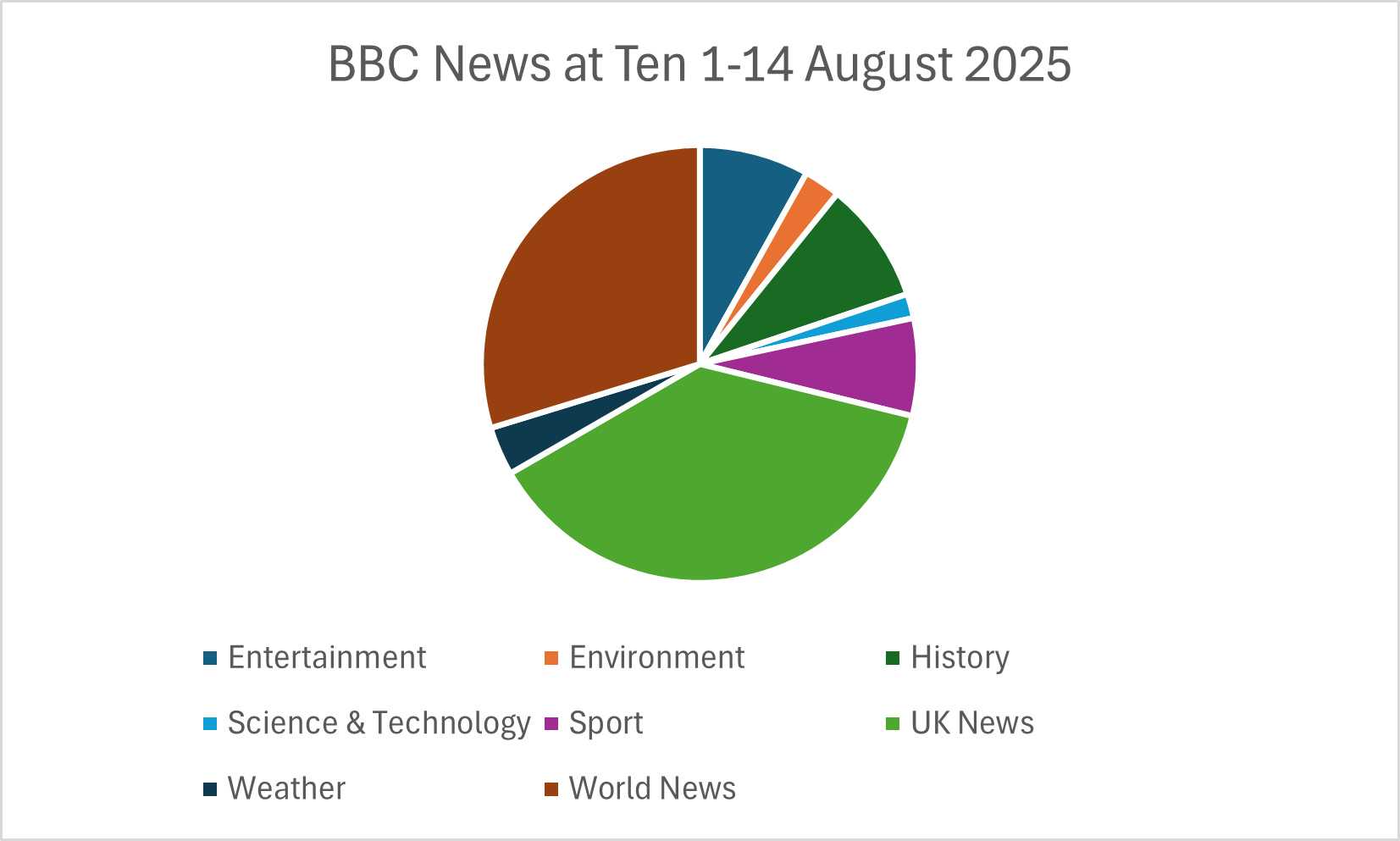
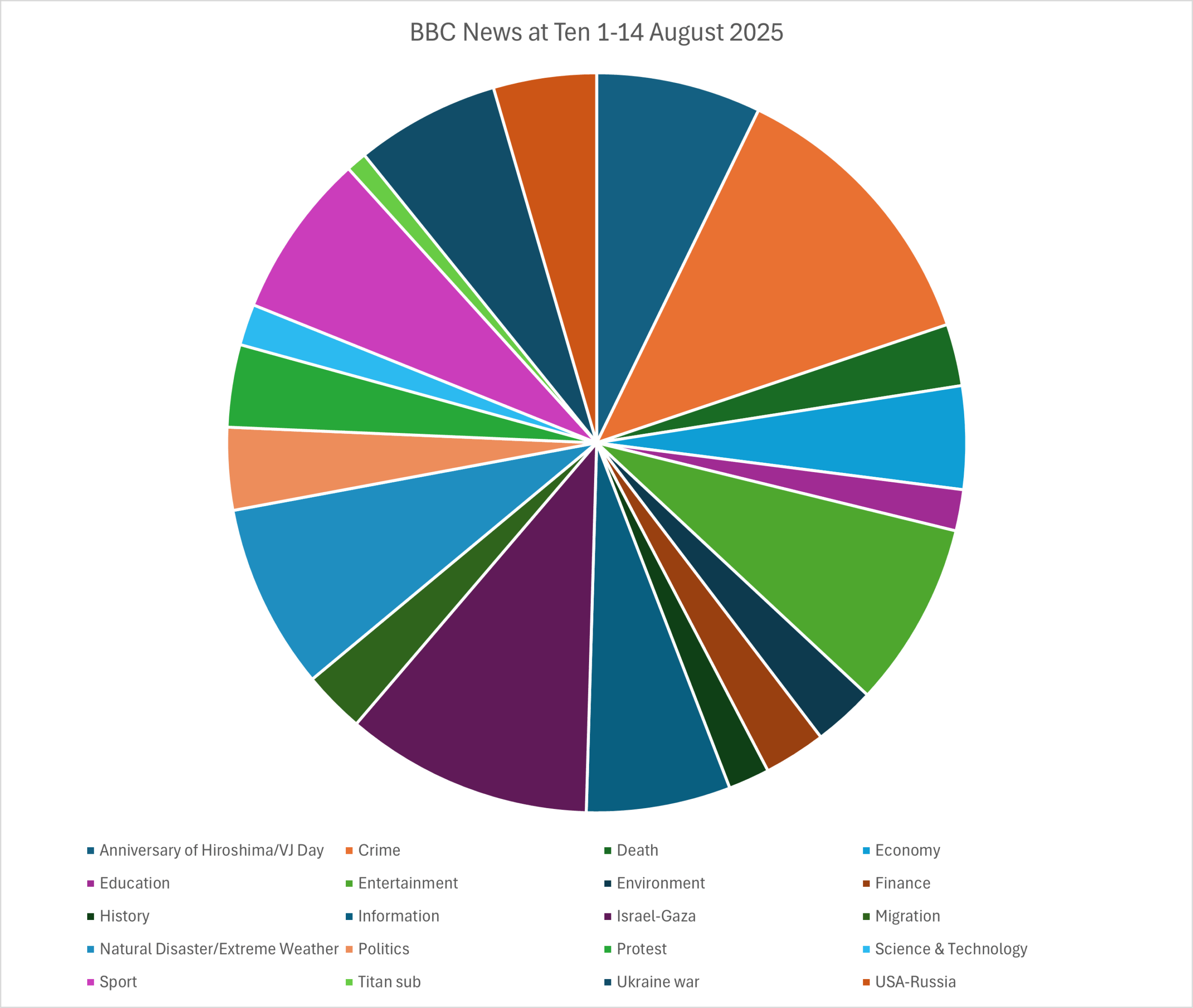
I watched BBC News at Ten daily during the first half of August. I created two charts, one grouping the stories covered in terms of broad categories and another which was more specific, showing how certain topics really dominated coverage during this period. This is understandable to an extent, but I would have liked to see more coverage of worldwide topics such as the Sudanese genocide.

BBC News at Ten - categories BBC News at Ten - more specific categories

Find some examples of ‘fake news stories’ that you are surrounded by on social media.

I found plenty of examples of ‘fake news stories’ online. I had never heard of a CRAAP test but now I know what one is I will be applying it regularly!

Some sources suggest that the impact of fake news on elections is overblown. People are more likely to believe fake news when it is in line with their own political beliefs, which suggests that their voting plans are not actually swayed too much by disinformation. However, the increasing problem of bots and AI can make things worse as these can spread misinformation much more quickly and much more realistically, making it harder to detect, prevent or stop them.

Create a timeline of events which have caused distrust in the media over the last century.

Learn about the media laws and regulations in your country.

I found this document, from the Global Campaign for Free Expression, very helpful.

Print media is self-regulating in the UK and established the Press Complaints Commission. Two broadcasting acts regulate broadcast media. Private television and radio are regulated, respectively, by the Independent Television Commission (ITC) and the Radio Authority (RA), both provided for in the Broadcasting Act 1990. There are seven codes of conduct governing content standards within the media in the UK, one for the press and six for the broadcast media. They generally provide guidelines rather than setting clear standards or prohibitions.

Date completed: 30 September 2025

Rebel Badge Club: Local History

I’ve been living in Ealing for fourteen years now, and I’ve learned a bit about the history of the area in that time. There’s always room to learn more, however, and the Local History badge (chosen as part of the ‘Curiouser and Curiouser’ quarterly challenge) has helped me to do so.

Visit a local museum to learn more about the history of your local area.

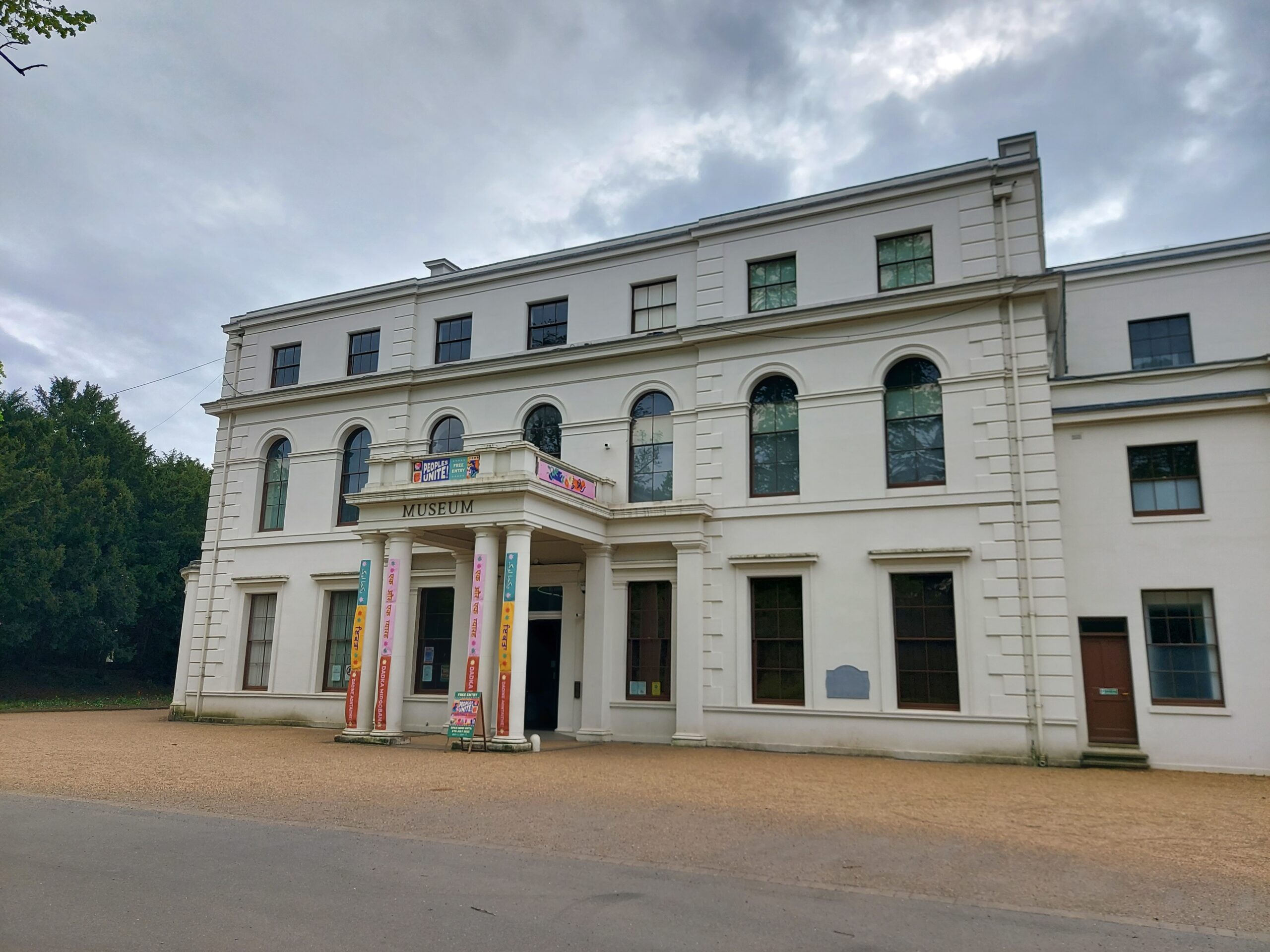
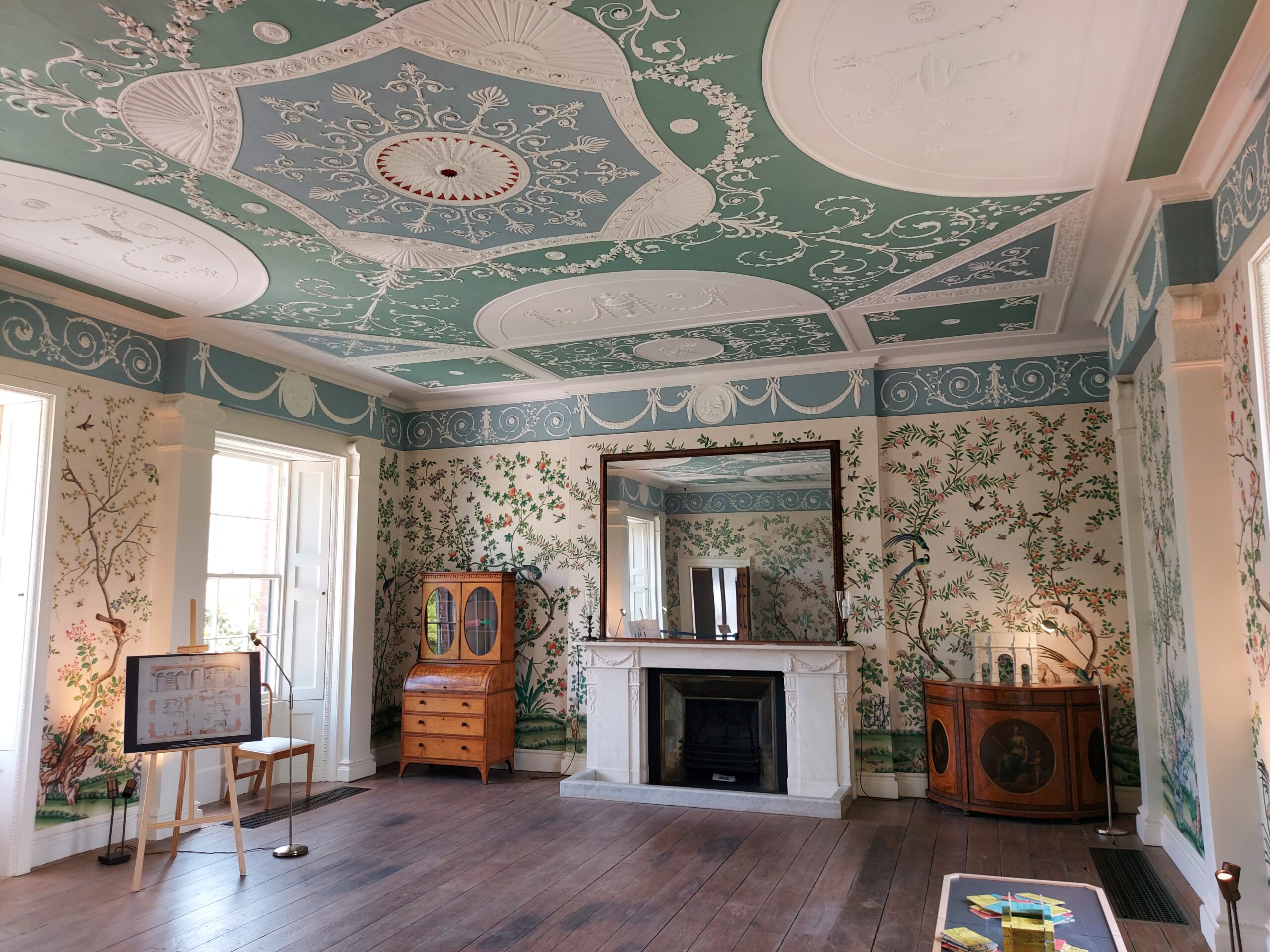
I visited Gunnersbury Park Museum to learn more about the history of Ealing. The main galleries had exhibitions about notable people, industries and fashions of the area, while there was also a special exhibition on the history of Southall specifically which was really interesting.

Gunnersbury Park Museum

Visit a local historic attraction.

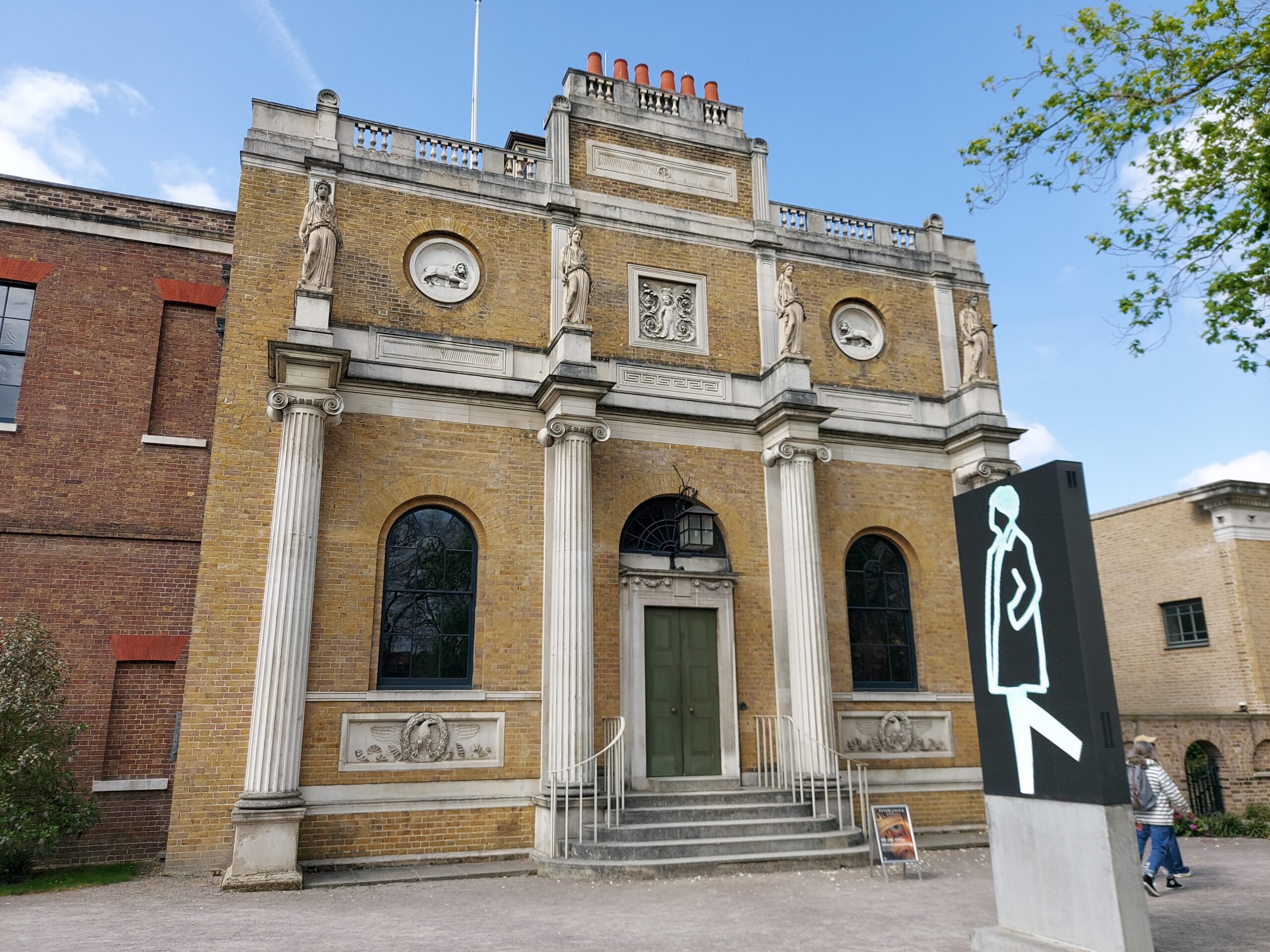
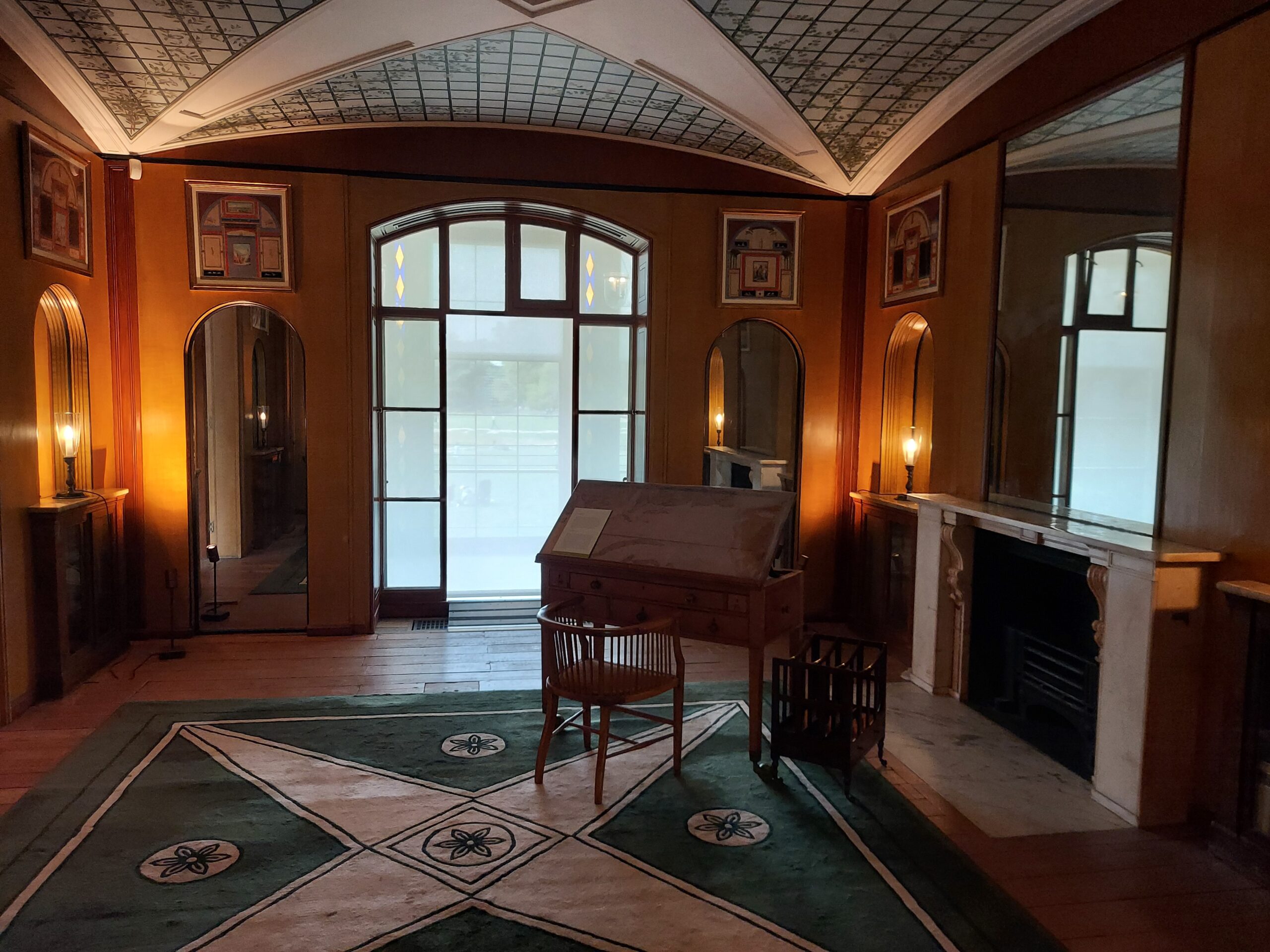
I visited Pitzhanger Manor, the country home of architect Sir John Soane. I have visited before, but had never done a guided tour. I learnt a lot.

Access the census records for your home.

I accessed the 1939 Register for my home. At this time, there were three single women living here.

I used other resources such as censuses to find out more about them.

  • Charlotte was born in Leeds but at some point moved to Kensington. Until 1911 she was living there with her parents and siblings.
  • Hilda was born and also lived in Kensington. The 1921 census shows her living with her mother in Battersea.
  • Mabel was born in Wandsworth. The 1921 census records her as a servant in Ealing.

I don’t know how these women met or ended up living together in what is now my home. I like to think that they were proto-Rebels, living their best lives and enjoying freedom and companionship.

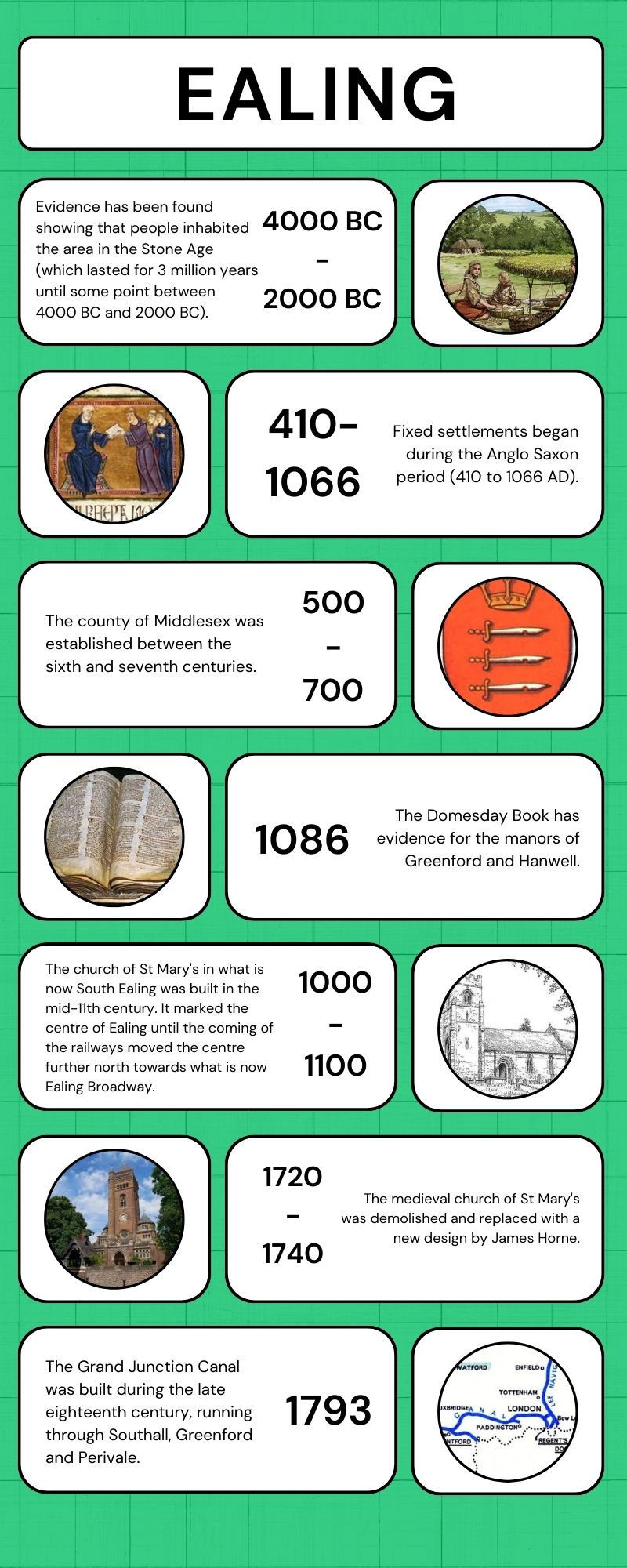
Write a timeline of important dates for your local area.

Learn about key historical figures in your local area. Make a presentation in the medium of your choice about what your area is famous for.

There are quite a few historical figures with links to Ealing.

Lady Byron, born Anne Isabella Milbanke (Lord Byron’s widow) of Fordhook House, Ealing, founded Ealing Grove School in 1834. This was the first industrial school of its type. In 1860 C. N. Atlee, a former headmaster of the Lady Byron school, set up the Byron House School in St. Mary’s Road (South Ealing Road). The site is now the University of West London, and a blue plaque at the entrance is dedicated to Lady Byron.

Thomas Henry Huxley (1825–1895), biologist known as “Darwin’s Bulldog” for his adherence to his theory of evolution, was born in Ealing. His father was a mathematics teacher at Great Ealing School until its closure.

Ho Chi Minh (né Nguyễn Sinh Cung, 1890–1969), revolutionary and politician, worked in the kitchens of the Drayton Court in 1914. He was the founder and the first president of the Democratic Republic of Vietnam.

Spencer Perceval (1762–1812), British Prime Minister from 1809 until his assassination, lived in a large house at Elm Grove, on the south side of Ealing Common.

Dusty Springfield (1939–1999), soul singer, lived in Kent Gardens, West Ealing during the 1950s, attending St Anne’s Convent School in Northfields and later working at Bentalls department store in Ealing Broadway.

Crime novelist Agatha Christie’s parents are buried in South Ealing Cemetery. She herself is listed in the 1911 census at 99 Uxbridge Road as Agatha Miller (her maiden name). She was visiting her great aunt Margaret Miller (supposedly the inspiration for Miss Marple) who had lived in Ealing for more than three decades.

I created a presentation about what the seven towns in the modern London Borough of Ealing are famous for.

Attend a local history talk or workshop.

I attended a talk on Secret Ealing at my local library. I also bought and read the associated book, which was full of interesting information.

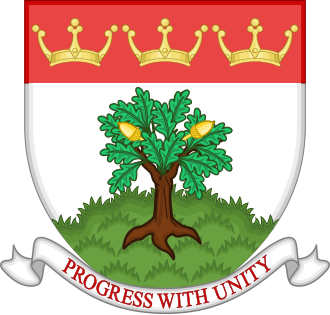
Does your local area have a coat of arms? Research the meaning of each of the different sections.

The coat of arms of the London Borough of Ealing was granted on 1 September 1965. At the top are three golden Saxon crowns, representing the three former Middlesex boroughs of Ealing, Acton and Southall.

At the centre is an oak tree, which was also present in the coats of arms of both Ealing and Acton (Acton is considered to mean “oaktown”), referring to the ancient forest west of London which formed much of what is now Ealing. The oak is also appropriate to the origins of Southall and Norwood (“the southern holt and the northern wood”). Originally there were twenty acorns because they stand for the original twenty wards in the present borough. The grassy base comes from the former Acton coat of arms and the silver field was part of the Ealing coat of arms. The motto is ‘Progress With Unity’.

Three crowns, an oak tree and the text 'Progress with Unity'

If your country has listed buildings, find out about a local grade listed building.

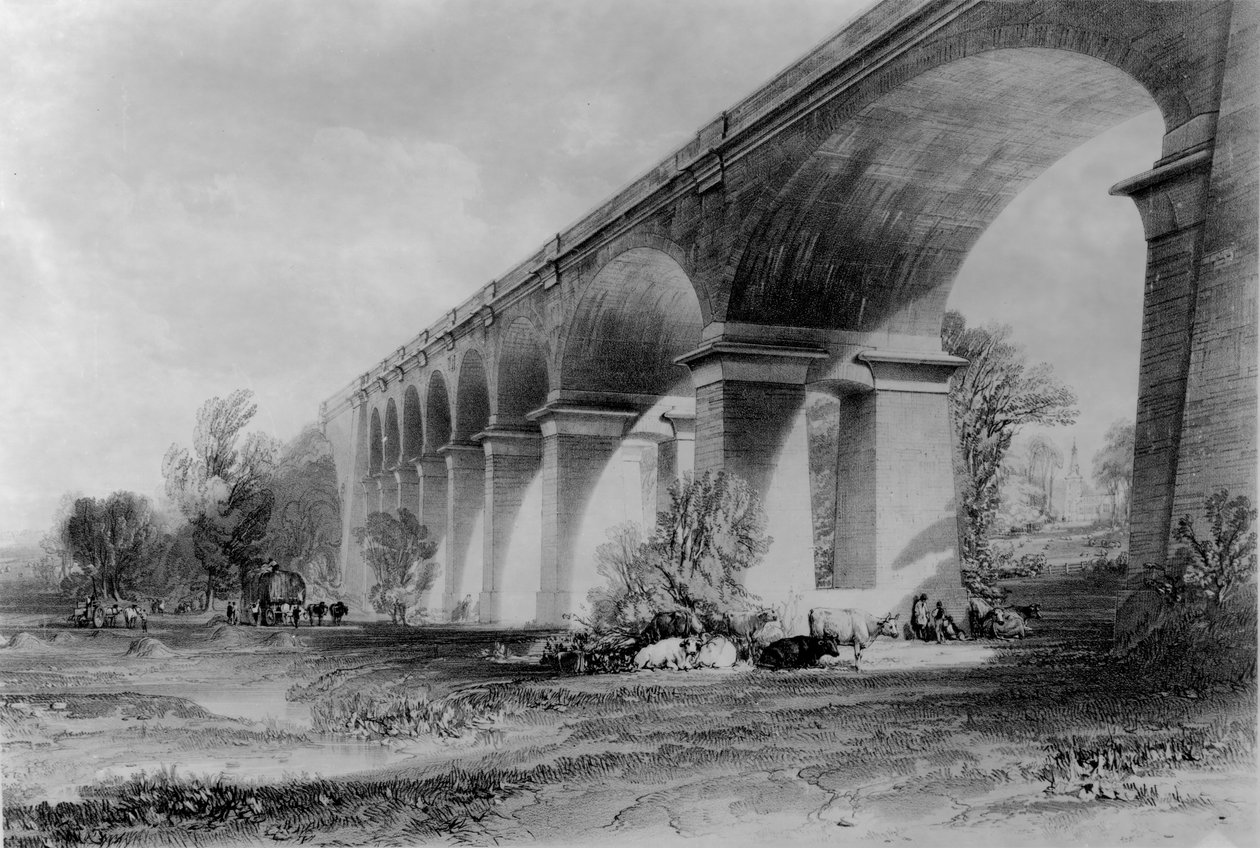
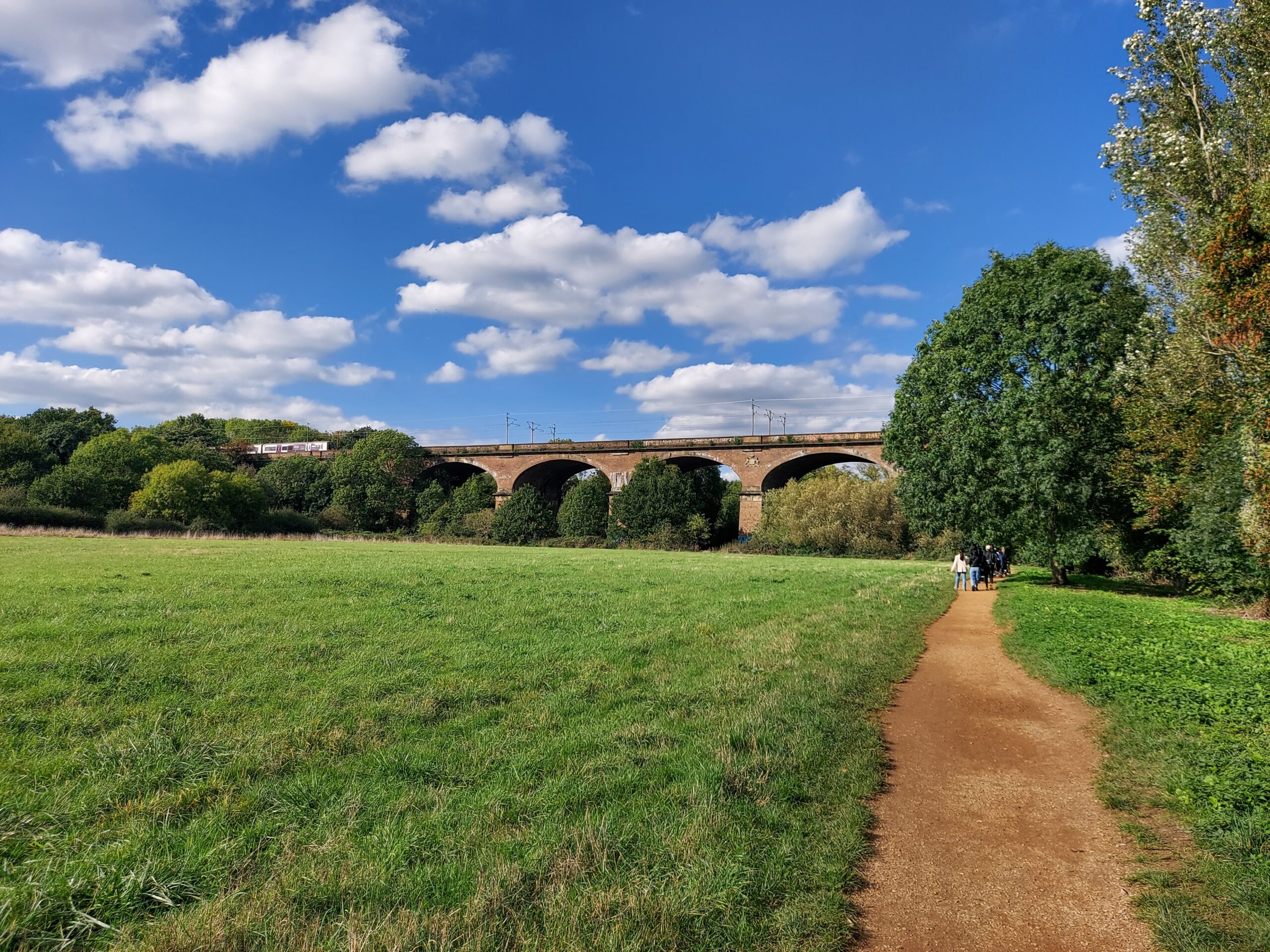
There are six Grade I listed and 18 Grade II* listed buildings in Ealing. The Wharncliffe Viaduct was listed on 8 November 1949.

The brick-built viaduct was constructed in 1836-7 for the Great Western Railway at an elevation of 20 metres (66 ft) in order to carry the railway across the Brent Valley. It was the first major structural design by Isambard Kingdom Brunel, the first building contract related to the GWR project, and the first major engineering work to be completed. The 270-metre-long (890 ft) viaduct has eight semi-elliptical arches, each spanning 70 feet (21 m) and rising 5.3 metres (17 ft). It is 17 metres (56 ft) wide.

The viaduct takes its name from James Stuart Wortley Mackenzie, Lord Wharncliffe, who was chairman of the parliamentary committee that steered the passage of the GWR Bill through Parliament. A carving of his coat of arms is visible on the central pier on the south side. In 1839, the viaduct carried the world’s first commercial electrical telegraph.

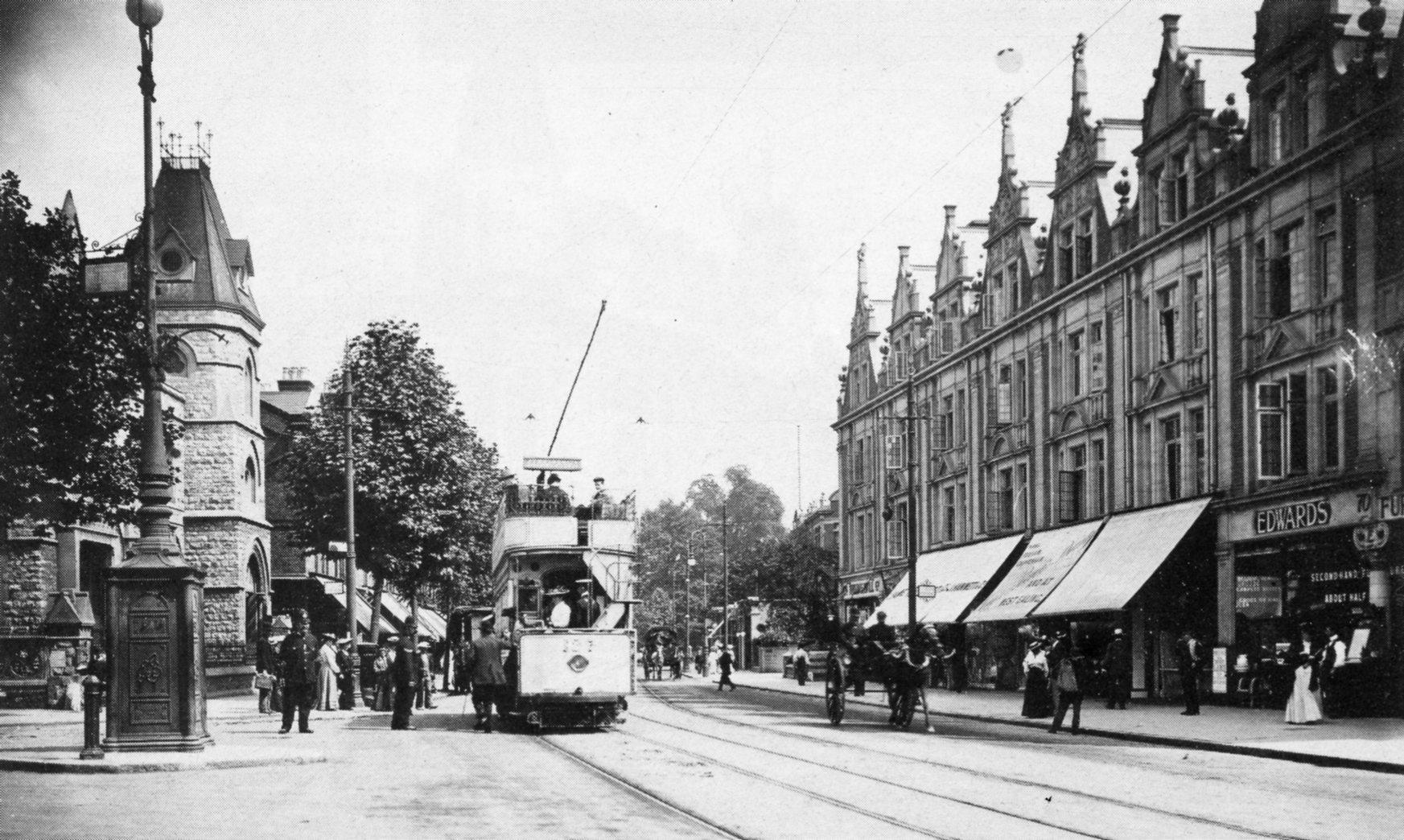
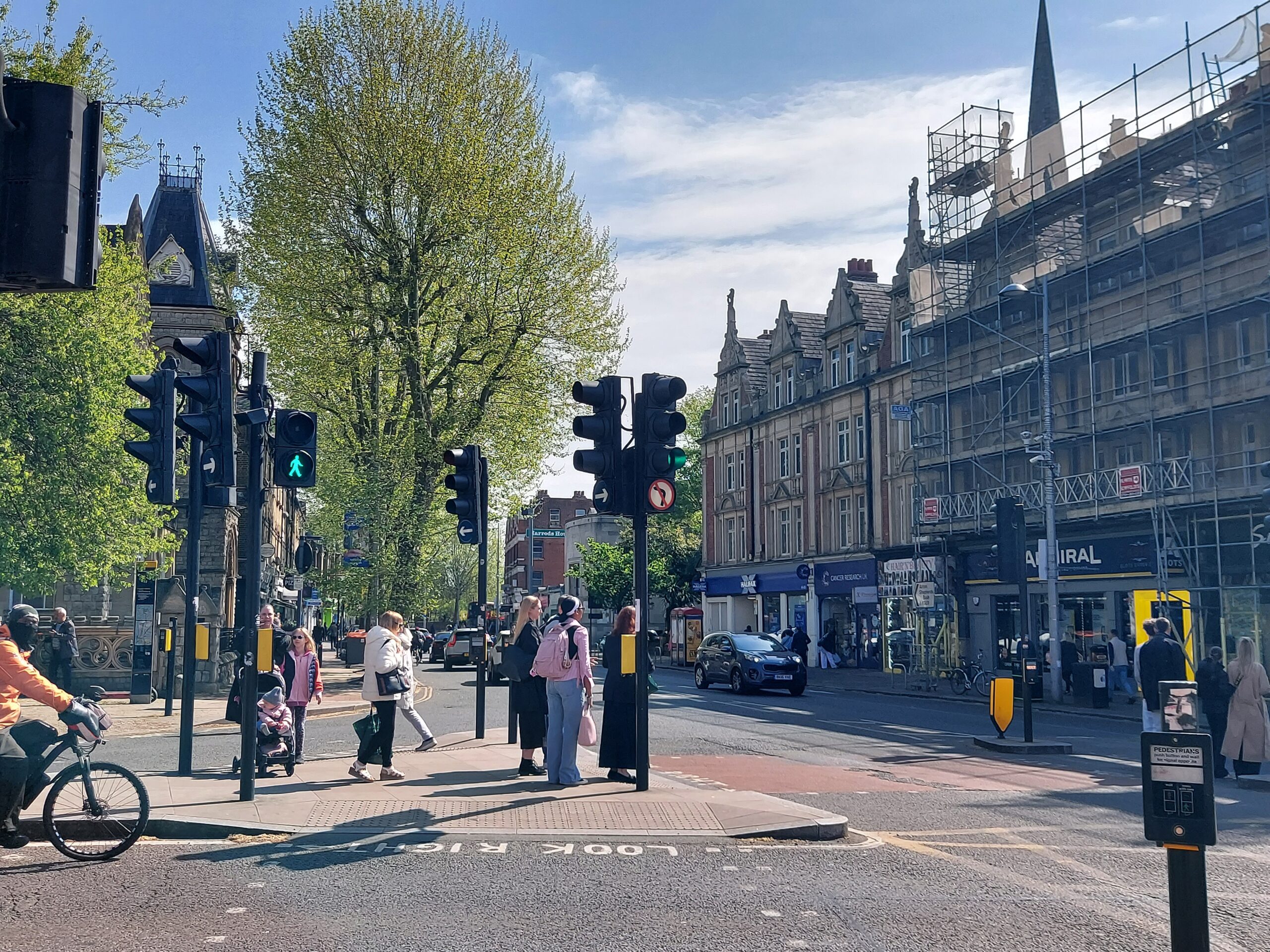
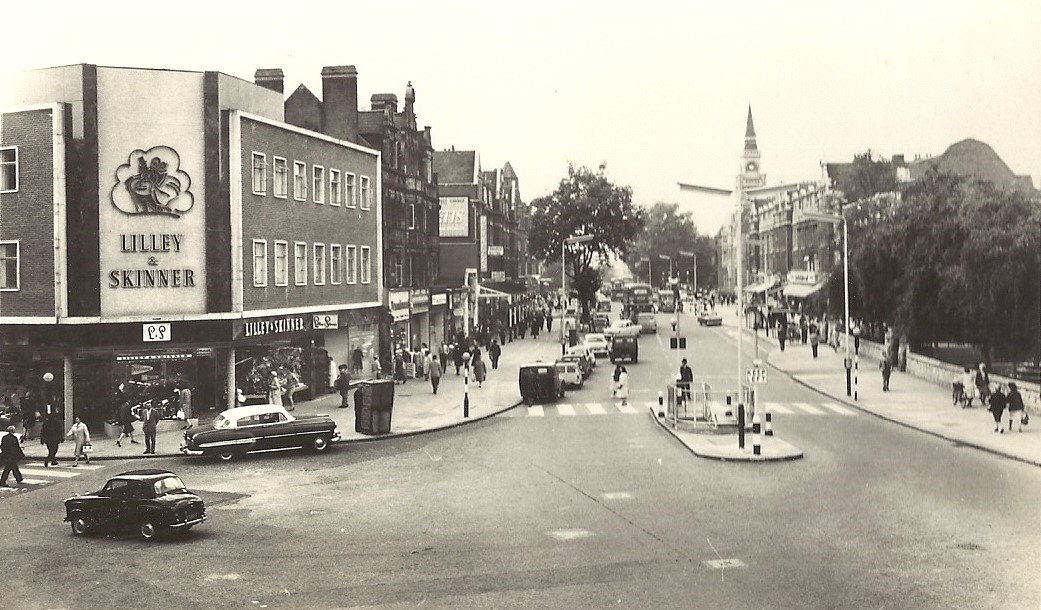
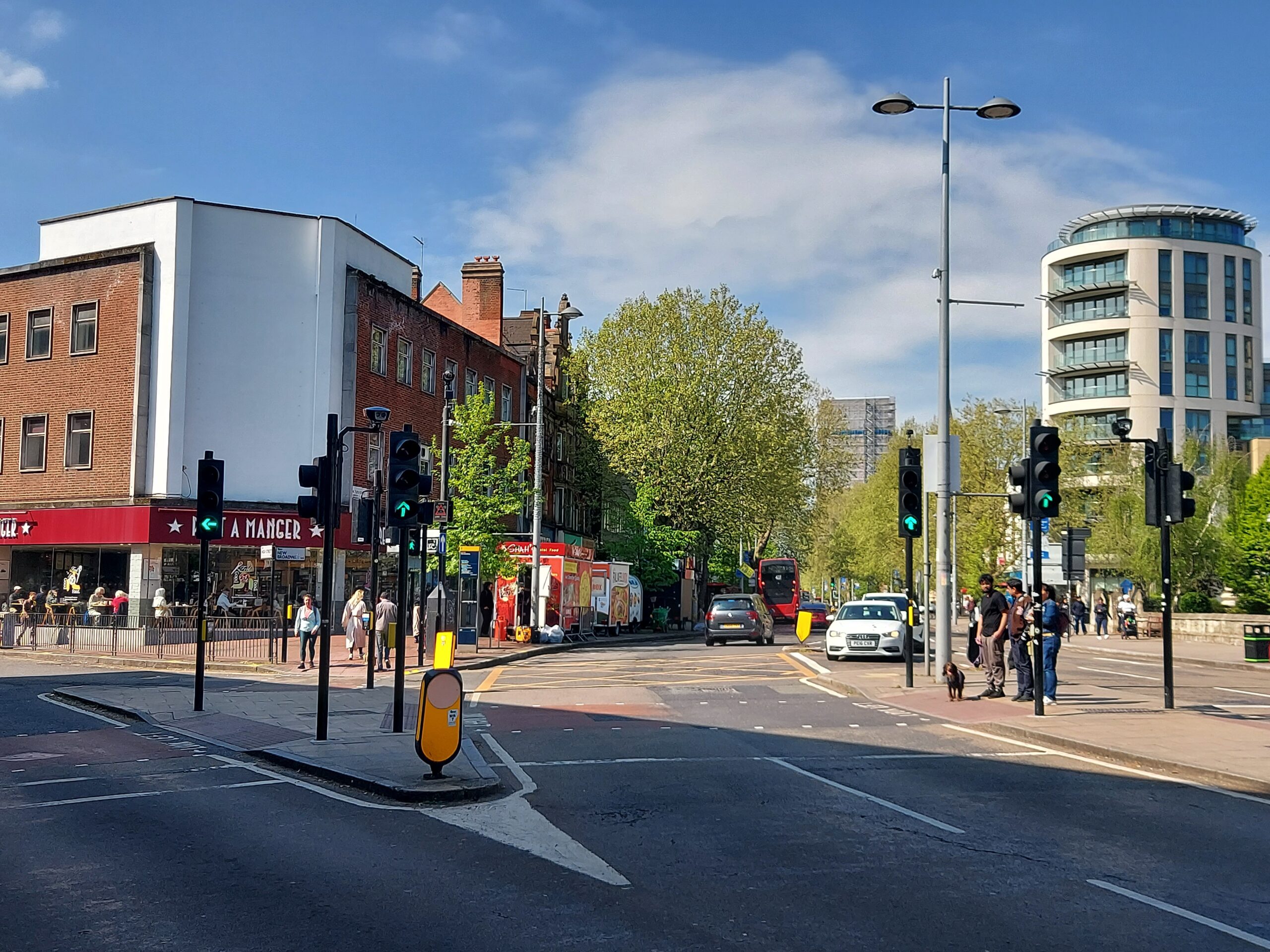
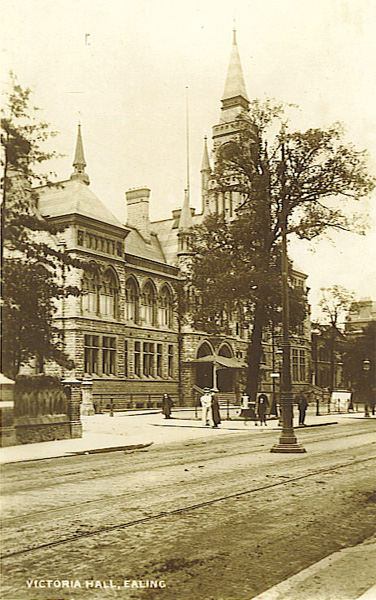
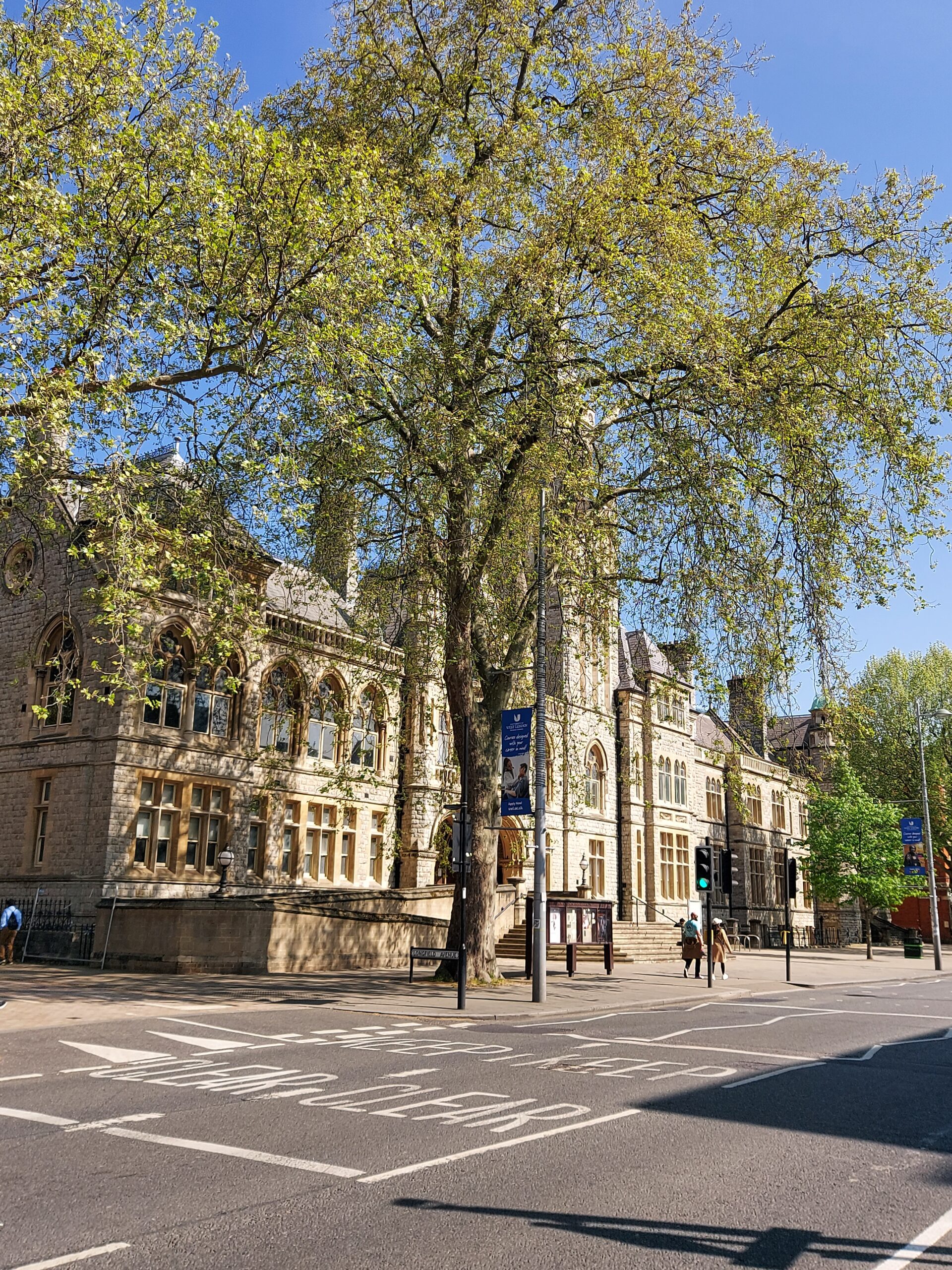
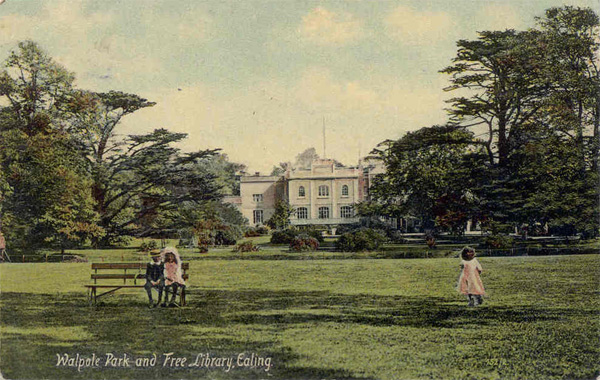
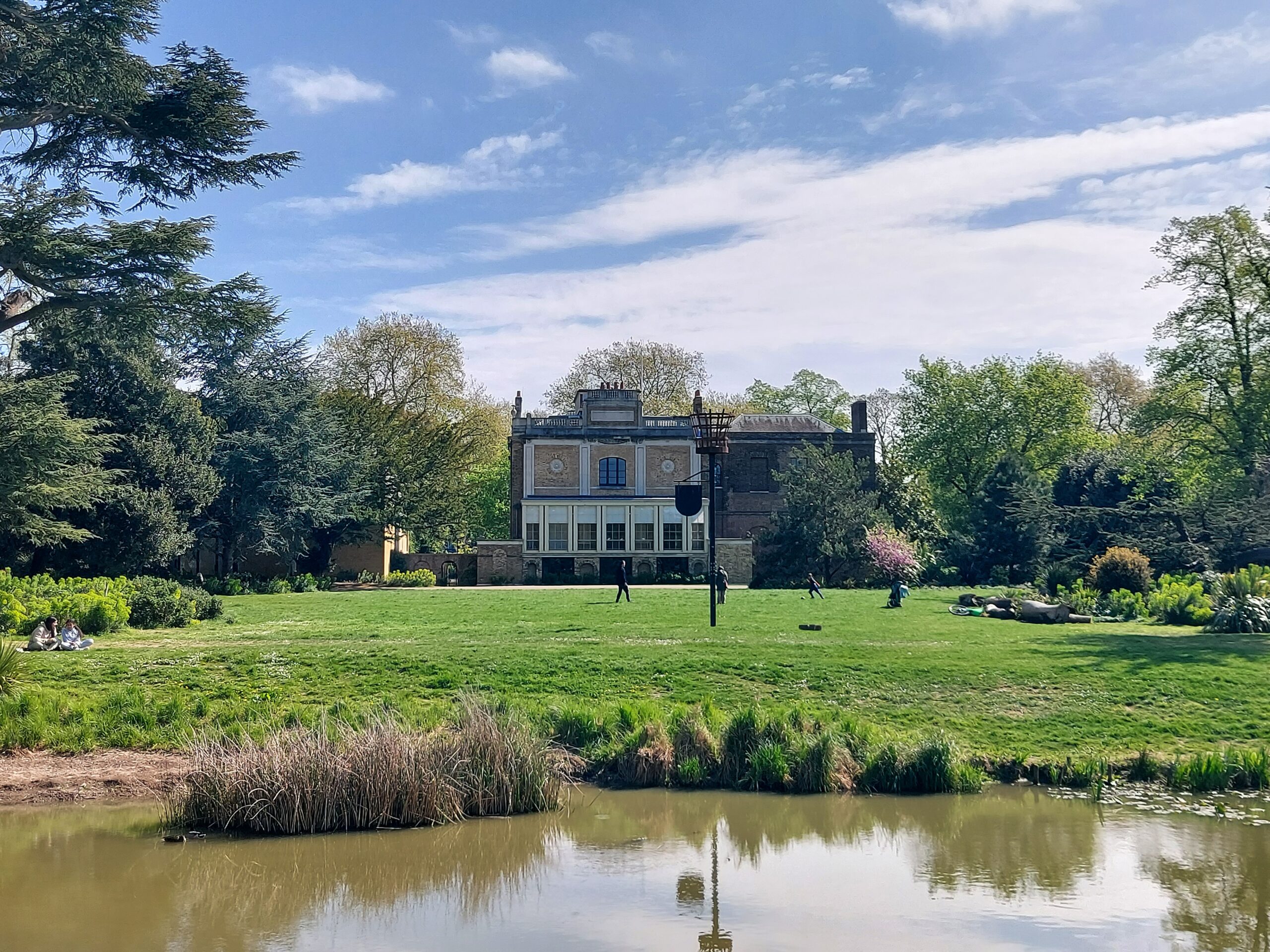
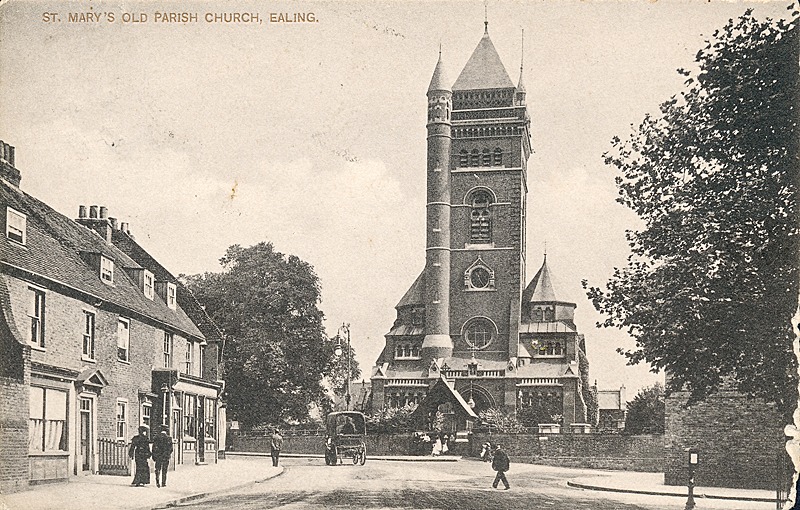
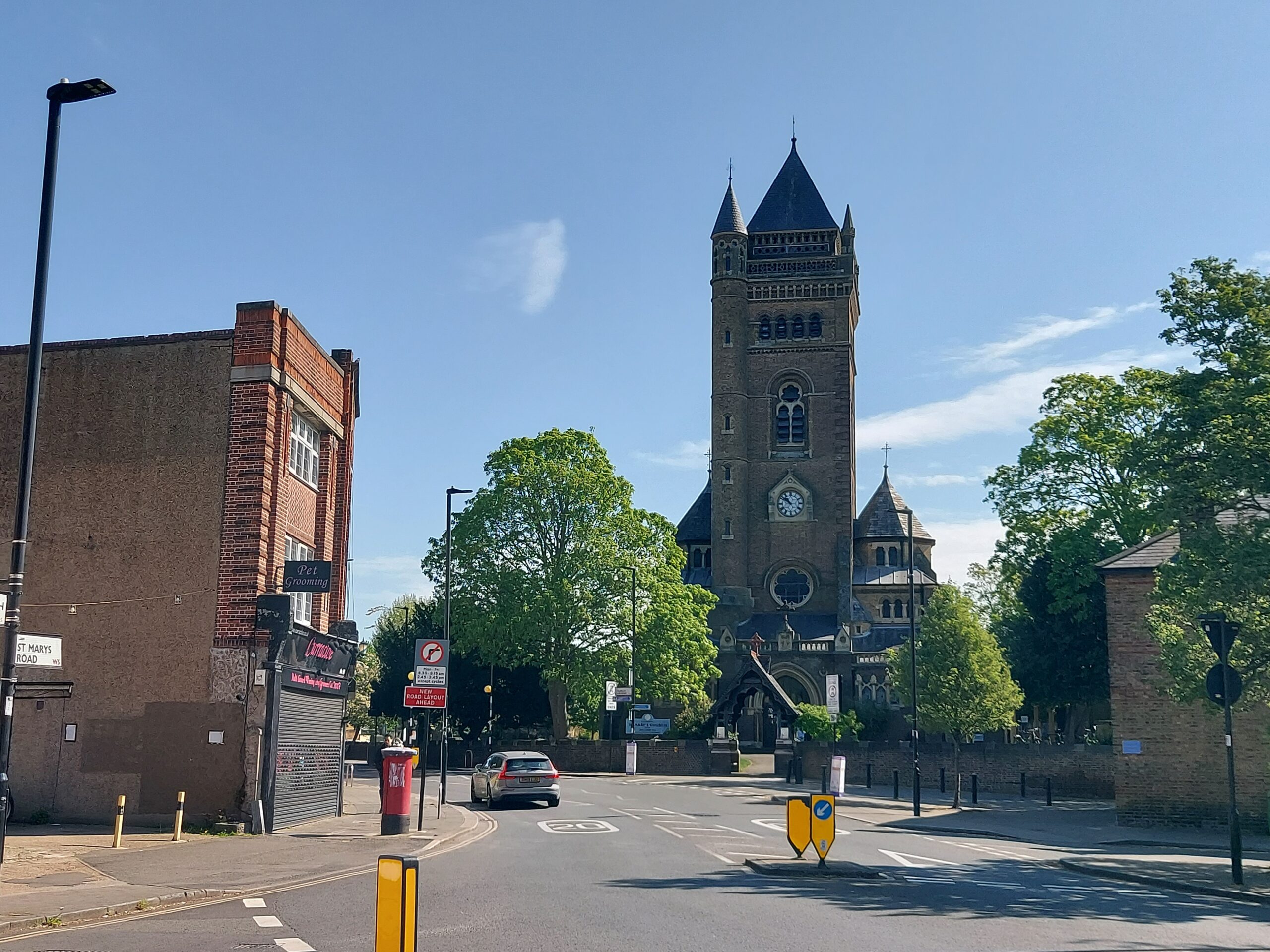
Find historical photos taken in your area. Take new ones in the same places, and compare and contrast them.

Date completed: 20 April 2025

Rebel Badge Club: Global Citizen

I’ve been meaning to complete the Global Citizen badge for a while, and the Lift Off! quarterly challenge seemed like the perfect time.

Learn about the history of a group you do not belong to.

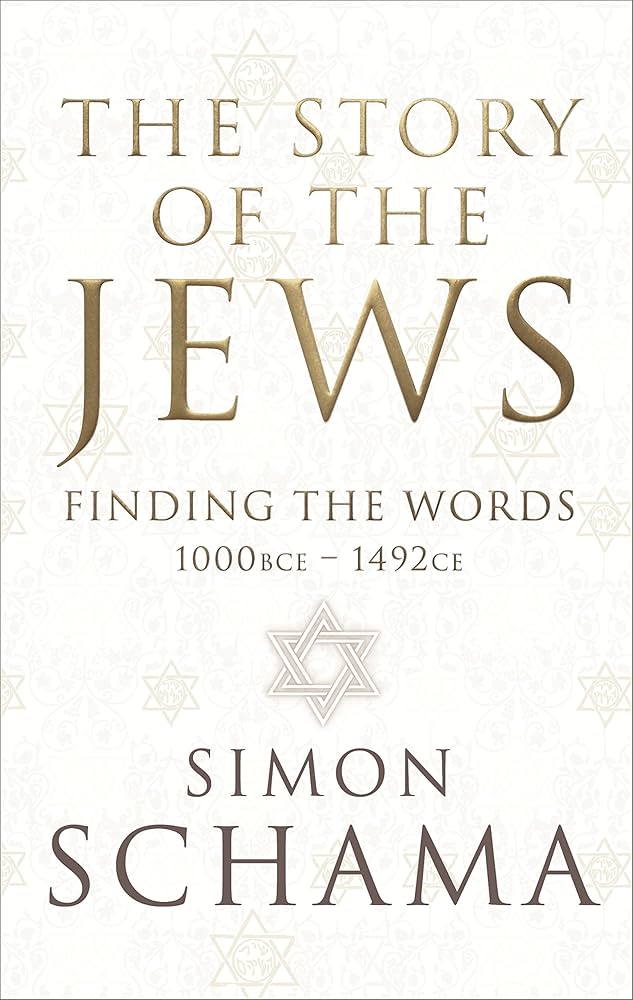
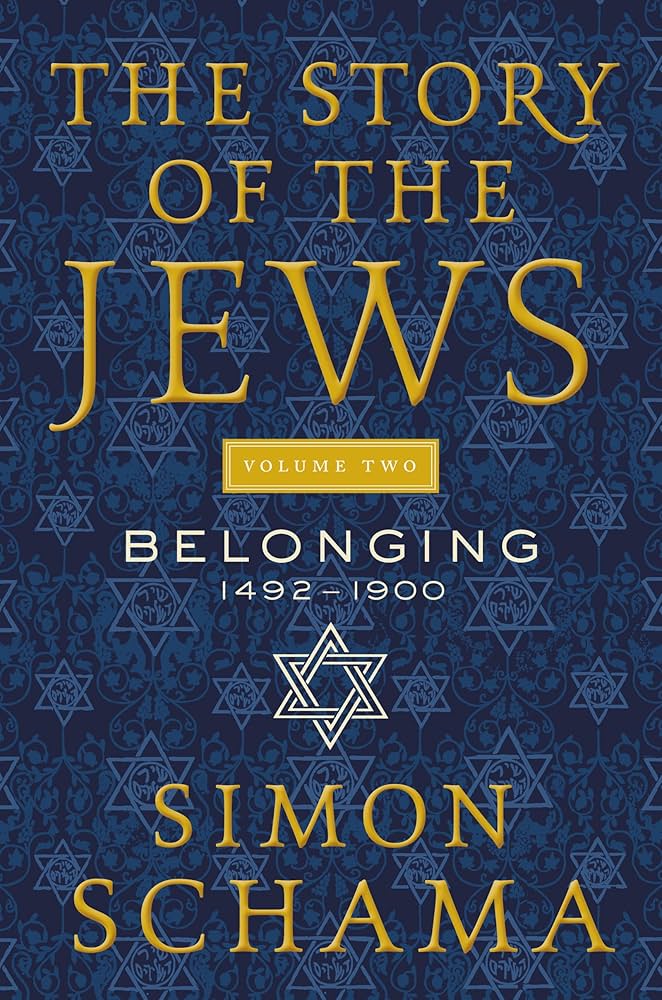
I decided to learn about Jewish people. I read both volumes of Simon Schama’s The Story of the Jews: Finding the Words, 1000 BCE – 1492 CE and Belonging, 1492–1900. They were complex, interesting and highly readable.

Read or a listen to a book which talks about the discrimination which those belonging to the group you chose in Clause 1 have suffered.

I read Off-White by Rachel Shabi, which was fantastic and dealt with antisemitism in a complex and enlightening way.

A book cover with the text Off White: The Truth About Antisemitism by Rachel Shabi.

Learn about the festivals celebrated by your chosen group of people.

I read about Jewish festivals on Britannica.com.

Make something related to another faith, belief or nationality.

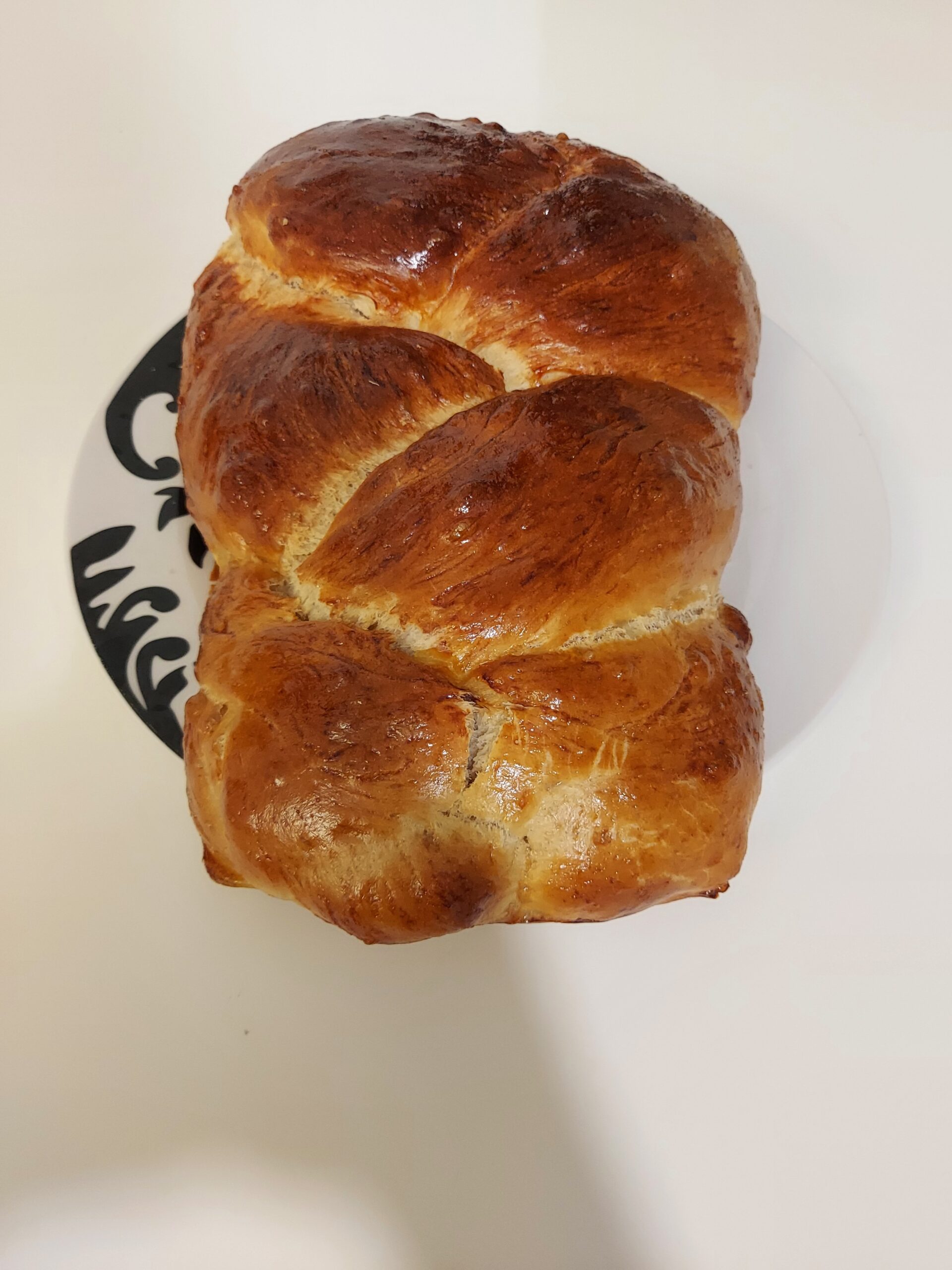
I finally made Challah bread – months and months after we learned how to make it at RebelFest!

A loaf of Challah bread

Research a disability or neurodiversity which you do not have yourself.

I decided to research blindness and vision impairment. I started on the RNIB website where I discovered some key information on sight loss in the UK.

I then moved on to Fight For Sight to read more about issues facing blind and visually impaired people, including loneliness, domestic abuse, employment and economic cost.

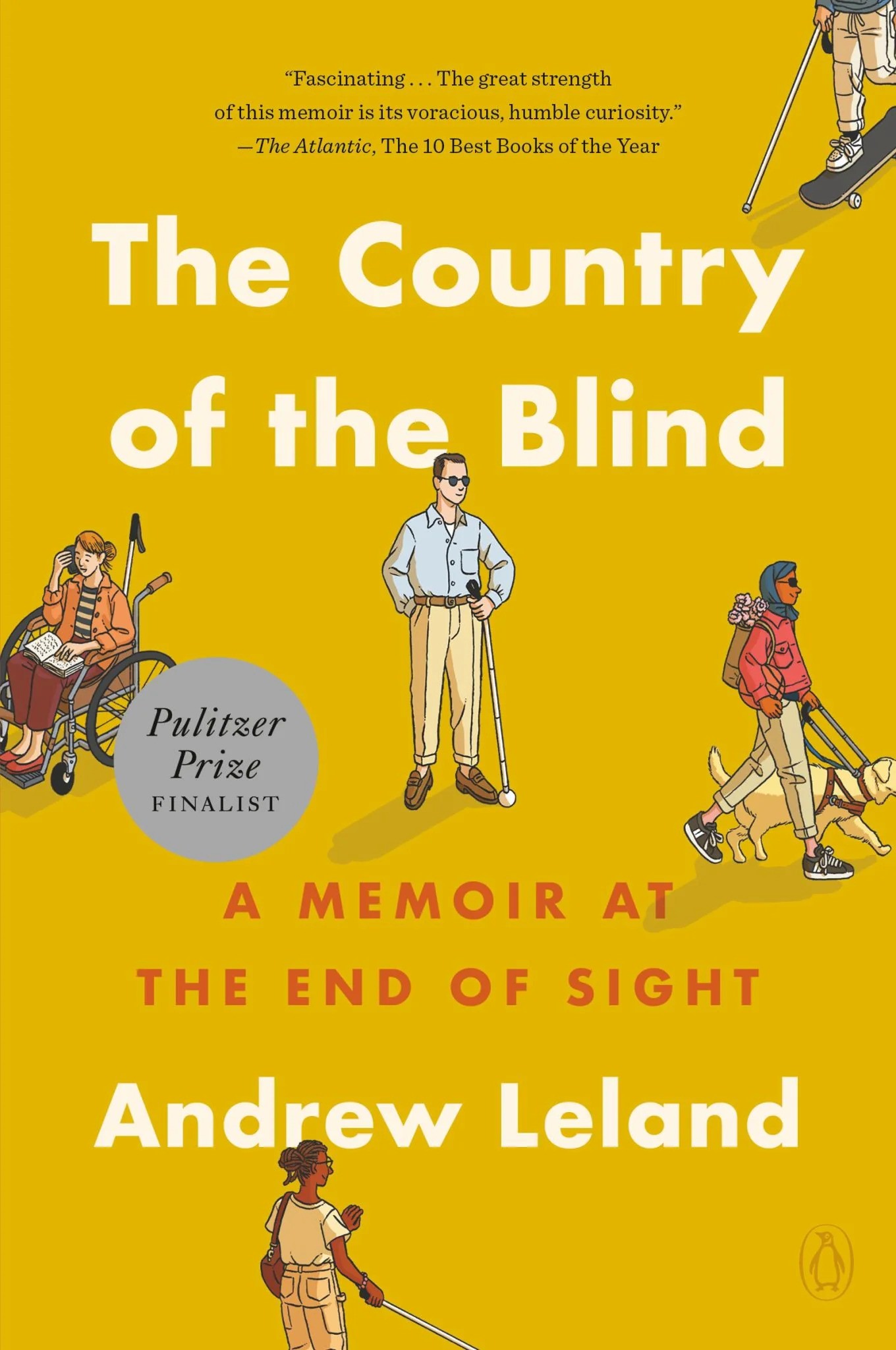
I read The Country of the Blind: A Memoir at the End of Sight by Andrew Leland. This was a brilliant first-hand account of one person’s experience with sight loss and his quest to learn about the history and culture of blindness. It was rich and fascinating.

Book cover of The Country of the Blind: A Memoir at the End of Sight by Andrew Leland. The cover is yellow-orange with drawings of blind people experencing life, with various genders, races and abilities. One woman is in a wheelchair, one man has a guide dog, another has a cane.

Over a period of at least a month, take positive steps to improve the experiences of those with your chosen disability.

I emailed my local councillors to raise awareness of new legislation around reasonable adjustments in schools for children with vision impairments.

I have signed up to Guide Dogs to learn more about their campaigns and help where I can.

I made efforts to add image description to all my picture uploads on my blog and social media. I also made efforts to use camel case in hashtags as they are helpful to screen readers.

Date completed: 31 March 2025

Rebel Badge Club: Advanced Rebel Community

I’ve realised that I can claim the Advanced Rebel Community badge!

  • I’ve been an active member of the Facebook group since I joined in 2022.
  • I have organised 3 meetups in my local Rebellion – a Thames Path walk, a wild swimming evening and a rage room.
  • I’ve completed my 5 Meet-Ups badge.
  • I’ve taken part in the Rebel Cup each year and got 305 points last year.
  • I’ve acted as a Patrol Leader at a couple of Meet-Ups.
  • I’ve been an active member of the Rebel Council since 2022.

Date completed: 1 January 2025

Rebel Badge Club: Advanced Community Service

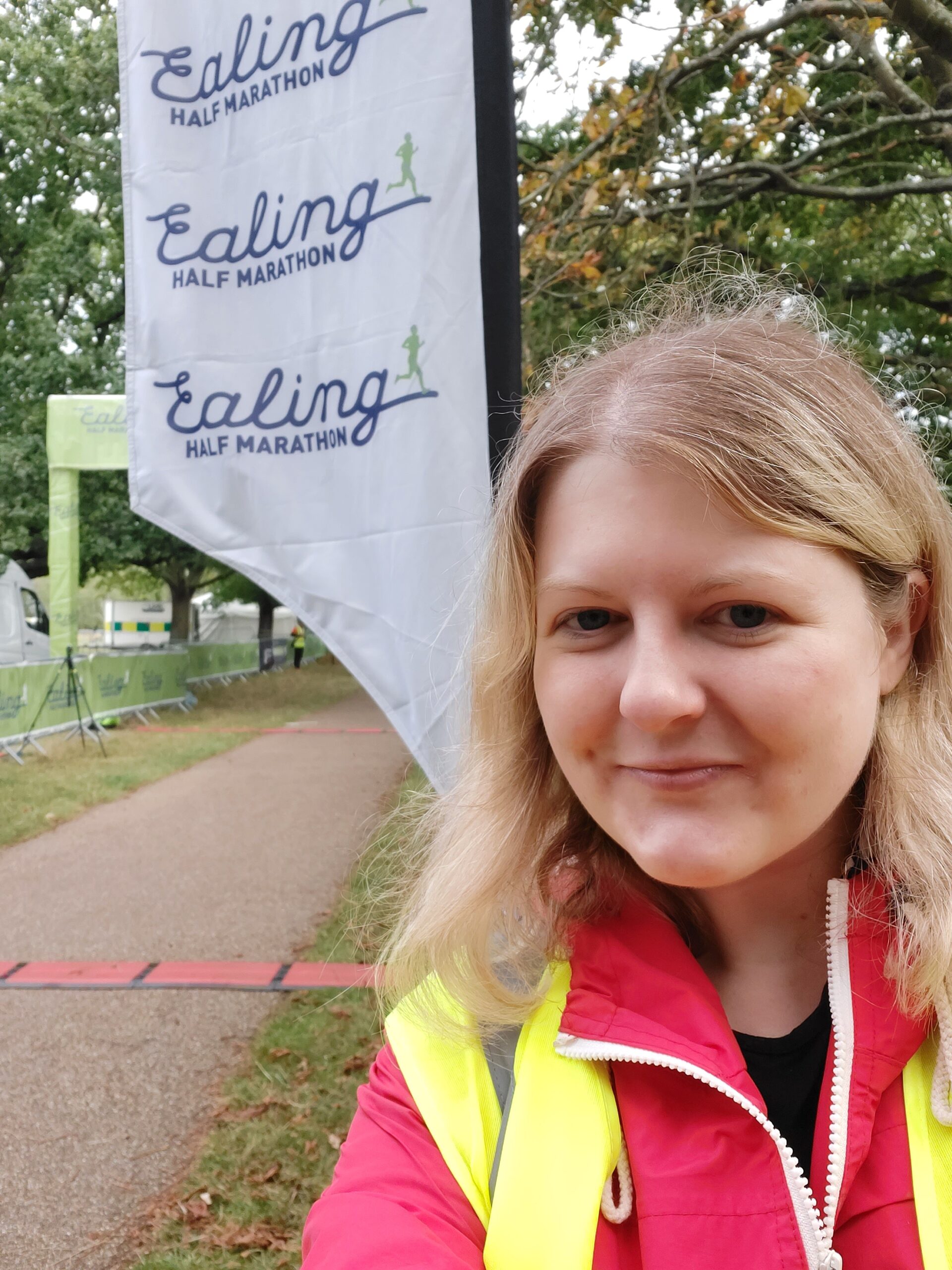
Me in a high-vis at Ealing Half Marathon

I’m really pleased to have achieved my Advanced Community Service badge. Loads of Rebels were already active volunteers when they joined up, but I wasn’t – I hadn’t volunteered for years. However, as part of my Community Service badge and my Bronze Maverick, I signed up to steward at my local theatre and completed six months’ service there. I then continued for another 18 months in order to achieve Advanced Community Service, tallying up approximately 100 hours.

I also volunteered at three one-off events to gain my badge. These were:

  • A harvest mouse release event organised by my local wildlife group – this was my favourite as the mice were so cute!
  • An Open House London session, assisting members of the public at St Augustine’s Tower in Hackney
  • Ealing Half Marathon, acting as a marshal near the finish line.

I definitely plan to continue volunteering at my local theatre, and will keep an eye out for any one-off events I could potentially help out at.

Date completed: 19 July 2024

Rebel Badge Club: Politician

I’d had my eye on the Politician badge for a while, and the announcement of the 2024 UK General Election seemed like the perfect time to work on it. I completed it on the day of the election.

Have a working knowledge of the political system in your country.

I read the book British Politics: A Very Short Introduction by Tony Wright. I also found the booklet How it works. Parliament, government and you which is produced by the UK Parliament and is a good general guide.

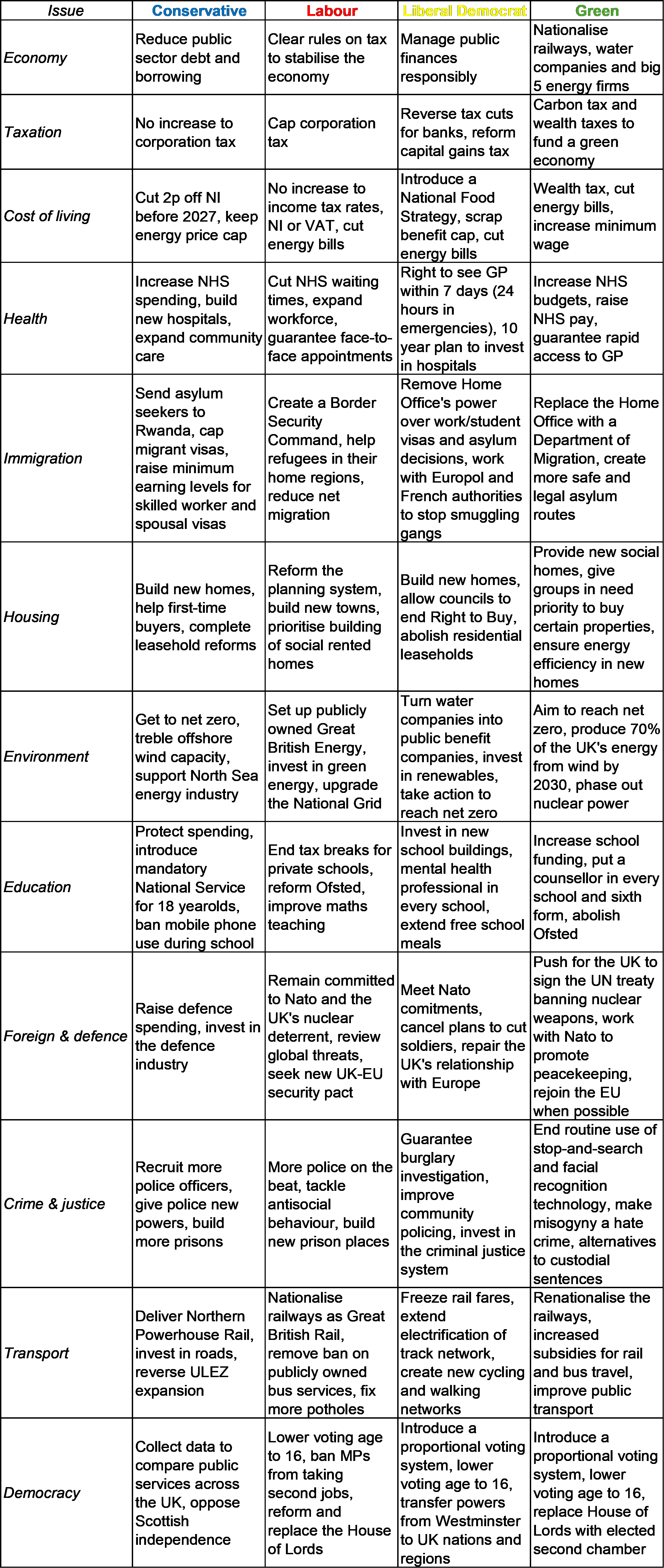
Research the four largest political parties in your country.

I looked at the election manifestos for the four largest parties in England (there are parties with more seats in the House of Commons than the Green party – at least there were before the dissolution of Parliament – but they are Scottish, Welsh or Northern Irish parties so I can’t vote for them).

Choose at least eight political issues. Map out your beliefs relating to those political issues. Which party has the closest manifesto in relation to each issue?

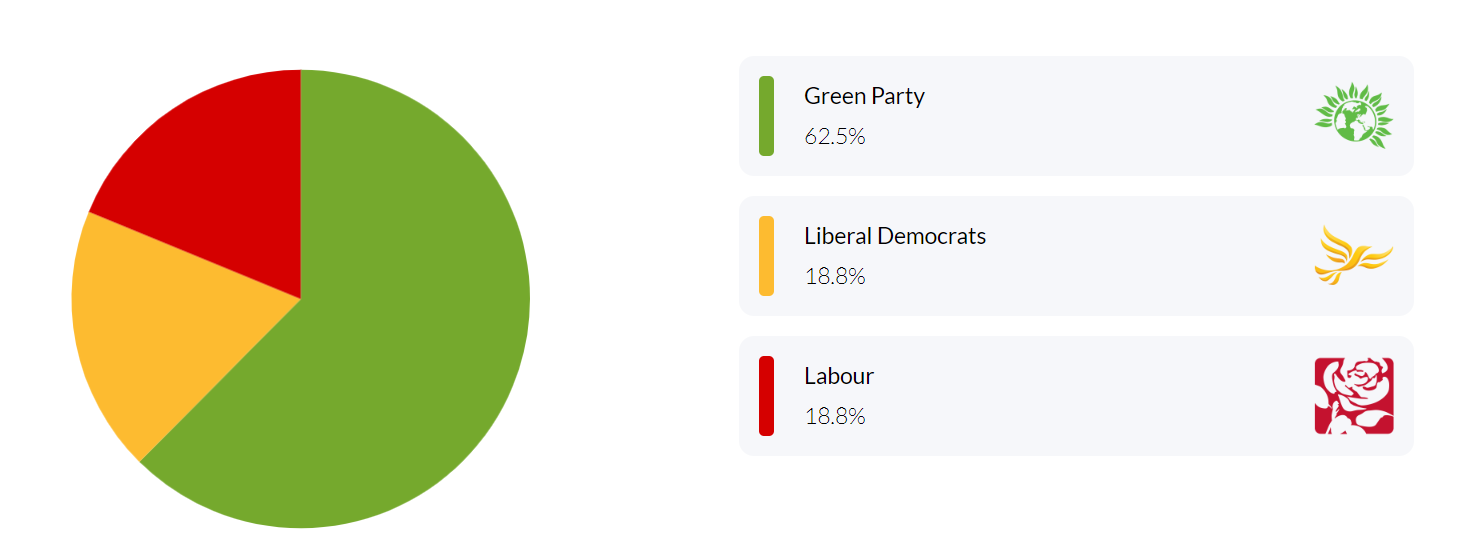
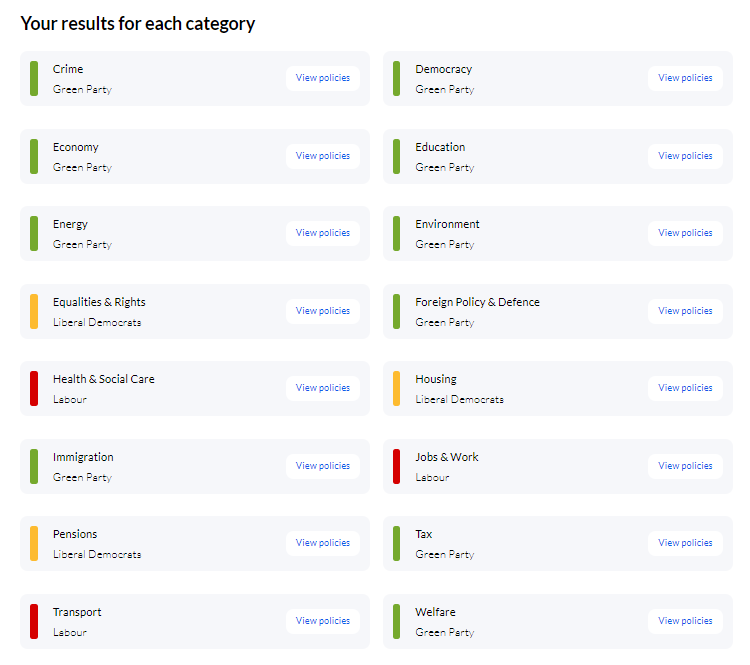
I used the website voteforpolicies.org.uk/ to select the manifesto policies most aligned with my views. In the end, my beliefs were most closely aligned to the Green party, with smaller percentages for Labour and Liberal Democrat.

Image of a pie chart showing whose policies I agree with

Image showing my results for each category

What percentage of people in your country currently votes? Are there any groups of people who are under-represented?

67.3% of eligible individuals voted at the last General Election in 2019. Groups who are less likely to vote than others include younger people, people with fewer qualifications, people with lower socio-economic backgrounds, people who were born overseas and people from ethnic minority groups.

People might not vote because they do not have the correct ID (see below), are unable to register to vote, find it difficult to get to a polling station or don’t feel as if they know enough about what they are voting for. Others might feel disenfranchised, and that their vote will not make a difference.

You now need ID to vote in the UK which is a barrier to voting particularly among the groups above. Reversing this would help increase voter turnout, as would compulsory voting, automatic voter registration, engagement with the public and voting age reform. Personally I’m not sure I agree with compulsory voting. I always want to encourage people to vote, but forcing them to do so doesn’t seem right.

Write a speech about a political issue which is close to your heart.

This last clause was a choice of several. I chose to write a speech about libraries, because this is something I feel quite strongly about.

Date completed: 4 July 2024

Rebel Badge Club: Historian

I actually have a degree in History, so I was really looking forward to the Historian badge. Doing the badge has reminded me how much I love studying history and how much I miss reading around topics, weighing the evidence and coming to my own conclusions.

Understand the difference between a primary and secondary source.

A primary source is an authentic source with direct access to the time period or experience: e.g. letters, documents, wills, photographs, paintings, diaries.

A secondary source is one that is removed from firsthand experience in some way: e.g. a textbook or a book written by an historian.

Primary sources tend to be raw data, while secondary sources are usually interpretations of that data.

Compare and contrast two or more perspectives of the same historical event.

I have chosen to look at the events in India in 1857, commonly called the Indian Mutiny but also known as the Great Rebellion, the Revolt of 1857, the Indian Insurrection, and the First War of Independence. These events played out as an uprising against the rule of the British East India Company.

The traditional explanation for the mutiny is that new rifle cartridges were introduced in early 1857, believed by infantrymen (sepoys) to have been greased by cow and pig fat, which was insulting to Hindus and Muslims respectively. As a result, the soldiers rebelled against their officers.

I read three books on the topic:

Saul David, The Indian Mutiny, Penguin, 2002

Julian Spilsbury, The Indian Mutiny, Phoenix, 2007

William Dalrymple, The Last Mughal, Bloomsbury, 2009

Saul David’s work explores the causes of, and progress of, the mutiny as it developed throughout India. He suggests that the causes of the mutiny were primarily economic, professional and political. The British East India Company had recently taken over more or less every territory, culminating in the annexation of Oudh, from which a large proportion of the Bengal Army came. David suggests that many soldiers would have preferred to go back to the old days of war and plunder, where they had the chance of becoming rich by collecting spoils of war. The British also lacked understanding of local rules and traditions of land ownership.

David argues that mutineers wanted to replace their colonial overlords with traditional Indian rulers, mainly because they thought service to these new overlords would be more rewarding. There was also widespread dissatisfaction with uniform, housing and pay. He remarks that older soldiers were most likely to remain loyal, because they had more to lose – such as their pension.

However, he also suggests that a change in the relationship between the British and Indians helped to contribute to the rebellion, arguing that soldiers were more likely to mutiny if they didn’t have a longstanding, respected officer as leader. When the British first came to India, they often integrated into society, taking Indian wives and mistresses and embracing local culture. In more recent years, a division had become more apparent: for instance, many British officials now married before arriving in India, and with their white wives and families remained aloof from local customs, even looking down on them.

Julian Spilbury’s thoughts are along similar lines to David’s. He points out the British soldiers’ increasing distance from Indian troops. The conquest of Oudh meant that sepoys lost the right of petition in the courts to the British Resident at Lucknow, a privilege which they greatly valued. Once the Sikhs of the Punjab had been defeated, the last independent nation state in the area had gone, and sepoys feared that they would be sent overseas – something that high-caste Hindus in particular feared. Victory also meant a pay cut for the soldiers, as they were no longer entitled to extra allowances once Scinde and the Punjab became British provinces.

Spilsbury does touch on possible religious reasons for the uprising. The growing evangelical lobby in Parliament meant that missionaries were sent to India in increasing numbers, and there was a fear among Indians that they were going to be forcibly converted to Christianity.

William Dalrymple’s work is different from the others because he doesn’t draw on only English sources. In his research he used Persian and Urdu documents relating to Delhi in 1857, known as the Mutiny Papers, from the National Archives of India. He also uses plenty of other sources which expose the brutality of the British response to the uprising (English-language sources tend to focus on the atrocities committed against the British).

Dalrymple, in common with Spilsbury, argues that the growing disconnect between the British and Indians helped to fuel the uprising. He suggests that the British became increasingly arrogant as they had defeated their Indian rivals as well as the French.

He also emphasises the religious reasons for the revolt: the growth of evangelical Christianity and the plans to impose Christianity on Muslims and Hindus. He argues that the mutiny was primarily a war of religion, as well as a more generalised desire for freedom from foreign domination. He notes that participants cited religious reasons for their involvement rather than social or economic ones. In addition, he points out that British people who had converted to Islam were not hurt in the rebellion, whereas Indians who had converted to Christianity did suffer. While focusing primarily on events in Delhi, Dalrymple suggests that rather than a coherent mutiny or war, there were several different uprisings and acts of resistance across Hindustan (modern-day north India) which had different causes and rationales depending on location and circumstances.

Choose a historical figure, read a book about them, and create a timeline of the major events in their life.

I read Robert K. Massie’s Catherine the Great: Portrait of a Woman (Random House, 2012), a biography of the Russian empress. My timeline is below.

Identify a critical moment in history and explain its significance.

There are so many choices I could have made for this clause, but I’ve gone for the death of Arthur, Prince of Wales on 2 April 1502. He was the eldest son of Henry VII – the first Tudor king – and Elizabeth of York, and was married to Catherine of Aragon in 1501. Six months later, he died, possibly from the sweating sickness, at Ludlow Castle in Shropshire.

Arthur’s death meant that his younger brother Prince Henry became heir to the throne. He ruled as Henry VIII from 1509 to 1547. Henry married his brother’s widow, Catherine, and divorced her years later after she failed to bear him a son. One reason given for the divorce was that their marriage was invalid because Catherine had been married to Henry’s brother.

Without Henry VIII, England would not have broken with Rome, the dissolution of the monasteries would not have taken place, and the Church of England would not exist. Culturally, Henry VIII and his six wives are well known; if Arthur had reigned as king, Henry’s multiple marriages would not have happened. Six: The Musical would not exist!

The history of the sixteenth century would have looked very different. We would not have had Elizabeth I (or Mary I or Edward V). Since James VI of Scotland became James I of England after the death of Elizabeth I, who died without children, it is possible that England and Scotland might never have been united if Arthur and his heirs had ruled England.

Visit a museum or historical exhibit. Consider how they approach the subject and the choice of artefacts and exhibits. If you were tasked with creating an exhibition on the same era, event or topic, what would you change?

I visited the exhibition Legion: life in the Roman army at the British Museum. I loved the exhibition and liked how they chose a particular soldier to follow throughout his army career. I loved how they made the exhibition appeal to children through the use of a cute rat character. The items on display were incredible, including an original longshield and several grave markers, as well as tablets granting retired soldiers citizenship.

It would have been interesting to follow two soldiers, one a citizen and one not, to see how their experiences contrasted. It would also have been good to find out more about actual battles: how they played out, soldiers’ experiences and so on.

Choose a historical period, event, or topic, and study it. Read or listen to at least two books, and watch at least one film or documentary about it. Present your findings in the format of your choice – e.g. a scrapbook, video, exhibition.

Mindful of recent events, I chose to study the Israel-Palestine conflict. It’s an incredibly complex and emotive topic, and though I’ve learned a great deal I want to continue to study it. My booklet showing what I learned is below.

Date completed: 28 June 2024

Rebel Badge Club: Rebel Community

Screenshot of a post I made on the RBC Facebook group

Rebel Community is a new badge, released in advance of Book 3. Looking through the clauses, I realised I’d already completed most of them, and made a concerted push these last few months to finish off the badge.

Facebook Group

I’ve been an active member of the group since April 2022 when I first joined. In fact, these days I spend more time there than any other group on Facebook!

Local Rebellion

I’ve attended several local Rebellion meetups, playing board games, trying out axe throwing, and completing expeditions.

Meet Ups

I’ve attended several Big Rebel Meet Ups, the summer and winter Rebel Fests, and Rebel Summer Camp.

Rebel Cup

I’ve taken part in the Rebel Cup throughout 2023, as a member of Rosa Patrol. I’ve worked hard this year and gained over 200 points.

Other Rebel Groups

I’ve been an active member of the Rebel Council since the end of 2022.

Spread the Word

I’m always sharing Rebel activities on Instagram and every time I attend a random activity (foraging, survival, skating) I mention the group. To my knowledge no one has joined yet based on my recommendation, but I gave a copy of the book to a friend who’s shown interest.

Date completed: 15 December 2023

Rebel Badge Club: Emergency Helper

This badge was one that seemed to be pretty difficult, until I found a cheap three-day first aid course, and then things just fell into place! It was the last Global badge I had to complete from the first book.

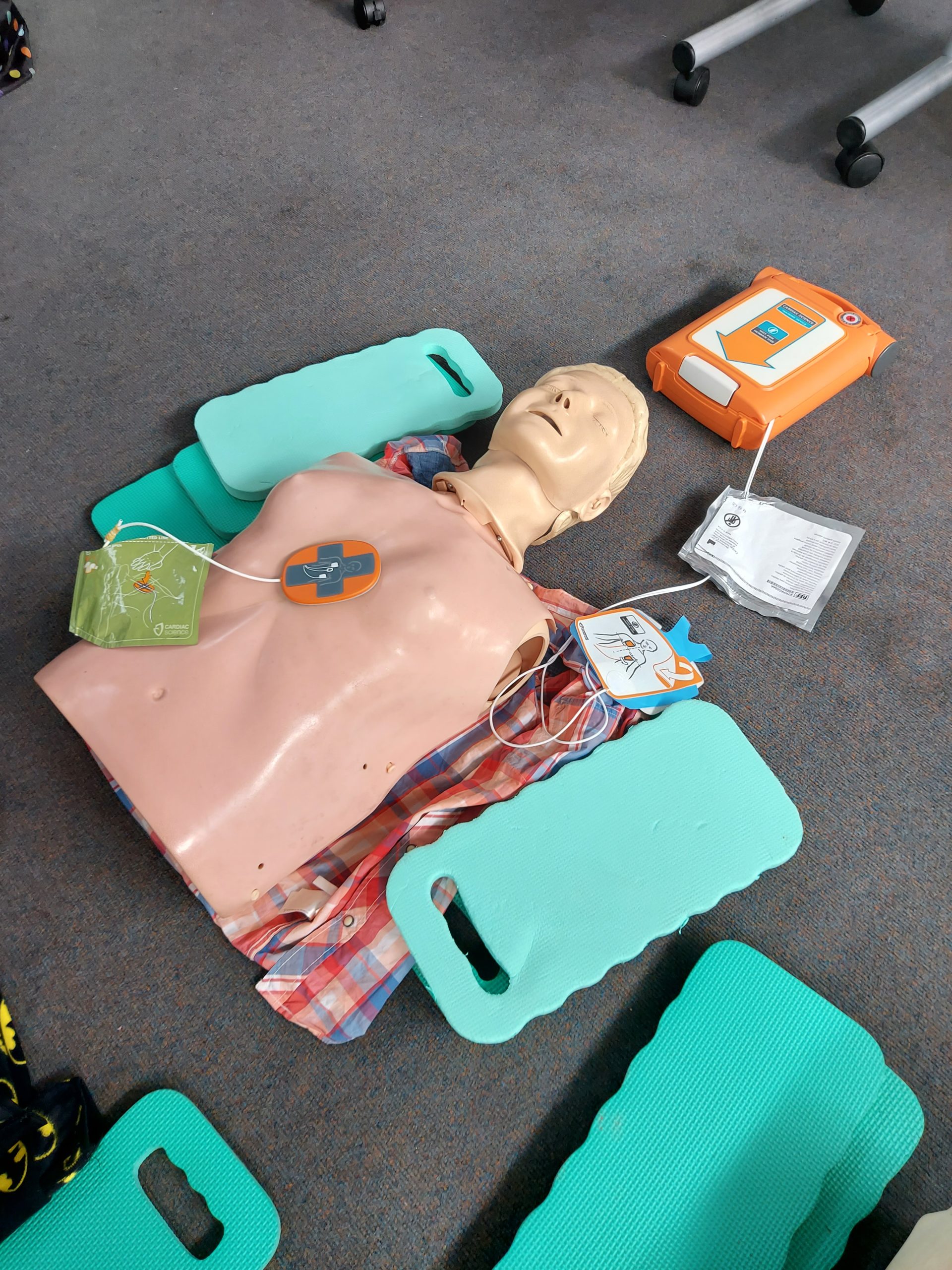
Complete at least a 2 day first aid qualification which includes CPR, use of an AED, choking, anaphylaxis, severe bleeding and strokes.

I was a bit worried about how I was going to achieve this clause, as first aid courses are quite expensive, but I found one local to me that was amazingly cheap (I think it was funded somehow?) and covers all the above and more. I really enjoyed the course, and will definitely take a refresher in 2 years’ time to keep my skills up to date.

Swim 50 metres fully clothed and demonstrate how to tow another person to safety in deep water.

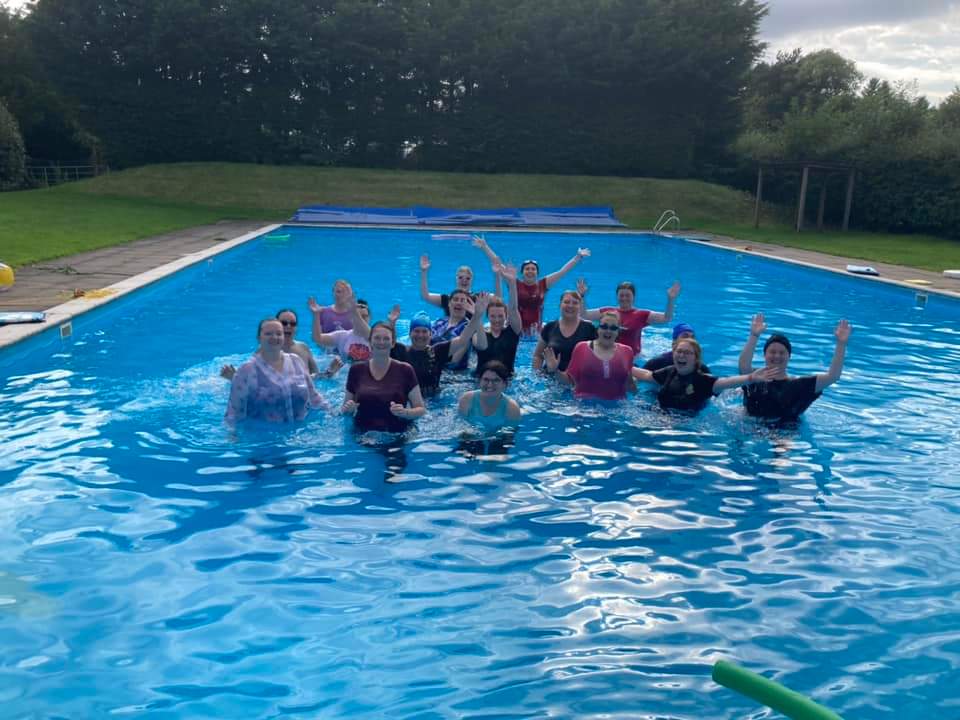
I got to do this at Rebel Camp – there was a session on lifesaving. We all got into the pool in our pyjamas and swam 50m, then practiced towing each other multiple times.

Demonstrate how to rescue someone who is drowning without entering the water.

SHOUT to attract attention

REACH out to them if they are close enough, otherwise extend your reach with a tree branch or a pole

THROW something that can float

WADE in as far as you can to extend your reach

ROW a boat to the person

Know how to escape a car which is being submerged.

  • Unbuckle your seatbelt
  • Open or break a window
  • Get any children out first
  • Escape through the window
  • Swim to the surface. If you don’t know which way to swim, look for light and swim toward it, or follow any bubbles you see as they will be going up.

Know how to deal with clothing that has caught fire.

STOP – don’t panic and run, this will fan the flames

COVER – hands in front of your face to protect your face, eyes and airways

DROP – drop to the ground

ROLL – roll backwards and forwards to smother the fire

Bystanders can help by: throwing water on the fire, using a water fire extinguisher, using a fire blanket or other non-flammable blanket/piece of clothing to help douse the fire.

Know how to treat a fire which has been caused by electricity.

  • If there is an electrical fire, pull the plug out, or switch off the power at the fuse box – if it’s safe to do so. Sometimes this can stop the fire immediately.
  • Smother small fires with baking soda.
  • Use a fire blanket, or heavy item of clothing.
  • Use a class C fire extinguisher if available.
  • Don’t take any risks – get out, stay out and call 999.
  • NEVER use water.

Know how to extinguish a burning pan of fat.

  • Turn off the heat as quickly as possible.
  • Cover with a metal lid to deprive the fire of oxygen.
  • Use salt or baking soda as an extinguisher.
  • Use a wet chemical fire extinguisher (if available).
  • NEVER use water.

Know how to switch off the gas, electricity and water mains in your home.

I didn’t think my landlord would be too keen if I asked for this info, so I asked my parents about their house instead. The water can be turned off under the sink in the kitchen*, the electricity is on a switch in a box above the mirror in the hallway, and the gas flow to the cooker has a switch off point on the top shelf under the left cupboard beside the cooker. The boiler can be switched off via the cupboard in the kitchen.

*If the water stop tap fails you have to go out onto the path and turn off the main tap into the house. (This actually happened to us at our last house, so important to know!)

Know how to act if you are the first to the scene of a car accident.

  1. Park your car with hazard lights/headlights, facing approaching traffic if possible
  2. Identify and mitigate any potential dangers, e.g. switch off engines, ban smoking
  3. Call for help: emergency services, assistance from bystanders
  4. Assess casualties with a primary survey. The quietest are likely to be the most severely injured.
  5. Clear airways and perform CPR where appropriate.
  6. Treat the casualty where they are in case of potential spinal injuries.

Create a first aid kit.

I don’t have a car, so I’ve got myself a first aid kit for the home, just in case. I will take it with me when I go camping!

Date completed: 27 August 2023