Secrets of the Thames: Mudlarking London’s lost treasures – London Museum Docklands

Secrets of the Thames entrance

At the weekend I also went to see the Secrets of the Thames exhibition at London Museum Docklands. I find the concept of mudlarking fascinating (while knowing that I’m far too impatient to enjoy it for real), and this exhibition is all about the amazing treasures that have been found in the river, featuring over 350 mudlarked objects.

Humans have lived alongside the Thames for over 10,000 years. Their lives have left traces in and beside the river as London developed. The earliest mudlarkers were active in the early 1800s, searching the Thames foreshore for coal, metal and rope in order to make their living. Today, mudlarkers need to be licensed by the Port of London Authority, and they primarily search for historical treasures. Around 700 finds are recorded each year.

There are some absolutely fascinating items on display, including the Iron Age Battersea Shield, a medieval ring, a Viking dagger and eighteenth-century false teeth, as well as a sixteenth-century ivory sundial (the two halves of which were discovered by different mudlarks years apart), a typeface, and numerous clay pipes.

This exhibition is a fascinating testament to London’s history and the secrets that are hidden within the Thames.
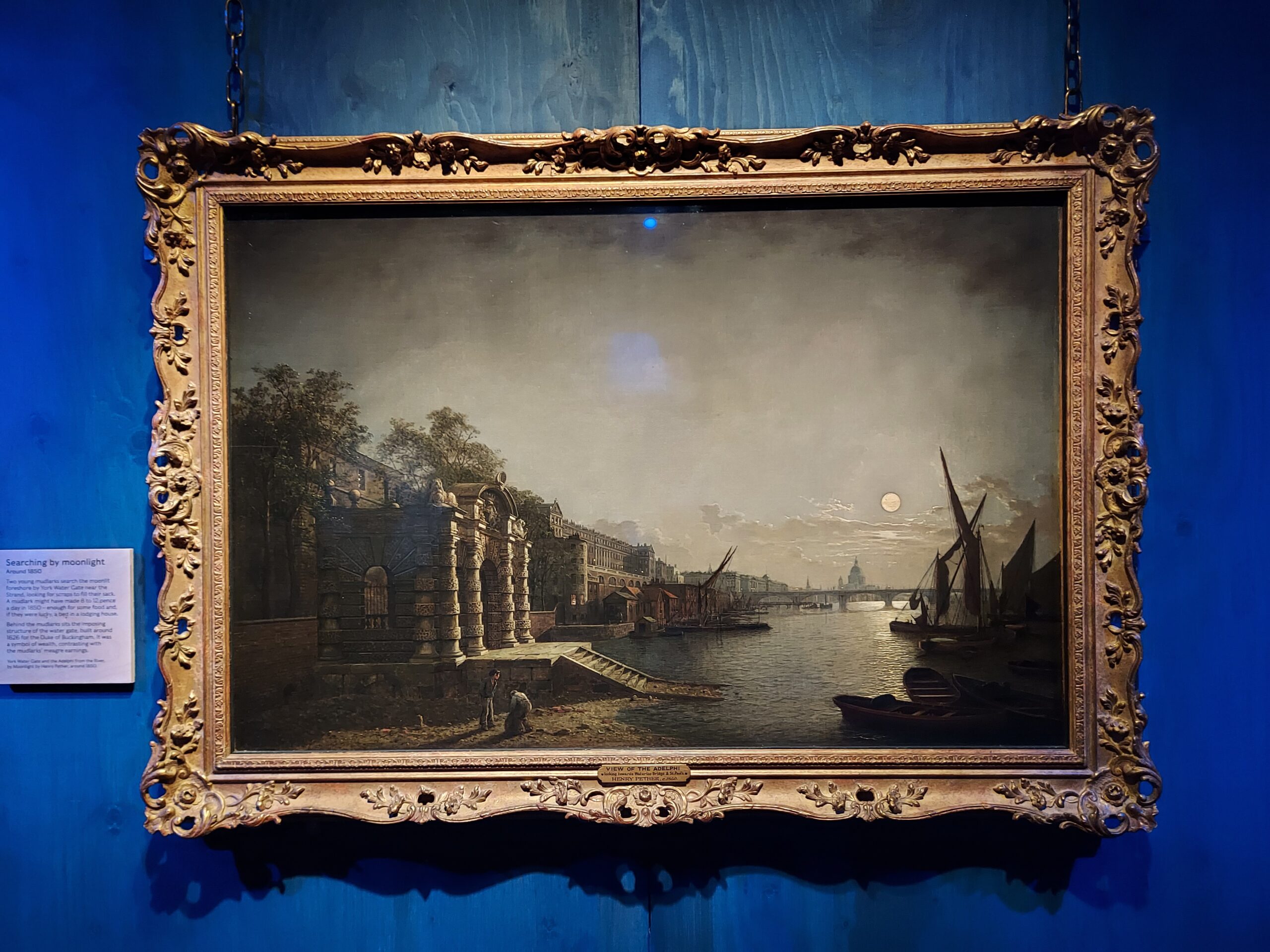
Painting of the Thames at moonlight

Thames Tidefest: History Walk

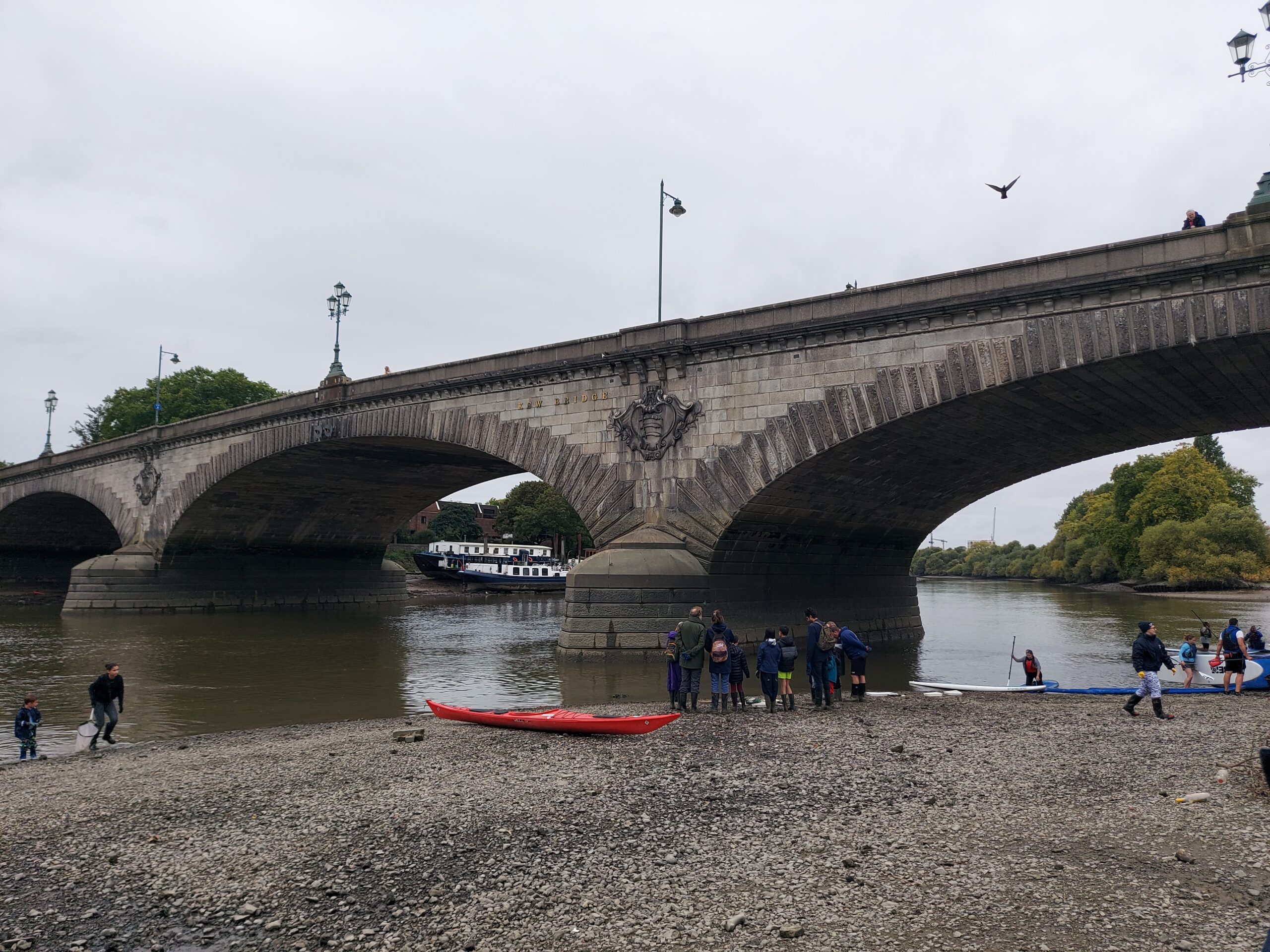
I attended a history walk and foreshore exploration on the banks of the Thames by Kew Bridge, as part of the Thames Tidefest. The walk was run by expert and archaeologist Dr Fiona Haughey, who has worked on the Thames foreshore since 1993.

The Thames and a bridge

The Thames is a popular place for mudlarks to explore and discover fascinating artefacts. With a history dating back to Roman times, finds can span two millennia, including Roman jewellery, WW2 munitions, fragments of pottery and brick, tobacco pipes, ancient weaponry and more.

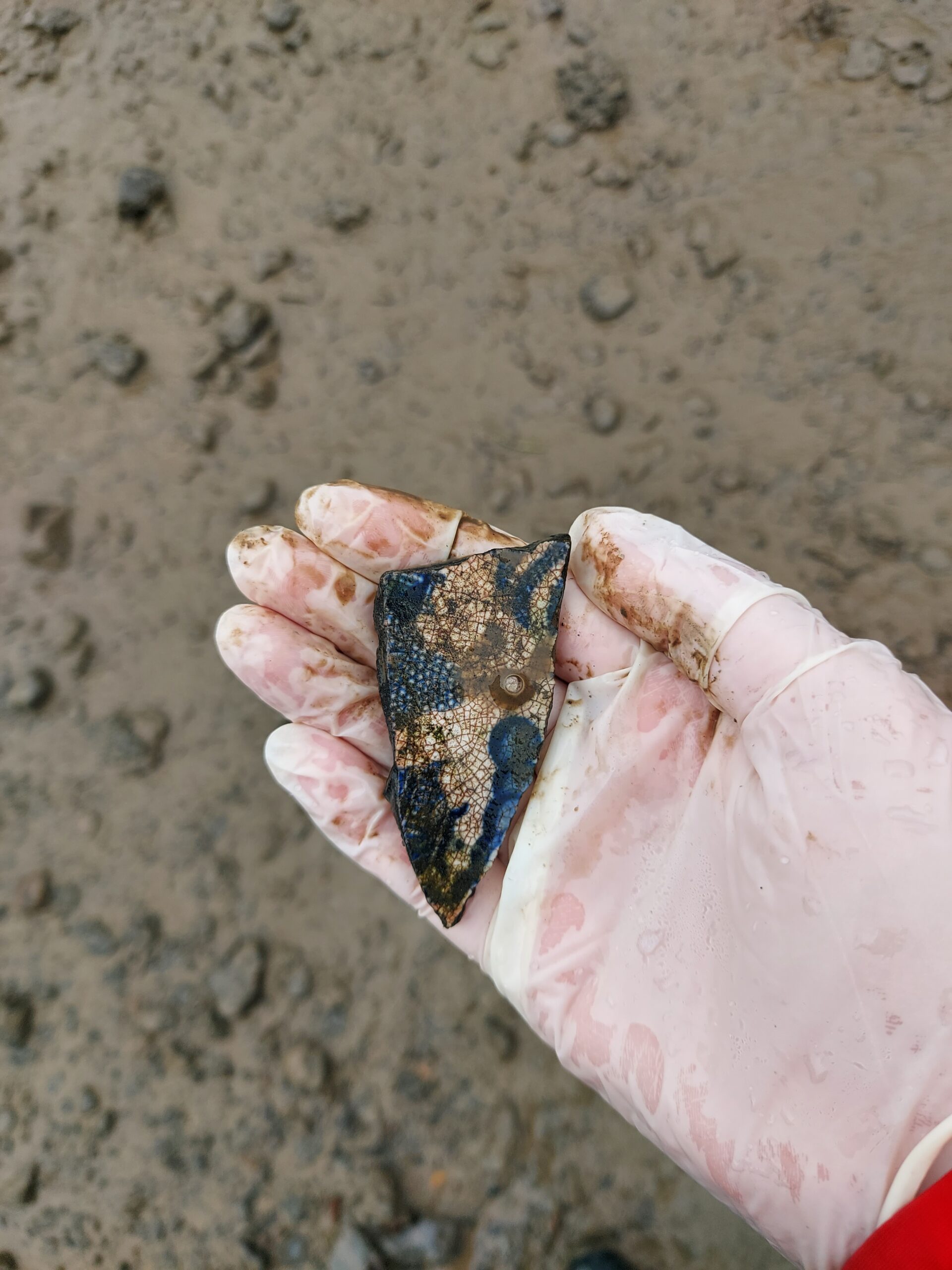
A mudlarking find

I didn’t manage to find anything particularly exciting myself (and without a mudlarking permit, wouldn’t have been able t0 keep it anyway), but still enjoyed the experience.

Secret Rivers – Museum of London Docklands

Secret Rivers exhibition

I managed to catch the Secret Rivers exhibition at the Museum of London Docklands on its very last day. The exhibition looks at the history of several of London’s hidden rivers, many of which have been covered over, re-routed or used for other purposes.

First to be examined was the Walbrook, which flowed through the heart of the City of London. This river was often used for ritual (the Temple of Mithras, which I’ve previously visited, was nearby), and the items found in it bear witness to its role at the centre of life in Roman times.

Secondly, the most famous lost river, the Fleet, was explored. This river was located outside of the City, and as such originally played a role at the heart of rural life, before an increasingly dense population helped to pollute the river (during the fourteenth century, people used to build houses with toilets extending out over the river, so that waste would drop directly into it – one of the items recovered from the river was a three-seat medieval toilet). Eventually it was covered and used as a sewer, though you can still swim in the Fleet up at Hampstead, where the outdoor pools are filled with water from this river.

From here, the exhibition explored the contrasting ways in which rivers were used. The Neckinger in Bermondsey, for instance, was heavily polluted and had several mills along its banks, while the Westbourne in west London was used to create the ponds in Hyde Park. The Tyburn, now covered over, has been the subject of a campaign to restore it and use it for fishing, while the Wandle has been uncovered at several points, making it a haven for wildlife. There is also the Lea, still used for recreational activities and transformed towards central London by the construction of the Olympic Park.

Finally, the exhibition looked at the works of art that have been inspired by the hidden rivers. Of particular interest to me were the various books, which I plan to seek out in the future.

An American in London: Whistler and the Thames – Dulwich Picture Gallery

The other week, I headed down to Dulwich Picture Gallery to check out the exhibition An American in London: Whistler and the Thames. The exhibition, which runs until the 12th of January, looks at Whistler’s early paintings of London and the Thames, alongside other photographs and artworks of the river at this period. I loved looking at the river and how it looked in the mid-nineteenth century. I also loved Whistler’s pictures, particularly the Nocturnes.