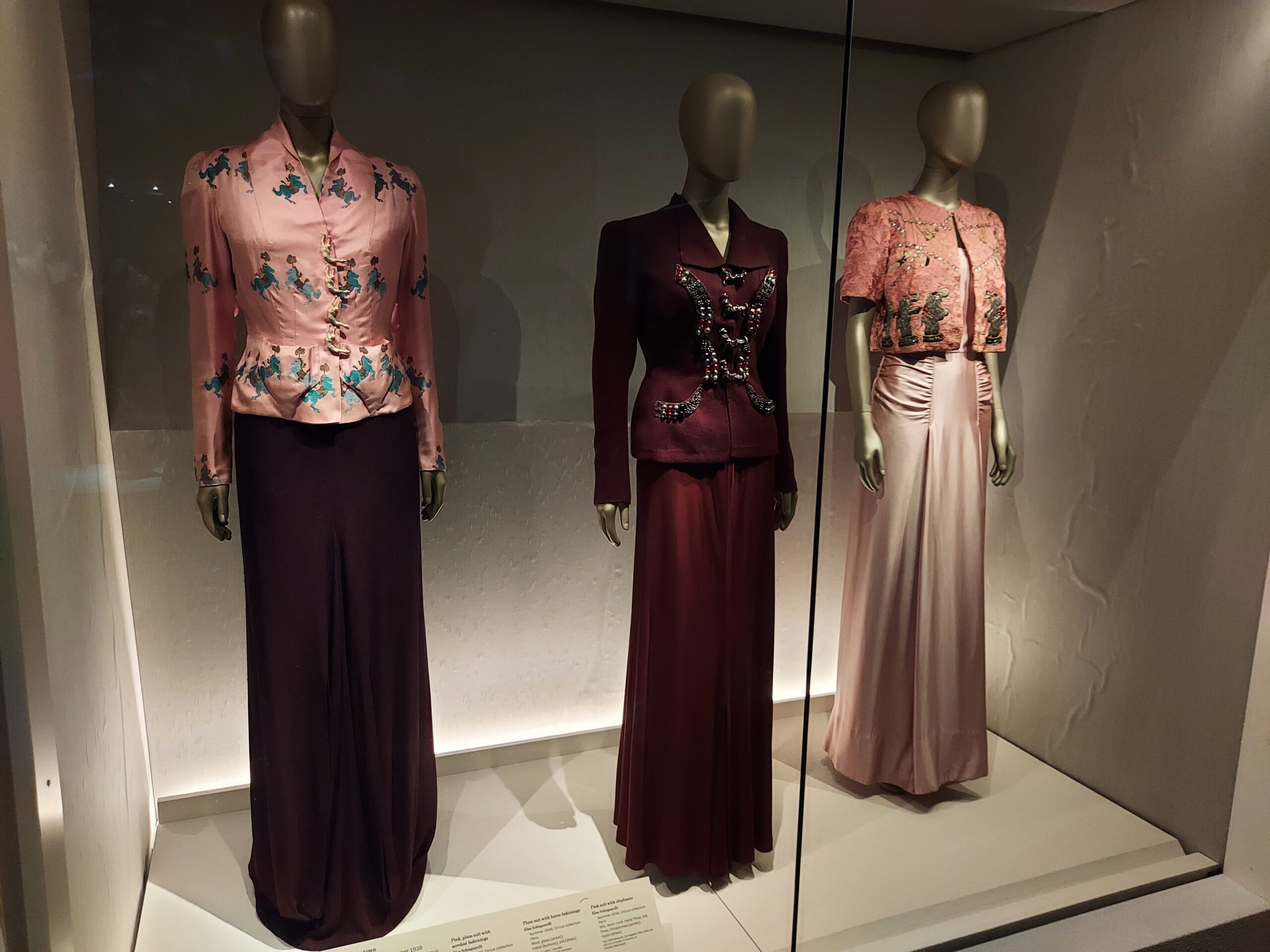
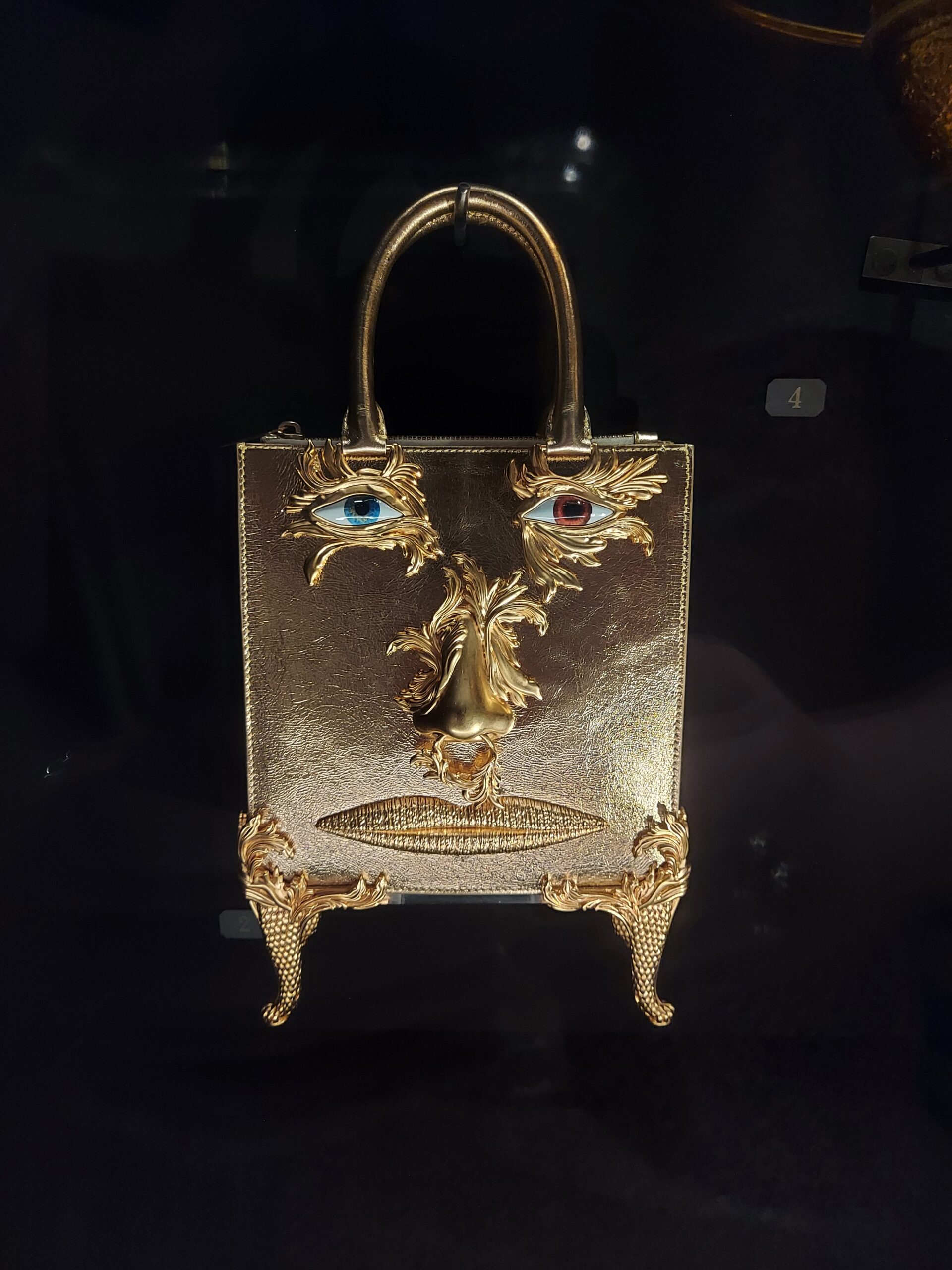
During my trip to London I visited the Schiaparelli: Fashion Becomes Art exhibition at the V&A. This is the UK’s first exhibition on Schiaparelli, and spans a century from Elsa Schiaparelli’s beginnings in the 1920s to the brand’s resurgence under current creative director Daniel Roseberry.
Born in Rome in 1980, Schiaparelli thought herself a plain child and, jealous of her sister’s supposed beauty, ‘planted’ flower seeds in her ears, nose and mouth, hoping they would bloom. The picture this image inspires in the mind’s eye is particularly surreal. Her first collection was launched in Paris when she was in her 30s, and featured sweaters with ‘optical illusion’ patterns suggesting bows or waistcoats.
The clothes, accessories and other items on display in this exhibition demonstrate Schiaparelli’s unique, surreal and quirky style. She was friends with Cocteau and Dalí, and it shows. Pieces from her collections are interspersed with pieces from the brand’s modern day revival, sharing the same surreal, unusual yet artistic qualities. I particularly loved the telephone dial compacts and the unusual bags, as well as the hat that resembled a shoe.
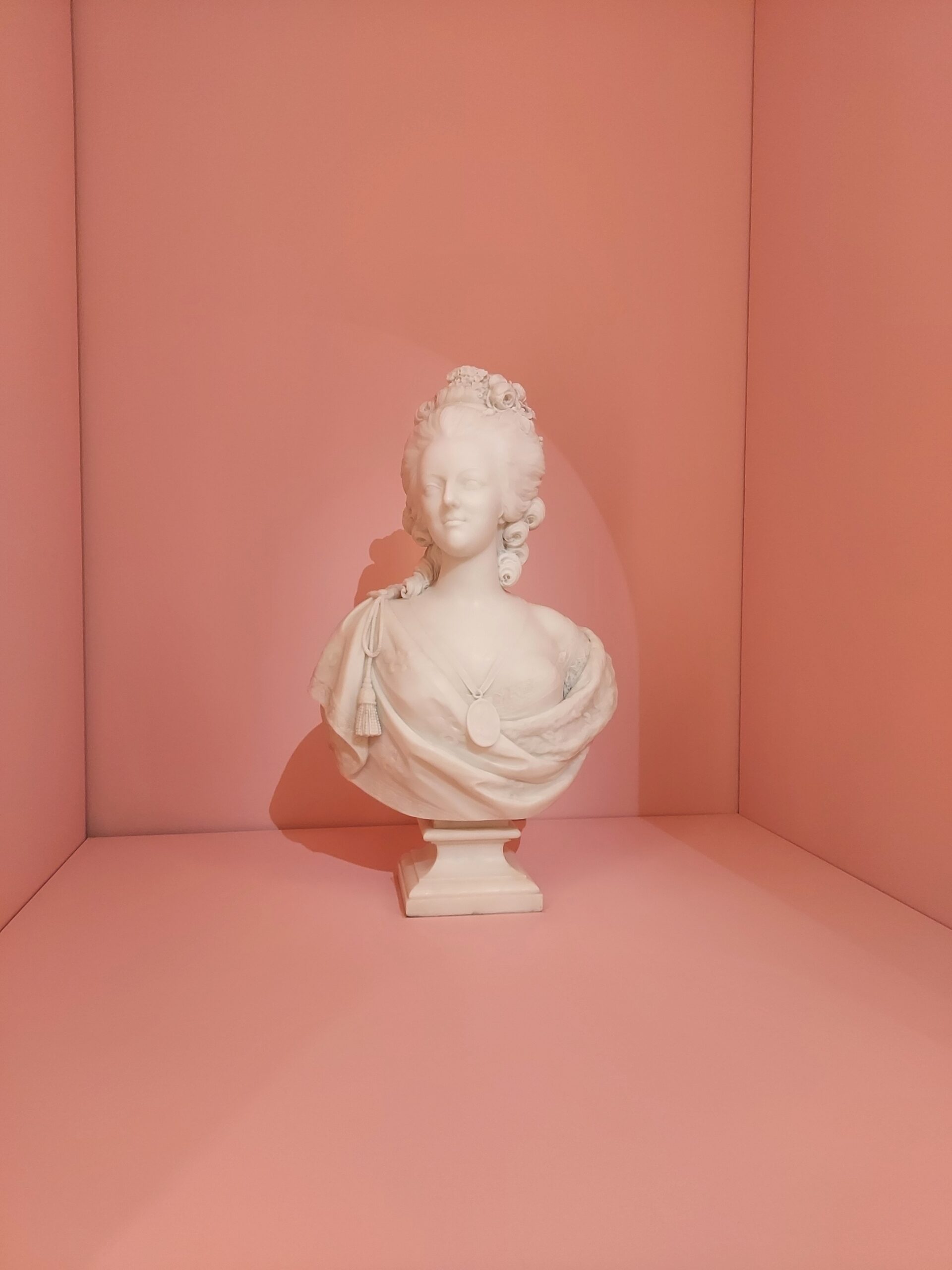
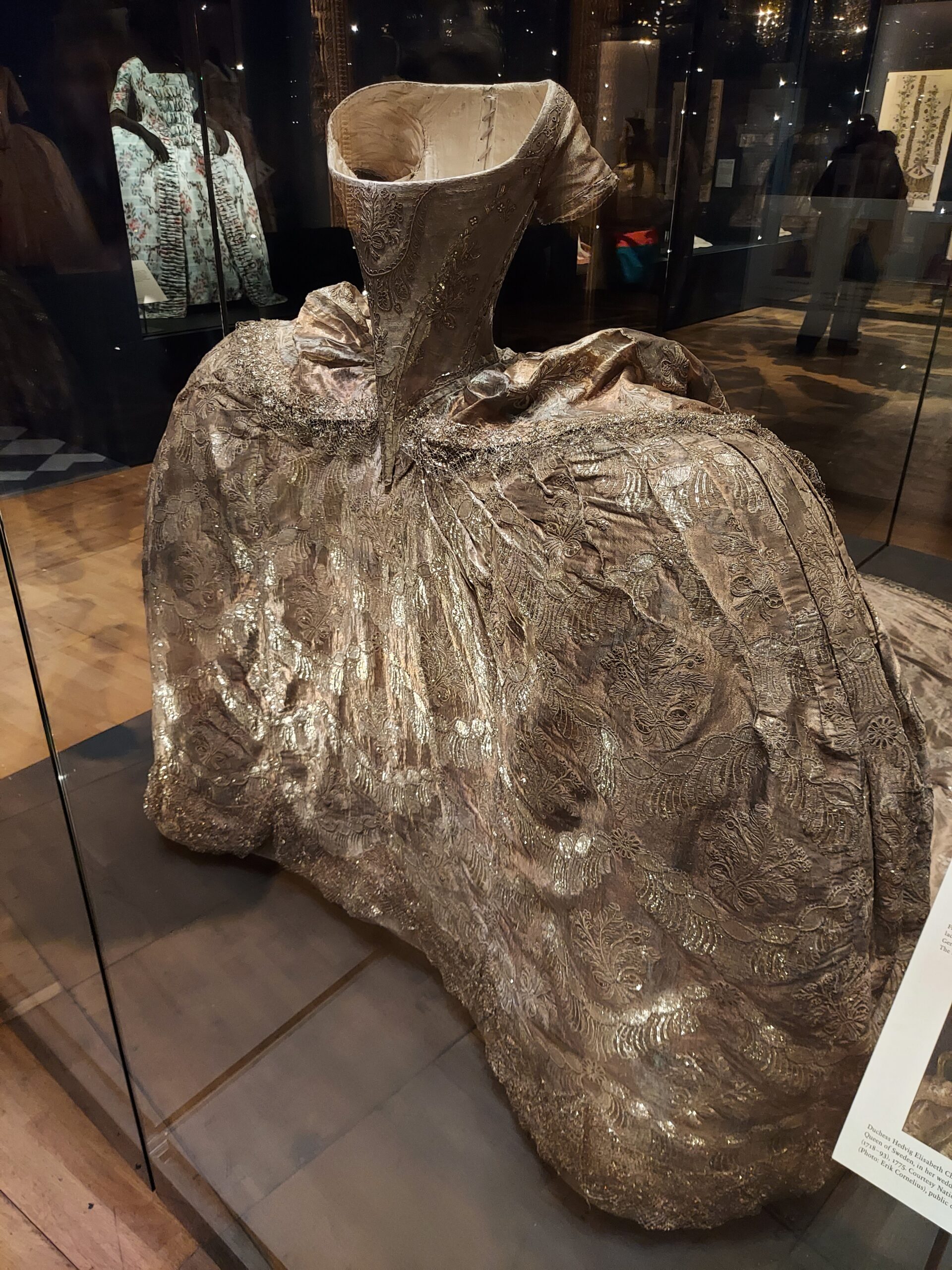
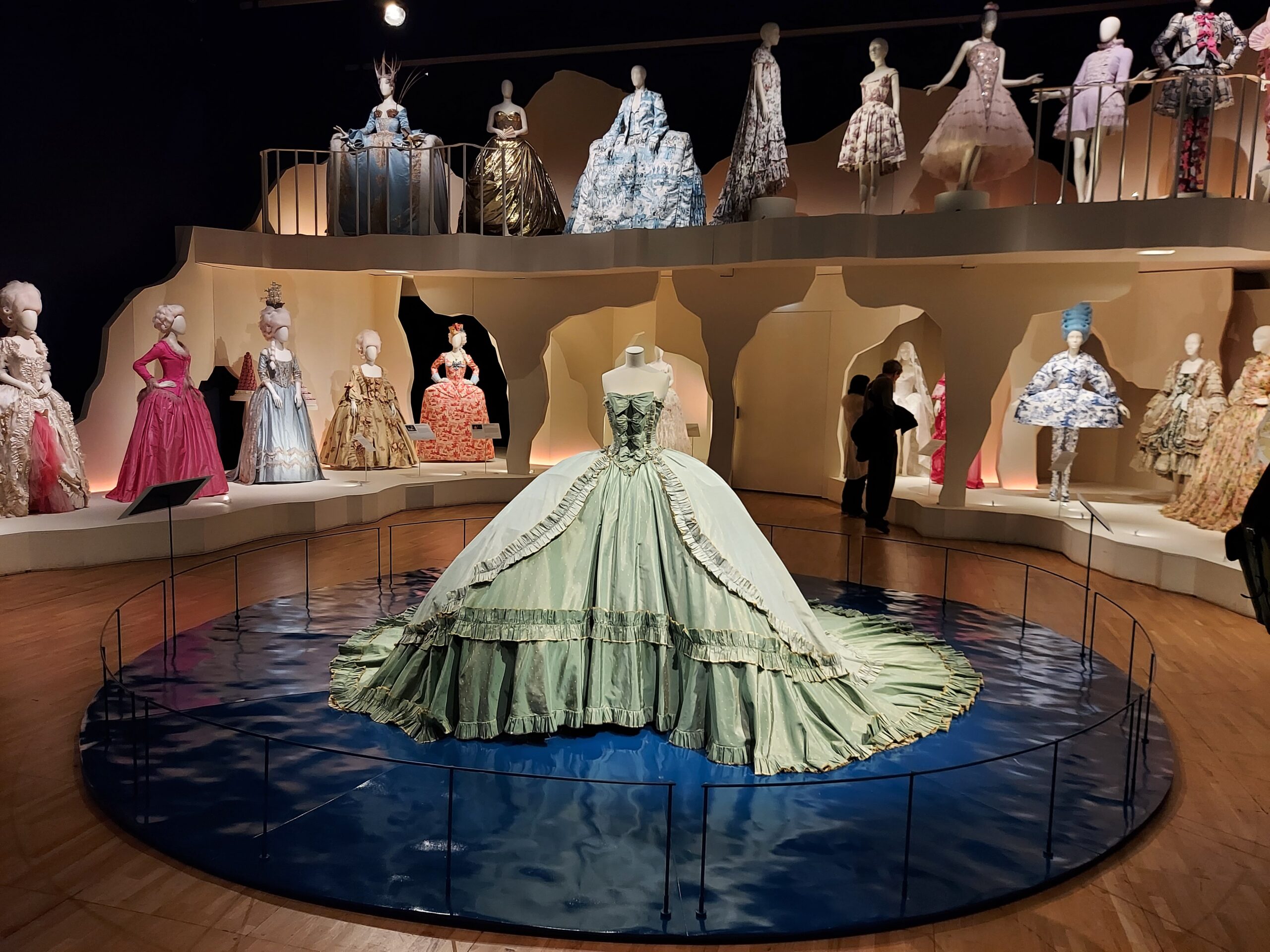
During my latest trip to London I visited the Marie Antoinette Style exhibition at the V&A. Marie Antoinette, Queen of France, is a controversial figure in history but the exhibition focused on her influence in terms of fashion and style, which has lasted to this day.
Daughter of the Empress of Austria, Maria Antonia Josepha Johanna von Österreich-Lothringen was sent to Paris aged 14 in order to marry the French Dauphin. She used fashion to make an impact, setting new trends with the help of her dressmaker, Rose Bertin. This was a way to showcase her power and influence as a woman and Queen. Many of her dresses, accessories and other possessions are on display in the exhibition.
The French public were unimpressed at their Queen’s show of wealth, and she became a beacon for their discontent, understandably though perhaps unfairly given there were plenty of aristocrats far more to blame for the state of the nation than she. The French Revolution followed soon after, and Marie Antoinette was executed along with the rest of her family, at the age of 37.
In more recent years, the French queen’s reputation has enjoyed something of a renaissance, at least where her sense of style is concerned. She was played by Kirsten Dunst in the 2006 Sofia Coppola film, channelled by Madonna in the 80s, and was the source of inspiration for numerous fashion designers. The second part of the exhibition focuses on her influence, which is considerable.
Overall, the exhibition is a must for anyone interested in history, fashion, and how the two coincide.
‘We entered Cosprop as ourselves and walked out as the person we were playing.’ – Helena Bonham Carter
I attended a late-night opening of the exhibition Costume Couture: Sixty Years of Cosprop at the Fashion & Textile Museum. The exhibition celebrates the 60th anniversary of the company Cosprop, founded by costume designer John Bright in 1965. Bright, who has won Oscars and BAFTAs for his work, has made a mark on film, TV and stage through his costumes and his work as a designer, maker, collector and historian.
Bright trained in fashion design at South-West Essex Technical College and School of Art, then worked in acting, stage managing and costume designing. He also began to collect costumes and antique clothing from Parisian and London flea markets. Other costume designers were attracted by his collections, and used them for research, costuming and stock hire. The film The Charge of the Light Brigade (1968) and the TV series War and Peace (1972) were instrumental in cementing Cosprop’s reputation.
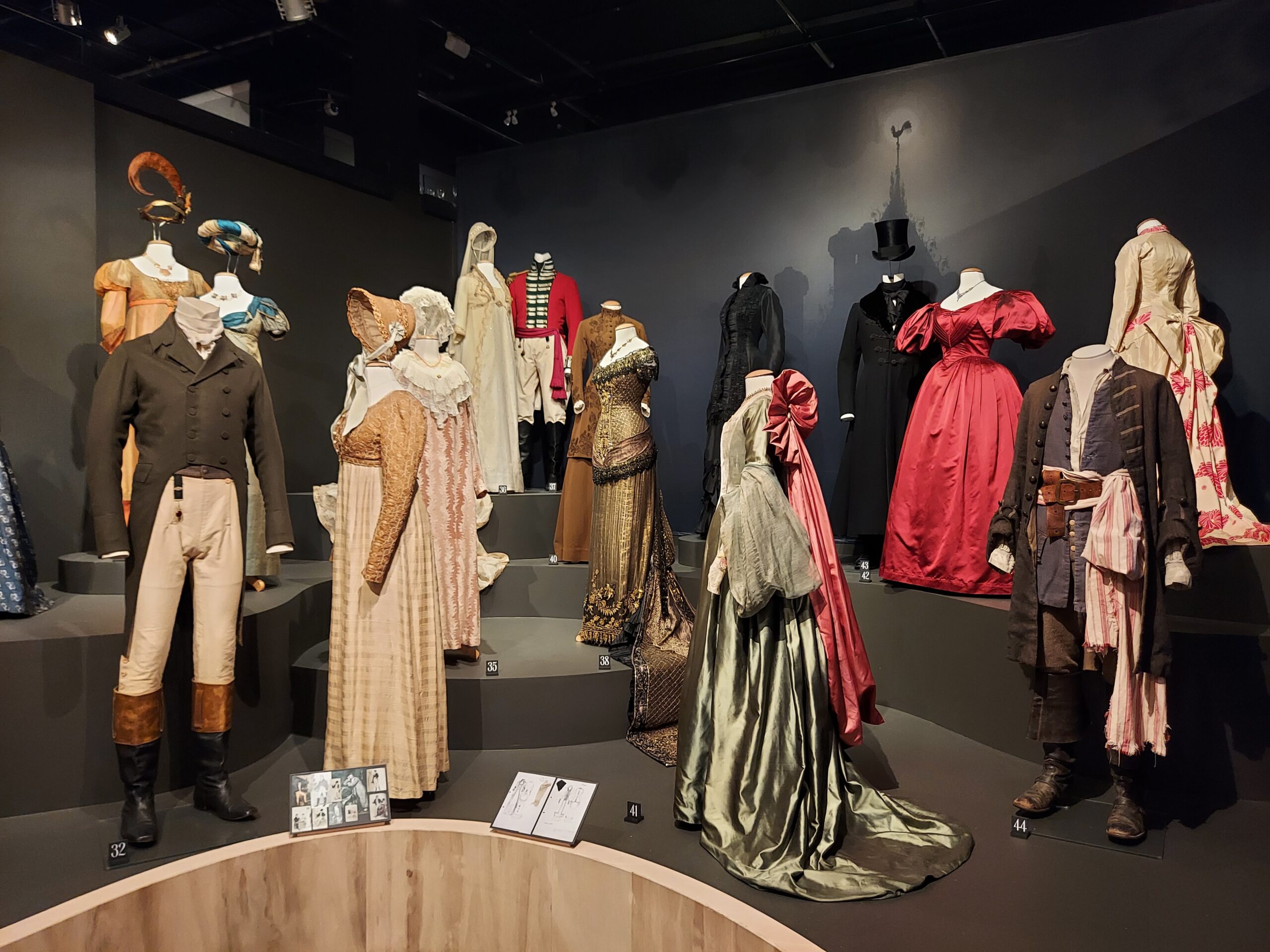
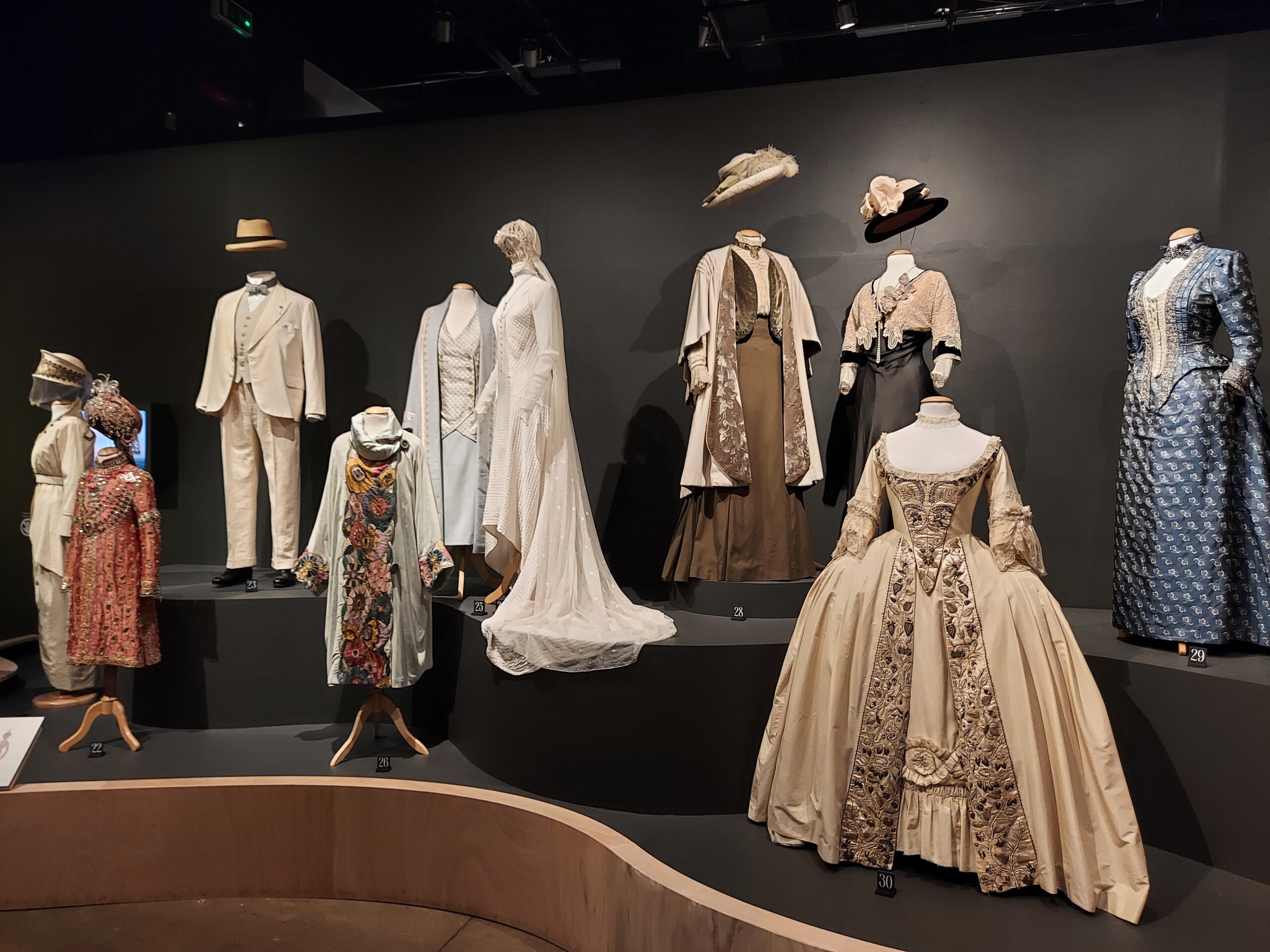
The exhibition displays costumes and accessories, as well as photographs and other memorabilia, from the full range of Cosprop’s history. Productions featured in the exhibition include A Room with a View (1985), Out of Africa (1985), Pride and Prejudice (1995) and Mrs Harris Goes to Paris (2022), with costumes from the likes of Helena Bonham Carter, Meryl Streep, Colin Firth and Lesley Manville displayed. The costumes are rich in detail and show the extensive research that went into creating them. Many are also incredibly beautiful.
Some of my highlights included:
The 1930s suit worn by David Suchet as Hercule Poirot in Death on the Nile (2004)
Outfits worn by Jennifer Ehle and Colin Firth in Pride and Prejudice (1995)
Jack Sparrow’s suit from Pirates of the Caribbean: The Curse of the Black Pearl (2003)
Clothes of the Crawley family from Downton Abbey (2010 onwards)
Outfits worn by Michael Fassbender, Mia Wasikowska and Judi Dench in Jane Eyre (2011)
1770s gown worn by Keira Knightley as Georgiana, Duchess of Devonshire in The Duchess (2008)
‘Actors walk in with just a script and the name of their character. They walk out with that character fully formed in their mind, having brought him or her to life through the angle of a hat, the fabric of a coat or the feel of a pair of shoes.’ – John Bright
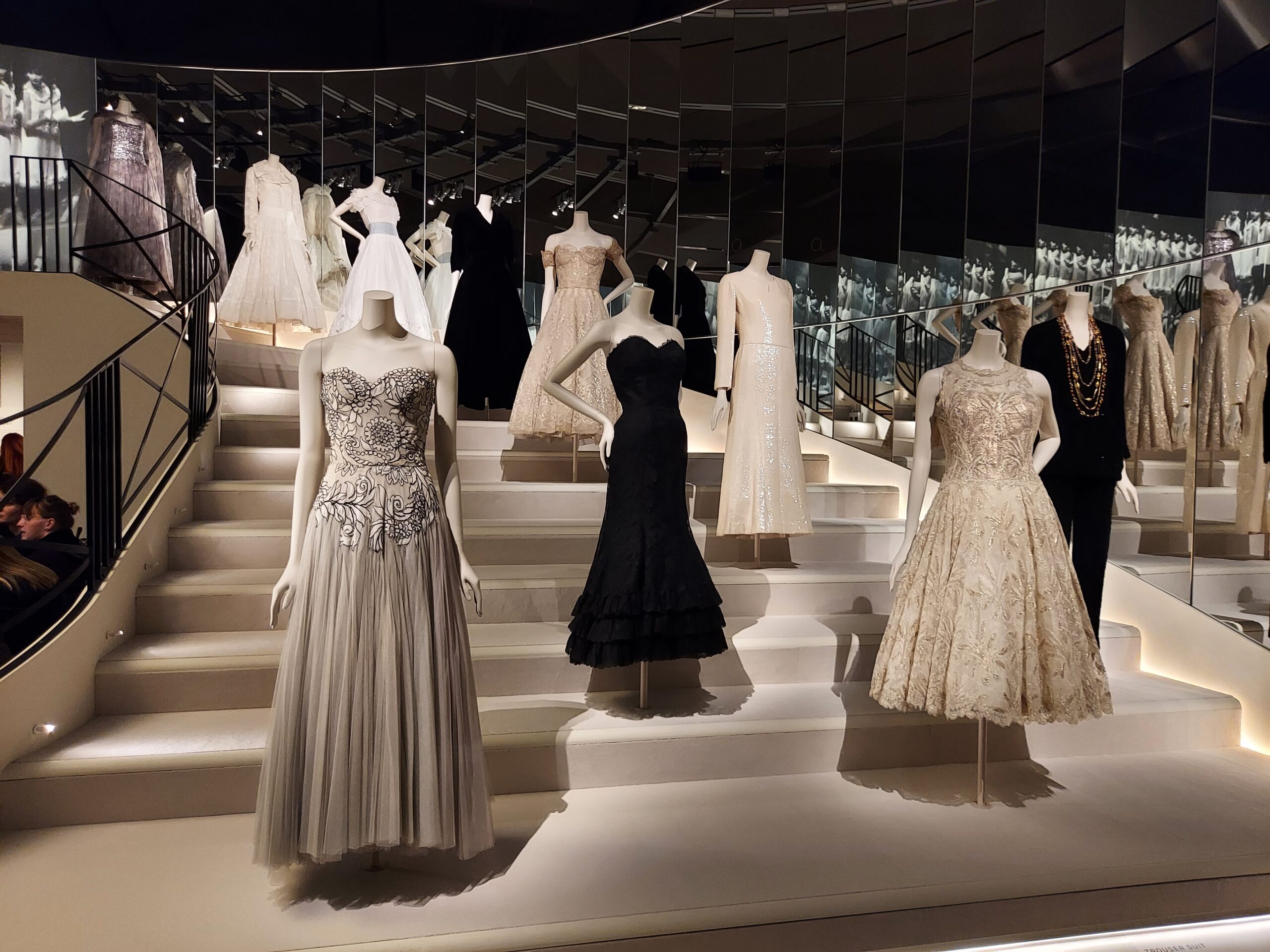
The exhibition Gabrielle Chanel. Fashion Manifesto was actually sold out, but then the V&A released more tickets for Friday evenings, and I managed to get one. I was very glad to get the chance to see this exhibition, the first in the UK dedicated to Gabrielle ‘Coco’ Chanel. Featuring over 200 looks, it explored the establishment of the House of CHANEL and the evolution of her unique style of design, which continues to influence how women dress today. Curated by Oriole Cullen, it is expanded from a show first created at the Palais Galliera in Paris in 2020.
An early Chanel silk blouse
I have to admit I am not the biggest fan of the Chanel style. I prefer designers like Dior, with a Fifties-style silhouette and wider use of colour. However, I can appreciate the deceptive simplicity of her designs and the craftsmanship behind her looks, as well as the influence she has undoubtedly had on fashion through the ages.
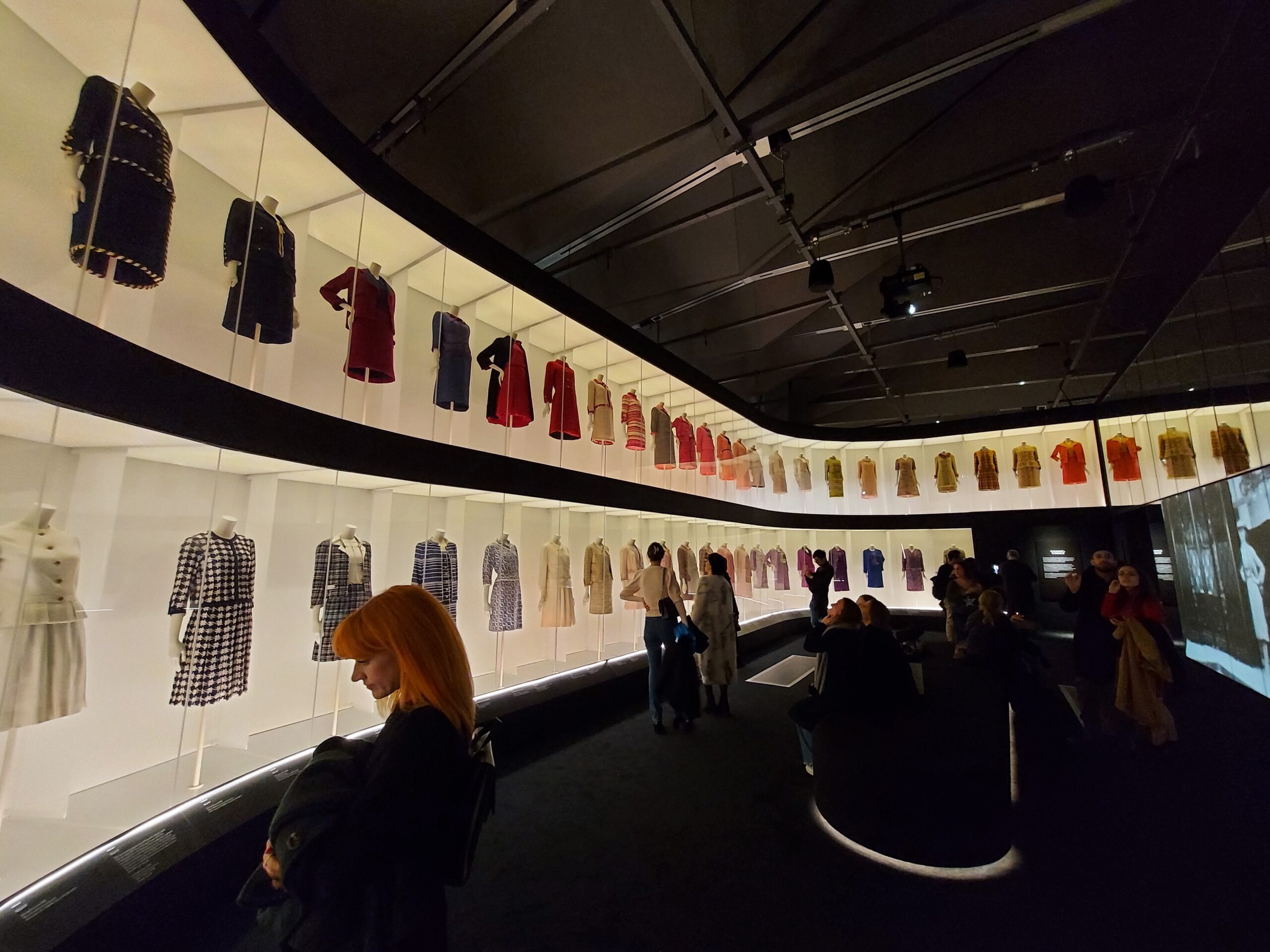
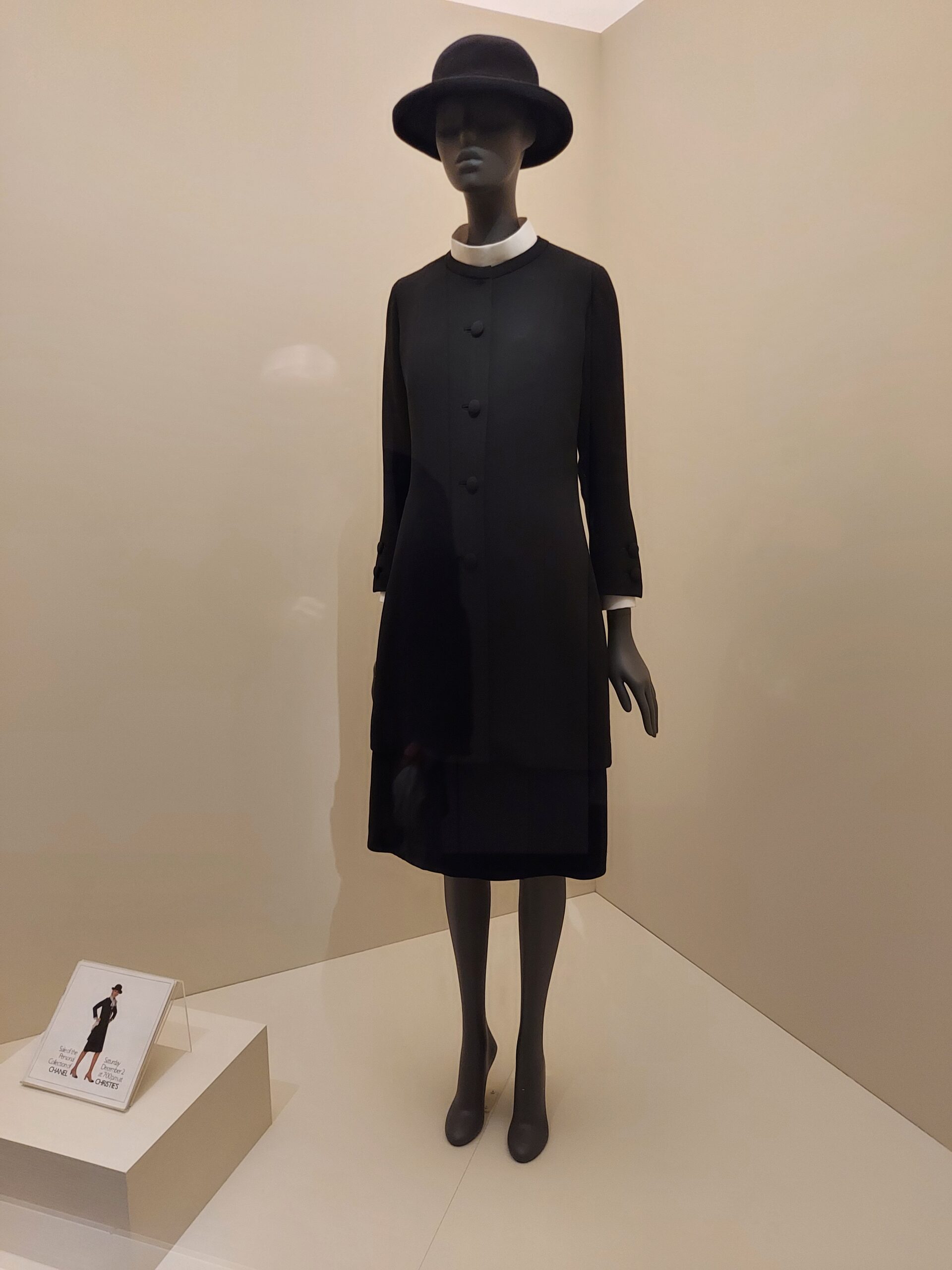
There are lots of beautiful outfits in the exhibition, some arranged chronologically, others thematically. Black dresses make up one key group; suits another, including one pink set belonging to Lauren Bacall. I did enjoy looking at them, and tracing the evolution of Chanel’s style throughout the decades, taking on elements from outside but still remaining definitively Chanel.
Some examples of Chanel bags
It’s certainly impressive how a poor, illegitimate woman born in 1883 was able to rise to the heights that she did. Placed in a convent aged eleven after the death of her mother, she was taught to sew by the nuns and worked as a seamstress alongside her aunt after leaving school. With the help of a textile heir, Étienne Balsan, she moved to Royallieu, northern France, and sold hats to his friends. In 1910, an English lover, Arthur ‘Boy’ Capel, enabled her to open the first Chanel boutique in Paris. In 1918 she established her couture house in the city, and her empire grew from there.
Some of Chanel’s famous suits
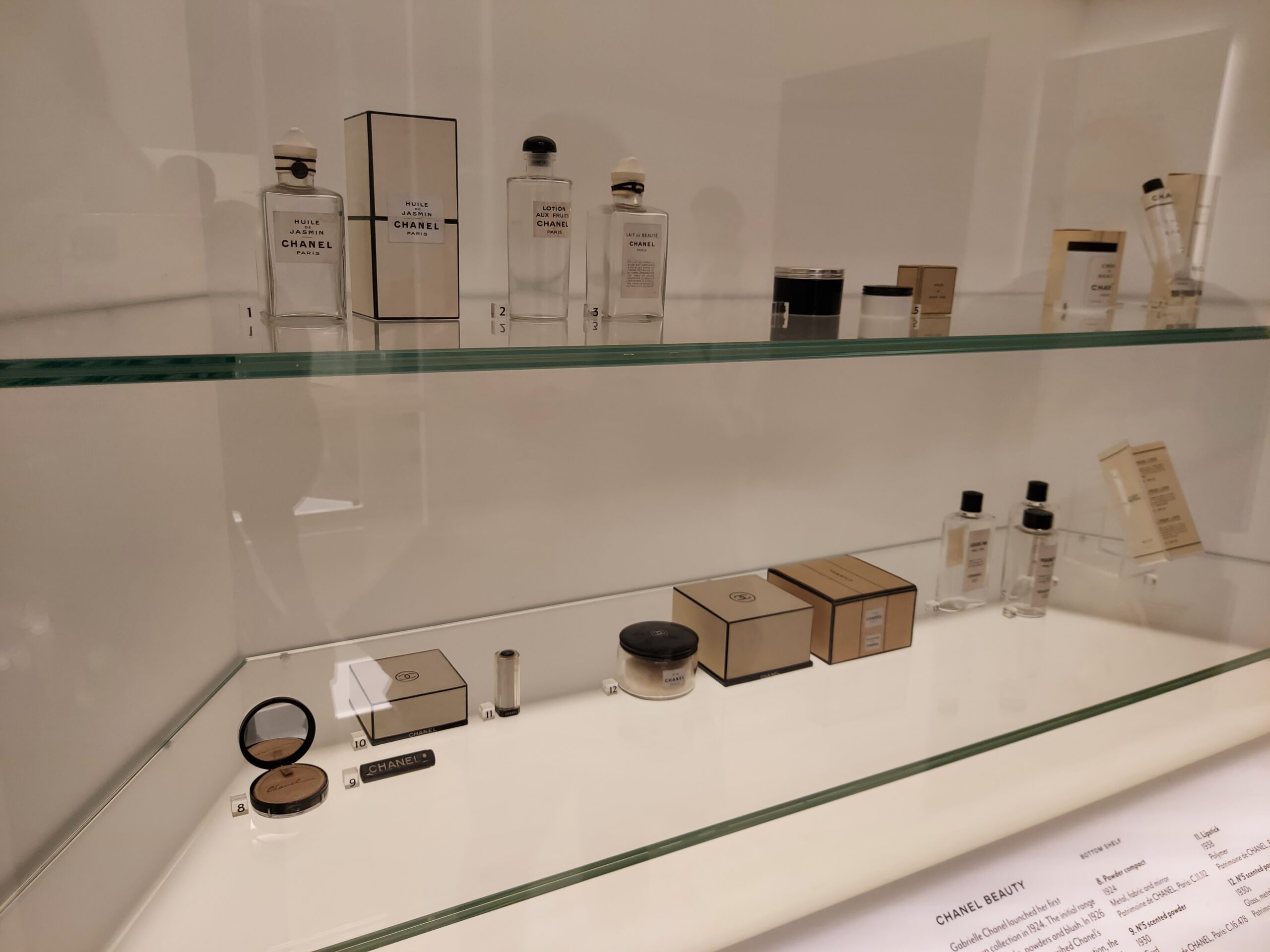
Some rooms focus on her cosmetic and perfume creations – Chanel No. 5 is still one of the more popular scents worn by women today. Other elements explore her relationship with Britain: she had romances with several British figures, including the Duke of Westminster, and knew Winston Churchill, who painted a picture of her. I was interested to learn about her connection to British manufacturing: one item on display is a red evening gown in silk velvet, made for Chanel by the Manchester Velvet Company in 1932. The designer established a company, British Chanel Ltd., in the 30s to allow for her designs to be manufactured in British fabrics including Nottingham lace and Northern Irish linens.
A selection of Chanel perfumes and cosmetics
There have been suggestions over the years that Chanel was a supporter of the Nazis. She certainly took up with a German spy, Hans Günther von Dincklage, during the occupation of Paris. In 1941 the Nazis recorded her as a trusted source, but recent research suggests she was also an occasional agent for the French resistance. My instinct, to be honest, is that she did whatever she could to survive and thrive regardless of which ‘side’ she was helping – but I honestly don’t know enough about it to comment seriously.
I did enjoy the exhibition, which was fascinating and very thorough, and I’m really glad I got the chance to see it.
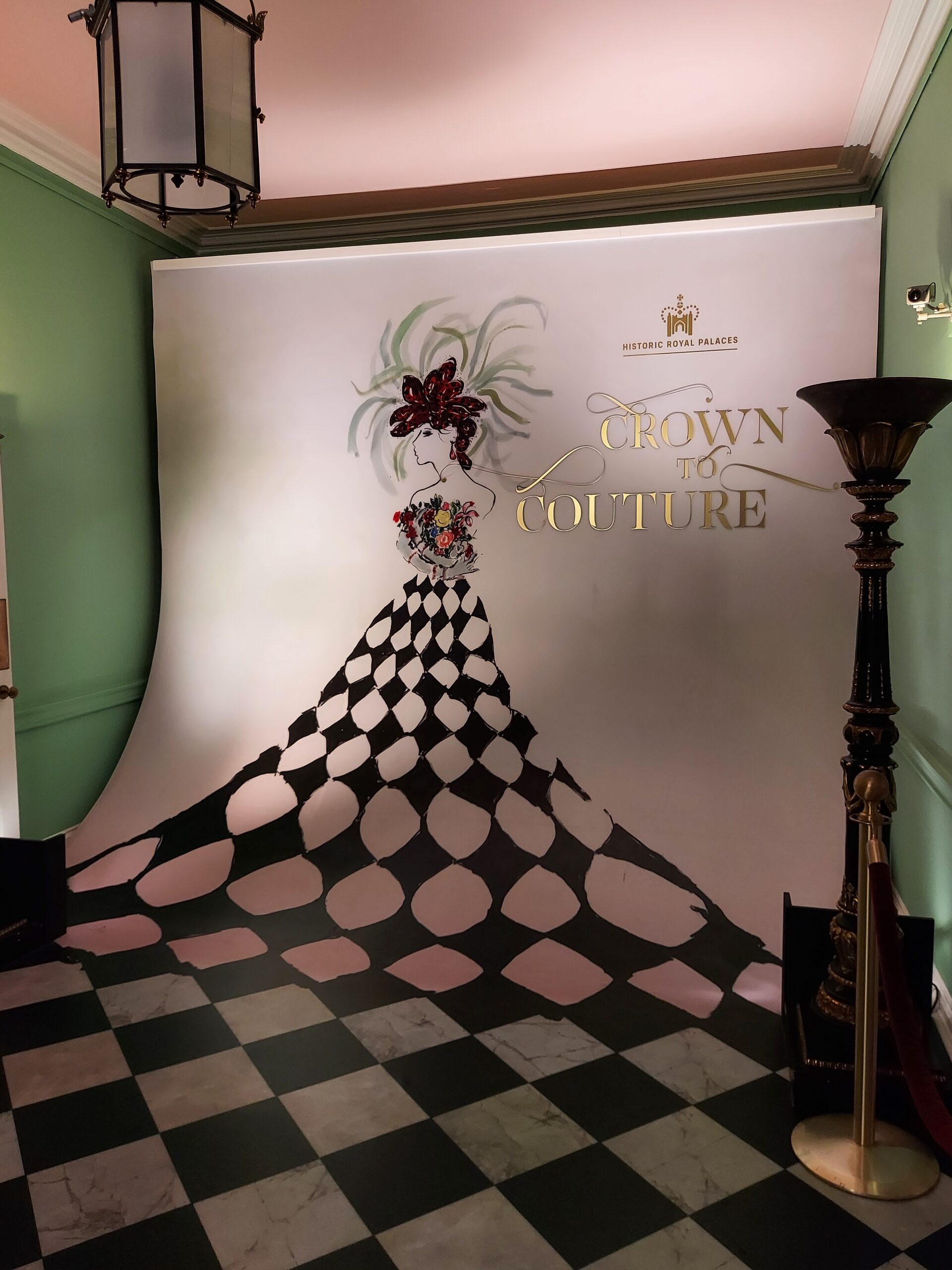
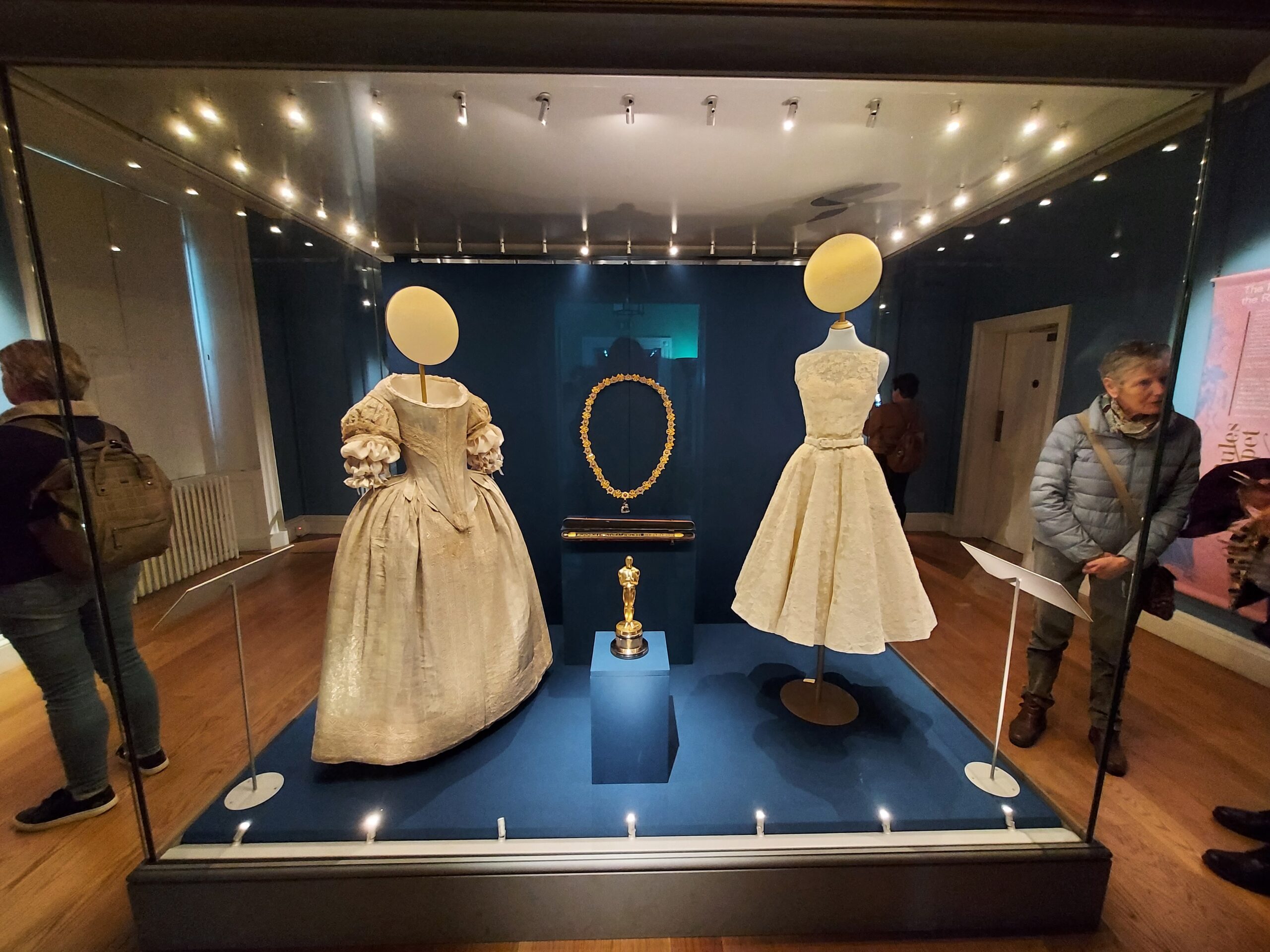
I attended the Crown to Couture exhibition at Kensington Palace one sunny Sunday in October. With 200 artefacts placed around the State Apartments, this is the largest exhibition ever held by Kensington Palace. It compares and contrasts eighteenth-century court fashions, then the height of style and glamour, with Hollywood designer outfits from the 1950s to the modern day.
While the eras are different in many ways, they have a lot in common. Both featured outlandish outfits worn to get the wearer noticed – either by the king, or by the media. As a rule, they are completely impractical – see the ridiculously wide ‘mantua’ dresses of the 1700s, or Katy Perry’s ‘chandelier’ dress – but they were also often beautiful, and sometimes made statements in other respects, such as Billy Porter’s outfits chosen to protest against gender and racial norms.
This rich, fascinating exhibition is well worth a visit. It is excellently put together and has some jaw-dropping costumes on display.
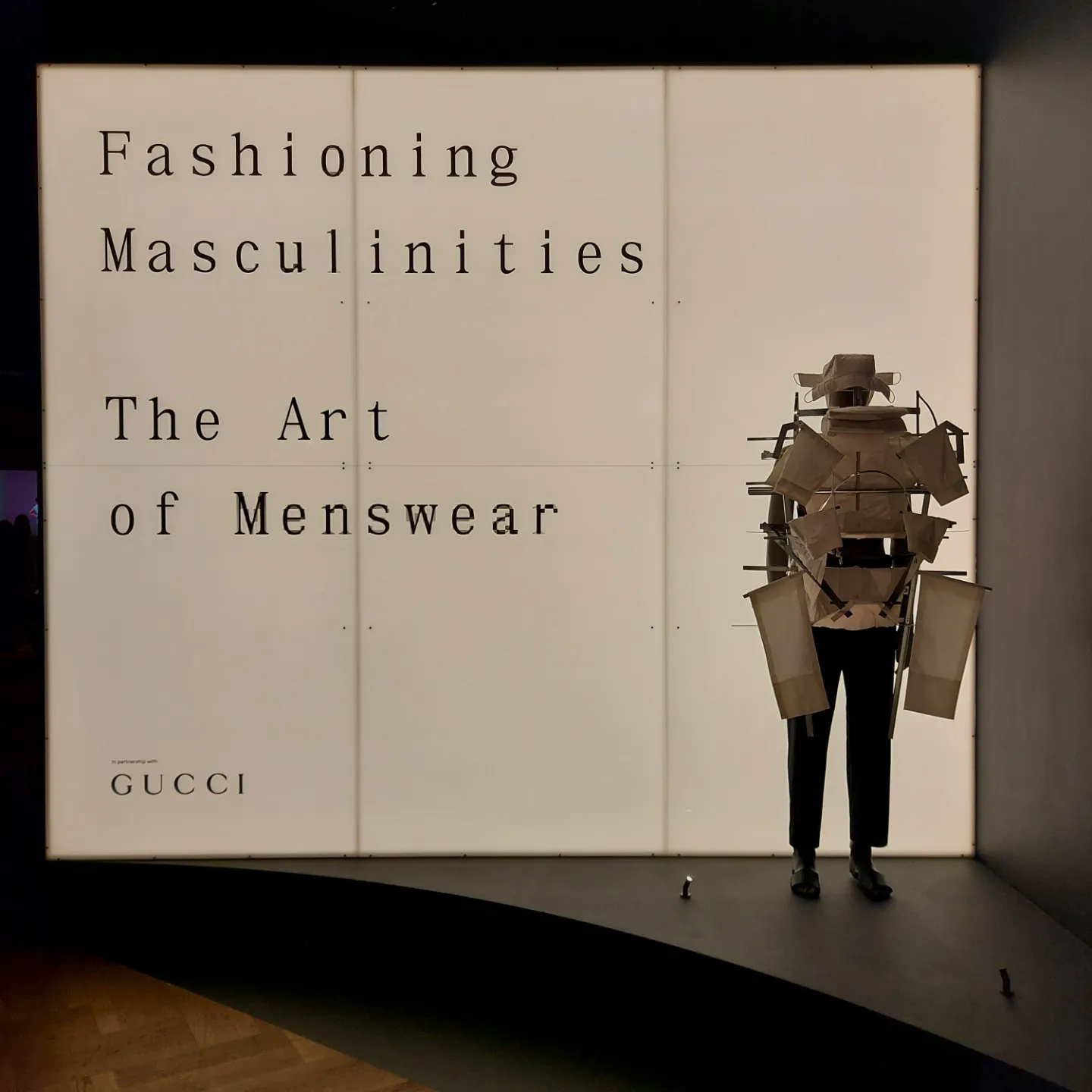
At the weekend I attended the Fashioning Masculinities exhibition at the V&A, which I thoroughly enjoyed. At a time when ideas of masculinity are being questioned, the exhibition reminds us that these ideas have always been in flux, and throughout the centuries masculine ideals – reflected in fashion – have always been subject to change.
The show is divided into three parts: “Undressed” looks at the history of the male body ideal and how ancient Greek and Roman perceptions influenced eighteenth-century men on the Grand Tour and led to a concept of masculinity that still endures today. “Overdressed” explores the flamboyant styles of early modern menswear, while “Redressed” looks at more sombre masculine dressing, largely focusing on suits and uniforms. Rather than adopting a chronological approach, it looks at similarities across different epochs. So ancient Greek statues sit alongside modern underwear and Regency shirts, contemporary bright and embroidered suits are shown next to sixteenth-century capes, and suit styles from the last couple of centuries can be seen beside their modern equivalents, including those worn by women and non-binary figures.
Among the artefacts on show to illustrate these points are a video of Matthew Bourne’s New Adventures dance company, Calvin Klein underwear posters, Giovanni Battista Moroni’s The Tailor (1565-70), and Sofonisba Anguissola’s Portrait of Prince Alessandro Farnese (about 1560). In terms of actual clothes, we get some gorgeous examples from the V&A’s collection, with suits from the likes of David Bowie and examples of dramatic seventeenth-century dress.
It’s fascinating and freeing to be aware of the notion that masculinity is not fixed, and that our modern ideas and standards aren’t the only ones that can work. The exhibition ends with dresses worn by the likes of Billy Porter and Harry Styles, showing that even traditionally feminine garments can be given a masculine twist.
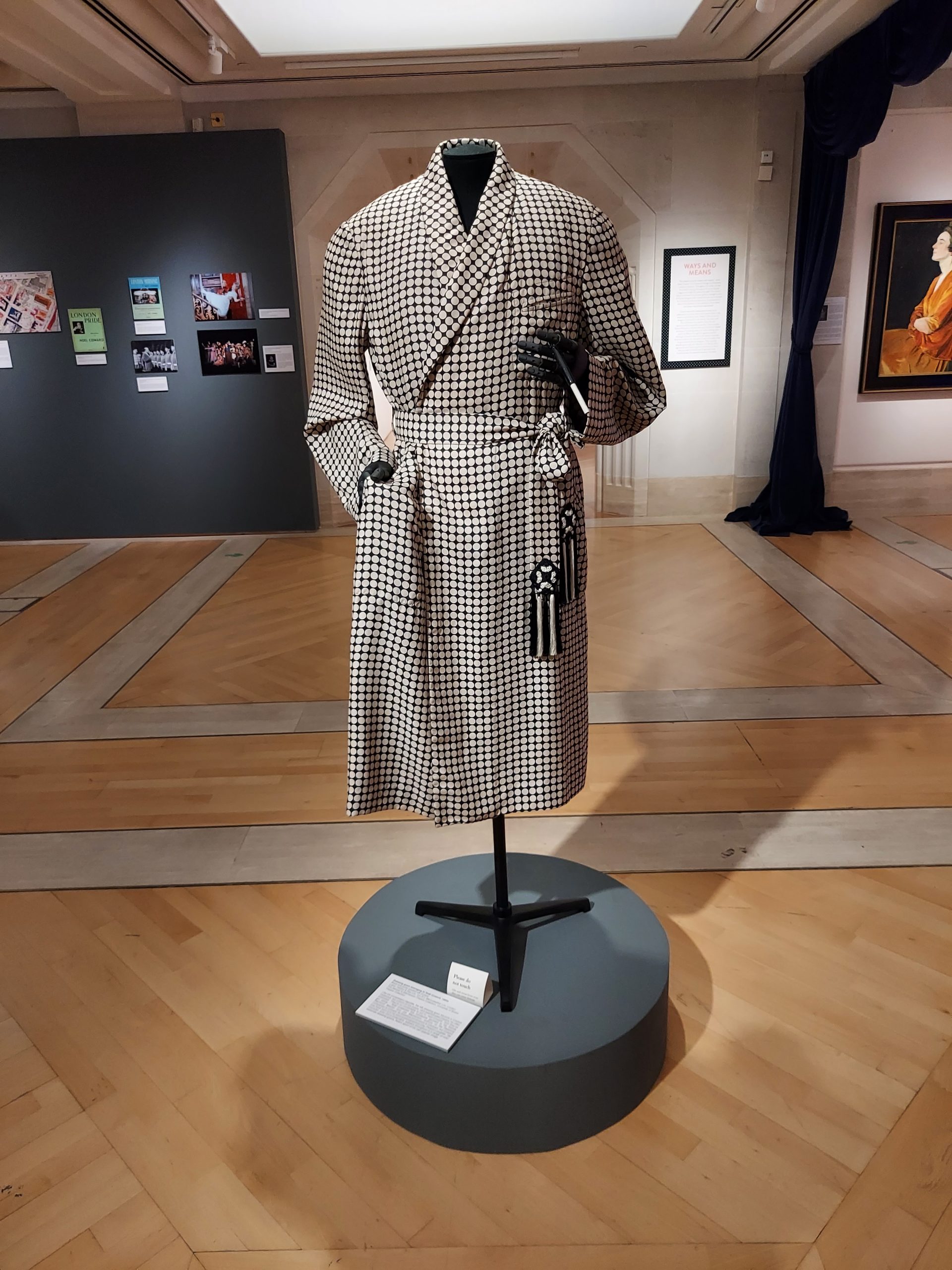
On the last day of my leave I decided to head to the Guildhall Art Gallery to see the Noël Coward: Art & Style exhibition. This free exhibition runs until December and focuses on the visual aspects of Coward’s style – his personal appearance, his various homes and also his stage shows. In the exhibition, dresses worn by actresses performing his work, outfits worn by Coward himself, and items from his personal collection are displayed.
One of Coward’s famous dressing gowns
Coward was born in Teddington and grew up in a middle-class family. He performed on stage as a child and this gave him a taste for the theatre. Starting out as a song and sketch writer, Coward penned many musical revues and began to collaborate with artists, couturiers and designers including Cecil Beaton and Gladys Calthrop to create stylish looks for his shows.
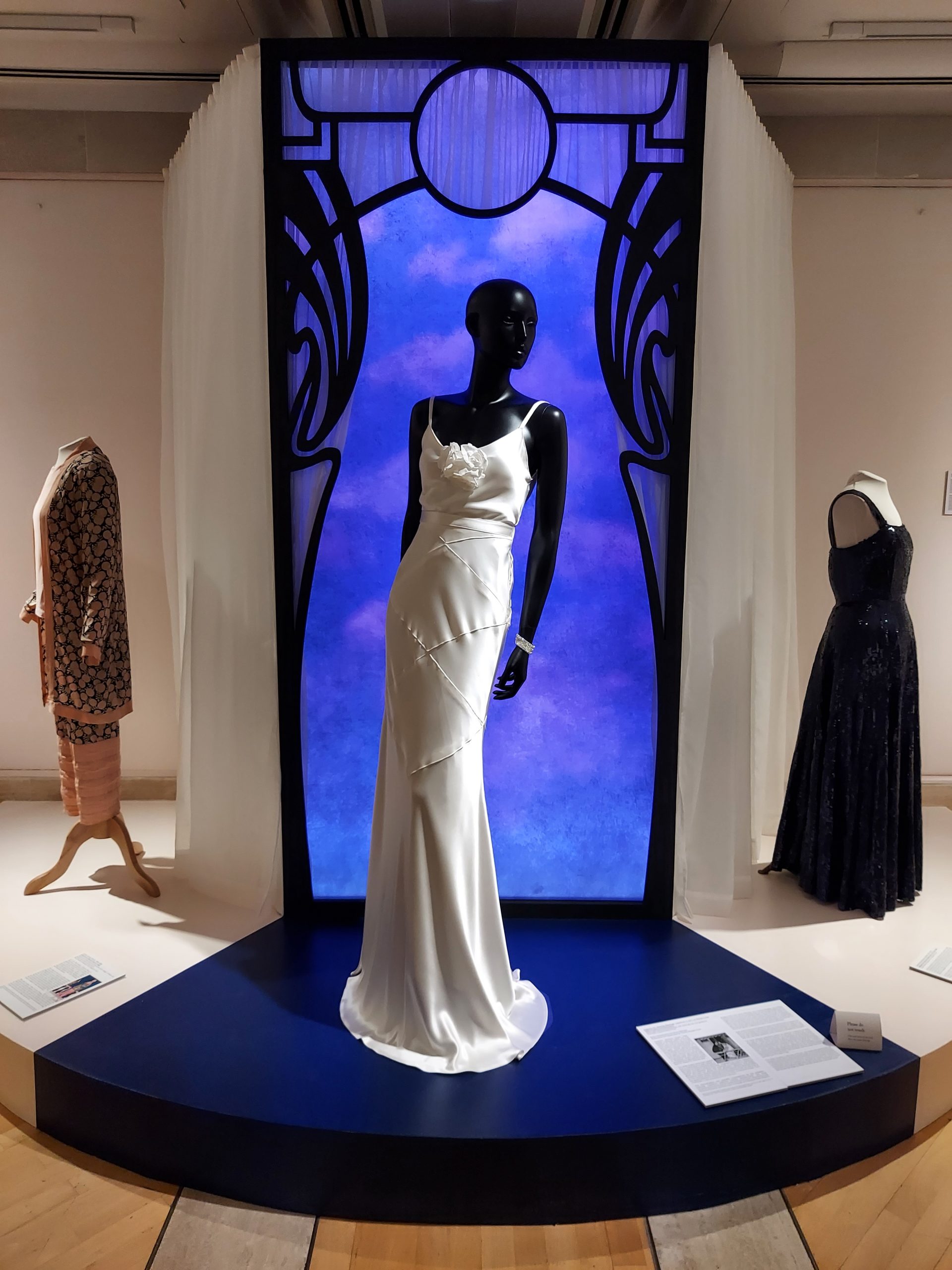
Some of the beautiful dresses worn by female stars of Coward’s shows
Aware of his public image, Coward perfected the art of appearing in promotional pictures in his trademark silk dressing gown. He was an amateur painter, and spent much of his relaxation time in Jamaica developing his style. He decorated his various homes in the UK and abroad with items that became instantly recognisable. In the exhibition, items themselves are displayed alongside photographs of Coward that feature them.
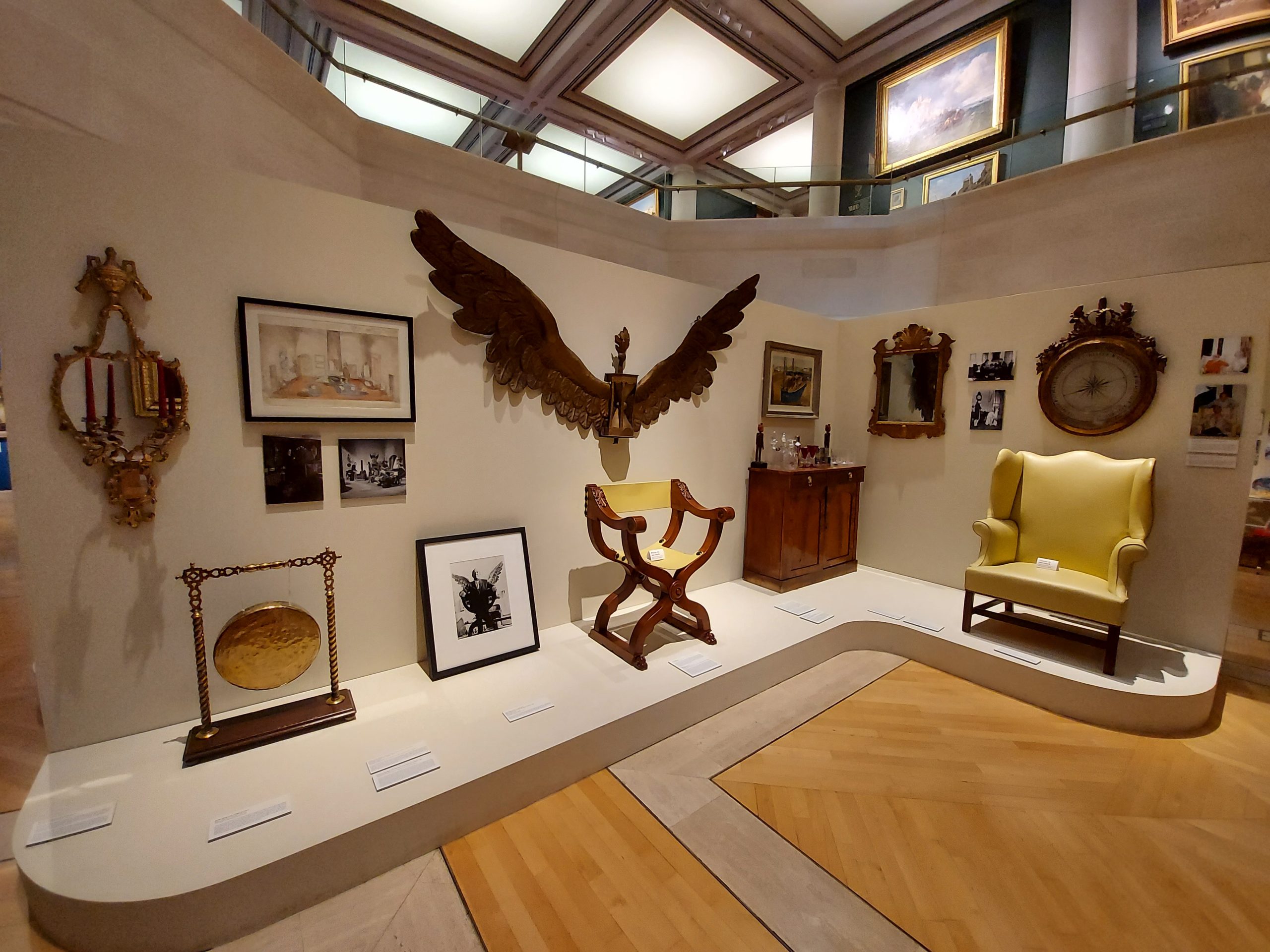
Some of Coward’s favourite pieces of furniture
Even after Coward’s death, his popularity has remained and his works are constantly being reinvented and restyled. The costumes for the 2020 film adaptation of Blithe Spirit, for example, were inspired by Coward and his world.
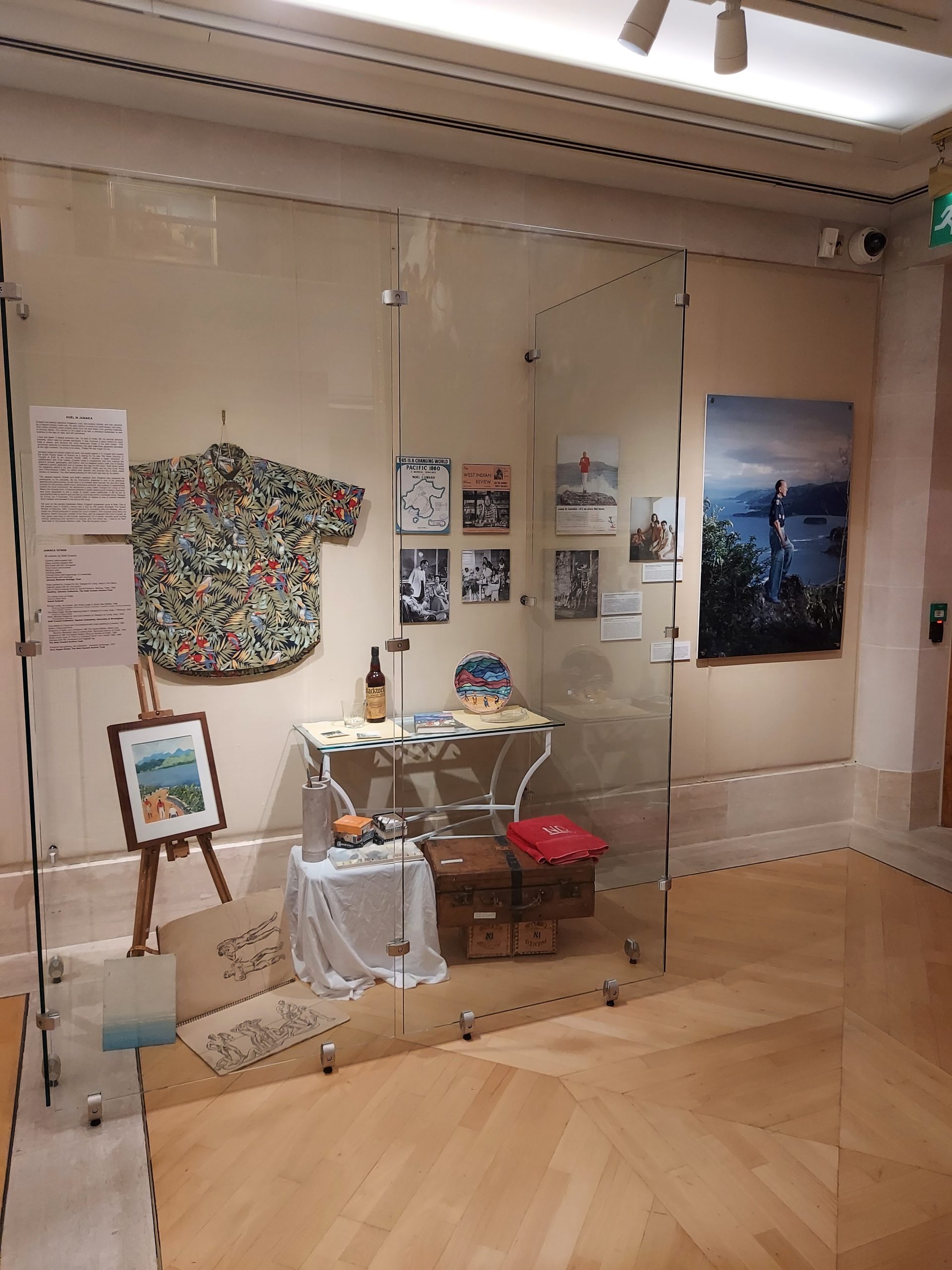
Clothing and household items used by Coward in Jamaica
This exhibition is fascinating and hugely detailed. The fact that it is free is fantastic – I would normally expect an exhibition of this calibre to charge an entrance fee. It’s worth seeing for any fans of Coward, or indeed any fans of 20th century style.
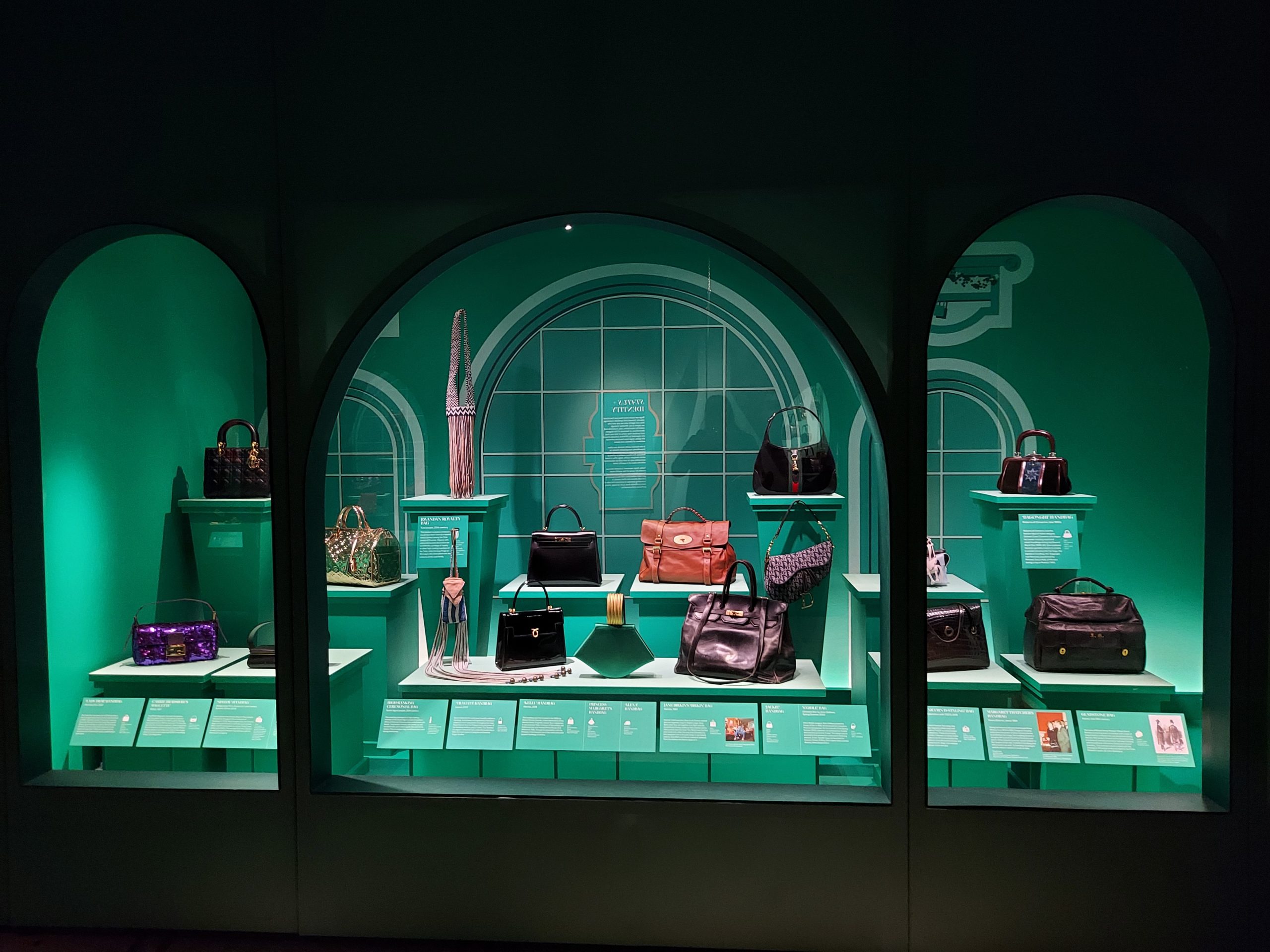
Recently I visited the Bags: Inside Out exhibition at the Victoria & Albert Museum. Along the same lines as the shoes exhibition a few years ago, Bags looks at the history of these accessories and displays examples of bags in all shapes and sizes, serving a variety of purposes.
A dress with pockets and another with a chatelaine
I’m personally a huge fan of bags* – I think it’s because unlike clothes, you can’t grow out of them – and so I was looking forward to this exhibition. The exhibition begins several centuries ago, when women often had pockets built deep into their dresses for storage purposes. Later, many women wore chatelaines – metal contraptions pinned to their waist with keys and other accessories dangling from them.
Both men and women often carried small coin purses.As the world moved on, different kinds of bags evolved: tiny evening bags, practical rucksacks, sturdy travelling trunks, convenient shoulder bags.
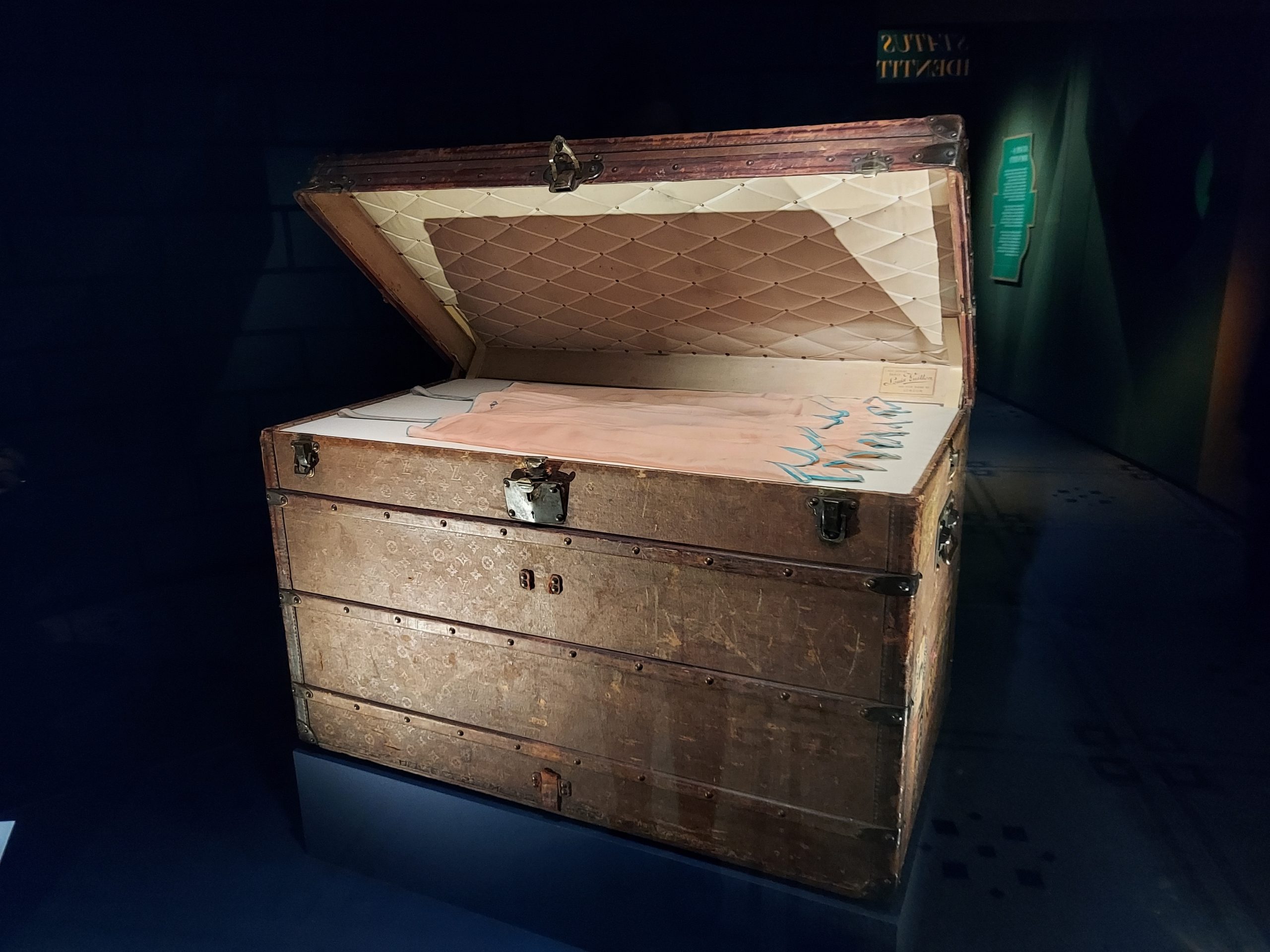
A trunk designed to store clothes while travelling by sea
Vivien Leigh’s writing case and Winston Churchill’s despatch box are two notable examples of bags on display alongside many beautiful examples from less famous owners.
Winston Churchill’s attache case and Vivien Leigh’s letter-writing case
I particularly liked the bags with lots of tiny compartments, popular in the late nineteenth and early twentieth centuries, such as a handbag with a compartment for lipstick, or an ‘opera bag’ containing opera glasses and a fan.
In terms of more modern styles, I liked a bag from the collection of fashion blogger ‘Mr Bags’ which comes with a cute unicorn charm.
Bag designed by ‘Mr Bags’
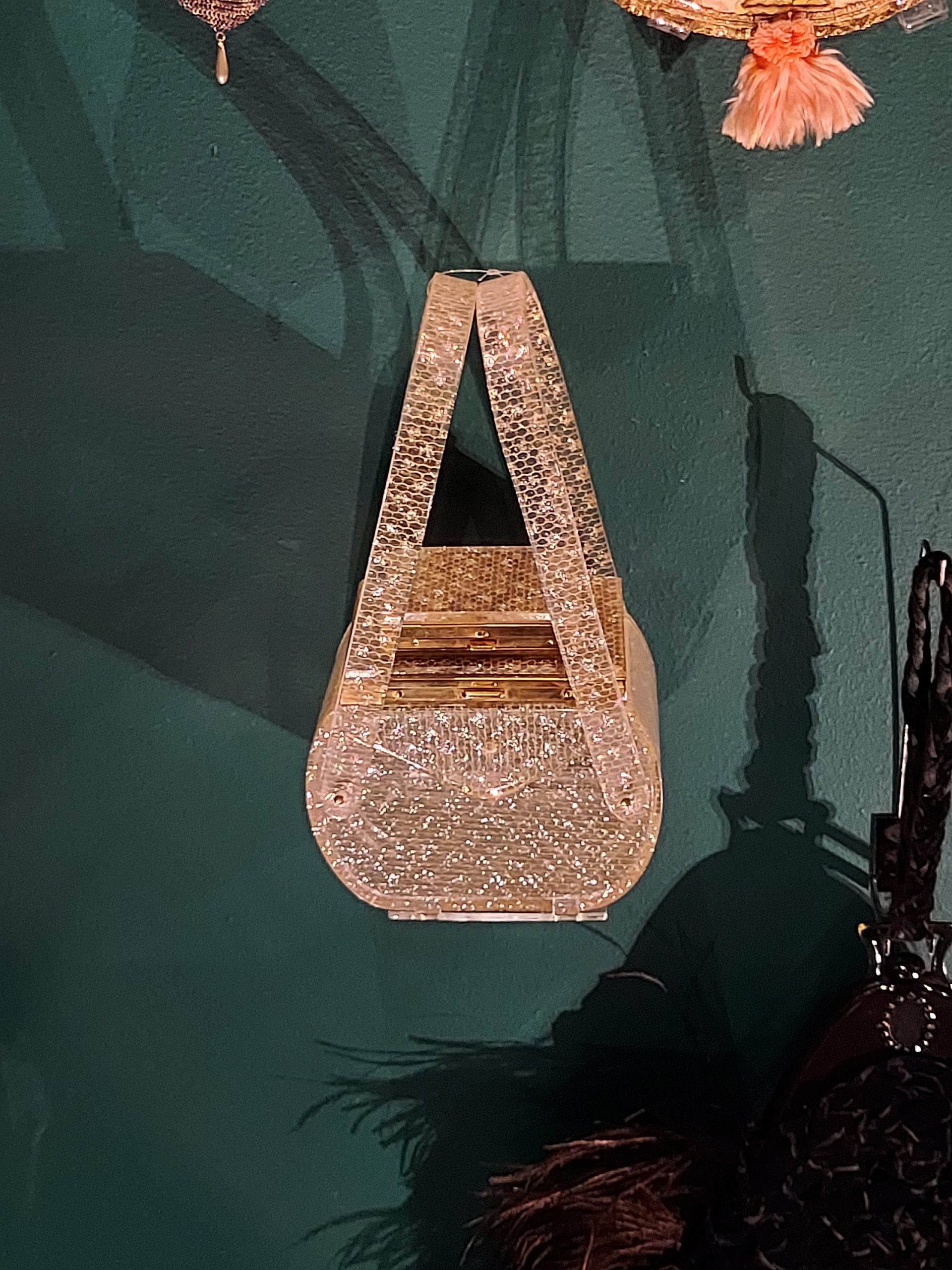
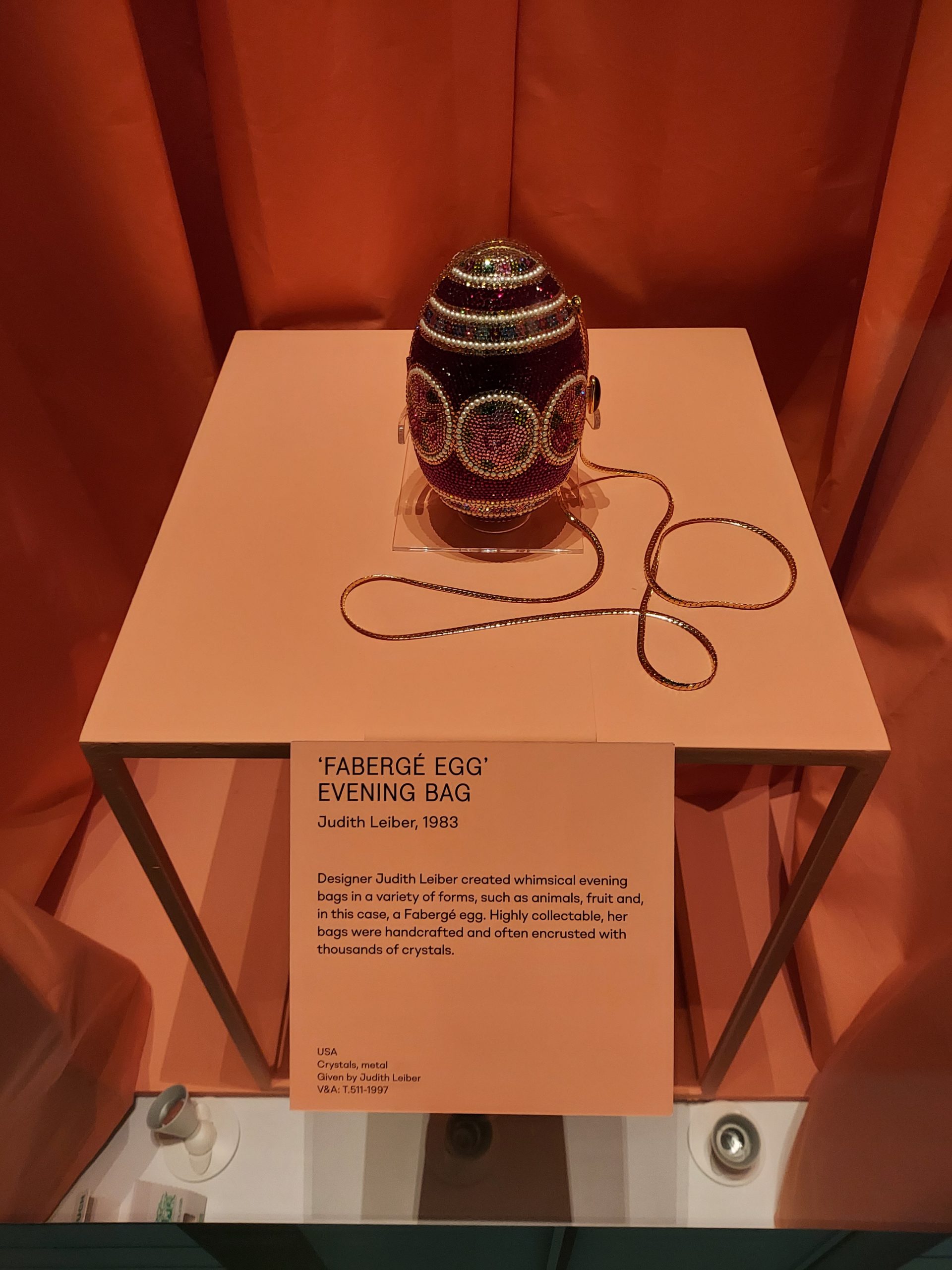
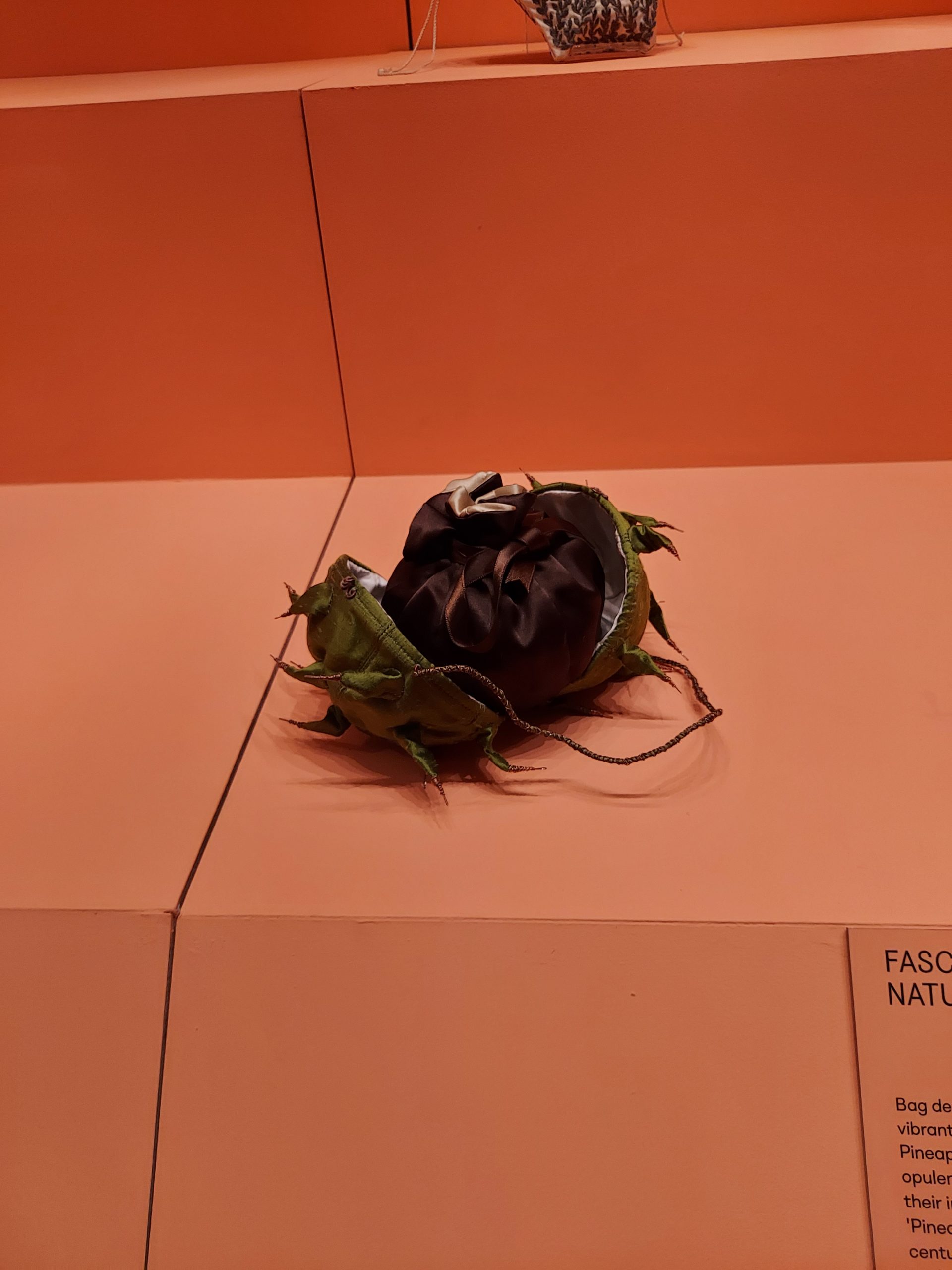
My absolute favourite bags, however, are novelty bags in unusual shapes, and this exhibition had several excellent examples.
On the upper level of the exhibition there was a display devoted to the making of bags – it looks like a very complicated and scientific process and I confess it was far beyond me! This part of the exhibition also looked at different materials used to make bags and their properties.
Bags: Inside Out is worth a visit especially if you are a bag lover like me. Even if you aren’t, you will probably appreciate the design and craftsmanship that goes into creating a beautiful bag.
*When I was a child I had a shiny black (fake) leather backpack that I adored. In it I kept my Dear Diary, notebook, lip gloss and whichever book I was reading at the time. I took it everywhere with me and loved it so much that my brother made up stories about it: “The Adventures of the Black Bag”. I can’t remember what any of the stories were about, but the title sounds vaguely Holmesian.
Mary Quant was the second major fashion exhibition I attended at the V&A within a fairly short space of time. Born in London, Quant revolutionised the British high street in the 1960s, making high fashion available to everyone and popularising the famous miniskirt. I have to admit that on a personal level, the clothes aren’t really my style – I prefer longer skirts and dresses in general, and the Dior-influenced vintage look is much more my scene. In fact, my favourite piece in the exhibition was a maxi dress from the Seventies. However, there’s no doubt that Quant’s clothes had a huge influence on style, and her practical, fun pieces helped to democratise fashion.
Quant sailor dress
Mini dresses
The exhibition takes us through Quant’s career and showcases the pieces that made her famous, including monochrome daisies, coloured opaques, practical underwear, and even modern makeup (I could tell from the style of the marketing that Lush was influenced by Quant’s makeup range). I really liked that the museum got the public involved, requesting people to send in their own Quant clothes. I went to the exhibition with my auntie and I enjoyed hearing about her own experience of the brand – wearing a minidress to meet her future in-laws and worrying that the skirt was too short!
Makeup range, decorated with the trademark daisy
My favourite piece from the exhibition
I thought it was cute, too, to showcase the mini, Barbie-style Quant dolls, dressed in miniature versions of popular fashions. A way to get younger girls interested in the clothes so that they could covet them for themselves when they were older.
Daisy doll
Overall, the exhibition is definitely worth a visit – for the social history as much as the fashion.
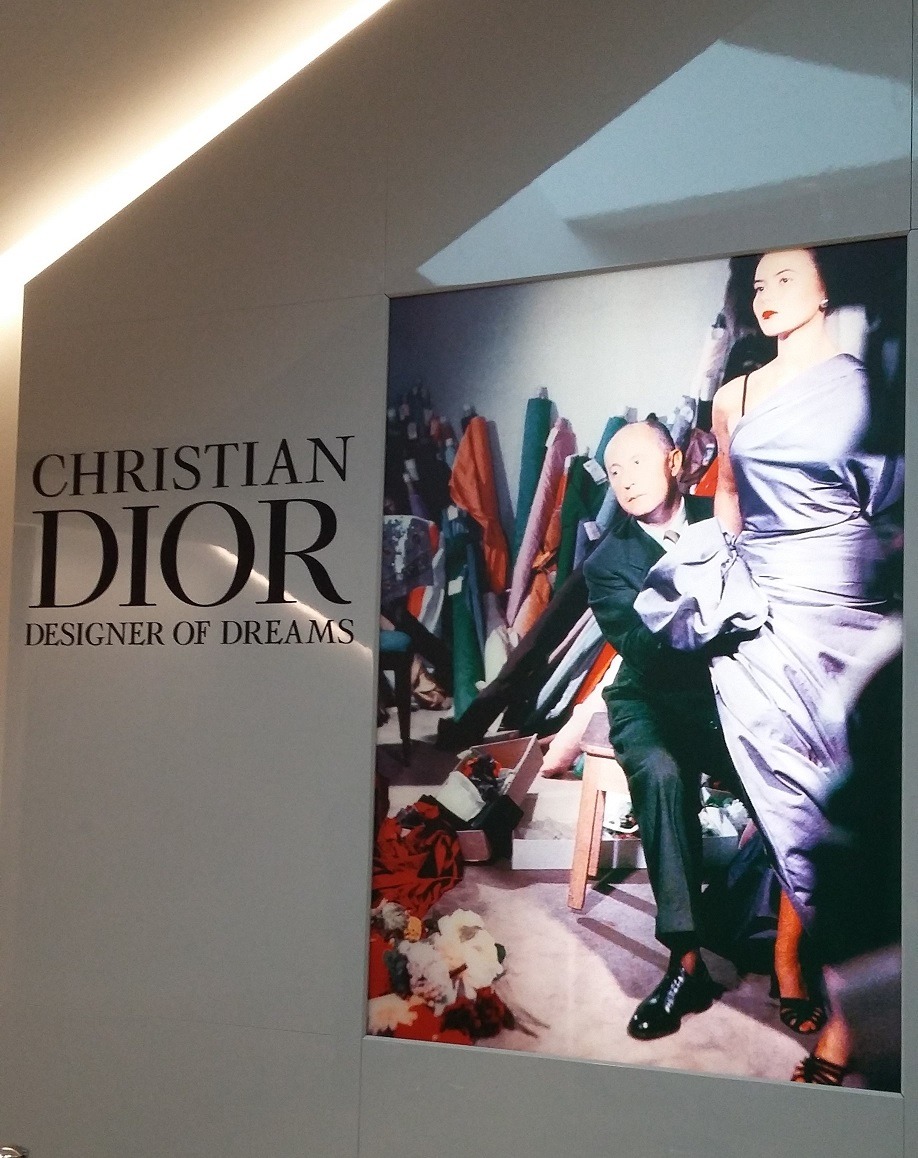
I was very excited when the Dior: Designer of Dreams exhibition was announced at the V&A. The styles are exactly my kind of thing: I’m a vintage lover, and for me Dior epitomises the ‘vintage look’ of nipped-in waist and full skirt. This is one of the most popular exhibitions in the V&A’s history, and most tickets sold out way in advance.
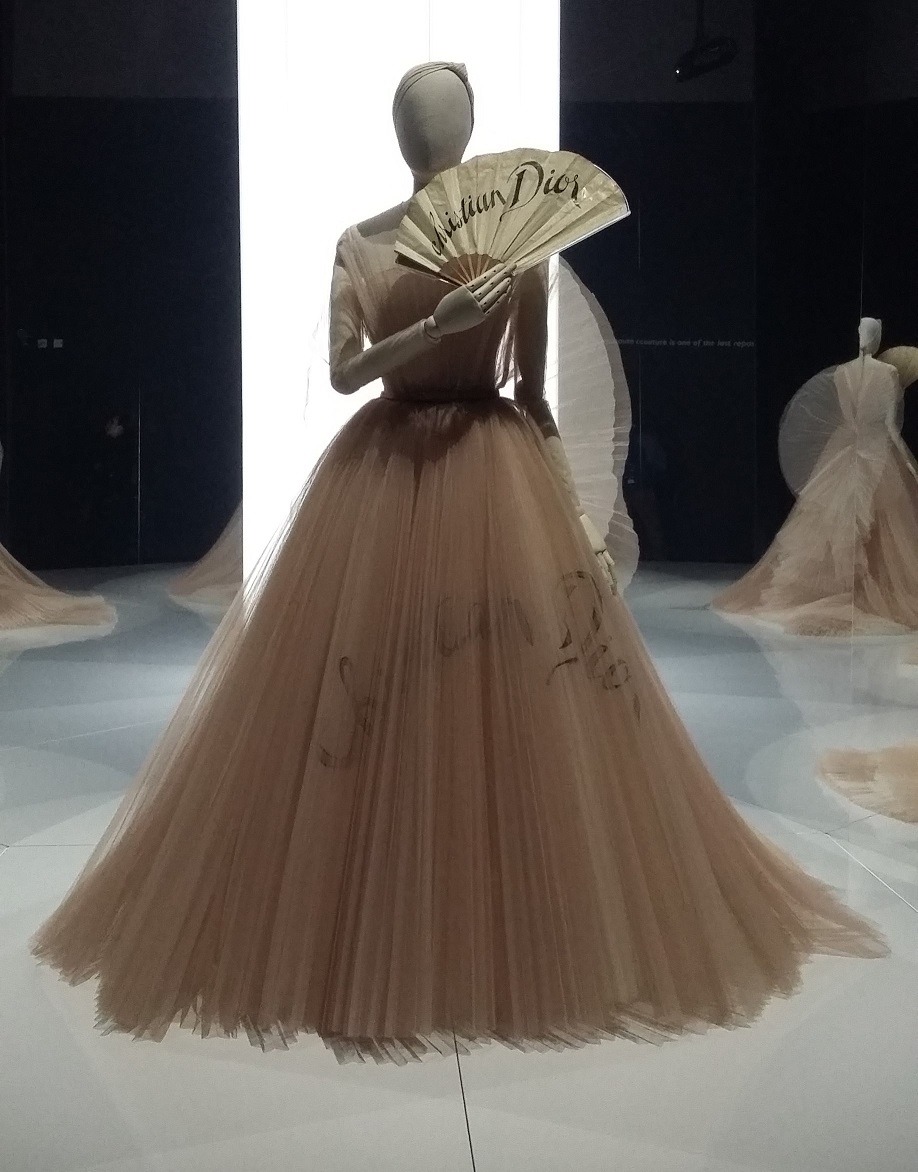
Beautiful ballgown
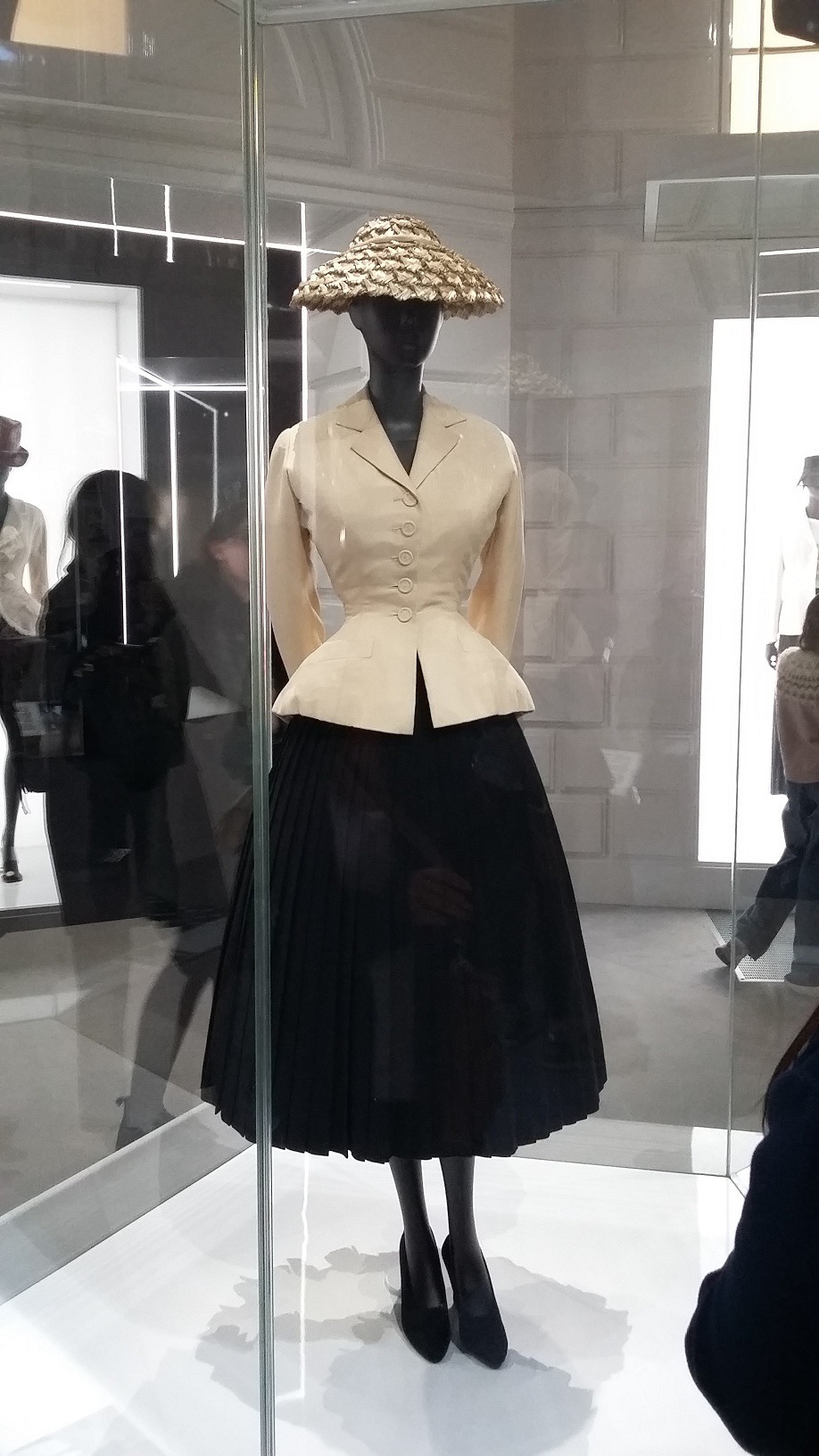
Dior became famous with the ‘New Look’ of 1947, when the privations and rationing of the war years made the full skirts and luxurious fabrics of this style seem particularly exciting. The exhibition begins with a single suit on display, epitomising this look with its nipped-in waist and generous skirt.
Early example of the ‘New Look’
The House of Dior began in 1946, set up by Christian Dior, born in Normandy in 1905, up until then a fashion illustrator. It has continued up until the present day, with a number of designers helming the company since Dior’s death (one of whom was Yves Saint Laurent). One room of the exhibition was devoted to these designers, including Marc Bohan and John Galliano, although for me nothing compares to the classic Dior designs.
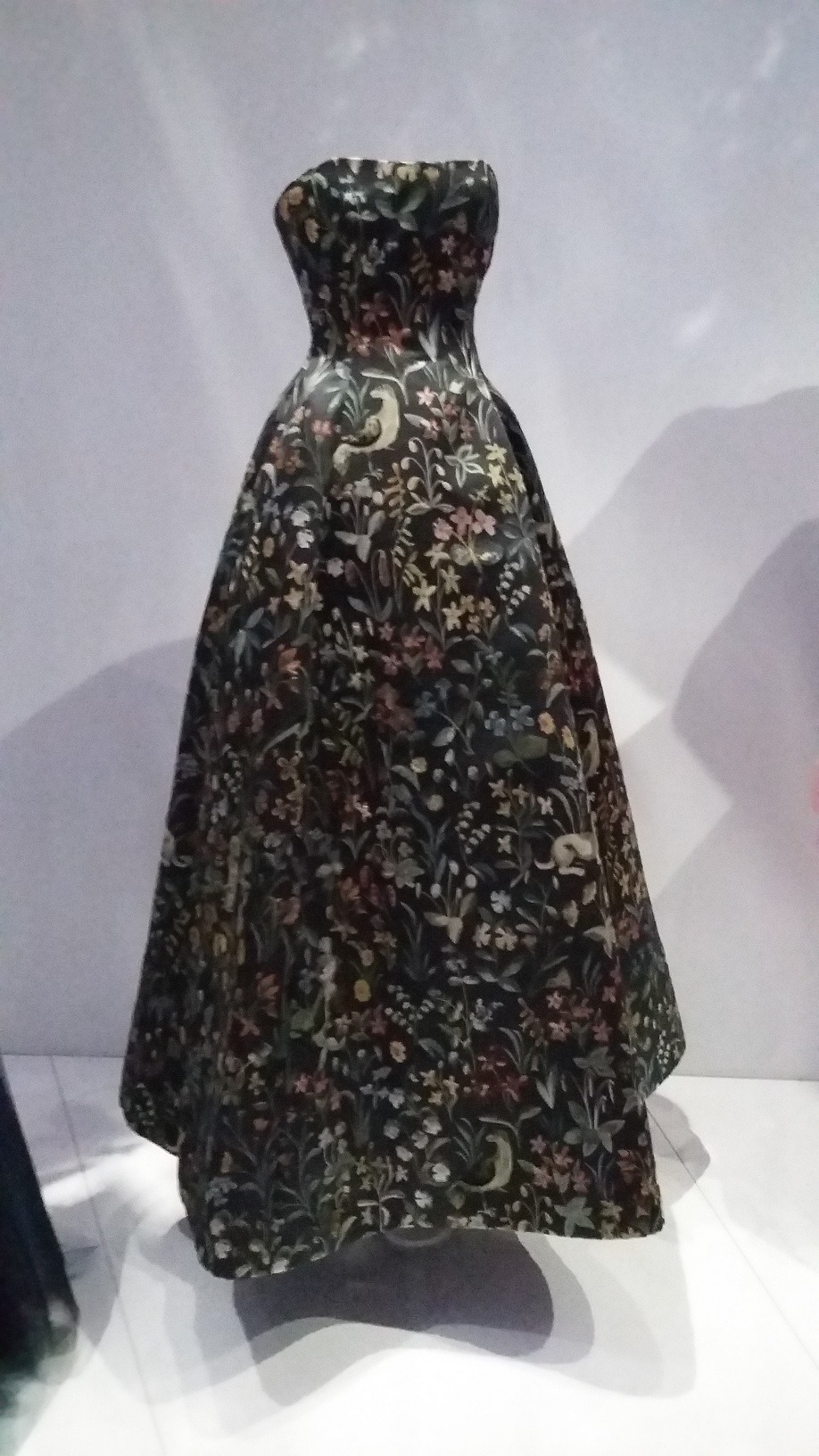
The exhibition is beautifully laid out, with different rooms devoted to different themes: I particularly liked the floral room.
My favourite dress of the whole exhibition
The exhibition runs until 2 September and has a high recommendation from me.