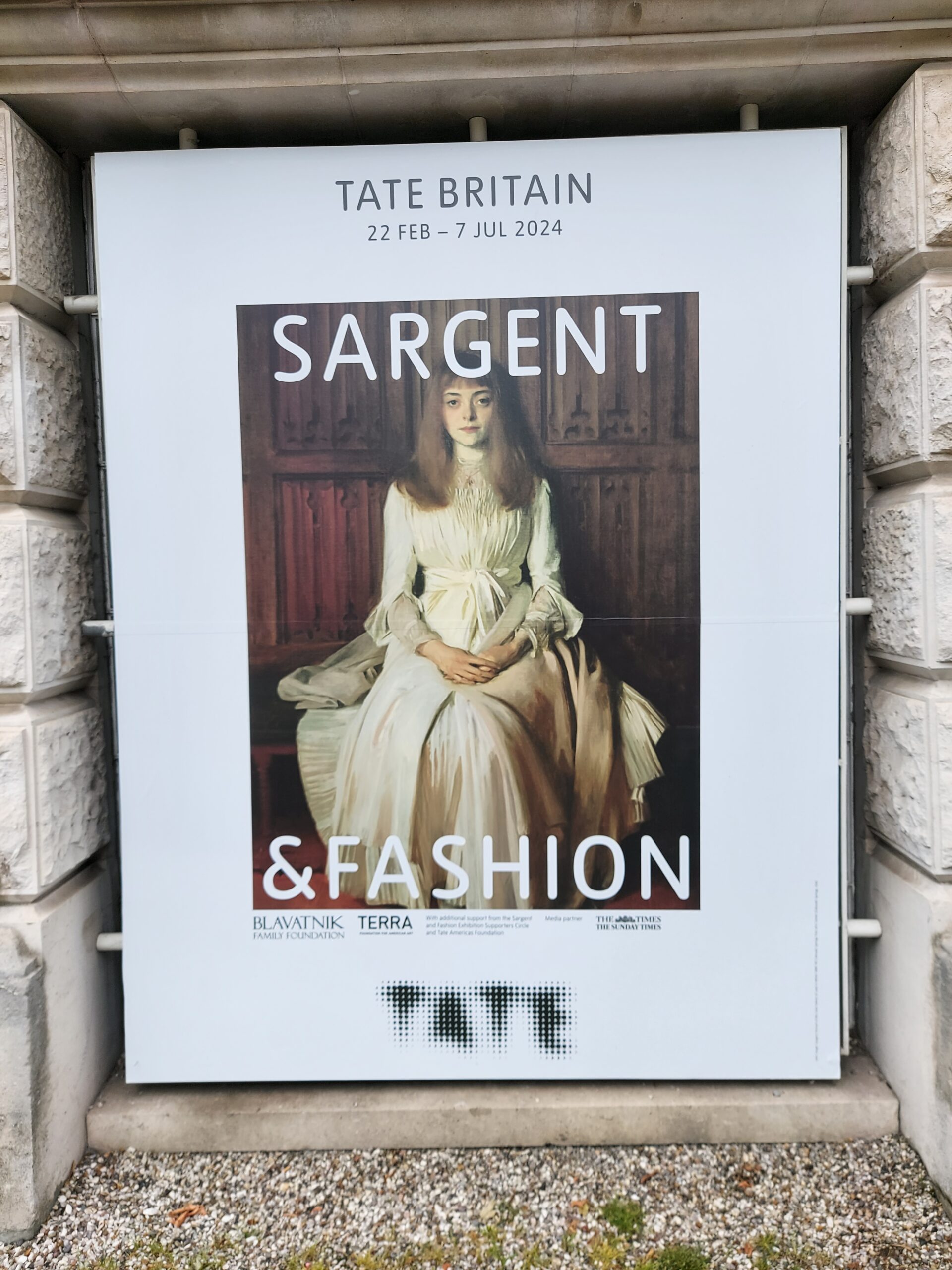
Sargent and Fashion – Tate Britain

Exhibition poster for Sargent and Fashion

At the weekend I visited Tate Britain to check out a couple of exhibitions. The first one I saw was Sargent and Fashion.
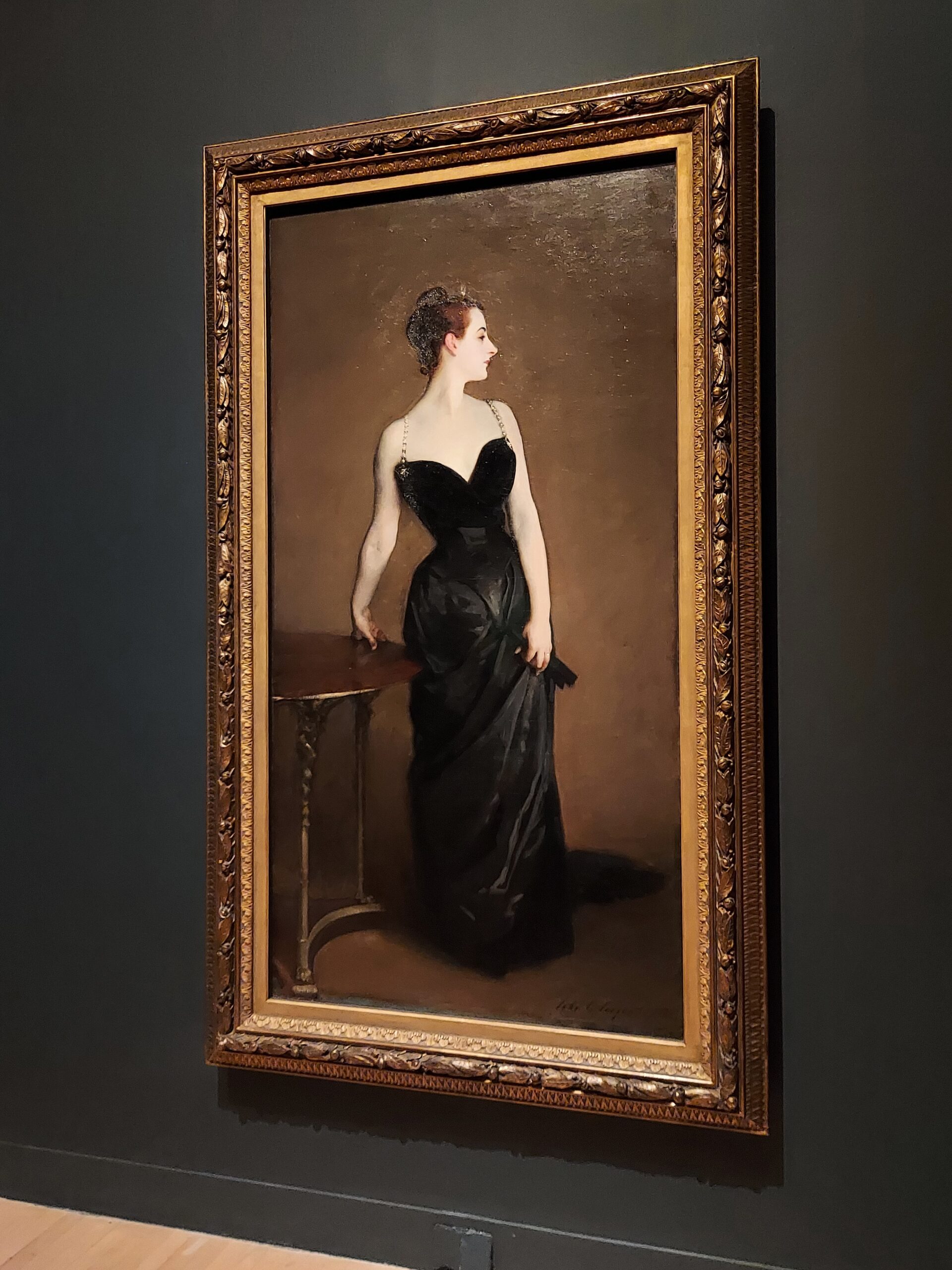
Painting of a pale white woman wearing long black evening dress
Portrait of Madame X, 1883-84

This exhibition explores the relationship between artist John Singer Sargent and the fashions of his day. The paintings in the exhibition emphasise focus on the clothes worn by his sitters: some of their choice, others at his suggestion. Sometimes these clothes caused controvery: Singer’s famous Portrait of Madame X was originally painted with one of Virginie Amélie Avegno Gautreau’s straps hanging from her shoulder, but this was seen as too risqué and he edited the painting.

The exhibition made me realise that he was really wonderful at painting clothes, capturing the ripples of the fabric and the different shades evoked. He used clothes to convey the personality of the sitter, whether long flowing gowns, delicate fabrics, or clean lines.
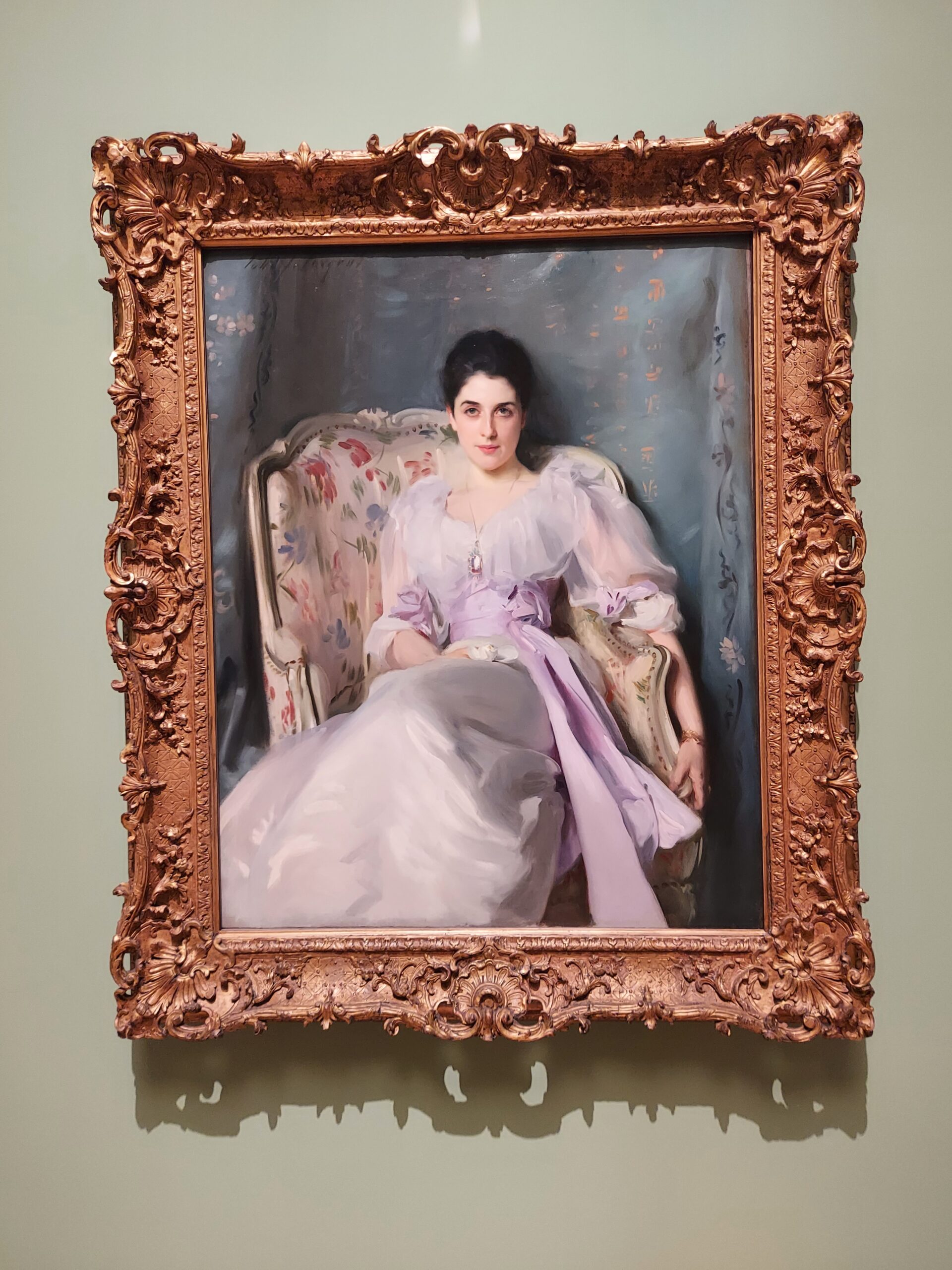
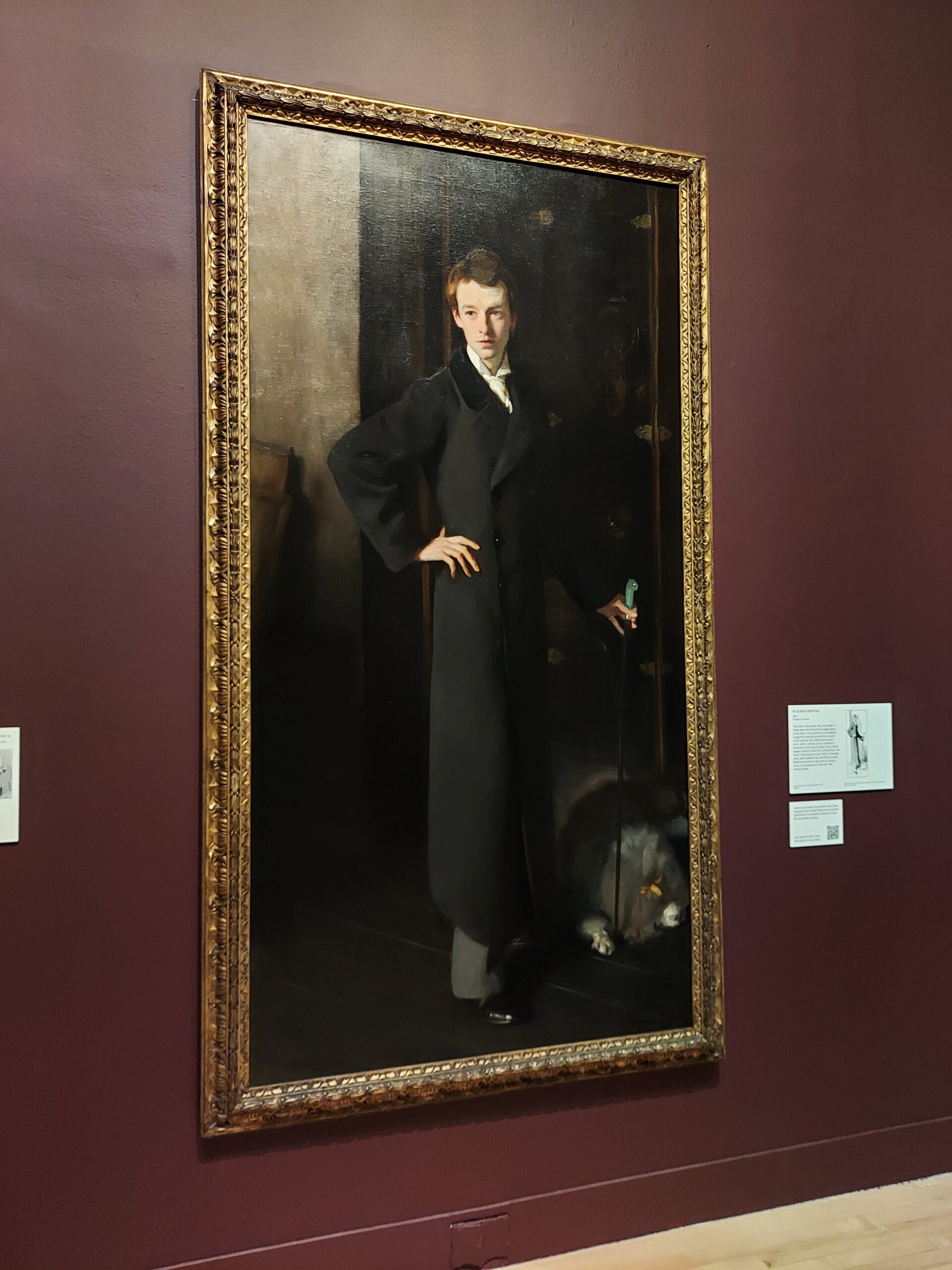
One thing I loved about the exhibition was the display of some of the costumes and clothes worn in the paintings, alongside the pictures. I especially loved seeing Sargent’s portrait of Ellen Terry as Lady Macbeth alongside the dress she wore in the production and the painting. Interestingly, the real life dress was green, whereas the painted version is blue – presumably for artistic reasons.
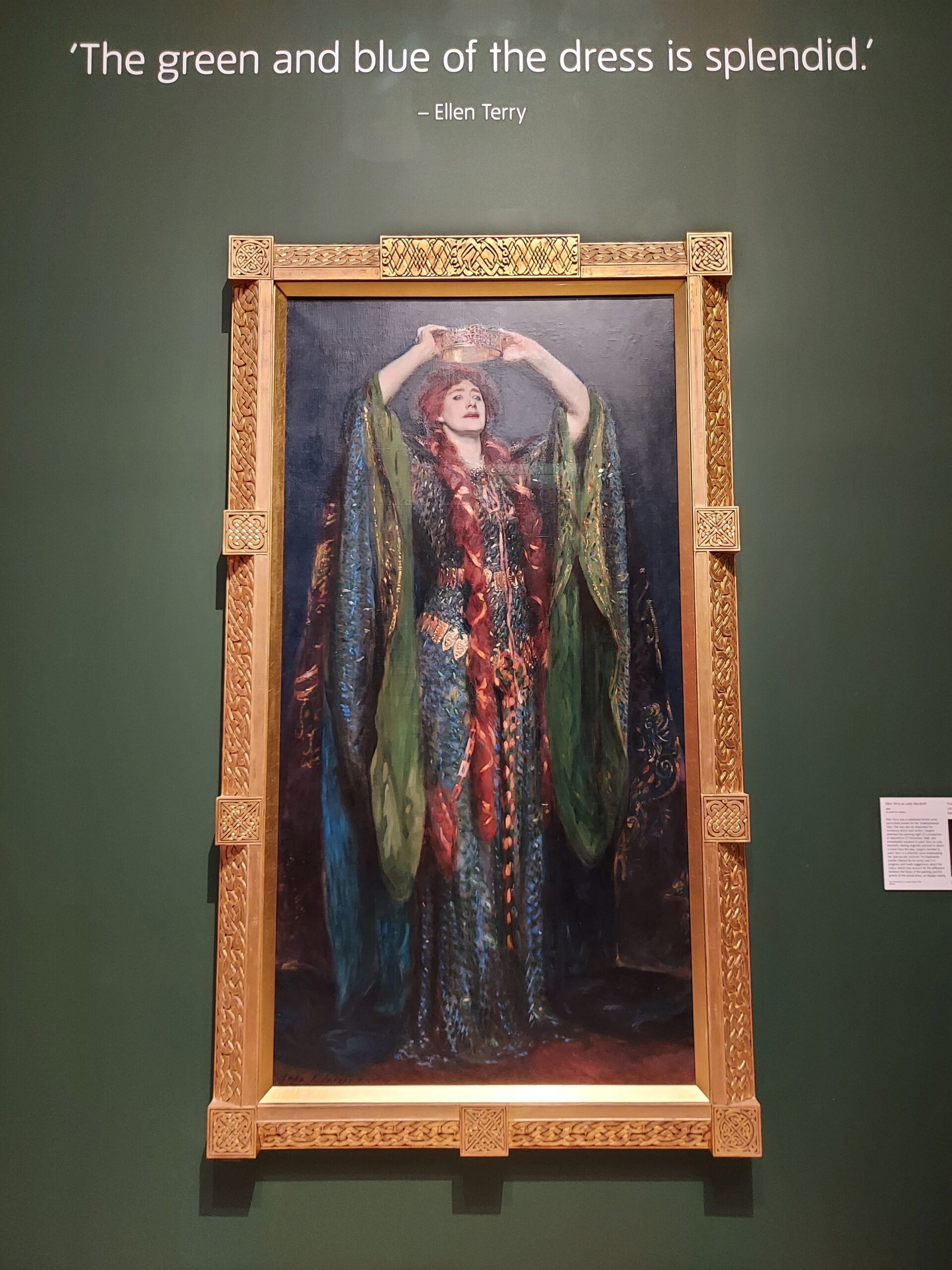
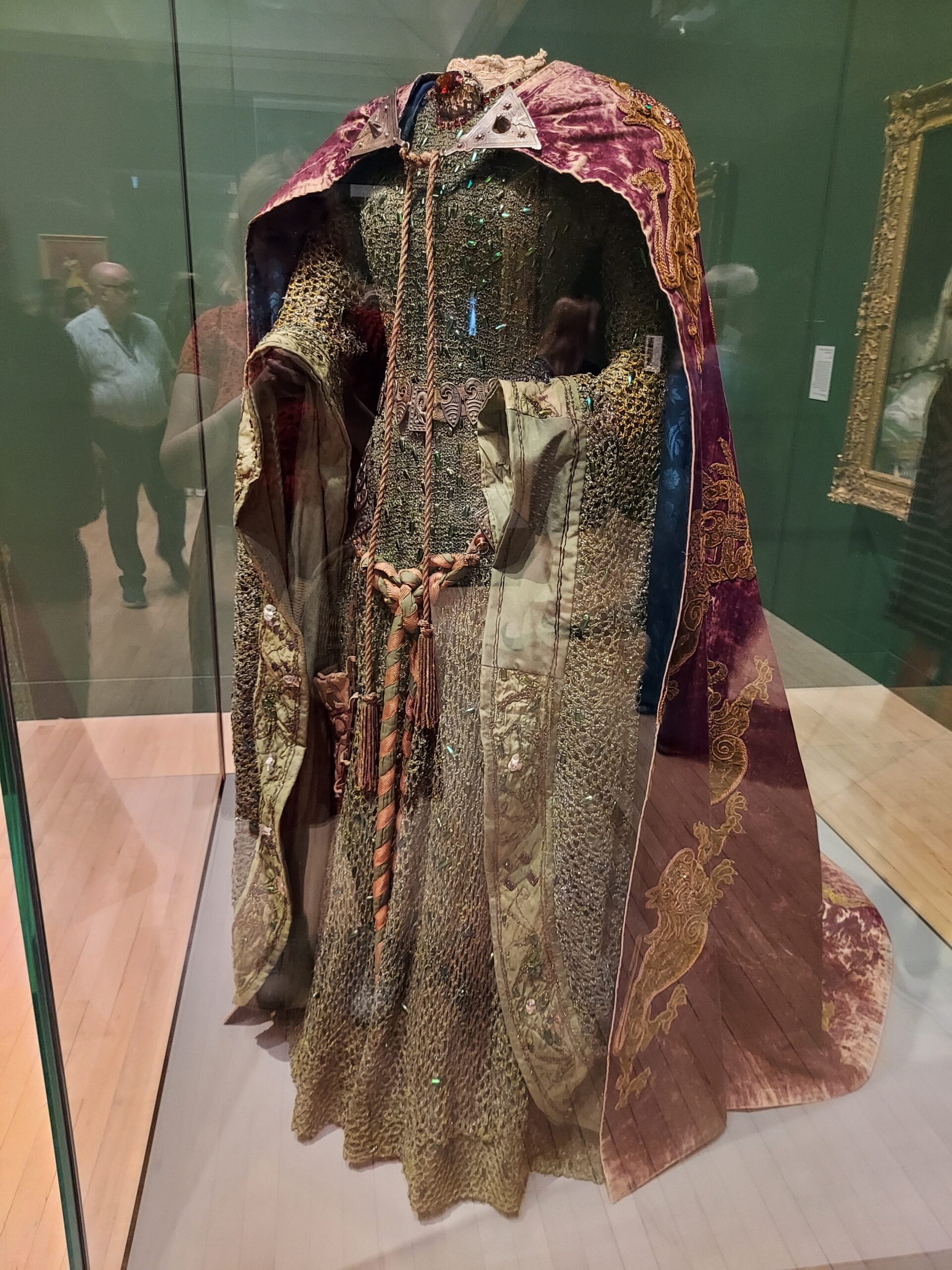
I found this exhibition hugely enjoyable, and appreciated seeing all this beautiful art. I left with a better understanding of how Sargent, art and fashion intertwined.

Sargent: Portraits of Artists and Friends – National Portrait Gallery

I visited the Sargent: Portraits of Artists and Friends exhibition at the National Portrait Gallery on Friday after work, suddenly realising that it was due to close on the Bank Holiday. I’m very glad I got the chance to see the exhibition, as I love Sargent’s style and his pictures really appeal to me.

John Singer Sargent (1856-1925) was born in Florence to American parents. He showed early promise as an artist and trained with many expatriate artists. He later studied at the École des Beaux-Arts, and his career went from strength to strength; he was acclaimed on both sides of the Atlantic.

The portraits here are largely of artists and other society figures that Sargent knew personally, meaning that they are more varied and generally more informal than his commissioned works. I loved the glorious colours of the paintings and the interesting figures who form their subjects. One of my favourites was a picture of his friend Ramón Subercaseaux, painted in a Venetian gondola in around 1880. Ramon looks directly at the painting as if he is looking into the eyes of his friend. I also loved the paintings of Robert Louis Stevenson, completed a few years later, showing the author in an almost “accidental” pose. Another image I loved, much more formal and staged, was Sargent’s painting of actress Ellen Terry as Lady Macbeth – incredibly impressive.

I could have stayed here for hours; sadly the exhibition has finished but many of Sargent’s works are visible in public galleries, including Carnation, Lily, Lily, Rose (Tate) and his 1913 portrait of the novelist Henry James (National Portrait Gallery).

Ellen Terry as Lady Macbeth, 1889