
I was thrilled when the RebelVision badge was announced, as I am a huge Eurovision fan. The badge allowed me to research more deeply around Eurovision, as well as celebrate this year’s contest.
Learn what Eurovision is, and make a timeline of significant events.
In the mid-20th century, television services began to be introduced all across Europe. The European Broadcasting Union (EBU) created the Eurovision Network in order to facilitate the exchange and production of common television programmes, helping to increase programming material for national broadcasting organisations in a cost-effective way. The Eurovision Song Contest began as a groundbreaking – for the 1950s – technical experiment: a simultaneous, live broadcast across Europe. The Italian national broadcasting organisation, RAI, put forward the idea of a song contest after the success of the Sanremo Italian Song Festival. Seven countries took part in the first contest, hosted in Switzerland owing to its central European location; today, it is common for almost forty countries to compete each year.
1956 The first Eurovision Song Contest takes place, featuring Belgium, France, Germany, Italy, Luxembourg, Netherlands and Switzerland. The host country, Switzerland, wins with Refrain by Lys Assia. In this first contest only, countries are allowed to enter two songs each.
1957 Austria, Denmark and the United Kingdom enter for the first time. Scoreboards and public announcement of the voting are introduced.
1958 The tradition of the winning country hosting the following year’s contest begins: the Netherlands, who won in 1957, host this year.
1960 The contest is held in the United Kingdom for the first time: as runners-up, they were asked to host when winners the Netherlands declined.
1969 Four countries – France, Spain, the Netherlands and the United Kingdom – tie for first place. A tiebreak rule is applied in future contests to prevent this happening again.
1970 A brief video introduction to the host country, and ‘postcards’ introducing each artist, are introduced to the contest for the first time.
1971 Groups are allowed to compete for the first time: a maximum of six performers are permitted on stage, a rule which is still in place today.
1974 ABBA win the contest for Sweden with Waterloo.
1975 The points system, in which 12 points are awarded to a country’s top-placed song, 10 to their second-placed, and 8-1 to their third- to tenth-placed songs, is introduced.
1980 Johnny Logan achieves the first of his three victories for Ireland (two as a singer, one as a songwriter) with What’s Another Year.
1981 Bucks Fizz win Eurovision for the UK with Making Your Mind Up.
1988 Switzerland wins the contest with a little-known singer from Canada, Céline Dion.
1990 In response to the pre-teen contestants of France and Israel in 1989, a rule is introduced requiring any Eurovision contestant to be at least 16.
1993 In response to the breakup of the Soviet Union and Yugoslavia, several new countries take part in the contest including Slovenia, Bosnia and Herzegovina, and Croatia.
1994 Irish dancing phenomenon Riverdance makes its debut at the contest in Dublin, Ireland.
1997 The United Kingdom win the contest with Love Shine A Light by Katrina and the Waves.
1998 Dana International wins Eurovision for Israel with Diva, Eurovision’s first openly trans and LGBTQIA performer.
2004 Owing to the growing number of competing countries, semi finals are introduced to the contest.
2015 Australia competes for the first time to mark the sixtieth edition of the contest.
2020 Eurovision is cancelled for the first time in its history, owing to the Covid pandemic.
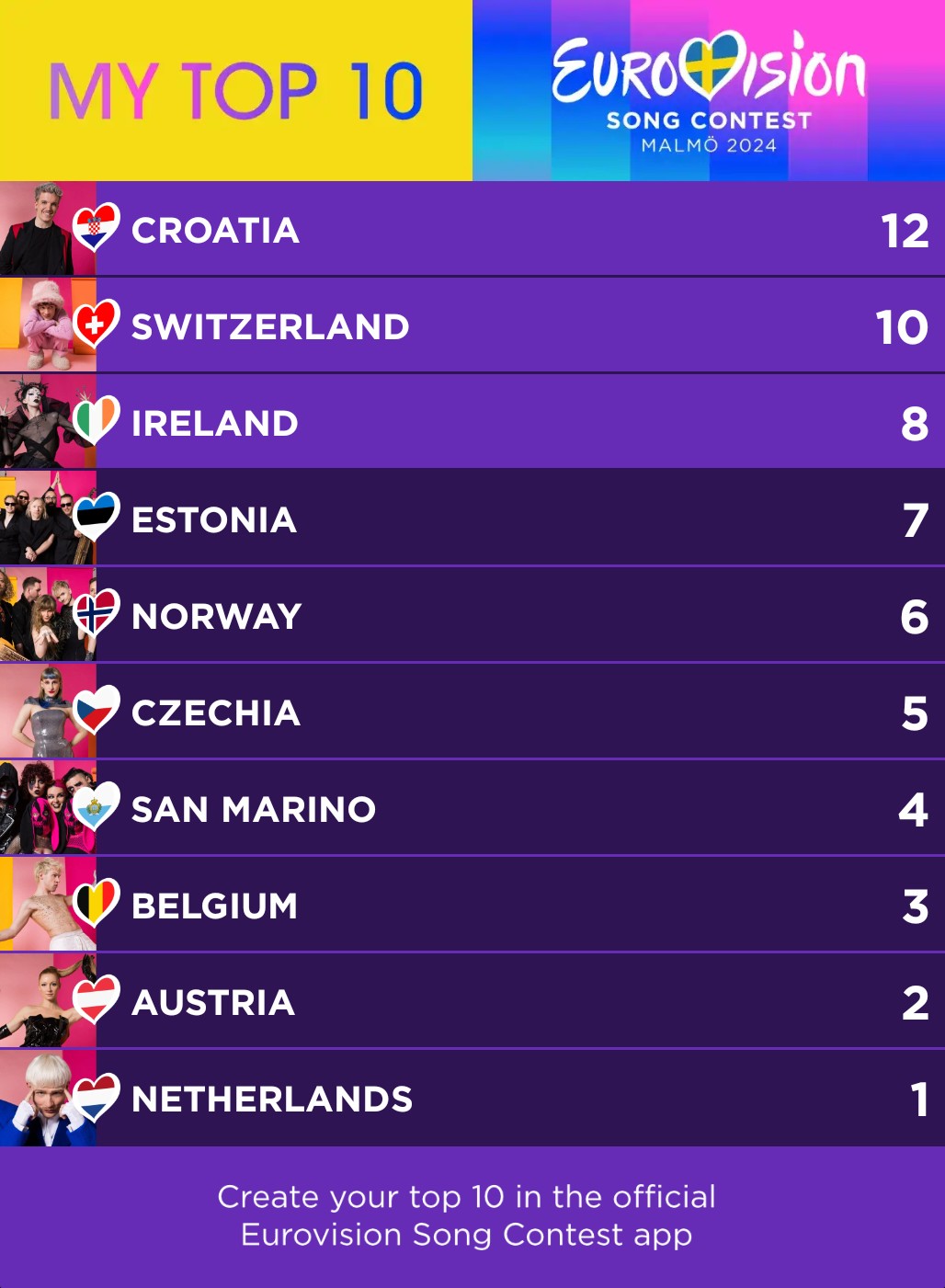
Listen to this year’s entries and choose your top 5.
I actually chose a top 10, not just a top 5, and it was still really hard! Here are my choices:
Watch a documentary or film about Eurovision.
I watched Eurovision at 60 on BBC iPlayer.
Research historic boycotts of Eurovision.
I found this clause very interesting and learned about several historical boycotts and controversies in the contest. Most famously, Russia was banned from the contest after its invasion of Ukraine in 2022. Armenia and Azerbaijan have experienced conflict, mainly over a disputed region, while Yugoslavia was banned from the contest shortly after the 1992 competition because of the siege of Sarajevo. Back in 1975, Greece boycotted the contest after Turkey invaded Cyprus; the following year, Greece’s obviously anti-war song referencing Turkey’s presence in Cyprus led Turkey to boycott in turn.
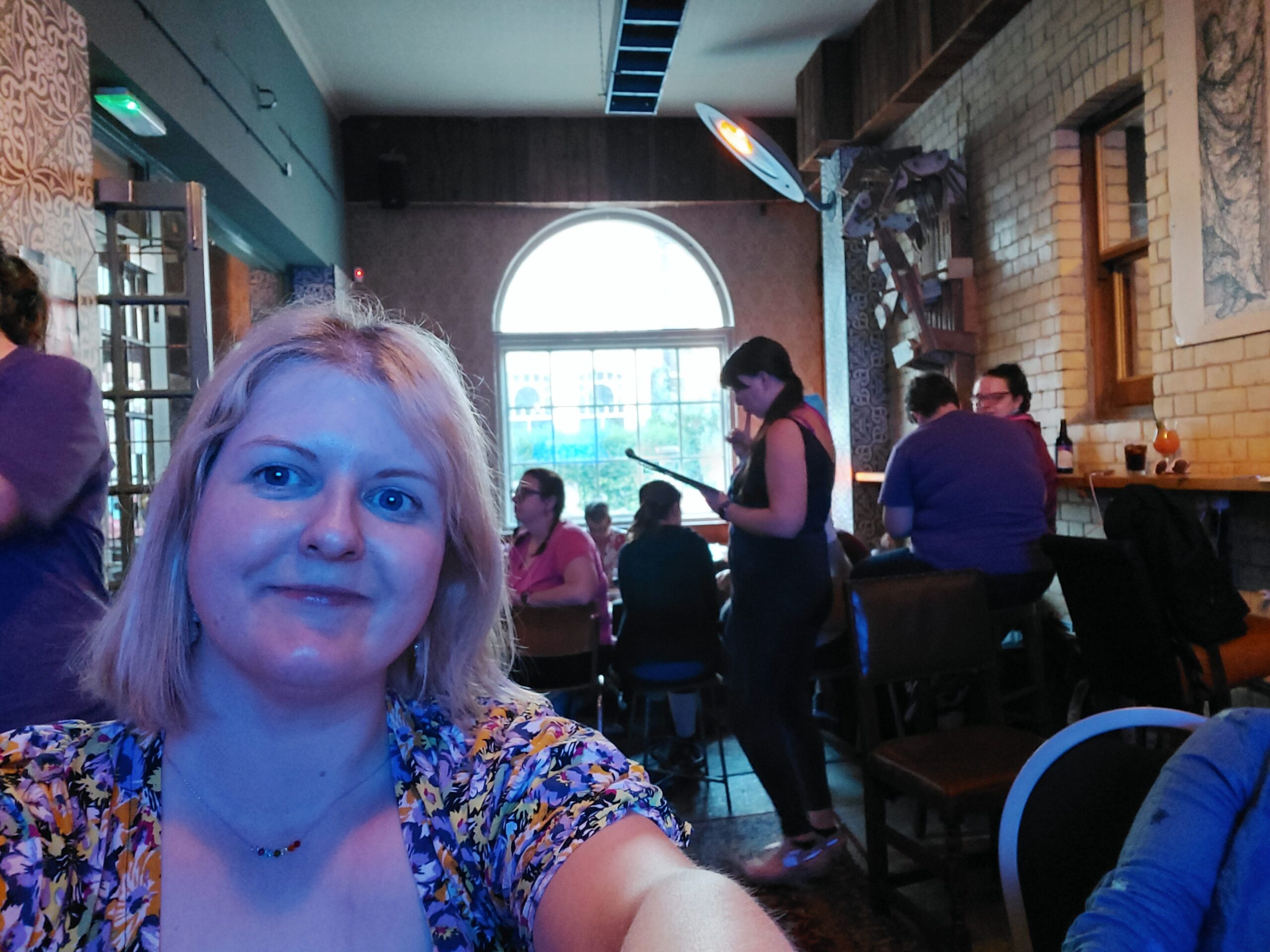
Take part in a Eurovision watch party, and score each act.
I attended the post-Rebel Monopoly party in the Four Thieves pub in Clapham – it was great fun.
Listen to some of the most famous winning songs and choose your top 3.
I found this tough: my favourite songs tend not to be the winners, but even so it was hard to choose a top three. In the end, I would go for Euphoria by Loreen (Sweden, 2012), Arcade by Duncan Laurence (Netherlands, 2019) and The Code by Nemo (Switzerland, 2024). I originally had Lordi in there, but Hard Rock Hallelujah has been superseded by this year’s winner!