

I signed up to attend a nature walk in Kensington Gardens. I was mainly prompted to do this by the Nature Lover badge, but I was excited nevertheless. It was a lovely autumn day in the Gardens, and we saw and learned a lot.
Some of the trees we were introduced to included bay, ginkgo biloba, turkey oak, yew, horse chestnut, sweet chestnut and lime/linden. We learned that the ginkgo biloba tree has ‘swimming’ sperm and can switch gender; the turkey oak has male and female flowers on the same tree; and the oldest trees in London and the UK are yews, which have separate sex trees – only the females produce berries. Horse chestnut trees are not native to the UK and will probably go extinct in the next century because of climate change, whereas sweet chestnuts have prettier flowers, are edible, and are more spiky.
 Ginkgo Biloba tree
Some of the plants we came across included rosemary, lavender, brambles and stinging nettles, as well as numerous flowers. Flowerbeds in the Gardens can be created with AI to provide the most pollen and nectar. Interestingly, some butterflies (including peacock butterflies) will only lay eggs on stinging nettles.
Throughout the walk we came across plenty of fungi, including artist’s bracket, chicken of the woods and birch polypore. Chicken of the woods is commonly found on oak and cherry trees (the one we saw was on a cherry). Birch polypores generally only grow on dead and dying birch trees; these fungi have about 80 sexes to be as compatible with as many others as possible.
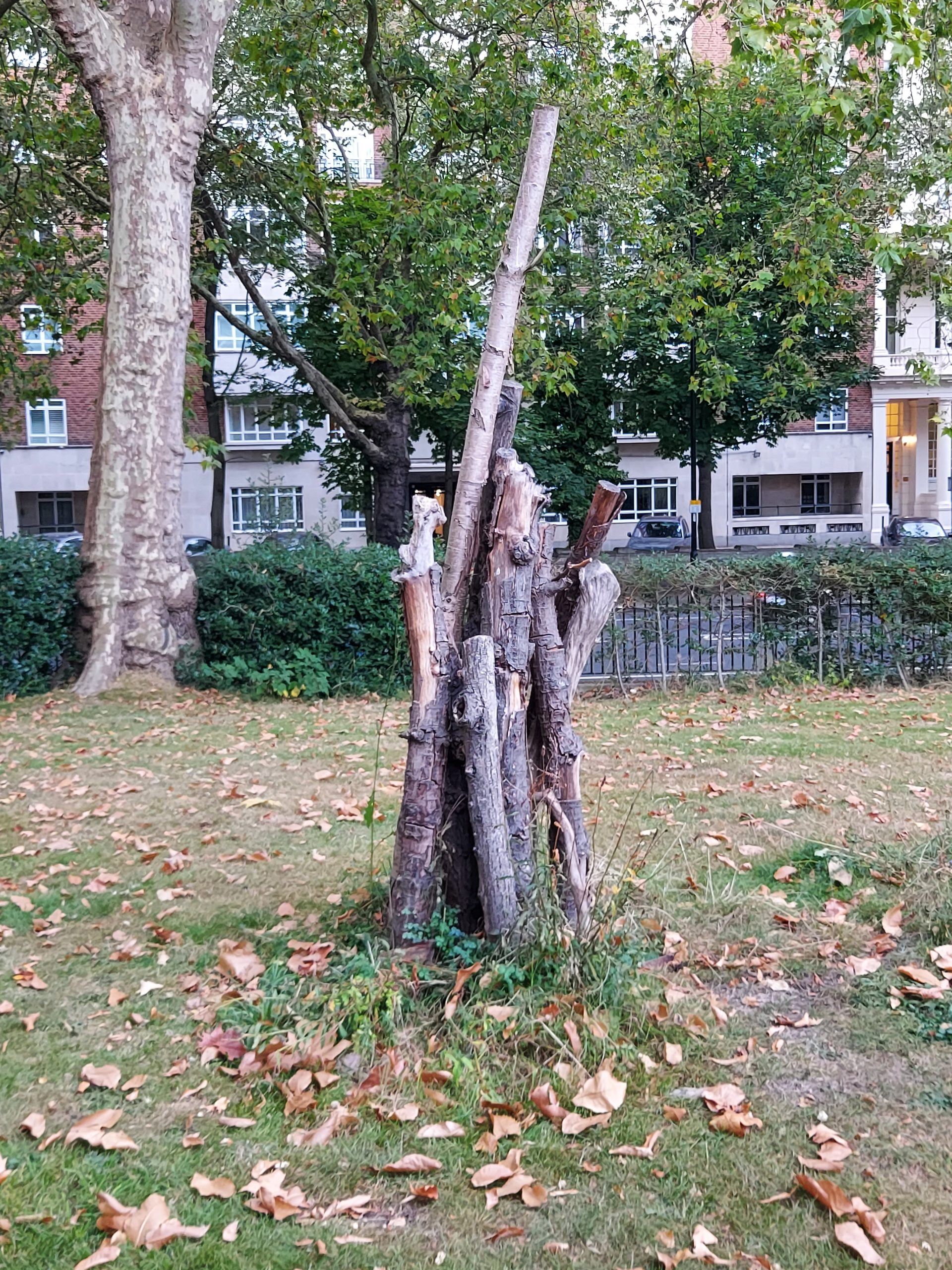 Loggery
We spied a loggery designed for beetles and also turned over some logs to see what we could find. Stag beetles are endangered in the UK; we didn’t see any on our walk, but they do live in the park, on or in rotting wood. We did spot woodlice: some woodlice are all female and reproduce asexually, because of a bacteria that turns eggs female while they are developing. Ladybird larvae can be found on leaves – they look very different to adult ladybirds. We learned about aphids, which are fascinating: aphids clone themselves (though they can mate with others if needed); they have babies that are already pregnant and they can also have babies with wings (or without). Amazing!
We found a bee and were able to take a closer look. Most bees are, in fact, solitary. Apparently there is a type of bee called a cuckoo bee that will kill the queen and settle in to the hive so that the worker bees feed their larvae instead!
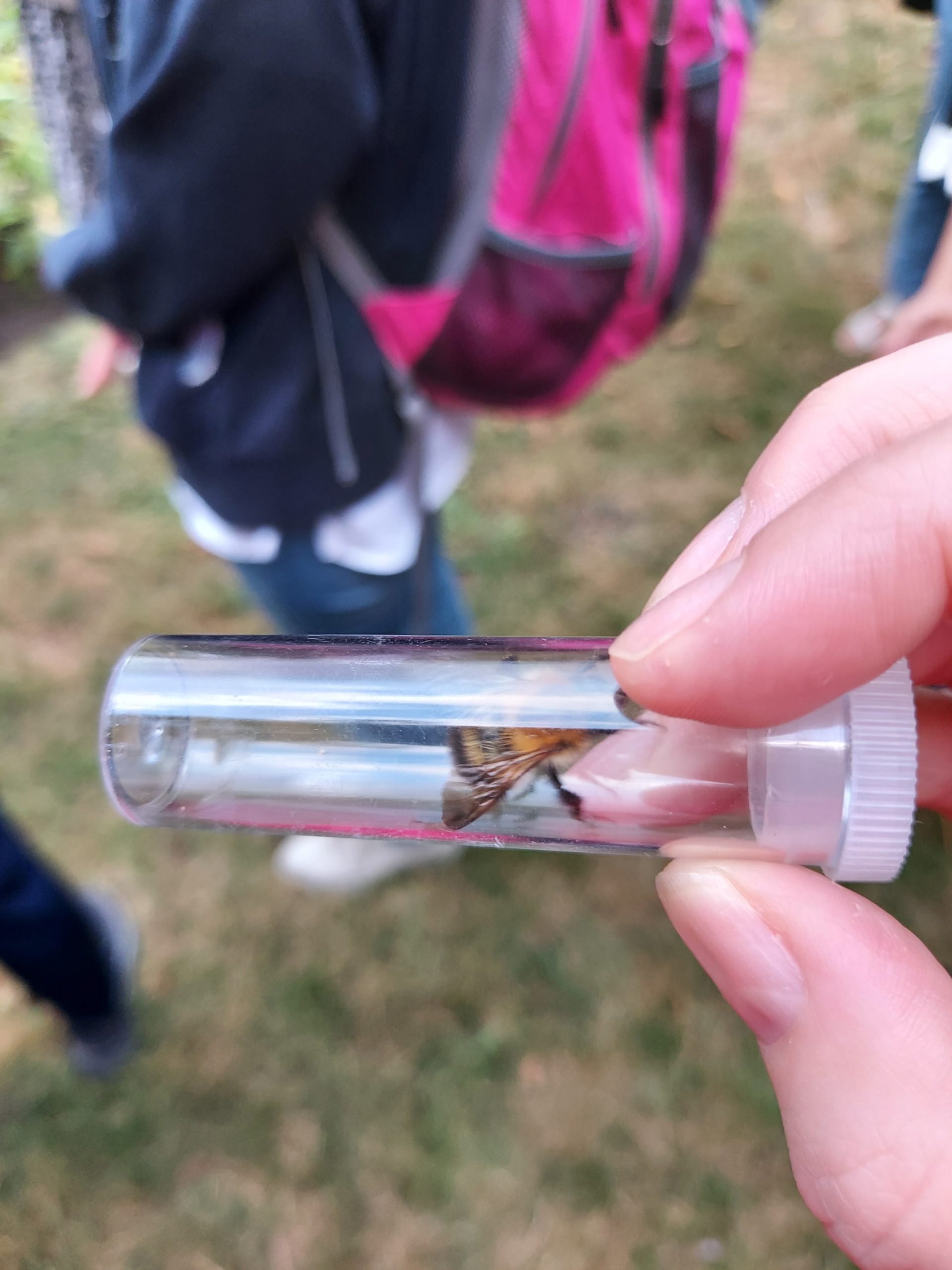 Bee
My favourite thing I learned during the walk was about galls and oak gall ink. Galls on acorns are created by wasps to house their larvae. Oak gall ink was the first permanent ink, made with ground up oak apple galls and iron sulphates. The Magna Carta and the American Declaration of Independence were both signed with this ink! It has also been suggested that the existence of wasp nests could have inspired humans to make paper. It seems that wasps are useful for something after all!
I thoroughly enjoyed my nature walk and the chance to spend more time in Kensington Gardens.