
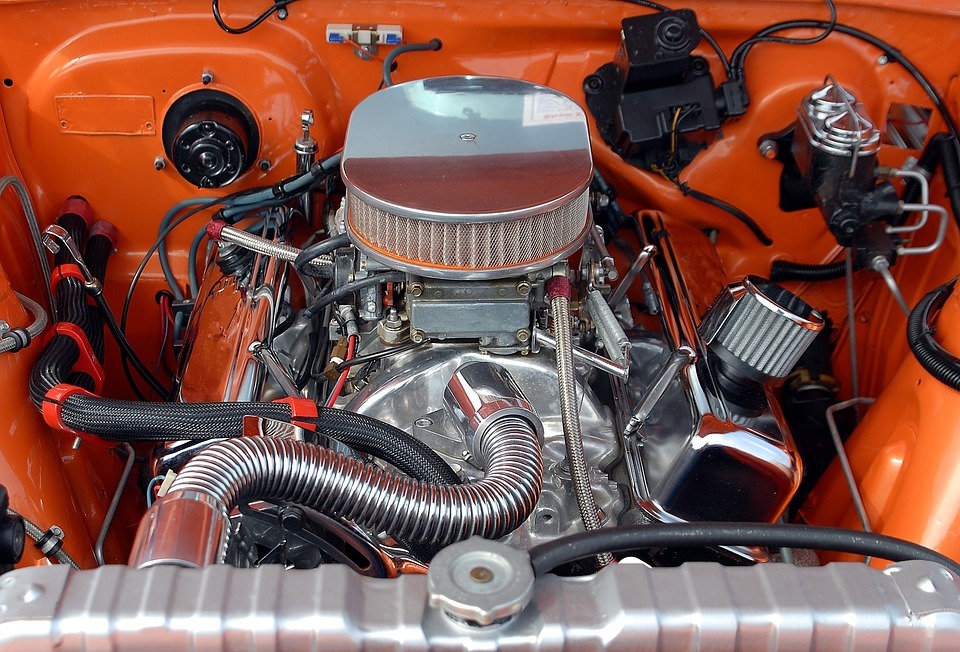
I never thought I’d be able to complete the Mechanic badge: I can drive (I passed my test 16 years ago!) but don’t have a car. However, thanks to the Big Rebel Meet Up in Reading and a very helpful pair of mechanics from Kwik Fit, I can mark this badge off as done.
Know how to open the hood of your car, check and top up oil, water and adblue (if necessary).
There is a latch inside the cabin – the exact location depends on the make and model of car. You can then finish opening the hood from outside the car.
To top up oil, make sure the car is stationary and the engine is cool (wait at least 10-15 minutes after driving). Find the dipstick and wipe it clean. If your oil needs topping up, find the oil filler cap, remove it, and carefully pour in your oil using a funnel. Make sure you use the correct type of oil for your car – check the handbook.
To check the levels of coolant or antifreeze, check the coolant reservoir. If the level is close to the minimum you will need to top up. For normal driving conditions, use a 50/50 mix of water and antifreeze. If you don’t have antifreeze and are desperate to top up, you can fill with tap water in the meantime, but ensure that the correct antifreeze concentration is added ASAP.
Adblue is used in diesel cars so it’s unlikely that I’ll ever need to worry about it.
Know what pressure your tyres need to be kept at, how to check this and top up, and how to identify unsafe tyre tread thickness.
You can find the recommended tyre pressure for your vehicle in your vehicle handbook or printed either in the sill of the driver’s door or on the inside of the fuel tank flap. Check the tyre pressure with a tyre pressure gauge – make sure your tyres are cold. To add air to your tyres, use an air pump.
Some tyres will have indicators embossed on the tyre wall itself, usually with a line or arrow which is positioned somewhere below the outer tread. If the tyre is flush with these, it is below the legal limit and needs replacing. You can also use a depth gauge.
Keep an organised service history of your car’s service history, MOT, insurance and tax documents, and easy access details for emergency vehicle recovery.
It is recommended that you keep all documents relating to your car – I’ve made a mental note of this and will be sure to keep an organised record if/when I ever get a car.
Learn and demonstrate how to change a tyre. Practice using a car jack.
This was the fun part of our session at Reading! We learned how to change a tyre, but we also learned that this should only be attempted in an emergency, and you should make your way to the nearest garage asap so it can be checked.
Stock the boot of your car with an emergency kit – including a first aid kit, warm blanket and reflective clothing.
If/when I get a car I will be sure to store these items in it, just in case. I will also be sure to take a bottle of water with me in case of emergency.
Know how to replace a windscreen wiper and top up windscreen fluid.
Windscreen wipers are fragile so it’s better to leave replacement to the professionals. If you do decide to do this yourself, make sure you select the correct size of wiper. Raise the existing wiper, making sure the blade points up, and gently unhook it from the lower wiper arm. Take the new wiper and add it to the lower wiper arm’s hook.
Find the screenwash cap under the bonnet. The container usually has lines so you can check the fluid level. If it needs topping up, fill up the container to the max level and replace the cap securely. It is best to check the level at least once a month.
Date completed: 15 October 2022
One thought on “Rebel Badge Club: Mechanic”