
I’ve had my eye on the Sommelier badge ever since I got Book 2, and I finally got round to completing it in October. I love my wine, so it was nice to explore it in more depth.
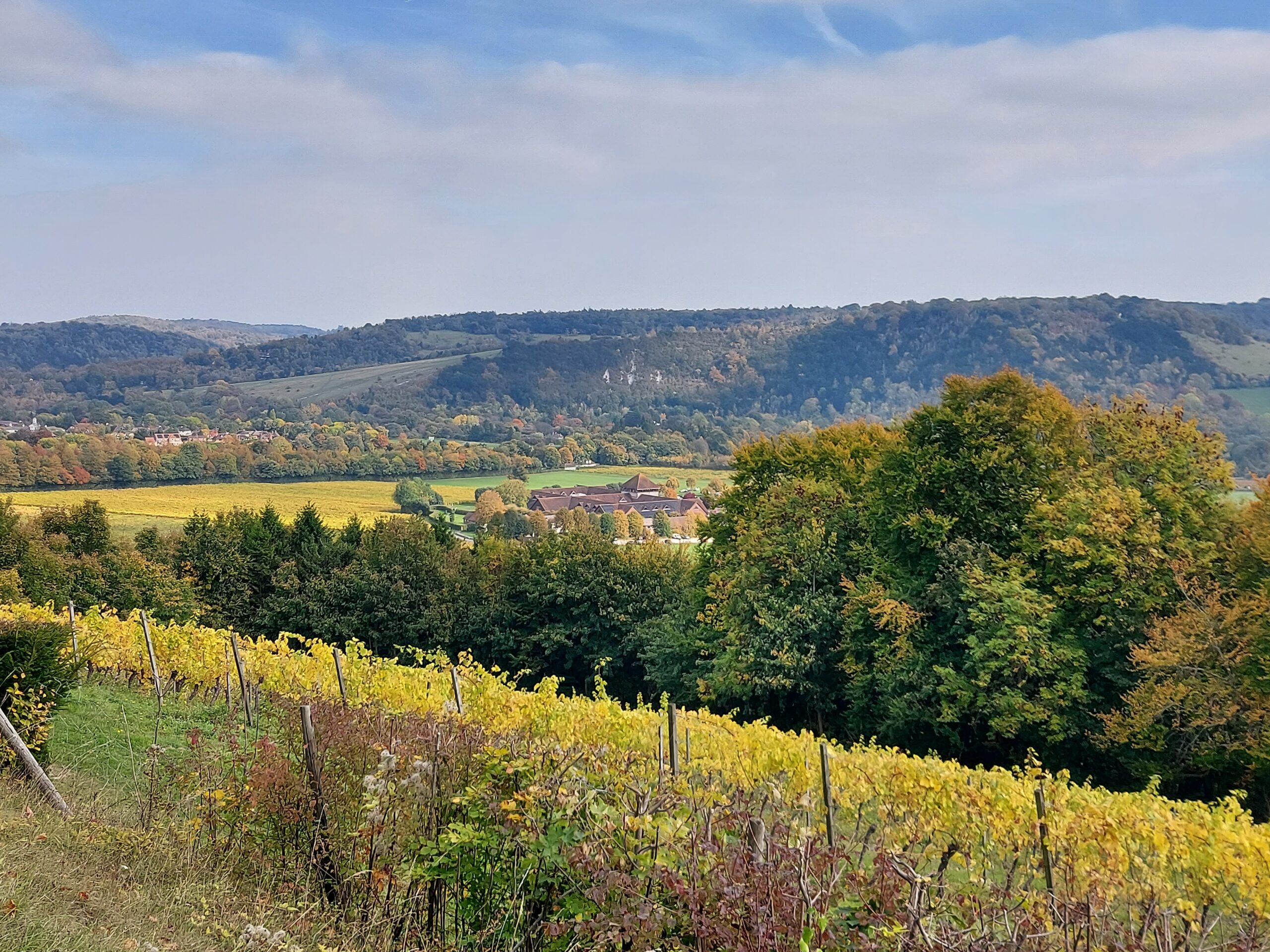
Visit a winery and learn about the process of making wine.
I visited Denbies Wine Estate in Surrey and did the indoor and outdoor tours.
Take part in a wine tasting.
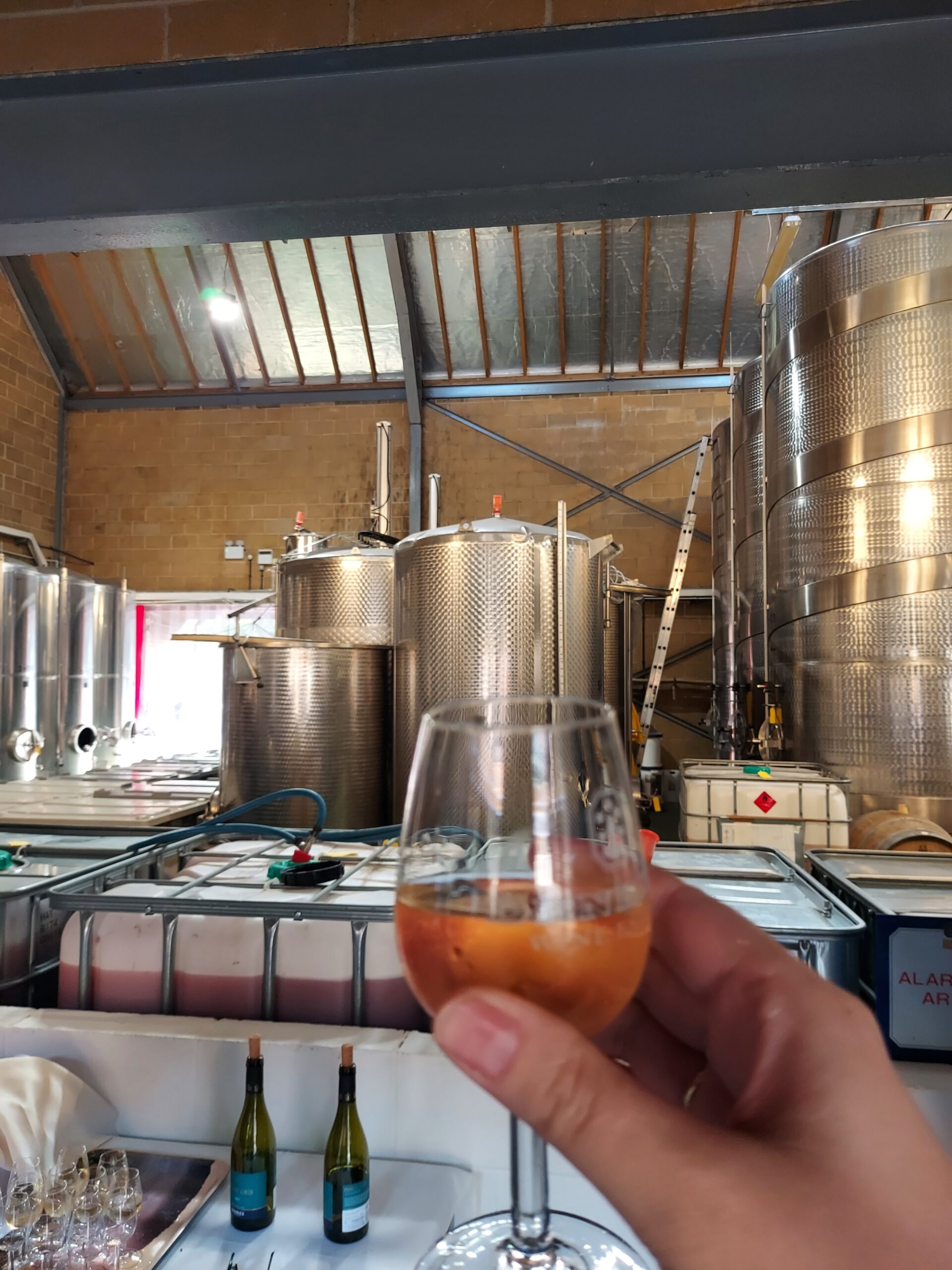
At Denbies I also took part in a wine tasting. We sampled Whitedowns Rosé NV, Pinot Gris 2023, Surrey Gold and Pinot Noir 2022.
Learn about the different types of glass, bottles and wine glasses.
Bottles
Wine bottles come in many different sizes. The ‘standard’ size is 750ml, which is around five glasses of wine. A ‘half bottle’, or ‘demi’, contains 375ml and a ‘quarter bottle’, ‘split’, ‘piccolo’ or ‘mini’ holds 187.5ml. Bottles tend to be round because this shape was traditionally easier for glassblowers to produce, and modern winemakers tend to stick with tradition.
Standard sizes come in a variety of shapes which traditionally correspond to types of grape/flavours of wine. The most common is the Bordeaux which is tall with high shoulders. Associated grapes include Merlot, Malbec, Sauvignon Blanc and Chenin Blanc. The Burgundy has a wider base, sloping shoulders and a shorter neck. It is usually used for Chardonnay and Pinot Noir.
Slightly less common are the Rhone, similar to the Burgundy but with a longer neck, used for grapes such as Grenache and Mourvedre; the Champagne, a Burgundy-style bottle made with thicker glass to withstand the pressure of the bubbles and typically used for sparkling wine; and the Alsace or Rhine, tall and slender and used most commonly for grapes like Riesling and Pinot Gris.
Larger sizes are also available: the Magnum (1.5l), Double Magnum/Jeroboam (3l), Rehoboam/Methuselah (4.5l), Imperial (6l), Salmanazar (9l), Balthazar (12l), Nebuchadnezzar (15l) and the Midas/Melchizedek (30l).
The ‘punt’, the indent at the bottom of the bottle of wine, does not usually mean anything, although a deeper punt is desirable for sparkling wines as it can help make the bottle stronger.
Glasses
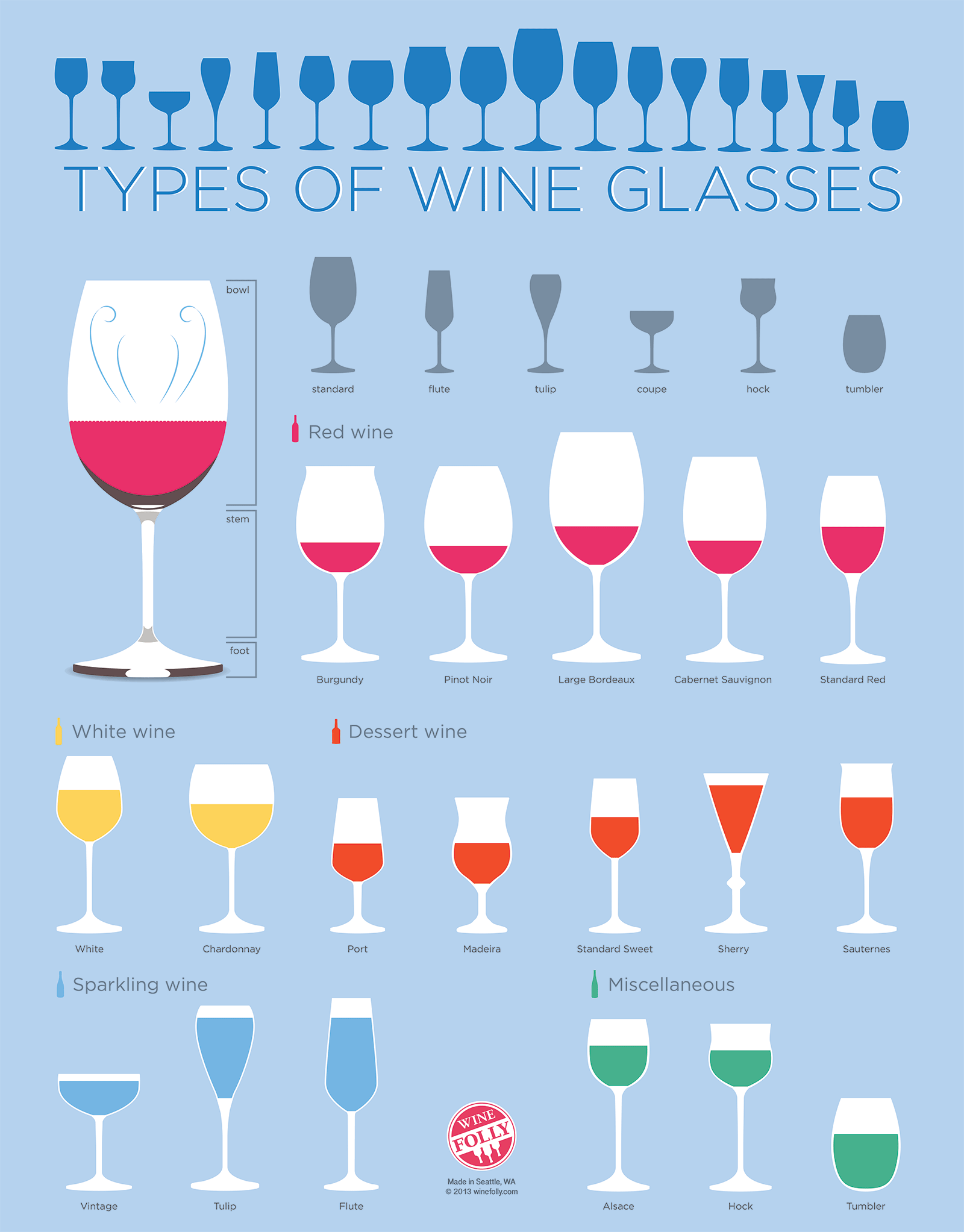
Wine glasses are designed for different types of wine in order to maximise the qualities of that wine. I found this article very helpful.
Red wine glasses are generally larger and taller than white wine glasses, to allow the wine to come into contact with more oxygen. The widest, albeit shortest, of the red wine glasses are those for Burgundy and Pinot Noir, owing to the bolder aromas of these wines. Glasses for Bordeux, Cabernet and Merlot are the tallest, while glasses for Syrah, Shiraz, Sangiovese and Malbec are shorter and slightly smaller. For white wine, the smaller bowl makes it easier to detect the subtler aromas, although Chardonnay glasses are much wider and resemble red wine glasses, providing a bigger surface area for this full-bodied wine.
Learn the differences between ‘old’ and ‘new world’ wine.
| Old World | New World |
| France, Germany, Italy | Australia, Chile, USA |
| Restricted by tradition | Able to be experimental |
| Often labelled with regional name | Grape varieties usually mentioned |
| Typically lighter in body | Can be fuller-bodied |
| Terroir-driven | Grape-driven |
| Lower alcohol content | Higher alcohol content |
Learn how rosé and sparkling wines are made.
Rosé wine is made by using the same fermentation process as red wine, but at the temperature of white.
Sparkling wine is made by starting with a base wine (made in the white wine way) and fermenting it for a second time, trapping the carbon dioxide in the liquid which dissolves into the wine, creating tiny bubbles. Premium sparkling wines are then aged in the bottle, the yeast subsequently removed by turning the bottles regularly over time. A sugar dosage is then added to make the wine sweeter before it is resealed.
Learn about the different tools available to make wine taste its best.
- Corkscrew or other wine-opening tool
- Wine glasses
- Decanter
- Wine preserver
- Champagne stopper
- Glass polishing cloth
- Book about wine
Learn about the different types of wine flavours.
White wine exists on a spectrum from sweet to dry.
Red wine exists on a spectrum from fruity to full-bodied.
Wine flavours can include red or black fruits, such as raspberry and plum; citrus, like lemon or lime; other fruits such as peach; floral like rose and jasmine; and herbal such as basil or rosemary. Spicy flavours can include cinnamon, black pepper and vanilla; earthy notes can include mushroom, leather and soil.
Write a glossary of wine terms useful to a newcomer.
Acidity – the tartness that adds liveliness to wine
Appellation – a legally-defined geographic area where wine is produced, e.g. Champagne or Bordeaux
Body – how a wine feels in your mouth. Can also be checked by swirling it around in your glass
Dry – in the context of wine, dry is the opposite of sweet
Finish – wine flavours that linger after swallowing
Legs – when you swirl wine around in your glass, the legs are the streaks you can see running down the side
Nose – a wine’s aroma. Swirl the wine in your glass to release the scent
Tannins – bitter-tasting compounds present in the skin and seeds of grapes that produce a dry feeling in the mouth
Terroir – a French word referring to the terrain where a grape is grown: the soil, climate and land
Typicity – how true a wine’s flavour is to its region and grape variety
Varietal – a wine made from one specific grape variety
Variety – the specific grape type used to make wine
Vintage – the year the grapes were harvested
Date completed: 11 October 2025