
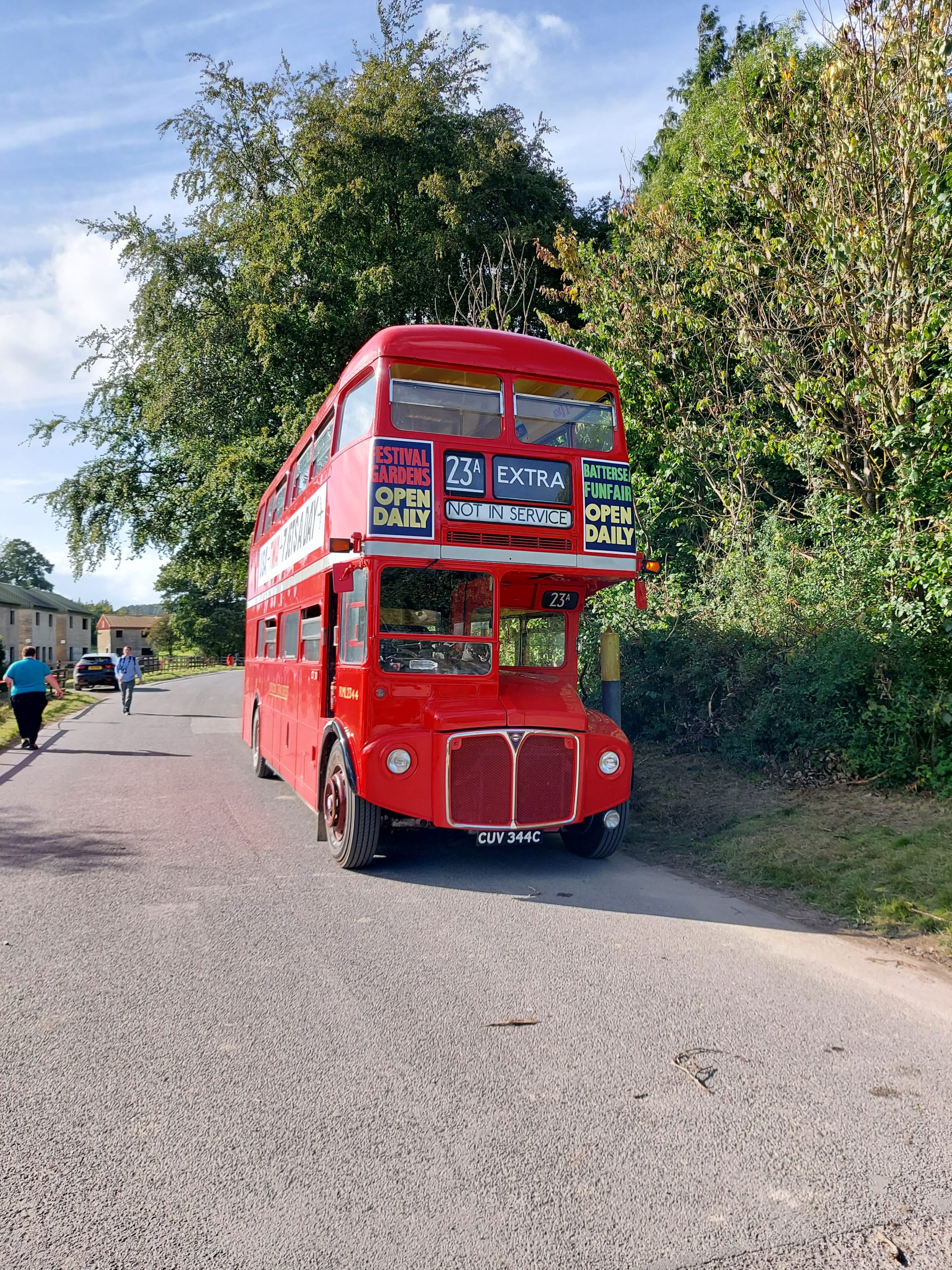
 One of the Routemasters serving Imber
I read about Imberbus Day on the Londonist website a while ago and was fascinated. This year, I decided that it was time to finally make the trip, partly because I know I definitely wouldn’t be able to go next year as a good friend is getting married that day! I’m so glad I finally made the effort, as it was a brilliant day out.
About Imber
The village of Imber, on Salisbury Plain in Wiltshire, is what is known as a ‘lost’ village. The entire civilian population of the village was evicted in 1943 (with 47 days’ notice) so that American troops could use the area to prepare for the invasion of Europe during World War II. Despite being promised that they would be able to return to their homes once the war was over, the villagers were never allowed back, and the Ministry of Defence still controls the area.
The village existed in Saxon times, documented to have been present in 967, and is also recorded in the Domesday Book, with a population of around fifty. The church of St Giles dates back to the 12th century and has wall paintings from the 15th century. The population peaked in 1851, with 440 residents recorded in the census of that year, and had declined to around 150 by the time the remaining residents were evicted.
 St Giles’ Church
Most of the buildings are now derelict or were demolished by the Army, with the church being the only building to remain in a decent condition. A pub called the Bell Inn, the manor house, Imber Court, some farm cottages and some ‘council house’ type blocks also survive. Many of the ‘buildings’ that stand there today are fakes created by the Army for training purposes.
I read about Imber in Neil Spring’s novel The Lost Village, featuring famous twentieth-century ghost hunter Harry Price. This book made me want to visit this historic village even more.
How did Imberbus Day come about?
In 2009, a group of bus industry professionals managed to get permission to run a vintage bus service to Imber from Warminster in Wiltshire. Imber is only open to the public on a handful of dates each year, and only one of those is approved for a bus service, so the annual Imberbus Day takes place in August. The event has become increasingly popular, and the bus service now extends to other parts of Wiltshire. Most of the buses used are traditional Routemasters, but there are a handful of newer ones plus a few more unusual single-decker buses.
 On the top deck of the Routemaster
My day at Imber
I had originally been planning to take the train to Warminster and catch the bus from there, which seems to be the usual thing to do. However, on investigation I found a National Express coach service running directly to Imber and back from London Victoria. I decided to book myself onto this, as it was cheaper than the train, and after speaking to various people once I got to Imber I was SO glad that I did. Apparently the queue to catch the bus at Warminster was huge and people were waiting there for hours (on what was quite a hot day, too) so I definitely did the right thing.
 Empty houses in Imber
Imber was incredibly busy but the atmosphere was lovely. The first thing I did was to queue up for a while to enter the church, which contains a display all about the history of Imber. It was quite a poignant experience, especially considering the graveyard surrounding the church, the residents of which can only receive mourners on designated days throughout the year.
I’ve recently taken up geocaching and I took the opportunity to try and tick off the two Imber-related caches listed on the app. I achieved one of them, which involved answering a question and sending a photo to prove I had made it to the location. I had less luck with the other, which involved finding clues in the church and the graveyard and calculating the coordinates based on the answers. I had trouble working out the final result and, by the time I’d finally got the answer (or thought I had) it was too late to go in search of the cache. Oh well, I guess I’ll have to come back to Imber then!
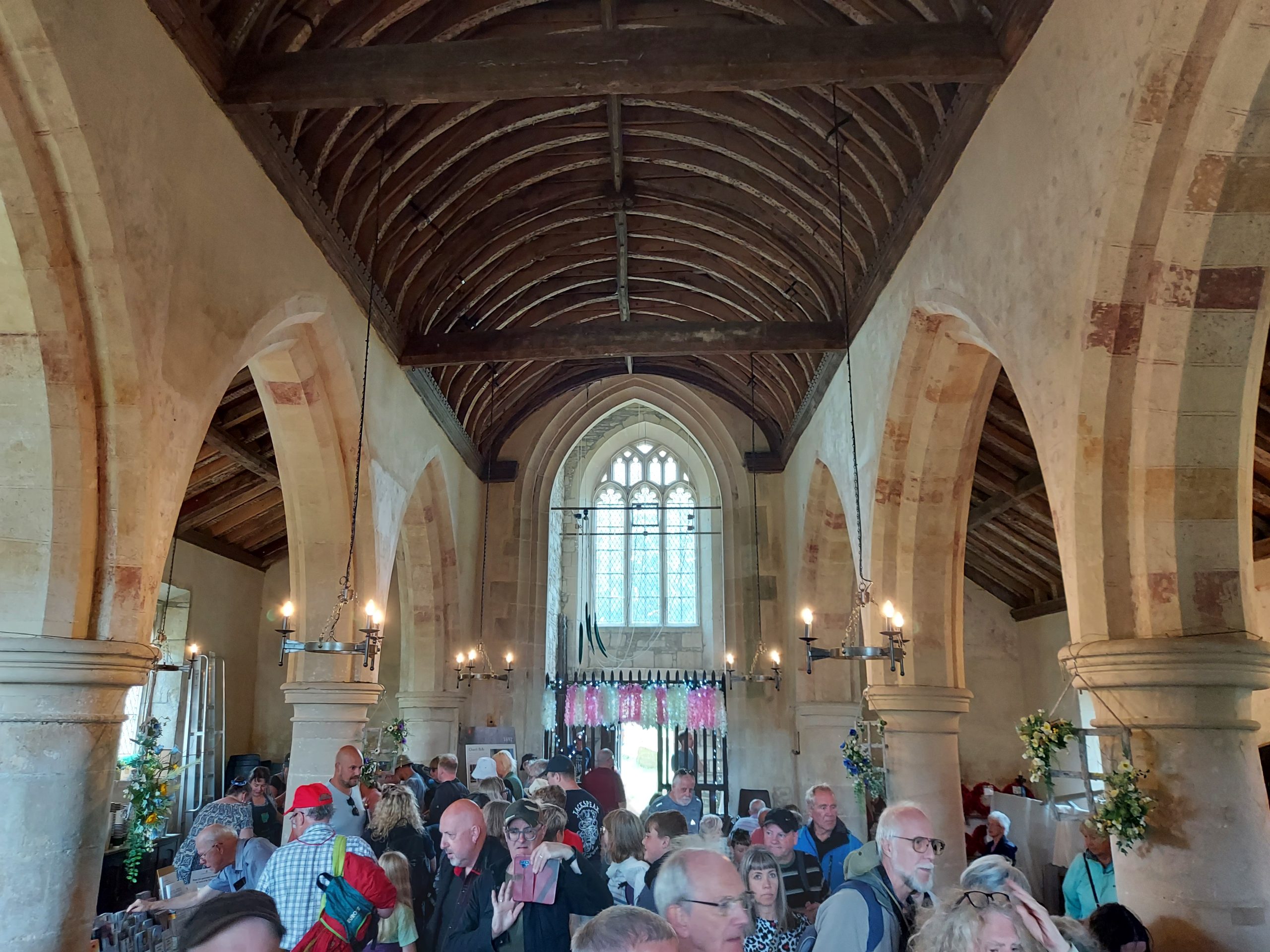 Inside the church
I walked around the main street for a bit, reading the signs that stated where particular buildings used to be located. You aren’t allowed to leave the path for safety reasons, and the buildings are mostly hollowed out and fake, in any case. All in all, it’s a surreal experience.
Eventually I decided to leave Imber via one of the beautiful old Routemasters. This is where making the trip by myself came in handy, as I was able to grab the very last seat on the upper deck, buying my ticket from the conductor just like in the Olden Days. I chatted to a lovely woman on the way to Market Lavington, enjoying the views over Salisbury Plain. I disembarked at Market Lavington in order to visit the small museum there, and also enjoyed a cup of tea and a scone at the cafe.
 Market Lavington Museum
I got back on the bus to head back towards Imber. It was hugely busy at Gore Cross interchange (and rather surreal to see so many London buses ambling over the hills) but eventually I managed to catch the bus back to Imber and get on the coach to take me back to London.
I had a really lovely time exploring Imber and the surrounding area. I don’t think I actually managed to see all of Imber, and I certainly didn’t get to see every stop on the bus route. I guess this just means I will have to go back in the future!


