Rebel Badge Club: Mechanic

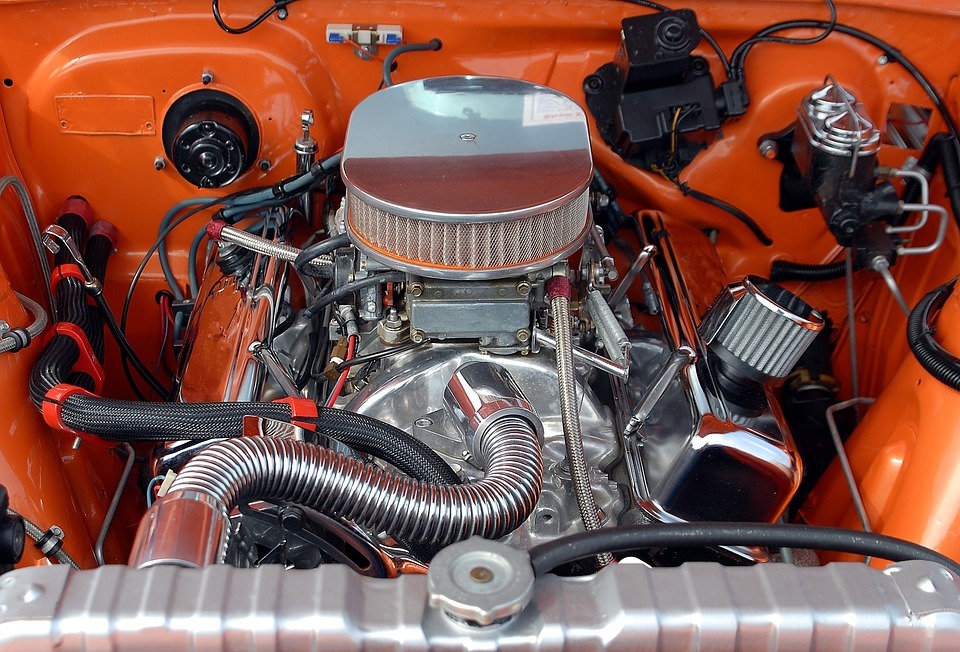
car engine

I never thought I’d be able to complete the Mechanic badge: I can drive (I passed my test 16 years ago!) but don’t have a car. However, thanks to the Big Rebel Meet Up in Reading and a very helpful pair of mechanics from Kwik Fit, I can mark this badge off as done.

Know how to open the hood of your car, check and top up oil, water and adblue (if necessary).

There is a latch inside the cabin – the exact location depends on the make and model of car. You can then finish opening the hood from outside the car.

To top up oil, make sure the car is stationary and the engine is cool (wait at least 10-15 minutes after driving). Find the dipstick and wipe it clean. If your oil needs topping up, find the oil filler cap, remove it, and carefully pour in your oil using a funnel. Make sure you use the correct type of oil for your car – check the handbook.

To check the levels of coolant or antifreeze, check the coolant reservoir. If the level is close to the minimum you will need to top up. For normal driving conditions, use a 50/50 mix of water and antifreeze. If you don’t have antifreeze and are desperate to top up, you can fill with tap water in the meantime, but ensure that the correct antifreeze concentration is added ASAP.

Adblue is used in diesel cars so it’s unlikely that I’ll ever need to worry about it.

Know what pressure your tyres need to be kept at, how to check this and top up, and how to identify unsafe tyre tread thickness.

You can find the recommended tyre pressure for your vehicle in your vehicle handbook or printed either in the sill of the driver’s door or on the inside of the fuel tank flap. Check the tyre pressure with a tyre pressure gauge – make sure your tyres are cold. To add air to your tyres, use an air pump.

Some tyres will have indicators embossed on the tyre wall itself, usually with a line or arrow which is positioned somewhere below the outer tread. If the tyre is flush with these, it is below the legal limit and needs replacing. You can also use a depth gauge.

Keep an organised service history of your car’s service history, MOT, insurance and tax documents, and easy access details for emergency vehicle recovery.

It is recommended that you keep all documents relating to your car – I’ve made a mental note of this and will be sure to keep an organised record if/when I ever get a car.

Learn and demonstrate how to change a tyre. Practice using a car jack.

This was the fun part of our session at Reading! We learned how to change a tyre, but we also learned that this should only be attempted in an emergency, and you should make your way to the nearest garage asap so it can be checked.

Stock the boot of your car with an emergency kit – including a first aid kit, warm blanket and reflective clothing.

If/when I get a car I will be sure to store these items in it, just in case. I will also be sure to take a bottle of water with me in case of emergency.

Know how to replace a windscreen wiper and top up windscreen fluid.

Windscreen wipers are fragile so it’s better to leave replacement to the professionals. If you do decide to do this yourself, make sure you select the correct size of wiper. Raise the existing wiper, making sure the blade points up, and gently unhook it from the lower wiper arm. Take the new wiper and add it to the lower wiper arm’s hook.

Find the screenwash cap under the bonnet. The container usually has lines so you can check the fluid level. If it needs topping up, fill up the container to the max level and replace the cap securely. It is best to check the level at least once a month.

Date completed: 15 October 2022

Rebel Badge Club: Investor

One of the clauses of the Carpe Diem quarterly challenge was to complete either the Money Saver or the Investor badge. I Chose Investor as I had already done Money Saver.

I worked my way through the Investing courses on Clever Girl Finance which I found thanks to a recommendation in the Rebel Badge Club Facebook group. The courses are focused on the USA but much of the information is still relevant to the UK. I also did a Managing my investments course on OpenLearn.

Actively spend time learning how stock markets work.

I used various Internet sites to research this topic and developed my understanding of stock markets. I won’t write down what I found out here but I did make notes for my own use.

Over a 3-6 month period, track the share price of at least six different companies.

I used Google Finance to set up a “portfolio” of six companies that are interesting to me for one reason or another, and set an alert to check them on the first of the month. I was surprised at how they would go up and down from one month to the next – a reminder that fluctuations in market value are normal.

Research the different options you have for storing personal savings.

I want to establish an emergency fund before I think about doing anything else. I aim to have £1,000 in a NatWest E-savings account and £1,000 in my Regular Savings account.

I will then aim for a total of £6,000 in easily-available savings – possibly in a cash ISA or another easy-access savings account. I am prepared to open more regular savings accounts to take advantage of the high interest rates before moving them into my usual savings after a year.

I also want to open a Lifetime ISA at some point before I turn 40.

Then, I will start to look at investing – maybe in a Stocks & Shares ISA. I have tried several investing apps (mainly to get the free shares!) but don’t want to investigate them fully until I have a decent amount of savings.

What is an investment fund? Research at least three different funds.

A mutual fund is a company that pools money from many investors and invests the money in securities such as stocks, bonds, and short-term debt. The combined holdings of the mutual fund are known as its portfolio. Investors buy shares in mutual funds. Each share represents an investor’s part ownership in the fund and the income it generates.

Unicorn UK Ethical Income – 92.18p

Invests in UK companies which meet the ACD’s ethical guidelines.

Artemis High Income – 68.67p

Invests flexibly across the fixed-interest markets, from government bonds to higher-risk high yield bonds. It also invests in some shares, which could boost long-term income and growth.

Schroder ISF Global Climate Change Equity – 2,208.53p

This fund aims for capital growth primarily through investment in equities securities of worldwide issuers which will benefit from efforts to accommodate or limit the impact of global climate change.

Actively research your pension options.

I looked up both of my pensions: my work pension and my personal pension. I’m happy with how they’re doing at the moment, but I will continue to keep an eye on them. I also worked through a Retirement planning made easy course on OpenLearn.

Read at least one book about investment and listen to at least 3 podcast episodes.

While I was doing the Money Saver badge I signed up to Clever Girl Finance and borrowed the founder Bola Sokunbi’s book Clever Girl Finance: Learn How Investing Works, Grow Your Money from the library. Despite its US focus I found it really clear and straightforward, and actually quite inspiring.

I listened to an episode of the Clever Girls Know podcast relating to the stock market, an episode of the Millennial Money podcast about creating a diversified portfolio, and an episode of the Which? Money podcast about investing from as little as £1.

Date completed: 1 October 2022

Rebel Badge Club: Money Saver

The Money Saver badge was always going to be a bit of a challenge. I’m definitely better at spending money than saving it. However, it’s an important skill to have, especially in the current climate.

Over a period of at least three months actively aim to buy as little as possible

I did this from January to March 2022 to save for my holiday to Japan that ended up not happening (at the time of writing they’re still not letting tourists in). Can’t complain too much, I ended up with a decent amount of savings. However, it’s not an experience I particularly wish to repeat. As far as I’m concerned it’s the non-essential purchases – especially theatre tickets – that make life worth living for me, although I recognise I’m in an incredibly privileged position to be able to spend money on these.

Review all your utility bills and regular payments

I’m limited as to how much I can do for this clause, as my rent includes all utility bills as well as Internet access. I don’t actually have many payments – my union membership, a couple of Patreon subscriptions, my phone (which is only a tenner). I don’t even have Netflix because I use my brother’s account (thanks Chris!). At least I know all my payments are intentional and I’m not subscribing to anything I don’t use.

Research different alternatives for your savings

Martin Lewis to the rescue here! MoneySavingExpert has an excellent section on savings accounts. However, none of these rates match my Digital Regular Saver that I have with my bank, so I don’t need to worry about other savings accounts until I’ve maxed that one out. Once I do, I know where to go.

Find three ways you can save money in your everyday life

  • Complete my existing cross stitch projects before buying any more supplies
  • Make the most of deals on theatre tickets
  • Cook more from scratch instead of buying takeaways/ready meals

Over a period of at least three months learn how to fix at least three different items which you would normally throw away and replace

  • I replaced the eyelet on my walking boot instead of buying a new pair (well, I took it to a cobbler’s, but it only cost £2 so I’m counting it)
  • I fixed a couple of my brooches and earrings by gluing them together when they broke
  • A screw came out of a pair of sunglasses but I managed to screw it back in (thank you to those tiny sets of screwdrivers you get in Christmas crackers!)

Educate yourself about stocks, shares, crypto currency and current trends in exchange rates

This was the hardest clause for me to complete as I knew very little about any of these. I had to do a bit of research. This page on MoneySavingExpert was a good introduction to investing in stocks and shares.

I found this course on Simplilearn very useful for learning about cryptocurrency, and good old Google handy for looking at exchange rates.

Date completed: 8 May 2022

Rebel Badge Club: Adulting

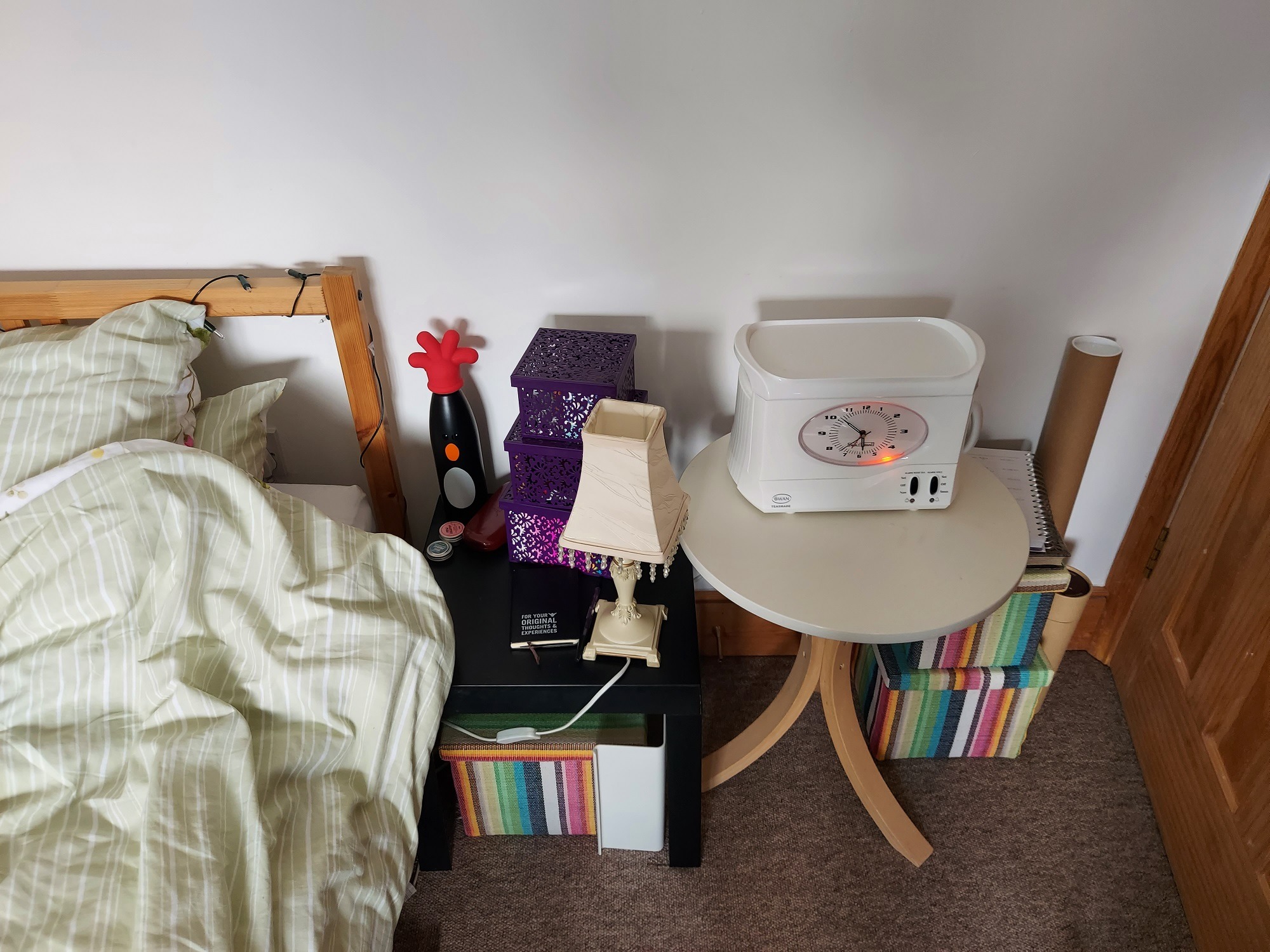
bedside table and assorted items
The area next to my bed, post-tidying

I confess I was rather dreading this badge. Boring chores are not my bag – there are so many more interesting things I would rather be doing than laundry or washing up. Still, these things need to be done, so why not get a badge for them? I have decided to make May the month in which I will achieve this badge – good luck to me!

I live in a shared house, so many of the clauses on the list aren’t doable for me. I don’t think my housemates would be too happy if I suddenly decided to defrost the freezer, for instance. However, there are plenty that are within my reach. I purposely didn’t choose the clause about washing up each day as I always do the washing up anyway, so as not to leave dirty dishes in my housemates’ way, so this wouldn’t be a challenge for me. In the end, I decided on the clauses below.

Spring clean

This is one clause that I am actually looking forward to. I like doing a good spring clean every now and then – I find it quite satisfying. I will do a spring clean at some point during May.

Make your bed every morning. Change the sheets every week for a month, and if you have an iron, take time to iron them after drying

I’m a bit lax about making my bed each day, but I will commit to doing so for this month at least. Changing the sheets is my least favourite job, but again, I am determined to complete this clause!

I will confess here that although I do have an iron (which I bought for the sole purpose of ironing cross stitch projects), I don’t have an ironing board. I am going to skip the ironing part of this clause, since I imagine ironing bedsheets without an ironing board will be pretty difficult.

Do laundry at least once a week, iron (if needed), fold and put away clothing

I do laundry at least once a week anyway, but I never iron anything and I take ages folding and putting away clothing. I am going to skip the ironing part as I don’t have an ironing board (see above), but I will commit to putting my clothes away neatly.

Tidy up any “areas of chaos” in your house

For this clause I particularly want to focus on the space under my bed, and the area beside my bed including my bedside table. These areas always seem to accumulate rubbish!

Dust skirting boards, curtain rails, tops of mirrors and ceiling corners

This is one of those jobs that I can never be bothered to do, but feel good about it once done. I might try and do it as part of my spring clean.

Choose a specific task that you know you always put off, and do it at least once a week all month

For this clause I have decided to tackle the dreaded hoovering. I hate hoovering because I live on the second floor and the hoover is heavy and lives on the ground floor. I used to have a small handheld hoover in my room but I got rid of it because frankly it was rubbish.

Updates

2/5/2022: I hoovered my room yesterday but on the way back downstairs I slipped and fell on my arse. I guess the moral of the story is “housework is dangerous”? I couldn’t sit down all evening but I felt slightly better today so was able to change my bedding.

8/5/2022: I’ve been quite good at doing laundry this week and putting it away once dry. I hoovered my room again today (taking much more care when carrying the hoover back downstairs) and changed my bedding. I also dusted my skirting boards and the corners of my room, and I cleaned above my window and door. On a roll, I decided to dust my lampshade. BIG mistake. I’m not hoovering again today – it can wait until next week.

15/5/2022: I changed my bedding again today and hoovered my room, including under the bed – one of my “areas of chaos”. I also began my spring clean, sorting out the space above my wardrobe and tackling my clothes inside, as well as my jewellery drawers. I haven’t been as good at putting my laundry away this week – distracted by Eurovision – but I did this today too.

22/5/2022: Another bedding change today and I hoovered my room again. I also did a bit more towards my spring cleaning, by sorting out some more of my jewellery and throwing away some old clothes and shoes I don’t wear any more (they were REALLY old and tatty so I didn’t think I could take them to the charity shop!).

29/05/2022: I tackled my biggest ‘area of chaos’ yesterday – the area beside my bed, including my bedside table and all the assorted crap next to it. I cleaned it properly and tidied it up, putting aside some items I can donate to charity. I also found a water bottle I’d forgotten about, which proves this was definitely worth doing! I also hoovered again, and today I changed my bedding for the final time to complete that clause.

31/05/2022: I made the bed this morning, as I have done every day this month, so I suppose I can now say I have completed this badge!

Reflection

I’m very happy to have achieved this badge. Unlike with most of the other badges, this was one I wasn’t particularly looking forward to – it really consists of important but dull tasks that make you feel better once completed but don’t actually promote enjoyment in themselves.

I found that deep cleaning, tidying and sorting out my stuff was oddly cathartic and I did actually get some enjoyment out of it. I don’t think that I will continue to hoover and change my bedding every single week – I honestly don’t think I need to. Fortnightly is good enough for me. However, I will make more of an effort to put away my clean clothes instead of having them laying around for days!

Date completed: 31 May 2022