
The Be A Hero challenge is March’s monthly challenge, designed to coincide with International Women’s Day (8 March). I had fun doing this challenge, as much of it involved reading and research.
Complete the ‘My Powers’ badge from Volume Two.
I had already chosen to complete this badge for the Happy 2023 quarterly badge, so this was an ideal choice for me. My blog post on My Powers is here.
Write a profile about either a historical or a contemporary female hero.
I’ve chosen to focus on Preet Chandi, as she has connections with Antarctica – something I am incredibly interested in. Known as ‘Polar Preet’ thanks to her accomplishments, she is a British physiotherapist and British Army Medical Officer and has completed two groundbreaking Antarctic expeditions in recent years. In 2021-22 she completed a solo expedition to the South Pole, while the following year she recorded the longest ever solo and unsupported polar expedition.
Chandi took part in various endurance events before her polar adventures. In 2017 she participated in the Lanyard Competition, a 40-mile (64 km) event, as part of a team of six with the Royal Signals. In 2019, she completed the Marathon des Sables, a 156-mile (251 km) ultramarathon across the Sahara.
Chandi completed her first expedition to the South Pole in 40 days, 7 hours and 3 minutes, making her the third fastest solo woman to reach the South Pole unassisted. She was also the first woman of colour to reach the South Pole solo and unsupported.
In November 2022, Chandi began her second solo expedition from Hercules Inlet, aiming to become the first woman to cross Antarctica solo and unsupported. Sadly she missed out on the crossing record, however on 20 January 2023 it was announced that Chandi had broken the world record for the longest solo and unsupported polar expedition, having travelled 868 miles (1,397 km) up to that point.
In November 2022, Chandi won Woman of the Year and also the Inspirational Award at the Women in Defence Awards 2022. She aims to inspire people to pursue their dreams, push their boundaries and believe in themselves.
Explain the difference between equity and equality in your own chosen way.
Equality: everyone gets a book.
Equity: everyone gets a book at the right level for their reading ability and on a topic or genre that interests them.
Learn about the history of the suffrage movement and the Suffragettes.
I completed a course on FutureLearn: Beyond the Ballot: Women’s Rights and Suffrage from 1866 to Today.
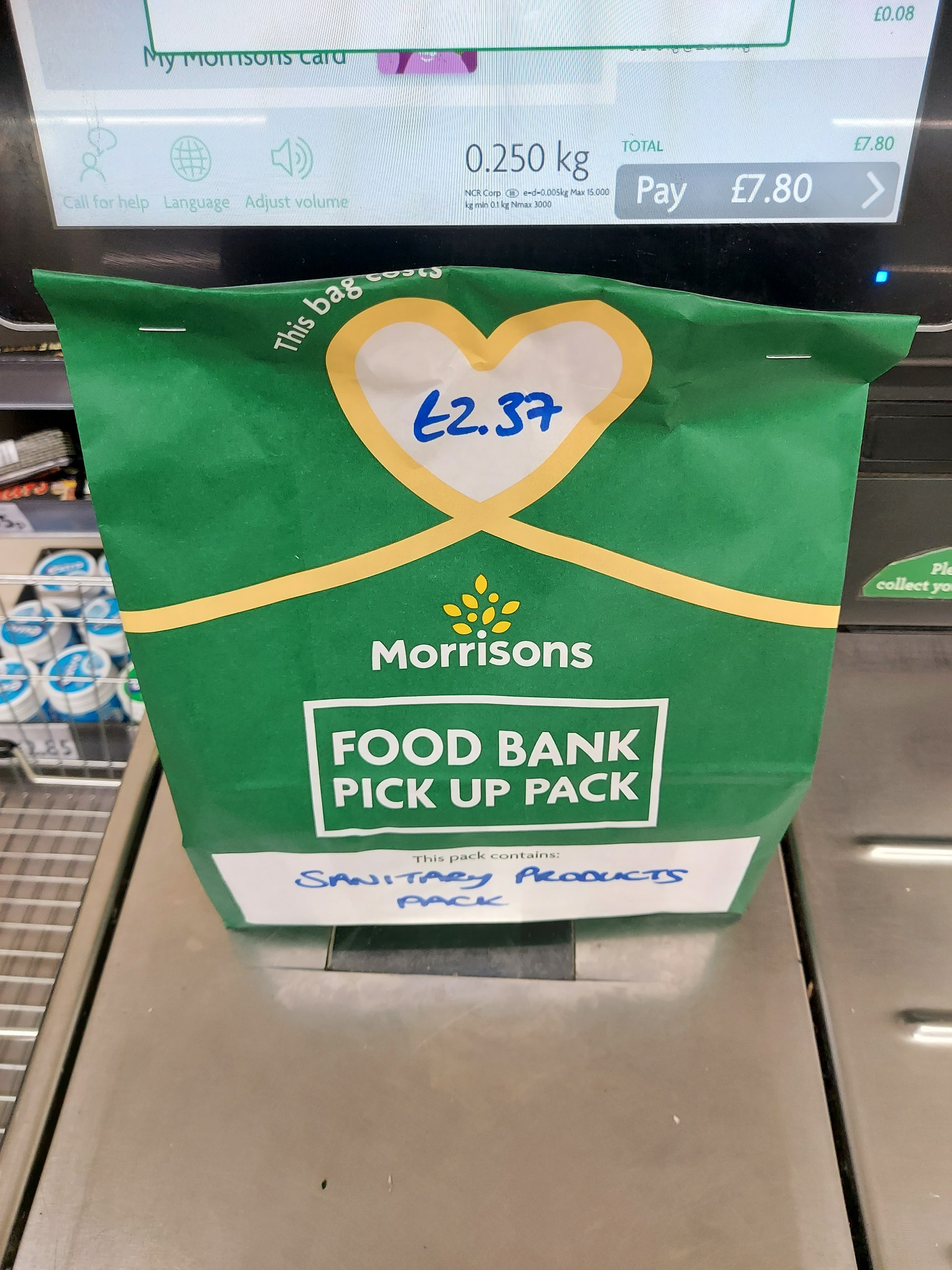
Do something proactive to tackle period poverty.
I donated period products to the food bank as part of my weekly shop.
Learn about the history of IWD and how it is celebrated around the world.
I found this article about the history of International Women’s Day. My first encounter with the day was in the context of studying Russian as an evening class at university. This was back in the Noughties and I’d never heard of the day before or seen it marked. It seems to have been historically celebrated in many Communist or former Communist countries, whereas nowadays it is marked all around the world. Social media has definitely played a role in raising awareness of IWD and women’s issues.
Read and review a feminist book.
I read Invisible Women by Caroline Criado Perez. This is an incredibly important book which examines the ways women have been sidelined and ignored over the years, in areas such as healthcare, safety and town planning. Basically, seeing men as the “default” gender ignores the many ways in which women have different needs.
However, the book does have some flaws. It talks about women having different heart attack symptoms to men, which is not true. When it talks about relationships, it is referring to exclusively heterosexual relationships (although it does at least acknowledge that they are specifically heterosexual relationships). It ignores the existence of trans and non-binary individuals completely: it would have made the book richer to examine how the issues described in the book relate to them. In addition, some of the ways in which women are shown to be different to men are social rather than biological. For instance, women are more likely to take smaller shorter journeys throughout the day (e.g. to drop children off at school, take older relatives to hospital), whereas men are more likely to go straight to work. While I agree that it is important to take these journeys into account when planning public transport – and unfortunately it is the more straightforward suburb-to-city-centre journey that tends to be catered for – this shouldn’t inherently be women’s work and I feel we should be working towards a world where men and women share the care burden equally.
Having said all that, if you pick up the book aware of its limitations, it is still a very important and eye-opening work and well worth a read.
