
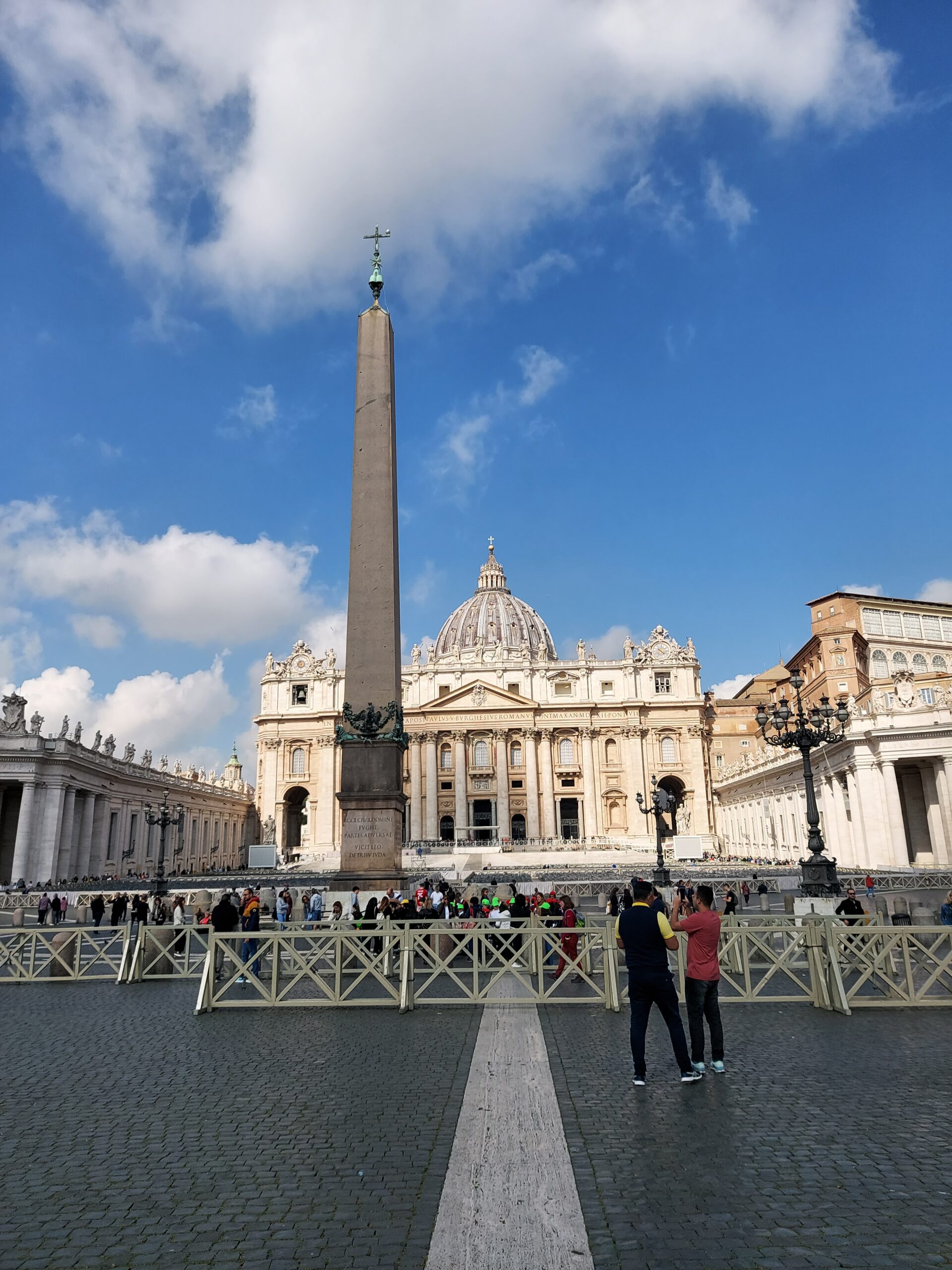
For our first full day in Rome I’d planned for us to visit the Vatican. I’d booked us a guided tour as it was the only way to get a ticket to visit the museums (I totally didn’t appreciate how far in advance you need to book stuff), and we ended up missing the tour as the queue to get in to St Peter’s Basilica was massive. Still, our time wasn’t completely wasted as we got chatting to different people in the queue, including some from South America.
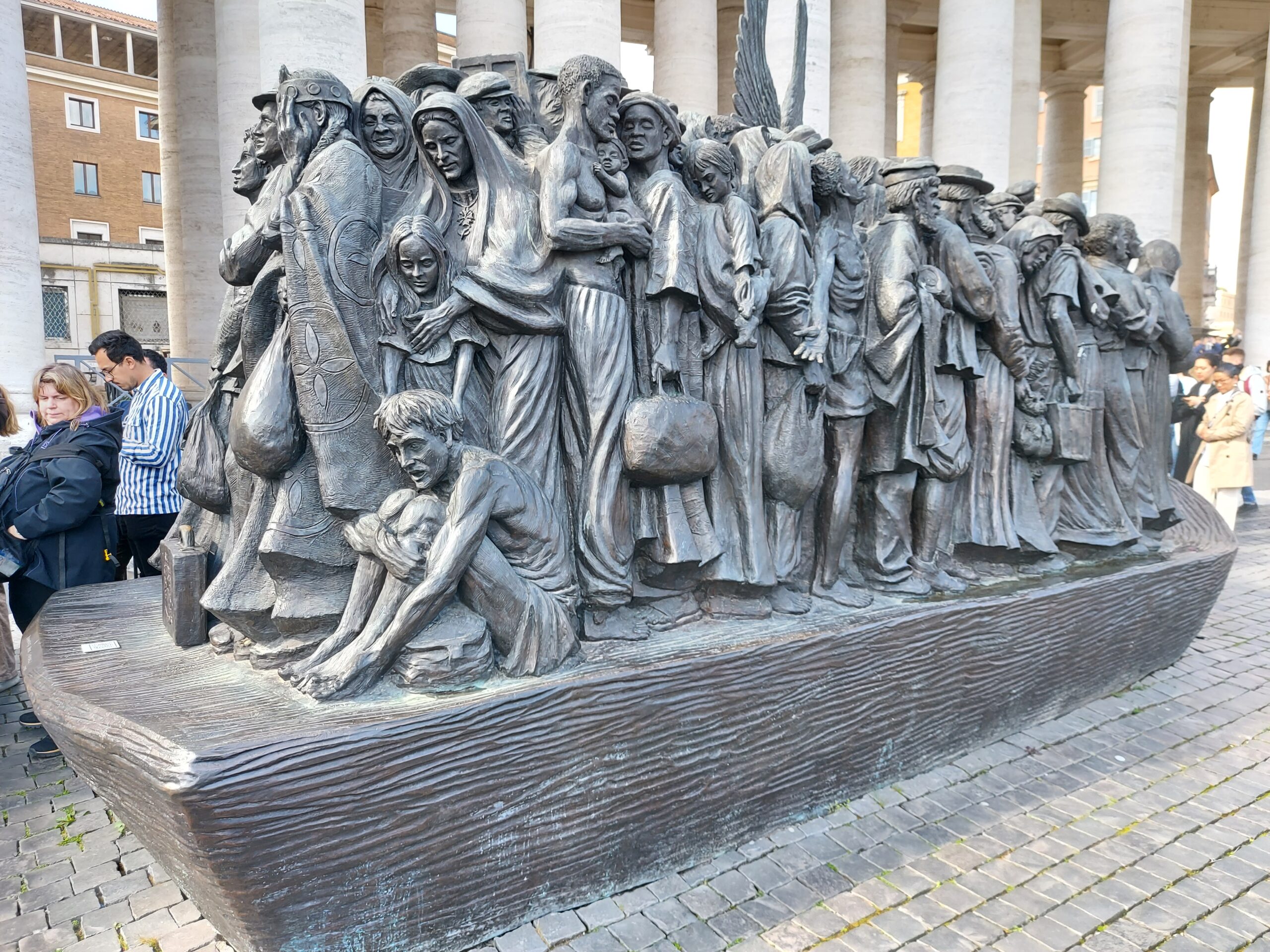
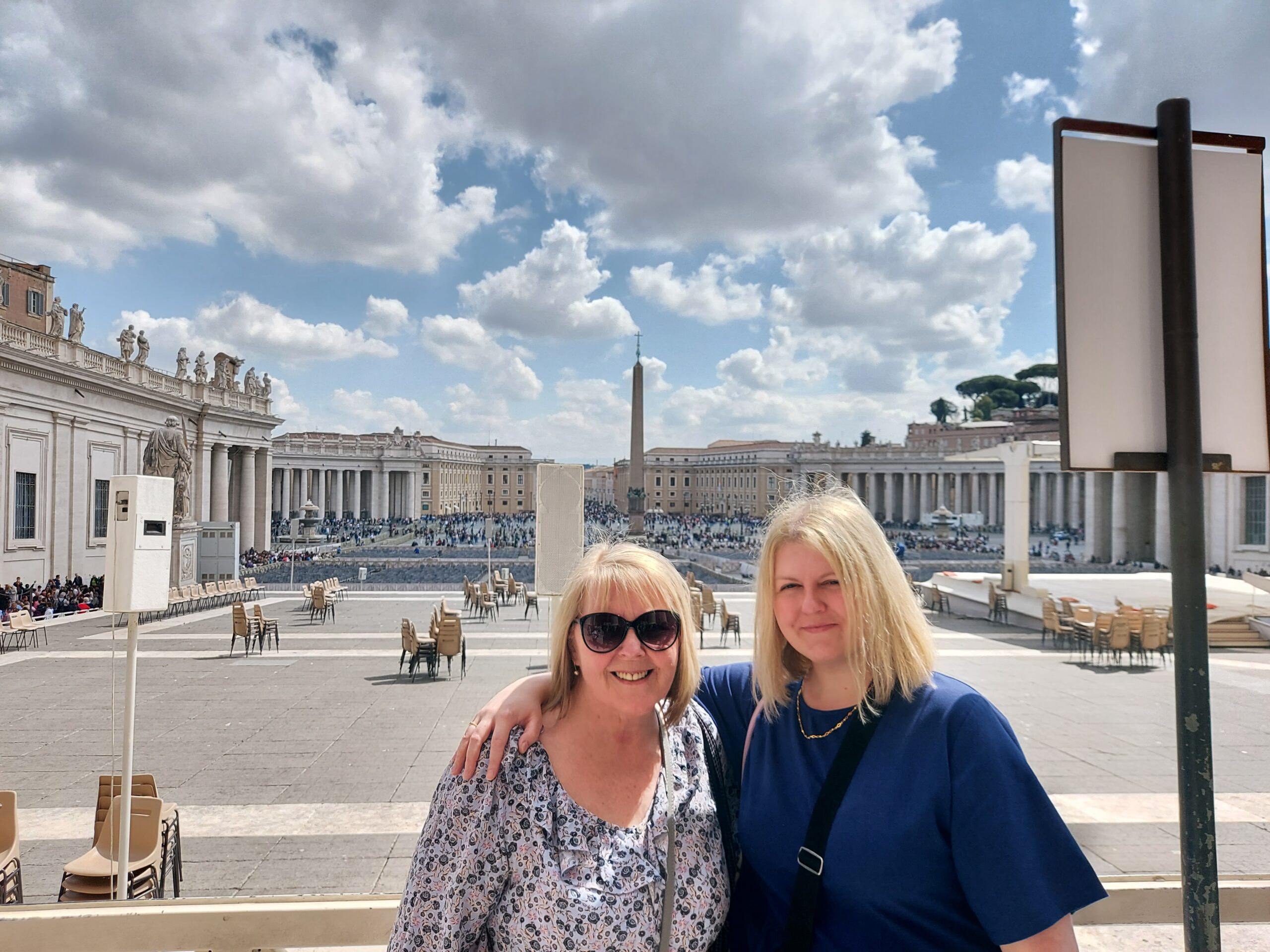
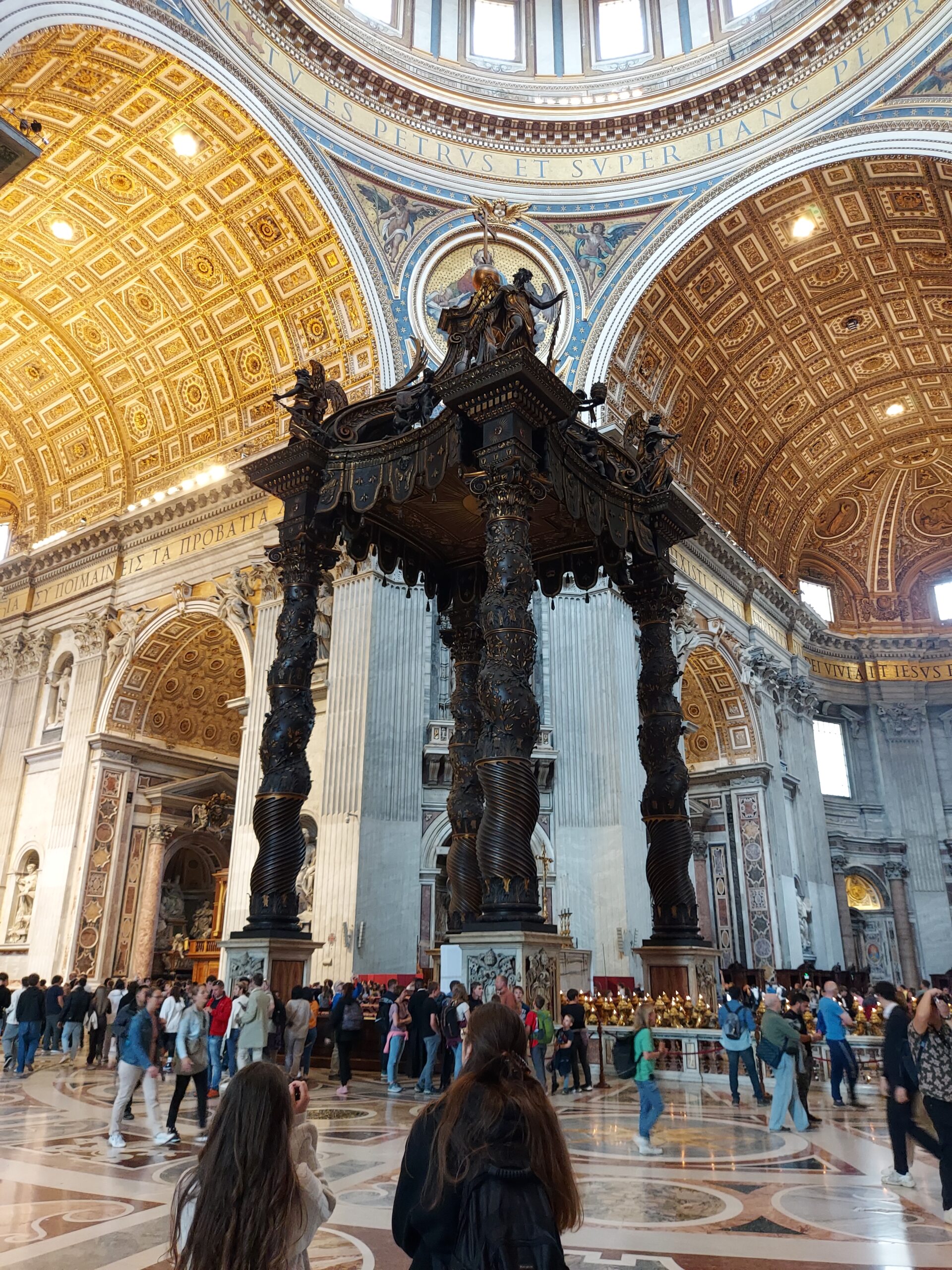
Once inside, it was absolutely beautiful and worth the wait. Particular highlights were:
Bernini’s baldachin. My special subject during my History degree was Renaissance Rome and I remember looking at this as an example of Baroque architecture. This bronze canopy was begun in 1623 and work was completed in 1634.
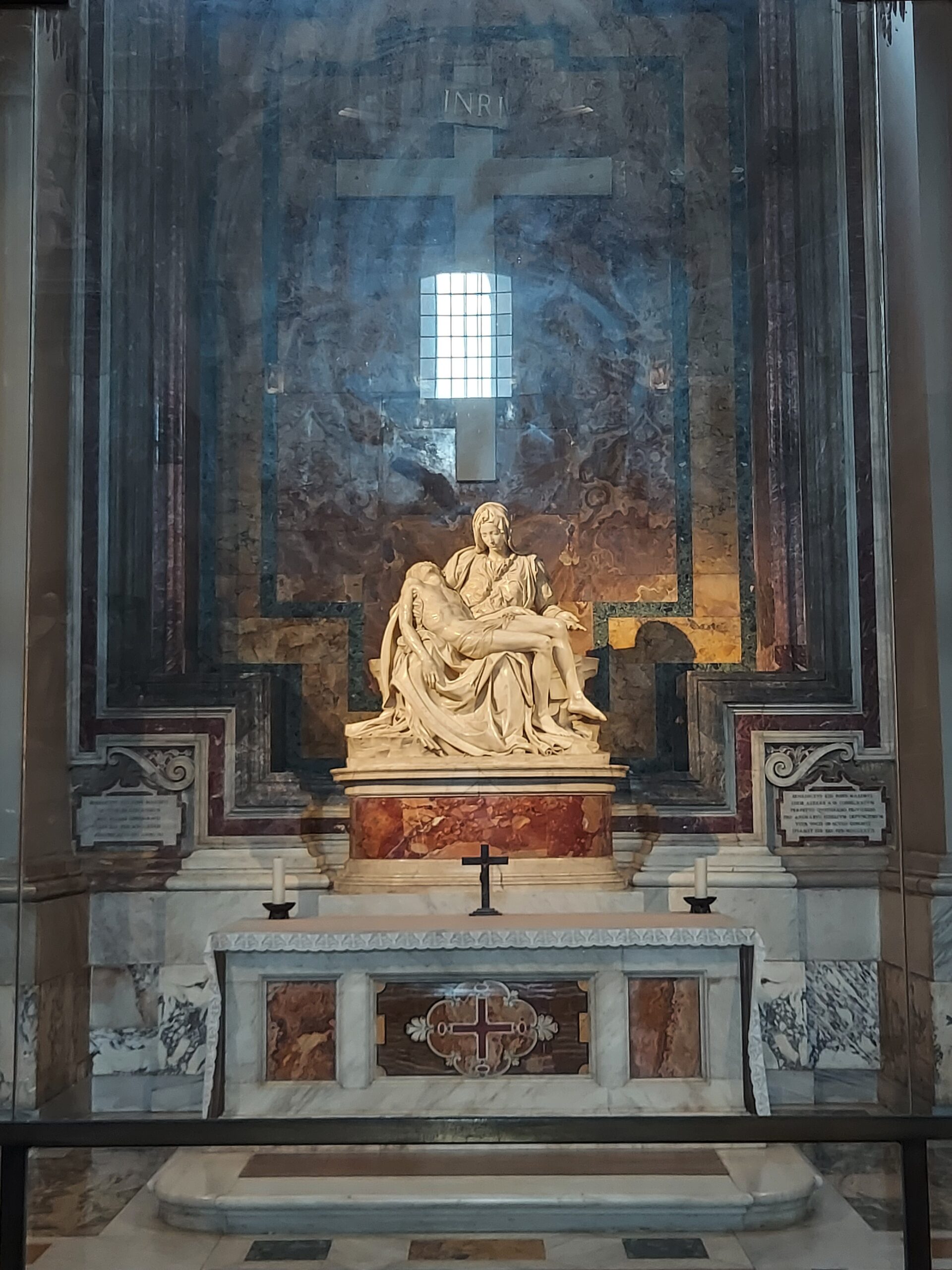
Michaelangelo’s Pietà. This beautiful statue is behind glass after an attack in 1971, but it’s still possible to appreciate the beauty of the sculpture.
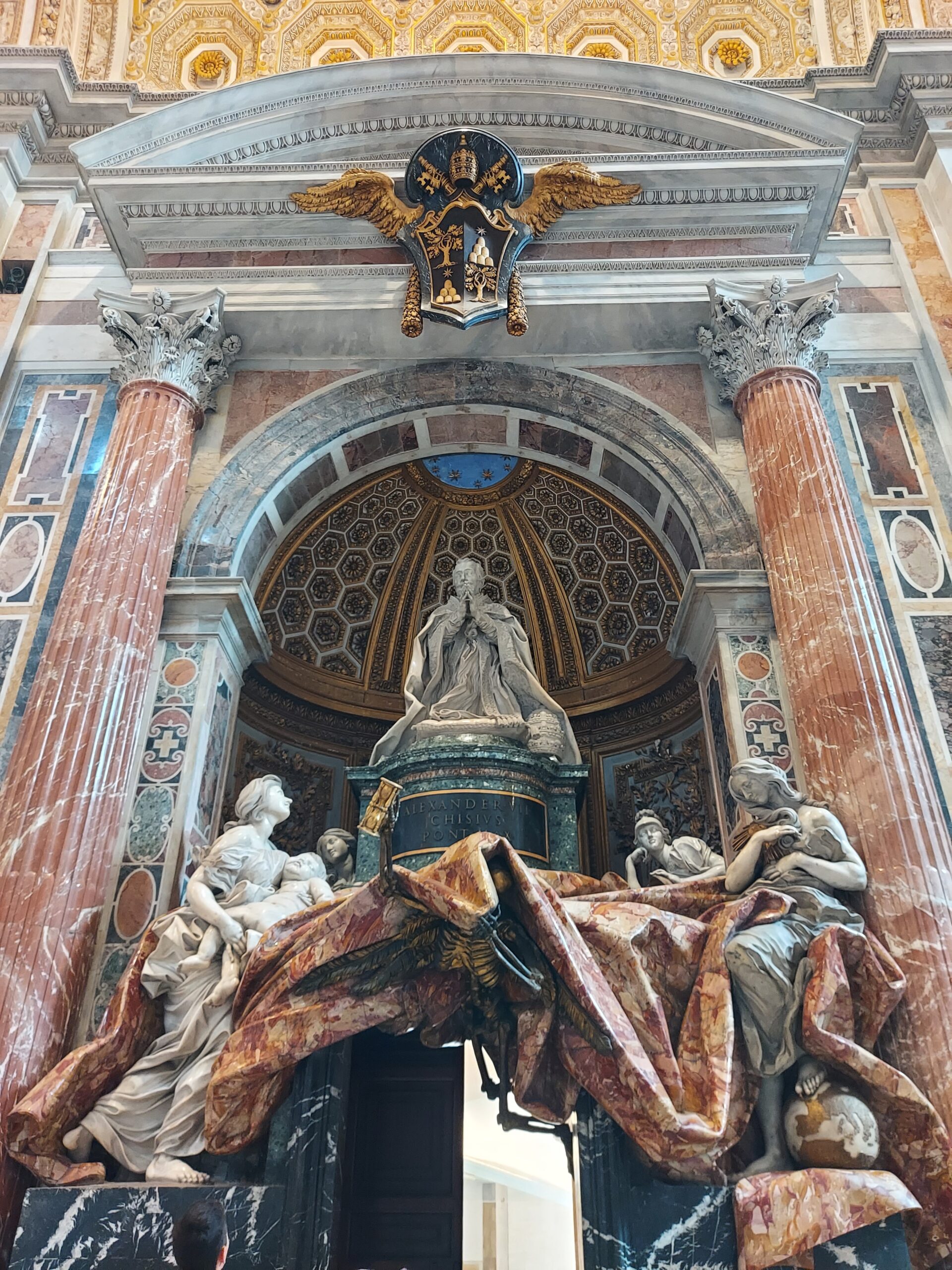
The tomb of Fabio Chigi, Pope Alexander VII, by Bernini. I absolutely adored this stunning design, which features the skeletal figure of Death, holding an hourglass. The draped ‘shroud’ is made of marble but looks like fabric.
The whole place was just awe-inspiring.
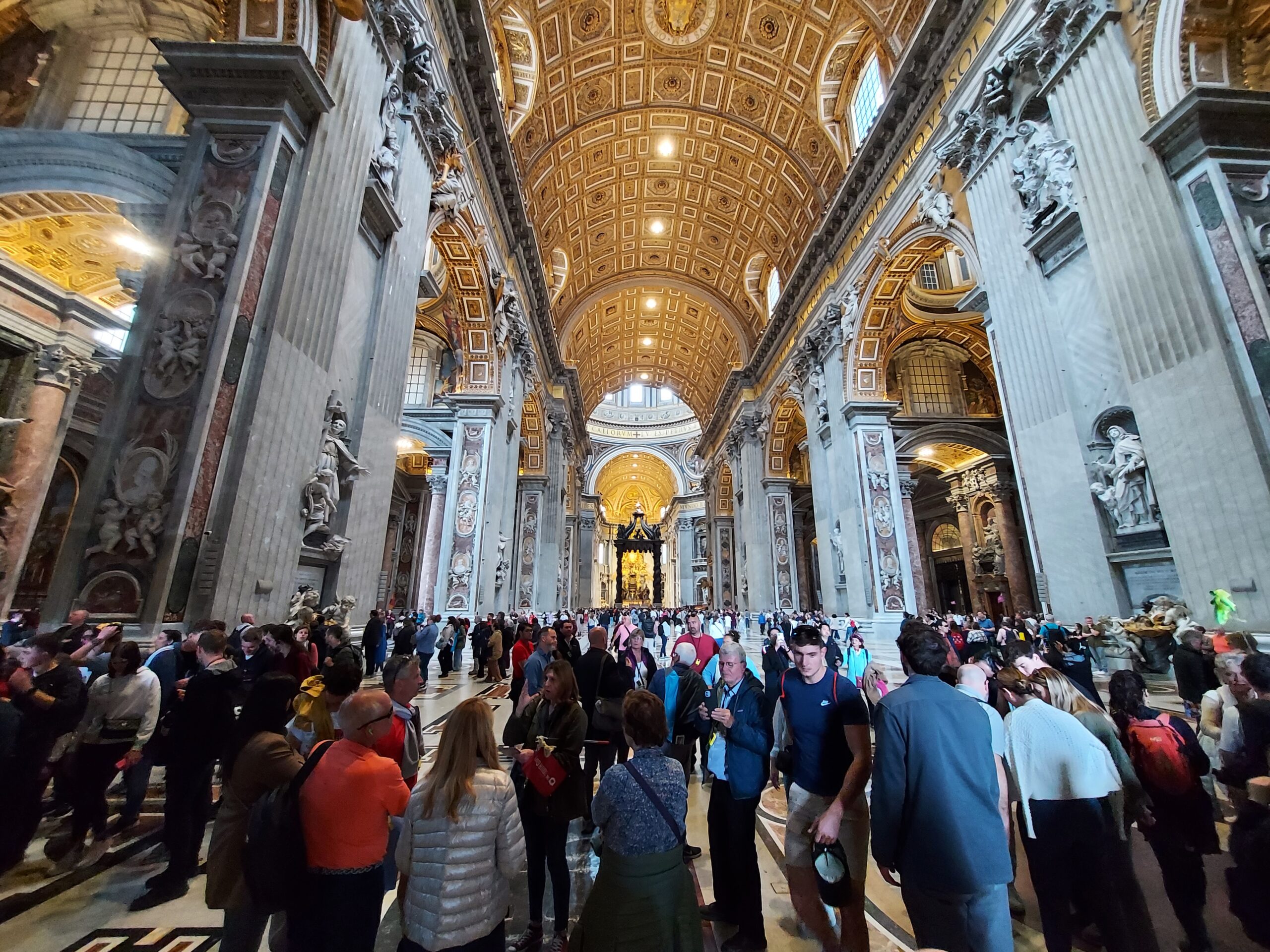
We did think about the contrast between the beautiful, expensive decoration and the poverty experienced by many Christians, both at the time and now.
After a quick lunch, we headed to the Vatican Museums. Luckily, we had a timed ticket booked so were able to bypass the queues. The museums are huge and we didn’t have time to see everything, but we did manage to see several highlights:
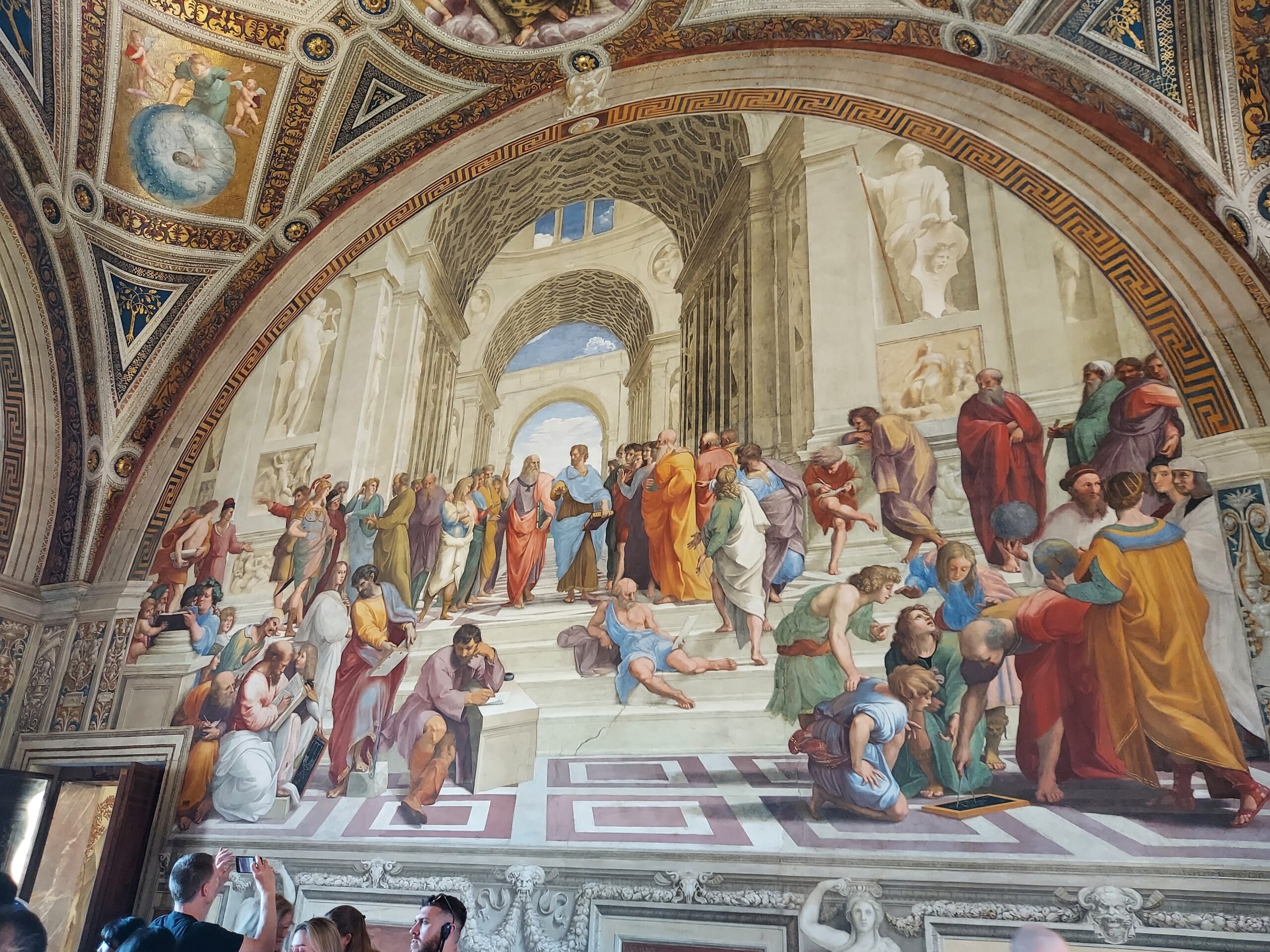
The Raphael Rooms. These were full of frescoes by Michaelangelo and Raphael. I was particularly pleased to see Raphael’s The School of Athens, which centres the philosophers Plato and Aristotle, as I’d seen a reproduction in the Raphael exhibition in London last year.
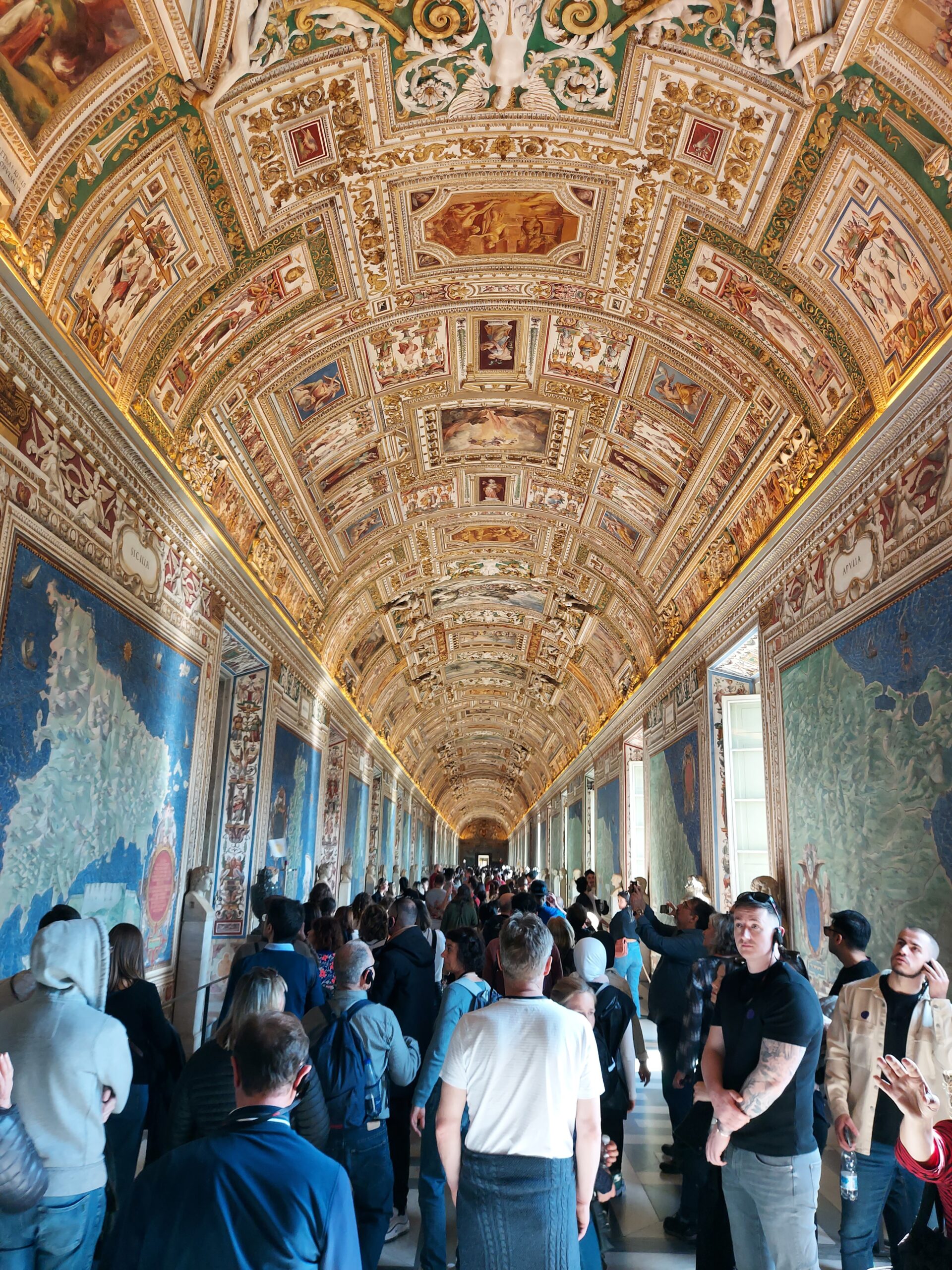
Gallery of Maps. As the name suggests, this was a very long gallery full of maps. It was very crowded, but the maps were fascinating to look at.
Sala Rotonda. This impressive round room was filled with statues and the floor was decorated with mosaics.

Gregorian Egyptian Museum. As the name suggests, this museum had plenty of ancient Egyptian artefacts, including a reconstruction of an Egyptian-themed space inside Hadrian’s Villa.
Gregorian Etruscan Museum. This museum focused on the Etruscan civilisation, which inhabited Italy before the Romans. The monuments and sarcophagi were particularly interesting.

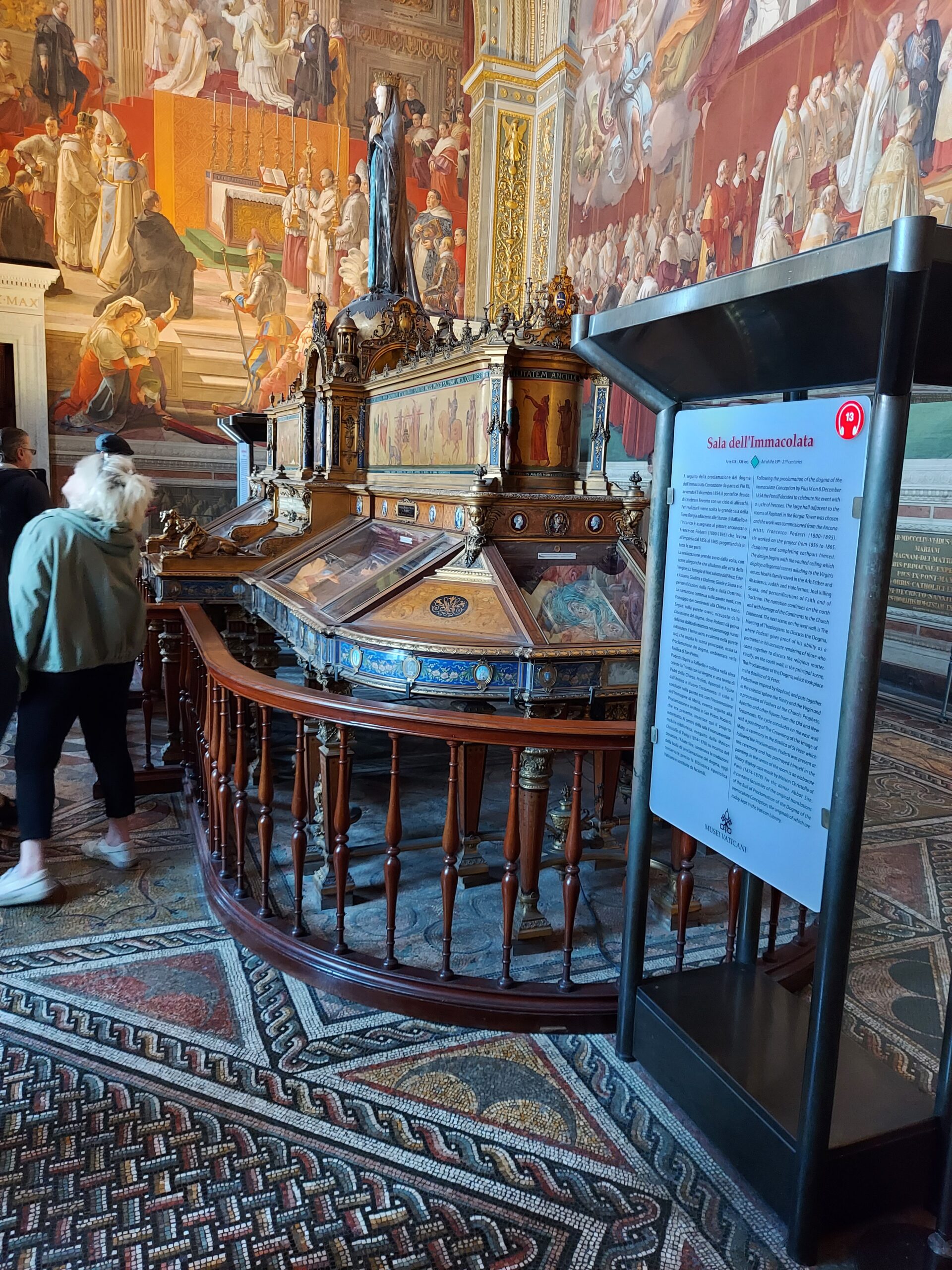
Sala dell’Immacolata. This room was decorated with frescoes by Francis Podesti (1800-1895).
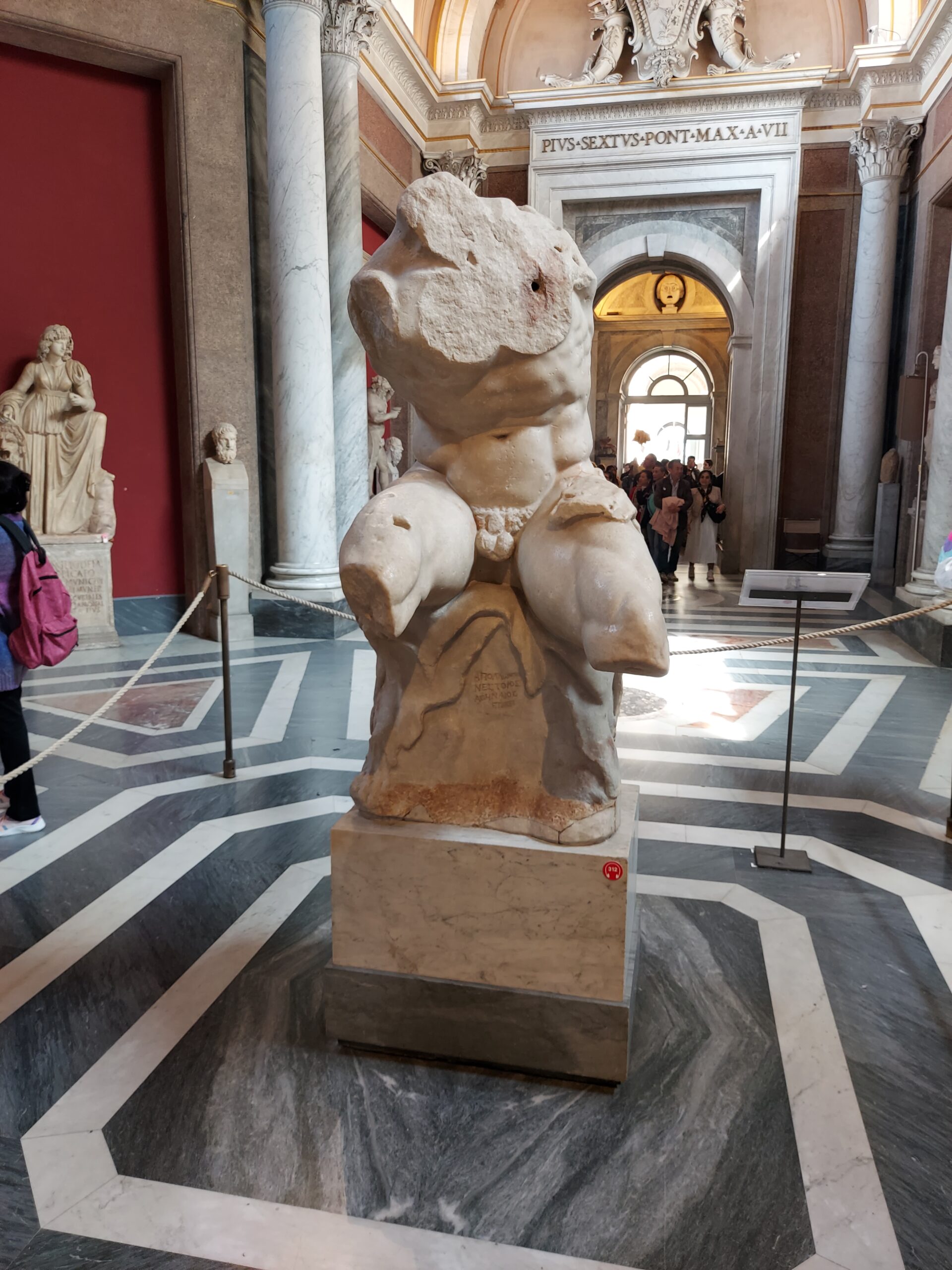
Pio Clementino Museum and Sala delle Muse. This museum has a large collection of classical statues, including a room full of animals. The Hall of the Muses houses the famous Belvedere Torso, a fragment of a statue of an unknown figure found in Rome at the end of the 15th century.
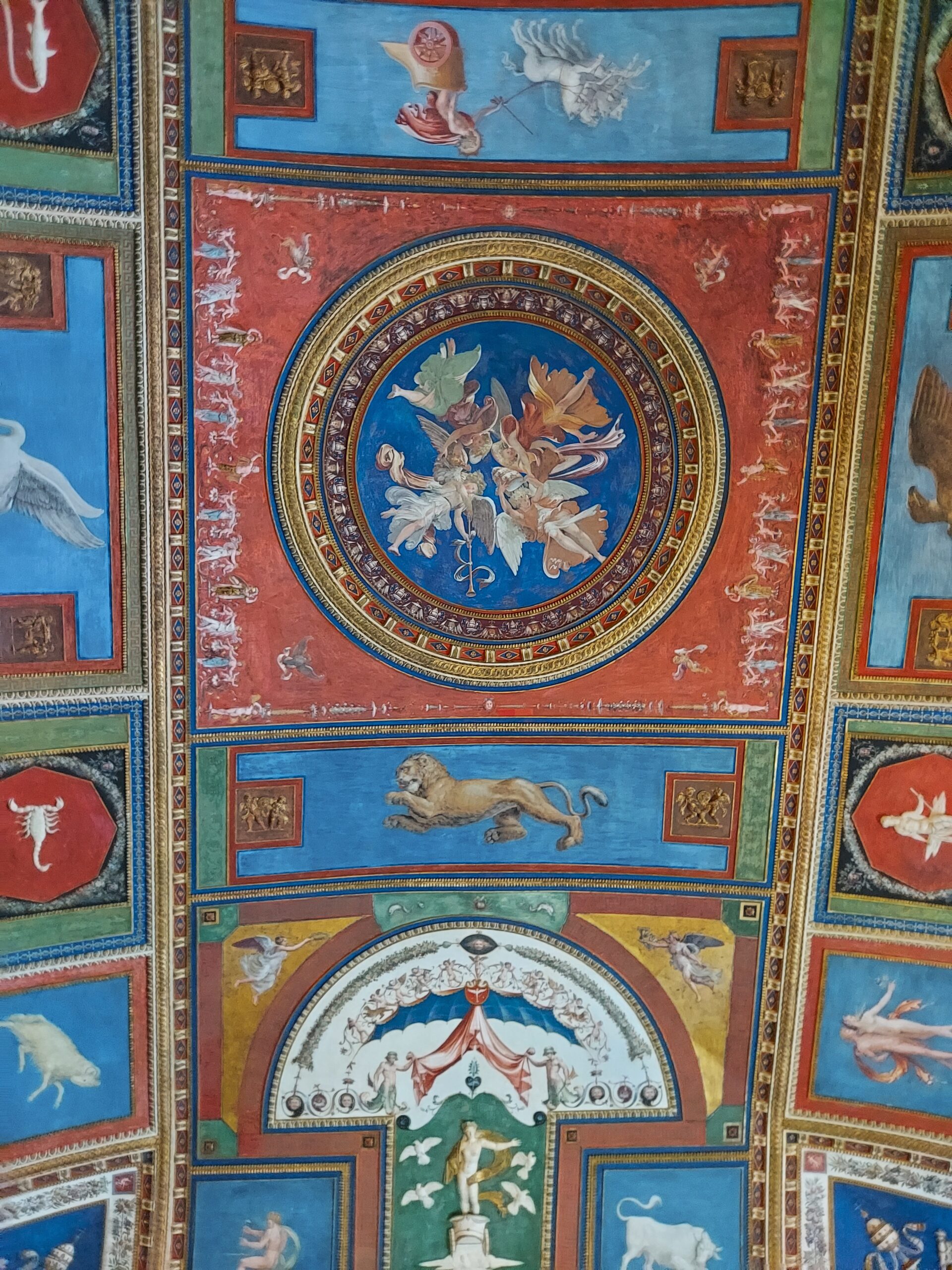
Appartamento Borgia. The Borgia Apartment was home to Rodrigo de Borja y Doms, Pope Alexander VI, in the late fifteenth century. Its rooms are richly decorated with paintings and frescoes.
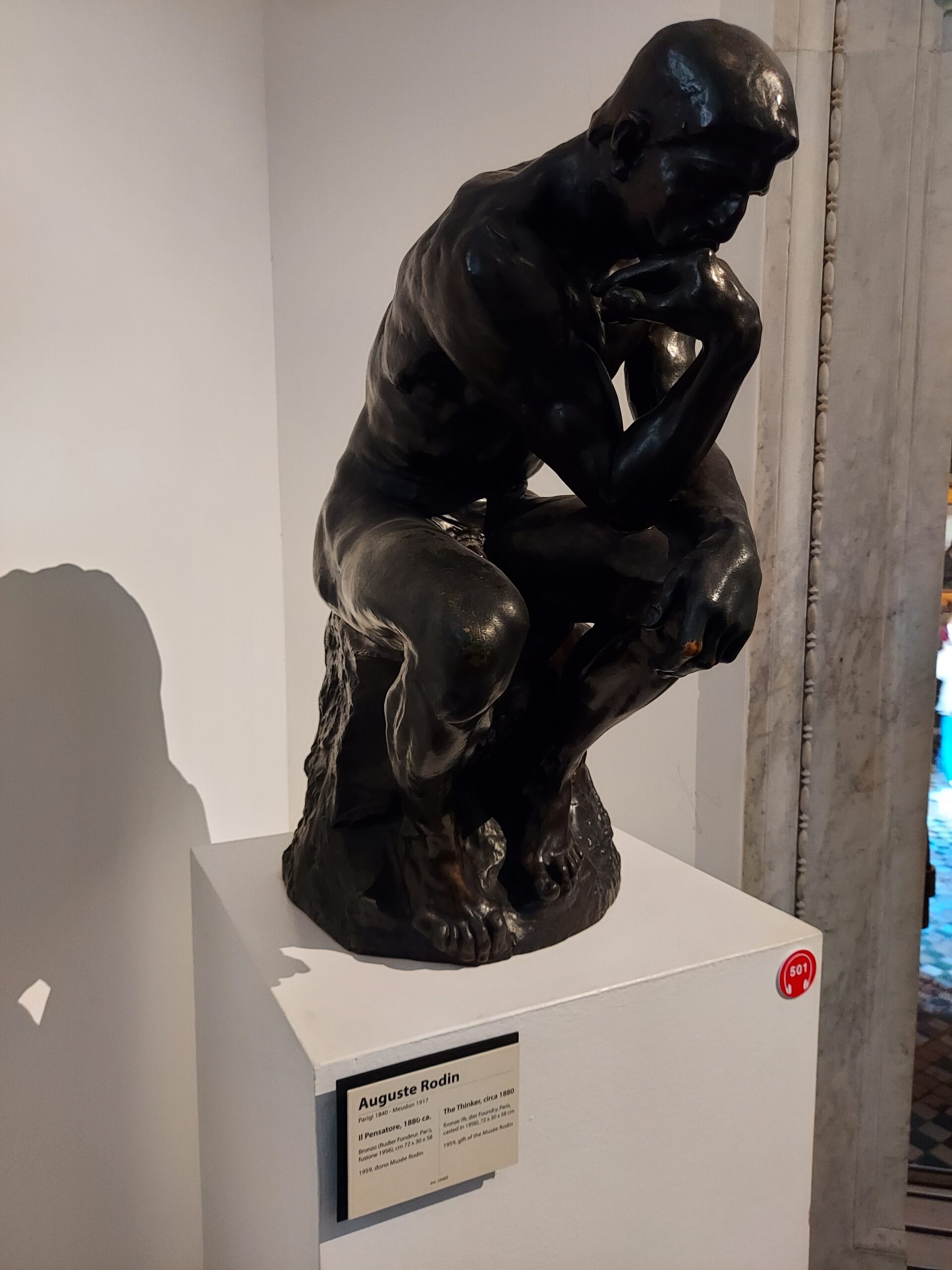
This section is also home to some superb examples of modern art, including Rodin’s The Thinker.
Of course we saw the Sistine Chapel, featuring Michaelangelo’s famous ceiling and The Last Judgement, although the atmosphere was somewhat spoilt for us as the security guards continually shouting “silence” were much louder and more annoying than the visitors speaking in normal voices. Photos were not allowed in here, which is a shame, but also understandable.
After we left the museums we stopped at a nearby restaurant called Magazzino Scipioni. As we were exhausted by then, we headed back to the Metro and made our way back to the hotel.