On our last day in Rome, we took our time getting ready and heading out to the Metro for the final time. We got off at Roma Termini railway station as we were getting the train to the airport.
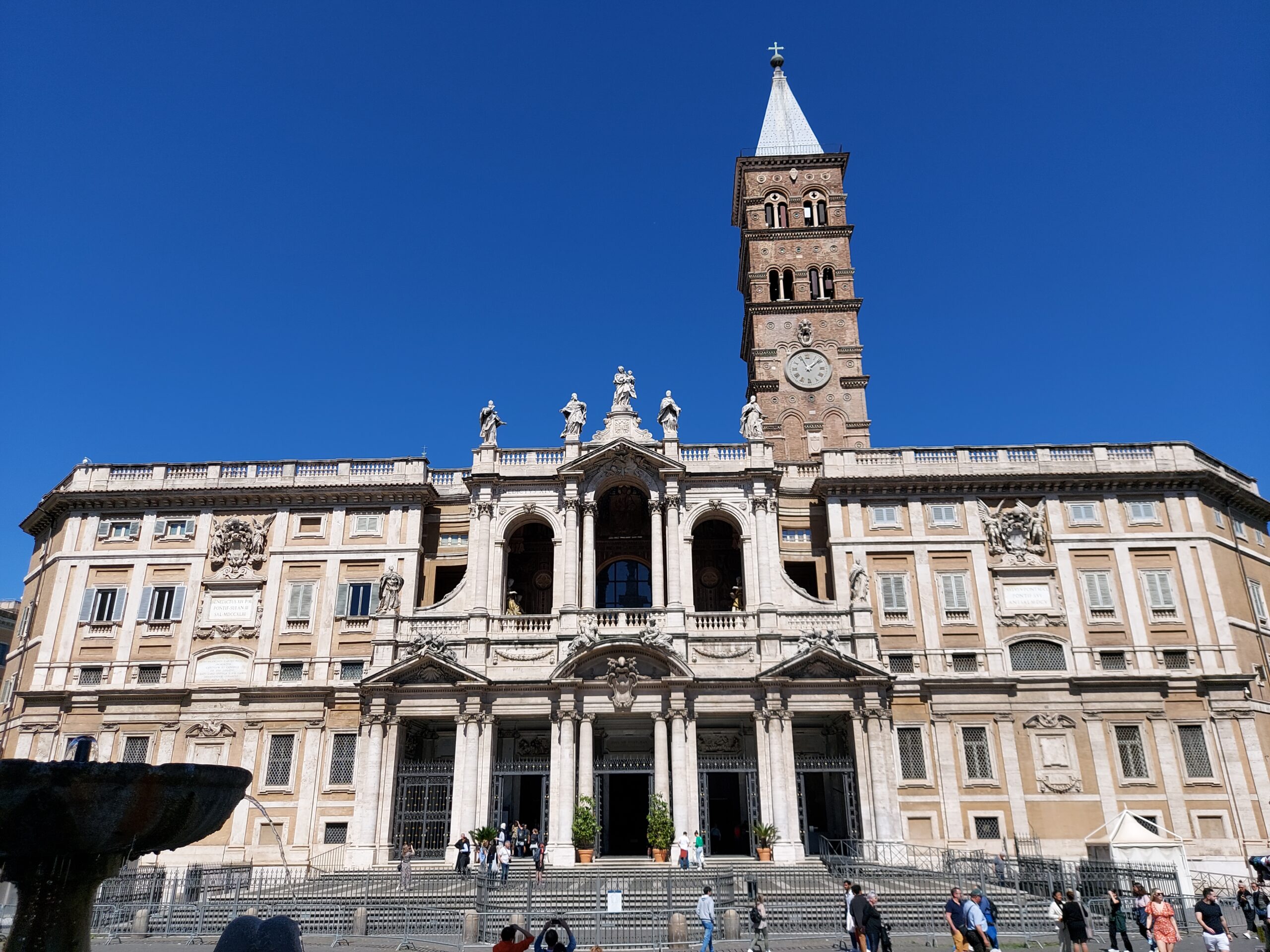
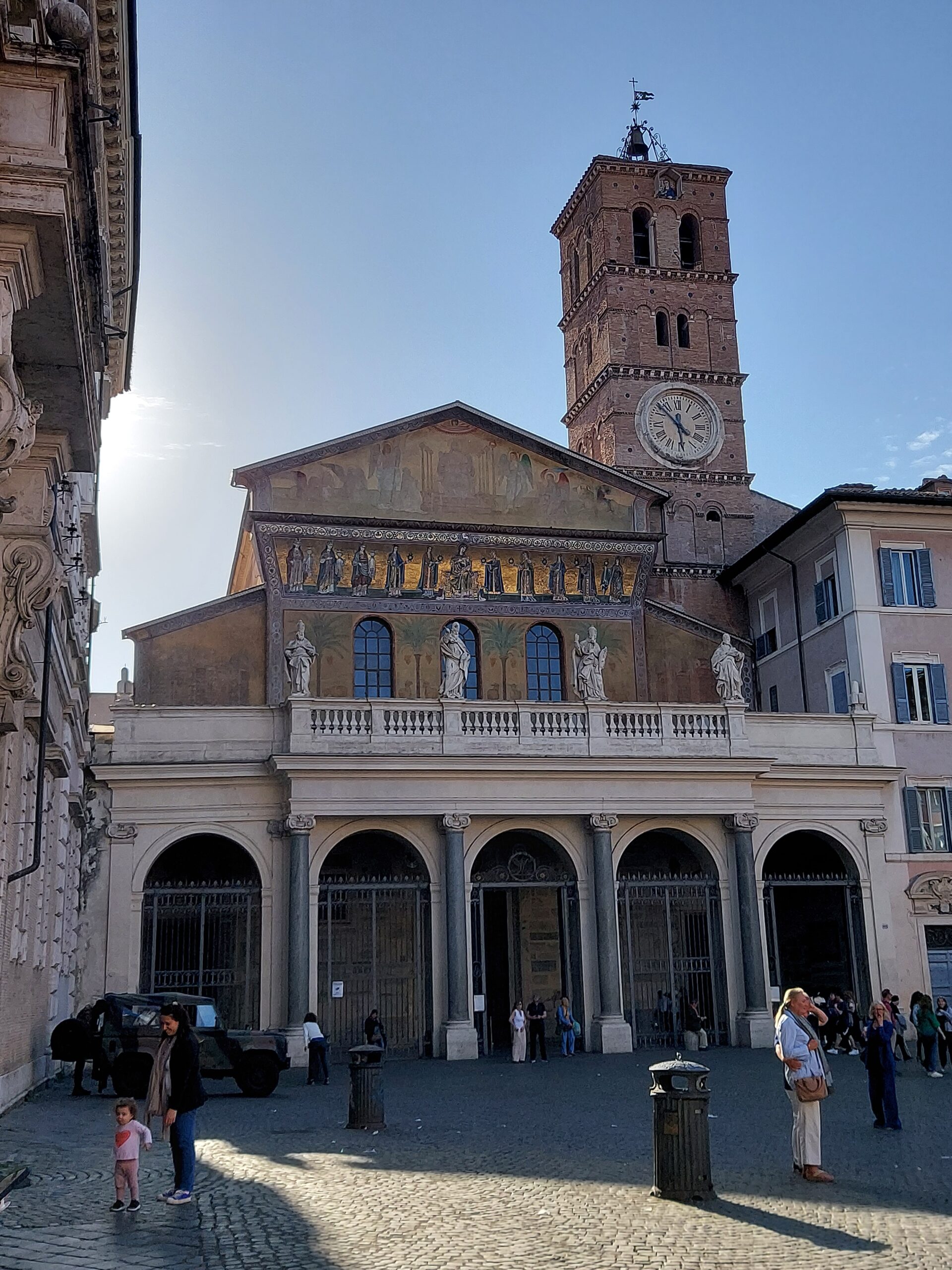
We had plenty of time to sit outside and enjoy the Roman atmosphere for the last time before we caught the train. I also popped down to visit one last landmark: the church of Santa Maria Maggiore.
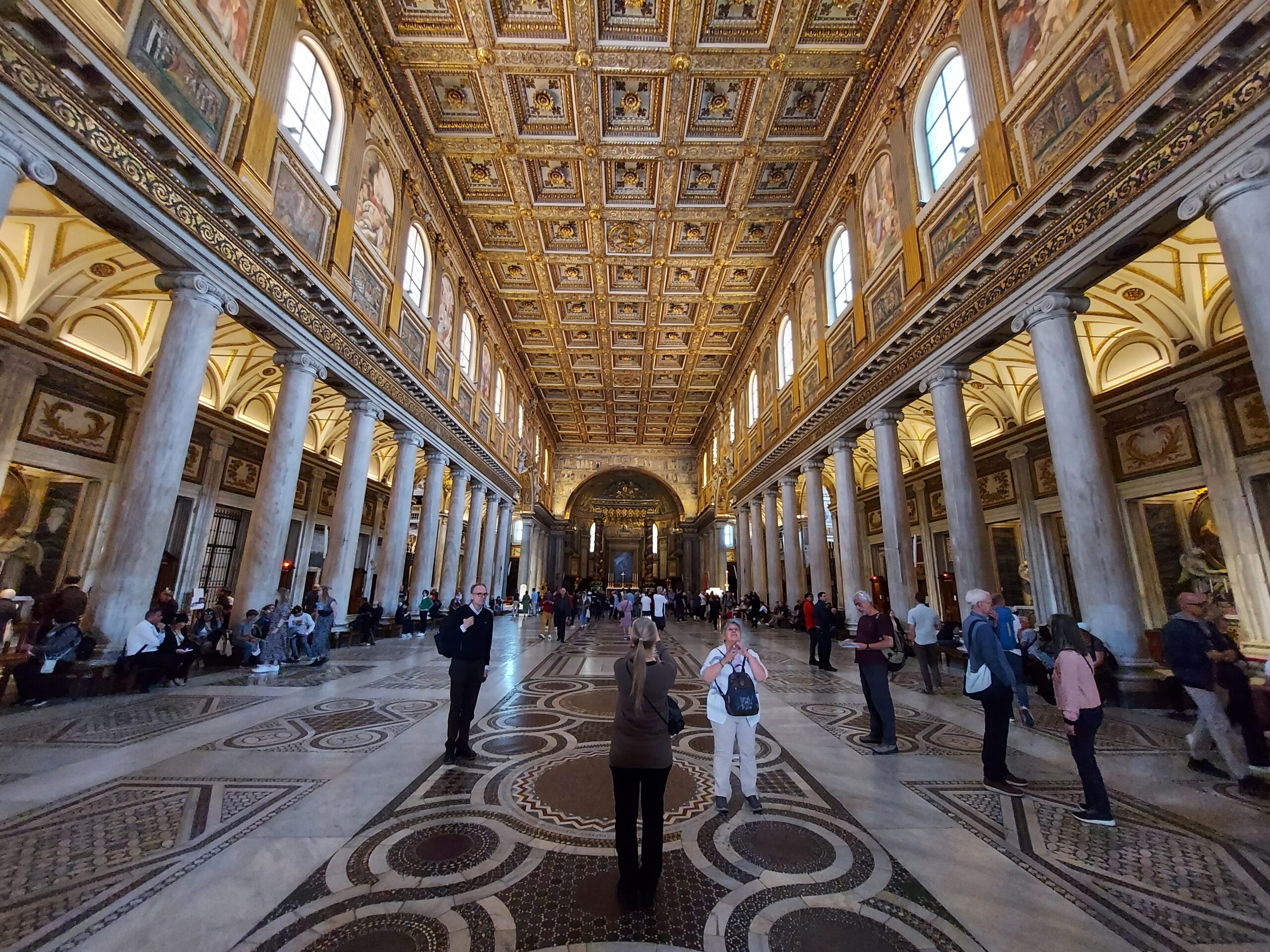
This church is a major papal basilica as well as one of the Seven Pilgrim Churches of Rome and the largest Catholic Marian church in the city. It was built under Pope Celestine I (422–432) and consecrated by Pope Sixtus III (432–440). Later expanded and redesigned by numerous popes, it is decorated beautifully, with stunning fifth-century mosaics that have survived for decades.
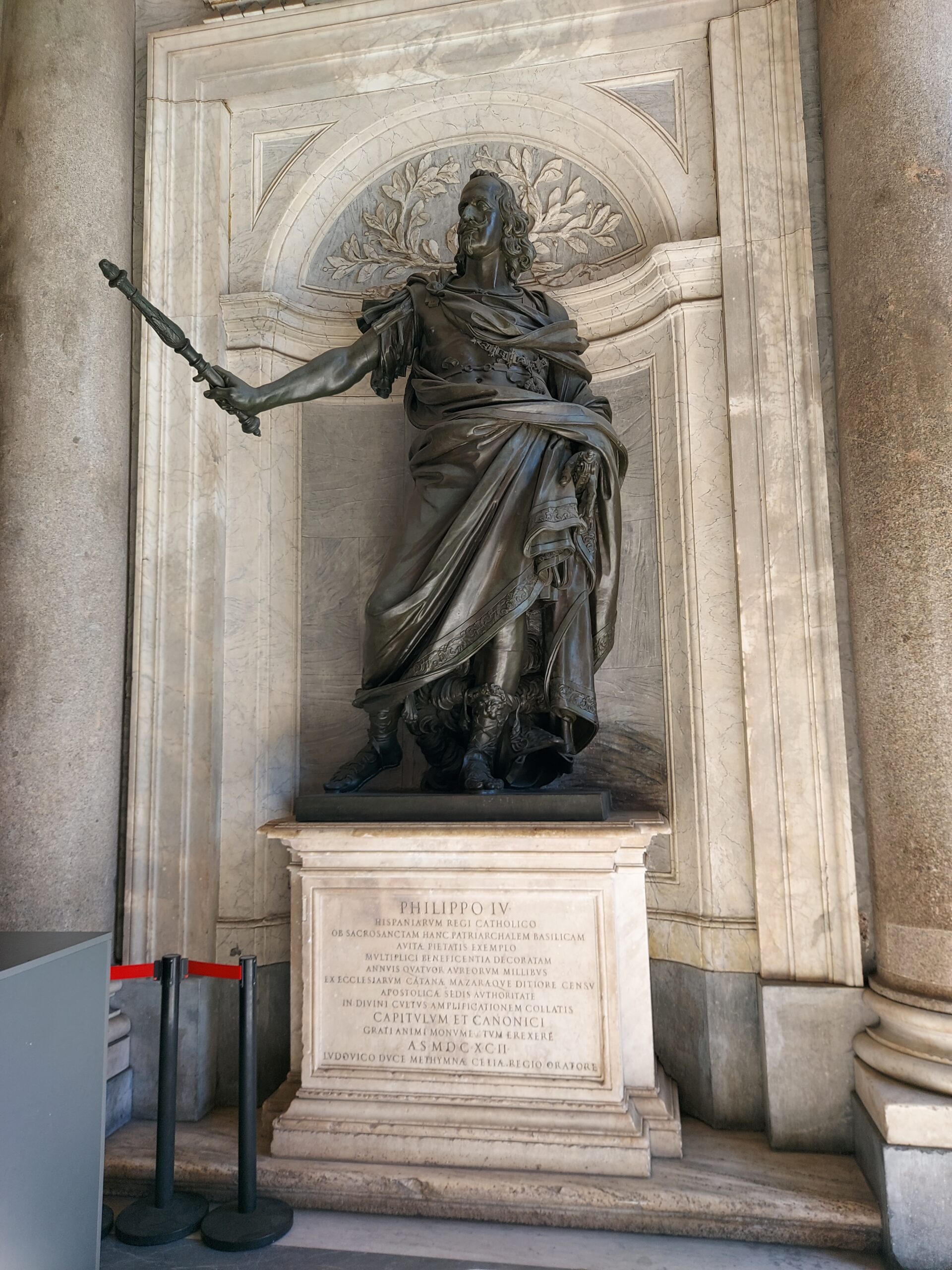
Architect and sculptor Gianlorenzo Bernini and his family are buried in this church, and his bronze statue of King Philip IV of Spain stands in the portico.
After a short while I returned to the station, where we boarded the express to the airport to get on the flight back to London.
On our final full day in Rome, we headed to the Capitoline Museums, prompted by my mam’s wish to see some original Caravaggios. We did have to do some walking on the way, but this gave us a chance to see more of Rome.
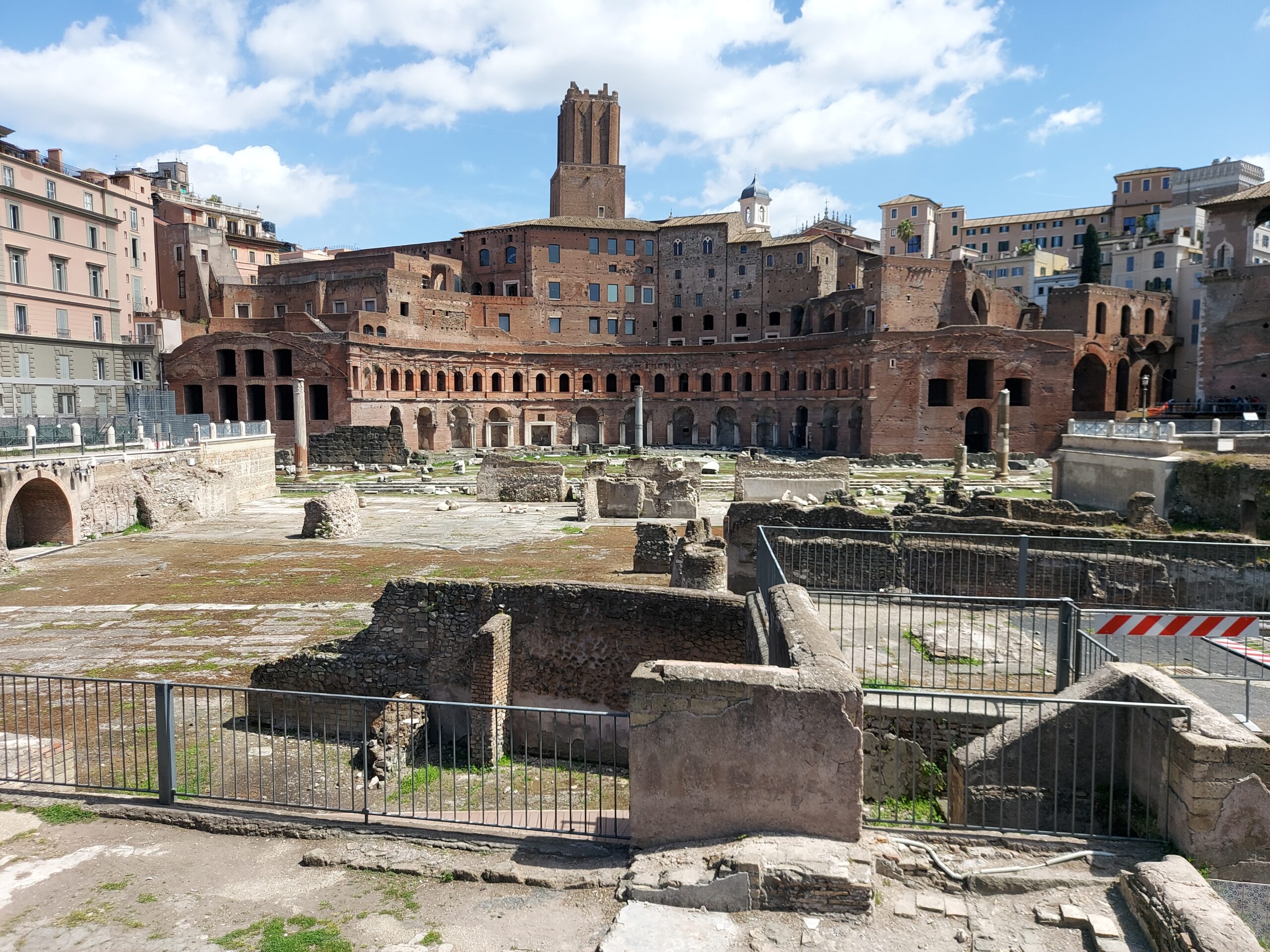
Ruins of Trajan’s Market
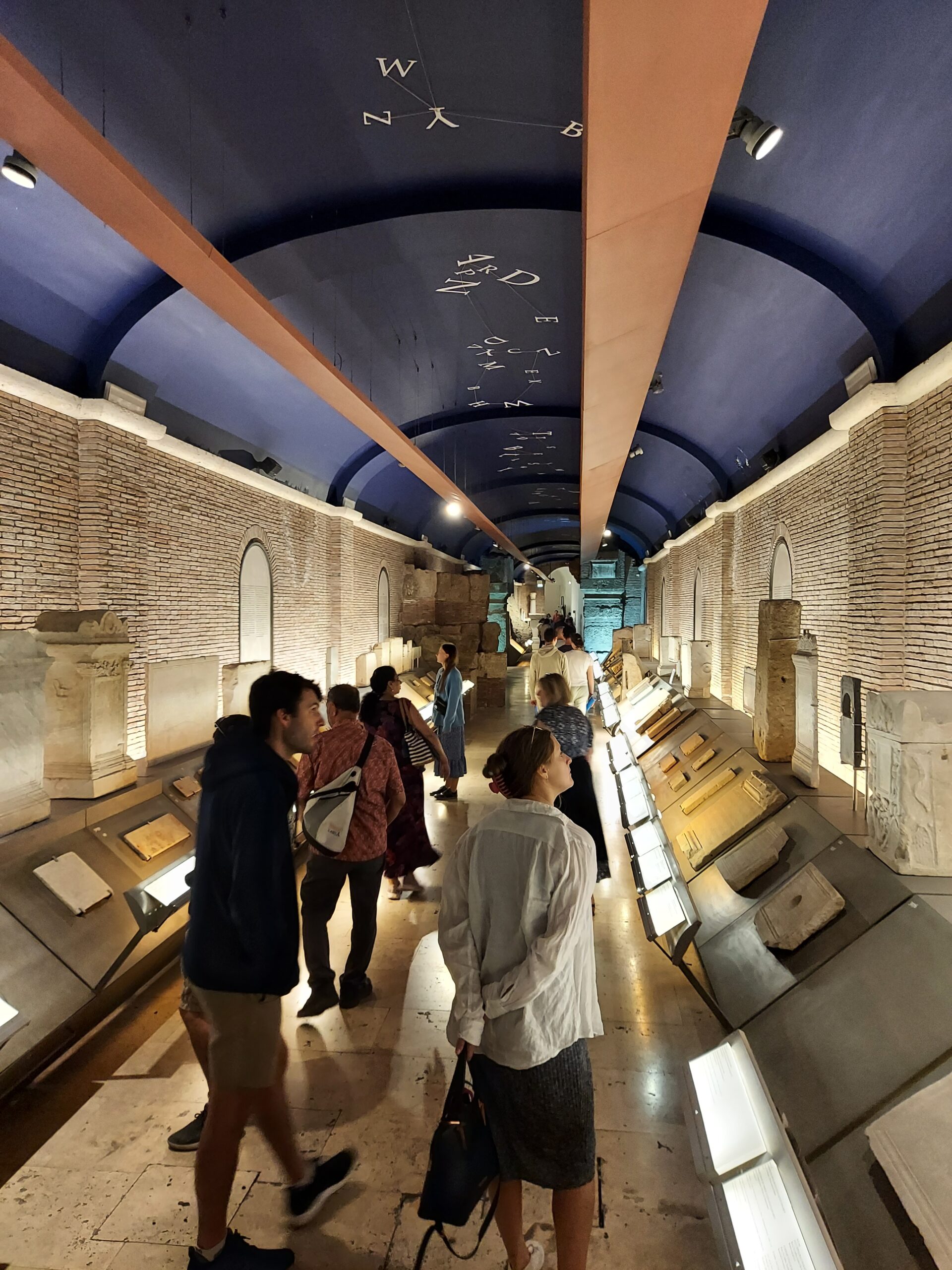
The history of the museums, among the oldest in the world, stems from 1471, when Pope Sixtus IV donated an important collection of ancient bronzes to the Roman people, housing them on the Capitoline Hill. Since then, the collections have grown considerably, though they still retain a focus on Rome and its history. Items include ancient Roman statues, medieval and Renaissance art, and collections of jewels and coins. The buildings are linked by an underground gallery, which itself contains displays of Roman architecture.
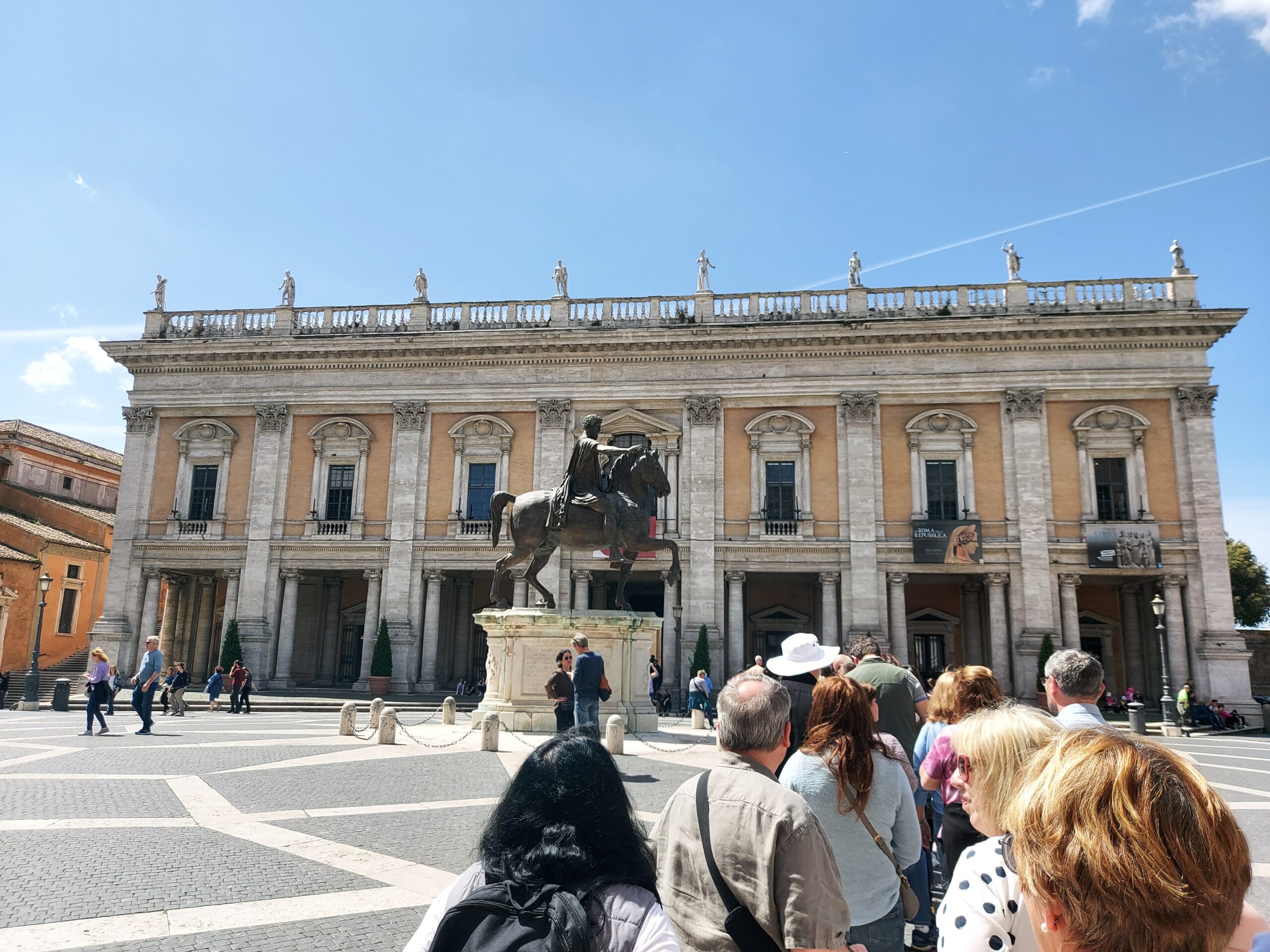
Queueing up at Palazzo dei Conservatori to visit the Capitoline Museums
There are three main buildings that make up the museums:
Palazzo Senatorio: built in the 12th century and modified by Michaelangelo, this now houses the Roman City Hall.
Palazzo dei Conservatori: built in the mid-16th century and redesigned by Michelangelo.
Palazzo Nuovo: built in the 17th century with an identical exterior design to the Palazzo dei Conservatori, which it faces across the piazza.
The underground tunnel linking the Capitoline Museums
As with every museum in Rome, it was full of fascinating artefacts, but these were some of my highlights:
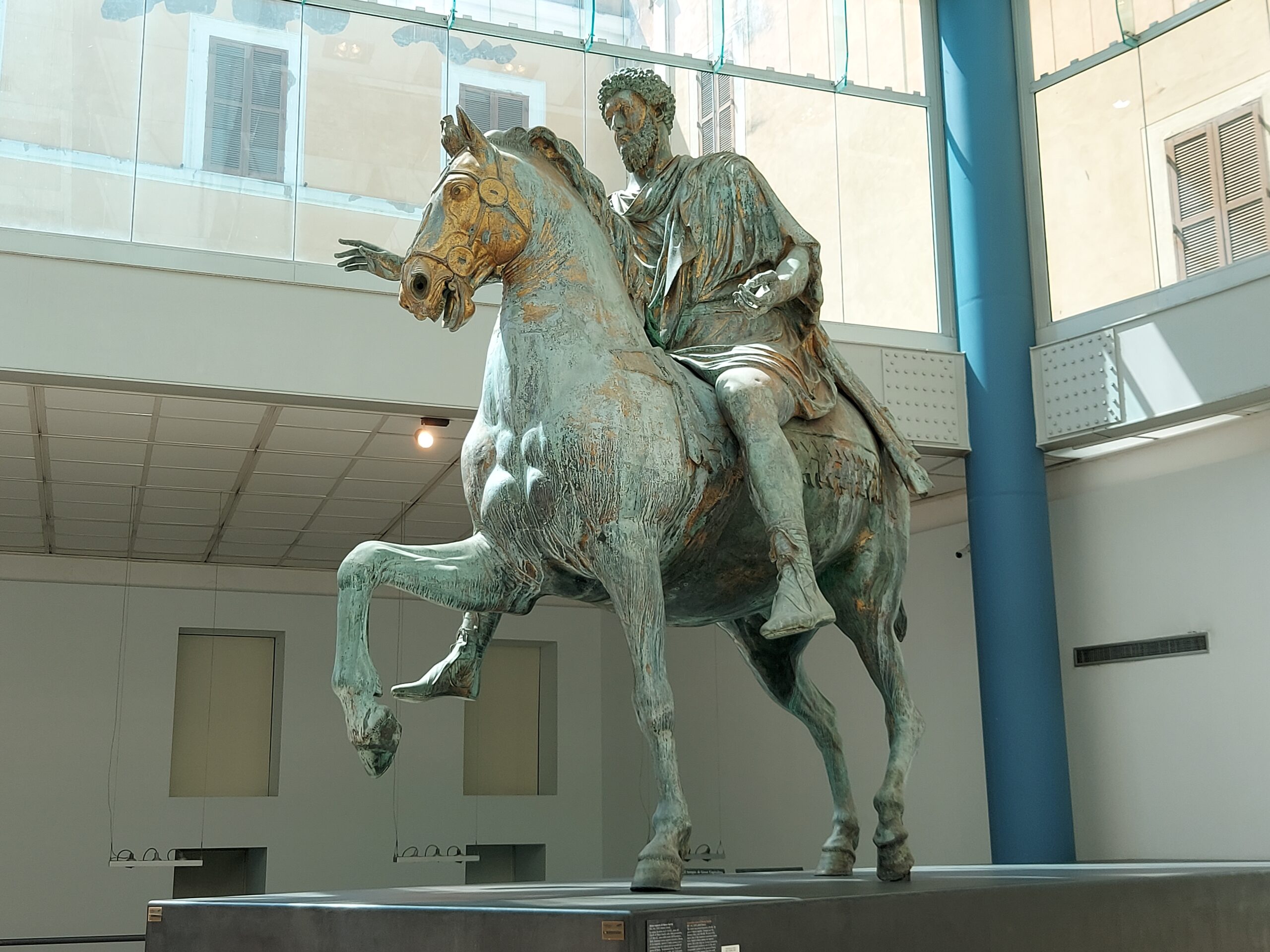
Statue of Marcus Aurelius on horseback. This is believed to have been erected around 161-180 AD. It originally stood outside in the courtyard, but a replica now stands there.
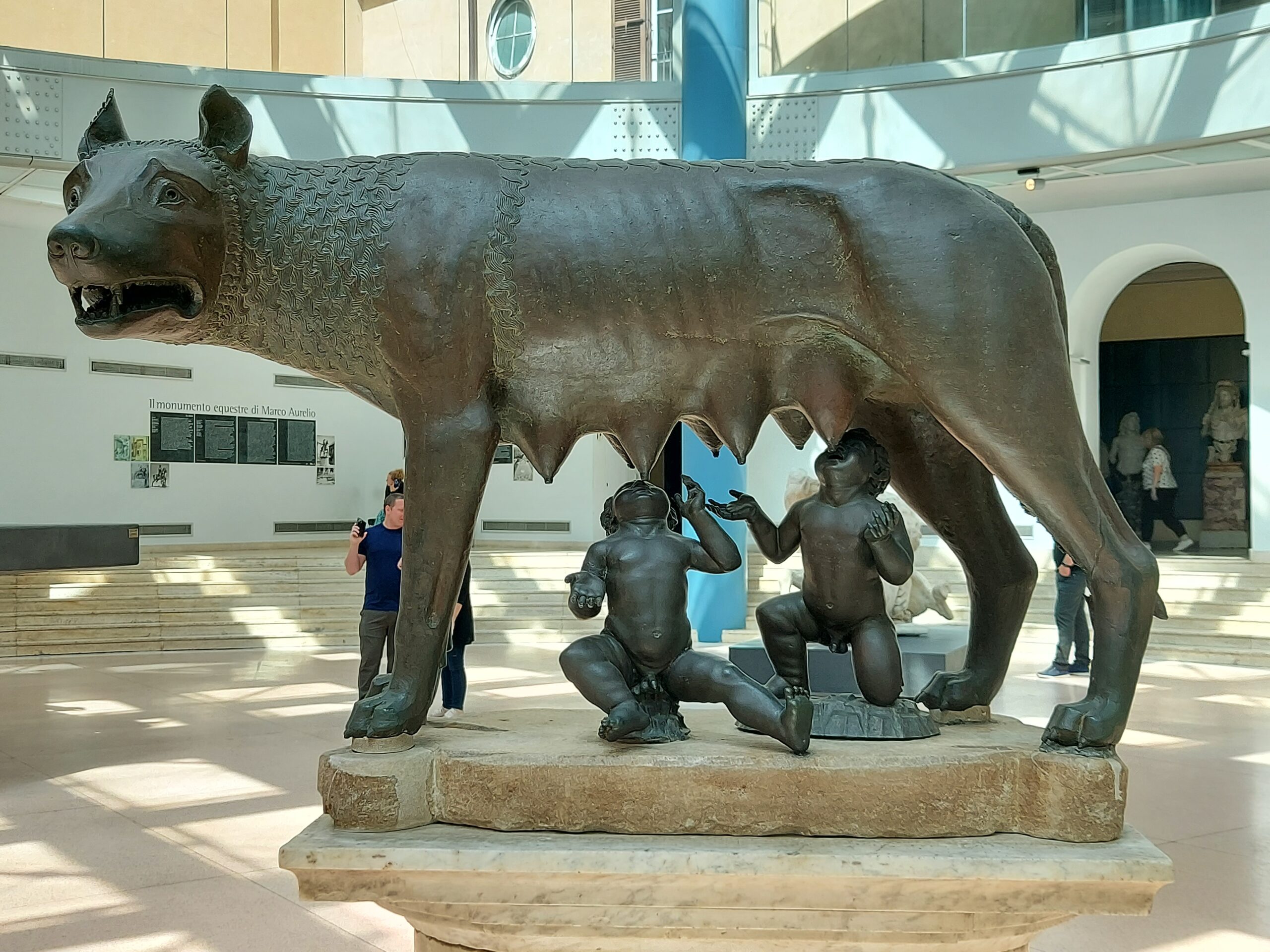
Statue of Romulus and Remus. Created in the Middle Ages, the statue symbolises the legendary founders of Rome.
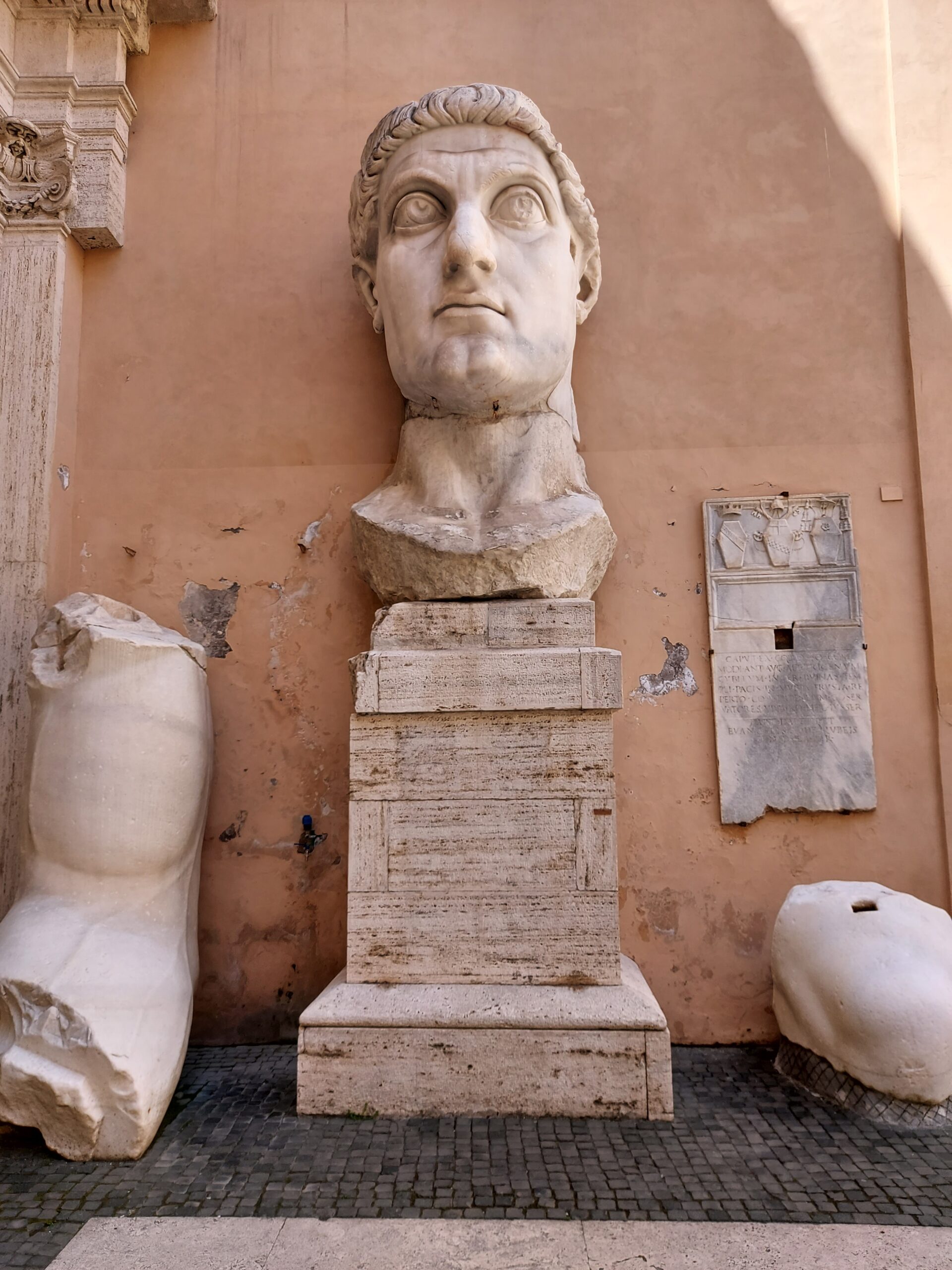
Colossal stone head of Constantine. This and other fragments of huge statues of the Emperor Constantine, in stone, wooden and bronze, were found near the Roman Forum.
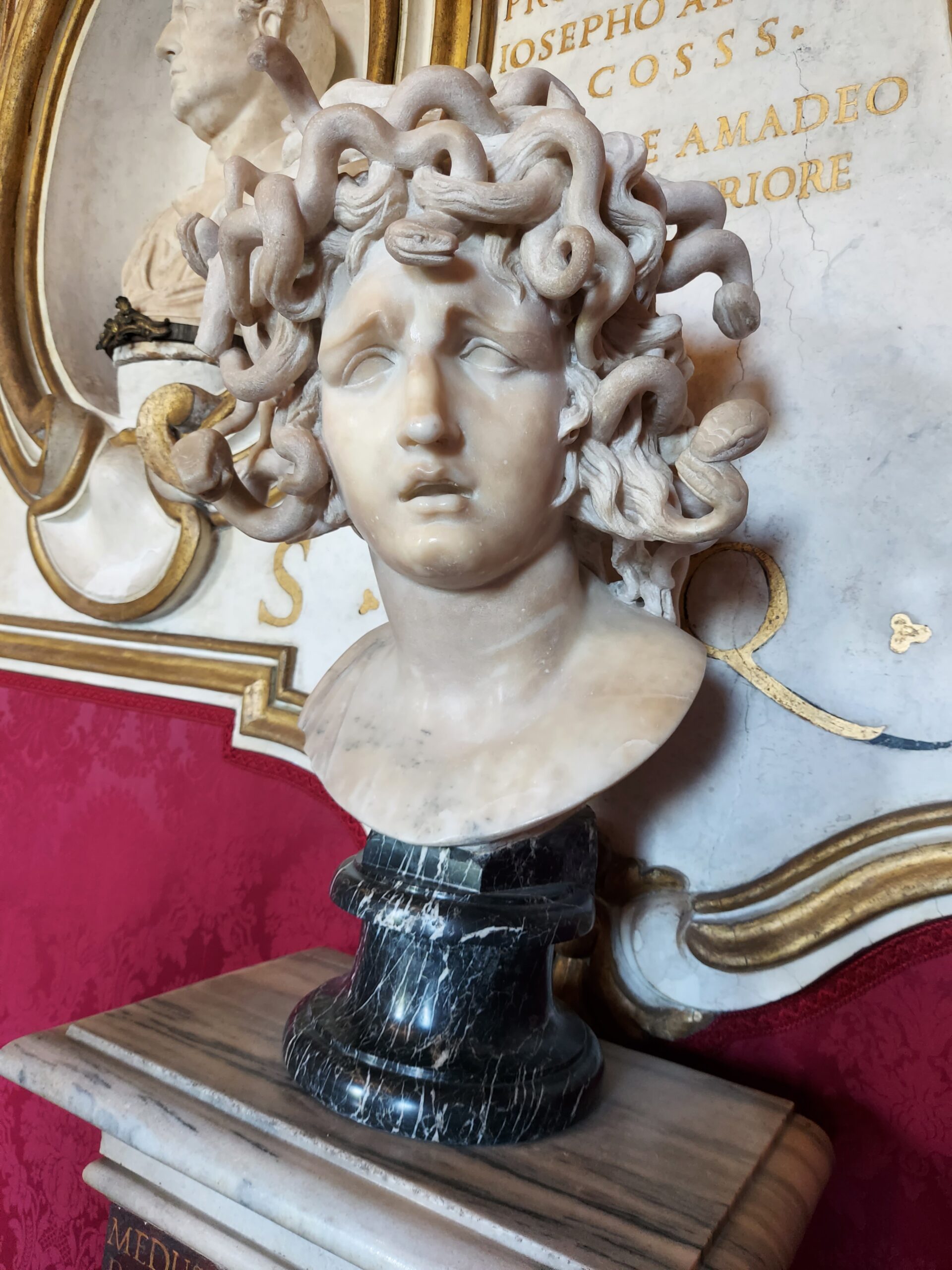
Bust of Medusa. This detailed bust, showing Medusa’s anguish, was made in the seventeenth century.
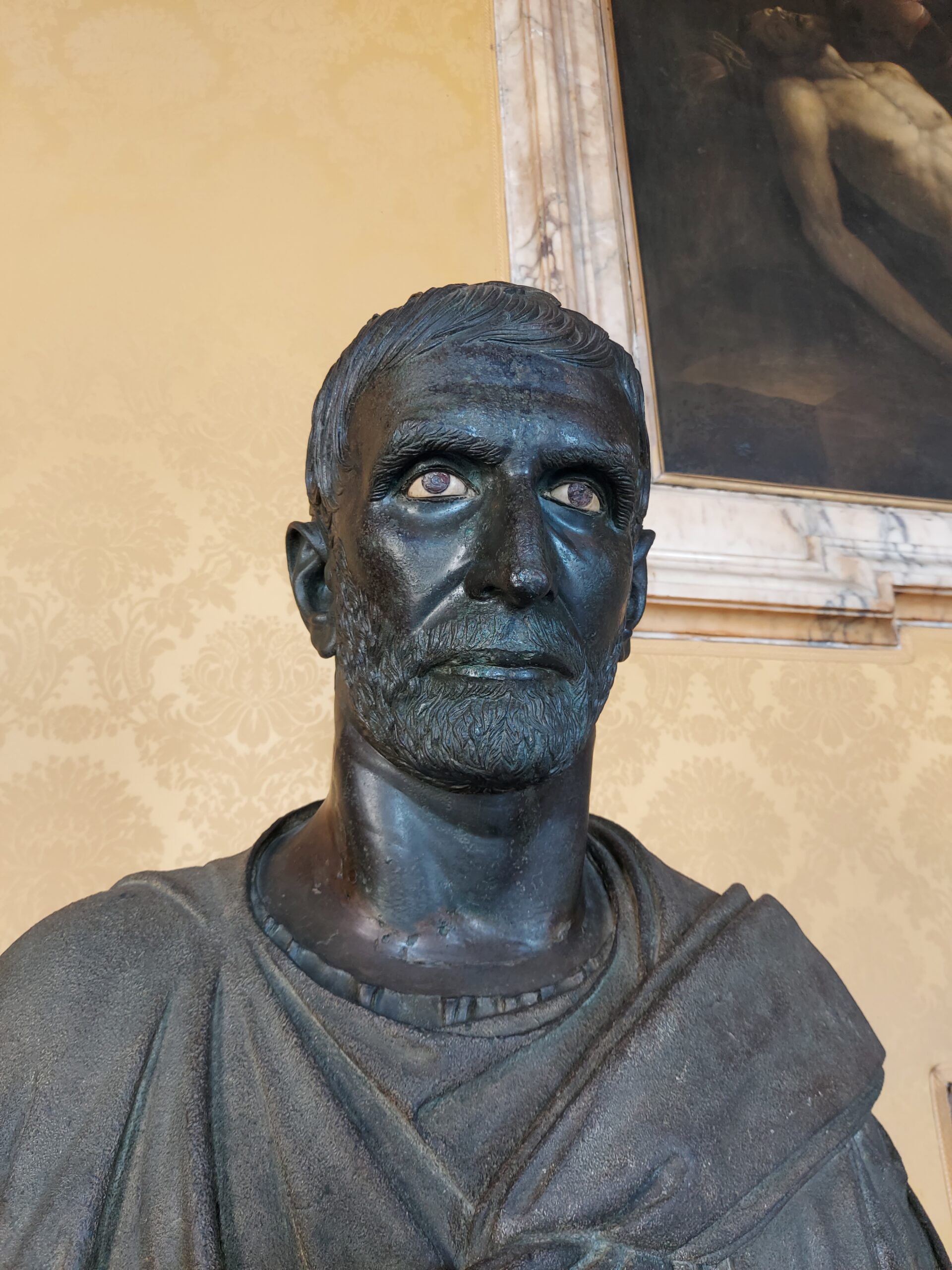
Capitoline Brutus. This ancient Roman bronze bust was thought to be an imagined portrait of the Roman consul Lucius Junius Brutus (d. 509 BC). The bust is usually dated to the late 4th to early 3rd centuries BC, but could be later.
After our visit, we walked back to the Circus Maximus to get the Metro, stopping at a restaurant on the Via dei Cerchi for tea.
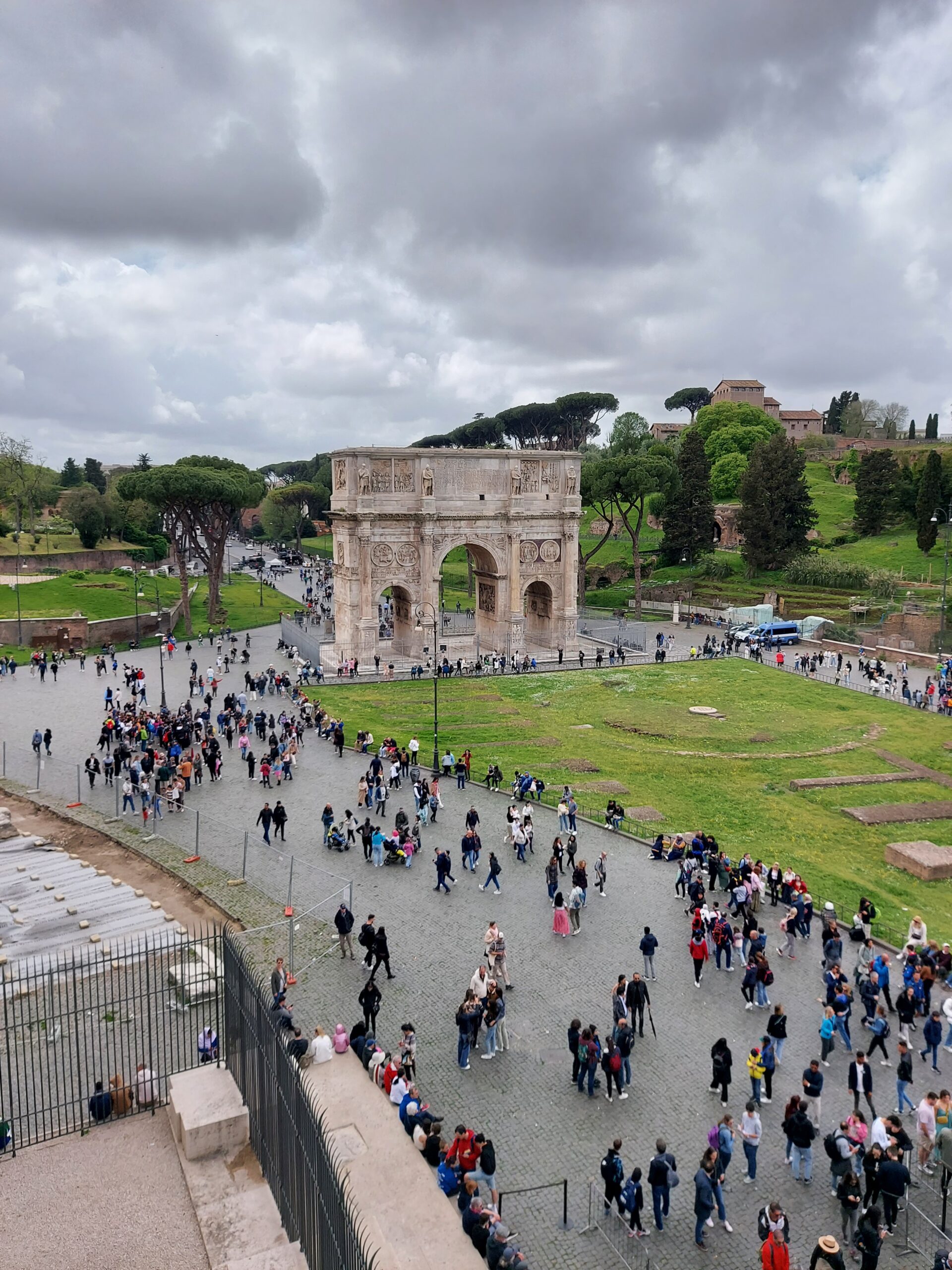
The Arch of Constantine: a triumphal arch in Rome dedicated to the emperor Constantine the Great. The arch was commissioned by the Roman Senate to commemorate Constantine’s victory over Maxentius at the Battle of Milvian Bridge in AD 312.
Day 6 was probably my favourite day in Rome. I absolutely adored it from start to finish.
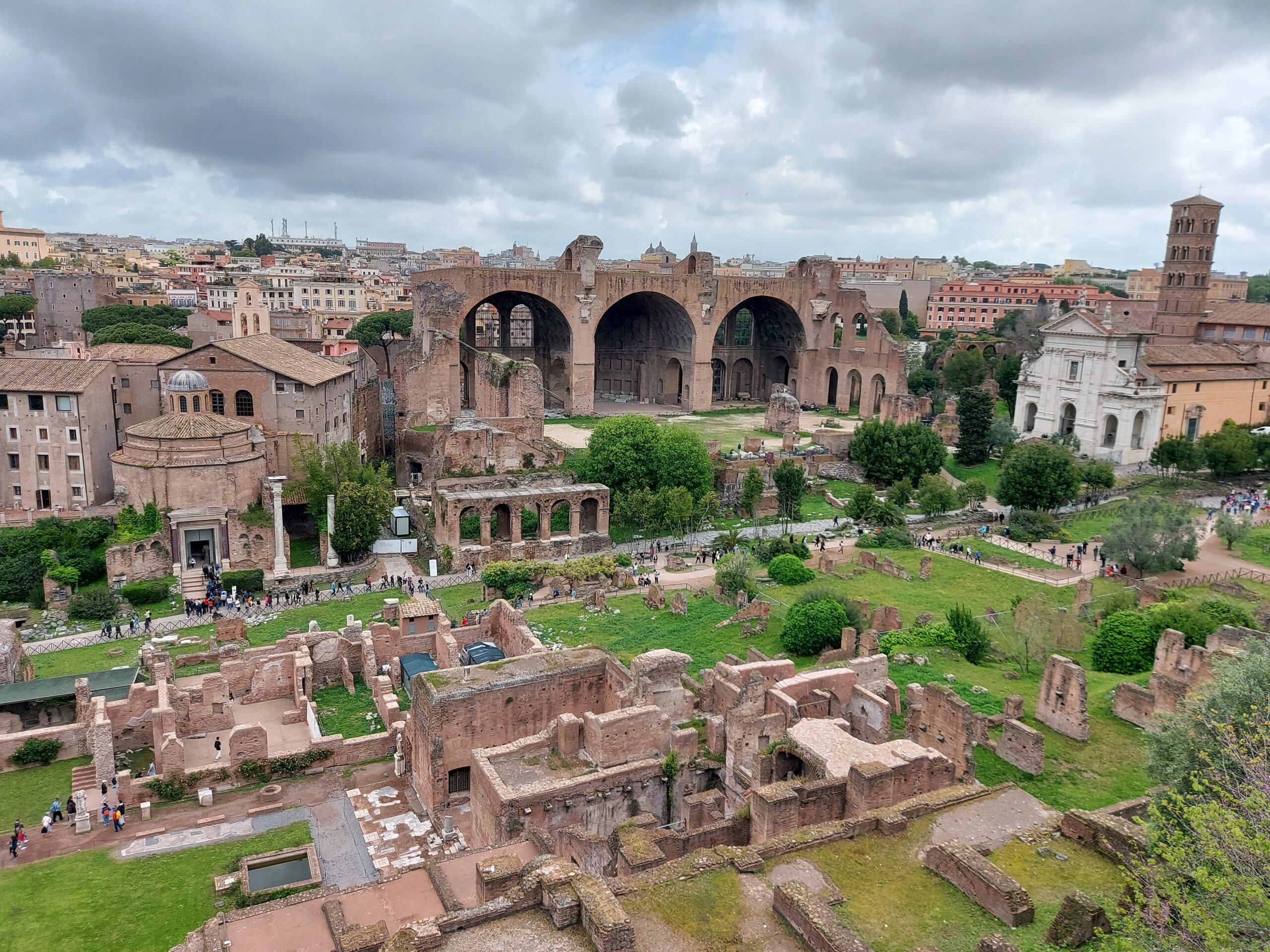
Looking down towards the Roman Forum from Palatine Hill
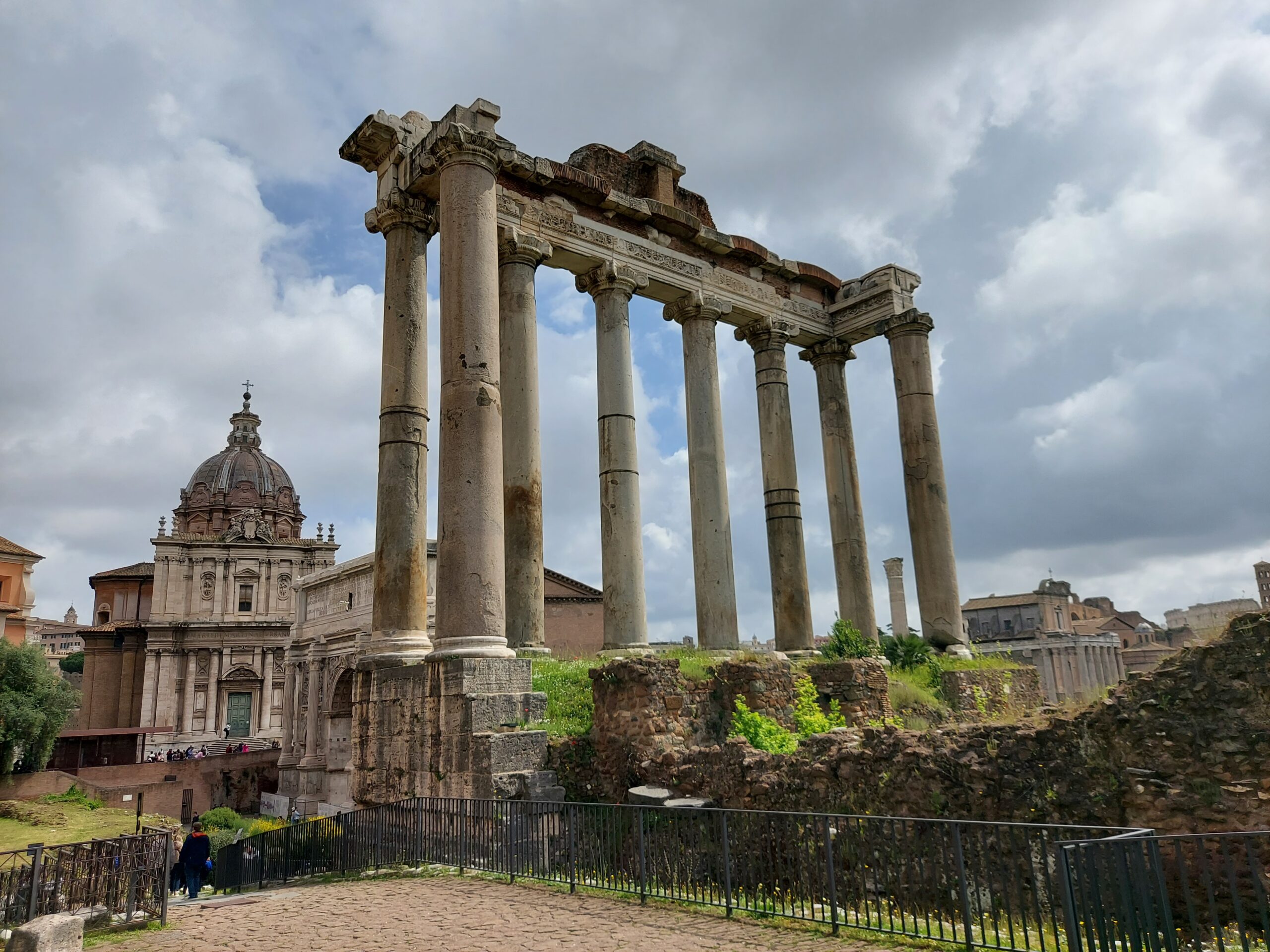
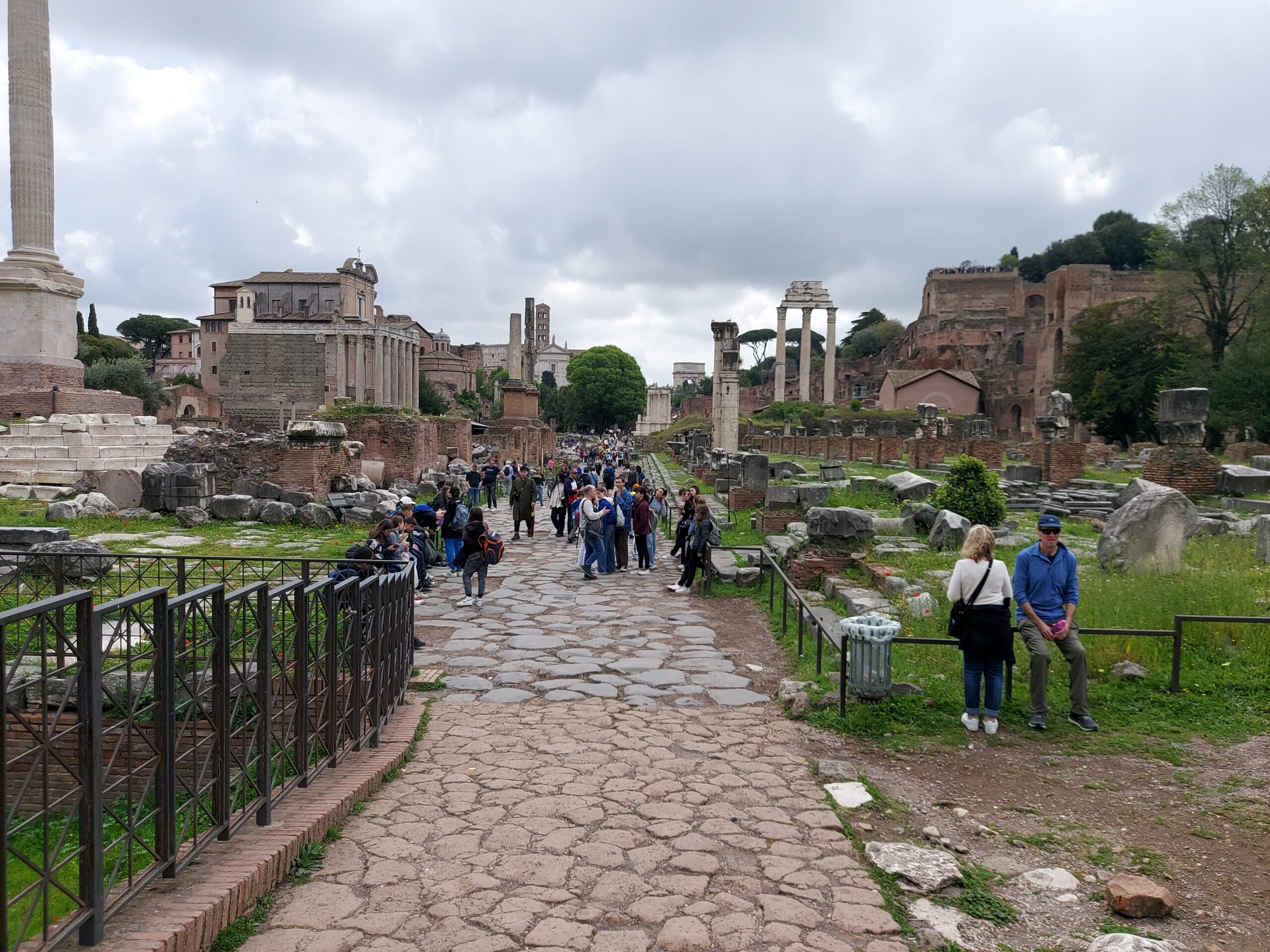
In the morning we went to the Roman Forum. Mam didn’t want to tire herself out too much so I went around the Forum by myself. There was so much to see and I could have spent hours there. The Forum was the centre of daily life in Rome for centuries. Originally a public marketplace, it later hosted numerous government buildings and temples, and was the centre of civic life.
The Temple of SaturnThe Roman Forum
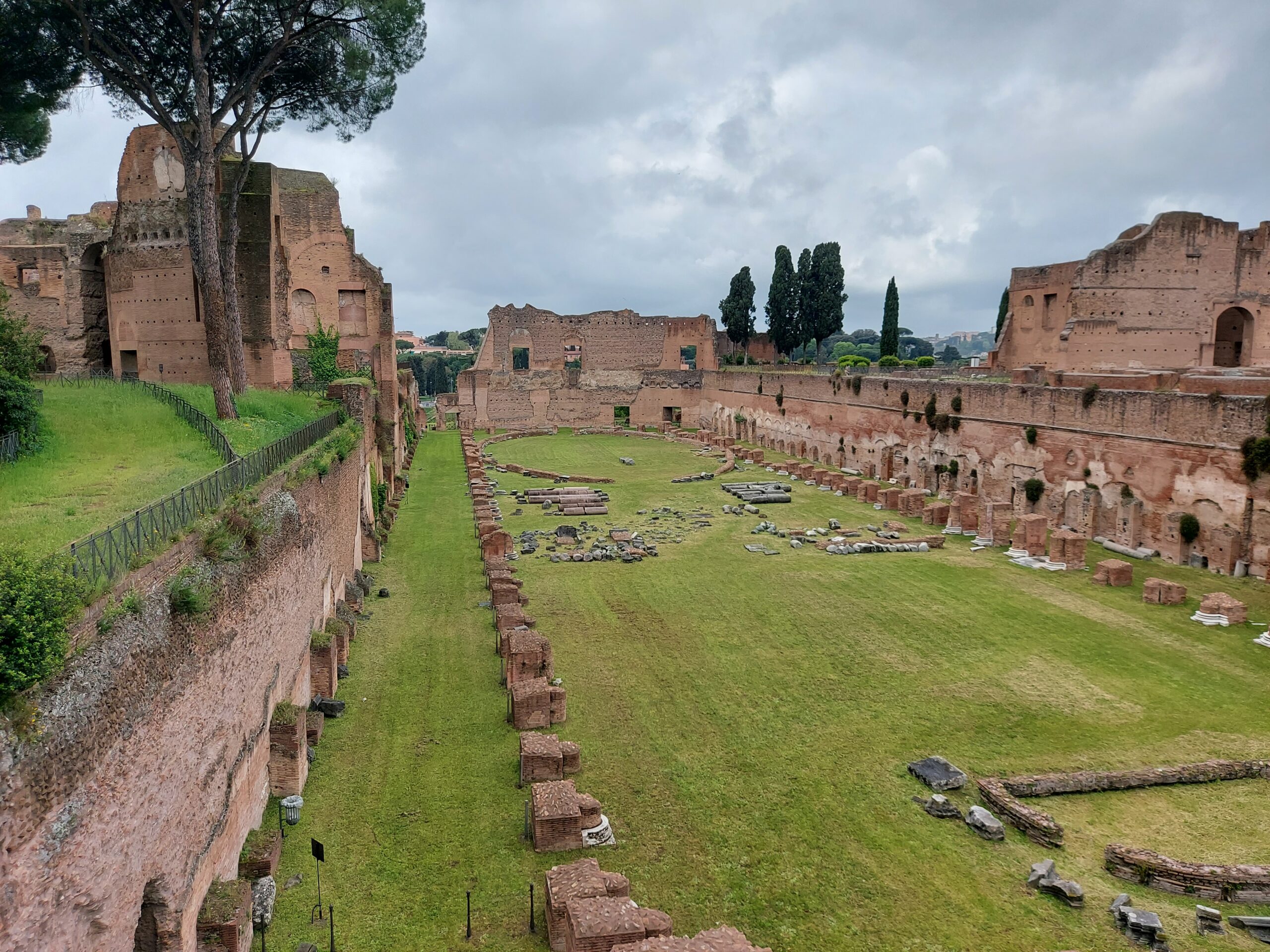
I also explored the Palatine Hill, dominated by the Palace of Domitian and the Houses of Livia and Augustus.
Garden or “stadium” of the Palace of Domitian
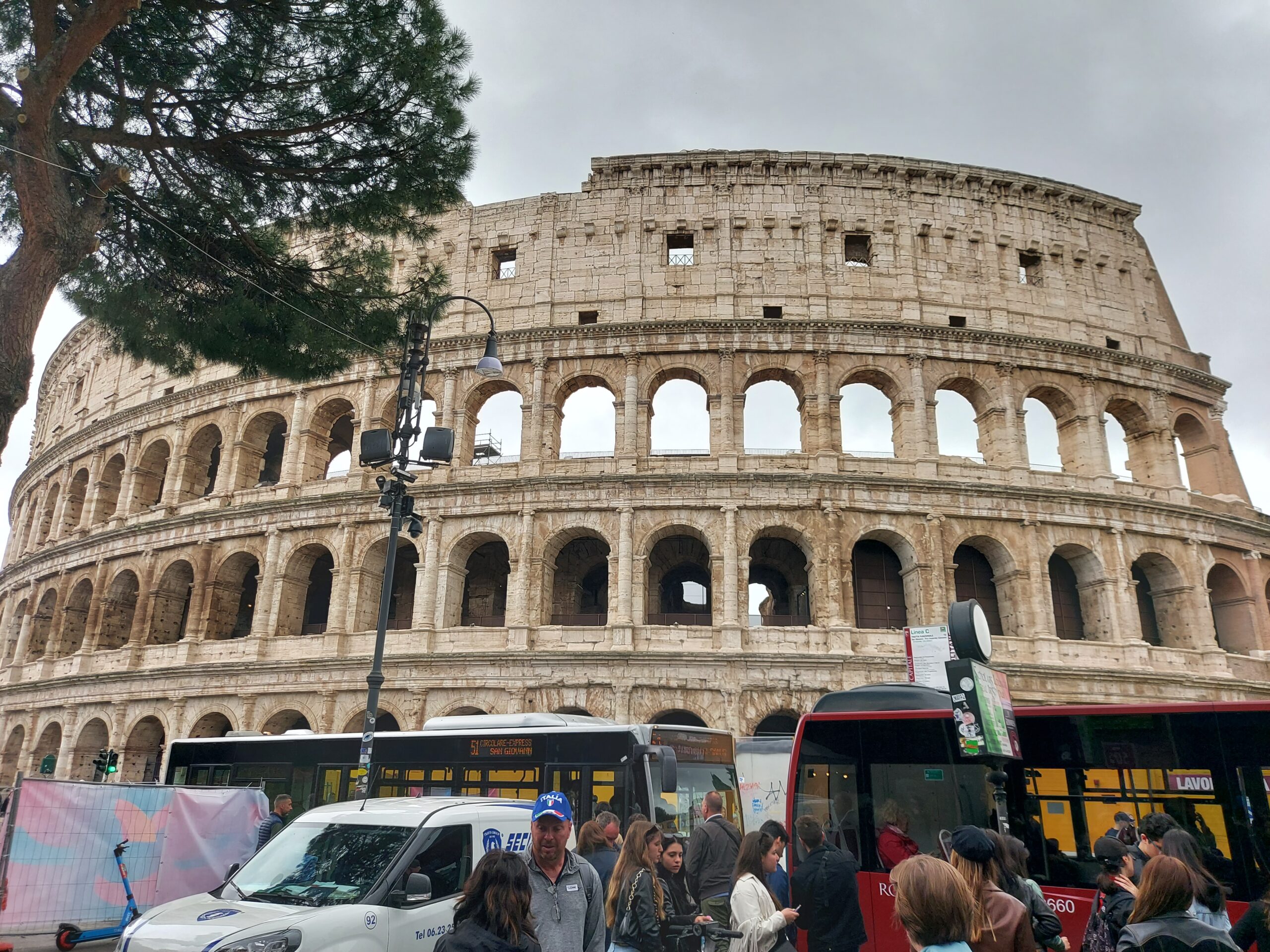
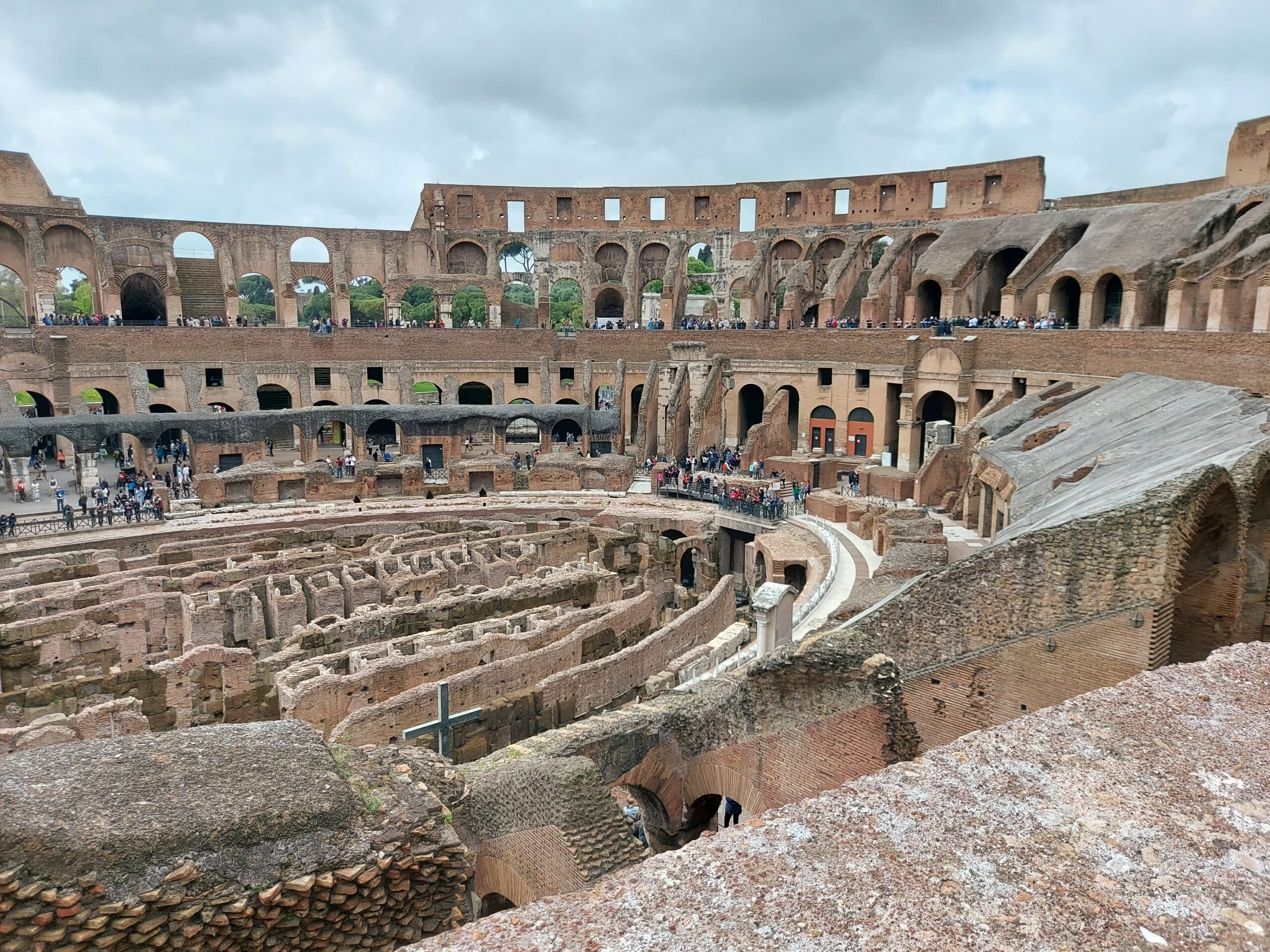
Afterwards, it was time for our visit to the Colosseum. This was another amazing experience. The elliptical amphitheatre is the largest ancient amphitheatre ever built, and is still the largest standing amphitheatre in the world. It was built between AD 72 and AD 80, with further modifications made around twenty years later. Walking around it, it is possible to imagine gladiators battling it out while spectators watched with bated breath. In later years it was used as housing, workshops, a fortress and a Christian shrine.
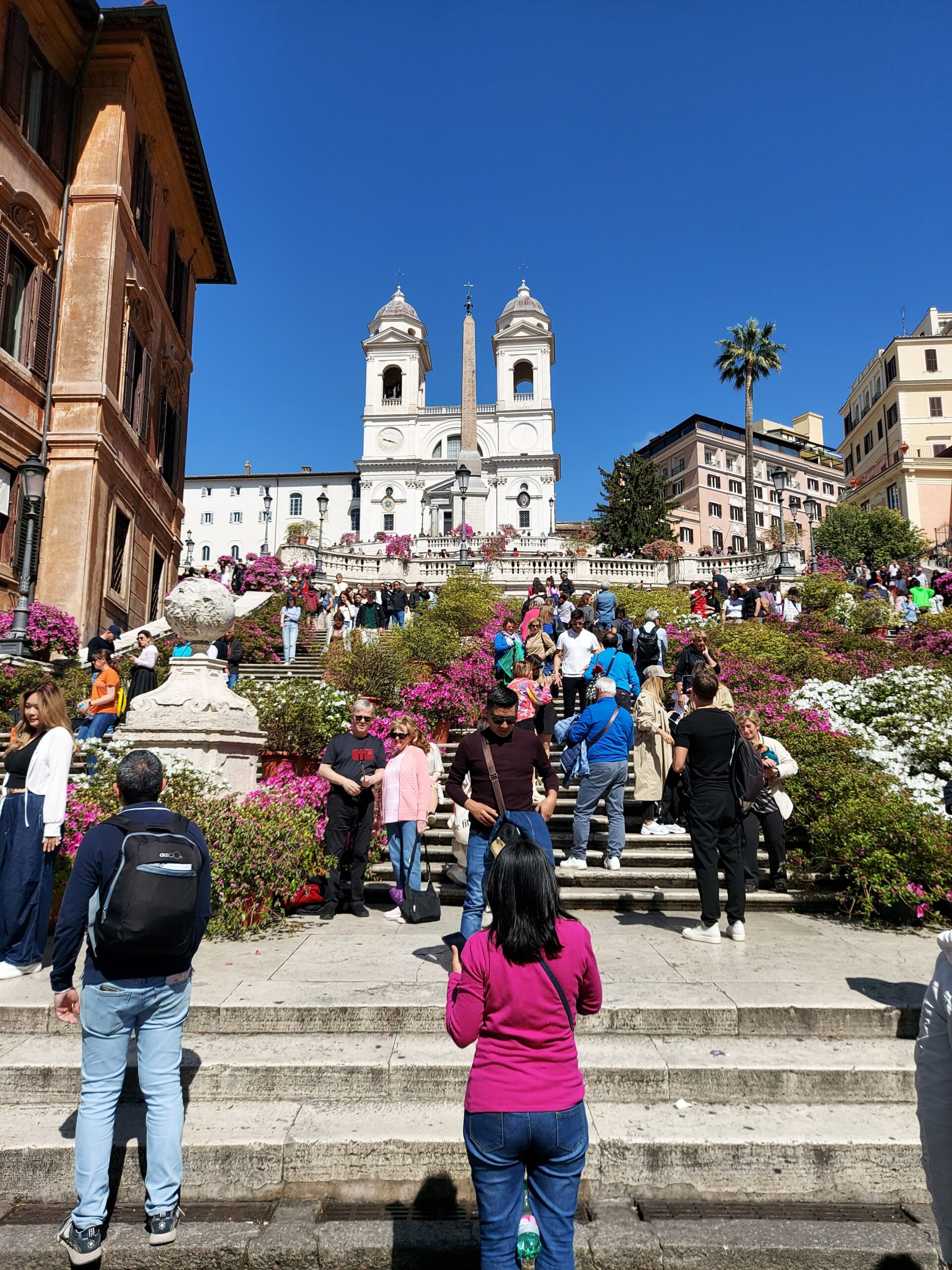
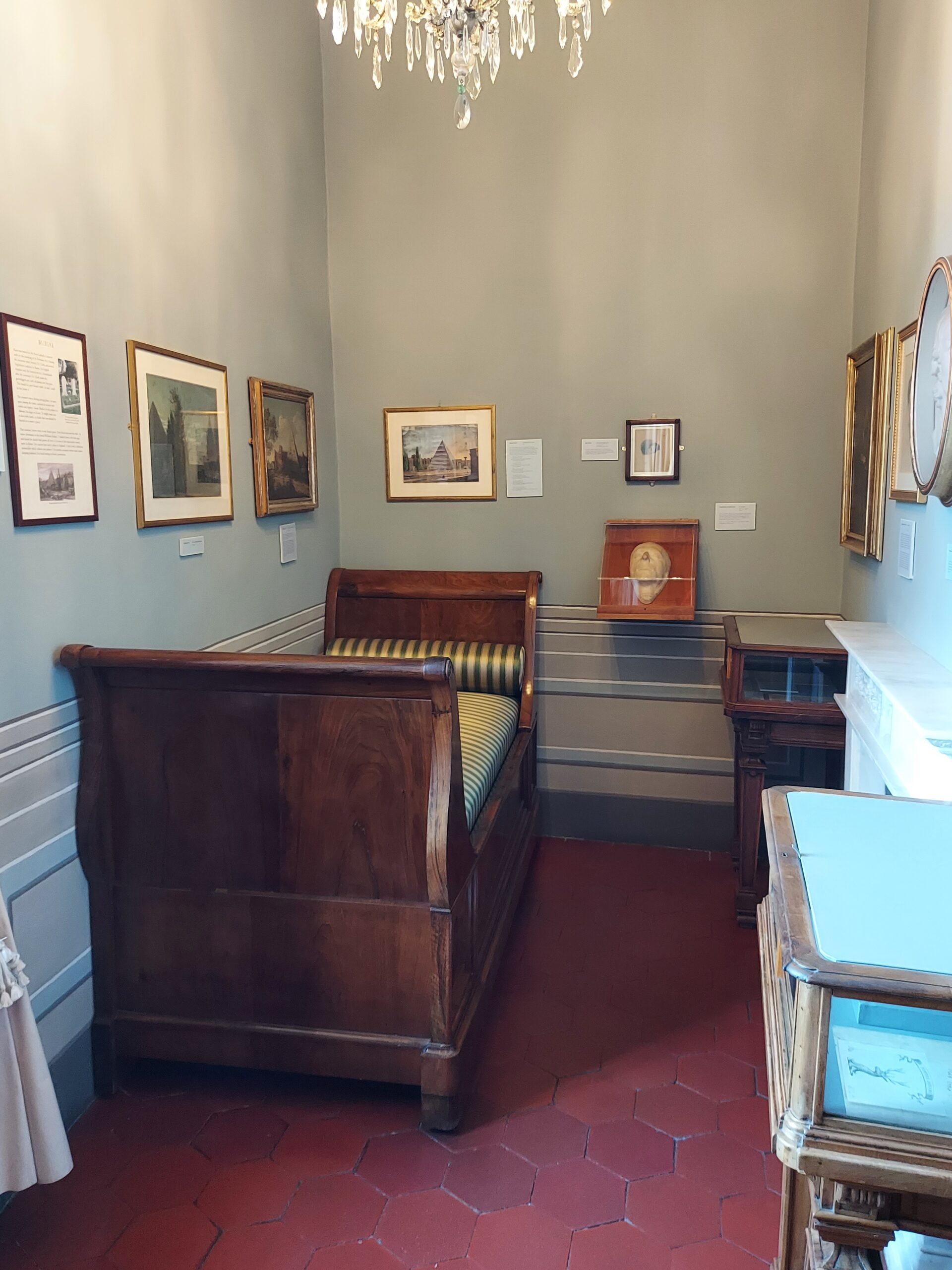
After a light lunch, we got the Metro to the Spanish Steps and visited the Keats-Shelley House. It was a hot day and it was lovely and cool inside the house. This is the place where, in 1821, Keats died from tuberculosis, after visiting the city in an ill-fated bid to recover from his illness. The room in which he died is displayed as it was then, although the furniture is not original as, in line with laws of the time, it was burned after his death. Keats’ death mask is a powerful reminder of the toll his illness took on him. The House contains a rich library of Romantic literature, as well as a collection of manuscripts, paintings, sculpture and memorabilia.
Looking up the Spanish StepsThe room in which Keats died
In the gift shop there was a beautiful ring, a replica of the ring Keats gave to his fiancée Fanny Brawne. I ended up buying it – well, mam bought it to keep for me as a Christmas present!
After our visit, we headed back towards the hotel, eating at the same restaurant we’d enjoyed on our first night.
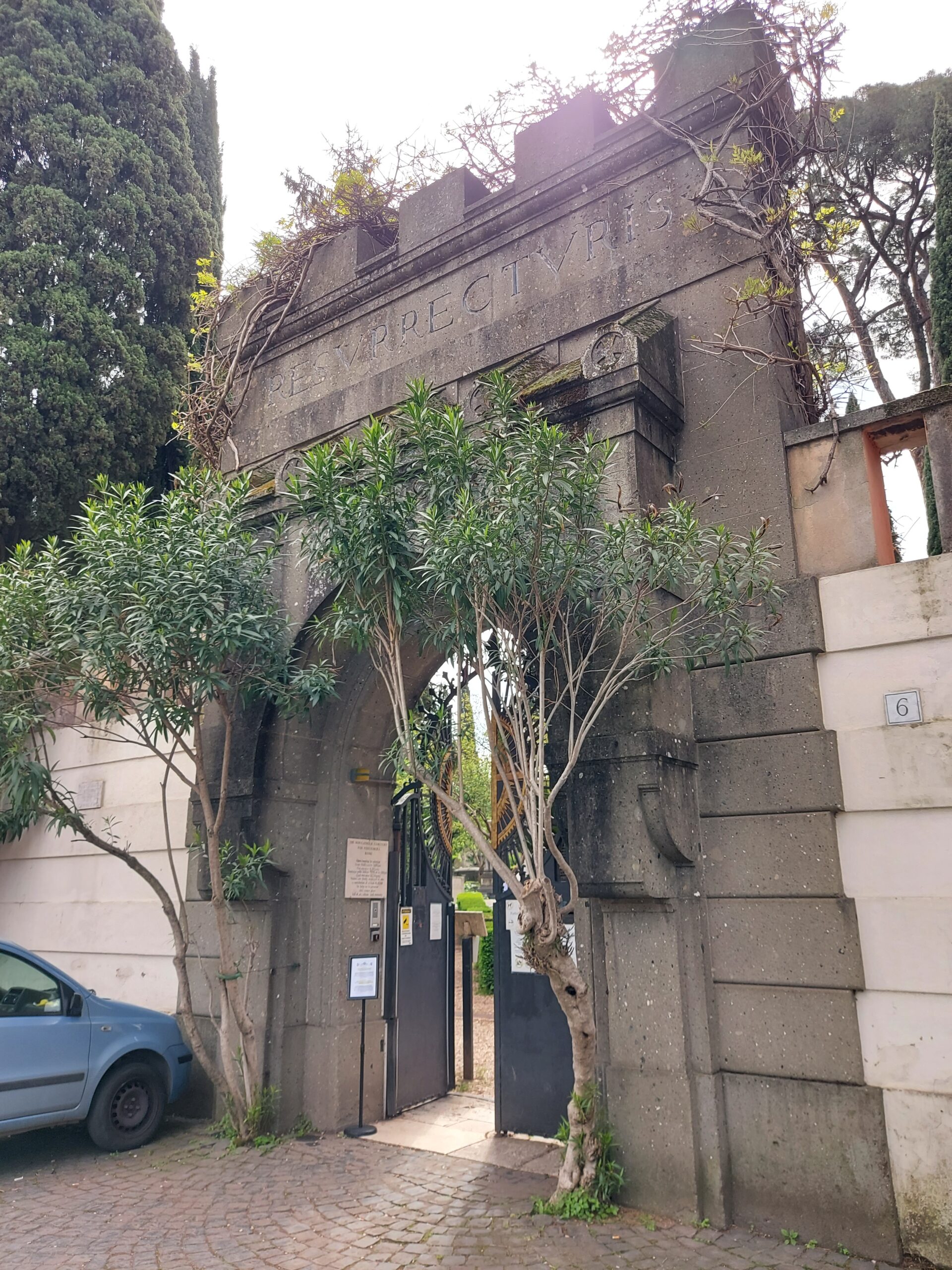
After our exhausting day yesterday, we decided to have a quieter day, but in the morning we did visit the Non-Catholic Cemetery, which was a bucket list place for me. I’ve wanted to visit this cemetery ever since I was a teenager and learned that the poet John Keats, who died in Rome, is buried here.
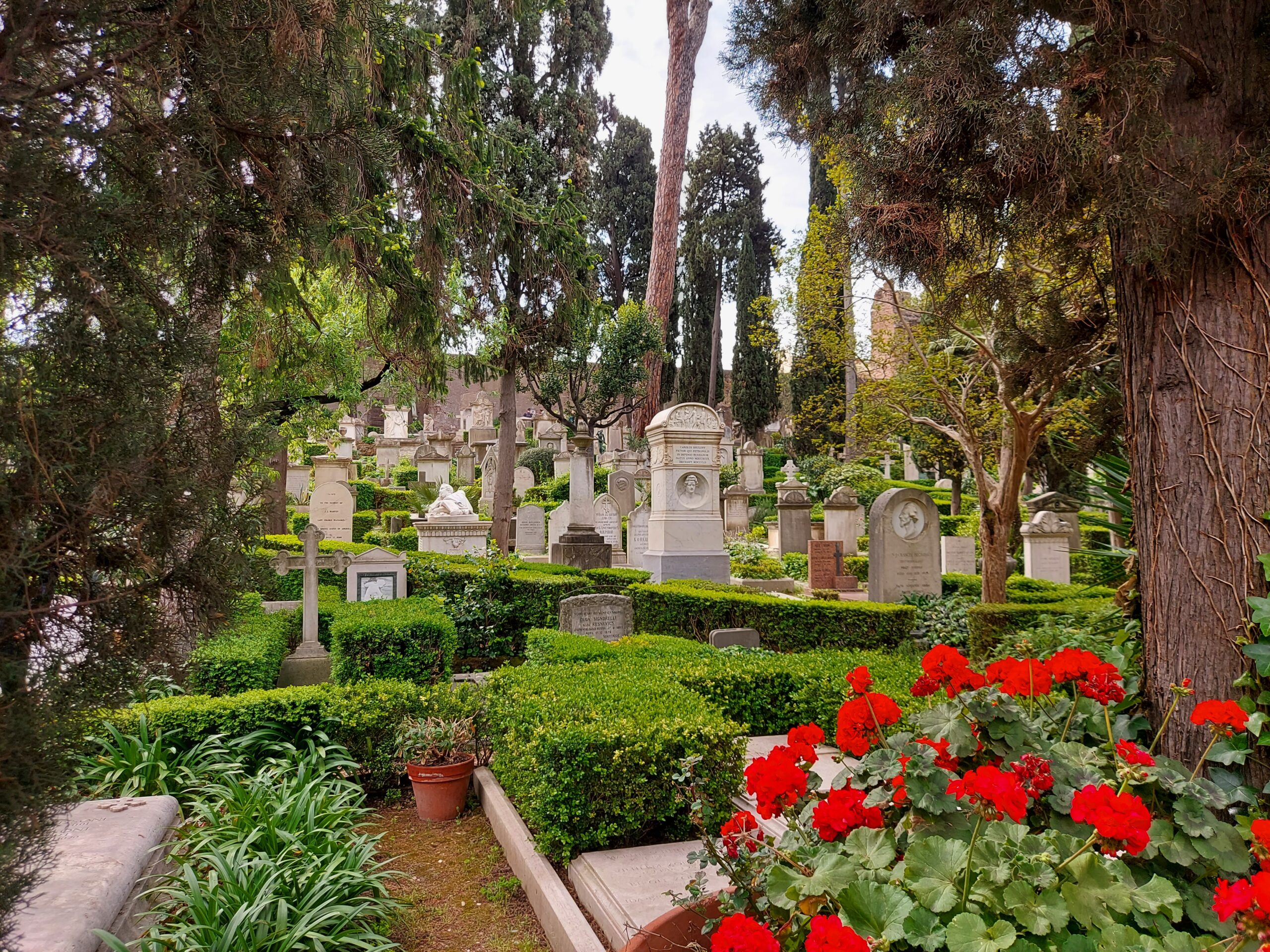
Inside the Non-Catholic Cemetery
Often known as the Protestant Cemetery, although the Non-Catholic Cemetery is its official name (and more accurate), it developed organically without official recognition on an area of cattle-grazing land just outside the city as-was from the early eighteenth century onwards. The first burial was that of William Arthur, a follower of the exiled James VII of Scotland. Gradually the area developed a reputation as a British cemetery, though individuals of other nationalities were also buried here. In the 1820s the Papal government appointed a custodian to oversee the area and the cemetery functions.
Inside the Non-Catholic Cemetery
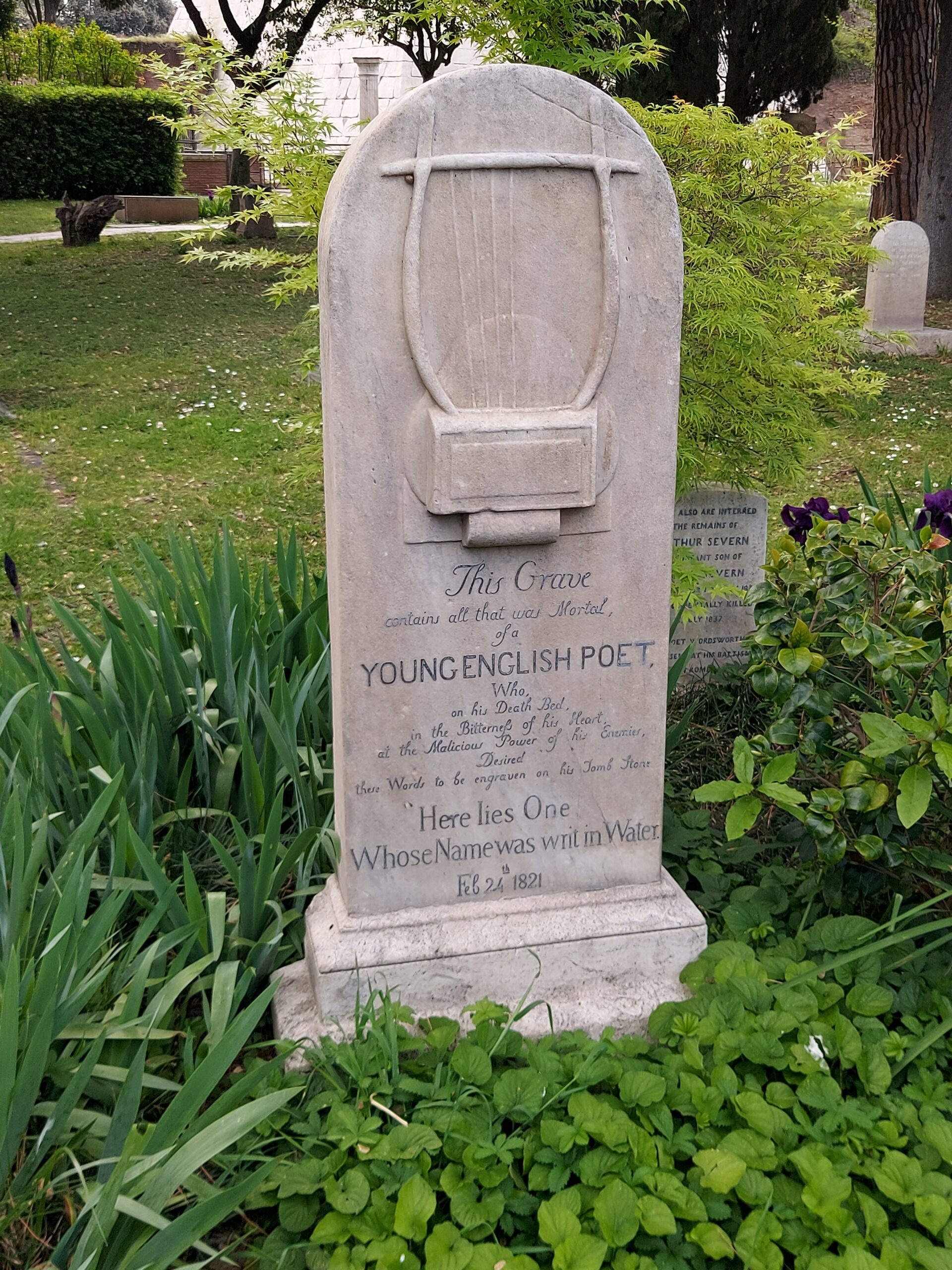
Keats is buried in the older, more spacious part of the cemetery, across from the ancient Pyramid of Caius Cestius. It was quite emotional to finally see for real the immortal words on his tombstone, “Here lies one whose name was writ in water”. Alongside him is buried his loyal friend Joseph Severn, who died in 1879.
Grave of John Keats
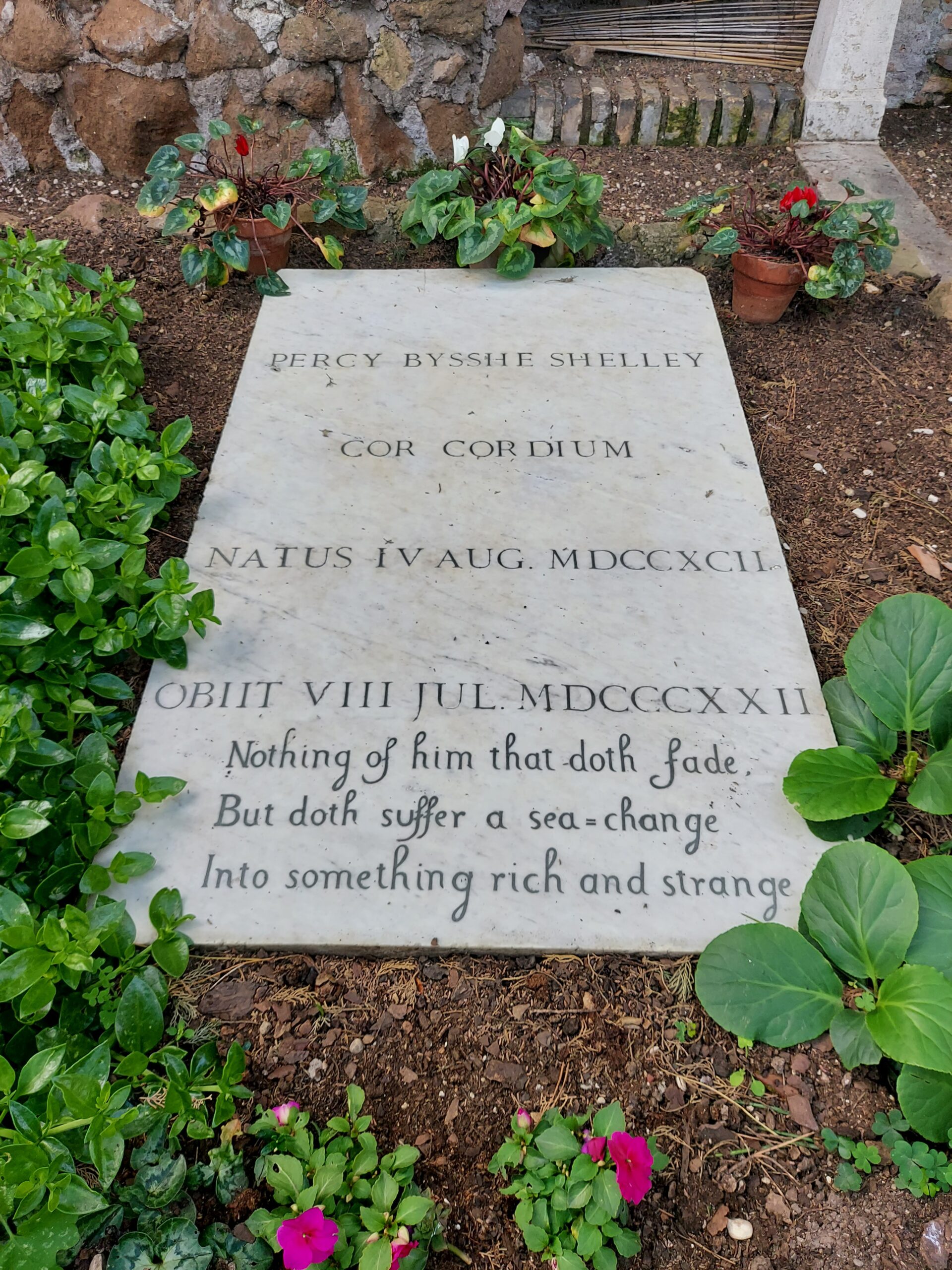
In the newer, more crowded part of the cemetery, we spent a good while wandering among the tombstones. I came across the grave of Percy Shelley: I hadn’t realised his remains (except for his heart, which was taken from the flames at his cremation and given to his widow Mary) were buried here, but they were sent to the British Consulate in Rome, who interred them here. His gravestone has a quotation from Shakespeare’s The Tempest, and alongside him is buried his friend, Edward John Trelawny.
Grave of Percy Bysshe Shelley
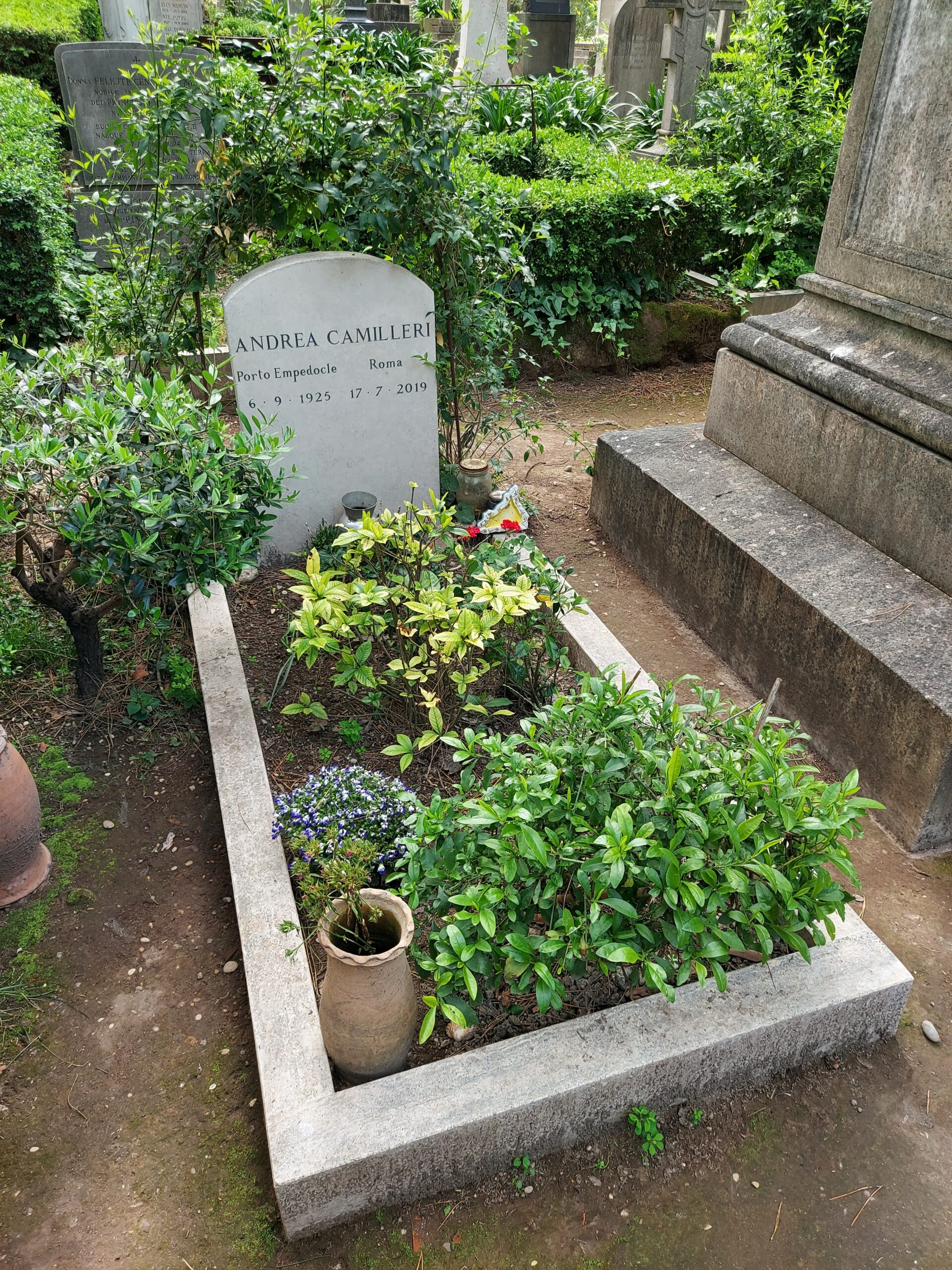
Few Italians are buried in the cemetery, but one of them is Andrea Camilleri, writer and creator of the Sicilian detective Inspector Montalbano. I’m a huge fan of the novels and the TV show, so was glad I came across his grave.
Grave of Andrea Camilleri
After our visit, we got the Metro to the Circus Maximus from where we caught the City Sightseeing tour bus. It was lovely to sit and relax after doing so much walking, and we got to see loads too.
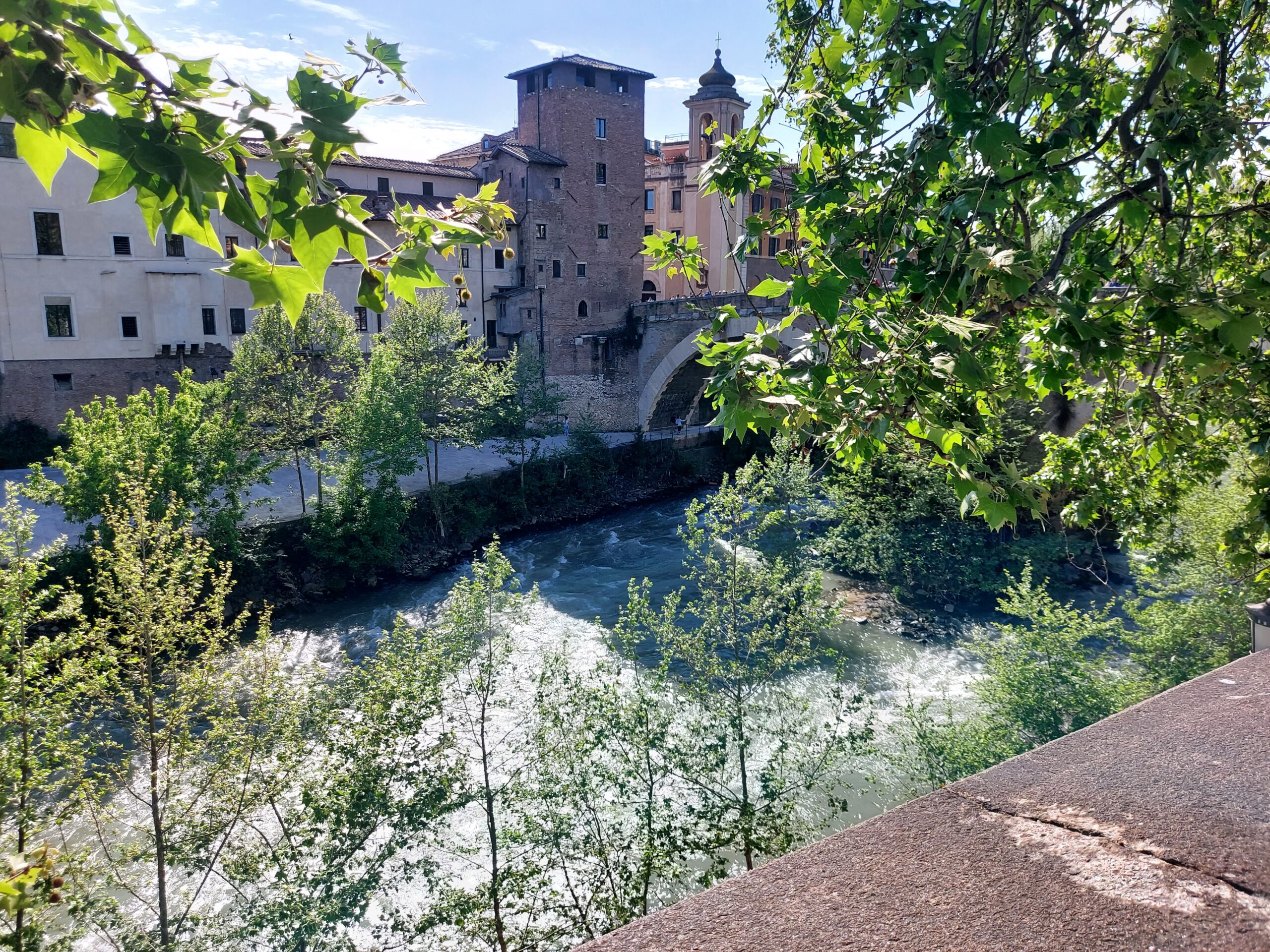
After about three hours on the bus we got off and walked over to Trastevere, a popular and pleasant part of the city. This was a lovely area and we had a nice meal at the Casetta di Trastevere.
On our fourth day – the Saturday – we had made plans to visit Tivoli. It didn’t seem to be possible to book an excursion, so we decided to make the trip ourselves, with mixed results.
We booked train tickets to Tivoli from the main Roma Termini station. We got there no problem, but the station was pretty big and we nearly went to the wrong platform. Eventually we made it and enjoyed a pleasant journey through the countryside.
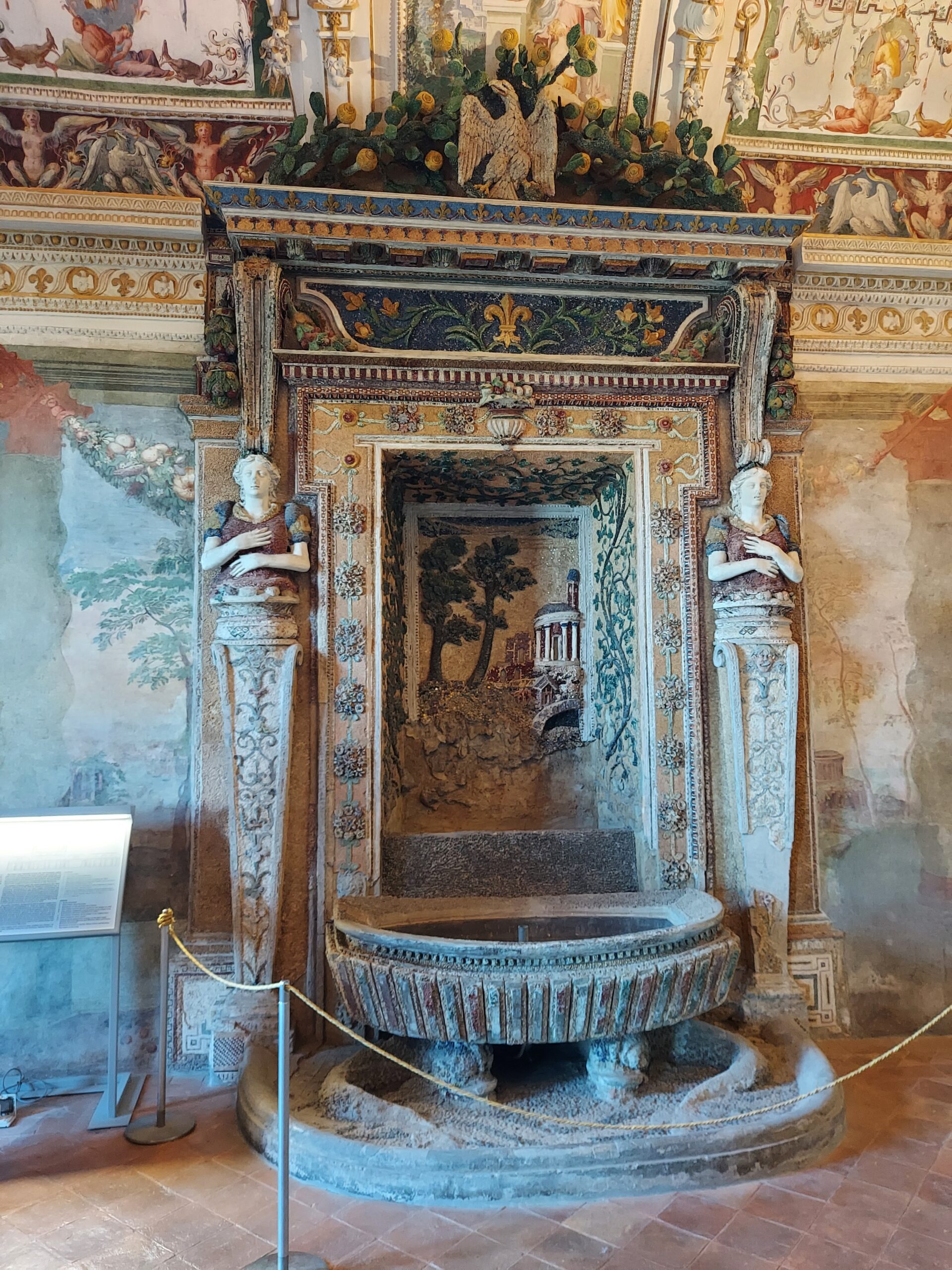
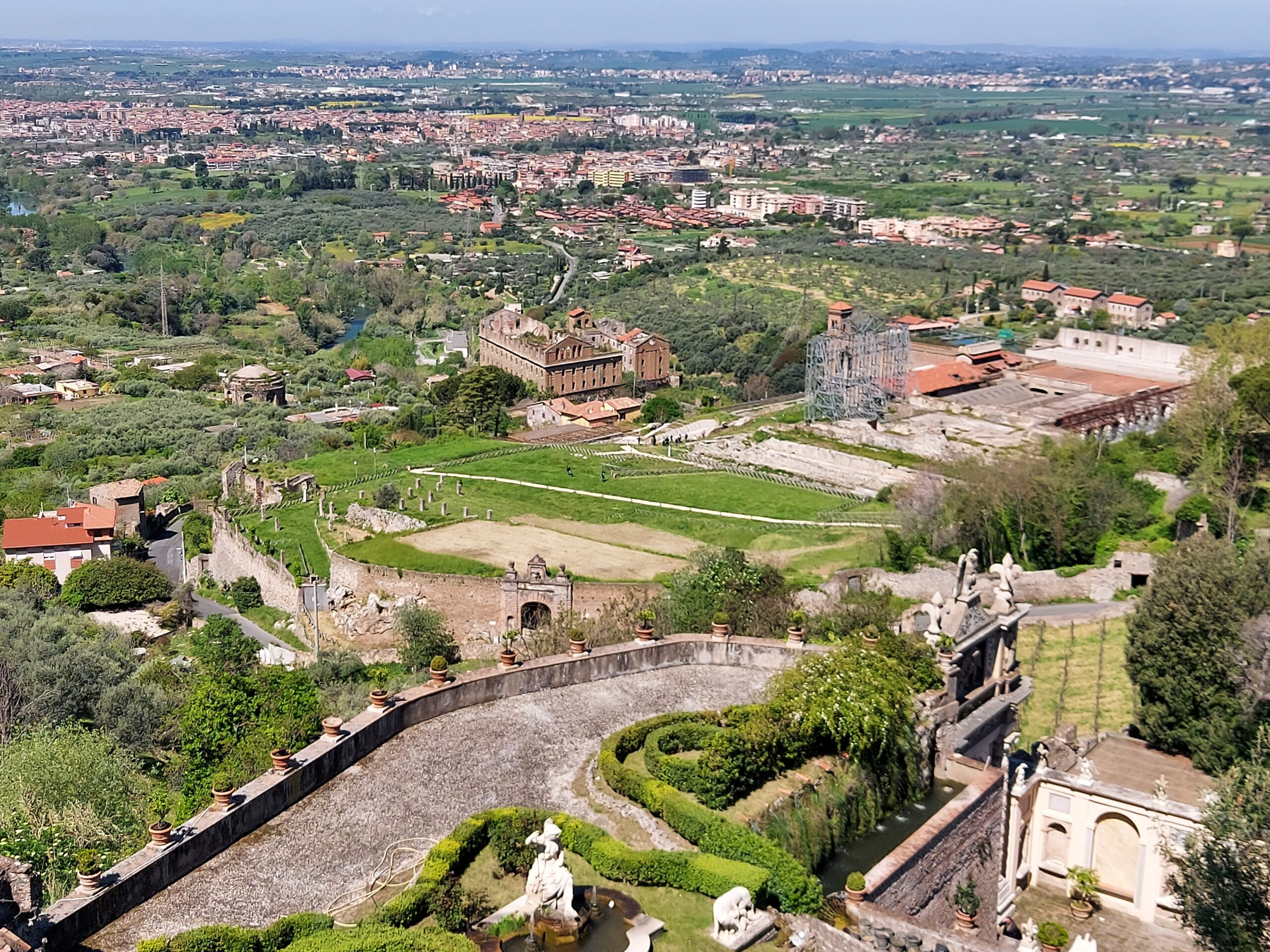
It was very hot in Tivoli and unfortunately we had to walk up a hill. It was a nice little town, but perhaps we couldn’t appreciate it as we were fairly tired! The Villa d’Este, which we visited on the top of the hill, is a UNESCO World Heritage site, interesting and full of history. It was cool indoors, too, which helped. Built on the site of an ancient monastery, the palace and the gardens were laid out by Pirro Ligorio (1500-1583) on behalf of Cardinal Ippolito II d’Este of Ferrara (1509-1572). It is a superb example of Renaissance culture.
Afterwards, we made our way to Villa Adriana, or Hadrian’s Villa. Yes, that’s the same Hadrian who built the wall between England and Scotland. Getting there proved to be tricky as we had to get a bus. In order to catch the bus, we had to buy bus tickets from… a pizza place. We almost got on the wrong bus too. In fact, I’m convinced we did actually get on the wrong bus in the end but I think the driver took pity on us. So did the passengers, who helpfully told us where we needed to get off.
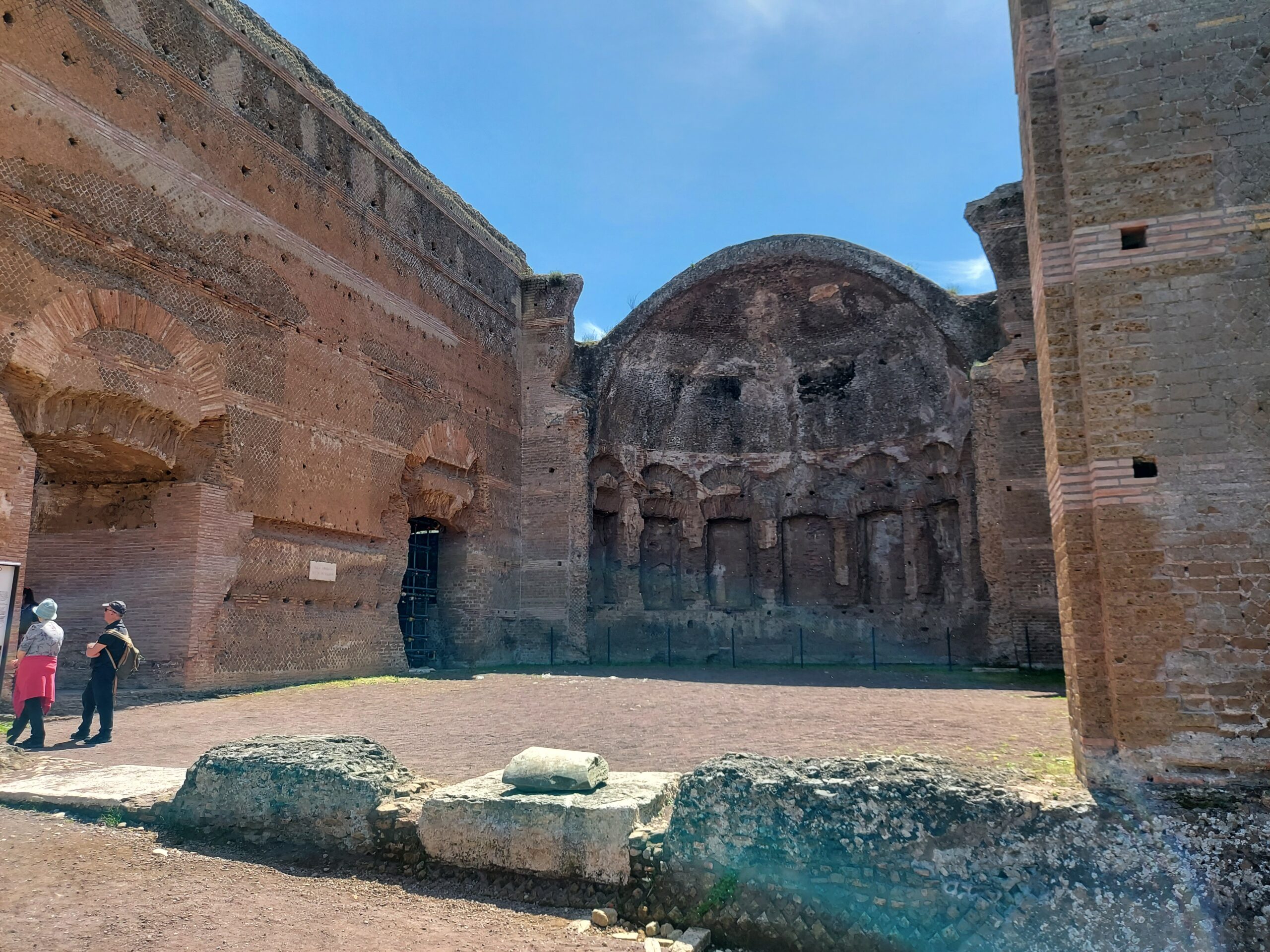
By this time, mam was exhausted so I ended up going over the site by myself. I am glad I did – it was amazing and clearly used to be a majestic place. I just wish mam had been able to enjoy it too. It is also a listed UNESCO World Heritage Site. The villa was built by Roman Emperor Hadrian at the foot of the Tiburtine Hills between 118 and 138 AD. Even in ruins, it’s possible to imagine the grandeur of the palace as it used to be.
Part of the villa complex
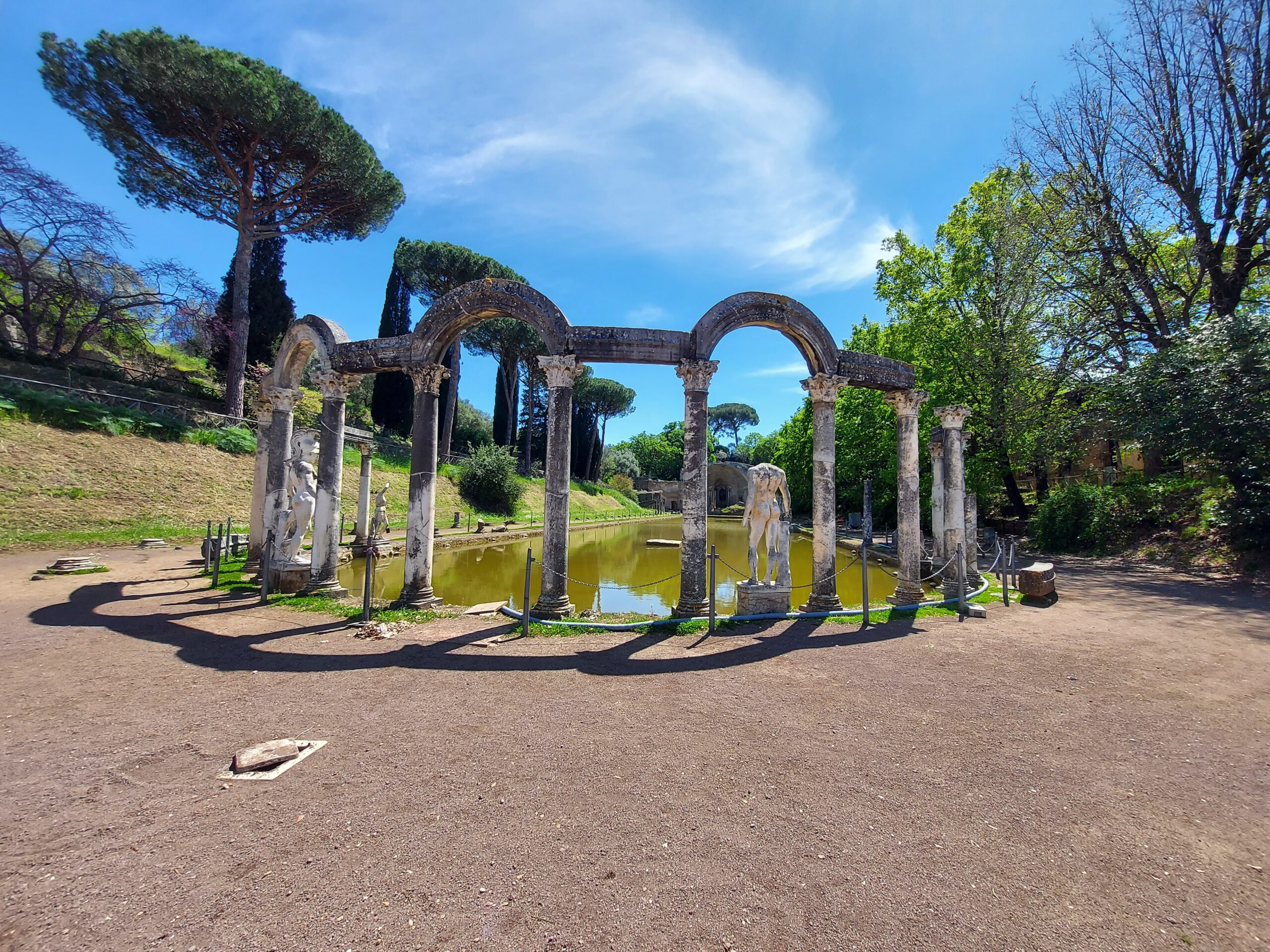
Originally about 120 hectares, only 40 hectares now remain. The site included buildings, baths, temples, barracks, theatres, gardens, fountains and nymphaeums. Today, many parts survive – albeit in ruined form – including the Maritime Theatre, the Great and Small Baths, the Greek Theatre and two libraries.
The Canopus at the Villa Adriana
We had to wait ages for the bus on the way back, but at least we got to have a bit of a rest. Once we got to Tivoli, we went to the station straight away and headed back to Rome. We ate at a restaurant fairly near our hotel called Il Tagliagrana, which was yummy.
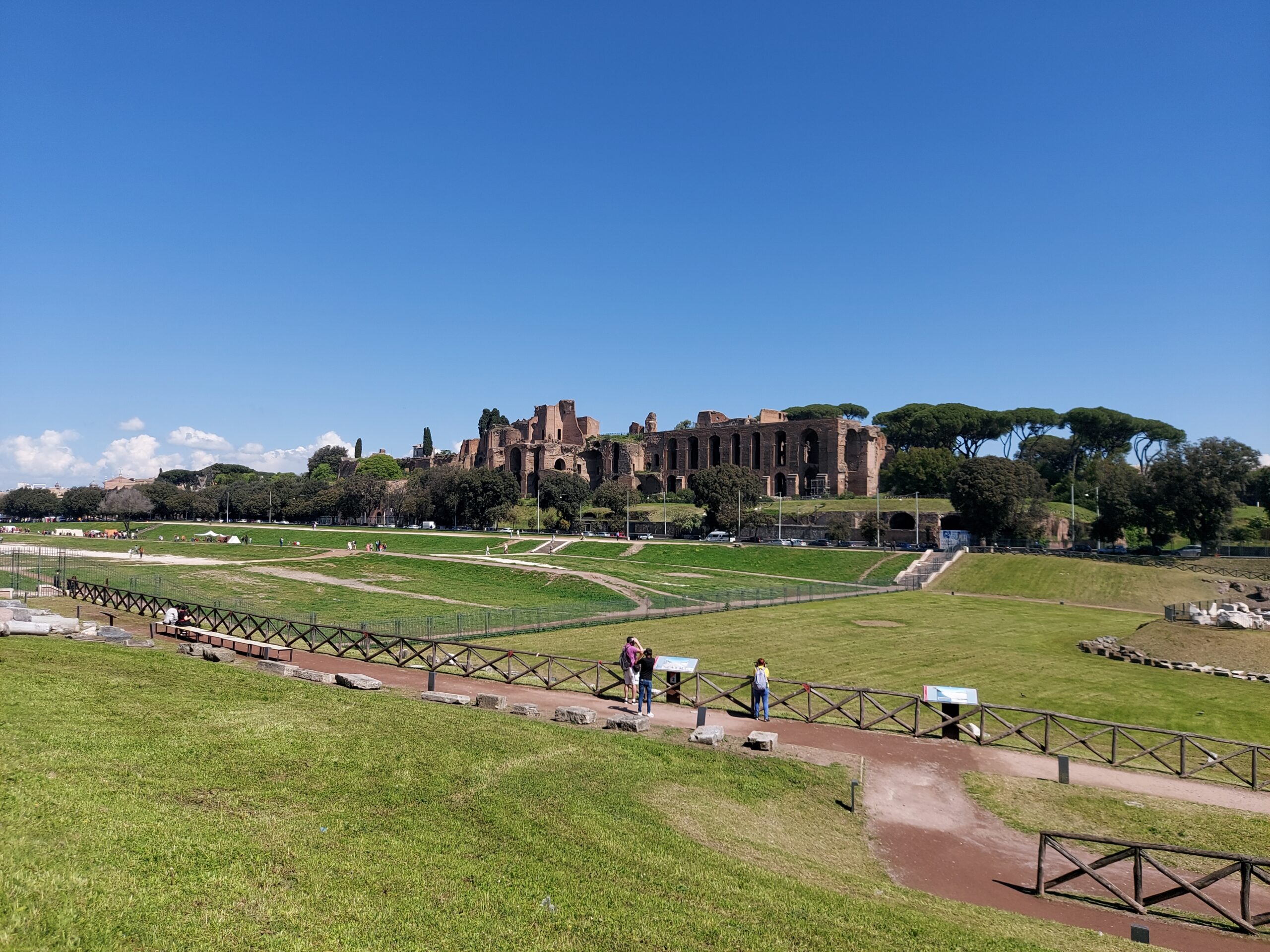
Rome’s Circus Maximus, with Palatine Hill ruins in the background
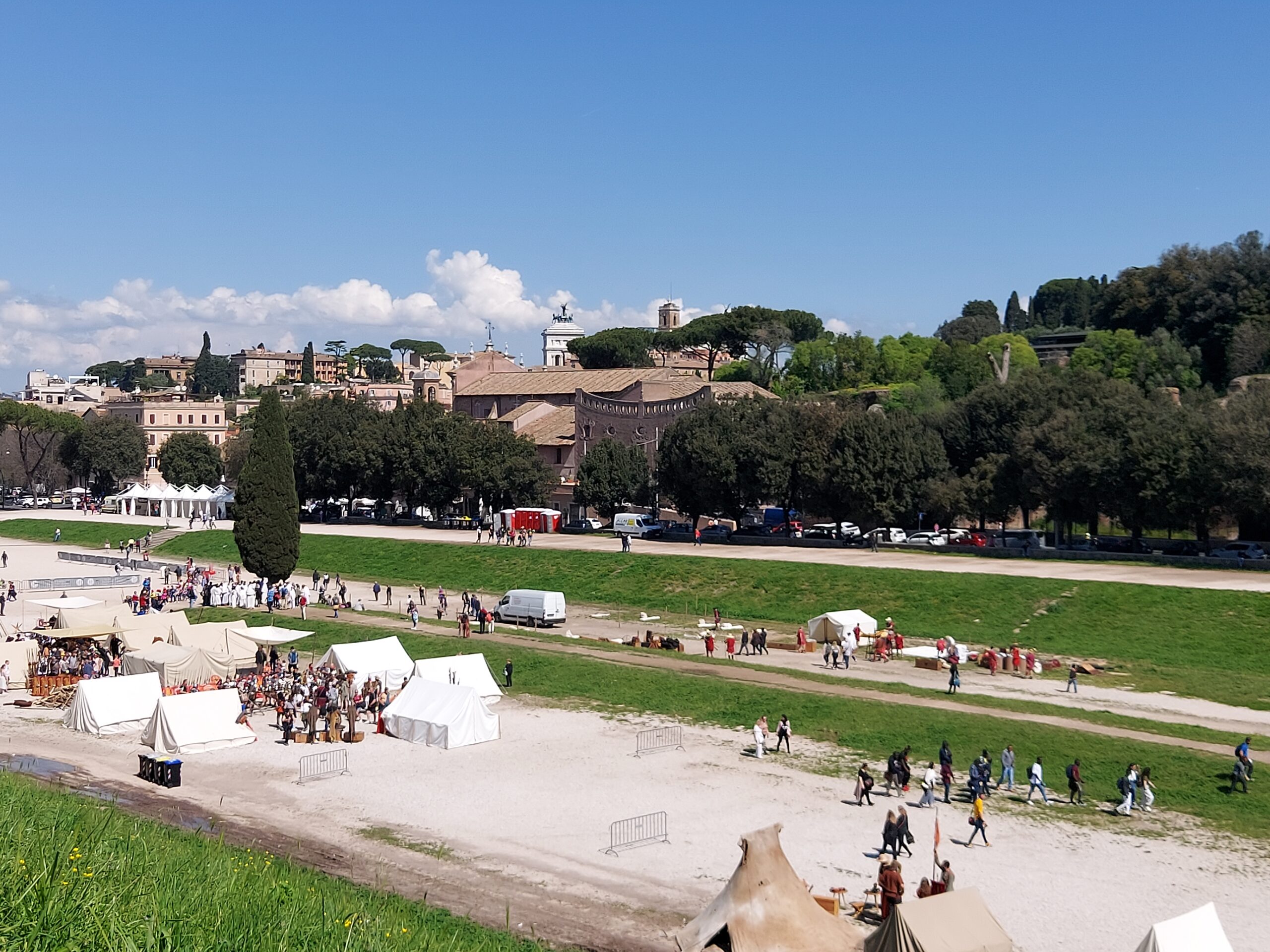
Today we had plans to meet up with our relative, Catherine, who lives just outside Rome. We took the Metro to the Circo Massimo stop. Walking past the Circus Maximus, an ancient Roman chariot-racing stadium and entertainment venue, it looked like there was some kind of reenactment festival going on, as there were tents, stalls, and lots of people wearing togas.
Roman re-enactors at the Circus Maximus
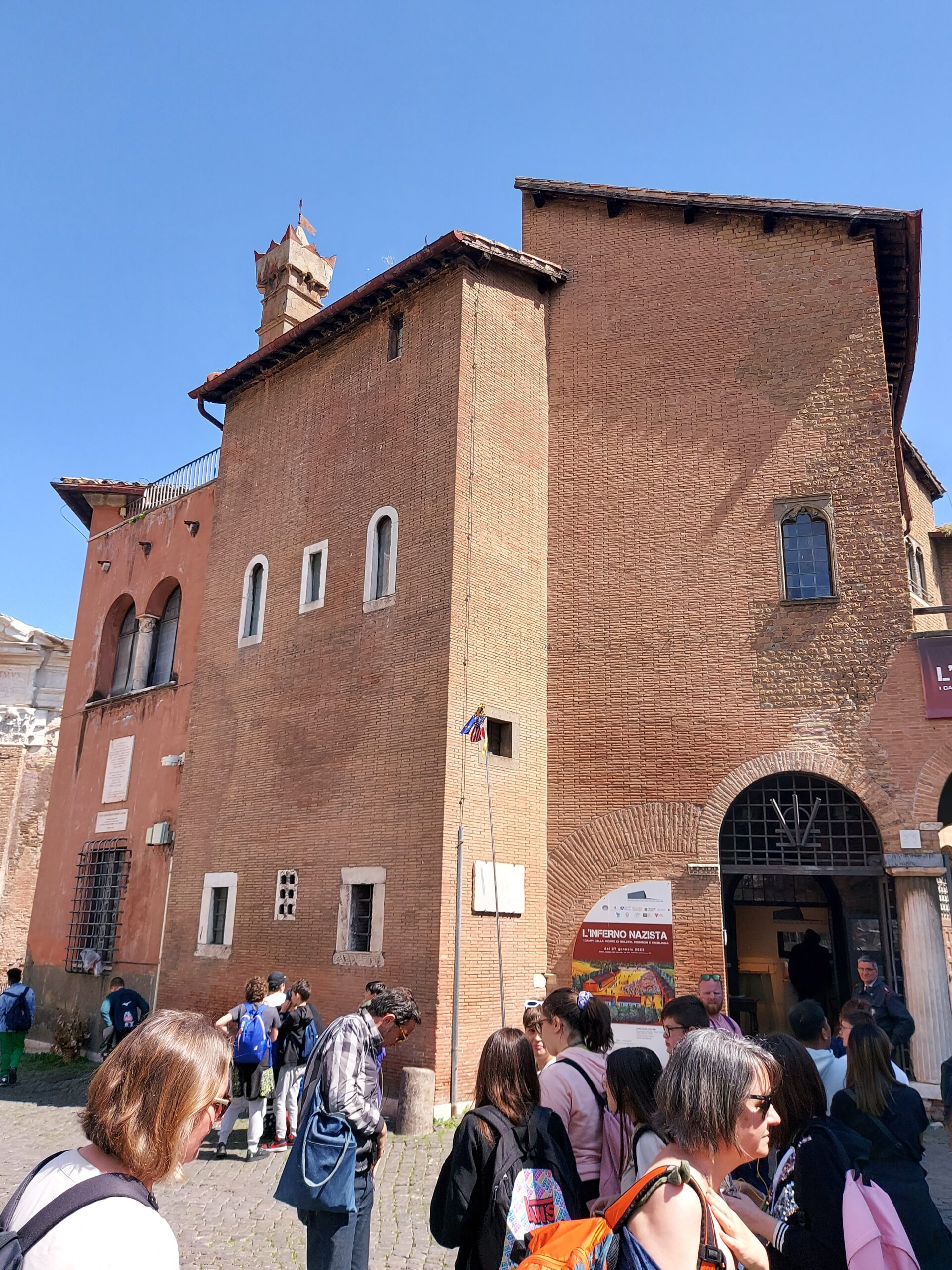
Making our way to the Jewish Quarter, we paid a vist to ‘The Nazi Inferno’, an exhibition at the Casina dei Vallati telling the story of the Holocaust from a Roman point of view.
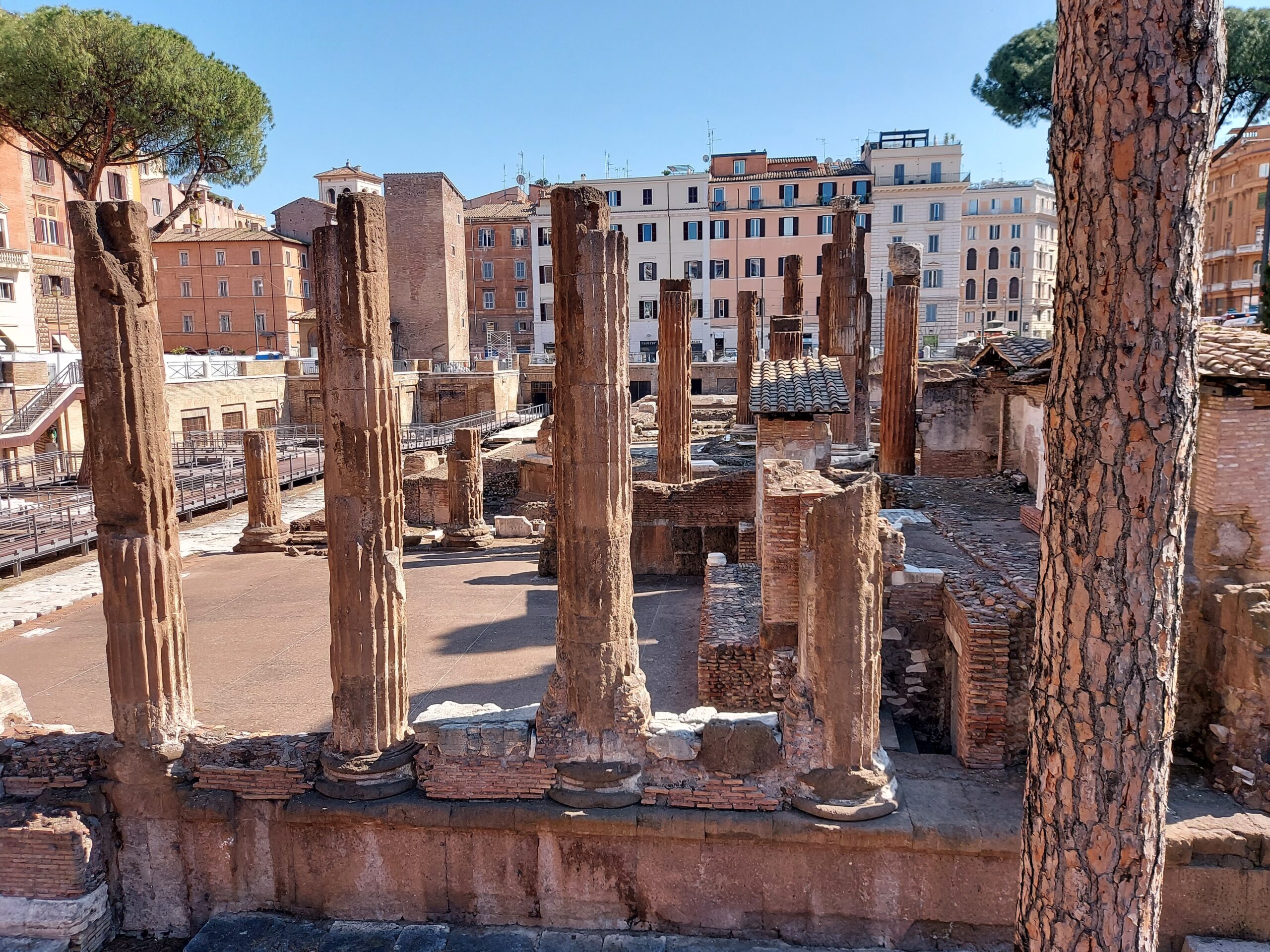
We had lunch in a restaurant called Il Giardino Romano. We had fried artichokes and they were absolutely delicious. Afterwards we walked around Rome towards the Pantheon. On the way, we passed the spot where Julius Caesar was assassinated – Largo di Torre Argentina, home to four ancient temples and the Curia di Pompeo, as well as numerous stray cats.
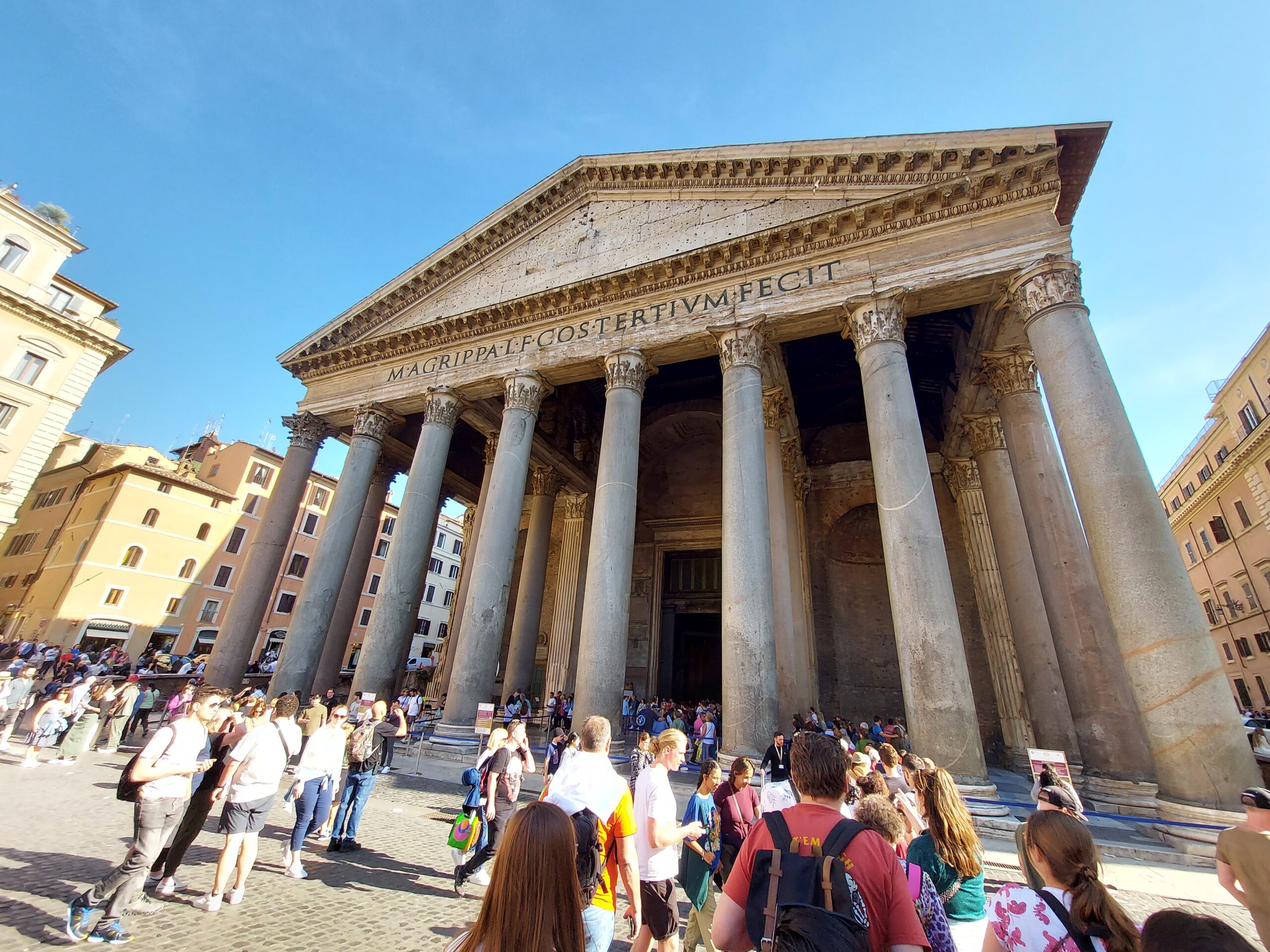
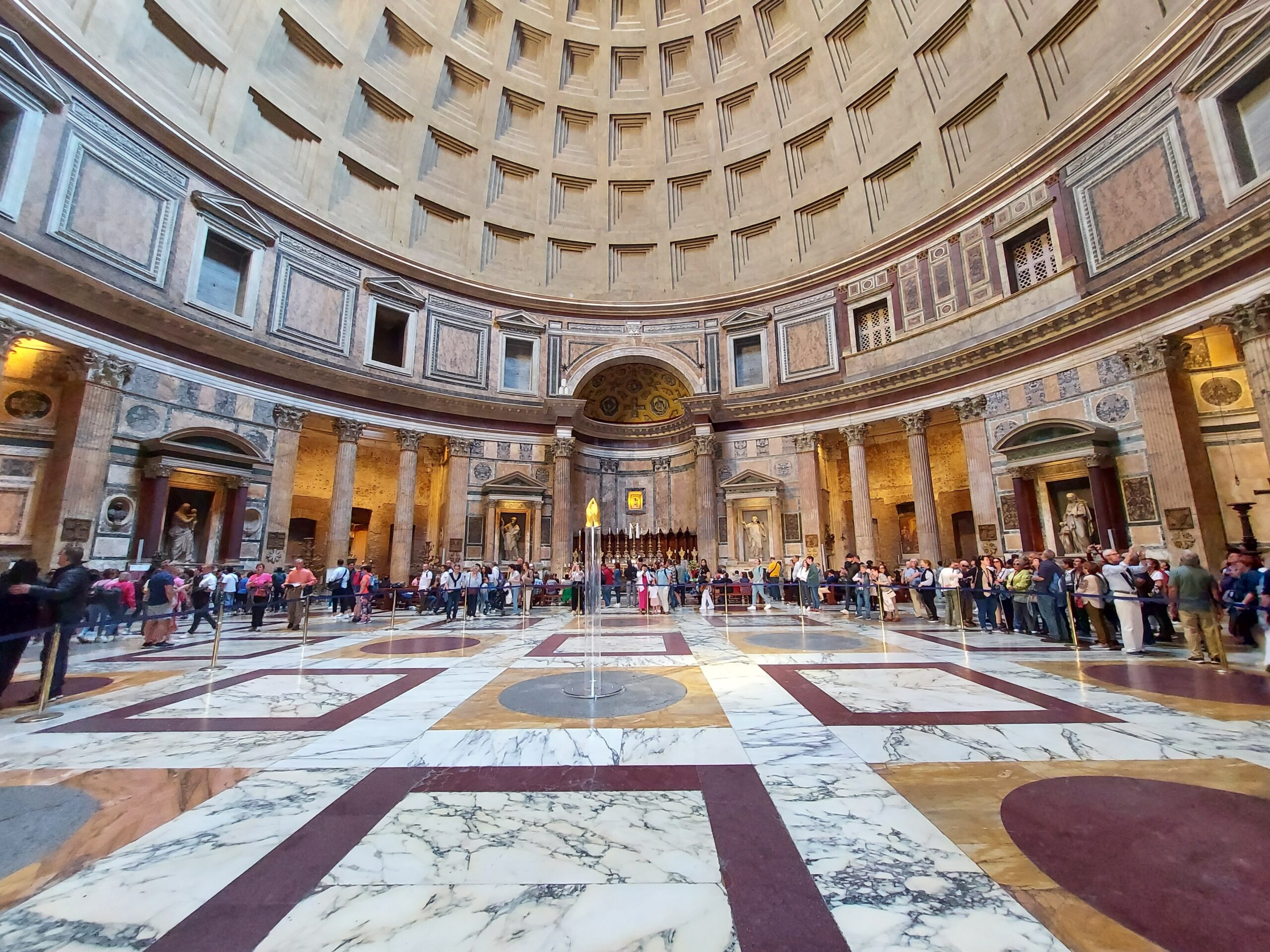
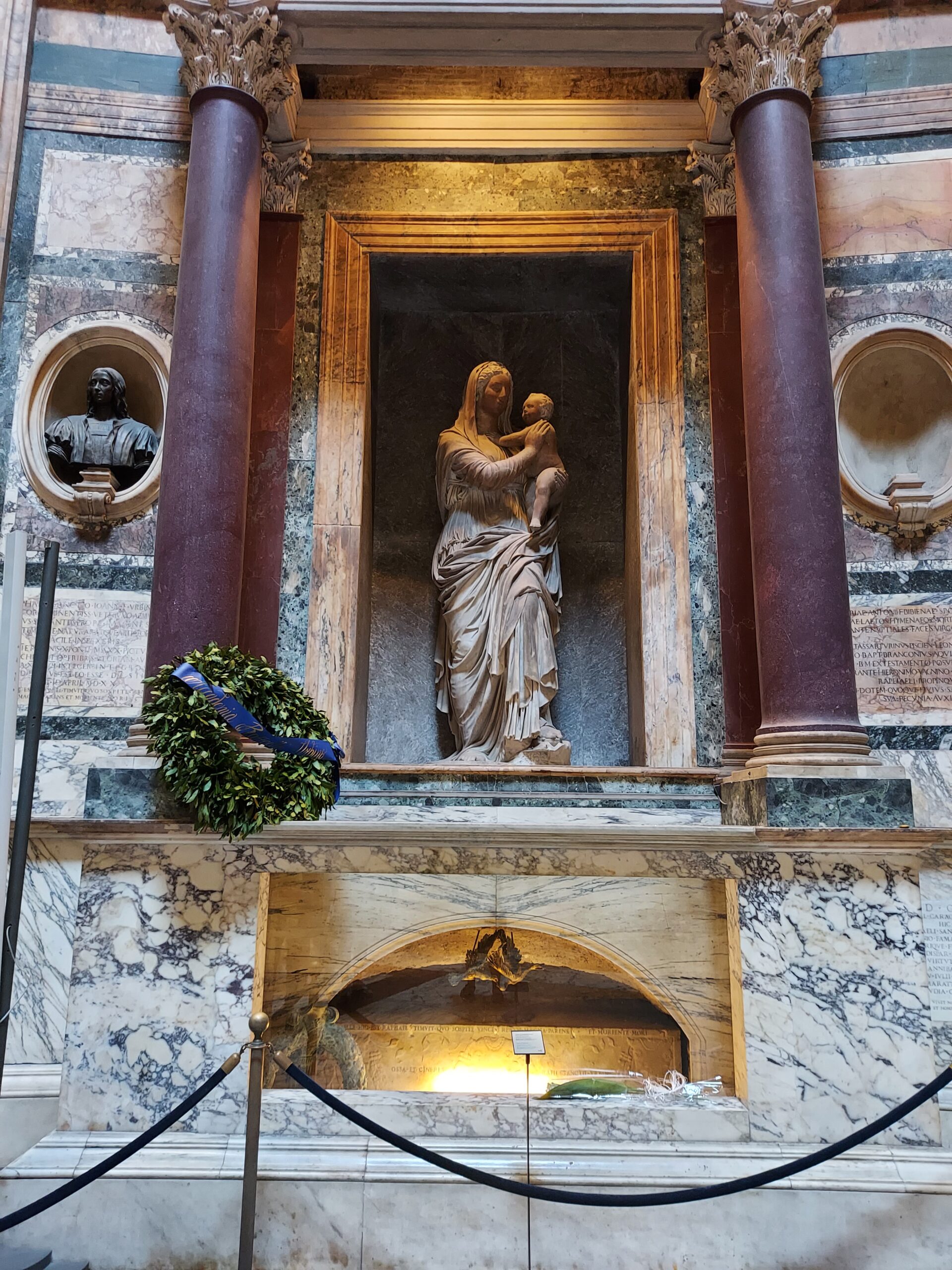
The Pantheon was majestic and free to visit. Originally built by Agrippa between 25 and 27 BC, it was a temple dedicated to the twelve Gods. Reconstructed by Hadrian between 118 and 125 AD, it has remained largely intact ever since. In 608, Pope Boniface IV had the remains of many Christian martyrs removed from the catacombs and buried in the Pantheon, at which point the temple was consecrated to Christianity and named Saint Maria ad Martyres. It is the burial place of Raphael, as well as two Italian kings and a queen: Vittorio Emanuele II, Umberto I and Margherita of Savoy. The dome is open to the elements at the very top, which has helped it to remain whole throughout the centuries. When it rains, the rain comes in to the centre of the building!
Raphael’s tomb
After visiting we stopped for a well-earned ice cream and a coffee. Catherine’s ex-husband came to pick her up on his scooter which we thought was so perfectly Roman!
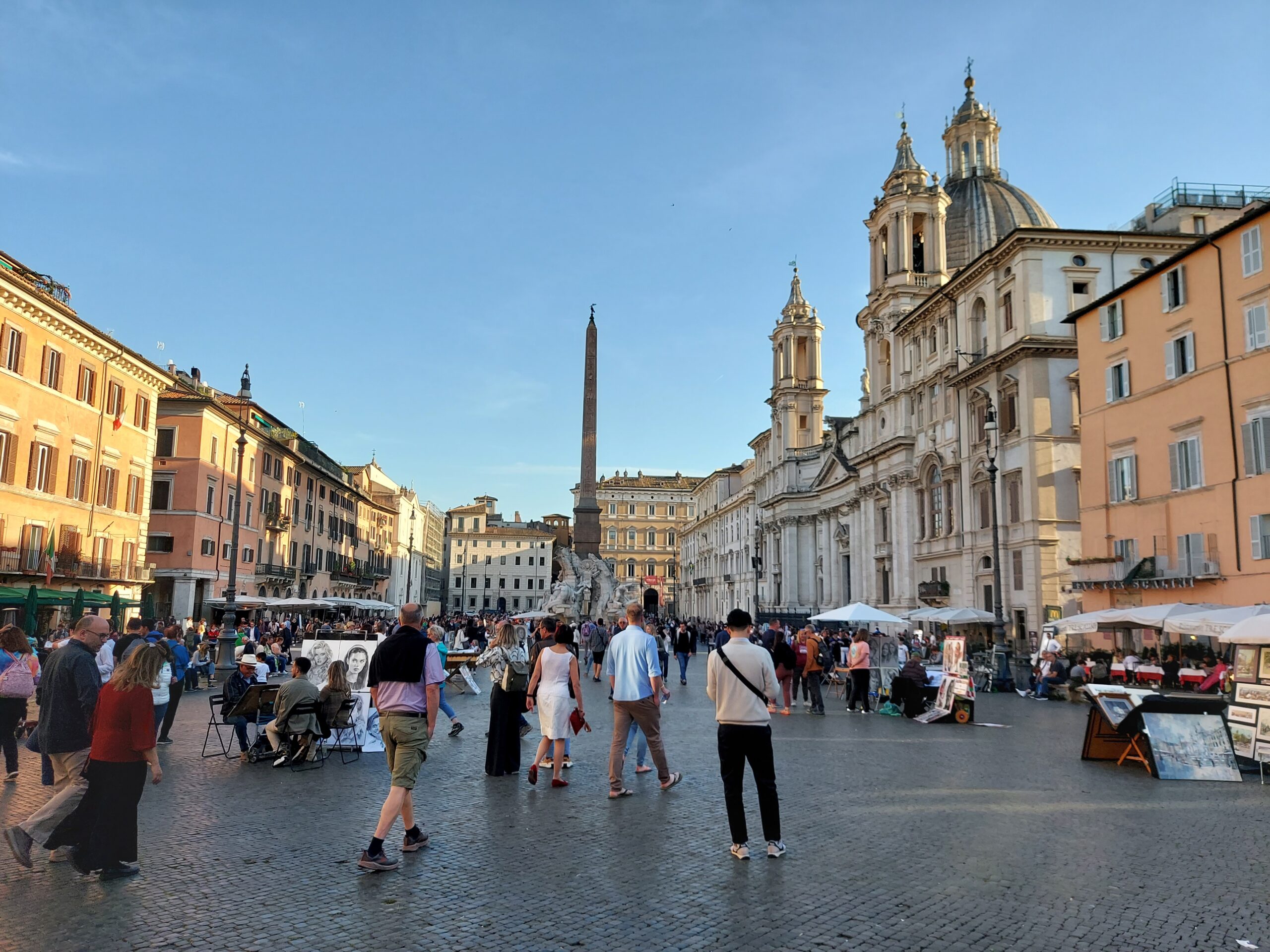
Piazza Navona
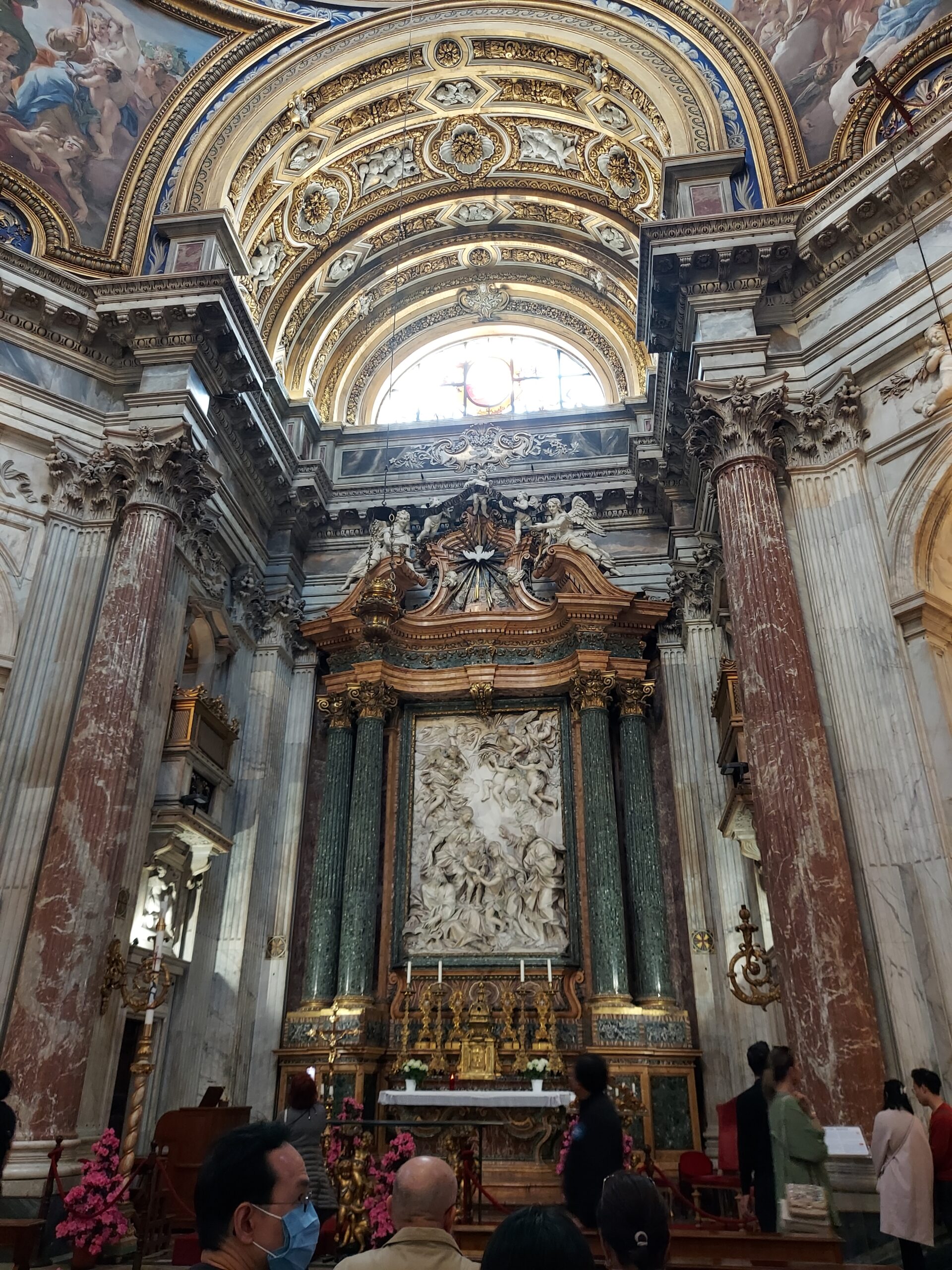
By this point we were fairly close to the famous Piazza Navona, so we went there to have a look around. Built on the site of the first-century Stadium of Domitian, it is home to Bernini’s Fountain Of Four Rivers, which stands in front of the Church of Sant’Agnese in Agone, which we also popped into.
Church of Sant’Agnese in Agone
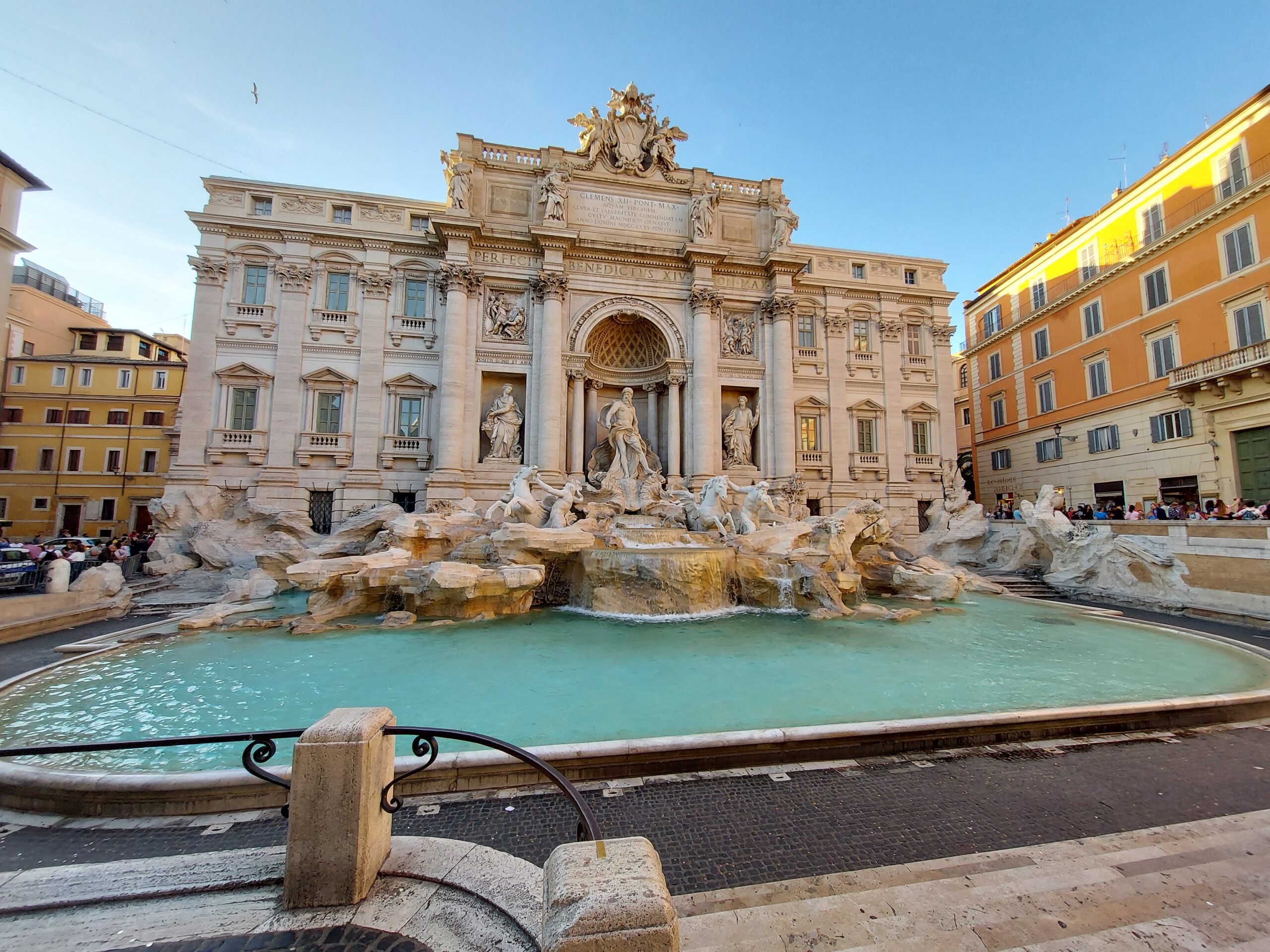
More walking followed, and we headed past the Trevi Fountain, which was hugely busy. This Rococo fountain was designed by Nicola Salvi and completed in 1762. I made sure to toss a coin into the fountain to ensure I return to Rome someday!
The Trevi Fountain
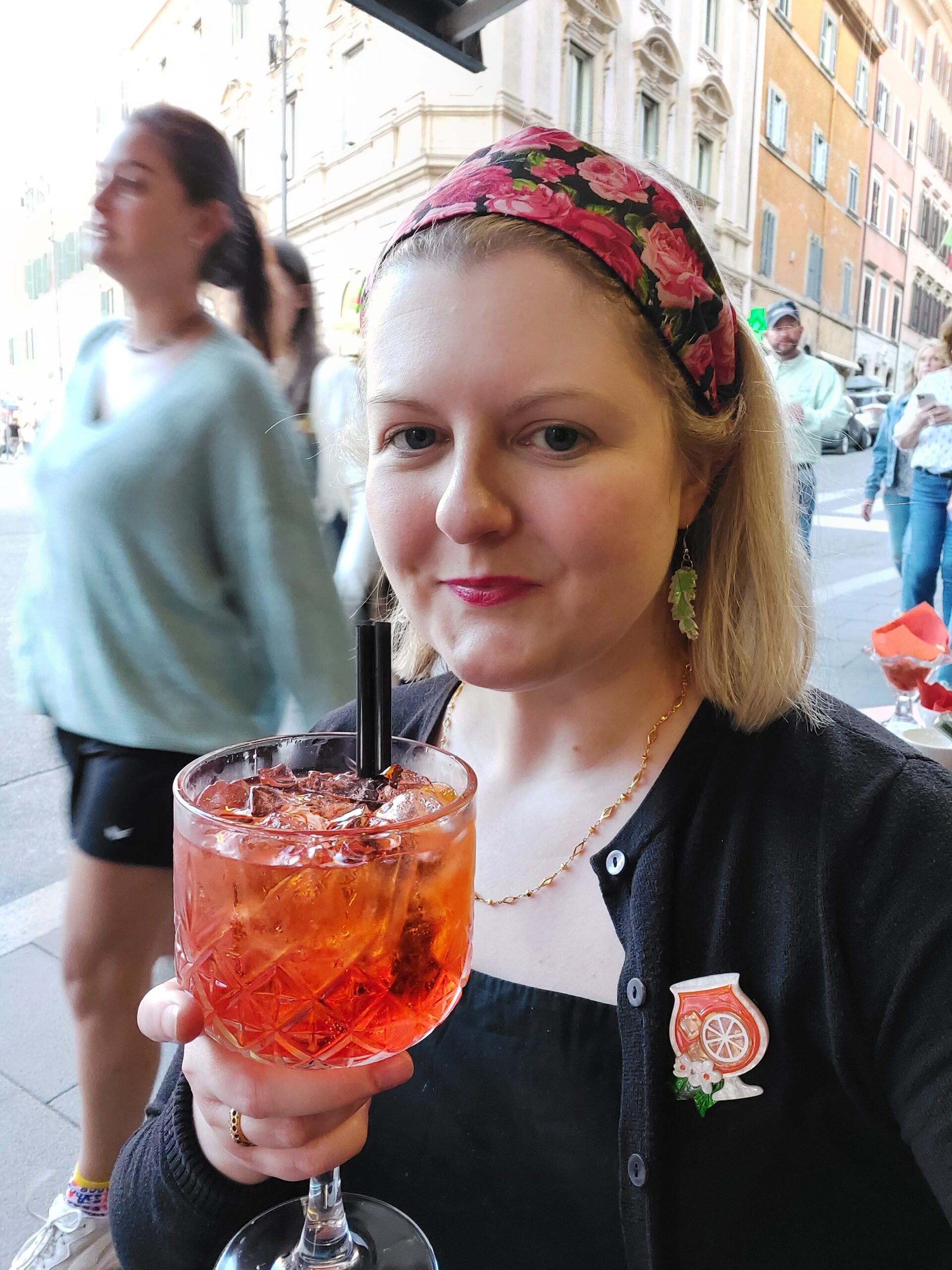
While here, we popped into another church: Santi Vincenzo e Anastasio a Fontana di Trevi. Afterwards, we walked up to the Piazza Barberini and had an Aperol Spritz in Pepy’s Bar.
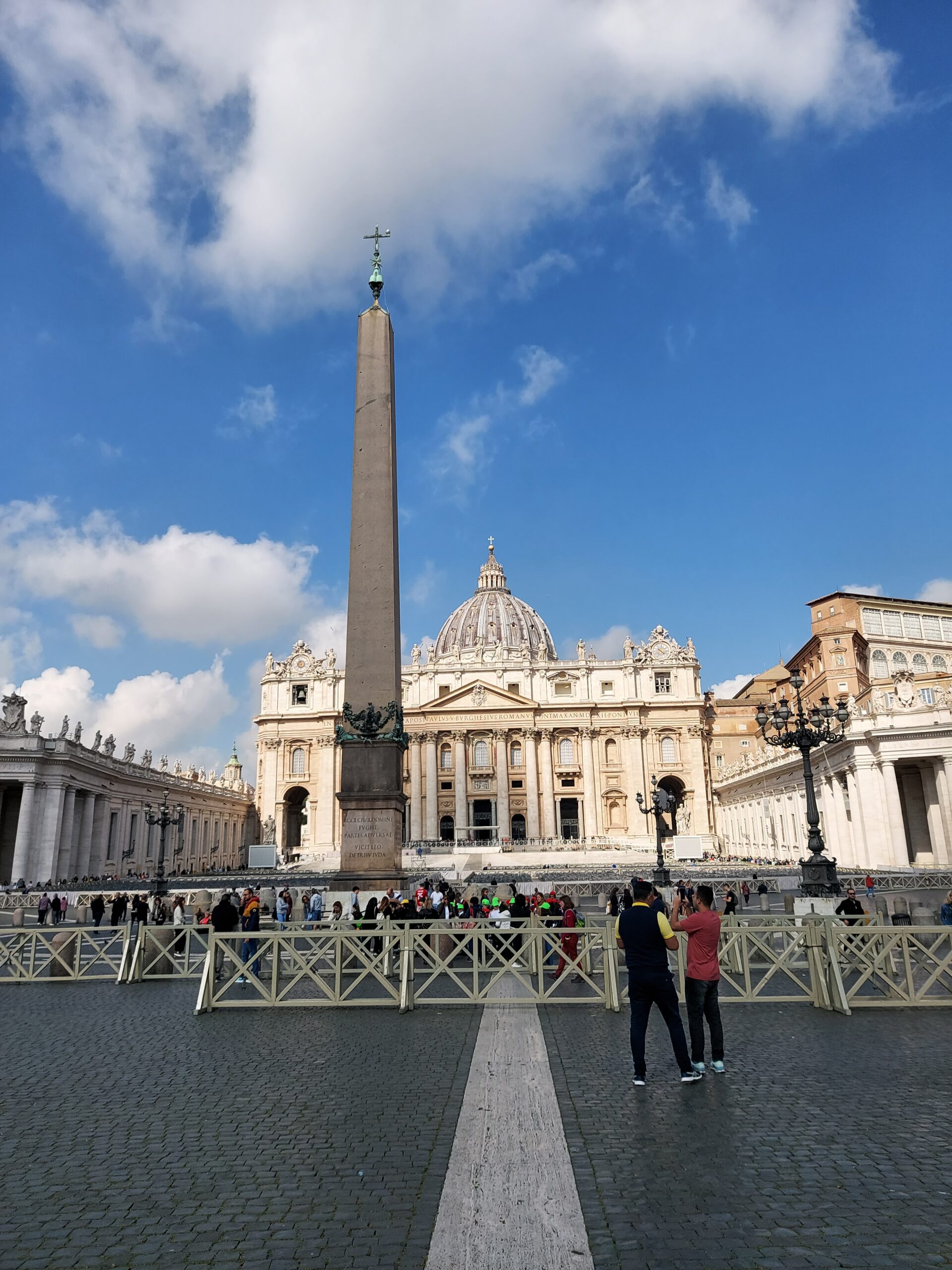
For our first full day in Rome I’d planned for us to visit the Vatican. I’d booked us a guided tour as it was the only way to get a ticket to visit the museums (I totally didn’t appreciate how far in advance you need to book stuff), and we ended up missing the tour as the queue to get in to St Peter’s Basilica was massive. Still, our time wasn’t completely wasted as we got chatting to different people in the queue, including some from South America.
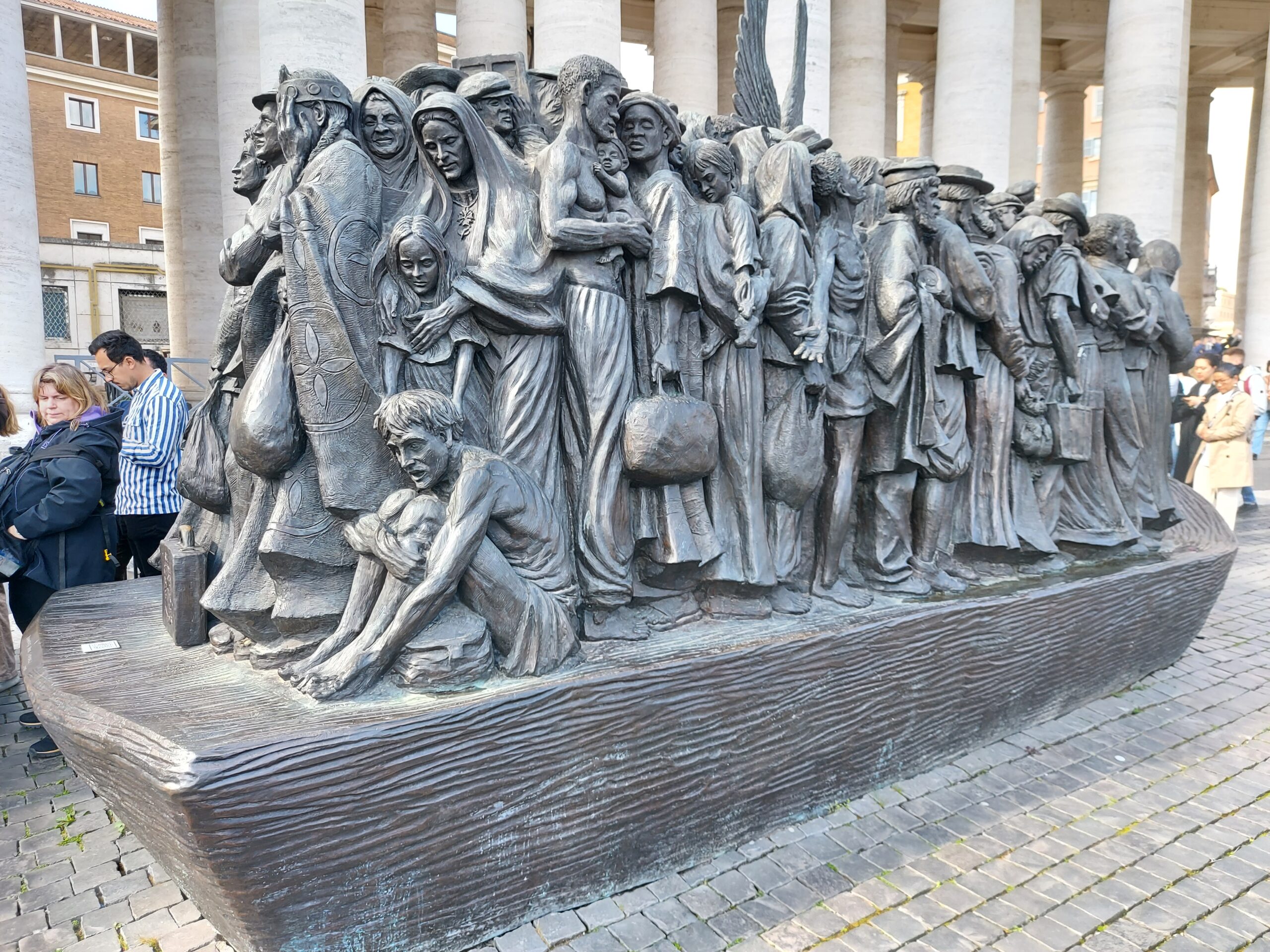
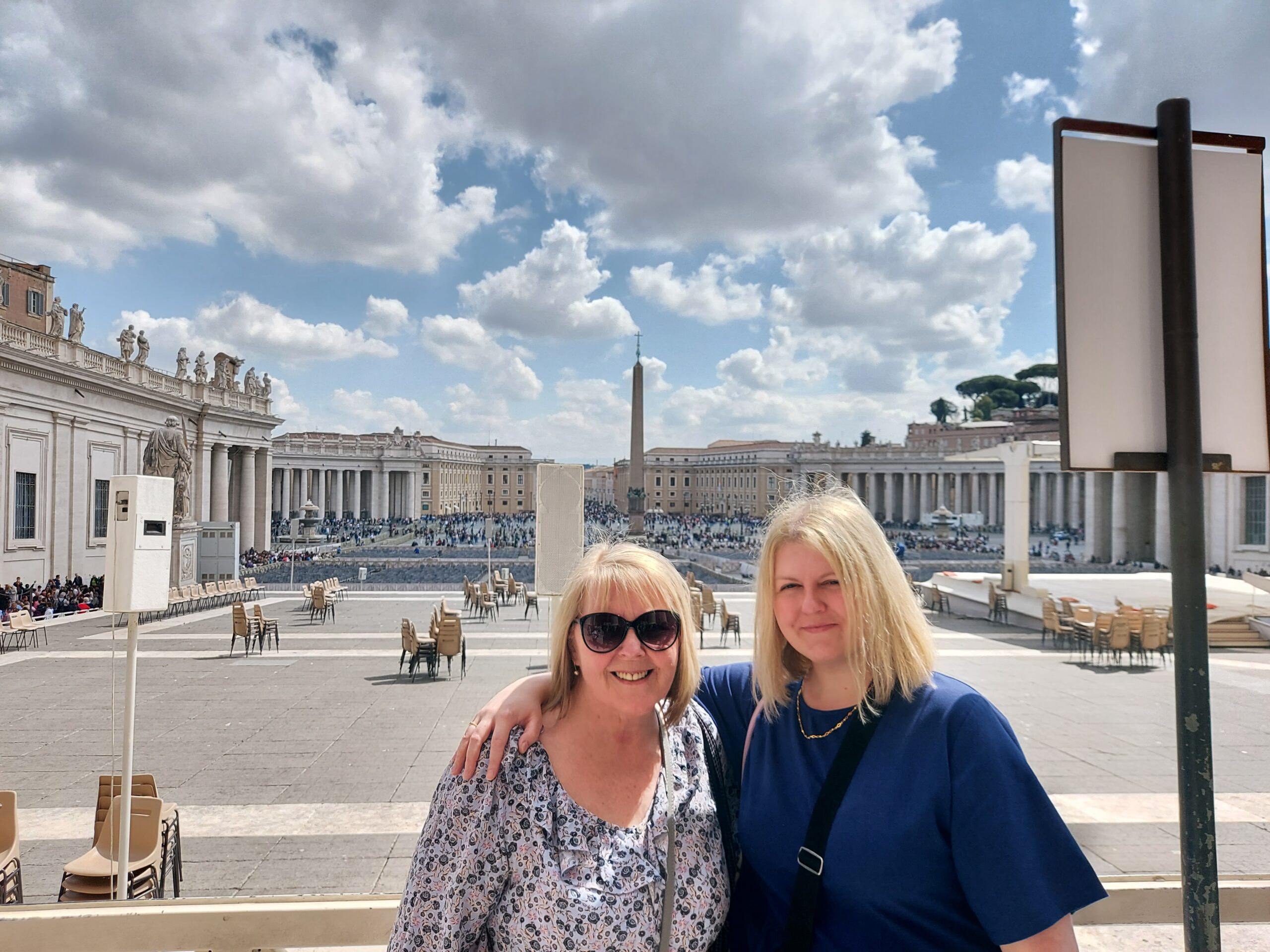
“Angels Unaware” statue by Canadian artist Timothy P. Schmalz, dedicated to migrants and refugeesMe and Mam outside the Basilica
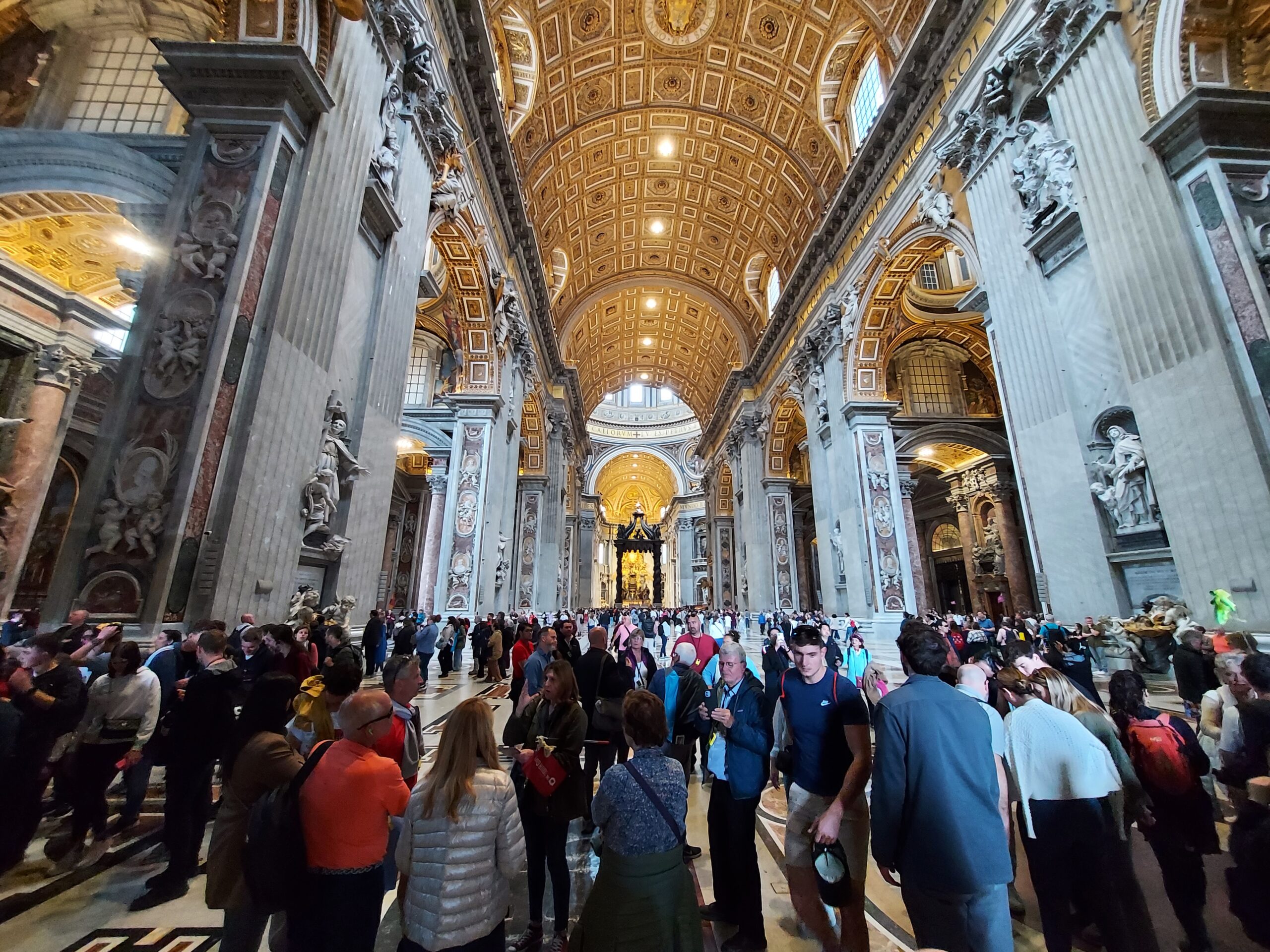
Once inside, it was absolutely beautiful and worth the wait. Particular highlights were:
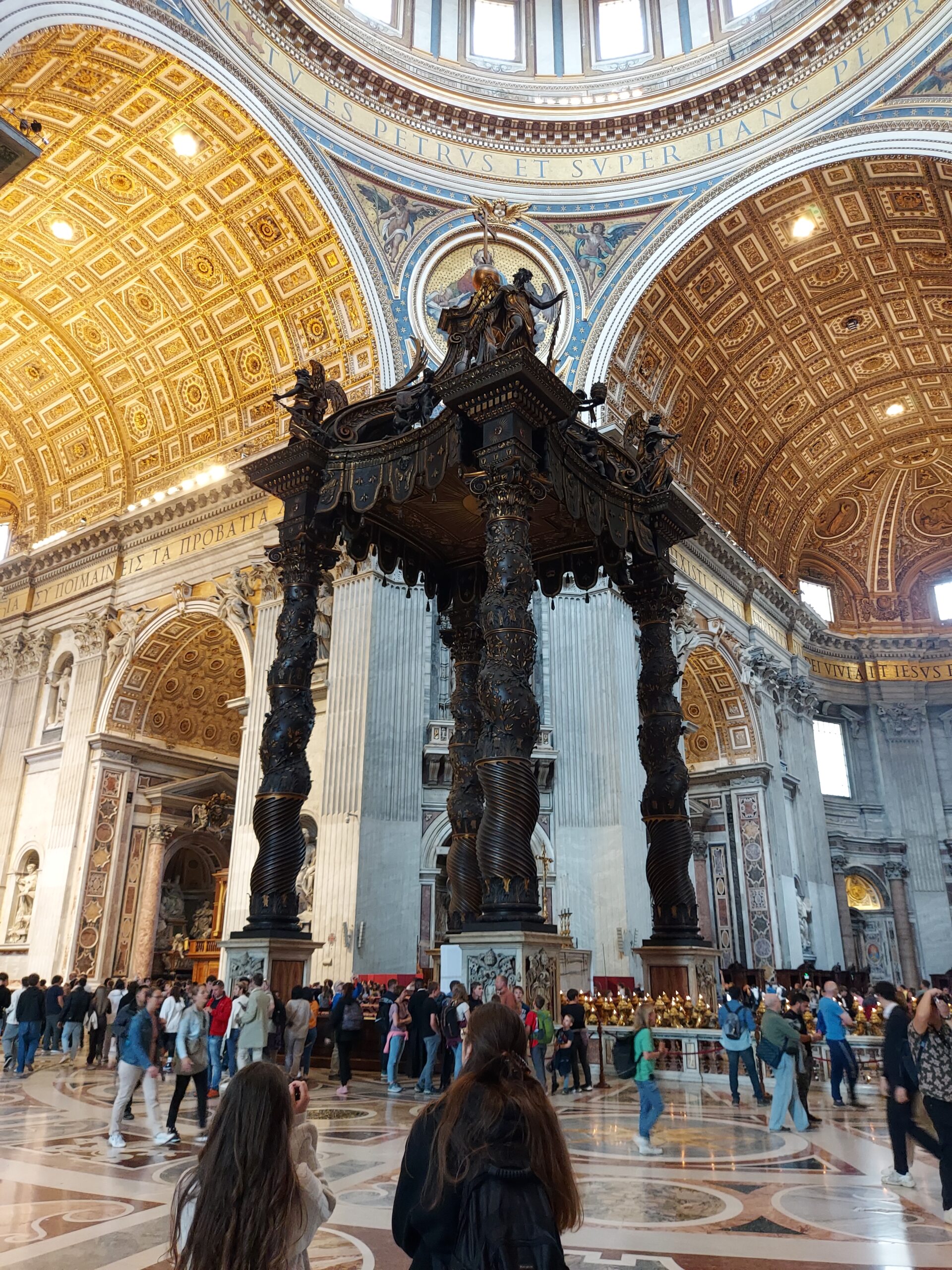
Bernini’s baldachin. My special subject during my History degree was Renaissance Rome and I remember looking at this as an example of Baroque architecture. This bronze canopy was begun in 1623 and work was completed in 1634.
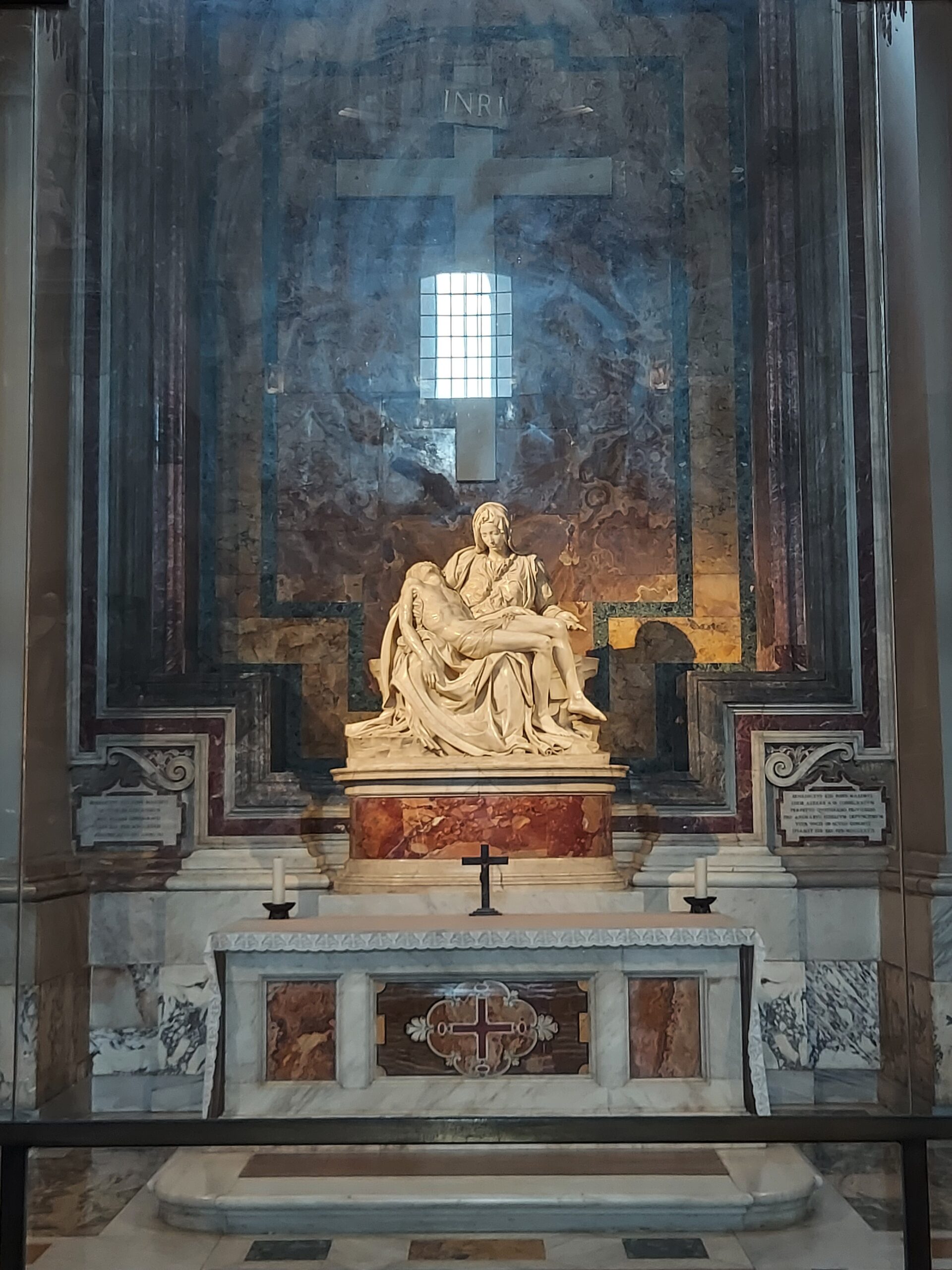
Michaelangelo’s Pietà. This beautiful statue is behind glass after an attack in 1971, but it’s still possible to appreciate the beauty of the sculpture.
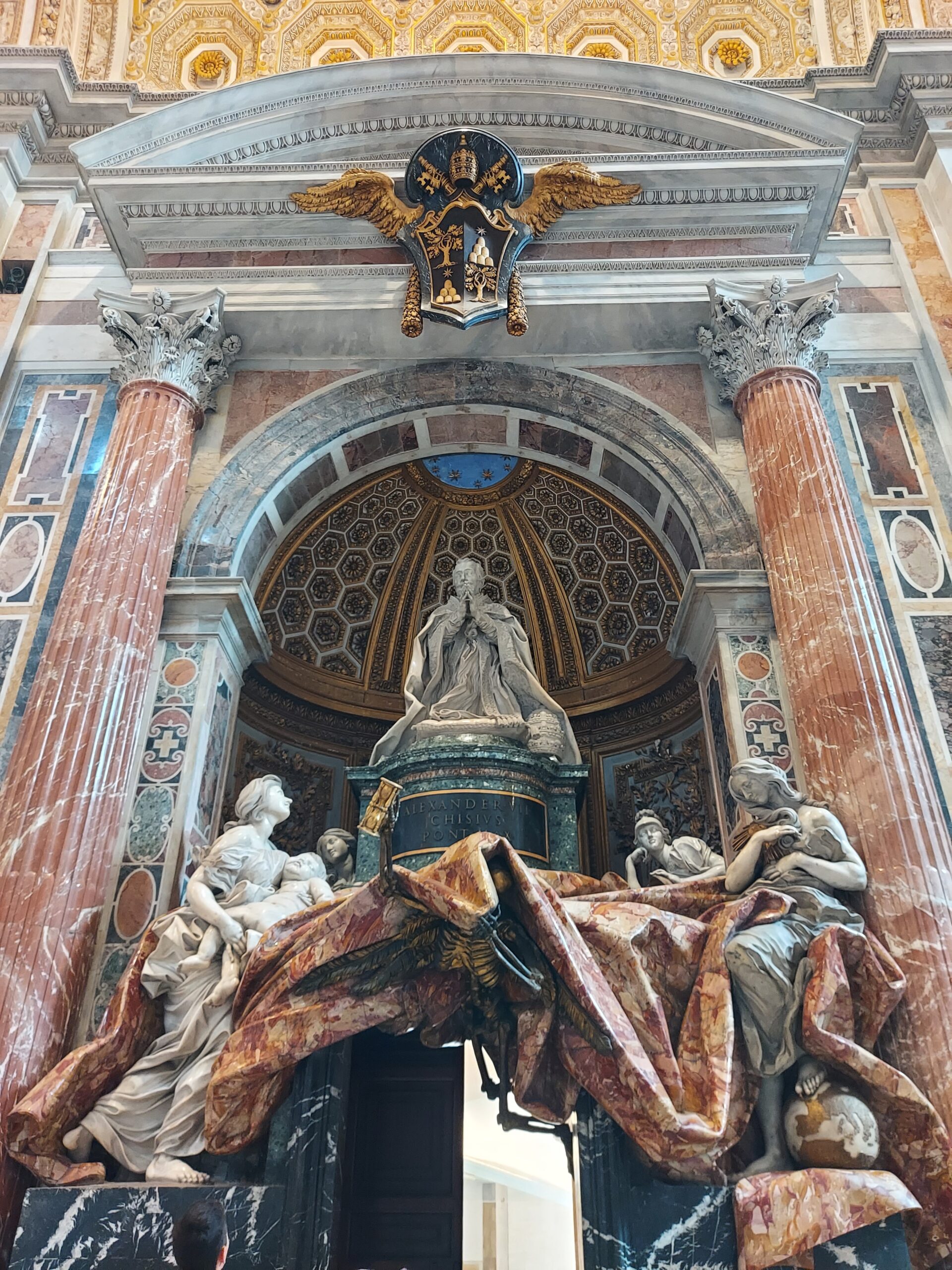
The tomb of Fabio Chigi, Pope Alexander VII, by Bernini. I absolutely adored this stunning design, which features the skeletal figure of Death, holding an hourglass. The draped ‘shroud’ is made of marble but looks like fabric.
The whole place was just awe-inspiring.
We did think about the contrast between the beautiful, expensive decoration and the poverty experienced by many Christians, both at the time and now.
After a quick lunch, we headed to the Vatican Museums. Luckily, we had a timed ticket booked so were able to bypass the queues. The museums are huge and we didn’t have time to see everything, but we did manage to see several highlights:
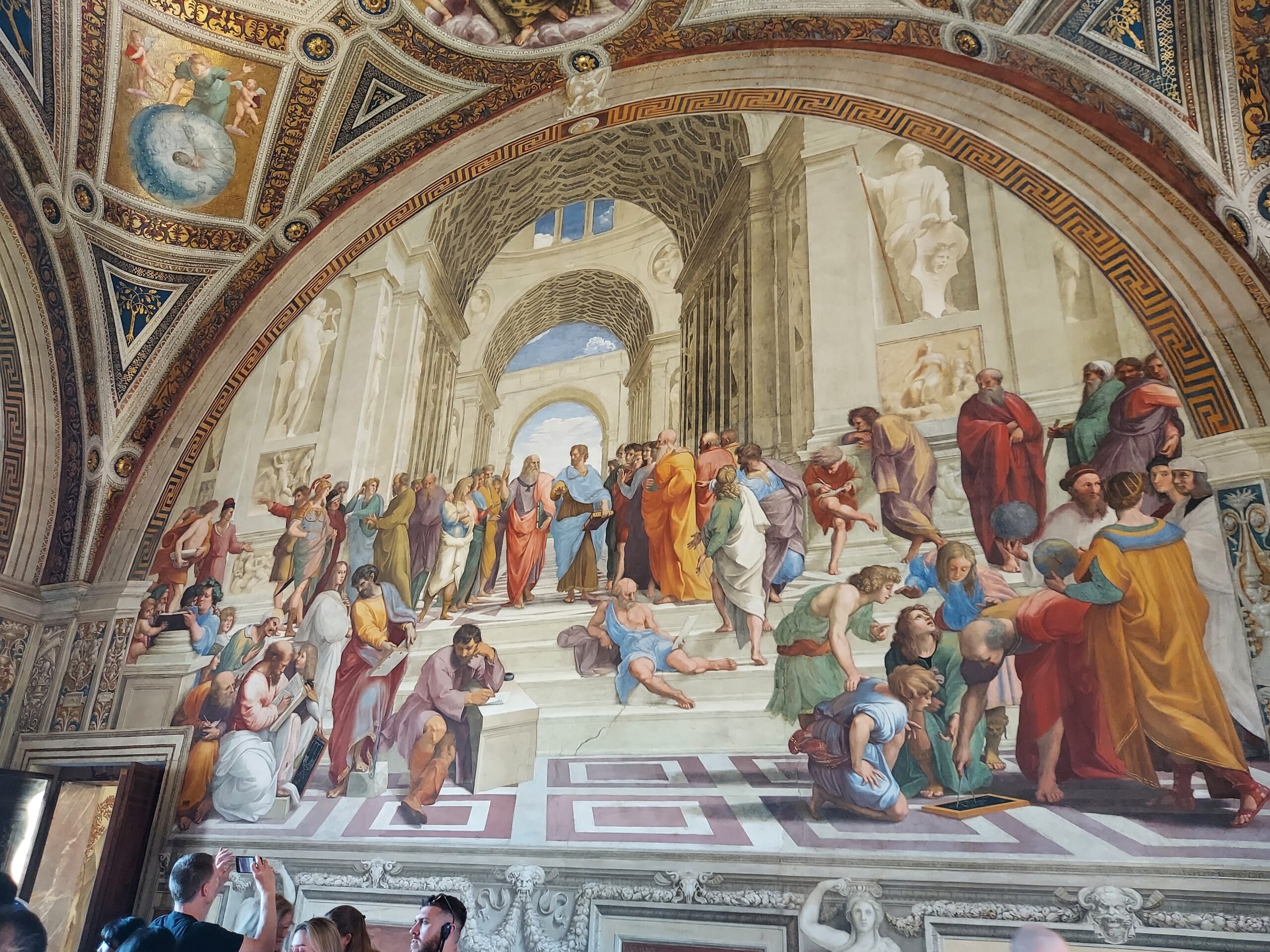
The Raphael Rooms. These were full of frescoes by Michaelangelo and Raphael. I was particularly pleased to see Raphael’s The School of Athens, which centres the philosophers Plato and Aristotle, as I’d seen a reproduction in the Raphael exhibition in London last year.
The School of Athens, Raphael
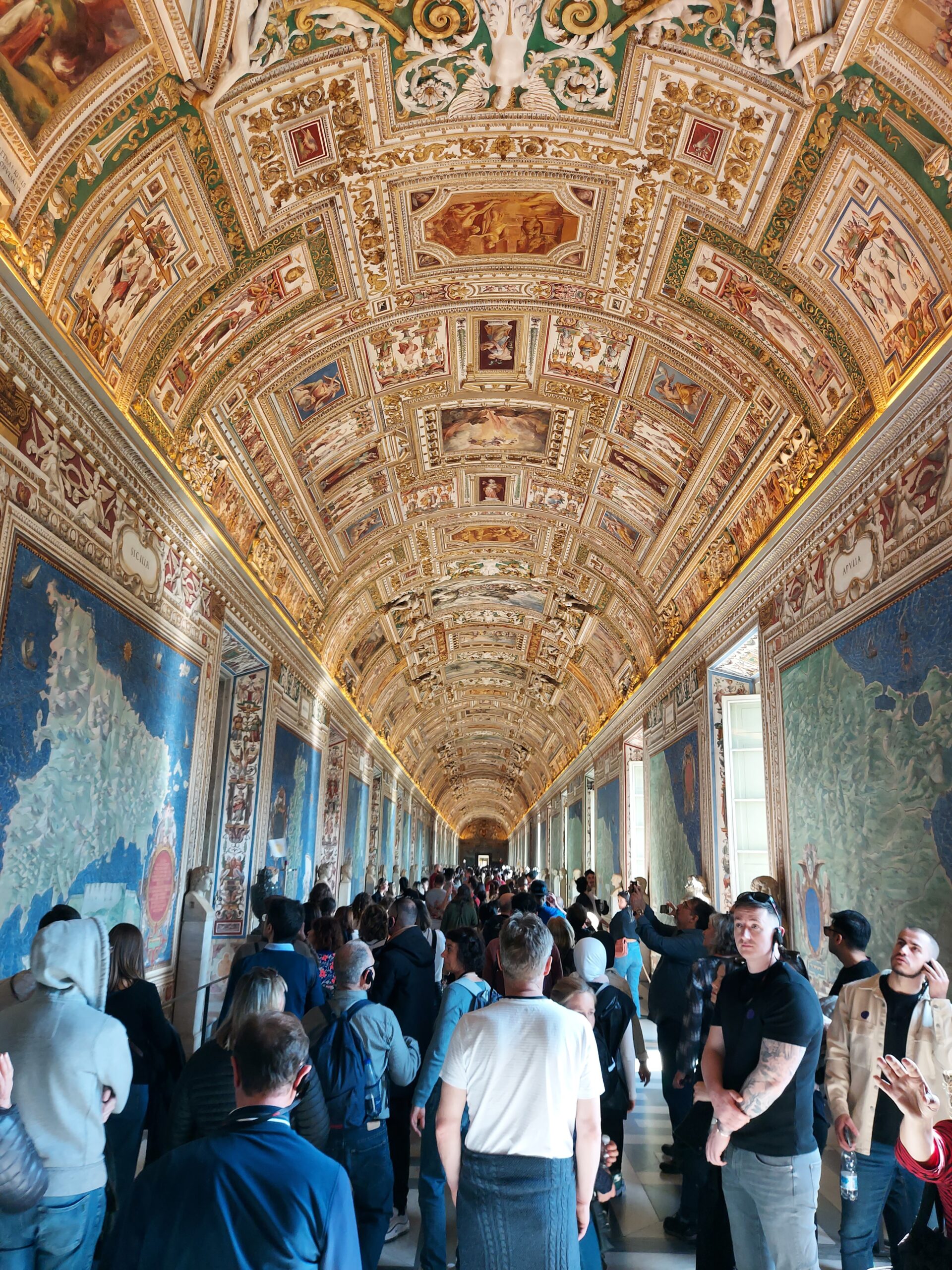
Gallery of Maps. As the name suggests, this was a very long gallery full of maps. It was very crowded, but the maps were fascinating to look at.
The Gallery of Maps
Sala Rotonda. This impressive round room was filled with statues and the floor was decorated with mosaics.
Sala Rotonda
Gregorian Egyptian Museum. As the name suggests, this museum had plenty of ancient Egyptian artefacts, including a reconstruction of an Egyptian-themed space inside Hadrian’s Villa.
Gregorian Etruscan Museum. This museum focused on the Etruscan civilisation, which inhabited Italy before the Romans. The monuments and sarcophagi were particularly interesting.
Etruscan sarcophagus
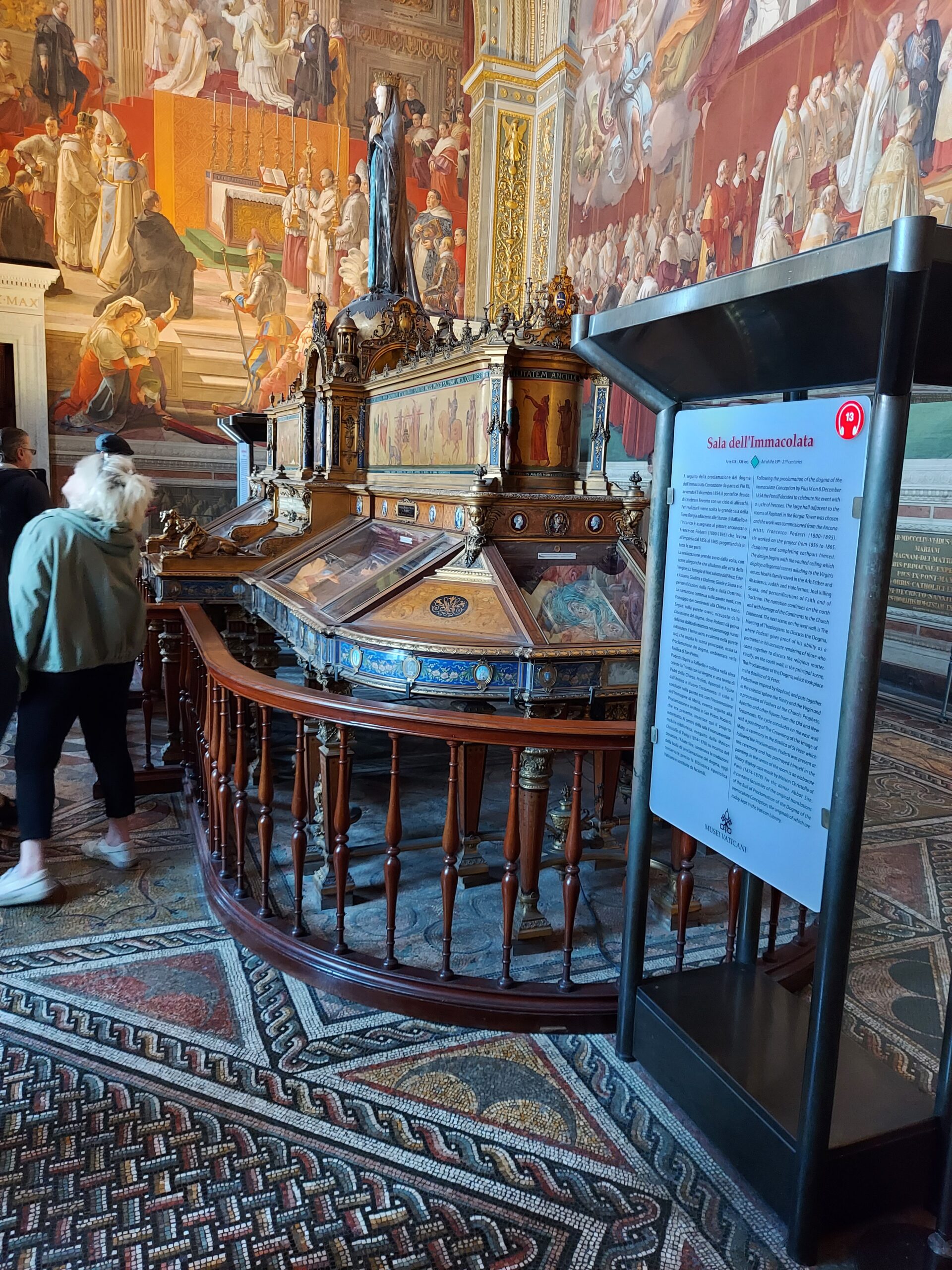
Sala dell’Immacolata. This room was decorated with frescoes by Francis Podesti (1800-1895).
Sala dell’Immacolata
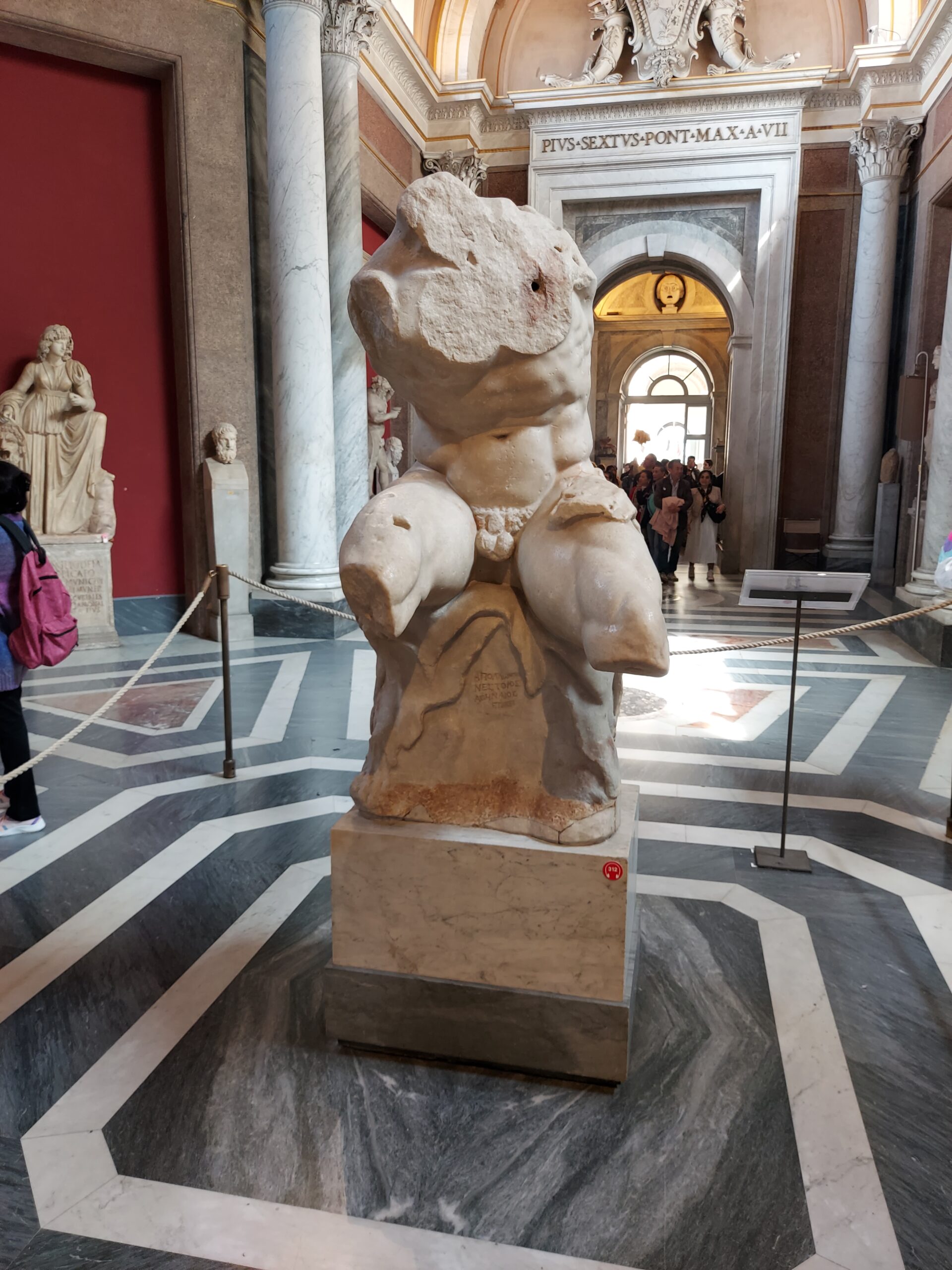
Pio Clementino Museum and Sala delle Muse. This museum has a large collection of classical statues, including a room full of animals. The Hall of the Muses houses the famous Belvedere Torso, a fragment of a statue of an unknown figure found in Rome at the end of the 15th century.
The Belvedere Torso
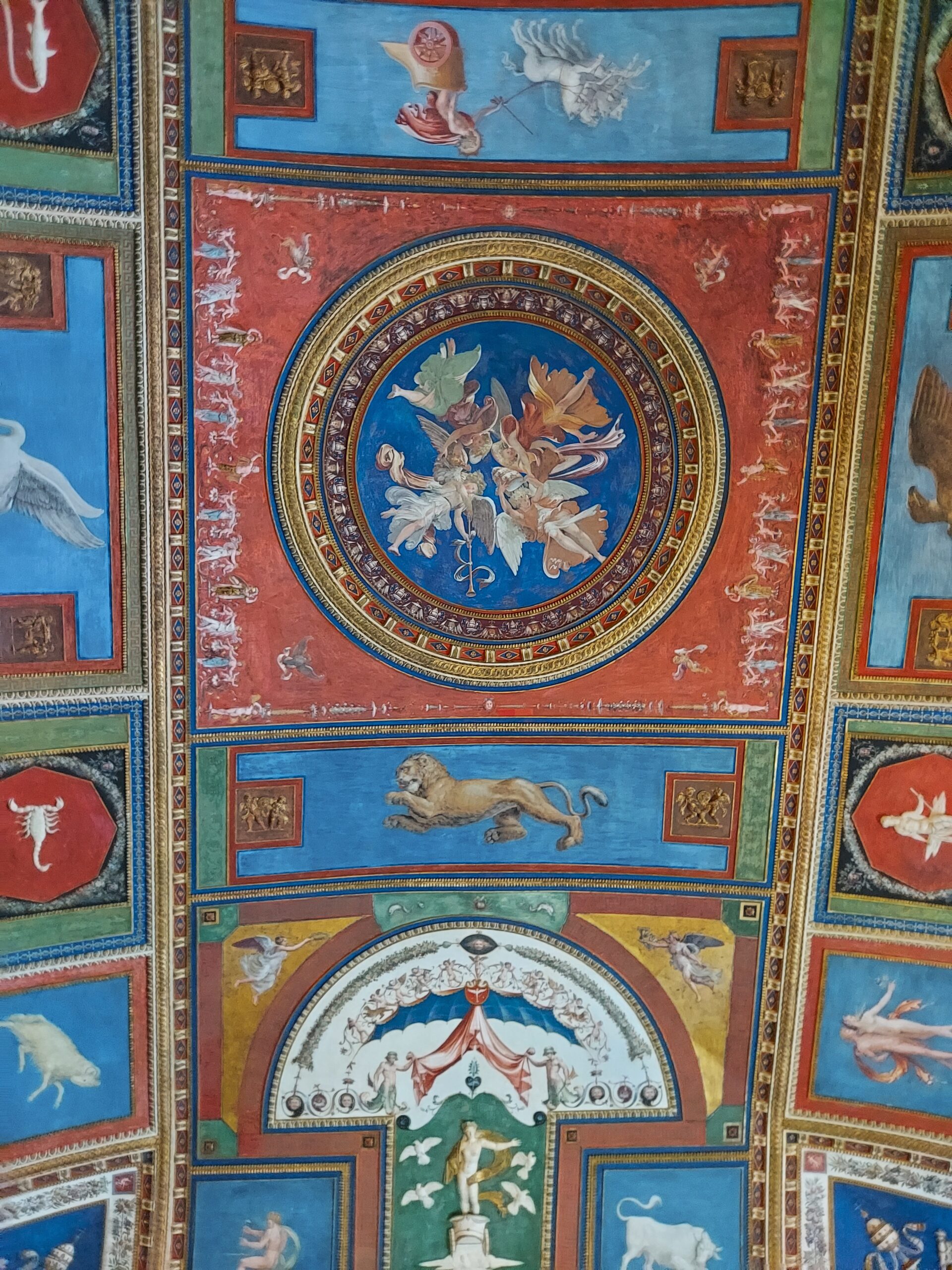
Appartamento Borgia. The Borgia Apartment was home to Rodrigo de Borja y Doms, Pope Alexander VI, in the late fifteenth century. Its rooms are richly decorated with paintings and frescoes.
Ceiling in The Room of Pontiffs
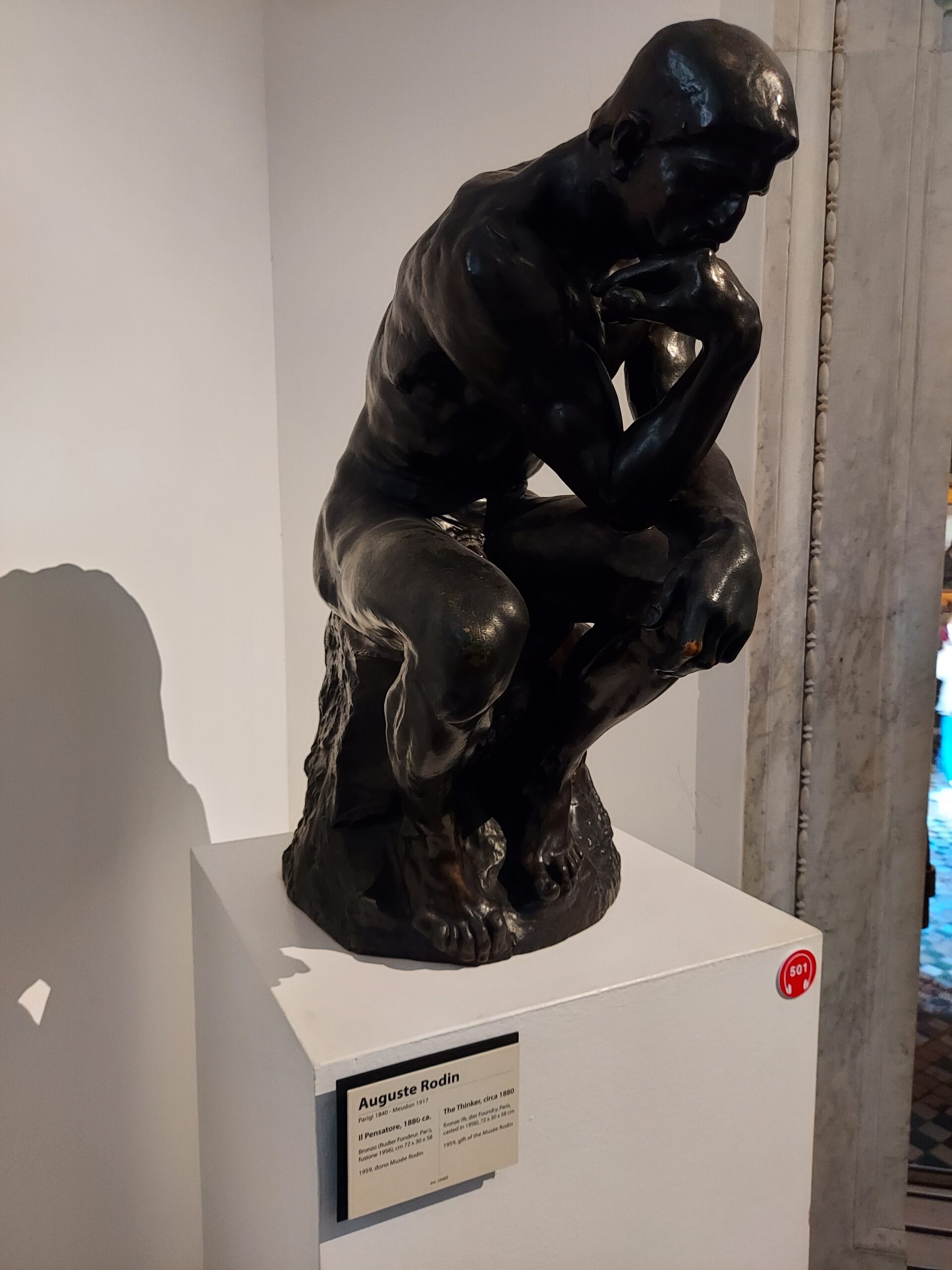
This section is also home to some superb examples of modern art, including Rodin’s The Thinker.
Of course we saw the Sistine Chapel, featuring Michaelangelo’s famous ceiling and The Last Judgement, although the atmosphere was somewhat spoilt for us as the security guards continually shouting “silence” were much louder and more annoying than the visitors speaking in normal voices. Photos were not allowed in here, which is a shame, but also understandable.
After we left the museums we stopped at a nearby restaurant called Magazzino Scipioni. As we were exhausted by then, we headed back to the Metro and made our way back to the hotel.
I’ve wanted to go to Rome for years and years. This April my mam and I finally managed to visit. We had an absolutely amazing time but I think I exhausted my mam! We saw and did so much, but there is still so much to see, and I definitely want to go back.
We stayed in the Gatwick Central Travelodge overnight to make sure we got to the terminal in plenty of time. I feel like I’ve seen this Travelodge so much in recent months! It’s decent value and the airport shuttle stops outside so it is really handy.
The flight was straightforward and we arrived in Rome (the Leonardo da Vinci airport at Fiumicino) around lunchtime. We had a coach transfer booked and were dropped off at Termini station. From there we took a taxi to our hotel – the Best Western Hotel Globus. It was a little out of the centre, but our holiday was frankly a bargain and it was worth it! It was near the university and close to the Policlinico Metro station so it was fine.
We didn’t do much that day as we were pretty tired. We went for a little walk and found a nice place to eat: Ristorante & Pizzeria La Scaletta. Here we had cacio e pepe for the first time, which was frankly incredible. Then it was back to the hotel for an early night.