

I visited Wimbledon Windmill when I came across it as part of my Capital Ring walk. It’s somewhere I’ve planned to go for a while, so I was glad to get the chance.
History
The windmill dates from a time when Wimbledon was much more rural than it is now. In the eighteenth century, many water and steam powered corn mills already existed in Wandsworth, a large number of which were owned by John Watney, who applied to the Manor Court in 1799 for permission to erect a windmill on Wimbledon Common. However, Watney died soon after, and a new application was not made until 1816. In 1817 Charles March, a Roehampton carpenter, was granted a 99-year lease at an annual rent of two shillings ‘upon this special condition that he shall erect and keep up a public Corn Mill for the advantage and convenience of the neighbourhood’.
The mill was built as a hollow-post mill, a type common in Holland but unusual in Britain. One did exist in Southwark, so March may have copied this design. One storey was of brick with a second storey constructed of wood. Above, a conical tower held the post supporting the cap on which the sails were mounted. The post was hollow in order to allow an iron shaft to be taken down inside it to turn the millstones on the floor below.
In 1864, the Lord of the Manor, the 5th Earl Spencer, announced that he intended to enclose Wimbledon Common and build a new manor house on the site of the mill. Locals strongly opposed the plan, and a six-year legal battle ensued, resulting in the Wimbledon and Putney Commons Act of 1871 which handed over the commons – plus the burden of maintenance and an annuity to be paid to the Spencer family – to the local community. The Marsh family, who operated the mill, were persuaded to sell, but removed the stones and most of the machinery so that the mill could not be run in competition with their other mills, located in Kingston.
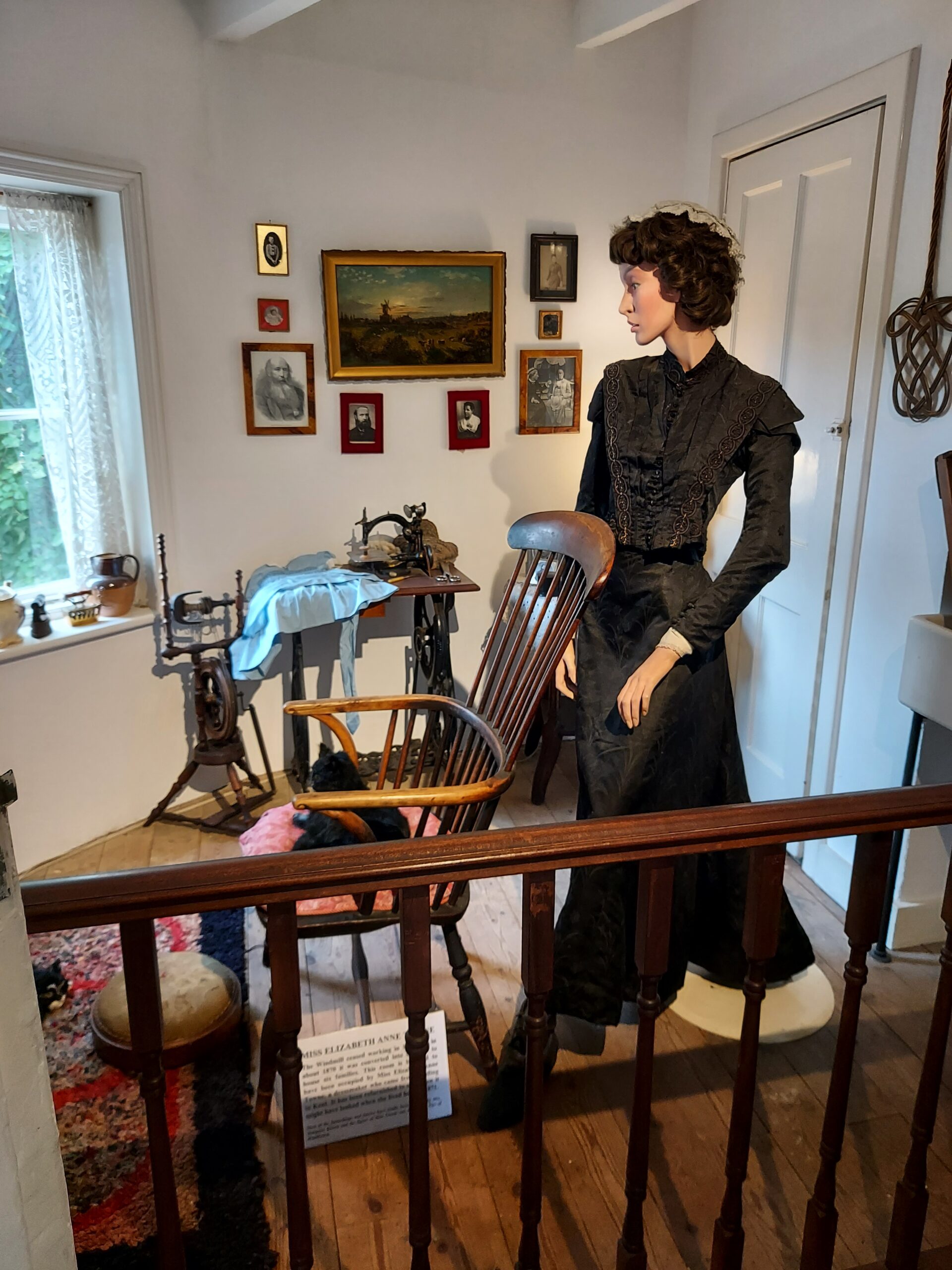
The mill was subsequently converted into accommodation for six families. The wooden first floor was rebuilt in brick, and fireplaces and chimneys were added. A major restoration took place in 1893, and the mill continued to be used as accommodation – eventually for the Commons Rangers – until the 1970s.
The museum first opened in 1976, and extended to cover both floors in 1999 thanks to a Heritage Lottery Grant. The exhibits cover windmills and milling as well as local history and the Scouting movement (Robert Baden-Powell lived, and wrote the Scouting handbook, nearby).
The Museum
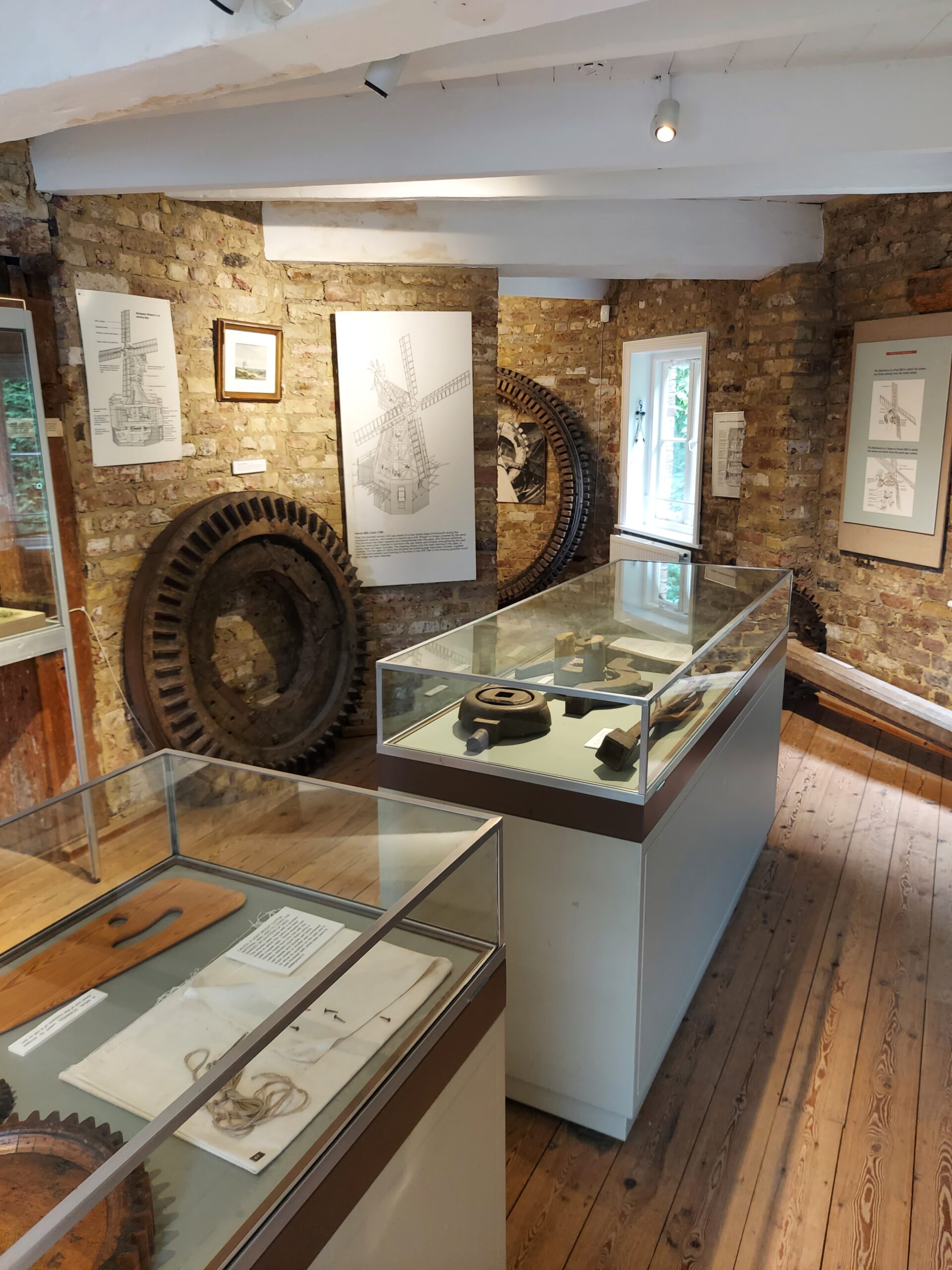
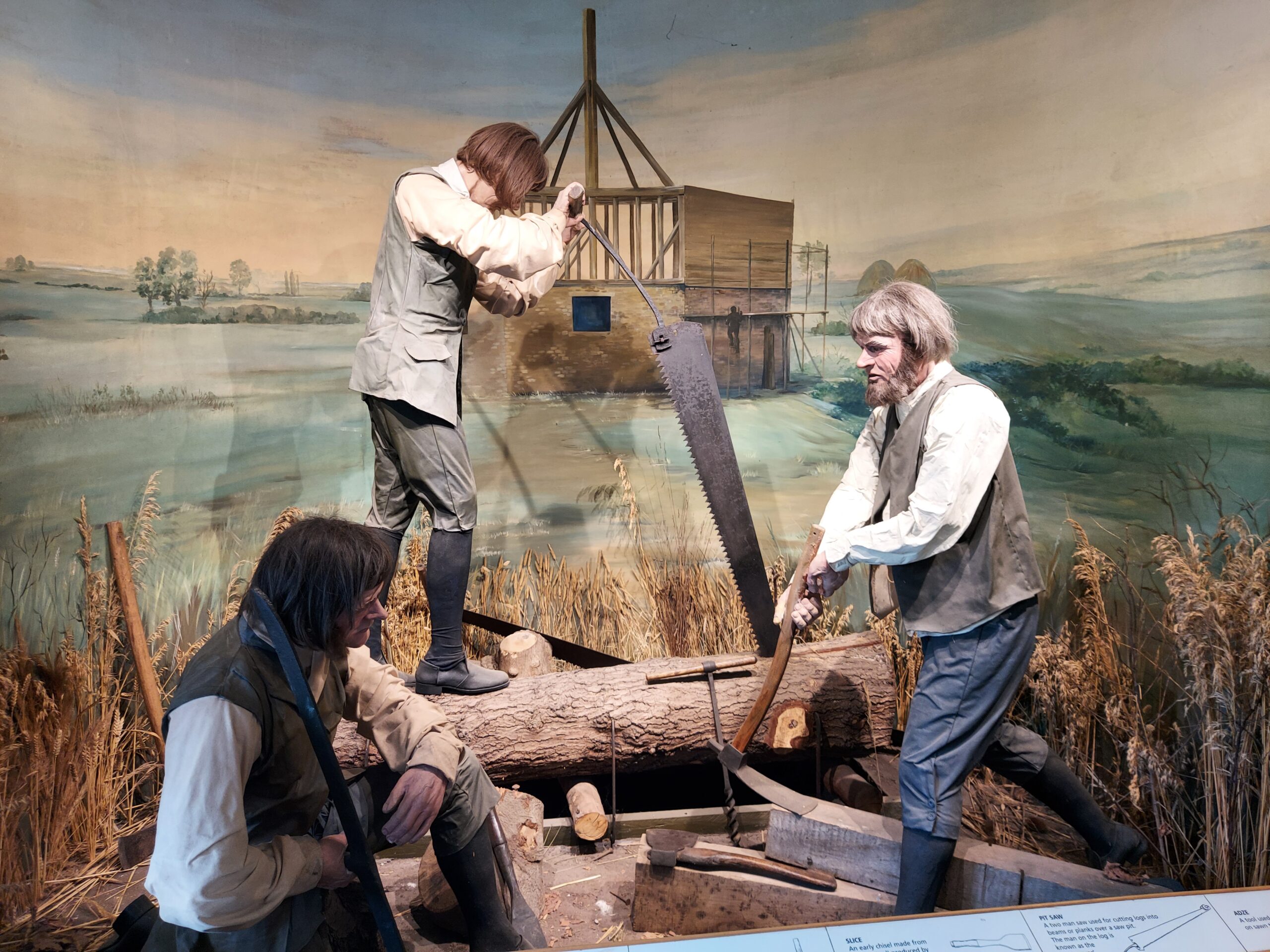
The museum is small, but there is a lot to see. On entering, there is a scene showing the construction of the windmill using timbers hand-sawn from local trees. On the ground floor there is also an impressive collection of tools from a Norfolk millwright. A film about the development of mills in England can be seen, and there is a reproduction of the Great Spur Wheel. Finally, numerous models of windmills are on display, detailed reproductions of existing windmills that show how design has changed over time.

Upstairs, examples of grains are provided as well as explanations of how these were turned into flour by hand in the days before mills. There are several examples of mill machinery, and one room is laid out as it would have been in the nineteenth century, when the mill was used as accommodation.
The windmill is a quaint, interesting attraction in Wimbledon that is well worth a visit. I’m glad I finally got to go.
FACTS
Address: Windmill Road, Wimbledon Common, London, SW19 5NR
Website: wimbledonwindmill.org.uk
Opening Hours: Weekends and Bank Holidays from March to October – see website for times
Price: Free