
In recent years, Hidden London tours have expanded to encompass not only disused stations, but working stations with lots of history. Baker Street is one such station, and I attended a tour on a sunny Sunday.
Baker Street is one of the earliest Underground stations, and is Grade II* listed. Today, it has 10 platforms served by 5 different lines – more than any other on the network. It first opened in 1863 as part of the Metropolitan Railway: these original platforms are still in use by the Circle and Hammersmith & City lines and look a lot like they did back then.

We got to go into some hidden corners of the station; in particular a space once used as a waiting room.
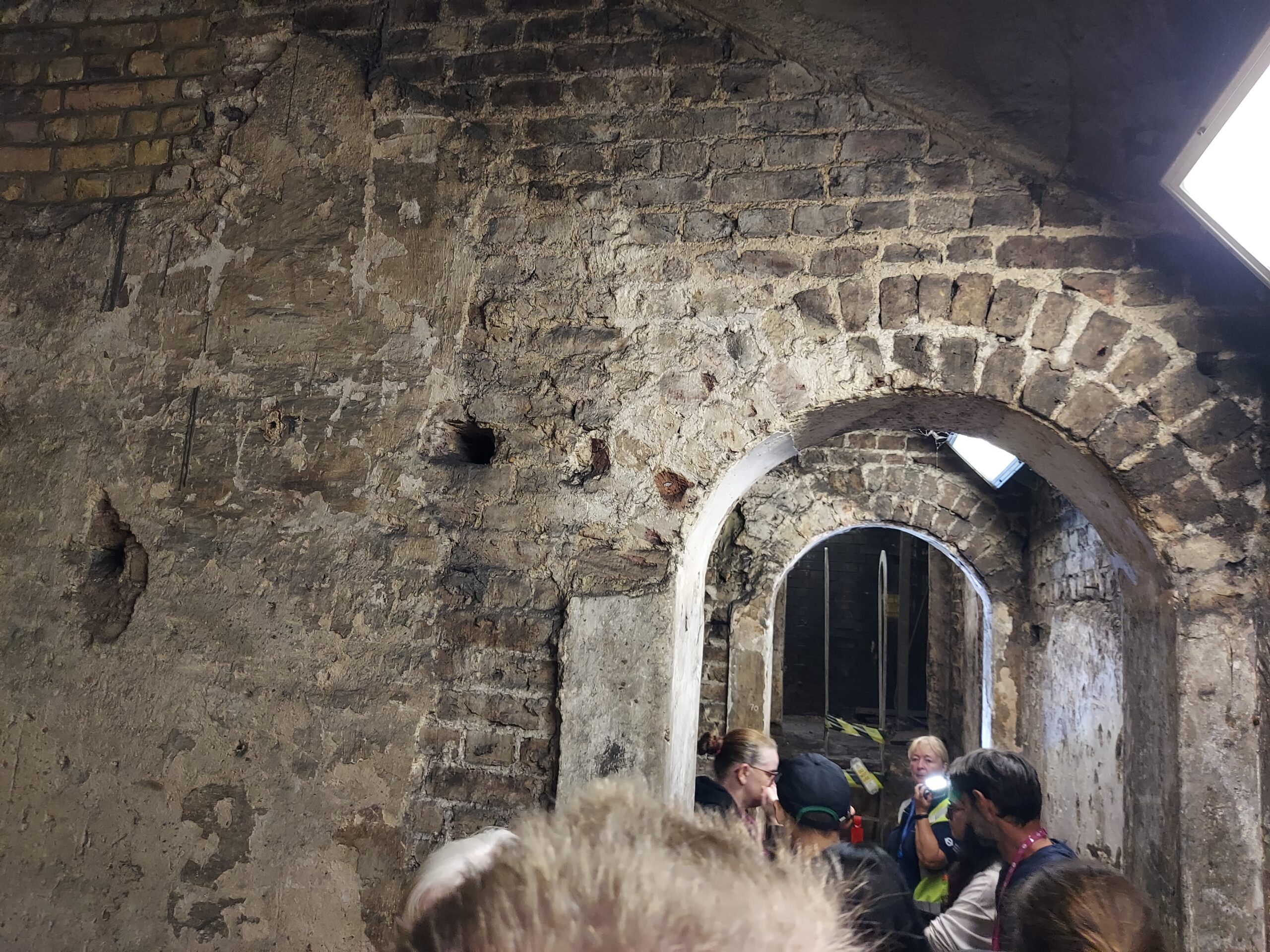
Later platforms were built in 1868 as part of the Metropolitan & St John’s Wood Railway. The platforms were rebuilt in 1892, but still struggled to cope with increased demand, so a decision was taken to rebuild the station and create a new headquarters for the Metropolitan Railway at the same time.

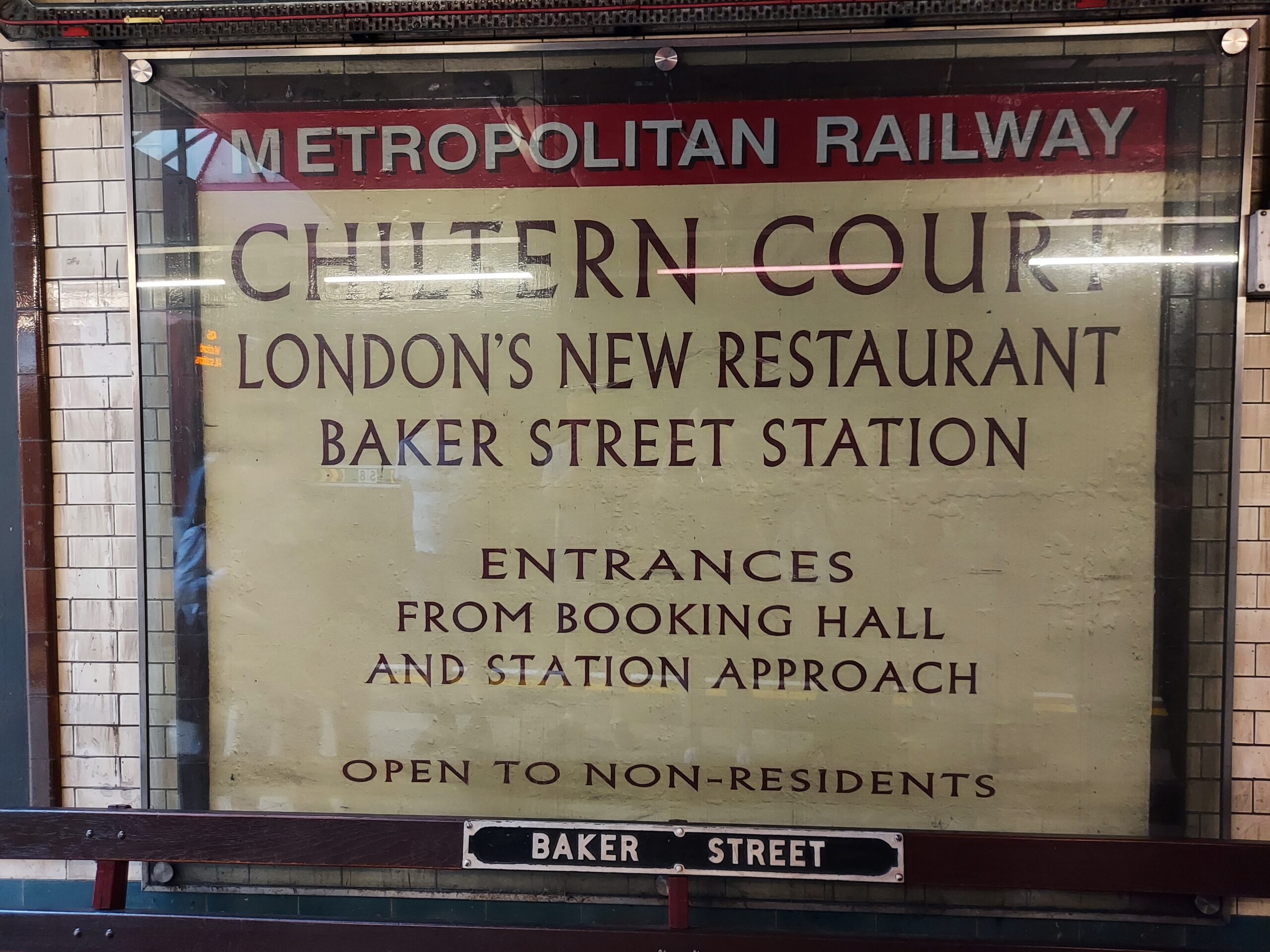
The architect Charles Walter Clark replaced the original buildings and created a single sub-surface ticket hall, as well as a subway linking the Circle and Bakerloo lines (the latter had originally opened on a separate site with a Leslie Green station). Plans to build a hotel on top of the station were halted by the First World War, but similar plans were revived in the 1920s with the construction of Chiltern Court. This block of flats was highly prestigious and included such distinguished residents as H. G. Wells and Arnold Bennett.
One of the most exciting parts we got to see was the original underground Bakerloo station, including tiling and lift shafts. We also got to look down through gratings to see the trains pulling in to the platform (now the Jubilee line).

As the home of the Metropolitan line, the station has been a headquarters for transport staff for many years. Its facilities have included the Central Control Rooms for the Bakerloo, Central, Jubilee and Metropolitan lines; one of the first operational sites of the British Transport Police; a canteen staff training school; and the Lost Property Office. The London Transport Rifle Club was also located here until the 1990s.
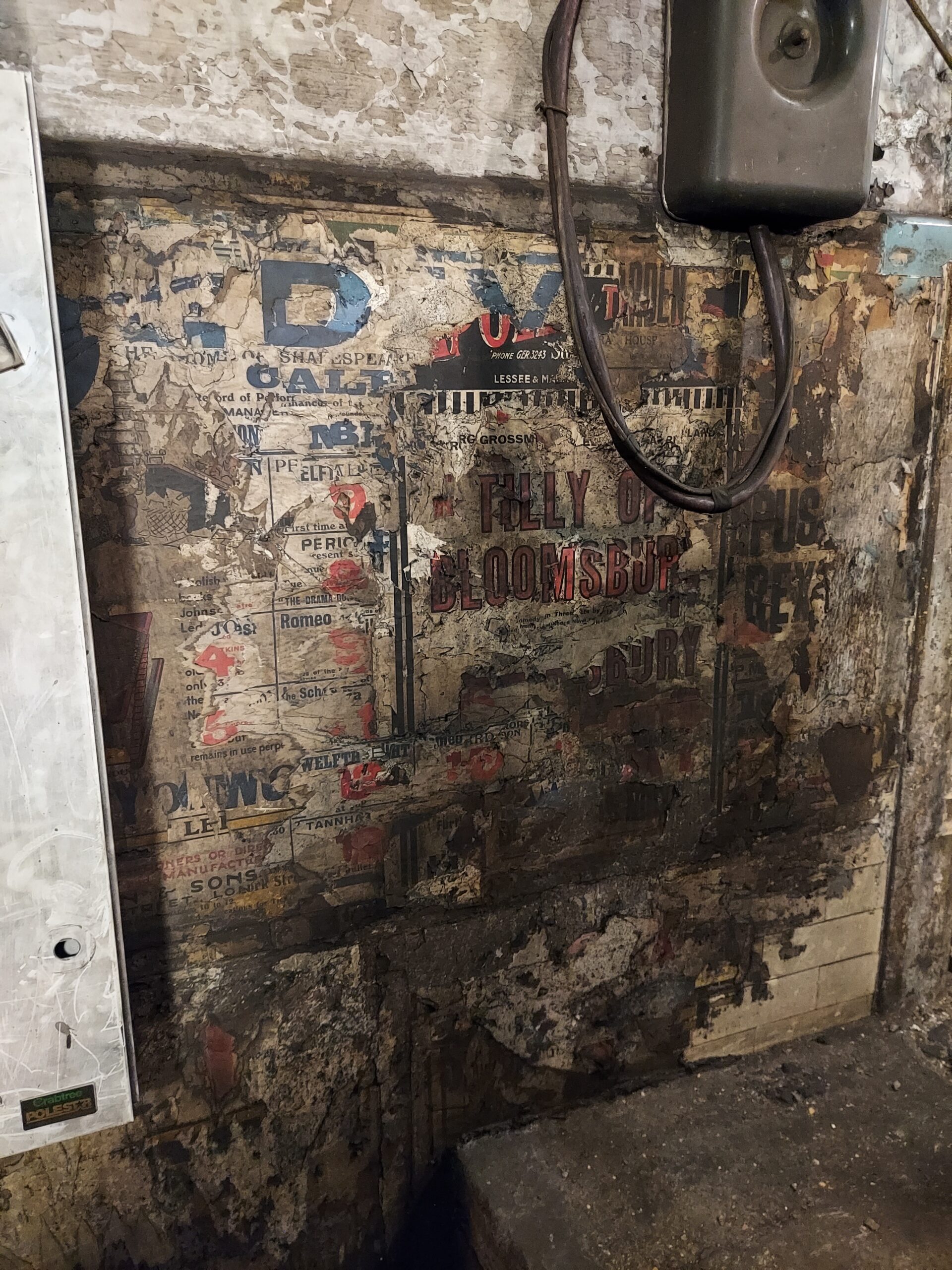
My tour of Baker Street proves that even current stations have a lot of history and hidden areas to explore. Definitely recommended, and I can’t wait to book another Hidden London tour.