
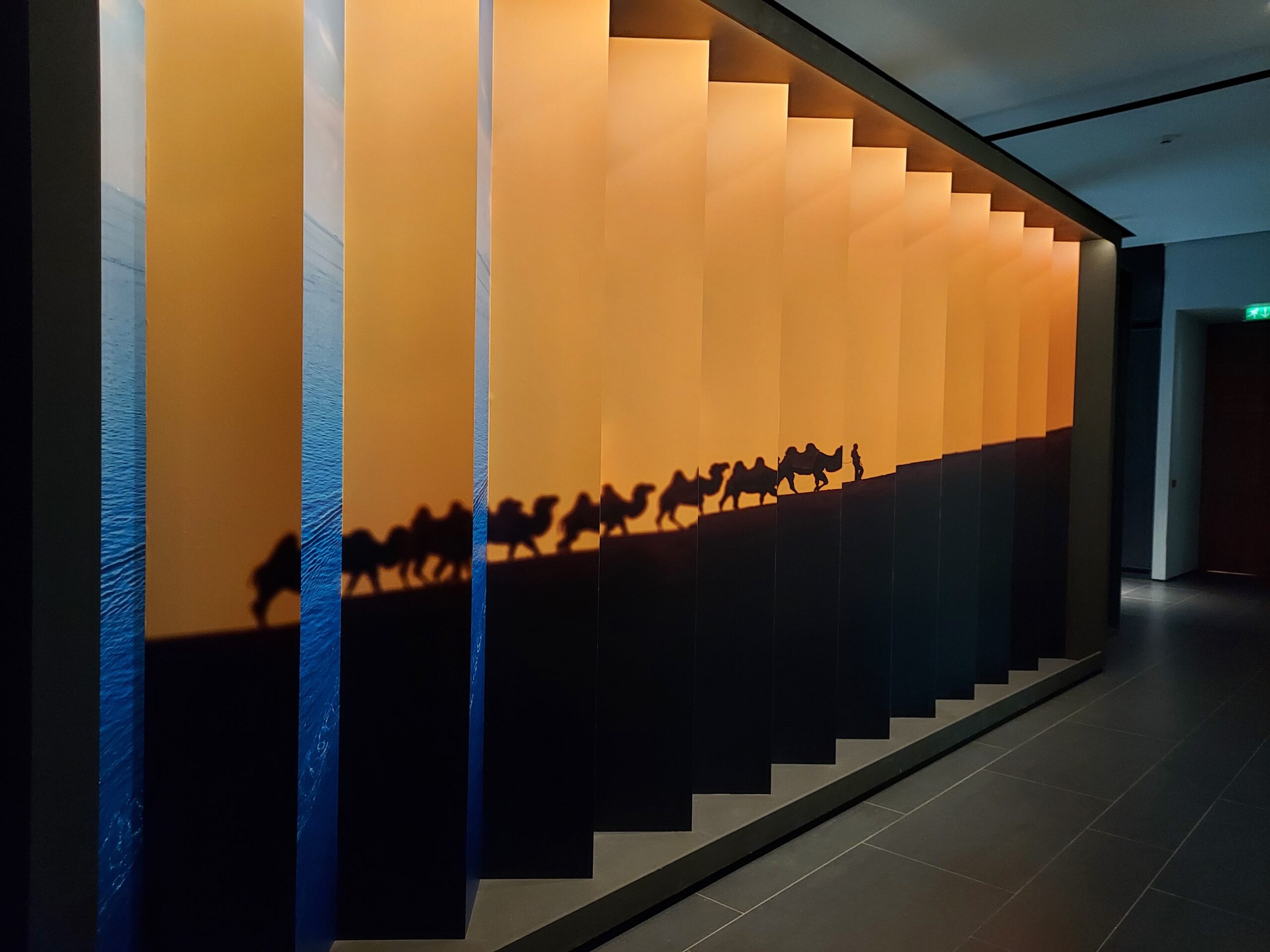
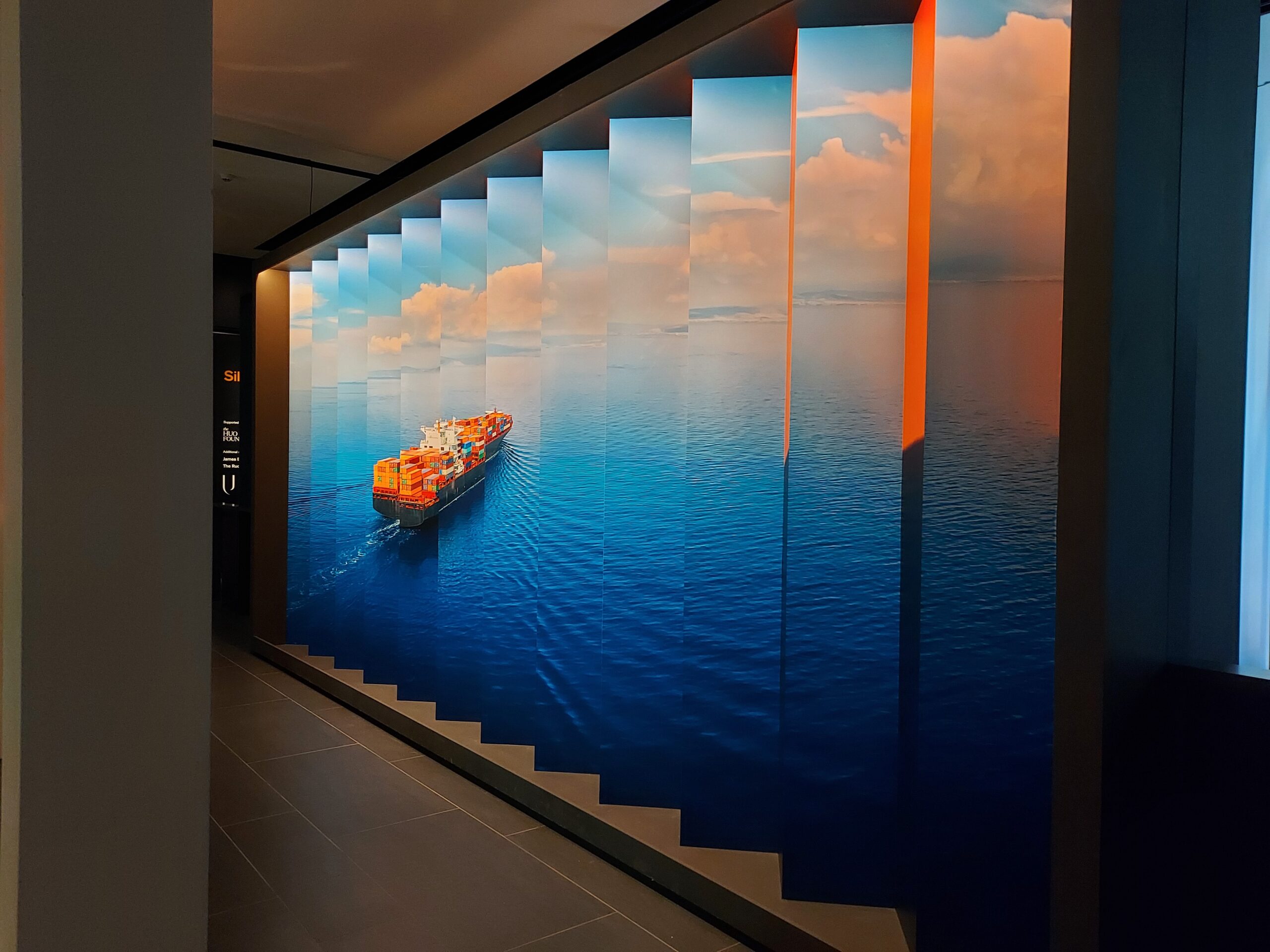
Following on from the British Library’s exhibition about Dunhuang, I went along to the Silk Roads exhibition at the British Museum. This was another fascinating exhibition, this time covering the length of the network that encompassed Europe and Asia.
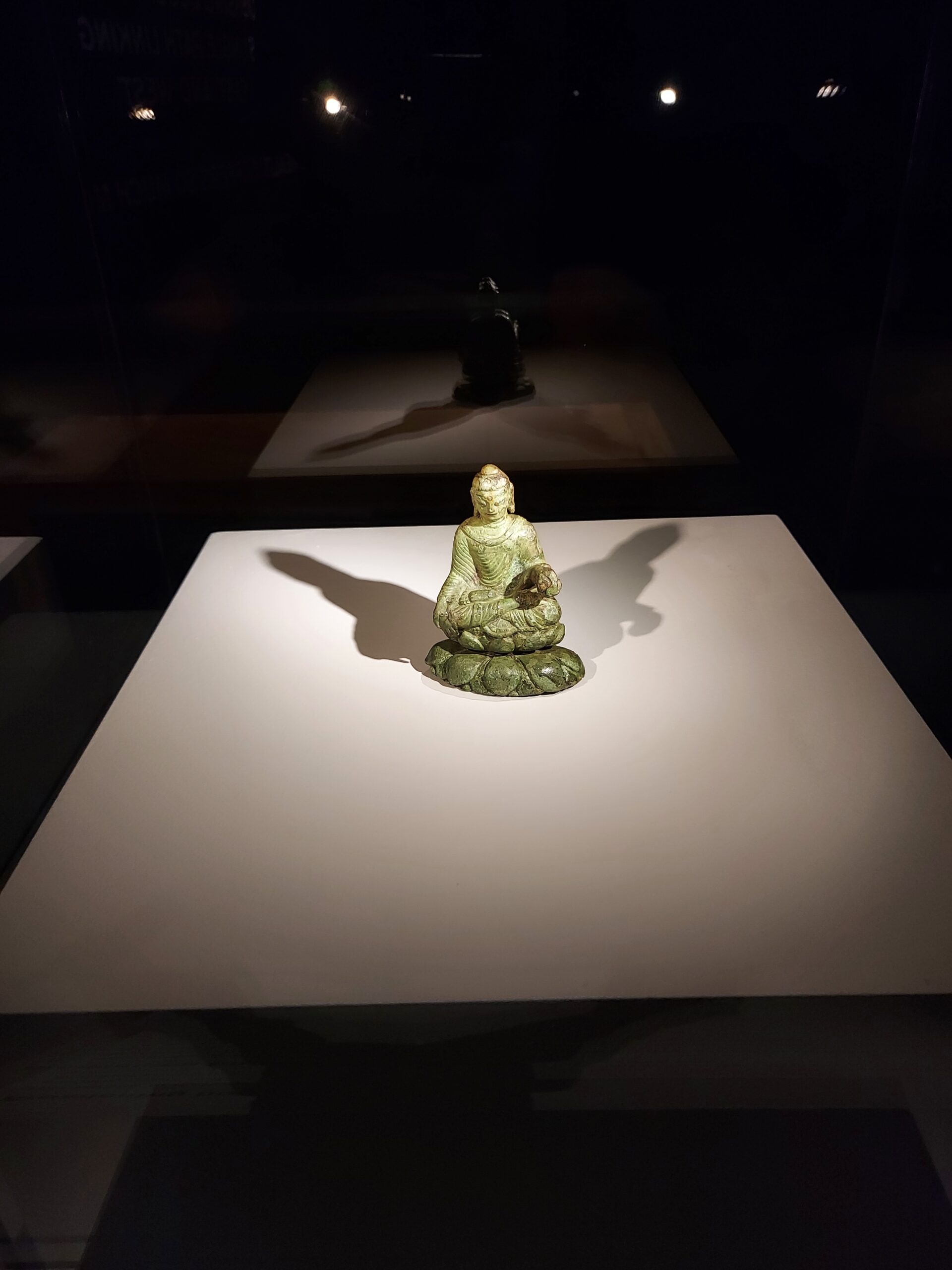
Silk was just one of the items traded. A key item displayed was a Buddha statue made between the 500s and the mid-600s, probably in the Swat Valley, Pakistan, but found on the Swedish island of Helgö – demonstrating just how far this network spread.
The exhibition explores the route from east to west, beginning in Nara Japan in the seventh century AD when rulers began to send envoys to Sui-Tang China. Trade took place in both directions throughout Asia: for instance, Buddhism arrived in Japan from western Asia, and burials revealed a taste for expensive imported goods. In Tang China, the capital Chang’an had a population of one million, at the time the largest city in the world. Envoys from as far away as the Mediterranean arrived here. A shipwreck near Belitung Island, Indonesia, in the early AD 800s found over 60,000 items, mostly Chinese ceramics.
Dunhuang and other oasis cities along the desert routes, including two branches around the Tarim Basin, are explored. The exhibition features Samarkand and Uzbekistan, exploring the spread of Islam alongside the tolerance of other religions. There was a notable transmission of knowledge at this time, especially to and from Baghdad, the capital of the Abbasid caliphate, between AD 749 and 1258. Many imported goods were found in the former capital, Samarra.
Later in the exhibition, the Byzantine empire, Aachen, Spain and Sutton Hoo are all referenced. UK burials often contained items from Syria, further examples of the international trade taking place at this time.
The exhibition was fascinating and wide-ranging, and definitely worth seeing, even – and perhaps especially – if you’ve already seen the British Library’s version.