

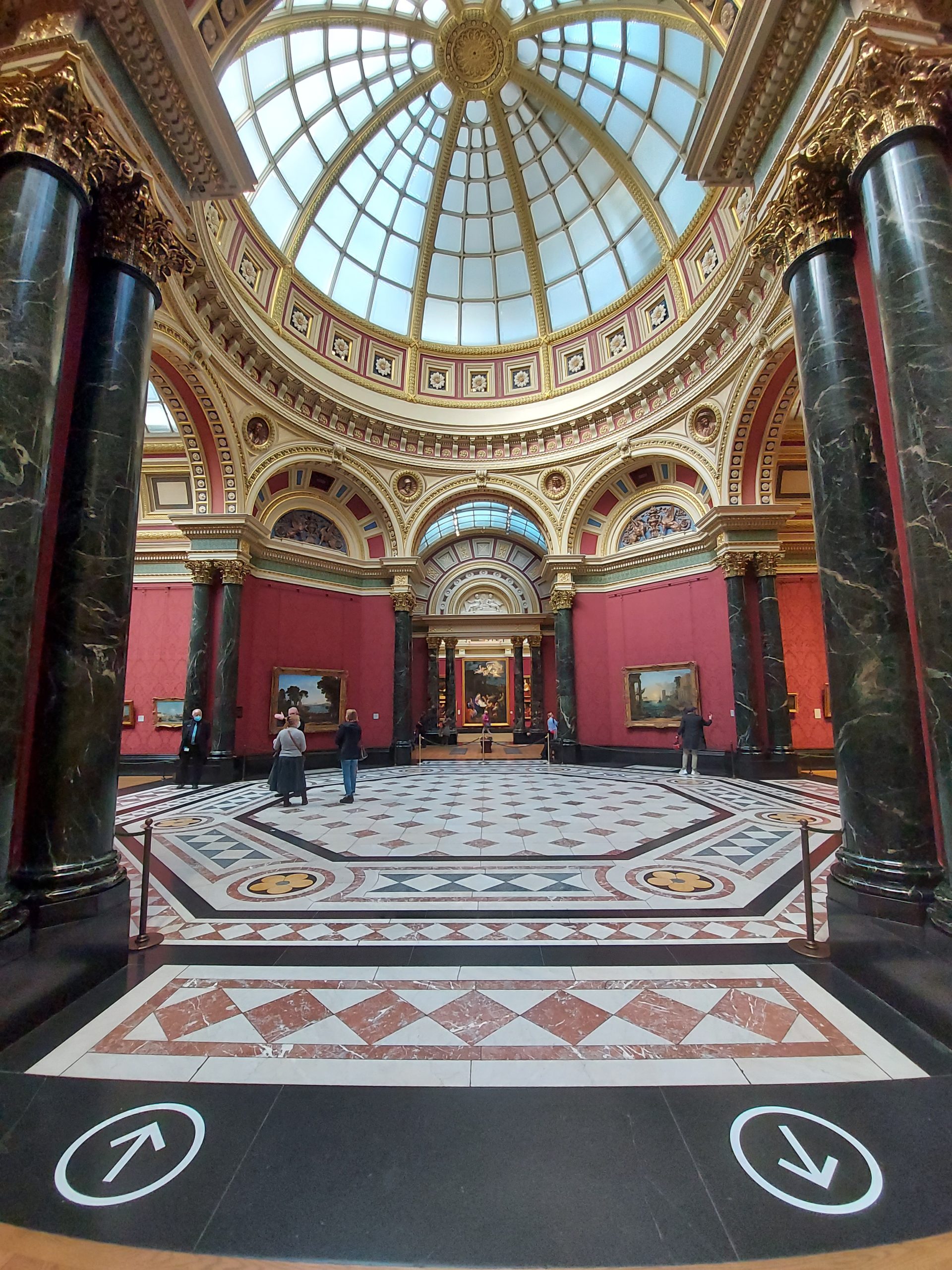
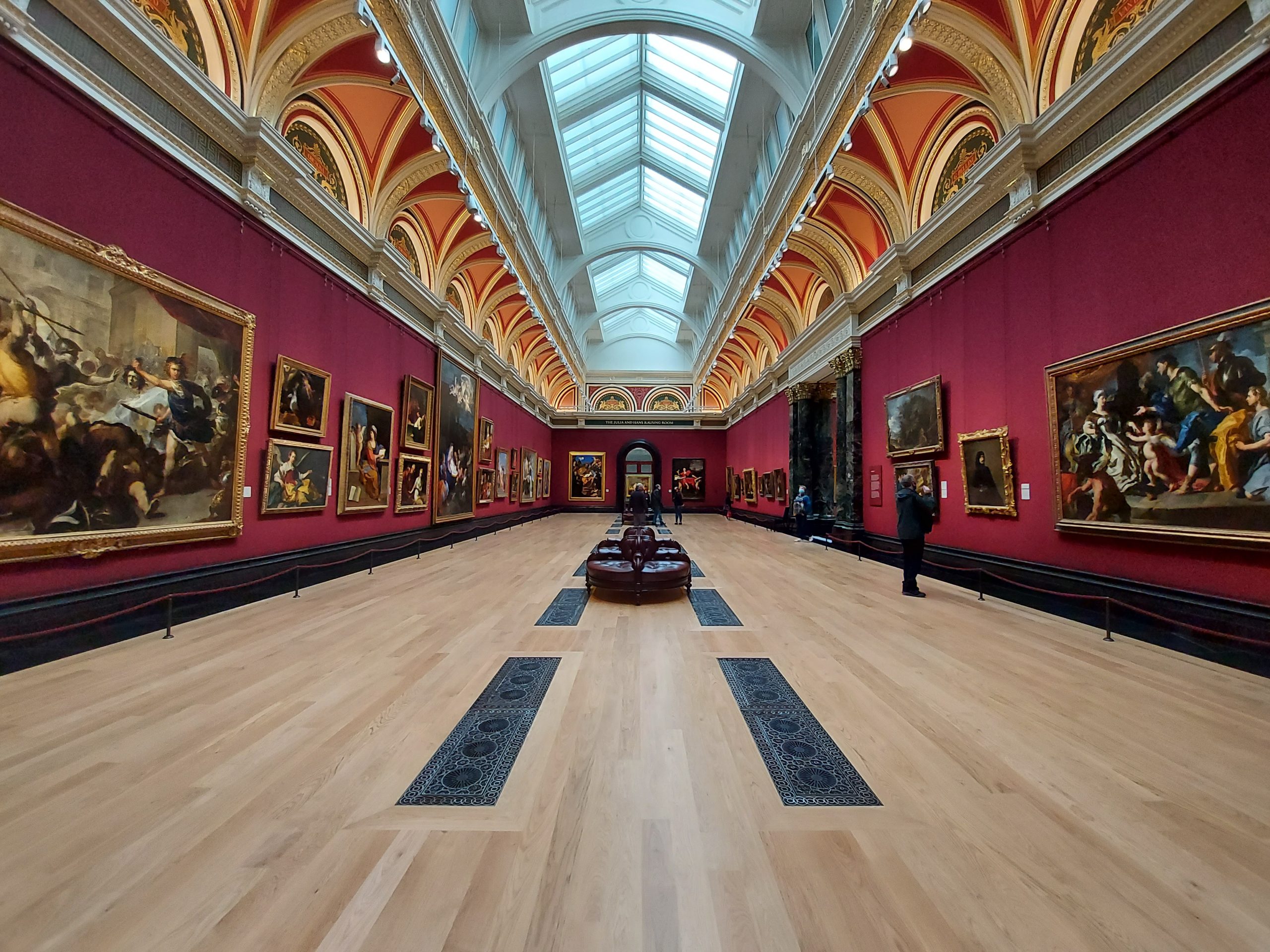
The National Gallery must be one of the most well-known and popular art galleries in the world, standing firmly in the centre of London, looking out over Trafalgar Square. I’ve visited several times over the years, mainly for special exhibitions, but recently decided to go and explore the whole thing.
History
The beginnings of the National Gallery can be traced back to the early nineteenth century, when the House of Commons agreed, in 1824, to purchase the collection of the banker John Julius Angerstein. Intended to form the core of a new collection of art for the nation, the pictures were first displayed at Angerstein’s house on Pall Mall while a building was constructed to house them. Initial administration of the Gallery was disorganised, but following a government enquiry a new post of Director was created, to shape the collection and manage the Gallery.
Trafalgar Square was decided upon as the site of the new gallery, being right in the centre of London. Architect William Wilkins was hired to construct it, using many of the construction methods of the King’s Mews, which originally occupied the site. The artist and collector Sir George Beaumont promised to donate his collection of pictures, and they took their place alongside Angerstein’s until they could all be moved to the new building. At this time the Gallery had no formal collection policy, with pictures being acquired owing to the personal tastes of the Trustees. This began to change when the administration was reformed, and the new Director travelled in Europe to purchase works for the Gallery. In 1871, many paintings were purchased from the estate of the late Prime Minister, Sir Robert Peel.
Wilkins’ building had often been criticised, and in 1869 the architect E. M. Barry was asked to submit designs for a new building. However, the original building was retained, albeit with a new wing and an impressive dome being constructed. A few decades later, most of the British collection was moved to the new gallery founded by wealthy industrialist Henry Tate on the banks of the Thames, freeing up more space for European art. Much later – in 1991 – the Sainsbury Wing was constructed, opening in 1991 and providing the National Gallery with even more space.

My Visit
Normally, the Gallery is free to explore as you wish (except for special exhibitions), but in these Covid times, you are required to book a time in advance and follow specific one-way routes around the galleries. This means that it’s impossible to see everything on one visit (I made mine over a couple of days), but honestly, for me, the sheer peacefulness of the galleries at this time made it all worthwhile. I was sometimes the only person in a particular gallery or room – makes a change from the crowds usually jostling to view the paintings. I’m so glad I was able to take advantage of the current situation to experience the National Gallery when it’s quiet.
The Gallery’s rooms are divided into four main sections.
1200-1500
This section focuses on medieval artists such as Bellini, van Eyck, Leonardo, Piero and Raphael. This era of art is not my favourite, but there were some pretty elaborate triptyches and ornate decorations. A picture of Saints Bartholomew and Andrew made me laugh, as they look like they’re really pissed off with each other, but a picture of Jesus carrying the cross I actually found quite moving.
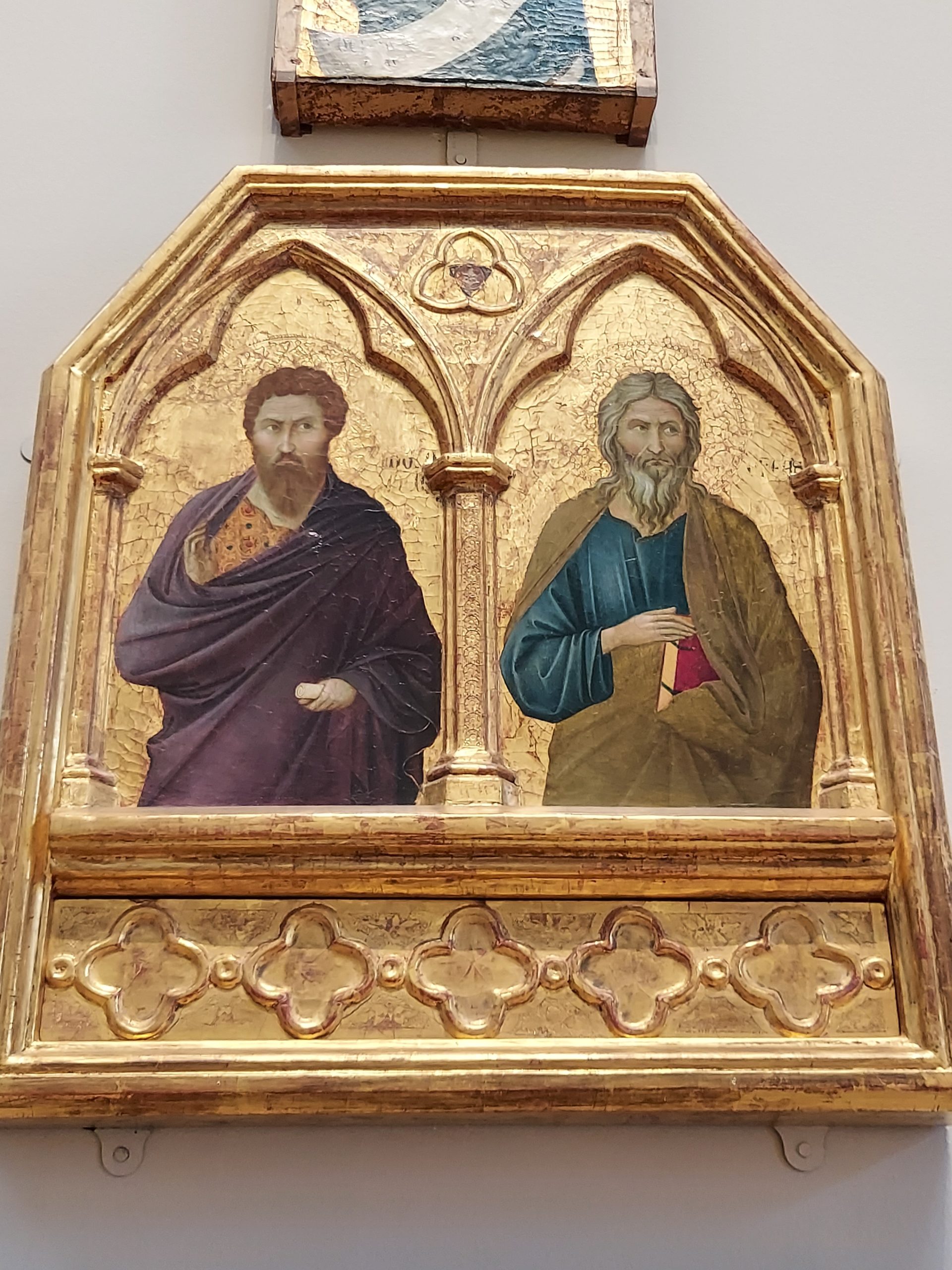
Saint Bartholomew and Saint Andrew 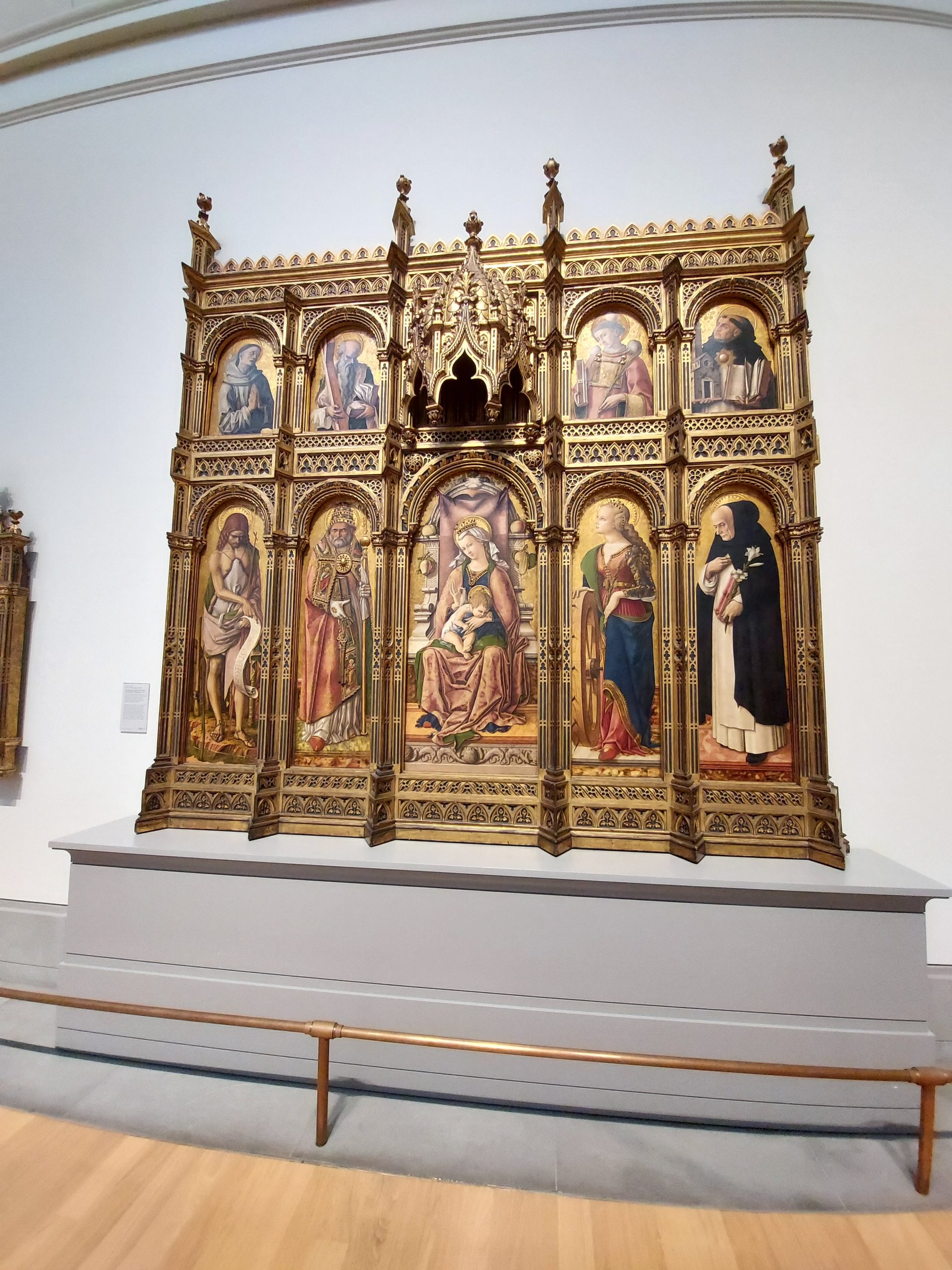
Carlo Crivelli, The Virgin and Child with Saints, 1476 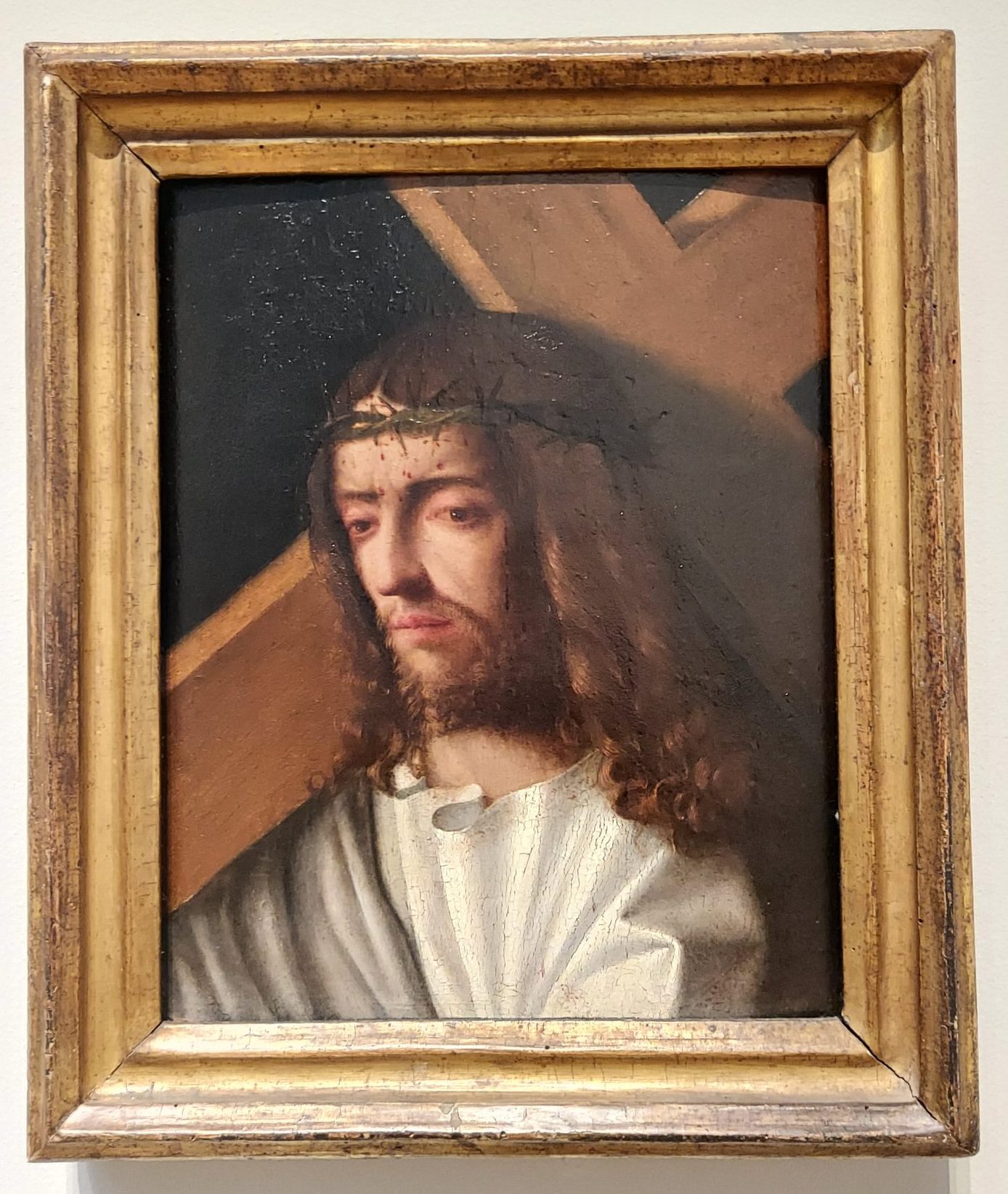
Italian, Venetian, Christ Carrying the Cross, about 1500
1500-1600
This section is focused on Renaissance art, featuring the likes of Titian, Holbein, Bronzino and Massys. I do like the Holbeins that are currently displayed, and I have a special fondness for the painting of the ‘Ugly Duchess’ since I read that it inspired John Tenniel’s illustrations of the Duchess in Alice’s Adventures in Wonderland.
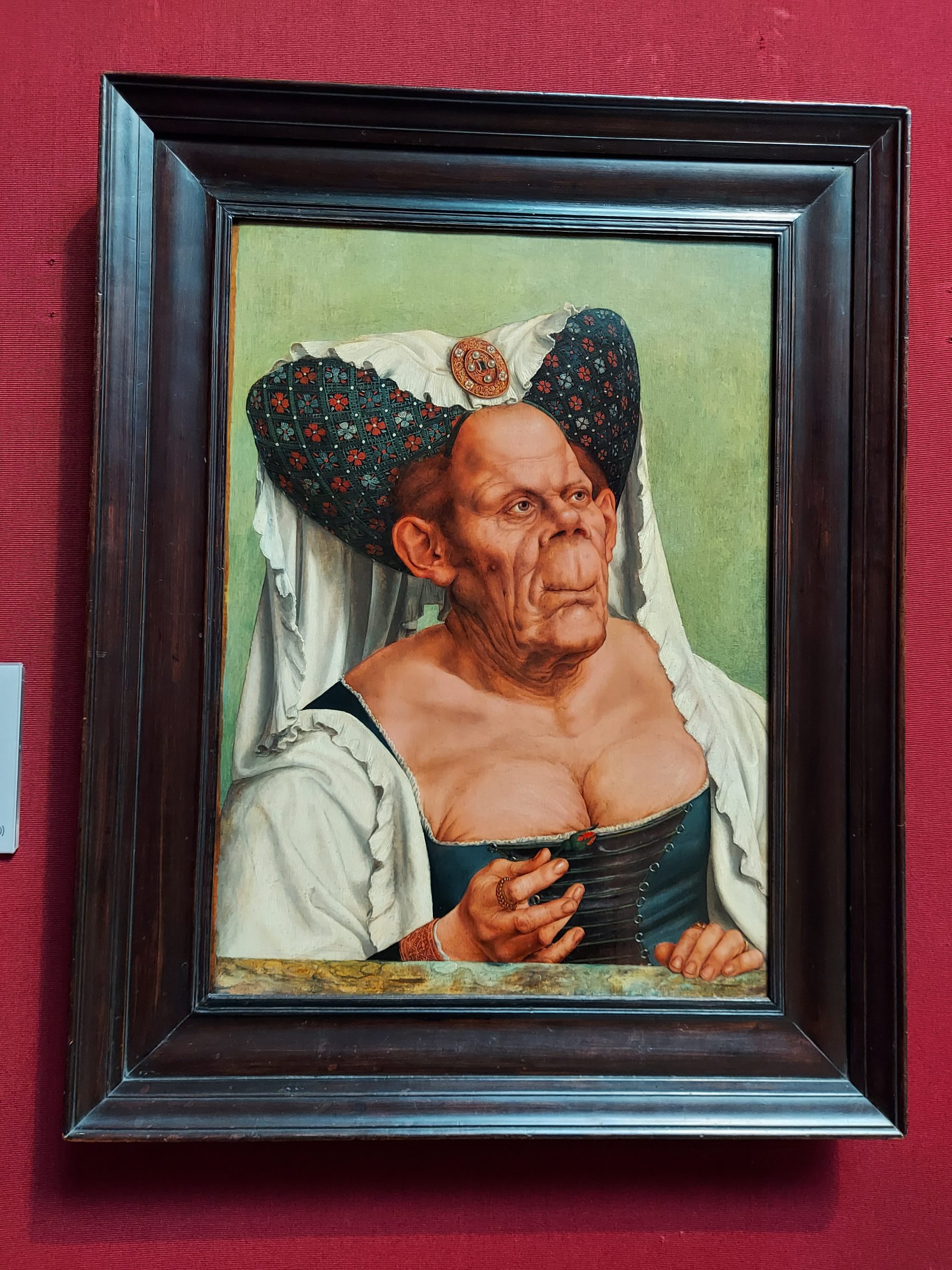
Quinten Massys, An Old Woman (‘The Ugly Duchess’), c. 1513 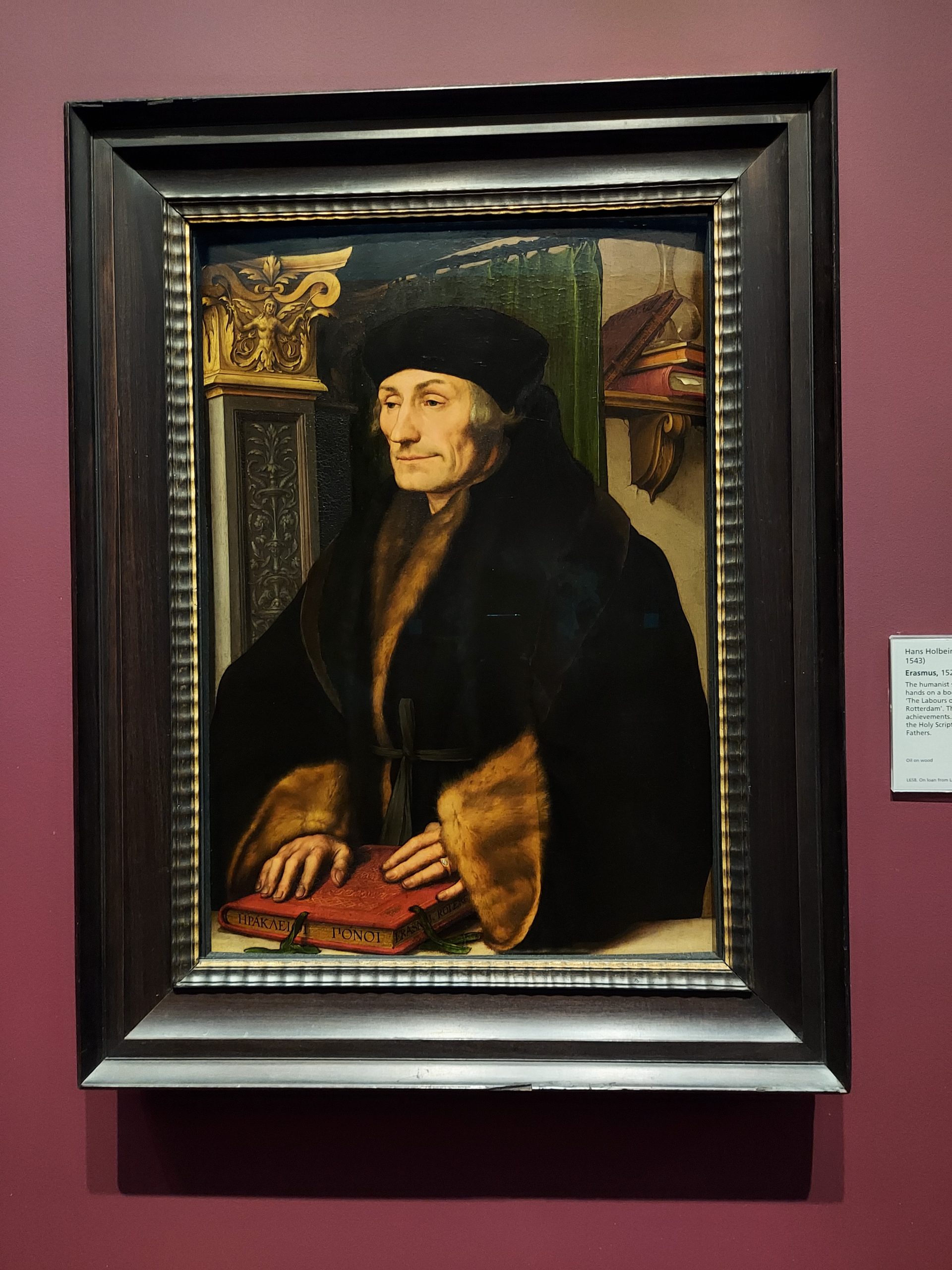
Hans Holbein the Younger, Erasmus, 1523 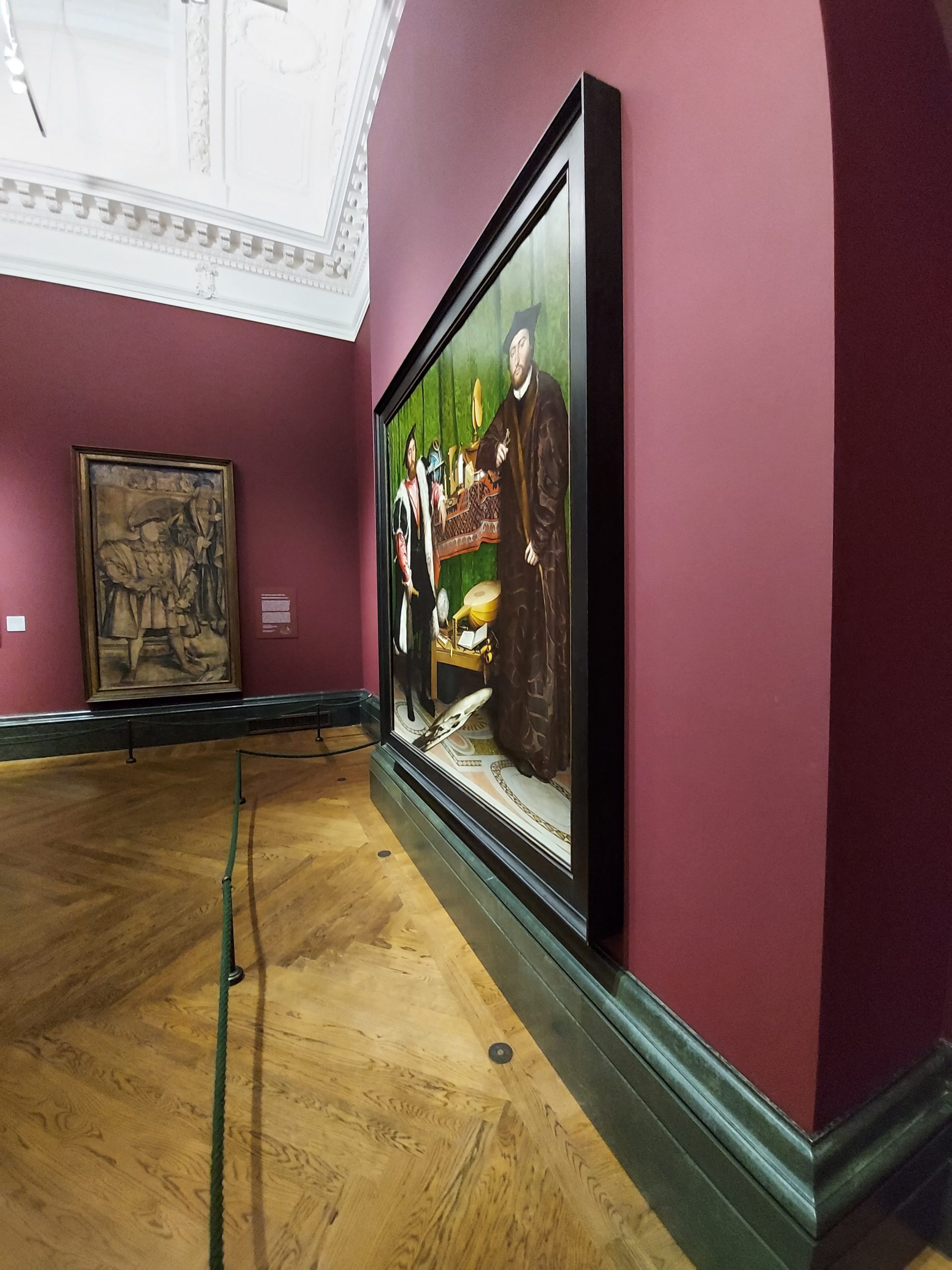
Hans Holbein The Younger, The Ambassadors, 1533
1600-1700
This section features the likes of Vermeer, Velasquez, Caravaggio and van Dyck. It’s not really my favourite, but there were some interesting pictures, including a Rembrandt.
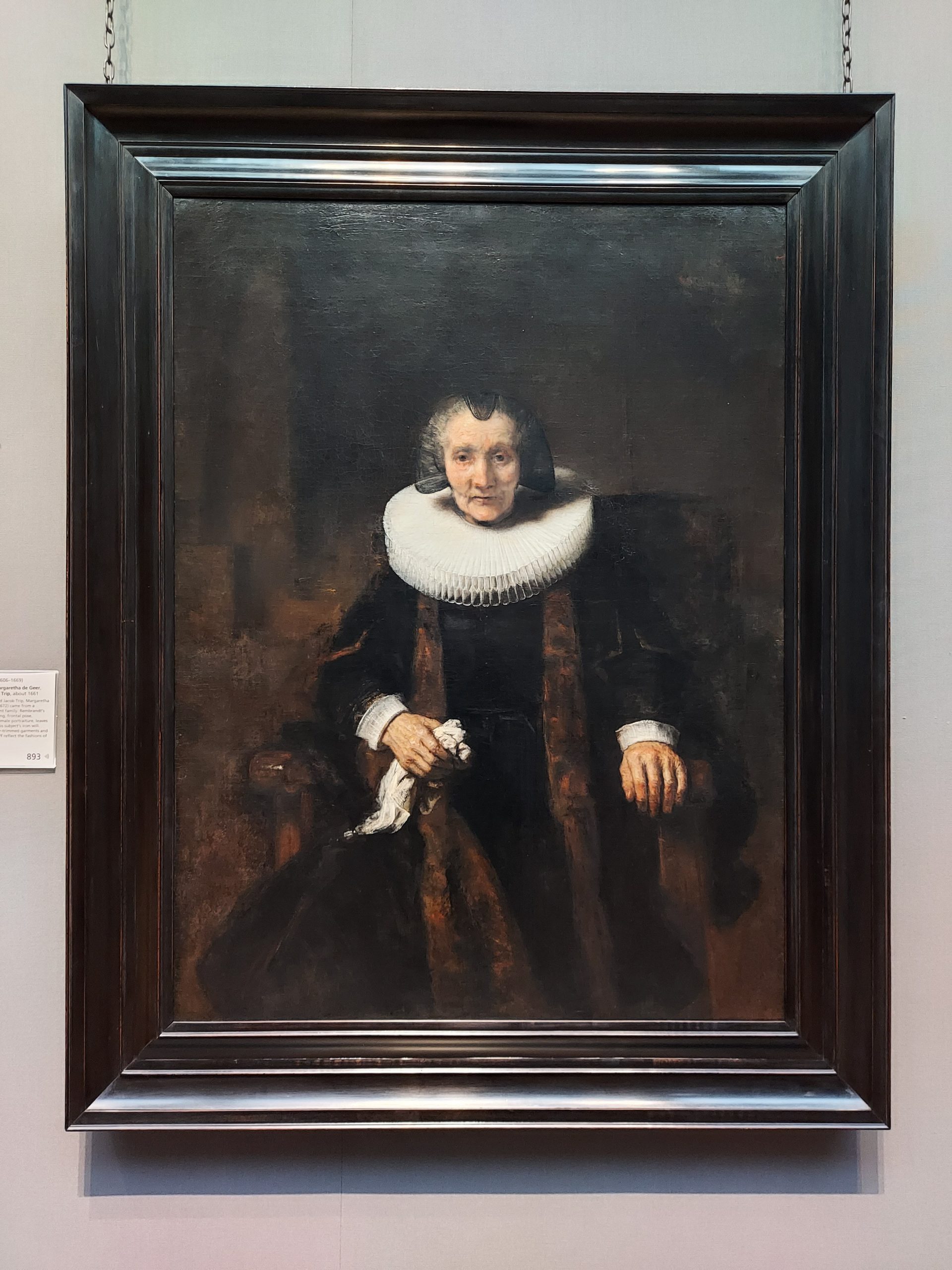
Rembrandt, Margaretha de Geer, c. 1661 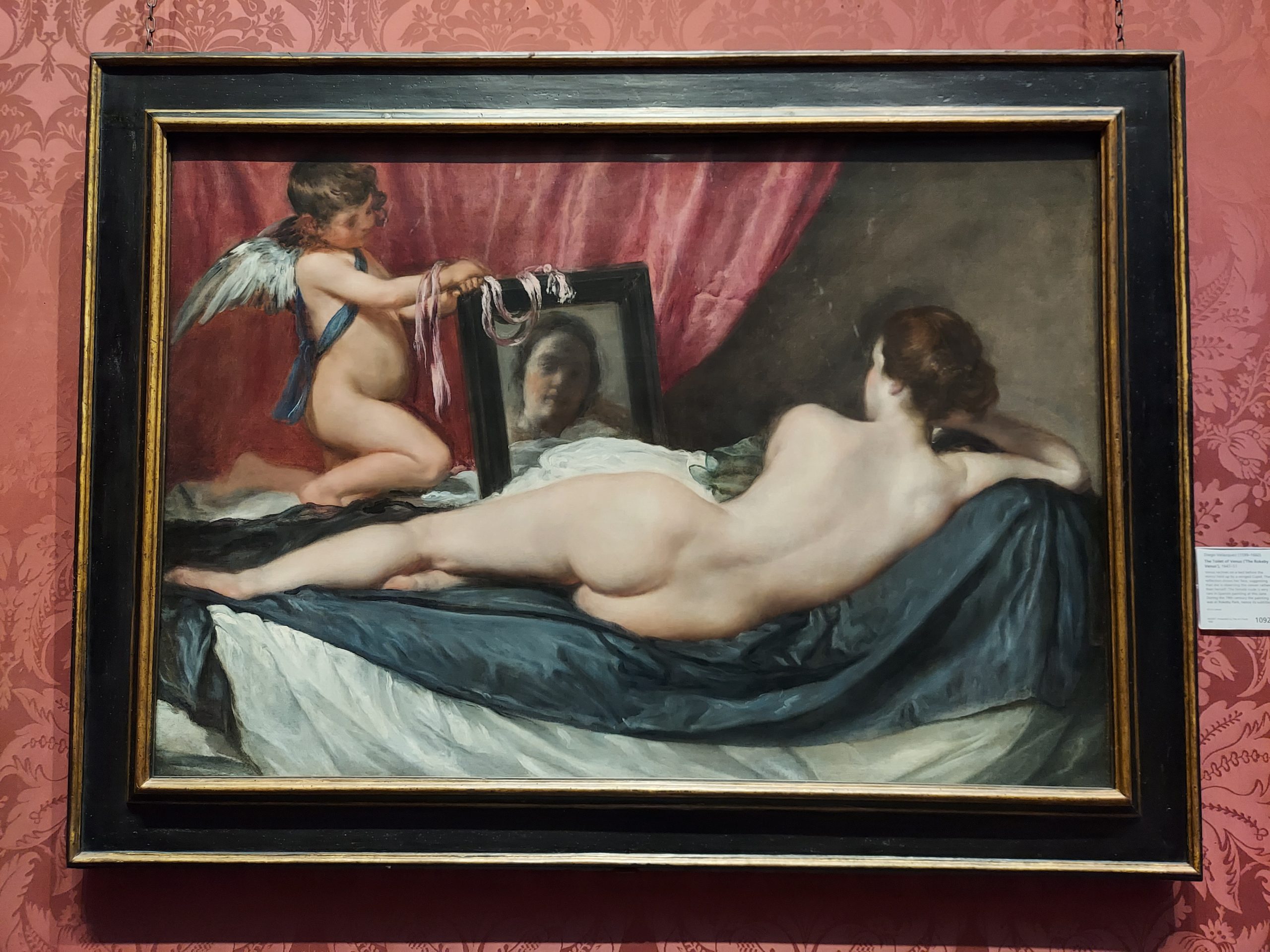
Diego Velázquez, ‘The Toilet of Venus (‘The Rokeby Venus’)’, 1647-51
1700-1930
This final section covered a more wide-ranging period and was probably my favourite. Featuring the likes of Turner, Stubbs, Monet, van Gogh and Seurat, I was impressed with the variety. The section began with some eighteenth-century portraits and landscapes.
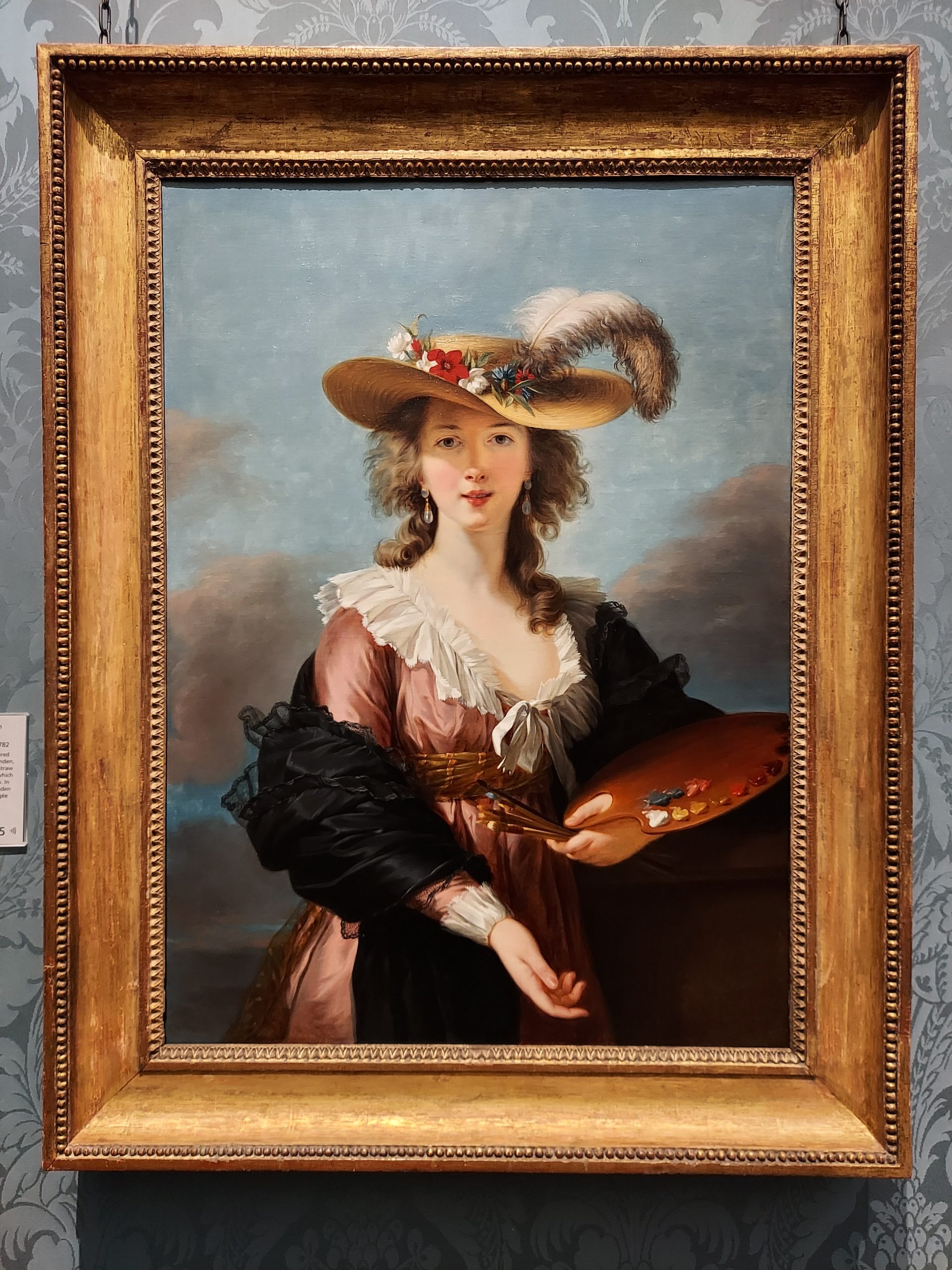
Élisabeth Louise Vigée Le Brun, Self Portrait in a Straw Hat, after 1782 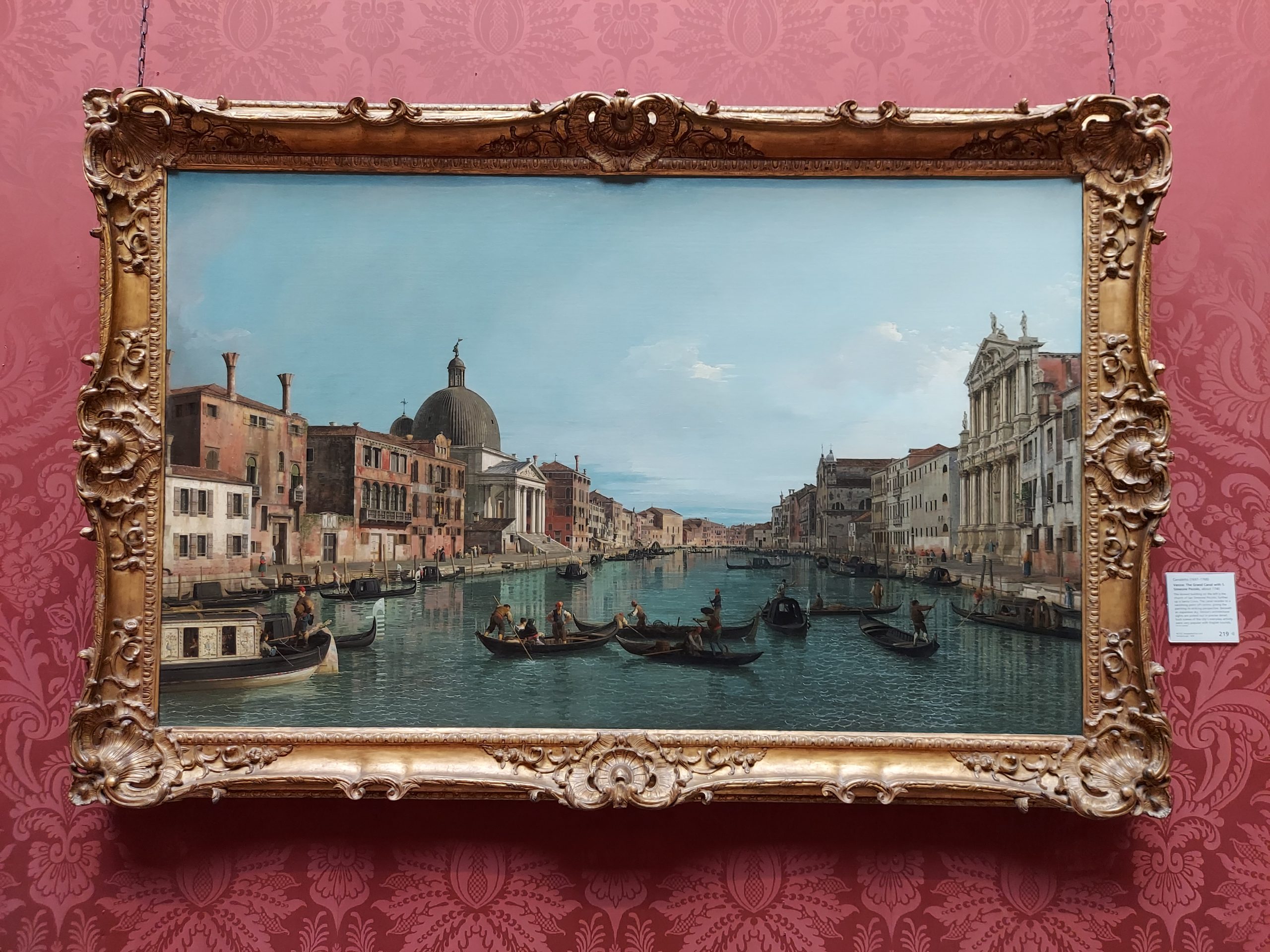
Canaletto, Grand Canal: Looking South-West, c. 1738 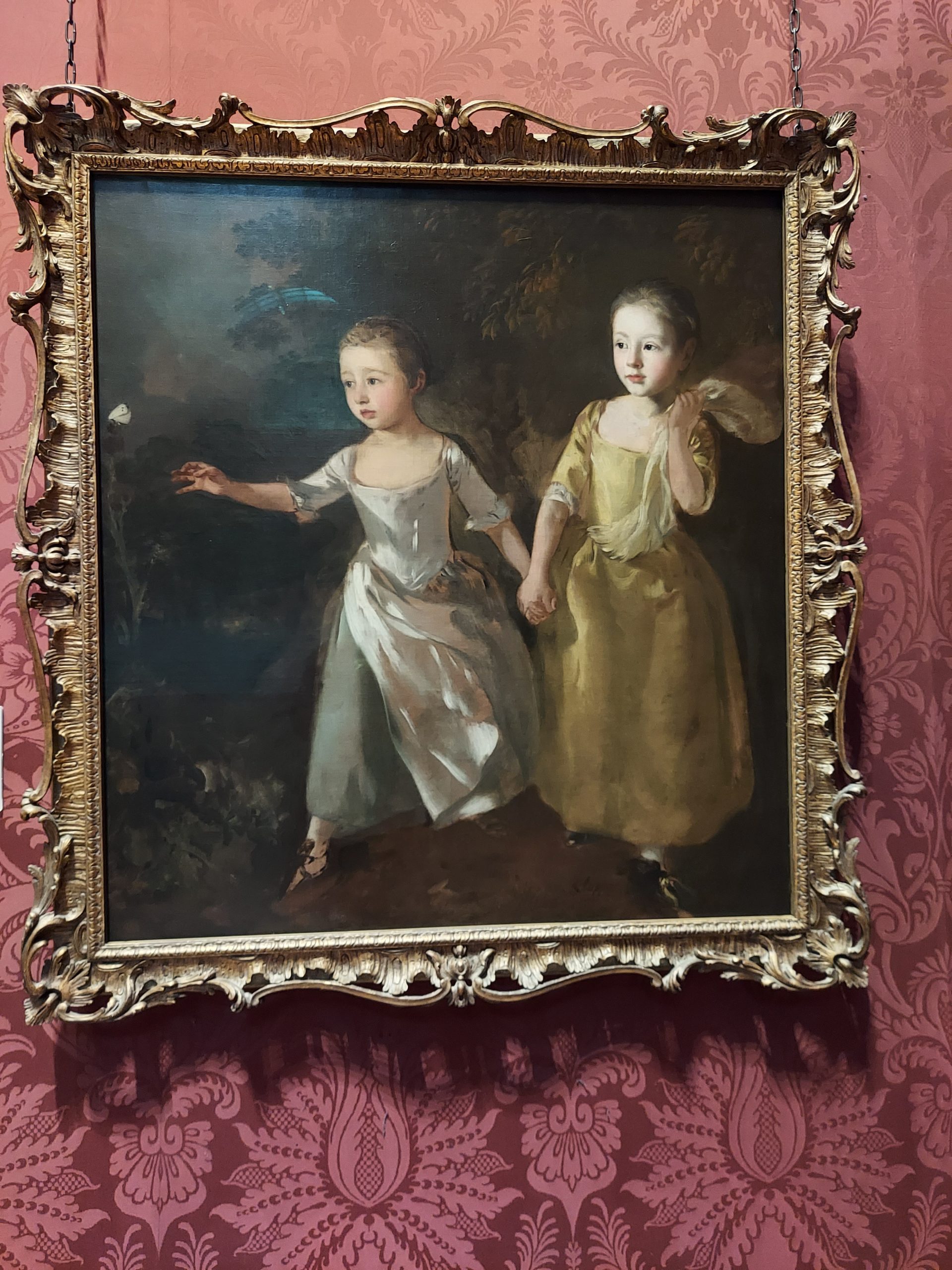
Thomas Gainsborough, The Painter’s Daughters Chasing a Butterfly, 1756
Then moved on to the nineteenth century with some dramatic scenes and landscapes.
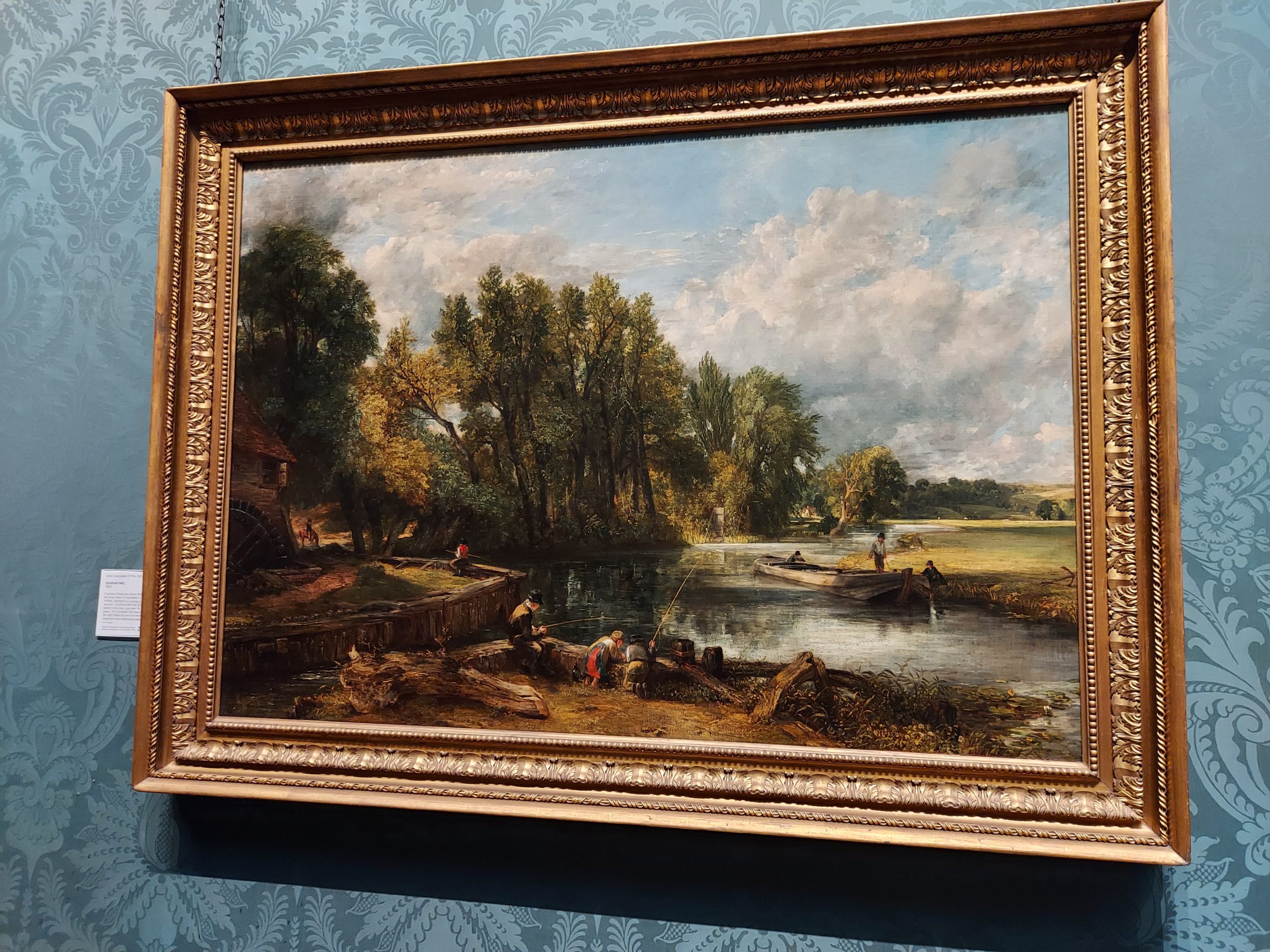
John Constable, Stratford Mill, 1820 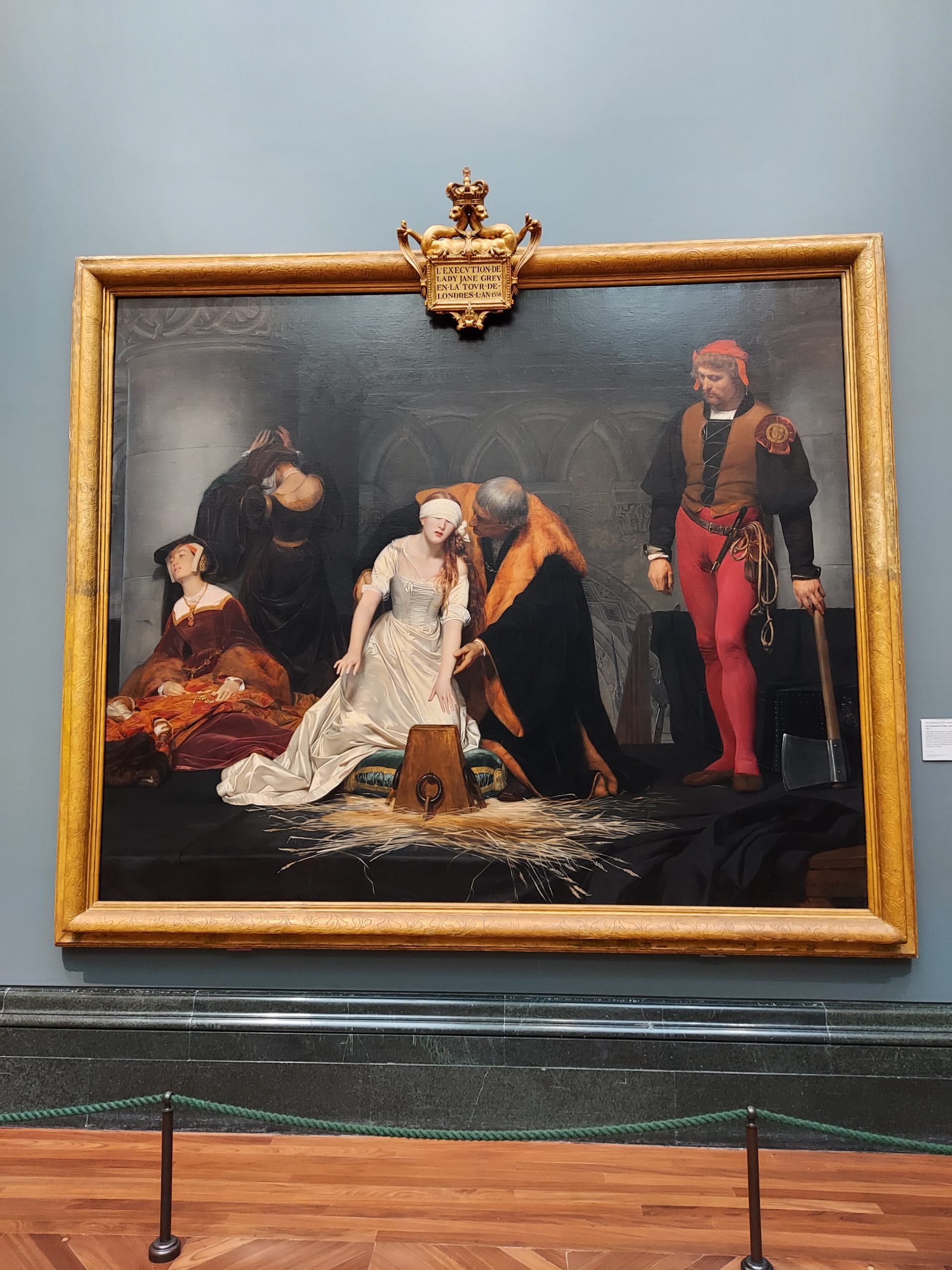
Paul Delaroche, The Execution of Lady Jane Grey, 1833 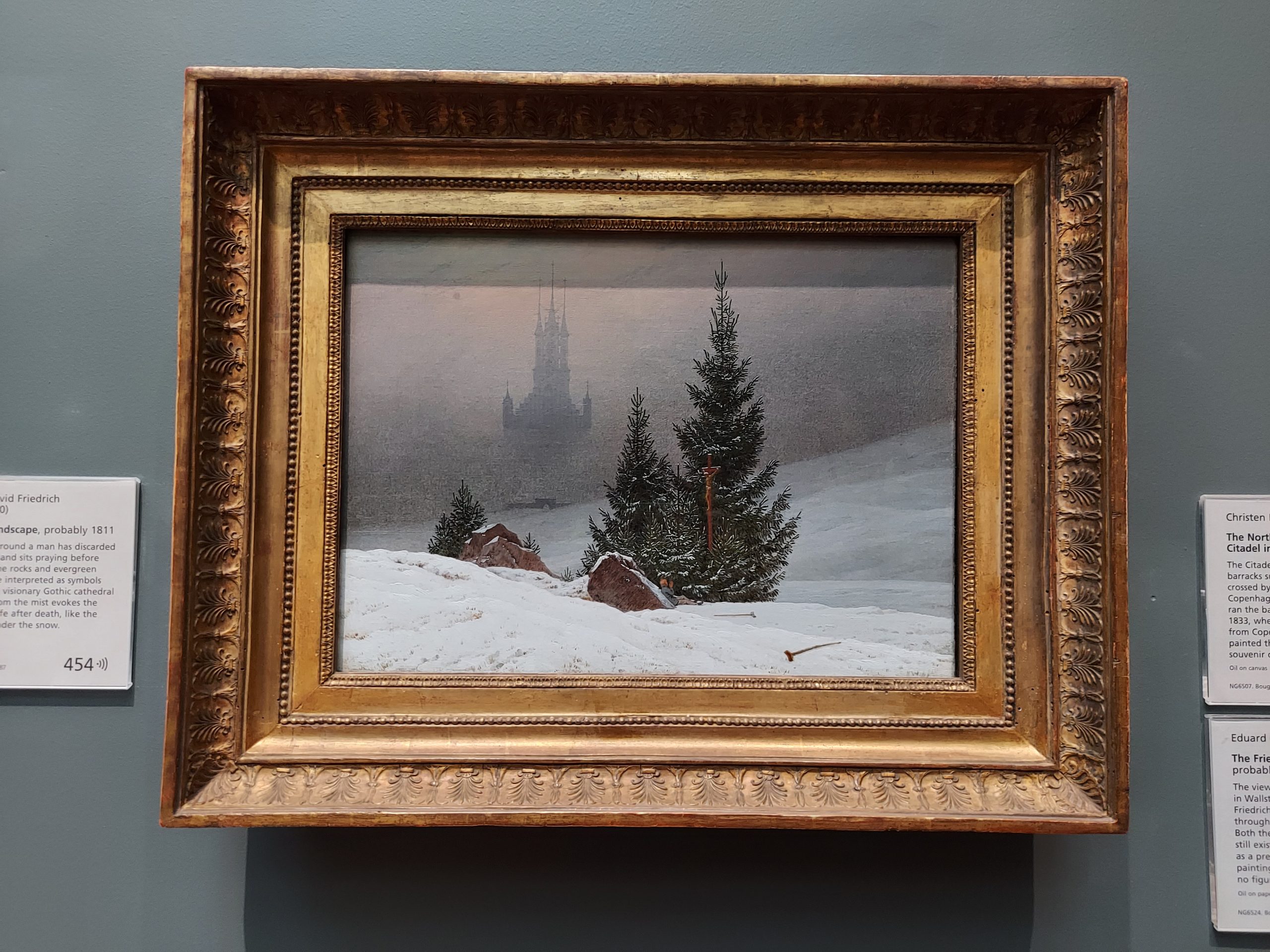
Caspar David Friedrich, Winter Landscape, 1811
The final section looked at the new artistic styles emerging in the later nineteenth century.
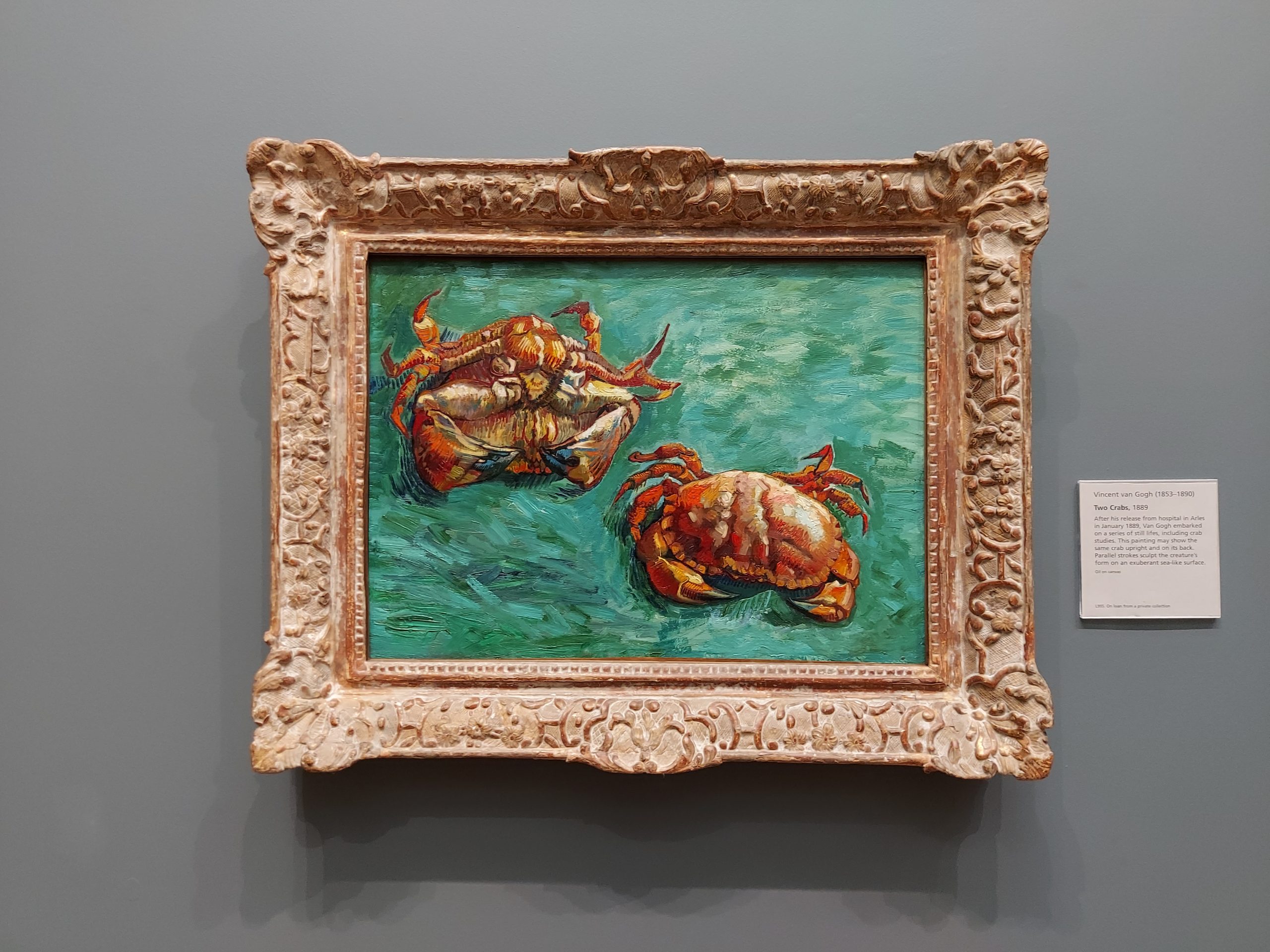
Vincent Van Gogh, Two Crabs, 1889 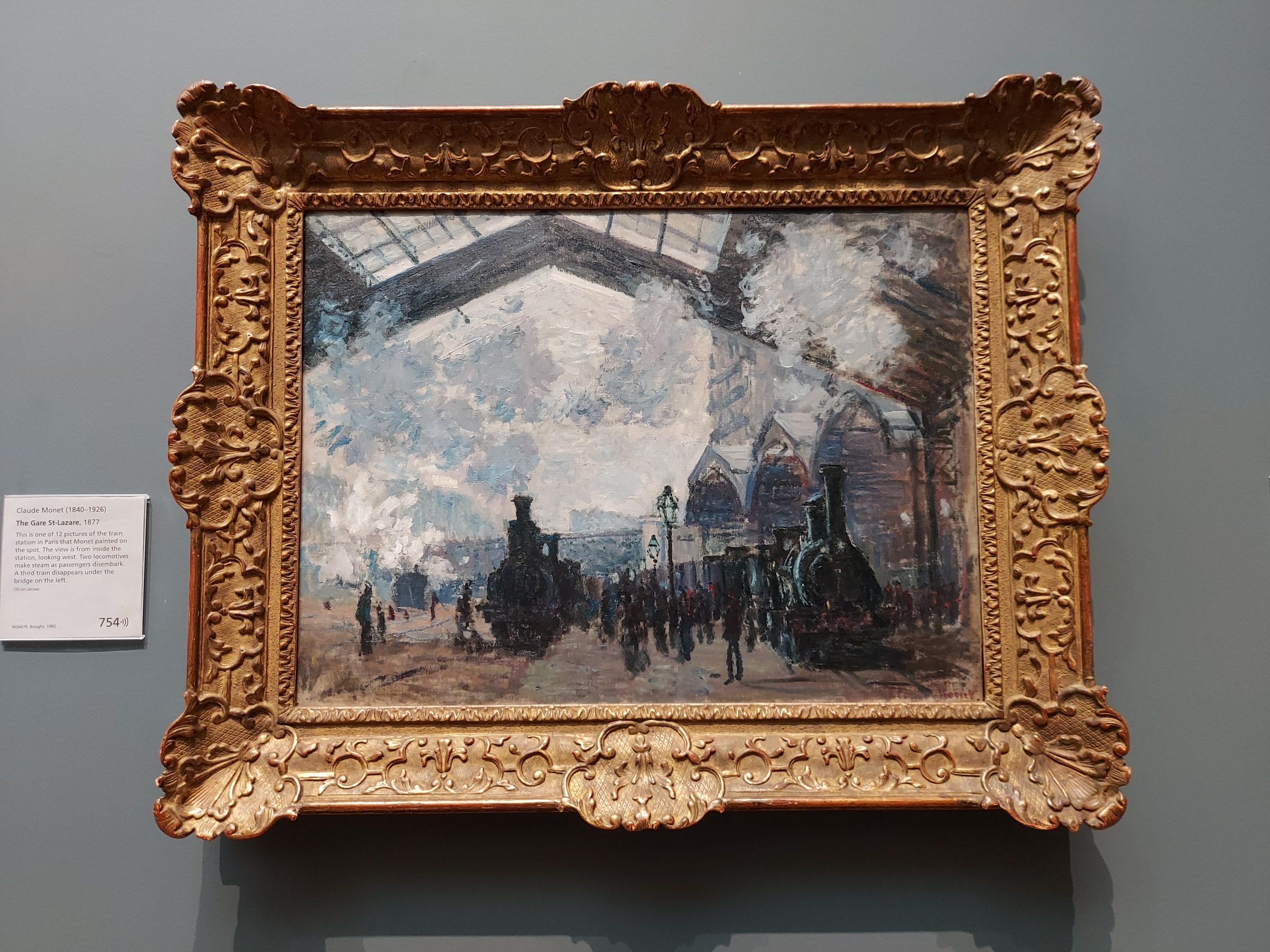
Claude Monet, The Gare St-Lazare, 1877 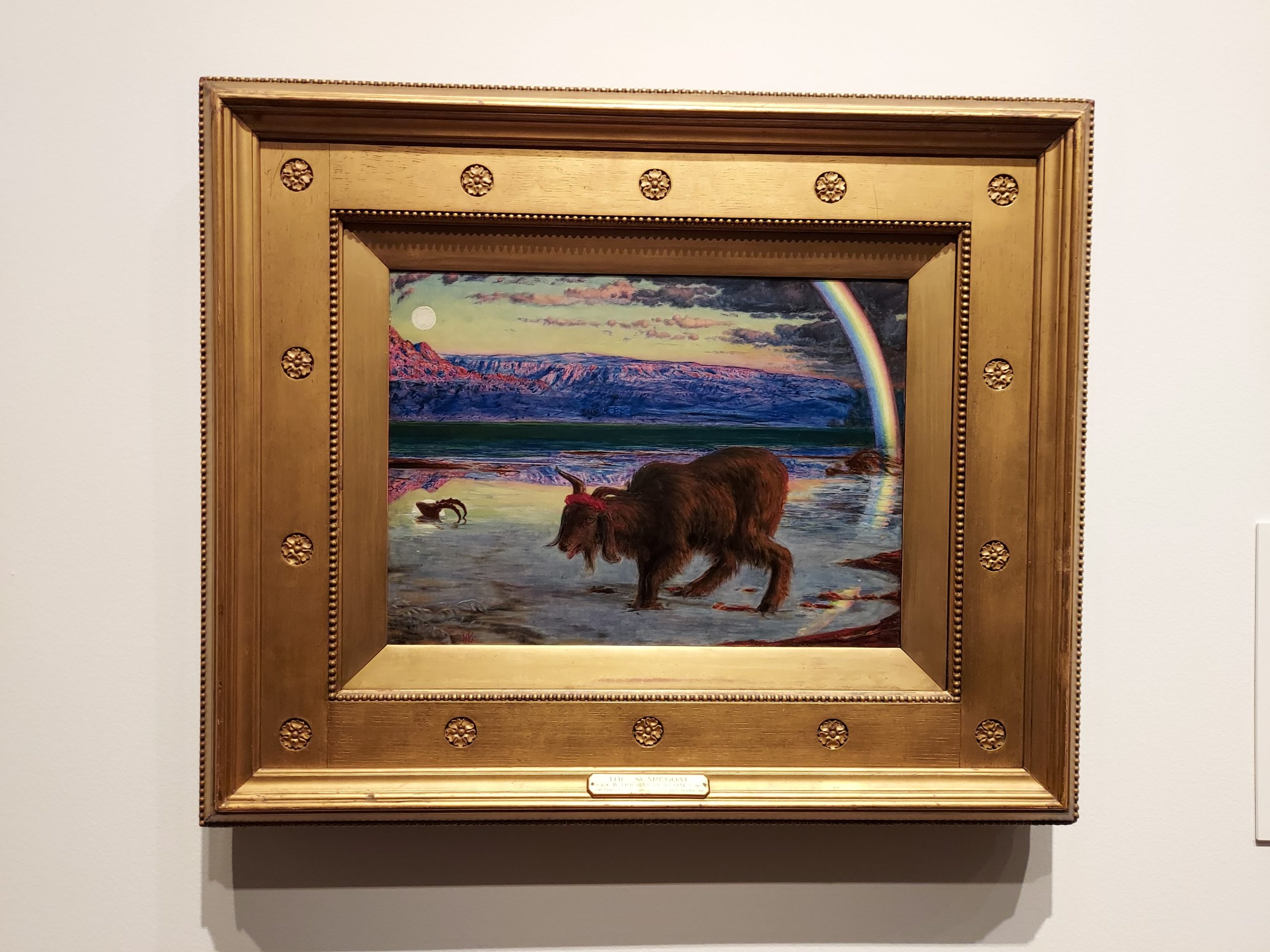
William Holman Hunt, The Scapegoat, 1854-55
A visit to the National Gallery is definitely recommended, especially as it’s free. If you can get there before the crowds begin to return, even better.
FACTS
Address: Trafalgar Square, London, WC2N 5DN
Website: nationalgallery.org.uk
Opening Hours: 10am-6pm (9pm on Fridays)
Price: Free