

I’m no art expert, but I’ve been aware of Artemisia Gentileschi and her work for a while. At university, I took a module on Renaissance Rome and she featured; in recent years I’ve encountered her life and work in stories and plays. I was excited, therefore, to visit the Artemisia exhibition at the National Gallery, making it there in between lockdowns.

Artemisia, one of the most famous female artists in history, was the daughter of acclaimed painter Orazio Gentileschi. In an age when few women had the opportunities that men had to pursue artistic careers, she was painting professionally by the age of fifteen and enjoyed a successful lifelong career, painting for numerous wealthy patrons, befriending other artists and eventually becoming the first female member of Florence’s Accademia di Arte del Disegno.
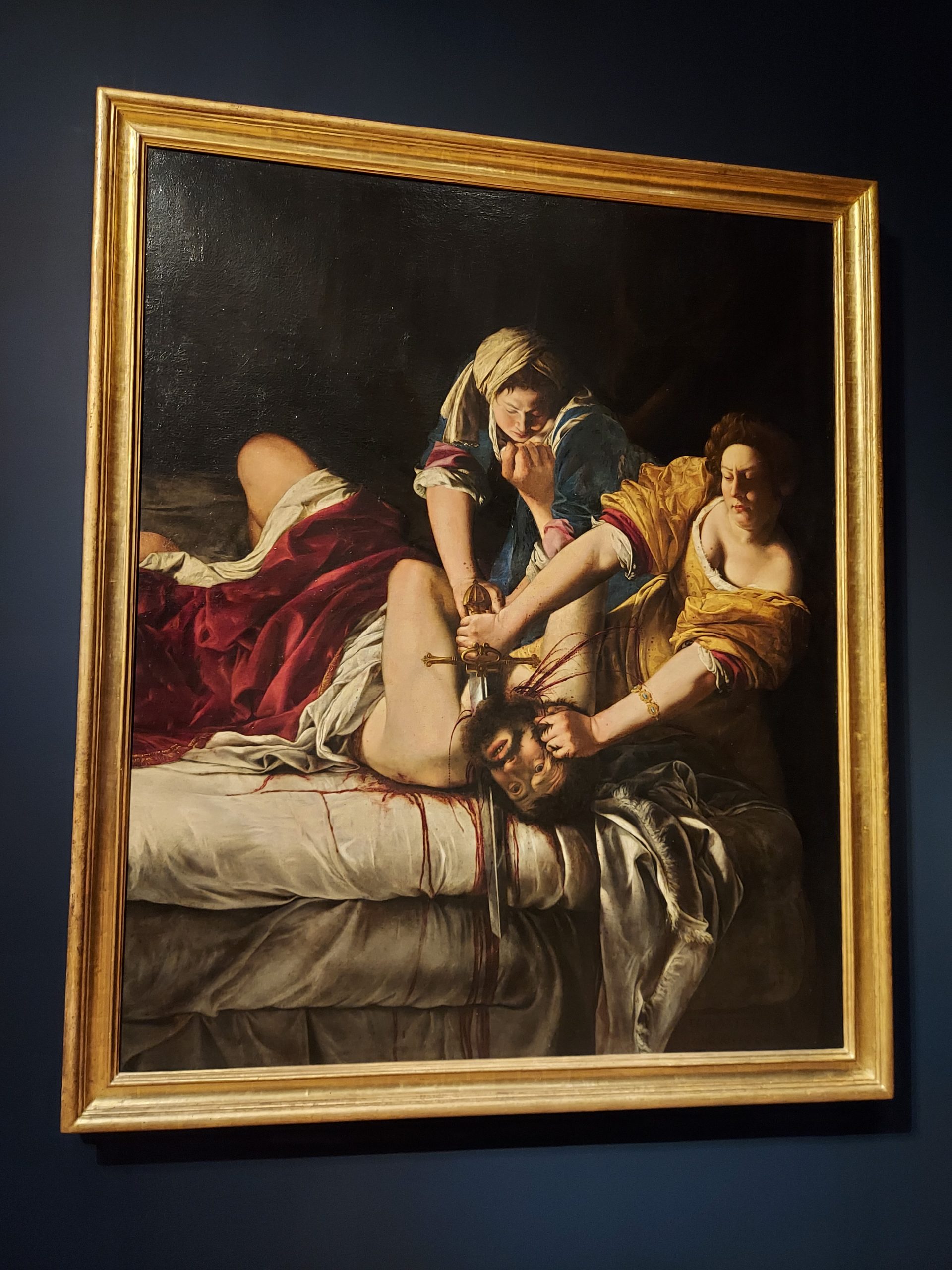
The most famous incident of Artemisia’s life is probably her rape by a fellow painter at her home in Rome. During the subsequent trial, Artemisia was tortured with thumbscrews – a particularly frightening prospect for an artist, I’d imagine – to prove her testimony. Breach Theatre have produced a powerful play about the trial, but I was glad to see that the National Gallery did not allow this incident to overshadow Artemisia’s life and career. There is just as much focus on her subsequent marriage and move to Florence, her affair with a Florentine nobleman, her children and, later, her move back to Rome and visits to Venice, Naples and England.
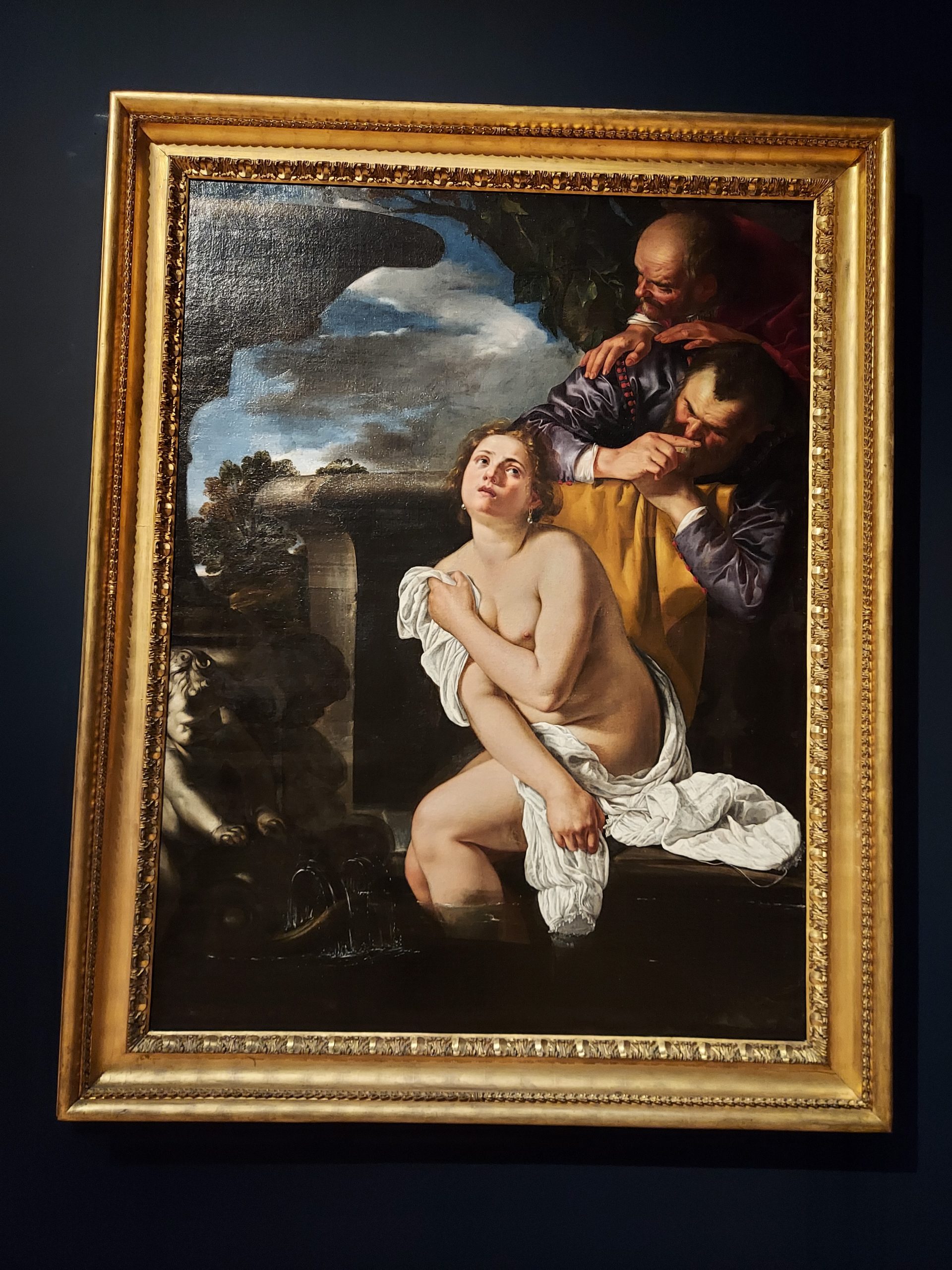
Even my untrained eye can see there is something different and special about Artemisia’s work: perhaps her gender helped her to see things differently; perhaps she was just incredibly talented; perhaps a bit of both. Some of her works are shown alongside her father’s: though Orazio was clearly an accomplished painter, Artemisia’s creations are (to my mind) far superior. Her versions of Susannah and the Elders show a frightened Susannah overlooked by lecherous old men, instead of the provocative nude often pictured by male artists. Judith beheading Holofernes, particularly the later version which is much more bloody and brutal, demonstrates visceral anger, and her self-portrait as the Allegory of Painting is an honest depiction of an artist lost in her work, not an idealised muse.
I loved this exhibition, and I’m so glad I got the chance to go.