The Benjamin Franklin House has been a visitor attraction in London for years, but I’d never got around to visiting, until now. Looking for something to do during my week off, I found the museum’s website which advised that architectural tours run every Friday. It’s not often I get a Friday off when I’m in London, so I booked straight away.

Benjamin Franklin was one of the Founding Fathers of the United States of America. He was a polymath and one of the leading intellectuals of his time. The Grade 1 listed house is at 36 Craven Street, a Georgian side street not far from Charing Cross station and Trafalgar Square – it really is very central. It dates from around 1730, and Franklin lodged there for 16 years between 1757 and 1775 in his role as chief colonial diplomat. The street would have looked very different at the time – this was before the Embankment was built, so the Thames would have been much closer to the house.

As it turned out, it was a quiet day and there were only two of us on the tour, but the house had been decorated in red, white and blue in preparation for Independence Day celebrations at the weekend. We were shown around the house starting with the basement: a brown plaque is on display here that was originally on the side of the wrong house on this street. A room here is devoted to the history of the house, which served as a lodging house for much of its life before being converted into a hotel in the 20th century. In the late 1990s, the Friends of Benjamin Franklin House were granted the freehold to 36 Craven Street from the British government, and set about restoring the property.
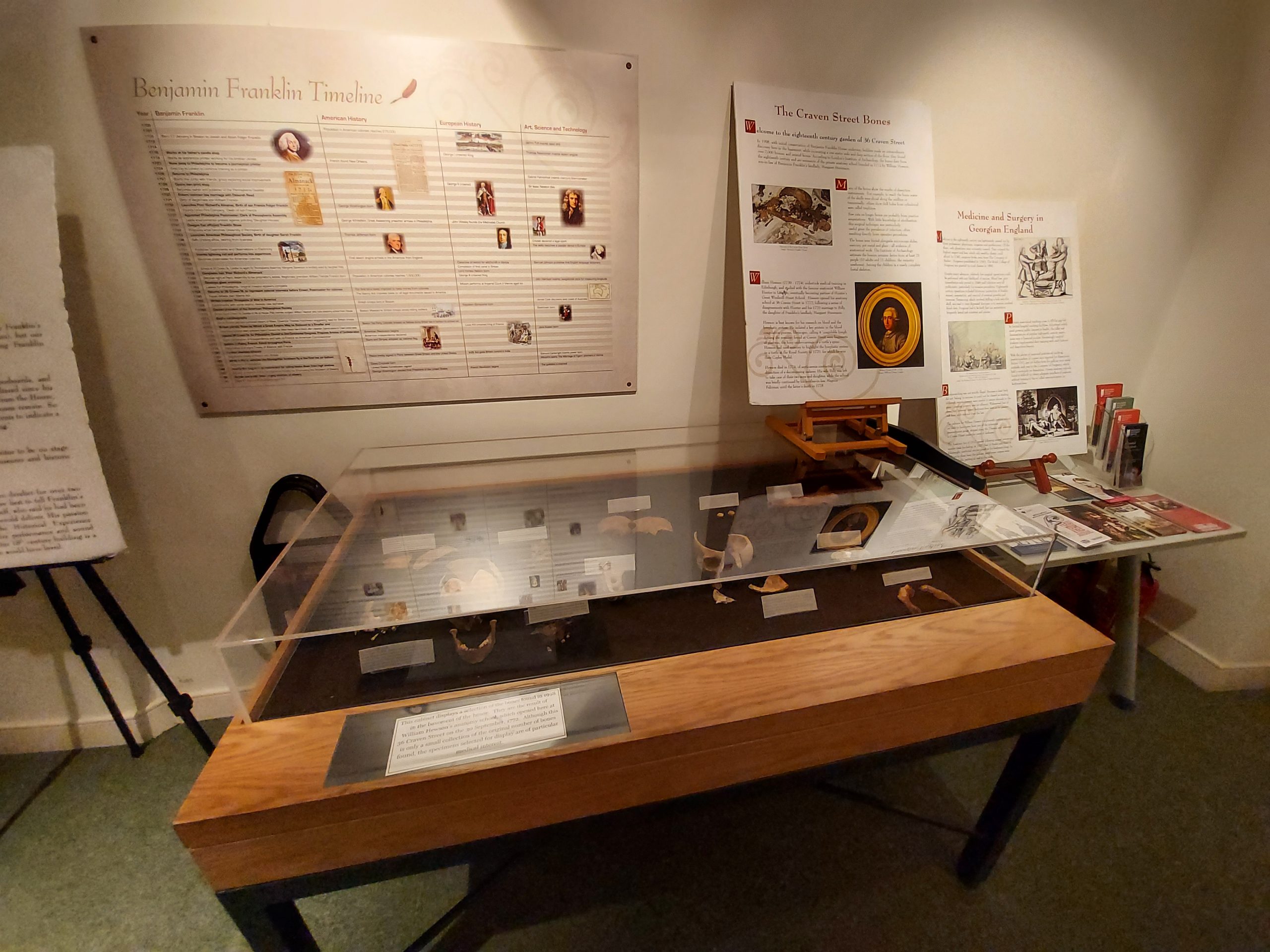
During the excavation, a number of human bones were found. It is believed that William Hewson, Franklin’s landlady’s son-in-law, was responsible for these remains: an early anatomist, he had been living in the house for two years and working in secret, as well as running an anatomy school. The basement is also where the kitchen is located, where food would be cooked for the landlady, her family and lodgers. The kitchen includes a recess built into the wall – historians aren’t certain what it is, but some believe it may have been a kind of early fridge.
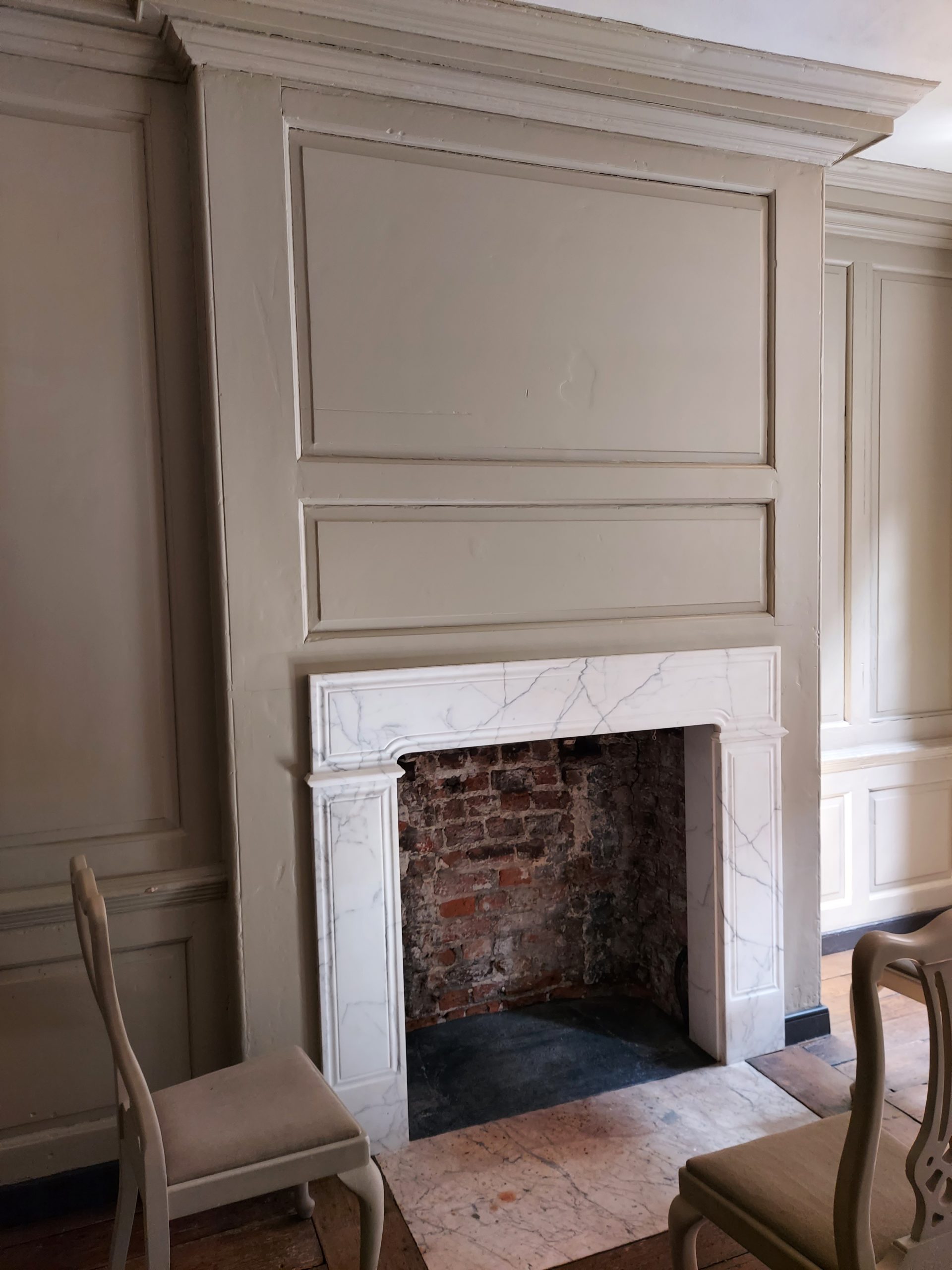
The ground floor was the main sitting room used by the family – as a valued and longstanding guest Franklin was also able to spend time here. The address gained a reputation as the ‘first American embassy’ as he used to invite statesmen and cultural figures to discuss events of the day. Many of the features in this room are original, such as the two-part window shutters, although parts of the fireplace are not. The floor slopes in places, being built on slightly uneven ground. On this floor, our guide also showed us the mechanism by which the door would have been kept shut by means of a chain.

Upstairs is the set of rooms inhabited by Franklin, although at the time it would have been one big room. He apparently used to ‘sunbathe’ naked with the windows wide open – luckily this was early in the morning so no one else would have had to see this sight. Franklin also used to go swimming in the Thames to keep fit – presumably the pollution levels were lower then than they would later become. The back of the house holds a key and kite display in honour of one of Franklin’s most famous experiments, and the fireplace contains a bust of Franklin, currently topped with a jaunty party hat.

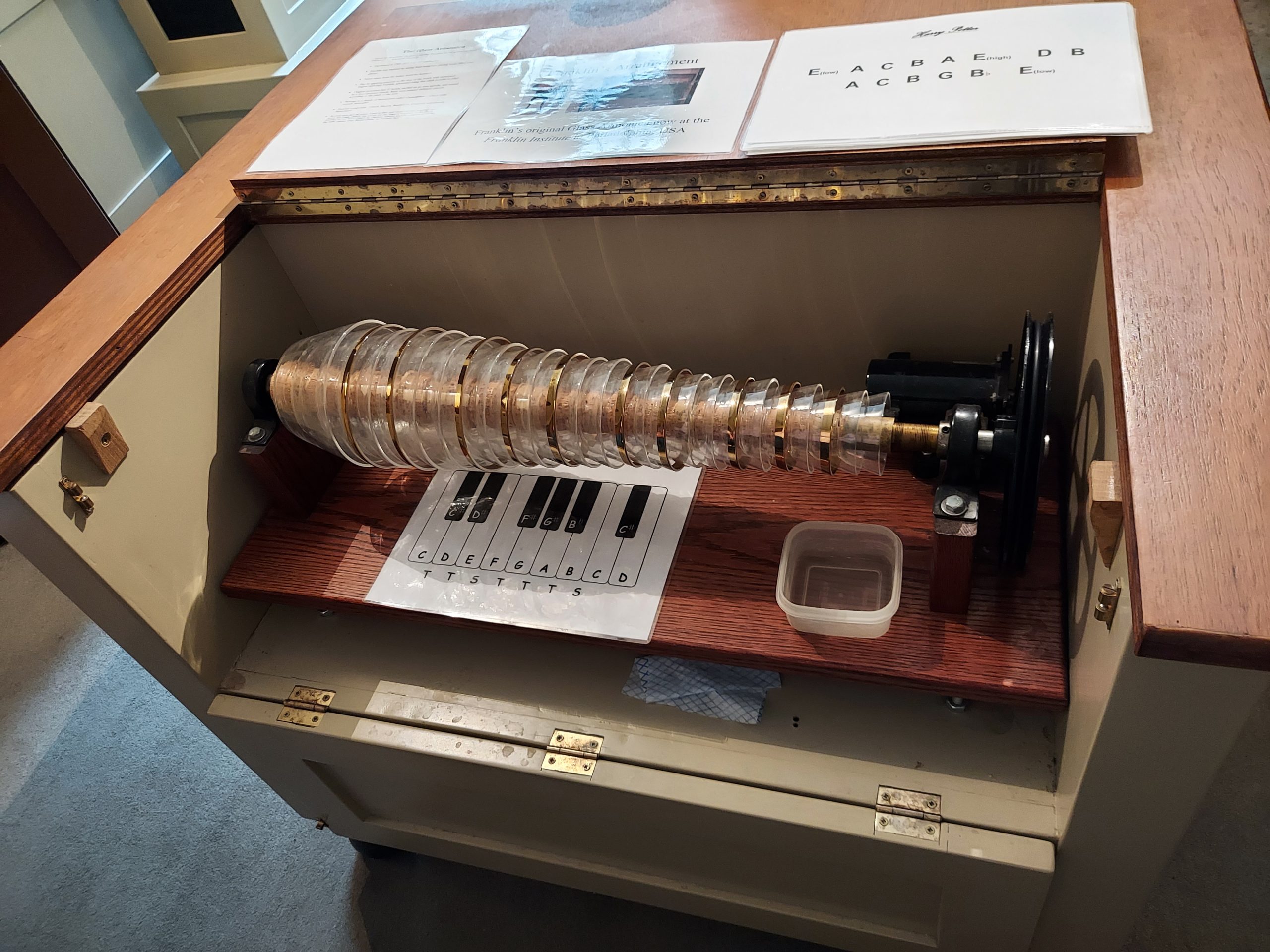
Above this were rooms used by the landlady, similar in style to Franklin’s below, while above this were rooms used by other lodgers. Today these rooms host educational resources, including Franklin’s own invented instrument, a glass harmonica.The tour was fascinating and I definitely plan to return for the Historical Experience.