
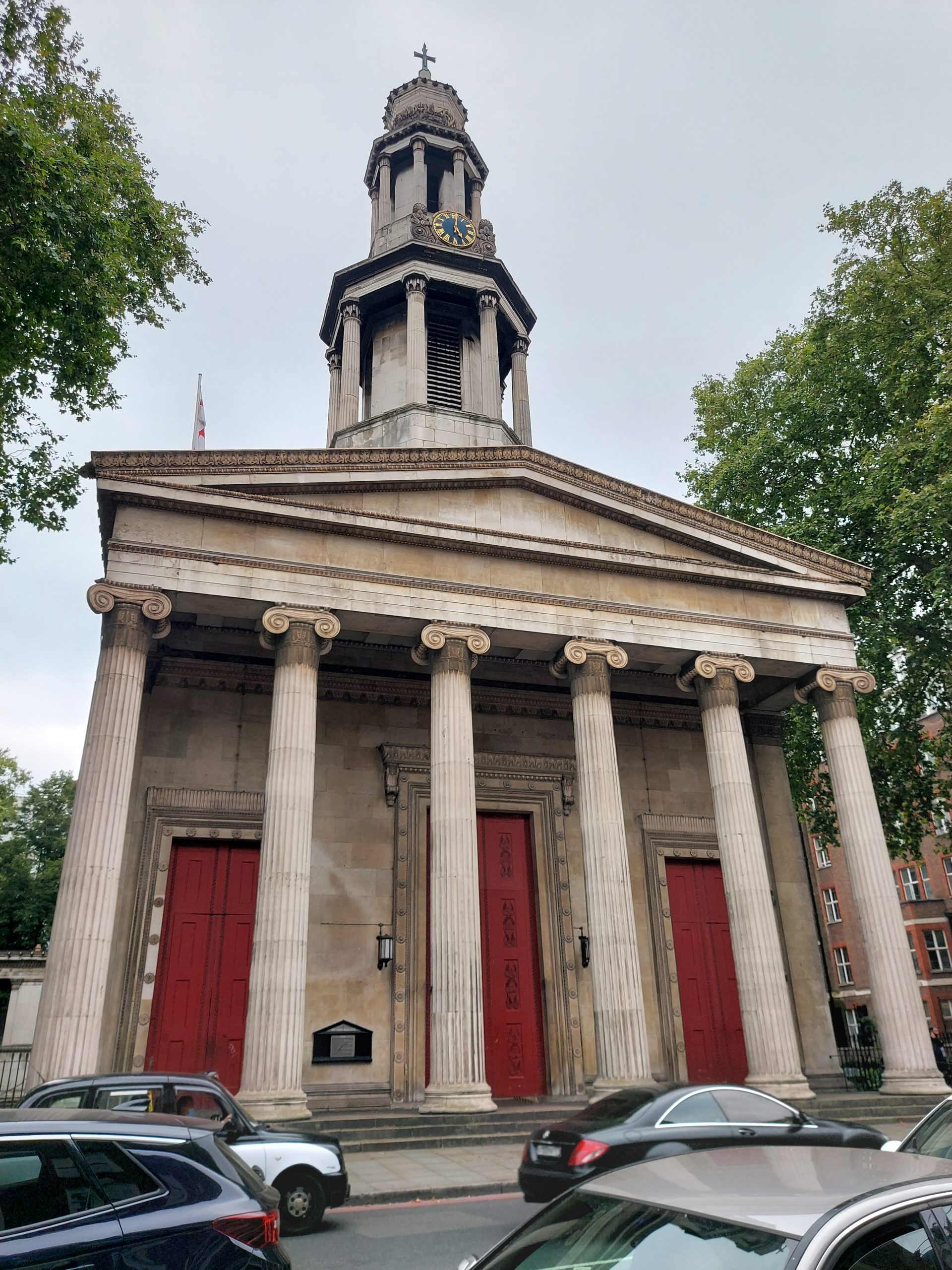
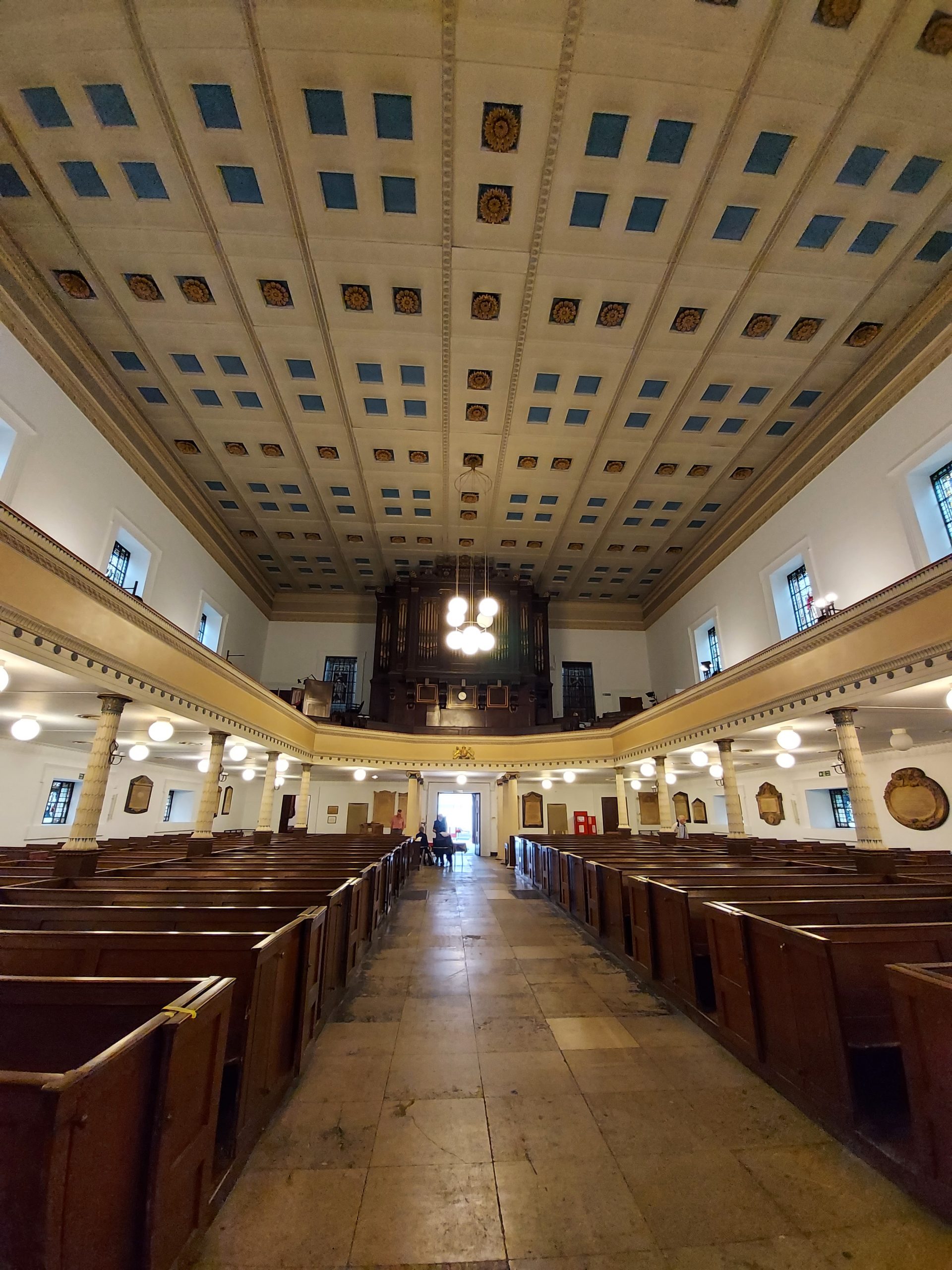
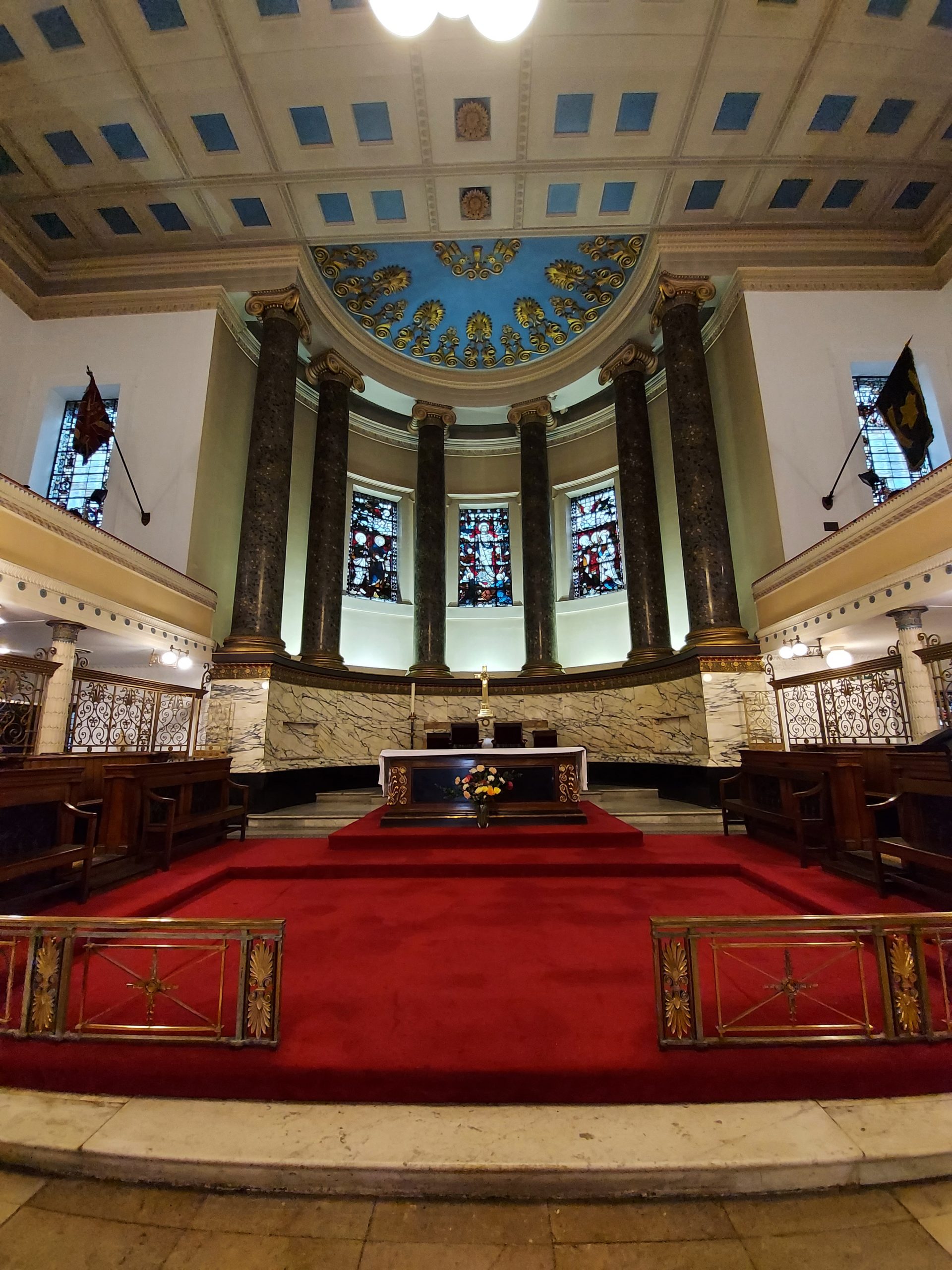
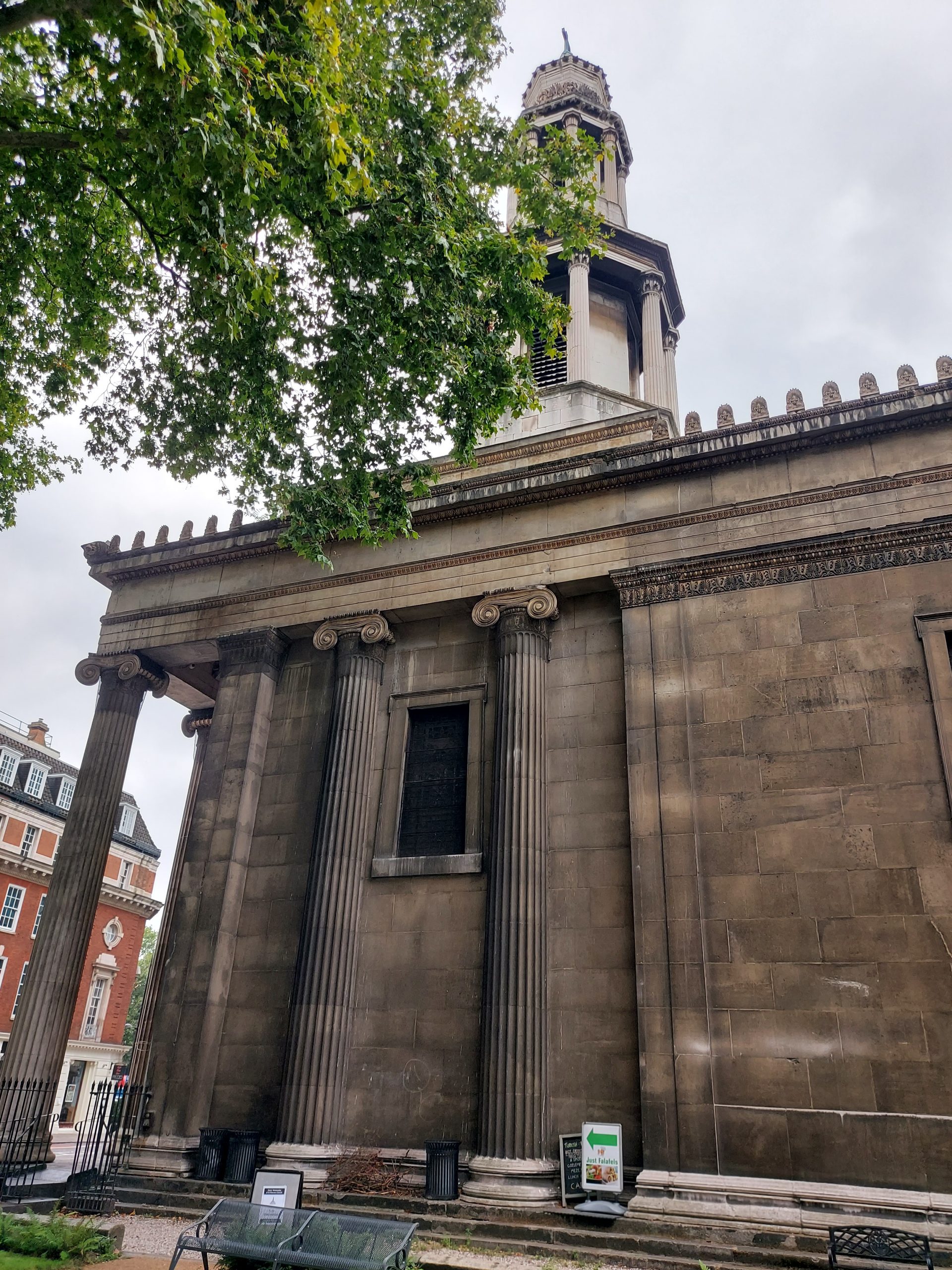
I’ve visited St Pancras Old Church before, but despite walking past it on numerous occasions I’d never been inside St Pancras New Church, built in 1822 to accommodate the increasing population of the area. Designed by architect William Inwood, with help from his son Henry William, it is a fine example of Georgian architecture, taking inspiration from Greek design and boasting an elegant simplicity. Ionic columns can be seen outside and inside the church, and the walls are a light white colour (the Victorians painted them dark red, and also installed the stained glass windows – the windows originally contained plain glass).
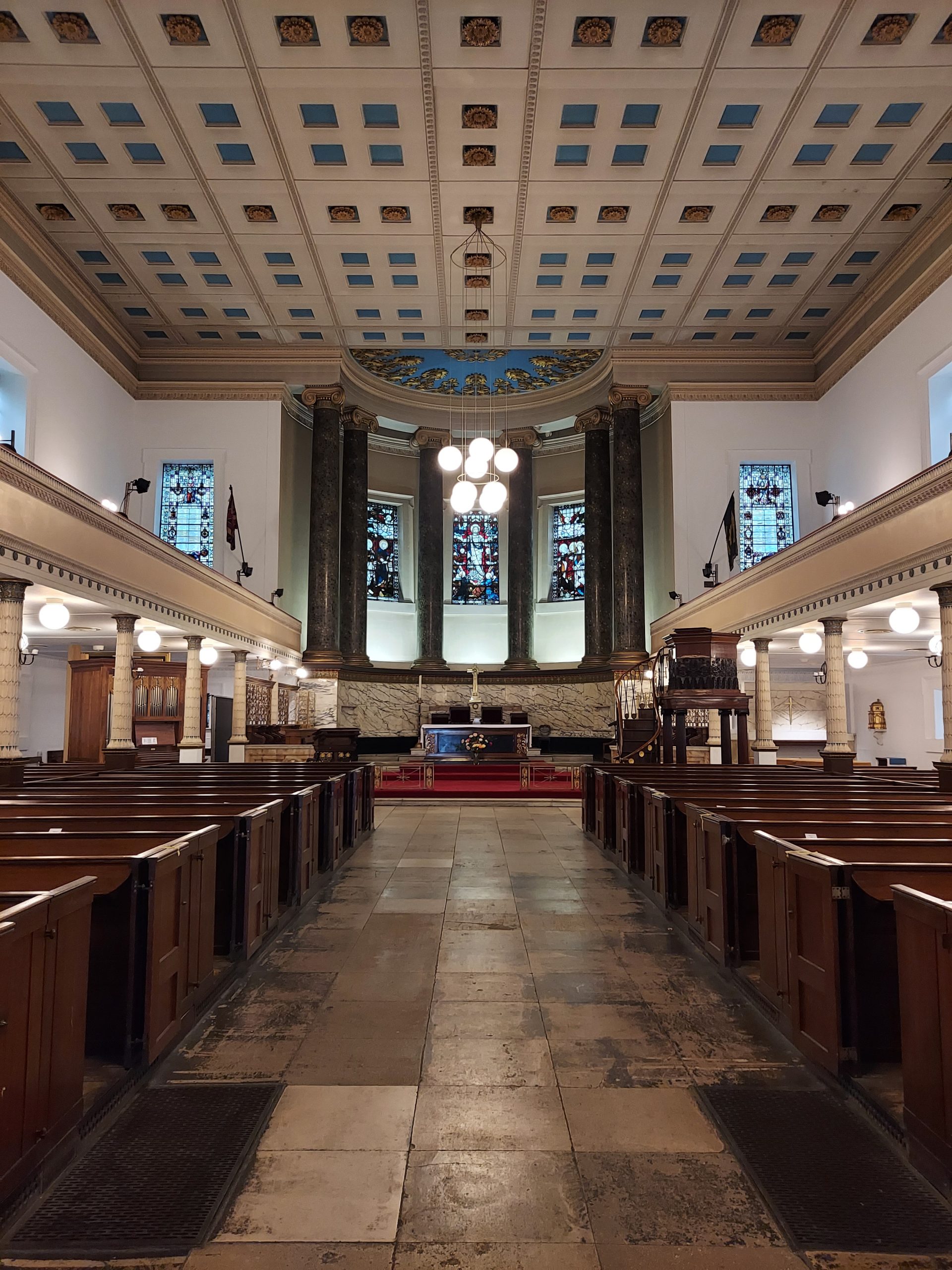
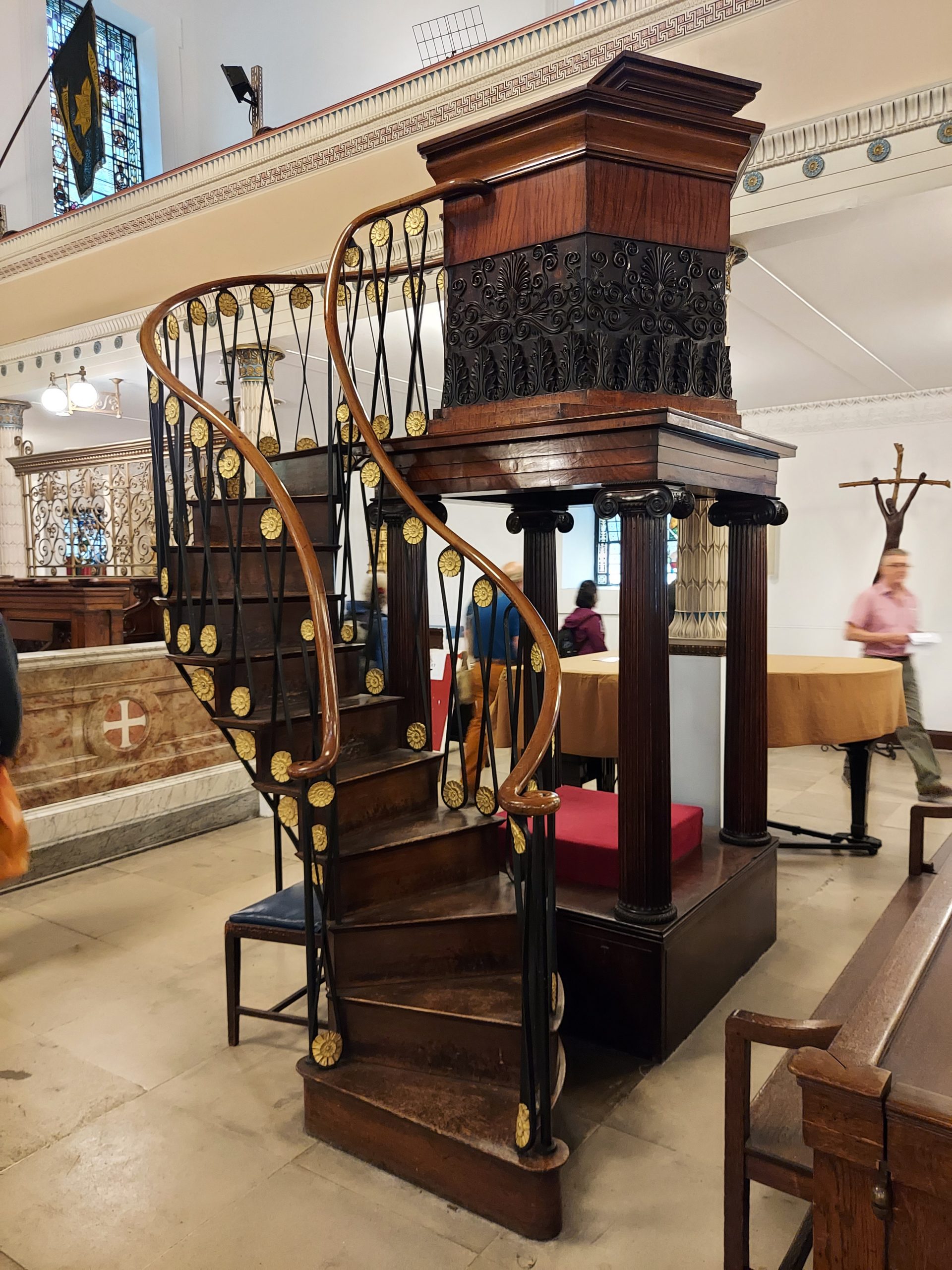
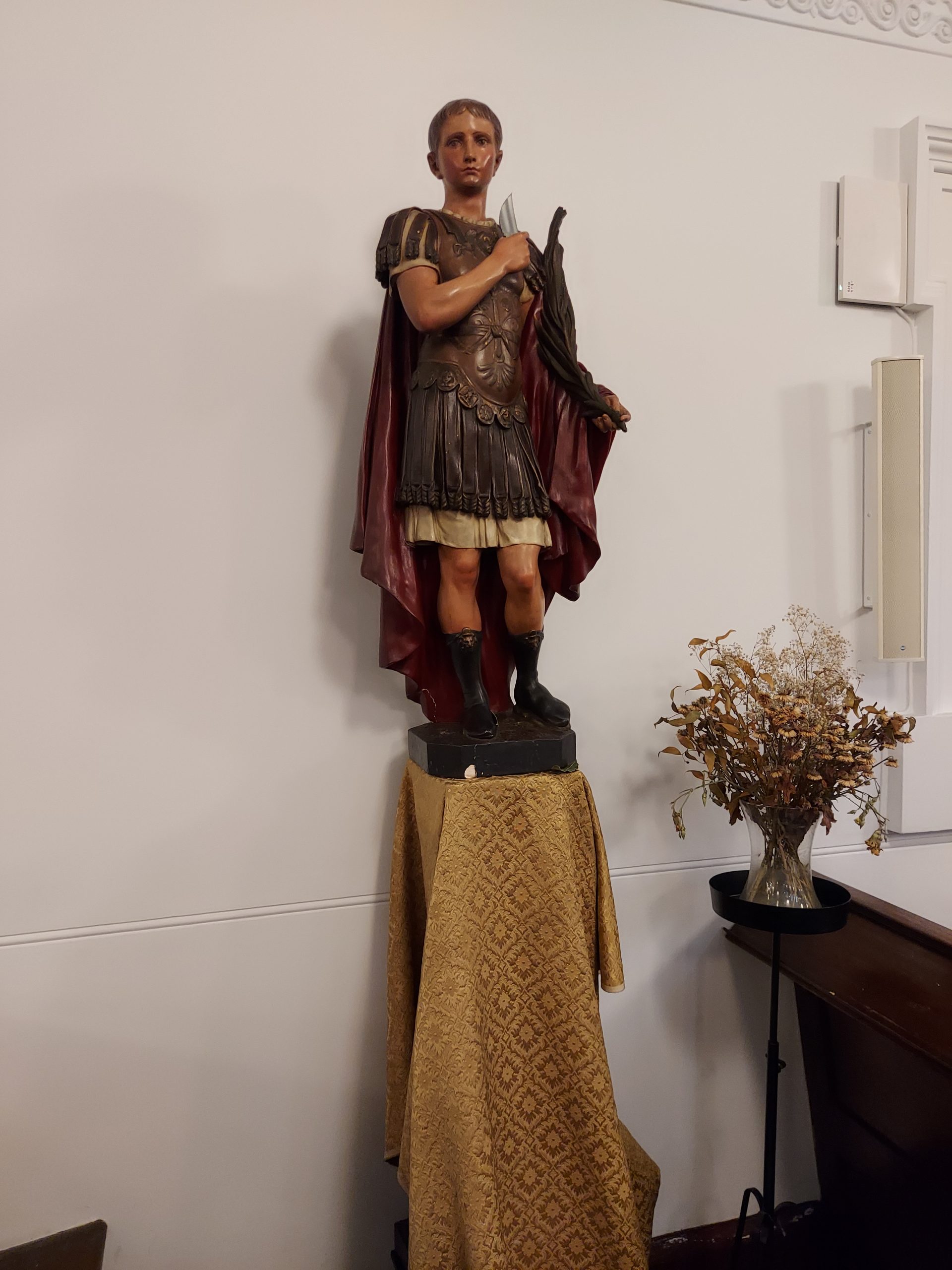
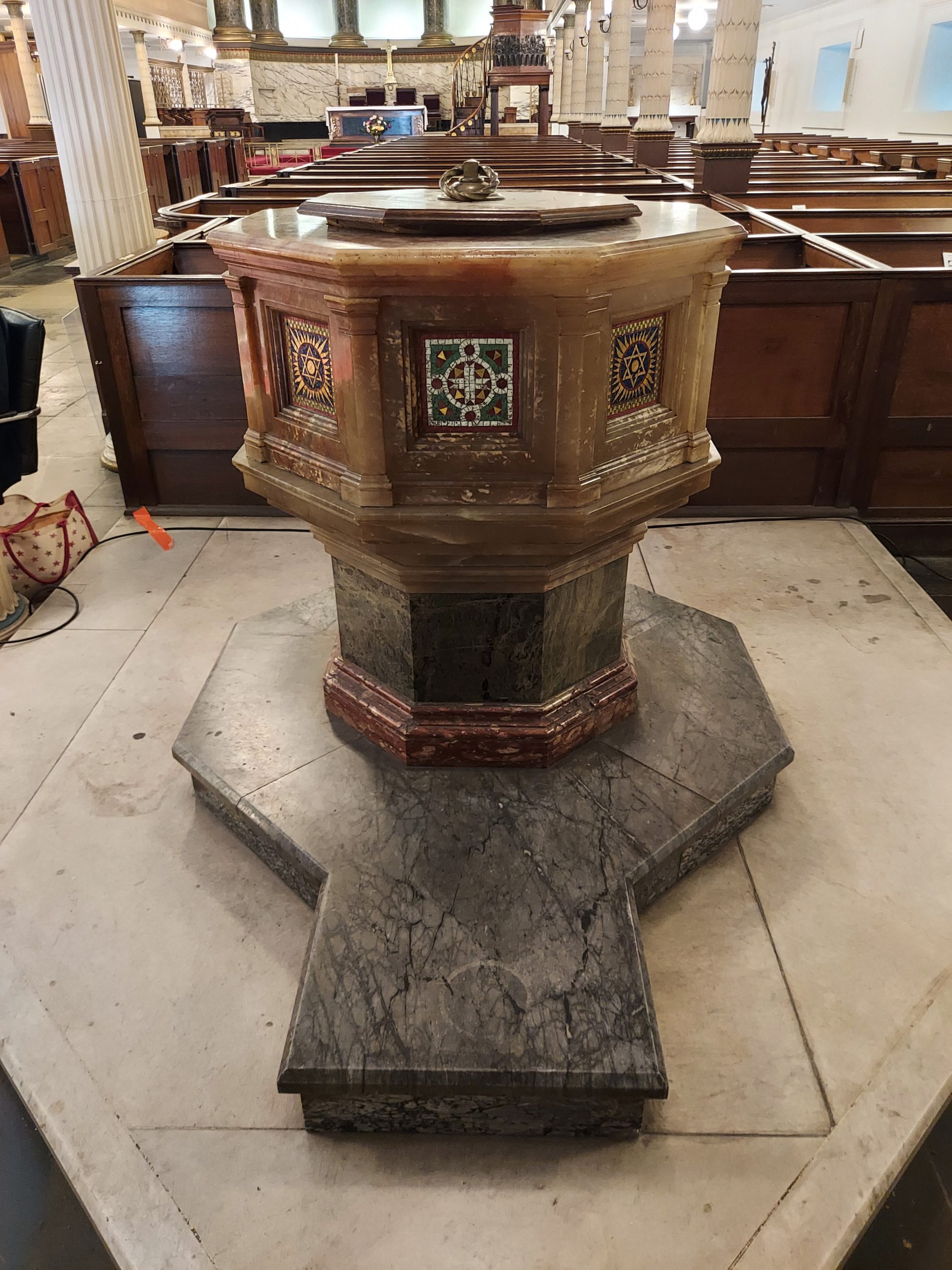
A statue of St Pancras, a Roman boy who converted to Christianity and was beheaded in 304AD for refusing to recant, stands on the left hand side of the church, surrounded by plaques dedicated to the good and the great of the parish. The font stands at the west end of the church – the base is of marble, the top of alabaster, and it dates from 1887, although the bowl inside is original. The pulpit, made from the Fairlop Oak from Hainault Forest, was originally taller, to alllow those sitting on the balcony to see and hear the speaker; it has since been shortened.If the high altar along the back wall looks familiar and rather modern, that is because it is by Charles Holden, who also designed Senate House and numerous Underground stations. It dates from 1914. The organ on the balcony at the back of the church was installed in 1864, and came from a music hall in Birmingham.
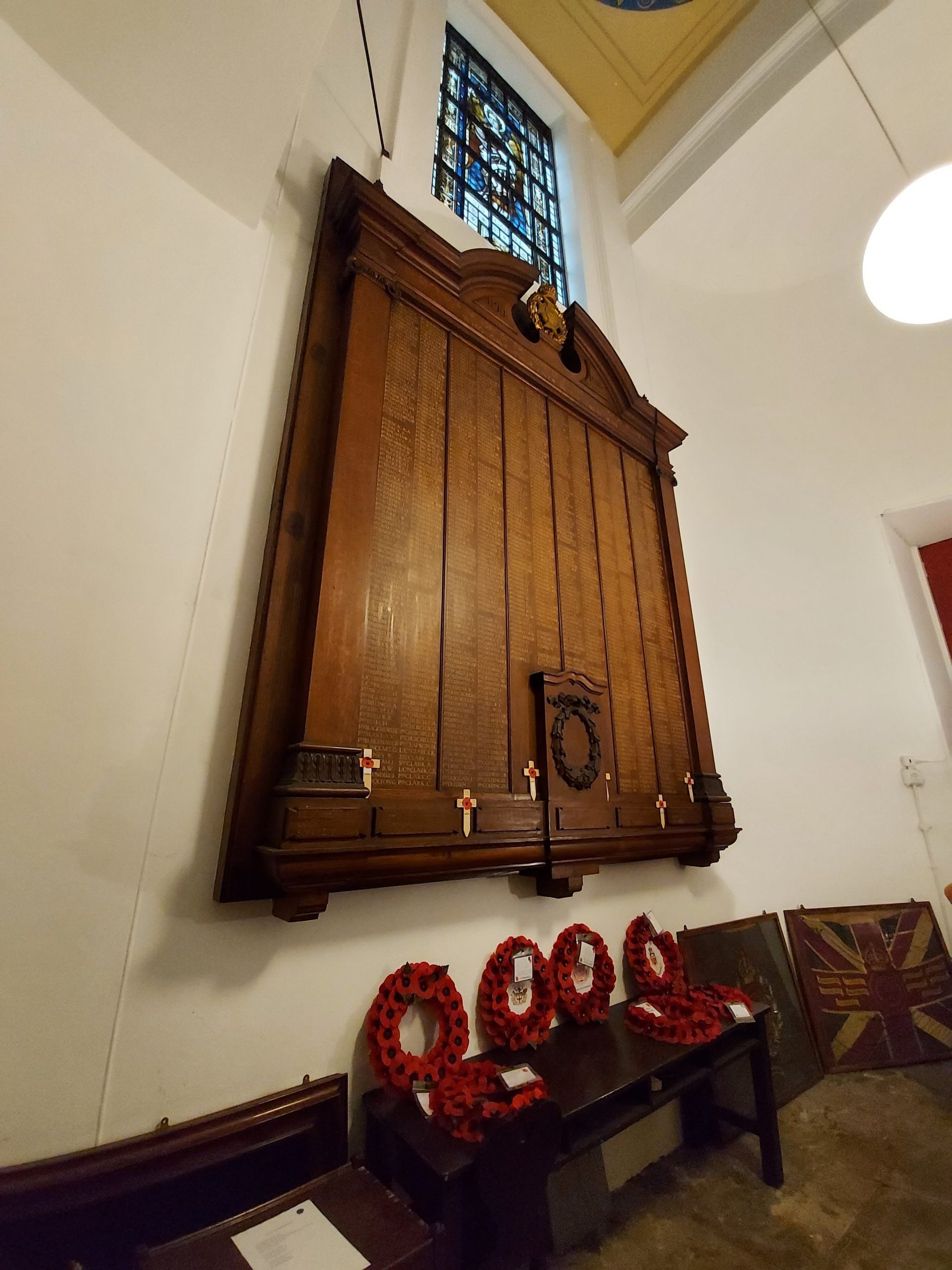
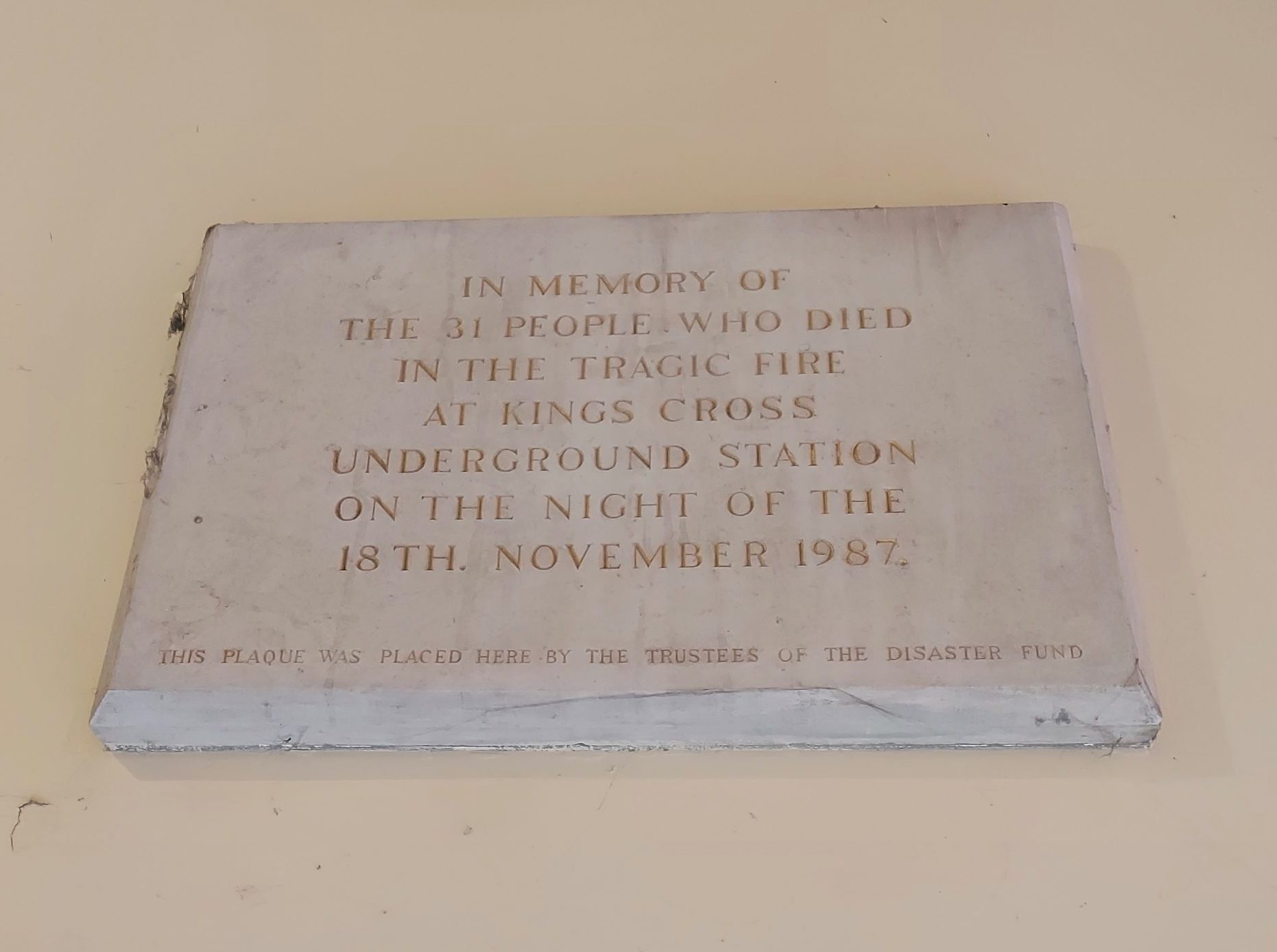
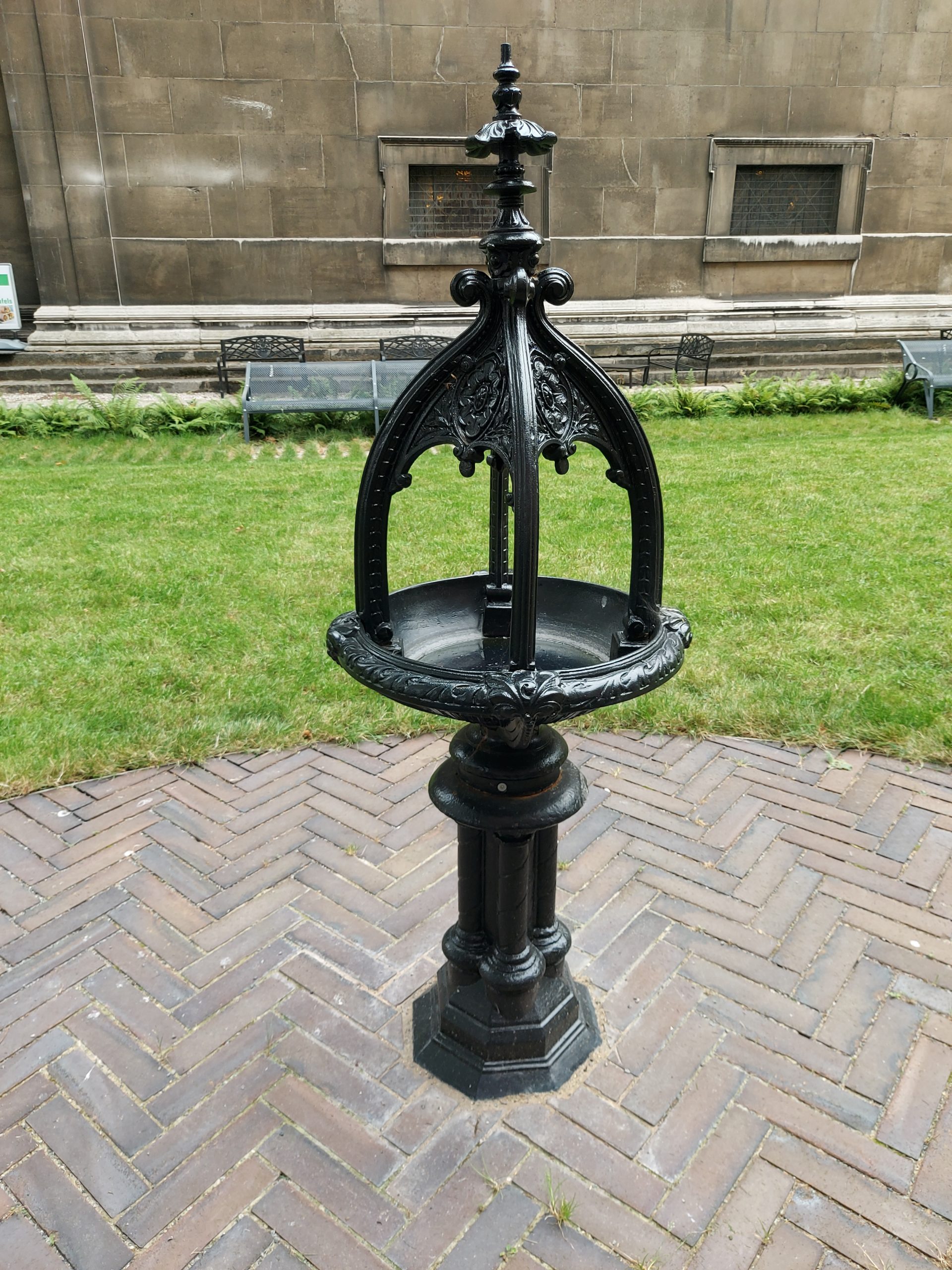
The south vestibule contains a huge memorial to the members of the St Pancras Regiment, dating from World War I. The entrance to the church contains more plaques, including one to those who died in the King’s Cross fire of 1987.There is a lovely peaceful garden at the side of the church, behind the busy main road. It contains a Victorian drinking fountain, dating from the 1880s, which was originally in St James’s Gardens, a space west of Euston station and now lost owing to the work on HS2. From the garden you can see the octagonal tower, which was copied from the Tower of the Winds in Athens. Here also you can see that in places, the Portland stone, now darkened by pollution, has retained its original bright white colour.
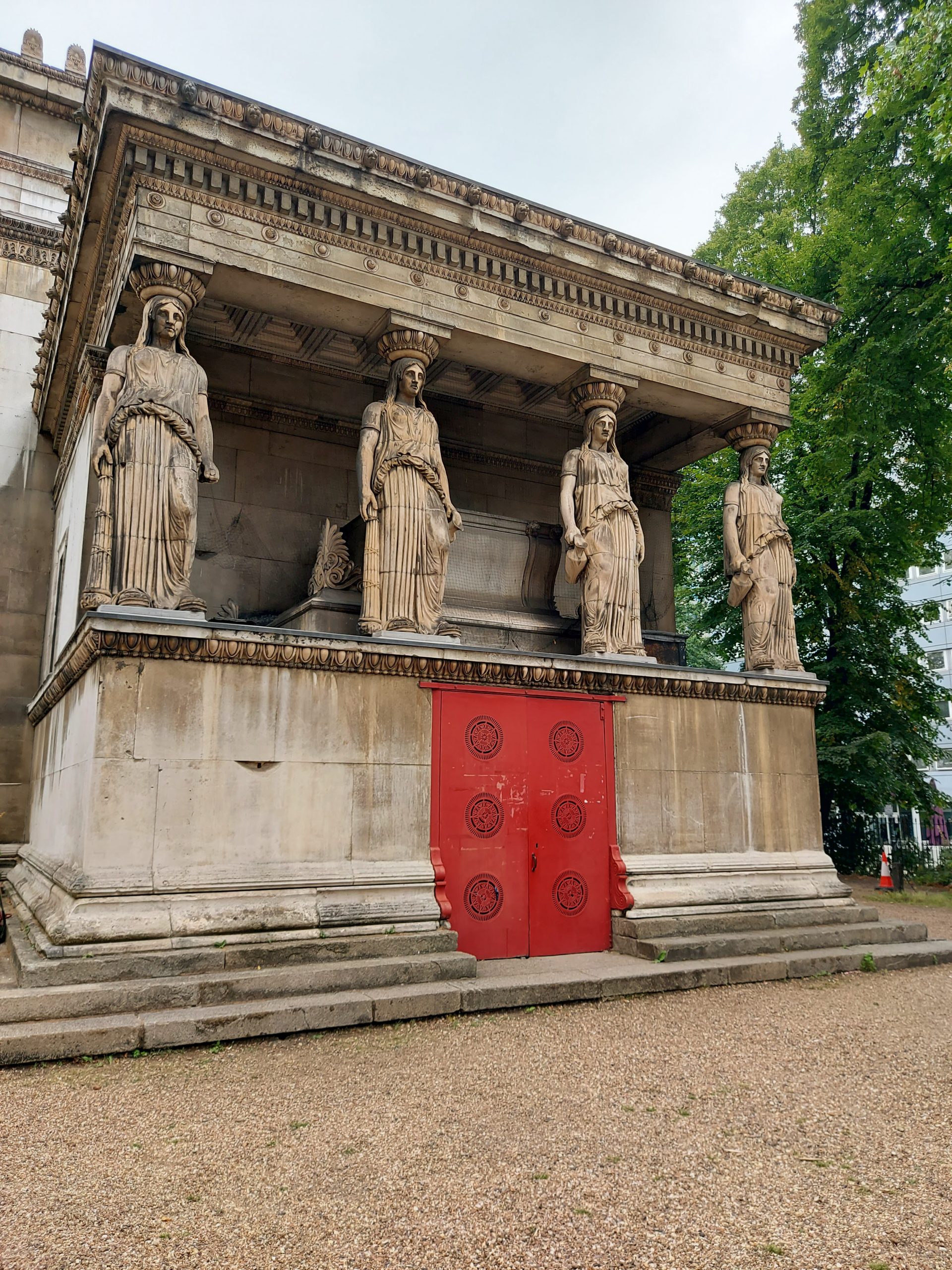
The crypt underneath the church is guarded by caryatids (statues of women holding up the roof). These were also inspired by similar statues in Athens, but had to be shortened in the middle as they were originally too big to fit. Sadly the crypt was closed by the time I got there, but it plays host to regular art exhibitions, so I will have the chance to see it in the future.
FACTS
Address: Euston Road, London, NW1 2BA
Website: stpancraschurch.org
Prices: Free